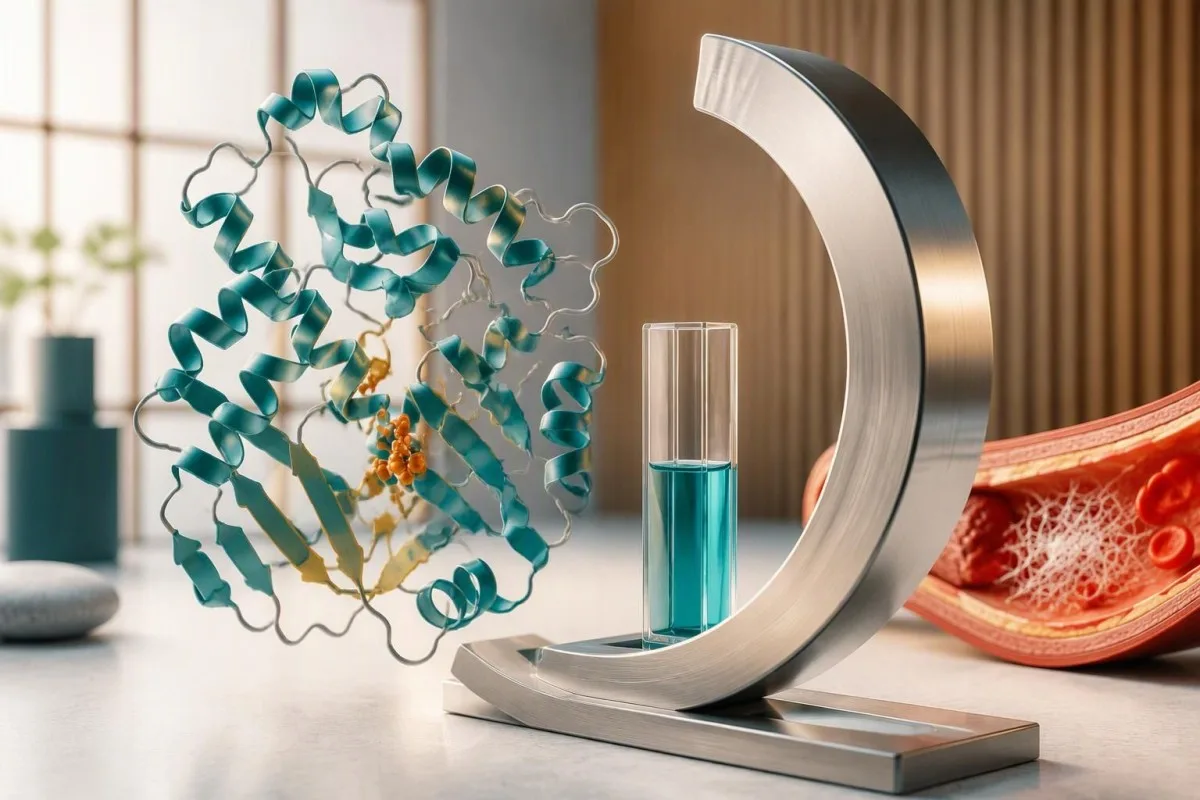
Shughuli ndogo ya antitrombini haimaanishi moja kwa moja upungufu wa kurithi: donge la damu la ghafla, heparini, ugonjwa mkali au upotevu wa protini vinaweza kuipunguza kwa muda. Madaktari huthibitisha kasoro zinazoendelea kwa vipimo vya shughuli vinavyofanywa kwa wakati unaofaa, wakati mwingine kwa kipimo cha antijeni, na mpango wa maabara unaozingatia dawa—mara nyingi baada ya miezi 3 ya kwanza ya matibabu ya donge la damu.

Mambo muhimu ya kukumbuka
- Kiwango cha marejeleo: Shughuli ya antitrombini kwa watu wazima kwa kawaida huwa karibu na 80–120%; tumia kiwango kilichochapishwa kwenye ripoti yako mwenyewe.
- Matokeo moja ya chini: Shughuli ya 65% wakati wa donge jipya la damu au matibabu ya heparini haiwezi kuthibitisha upungufu wa antitrombini wa kurithi.
- Muda wa kurudia: British Society for Haematology inapendekeza kupima upungufu wa vizuiaji vya asili vya kuganda kwa damu tu baada ya miezi 3 ya matibabu ya kuzuia kuganda kwa damu kwa thrombosi ya ghafla.
- Shughuli dhidi ya antijeni: Upungufu wa Aina ya I kwa kawaida hupunguza vipimo vyote viwili; upungufu wa Aina ya II hupunguza utendaji huku antijeni ikiweza kubaki ya kawaida.
- Uingiliaji wa dawa: Apixaban, rivaroxaban na edoxaban zinaweza kuongeza shughuli kwa njia isiyo ya kweli katika vipimo vinavyotegemea factor Xa; dabigatran inaweza kufanya hivyo katika vipimo vinavyotegemea thrombin.
- Upotevu wa protini: Kwa watu wazima, protini kwenye mkojo katika kiwango cha nephrotic kwa kawaida huwa angalau g 3.5 kwa kila saa 24 na inaweza kuchangia kupungua kwa antithrombin kulikopatikana baadaye.
- Tathmini ya familia: Upungufu wa kurithi wa heterozigosi uliothibitishwa kwa kawaida humaanisha kuwa kila mtoto ana nafasi ya 50% ya kurithi lahaja husika—si uhakika wa 50% wa kupata donge la damu.
- Usalama wa dawa: Usisimamishe kamwe dawa za kuzuia kuganda kwa damu ili kupata matokeo safi zaidi ya maabara bila mpango mahususi kutoka kwa daktari aliyeagiza dawa hiyo.
Shughuli ndogo ya antitrombini humaanisha nini hasa?
Shughuli ndogo ya antithrombin humaanisha kuwa kipimo cha maabara kiligundua utendaji wa kuzuia kuganda kwa damu ulio chini ya ulivyotarajiwa; peke yake, hakitambui chanzo. Matokeo yaliyo chini ya kiwango cha chini cha maabara ya watu wazima—mara nyingi karibu 80%—yanaweza kuashiria upungufu wa kurithi, matumizi ya muda, uzalishaji uliopungua, upotevu wa protini au tatizo la kipimo.

Antithrombin huzuia kuganda kwa damu kwa kuzuia vimeng’enya, vikiwemo thrombin, inayoitwa pia factor IIa, na factor Xa. Matokeo ya shughuli ya 60% hueleza utendaji ukilinganishwa na kiwango cha marejeo cha kipimo; hayamaanishi kuwa mzunguko wako wa damu umelindwa kwa 60% au kwamba uwezekano wako wa kupata donge la damu ni 40%.
Matokeo ya kawaida ya vipimo vya kawaida vya kuganda kwa damu hayaondoi uwezekano wa upungufu wa antithrombin, kwa sababu PT na aPTT si vipimo vya uchunguzi wa awali vya kila mwelekeo wa kurithi wa kupata donge la damu. Maelezo yetu kuhusu mipaka ya vipimo vya kawaida vya kuganda kwa damu husaidia kutofautisha maswali haya: iwapo nyakati za kuganda kwa damu zimeongezeka na iwapo kizuiaji fulani cha asili cha kuganda kwa damu hufanya kazi kawaida ni tathmini 2 tofauti.
Kantesti ni kichanganuzi cha vipimo vya damu cha AI kinachosaidia kuoanisha asilimia ya shughuli na historia ya dawa pamoja na matokeo yanayohusiana ya maabara, badala ya kuchukulia alama 1 isiyo ya kawaida kama utambuzi. Yetu historia na madhumuni ya kampuni hueleza jukumu hilo; upungufu wa kurithi bado unahitaji uthibitisho unaoongozwa na daktari, na dalili za dharura lazima zitathminiwe bila kutegemea tafsiri yoyote ya AI.
Ni kiwango gani cha shughuli ya antitrombini huchukuliwa kuwa kidogo?
Shughuli ya antithrombin kwa watu wazima kwa kawaida huwa na kipimo cha marejeo cha takriban 80–120%, ingawa baadhi ya maabara hutumia 80–130% au kipimo kingine kilichothibitishwa. Kwa hiyo, shughuli ya 75% mara nyingi huwa chini kidogo ya kiwango cha kawaida, lakini 75% wala kiwango kingine chochote kimoja cha kukata hakithibitishi upungufu wa kurithi wala kuamua matibabu ya dharura.

Watu wengi wenye upungufu wa antithrombin wa kurithi wa heterozigosi huwa na shughuli ya takriban 40–70%, lakini hali zilizopatikana baadaye zinaweza kutoa viwango vilevile. Kinyume chake, baadhi ya lahaja za kurithi husababisha upungufu mdogo zaidi au hazigunduliwi na vipimo fulani; madaktari hutafsiri ukubwa wa upungufu pamoja na matokeo yanayorudiwa, si kama alama ya kijenetiki inayojitegemea.
Umri hubadilisha tafsiri kwa kiasi kikubwa: watoto wachanga waliozaliwa muda kamili na wenye afya wanaweza kuwa na shughuli ya antithrombin ya takriban 40–60% ya viwango vya watu wazima, huku viwango vikiongezeka katika kipindi cha uchanga. Kuzaliwa kabla ya wakati huleta tofauti zaidi, na ujauzito wa mwisho au kipindi cha mapema baada ya kujifungua pia vinaweza kuathiri matokeo; kutumia kiwango cha chini cha 80% cha watu wazima bila kutofautisha kunaweza kusababisha lebo ya kupotosha.
Kwa mfano wa kubuni ulio wazi, mtu mzima aliye na afya kwa jumla, mwenye shughuli ya 78% na asiye na historia ya kuganda kwa damu anahitaji tathmini tofauti na mtu mzima mwenye 42% wakati wa sepsis kali. Ripoti zote mbili zinaweza kuonyesha alama ileile ya kiwango cha chini, lakini mwongozo wetu kuhusu matokeo ya maabara yaliyo nje ya kiwango unaeleza kwa nini viwango vya marejeo haviwezi kutumika badala ya vizingiti vya utambuzi au matibabu.
| Kiwango | Wigo | Maana yake |
|---|---|---|
| Kipimo cha kawaida cha watu wazima | Takriban 80–120% | Kwa kawaida huwa ndani ya kiwango, lakini kipimo cha maabara husika na unyeti wa kipimo hutangulizwa. |
| Upungufu wa mpakani | 70–79% | Often warrants context review and appropriately timed confirmation; not a diagnosis. |
| Clear reduction | 50–69% | Compatible with inherited or acquired deficiency; activity alone cannot distinguish them. |
| Kupungua kwa kiasi kikubwa | Below 50% | Requires clinical review, especially during illness or thrombosis; the percentage alone does not establish an emergency. |
Antijeni ya antitrombini dhidi ya shughuli: kuna tofauti gani?
An antithrombin activity test measures how effectively the protein inhibits a coagulation enzyme, while antithrombin antigen measures how much protein is present. Type I inherited deficiency generally lowers both; type II generally lowers activity despite a relatively normal antigen concentration, making these 2 tests complementary rather than interchangeable.
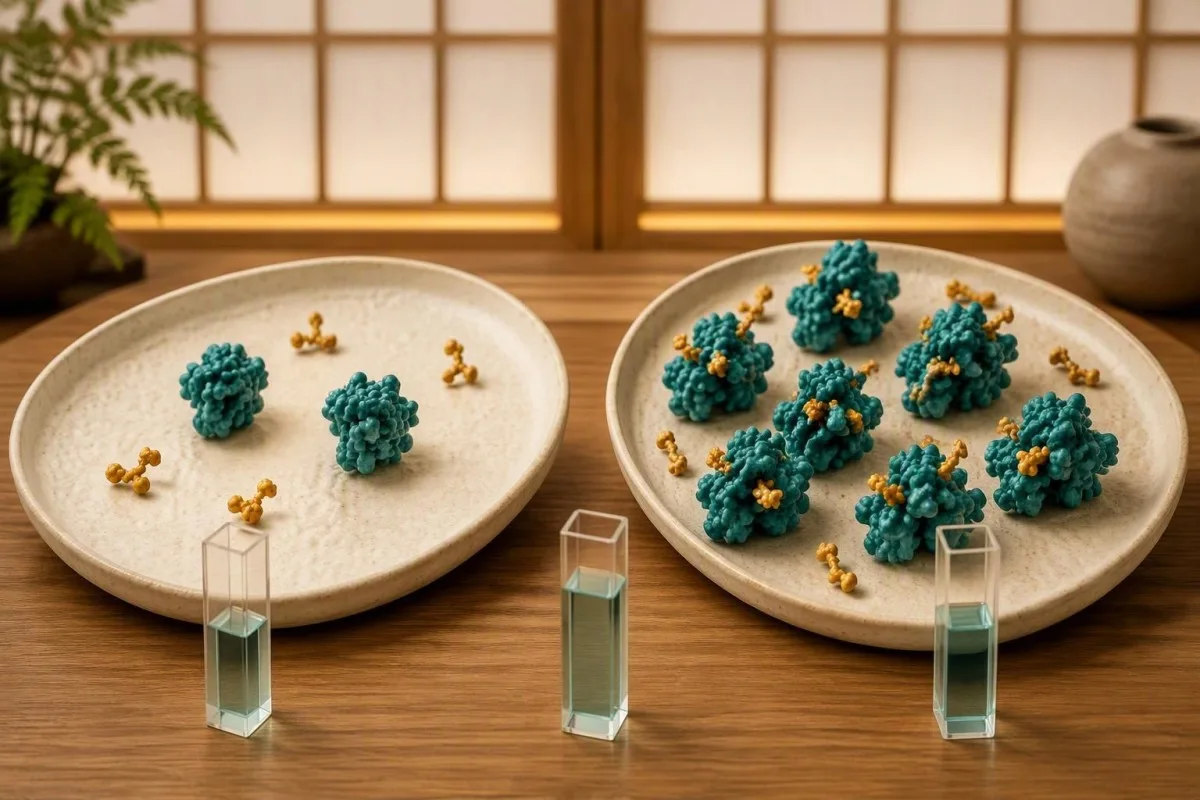
Most routine activity methods are chromogenic assays: the laboratory adds an enzyme and measures how much remains after antithrombin has inhibited it. The ISTH laboratory recommendations favor activity testing first, followed by antigen measurement when activity is low, with exclusion of acquired causes and assay interference before classification (Van Cott et al., 2020).
Consider 2 hypothetical repeat profiles obtained under suitable conditions: activity 52% with antigen 49% supports a quantitative pattern, whereas activity 52% with antigen 101% supports a qualitative pattern. These examples are not diagnostic formulas, because acquired illness can lower both measurements and antigen assays do not explain whether a functional result was distorted by medication.
Type II deficiency includes reactive-site, heparin-binding-site and other functional abnormalities; the choice of assay can change how readily a variant is detected. Kantesti’s explanations therefore distinguish quantity from performance, a distinction also illustrated by protein level versus function in C1 esterase inhibitor testing—but those are different proteins with different clinical consequences.
Je, donge la damu la ghafla linaweza kupunguza antitrombini kwa muda?
Acute thrombosis can temporarily reduce antithrombin activity through consumption, particularly when accompanied by illness, procedures or treatment effects. A value such as 58% during a newly diagnosed deep vein thrombosis therefore cannot reliably distinguish an inherited baseline deficiency from a reduction caused by the current event.

The British Society for Haematology recommends testing deficiencies of natural anticoagulants only after 3 months of anticoagulation for acute thrombosis, because early results are unreliable and rarely change immediate management (Arachchillage et al., 2022). This is a recommendation about diagnostic timing, not an instruction to delay treating a suspected clot or to stop anticoagulants at month 3.
A hypothetical patient has activity of 61% during a pulmonary embolism and 96% after recovery using an appropriate assay. That change supports a temporary reduction, but comparing 2 percentages remains incomplete unless the clinician knows whether heparin, a direct oral anticoagulant, replacement products or different laboratory methods affected either measurement.
D-dimer answers a different question: it reflects fibrin formation and breakdown, not antithrombin quantity or inherited status. Our clotting tests and D-dimer guide explains why an elevated D-dimer and low activity can occur together during 1 acute event without proving that the low antithrombin caused the clot.
Kwa nini matibabu ya heparini yanaweza kupunguza shughuli ya antitrombini?
Heparin can lower circulating antithrombin during treatment, so a low result obtained while receiving unfractionated or low-molecular-weight heparin may reflect an acquired reduction. Heparin also depends on antithrombin for much of its anticoagulant effect; activity of 50% during treatment can therefore raise both diagnostic and medication-monitoring questions.
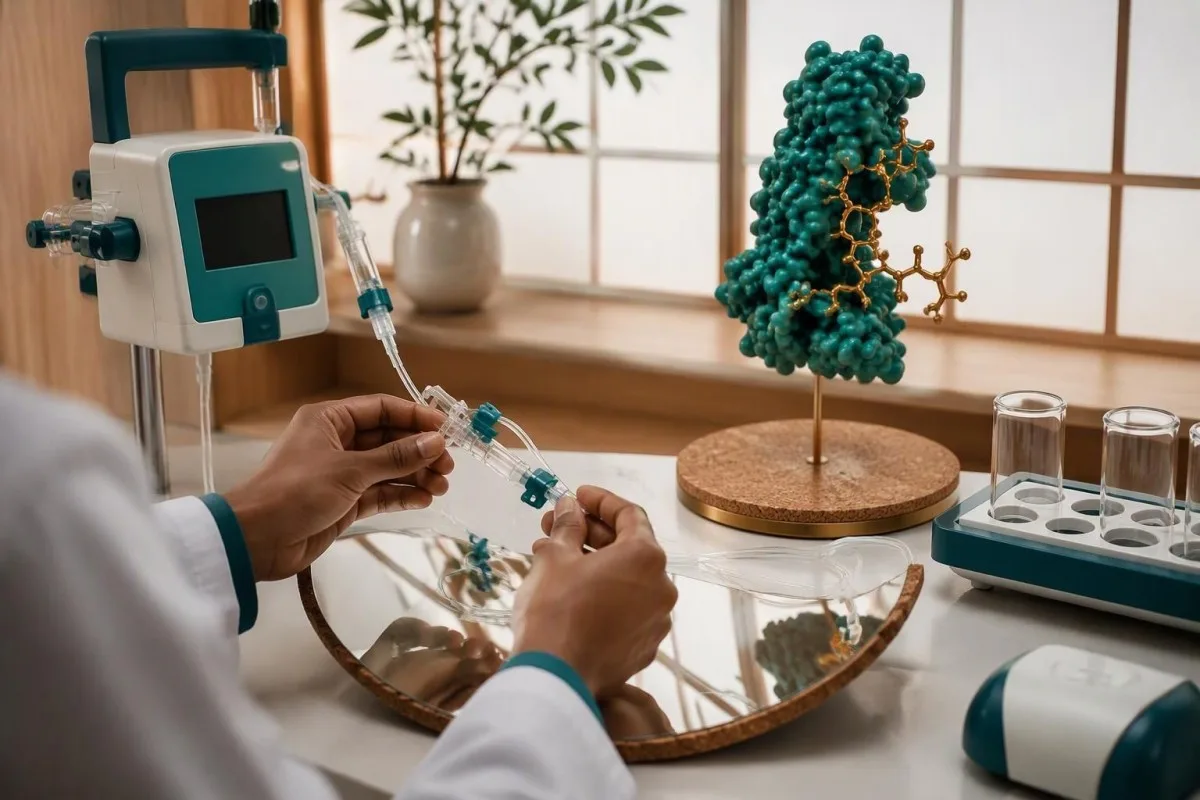
Reduced antithrombin can contribute to apparent heparin resistance, but an unexpectedly high dose requirement does not prove inherited deficiency. During 1 episode of severe illness, increased factor VIII or fibrinogen may shorten aPTT-based impressions of anticoagulation even when heparin exposure is adequate, so clinicians may reassess the monitoring method rather than simply escalate treatment.
Some heparin anti-Xa assays add exogenous antithrombin and others do not; this difference can affect what the result says about heparin concentration versus its activity in the patient. Ask the laboratory about 2 separate methods—the antithrombin activity assay and the heparin monitoring assay—because their handling of antithrombin and heparin is not necessarily identical.
A platelet fall of more than 50% during heparin exposure raises a separate possibility, heparin-induced thrombocytopenia, which is not diagnosed by low antithrombin. Our explanation of PF4 testing and HIT assessment describes that distinction; decisions about changing heparin, using replacement antithrombin or scheduling a repeat require the treating team, not a self-directed medication pause.
Ugonjwa mkali na DIC hupunguzaje antitrombini?
Sepsis, disseminated intravascular coagulation and major physiological stress can reduce antithrombin through consumption, impaired production and altered distribution. A markedly low result—for example, 35%—during critical illness is often an acquired finding; it cannot be used alone to label someone with lifelong hereditary antithrombin deficiency.
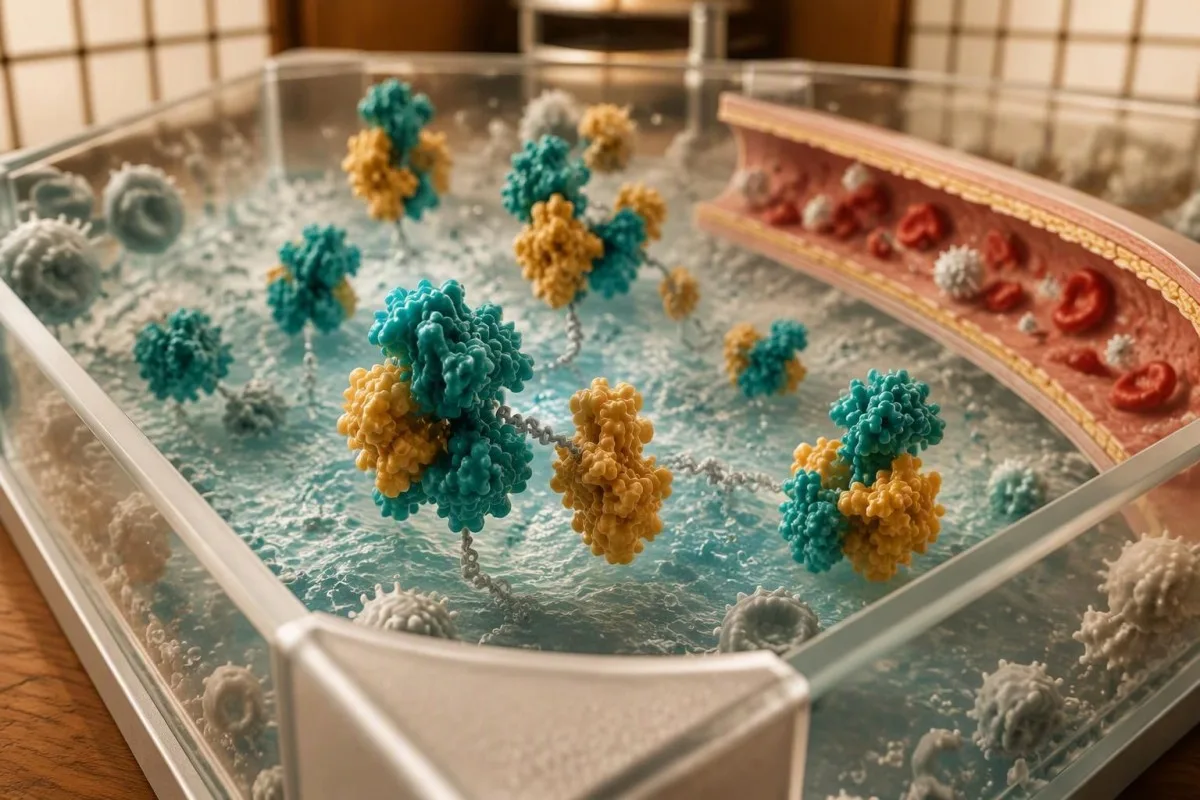
DIC is assessed from a pattern, not 1 abnormal protein: falling platelets, prolonged PT, increased fibrin-related markers and sometimes reduced fibrinogen provide the relevant context. Fibrinogen may initially remain normal or elevated because it is an acute-phase protein, so a preserved fibrinogen concentration does not automatically rule out evolving consumption.
For a hypothetical example, activity of 38%, platelets of 72 × 10^9/L and worsening PT during a major systemic illness point toward an acquired coagulation disturbance rather than an isolated inherited finding. Our DIC laboratory pattern explanation shows why trends across several measurements are more informative than repeatedly checking antithrombin while the illness remains active.
Recent antithrombin concentrate or plasma treatment can raise measured activity and obscure the underlying baseline, adding a second source of uncertainty during the same hospital stay. A result of 105% after replacement does not exclude inherited deficiency, just as 35% before recovery does not prove it; document the product and timing before interpreting either percentage.
Je, upotevu wa protini kwenye figo unaweza kusababisha shughuli ndogo ya antitrombini?
Heavy urinary protein loss can contribute to acquired antithrombin reduction, particularly in nephrotic syndrome. Adult nephrotic-range proteinuria is conventionally at least 3.5 g per 24 hours; clinicians interpret antithrombin alongside urine protein, serum albumin and the underlying kidney disorder, rather than relying on creatinine or eGFR alone.
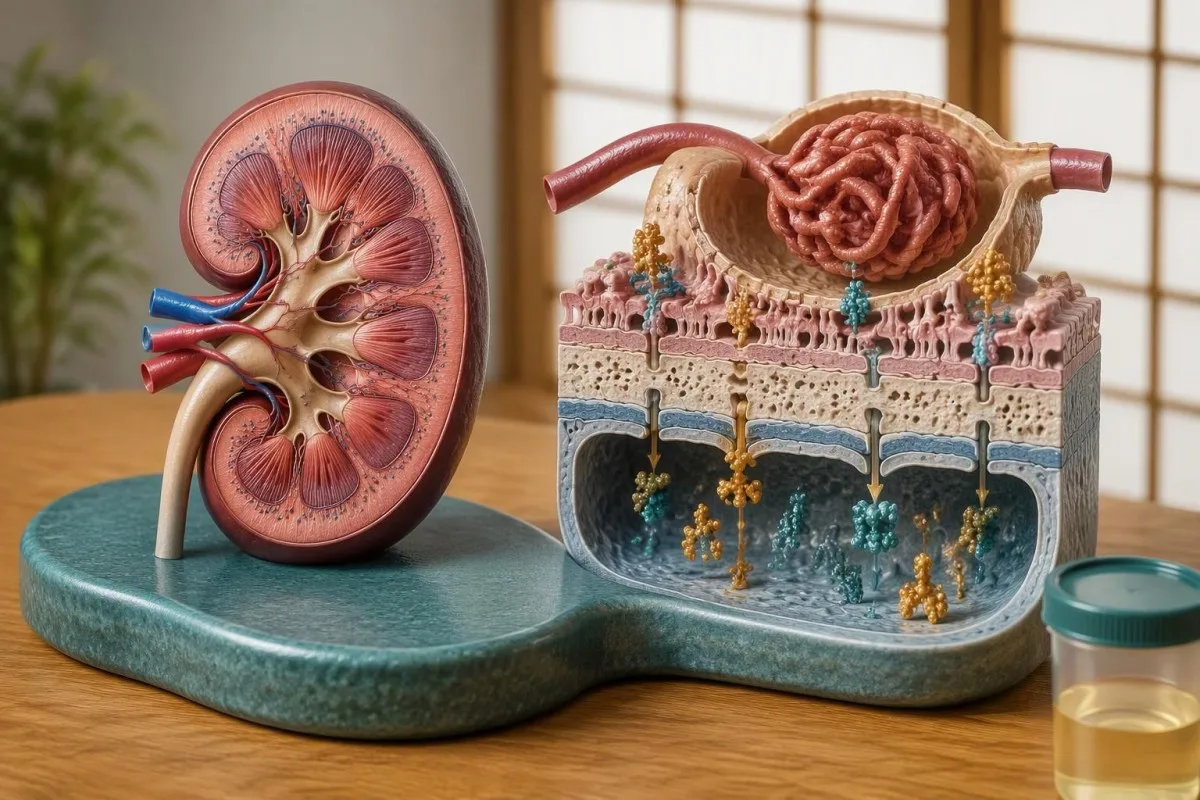
A normal eGFR does not exclude substantial protein leakage through the glomerular filtration barrier. For example, an adult with eGFR 95 mL/min/1.73 m², albumin 22 g/L and urine protein 6 g per day may have a strong acquired explanation for low activity despite apparently reassuring filtration results; persistent mkojo wenye povu na upimaji wa protini deserve assessment in that context.
The relationship between nephrotic syndrome, antithrombin levels and clot risk is not uniform: not every person with nephrotic syndrome has low antithrombin, and the thrombotic tendency involves more than urinary loss of 1 protein. Underlying diagnosis matters, including membranous nephropathy, where PLA2R results and kidney monitoring help explain the kidney process rather than prove an inherited clotting disorder.
Kantesti is an AI blood test interpretation platform that can organize an antithrombin percentage alongside albumin and kidney markers, but it cannot infer the amount of urinary protein from eGFR alone. If activity remains 62% while heavy protein loss continues, repeat testing may still describe the acquired condition; the cleaner inherited assessment usually follows clinical stabilization and improvement of that competing explanation.
Je, ugonjwa wa ini au matibabu mengine yanaweza kupunguza antitrombini?
Reduced liver synthesis can lower antithrombin, especially in advanced liver disease, while certain treatments such as L-asparaginase can also cause acquired reductions. An activity of 55% alongside other abnormalities requires review of protein production, protein loss and treatment history before clinicians consider a genetic explanation.
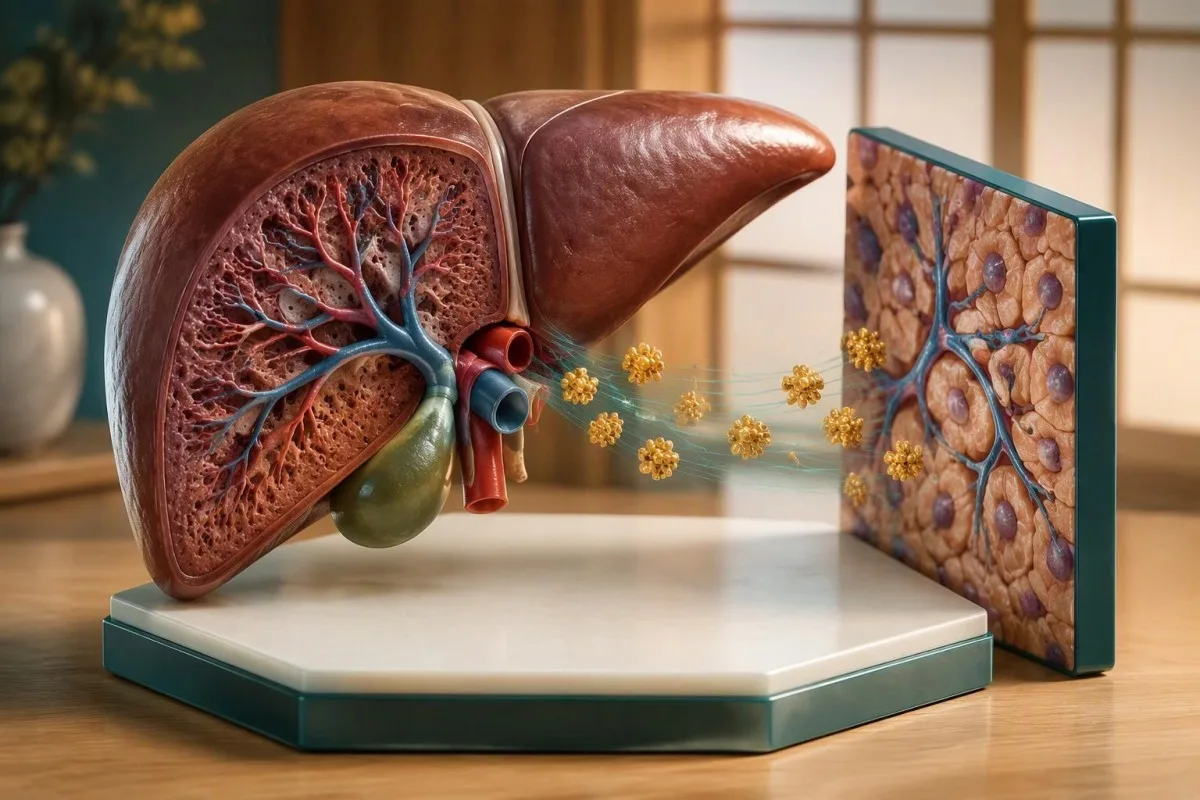
ALT and AST reflect injury more than protein-making capacity, so normal or mildly elevated enzymes do not guarantee normal antithrombin production. If activity is 57%, albumin is 25 g/L and INR is 1.6, impaired synthesis becomes a possibility—but warfarin, nutrition and protein loss can confound that pattern, as our wa tafsiri ya vipimo vya ini inavyoeleza.
Albumin cannot serve as a substitute antithrombin test because the 2 proteins have different turnover and can respond differently to illness or therapy. Our albumin and serum protein guide helps interpret the surrounding panel; a normal albumin does not exclude inherited antithrombin deficiency, and a low albumin does not prove that the liver caused it.
L-asparaginase can reduce anticoagulant proteins during cancer treatment, creating an acquired thrombosis risk that may need active management rather than merely a future repeat test. Major procedures, extracorporeal support and recent replacement products can also complicate 1 measurement; eating more protein or taking a vitamin supplement does not correct a SERPINC1-related defect or replace treatment of the underlying acquired cause.
Ni dawa zipi za kuzuia kuganda kwa damu huathiri vipimo vya antitrombini?
Direct oral anticoagulants can falsely increase antithrombin activity, potentially masking deficiency rather than causing a low flag. Apixaban, rivaroxaban and edoxaban interfere with factor Xa-based activity assays, while dabigatran can interfere with thrombin-based assays; the same patient’s 2 results may therefore differ because of assay design.
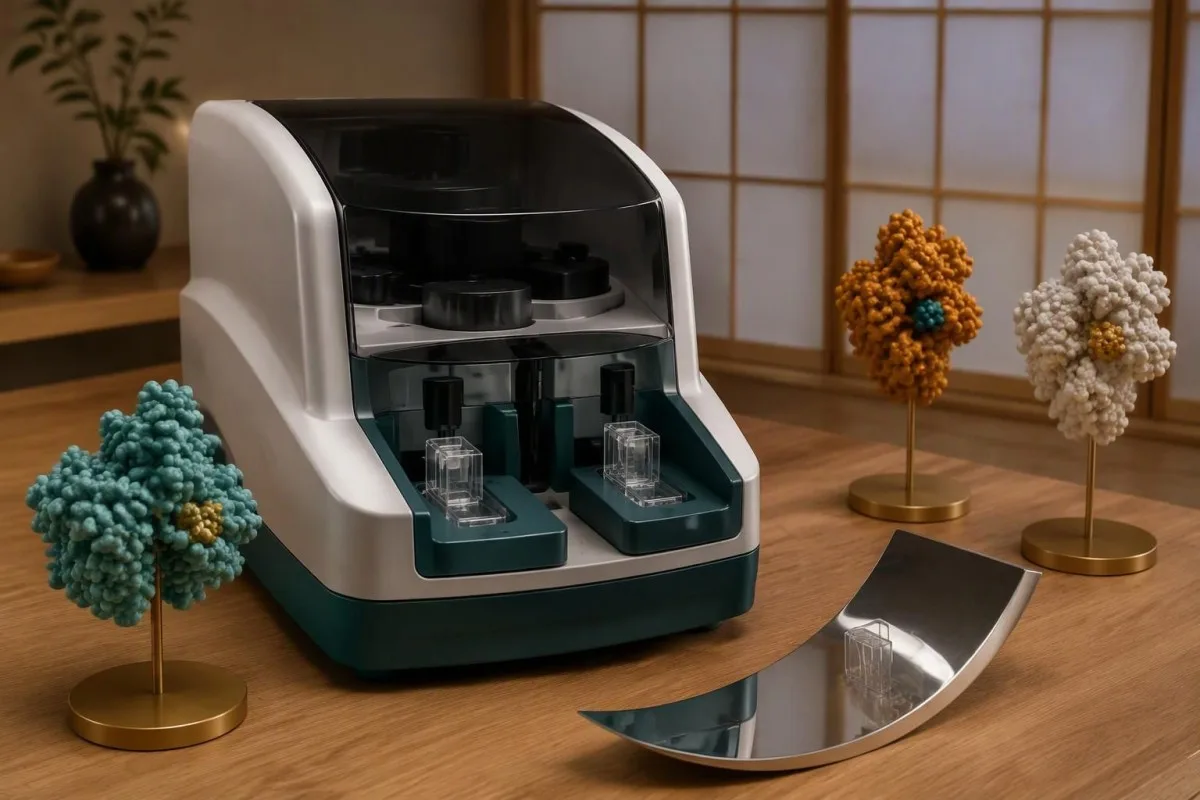
The mechanism is straightforward: the medication inhibits the assay’s added enzyme, and the instrument can misread that inhibition as stronger antithrombin function. The ISTH communication explicitly identifies these drug–assay combinations, including effects from direct thrombin inhibitors such as argatroban and bivalirudin (Van Cott et al., 2020); antigen testing usually avoids this particular functional interference, but does not replace an activity assessment.
A hypothetical activity of 108% on a factor Xa-based assay while taking rivaroxaban may conceal an underlying reduction; activity of 66% on that same drug still cannot be mathematically corrected into a true baseline. Anticoagulants also affect lupus anticoagulant test interpretation, but the direction and mechanism of interference are test-specific, not a universal rule for all thrombophilia assays.
Kantesti AI should support medication-aware interpretation rather than claim that 1 uploaded report identifies the laboratory’s reagent or removes a drug effect. Depending on the situation, the laboratory may use a less-affected assay, measure drug exposure or apply a validated removal procedure; our uthibitisho wa kiufundi na usimamizi describes the broader standards behind interpretation, not a guarantee that AI can resolve missing assay information.
Je, utunzaji wa sampuli unaweza kueleza matokeo ya chini yasiyotarajiwa?
Sample quality and assay differences can make antithrombin results unreliable, especially when the laboratory flags collection or processing problems. Coagulation samples typically require a 9:1 ratio of sample to citrate anticoagulant; underfilling, inappropriate handling or an unsuitable specimen should be considered before interpreting an isolated abnormal percentage.
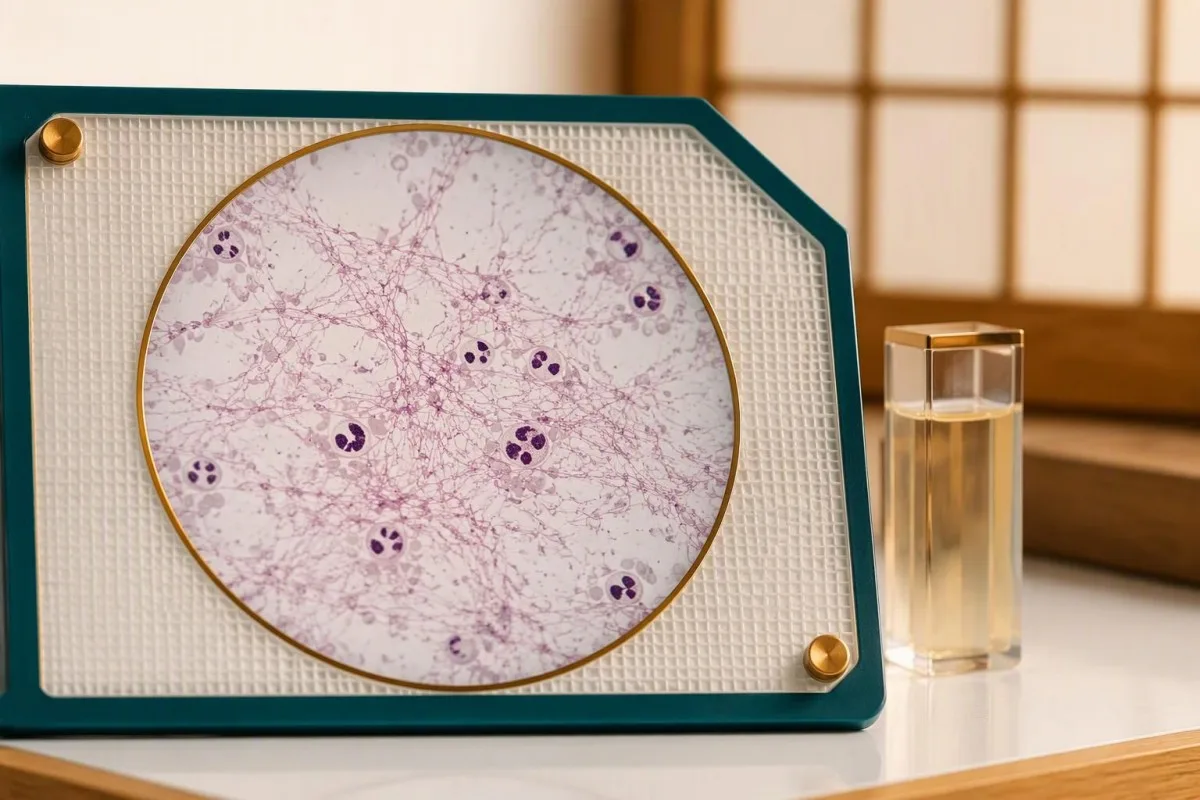
A hematocrit above approximately 55% may require citrate adjustment for coagulation testing because the amount of plasma relative to citrate is reduced. This is a laboratory preparation issue, not evidence of hereditary deficiency; if activity is 73% in a flagged specimen, ask whether the laboratory accepted the sample as valid and whether recollection is preferable to repeating the same material.
Hemolysis, lipemia and marked discoloration can interfere with optical methods, although the effect depends on the instrument and reagent rather than having 1 predictable direction. Our guides to hemolysis-related result distortion na lipemic specimens and redraws explain why a specimen-quality warning needs a method-specific answer instead of an automatic diagnosis.
Changing laboratories can create a second problem: an activity of 76% by one method and 84% by another may reflect analytical differences rather than biological recovery. Using the same laboratory helps trend comparison, but persistent clinical suspicion may justify a specialist laboratory using an alternative assay that is more sensitive to certain inherited variants; consistency and diagnostic sensitivity are 2 different goals.
Shughuli ndogo ya antitrombini inapaswa kupimwa tena lini?
Repeat antithrombin testing should occur after temporary causes have settled and medication effects have been addressed. Following an acute clot, the BSH recommendation is to wait until after 3 months of anticoagulation before testing natural anticoagulant deficiencies; the safest collection date then depends on the drug, assay and clinical situation.

An incidental borderline result in a well adult without a recent clot does not automatically require the same 3-month wait, because that interval addresses acute thrombosis. The clinician may instead arrange a separate repeat once collection issues and acquired causes are reviewed, adding antigen testing if activity remains low; there is no universally validated waiting interval that fits every outpatient finding.
Heparin-related reductions may recover after treatment ends, but laboratory policies and ongoing illness affect when a repeat becomes meaningful. For a DOAC, a fixed 48-hour pause is not universally adequate or safe: kidney function, dose timing, drug accumulation and assay sensitivity matter, and choosing a compatible method may avoid interrupting treatment entirely.
Kantesti’s trend tools can help organize 2 measurements with their dates, but a timeline should also record clot onset, heparin exposure, the last relevant medication dose and any replacement products. Our explanation of matokeo baada ya kutoka hospitalini supports that workflow; warfarin does not usually lower antithrombin as it lowers vitamin K-dependent proteins, so protein C or S stopping rules should not be copied automatically.
Ni matokeo gani yanayounga mkono upungufu wa antitrombini wa kurithi?
Inherited antithrombin deficiency becomes more likely when activity remains low on separate, interpretable samples, acquired causes are excluded and the personal or family history fits. Two concordant results provide stronger evidence than 1 result during illness, but activity, antigen and sometimes SERPINC1 testing must still be considered together.

A clearly hypothetical profile of activity 54% and 56% on 2 suitable occasions, antigen 51%, no major protein loss and a first-degree relative with confirmed deficiency would support a quantitative inherited pattern. Early or recurrent venous thrombosis increases suspicion, but age alone is not diagnostic, and absence of a family history does not exclude a new variant or previously unrecognized disease.
SERPINC1 testing can help establish a molecular explanation when the laboratory phenotype is convincing and the result could affect management or family counseling. A variant of uncertain significance is not equivalent to a diagnosis, while a negative genetic test does not necessarily exclude every relevant change; the ISTH recommendations also note that molecular testing may identify defects missed by activity assays (Van Cott et al., 2020).
Antithrombin and protein S deficiency require different interpretive rules, even when they appear on the same thrombophilia panel. Our guide to low protein S activity explains several contrasting confounders; a type II antithrombin heparin-binding-site variant can also have a different risk profile from type I deficiency, so 1 generic risk estimate should not be applied to all confirmed variants.
Tathmini ya familia inafaa lini?
Family evaluation is usually considered after the original patient’s inherited deficiency is convincingly confirmed, especially when the result could change prevention, hormone choices or pregnancy planning. Most inherited antithrombin deficiency is autosomal dominant, giving each child of a heterozygous carrier a 50% chance of inheriting the relevant variant—not a certainty of thrombosis.
The BSH guideline discourages routine thrombophilia testing of all first-degree relatives but supports selective evaluation for relatives of people with antithrombin, protein C or protein S deficiency when results could influence management (Arachchillage et al., 2022). Our mwongozo wa upimaji wa familia unaotegemea hatari explains why testing 1 relevant inherited condition can be more useful than ordering a broad panel without a clinical question.
ASH’s 2023 thrombophilia guideline similarly supports selective testing in certain families with known high-risk deficiencies, including decisions about estrogen exposure and prophylaxis during particular risk situations (Middeldorp et al., 2023). Many recommendations are conditional and based on very low-certainty evidence; antithrombin deficiency should not be treated as interchangeable with factor V Leiden results, which often carry a different risk profile.
Kantesti’s Family Health Risk feature can help organize information shared with consent, but it cannot determine whether a relative inherited a SERPINC1 variant from 1 family member’s activity percentage. Testing children requires age-aware laboratory interpretation and an assessment of whether the result would change care now; predictive testing also deserves counseling about privacy, uncertainty and the difference between inherited susceptibility and an actual clot.
Mpango wako wa ufuatiliaji na ukaguzi wa vyanzo unapaswa kujumuisha nini?
Bring the original percentage, reference interval, medication list and sampling date to follow-up, along with details of the clot, illness or protein loss that could explain the result. Two decisions come first: whether the current finding needs clinical action and whether repeat testing would genuinely change treatment or family counseling.
A low activity percentage alone does not automatically require lifelong anticoagulation or antithrombin concentrate; treatment depends on previous thrombosis, the provoking circumstances, bleeding risk and the confirmed diagnosis. New one-sided leg swelling needs prompt assessment, while sudden shortness of breath, chest pain or fainting requires emergency care even if the last activity was 100%—do not wait for a repeat thrombophilia panel.
Kantesti is an AI lab test interpretation service that can help organize the 2-stage workflow of context review followed by clinician-directed confirmation, not replace hematology advice or authorize medication interruption. Our kanuni za AI inayowajibika describe that boundary; use AI explanations to prepare precise questions, including which enzyme the assay uses and whether activity and antigen should be collected together.
The clinical recommendations here draw on 3 directly relevant external sources: the ISTH laboratory communication, the BSH testing guideline and the ASH thrombophilia guideline. The 2 Zenodo publications below provide background on serum proteins and immune-related laboratory context—not clinical trials validating antithrombin diagnosis; our viwango vya maudhui ya matibabu na upimaji wa mfumo wa komplementi na kinga dhidi ya tishu za mwili help readers distinguish supporting education from condition-specific evidence.
Maswali ya mara kwa mara
Je, shughuli ya chini ya antitrombin humaanisha upungufu wa kurithi kila mara?
0 Shughuli ya chini ya antithrombin haimaanishi kila mara upungufu wa kurithi. Shughuli ya 60% inaweza kutokea wakati wa thrombosis kali, matibabu ya heparini, ugonjwa mkali, ugonjwa wa ini ulioendelea au upotevu mkubwa wa protini kwenye mkojo. Madaktari hutafuta upungufu unaoendelea katika sampuli tofauti zilizochukuliwa kwa wakati unaofaa baada ya kupitia sababu hizi zilizopatikana. Upimaji wa antijeni na wakati mwingine upimaji wa SERPINC1 husaidia kuainisha kasoro iliyothibitishwa.
Kipimo cha shughuli ya antithrombin kinapaswa kurudiwa lini baada ya kuganda kwa damu?
Baada ya kuganda kwa damu kwa ghafla, Jumuiya ya Uingereza ya Hematolojia inapendekeza kupima upungufu wa vizuia-mgando vya asili baada tu ya miezi 3 ya matibabu ya kuzuia kuganda kwa damu. Mpango halisi wa kuchukua sampuli lazima pia uzingatie kupona, dawa ya kuzuia kuganda inayotumika na kipimo cha maabara. Pendekezo hili halimaanishi kwamba kila mtu anapaswa kuacha dawa baada ya miezi 3. Usikatize kamwe matibabu ya kuzuia kuganda kwa damu kwa ajili ya kupima bila maelekezo ya daktari aliyeagiza dawa.
Kuna tofauti gani kati ya antijeni ya antitrombini na shughuli yake?
Shughuli ya antithrombin hupima utendaji kazi, ilhali antijeni ya antithrombin hupima kiasi cha protini. Upungufu wa aina ya I kwa kawaida hupunguza matokeo yote mawili; upungufu wa aina ya II kwa kawaida hupunguza shughuli licha ya kiwango cha antijeni kilicho karibu na kawaida. Kwa mfano, shughuli inayorudiwa ya 52% pamoja na antijeni ya 101% huashiria muundo wa upungufu wa ubora, lakini haithibitishi sababu ya kurithi bila kuchunguza hali zilizopatikana na athari za dawa. Kipimo cha antijeni hakiwezi kuchukua nafasi ya tathmini halali ya utendaji kazi.
Je, apiksabani au rivaroksabani zinaweza kuathiri matokeo ya antitrombin?
Apixaban na rivaroxaban zinaweza kuongeza kimakosa shughuli ya antitrombini katika vipimo vinavyotegemea factor Xa, na hivyo kuficha upungufu. Dabigatran inaweza vivyo hivyo kuongeza shughuli inayoonekana katika vipimo vinavyotegemea thrombin. Kwa hiyo, matokeo ya 100% unapokuwa unatumia dawa inayoingilia kipimo yanaweza kutia moyo kidogo kuliko yanavyoonekana. Maabara inaweza kuchagua mbinu isiyoathiriwa sana au mkakati mwingine uliothibitishwa; kusitisha dawa mwenyewe si salama.
Je, kiwango cha shughuli ya antithrombin cha 70% ni hatari?
Shughuli ya antithrombin ya 70% iko chini ya viwango vingi vya marejeo vya maabara kwa watu wazima, lakini asilimia hiyo pekee haithibitishi dharura wala kupima hatari binafsi ya kuganda kwa damu. Maana yake hutegemea kipimo kilichotumika, dawa, historia ya awali ya kuganda kwa damu, historia ya familia na ugonjwa wa sasa. Kwa kawaida, matokeo yaliyotengwa yanahitaji tathmini ya kliniki na mpango wa uthibitisho unaofaa. Kupumua kwa shida ghafla, maumivu ya kifua, kuzimia au uvimbe mpya wa mguu upande mmoja kunahitaji tathmini bila kujali asilimia hiyo.
Je, familia yangu inapaswa kupimwa ikiwa nina upungufu wa antitrombin?
Upimaji teule wa wanafamilia unaweza kufaa baada ya upungufu wa antitrombini wa kurithi kuthibitishwa kwa uhakika, hasa pale ambapo matokeo yangebadili hatua za kinga, uchaguzi wa homoni au mipango ya ujauzito. Mchukuaji heterozigosi kwa ujumla ana uwezekano wa 50% wa kumpitishia kila mtoto lahaja husika, lakini hii haimaanishi kwa uhakika wa 50% kwamba mtoto atapatwa na thrombosis. Mwongozo wa BSH na ASH unaunga mkono tathmini inayoongozwa na maamuzi badala ya upimaji usio na uteuzi wa kila ndugu. Kwa watoto, matokeo yanahitaji kufasiriwa kwa kuzingatia umri na kujadiliwa iwapo upimaji utabadilisha huduma kwa sasa.
Pata maelezo ya jinsi ya kusoma matokeo ya vipimo vya damu
Pakia ripoti yako ya maabara na AI ya Kantesti itaeleza kila kiashiria cha kibayolojia kwa lugha rahisi ndani ya sekunde chache. Inatumiwa na zaidi ya watu milioni 2 duniani kote.
Marejeleo
- Klein, T., Mitchell, S., & Weber, H. (2026). Mwongozo wa Protini za Seramu: Globulini, Albumin na Kipimo cha Uwiano wa A/G. Utafiti wa Kimatibabu wa AI ya Kantesti. DOI
- Klein, T., Mitchell, S., & Weber, H. (2026). Mwongozo wa Kipimo cha Damu cha C3 C4 Complement na Kichwa cha ANA. Utafiti wa Kimatibabu wa AI ya Kantesti. DOI
- Van Cott EM et al. (2020). Recommendations for clinical laboratory testing for antithrombin deficiency; Communication from the SSC of the ISTH. Journal of Thrombosis and Haemostasis. DOI
- Arachchillage DJ et al. (2022). Upimaji wa thrombophilia: Mwongozo wa British Society for Haematology. British Journal of Haematology. DOI
- Middeldorp S et al. (2023). Miongozo ya American Society of Hematology ya 2023 ya udhibiti wa thromboembolism ya vena: upimaji wa thrombophilia. Blood Advances. DOI
- 2M+Vipimo vilivyochanganuliwa
- 127+Nchi
- 100+Lugha
Kuhusu timu ya matibabu


E-E-A-T Trust Signals
Uzoefu
Mapitio ya kimatibabu inayoongozwa na daktari ya mifumo ya tafsiri ya maabara.
Utaalamu
Kuzingatia dawa za maabara kuhusu jinsi viashiria (biomarkers) vinavyobadilika katika muktadha wa kliniki.
Mamlaka
Imekaguliwa kimatibabu na Dkt. Thomas Klein, kwa michango kutoka kwa Dkt. Sarah Mitchell na Prof. Dkt. Hans Weber.
Uaminifu
Tafsiri inayotegemea ushahidi yenye njia zilizo wazi za ufuatiliaji ili kupunguza tahadhari za hofu.



Kanusho la kimatibabu
Makala haya ni kwa madhumuni ya elimu tu na si ushauri wa kimatibabu. Wasiliana na mtoa huduma aliyehitimu kila wakati kwa maamuzi ya utambuzi na matibabu.
Imechapishwa · Wasiliana na timu ya uhariri
Imechapishwa na Kantesti Ltd, imesajiliwa nchini Uingereza na Wales, nambari ya kampuni. 17090423, London, Uingereza.
