Антитромбины идэвхжил бага байх нь удамшлын дутагдалтай гэсэн үг биш: цочмог бүлэн, гепарин, хүнд өвчин эсвэл уураг алдалт нь түүний түвшнийг түр хугацаанд бууруулж болно. Эмч нар идэвхжилийг тохиромжтой хугацаанд шинжлэх, заримдаа антигенийг шинжлэх, мөн эмийн хэрэглээг харгалзсан лабораторийн төлөвлөгөөний дагуу хэвээр байгаа өөрчлөлтийг баталгаажуулдаг—ихэвчлэн бүлэнгийн эмчилгээний эхний 3 сарын дараа.

Гол санаанууд
- Лавлах хязгаар: Насанд хүрэгчдийн антитромбины идэвхжил ихэвчлэн 80–120% орчим байдаг; өөрийн шинжилгээний хариунд хэвлэгдсэн интервал ашиглана уу.
- Нэг удаа бага гарсан үр дүн: Шинээр үүссэн бүлэнтэй эсвэл гепарин эмчилгээ хийлгэж байх үеийн 65% идэвхжил нь удамшлын антитромбины дутагдлыг тогтоох боломжгүй.
- Давтан шинжилгээний хугацаа: Британийн Гематологийн нийгэмлэг цочмог тромбозын үед антикоагулянт эмчилгээ хийлгэснээс хойш 3 сарын дараа л байгалийн антикоагулянтын дутагдлыг шинжлэхийг зөвлөдөг.
- Идэвхжил ба антиген: I хэлбэрийн дутагдлын үед ихэвчлэн хоёр хэмжилт хоёулаа буурдаг; II хэлбэрийн дутагдлын үед антиген хэвийн байж болох ч үйл ажиллагаа буурдаг.
- Эмийн нөлөөлөл: Апиксабан, ривароксабан болон эдоксабан нь Xa хүчин зүйлд суурилсан шинжилгээнд идэвхжлийг хуурамчаар нэмэгдүүлж болно; дабигатран нь тромбинд суурилсан шинжилгээнд мөн нөлөөлж болно.
- Уураг алдалт: Насанд хүрэгчдийн нефротик түвшний протеинури нь уламжлалаар 24 цагт дор хаяж 3.5 г байдаг бөгөөд анхдагчаар бий болсон антитромбины бууралтад нөлөөлж болно.
- Гэр бүлийн үнэлгээ: Батлагдсан гетерозигот удамшлын дутагдалтай тохиолдолд хүүхэд бүр тухайн хувилбарыг өвлөх 50% магадлалтай байдаг болохоос цусны бүлэн үүсэх нь 50% баталгаатай гэсэн үг биш.
- Эмийн аюулгүй байдал: Эм бичиж өгсөн эмчийн хувь хүнд тохируулсан төлөвлөгөөгүйгээр лабораторийн хариуг илүү цэвэр болгохын тулд антикоагулянт эмчилгээг хэзээ ч бүү зогсоо.
Антитромбины идэвхжил бага байх нь яг юу гэсэн үг вэ?
Антитромбины идэвхжил бага гэдэг нь лабораторийн шинжилгээгээр хүлээгдэж байснаас бага антикоагулянт үйл ажиллагаа илэрснийг хэлнэ; энэ нь дангаараа шалтгааныг тогтоохгүй. Насанд хүрэгчдийн лабораторийн доод хязгаараас бага, ихэвчлэн ойролцоогоор 80%-тай тэнцэх үр дүн нь удамшлын дутагдал, түр зуурын зарцуулалт, нийлэгжилт буурах, уураг алдах эсвэл шинжилгээний асуудлаас шалтгаалж болно.

Антитромбин нь тромбин (IIa хүчин зүйл гэж мөн нэрлэдэг) болон Xa хүчин зүйл зэрэг ферментийг дарангуйлж, цус бүлэгнэлтийг хязгаарладаг. 60% идэвхийн үр дүн нь шинжилгээний тохируулгын стандарттай харьцуулсан үзүүлэлтийг илэрхийлдэг; энэ нь таны цусны эргэлт 60% хамгаалагдсан эсвэл бүлэн үүсэх магадлал 40% гэсэн үг биш.
Ердийн бүлэгнэлтийн шинжилгээний үзүүлэлт хэвийн байх нь антитромбины дутагдлыг үгүйсгэхгүй. Учир нь PT болон aPTT нь удамшлын бүлэн үүсэх бүх хандлагыг илрүүлэх скрининг шинжилгээ биш. Манай тайлбар бүлэгнэлтийн шинжилгээний үзүүлэлт хэвийн байх хязгаарлалт эдгээр асуултыг ялгахад тусална: бүлэгнэлтийн хугацаа уртассан эсэх, мөн тодорхой нэг байгалийн антикоагулянт хэвийн ажиллаж байгаа эсэх нь 2 өөр үнэлгээ юм.
Kantesti нь идэвхийн хувийг эмийн түүх болон холбогдох лабораторийн үр дүнтэй хамтад нь авч үзэхэд тусалдаг хиймэл оюун ухаантай цусны шинжилгээний анализатор бөгөөд 1 хэвийн бус тэмдэглэгээг онош гэж үздэггүй. Манай компанийн түүх, зорилго хэсэгт энэ үүргийг тайлбарласан; удамшлын дутагдлыг баталгаажуулахад эмчийн удирдсан үнэлгээ шаардлагатай хэвээр бөгөөд яаралтай шинж тэмдгийг хиймэл оюуны тайлбараас үл хамааран үнэлэх ёстой.
Антитромбины идэвхжлийн ямар хэмжээ бага гэж үздэг вэ?
Насанд хүрэгчдийн антитромбины идэвхжил нь ихэвчлэн ойролцоогоор 80–120% лавлах интервалтай байдаг ч зарим лаборатори 80–130% эсвэл баталгаажуулсан өөр интервал хэрэглэдэг. Иймээс 75% идэвхжил ихэвчлэн доод хязгаарт ойр байна; гэхдээ 75% ч, өөр ямар нэг дан босго үзүүлэлт ч удамшлын дутагдлыг батлахгүй, яаралтай эмчилгээг тодорхойлохгүй.

Гетерозигот удамшлын антитромбины дутагдалтай олон хүний идэвхжил ойролцоогоор 40–70% байдаг ч олдмол эмгэгүүд мөн адил үр дүн үүсгэж болно. Эсрэгээрээ, удамшлын зарим хувилбар идэвхжлийг арай бага бууруулдаг эсвэл тодорхой шинжилгээгээр илрэхгүй байж болно; эмч нар бууралтын хэмжээг давтан шинжилгээний үр дүнтэй хамтатган тайлбарладаг болохоос дангаар нь генетикийн хурууны хээ гэж үздэггүй.
Нас нь тайлбарт ихээхэн нөлөөлдөг: хугацаандаа төрсөн эрүүл нярайд антитромбины идэвхжил насанд хүрэгчдийн үзүүлэлтийн ойролцоогоор 40–60% байж болох бөгөөд нярай үед түвшин нэмэгддэг. Дутуу төрөлт нь нэмэлт хэлбэлзэл үүсгэдэг бөгөөд жирэмсний хожуу үе эсвэл төрсний дараах эхэн үе мөн үр дүнд нөлөөлж болно; насанд хүрэгчдийн 80% доод хязгаарыг ялгалгүй хэрэглэх нь төөрөгдүүлэх шошго үүсгэж болзошгүй.
Илэрхий таамагласан жишээ авбал, идэвхжил нь 78%, өмнө нь цусны бүлэн үүсэж байгаагүй, бусдаар эрүүл насанд хүрсэн хүнийг хүнд сепсисийн үед идэвхжил нь 42% болсон насанд хүрсэн хүнээс өөрөөр үнэлэх шаардлагатай. Хоёр тайланд хоёуланд нь бага гэсэн тэмдэглэгээ гарч болох ч манай гарын авлага хязгаараас хэтэрсэн лабораторийн үр дүн лавлах хязгаарыг оношилгоо эсвэл эмчилгээний босготой адилтгаж болохгүйг тайлбарлана.
| Түвшин | Хязгаар | Утга |
|---|---|---|
| Насанд хүрэгчдийн түгээмэл интервал | Ойролцоогоор 80–120% | Ихэвчлэн хэвийн хэмжээнд байдаг ч лабораторийн өөрийн интервал болон шинжилгээний мэдрэг чанар нэн тэргүүнд тавигдана. |
| Хил заагийн бууралт | 70–79% | Often warrants context review and appropriately timed confirmation; not a diagnosis. |
| Clear reduction | 50–69% | Compatible with inherited or acquired deficiency; activity alone cannot distinguish them. |
| Их мэдэгдэхүйц бууралт | Below 50% | Requires clinical review, especially during illness or thrombosis; the percentage alone does not establish an emergency. |
Антитромбины антиген ба идэвхжил: ялгаа нь юу вэ?
Ан antithrombin activity test measures how effectively the protein inhibits a coagulation enzyme, while antithrombin antigen measures how much protein is present. Type I inherited deficiency generally lowers both; type II generally lowers activity despite a relatively normal antigen concentration, making these 2 tests complementary rather than interchangeable.

Most routine activity methods are chromogenic assays: the laboratory adds an enzyme and measures how much remains after antithrombin has inhibited it. The ISTH laboratory recommendations favor activity testing first, followed by antigen measurement when activity is low, with exclusion of acquired causes and assay interference before classification (Van Cott et al., 2020).
Consider 2 hypothetical repeat profiles obtained under suitable conditions: activity 52% with antigen 49% supports a quantitative pattern, whereas activity 52% with antigen 101% supports a qualitative pattern. These examples are not diagnostic formulas, because acquired illness can lower both measurements and antigen assays do not explain whether a functional result was distorted by medication.
Type II deficiency includes reactive-site, heparin-binding-site and other functional abnormalities; the choice of assay can change how readily a variant is detected. Kantesti’s explanations therefore distinguish quantity from performance, a distinction also illustrated by protein level versus function in C1 esterase inhibitor testing—but those are different proteins with different clinical consequences.
Цочмог бүлэн антитромбины түвшнийг түр хугацаанд бууруулж болох уу?
Acute thrombosis can temporarily reduce antithrombin activity through consumption, particularly when accompanied by illness, procedures or treatment effects. A value such as 58% during a newly diagnosed deep vein thrombosis therefore cannot reliably distinguish an inherited baseline deficiency from a reduction caused by the current event.

The British Society for Haematology recommends testing deficiencies of natural anticoagulants only after 3 months of anticoagulation for acute thrombosis, because early results are unreliable and rarely change immediate management (Arachchillage et al., 2022). This is a recommendation about diagnostic timing, not an instruction to delay treating a suspected clot or to stop anticoagulants at month 3.
A hypothetical patient has activity of 61% during a pulmonary embolism and 96% after recovery using an appropriate assay. That change supports a temporary reduction, but comparing 2 percentages remains incomplete unless the clinician knows whether heparin, a direct oral anticoagulant, replacement products or different laboratory methods affected either measurement.
D-dimer answers a different question: it reflects fibrin formation and breakdown, not antithrombin quantity or inherited status. Our clotting tests and D-dimer guide explains why an elevated D-dimer and low activity can occur together during 1 acute event without proving that the low antithrombin caused the clot.
Гепарин эмчилгээ яагаад антитромбины идэвхжлийг бууруулж болох вэ?
Heparin can lower circulating antithrombin during treatment, so a low result obtained while receiving unfractionated or low-molecular-weight heparin may reflect an acquired reduction. Heparin also depends on antithrombin for much of its anticoagulant effect; activity of 50% during treatment can therefore raise both diagnostic and medication-monitoring questions.
Reduced antithrombin can contribute to apparent heparin resistance, but an unexpectedly high dose requirement does not prove inherited deficiency. During 1 episode of severe illness, increased factor VIII or fibrinogen may shorten aPTT-based impressions of anticoagulation even when heparin exposure is adequate, so clinicians may reassess the monitoring method rather than simply escalate treatment.
Some heparin anti-Xa assays add exogenous antithrombin and others do not; this difference can affect what the result says about heparin concentration versus its activity in the patient. Ask the laboratory about 2 separate methods—the antithrombin activity assay and the heparin monitoring assay—because their handling of antithrombin and heparin is not necessarily identical.
A platelet fall of more than 50% during heparin exposure raises a separate possibility, heparin-induced thrombocytopenia, which is not diagnosed by low antithrombin. Our explanation of PF4 testing and HIT assessment describes that distinction; decisions about changing heparin, using replacement antithrombin or scheduling a repeat require the treating team, not a self-directed medication pause.
Хүнд өвчин болон DIC антитромбиныг хэрхэн бууруулдаг вэ?
Sepsis, disseminated intravascular coagulation and major physiological stress can reduce antithrombin through consumption, impaired production and altered distribution. A markedly low result—for example, 35%—during critical illness is often an acquired finding; it cannot be used alone to label someone with lifelong hereditary antithrombin deficiency.

DIC is assessed from a pattern, not 1 abnormal protein: falling platelets, prolonged PT, increased fibrin-related markers and sometimes reduced fibrinogen provide the relevant context. Fibrinogen may initially remain normal or elevated because it is an acute-phase protein, so a preserved fibrinogen concentration does not automatically rule out evolving consumption.
For a hypothetical example, activity of 38%, platelets of 72 × 10^9/L and worsening PT during a major systemic illness point toward an acquired coagulation disturbance rather than an isolated inherited finding. Our DIC laboratory pattern explanation shows why trends across several measurements are more informative than repeatedly checking antithrombin while the illness remains active.
Recent antithrombin concentrate or plasma treatment can raise measured activity and obscure the underlying baseline, adding a second source of uncertainty during the same hospital stay. A result of 105% after replacement does not exclude inherited deficiency, just as 35% before recovery does not prove it; document the product and timing before interpreting either percentage.
Бөөрөөр уураг алдах нь антитромбины идэвхжил буурахад хүргэж болох уу?
Heavy urinary protein loss can contribute to acquired antithrombin reduction, particularly in nephrotic syndrome. Adult nephrotic-range proteinuria is conventionally at least 3.5 g per 24 hours; clinicians interpret antithrombin alongside urine protein, serum albumin and the underlying kidney disorder, rather than relying on creatinine or eGFR alone.
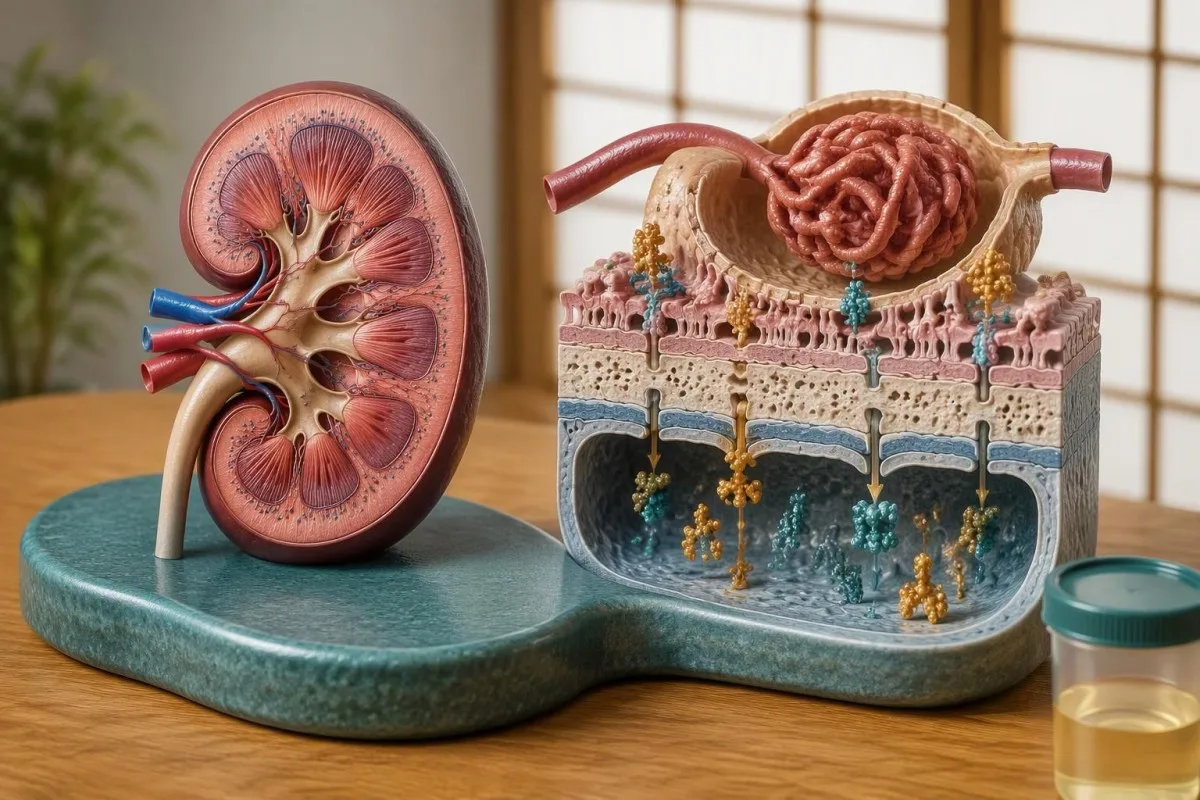
A normal eGFR does not exclude substantial protein leakage through the glomerular filtration barrier. For example, an adult with eGFR 95 mL/min/1.73 m², albumin 22 g/L and urine protein 6 g per day may have a strong acquired explanation for low activity despite apparently reassuring filtration results; persistent хөөсөрхөг шээс ба уургийн шинжилгээ deserve assessment in that context.
The relationship between nephrotic syndrome, antithrombin levels and clot risk is not uniform: not every person with nephrotic syndrome has low antithrombin, and the thrombotic tendency involves more than urinary loss of 1 protein. Underlying diagnosis matters, including membranous nephropathy, where PLA2R results and kidney monitoring help explain the kidney process rather than prove an inherited clotting disorder.
Kantesti is an AI blood test interpretation platform that can organize an antithrombin percentage alongside albumin and kidney markers, but it cannot infer the amount of urinary protein from eGFR alone. If activity remains 62% while heavy protein loss continues, repeat testing may still describe the acquired condition; the cleaner inherited assessment usually follows clinical stabilization and improvement of that competing explanation.
Элэгний өвчин эсвэл бусад эмчилгээ антитромбины түвшнийг бууруулж болох уу?
Reduced liver synthesis can lower antithrombin, especially in advanced liver disease, while certain treatments such as L-asparaginase can also cause acquired reductions. An activity of 55% alongside other abnormalities requires review of protein production, protein loss and treatment history before clinicians consider a genetic explanation.
ALT and AST reflect injury more than protein-making capacity, so normal or mildly elevated enzymes do not guarantee normal antithrombin production. If activity is 57%, albumin is 25 g/L and INR is 1.6, impaired synthesis becomes a possibility—but warfarin, nutrition and protein loss can confound that pattern, as our элэгний шинжилгээний тайлалын гарын авлага тайлбарладаг.
Albumin cannot serve as a substitute antithrombin test because the 2 proteins have different turnover and can respond differently to illness or therapy. Our albumin and serum protein guide helps interpret the surrounding panel; a normal albumin does not exclude inherited antithrombin deficiency, and a low albumin does not prove that the liver caused it.
L-asparaginase can reduce anticoagulant proteins during cancer treatment, creating an acquired thrombosis risk that may need active management rather than merely a future repeat test. Major procedures, extracorporeal support and recent replacement products can also complicate 1 measurement; eating more protein or taking a vitamin supplement does not correct a SERPINC1-related defect or replace treatment of the underlying acquired cause.
Ямар антикоагулянтууд антитромбины шинжилгээнд нөлөөлдөг вэ?
Direct oral anticoagulants can falsely increase antithrombin activity, potentially masking deficiency rather than causing a low flag. Apixaban, rivaroxaban and edoxaban interfere with factor Xa-based activity assays, while dabigatran can interfere with thrombin-based assays; the same patient’s 2 results may therefore differ because of assay design.
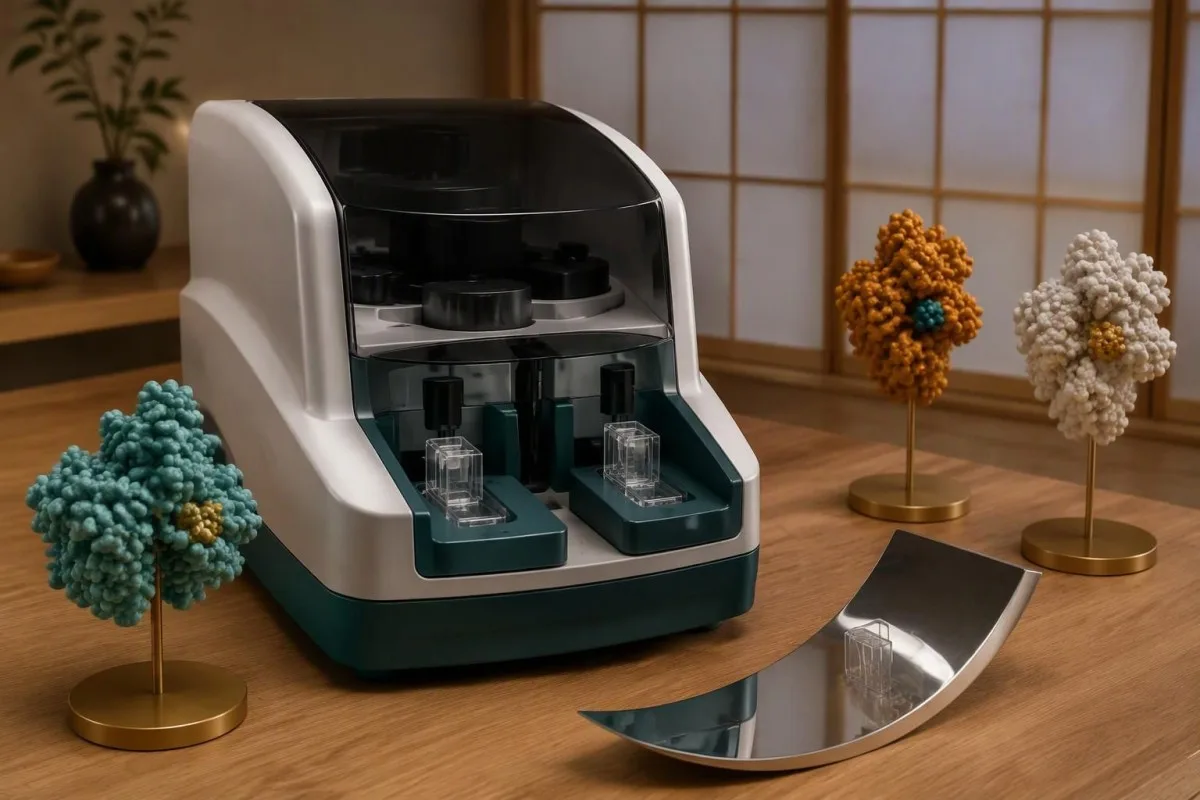
The mechanism is straightforward: the medication inhibits the assay’s added enzyme, and the instrument can misread that inhibition as stronger antithrombin function. The ISTH communication explicitly identifies these drug–assay combinations, including effects from direct thrombin inhibitors such as argatroban and bivalirudin (Van Cott et al., 2020); antigen testing usually avoids this particular functional interference, but does not replace an activity assessment.
A hypothetical activity of 108% on a factor Xa-based assay while taking rivaroxaban may conceal an underlying reduction; activity of 66% on that same drug still cannot be mathematically corrected into a true baseline. Anticoagulants also affect lupus anticoagulant test interpretation, but the direction and mechanism of interference are test-specific, not a universal rule for all thrombophilia assays.
Kantesti AI should support medication-aware interpretation rather than claim that 1 uploaded report identifies the laboratory’s reagent or removes a drug effect. Depending on the situation, the laboratory may use a less-affected assay, measure drug exposure or apply a validated removal procedure; our техникийн баталгаажуулалт ба хяналт describes the broader standards behind interpretation, not a guarantee that AI can resolve missing assay information.
Сорьцтой харьцсан аргачлал гэнэтийн бага үр дүнг тайлбарлаж болох уу?
Sample quality and assay differences can make antithrombin results unreliable, especially when the laboratory flags collection or processing problems. Coagulation samples typically require a 9:1 ratio of sample to citrate anticoagulant; underfilling, inappropriate handling or an unsuitable specimen should be considered before interpreting an isolated abnormal percentage.

A hematocrit above approximately 55% may require citrate adjustment for coagulation testing because the amount of plasma relative to citrate is reduced. This is a laboratory preparation issue, not evidence of hereditary deficiency; if activity is 73% in a flagged specimen, ask whether the laboratory accepted the sample as valid and whether recollection is preferable to repeating the same material.
Hemolysis, lipemia and marked discoloration can interfere with optical methods, although the effect depends on the instrument and reagent rather than having 1 predictable direction. Our guides to hemolysis-related result distortion болон lipemic specimens and redraws explain why a specimen-quality warning needs a method-specific answer instead of an automatic diagnosis.
Changing laboratories can create a second problem: an activity of 76% by one method and 84% by another may reflect analytical differences rather than biological recovery. Using the same laboratory helps trend comparison, but persistent clinical suspicion may justify a specialist laboratory using an alternative assay that is more sensitive to certain inherited variants; consistency and diagnostic sensitivity are 2 different goals.
Антитромбины идэвхжил багатай гарвал хэзээ давтан шинжлэх ёстой вэ?
Repeat antithrombin testing should occur after temporary causes have settled and medication effects have been addressed. Following an acute clot, the BSH recommendation is to wait until after 3 months of anticoagulation before testing natural anticoagulant deficiencies; the safest collection date then depends on the drug, assay and clinical situation.

An incidental borderline result in a well adult without a recent clot does not automatically require the same 3-month wait, because that interval addresses acute thrombosis. The clinician may instead arrange a separate repeat once collection issues and acquired causes are reviewed, adding antigen testing if activity remains low; there is no universally validated waiting interval that fits every outpatient finding.
Heparin-related reductions may recover after treatment ends, but laboratory policies and ongoing illness affect when a repeat becomes meaningful. For a DOAC, a fixed 48-hour pause is not universally adequate or safe: kidney function, dose timing, drug accumulation and assay sensitivity matter, and choosing a compatible method may avoid interrupting treatment entirely.
Kantesti’s trend tools can help organize 2 measurements with their dates, but a timeline should also record clot onset, heparin exposure, the last relevant medication dose and any replacement products. Our explanation of эмнэлгээс гарсны дараах үр дүн supports that workflow; warfarin does not usually lower antithrombin as it lowers vitamin K-dependent proteins, so protein C or S stopping rules should not be copied automatically.
Ямар шинжилгээний үр дүн удамшлын антитромбины дутагдлыг дэмждэг вэ?
Inherited antithrombin deficiency becomes more likely when activity remains low on separate, interpretable samples, acquired causes are excluded and the personal or family history fits. Two concordant results provide stronger evidence than 1 result during illness, but activity, antigen and sometimes SERPINC1 testing must still be considered together.

A clearly hypothetical profile of activity 54% and 56% on 2 suitable occasions, antigen 51%, no major protein loss and a first-degree relative with confirmed deficiency would support a quantitative inherited pattern. Early or recurrent venous thrombosis increases suspicion, but age alone is not diagnostic, and absence of a family history does not exclude a new variant or previously unrecognized disease.
SERPINC1 testing can help establish a molecular explanation when the laboratory phenotype is convincing and the result could affect management or family counseling. A variant of uncertain significance is not equivalent to a diagnosis, while a negative genetic test does not necessarily exclude every relevant change; the ISTH recommendations also note that molecular testing may identify defects missed by activity assays (Van Cott et al., 2020).
Antithrombin and protein S deficiency require different interpretive rules, even when they appear on the same thrombophilia panel. Our guide to low protein S activity explains several contrasting confounders; a type II antithrombin heparin-binding-site variant can also have a different risk profile from type I deficiency, so 1 generic risk estimate should not be applied to all confirmed variants.
Гэр бүлийн гишүүдийг хэзээ шинжлэх нь тохиромжтой вэ?
Family evaluation is usually considered after the original patient’s inherited deficiency is convincingly confirmed, especially when the result could change prevention, hormone choices or pregnancy planning. Most inherited antithrombin deficiency is autosomal dominant, giving each child of a heterozygous carrier a 50% chance of inheriting the relevant variant—not a certainty of thrombosis.
The BSH guideline discourages routine thrombophilia testing of all first-degree relatives but supports selective evaluation for relatives of people with antithrombin, protein C or protein S deficiency when results could influence management (Arachchillage et al., 2022). Our эрсдэлд суурилсан гэр бүлийн шинжилгээний гарын авлага explains why testing 1 relevant inherited condition can be more useful than ordering a broad panel without a clinical question.
ASH’s 2023 thrombophilia guideline similarly supports selective testing in certain families with known high-risk deficiencies, including decisions about estrogen exposure and prophylaxis during particular risk situations (Middeldorp et al., 2023). Many recommendations are conditional and based on very low-certainty evidence; antithrombin deficiency should not be treated as interchangeable with factor V Leiden results, which often carry a different risk profile.
Kantesti’s Family Health Risk feature can help organize information shared with consent, but it cannot determine whether a relative inherited a SERPINC1 variant from 1 family member’s activity percentage. Testing children requires age-aware laboratory interpretation and an assessment of whether the result would change care now; predictive testing also deserves counseling about privacy, uncertainty and the difference between inherited susceptibility and an actual clot.
Дараагийн хяналтын төлөвлөгөө болон эх сурвалжийн шалгалтад юу багтах ёстой вэ?
Bring the original percentage, reference interval, medication list and sampling date to follow-up, along with details of the clot, illness or protein loss that could explain the result. Two decisions come first: whether the current finding needs clinical action and whether repeat testing would genuinely change treatment or family counseling.

A low activity percentage alone does not automatically require lifelong anticoagulation or antithrombin concentrate; treatment depends on previous thrombosis, the provoking circumstances, bleeding risk and the confirmed diagnosis. New one-sided leg swelling needs prompt assessment, while sudden shortness of breath, chest pain or fainting requires emergency care even if the last activity was 100%—do not wait for a repeat thrombophilia panel.
Kantesti is an AI lab test interpretation service that can help organize the 2-stage workflow of context review followed by clinician-directed confirmation, not replace hematology advice or authorize medication interruption. Our хариуцлагатай AI-ийн зарчмууд describe that boundary; use AI explanations to prepare precise questions, including which enzyme the assay uses and whether activity and antigen should be collected together.
The clinical recommendations here draw on 3 directly relevant external sources: the ISTH laboratory communication, the BSH testing guideline and the ASH thrombophilia guideline. The 2 Zenodo publications below provide background on serum proteins and immune-related laboratory context—not clinical trials validating antithrombin diagnosis; our эмнэлгийн агуулгын стандартууд болон комплемент ба аутоиммун шинжилгээний гарын авлага help readers distinguish supporting education from condition-specific evidence.
Түгээмэл асуултууд
Антитромбины идэвхжил бага байх нь үргэлж удамшлын дутагдал гэсэн үг үү?
0 Бага антитромбины идэвхжил нь үргэлж удамшлын дутагдлыг илэрхийлдэггүй. 60% идэвхжил нь цочмог тромбоз, гепарины эмчилгээ, хүнд өвчин, элэгний хүнд шатны өвчин эсвэл шээсээр их хэмжээний уураг алдах үед илэрч болно. Эмч нар олдмол шалтгаануудыг нягталсны дараа тохиромжтой хугацаанд авсан тусдаа сорьцуудад бууралт тогтвортой байгаа эсэхийг шалгадаг. Антигений шинжилгээ болон заримдаа SERPINC1 шинжилгээ нь батлагдсан өөрчлөлтийг ангилахад тусалдаг.
Цусны бүлэн үүссэний дараа антитромбины идэвхийг хэзээ давтан шинжлэх вэ?
Цочмог бүлэнгийн дараа Британийн Гематологийн нийгэмлэг байгалийн антикоагулянтын дутагдлыг зөвхөн 3 сарын антикоагулянт эмчилгээний дараа шинжлэхийг зөвлөдөг. Сорьц цуглуулах бодит төлөвлөгөөнд мөн биеийн сэргэлт, хэрэглэж буй антикоагулянт болон лабораторийн шинжилгээг харгалзах ёстой. Энэ зөвлөмж нь хүн бүр 3 сарын дараа эмээ зогсоох ёстой гэсэн үг биш. Эмчийн зааваргүйгээр шинжилгээ өгөхийн тулд антикоагулянт эмчилгээг хэзээ ч бүү тасалдуул.
Антитромбины антиген ба идэвхийн хооронд ямар ялгаа байдаг вэ?
0 Антитромбины идэвх нь үйл ажиллагааг нь хэмждэг бол антитромбины антиген нь уургийн хэмжээг хэмждэг. I хэлбэрийн дутагдлын үед ерөнхийдөө хоёр үзүүлэлт хоёулаа буурдаг; II хэлбэрийн дутагдлын үед антиген харьцангуй хэвийн боловч идэвх буурдаг. Жишээлбэл, идэвхийн давтан шинжилгээний 52%, антигений 101% үзүүлэлт нь чанарын өөрчлөлтийн хэв шинжийг илтгэх боловч олдмол эмгэг болон эмийн нөлөөг шалгалгүйгээр удамшлын шалтгаантайг тогтоохгүй. Антигений шинжилгээ нь хүчин төгөлдөр үйл ажиллагааны үнэлгээг орлож чадахгүй.
Апиксабан эсвэл ривароксабан нь антитромбины шинжилгээний үр дүнд нөлөөлж болох уу?
Апиксабан болон ривароксабан нь Xa факторт суурилсан шинжилгээнд антитромбины идэвхийг хуурамчаар нэмэгдүүлж, дутагдлыг нуун дарагдуулж болзошгүй. Дабигатран нь тромбинд суурилсан шинжилгээнд мөн адил идэвхийг бодитоос өндөр мэт харуулж болно. Иймээс харилцан нөлөөлдөг эм ууж байх үед гарсан 100% үр дүн нь харагдаж байгаагаасаа бага тайвшруулах шинжтэй байж болзошгүй. Лаборатори нөлөөлөл багатай арга эсвэл баталгаажуулсан өөр стратегийг сонгож болно; эмийг өөрөө зогсоох нь аюултай.
Антитромбины идэвхжил 70% аюултай юу?
70%-ийн антитромбины идэвх олон насанд хүрэгчдийн лабораторийн лавлах интервалаас доогуур боловч зөвхөн энэ хувь нь яаралтай нөхцөл байдал байгааг тогтоохгүй, эсвэл тухайн хүний бүлэн үүсэх эрсдэлийг тооцохгүй. Үр дүнгийн утга нь шинжилгээний арга, хэрэглэж буй эм, өмнө нь бүлэн үүсэж байсан эсэх, гэр бүлийн түүх болон одоогийн өвчлөлөөс хамаарна. Тусгаарлагдсан энэ үр дүнг ихэвчлэн эмнэлзүйн хувьд хянаж, зохих баталгаажуулалт хийх төлөвлөгөө гаргах шаардлагатай. Амьсгал гэнэт давчдах, цээжээр өвдөх, ухаан балартах эсвэл нэг талын хөл шинээр хавдах тохиолдолд энэ хувиас үл хамааран эмнэлгийн үнэлгээ хийлгэх шаардлагатай.
Би антитромбины дутагдалтай бол гэр бүлийнхнийг маань шинжилгээнд хамруулах хэрэгтэй юу?
Антитромбины удамшлын дутагдал найдвартай батлагдсан тохиолдолд гэр бүлийн гишүүдийг сонгож шинжлэх нь тохиромжтой байж болно. Ялангуяа шинжилгээний хариу нь урьдчилан сэргийлэх арга хэмжээ, дааврын бэлдмэлийн сонголт эсвэл жирэмслэлтийн төлөвлөлтийг өөрчлөхөөр байвал энэ нь чухал. Гетерозигот тээгч холбогдох хувилбарыг хүүхэд бүрдээ дамжуулах магадлал 50% байдаг ч энэ нь тухайн хүүхэд тромбозоор өвчилнө гэсэн 50% баталгаа биш. BSH болон ASH-ийн удирдамжид хамаатан садан бүрийг ялгалгүй шинжлэхийн оронд шийдвэр гаргахад чиглэсэн үнэлгээ хийхийг дэмждэг. Хүүхдийн шинжилгээний хариуг насанд нь тохируулан тайлбарлаж, шинжилгээ нь одоо авах тусламж үйлчилгээг өөрчлөх эсэхийг хэлэлцэх шаардлагатай.
Цусны шинжилгээний хариугаа тайлбарлуулаарай
Лабораторийн тайлангаа байршуулснаар Kantesti-ийн AI биомаркер бүрийг энгийн хэлээр хэдхэн секундэд тайлбарлана. Дэлхий даяар 2 сая гаруй хүн ашигладаг.
Лавлагаа
- Klein, T., Mitchell, S., & Weber, H. (2026). Ийлдсийн уургийн гарын авлага: Глобулин, альбумин ба A/G харьцааны цусны шинжилгээ. Kantesti AI-ийн анагаахын судалгаа. DOI
- Klein, T., Mitchell, S., & Weber, H. (2026). C3 C4 Комплементын цусны шинжилгээ ба ANA титрийн заавар. Kantesti AI-ийн анагаахын судалгаа. DOI
- Van Cott EM et al. (2020). Recommendations for clinical laboratory testing for antithrombin deficiency; Communication from the SSC of the ISTH. Journal of Thrombosis and Haemostasis. DOI
- Араччилаж ДЖ нар. (2022). Тромбофилийн шинжилгээ: Британийн Гематологийн нийгэмлэгийн удирдамж. Британийн Гематологийн сэтгүүл. DOI
- Мидделдорп С нар. (2023). Венийн тромбоэмболизмын менежментийн талаарх Америкийн Гематологийн нийгэмлэгийн 2023 оны удирдамж: тромбофилийн шинжилгээ. Blood Advances. DOI
- 2 сая+Шинжилсэн сорилууд
- 127+Улс орнууд
- 100+Хэлнүүд
Эмнэлгийн багийн тухай


E-E-A-T итгэлийн дохио
Туршлага
Эмчийн удирдлагатай лабораторийн тайлалын ажлын урсгалын клиник хяналт.
Мэргэшсэн байдал
Биомаркерууд клиникийн нөхцөлд хэрхэн ажиллаж/өөрчлөгдөж байгаад чиглэсэн лабораторийн анагаах ухаан.
Эрх мэдэл
Доктор Томас Кляйн эмнэлзүйн хувьд хянасан бөгөөд доктор Сара Митчелл, профессор доктор Ханс Вебер нар хувь нэмэр оруулсан.
Найдвартай байдал
Сэрэмжлүүлгийг бууруулахын тулд тодорхой дараагийн алхамтай, нотолгоонд суурилсан тайлал.




Эмнэлгийн хариуцлагаас татгалзах мэдэгдэл
Энэ нийтлэл зөвхөн боловсролын зорилготой бөгөөд эмнэлгийн зөвлөгөө биш болно. Оношилгоо, эмчилгээний шийдвэр гаргахдаа мэргэшсэн эрүүл мэндийн үйлчилгээ үзүүлэгчтэй заавал зөвлөлдөнө.
Хэвлэгдсэн · Редакцын багтай холбогдох
Kantesti Ltd компани Англи, Уэльст бүртгэлтэй, компанийн дугаар. 17090423, Лондон, Нэгдсэн Хаант Улс.
