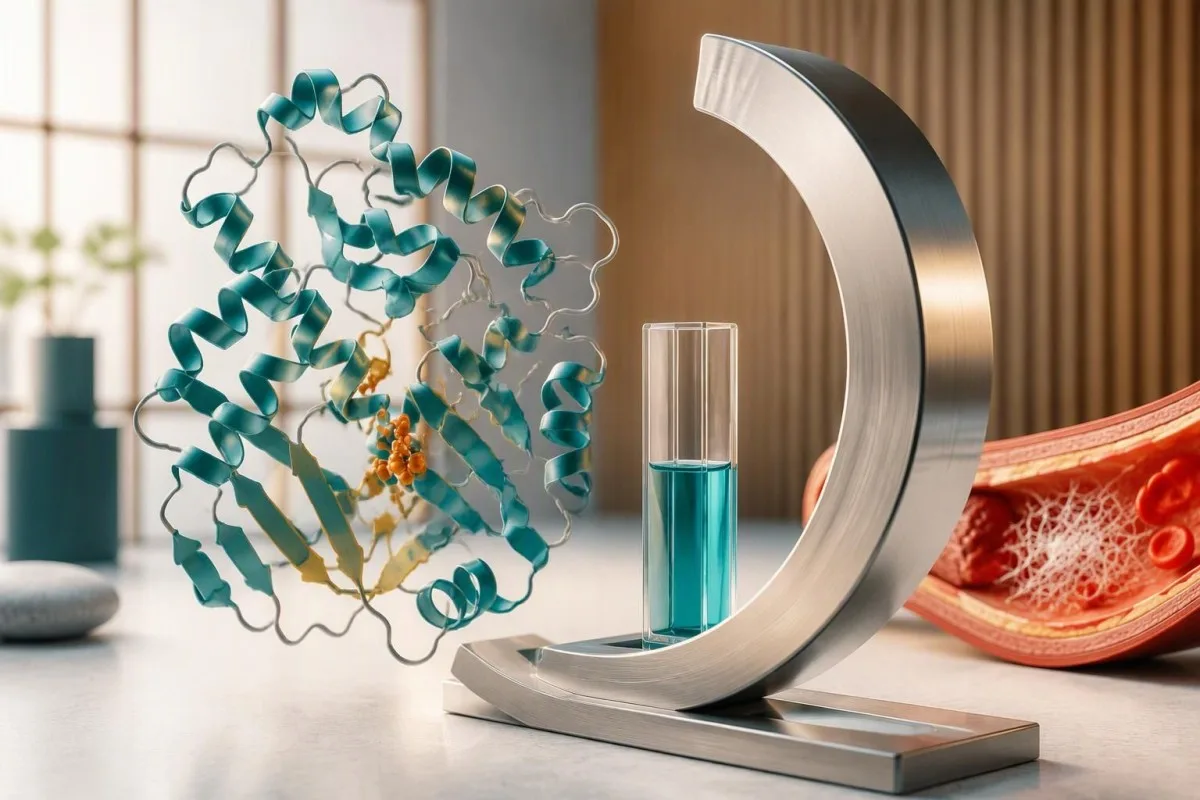
Антитромбин активлыгының түбән булуы нәселдән килгән дефицитны автоматик рәвештә аңлатмый: кискен тромб, гепарин, авыр чир яки аксым югалту аның дәрәҗәсен вакытлыча киметергә мөмкин. Табиблар дәвамлы тайпылышларны тиешле вакытта активлыкны тикшерү белән, кайчак антигенны тикшереп һәм даруларны исәпкә алган лаборатор план нигезендә раслыйлар — еш кына тромбны дәвалауның беренче 3 аеннан соң.

Төп нәтиҗәләр
- Vargu referues: Өлкәннәрдә антитромбин активлыгы гадәттә 80–120% тирәсендә була; үзегезнең анализ нәтиҗәсе кәгазендә күрсәтелгән интервалны кулланыгыз.
- Бер түбән нәтиҗә: Яңа тромб яки гепарин белән дәвалау вакытында активлыкның 65% булуы нәселдән килгән антитромбин дефицитын раслый алмый.
- Кабатлау вакыты: Британия гематология җәмгыяте кискен тромбозны антикоагулянтлар белән дәвалауның 3 ае тәмамланганнан соң гына табигый антикоагулянтлар дефицитын тикшерергә киңәш итә.
- Активлык белән антиген: I тип дефицит гадәттә ике күрсәткечне дә киметә; II тип дефицит функцияне киметә, ә антиген дәрәҗәсе нормаль булып калырга мөмкин.
- Даруларның анализга йогынтысы: Апиксабан, ривароксабан һәм эдоксабан Xa факторы нигезендәге анализларда активлык күрсәткечен ялгыш рәвештә күтәрергә мөмкин; дабигатран тромбин нигезендәге анализларда шулай эшли ала.
- Аксым югалту: Өлкәннәрдә нефротик диапазондагы протеинурия гадәттә 24 сәгать эчендә кимендә 3.5 г тәшкил итә һәм антитромбинның соңрак барлыкка килгән кимүенә өлеш кертә ала.
- Гаилә әгъзаларын тикшерү: Растланган гетерозиготалы нәселдән килгән җитешсезлек булганда, һәр балада тиешле вариантны мирас итеп алу ихтималы 50% тәшкил итә; бу кан оешу ихтималы 50% дигәнне аңлатмый.
- Медикаментлар куркынычсызлыгы: Билгеләгән клиницистның шәхси планы булмыйча, лаборатория нәтиҗәсен төгәлрәк итү өчен антикоагуляцияне беркайчан да туктатмагыз.
Антитромбин активлыгының түбән булуы чынлыкта нәрсәне аңлата?
Антитромбин активлыгы түбән дигән сүз — лаборатория анализы көтелгәннән азрак антикоагулянт функцияне ачыклаган; бу үзеннән-үзе сәбәпне күрсәтми. Өлкәннәр лабораториясенең түбән чигеннән — еш кына якынча 80% булган дәрәҗәдән — түбән нәтиҗә нәселдән килгән җитешсезлекне, вакытлыча тотылуны, продукциянең кимүен, аксым югалтуны яки тикшерүдәге проблеманы чагылдырырга мөмкин.

Антитромбин тромбин, шулай ук IIa факторы дип аталучы ферментны һәм Xa факторын да кертеп, ферментларны тоткарлау юлы белән кан оешуны чикли. 60% активлык нәтиҗәсе анализны калибрлау стандарты белән чагыштыргандагы күрсәткечне тасвирлый; бу кан әйләнешегез 60% дәрәҗәсендә якланган яки кан оешу ихтималыгыз 40% дигәнне аңлатмый.
Гадәти кан оешу панелендәге нәтиҗәләрнең нормаль булуы антитромбин җитешсезлеген кире какмый, чөнки PT һәм aPTT нәселдән килгән кан оешу омтылышларының һәрберсен ачыклау өчен скрининг тестлары түгел. Безнең нормаль коагуляция панеле чикләүләре турындагы аңлатмабыз бу сорауларны аерырга ярдәм итә: коагуляция вакыты озайганмы һәм билгеле бер табигый антикоагулянт нормаль эшлиме — болар 2 төрле бәяләү.
Kantesti — ясалма интеллектлы кан анализаторы; ул активлык процентын дарулар тарихы һәм бәйле лаборатория нәтиҗәләре белән бергә карарга ярдәм итә, ә 1 аномаль билгене диагноз дип кабул итми. Безнең компаниябезнең тарихы һәм максаты аның ролен аңлата; нәселдән килгән җитешсезлекне раслау өчен барыбер клиницист җитәкчелегендәге тикшерү кирәк, ә ашыгыч симптомнар ясалма интеллект бәяләмәсенә бәйсез рәвештә тикшерелергә тиеш.
Антитромбин активлыгының нинди диапазоны түбән дип санала?
Өлкәннәрдә антитромбин активлыгы гадәттә якынча 80–120% белешмә интервалында була, әмма кайбер лабораторияләр 80–130% яки башка расланган интервал куллана. Шуңа күрә 75% активлык еш кына чик буендагы түбән күрсәткеч санала, ләкин 75% та, башка бер генә чик күрсәткече дә нәселдән килгән җитешсезлекне расламый һәм ашыгыч дәвалау кирәклеген билгеләми.
Нәселдән килгән гетерозиготалы антитромбин җитешсезлеге булган күп кешеләрдә активлык якынча 40–70% тирәсендә була, ләкин соңрак барлыкка килгән халәтләр дә шундый ук күрсәткечләргә китерә ала. Киресенчә, кайбер нәселдән килгән вариантлар активлыкны азрак киметә яки билгеле бер анализда ачыкланмый кала; клиницистлар кимү дәрәҗәсен кабат алынган нәтиҗәләр белән бергә бәяли, аны бердәнбер генетик билге итеп карамый.
Яшь нәтиҗәләрне аңлатуга шактый йогынты ясый: вакытында туган, сәламәт яңа туган балаларда антитромбин активлыгы өлкәннәрдәге күрсәткечнең якынча 40–60% өлешен тәшкил итә һәм сабый чакта арта. Вакытыннан алда туу өстәмә үзгәрешләр кертә, ә йөклелекнең соңгы чоры яки бала тудырудан соңгы иртә чор да нәтиҗәләргә йогынты ясарга мөмкин; өлкәннәр өчен билгеләнгән 80% түбән чиген аермыйча куллану адаштыручы бәягә китерергә мөмкин.
Ачык итеп шартлы мисал китерсәк, активлыгы 78% булган һәм элек кан оешу очраклары булмаган, үзен яхшы хис иткән өлкән кешегә бәяләүнең кирәклеге, авыр сепсис вакытында активлыгы 42% булган өлкән кешенекеннән аерыла. Ике нәтиҗәдә дә бер үк түбән күрсәткеч билгесе булырга мөмкин, әмма безнең чиктән чыккан лаборатория нәтиҗәләре белешмә чикләренең диагностик яки дәвалау чикләре белән бер үк түгеллеген аңлатучы белешмәлегебез.
| Дәрәҗә | Диапазон | Мәгънәсе |
|---|---|---|
| Өлкәннәр өчен гадәти интервал | Якынча 80–120% | Гадәттә норма чикләрендә, әмма лабораториянең үз интервалы һәм анализның сизгерлеге өстенлекле. |
| Чик буендагы кимү | 70–79% | Often warrants context review and appropriately timed confirmation; not a diagnosis. |
| Clear reduction | 50–69% | Compatible with inherited or acquired deficiency; activity alone cannot distinguish them. |
| Айқын төмендеу | Below 50% | Requires clinical review, especially during illness or thrombosis; the percentage alone does not establish an emergency. |
Антитромбин антигены һәм активлыгы: аларның аермасы нәрсәдә?
Бер antithrombin activity test measures how effectively the protein inhibits a coagulation enzyme, while antithrombin antigen measures how much protein is present. Type I inherited deficiency generally lowers both; type II generally lowers activity despite a relatively normal antigen concentration, making these 2 tests complementary rather than interchangeable.
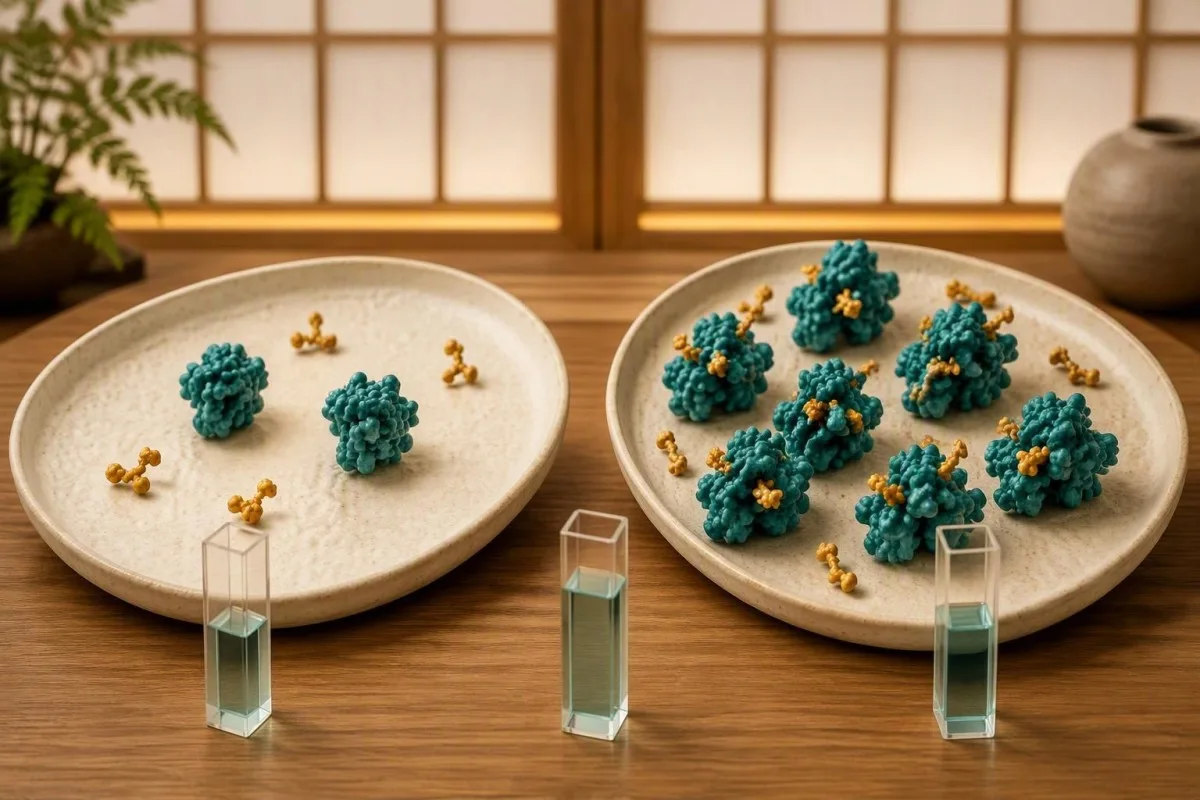
Most routine activity methods are chromogenic assays: the laboratory adds an enzyme and measures how much remains after antithrombin has inhibited it. The ISTH laboratory recommendations favor activity testing first, followed by antigen measurement when activity is low, with exclusion of acquired causes and assay interference before classification (Van Cott et al., 2020).
Consider 2 hypothetical repeat profiles obtained under suitable conditions: activity 52% with antigen 49% supports a quantitative pattern, whereas activity 52% with antigen 101% supports a qualitative pattern. These examples are not diagnostic formulas, because acquired illness can lower both measurements and antigen assays do not explain whether a functional result was distorted by medication.
Type II deficiency includes reactive-site, heparin-binding-site and other functional abnormalities; the choice of assay can change how readily a variant is detected. Kantesti’s explanations therefore distinguish quantity from performance, a distinction also illustrated by protein level versus function in C1 esterase inhibitor testing—but those are different proteins with different clinical consequences.
Кискен тромб антитромбин дәрәҗәсен вакытлыча киметә аламы?
Acute thrombosis can temporarily reduce antithrombin activity through consumption, particularly when accompanied by illness, procedures or treatment effects. A value such as 58% during a newly diagnosed deep vein thrombosis therefore cannot reliably distinguish an inherited baseline deficiency from a reduction caused by the current event.

The British Society for Haematology recommends testing deficiencies of natural anticoagulants only after 3 months of anticoagulation for acute thrombosis, because early results are unreliable and rarely change immediate management (Arachchillage et al., 2022). This is a recommendation about diagnostic timing, not an instruction to delay treating a suspected clot or to stop anticoagulants at month 3.
A hypothetical patient has activity of 61% during a pulmonary embolism and 96% after recovery using an appropriate assay. That change supports a temporary reduction, but comparing 2 percentages remains incomplete unless the clinician knows whether heparin, a direct oral anticoagulant, replacement products or different laboratory methods affected either measurement.
D-dimer answers a different question: it reflects fibrin formation and breakdown, not antithrombin quantity or inherited status. Our clotting tests and D-dimer guide explains why an elevated D-dimer and low activity can occur together during 1 acute event without proving that the low antithrombin caused the clot.
Ни өчен гепарин белән дәвалау антитромбин активлыгын киметергә мөмкин?
Heparin can lower circulating antithrombin during treatment, so a low result obtained while receiving unfractionated or low-molecular-weight heparin may reflect an acquired reduction. Heparin also depends on antithrombin for much of its anticoagulant effect; activity of 50% during treatment can therefore raise both diagnostic and medication-monitoring questions.
Reduced antithrombin can contribute to apparent heparin resistance, but an unexpectedly high dose requirement does not prove inherited deficiency. During 1 episode of severe illness, increased factor VIII or fibrinogen may shorten aPTT-based impressions of anticoagulation even when heparin exposure is adequate, so clinicians may reassess the monitoring method rather than simply escalate treatment.
Some heparin anti-Xa assays add exogenous antithrombin and others do not; this difference can affect what the result says about heparin concentration versus its activity in the patient. Ask the laboratory about 2 separate methods—the antithrombin activity assay and the heparin monitoring assay—because their handling of antithrombin and heparin is not necessarily identical.
A platelet fall of more than 50% during heparin exposure raises a separate possibility, heparin-induced thrombocytopenia, which is not diagnosed by low antithrombin. Our explanation of PF4 testing and HIT assessment describes that distinction; decisions about changing heparin, using replacement antithrombin or scheduling a repeat require the treating team, not a self-directed medication pause.
Авыр чир һәм ДВС-синдром антитромбинны ничек киметә?
Sepsis, disseminated intravascular coagulation and major physiological stress can reduce antithrombin through consumption, impaired production and altered distribution. A markedly low result—for example, 35%—during critical illness is often an acquired finding; it cannot be used alone to label someone with lifelong hereditary antithrombin deficiency.
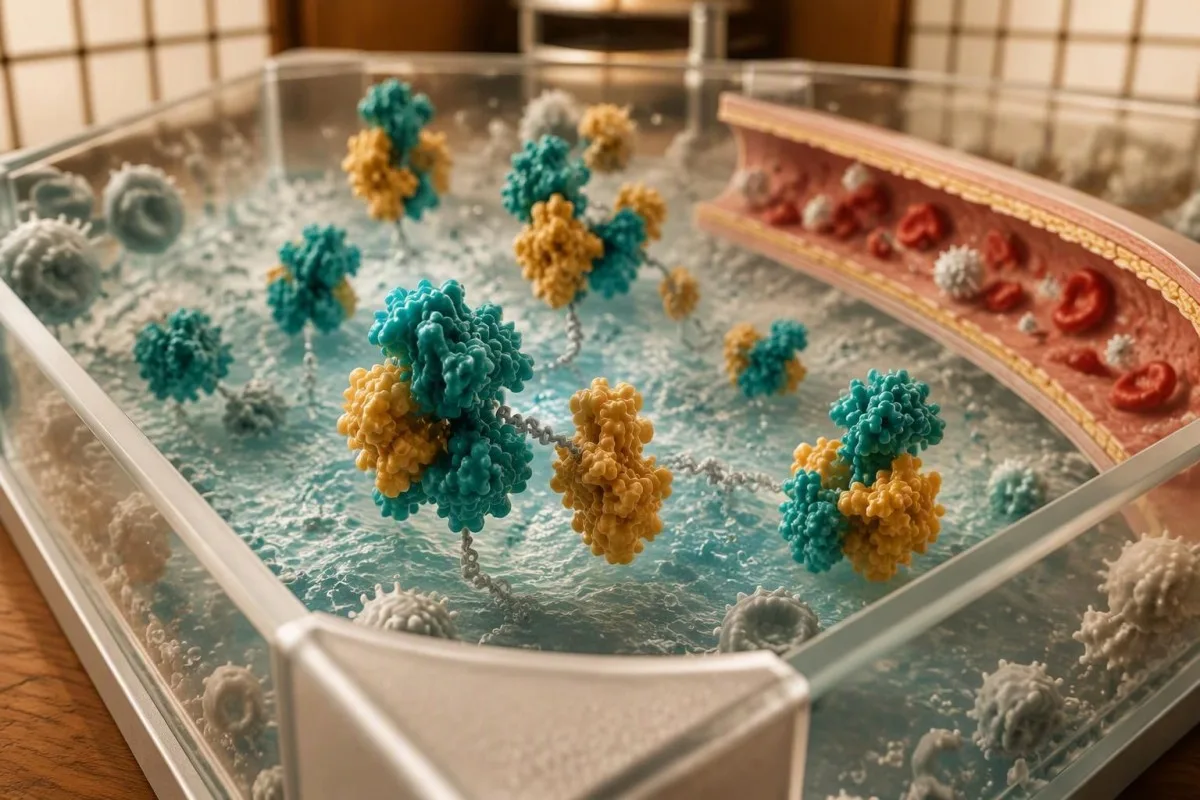
DIC is assessed from a pattern, not 1 abnormal protein: falling platelets, prolonged PT, increased fibrin-related markers and sometimes reduced fibrinogen provide the relevant context. Fibrinogen may initially remain normal or elevated because it is an acute-phase protein, so a preserved fibrinogen concentration does not automatically rule out evolving consumption.
For a hypothetical example, activity of 38%, platelets of 72 × 10^9/L and worsening PT during a major systemic illness point toward an acquired coagulation disturbance rather than an isolated inherited finding. Our DIC laboratory pattern explanation shows why trends across several measurements are more informative than repeatedly checking antithrombin while the illness remains active.
Recent antithrombin concentrate or plasma treatment can raise measured activity and obscure the underlying baseline, adding a second source of uncertainty during the same hospital stay. A result of 105% after replacement does not exclude inherited deficiency, just as 35% before recovery does not prove it; document the product and timing before interpreting either percentage.
Бөер аша аксым югалту антитромбин активлыгын киметергә мөмкинме?
Heavy urinary protein loss can contribute to acquired antithrombin reduction, particularly in nephrotic syndrome. Adult nephrotic-range proteinuria is conventionally at least 3.5 g per 24 hours; clinicians interpret antithrombin alongside urine protein, serum albumin and the underlying kidney disorder, rather than relying on creatinine or eGFR alone.
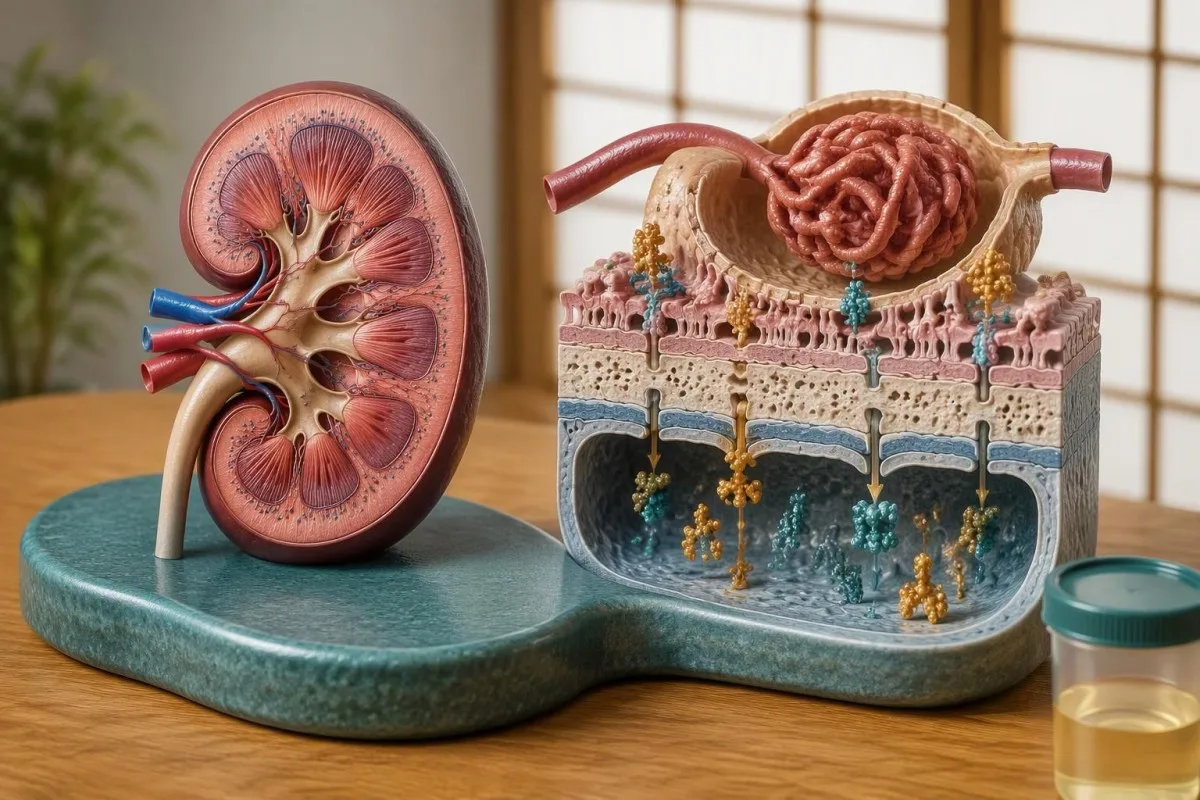
A normal eGFR does not exclude substantial protein leakage through the glomerular filtration barrier. For example, an adult with eGFR 95 mL/min/1.73 m², albumin 22 g/L and urine protein 6 g per day may have a strong acquired explanation for low activity despite apparently reassuring filtration results; persistent күбекле сидек һәм аксымны тикшерү deserve assessment in that context.
The relationship between nephrotic syndrome, antithrombin levels and clot risk is not uniform: not every person with nephrotic syndrome has low antithrombin, and the thrombotic tendency involves more than urinary loss of 1 protein. Underlying diagnosis matters, including membranous nephropathy, where PLA2R results and kidney monitoring help explain the kidney process rather than prove an inherited clotting disorder.
Kantesti is an AI blood test interpretation platform that can organize an antithrombin percentage alongside albumin and kidney markers, but it cannot infer the amount of urinary protein from eGFR alone. If activity remains 62% while heavy protein loss continues, repeat testing may still describe the acquired condition; the cleaner inherited assessment usually follows clinical stabilization and improvement of that competing explanation.
Бавыр авыруы яки башка дәвалау ысуллары антитромбинны киметергә мөмкинме?
Reduced liver synthesis can lower antithrombin, especially in advanced liver disease, while certain treatments such as L-asparaginase can also cause acquired reductions. An activity of 55% alongside other abnormalities requires review of protein production, protein loss and treatment history before clinicians consider a genetic explanation.
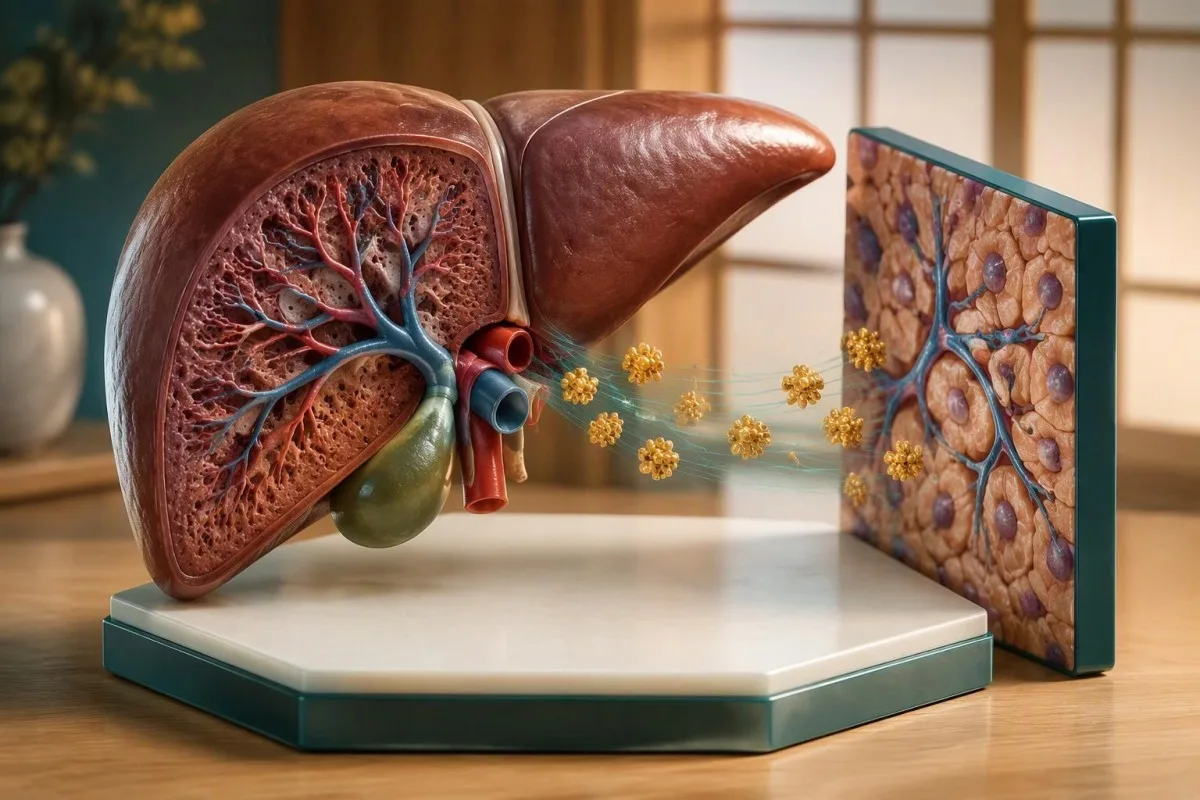
ALT and AST reflect injury more than protein-making capacity, so normal or mildly elevated enzymes do not guarantee normal antithrombin production. If activity is 57%, albumin is 25 g/L and INR is 1.6, impaired synthesis becomes a possibility—but warfarin, nutrition and protein loss can confound that pattern, as our бавыр анализы нәтиҗәләрен ничек укырга өчен кулланма аңлата.
Albumin cannot serve as a substitute antithrombin test because the 2 proteins have different turnover and can respond differently to illness or therapy. Our albumin and serum protein guide helps interpret the surrounding panel; a normal albumin does not exclude inherited antithrombin deficiency, and a low albumin does not prove that the liver caused it.
L-asparaginase can reduce anticoagulant proteins during cancer treatment, creating an acquired thrombosis risk that may need active management rather than merely a future repeat test. Major procedures, extracorporeal support and recent replacement products can also complicate 1 measurement; eating more protein or taking a vitamin supplement does not correct a SERPINC1-related defect or replace treatment of the underlying acquired cause.
Нинди антикоагулянтлар антитромбинны тикшерүгә комачаулый?
Direct oral anticoagulants can falsely increase antithrombin activity, potentially masking deficiency rather than causing a low flag. Apixaban, rivaroxaban and edoxaban interfere with factor Xa-based activity assays, while dabigatran can interfere with thrombin-based assays; the same patient’s 2 results may therefore differ because of assay design.
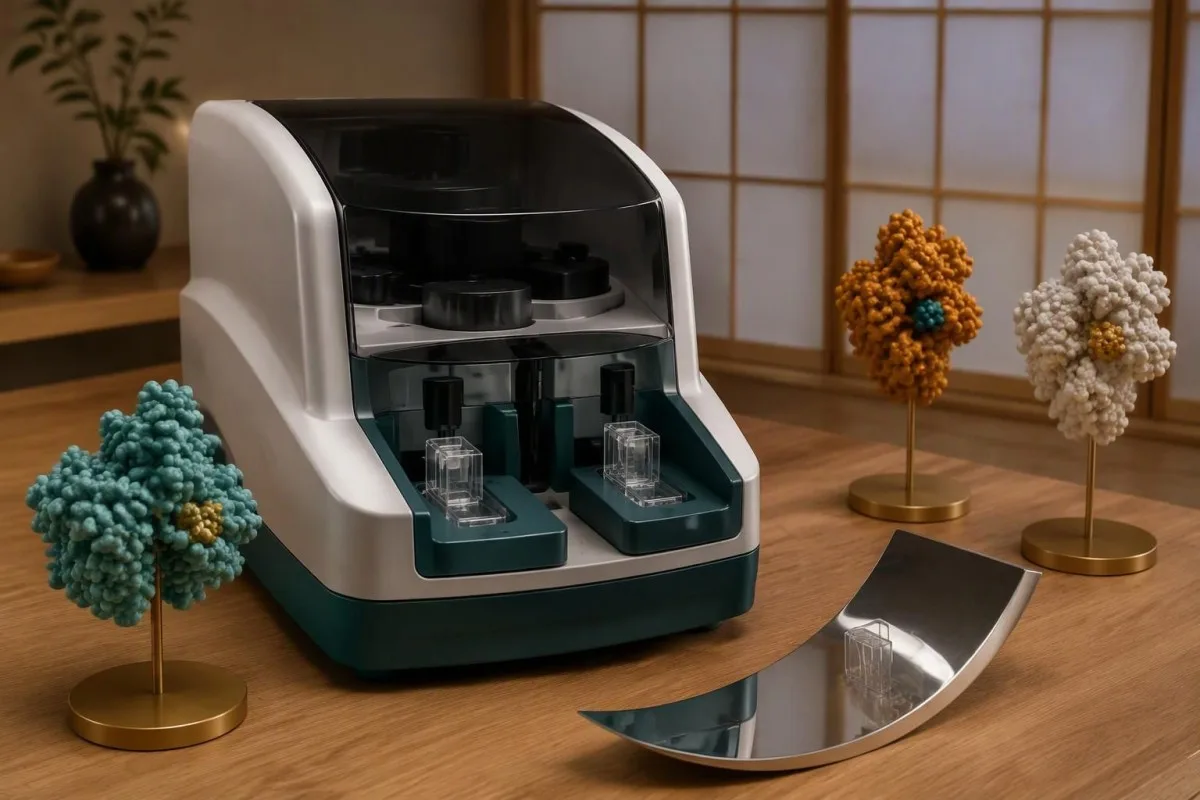
The mechanism is straightforward: the medication inhibits the assay’s added enzyme, and the instrument can misread that inhibition as stronger antithrombin function. The ISTH communication explicitly identifies these drug–assay combinations, including effects from direct thrombin inhibitors such as argatroban and bivalirudin (Van Cott et al., 2020); antigen testing usually avoids this particular functional interference, but does not replace an activity assessment.
A hypothetical activity of 108% on a factor Xa-based assay while taking rivaroxaban may conceal an underlying reduction; activity of 66% on that same drug still cannot be mathematically corrected into a true baseline. Anticoagulants also affect lupus anticoagulant test interpretation, but the direction and mechanism of interference are test-specific, not a universal rule for all thrombophilia assays.
Kantesti AI should support medication-aware interpretation rather than claim that 1 uploaded report identifies the laboratory’s reagent or removes a drug effect. Depending on the situation, the laboratory may use a less-affected assay, measure drug exposure or apply a validated removal procedure; our техник валидацияне һәм күзәтүне describes the broader standards behind interpretation, not a guarantee that AI can resolve missing assay information.
Көтелмәгән түбән нәтиҗәне үрнәк белән эш итү тәртибе аңлата аламы?
Sample quality and assay differences can make antithrombin results unreliable, especially when the laboratory flags collection or processing problems. Coagulation samples typically require a 9:1 ratio of sample to citrate anticoagulant; underfilling, inappropriate handling or an unsuitable specimen should be considered before interpreting an isolated abnormal percentage.
A hematocrit above approximately 55% may require citrate adjustment for coagulation testing because the amount of plasma relative to citrate is reduced. This is a laboratory preparation issue, not evidence of hereditary deficiency; if activity is 73% in a flagged specimen, ask whether the laboratory accepted the sample as valid and whether recollection is preferable to repeating the same material.
Hemolysis, lipemia and marked discoloration can interfere with optical methods, although the effect depends on the instrument and reagent rather than having 1 predictable direction. Our guides to hemolysis-related result distortion һәм lipemic specimens and redraws explain why a specimen-quality warning needs a method-specific answer instead of an automatic diagnosis.
Changing laboratories can create a second problem: an activity of 76% by one method and 84% by another may reflect analytical differences rather than biological recovery. Using the same laboratory helps trend comparison, but persistent clinical suspicion may justify a specialist laboratory using an alternative assay that is more sensitive to certain inherited variants; consistency and diagnostic sensitivity are 2 different goals.
Антитромбин активлыгының түбән нәтиҗәсен кайчан кабат тикшерергә кирәк?
Repeat antithrombin testing should occur after temporary causes have settled and medication effects have been addressed. Following an acute clot, the BSH recommendation is to wait until after 3 months of anticoagulation before testing natural anticoagulant deficiencies; the safest collection date then depends on the drug, assay and clinical situation.

An incidental borderline result in a well adult without a recent clot does not automatically require the same 3-month wait, because that interval addresses acute thrombosis. The clinician may instead arrange a separate repeat once collection issues and acquired causes are reviewed, adding antigen testing if activity remains low; there is no universally validated waiting interval that fits every outpatient finding.
Heparin-related reductions may recover after treatment ends, but laboratory policies and ongoing illness affect when a repeat becomes meaningful. For a DOAC, a fixed 48-hour pause is not universally adequate or safe: kidney function, dose timing, drug accumulation and assay sensitivity matter, and choosing a compatible method may avoid interrupting treatment entirely.
Kantesti’s trend tools can help organize 2 measurements with their dates, but a timeline should also record clot onset, heparin exposure, the last relevant medication dose and any replacement products. Our explanation of хастаханәдән чыкканнан соңгы нәтиҗәләр supports that workflow; warfarin does not usually lower antithrombin as it lowers vitamin K-dependent proteins, so protein C or S stopping rules should not be copied automatically.
Нинди нәтиҗәләр нәселдән килгән антитромбин дефицитын раслый?
Inherited antithrombin deficiency becomes more likely when activity remains low on separate, interpretable samples, acquired causes are excluded and the personal or family history fits. Two concordant results provide stronger evidence than 1 result during illness, but activity, antigen and sometimes SERPINC1 testing must still be considered together.

A clearly hypothetical profile of activity 54% and 56% on 2 suitable occasions, antigen 51%, no major protein loss and a first-degree relative with confirmed deficiency would support a quantitative inherited pattern. Early or recurrent venous thrombosis increases suspicion, but age alone is not diagnostic, and absence of a family history does not exclude a new variant or previously unrecognized disease.
SERPINC1 testing can help establish a molecular explanation when the laboratory phenotype is convincing and the result could affect management or family counseling. A variant of uncertain significance is not equivalent to a diagnosis, while a negative genetic test does not necessarily exclude every relevant change; the ISTH recommendations also note that molecular testing may identify defects missed by activity assays (Van Cott et al., 2020).
Antithrombin and protein S deficiency require different interpretive rules, even when they appear on the same thrombophilia panel. Our guide to low protein S activity explains several contrasting confounders; a type II antithrombin heparin-binding-site variant can also have a different risk profile from type I deficiency, so 1 generic risk estimate should not be applied to all confirmed variants.
Гаилә әгъзаларын тикшерү кайчан урынлы?
Family evaluation is usually considered after the original patient’s inherited deficiency is convincingly confirmed, especially when the result could change prevention, hormone choices or pregnancy planning. Most inherited antithrombin deficiency is autosomal dominant, giving each child of a heterozygous carrier a 50% chance of inheriting the relevant variant—not a certainty of thrombosis.
The BSH guideline discourages routine thrombophilia testing of all first-degree relatives but supports selective evaluation for relatives of people with antithrombin, protein C or protein S deficiency when results could influence management (Arachchillage et al., 2022). Our куркынычлыкка нигезләнгән гаилә тикшерүе буенча кулланма explains why testing 1 relevant inherited condition can be more useful than ordering a broad panel without a clinical question.
ASH’s 2023 thrombophilia guideline similarly supports selective testing in certain families with known high-risk deficiencies, including decisions about estrogen exposure and prophylaxis during particular risk situations (Middeldorp et al., 2023). Many recommendations are conditional and based on very low-certainty evidence; antithrombin deficiency should not be treated as interchangeable with factor V Leiden results, which often carry a different risk profile.
Kantesti’s Family Health Risk feature can help organize information shared with consent, but it cannot determine whether a relative inherited a SERPINC1 variant from 1 family member’s activity percentage. Testing children requires age-aware laboratory interpretation and an assessment of whether the result would change care now; predictive testing also deserves counseling about privacy, uncertainty and the difference between inherited susceptibility and an actual clot.
Алдагы күзәтү планы һәм чыганакларны тикшерүгә нәрсәләр керергә тиеш?
Bring the original percentage, reference interval, medication list and sampling date to follow-up, along with details of the clot, illness or protein loss that could explain the result. Two decisions come first: whether the current finding needs clinical action and whether repeat testing would genuinely change treatment or family counseling.
A low activity percentage alone does not automatically require lifelong anticoagulation or antithrombin concentrate; treatment depends on previous thrombosis, the provoking circumstances, bleeding risk and the confirmed diagnosis. New one-sided leg swelling needs prompt assessment, while sudden shortness of breath, chest pain or fainting requires emergency care even if the last activity was 100%—do not wait for a repeat thrombophilia panel.
Kantesti is an AI lab test interpretation service that can help organize the 2-stage workflow of context review followed by clinician-directed confirmation, not replace hematology advice or authorize medication interruption. Our җаваплы ЯИ принциплары describe that boundary; use AI explanations to prepare precise questions, including which enzyme the assay uses and whether activity and antigen should be collected together.
The clinical recommendations here draw on 3 directly relevant external sources: the ISTH laboratory communication, the BSH testing guideline and the ASH thrombophilia guideline. The 2 Zenodo publications below provide background on serum proteins and immune-related laboratory context—not clinical trials validating antithrombin diagnosis; our медицина эчтәлегенә стандартлар һәм комплементны һәм аутоиммун авыруларны тикшерү буенча кулланма help readers distinguish supporting education from condition-specific evidence.
Еш бирелгән сораулар
Антитромбин активлыгы түбән булу һәрвакыт нәселдән килгән җитешмәүчәнлекне аңлатамы?
0 Түбән антитромбин активлыгы һәрвакыт нәселдән килгән җитешмәүчәнлекне аңлатмый. 60% активлык кискен тромбоз, гепарин белән дәвалау, авыр чир, бавырның соңгы стадиядәге авыруы яки сидек белән аксымның күп югалуы вакытында күзәтелергә мөмкин. Табиблар бу барлыкка килгән сәбәпләрне карап чыкканнан соң, тиешле вакытта алынган аерым үрнәкләрдә активлыкның даими түбән булуын эзлиләр. Антигенны тикшерү һәм кайвакыт SERPINC1 тесты расланган тайпылышны классификацияләргә ярдәм итә.
0 Кан оешмасы барлыкка килгәннән соң антитромбин активлыгы тестын кайчан кабат үткәрергә кирәк?
Кискен тромб барлыкка килгәннән соң, Британия гематология җәмгыяте табигый антикоагулянтлар җитешмәвен тикшерүне 3 ай дәвамында антикоагулянтлар кабул иткәннән соң гына үткәрергә тәкъдим итә. Кан алуның төгәл планы савыгуны, кулланыла торган антикоагулянтны һәм лаборатория анализын да исәпкә алырга тиеш. Бу тәкъдим һәркем 3 айдан соң даруларын туктатырга тиеш дигәнне аңлатмый. Дару билгеләгән клиницист күрсәтмәләреннән башка тикшерү өчен антикоагулянтлар кабул итүне беркайчан да туктатмагыз.
0 Антитромбин антигены белән активлыгы арасында нинди аерма бар?
0. Антитромбин активлыгы функцияне, ә антитромбин антигены аксым күләмен үлчи. I типтагы җитешмәү гадәттә ике күрсәткечне дә киметә; II типтагы җитешмәү, гадәттә, антиген чагыштырмача нормаль булганда да активлыкны киметә. Мәсәлән, 52% активлыкның кабат үлчәнгән нәтиҗәсе һәм 101% антиген нәтиҗәсе сыйфат үзгәрешенә хас күренешне күрсәтә, әмма ө acquired шартларны һәм даруларның тәэсирен тикшермичә, нәселдән килгән сәбәпне расламый. Антигенны тикшерү дөрес функциональ бәяләүне алыштыра алмый.
Апиксабан яки ривароксабан антитромбин нәтиҗәләренә йогынты ясый аламы?
0 Апиксабан һәм ривароксабан Xa факторы нигезендәге анализларда антитромбин активлыгын ялгыш арттырырга, шуның белән җитешсезлекне яшерергә мөмкин. Дабигатран тромбин нигезендәге анализларда да күзәтелгән активлыкны арттыра ала. Шуңа күрә, анализга комачаулаучы даруны кабул иткәндә алынган 100% нәтиҗәсе күренгәннән азрак ышанычлы булырга мөмкин. Лаборатория тәэсире азрак булган ысулны яки башка расланган стратегияне сайлый ала; даруны үз белдегең белән туктату куркыныч.
70% антитромбин активлыгы куркынычмы?
0 Антитромбин активлыгының 70% күрсәткече күпчелек өлкәннәр өчен лабораториядәге белешмә интерваллардан түбән, ләкин процент күрсәткече генә гадәттән тыш хәлне дәлилләми һәм кешенең кан ою куркынычын сан ягыннан бәяләми. Аның мәгънәсе анализ ысулына, кабул ителә торган даруларга, моңа кадәр булган кан ою очракларына, гаилә тарихына һәм хәзерге авыруларга бәйле. Аерым алынган бу нәтиҗәне, гадәттә, табиб бәяләве һәм аны тиешенчә раслау планы кирәк. Кинәт сулыш кысылу, күкрәк авыртуы, аңны югалту яки аякның бер ягында яңа барлыкка килгән шешү бу процентка бәйсез рәвештә тикшерүне таләп итә.
Антитромбин җитешсезлегем булса, гаиләмне тикшертергә кирәкме?
Нәселдән килгән антитромбин җитешмәве ышанычлы рәвештә расланганнан соң, гаилә әгъзаларын сайлап тикшерү урынлы булырга мөмкин, бигрәк тә нәтиҗәләр профилактика, гормоннарны сайлау яки йөклелекне планлаштыру карарларын үзгәртәчәк булса. Гетерозиготалы йөртүченең тиешле вариантны һәр баласына тапшыру ихтималы 50% тәшкил итә, әмма бу балада тромбоз үсешенең 50% гарантиясе түгел. BSH һәм ASH күрсәтмәләре һәр туганны аермасыз тикшерү урынына, карар кабул итүгә юнәлдерелгән бәяләүне хуплый. Балалар өчен яшьләренә туры килгән аңлатма бирергә һәм тикшерүнең хәзерге вакытта дәвалау тактикасын үзгәртү-үзгәртмәве турында фикер алышырга кирәк.
Кан анализы нәтиҗәләрен аңлатып алыгыз
Лаборатория хисабыгызны йөкләгез, һәм Kantesti AI һәр биомаркерны секундлар эчендә гади тел белән аңлатыр. Дөнья буйлап 2 миллионнан артык кеше куллана.
Сылтамалар
- Klein, T., Mitchell, S., & Weber, H. (2026). Кан аксымнары буенча белешмәлек: глобулиннар, альбумин һәм A/G нисбәте кан анализы. Kantesti AI медицина тикшеренүләре. DOI
- Klein, T., Mitchell, S., & Weber, H. (2026). C3 C4 Комплементның кан анализы һәм ANA титры буенча белешмәлек. Kantesti AI медицина тикшеренүләре. DOI
- Van Cott EM et al. (2020). Recommendations for clinical laboratory testing for antithrombin deficiency; Communication from the SSC of the ISTH. Journal of Thrombosis and Haemostasis. DOI
- Arachchillage DJ һ.б. (2022). Тромбофилиягә тест үткәрү: Британия гематология җәмгыяте күрсәтмәсе. Британия гематология журналы. DOI
- Middeldorp S һ.б. (2023). Веноз тромбоэмболияне дәвалау буенча Америка гематология җәмгыятенең 2023 елгы күрсәтмәләре: тромбофилиягә тест үткәрү. Blood Advances. DOI
- 2М +Анализланган тестлар
- 127+Илләр
- 100+Телләр
Медицина командасы турында


E-E-A-T ышаныч сигналлары
Тәҗрибә
Табиб җитәкчелегендә лаборатория нәтиҗәләрен аңлату эш процессларын клиник тикшерү.
Белгечлек
Лаборатория медицинасы: биомаркерларның клиник контекстта үз-үзләрен тотышын аңлау.
Авторититет
Доктор Томас Кляйн медицина ягыннан тикшерде; доктор Сара Митчелл һәм профессор доктор Һанс Вебер үз өлешләрен кертте.
Ышанычлылык
Ачык күзәтү юллары белән куркуны киметү өчен дәлилләргә нигезләнгән аңлату.



Медицина турында кисәтү
Бу мәкалә бары тик белем бирү максатларында гына һәм медицина киңәше булып тормый. Диагноз һәм дәвалау карарлары өчен һәрвакыт квалификацияле сәламәтлек саклау белгеченә мөрәҗәгать итегез.
Басылып чыкты · Редакция командасына мөрәҗәгать итегез
Kantesti Ltd нәшер итә, Англия һәм Уэльста теркәлгән, компания №. 17090423, Лондон, Бөекбритания.
