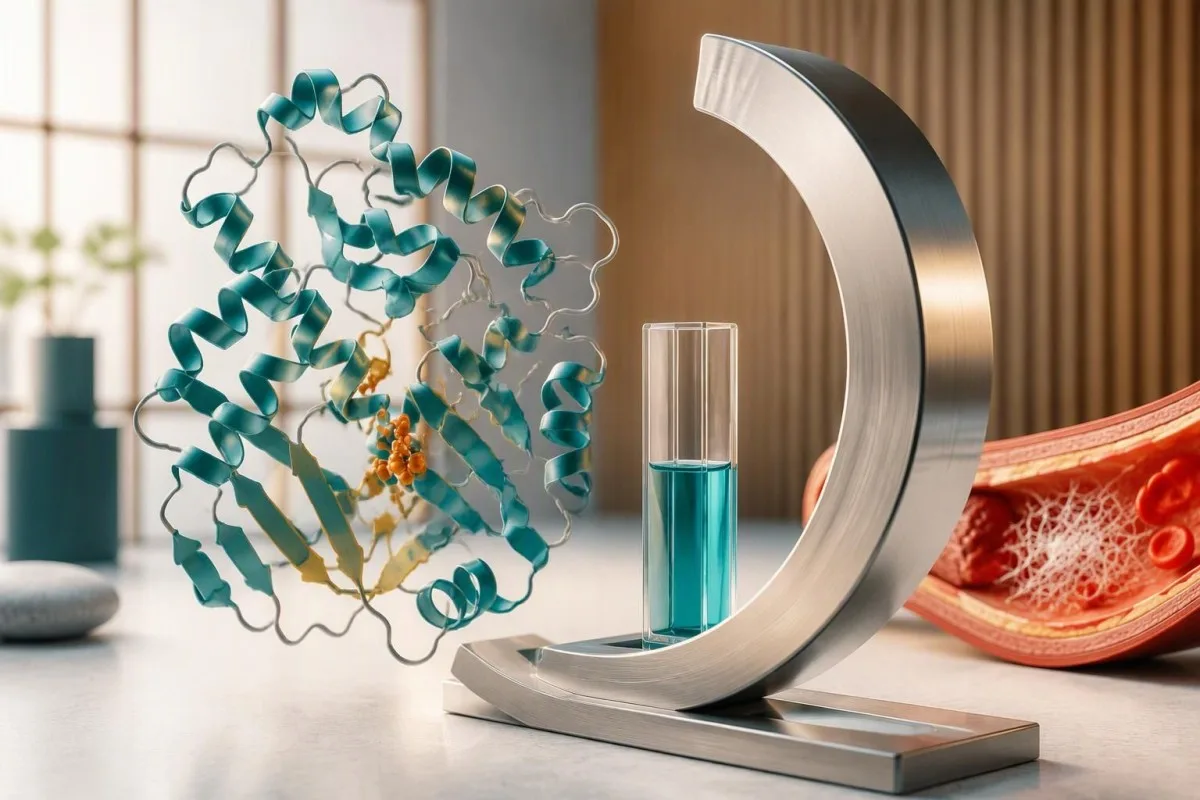
アンチトロンビン活性が低くても、遺伝性欠乏症とは限りません。急性血栓、ヘパリン、重篤な疾患、またはタンパク質の喪失により、一時的に低下することがあります。臨床医は、適切な時期に実施する活性検査、ときには抗原検査、および薬剤を考慮した検査計画で、異常が持続していることを確認します。多くの場合、血栓治療開始後の最初の3か月を過ぎてから行います。.

要点
- 基準値: 成人のアンチトロンビン活性は通常80–120%前後ですが、ご自身の検査報告書に記載された基準範囲を使用してください。.
- 1回の低値: 新たな血栓またはヘパリン治療中に測定された65%の活性では、遺伝性アンチトロンビン欠乏症とは診断できません。.
- 再検のタイミング: 英国血液学会は、急性血栓症に対する抗凝固療法を3か月行った後にのみ、生理的抗凝固因子の欠乏症を検査することを推奨しています。.
- 活性と抗原量: I型欠乏症では通常、両方の測定値が低下します。II型欠乏症では機能が低下しますが、抗原量は正常のことがあります。.
- 薬剤による干渉: アピキサバン、リバーロキサバン、エドキサバンは、第Xa因子を用いる測定法で活性を偽高値にすることがあります。ダビガトランは、トロンビンを用いる測定法で同様の影響を及ぼすことがあります。.
- タンパク質の喪失: 成人のネフローゼ域蛋白尿は、一般に24時間あたり少なくとも3.5 gとされ、後天性アンチトロンビン低下の一因となることがあります。.
- 家族の評価: 確認されたヘテロ接合性の遺伝性欠乏症の場合、各子どもが該当するバリアントを受け継ぐ確率は通常50%であり、血栓を発症することが確実に50%という意味ではありません。.
- 薬剤の安全性: 処方医による個別の計画なしに、検査結果をより明瞭にする目的で抗凝固療法を決して中止しないでください。.
アンチトロンビン活性が低いとは、実際にはどういう意味ですか?
低アンチトロンビン活性 とは、検査で予想より低い抗凝固機能が検出されたことを意味しますが、それだけで原因が特定されるわけではありません。成人用検査室の基準下限(多くの場合80%前後)を下回る結果は、遺伝性欠乏症、一時的な消費、産生低下、蛋白喪失、または検査上の問題を反映している可能性があります。.

アンチトロンビンは、トロンビン(第IIa因子とも呼ばれる)や第Xa因子などの酵素を阻害することで凝固を抑制します。活性値60%は、測定法の較正基準に対する機能を示すものであり、血液循環が60%保護されていることや、血栓の確率が40%であることを意味しません。.
通常の凝固検査パネルが正常でもアンチトロンビン欠乏症は否定できません。PTとaPTTは、あらゆる遺伝性血栓傾向のスクリーニング検査ではないためです。正常な凝固検査パネルの限界についての説明は 正常な凝固検査パネルの限界 こうした疑問を切り分けるのに役立ちます。すなわち、凝固時間が延長しているかどうかと、特定の天然抗凝固因子が正常に機能しているかどうかは、別々の2つの評価です。.
Kantestiは、活性の割合を服薬歴や関連する検査結果と併せて示し、1つの異常フラグを診断として扱わないよう支援するAI血液検査アナライザーです。当社の 会社の背景と目的 ではその役割を説明しています。遺伝性欠乏症の確認には引き続き医師主導の検査が必要であり、緊急症状はAIによる解釈とは別に評価しなければなりません。.
アンチトロンビン活性は、どの範囲を下回ると低値とみなされますか?
成人のアンチトロンビン活性 の基準範囲は一般に約80~120%ですが、80~130%または別の妥当性確認済み範囲を採用している検査室もあります。したがって、活性値75%は境界域の低値であることが多いものの、75%も、その他の単一のカットオフ値も、遺伝性欠乏症を証明したり緊急治療の要否を決定したりするものではありません。.

ヘテロ接合性の遺伝性アンチトロンビン欠乏症の人の多くは、活性値が40~70%程度ですが、後天性の状態でも同じ値を示すことがあります。反対に、一部の遺伝性バリアントでは低下が軽度であったり、特定の測定法では検出されなかったりすることがあります。医師は低下の程度を、単独の遺伝的指紋としてではなく、再検査の結果と併せて解釈します。.
年齢によって解釈は大きく変わります。正期産の健康な新生児では、アンチトロンビン活性が成人値の40~60%程度であることがあり、乳児期に上昇します。早産ではさらにばらつきが生じ、妊娠後期や産後早期も結果に影響することがあります。成人の80%という下限値を一律に適用すると、誤解を招く判定につながる可能性があります。.
あくまで仮定の例ですが、活性値が78%で血栓の既往がない、その他は健康な成人と、重度の敗血症中に42%を示した成人とでは、必要な評価が異なります。どちらの検査報告にも同じ低値フラグが表示されることがありますが、当社のガイドは、 範囲外の検査室の結果 基準限界が診断または治療の閾値と同じ意味ではない理由を説明しています。.
| レベル | 範囲 | 意味 |
|---|---|---|
| 成人の一般的な基準範囲 | 約80~120% | 通常は基準範囲内ですが、検査室独自の基準範囲と測定法の感度が優先されます。. |
| 境界域の低下 | 70–79% | 多くの場合、状況の確認と適切な時期をおいた再検査が必要です。診断ではありません。. |
| 明らかな低下 | 50–69% | 先天性または後天性欠乏症と合致しますが、活性のみでは両者を区別できません。. |
| 著明な低下 | 50%未満 | 臨床的な評価が必要です。特に、病気や血栓症がある場合は重要です。割合だけでは緊急事態とは判断できません。. |
アンチトロンビンの抗原量と活性:何が違いますか?
アン アンチトロンビン活性検査 このタンパク質が凝固酵素をどの程度効果的に阻害するかを測定する一方、 アンチトロンビン抗原検査 は存在するタンパク質の量を測定します。先天性I型欠乏症では一般に両方が低下しますが、II型欠乏症では抗原濃度が比較的正常であるにもかかわらず、一般に活性が低下するため、この2つの検査は相互に補完するものであり、互換的に使用できるものではありません。.

ほとんどの一般的な活性測定法は発色基質法です。検査室では酵素を加え、アンチトロンビンによる阻害後にどれだけ残っているかを測定します。ISTHの検査室向け推奨では、まず活性を測定し、活性が低い場合は抗原量を測定するとともに、分類の前に後天性原因と測定系への干渉を除外することが推奨されています(Van Cott et al., 2020)。.
適切な条件下で再検査した、仮想的な2つのプロファイルを考えてみましょう。活性52%、抗原49%なら量的なパターンを支持し、活性52%、抗原101%なら質的なパターンを支持します。ただし、後天性疾患によって両方の測定値が低下することがあり、抗原検査では機能検査の結果が薬剤によってゆがめられたかどうかは分からないため、これらの例は診断の定型式ではありません。.
II型欠乏症には、反応部位、ヘパリン結合部位などの機能異常が含まれます。検査法の選択によって、変異の検出されやすさが変わることがあります。したがって、Kantestiの解説では量と機能を区別しています。この区別は、 タンパク質の量と機能 C1エステラーゼインヒビター検査でも示されていますが、これらは臨床的影響の異なる別のタンパク質です。.
急性血栓によってアンチトロンビンが一時的に低下することはありますか?
急性血栓症では、アンチトロンビン活性が一時的に低下することがあります 消費によるもので、特に病気、処置、治療の影響を伴う場合に生じます。そのため、新たに深部静脈血栓症と診断された際の58%という値では、先天性の基礎的な欠乏と、現在の事象による低下とを確実に区別できません。.

英国血液学会は、急性血栓症における生理的抗凝固因子の欠乏症について、抗凝固療法を3か月実施した後に検査することを推奨しています。早期の検査結果は信頼性が低く、直ちに行う治療方針を変えることはまれだからです(Arachchillage et al., 2022)。これは診断の時期に関する推奨であり、血栓が疑われる場合に治療を遅らせたり、3か月の時点で抗凝固薬を中止したりする指示ではありません。.
肺塞栓症の発症時に活性が61%で、回復後に適切な検査法で測定した活性が96%だった仮想的な患者を考えてみましょう。この変化は一時的な低下を支持しますが、2つの割合を比較するだけでは評価として不十分です。ヘパリン、直接経口抗凝固薬、補充製剤、あるいは異なる検査室の測定法が、いずれかの測定値に影響したかどうかを臨床医が把握する必要があります。.
Dダイマーは異なる問いに答える検査です。これはフィブリンの形成と分解を反映するものであり、アンチトロンビンの量や先天性かどうかを示すものではありません。当サイトの 凝固検査とDダイマーの解説 では、1つの急性事象の間に、Dダイマー高値と活性低値が同時に生じても、アンチトロンビン低値が血栓の原因だったことを証明しない理由を説明しています。.
ヘパリン治療によってアンチトロンビン活性が低下することがあるのはなぜですか?
ヘパリンによる治療中は、循環血中のアンチトロンビンが低下することがあります, 。そのため、未分画ヘパリンまたは低分子量ヘパリンの投与中に得られた低値は、後天性の低下を反映している可能性があります。また、ヘパリンの抗凝固作用の多くはアンチトロンビンに依存します。したがって、治療中の活性50%は、診断と薬剤モニタリングの両方に関する疑問を生じさせることがあります。.

アンチトロンビンの低下はヘパリン抵抗性のように見える状態の一因となることがありますが、予想外に高用量が必要だからといって遺伝性欠乏症が証明されるわけではありません。重症疾患の1エピソード中は、第VIII因子またはフィブリノゲンの増加により、ヘパリン曝露が十分であっても、aPTTに基づく抗凝固の評価が短縮されることがあるため、臨床医は単に治療を強化するのではなく、モニタリング方法を再検討する場合があります。.
ヘパリン抗Xa測定法には外因性アンチトロンビンを添加するものと添加しないものがあり、この違いは、結果がヘパリン濃度と患者におけるヘパリンの活性のどちらを示すかに影響することがあります。アンチトロンビン活性測定法とヘパリンモニタリング測定法という2つの別々の方法について検査室に確認してください。アンチトロンビンとヘパリンの取り扱いは、必ずしも同一ではないためです。.
ヘパリン曝露中に血小板数が50%を超えて低下した場合、ヘパリン起因性血小板減少症という別の可能性が浮上します。これはアンチトロンビン低値によって診断されるものではありません。当院の説明 PF4検査とHITの評価 ではこの違いを説明しています。ヘパリンの変更、アンチトロンビン補充の使用、再検査の予定に関する判断は、自己判断で服薬を中断するのではなく、担当医療チームが行う必要があります。.
重篤な疾患やDICは、どのようにアンチトロンビンを低下させますか?
敗血症、播種性血管内凝固症候群および大きな生理学的ストレス は、消費、産生の低下、分布の変化を通じてアンチトロンビンを低下させることがあります。重篤な疾患の経過中に著しく低い結果(たとえば、35%)が出ても、多くの場合は後天性の所見です。それだけで生涯にわたる遺伝性アンチトロンビン欠乏症と判断することはできません。.

DICは異常なタンパク質1つではなく、複数の所見のパターンから評価します。血小板の減少、PTの延長、フィブリン関連マーカーの増加、ときにフィブリノゲンの低下が、関連する状況を示します。フィブリノゲンは急性期蛋白であるため、初期には正常または高値を保つ場合があります。したがって、フィブリノゲン濃度が保たれていても、進行中の消費性凝固障害が自動的に否定されるわけではありません。.
仮定上の例では、重篤な全身疾患の経過中に、活性38%、血小板数72 × 10^9/L、PTの悪化が認められる場合、孤立した遺伝性所見よりも後天性の凝固異常が示唆されます。当院の DICの検査所見パターンの説明 では、疾患が活動性の間にアンチトロンビンを繰り返し測定するよりも、複数の測定値の推移をみる方が有用である理由を説明しています。.
最近のアンチトロンビン濃縮製剤または血漿による治療は、測定される活性を上昇させ、基礎値を見えにくくすることがあり、同じ入院中に別の不確実性を生じさせます。補充後の結果が105%でも遺伝性欠乏症は否定できず、回復前の結果が35%でも証明にはなりません。いずれの割合を解釈する前にも、製剤と投与時期を記録してください。.
腎臓からのタンパク質喪失によってアンチトロンビン活性が低下することはありますか?
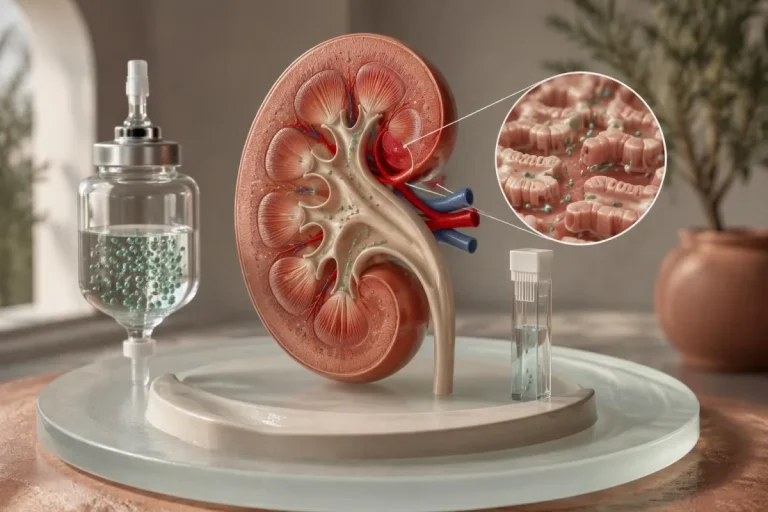
大量の尿蛋白喪失は、後天性のアンチトロンビン低下の一因となることがあります, 。特にネフローゼ症候群で顕著です。成人のネフローゼ域蛋白尿は、一般に24時間あたり3.5 g以上と定義されます。臨床医はクレアチニンやeGFRだけに頼るのではなく、尿蛋白、血清アルブミン、基礎にある腎疾患とあわせてアンチトロンビンを解釈します。.
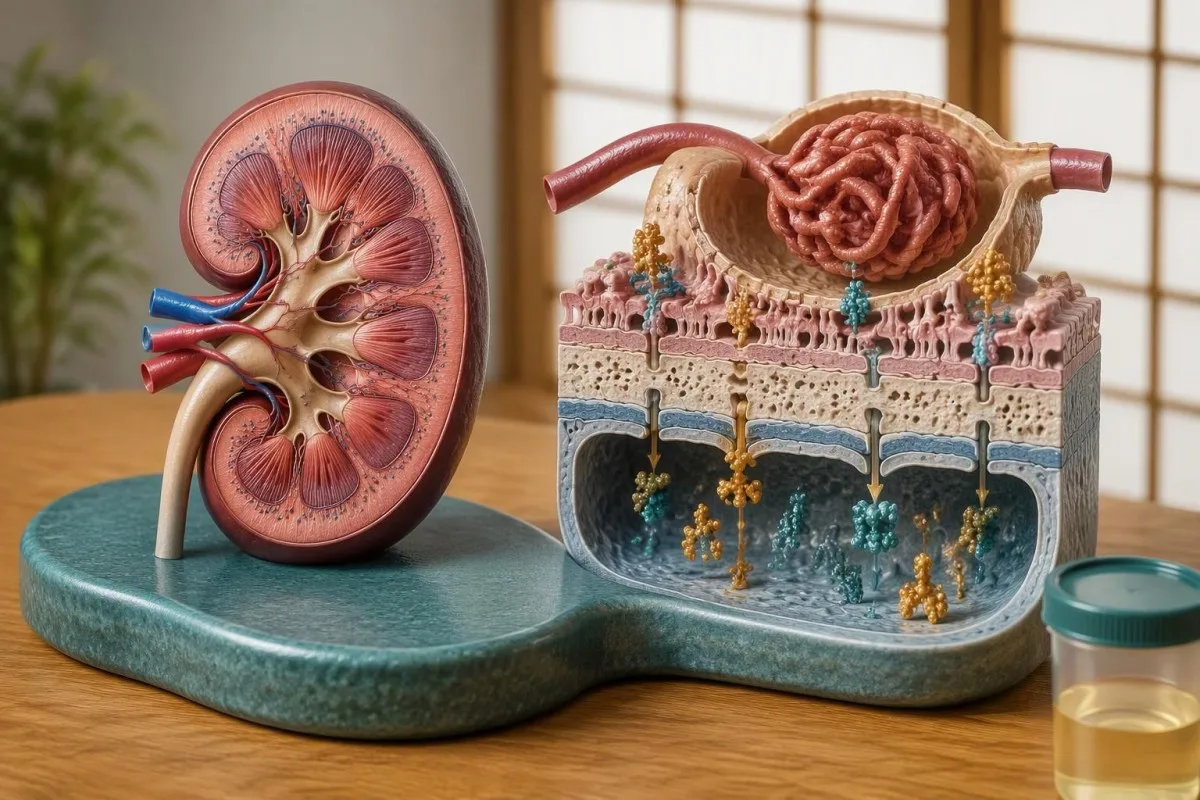
eGFRが正常でも、糸球体濾過障壁を通じた著しい蛋白漏出は否定できません。たとえば、eGFR 95 mL/min/1.73 m²、アルブミン22 g/L、尿蛋白1日6 gの成人では、濾過の結果が一見良好でも、活性低値を説明する強い後天性要因がある可能性があります。持続する 泡状の尿とタンパク質検査 は、このような状況で評価する必要があります。.
ネフローゼ症候群、アンチトロンビン値、血栓リスクの関係は一様ではありません。ネフローゼ症候群の人すべてでアンチトロンビンが低値になるわけではなく、血栓傾向には1つの蛋白質の尿中喪失以外の要因も関与します。膜性腎症など、基礎疾患が重要です。その場合、 PLA2Rの結果と腎臓のモニタリング は、腎疾患の病態を理解する助けになりますが、遺伝性の凝固異常を証明するものではありません。.
Kantestiは、アルブミンや腎マーカーとあわせてアンチトロンビンの割合を整理できるAI血液検査の読み方プラットフォームですが、eGFRだけから尿蛋白量を推定することはできません。大量の蛋白喪失が続く間、活性が62%のままであれば、再検査の結果も後天性の状態を示している可能性があります。遺伝性の評価をより明確に行うには、通常、臨床的に安定し、競合するこの説明要因が改善した後に検査します。.
肝疾患やその他の治療によってアンチトロンビンが低下することはありますか?
Reduced liver synthesis can lower antithrombin, especially in advanced liver disease, while certain treatments such as L-asparaginase can also cause acquired reductions. An activity of 55% alongside other abnormalities requires review of protein production, protein loss and treatment history before clinicians consider a genetic explanation.
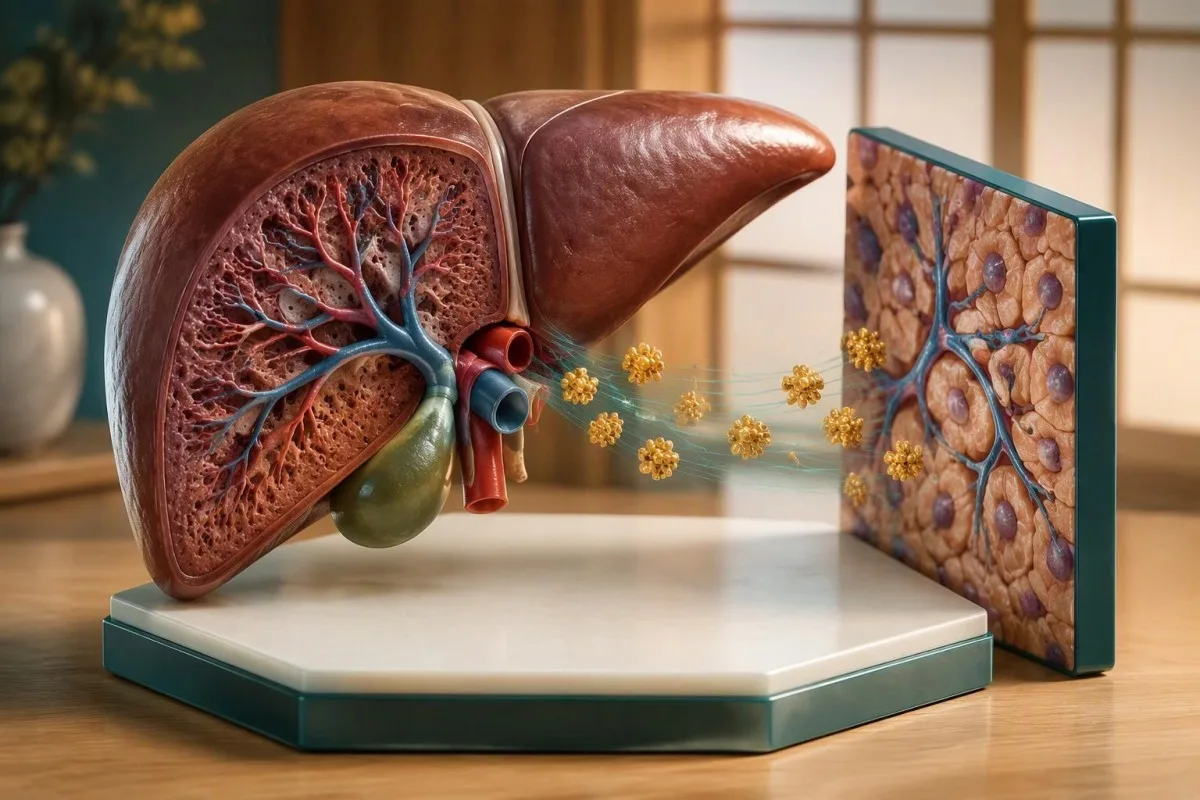
ALT and AST reflect injury more than protein-making capacity, so normal or mildly elevated enzymes do not guarantee normal antithrombin production. If activity is 57%, albumin is 25 g/L and INR is 1.6, impaired synthesis becomes a possibility—but warfarin, nutrition and protein loss can confound that pattern, as our 肝機能検査の見方ガイド が説明しています。.
Albumin cannot serve as a substitute antithrombin test because the 2 proteins have different turnover and can respond differently to illness or therapy. Our albumin and serum protein guide helps interpret the surrounding panel; a normal albumin does not exclude inherited antithrombin deficiency, and a low albumin does not prove that the liver caused it.
L-asparaginase can reduce anticoagulant proteins during cancer treatment, creating an acquired thrombosis risk that may need active management rather than merely a future repeat test. Major procedures, extracorporeal support and recent replacement products can also complicate 1 measurement; eating more protein or taking a vitamin supplement does not correct a SERPINC1-related defect or replace treatment of the underlying acquired cause.
どの抗凝固薬がアンチトロンビン検査に干渉しますか?
Direct oral anticoagulants can falsely increase antithrombin activity, potentially masking deficiency rather than causing a low flag. Apixaban, rivaroxaban and edoxaban interfere with factor Xa-based activity assays, while dabigatran can interfere with thrombin-based assays; the same patient’s 2 results may therefore differ because of assay design.
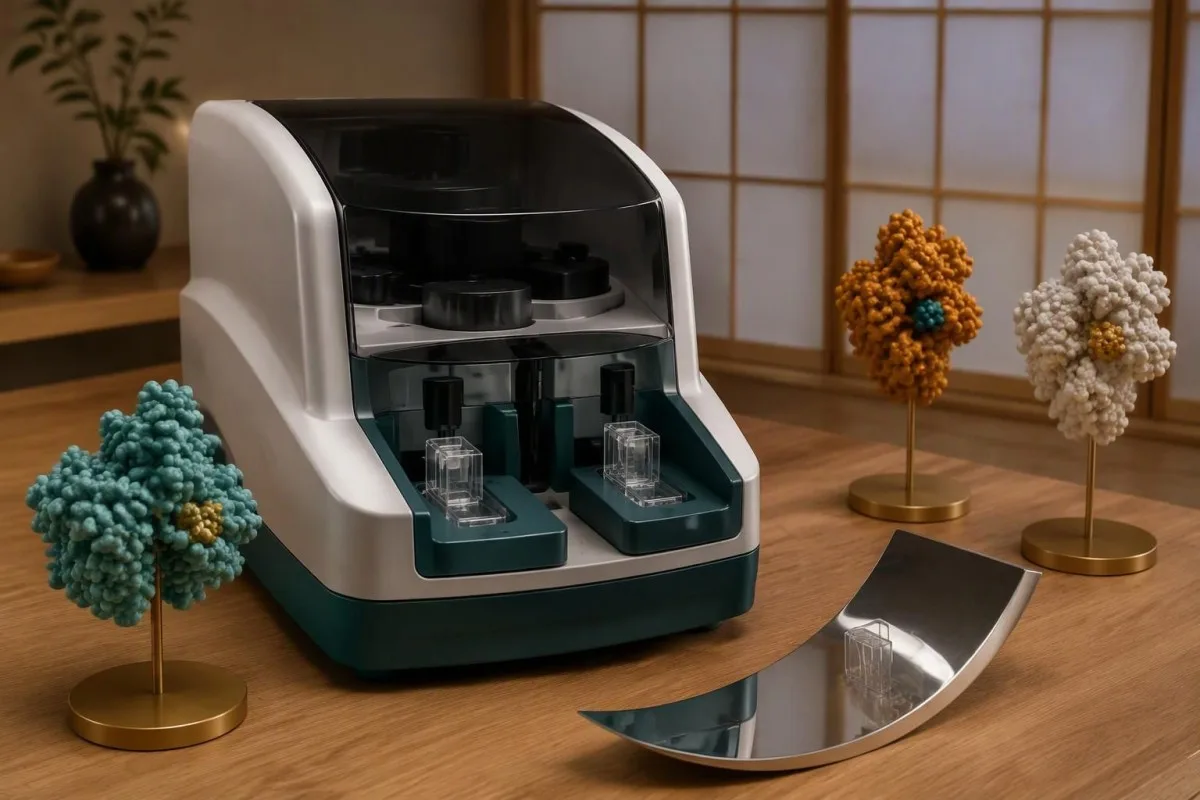
The mechanism is straightforward: the medication inhibits the assay’s added enzyme, and the instrument can misread that inhibition as stronger antithrombin function. The ISTH communication explicitly identifies these drug–assay combinations, including effects from direct thrombin inhibitors such as argatroban and bivalirudin (Van Cott et al., 2020); antigen testing usually avoids this particular functional interference, but does not replace an activity assessment.
A hypothetical activity of 108% on a factor Xa-based assay while taking rivaroxaban may conceal an underlying reduction; activity of 66% on that same drug still cannot be mathematically corrected into a true baseline. Anticoagulants also affect lupus anticoagulant test interpretation, but the direction and mechanism of interference are test-specific, not a universal rule for all thrombophilia assays.
Kantesti AI should support medication-aware interpretation rather than claim that 1 uploaded report identifies the laboratory’s reagent or removes a drug effect. Depending on the situation, the laboratory may use a less-affected assay, measure drug exposure or apply a validated removal procedure; our 技術的なバリデーションと監督 describes the broader standards behind interpretation, not a guarantee that AI can resolve missing assay information.
検体の取り扱いが、予想外の低値の原因となることはありますか?
Sample quality and assay differences can make antithrombin results unreliable, especially when the laboratory flags collection or processing problems. Coagulation samples typically require a 9:1 ratio of sample to citrate anticoagulant; underfilling, inappropriate handling or an unsuitable specimen should be considered before interpreting an isolated abnormal percentage.

A hematocrit above approximately 55% may require citrate adjustment for coagulation testing because the amount of plasma relative to citrate is reduced. This is a laboratory preparation issue, not evidence of hereditary deficiency; if activity is 73% in a flagged specimen, ask whether the laboratory accepted the sample as valid and whether recollection is preferable to repeating the same material.
Hemolysis, lipemia and marked discoloration can interfere with optical methods, although the effect depends on the instrument and reagent rather than having 1 predictable direction. Our guides to hemolysis-related result distortion そして lipemic specimens and redraws explain why a specimen-quality warning needs a method-specific answer instead of an automatic diagnosis.
Changing laboratories can create a second problem: an activity of 76% by one method and 84% by another may reflect analytical differences rather than biological recovery. Using the same laboratory helps trend comparison, but persistent clinical suspicion may justify a specialist laboratory using an alternative assay that is more sensitive to certain inherited variants; consistency and diagnostic sensitivity are 2 different goals.
低いアンチトロンビン活性は、いつ再検査すべきですか?
Repeat antithrombin testing should occur after temporary causes have settled and medication effects have been addressed. Following an acute clot, the BSH recommendation is to wait until after 3 months of anticoagulation before testing natural anticoagulant deficiencies; the safest collection date then depends on the drug, assay and clinical situation.

An incidental borderline result in a well adult without a recent clot does not automatically require the same 3-month wait, because that interval addresses acute thrombosis. The clinician may instead arrange a separate repeat once collection issues and acquired causes are reviewed, adding antigen testing if activity remains low; there is no universally validated waiting interval that fits every outpatient finding.
Heparin-related reductions may recover after treatment ends, but laboratory policies and ongoing illness affect when a repeat becomes meaningful. For a DOAC, a fixed 48-hour pause is not universally adequate or safe: kidney function, dose timing, drug accumulation and assay sensitivity matter, and choosing a compatible method may avoid interrupting treatment entirely.
Kantesti’s trend tools can help organize 2 measurements with their dates, but a timeline should also record clot onset, heparin exposure, the last relevant medication dose and any replacement products. Our explanation of 退院後の結果について supports that workflow; warfarin does not usually lower antithrombin as it lowers vitamin K-dependent proteins, so protein C or S stopping rules should not be copied automatically.
遺伝性アンチトロンビン欠乏症を裏付ける所見は何ですか?
Inherited antithrombin deficiency becomes more likely when activity remains low on separate, interpretable samples, acquired causes are excluded and the personal or family history fits. Two concordant results provide stronger evidence than 1 result during illness, but activity, antigen and sometimes SERPINC1 testing must still be considered together.

A clearly hypothetical profile of activity 54% and 56% on 2 suitable occasions, antigen 51%, no major protein loss and a first-degree relative with confirmed deficiency would support a quantitative inherited pattern. Early or recurrent venous thrombosis increases suspicion, but age alone is not diagnostic, and absence of a family history does not exclude a new variant or previously unrecognized disease.
SERPINC1 testing can help establish a molecular explanation when the laboratory phenotype is convincing and the result could affect management or family counseling. A variant of uncertain significance is not equivalent to a diagnosis, while a negative genetic test does not necessarily exclude every relevant change; the ISTH recommendations also note that molecular testing may identify defects missed by activity assays (Van Cott et al., 2020).
Antithrombin and protein S deficiency require different interpretive rules, even when they appear on the same thrombophilia panel. Our guide to low protein S activity explains several contrasting confounders; a type II antithrombin heparin-binding-site variant can also have a different risk profile from type I deficiency, so 1 generic risk estimate should not be applied to all confirmed variants.
家族の評価が適切なのはどのような場合ですか?
Family evaluation is usually considered after the original patient’s inherited deficiency is convincingly confirmed, especially when the result could change prevention, hormone choices or pregnancy planning. Most inherited antithrombin deficiency is autosomal dominant, giving each child of a heterozygous carrier a 50% chance of inheriting the relevant variant—not a certainty of thrombosis.
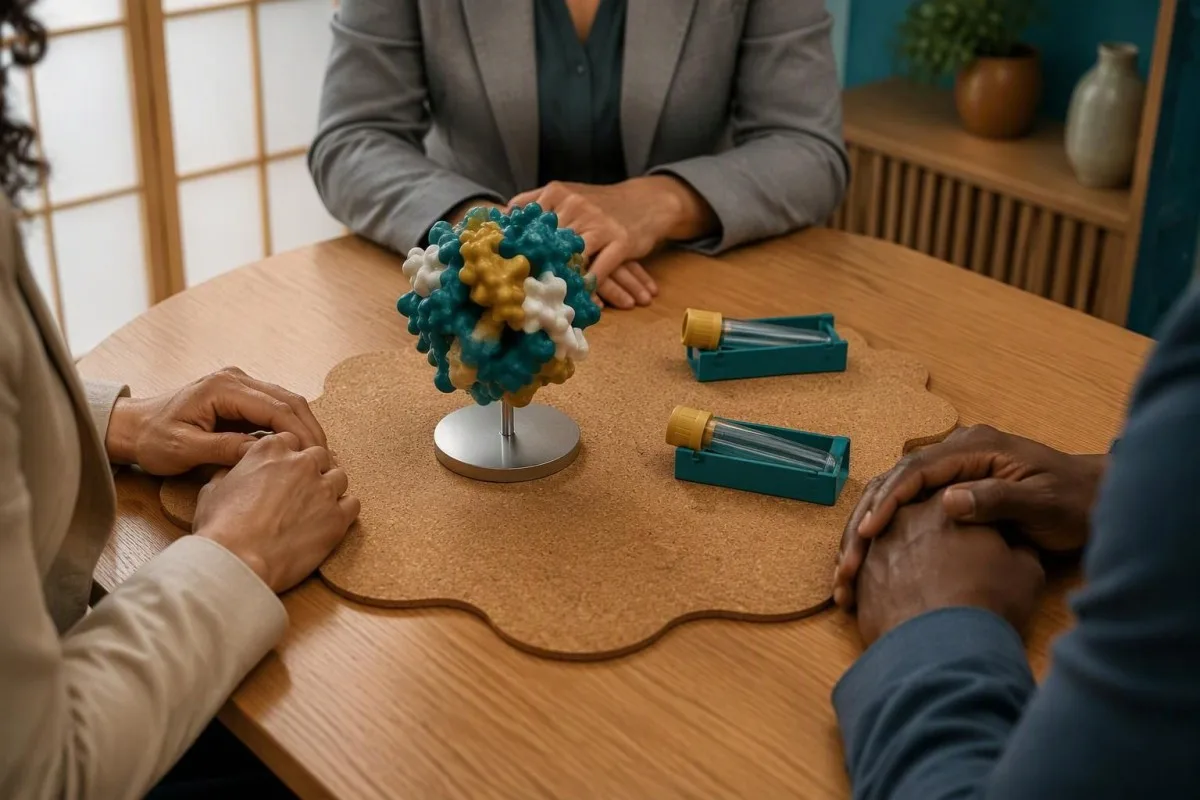
The BSH guideline discourages routine thrombophilia testing of all first-degree relatives but supports selective evaluation for relatives of people with antithrombin, protein C or protein S deficiency when results could influence management (Arachchillage et al., 2022). Our リスクベースの家族検査ガイド explains why testing 1 relevant inherited condition can be more useful than ordering a broad panel without a clinical question.
ASH’s 2023 thrombophilia guideline similarly supports selective testing in certain families with known high-risk deficiencies, including decisions about estrogen exposure and prophylaxis during particular risk situations (Middeldorp et al., 2023). Many recommendations are conditional and based on very low-certainty evidence; antithrombin deficiency should not be treated as interchangeable with factor V Leiden results, which often carry a different risk profile.
Kantesti’s Family Health Risk feature can help organize information shared with consent, but it cannot determine whether a relative inherited a SERPINC1 variant from 1 family member’s activity percentage. Testing children requires age-aware laboratory interpretation and an assessment of whether the result would change care now; predictive testing also deserves counseling about privacy, uncertainty and the difference between inherited susceptibility and an actual clot.
フォローアップ計画と情報源の確認には何を含めるべきですか?
Bring the original percentage, reference interval, medication list and sampling date to follow-up, along with details of the clot, illness or protein loss that could explain the result. Two decisions come first: whether the current finding needs clinical action and whether repeat testing would genuinely change treatment or family counseling.

A low activity percentage alone does not automatically require lifelong anticoagulation or antithrombin concentrate; treatment depends on previous thrombosis, the provoking circumstances, bleeding risk and the confirmed diagnosis. New one-sided leg swelling needs prompt assessment, while sudden shortness of breath, chest pain or fainting requires emergency care even if the last activity was 100%—do not wait for a repeat thrombophilia panel.
Kantesti is an AI lab test interpretation service that can help organize the 2-stage workflow of context review followed by clinician-directed confirmation, not replace hematology advice or authorize medication interruption. Our 責任あるAIの原則 describe that boundary; use AI explanations to prepare precise questions, including which enzyme the assay uses and whether activity and antigen should be collected together.
The clinical recommendations here draw on 3 directly relevant external sources: the ISTH laboratory communication, the BSH testing guideline and the ASH thrombophilia guideline. The 2 Zenodo publications below provide background on serum proteins and immune-related laboratory context—not clinical trials validating antithrombin diagnosis; our 医療コンテンツ基準 そして 補体検査と自己免疫検査のガイド help readers distinguish supporting education from condition-specific evidence.
よくある質問
アンチトロンビン活性の低値は、常に先天性欠乏症を意味しますか?
アンチトロンビン活性の低値が必ずしも遺伝性欠乏症を意味するわけではありません。活性が60%となるのは、急性血栓症、ヘパリン治療、重篤な疾患、進行した肝疾患、または尿中への大量の蛋白喪失時にもみられることがあります。臨床医は、こうした後天性の原因を検討したうえで、適切な時期に別々に採取した検体で低値が持続するかを確認します。抗原検査や、場合によってはSERPINC1検査が、異常が確認された場合の分類に役立ちます。.
血栓の後、アンチトロンビン活性検査はいつ再検査すべきですか?
急性血栓症の後、英国血液学会は、抗凝固療法を3か月間行った後にのみ、生理的抗凝固因子欠乏症の検査を行うことを推奨しています。実際の採血計画では、回復状況、使用中の抗凝固薬、検査室の測定法も考慮する必要があります。この推奨は、全員が3か月で服薬を中止すべきという意味ではありません。処方医の指示なしに、検査のために抗凝固療法を中断しないでください。.
アンチトロンビン抗原量と活性の違いは何ですか?
アンチトロンビン活性は機能を測定し、アンチトロンビン抗原はタンパク質量を測定します。I型欠乏症では一般に両方の結果が低下し、II型欠乏症では抗原が比較的正常である一方、活性が低下します。例えば、活性52%、抗原101%という再検結果は質的なパターンを示唆しますが、後天性の病態や薬剤の影響を確認しなければ、遺伝性の原因を確定するものではありません。抗原検査は、有効な機能評価の代わりにはなりません。.
アピキサバンまたはリバーロキサバンはアンチトロンビンの検査結果に影響することがありますか?
アピキサバンおよびリバーロキサバンは、第Xa因子を用いた測定法でアンチトロンビン活性を偽高値にし、欠乏を隠す可能性があります。ダビガトランも同様に、トロンビンを用いた測定法で見かけ上の活性を高めることがあります。そのため、干渉する薬剤の服用中に得られた100%という結果は、見た目ほど安心できるものではない可能性があります。検査室では、影響を受けにくい測定法や、別の妥当性確認済みの方法を選択することがあります。自分の判断で服薬を中止するのは危険です。.
アンチトロンビン活性が70%であることは危険ですか?
70%のアンチトロンビン活性は、多くの成人の検査室基準範囲を下回っていますが、この数値だけで緊急事態と判断したり、個人の血栓リスクを定量化したりすることはできません。その意味は、測定法、服薬、過去の血栓、家族歴、現在の病状によって異なります。この結果のみの場合、通常は臨床的な評価と、適切な確認検査の計画が必要です。突然の息切れ、胸痛、失神、または新たに生じた片側の脚の腫れがある場合は、この数値とは関係なく評価を受ける必要があります。.
0 家族は、私にアンチトロンビン欠乏症がある場合、検査を受けるべきですか?
0 遺伝性アンチトロンビン欠乏症が確実に確認された後は、選択的な家族検査が適切な場合があります。特に、検査結果によって予防策、ホルモン療法の選択、または妊娠計画が変わる場合に該当します。ヘテロ接合型保因者は通常、関連する変異を各子に受け継がせる確率が50%ですが、これは子が血栓症を発症する確率が50%であることを意味するわけではありません。BSHおよびASHのガイダンスでは、すべての親族を無差別に検査するのではなく、意思決定に役立つ評価を支持しています。小児については、年齢に応じた解釈と、検査によって現時点でのケアが変わるかどうかの検討が必要です。.
血液検査結果の見方を確認しましょう
検査報告書をアップロードすると、KantestiのAIが数秒で各バイオマーカーを平易な言葉で説明します。世界中で200万人以上が利用しています。.
参考文献
- Klein, T., Mitchell, S., & Weber, H. (2026). 血清タンパク質ガイド:グロブリン、アルブミン、A/G比の血液検査。. Kantesti AI医学研究。. 掲載日
- Klein, T., Mitchell, S., & Weber, H. (2026). C3 C4補体血液検査とANA力価ガイド。. Kantesti AI医学研究。. 掲載日
- Van Cott EM et al. (2020). Recommendations for clinical laboratory testing for antithrombin deficiency; Communication from the SSC of the ISTH. Journal of Thrombosis and Haemostasis. 掲載日
- Arachchillage DJら(2022年)。. 血栓性素因検査:英国血液学会ガイドライン。. British Journal of Haematology。. 掲載日
- Middeldorp Sら(2023年)。. 静脈血栓塞栓症の管理に関する米国血液学会2023年ガイドライン:血栓性素因検査。. Blood Advances。. 掲載日
- 200万以上分析対象の検査
- 127+国
- 100+言語
医療チームについて


E-E-A-T 信頼性シグナル
経験
医師主導による、検査結果解釈ワークフローの臨床レビュー。.
専門知識
臨床的な文脈においてバイオマーカーがどのように振る舞うかに焦点を当てた検査医学。.
権威
Thomas Klein医師による医学的レビュー。Sarah Mitchell医師およびHans Weber教授の協力。.
信頼性
アラームを減らすための明確なフォローアップ経路を備えた、エビデンスに基づく解釈。.





医療免責事項
この記事は教育目的のみを対象としており、医療助言を構成するものではありません。診断や治療の判断を行う際は、必ず有資格の医療提供者にご相談ください。.
公開 · 編集チームにお問い合わせください
Kantesti Ltdが発行。イングランドおよびウェールズで登録、会社番号. 17090423, 、英国ロンドン。.
