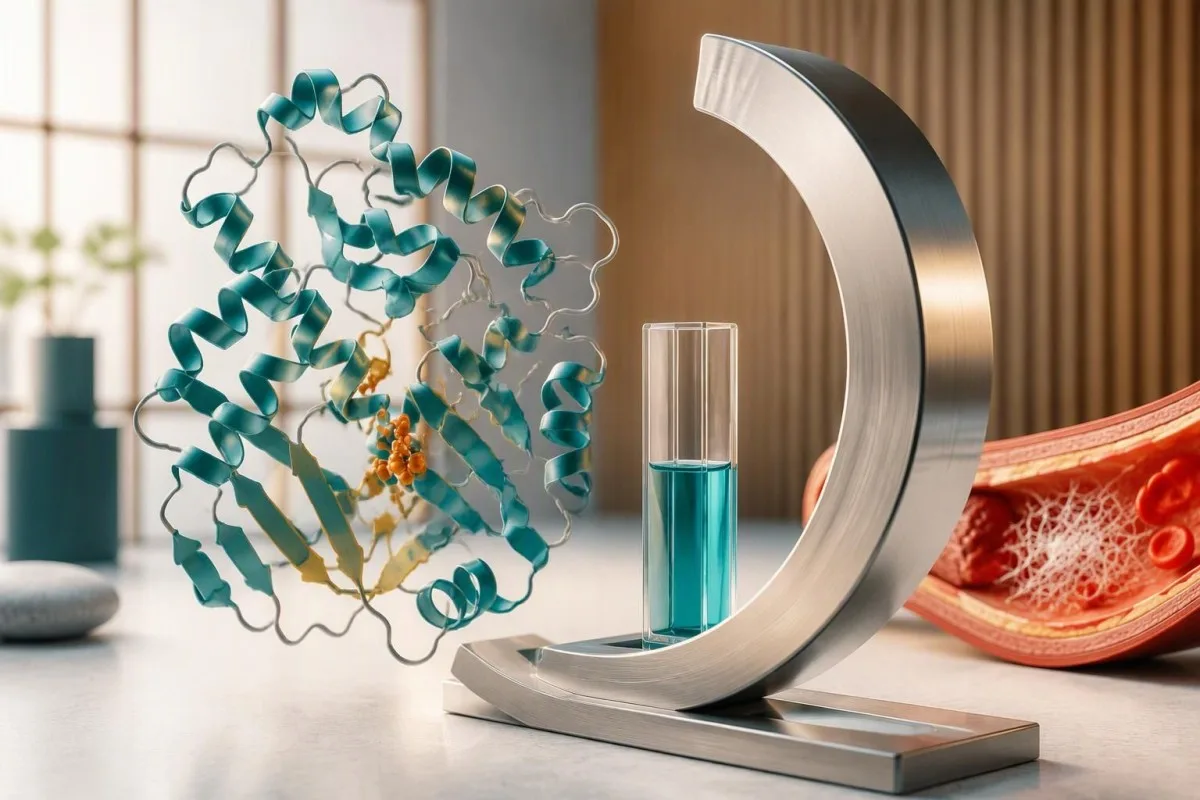
Антитромбин белсенділігінің төмен болуы тұқым қуалайтын тапшылықты автоматты түрде білдірмейді: жедел тромбоз, гепарин, ауыр сырқат немесе ақуыз жоғалту оның деңгейін уақытша төмендетуі мүмкін. Дәрігерлер тұрақты ауытқуларды тиісті уақытта жүргізілген белсенділік тестілерімен, кейде антиген тестілерімен және дәрілерді ескеретін зертханалық жоспармен растайды — көбінесе тромбозды емдеудің алғашқы 3 айынан кейін.

Негізгі тұжырымдар
- Сілтеме диапазоны: Ересектердегі антитромбин белсенділігі әдетте 80–120% шамасында болады; өз есебіңізде көрсетілген аралықты пайдаланыңыз.
- Бір төмен нәтиже: Жаңа тромбоз немесе гепаринмен емдеу кезінде алынған 65% белсенділік нәтижесі тұқым қуалайтын антитромбин тапшылығын анықтауға жеткіліксіз.
- Қайталама уақыт: Британдық гематология қоғамы жедел тромбозға байланысты антикоагулянттық емді 3 ай қабылдағаннан кейін ғана табиғи антикоагулянт тапшылығын тексеруді ұсынады.
- Белсенділік пен антиген: I типті тапшылықта әдетте екі көрсеткіш те төмендейді; II типті тапшылықта антиген деңгейі қалыпты болуы мүмкін, ал қызметі төмендейді.
- Дәрілік заттардың тест нәтижесіне әсері: Апиксабан, ривароксабан және эдоксабан Xa факторына негізделген талдауларда белсенділікті жалған жоғарылатуы мүмкін; дабигатран тромбинге негізделген талдауларда осындай әсер етуі мүмкін.
- Ақуыз жоғалту: Ересектердегі нефроздық диапазондағы протеинурия дәстүрлі түрде 24 сағатта кемінде 3.5 г деп есептеледі және жүре пайда болған антитромбиннің төмендеуіне ықпал етуі мүмкін.
- Отбасын тексеру: Расталған гетерозиготалы тұқым қуалайтын тапшылықта әр балада тиісті нұсқаны тұқым қуалау ықтималдығы 50% болады — бұл қан ұйындысы міндетті түрде түзіледі деген 50% кепілдік емес.
- Медикамент қауіпсіздігі: Тағайындаған дәрігердің жеке жоспарымен келіспейінше, зертханалық нәтижені анығырақ алу үшін антикоагулянттық емді ешқашан тоқтатпаңыз.
Антитромбин белсенділігінің төмен болуы нақты нені білдіреді?
Антитромбин белсенділігінің төмендігі зертханалық талдау күтілгеннен төмен антикоагулянттық функцияны анықтағанын білдіреді; бұл нәтиже өздігінен себепті анықтамайды. Ересектерге арналған зертхананың төменгі шегінен төмен нәтиже — көбіне шамамен 80% — тұқым қуалайтын тапшылықты, уақытша жұмсалуды, өндірілуінің азаюын, ақуыз жоғалуын немесе тестілеу мәселесін көрсетуі мүмкін.

Антитромбин тромбин (IIa фактор деп те аталады) және Xa факторы сияқты ферменттерді тежеу арқылы қанның ұюын шектейді. 60% белсенділік нәтижесі талдау калибрлеу стандартына қатысты көрсеткішті сипаттайды; бұл қан айналымыңыз 60% қорғалғанын немесе қан ұйындысының түзілу ықтималдығыңыз 40% екенін білдірмейді.
Қанның ұюына арналған әдеттегі панель нәтижелерінің қалыпты болуы антитромбин тапшылығын жоққа шығармайды, өйткені PT және aPTT тұқым қуалайтын ұю бейімділіктерінің барлығын анықтайтын скринингтік тесттер емес. Біздің қанның ұюына арналған панельдің шектеулері туралы түсіндірмеміз мына сұрақтарды ажыратуға көмектеседі: қанның ұю уақыты ұзара ма және белгілі бір табиғи антикоагулянт қалыпты жұмыс істей ме — бұлар екі түрлі бағалау.
Kantesti — белсенділік пайызын дәрі-дәрмек тарихымен және зертханалық нәтижелермен бірге қарастыруға көмектесетін, 1 қалыптан тыс белгіні диагноз ретінде қабылдамайтын AI қан талдауышы. Біздің компанияның тарихы мен мақсаты оның осы рөлін түсіндіреді; тұқым қуалайтын тапшылықты растау үшін әлі де дәрігердің басшылығымен тексеру қажет, ал шұғыл симптомдар кез келген AI түсіндірмесіне тәуелсіз бағалануы тиіс.
Антитромбин белсенділігінің қай диапазоны төмен деп саналады?
Ересектердегі антитромбин белсенділігінің анықтамалық аралығы әдетте шамамен 80–120% болады, алайда кейбір зертханалар 80–130% немесе басқа валидацияланған аралықты қолданады. Сондықтан 75% белсенділік жиі шекаралық төмен болып саналады, бірақ 75% де, кез келген басқа жеке шектік мән де тұқым қуалайтын тапшылықты дәлелдемейді немесе шұғыл емдеу қажеттігін анықтамайды.

Тұқым қуалайтын гетерозиготалы антитромбин тапшылығы бар көптеген адамның белсенділігі шамамен 40–70% аралығында болады, алайда жүре пайда болған жағдайлар да осындай мәндерге әкелуі мүмкін. Керісінше, кейбір тұқым қуалайтын нұсқалар белсенділікті азырақ төмендетеді немесе белгілі бір талдауларда анықталмайды; дәрігерлер төмендеу дәрежесін қайталама нәтижелермен бірге түсіндіреді, оны жеке генетикалық белгі ретінде қарастырмайды.
Жас нәтижелердің түсіндірілуіне едәуір әсер етеді: мерзімінде туған дені сау нәрестелерде антитромбин белсенділігі ересектердегі мәндердің шамамен 40–60% деңгейінде болуы мүмкін, ал сәби кезінде көрсеткіштер жоғарылайды. Шала туу қосымша ауытқуларға әкеледі, сондай-ақ жүктіліктің соңғы кезеңі немесе босанғаннан кейінгі ерте кезең де нәтижелерге әсер етуі мүмкін; ересектерге арналған 80% төменгі шегін талғамай қолдану жаңылыстыратын белгіге әкелуі ықтимал.
Айқын түрде гипотетикалық мысал келтірсек, бұрын қан ұйындысы болмаған, белсенділігі 78% және жалпы дені сау ересек адамға жүргізілетін тексеру ауыр сепсис кезінде белсенділігі 42% болған ересек адамдікінен өзгеше болуы керек. Екі есепте де бірдей төмен көрсеткіші көрсетілуі мүмкін, бірақ біздің диапазоннан тыс зертханалық нәтижелер анықтамалық шектердің диагностикалық немесе емдеу шектерімен неге бірдей еместігін түсіндіреді.
| Деңгей | Аралық | Мағынасы |
|---|---|---|
| Ересектерге арналған жиі қолданылатын аралық | Шамамен 80–120% | Әдетте қалыпты аралықта болады, алайда зертхананың өз аралығы мен талдау сезімталдығы басымдыққа ие. |
| Шекаралық төмендеу | 70–79% | Often warrants context review and appropriately timed confirmation; not a diagnosis. |
| Clear reduction | 50–69% | Compatible with inherited or acquired deficiency; activity alone cannot distinguish them. |
| Айқын төмендеу | Below 50% | Requires clinical review, especially during illness or thrombosis; the percentage alone does not establish an emergency. |
Антитромбин антигені мен белсенділігі: айырмашылығы неде?
Ан antithrombin activity test measures how effectively the protein inhibits a coagulation enzyme, while antithrombin antigen measures how much protein is present. Type I inherited deficiency generally lowers both; type II generally lowers activity despite a relatively normal antigen concentration, making these 2 tests complementary rather than interchangeable.

Most routine activity methods are chromogenic assays: the laboratory adds an enzyme and measures how much remains after antithrombin has inhibited it. The ISTH laboratory recommendations favor activity testing first, followed by antigen measurement when activity is low, with exclusion of acquired causes and assay interference before classification (Van Cott et al., 2020).
Consider 2 hypothetical repeat profiles obtained under suitable conditions: activity 52% with antigen 49% supports a quantitative pattern, whereas activity 52% with antigen 101% supports a qualitative pattern. These examples are not diagnostic formulas, because acquired illness can lower both measurements and antigen assays do not explain whether a functional result was distorted by medication.
Type II deficiency includes reactive-site, heparin-binding-site and other functional abnormalities; the choice of assay can change how readily a variant is detected. Kantesti’s explanations therefore distinguish quantity from performance, a distinction also illustrated by protein level versus function in C1 esterase inhibitor testing—but those are different proteins with different clinical consequences.
Жедел тромбоз антитромбин деңгейін уақытша төмендете ала ма?
Acute thrombosis can temporarily reduce antithrombin activity through consumption, particularly when accompanied by illness, procedures or treatment effects. A value such as 58% during a newly diagnosed deep vein thrombosis therefore cannot reliably distinguish an inherited baseline deficiency from a reduction caused by the current event.

The British Society for Haematology recommends testing deficiencies of natural anticoagulants only after 3 months of anticoagulation for acute thrombosis, because early results are unreliable and rarely change immediate management (Arachchillage et al., 2022). This is a recommendation about diagnostic timing, not an instruction to delay treating a suspected clot or to stop anticoagulants at month 3.
A hypothetical patient has activity of 61% during a pulmonary embolism and 96% after recovery using an appropriate assay. That change supports a temporary reduction, but comparing 2 percentages remains incomplete unless the clinician knows whether heparin, a direct oral anticoagulant, replacement products or different laboratory methods affected either measurement.
D-dimer answers a different question: it reflects fibrin formation and breakdown, not antithrombin quantity or inherited status. Our clotting tests and D-dimer guide explains why an elevated D-dimer and low activity can occur together during 1 acute event without proving that the low antithrombin caused the clot.
Гепаринмен емдеу антитромбин белсенділігін неліктен төмендетуі мүмкін?
Heparin can lower circulating antithrombin during treatment, so a low result obtained while receiving unfractionated or low-molecular-weight heparin may reflect an acquired reduction. Heparin also depends on antithrombin for much of its anticoagulant effect; activity of 50% during treatment can therefore raise both diagnostic and medication-monitoring questions.

Reduced antithrombin can contribute to apparent heparin resistance, but an unexpectedly high dose requirement does not prove inherited deficiency. During 1 episode of severe illness, increased factor VIII or fibrinogen may shorten aPTT-based impressions of anticoagulation even when heparin exposure is adequate, so clinicians may reassess the monitoring method rather than simply escalate treatment.
Some heparin anti-Xa assays add exogenous antithrombin and others do not; this difference can affect what the result says about heparin concentration versus its activity in the patient. Ask the laboratory about 2 separate methods—the antithrombin activity assay and the heparin monitoring assay—because their handling of antithrombin and heparin is not necessarily identical.
A platelet fall of more than 50% during heparin exposure raises a separate possibility, heparin-induced thrombocytopenia, which is not diagnosed by low antithrombin. Our explanation of PF4 testing and HIT assessment describes that distinction; decisions about changing heparin, using replacement antithrombin or scheduling a repeat require the treating team, not a self-directed medication pause.
Ауыр сырқат пен ДВС-синдром антитромбинді қалай азайтады?
Sepsis, disseminated intravascular coagulation and major physiological stress can reduce antithrombin through consumption, impaired production and altered distribution. A markedly low result—for example, 35%—during critical illness is often an acquired finding; it cannot be used alone to label someone with lifelong hereditary antithrombin deficiency.

DIC is assessed from a pattern, not 1 abnormal protein: falling platelets, prolonged PT, increased fibrin-related markers and sometimes reduced fibrinogen provide the relevant context. Fibrinogen may initially remain normal or elevated because it is an acute-phase protein, so a preserved fibrinogen concentration does not automatically rule out evolving consumption.
For a hypothetical example, activity of 38%, platelets of 72 × 10^9/L and worsening PT during a major systemic illness point toward an acquired coagulation disturbance rather than an isolated inherited finding. Our DIC laboratory pattern explanation shows why trends across several measurements are more informative than repeatedly checking antithrombin while the illness remains active.
Recent antithrombin concentrate or plasma treatment can raise measured activity and obscure the underlying baseline, adding a second source of uncertainty during the same hospital stay. A result of 105% after replacement does not exclude inherited deficiency, just as 35% before recovery does not prove it; document the product and timing before interpreting either percentage.
Бүйрек арқылы ақуыз жоғалту антитромбин белсенділігін төмендете ала ма?
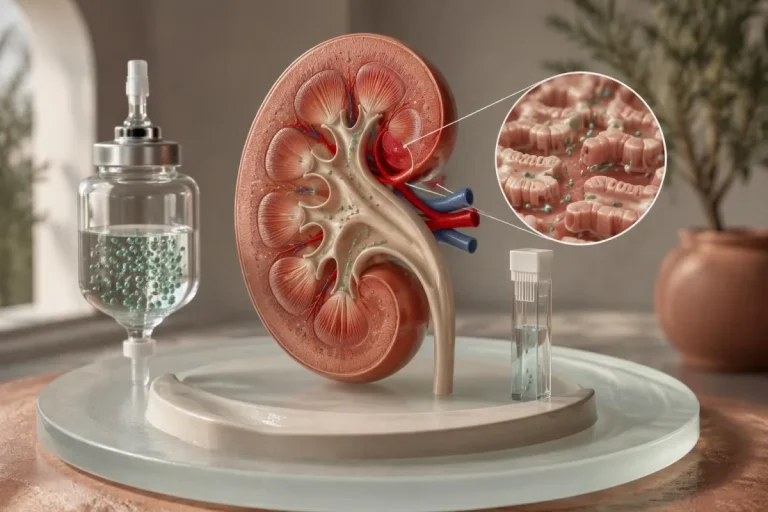
Heavy urinary protein loss can contribute to acquired antithrombin reduction, particularly in nephrotic syndrome. Adult nephrotic-range proteinuria is conventionally at least 3.5 g per 24 hours; clinicians interpret antithrombin alongside urine protein, serum albumin and the underlying kidney disorder, rather than relying on creatinine or eGFR alone.
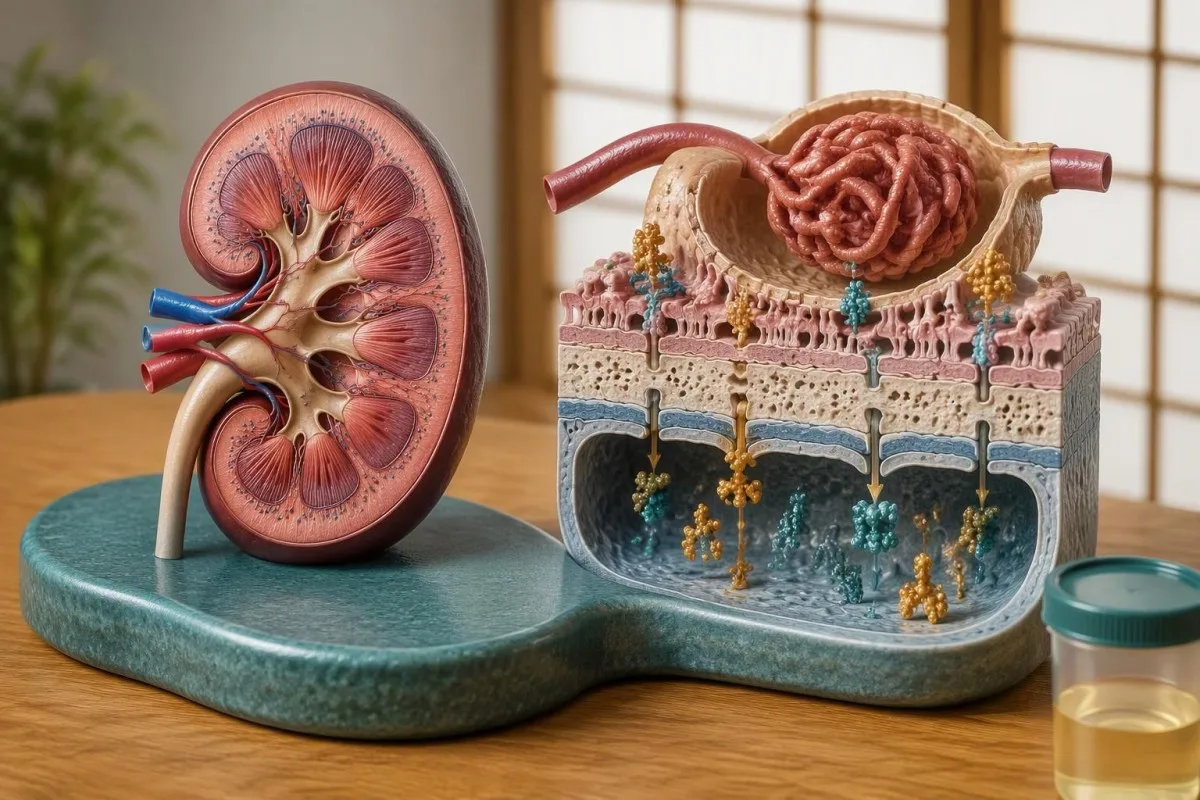
A normal eGFR does not exclude substantial protein leakage through the glomerular filtration barrier. For example, an adult with eGFR 95 mL/min/1.73 m², albumin 22 g/L and urine protein 6 g per day may have a strong acquired explanation for low activity despite apparently reassuring filtration results; persistent несептің көбіктенуі және ақуызды тестілеу deserve assessment in that context.
The relationship between nephrotic syndrome, antithrombin levels and clot risk is not uniform: not every person with nephrotic syndrome has low antithrombin, and the thrombotic tendency involves more than urinary loss of 1 protein. Underlying diagnosis matters, including membranous nephropathy, where PLA2R results and kidney monitoring help explain the kidney process rather than prove an inherited clotting disorder.
Kantesti is an AI blood test interpretation platform that can organize an antithrombin percentage alongside albumin and kidney markers, but it cannot infer the amount of urinary protein from eGFR alone. If activity remains 62% while heavy protein loss continues, repeat testing may still describe the acquired condition; the cleaner inherited assessment usually follows clinical stabilization and improvement of that competing explanation.
Бауыр ауруы немесе басқа ем түрлері антитромбинді төмендете ала ма?
Reduced liver synthesis can lower antithrombin, especially in advanced liver disease, while certain treatments such as L-asparaginase can also cause acquired reductions. An activity of 55% alongside other abnormalities requires review of protein production, protein loss and treatment history before clinicians consider a genetic explanation.
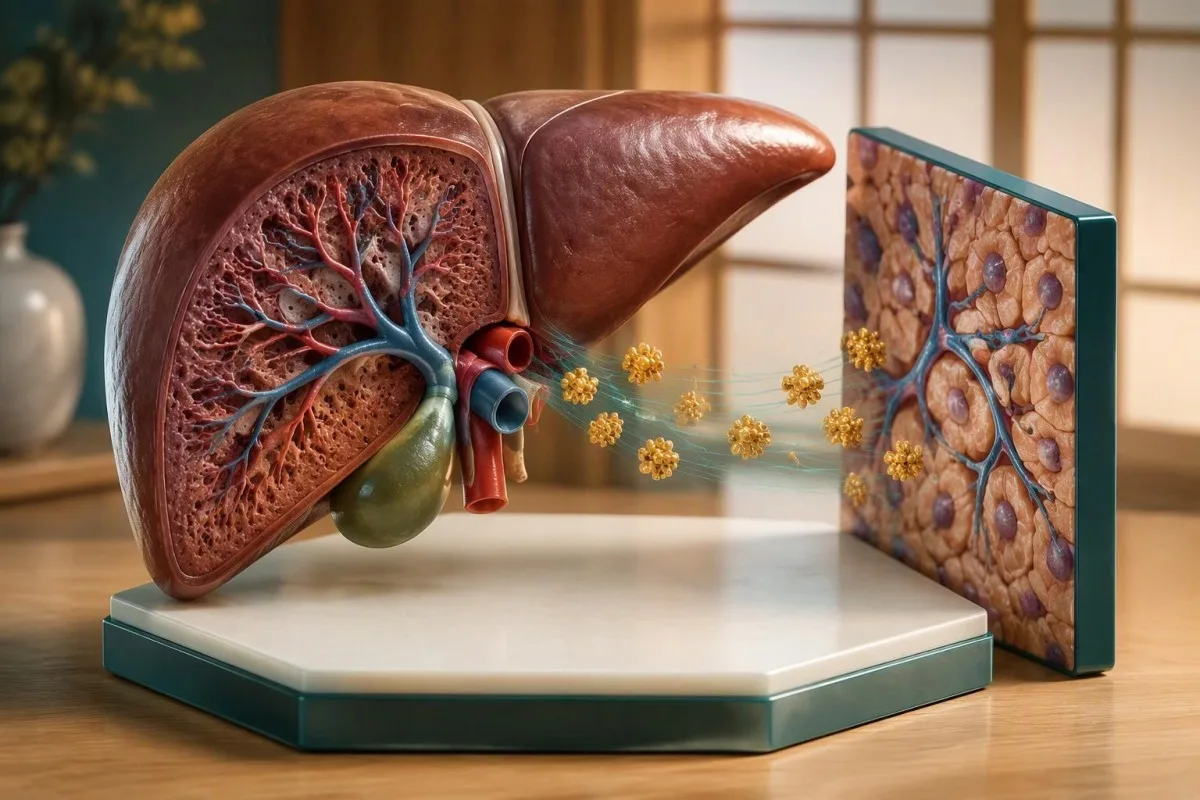
ALT and AST reflect injury more than protein-making capacity, so normal or mildly elevated enzymes do not guarantee normal antithrombin production. If activity is 57%, albumin is 25 g/L and INR is 1.6, impaired synthesis becomes a possibility—but warfarin, nutrition and protein loss can confound that pattern, as our бауыр қызметінің анализін қалай оқу керек жөніндегі нұсқаулық түсіндіреді.
Albumin cannot serve as a substitute antithrombin test because the 2 proteins have different turnover and can respond differently to illness or therapy. Our albumin and serum protein guide helps interpret the surrounding panel; a normal albumin does not exclude inherited antithrombin deficiency, and a low albumin does not prove that the liver caused it.
L-asparaginase can reduce anticoagulant proteins during cancer treatment, creating an acquired thrombosis risk that may need active management rather than merely a future repeat test. Major procedures, extracorporeal support and recent replacement products can also complicate 1 measurement; eating more protein or taking a vitamin supplement does not correct a SERPINC1-related defect or replace treatment of the underlying acquired cause.
Қай антикоагулянттар антитромбин тестілеуіне кедергі келтіреді?
Direct oral anticoagulants can falsely increase antithrombin activity, potentially masking deficiency rather than causing a low flag. Apixaban, rivaroxaban and edoxaban interfere with factor Xa-based activity assays, while dabigatran can interfere with thrombin-based assays; the same patient’s 2 results may therefore differ because of assay design.
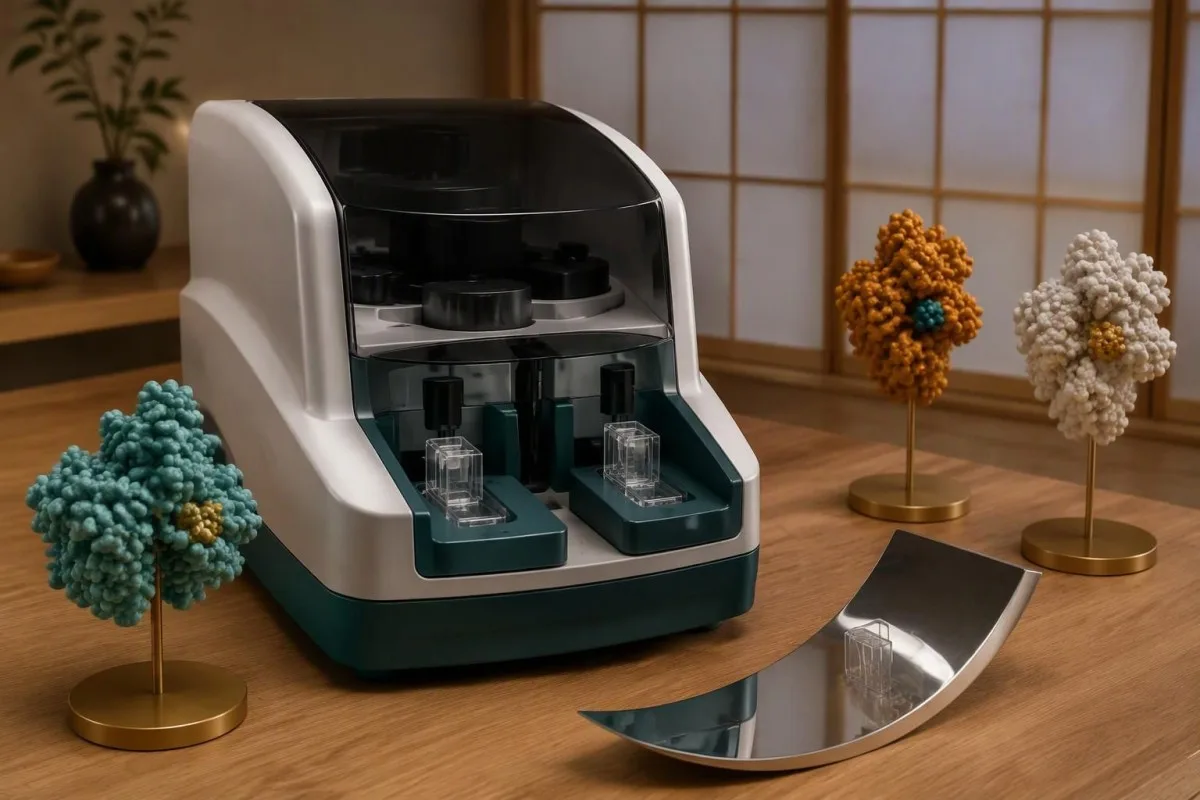
The mechanism is straightforward: the medication inhibits the assay’s added enzyme, and the instrument can misread that inhibition as stronger antithrombin function. The ISTH communication explicitly identifies these drug–assay combinations, including effects from direct thrombin inhibitors such as argatroban and bivalirudin (Van Cott et al., 2020); antigen testing usually avoids this particular functional interference, but does not replace an activity assessment.
A hypothetical activity of 108% on a factor Xa-based assay while taking rivaroxaban may conceal an underlying reduction; activity of 66% on that same drug still cannot be mathematically corrected into a true baseline. Anticoagulants also affect lupus anticoagulant test interpretation, but the direction and mechanism of interference are test-specific, not a universal rule for all thrombophilia assays.
Kantesti AI should support medication-aware interpretation rather than claim that 1 uploaded report identifies the laboratory’s reagent or removes a drug effect. Depending on the situation, the laboratory may use a less-affected assay, measure drug exposure or apply a validated removal procedure; our техникалық валидация мен қадағалау describes the broader standards behind interpretation, not a guarantee that AI can resolve missing assay information.
Күтпеген төмен нәтижеге үлгіні өңдеу себеп болуы мүмкін бе?
Sample quality and assay differences can make antithrombin results unreliable, especially when the laboratory flags collection or processing problems. Coagulation samples typically require a 9:1 ratio of sample to citrate anticoagulant; underfilling, inappropriate handling or an unsuitable specimen should be considered before interpreting an isolated abnormal percentage.

A hematocrit above approximately 55% may require citrate adjustment for coagulation testing because the amount of plasma relative to citrate is reduced. This is a laboratory preparation issue, not evidence of hereditary deficiency; if activity is 73% in a flagged specimen, ask whether the laboratory accepted the sample as valid and whether recollection is preferable to repeating the same material.
Hemolysis, lipemia and marked discoloration can interfere with optical methods, although the effect depends on the instrument and reagent rather than having 1 predictable direction. Our guides to hemolysis-related result distortion және lipemic specimens and redraws explain why a specimen-quality warning needs a method-specific answer instead of an automatic diagnosis.
Changing laboratories can create a second problem: an activity of 76% by one method and 84% by another may reflect analytical differences rather than biological recovery. Using the same laboratory helps trend comparison, but persistent clinical suspicion may justify a specialist laboratory using an alternative assay that is more sensitive to certain inherited variants; consistency and diagnostic sensitivity are 2 different goals.
Антитромбин белсенділігінің төмен нәтижесін қашан қайталау керек?
Repeat antithrombin testing should occur after temporary causes have settled and medication effects have been addressed. Following an acute clot, the BSH recommendation is to wait until after 3 months of anticoagulation before testing natural anticoagulant deficiencies; the safest collection date then depends on the drug, assay and clinical situation.

An incidental borderline result in a well adult without a recent clot does not automatically require the same 3-month wait, because that interval addresses acute thrombosis. The clinician may instead arrange a separate repeat once collection issues and acquired causes are reviewed, adding antigen testing if activity remains low; there is no universally validated waiting interval that fits every outpatient finding.
Heparin-related reductions may recover after treatment ends, but laboratory policies and ongoing illness affect when a repeat becomes meaningful. For a DOAC, a fixed 48-hour pause is not universally adequate or safe: kidney function, dose timing, drug accumulation and assay sensitivity matter, and choosing a compatible method may avoid interrupting treatment entirely.
Kantesti’s trend tools can help organize 2 measurements with their dates, but a timeline should also record clot onset, heparin exposure, the last relevant medication dose and any replacement products. Our explanation of ауруханадан шыққаннан кейінгі нәтижелер supports that workflow; warfarin does not usually lower antithrombin as it lowers vitamin K-dependent proteins, so protein C or S stopping rules should not be copied automatically.
Қандай нәтижелер тұқым қуалайтын антитромбин тапшылығын растайды?
Inherited antithrombin deficiency becomes more likely when activity remains low on separate, interpretable samples, acquired causes are excluded and the personal or family history fits. Two concordant results provide stronger evidence than 1 result during illness, but activity, antigen and sometimes SERPINC1 testing must still be considered together.

A clearly hypothetical profile of activity 54% and 56% on 2 suitable occasions, antigen 51%, no major protein loss and a first-degree relative with confirmed deficiency would support a quantitative inherited pattern. Early or recurrent venous thrombosis increases suspicion, but age alone is not diagnostic, and absence of a family history does not exclude a new variant or previously unrecognized disease.
SERPINC1 testing can help establish a molecular explanation when the laboratory phenotype is convincing and the result could affect management or family counseling. A variant of uncertain significance is not equivalent to a diagnosis, while a negative genetic test does not necessarily exclude every relevant change; the ISTH recommendations also note that molecular testing may identify defects missed by activity assays (Van Cott et al., 2020).
Antithrombin and protein S deficiency require different interpretive rules, even when they appear on the same thrombophilia panel. Our guide to low protein S activity explains several contrasting confounders; a type II antithrombin heparin-binding-site variant can also have a different risk profile from type I deficiency, so 1 generic risk estimate should not be applied to all confirmed variants.
Отбасылық тексеру қашан орынды?
Family evaluation is usually considered after the original patient’s inherited deficiency is convincingly confirmed, especially when the result could change prevention, hormone choices or pregnancy planning. Most inherited antithrombin deficiency is autosomal dominant, giving each child of a heterozygous carrier a 50% chance of inheriting the relevant variant—not a certainty of thrombosis.
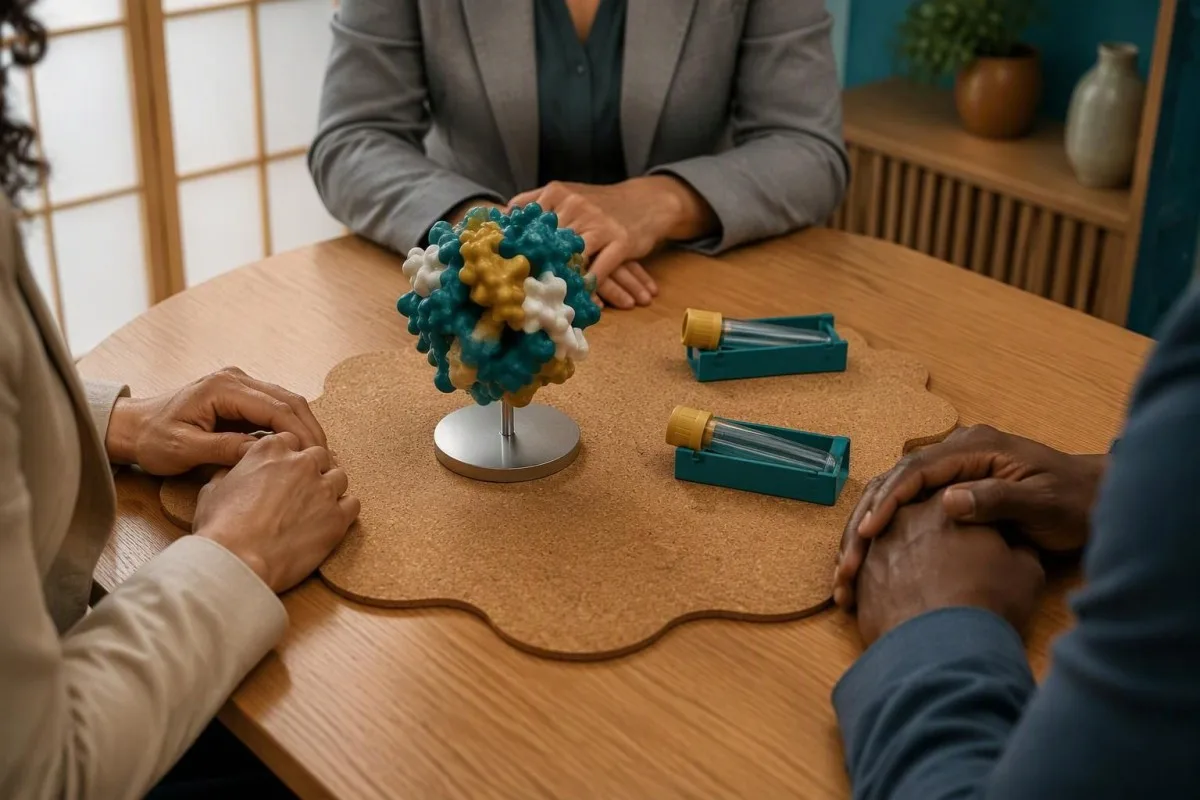
The BSH guideline discourages routine thrombophilia testing of all first-degree relatives but supports selective evaluation for relatives of people with antithrombin, protein C or protein S deficiency when results could influence management (Arachchillage et al., 2022). Our тәуекелге негізделген отбасылық тестілеу нұсқаулығымыз explains why testing 1 relevant inherited condition can be more useful than ordering a broad panel without a clinical question.
ASH’s 2023 thrombophilia guideline similarly supports selective testing in certain families with known high-risk deficiencies, including decisions about estrogen exposure and prophylaxis during particular risk situations (Middeldorp et al., 2023). Many recommendations are conditional and based on very low-certainty evidence; antithrombin deficiency should not be treated as interchangeable with factor V Leiden results, which often carry a different risk profile.
Kantesti’s Family Health Risk feature can help organize information shared with consent, but it cannot determine whether a relative inherited a SERPINC1 variant from 1 family member’s activity percentage. Testing children requires age-aware laboratory interpretation and an assessment of whether the result would change care now; predictive testing also deserves counseling about privacy, uncertainty and the difference between inherited susceptibility and an actual clot.
Кейінгі бақылау жоспары мен дереккөздерді тексеруге не кіруі керек?
Bring the original percentage, reference interval, medication list and sampling date to follow-up, along with details of the clot, illness or protein loss that could explain the result. Two decisions come first: whether the current finding needs clinical action and whether repeat testing would genuinely change treatment or family counseling.

A low activity percentage alone does not automatically require lifelong anticoagulation or antithrombin concentrate; treatment depends on previous thrombosis, the provoking circumstances, bleeding risk and the confirmed diagnosis. New one-sided leg swelling needs prompt assessment, while sudden shortness of breath, chest pain or fainting requires emergency care even if the last activity was 100%—do not wait for a repeat thrombophilia panel.
Kantesti is an AI lab test interpretation service that can help organize the 2-stage workflow of context review followed by clinician-directed confirmation, not replace hematology advice or authorize medication interruption. Our жауапты AI қағидаттарымыз describe that boundary; use AI explanations to prepare precise questions, including which enzyme the assay uses and whether activity and antigen should be collected together.
The clinical recommendations here draw on 3 directly relevant external sources: the ISTH laboratory communication, the BSH testing guideline and the ASH thrombophilia guideline. The 2 Zenodo publications below provide background on serum proteins and immune-related laboratory context—not clinical trials validating antithrombin diagnosis; our медициналық мазмұн стандарттары және комплемент пен аутоиммундық зерттеулер жөніндегі нұсқаулығымыз help readers distinguish supporting education from condition-specific evidence.
Жиі қойылатын сұрақтар
Антитромбин белсенділігінің төмен болуы әрдайым тұқым қуалайтын тапшылықты білдіре ме?
0 Төмен антитромбин белсенділігі әрдайым тұқым қуалайтын тапшылықты білдірмейді. 60% белсенділік жедел тромбоз, гепаринмен емдеу, ауыр сырқат, бауыр ауруының асқынған сатысы немесе несеппен ақуыздың көп жоғалуы кезінде байқалуы мүмкін. Дәрігерлер осы жүре пайда болған себептерді қарастырғаннан кейін, бөлек және уақытын дұрыс таңдап алынған сынамаларда көрсеткіштің тұрақты төмендеуін анықтайды. Антигенді анықтау және кейде SERPINC1 тестілеуі расталған ауытқуды жіктеуге көмектеседі.
Қан ұйығаннан кейін антитромбин белсенділігін анықтау тестін қашан қайталау керек?
0 Жедел тромбоздан кейін Британдық гематология қоғамы табиғи антикоагулянттардың тапшылығын антикоагулянттық емнің 3 айынан кейін ғана тексеруді ұсынады. Үлгі алу жоспарын әзірлегенде сауығу кезеңін, қолданылып жүрген антикоагулянтты және зертханалық талдау әдісін де ескеру қажет. Бұл ұсыным бойынша бәрі де 3 айдан кейін дәрі қабылдауды тоқтатуы керек деген сөз емес. Дәрігердің нұсқауынсыз тексеру үшін антикоагулянттық емді ешқашан үзбеңіз.
Антитромбин антигені мен белсенділігінің айырмашылығы неде?
Антитромбин белсенділігі оның функциясын, ал антитромбин антигені ақуыз мөлшерін өлшейді. I типті тапшылықта әдетте екі көрсеткіш те төмендейді; II типті тапшылықта антиген деңгейі салыстырмалы түрде қалыпты болғанымен, белсенділік әдетте төмендейді. Мысалы, белсенділіктің 52%, ал антигеннің 101% болуы сапалық сипаттағы үлгіні меңзейді, бірақ жүре пайда болған жағдайлар мен дәрілік препараттардың әсерін тексермей, тұқым қуалайтын себепті растамайды. Антигенді тексеру жарамды функционалдық бағалаудың орнын баса алмайды.
Апиксабан немесе ривароксабан антитромбин нәтижелеріне әсер етуі мүмкін бе?
0 Апиксабан мен ривароксабан Xa факторы негізіндегі талдауларда антитромбин белсенділігін жалған жоғарылатып, тапшылықты жасыруы мүмкін. Дабигатран тромбин негізіндегі талдауларда да белсенділіктің жалған жоғарылауына әкелуі мүмкін. Сондықтан кедергі келтіретін препаратты қабылдап жүрген кезде алынған 100% нәтижесі көрінгендей сенімді болмауы ықтимал. Зертхана әсері азырақ әдісті немесе басқа валидацияланған стратегияны таңдауы мүмкін; дәріні өз бетіңізше тоқтату қауіпті.
70% антитромбин белсенділігі қауіпті ме?
70% антитромбин белсенділігі ересектерге арналған көптеген зертханалық референстік аралықтардан төмен, бірақ бұл пайыздың өзі шұғыл жағдай барын анықтамайды және адамның қан ұйығышының пайда болу қаупін сандық бағаламайды. Оның мәні талдама әдісіне, дәрі-дәрмектерге, бұрын болған тромбтарға, отбасылық анамнезге және қазіргі ауруға байланысты. Жеке алынған бұл нәтиже әдетте дәрігердің бағалауын және тиісті растау жоспарын қажет етеді. Кенеттен ентігу, кеуде ауыруы, естен тану немесе аяқтың бір жақты жаңадан ісінуі осы пайызға қарамастан медициналық тексеруді талап етеді.
Менде антитромбин тапшылығы болса, отбасы мүшелеріме тексеруден өту керек пе?
Тұқым қуалайтын антитромбин тапшылығы нақты расталғаннан кейін отбасы мүшелерін іріктеп тексеру орынды болуы мүмкін, әсіресе нәтижелер алдын алу шараларына, гормондарды таңдау немесе жүктілікті жоспарлауға әсер ететін болса. Гетерозиготалы тасымалдаушының тиісті нұсқаны әр баласына беру ықтималдығы 50%, алайда бұл баланың тромбозға шалдығатынына 50% кепілдік бермейді. BSH және ASH нұсқаулықтары барлық туыстарды жаппай тексеруден гөрі, шешім қабылдауға бағытталған бағалауды қолдайды. Балаларды жасына сай түсіндіру қажет, сондай-ақ тексерудің қазіргі күтімге әсері бар-жоғын талқылау керек.
Қан анализінің нәтижесін түсіндіріп алыңыз
Зертханалық есепті жүктеңіз, сонда Kantesti AI әр биомаркерді бірнеше секунд ішінде қарапайым тілмен түсіндіреді. Әлем бойынша 2 миллионнан астам адам қолданады.
Сілтемелер
- Klein, T., Mitchell, S., & Weber, H. (2026). Сарысу ақуыздары жөніндегі нұсқаулық: глобулиндер, альбумин және A/G арақатынасына арналған қан талдауы. Kantesti AI медициналық зерттеулері. DOI
- Klein, T., Mitchell, S., & Weber, H. (2026). C3 C4 комплемент қан талдауы және ANA титрі жөніндегі нұсқаулық. Kantesti AI медициналық зерттеулері. DOI
- Van Cott EM et al. (2020). Recommendations for clinical laboratory testing for antithrombin deficiency; Communication from the SSC of the ISTH. Journal of Thrombosis and Haemostasis. DOI
- Arachchillage DJ және т.б. (2022). Тромбофилияға тестілеу: Британдық гематология қоғамының нұсқаулығы. British Journal of Haematology. DOI
- Middeldorp S және т.б. (2023). American Society of Hematology ұйымының веналық тромбоэмболияны басқару жөніндегі 2023 жылғы нұсқаулықтары: тромбофилияға тестілеу. Blood Advances. DOI
- 2 млн+Талданған тесттер
- 127+Елдер
- 100+Тілдер
Медициналық топ туралы


E-E-A-T сенім сигналдары
Тәжірибе
Дәрігер басқаратын зертханалық талдауды түсіндіру жұмыс ағындарын клиникалық шолу.
Сараптама
Биомаркерлердің клиникалық контексте қалай әрекет ететініне зертханалық медицина фокусы.
Билік
Доктор Томас Кляйн медициналық тұрғыдан тексерген, доктор Сара Митчелл мен профессор доктор Ханс Вебердің үлесімен.
Сенімділік
Дабыл қаупін азайту үшін айқын бақылау жолдарымен дәлелге негізделген түсіндіру.




Медициналық ескерту
Бұл мақала тек білім беру мақсатында ғана және медициналық кеңес болып табылмайды. Диагноз және ем туралы шешімдер үшін әрдайым білікті медицина қызметкеріне жүгініңіз.
Жарияланды · Редакция тобына хабарласыңыз
Англия мен Уэльсте тіркелген Kantesti Ltd басып шығарған, компания №. 17090423, Лондон, Біріккен Корольдік.
