Antitrombin faolligining pastligi irsiy yetishmovchilik borligini avtomatik ravishda anglatmaydi: o‘tkir tromb, geparin, og‘ir kasallik yoki oqsil yo‘qotilishi uning miqdorini vaqtincha kamaytirishi mumkin. Shifokorlar davomli o‘zgarishlarni tegishli vaqtda o‘tkazilgan faollik tekshiruvi, ba’zan antigen tekshiruvi hamda dori vositalarini hisobga oladigan laboratoriya rejasi bilan tasdiqlaydilar — ko‘pincha trombni davolashning dastlabki 3 oyidan keyin.

Asosiy xulosalar
- Ma'lumotnomali diapazon: Kattalarda antitrombin faolligi odatda 80–120% atrofida bo‘ladi; o‘z tahlil hisobotingizda ko‘rsatilgan oraliqdan foydalaning.
- Bitta past natija: Yangi tromb paytida yoki geparin bilan davolashda aniqlangan 65% faollik irsiy antitrombin yetishmovchiligini tasdiqlay olmaydi.
- Takrorlash vaqti: Britaniya Gematologiya Jamiyati o‘tkir tromboz uchun antikoagulyatsion davolash boshlanganidan keyin 3 oy o‘tgachgina tabiiy antikoagulyantlar yetishmovchiligini tekshirishni tavsiya qiladi.
- Faollik va antigen: I tur yetishmovchiligida odatda ikkala ko‘rsatkich ham pasayadi; II tur yetishmovchiligida antigen miqdori normal bo‘lib qolishi mumkin, ammo funksiyasi pasayadi.
- Dori vositalarining tahlilga ta’siri: Apiksaban, rivaroksaban va edoksaban Xa omiliga asoslangan tahlillarda faollikni noto‘g‘ri ravishda oshirishi mumkin; dabigatran trombinga asoslangan tahlillarda shunday ta’sir ko‘rsatishi mumkin.
- Oqsil yo‘qotilishi: Kattalardagi nefrotik darajadagi proteinuriya odatda 24 soat davomida kamida 3,5 g bo‘ladi va orttirilgan antitrombin kamayishiga sabab bo‘lishi mumkin.
- Oilaviy tekshiruv: Tasdiqlangan geterozigot irsiy yetishmovchilikda har bir farzandning tegishli variantni meros qilib olish ehtimoli 50% bo‘ladi — qon ivindisi paydo bo‘lishining 50% kafolati emas.
- Dori vositalarining xavfsizligi: Tahlil natijasini aniqroq olish uchun, buyurgan shifokor bilan individual reja tuzmasdan turib, antikoagulyatsiyani hech qachon to‘xtatmang.
Antitrombin faolligining pastligi aslida nimani anglatadi?
Antitrombin faolligining pastligi laboratoriya tahlilida kutilganidan kamroq antikoagulyant funksiyasi aniqlanganini anglatadi; buning o‘zi sababni ko‘rsatmaydi. Kattalar laboratoriyasining quyi me’yor chegarasidan past natija — ko‘pincha taxminan 80% — irsiy yetishmovchilik, vaqtinchalik sarflanish, ishlab chiqarilishning kamayishi, oqsil yo‘qotilishi yoki tahlil muammosini aks ettirishi mumkin.

Antitrombin trombin (IIa omil deb ham ataladi) va Xa omil kabi fermentlarni ingibitsiya qilib, qon ivishini cheklaydi. 60% faollik natijasi tahlilning kalibrlash standartiga nisbatan ko‘rsatkichni bildiradi; bu qon aylanish tizimingiz 60% himoyalanganini yoki qon ivindisi paydo bo‘lish ehtimoli 40% ekanini anglatmaydi.
Qon ivishining odatiy paneli normal bo‘lishi antitrombin yetishmovchiligini istisno qilmaydi, chunki PT va aPTT irsiy ivishga moyilliklarning barchasini aniqlash uchun skrining tahlillari emas. Quyidagi izohimiz normal koagulatsiya panelining cheklovlari bu savollarni bir-biridan ajratishga yordam beradi: koagulatsiya vaqtlari uzayganmi va muayyan tabiiy antikoagulyant me’yorida ishlaydimi — bular 2 xil baholashdir.
Kantesti — faollik foizini dori vositalari tarixi va tegishli laboratoriya natijalari bilan birgalikda ko‘rib chiqishga yordam beradigan sun’iy intellekt asosidagi qon tahlili analizatori; u 1 ta g‘ayritabiiy belgini tashxis deb qabul qilmaydi. Bizning kompaniyamiz tarixi va maqsadi ushbu vazifani tushuntiradi; irsiy yetishmovchilikni tasdiqlash uchun baribir klinisyen nazorati ostidagi tekshiruv zarur, shoshilinch alomatlar esa har qanday sun’iy intellekt talqinidan qat’i nazar baholanishi kerak.
Antitrombin faolligining qaysi diapazoni past hisoblanadi?
Kattalarda antitrombin faolligi odatda taxminan 80–120% me’yor oralig‘iga ega, biroq ayrim laboratoriyalar 80–130% yoki tasdiqlangan boshqa oraliqdan foydalanadi. Shu sababli 75% faollik ko‘pincha chegaraviy past bo‘ladi, lekin 75% ham, boshqa hech qanday yagona chegara qiymati ham irsiy yetishmovchilikni isbotlamaydi yoki shoshilinch davolash zarurligini belgilamaydi.
Irsiy geterozigot antitrombin yetishmovchiligi bo‘lgan ko‘plab odamlarda faollik taxminan 40–70% oralig‘ida bo‘ladi, ammo orttirilgan holatlar ham xuddi shunday qiymatlarni keltirib chiqarishi mumkin. Aksincha, ayrim irsiy variantlar yengilroq pasayishga olib keladi yoki muayyan tahlillarda aniqlanmay qoladi; klinisyenlar pasayish darajasini takroriy natijalar bilan birgalikda talqin qiladi, uni mustaqil genetik belgi sifatida qabul qilmaydi.
Yosh talqinga sezilarli ta’sir qiladi: muddatida tug‘ilgan sog‘lom chaqaloqlarda antitrombin faolligi kattalardagi ko‘rsatkichlarning taxminan 40–60% qismiga teng bo‘lishi mumkin va go‘daklik davrida oshib boradi. Chala tug‘ilish qo‘shimcha o‘zgaruvchanlikni keltirib chiqaradi, kechki homiladorlik yoki tug‘ruqdan keyingi ilk davr ham natijalarga ta’sir qilishi mumkin; kattalar uchun 80% quyi chegarasini hamma holatga birdek qo‘llash chalg‘ituvchi xulosaga olib kelishi mumkin.
Mutlaqo faraziy misol sifatida, faolligi 78% bo‘lgan va avval qon ivindisi kuzatilmagan, boshqa jihatdan sog‘lom katta yoshli odamni baholash og‘ir sepsis paytida faolligi 42% bo‘lgan katta yoshli odamni baholashdan farq qiladi. Har ikkala hisobotda ham bir xil past ko‘rsatkich belgisi aks etishi mumkin, ammo qo‘llanmamiz diapozondan tashqari laboratoriya natijalari me’yor chegaralari tashxis yoki davolash chegaralari bilan nega bir xil emasligini tushuntiradi.
| Daraja | Diapazon | Bu nimani anglatadi |
|---|---|---|
| Kattalar uchun odatiy oraliq | Taxminan 80–120% | Odatda me’yor doirasida bo‘ladi, biroq laboratoriyaning o‘z oraliği va tahlil sezgirligi ustuvor hisoblanadi. |
| Chegaraviy pasayish | 70–79% | Often warrants context review and appropriately timed confirmation; not a diagnosis. |
| Clear reduction | 50–69% | Compatible with inherited or acquired deficiency; activity alone cannot distinguish them. |
| Keskin kamayish | Below 50% | Requires clinical review, especially during illness or thrombosis; the percentage alone does not establish an emergency. |
Antitrombin antigeni va faolligi: farqi nimada?
An antithrombin activity test measures how effectively the protein inhibits a coagulation enzyme, while antithrombin antigen measures how much protein is present. Type I inherited deficiency generally lowers both; type II generally lowers activity despite a relatively normal antigen concentration, making these 2 tests complementary rather than interchangeable.
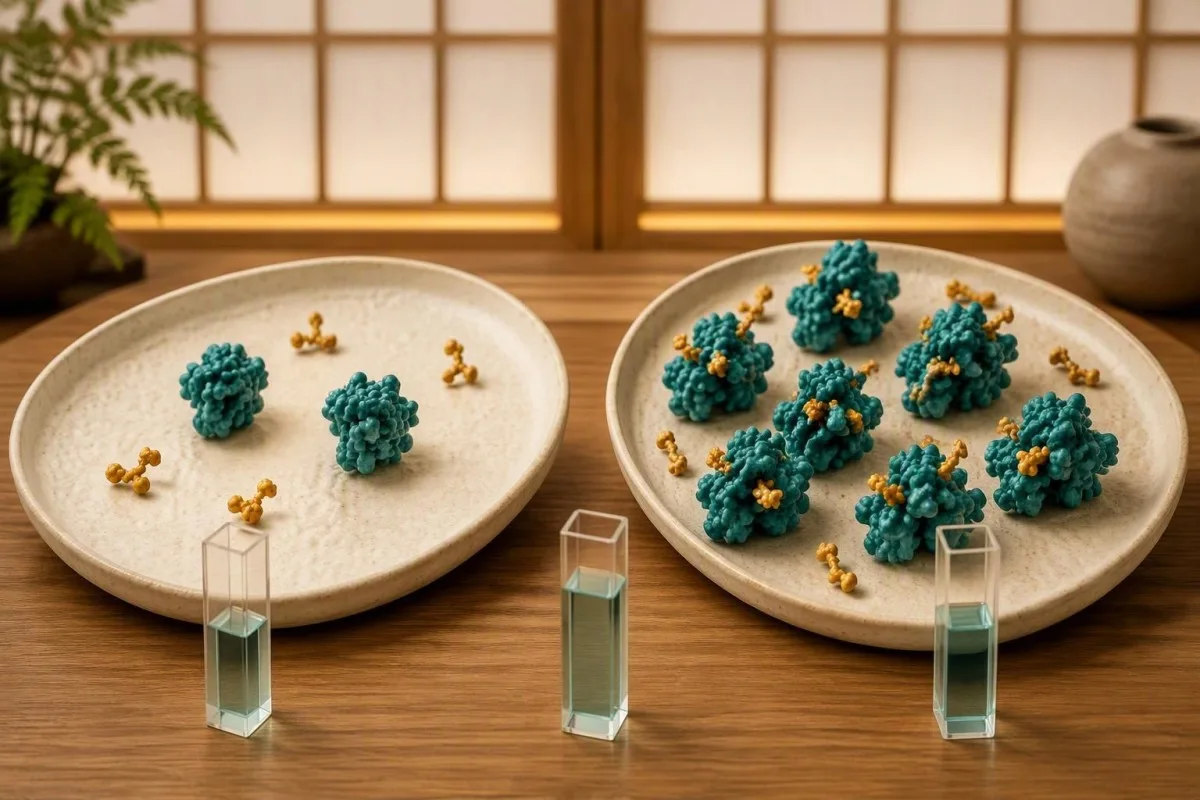
Most routine activity methods are chromogenic assays: the laboratory adds an enzyme and measures how much remains after antithrombin has inhibited it. The ISTH laboratory recommendations favor activity testing first, followed by antigen measurement when activity is low, with exclusion of acquired causes and assay interference before classification (Van Cott et al., 2020).
Consider 2 hypothetical repeat profiles obtained under suitable conditions: activity 52% with antigen 49% supports a quantitative pattern, whereas activity 52% with antigen 101% supports a qualitative pattern. These examples are not diagnostic formulas, because acquired illness can lower both measurements and antigen assays do not explain whether a functional result was distorted by medication.
Type II deficiency includes reactive-site, heparin-binding-site and other functional abnormalities; the choice of assay can change how readily a variant is detected. Kantesti’s explanations therefore distinguish quantity from performance, a distinction also illustrated by protein level versus function in C1 esterase inhibitor testing—but those are different proteins with different clinical consequences.
O‘tkir tromb antitrombin miqdorini vaqtincha kamaytirishi mumkinmi?
Acute thrombosis can temporarily reduce antithrombin activity through consumption, particularly when accompanied by illness, procedures or treatment effects. A value such as 58% during a newly diagnosed deep vein thrombosis therefore cannot reliably distinguish an inherited baseline deficiency from a reduction caused by the current event.

The British Society for Haematology recommends testing deficiencies of natural anticoagulants only after 3 months of anticoagulation for acute thrombosis, because early results are unreliable and rarely change immediate management (Arachchillage et al., 2022). This is a recommendation about diagnostic timing, not an instruction to delay treating a suspected clot or to stop anticoagulants at month 3.
A hypothetical patient has activity of 61% during a pulmonary embolism and 96% after recovery using an appropriate assay. That change supports a temporary reduction, but comparing 2 percentages remains incomplete unless the clinician knows whether heparin, a direct oral anticoagulant, replacement products or different laboratory methods affected either measurement.
D-dimer answers a different question: it reflects fibrin formation and breakdown, not antithrombin quantity or inherited status. Our clotting tests and D-dimer guide explains why an elevated D-dimer and low activity can occur together during 1 acute event without proving that the low antithrombin caused the clot.
Nima uchun geparin bilan davolash antitrombin faolligini kamaytirishi mumkin?
Heparin can lower circulating antithrombin during treatment, so a low result obtained while receiving unfractionated or low-molecular-weight heparin may reflect an acquired reduction. Heparin also depends on antithrombin for much of its anticoagulant effect; activity of 50% during treatment can therefore raise both diagnostic and medication-monitoring questions.
Reduced antithrombin can contribute to apparent heparin resistance, but an unexpectedly high dose requirement does not prove inherited deficiency. During 1 episode of severe illness, increased factor VIII or fibrinogen may shorten aPTT-based impressions of anticoagulation even when heparin exposure is adequate, so clinicians may reassess the monitoring method rather than simply escalate treatment.
Some heparin anti-Xa assays add exogenous antithrombin and others do not; this difference can affect what the result says about heparin concentration versus its activity in the patient. Ask the laboratory about 2 separate methods—the antithrombin activity assay and the heparin monitoring assay—because their handling of antithrombin and heparin is not necessarily identical.
A platelet fall of more than 50% during heparin exposure raises a separate possibility, heparin-induced thrombocytopenia, which is not diagnosed by low antithrombin. Our explanation of PF4 testing and HIT assessment describes that distinction; decisions about changing heparin, using replacement antithrombin or scheduling a repeat require the treating team, not a self-directed medication pause.
Og‘ir kasallik va DIC antitrombinni qanday kamaytiradi?
Sepsis, disseminated intravascular coagulation and major physiological stress can reduce antithrombin through consumption, impaired production and altered distribution. A markedly low result—for example, 35%—during critical illness is often an acquired finding; it cannot be used alone to label someone with lifelong hereditary antithrombin deficiency.
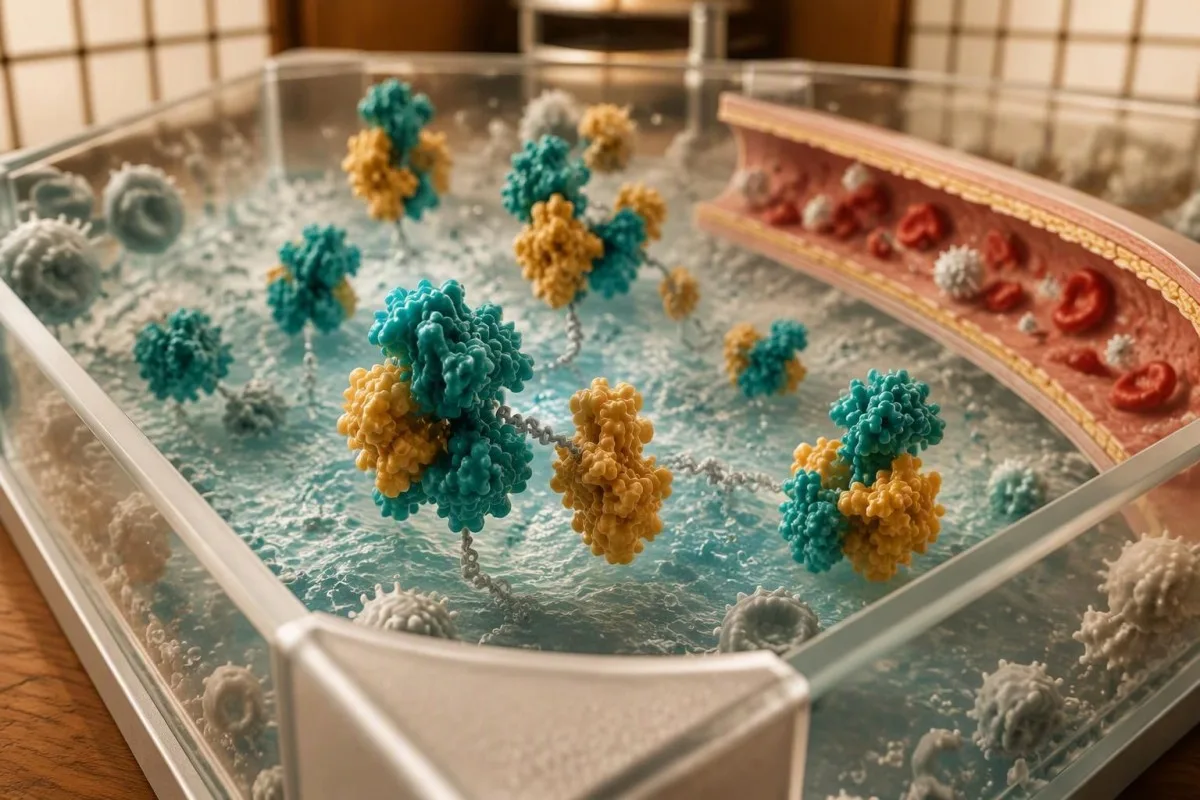
DIC is assessed from a pattern, not 1 abnormal protein: falling platelets, prolonged PT, increased fibrin-related markers and sometimes reduced fibrinogen provide the relevant context. Fibrinogen may initially remain normal or elevated because it is an acute-phase protein, so a preserved fibrinogen concentration does not automatically rule out evolving consumption.
For a hypothetical example, activity of 38%, platelets of 72 × 10^9/L and worsening PT during a major systemic illness point toward an acquired coagulation disturbance rather than an isolated inherited finding. Our DIC laboratory pattern explanation shows why trends across several measurements are more informative than repeatedly checking antithrombin while the illness remains active.
Recent antithrombin concentrate or plasma treatment can raise measured activity and obscure the underlying baseline, adding a second source of uncertainty during the same hospital stay. A result of 105% after replacement does not exclude inherited deficiency, just as 35% before recovery does not prove it; document the product and timing before interpreting either percentage.
Buyrak orqali oqsil yo‘qotilishi antitrombin faolligining pastligiga sabab bo‘lishi mumkinmi?
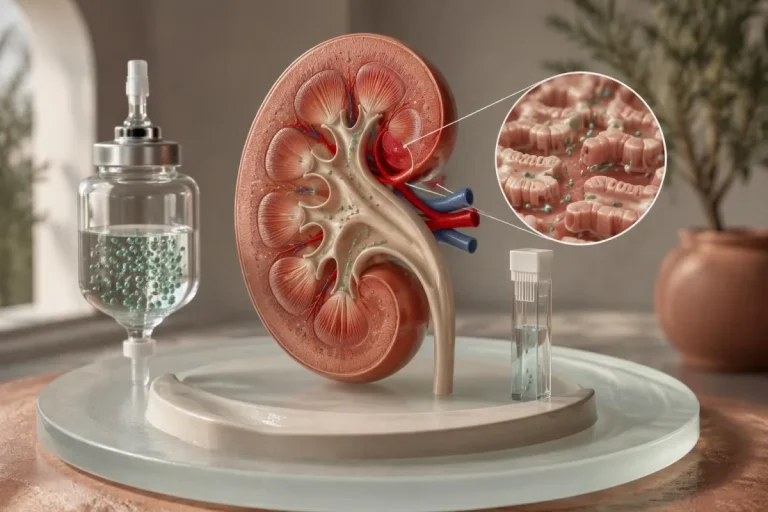
Heavy urinary protein loss can contribute to acquired antithrombin reduction, particularly in nephrotic syndrome. Adult nephrotic-range proteinuria is conventionally at least 3.5 g per 24 hours; clinicians interpret antithrombin alongside urine protein, serum albumin and the underlying kidney disorder, rather than relying on creatinine or eGFR alone.
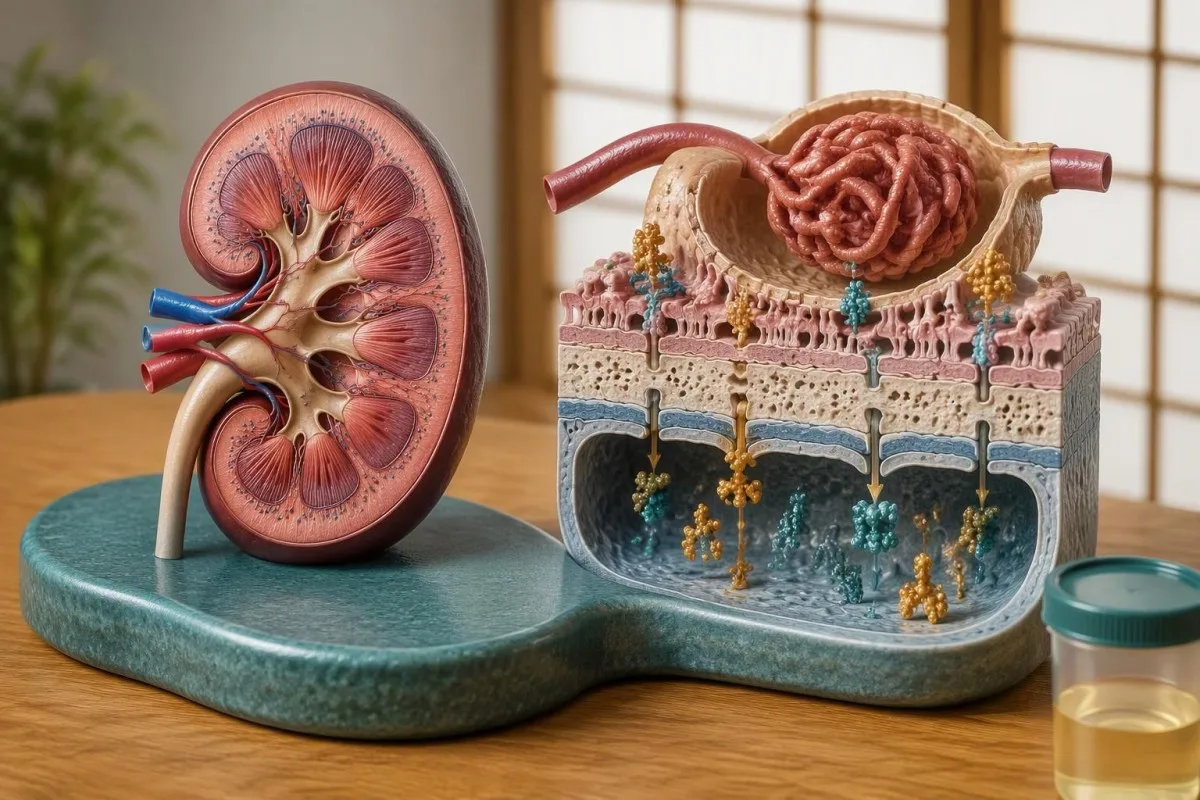
A normal eGFR does not exclude substantial protein leakage through the glomerular filtration barrier. For example, an adult with eGFR 95 mL/min/1.73 m², albumin 22 g/L and urine protein 6 g per day may have a strong acquired explanation for low activity despite apparently reassuring filtration results; persistent ko'pikli siydik va protein tekshiruvi deserve assessment in that context.
The relationship between nephrotic syndrome, antithrombin levels and clot risk is not uniform: not every person with nephrotic syndrome has low antithrombin, and the thrombotic tendency involves more than urinary loss of 1 protein. Underlying diagnosis matters, including membranous nephropathy, where PLA2R results and kidney monitoring help explain the kidney process rather than prove an inherited clotting disorder.
Kantesti is an AI blood test interpretation platform that can organize an antithrombin percentage alongside albumin and kidney markers, but it cannot infer the amount of urinary protein from eGFR alone. If activity remains 62% while heavy protein loss continues, repeat testing may still describe the acquired condition; the cleaner inherited assessment usually follows clinical stabilization and improvement of that competing explanation.
Jigar kasalligi yoki boshqa muolajalar antitrombin miqdorini kamaytirishi mumkinmi?
Reduced liver synthesis can lower antithrombin, especially in advanced liver disease, while certain treatments such as L-asparaginase can also cause acquired reductions. An activity of 55% alongside other abnormalities requires review of protein production, protein loss and treatment history before clinicians consider a genetic explanation.
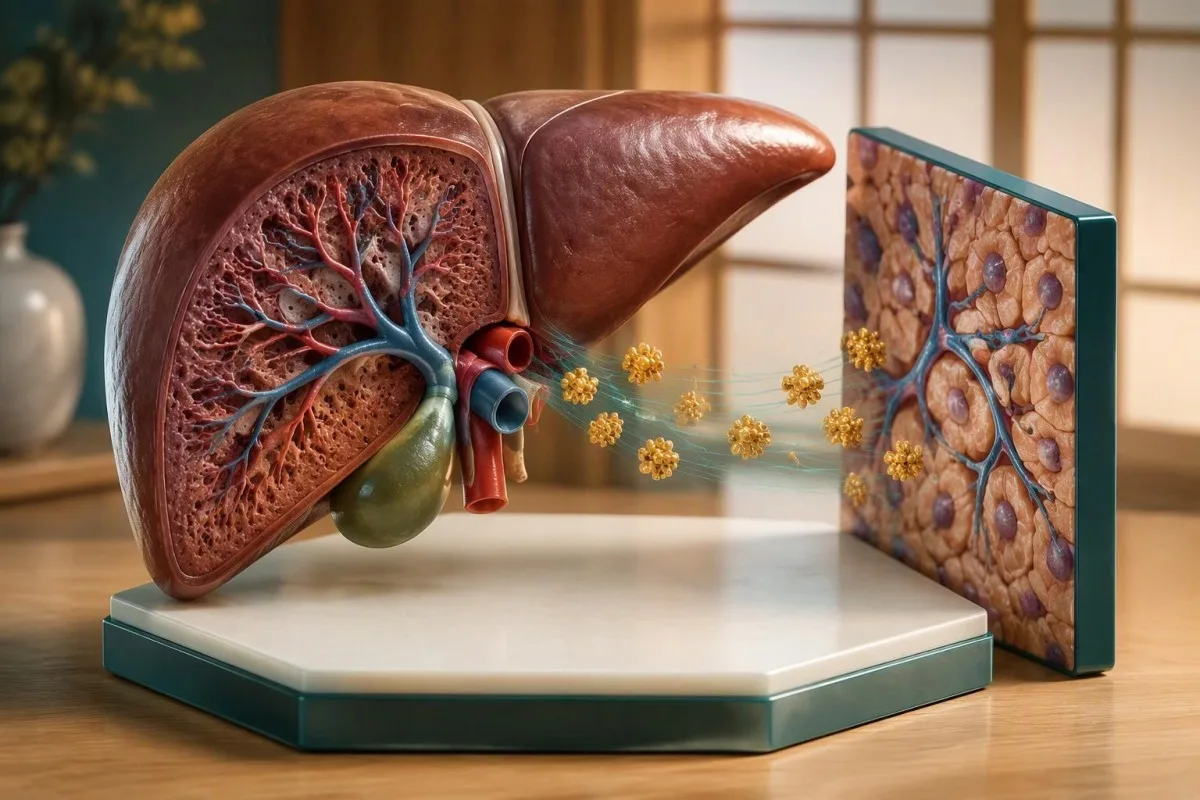
ALT and AST reflect injury more than protein-making capacity, so normal or mildly elevated enzymes do not guarantee normal antithrombin production. If activity is 57%, albumin is 25 g/L and INR is 1.6, impaired synthesis becomes a possibility—but warfarin, nutrition and protein loss can confound that pattern, as our jigar tahlili natijalarini qanday o'qish kerak bo‘yicha qo‘llanmamiz tushuntiradi.
Albumin cannot serve as a substitute antithrombin test because the 2 proteins have different turnover and can respond differently to illness or therapy. Our albumin and serum protein guide helps interpret the surrounding panel; a normal albumin does not exclude inherited antithrombin deficiency, and a low albumin does not prove that the liver caused it.
L-asparaginase can reduce anticoagulant proteins during cancer treatment, creating an acquired thrombosis risk that may need active management rather than merely a future repeat test. Major procedures, extracorporeal support and recent replacement products can also complicate 1 measurement; eating more protein or taking a vitamin supplement does not correct a SERPINC1-related defect or replace treatment of the underlying acquired cause.
Qaysi antikoagulyantlar antitrombin tekshiruviga xalaqit beradi?
Direct oral anticoagulants can falsely increase antithrombin activity, potentially masking deficiency rather than causing a low flag. Apixaban, rivaroxaban and edoxaban interfere with factor Xa-based activity assays, while dabigatran can interfere with thrombin-based assays; the same patient’s 2 results may therefore differ because of assay design.
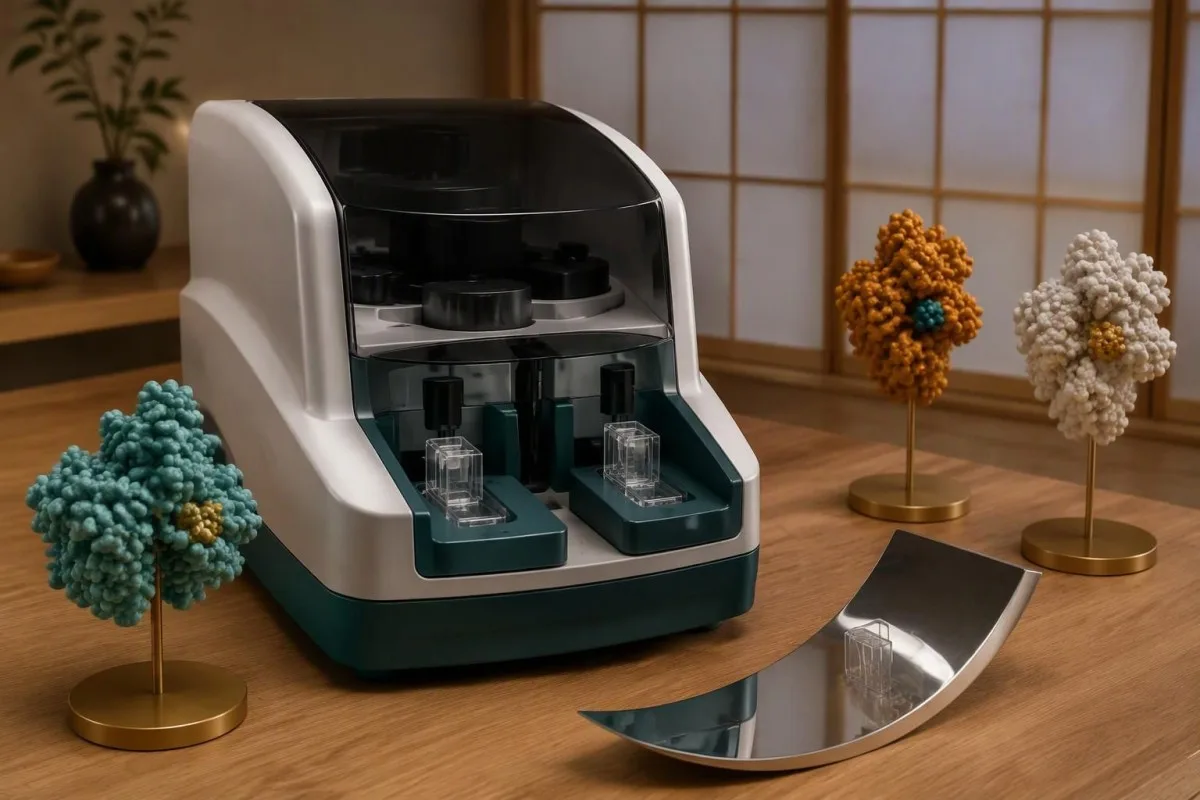
The mechanism is straightforward: the medication inhibits the assay’s added enzyme, and the instrument can misread that inhibition as stronger antithrombin function. The ISTH communication explicitly identifies these drug–assay combinations, including effects from direct thrombin inhibitors such as argatroban and bivalirudin (Van Cott et al., 2020); antigen testing usually avoids this particular functional interference, but does not replace an activity assessment.
A hypothetical activity of 108% on a factor Xa-based assay while taking rivaroxaban may conceal an underlying reduction; activity of 66% on that same drug still cannot be mathematically corrected into a true baseline. Anticoagulants also affect lupus anticoagulant test interpretation, but the direction and mechanism of interference are test-specific, not a universal rule for all thrombophilia assays.
Kantesti AI should support medication-aware interpretation rather than claim that 1 uploaded report identifies the laboratory’s reagent or removes a drug effect. Depending on the situation, the laboratory may use a less-affected assay, measure drug exposure or apply a validated removal procedure; our texnik validatsiya va nazorat describes the broader standards behind interpretation, not a guarantee that AI can resolve missing assay information.
Kutilmagan past natijaga namunani qayta ishlash bilan bog‘liq muammolar sabab bo‘lishi mumkinmi?
Sample quality and assay differences can make antithrombin results unreliable, especially when the laboratory flags collection or processing problems. Coagulation samples typically require a 9:1 ratio of sample to citrate anticoagulant; underfilling, inappropriate handling or an unsuitable specimen should be considered before interpreting an isolated abnormal percentage.
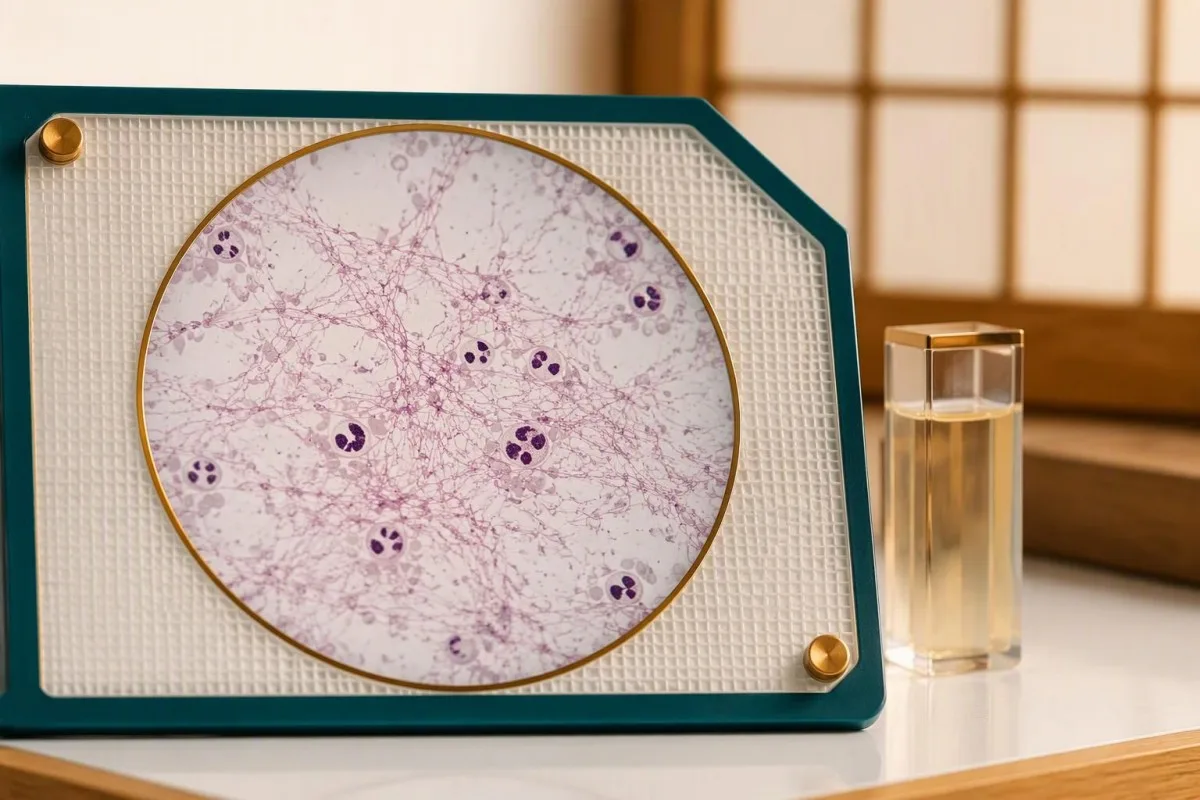
A hematocrit above approximately 55% may require citrate adjustment for coagulation testing because the amount of plasma relative to citrate is reduced. This is a laboratory preparation issue, not evidence of hereditary deficiency; if activity is 73% in a flagged specimen, ask whether the laboratory accepted the sample as valid and whether recollection is preferable to repeating the same material.
Hemolysis, lipemia and marked discoloration can interfere with optical methods, although the effect depends on the instrument and reagent rather than having 1 predictable direction. Our guides to hemolysis-related result distortion va lipemic specimens and redraws explain why a specimen-quality warning needs a method-specific answer instead of an automatic diagnosis.
Changing laboratories can create a second problem: an activity of 76% by one method and 84% by another may reflect analytical differences rather than biological recovery. Using the same laboratory helps trend comparison, but persistent clinical suspicion may justify a specialist laboratory using an alternative assay that is more sensitive to certain inherited variants; consistency and diagnostic sensitivity are 2 different goals.
Antitrombin faolligining pastligi qachon qayta tekshirilishi kerak?
Repeat antithrombin testing should occur after temporary causes have settled and medication effects have been addressed. Following an acute clot, the BSH recommendation is to wait until after 3 months of anticoagulation before testing natural anticoagulant deficiencies; the safest collection date then depends on the drug, assay and clinical situation.

An incidental borderline result in a well adult without a recent clot does not automatically require the same 3-month wait, because that interval addresses acute thrombosis. The clinician may instead arrange a separate repeat once collection issues and acquired causes are reviewed, adding antigen testing if activity remains low; there is no universally validated waiting interval that fits every outpatient finding.
Heparin-related reductions may recover after treatment ends, but laboratory policies and ongoing illness affect when a repeat becomes meaningful. For a DOAC, a fixed 48-hour pause is not universally adequate or safe: kidney function, dose timing, drug accumulation and assay sensitivity matter, and choosing a compatible method may avoid interrupting treatment entirely.
Kantesti’s trend tools can help organize 2 measurements with their dates, but a timeline should also record clot onset, heparin exposure, the last relevant medication dose and any replacement products. Our explanation of shifoxonadan chiqqandan keyingi natijalar bo'yicha supports that workflow; warfarin does not usually lower antithrombin as it lowers vitamin K-dependent proteins, so protein C or S stopping rules should not be copied automatically.
Qaysi topilmalar irsiy antitrombin yetishmovchiligini tasdiqlaydi?
Inherited antithrombin deficiency becomes more likely when activity remains low on separate, interpretable samples, acquired causes are excluded and the personal or family history fits. Two concordant results provide stronger evidence than 1 result during illness, but activity, antigen and sometimes SERPINC1 testing must still be considered together.

A clearly hypothetical profile of activity 54% and 56% on 2 suitable occasions, antigen 51%, no major protein loss and a first-degree relative with confirmed deficiency would support a quantitative inherited pattern. Early or recurrent venous thrombosis increases suspicion, but age alone is not diagnostic, and absence of a family history does not exclude a new variant or previously unrecognized disease.
SERPINC1 testing can help establish a molecular explanation when the laboratory phenotype is convincing and the result could affect management or family counseling. A variant of uncertain significance is not equivalent to a diagnosis, while a negative genetic test does not necessarily exclude every relevant change; the ISTH recommendations also note that molecular testing may identify defects missed by activity assays (Van Cott et al., 2020).
Antithrombin and protein S deficiency require different interpretive rules, even when they appear on the same thrombophilia panel. Our guide to low protein S activity explains several contrasting confounders; a type II antithrombin heparin-binding-site variant can also have a different risk profile from type I deficiency, so 1 generic risk estimate should not be applied to all confirmed variants.
Oila a’zolarini tekshirish qachon o‘rinli bo‘ladi?
Family evaluation is usually considered after the original patient’s inherited deficiency is convincingly confirmed, especially when the result could change prevention, hormone choices or pregnancy planning. Most inherited antithrombin deficiency is autosomal dominant, giving each child of a heterozygous carrier a 50% chance of inheriting the relevant variant—not a certainty of thrombosis.
The BSH guideline discourages routine thrombophilia testing of all first-degree relatives but supports selective evaluation for relatives of people with antithrombin, protein C or protein S deficiency when results could influence management (Arachchillage et al., 2022). Our xavfga asoslangan oilaviy testlash qo'llanmasi explains why testing 1 relevant inherited condition can be more useful than ordering a broad panel without a clinical question.
ASH’s 2023 thrombophilia guideline similarly supports selective testing in certain families with known high-risk deficiencies, including decisions about estrogen exposure and prophylaxis during particular risk situations (Middeldorp et al., 2023). Many recommendations are conditional and based on very low-certainty evidence; antithrombin deficiency should not be treated as interchangeable with factor V Leiden results, which often carry a different risk profile.
Kantesti’s Family Health Risk feature can help organize information shared with consent, but it cannot determine whether a relative inherited a SERPINC1 variant from 1 family member’s activity percentage. Testing children requires age-aware laboratory interpretation and an assessment of whether the result would change care now; predictive testing also deserves counseling about privacy, uncertainty and the difference between inherited susceptibility and an actual clot.
Kuzatuv rejangiz va manbalarni tekshirish nimalarni o‘z ichiga olishi kerak?
Bring the original percentage, reference interval, medication list and sampling date to follow-up, along with details of the clot, illness or protein loss that could explain the result. Two decisions come first: whether the current finding needs clinical action and whether repeat testing would genuinely change treatment or family counseling.
A low activity percentage alone does not automatically require lifelong anticoagulation or antithrombin concentrate; treatment depends on previous thrombosis, the provoking circumstances, bleeding risk and the confirmed diagnosis. New one-sided leg swelling needs prompt assessment, while sudden shortness of breath, chest pain or fainting requires emergency care even if the last activity was 100%—do not wait for a repeat thrombophilia panel.
Kantesti is an AI lab test interpretation service that can help organize the 2-stage workflow of context review followed by clinician-directed confirmation, not replace hematology advice or authorize medication interruption. Our mas’uliyatli sun’iy intellekt tamoyillarimiz describe that boundary; use AI explanations to prepare precise questions, including which enzyme the assay uses and whether activity and antigen should be collected together.
The clinical recommendations here draw on 3 directly relevant external sources: the ISTH laboratory communication, the BSH testing guideline and the ASH thrombophilia guideline. The 2 Zenodo publications below provide background on serum proteins and immune-related laboratory context—not clinical trials validating antithrombin diagnosis; our tibbiy kontent standartlari va komplement va autoimmun tekshiruvlar bo‘yicha qo‘llanmamiz help readers distinguish supporting education from condition-specific evidence.
Tez-tez beriladigan savollar
Antitrombin faolligining pastligi har doim irsiy yetishmovchilikni anglatadimi?
0 Past antitrombin faolligi har doim ham irsiy yetishmovchilikni anglatmaydi. Faollik 60% bo‘lishi o‘tkir tromboz, geparin bilan davolash, og‘ir kasallik, rivojlangan jigar kasalligi yoki siydik bilan oqsilning ko‘p yo‘qotilishi davrida kuzatilishi mumkin. Shifokorlar orttirilgan sabablarni ko‘rib chiqqach, alohida va o‘z vaqtida olingan namunalarda pasayish saqlanib qolgan-qolmaganini tekshiradilar. Antigen tekshiruvi va ba’zan SERPINC1 tekshiruvi tasdiqlangan buzilish turini aniqlashga yordam beradi.
Qon laxtasidan keyin antitrombin faolligi testini qachon takrorlash kerak?
O‘tkir trombdan so‘ng Britaniya Gematologiya Jamiyati tabiiy antikoagulyantlar yetishmovchiligini faqat 3 oylik antikoagulyatsion davolashdan keyin tekshirishni tavsiya qiladi. Namuna olishning amaldagi rejasi tiklanish davri, qo‘llanilayotgan antikoagulyant va laboratoriya tahlilini ham hisobga olishi kerak. Ushbu tavsiya hamma 3 oydan so‘ng dorilarni to‘xtatishi kerakligini anglatmaydi. Dori yozib bergan shifokorning ko‘rsatmalarisiz tekshiruv uchun antikoagulyatsion davolashni hech qachon to‘xtatmang.
Antitrombin antigeni va faolligi o‘rtasidagi farq nima?
0 Antitrombin faolligi uning funksiyasini, antitrombin antigeni esa oqsil miqdorini o‘lchaydi. I turdagi yetishmovchilik odatda ikkala ko‘rsatkichni ham pasaytiradi; II turdagi yetishmovchilikda esa antigen miqdori nisbatan normal bo‘lsa-da, faollik odatda pasayadi. Masalan, antigen ko‘rsatkichi 101% bo‘lganda faollikning takroriy natijasi 52% bo‘lishi sifat jihatidan o‘zgarish borligini ko‘rsatadi, ammo orttirilgan holatlar va dori vositalari ta’siri tekshirilmasdan, irsiy sabab borligini tasdiqlamaydi. Antigen tekshiruvi funksional baholashning o‘rnini bosa olmaydi.
Apiksaban yoki rivaroksaban antitrombin natijalariga ta’sir qilishi mumkinmi?
Apiksaban va rivaroksaban Xa omiliga asoslangan tahlillarda antitrombin faolligini noto‘g‘ri ravishda oshirishi va shu orqali yetishmovchilikni yashirishi mumkin. Dabigatran ham trombinga asoslangan tahlillarda ko‘rinadigan faollikni shu tarzda oshirishi mumkin. Shu sababli, xalaqit beruvchi dori qabul qilinayotgan paytdagi 100% natijasi ko‘ringanidan ko‘ra kamroq taskin berishi mumkin. Laboratoriya kamroq ta’sirlanadigan usul yoki tasdiqlangan boshqa strategiyani tanlashi mumkin; dorini o‘zboshimchalik bilan to‘xtatish xavfli.
Antitrombin faolligining 70% bo‘lishi xavflimi?
70% antitrombin faolligi kattalardagi ko‘plab laboratoriya me’yoriy oraliqlaridan past, ammo foizning o‘zi shoshilinch holatni bildirmaydi yoki shaxsiy qon ivishi xavfini miqdoriy baholamaydi. Natijaning ahamiyati tahlil usuli, qabul qilinayotgan dorilar, avvalgi qon ivish holatlari, oilaviy anamnez va joriy kasallikka bog‘liq. Alohida olingan natija odatda klinik ko‘rib chiqishni va tegishli tasdiqlash rejasini talab qiladi. To‘satdan nafas qisishi, ko‘krak og‘rig‘i, hushdan ketish yoki oyoqning bir tomonida yangi paydo bo‘lgan shish bu foizdan qat’i nazar tibbiy baholashni talab qiladi.
Menda antitrombin yetishmovchiligi bo‘lsa, oilamdagilar tekshiruvdan o‘tishi kerakmi?
Irsiy antitrombin yetishmovchiligi ishonchli tarzda tasdiqlangandan so‘ng, ayniqsa natijalar profilaktika choralarini, gormon tanlashni yoki homiladorlikni rejalashtirishni o‘zgartiradigan bo‘lsa, oila a’zolarini tanlab tekshirish o‘rinli bo‘lishi mumkin. Geterozigot tashuvchi tegishli variantni har bir farzandiga o‘tkazish ehtimoli odatda 50% ni tashkil etadi, biroq bu farzandda tromboz rivojlanishiga 50% kafolat bermaydi. BSH va ASH tavsiyalari barcha qarindoshlarni istisnosiz tekshirish o‘rniga, qaror qabul qilishga yo‘naltirilgan baholashni qo‘llab-quvvatlaydi. Bolalarda natijalar yoshiga mos talqin qilinishi va tekshiruv hozirgi parvarishni o‘zgartiradimi-yo‘qmi, muhokama qilinishi kerak.
Qon tahlili natijalarini qanday o‘qish kerak
Laboratoriya hisobotingizni yuklang va Kantesti sun’iy intellekti har bir biomarkerni soniyalar ichida sodda tilda tushuntiradi. Dunyo bo‘ylab 2 milliondan ortiq kishi foydalanadi.
Adabiyotlar
- Klein, T., Mitchell, S., & Weber, H. (2026). Zardob oqsillari bo‘yicha qo‘llanma: globulinlar, albumin va A/G nisbati qon tahlili. Kantesti AI tibbiy tadqiqotlari. DOI
- Klein, T., Mitchell, S., & Weber, H. (2026). C3 C4 komplement qon tahlili va ANA titri bo‘yicha qo‘llanma. Kantesti AI tibbiy tadqiqotlari. DOI
- Van Cott EM et al. (2020). Recommendations for clinical laboratory testing for antithrombin deficiency; Communication from the SSC of the ISTH. Journal of Thrombosis and Haemostasis. DOI
- Arachchillage DJ va boshq. (2022). Trombofiliya tekshiruvi: Britaniya Gematologiya jamiyati qo‘llanmasi. British Journal of Haematology. DOI
- Middeldorp S va boshq. (2023). Venoz tromboembolizmni boshqarish bo‘yicha Amerika Gematologiya jamiyatining 2023-yilgi qo‘llanmalari: trombofiliya tekshiruvi. Blood Advances. DOI
- 2M+Tahlil qilingan testlar
- 127+Mamlakatlar
- 100+Tillar
Tibbiy guruh haqida


E-E-A-T ishonch signallari
Tajriba
Shifokor boshchiligidagi laboratoriya talqin qilish ish jarayonlarini klinik ko‘rib chiqish.
Tajriba
Laboratoriya tibbiyoti biomarkerlarning klinik kontekstda qanday o‘zini tutishini yoritadi.
Vakolatlilik
Doktor Thomas Klein tomonidan tibbiy jihatdan ko‘rib chiqilgan, doktor Sarah Mitchell va professor doktor Hans Weber hissalari bilan.
Ishonchlilik
Xavotirni kamaytirish uchun aniq keyingi qadamlar yo‘nalishlari bilan dalillarga asoslangan talqin.




Tibbiy ogohlantirish
Ushbu maqola faqat ta’lim maqsadlari uchun mo‘ljallangan va tibbiy maslahatni anglatmaydi. Tashxis va davolash bo‘yicha qarorlar uchun har doim malakali sog‘liqni saqlash mutaxassisiga murojaat qiling.
Nashr etilgan · Tahririyat jamoasi bilan bog‘laning
Angliya va Uelsda ro‘yxatdan o‘tgan Kantesti Ltd tomonidan nashr etilgan, kompaniya raqami. 17090423, London, Birlashgan Qirollik.
