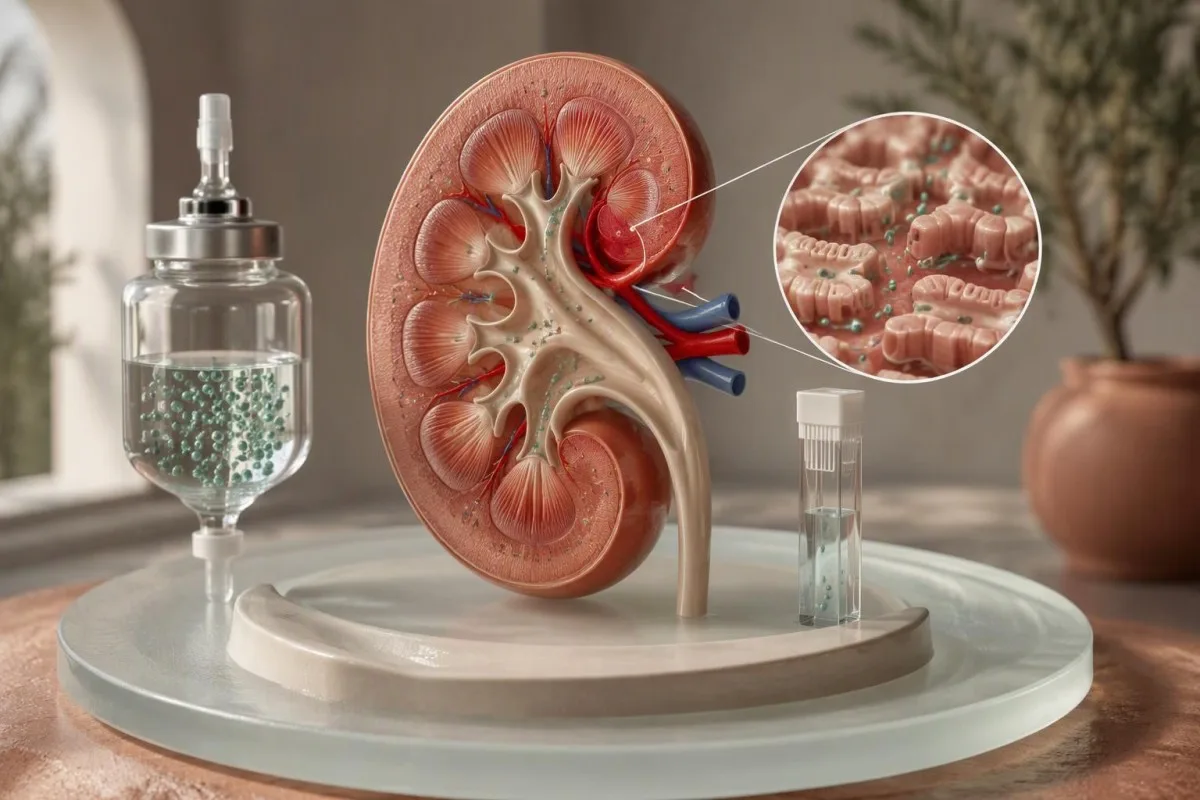
Gentamitsin darajalari faqat doza, dozalash rejimi va namuna olingan aniq vaqt bilan birgalikda ma’noga ega. An’anaviy davolashda cho‘qqi va qoldiq konsentratsiya maqsadli ko‘rsatkichlaridan foydalaniladi; uzaytirilgan interval bilan davolashda ko‘pincha belgilangan vaqtda olingan konsentratsiya va muayyan protokolga mos grafik qo‘llanadi, buyrak tekshiruvlari hamda eshitish yoki muvozanat bilan bog‘liq alomatlar esa xavfsizlikni alohida baholash imkonini beradi.

Asosiy xulosalar
- Gentamitsin darajalari antibiotik konsentratsiyasini, odatda mg/L da, o‘lchaydi; 1 mg/L 1 µg/mL ga teng.
- An’anaviy cho‘qqi kattalardagi maqsadli ko‘rsatkichlar odatda 5–10 mg/L atrofida bo‘ladi, biroq haqiqiy maqsadli ko‘rsatkichni infeksiya, qo‘llash ko‘rsatmasi va namuna olish usuli belgilaydi.
- An’anaviy qoldiq konsentratsiya maqsadli ko‘rsatkichlari ko‘pincha 1 mg/L dan past bo‘ladi; ayrim protokollarda 2 mg/L dan past ko‘rsatkich qo‘llanadi. Bu chegaralarning hech biri toksiklik bo‘lmasligini kafolatlamaydi.
- Namuna olish vaqti aniq qayd etilishi kerak: vena ichiga yuborishning an’anaviy cho‘qqi konsentratsiyasini odatda infuziya tugaganidan 30 daqiqa o‘tib, qoldiq konsentratsiyani esa keyingi haqiqiy dozadan oldingi 30 daqiqa ichida o‘lchash uchun namuna olinadi.
- Uzoq interval bilan monitoring boshqacha: Hartford protokoli 7 mg/kg dozani yuborish boshlanganidan 6–14 soat o‘tib olingan konsentratsiyadan foydalanadi.
- Buyrak shikastlanishi kreatinin 48 soat ichida kamida 0,3 mg/dL yoki 26,5 µmol/L ga ko‘tarilsa, hatto natija laboratoriya me’yoriy diapazoni ichida qolganida ham, KDIGO mezonlariga javob berishi mumkin.
- Eshitish va muvozanatga toksik ta’sir konsentratsiyalar maqbul ko‘rinsa ham yuz berishi mumkin; yangi quloq shang‘illashi, eshitishdagi o‘zgarish, muvozanat buzilishi yoki ko‘rishning tebranishi zudlik bilan klinik ko‘rikni talab qiladi.
- Dozani aniqlash dori buyuruvchi jamoa yoki klinik farmatsevt vakolatiga kiradi. Dozani mustaqil o‘zgartirmang, infuziyani kechiktirmang yoki internetdagi nomogrammadan foydalanmang.
Gentamitsin darajalari aslida nimani o‘lchaydi?
Gentamitsin darajalari laboratoriya namunasidagi gentamitsin konsentratsiyasini o‘lchaydi, ammo o‘z-o‘zidan buyrak faoliyatini yoki davolash muvaffaqiyatini ko‘rsatmaydi. 2 mg/L natija uning eng past daraja, dozadan keyingi erta namuna yoki belgilangan vaqtda olingan uzoq intervalli o‘lchov ekaniga qarab, xotirjamlik berishi, xavotir uyg‘otishi yoki talqin qilib bo‘lmasligi mumkin.
Laboratoriyalar odatda gentamitsinni quyidagi birliklarda ko‘rsatadi mg/L yoki µg/mL, bu birliklarning son qiymati teng: 1 mg/L 1 µg/mL ga teng. Natija yonida bosilgan terapevtik oraliq faqat an’anaviy dozalarni anglatishi mumkin; uni kuniga bir marta davolashga yoki endokarditning ayrim sxemalarida qo‘llanadigan past dozali kombinatsion davolashga avtomatik ravishda tatbiq etmaslik kerak.
Kantesti - bu AI qon testi analizatori gentamitsin konsentratsiyasi 2 mg/L bo‘lganda, talqin qilishdan oldin doza va vaqt konteksti nega zarurligini tushuntirishga yordam berishi mumkin. Bizning tashkilot va klinik maqsadimiz kasalxonaning dori buyurish xizmatidan alohida faoliyat yuritadi; biz antibiotik dozalarini belgilamaymiz va terapevtik dori monitoringi o‘rnini bosmaymiz.
Laboratoriya natijasidagi alohida ogohlantiruvchi belgi tashxis hisoblanmaydi. Masalan, yuqori deb belgilangan, faraziy 12 mg/L natija ortiqcha an’anaviy cho‘qqi darajasidan ko‘ra, uzoq intervalli dozadan keyin o‘z vaqtida olingan konsentratsiyani aks ettirishi mumkin; bizning laboratoriya belgilarining me’yordan chetga chiqishi ilova qilingan referens oraliq nega chalg‘itishi mumkinligini tushuntiradi.
Nima uchun gentamitsinni nazorat qilish vaqti natijani o‘zgartiradi?
Gentamitsinni monitoring qilish vaqti muhim, chunki yuborish davomida konsentratsiya ko‘tariladi, tana suyuqliklariga tarqaladi va keyin buyraklar uni chiqarishi bilan pasayadi. Eng past darajani talqin qilishda klinitsistlarga kamida 3 ta vaqt belgisi kerak: infuziya boshlangan vaqt, infuziya tugagan vaqt va namuna olingan vaqt, shuningdek keyingi dozaning aniq vaqti.
Buyrak faoliyati normal bo‘lganda, gentamitsinning yarim chiqarilish davri ko‘pincha taxminan 2–3 soat, bo‘ladi, garchi kasallik va taqsimlanishdagi o‘zgarishlar konsentratsiya egri chizig‘iga ta’sir qilishi mumkin. Infuziyadan darhol keyin olingan namuna taqsimlanish bosqichini aks ettirishi mumkin; uni shifoxonada belgilangan usul bo‘yicha keyinroq olingan cho‘qqi daraja bilan tenglashtirib bo‘lmaydi.
Belgilangan doza vaqti dori yuborilganligi haqidagi qaydni almashtira olmaydi. Faraziy misolda, soat 08:00 dagi doza 09:10 gacha kechiktirilsa, 09:00 da olingan namuna baribir dozadan oldingi namuna hisoblanadi, holbuki dori 08:00 da yuborilgan deb hisoblaydigan jadval uni dozadan keyingi namuna sifatida noto‘g‘ri belgilashi mumkin; bu farq klinik savolni butunlay o‘zgartiradi.
Infuziya liniyasidan namuna olish, unda qolgan gentamitsin namunani ifloslantirsa, natijani soxta yuqori ko‘rsatishi mumkin; shu sababli xodimlar mahalliy namuna olish va liniyani yuvish tartib-qoidalariga amal qiladi. Boshqa dorilarda ham vaqt bilan bog‘liq muammolar uchraydi, ammo kutish muddati farq qiladi; bizning digoksin namunasini olish vaqti haqidagi tushuntirishimiz gentamitsin yuborish jadvali sifatida ishlatilmasligi kerak.
An’anaviy cho‘qqi va qoldiq konsentratsiyalarni nazorat qilish qanday amalga oshiriladi?
Conventional gentamicin monitoring uses a post-dose peak to assess exposure and a pre-dose trough to assess residual drug before the next administration. For selected adults receiving divided doses, intervals may be 8 or 12 hours, but kidney function and the treatment indication determine the prescribed schedule.
After an intravenous infusion, a conventional gentamicin peak level is commonly collected 30 minutes after the infusion finishes; some protocols specify a different time. A gentamicin trough level is commonly collected within 30 minutes before the next actual dose, and intramuscular administration uses a different post-dose sampling convention.
Some services obtain the first paired measurements around the 3rd or 4th dose, when concentrations are approaching a repeatable pattern in patients with stable clearance. That is not a reason to postpone assessment in someone with worsening kidney function, unexpected dosing, or symptoms; such patients may require earlier measurements and individualized pharmacokinetic review.
A peak and trough are useful only if the preceding doses were actually administered as documented. A missed dose, a changed infusion duration, or a sample collected 2 hours early can invalidate an otherwise neat-looking pair; similar documentation principles appear in our carbamazepine trough timing guide, although the therapeutic targets are unrelated.
Shifokorlar gentamitsinning qaysi cho‘qqi darajasini maqsad qiladi?
A conventional gentamicin peak level commonly targets approximately 5–10 mg/L in adults, but there is no universal target for every infection. Some low-dose synergy protocols use peaks around 3–5 mg/L, while extended-interval concentrations must not be judged against the conventional peak range.
Gentamicin exhibits concentration-dependent antibacterial activity: for susceptible Gram-negative organisms, a peak-to-minimum inhibitory concentration ratio around 8–10 is a commonly used pharmacodynamic goal. The minimum inhibitory concentration, or MIC, describes the organism's susceptibility; a peak of 8 mg/L has a different meaning when the MIC is 0.5 rather than 2 mg/L.
A low measured peak does not always mean the prescribed dose was too small. A hypothetical patient with major fluid expansion might have a larger distribution volume, while a peak sample collected 90 minutes late could be lower simply because elimination has continued; the pharmacist distinguishes these possibilities before changing treatment.
Selected combination regimens use gentamicin for synergy, not the same exposure goals used for stand-alone Gram-negative treatment. High-level aminoglycoside resistance can prevent that synergy and is not solved by chasing a higher concentration; our antifungal trough target discussion illustrates why drug-specific targets cannot be borrowed across treatments.
| Daraja | Diapazon | Bu nimani anglatadi |
|---|---|---|
| Conventional adult peak | Commonly 5–10 mg/L | Illustrative target used by some protocols; indication and the specified collection time determine interpretation. |
| Selected synergy peak | Often 3–5 mg/L | Applies only to particular low-dose combination protocols, not every endocarditis regimen. |
| Conventional adult trough | Often <1 mg/L; some protocols <2 mg/L | Lower residual exposure reduces concern about accumulation but does not exclude toxicity. |
| Extended-interval concentration | No universal peak-and-trough reference interval | Interpret using the actual elapsed time and the validated protocol for the administered dose. |
Gentamitsinning yuqori qoldiq darajasi nimani ko‘rsatadi?
A high, correctly timed gentamicin trough level suggests that substantial drug remains before the next dose, often because clearance is reduced or the interval is too short. Many conventional protocols aim below 1 mg/L; others accept below 2 mg/L, so the prescribing service's target must be checked.
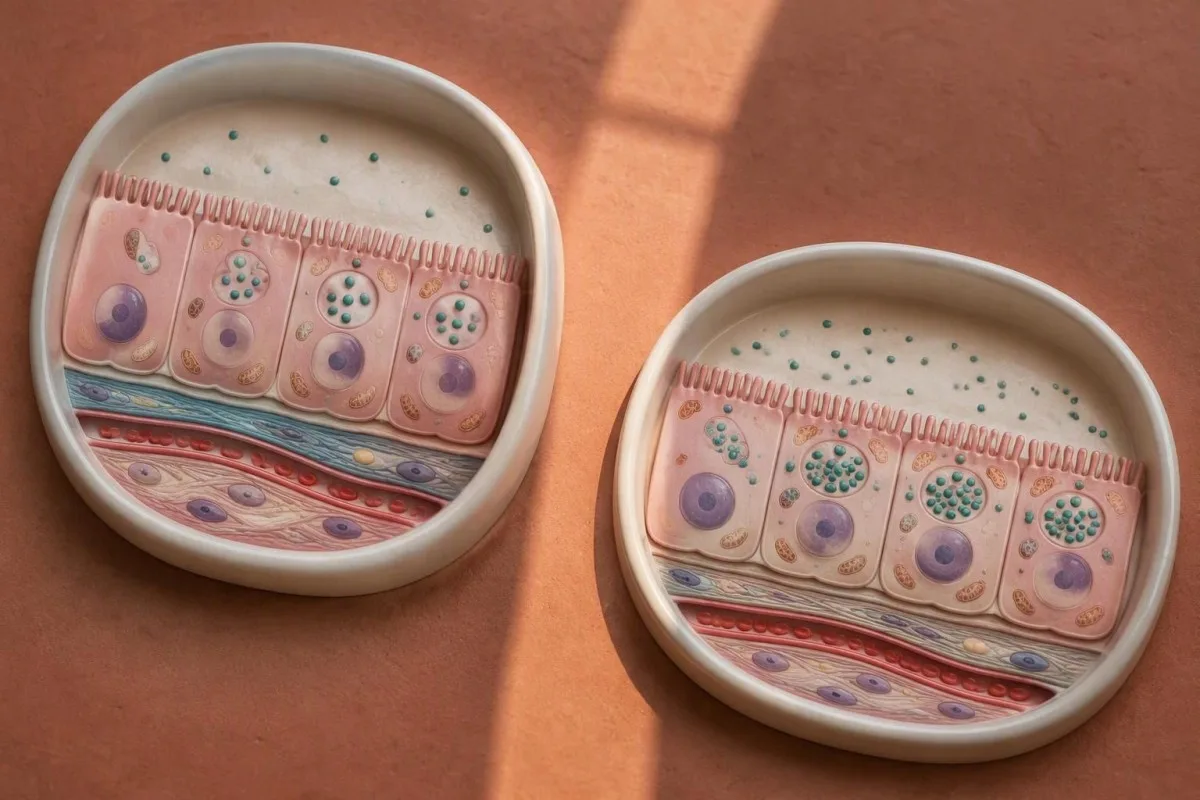
A trough is a clearance signal, not a direct measurement of kidney tissue exposure. Gentamicin can accumulate within renal proximal tubular cells over repeated treatment, so a trough below 1 mg/L does not erase the effects of cumulative exposure, concurrent nephrotoxic medicines, or a kidney problem that is only beginning.
The direction of causation can run both ways: reduced kidney function raises gentamicin concentrations, and gentamicin-associated tubular injury can further reduce clearance. For example, a hypothetical trough rising from 0.6 to 1.4 mg/L on an unchanged schedule may prompt review of creatinine trends, actual dose times, fluid status, and other medicines rather than a conclusion based on the concentration alone.
A sample collected 2 hours before the next dose will usually be higher than a true pre-dose trough and should not be casually relabeled. Conversely, a sample after an unusually long delay may look reassuring without representing the usual schedule; our tacrolimus trough interpretation guide explains the same documentation problem with a different drug.
Uzaytirilgan interval bilan gentamitsinni nazorat qilish qanday farq qiladi?
Extended-interval gentamicin uses a larger individual dose followed by a longer drug-free interval, and monitoring often relies on a timed post-dose concentration rather than conventional paired levels. Selected adult protocols use approximately 5–7 mg/kg per dose, but the exact dose, interval, and eligibility criteria are service-specific.
The rationale combines concentration-dependent killing with a post-antibiotic effect, meaning bacterial growth may remain suppressed after the circulating concentration falls. A once-daily regimen therefore does not require a conventional trough to remain detectably therapeutic; intentionally low late concentrations are part of the strategy, not proof that treatment has stopped working.
Selected extended-interval protocols use 24-, 36-, or 48-hour intervals, but once-daily is an imprecise label when impaired clearance requires longer spacing. Some hospitals use a pre-dose concentration, some a single timed nomogram sample, and others 2 concentrations or model-based exposure estimates; these approaches are not interchangeable without their accompanying dosing rules.
Extended-interval treatment is not suitable for every patient or indication, and reduced renal toxicity in selected populations does not mean zero risk. Our vancomycin exposure monitoring guide explains another antibiotic-specific approach; the vancomycin AUC target of 400–600 mg·h/L is not a gentamicin target.
Hartford nomogrammasi gentamitsin darajalarini qachon talqin qila oladi?
The Hartford nomogram applies to qualifying extended-interval aminoglycoside treatment using a 7 mg/kg dose and a concentration collected 6–14 hours after infusion start. It helps clinicians choose an interval; it is not a universal chart for any gentamicin dose, any collection time, or any patient.
The original Hartford experience described 2,184 adult patients receiving a once-daily aminoglycoside program, providing the clinical background for its dose-and-time framework (Nicolau et al., 1995). The 6–14-hour measurement is sometimes called a random level, but random here means not a conventional peak or trough—not that its timing is optional.
Hospitals restrict or modify this approach in populations such as pregnancy, dialysis, unstable renal function, major burns, cystic fibrosis, or selected endocarditis regimens. A hypothetical concentration of 2.2 mg/L collected 10 hours after a 5 mg/kg dose cannot simply be plotted on an unmodified 7 mg/kg Hartford chart to obtain a reliable interval.
If the sample falls outside the validated window, clinicians may request another level or calculate individualized pharmacokinetics rather than force a point onto the chart. Our delayed drug-clearance explanation illustrates why elapsed time is part of a drug result, although methotrexate rescue thresholds have no role in gentamicin dosing.
Gentamitsinning ikkita faraziy tahlil hisoboti qanday taqqoslanadi?
Two identical gentamicin results can mean different things when the sampling schedules differ. The following 2 hypothetical examples demonstrate conventional and extended-interval interpretation; they are not dosing instructions, and neither example supplies enough information for a patient to choose the next dose.
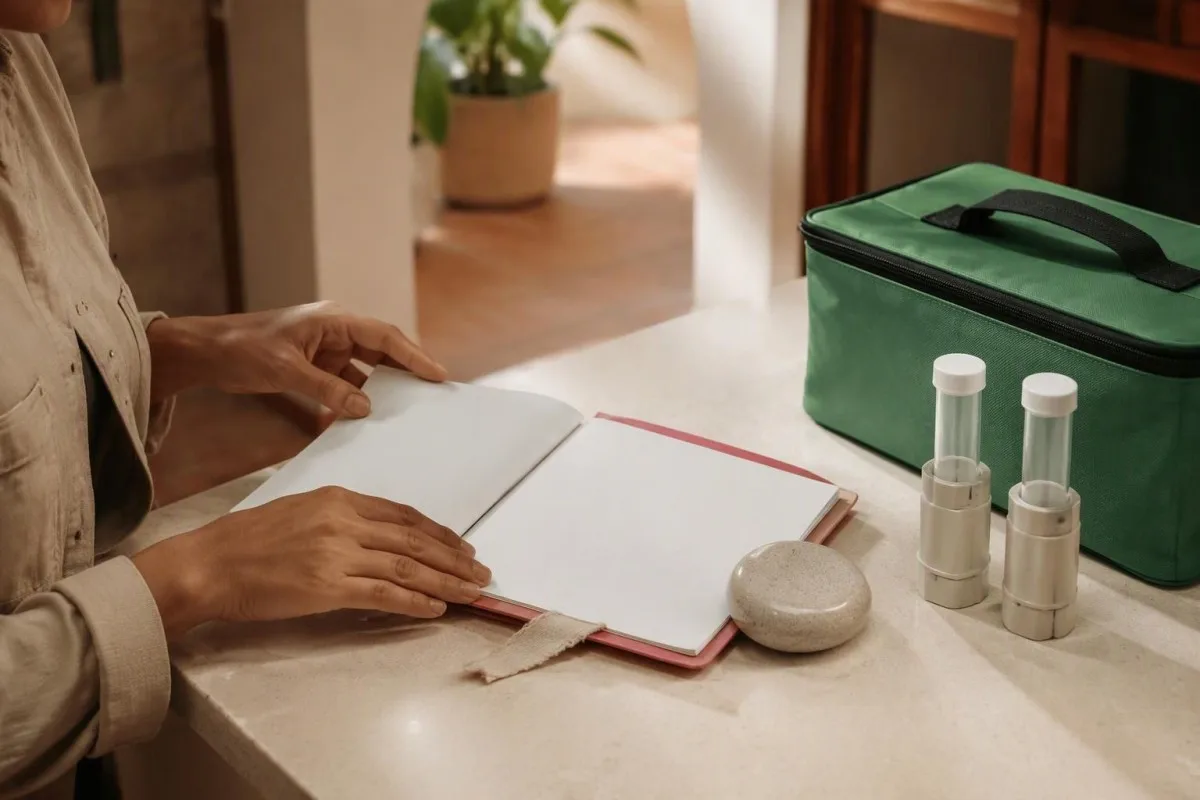
In hypothetical example A, a conventional infusion starts at 08:00, ends at 08:30, and the prescribed peak sample is collected at 09:00. A result of 8 mg/L fits many conventional peak targets if the indication agrees; a separate 15:40 sample before a 16:00 dose provides the trough information that the peak cannot supply.
In hypothetical example B, an eligible 70 kg adult receives a clinician-prescribed 490 mg dose, corresponding to 7 mg/kg, with infusion start at 08:00. A sample at 18:00 is 10 hours after infusion start and is interpreted under the applicable extended-interval protocol; calling that result a low peak or a high trough would ask the wrong question.
Neither timeline establishes kidney safety without baseline and follow-up renal information, and the prescribed dosing weight may differ from scale weight. Before collection, patients can confirm that staff have the actual administration record and the intended test type; our baseline sample preparation checklist helps distinguish useful preparation from unnecessary fasting or medication changes.
Shifokorlar gentamitsin bilan bog‘liq buyrak shikastlanishini qanday aniqlaydilar?
Clinicians assess possible gentamicin-associated kidney injury using creatinine changes, urine output, exposure history, and alternative causes—not the gentamicin concentration alone. KDIGO defines acute kidney injury by a creatinine rise of at least 0.3 mg/dL within 48 hours, a rise to at least 1.5 times baseline within 7 days, or qualifying low urine output.
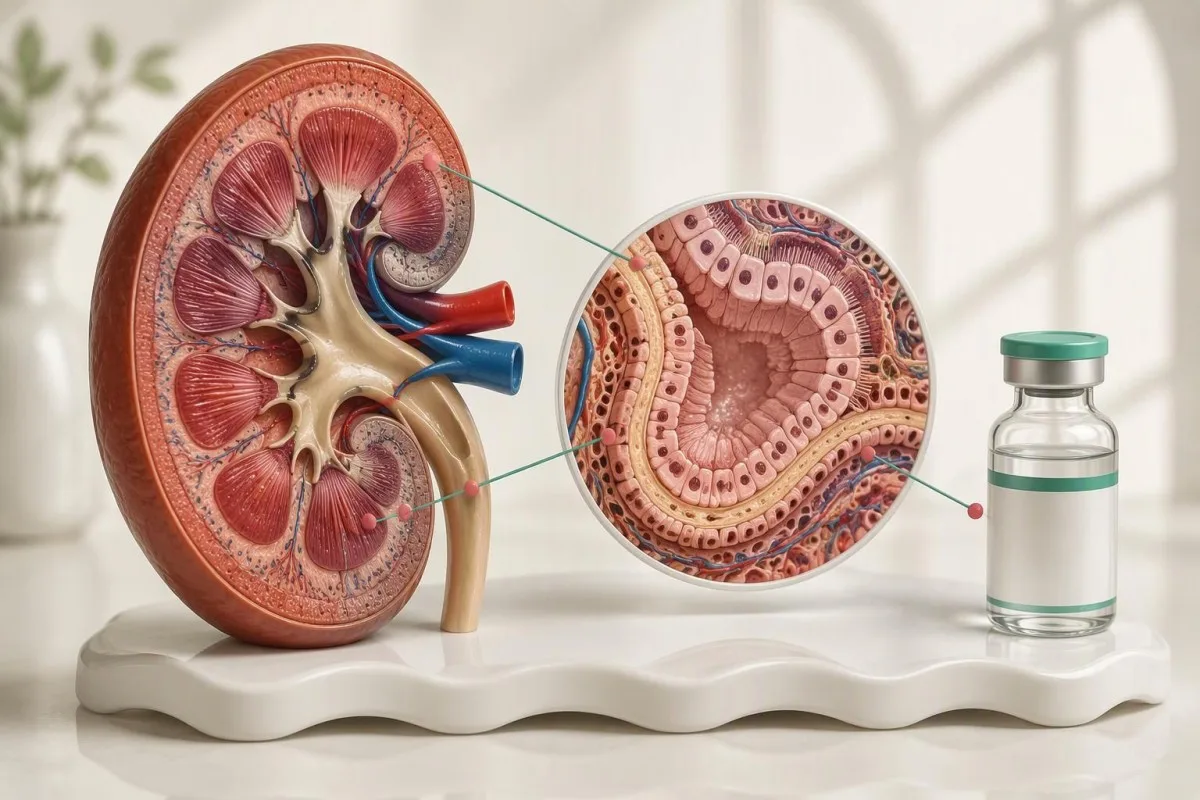
The 0.3 mg/dL threshold equals 26.5 µmol/L, and it can identify injury even when both values sit inside the laboratory interval (KDIGO Acute Kidney Injury Work Group, 2012). For example, a hypothetical creatinine increase from 0.7 to 1.0 mg/dL within 48 hours meets that criterion; normal-looking is not the same as unchanged.
KDIGO's urine-output criterion includes less than 0.5 mL/kg/hour for 6 hours: for a 70 kg adult, that is below 35 mL/hour over the specified period. Gentamicin-associated injury can also be non-oliguric, meaning urine output remains relatively preserved, so passing urine normally does not rule out an important creatinine rise.
Sepsis, low blood pressure, dehydration, urinary obstruction, and other medicines can produce similar changes, and attribution requires clinical assessment. Our BUN va kreatinin nisbati explains useful context without treating the ratio as diagnostic; seek prompt advice for markedly reduced urine or the warning signs described in our low kidney function symptoms maqolamizda ham uchraydi.
Gentamitsin darajalarini tekshirish bilan birga buyrak va elektrolitlarning qaysi ko‘rsatkichlari tekshiriladi?
Gentamicin safety monitoring usually includes baseline and repeat serum creatinine, with electrolytes and urine assessment when clinically indicated. Hospitalized adults often have daily renal checks during ongoing treatment, but outpatient schedules depend on stability, treatment duration, local protocol, and whether a change occurs within 24–48 hours.
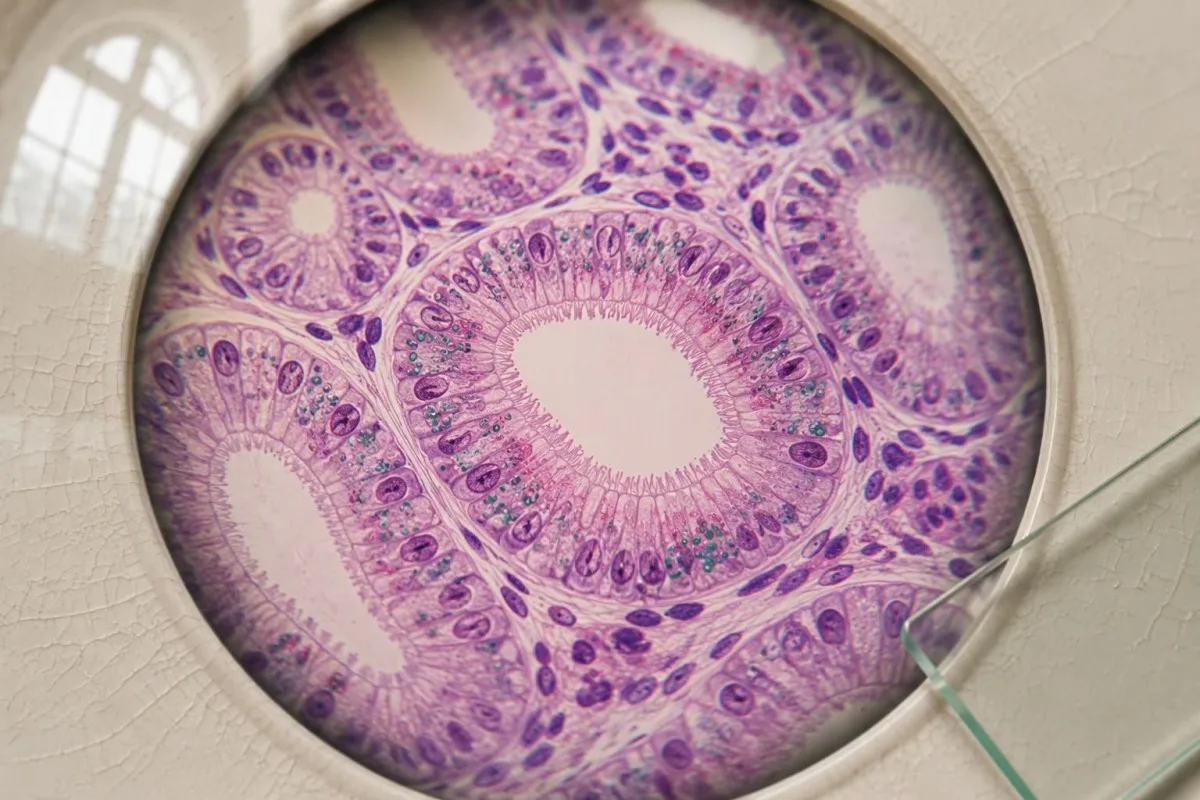
Creatinine is a delayed marker of changing filtration, and automated eGFR assumes relatively steady creatinine production and clearance. During evolving acute kidney injury, an eGFR reported as 60 mL/min/1.73 m² may not accurately describe current clearance; clinicians often rely on the trajectory and an appropriate drug-dosing renal assessment rather than the printed number alone.
Aminoglycoside-related tubular dysfunction can cause magnesium or potassium wasting, sometimes before a major creatinine increase. For example, a hypothetical magnesium of 0.55 mmol/L with new weakness deserves assessment of renal losses, gastrointestinal losses, and medicines; our electrolyte safety patterns explain why replacement must reflect the whole clinical picture.
Urinary granular casts can support tubular injury but neither prove gentamicin caused it nor reliably exclude injury when absent. Our granular cast interpretation guide separates suggestive findings from diagnosis; the broader siydik tahlilini talqin qilish bo‘yicha qo‘llanma explains why 1 urine specimen cannot substitute for serial renal assessment.
Gentamitsin xavfsizligini individualroq nazorat qilish kimlarga kerak?
Patients with unstable kidney function, major changes in body-fluid volume, repeated exposure, or concurrent nephrotoxic medicines need particularly individualized gentamicin monitoring. Older adults, neonates, pregnancy, dialysis, obesity, and severe illness can also make standard adult dosing assumptions unreliable; a 7 mg/kg protocol should not be generalized across these groups.
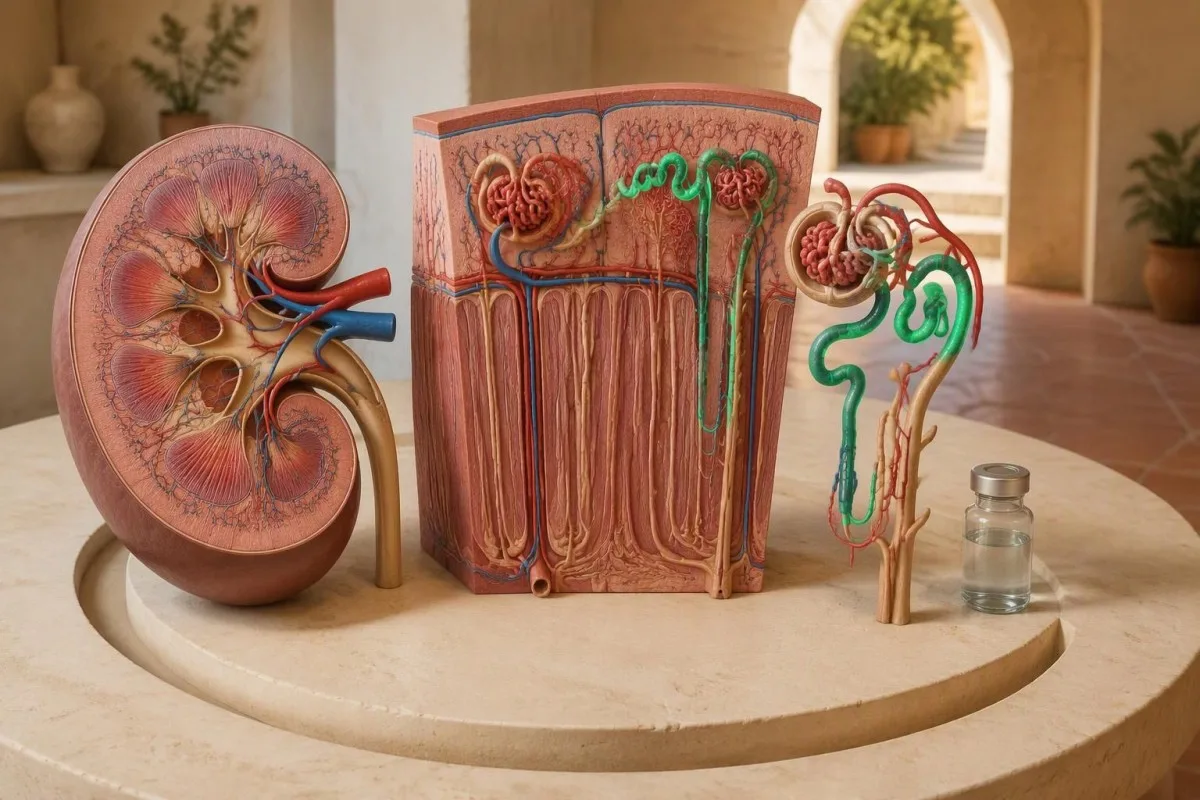
Risk generally increases with cumulative exposure and longer treatment, particularly when courses extend beyond approximately 5–7 days, although shorter courses are not risk-free. Concurrent vancomycin, amphotericin B, some chemotherapy agents, and nonsteroidal anti-inflammatory medicines can complicate renal safety; dehydration or low blood pressure may add a second stressor rather than an independent laboratory clue.
The dosing weight is not always the measured weight: obesity may require an adjusted-weight method, while ascites, edema, major burns, or critical illness can alter the distribution volume. A hypothetical 100 kg patient therefore should not calculate a dose by multiplying scale weight by 7; the hospital's weight convention and renal method are part of the prescription.
A creatinine clearance expressed in mL/min is not identical to an indexed eGFR expressed in mL/min/1.73 m², and low muscle mass can hide impaired filtration behind a modest creatinine value. Our dehydration and filtration explanation describes reversible changes, but a new decline during gentamicin treatment still needs review rather than being assumed temporary.
Gentamitsin darajalari me’yorida bo‘lsa ham, u eshitish yoki muvozanatga ta’sir qilishi mumkinmi?
Gentamicin can cause hearing or vestibular toxicity even when measured concentrations fall within the prescribed targets. New tinnitus, hearing change, unsteadiness, or oscillopsia—vision that appears to bounce during walking—requires prompt contact with the treatment team; there is no serum concentration that guarantees inner-ear safety.
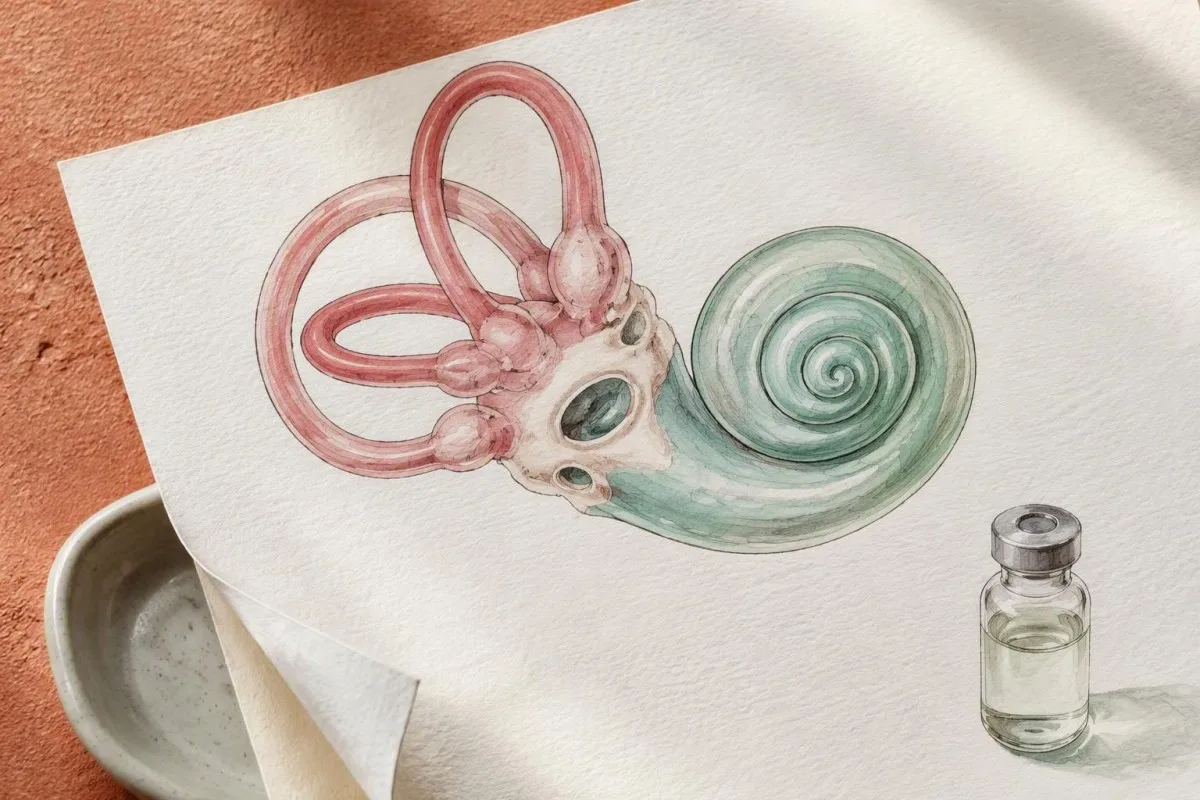
Gentamicin is particularly associated with vestibular toxicity, which affects balance and visual stability rather than hearing alone. Bilateral vestibular impairment may cause difficulty walking in darkness or bouncing vision without dramatic spinning vertigo; after even 1 new symptom, patients should report the change instead of waiting for the next routine blood test.
Baseline hearing and balance history helps interpret subsequent changes, and clinicians may arrange audiometry, including high-frequency assessment, or vestibular testing for prolonged or higher-risk treatment. A normal conventional hearing test does not exclude early high-frequency change or a vestibular problem; symptoms can emerge or progress after the final dose, and some effects are permanent.
The MT-RNR1 variants m.1555A>G and m.1494C>T are associated with increased aminoglycoside-related hearing-loss risk. The CPIC guideline recommends avoiding aminoglycosides in people with relevant high-risk variants unless the seriousness of the condition and lack of suitable alternatives justify treatment (McDermott et al., 2022); genetic testing must not delay urgent treatment without a clinician-directed plan.
Kantesti - bu AI qon tahlili natijalari platformasi, but a gentamicin concentration of 0.8 mg/L cannot establish normal hearing or vestibular function. Our хариуцлагатай AI-ийн хязгаарлалтууд explain why laboratory interpretation must remain separate from examination, audiology, emergency assessment, and decisions about the next antibiotic administration.
Gentamitsin tahlilining kutilmagan natijasi chiqsa, nima qilish kerak?
Contact the prescribing team or clinical pharmacist about an unexpected gentamicin result, especially when the next dose is approaching or symptoms have appeared. Do not independently change the dose or interval; a concentration of 2 mg/L means different things under different protocols, and an urgent decision needs the administration record.

Provide 5 practical details: the reported concentration and units, dose, infusion start and finish, sample collection time, and the latest creatinine with its earlier baseline. Also mention missed or delayed doses, urine changes, tinnitus, hearing change, imbalance, and nonprescription medicines; symptoms deserve attention even when the laboratory has not marked the result high.
If you are in hospital, alert the nurse or treatment team immediately rather than altering the infusion equipment yourself. If you receive home infusions, use the service's urgent contact route before the next planned administration when there is a concerning result; our secure clinical result-sharing guide explains how to preserve the original report and its timestamps.
Kantesti AI can support explanation of units and trends, but it cannot confirm whether an 18:00 sample belongs on a hospital's nomogram or authorize a treatment change. When sharing results for educational interpretation, remove unnecessary identifiers and review our maxfiylik va ma’lumotlar haqidagi ma’lumotlarni; privacy precautions must never delay urgent medical contact.
Gentamitsinni sun’iy intellekt yordamida talqin qilish: tadqiqot konteksti va cheklovlari
Clinical interpretation of gentamicin levels depends on validated dosing protocols, kidney-injury definitions, and separate assessment of hearing and balance. The 3 external medical references below support those clinical discussions; the 2 additional Kantesti publications describe platform or educational work and are not gentamicin dosing or toxicity-validation studies.
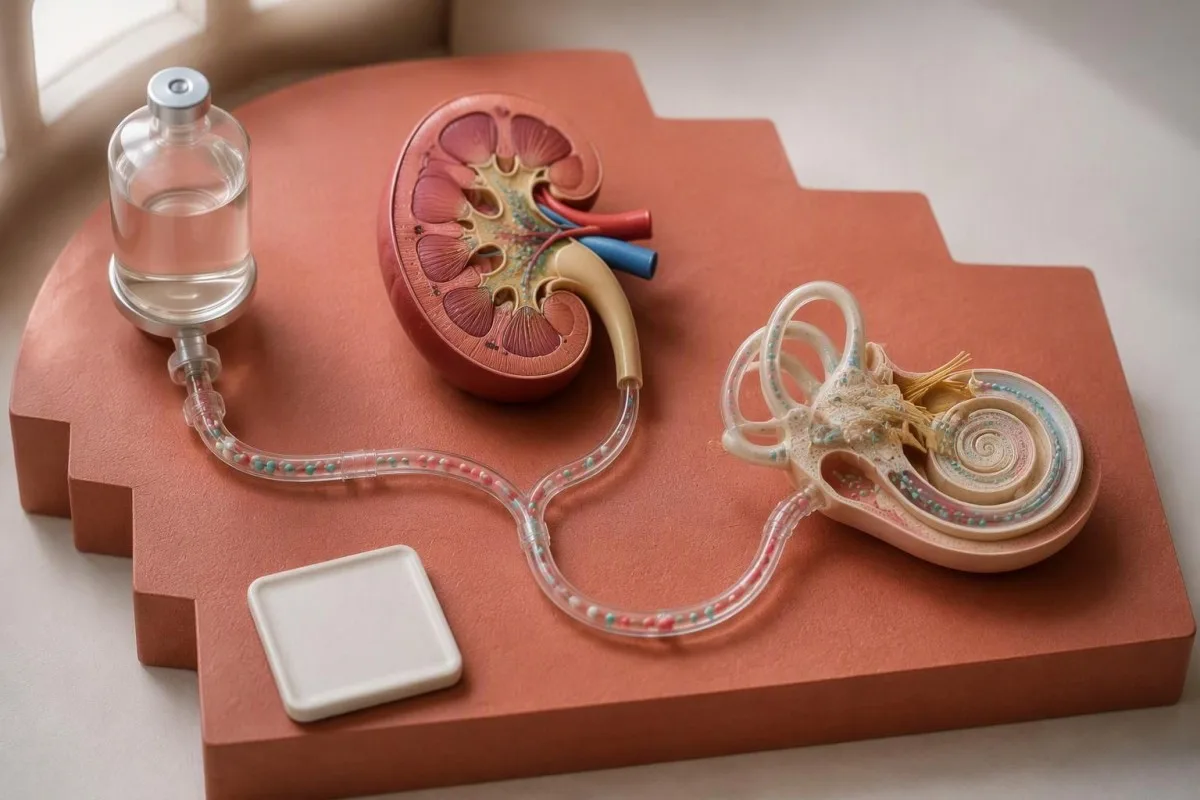
The Hartford program, KDIGO acute kidney injury criteria, and CPIC aminoglycoside pharmacogenetics guideline answer 3 different questions: how to interpret a qualifying timed level, how to recognize kidney injury, and when genetic susceptibility changes antibiotic selection. None can turn an unlabeled concentration into a complete treatment decision, and differences between hospital targets should be resolved using the patient's actual protocol.
Kantesti - bu AI asosidagi qon tahlili analiz vositasi that can help organize gentamicin results alongside creatinine and electrolyte trends when the required context is supplied. A 0.3 mg/dL creatinine rise still requires clinician assessment regardless of how a report is summarized; our texnik va klinik nazoratimiz describes evaluation boundaries rather than claiming validation for autonomous gentamicin dosing.
The Global Health Report 2026 and the RDW guide listed below are 2 separate publications, not evidence that AI can prevent aminoglycoside toxicity. Kantesti's tibbiy kontent standartlari distinguish educational interpretation from prescribing; patients should use this article to ask better timing and safety questions, not to choose their next dose.
Tez-tez beriladigan savollar
Gentamitsinning me’yoriy minimal konsentratsiyasi qancha?
Gentamitsinning an’anaviy eng past konsentratsiyasi odatda 1 mg/L dan past bo‘lishi maqsad qilinadi, biroq ayrim protokollarda 2 mg/L dan past ko‘rsatkich qo‘llanadi. Namuna odatda keyingi haqiqiy dozadan 30 daqiqa oldin olinishi kerak, shunchaki belgilangan vaqtidan oldin emas. Dozalar oralig‘i uzaytirilgan rejimlarda dozadan oldingi boshqa chegara yoki vaqtga bog‘liq nomogramma konsentratsiyasi qo‘llanishi mumkin. Me’yoriy eng past konsentratsiya buyrak, eshitish yoki muvozanat bilan bog‘liq toksiklikni istisno qilmaydi.
Gentamitsinning cho‘qqi darajasini qachon o‘lchash kerak?
A conventional intravenous gentamicin peak level is commonly collected 30 minutes after the infusion ends, but the prescribing service's protocol determines the exact time. For example, an infusion ending at 08:30 may require collection at 09:00 under that protocol. A sample collected immediately after infusion or much later cannot automatically be compared with the same target. Extended-interval monitoring and intramuscular administration use different sampling conventions.
Gentamitsin darajasi 2 mg/L bo‘lsa, bu juda yuqorimi?
Gentamitsin darajasi 2 mg/L bo‘lsa, dozalash tartibi va namuna olingan vaqtni bilmasdan uni tasniflab bo‘lmaydi. Ko‘plab an’anaviy eng past konsentratsiya protokollarida bu maqsadli ko‘rsatkichdan yuqori bo‘ladi, biroq dozalash oralig‘i uzaytirilgan tartibda belgilangan vaqtda olingan kutiladigan konsentratsiya bo‘lishi mumkin. Namunaning erta yoki kech olingani yoxud ifloslangan infuziya liniyasidan olingani ham uning talqinini o‘zgartirishi mumkin. Keyingi dozani o‘zingiz o‘zgartirish o‘rniga, dori buyurgan tibbiy jamoa bilan bog‘laning.
Gentamitsin darajasi kuniga bir marta dozalashda qachon o‘lchanadi?
Hartford rejimining mos keluvchi 7 mg/kg dozasi uchun gentamitsin konsentratsiyasi infuziya boshlanganidan 6–14 soat o‘tgach olinadi. Boshqa kengaytirilgan interval protokollarida dozadan oldingi o‘lchov, dozadan keyingi 2 ta o‘lchov yoki boshqa doza-vaqt jadvali qo‘llanishi mumkin. Tasodifiy so‘zi namuna olish vaqti muhim emasligini anglatmaydi. Konsentratsiya faqat yuborilgan doza va bemorga mos protokol asosida talqin qilinishi kerak.
Gentamitsin darajasi me’yorda bo‘lsa ham buyraklarga zarar yetkazishi mumkinmi?
Gentamitsin bilan bog‘liq buyrak shikastlanishi preparat konsentratsiyasi belgilangan maqsadli diapazonda bo‘lsa ham yuz berishi mumkin, chunki kumulyativ ta’sir va bemorga xos xavf omillari ham ahamiyatga ega. 48 soat ichida kreatinin miqdorining kamida 0,3 mg/dL yoki 26,5 µmol/L ga oshishi KDIGO mezoniga ko‘ra o‘tkir buyrak shikastlanishi hisoblanadi. Aminoglikozidlar bilan bog‘liq naychalar shikastlanishida siydik ajralishi nisbatan me’yorda qolishi mumkin. Shifokorlar preparatning bitta darajasiga tayanish o‘rniga kreatininning ketma-ket o‘lchovlarini, siydik ajralishini, boshqa dorilarni va muqobil sabablarni baholaydilar.
Gentamitsin davolanishdan keyin eshitish qobiliyatini yo‘qotish yoki bosh aylanishiga sabab bo‘lishi mumkinmi?
0 Gentamitsin bilan bog‘liq eshitish yoki muvozanat alomatlari davolash tugagandan keyin paydo bo‘lishi yoki kuchayishi mumkin; zardobdagi miqdorning maqbul darajada bo‘lishi bu ehtimolni istisno etmaydi. Hatto 1 ta yangi alomat — masalan, quloq shang‘illashi, eshitishdagi o‘zgarish, davomli muvozanat buzilishi yoki yurganda ko‘rishning tebranishi — tezkor klinik baholashni talab qiladi. Gentamitsin eshitish qobiliyati sezilarli pasaymasdan yoki aylanma bosh aylanishisiz ham vestibulyar faoliyatga ta’sir qilishi mumkin. Baholash eshitish va vestibulyar tekshiruvlarni o‘z ichiga olishi mumkin, chunki gentamitsin konsentratsiyasi ichki quloq faoliyatini tekshirmaydi.
Qon tahlili natijalarini qanday o‘qish kerak
Laboratoriya hisobotingizni yuklang va Kantesti sun’iy intellekti har bir biomarkerni soniyalar ichida sodda tilda tushuntiradi. Dunyo bo‘ylab 2 milliondan ortiq kishi foydalanadi.
Adabiyotlar
- Klein, T., Mitchell, S., & Weber, H. (2026). AI qon tahlil analizatori: 2,5M ta test tahlil qilindi | Global Health Report 2026. Kantesti AI tibbiy tadqiqotlari. DOI
- Klein, T., Mitchell, S., & Weber, H. (2026). RDW qon tahlili: RDW-CV, MCV va MCHC bo‘yicha to‘liq qo‘llanma. Kantesti AI tibbiy tadqiqotlari. DOI
- Nicolau DP et al. (1995). Experience with a once-daily aminoglycoside program administered to 2,184 adult patients. Antimicrobial Agents and Chemotherapy. DOI
- KDIGO Acute Kidney Injury Work Group (2012). KDIGO Clinical Practice Guideline for Acute Kidney Injury. Kidney International Supplements.
- McDermott JH et al. (2022). Clinical Pharmacogenetics Implementation Consortium Guideline for the Use of Aminoglycosides Based on MT-RNR1 Genotype. Clinical Pharmacology & Therapeutics. DOI
- 2M+Tahlil qilingan testlar
- 127+Mamlakatlar
- 100+Tillar
Tibbiy guruh haqida


E-E-A-T ishonch signallari
Tajriba
Shifokor boshchiligidagi laboratoriya talqin qilish ish jarayonlarini klinik ko‘rib chiqish.
Tajriba
Laboratoriya tibbiyoti biomarkerlarning klinik kontekstda qanday o‘zini tutishini yoritadi.
Vakolatlilik
Doktor Thomas Klein tomonidan tibbiy jihatdan ko‘rib chiqilgan, doktor Sarah Mitchell va professor doktor Hans Weber hissalari bilan.
Ishonchlilik
Xavotirni kamaytirish uchun aniq keyingi qadamlar yo‘nalishlari bilan dalillarga asoslangan talqin.

Tibbiy ogohlantirish
Ushbu maqola faqat ta’lim maqsadlari uchun mo‘ljallangan va tibbiy maslahatni anglatmaydi. Tashxis va davolash bo‘yicha qarorlar uchun har doim malakali sog‘liqni saqlash mutaxassisiga murojaat qiling.
Nashr etilgan · Tahririyat jamoasi bilan bog‘laning
Angliya va Uelsda ro‘yxatdan o‘tgan Kantesti Ltd tomonidan nashr etilgan, kompaniya raqami. 17090423, London, Birlashgan Qirollik.
