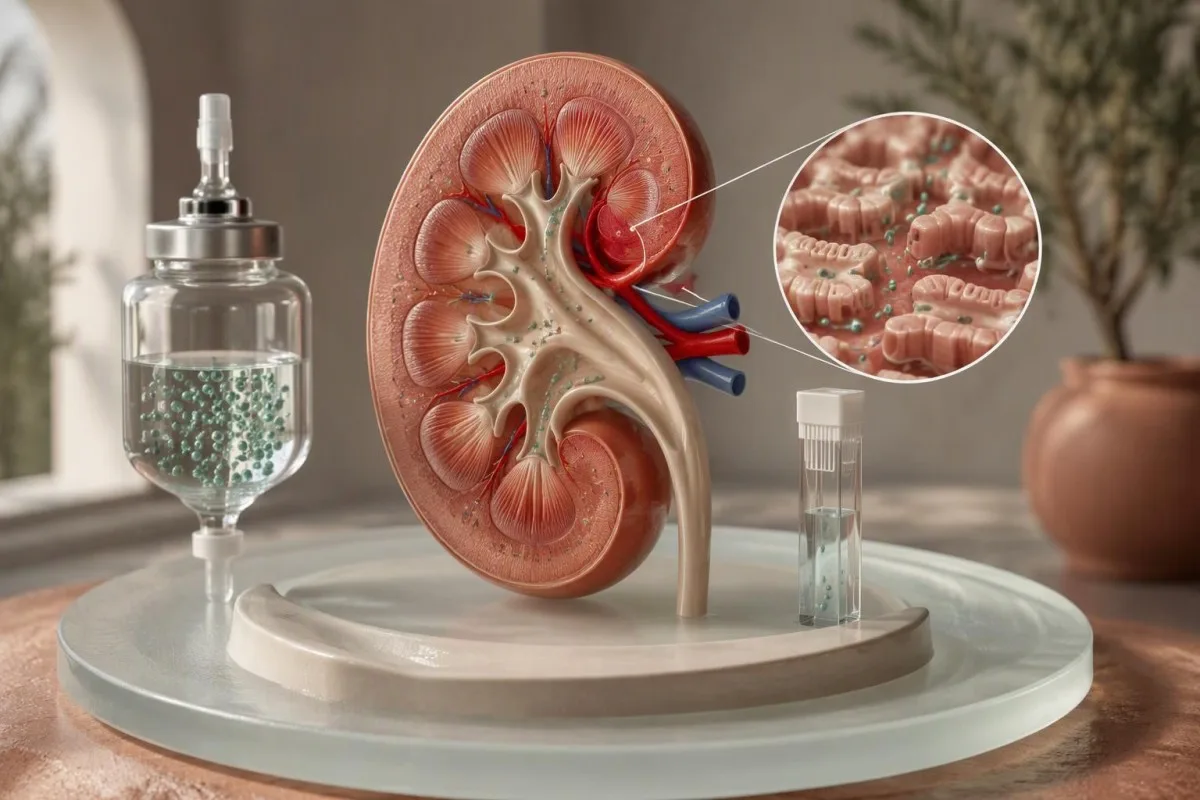
Gentamicinaj koncentriĝoj havas sencon nur kune kun la dozo, la doza reĝimo kaj la preciza tempo de la specimenopreno. Konvencia kuracado uzas celvalorojn por pintaj kaj minimumaj koncentriĝoj; plilongigitaj dozintervaloj ofte uzas koncentriĝon mezuritan je difinita tempo kaj protokolspecifan diagramon, dum renaj testoj kaj simptomoj pri aŭdo aŭ ekvilibro servas kiel apartaj sekureckontroloj.

Ĉefaj konkludoj
- Gentamicinaj koncentriĝoj mezuras la koncentriĝon de antibiotiko, kutime en mg/L; 1 mg/L egalas al 1 µg/mL.
- Konvencia pinta koncentriĝo celvaloroj ĉe plenkreskuloj kutime estas ĉirkaŭ 5–10 mg/L, sed la infekto, la indiko kaj la specimena metodo determinas la efektivan celvaloron.
- Konvencia minimuma koncentriĝo celvaloroj ofte estas sub 1 mg/L; kelkaj protokoloj uzas valoron sub 2 mg/L. Neniu el ambaŭ sojloj garantias foreston de tokseco.
- Specimena tempo devas esti registrita precize: konvencia intravejna pinta koncentriĝo kutime estas mezurata 30 minutojn post la fino de la infuzaĵo, kaj minimuma koncentriĝo ene de 30 minutoj antaŭ la sekva efektive donita dozo.
- Monitorado je plilongigitaj dozintervaloj diferas: la Hartford-protokolo uzas koncentriĝon mezuritan 6–14 horojn post la komenco de taŭga dozo de 7 mg/kg.
- Rena damaĝo povas plenumi la kriteriojn de KDIGO, se la kreatinino pliiĝas je almenaŭ 0.3 mg/dL, aŭ 26.5 µmol/L, ene de 48 horoj—eĉ kiam la rezulto restas ene de la laboratoria intervalo.
- Aŭda kaj ekvilibra tokseco povas okazi malgraŭ ŝajne akcepteblaj koncentriĝoj; nova tinito, ŝanĝiĝo de aŭdo, malekvilibro aŭ saltanta vidado bezonas rapidan klinikan taksadon.
- Dozaj decidoj apartenas al la preskribanta teamo aŭ klinika apotekisto. Neniam ŝanĝu dozon memstare, prokrastu infuzon aŭ apliku interretan nomogramon.
Kion efektive mezuras la gentamicinaj koncentriĝoj?
Gentamicinaj niveloj mezuras la koncentriĝon de gentamicino en laboratoria specimeno, ne la renan funkcion aŭ la sukceson de la kuracado per si mem. Rezulto de 2 mg/L povas esti trankviliga, maltrankviliga aŭ neinterpretebla, depende de tio, ĉu temas pri antaŭdoza koncentriĝo, frua postdoza specimeno aŭ mezuro laŭ difinita tempo por plilongigita doza intervalo.
Laboratorioj kutime raportas gentamicinon en mg/L aŭ µg/mL, kiuj estas nombre ekvivalentaj: 1 mg/L egalas al 1 µg/mL. Terapia intervalo presita apud la rezulto povas priskribi nur konvencian dozadon; ĝi ne estu aŭtomate aplikata al unufoje-ĉiutaga kuracado aŭ al malalt-doza kombina kuracado laŭ elektitaj reĝimoj por endokardito.
Kantesti estas AI-sangotesta analizilo kiuj povas helpi klarigi, kial koncentriĝo de gentamicino de 2 mg/L bezonas kuntekston pri dozado kaj tempigo antaŭ ol ĝi povas esti interpretata. Niaj organizo kaj klinika celo estas apartaj de la hospitala preskriba servo; ni ne rajtigas antibiotikajn dozojn nek anstataŭas terapian monitoradon de medikamentoj.
Izolita laboratoria averto ne estas diagnozo. Ekzemple, hipoteza raporto markita kiel alta je 12 mg/L povas reflekti koncentriĝon mezuritan ĝustatempe post dozo laŭ plilongigita intervalo, anstataŭ troan konvencian pintkoncentriĝon; nia klarigo pri eksterintervalaj laboratoriaj avertoj priskribas, kial la akompana referenca intervalo povas erarigi.
Kial la tempo de monitorado de gentamicino ŝanĝas la rezulton?
La tempigo de gentamicina monitorado gravas, ĉar la koncentriĝo altiĝas dum administrado, disvastiĝas en la korpaj likvaĵoj kaj poste malaltiĝas, kiam la renoj ĝin forigas. Klinikistoj bezonas almenaŭ 3 tempindikojn: la komencon de la infuzo, ĝian finon kaj la kolekton de la specimeno, kaj ankaŭ la efektivan tempon de la sekva dozo, kiam ili interpretas antaŭdozan koncentriĝon.
Ĉe normala rena funkcio, la elimina duoniĝotempo de gentamicino ofte estas proksimume 2–3 horojn, kvankam malsano kaj ŝanĝiĝoj en distribuo povas modifi la koncentriĝan kurbon. Specimeno prenita tuj post infuzo povas kapti la distribuan fazon; ĝi ne estas interŝanĝebla kun pli posta pintkoncentriĝo mezurita laŭ la metodo specifita de la hospitalo.
Planita doza tempo ne povas anstataŭi la administran registron. En hipoteza kazo, kiam dozo planita por la 08:00 estas prokrastita ĝis la 09:10, specimeno kolektita je la 09:00 ankoraŭ estas antaŭdoza, dum dokumento, kiu supozas, ke la dozo estis administrita je la 08:00, povus malĝuste etikedi ĝin kiel postdozan; tiu diferenco tute ŝanĝas la klinikan demandon.
Kolektado de specimeno el infuzlinio povas doni false altan rezulton, se resta gentamicino poluas la specimenon, do la personaro sekvas lokajn procedurojn pri kolektado kaj flulavado. Problemoj pri tempigo okazas ankaŭ ĉe aliaj medikamentoj, sed la postulata atendoperiodo malsamas; nia klarigo pri la tempigo de digoksina specimenado ne estu uzata kiel gentamicina horaro.
Kiel funkcias konvencia monitorado de pintaj kaj minimumaj koncentriĝoj?
Konvencia monitorado de gentamicino uzas postdozan pintkoncentriĝon por taksi la ekspozicion kaj antaŭdozan minimumkoncentriĝon por taksi la restantan medikamenton antaŭ la sekva administrado. For selected adults receiving divided doses, intervals may be 8 or 12 hours, but kidney function and the treatment indication determine the prescribed schedule.
After an intravenous infusion, a conventional gentamicin peak level is commonly collected 30 minutes after the infusion finishes; some protocols specify a different time. A gentamicin trough level is commonly collected within 30 minutes before the next actual dose, and intramuscular administration uses a different post-dose sampling convention.
Some services obtain the first paired measurements around the 3rd or 4th dose, when concentrations are approaching a repeatable pattern in patients with stable clearance. That is not a reason to postpone assessment in someone with worsening kidney function, unexpected dosing, or symptoms; such patients may require earlier measurements and individualized pharmacokinetic review.
A peak and trough are useful only if the preceding doses were actually administered as documented. A missed dose, a changed infusion duration, or a sample collected 2 hours early can invalidate an otherwise neat-looking pair; similar documentation principles appear in our carbamazepine trough timing guide, although the therapeutic targets are unrelated.
Al kiu gentamicina pinta koncentriĝo klinikistoj celas?
A conventional gentamicin peak level commonly targets approximately 5–10 mg/L in adults, but there is no universal target for every infection. Some low-dose synergy protocols use peaks around 3–5 mg/L, while extended-interval concentrations must not be judged against the conventional peak range.
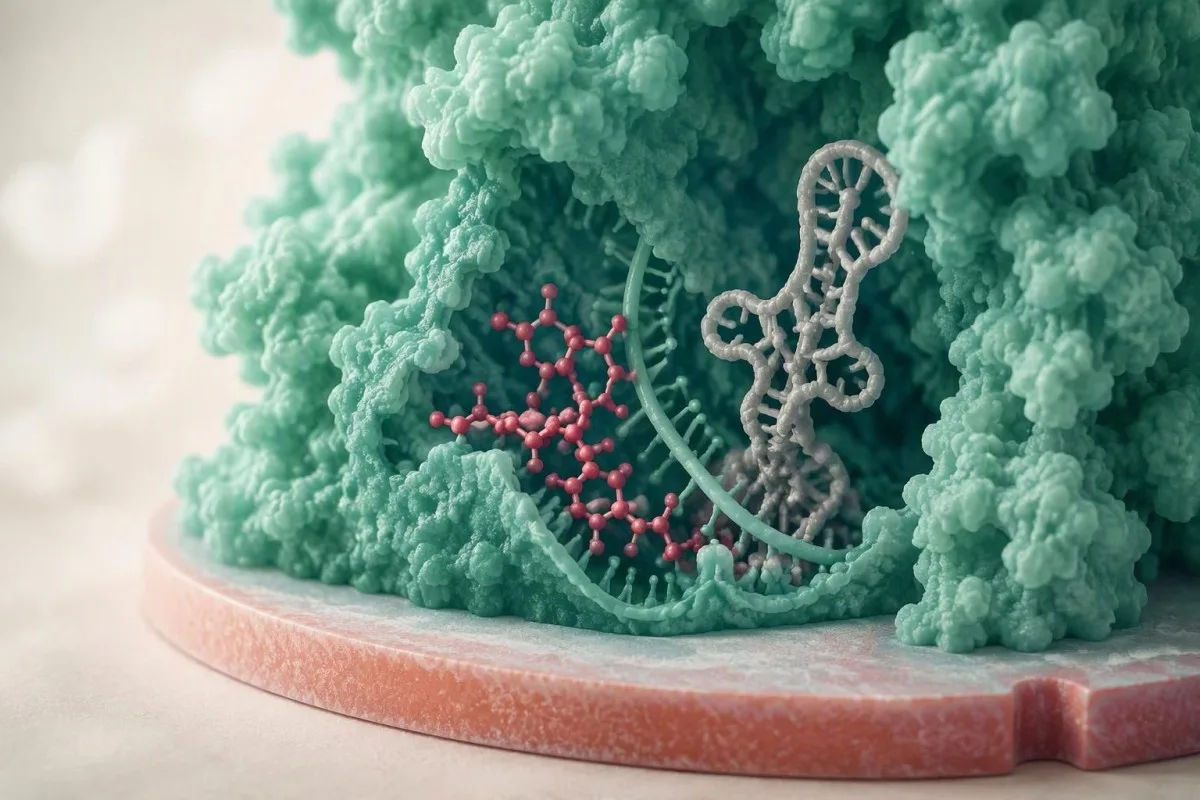
Gentamicin exhibits concentration-dependent antibacterial activity: for susceptible Gram-negative organisms, a peak-to-minimum inhibitory concentration ratio around 8–10 is a commonly used pharmacodynamic goal. The minimum inhibitory concentration, or MIC, describes the organism's susceptibility; a peak of 8 mg/L has a different meaning when the MIC is 0.5 rather than 2 mg/L.
A low measured peak does not always mean the prescribed dose was too small. A hypothetical patient with major fluid expansion might have a larger distribution volume, while a peak sample collected 90 minutes late could be lower simply because elimination has continued; the pharmacist distinguishes these possibilities before changing treatment.
Selected combination regimens use gentamicin for synergy, not the same exposure goals used for stand-alone Gram-negative treatment. High-level aminoglycoside resistance can prevent that synergy and is not solved by chasing a higher concentration; our antifungal trough target discussion illustrates why drug-specific targets cannot be borrowed across treatments.
| Nivelo | Intervalo | Kion ĝi signifas |
|---|---|---|
| Conventional adult peak | Commonly 5–10 mg/L | Illustrative target used by some protocols; indication and the specified collection time determine interpretation. |
| Selected synergy peak | Often 3–5 mg/L | Applies only to particular low-dose combination protocols, not every endocarditis regimen. |
| Conventional adult trough | Often <1 mg/L; some protocols <2 mg/L | Lower residual exposure reduces concern about accumulation but does not exclude toxicity. |
| Extended-interval concentration | No universal peak-and-trough reference interval | Interpret using the actual elapsed time and the validated protocol for the administered dose. |
Kion sugestas alta gentamicina minimuma koncentriĝo?
A high, correctly timed gentamicin trough level suggests that substantial drug remains before the next dose, often because clearance is reduced or the interval is too short. Many conventional protocols aim below 1 mg/L; others accept below 2 mg/L, so the prescribing service's target must be checked.
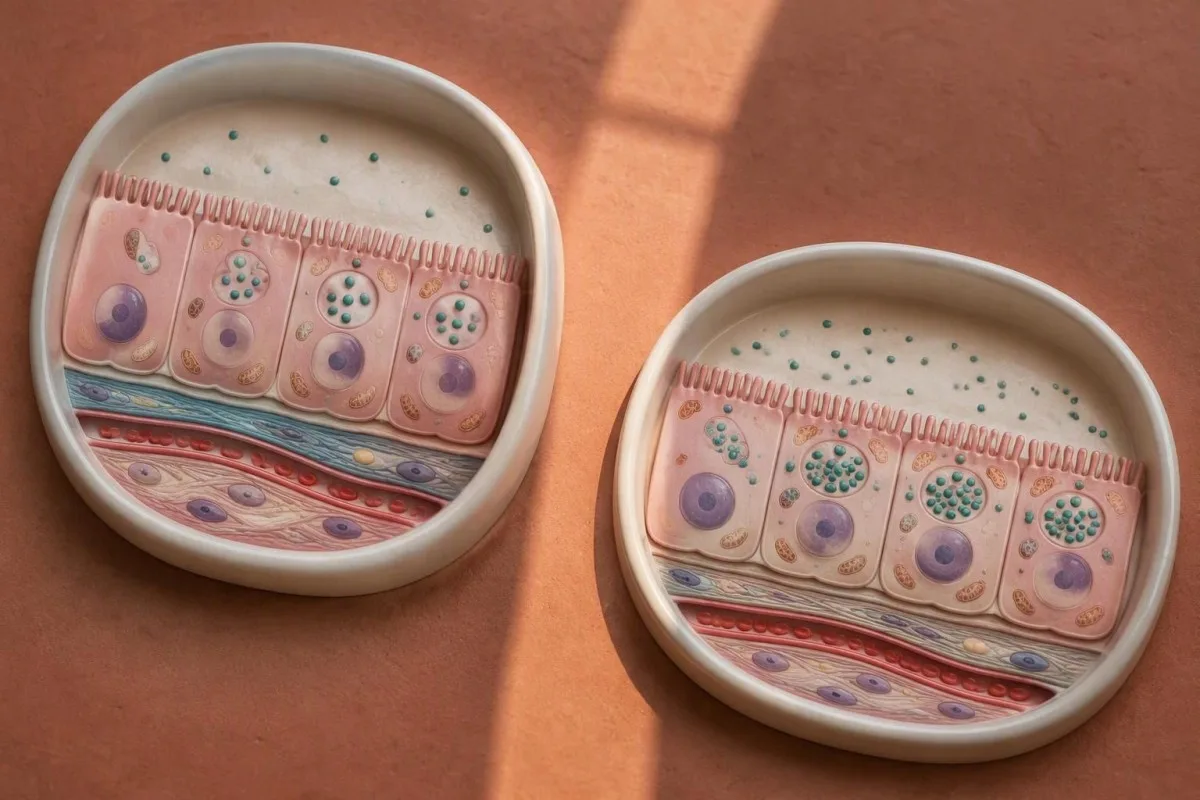
A trough is a clearance signal, not a direct measurement of kidney tissue exposure. Gentamicin can accumulate within renal proximal tubular cells over repeated treatment, so a trough below 1 mg/L does not erase the effects of cumulative exposure, concurrent nephrotoxic medicines, or a kidney problem that is only beginning.
The direction of causation can run both ways: reduced kidney function raises gentamicin concentrations, and gentamicin-associated tubular injury can further reduce clearance. For example, a hypothetical trough rising from 0.6 to 1.4 mg/L on an unchanged schedule may prompt review of creatinine trends, actual dose times, fluid status, and other medicines rather than a conclusion based on the concentration alone.
A sample collected 2 hours before the next dose will usually be higher than a true pre-dose trough and should not be casually relabeled. Conversely, a sample after an unusually long delay may look reassuring without representing the usual schedule; our tacrolimus trough interpretation guide explains the same documentation problem with a different drug.
Kiel diferencas la monitorado de gentamicino je plilongigitaj dozintervaloj?
Extended-interval gentamicin uses a larger individual dose followed by a longer drug-free interval, and monitoring often relies on a timed post-dose concentration rather than conventional paired levels. Selected adult protocols use approximately 5–7 mg/kg per dose, but the exact dose, interval, and eligibility criteria are service-specific.
The rationale combines concentration-dependent killing with a post-antibiotic effect, meaning bacterial growth may remain suppressed after the circulating concentration falls. A once-daily regimen therefore does not require a conventional trough to remain detectably therapeutic; intentionally low late concentrations are part of the strategy, not proof that treatment has stopped working.
Selected extended-interval protocols use 24-, 36-, or 48-hour intervals, but once-daily is an imprecise label when impaired clearance requires longer spacing. Some hospitals use a pre-dose concentration, some a single timed nomogram sample, and others 2 concentrations or model-based exposure estimates; these approaches are not interchangeable without their accompanying dosing rules.
Extended-interval treatment is not suitable for every patient or indication, and reduced renal toxicity in selected populations does not mean zero risk. Our vancomycin exposure monitoring guide explains another antibiotic-specific approach; the vancomycin AUC target of 400–600 mg·h/L is not a gentamicin target.
Kiam nomogramo de Hartford povas interpreti gentamicinajn koncentriĝojn?
The Hartford nomogram applies to qualifying extended-interval aminoglycoside treatment using a 7 mg/kg dose and a concentration collected 6–14 hours after infusion start. It helps clinicians choose an interval; it is not a universal chart for any gentamicin dose, any collection time, or any patient.
The original Hartford experience described 2,184 adult patients receiving a once-daily aminoglycoside program, providing the clinical background for its dose-and-time framework (Nicolau et al., 1995). The 6–14-hour measurement is sometimes called a random level, but random here means not a conventional peak or trough—not that its timing is optional.
Hospitals restrict or modify this approach in populations such as pregnancy, dialysis, unstable renal function, major burns, cystic fibrosis, or selected endocarditis regimens. A hypothetical concentration of 2.2 mg/L collected 10 hours after a 5 mg/kg dose cannot simply be plotted on an unmodified 7 mg/kg Hartford chart to obtain a reliable interval.
If the sample falls outside the validated window, clinicians may request another level or calculate individualized pharmacokinetics rather than force a point onto the chart. Our delayed drug-clearance explanation illustrates why elapsed time is part of a drug result, although methotrexate rescue thresholds have no role in gentamicin dosing.
Kiel kompariĝas du hipotezaj gentamicinaj raportoj?
Two identical gentamicin results can mean different things when the sampling schedules differ. The following 2 hypothetical examples demonstrate conventional and extended-interval interpretation; they are not dosing instructions, and neither example supplies enough information for a patient to choose the next dose.

In hypothetical example A, a conventional infusion starts at 08:00, ends at 08:30, and the prescribed peak sample is collected at 09:00. A result of 8 mg/L fits many conventional peak targets if the indication agrees; a separate 15:40 sample before a 16:00 dose provides the trough information that the peak cannot supply.
In hypothetical example B, an eligible 70 kg adult receives a clinician-prescribed 490 mg dose, corresponding to 7 mg/kg, with infusion start at 08:00. A sample at 18:00 is 10 hours after infusion start and is interpreted under the applicable extended-interval protocol; calling that result a low peak or a high trough would ask the wrong question.
Neither timeline establishes kidney safety without baseline and follow-up renal information, and the prescribed dosing weight may differ from scale weight. Before collection, patients can confirm that staff have the actual administration record and the intended test type; our baseline sample preparation checklist helps distinguish useful preparation from unnecessary fasting or medication changes.
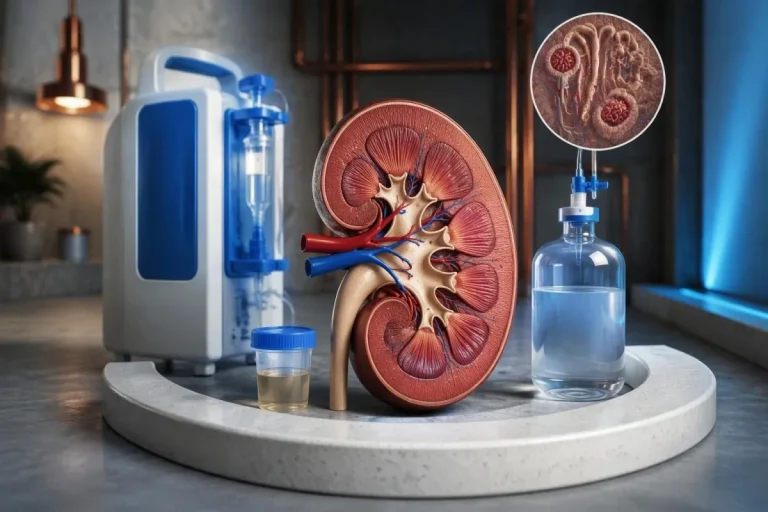
Kiel klinikistoj detektas renan lezon asociitan kun gentamicino?
Clinicians assess possible gentamicin-associated kidney injury using creatinine changes, urine output, exposure history, and alternative causes—not the gentamicin concentration alone. KDIGO defines acute kidney injury by a creatinine rise of at least 0.3 mg/dL within 48 hours, a rise to at least 1.5 times baseline within 7 days, or qualifying low urine output.
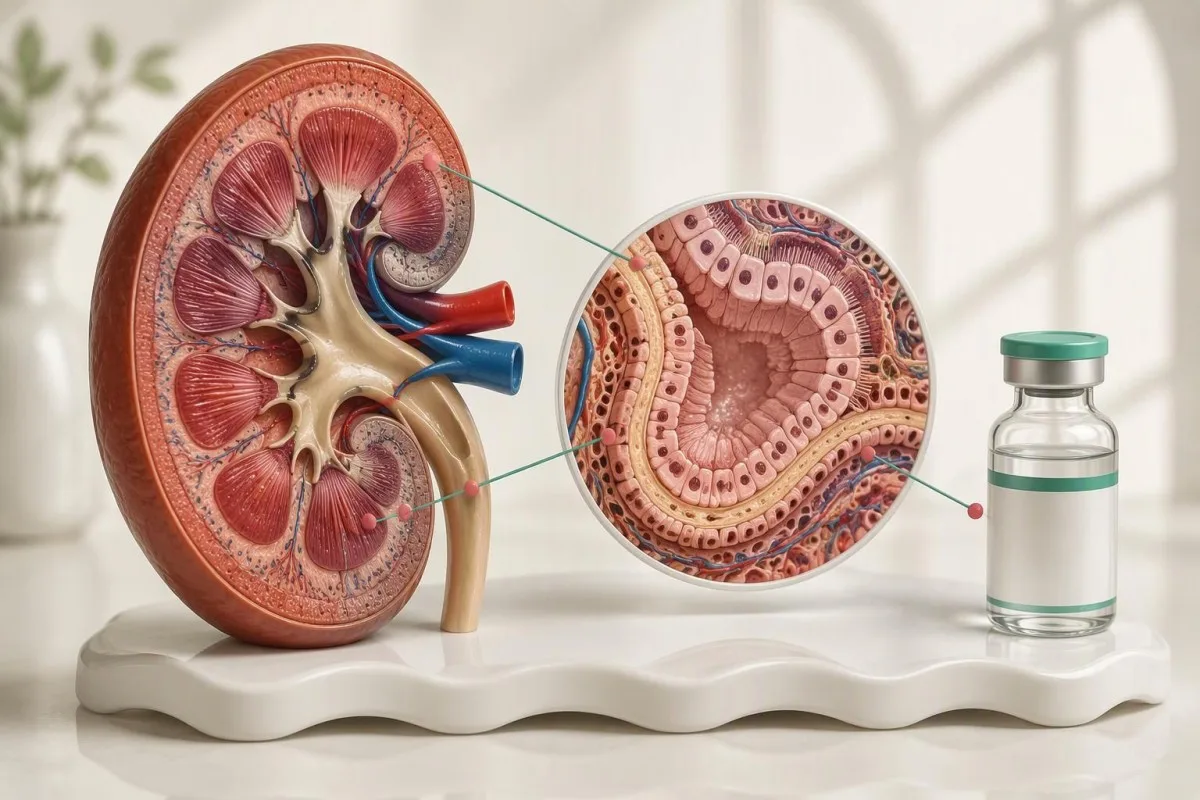
La 0.3 mg/dL threshold equals 26.5 µmol/L, and it can identify injury even when both values sit inside the laboratory interval (KDIGO Acute Kidney Injury Work Group, 2012). For example, a hypothetical creatinine increase from 0.7 to 1.0 mg/dL within 48 hours meets that criterion; normal-looking is not the same as unchanged.
KDIGO's urine-output criterion includes less than 0.5 mL/kg/hour for 6 hours: for a 70 kg adult, that is below 35 mL/hour over the specified period. Gentamicin-associated injury can also be non-oliguric, meaning urine output remains relatively preserved, so passing urine normally does not rule out an important creatinine rise.
Sepsis, low blood pressure, dehydration, urinary obstruction, and other medicines can produce similar changes, and attribution requires clinical assessment. Our BUN kaj kreatinina rilata gvidilo explains useful context without treating the ratio as diagnostic; seek prompt advice for markedly reduced urine or the warning signs described in our low kidney function symptoms artikolo.
Kiujn renajn kaj elektrolitajn kontrolojn akompanas la mezurado de gentamicinaj koncentriĝoj?
Gentamicin safety monitoring usually includes baseline and repeat serum creatinine, with electrolytes and urine assessment when clinically indicated. Hospitalized adults often have daily renal checks during ongoing treatment, but outpatient schedules depend on stability, treatment duration, local protocol, and whether a change occurs within 24–48 hours.
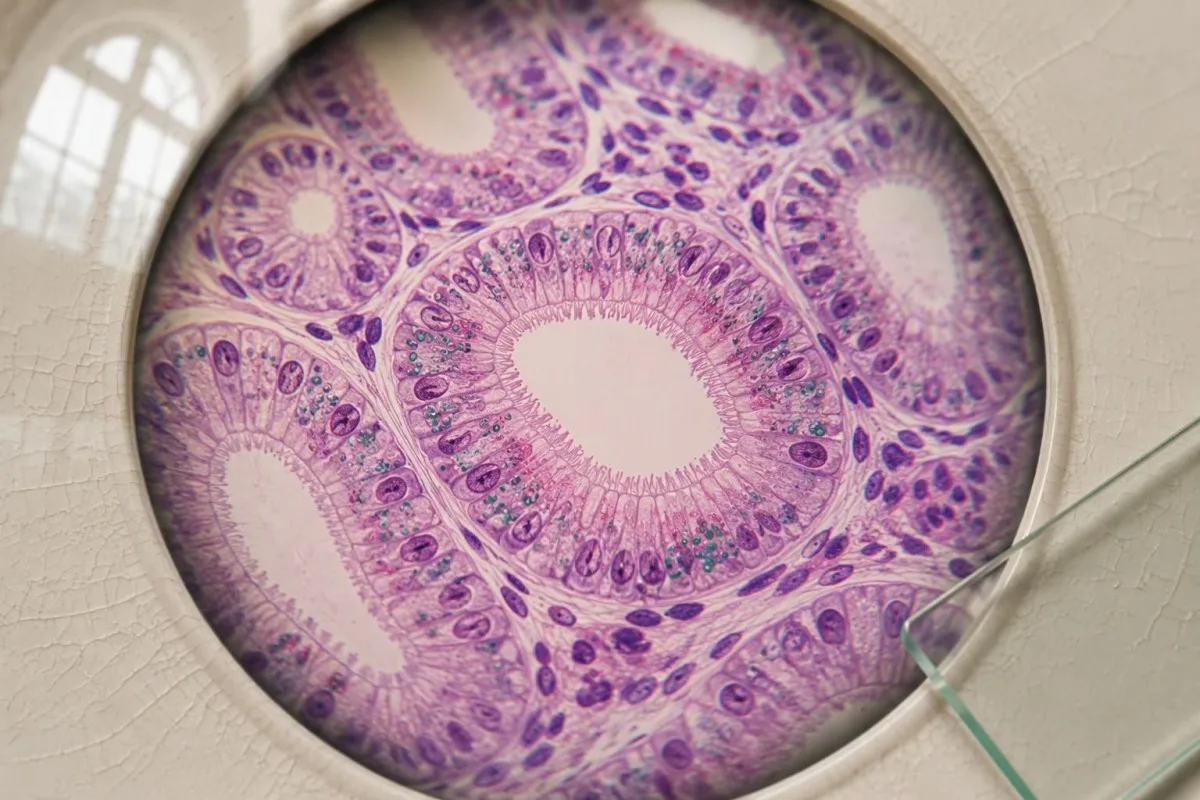
Creatinine is a delayed marker of changing filtration, and automated eGFR assumes relatively steady creatinine production and clearance. During evolving acute kidney injury, an eGFR reported as 60 mL/min/1.73 m² may not accurately describe current clearance; clinicians often rely on the trajectory and an appropriate drug-dosing renal assessment rather than the printed number alone.
Aminoglycoside-related tubular dysfunction can cause magnesium or potassium wasting, sometimes before a major creatinine increase. For example, a hypothetical magnesium of 0.55 mmol/L with new weakness deserves assessment of renal losses, gastrointestinal losses, and medicines; our electrolyte safety patterns explain why replacement must reflect the whole clinical picture.
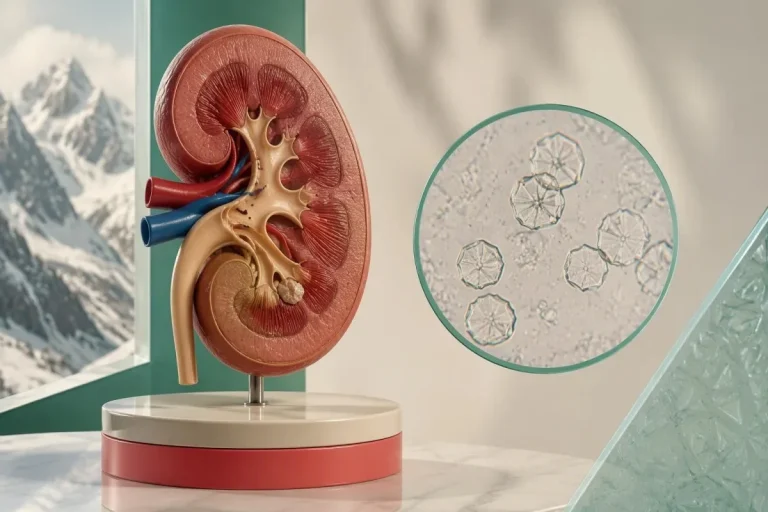
Urinary granular casts can support tubular injury but neither prove gentamicin caused it nor reliably exclude injury when absent. Our granular cast interpretation guide separates suggestive findings from diagnosis; the broader gvidilo por interpretado de urina analizo explains why 1 urine specimen cannot substitute for serial renal assessment.
Kiu bezonas pli individuecigitan sekurecmonitoradon de gentamicino?
Patients with unstable kidney function, major changes in body-fluid volume, repeated exposure, or concurrent nephrotoxic medicines need particularly individualized gentamicin monitoring. Older adults, neonates, pregnancy, dialysis, obesity, and severe illness can also make standard adult dosing assumptions unreliable; a 7 mg/kg protocol should not be generalized across these groups.
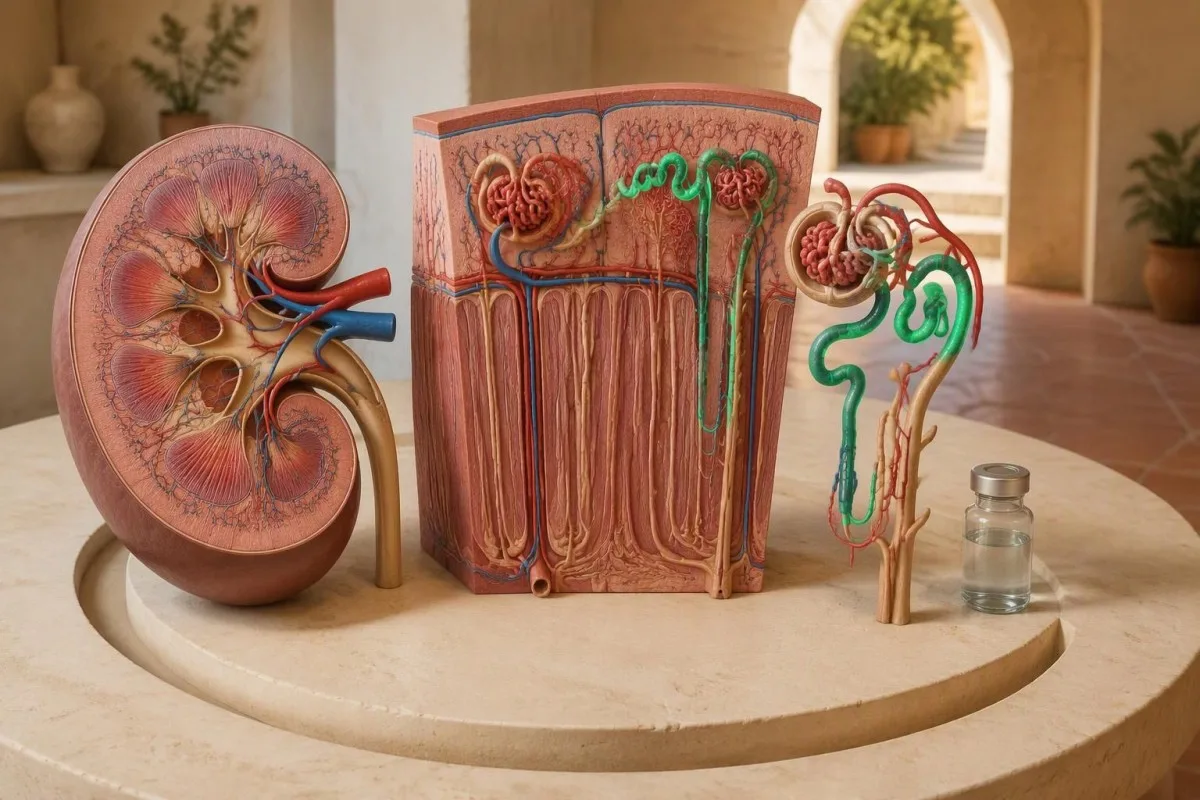
Risk generally increases with cumulative exposure and longer treatment, particularly when courses extend beyond approximately 5–7 days, although shorter courses are not risk-free. Concurrent vancomycin, amphotericin B, some chemotherapy agents, and nonsteroidal anti-inflammatory medicines can complicate renal safety; dehydration or low blood pressure may add a second stressor rather than an independent laboratory clue.
The dosing weight is not always the measured weight: obesity may require an adjusted-weight method, while ascites, edema, major burns, or critical illness can alter the distribution volume. A hypothetical 100 kg patient therefore should not calculate a dose by multiplying scale weight by 7; the hospital's weight convention and renal method are part of the prescription.
A creatinine clearance expressed in mL/min is not identical to an indexed eGFR expressed in mL/min/1.73 m², and low muscle mass can hide impaired filtration behind a modest creatinine value. Our dehydration and filtration explanation describes reversible changes, but a new decline during gentamicin treatment still needs review rather than being assumed temporary.
Ĉu gentamicino povas influi aŭdon aŭ ekvilibron malgraŭ akcepteblaj koncentriĝoj?
Gentamicin can cause hearing or vestibular toxicity even when measured concentrations fall within the prescribed targets. New tinnitus, hearing change, unsteadiness, or oscillopsia—vision that appears to bounce during walking—requires prompt contact with the treatment team; there is no serum concentration that guarantees inner-ear safety.
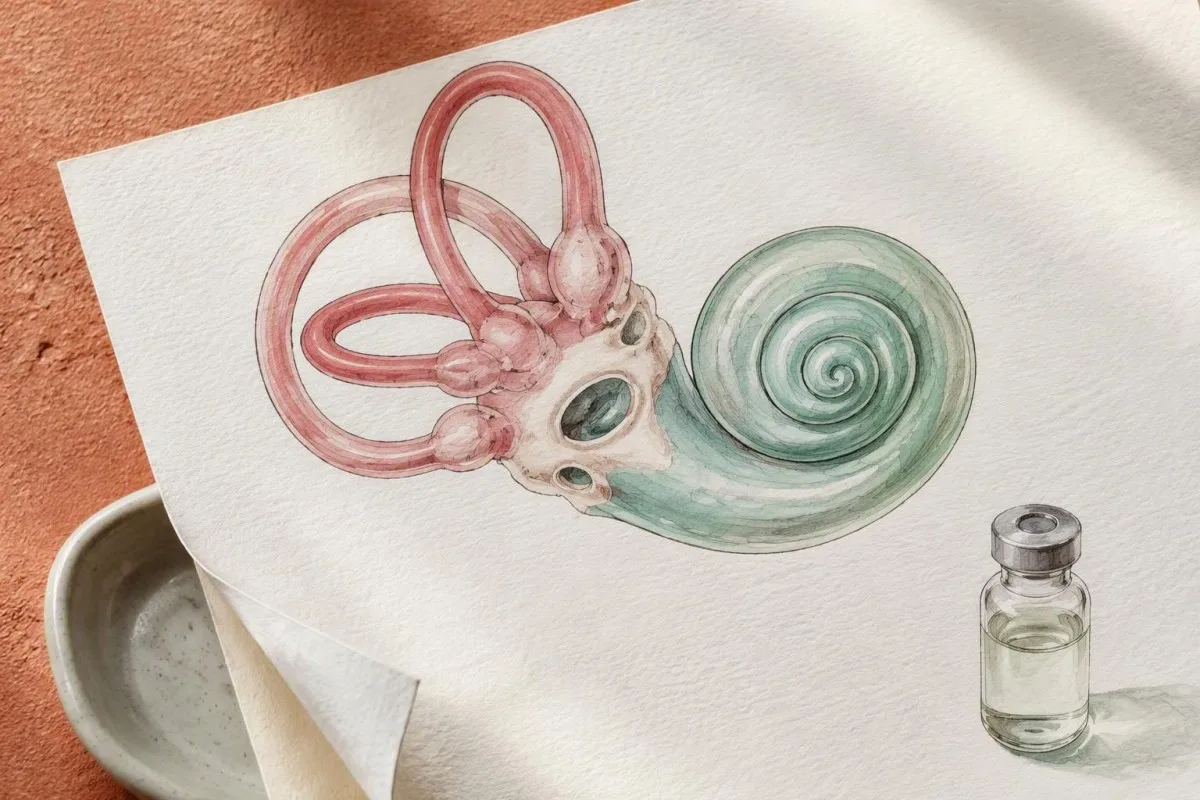
Gentamicin is particularly associated with vestibular toxicity, which affects balance and visual stability rather than hearing alone. Bilateral vestibular impairment may cause difficulty walking in darkness or bouncing vision without dramatic spinning vertigo; after even 1 new symptom, patients should report the change instead of waiting for the next routine blood test.
Baseline hearing and balance history helps interpret subsequent changes, and clinicians may arrange audiometry, including high-frequency assessment, or vestibular testing for prolonged or higher-risk treatment. A normal conventional hearing test does not exclude early high-frequency change or a vestibular problem; symptoms can emerge or progress after the final dose, and some effects are permanent.
La MT-RNR1 variants m.1555A>G and m.1494C>T are associated with increased aminoglycoside-related hearing-loss risk. The CPIC guideline recommends avoiding aminoglycosides in people with relevant high-risk variants unless the seriousness of the condition and lack of suitable alternatives justify treatment (McDermott et al., 2022); genetic testing must not delay urgent treatment without a clinician-directed plan.
Kantesti estas AI sangotesta interpretada platformo, but a gentamicin concentration of 0.8 mg/L cannot establish normal hearing or vestibular function. Our limoj de respondeca AI explain why laboratory interpretation must remain separate from examination, audiology, emergency assessment, and decisions about the next antibiotic administration.
Kion vi faru ĉe neatendita gentamicina rezulto?
Contact the prescribing team or clinical pharmacist about an unexpected gentamicin result, especially when the next dose is approaching or symptoms have appeared. Do not independently change the dose or interval; a concentration of 2 mg/L means different things under different protocols, and an urgent decision needs the administration record.

Provide 5 practical details: the reported concentration and units, dose, infusion start and finish, sample collection time, and the latest creatinine with its earlier baseline. Also mention missed or delayed doses, urine changes, tinnitus, hearing change, imbalance, and nonprescription medicines; symptoms deserve attention even when the laboratory has not marked the result high.
If you are in hospital, alert the nurse or treatment team immediately rather than altering the infusion equipment yourself. If you receive home infusions, use the service's urgent contact route before the next planned administration when there is a concerning result; our secure clinical result-sharing guide explains how to preserve the original report and its timestamps.
Kantesti AI can support explanation of units and trends, but it cannot confirm whether an 18:00 sample belongs on a hospital's nomogram or authorize a treatment change. When sharing results for educational interpretation, remove unnecessary identifiers and review our informoj pri privateco kaj datumoj; privacy precautions must never delay urgent medical contact.
Esplora kunteksto kaj limoj de AI-interpreto de gentamicino
Clinical interpretation of gentamicin levels depends on validated dosing protocols, kidney-injury definitions, and separate assessment of hearing and balance. The 3 external medical references below support those clinical discussions; the 2 additional Kantesti publications describe platform or educational work and are not gentamicin dosing or toxicity-validation studies.
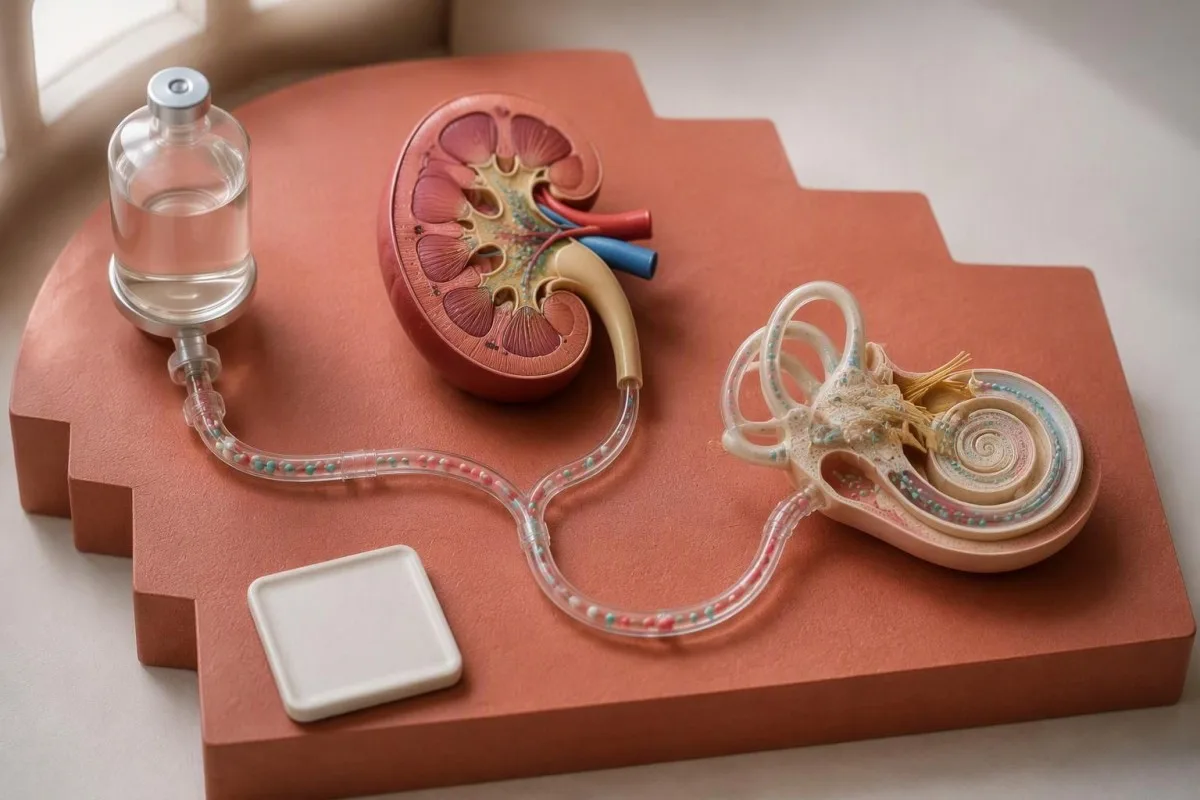
The Hartford program, KDIGO acute kidney injury criteria, and CPIC aminoglycoside pharmacogenetics guideline answer 3 different questions: how to interpret a qualifying timed level, how to recognize kidney injury, and when genetic susceptibility changes antibiotic selection. None can turn an unlabeled concentration into a complete treatment decision, and differences between hospital targets should be resolved using the patient's actual protocol.
Kantesti estas AI-movita ilo por analizo de sangotestoj that can help organize gentamicin results alongside creatinine and electrolyte trends when the required context is supplied. A 0.3 mg/dL creatinine rise still requires clinician assessment regardless of how a report is summarized; our teknika kaj klinika superrigardo describes evaluation boundaries rather than claiming validation for autonomous gentamicin dosing.
The Global Health Report 2026 and the RDW guide listed below are 2 separate publications, not evidence that AI can prevent aminoglycoside toxicity. Kantesti's normoj pri medicina enhavo distinguish educational interpretation from prescribing; patients should use this article to ask better timing and safety questions, not to choose their next dose.
Oftaj demandoj
Kio estas normala minimuma nivelo de gentamicino?
Konvencie, oni celas gentamicinan minimuman koncentriĝon sub 1 mg/L, kvankam iuj protokoloj uzas sub 2 mg/L. La specimeno kutime devas esti kolektita ene de 30 minutoj antaŭ la sekva efektiva dozo, ne simple antaŭ ĝia planita horo. Reĝimoj kun plilongigitaj intervaloj povas uzi alian antaŭdozan sojlon aŭ anstataŭe koncentriĝon laŭ tempigita nomogramo. Akceptebla minimuma koncentriĝo ne ekskludas toksecon al la renoj, aŭdo aŭ ekvilibro.
Kiam oni devas preni specimenon por mezuri la pintan koncentriĝon de gentamicino?
A conventional intravenous gentamicin peak level is commonly collected 30 minutes after the infusion ends, but the prescribing service's protocol determines the exact time. For example, an infusion ending at 08:30 may require collection at 09:00 under that protocol. A sample collected immediately after infusion or much later cannot automatically be compared with the same target. Extended-interval monitoring and intramuscular administration use different sampling conventions.
Ĉu gentamicina nivelo de 2 mg/L estas tro alta?
Gentamicina nivelo de 2 mg/L ne povas esti klasifikita sen la doza reĝimo kaj la tempo de la specimenkolekto. Ĝi superus la celon en multaj konvenciaj protokoloj por minimuma koncentriĝo, sed ĝi povus esti atendata tempigita koncentriĝo dum plilongigita-doza reĝimo. Specimeno kolektita frue, malfrue aŭ el poluita infuzlinio ankaŭ povas ŝanĝi ĝian interpreton. Kontaktu la preskribintan teamon anstataŭ mem ŝanĝi la sekvan dozon.
Kiam oni mezuras la gentamicinan koncentriĝon ĉe dozado unufoje tage?
Por taŭga Hartford-reĝimo de 7 mg/kg, la gentamicina koncentriĝo estas mezurata 6–14 horojn post la komenco de la infuzaĵo. Aliaj protokoloj kun plilongigitaj dozintervaloj povas uzi mezuron antaŭ la dozo, 2 mezurojn post la dozo aŭ alian diagramon pri dozo kaj tempo. La vorto hazarda ne signifas, ke la tempo de la mezurado estas negrava. Koncentriĝo devas esti interpretata nur laŭ la protokolo taŭga por la administrita dozo kaj la paciento.
Ĉu gentamicino povas damaĝi la renojn, kiam la nivelo estas normala?
Gentamicin-rilata rena lezo povas okazi malgraŭ koncentriĝoj ene de la preskribitaj celoj, ĉar ankaŭ gravas la akumula eksponiĝo kaj la risko specifa por la paciento. Pliiĝo de kreatinino je almenaŭ 0.3 mg/dL, aŭ 26.5 µmol/L, ene de 48 horoj plenumas KDIGO-kriterion por akuta rena lezo. La urina eligo povas resti relative normala ĉe tubula lezo rilata al aminoglikozidoj. Klinikistoj taksas sinsekvajn mezurojn de kreatinino, urinan eligon, aliajn medikamentojn kaj alternativajn kaŭzojn, anstataŭ fidi je unu sola medikamenta nivelo.
Ĉu gentamicino povas kaŭzi aŭdperdon aŭ kapturniĝon post kuracado?
Simptomoj pri aŭdado aŭ ekvilibro rilataj al gentamicino povas aperi aŭ pligraviĝi post la fino de la kuracado, kaj akcepteblaj serumaj niveloj ne ekskludas ĉi tiun eblecon. Eĉ 1 nova simptomo—kiel tinituso, ŝanĝo en aŭdado, persista malekvilibro aŭ saltanta vidado dum marŝado—meritas rapidan klinikan pritakson. Gentamicino povas influi la vestibulan funkcion sen evidenta aŭdperdo aŭ rotacia vertiĝo. La pritakso povas inkluzivi aŭdotestojn kaj vestibulajn testojn, ĉar gentamicina koncentriĝo ne estas testo pri la funkcio de la interna orelo.
Klarigu viajn rezultojn de sangoanalizo
Alŝutu vian laboratorian raporton kaj la AI de Kantesti klarigas ĉiun biomarkilon per simpla lingvaĵo ene de sekundoj. Uzata de pli ol 2 milionoj da homoj tutmonde.
Referencoj
- Klein, T., Mitchell, S., & Weber, H. (2026). Analizilo de AI-sangoanalizo: 2,5M analizitaj testoj | Tutmonda Sanraporto 2026. Kantesti AI-esplorado pri medicino. DOI
- Klein, T., Mitchell, S., & Weber, H. (2026). Sangoanalizo por RDW: kompleta gvidilo pri RDW-CV, MCV kaj MCHC. Kantesti AI-esplorado pri medicino. DOI
- Nicolau DP et al. (1995). Experience with a once-daily aminoglycoside program administered to 2,184 adult patients. Antimicrobial Agents and Chemotherapy. DOI
- KDIGO Acute Kidney Injury Work Group (2012). KDIGO Clinical Practice Guideline for Acute Kidney Injury. Kidney International Supplements.
- McDermott JH et al. (2022). Clinical Pharmacogenetics Implementation Consortium Guideline for the Use of Aminoglycosides Based on MT-RNR1 Genotype. Clinical Pharmacology & Therapeutics. DOI
- 2M+Analizitaj testoj
- 127+Landoj
- 100+Lingvoj
Pri la medicina teamo


Signaloj de fido E-E-A-T
Sperto
Kuracista gvidata klinika revizio de laboratoriaj interpretaj laborfluoj.
Kompetenteco
Laboratoria medicino fokusiĝas pri kiel biomarkiloj kondutas en klinika kunteksto.
Aŭtoritateco
Medicine recenzita de D-ro Thomas Klein, kun kontribuoj de D-rino Sarah Mitchell kaj Prof. D-ro Hans Weber.
Fidindeco
Evident-bazita interpretado kun klaraj sekvaj vojoj por redukti alarmon.
Medicina malrespondeca deklaro
Ĉi tiu artikolo estas nur por edukaj celoj kaj ne konsistigas medicinan konsilon. Ĉiam konsultu kvalifikitan sanprovizanton por diagnozaj kaj traktadaj decidoj.
Publikigita · Kontaktu la redakcian teamon
Eldonita de Kantesti Ltd, registrita en Anglio kaj Kimrio, kompanio n-ro. 17090423, Londono, Unuiĝinta Reĝlando.
