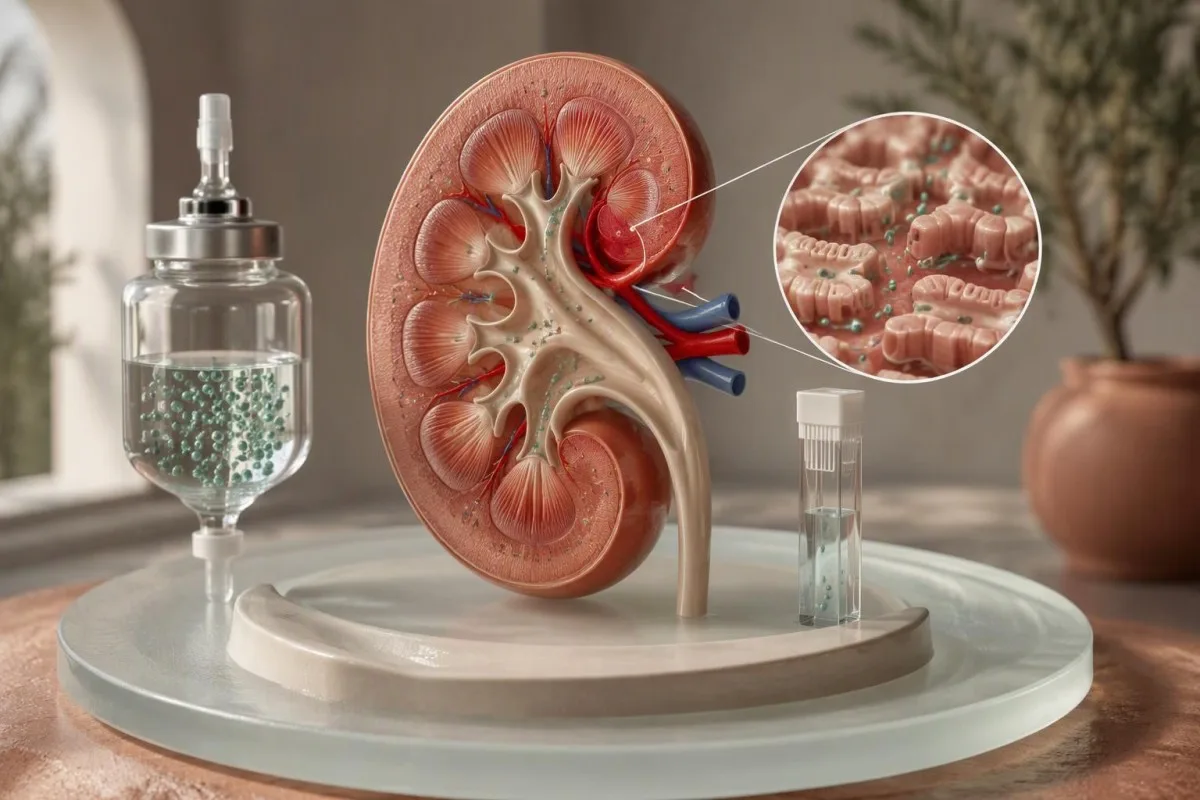
Paras gentamicin hanya bermakna apabila dinilai bersama dos, rejimen dos dan waktu pensampelan yang tepat. Rawatan konvensional menggunakan sasaran paras puncak dan palung; rawatan dengan selang dos lanjutan sering menggunakan kepekatan pada waktu tertentu dan carta khusus protokol, manakala ujian buah pinggang serta gejala pendengaran atau keseimbangan memberikan pemeriksaan keselamatan yang berasingan.

Perkara utama
- Paras gentamicin mengukur kepekatan antibiotik, biasanya dalam mg/L; 1 mg/L bersamaan 1 µg/mL.
- Paras puncak konvensional lazimnya berada sekitar 5–10 mg/L bagi orang dewasa, tetapi jangkitan, indikasi dan kaedah pensampelan menentukan sasaran sebenar.
- Paras palung konvensional selalunya disasarkan di bawah 1 mg/L; sesetengah protokol menggunakan sasaran di bawah 2 mg/L. Kedua-dua ambang ini tidak menjamin ketiadaan ketoksikan.
- Waktu pensampelan mesti direkodkan dengan tepat: sampel paras puncak intravena konvensional lazimnya diambil 30 minit selepas infusi tamat, dan sampel paras palung dalam tempoh 30 minit sebelum dos seterusnya yang sebenar.
- Pemantauan dengan selang dos lanjutan adalah berbeza: protokol Hartford menggunakan kepekatan yang diambil 6–14 jam selepas permulaan dos 7 mg/kg yang layak.
- Kecederaan buah pinggang boleh memenuhi kriteria KDIGO dengan peningkatan kreatinin sekurang-kurangnya 0.3 mg/dL, atau 26.5 µmol/L, dalam tempoh 48 jam—walaupun keputusan masih dalam julat makmal.
- Ketoksikan pendengaran dan keseimbangan boleh berlaku walaupun kepekatannya nampak boleh diterima; tinnitus baharu, perubahan pendengaran, ketidakseimbangan atau penglihatan yang melantun memerlukan penilaian klinikal segera.
- Keputusan dos terletak di bawah tanggungjawab pasukan preskripsi atau ahli farmasi klinikal. Jangan sekali-kali mengubah dos secara sendiri, menangguhkan infusi atau menggunakan nomogram dalam talian.
Apakah yang sebenarnya diukur oleh paras gentamicin?
Paras gentamicin mengukur kepekatan gentamicin dalam sampel makmal, bukan fungsi buah pinggang atau kejayaan rawatan secara sendirinya. Keputusan 2 mg/L boleh meyakinkan, membimbangkan atau tidak boleh ditafsir bergantung pada sama ada ia merupakan paras palung, sampel awal selepas dos atau pengukuran sela lanjutan yang diambil mengikut masa.
Makmal lazimnya melaporkan gentamicin dalam mg/L atau µg/mL, yang nilainya setara: 1 mg/L bersamaan dengan 1 µg/mL. Julat terapeutik yang dicetak di sebelah keputusan mungkin hanya merujuk kepada dos konvensional; julat itu tidak seharusnya digunakan secara automatik untuk rawatan sekali sehari atau rawatan kombinasi dos rendah bagi rejimen endokarditis terpilih.
Kantesti ialah seorang Penganalisis ujian darah AI yang dapat membantu menjelaskan sebab kepekatan gentamicin 2 mg/L memerlukan konteks dos dan masa sebelum ditafsirkan. Perkhidmatan kami organisasi dan tujuan klinikal berasingan daripada perkhidmatan preskripsi hospital; kami tidak membenarkan dos antibiotik atau menggantikan pemantauan ubat terapeutik.
Tanda amaran makmal yang terpencil bukanlah diagnosis. Sebagai contoh, laporan hipotetikal yang ditandakan tinggi pada 12 mg/L mungkin mencerminkan kepekatan yang diambil pada masa yang sesuai selepas dos sela lanjutan dan bukannya puncak konvensional yang berlebihan; penjelasan kami tentang bendera makmal di luar julat menerangkan sebab julat rujukan yang dilampirkan boleh mengelirukan.
Mengapakah waktu pemantauan gentamicin mengubah keputusan?
Masa pemantauan gentamicin penting kerana kepekatan meningkat semasa pemberian, tersebar ke dalam cecair badan, kemudian menurun apabila buah pinggang menyingkirkannya. Pakar klinikal memerlukan sekurang-kurangnya 3 cap masa: permulaan infusi, tamat infusi dan pengambilan sampel, serta masa sebenar dos seterusnya apabila mentafsir paras palung.
Dengan fungsi buah pinggang yang normal, separuh hayat penyingkiran gentamicin lazimnya kira-kira 2–3 jam, walaupun penyakit dan perubahan taburan boleh mengubah lengkung kepekatan. Sampel yang diambil sejurus selepas infusi boleh menangkap fasa taburan; sampel itu tidak boleh disamakan dengan paras puncak yang diambil kemudian menggunakan kaedah yang ditetapkan hospital.
Masa dos yang dijadualkan tidak boleh menggantikan rekod pemberian ubat. Dalam contoh hipotetikal dos 08:00 yang ditangguhkan hingga 09:10, sampel yang diambil pada 09:00 masih merupakan sampel sebelum dos, manakala carta yang mengandaikan dos diberikan pada 08:00 mungkin tersilap melabelkannya sebagai sampel selepas dos; perbezaan itu mengubah soalan klinikal sepenuhnya.
Pengambilan sampel daripada saluran infusi boleh menghasilkan keputusan yang tinggi secara palsu jika sisa gentamicin mencemari spesimen, maka kakitangan mengikuti prosedur pengambilan sampel dan pembilasan setempat. Masalah masa juga berlaku dengan ubat lain, tetapi tempoh menunggu yang diperlukan berbeza; penjelasan kami tentang masa pengambilan sampel digoxin tidak seharusnya digunakan sebagai jadual gentamicin.
Bagaimanakah pemantauan paras puncak dan palung konvensional berfungsi?
Pemantauan gentamicin konvensional menggunakan paras puncak selepas dos untuk menilai pendedahan dan paras palung sebelum dos untuk menilai baki ubat sebelum pemberian seterusnya. For selected adults receiving divided doses, intervals may be 8 or 12 hours, but kidney function and the treatment indication determine the prescribed schedule.
After an intravenous infusion, a conventional gentamicin peak level is commonly collected 30 minutes after the infusion finishes; some protocols specify a different time. A gentamicin trough level is commonly collected within 30 minutes before the next actual dose, and intramuscular administration uses a different post-dose sampling convention.
Some services obtain the first paired measurements around the 3rd or 4th dose, when concentrations are approaching a repeatable pattern in patients with stable clearance. That is not a reason to postpone assessment in someone with worsening kidney function, unexpected dosing, or symptoms; such patients may require earlier measurements and individualized pharmacokinetic review.
A peak and trough are useful only if the preceding doses were actually administered as documented. A missed dose, a changed infusion duration, or a sample collected 2 hours early can invalidate an otherwise neat-looking pair; similar documentation principles appear in our carbamazepine trough timing guide, although the therapeutic targets are unrelated.
Apakah paras puncak gentamicin yang disasarkan oleh klinisian?
A conventional gentamicin peak level commonly targets approximately 5–10 mg/L in adults, but there is no universal target for every infection. Some low-dose synergy protocols use peaks around 3–5 mg/L, while extended-interval concentrations must not be judged against the conventional peak range.
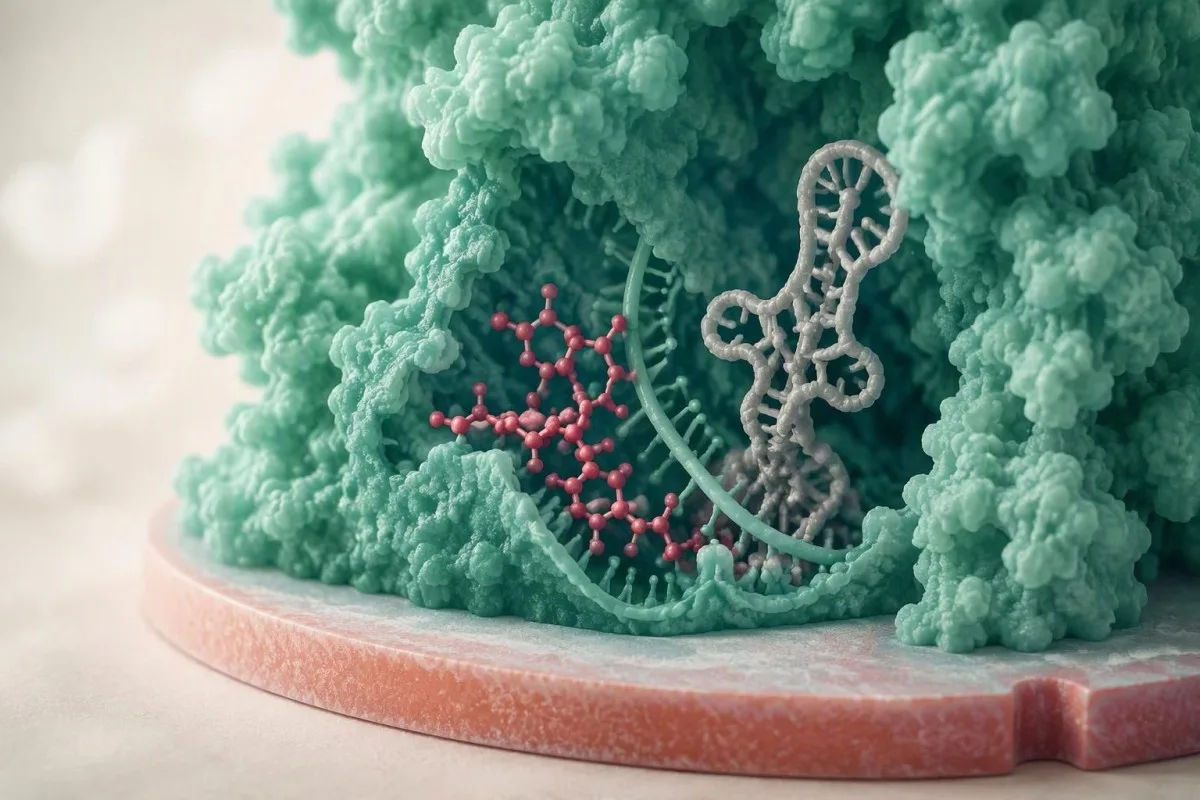
Gentamicin exhibits concentration-dependent antibacterial activity: for susceptible Gram-negative organisms, a peak-to-minimum inhibitory concentration ratio around 8–10 is a commonly used pharmacodynamic goal. The minimum inhibitory concentration, or MIC, describes the organism's susceptibility; a peak of 8 mg/L has a different meaning when the MIC is 0.5 rather than 2 mg/L.
A low measured peak does not always mean the prescribed dose was too small. A hypothetical patient with major fluid expansion might have a larger distribution volume, while a peak sample collected 90 minutes late could be lower simply because elimination has continued; the pharmacist distinguishes these possibilities before changing treatment.
Selected combination regimens use gentamicin for synergy, not the same exposure goals used for stand-alone Gram-negative treatment. High-level aminoglycoside resistance can prevent that synergy and is not solved by chasing a higher concentration; our antifungal trough target discussion illustrates why drug-specific targets cannot be borrowed across treatments.
| Tahap | Julat | Maksudnya |
|---|---|---|
| Conventional adult peak | Commonly 5–10 mg/L | Illustrative target used by some protocols; indication and the specified collection time determine interpretation. |
| Selected synergy peak | Often 3–5 mg/L | Applies only to particular low-dose combination protocols, not every endocarditis regimen. |
| Conventional adult trough | Often <1 mg/L; some protocols <2 mg/L | Lower residual exposure reduces concern about accumulation but does not exclude toxicity. |
| Extended-interval concentration | No universal peak-and-trough reference interval | Interpret using the actual elapsed time and the validated protocol for the administered dose. |
Apakah yang ditunjukkan oleh paras palung gentamicin yang tinggi?
A high, correctly timed gentamicin trough level suggests that substantial drug remains before the next dose, often because clearance is reduced or the interval is too short. Many conventional protocols aim below 1 mg/L; others accept below 2 mg/L, so the prescribing service's target must be checked.
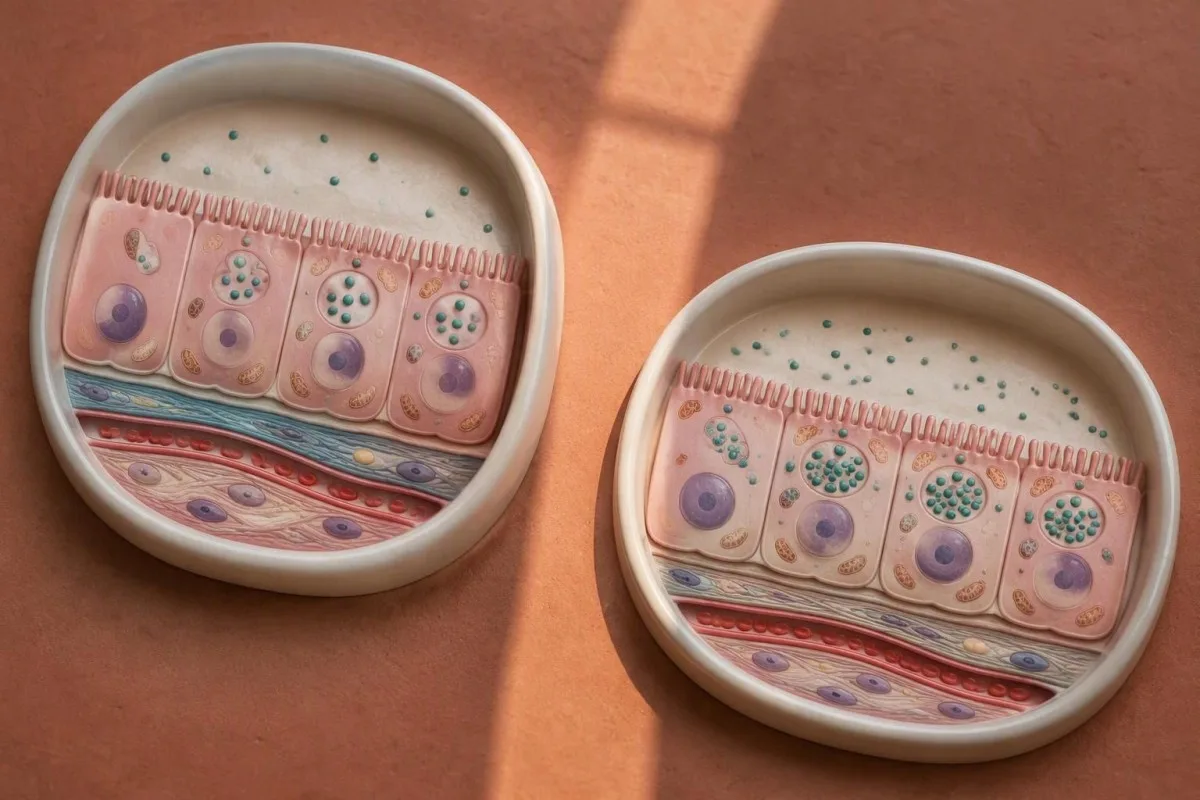
A trough is a clearance signal, not a direct measurement of kidney tissue exposure. Gentamicin can accumulate within renal proximal tubular cells over repeated treatment, so a trough below 1 mg/L does not erase the effects of cumulative exposure, concurrent nephrotoxic medicines, or a kidney problem that is only beginning.
The direction of causation can run both ways: reduced kidney function raises gentamicin concentrations, and gentamicin-associated tubular injury can further reduce clearance. For example, a hypothetical trough rising from 0.6 to 1.4 mg/L on an unchanged schedule may prompt review of creatinine trends, actual dose times, fluid status, and other medicines rather than a conclusion based on the concentration alone.
A sample collected 2 hours before the next dose will usually be higher than a true pre-dose trough and should not be casually relabeled. Conversely, a sample after an unusually long delay may look reassuring without representing the usual schedule; our tacrolimus trough interpretation guide explains the same documentation problem with a different drug.
Apakah perbezaan pemantauan gentamicin dengan selang dos lanjutan?
Extended-interval gentamicin uses a larger individual dose followed by a longer drug-free interval, and monitoring often relies on a timed post-dose concentration rather than conventional paired levels. Selected adult protocols use approximately 5–7 mg/kg per dose, but the exact dose, interval, and eligibility criteria are service-specific.
The rationale combines concentration-dependent killing with a post-antibiotic effect, meaning bacterial growth may remain suppressed after the circulating concentration falls. A once-daily regimen therefore does not require a conventional trough to remain detectably therapeutic; intentionally low late concentrations are part of the strategy, not proof that treatment has stopped working.
Selected extended-interval protocols use 24-, 36-, or 48-hour intervals, but once-daily is an imprecise label when impaired clearance requires longer spacing. Some hospitals use a pre-dose concentration, some a single timed nomogram sample, and others 2 concentrations or model-based exposure estimates; these approaches are not interchangeable without their accompanying dosing rules.
Extended-interval treatment is not suitable for every patient or indication, and reduced renal toxicity in selected populations does not mean zero risk. Our vancomycin exposure monitoring guide explains another antibiotic-specific approach; the vancomycin AUC target of 400–600 mg·h/L is not a gentamicin target.
Bilakah nomogram Hartford boleh digunakan untuk mentafsir paras gentamicin?
The Hartford nomogram applies to qualifying extended-interval aminoglycoside treatment using a 7 mg/kg dose and a concentration collected 6–14 hours after infusion start. It helps clinicians choose an interval; it is not a universal chart for any gentamicin dose, any collection time, or any patient.
The original Hartford experience described 2,184 adult patients receiving a once-daily aminoglycoside program, providing the clinical background for its dose-and-time framework (Nicolau et al., 1995). The 6–14-hour measurement is sometimes called a random level, but random here means not a conventional peak or trough—not that its timing is optional.
Hospitals restrict or modify this approach in populations such as pregnancy, dialysis, unstable renal function, major burns, cystic fibrosis, or selected endocarditis regimens. A hypothetical concentration of 2.2 mg/L collected 10 hours after a 5 mg/kg dose cannot simply be plotted on an unmodified 7 mg/kg Hartford chart to obtain a reliable interval.
If the sample falls outside the validated window, clinicians may request another level or calculate individualized pharmacokinetics rather than force a point onto the chart. Our delayed drug-clearance explanation illustrates why elapsed time is part of a drug result, although methotrexate rescue thresholds have no role in gentamicin dosing.
Bagaimanakah dua laporan gentamicin hipotesis dibandingkan?
Two identical gentamicin results can mean different things when the sampling schedules differ. The following 2 hypothetical examples demonstrate conventional and extended-interval interpretation; they are not dosing instructions, and neither example supplies enough information for a patient to choose the next dose.

In hypothetical example A, a conventional infusion starts at 08:00, ends at 08:30, and the prescribed peak sample is collected at 09:00. A result of 8 mg/L fits many conventional peak targets if the indication agrees; a separate 15:40 sample before a 16:00 dose provides the trough information that the peak cannot supply.
In hypothetical example B, an eligible 70 kg adult receives a clinician-prescribed 490 mg dose, corresponding to 7 mg/kg, with infusion start at 08:00. A sample at 18:00 is 10 hours after infusion start and is interpreted under the applicable extended-interval protocol; calling that result a low peak or a high trough would ask the wrong question.
Neither timeline establishes kidney safety without baseline and follow-up renal information, and the prescribed dosing weight may differ from scale weight. Before collection, patients can confirm that staff have the actual administration record and the intended test type; our baseline sample preparation checklist helps distinguish useful preparation from unnecessary fasting or medication changes.
Bagaimanakah klinisian mengesan kecederaan buah pinggang berkaitan gentamicin?
Clinicians assess possible gentamicin-associated kidney injury using creatinine changes, urine output, exposure history, and alternative causes—not the gentamicin concentration alone. KDIGO defines acute kidney injury by a creatinine rise of at least 0.3 mg/dL within 48 hours, a rise to at least 1.5 times baseline within 7 days, or qualifying low urine output.
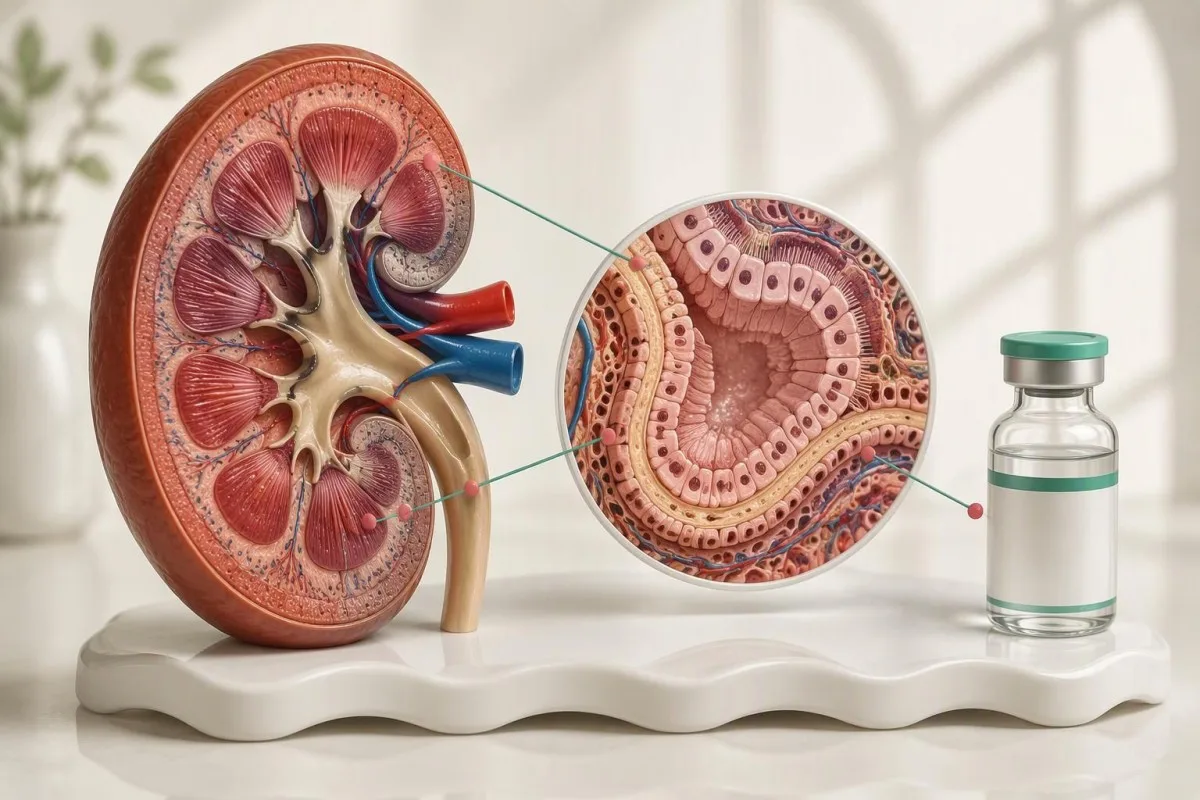
The 0.3 mg/dL threshold equals 26.5 µmol/L, and it can identify injury even when both values sit inside the laboratory interval (KDIGO Acute Kidney Injury Work Group, 2012). For example, a hypothetical creatinine increase from 0.7 to 1.0 mg/dL within 48 hours meets that criterion; normal-looking is not the same as unchanged.
KDIGO's urine-output criterion includes less than 0.5 mL/kg/hour for 6 hours: for a 70 kg adult, that is below 35 mL/hour over the specified period. Gentamicin-associated injury can also be non-oliguric, meaning urine output remains relatively preserved, so passing urine normally does not rule out an important creatinine rise.
Sepsis, low blood pressure, dehydration, urinary obstruction, and other medicines can produce similar changes, and attribution requires clinical assessment. Our nisbah BUN dan kreatinin kami membimbing explains useful context without treating the ratio as diagnostic; seek prompt advice for markedly reduced urine or the warning signs described in our low kidney function symptoms .
Apakah pemeriksaan buah pinggang dan elektrolit yang dilakukan bersama-sama dengan pengukuran paras gentamicin?
Gentamicin safety monitoring usually includes baseline and repeat serum creatinine, with electrolytes and urine assessment when clinically indicated. Hospitalized adults often have daily renal checks during ongoing treatment, but outpatient schedules depend on stability, treatment duration, local protocol, and whether a change occurs within 24–48 hours.
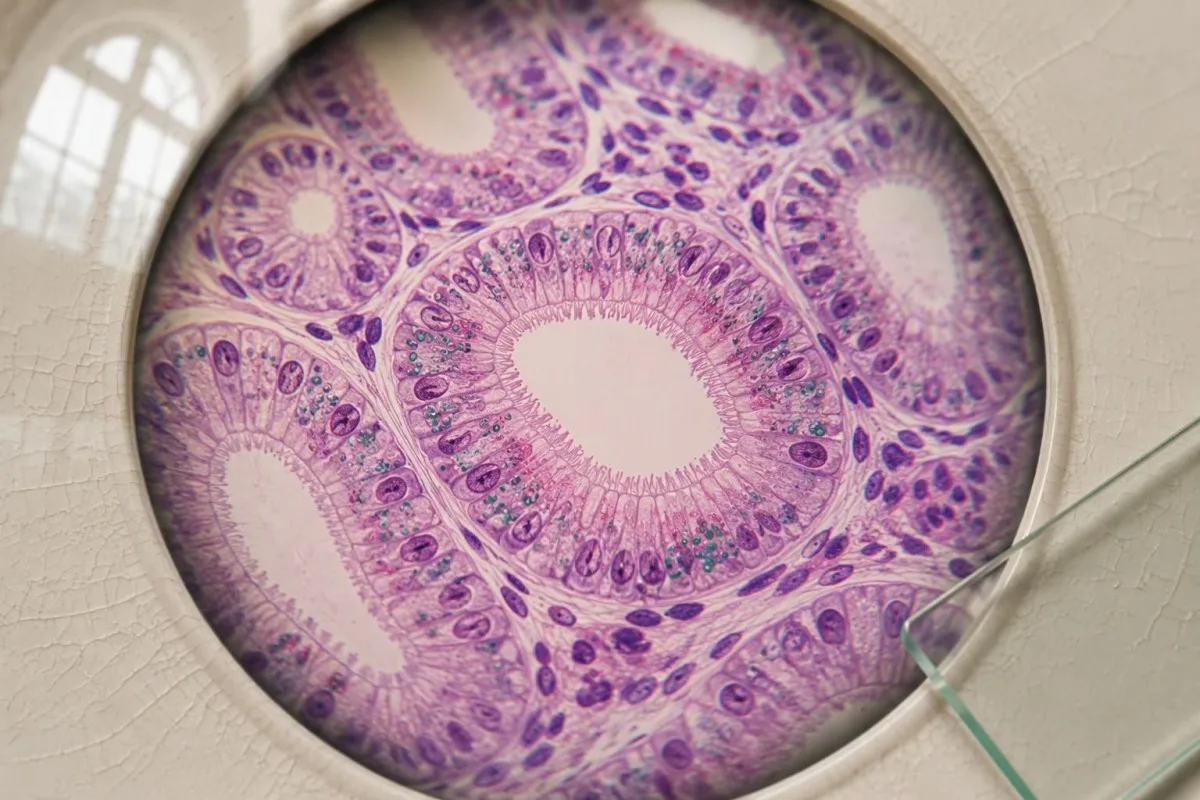
Creatinine is a delayed marker of changing filtration, and automated eGFR assumes relatively steady creatinine production and clearance. During evolving acute kidney injury, an eGFR reported as 60 mL/min/1.73 m² may not accurately describe current clearance; clinicians often rely on the trajectory and an appropriate drug-dosing renal assessment rather than the printed number alone.
Aminoglycoside-related tubular dysfunction can cause magnesium or potassium wasting, sometimes before a major creatinine increase. For example, a hypothetical magnesium of 0.55 mmol/L with new weakness deserves assessment of renal losses, gastrointestinal losses, and medicines; our electrolyte safety patterns explain why replacement must reflect the whole clinical picture.
Urinary granular casts can support tubular injury but neither prove gentamicin caused it nor reliably exclude injury when absent. Our granular cast interpretation guide separates suggestive findings from diagnosis; the broader tafsiran urinalisis yang lebih luas explains why 1 urine specimen cannot substitute for serial renal assessment.
Siapakah yang memerlukan pemantauan keselamatan gentamicin yang lebih diperibadikan?
Patients with unstable kidney function, major changes in body-fluid volume, repeated exposure, or concurrent nephrotoxic medicines need particularly individualized gentamicin monitoring. Older adults, neonates, pregnancy, dialysis, obesity, and severe illness can also make standard adult dosing assumptions unreliable; a 7 mg/kg protocol should not be generalized across these groups.
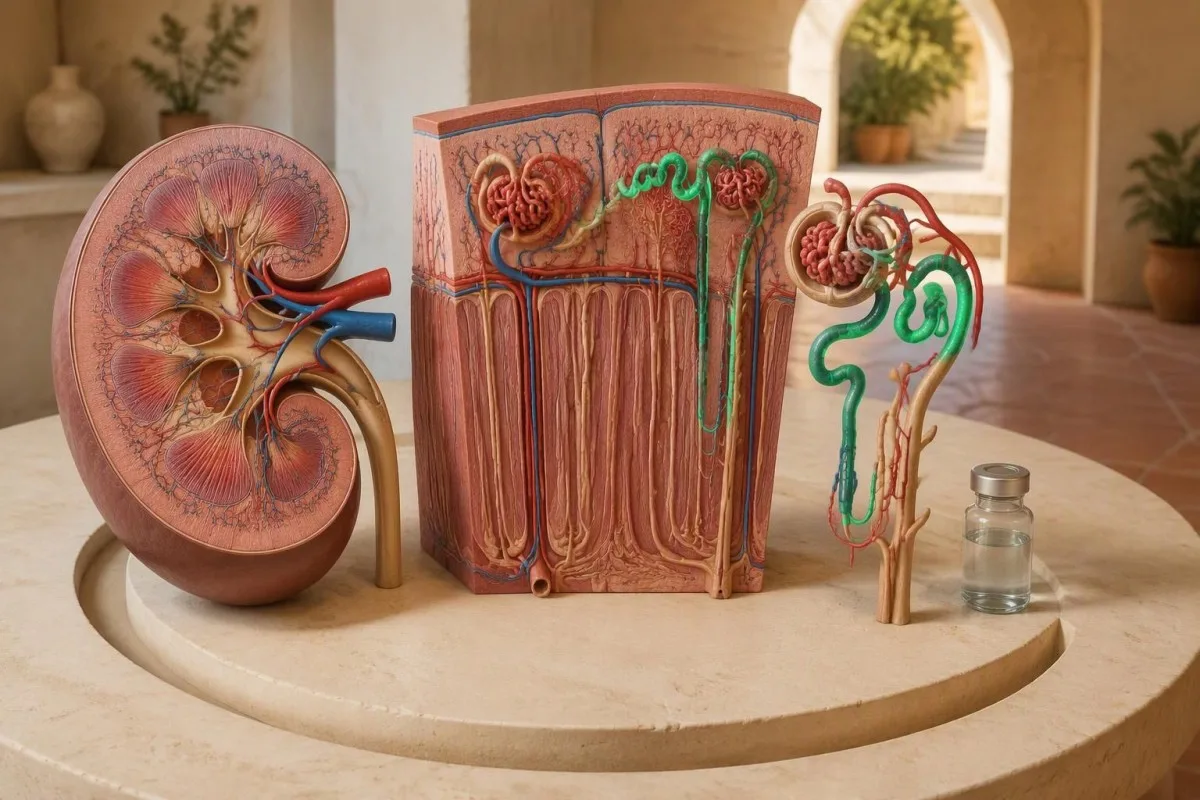
Risk generally increases with cumulative exposure and longer treatment, particularly when courses extend beyond approximately 5–7 days, although shorter courses are not risk-free. Concurrent vancomycin, amphotericin B, some chemotherapy agents, and nonsteroidal anti-inflammatory medicines can complicate renal safety; dehydration or low blood pressure may add a second stressor rather than an independent laboratory clue.
The dosing weight is not always the measured weight: obesity may require an adjusted-weight method, while ascites, edema, major burns, or critical illness can alter the distribution volume. A hypothetical 100 kg patient therefore should not calculate a dose by multiplying scale weight by 7; the hospital's weight convention and renal method are part of the prescription.
A creatinine clearance expressed in mL/min is not identical to an indexed eGFR expressed in mL/min/1.73 m², and low muscle mass can hide impaired filtration behind a modest creatinine value. Our dehydration and filtration explanation describes reversible changes, but a new decline during gentamicin treatment still needs review rather than being assumed temporary.
Bolehkah gentamicin menjejaskan pendengaran atau keseimbangan walaupun parasnya boleh diterima?
Gentamicin can cause hearing or vestibular toxicity even when measured concentrations fall within the prescribed targets. New tinnitus, hearing change, unsteadiness, or oscillopsia—vision that appears to bounce during walking—requires prompt contact with the treatment team; there is no serum concentration that guarantees inner-ear safety.
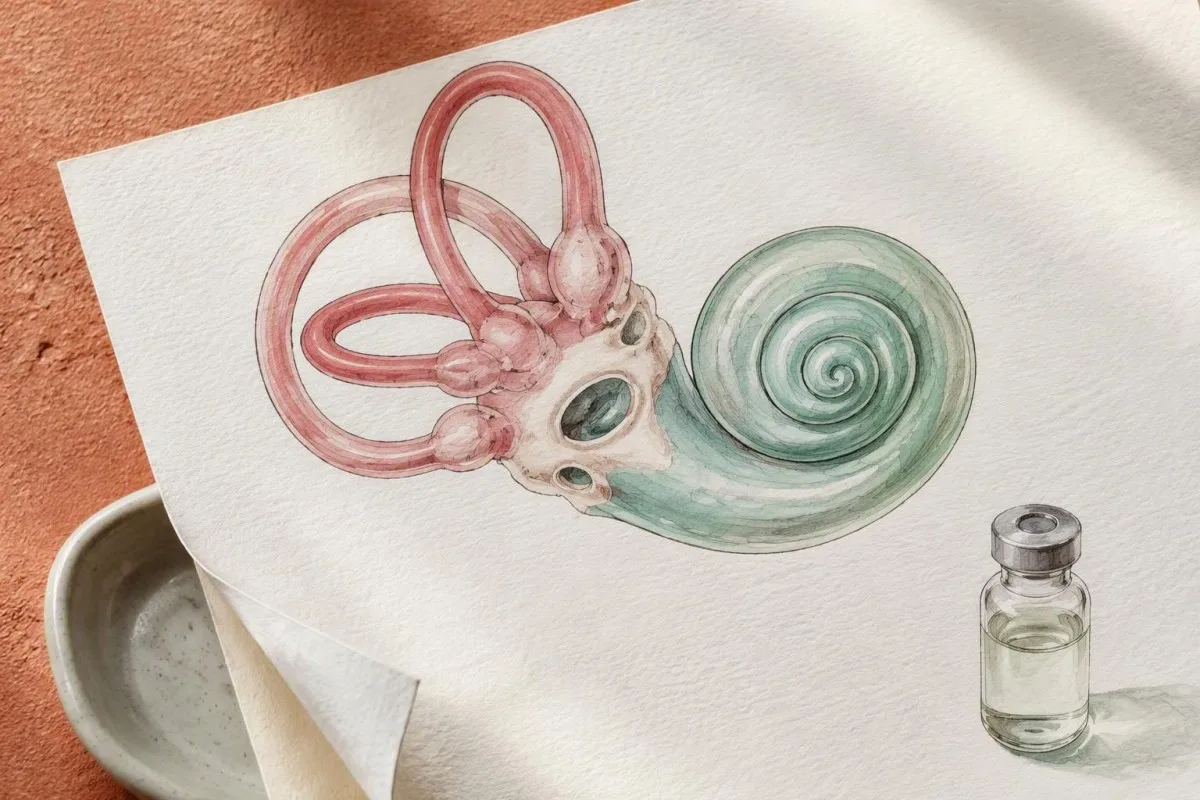
Gentamicin is particularly associated with vestibular toxicity, which affects balance and visual stability rather than hearing alone. Bilateral vestibular impairment may cause difficulty walking in darkness or bouncing vision without dramatic spinning vertigo; after even 1 new symptom, patients should report the change instead of waiting for the next routine blood test.
Baseline hearing and balance history helps interpret subsequent changes, and clinicians may arrange audiometry, including high-frequency assessment, or vestibular testing for prolonged or higher-risk treatment. A normal conventional hearing test does not exclude early high-frequency change or a vestibular problem; symptoms can emerge or progress after the final dose, and some effects are permanent.
The MT-RNR1 variants m.1555A>G and m.1494C>T are associated with increased aminoglycoside-related hearing-loss risk. The CPIC guideline recommends avoiding aminoglycosides in people with relevant high-risk variants unless the seriousness of the condition and lack of suitable alternatives justify treatment (McDermott et al., 2022); genetic testing must not delay urgent treatment without a clinician-directed plan.
Kantesti ialah seorang platform tafsiran ujian darah AI, but a gentamicin concentration of 0.8 mg/L cannot establish normal hearing or vestibular function. Our batasan AI yang bertanggungjawab explain why laboratory interpretation must remain separate from examination, audiology, emergency assessment, and decisions about the next antibiotic administration.
Apakah yang patut anda lakukan jika keputusan gentamicin tidak dijangka?
Contact the prescribing team or clinical pharmacist about an unexpected gentamicin result, especially when the next dose is approaching or symptoms have appeared. Do not independently change the dose or interval; a concentration of 2 mg/L means different things under different protocols, and an urgent decision needs the administration record.

Provide 5 practical details: the reported concentration and units, dose, infusion start and finish, sample collection time, and the latest creatinine with its earlier baseline. Also mention missed or delayed doses, urine changes, tinnitus, hearing change, imbalance, and nonprescription medicines; symptoms deserve attention even when the laboratory has not marked the result high.
If you are in hospital, alert the nurse or treatment team immediately rather than altering the infusion equipment yourself. If you receive home infusions, use the service's urgent contact route before the next planned administration when there is a concerning result; our secure clinical result-sharing guide explains how to preserve the original report and its timestamps.
Kantesti AI can support explanation of units and trends, but it cannot confirm whether an 18:00 sample belongs on a hospital's nomogram or authorize a treatment change. When sharing results for educational interpretation, remove unnecessary identifiers and review our maklumat privasi dan data; privacy precautions must never delay urgent medical contact.
Konteks penyelidikan dan batasan tafsiran gentamicin oleh AI
Clinical interpretation of gentamicin levels depends on validated dosing protocols, kidney-injury definitions, and separate assessment of hearing and balance. The 3 external medical references below support those clinical discussions; the 2 additional Kantesti publications describe platform or educational work and are not gentamicin dosing or toxicity-validation studies.
The Hartford program, KDIGO acute kidney injury criteria, and CPIC aminoglycoside pharmacogenetics guideline answer 3 different questions: how to interpret a qualifying timed level, how to recognize kidney injury, and when genetic susceptibility changes antibiotic selection. None can turn an unlabeled concentration into a complete treatment decision, and differences between hospital targets should be resolved using the patient's actual protocol.
Kantesti ialah seorang Alat analisis ujian darah berkuasa AI that can help organize gentamicin results alongside creatinine and electrolyte trends when the required context is supplied. A 0.3 mg/dL creatinine rise still requires clinician assessment regardless of how a report is summarized; our pengawasan teknikal dan klinikal describes evaluation boundaries rather than claiming validation for autonomous gentamicin dosing.
The Global Health Report 2026 and the RDW guide listed below are 2 separate publications, not evidence that AI can prevent aminoglycoside toxicity. Kantesti's piawaian kandungan perubatan distinguish educational interpretation from prescribing; patients should use this article to ask better timing and safety questions, not to choose their next dose.
Soalan lazim
Apakah paras palung gentamisin yang normal?
Paras aras palung gentamicin konvensional lazimnya disasarkan di bawah 1 mg/L, walaupun sesetengah protokol menggunakan paras di bawah 2 mg/L. Sampel biasanya perlu diambil dalam tempoh 30 minit sebelum dos sebenar seterusnya, bukan sekadar sebelum waktu dos yang dijadualkan. Regimen sela lanjutan mungkin menggunakan ambang prados yang berbeza atau kepekatan nomogram bertempoh. Paras palung yang boleh diterima tidak menolak kemungkinan ketoksikan buah pinggang, pendengaran atau keseimbangan.
Bilakah paras puncak gentamicin perlu diambil?
A conventional intravenous gentamicin peak level is commonly collected 30 minutes after the infusion ends, but the prescribing service's protocol determines the exact time. For example, an infusion ending at 08:30 may require collection at 09:00 under that protocol. A sample collected immediately after infusion or much later cannot automatically be compared with the same target. Extended-interval monitoring and intramuscular administration use different sampling conventions.
Adakah paras gentamisin 2 mg/L terlalu tinggi?
Tahap gentamicin sebanyak 2 mg/L tidak dapat diklasifikasikan tanpa rejimen dos dan masa pengambilan sampel. Tahap ini akan melebihi sasaran dalam banyak protokol paras palung konvensional, tetapi mungkin merupakan kepekatan bermasa yang dijangka semasa rejimen sela lanjutan. Sampel yang diambil terlalu awal, lewat atau daripada saluran infusi yang tercemar juga boleh mengubah tafsirannya. Hubungi pasukan yang menetapkan preskripsi dan bukannya mengubah dos seterusnya sendiri.
Bilakah paras gentamisin diambil bagi dos sekali sehari?
Bagi rejimen Hartford 7 mg/kg yang memenuhi syarat, kepekatan gentamisin dikumpulkan 6–14 jam selepas permulaan infusi. Protokol sela lanjutan yang lain mungkin menggunakan pengukuran sebelum dos, 2 pengukuran selepas dos atau carta dos-dan-masa yang berbeza. Perkataan rawak tidak bermaksud masa pengumpulan tidak penting. Kepekatan hanya boleh ditafsirkan menggunakan protokol yang sesuai dengan dos yang diberikan dan pesakit.
Bolehkah gentamicin merosakkan buah pinggang apabila parasnya normal?
Kecederaan buah pinggang yang berkaitan dengan gentamicin boleh berlaku walaupun kepekatannya berada dalam julat sasaran yang ditetapkan, kerana pendedahan kumulatif dan risiko khusus pesakit juga penting. Peningkatan kreatinin sekurang-kurangnya 0.3 mg/dL, atau 26.5 µmol/L, dalam tempoh 48 jam memenuhi kriteria kecederaan buah pinggang akut KDIGO. Pengeluaran air kencing mungkin kekal agak normal dalam kecederaan tubul yang berkaitan dengan aminoglikosida. Pakar klinikal menilai kreatinin bersiri, pengeluaran air kencing, ubat-ubatan lain dan punca alternatif, bukannya bergantung pada satu paras ubat sahaja.
Bolehkah gentamicin menyebabkan kehilangan pendengaran atau pening selepas rawatan?
Gejala pendengaran atau keseimbangan yang berkaitan dengan gentamicin boleh muncul atau bertambah teruk selepas rawatan berakhir, dan paras serum yang boleh diterima tidak menolak kemungkinan ini. Walaupun hanya 1 gejala baharu—seperti tinnitus, perubahan pendengaran, ketidakseimbangan yang berterusan atau penglihatan yang seolah-olah melantun semasa berjalan—wajar dinilai dengan segera oleh pakar klinikal. Gentamicin boleh menjejaskan fungsi vestibular tanpa kehilangan pendengaran yang jelas atau vertigo berpusing. Penilaian mungkin merangkumi ujian pendengaran dan vestibular kerana kepekatan gentamicin bukanlah ujian fungsi telinga dalam.
Dapatkan penjelasan tentang keputusan ujian darah anda
Muat naik laporan makmal anda dan AI Kantesti menerangkan setiap biomarker dalam bahasa mudah dalam beberapa saat. Digunakan oleh lebih daripada 2 juta orang di seluruh dunia.
Rujukan
- Klein, T., Mitchell, S., & Weber, H. (2026). Penganalisis Ujian Darah AI: 2.5M Ujian Dianalisis | Laporan Kesihatan Global 2026. Penyelidikan Perubatan AI Kantesti. DOI
- Klein, T., Mitchell, S., & Weber, H. (2026). Ujian Darah RDW: Panduan Lengkap tentang RDW-CV, MCV & MCHC. Penyelidikan Perubatan AI Kantesti. DOI
- Nicolau DP et al. (1995). Experience with a once-daily aminoglycoside program administered to 2,184 adult patients. Antimicrobial Agents and Chemotherapy. DOI
- KDIGO Acute Kidney Injury Work Group (2012). KDIGO Clinical Practice Guideline for Acute Kidney Injury. Kidney International Supplements.
- McDermott JH et al. (2022). Clinical Pharmacogenetics Implementation Consortium Guideline for the Use of Aminoglycosides Based on MT-RNR1 Genotype. Clinical Pharmacology & Therapeutics. DOI
- 2J+Ujian dianalisis
- 127+negara
- 100+Bahasa
Mengenai pasukan perubatan


Isyarat Kepercayaan E-E-A-T
Pengalaman
Semakan klinikal yang diketuai oleh doktor terhadap aliran kerja tafsiran makmal.
Kepakaran
Fokus perubatan makmal tentang bagaimana biomarker berkelakuan dalam konteks klinikal.
Kewibawaan
Disemak secara perubatan oleh Dr. Thomas Klein, dengan sumbangan daripada Dr. Sarah Mitchell dan Prof. Dr. Hans Weber.
Kebolehpercayaan
Tafsiran berasaskan bukti dengan laluan susulan yang jelas untuk mengurangkan kebimbangan.

Penafian perubatan
Artikel ini adalah untuk tujuan pendidikan sahaja dan tidak merupakan nasihat perubatan. Sentiasa rujuk pembekal penjagaan kesihatan yang berkelayakan untuk keputusan diagnosis dan rawatan.
Diterbitkan · Hubungi pasukan editorial
Diterbitkan oleh Kantesti Ltd, berdaftar di England & Wales, nombor syarikat. 17090423, London, United Kingdom.
