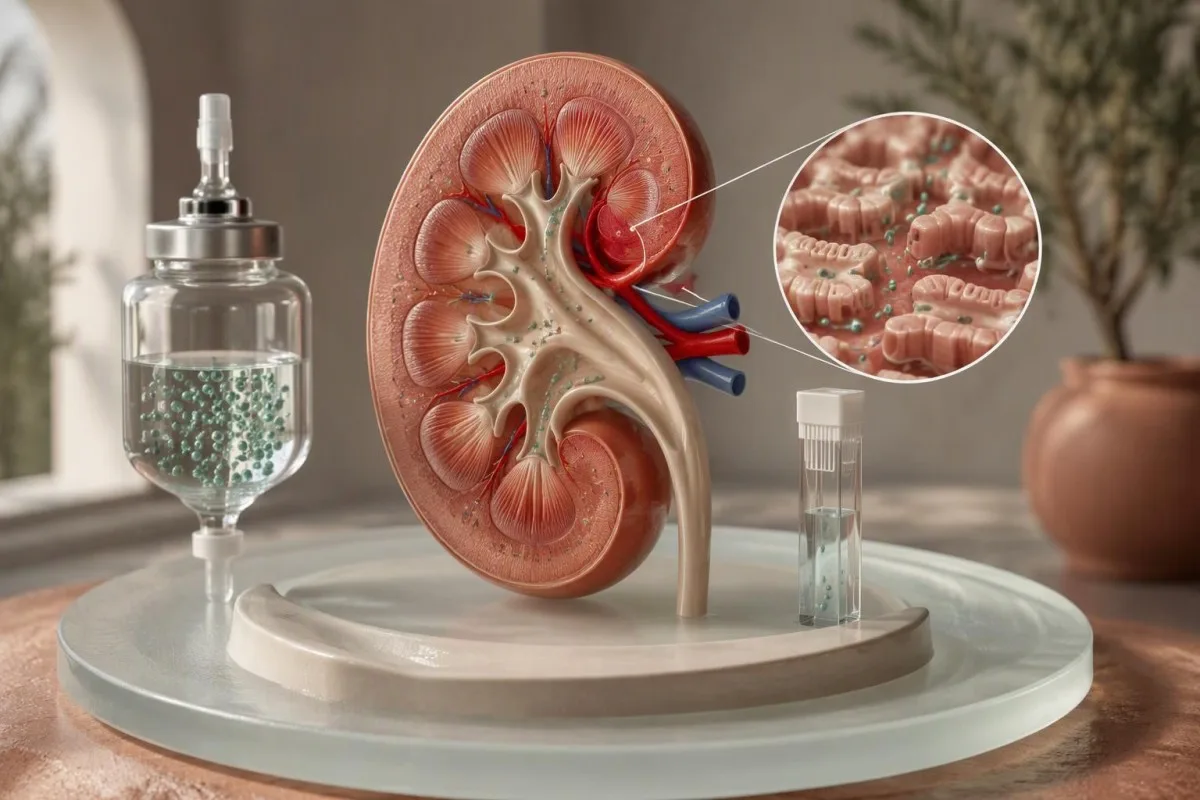
Gentamicīna līmeņi ir interpretējami tikai saistībā ar devu, dozēšanas režīmu un precīzu parauga ņemšanas laiku. Tradicionālajā terapijā izmanto maksimālās un minimālās koncentrācijas mērķvērtības; pagarināta intervāla terapijā bieži izmanto noteiktā laikā noteiktu koncentrāciju un konkrētajam protokolam atbilstošu diagrammu, savukārt nieru darbības testi un dzirdes vai līdzsvara traucējumu simptomi kalpo kā atsevišķas drošības pārbaudes.

Galvenie secinājumi
- Gentamicīna līmeņi nosaka antibiotikas koncentrāciju, parasti mg/L; 1 mg/L ir vienāds ar 1 µg/mL.
- Tradicionālās maksimālās koncentrācijas mērķvērtības pieaugušajiem parasti ir aptuveni 5–10 mg/L, taču faktisko mērķvērtību nosaka infekcija, indikācija un parauga ņemšanas metode.
- Tradicionālās minimālās koncentrācijas mērķvērtības bieži ir zemākas par 1 mg/L; dažos protokolos izmanto vērtību zem 2 mg/L. Neviena no šīm robežvērtībām negarantē toksiskas iedarbības neesamību.
- Parauga ņemšanas laiks jāreģistrē precīzi: tradicionālo maksimālo koncentrāciju intravenozas ievadīšanas gadījumā parasti nosaka paraugā, kas paņemts 30 minūtes pēc infūzijas beigām, bet minimālo koncentrāciju — 30 minūšu laikā pirms nākamās faktiskās devas.
- Pagarināta intervāla kontrole atšķiras: Hartfordas protokolā izmanto koncentrāciju, kas noteikta 6–14 stundas pēc piemērotas 7 mg/kg devas sākšanas.
- Nieru bojājuma var atbilst KDIGO kritērijiem, ja kreatinīna līmenis 48 stundu laikā paaugstinās vismaz par 0,3 mg/dL jeb 26,5 µmol/L — pat ja rezultāts joprojām ir laboratorijas references intervālā.
- Dzirdes un līdzsvara funkcijas toksicitāte var rasties arī tad, ja koncentrācija šķiet pieņemama; par jaunu troksni ausīs, dzirdes izmaiņām, līdzsvara traucējumiem vai lēkājošu redzi nekavējoties jākonsultējas ar ārstu.
- Devas lēmumi ir zāļu izrakstīšanas komandas vai klīniskā farmaceita pārziņā. Nekad patstāvīgi nemainiet devu, neatlieciet infūziju un neizmantojiet tiešsaistes nomogrammu.
Ko patiesībā mēra gentamicīna līmeņi?
Gentamicīna līmenis norāda gentamicīna koncentrāciju laboratorijas paraugā, bet pats par sevi nenorāda uz nieru darbību vai ārstēšanas efektivitāti. Rezultāts 2 mg/L var būt iepriecinošs, satraucošs vai neinterpretējams atkarībā no tā, vai tas ir minimālais līmenis pirms devas, paraugs drīz pēc devas vai noteiktā laikā paņemts paraugs pagarināta intervāla shēmas gadījumā.
Laboratorijas parasti gentamicīna koncentrāciju norāda mg/L vai µg/mL, un skaitliskās vērtības ir vienādas: 1 mg/L ir 1 µg/mL. Blakus rezultātam norādītais terapeitiskais intervāls var attiekties tikai uz parasto dozēšanu; to nedrīkst automātiski piemērot terapijai reizi dienā vai mazu devu kombinētai terapijai atsevišķās endokardīta ārstēšanas shēmās.
Kantesti ir AI asins analīžu analizators kas var palīdzēt izskaidrot, kāpēc pirms 2 mg/L gentamicīna koncentrācijas interpretēšanas jāņem vērā dozēšana un parauga paņemšanas laiks. Mūsu organizācija un klīniskais mērķis ir no slimnīcas zāļu izrakstīšanas dienesta atsevišķs pakalpojums; mēs neapstiprinām antibiotiku devas un neaizstājam terapeitisko zāļu monitorēšanu.
Atsevišķa laboratorijas atzīme nav diagnoze. Piemēram, hipotētisks rezultāts, kas atzīmēts kā paaugstināts — 12 mg/L —, var liecināt par pareizā laikā noteiktu koncentrāciju pēc devas ar pagarinātu intervālu, nevis par pārmērīgu parasto maksimālo koncentrāciju; mūsu skaidrojums par ārpus normas esošiem laboratorijas brīdinājumiem apraksta, kāpēc pievienotais references intervāls var būt maldinošs.
Kāpēc gentamicīna līmeņa noteikšanas laiks maina rezultātu?
Gentamicīna monitorēšanā svarīgs ir parauga paņemšanas laiks, jo koncentrācija ievadīšanas laikā palielinās, izkliedējas ķermeņa šķidrumos un pēc tam samazinās, nierēm to izvadot. Interpretējot minimālo koncentrāciju pirms devas, ārstiem nepieciešami vismaz 3 laika zīmogi: infūzijas sākums, infūzijas beigas un parauga paņemšanas laiks, kā arī faktiskās nākamās devas ievadīšanas laiks.
Normālas nieru darbības gadījumā gentamicīna eliminācijas pusperiods parasti ir aptuveni 2–3 stundas, tomēr slimība un izmaiņas izkliedē var mainīt koncentrācijas līkni. Tūlīt pēc infūzijas paņemts paraugs var atspoguļot izkliedes fāzi; tas nav pielīdzināms vēlāk noteiktai maksimālajai koncentrācijai, kas iegūta, izmantojot slimnīcā noteikto metodi.
Plānotais devas ievadīšanas laiks nevar aizstāt ievadīšanas ierakstu. Hipotētiskā situācijā, kad 08:00 paredzētā deva tiek atlikta līdz 09:10, 09:00 paņemts paraugs joprojām ir pirms devas, savukārt dokumentācija, kurā kļūdaini pieņemts, ka deva ievadīta 08:00, var to nepareizi apzīmēt kā pēc devas paņemtu paraugu; šī atšķirība pilnībā maina klīnisko jautājumu.
Paņemot paraugu no infūzijas līnijas, tas var uzrādīt kļūdaini augstu rezultātu, ja paraugu piesārņo tajā palikušais gentamicīns, tāpēc personāls ievēro vietējās paraugu paņemšanas un skalošanas procedūras. Laika noteikšanas problēmas rodas arī citu zāļu gadījumā, taču nepieciešamais gaidīšanas laiks atšķiras; mūsu digoksīna parauga paņemšanas laika skaidrojumu nedrīkst izmantot kā gentamicīna ievadīšanas shēmu.
Kā darbojas tradicionālā maksimālās un minimālās koncentrācijas kontrole?
Parastajā gentamicīna monitorēšanā pēc devas noteikto maksimālo koncentrāciju izmanto, lai novērtētu ekspozīciju, bet minimālo koncentrāciju pirms devas — lai novērtētu atlikušo zāļu daudzumu pirms nākamās ievadīšanas. For selected adults receiving divided doses, intervals may be 8 or 12 hours, but kidney function and the treatment indication determine the prescribed schedule.
After an intravenous infusion, a conventional gentamicin peak level is commonly collected 30 minutes after the infusion finishes; some protocols specify a different time. A gentamicin trough level is commonly collected within 30 minutes before the next actual dose, and intramuscular administration uses a different post-dose sampling convention.
Some services obtain the first paired measurements around the 3rd or 4th dose, when concentrations are approaching a repeatable pattern in patients with stable clearance. That is not a reason to postpone assessment in someone with worsening kidney function, unexpected dosing, or symptoms; such patients may require earlier measurements and individualized pharmacokinetic review.
A peak and trough are useful only if the preceding doses were actually administered as documented. A missed dose, a changed infusion duration, or a sample collected 2 hours early can invalidate an otherwise neat-looking pair; similar documentation principles appear in our carbamazepine trough timing guide, although the therapeutic targets are unrelated.
Kādu gentamicīna maksimālo koncentrāciju klīnicisti cenšas sasniegt?
A conventional gentamicin peak level commonly targets approximately 5–10 mg/L in adults, but there is no universal target for every infection. Some low-dose synergy protocols use peaks around 3–5 mg/L, while extended-interval concentrations must not be judged against the conventional peak range.
Gentamicin exhibits concentration-dependent antibacterial activity: for susceptible Gram-negative organisms, a peak-to-minimum inhibitory concentration ratio around 8–10 is a commonly used pharmacodynamic goal. The minimum inhibitory concentration, or MIC, describes the organism's susceptibility; a peak of 8 mg/L has a different meaning when the MIC is 0.5 rather than 2 mg/L.
A low measured peak does not always mean the prescribed dose was too small. A hypothetical patient with major fluid expansion might have a larger distribution volume, while a peak sample collected 90 minutes late could be lower simply because elimination has continued; the pharmacist distinguishes these possibilities before changing treatment.
Selected combination regimens use gentamicin for synergy, not the same exposure goals used for stand-alone Gram-negative treatment. High-level aminoglycoside resistance can prevent that synergy and is not solved by chasing a higher concentration; our antifungal trough target discussion illustrates why drug-specific targets cannot be borrowed across treatments.
| Līmenis | Diapazons | Ko tas nozīmē |
|---|---|---|
| Conventional adult peak | Commonly 5–10 mg/L | Illustrative target used by some protocols; indication and the specified collection time determine interpretation. |
| Selected synergy peak | Often 3–5 mg/L | Applies only to particular low-dose combination protocols, not every endocarditis regimen. |
| Conventional adult trough | Often <1 mg/L; some protocols <2 mg/L | Lower residual exposure reduces concern about accumulation but does not exclude toxicity. |
| Extended-interval concentration | No universal peak-and-trough reference interval | Interpret using the actual elapsed time and the validated protocol for the administered dose. |
Par ko liecina augsta gentamicīna minimālā koncentrācija?
A high, correctly timed gentamicin trough level suggests that substantial drug remains before the next dose, often because clearance is reduced or the interval is too short. Many conventional protocols aim below 1 mg/L; others accept below 2 mg/L, so the prescribing service's target must be checked.
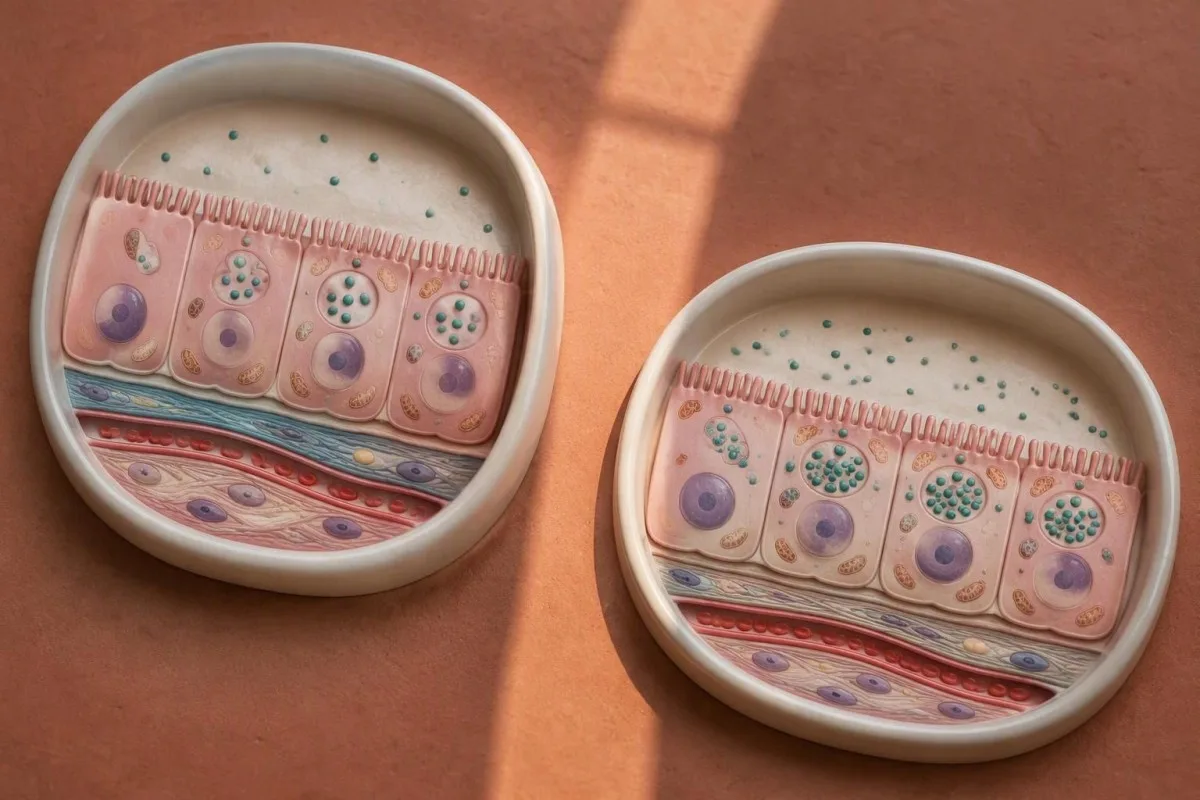
A trough is a clearance signal, not a direct measurement of kidney tissue exposure. Gentamicin can accumulate within renal proximal tubular cells over repeated treatment, so a trough below 1 mg/L does not erase the effects of cumulative exposure, concurrent nephrotoxic medicines, or a kidney problem that is only beginning.
The direction of causation can run both ways: reduced kidney function raises gentamicin concentrations, and gentamicin-associated tubular injury can further reduce clearance. For example, a hypothetical trough rising from 0.6 to 1.4 mg/L on an unchanged schedule may prompt review of creatinine trends, actual dose times, fluid status, and other medicines rather than a conclusion based on the concentration alone.
A sample collected 2 hours before the next dose will usually be higher than a true pre-dose trough and should not be casually relabeled. Conversely, a sample after an unusually long delay may look reassuring without representing the usual schedule; our tacrolimus trough interpretation guide explains the same documentation problem with a different drug.
Ar ko atšķiras pagarināta intervāla gentamicīna kontrole?
Extended-interval gentamicin uses a larger individual dose followed by a longer drug-free interval, and monitoring often relies on a timed post-dose concentration rather than conventional paired levels. Selected adult protocols use approximately 5–7 mg/kg per dose, but the exact dose, interval, and eligibility criteria are service-specific.
The rationale combines concentration-dependent killing with a post-antibiotic effect, meaning bacterial growth may remain suppressed after the circulating concentration falls. A once-daily regimen therefore does not require a conventional trough to remain detectably therapeutic; intentionally low late concentrations are part of the strategy, not proof that treatment has stopped working.
Selected extended-interval protocols use 24-, 36-, or 48-hour intervals, but once-daily is an imprecise label when impaired clearance requires longer spacing. Some hospitals use a pre-dose concentration, some a single timed nomogram sample, and others 2 concentrations or model-based exposure estimates; these approaches are not interchangeable without their accompanying dosing rules.
Extended-interval treatment is not suitable for every patient or indication, and reduced renal toxicity in selected populations does not mean zero risk. Our vancomycin exposure monitoring guide explains another antibiotic-specific approach; the vancomycin AUC target of 400–600 mg·h/L is not a gentamicin target.
Kad Hārtlenda nomogramma ļauj interpretēt gentamicīna līmeņus?
The Hartford nomogram applies to qualifying extended-interval aminoglycoside treatment using a 7 mg/kg dose and a concentration collected 6–14 hours after infusion start. It helps clinicians choose an interval; it is not a universal chart for any gentamicin dose, any collection time, or any patient.
The original Hartford experience described 2,184 adult patients receiving a once-daily aminoglycoside program, providing the clinical background for its dose-and-time framework (Nicolau et al., 1995). The 6–14-hour measurement is sometimes called a random level, but random here means not a conventional peak or trough—not that its timing is optional.
Hospitals restrict or modify this approach in populations such as pregnancy, dialysis, unstable renal function, major burns, cystic fibrosis, or selected endocarditis regimens. A hypothetical concentration of 2.2 mg/L collected 10 hours after a 5 mg/kg dose cannot simply be plotted on an unmodified 7 mg/kg Hartford chart to obtain a reliable interval.
If the sample falls outside the validated window, clinicians may request another level or calculate individualized pharmacokinetics rather than force a point onto the chart. Our delayed drug-clearance explanation illustrates why elapsed time is part of a drug result, although methotrexate rescue thresholds have no role in gentamicin dosing.
Kā salīdzināmi divi hipotētiski gentamicīna analīžu rezultāti?
Two identical gentamicin results can mean different things when the sampling schedules differ. The following 2 hypothetical examples demonstrate conventional and extended-interval interpretation; they are not dosing instructions, and neither example supplies enough information for a patient to choose the next dose.

In hypothetical example A, a conventional infusion starts at 08:00, ends at 08:30, and the prescribed peak sample is collected at 09:00. A result of 8 mg/L fits many conventional peak targets if the indication agrees; a separate 15:40 sample before a 16:00 dose provides the trough information that the peak cannot supply.
In hypothetical example B, an eligible 70 kg adult receives a clinician-prescribed 490 mg dose, corresponding to 7 mg/kg, with infusion start at 08:00. A sample at 18:00 is 10 hours after infusion start and is interpreted under the applicable extended-interval protocol; calling that result a low peak or a high trough would ask the wrong question.
Neither timeline establishes kidney safety without baseline and follow-up renal information, and the prescribed dosing weight may differ from scale weight. Before collection, patients can confirm that staff have the actual administration record and the intended test type; our baseline sample preparation checklist helps distinguish useful preparation from unnecessary fasting or medication changes.
Kā klīnicisti nosaka ar gentamicīnu saistītu nieru bojājumu?
Clinicians assess possible gentamicin-associated kidney injury using creatinine changes, urine output, exposure history, and alternative causes—not the gentamicin concentration alone. KDIGO defines acute kidney injury by a creatinine rise of at least 0.3 mg/dL within 48 hours, a rise to at least 1.5 times baseline within 7 days, or qualifying low urine output.
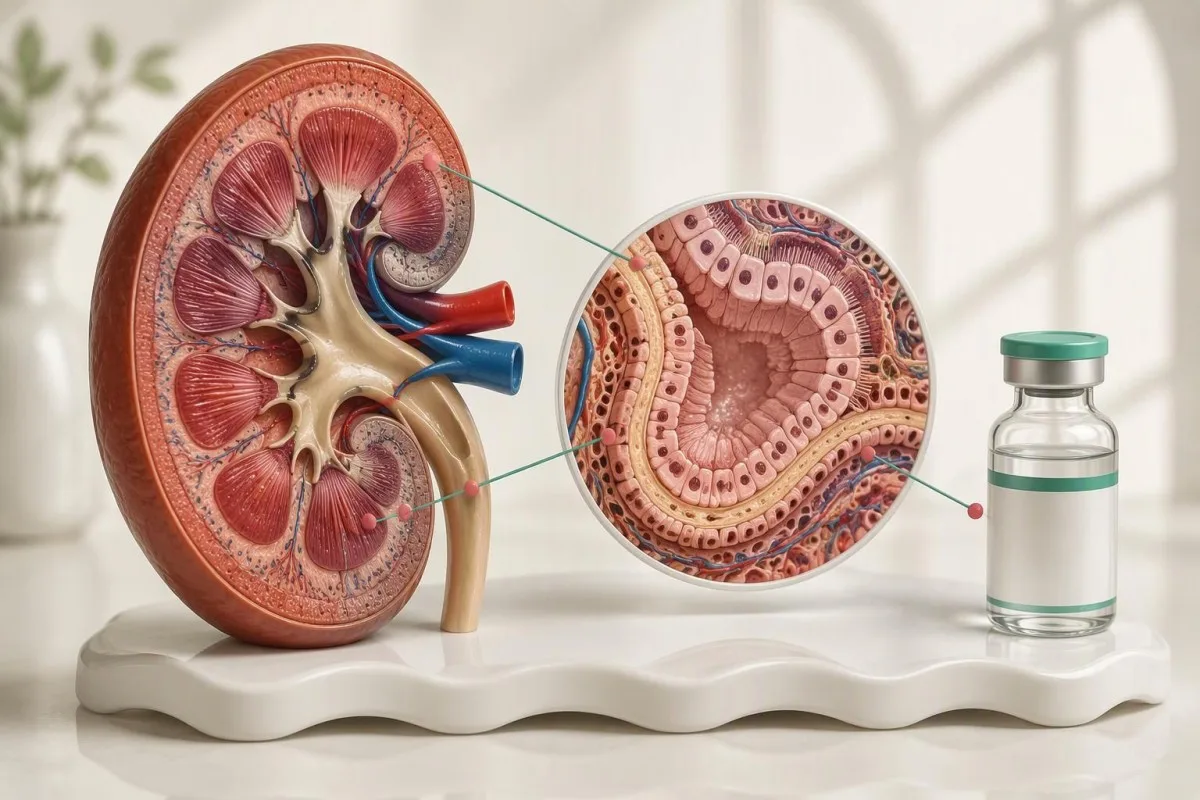
The 0.3 mg/dL threshold equals 26.5 µmol/L, and it can identify injury even when both values sit inside the laboratory interval (KDIGO Acute Kidney Injury Work Group, 2012). For example, a hypothetical creatinine increase from 0.7 to 1.0 mg/dL within 48 hours meets that criterion; normal-looking is not the same as unchanged.
KDIGO's urine-output criterion includes less than 0.5 mL/kg/hour for 6 hours: for a 70 kg adult, that is below 35 mL/hour over the specified period. Gentamicin-associated injury can also be non-oliguric, meaning urine output remains relatively preserved, so passing urine normally does not rule out an important creatinine rise.
Sepsis, low blood pressure, dehydration, urinary obstruction, and other medicines can produce similar changes, and attribution requires clinical assessment. Our BUN un kreatinīna attiecība palīdz explains useful context without treating the ratio as diagnostic; seek prompt advice for markedly reduced urine or the warning signs described in our low kidney function symptoms rakstā.
Kādas nieru darbības un elektrolītu pārbaudes veic līdz ar gentamicīna līmeņa noteikšanu?
Gentamicin safety monitoring usually includes baseline and repeat serum creatinine, with electrolytes and urine assessment when clinically indicated. Hospitalized adults often have daily renal checks during ongoing treatment, but outpatient schedules depend on stability, treatment duration, local protocol, and whether a change occurs within 24–48 hours.
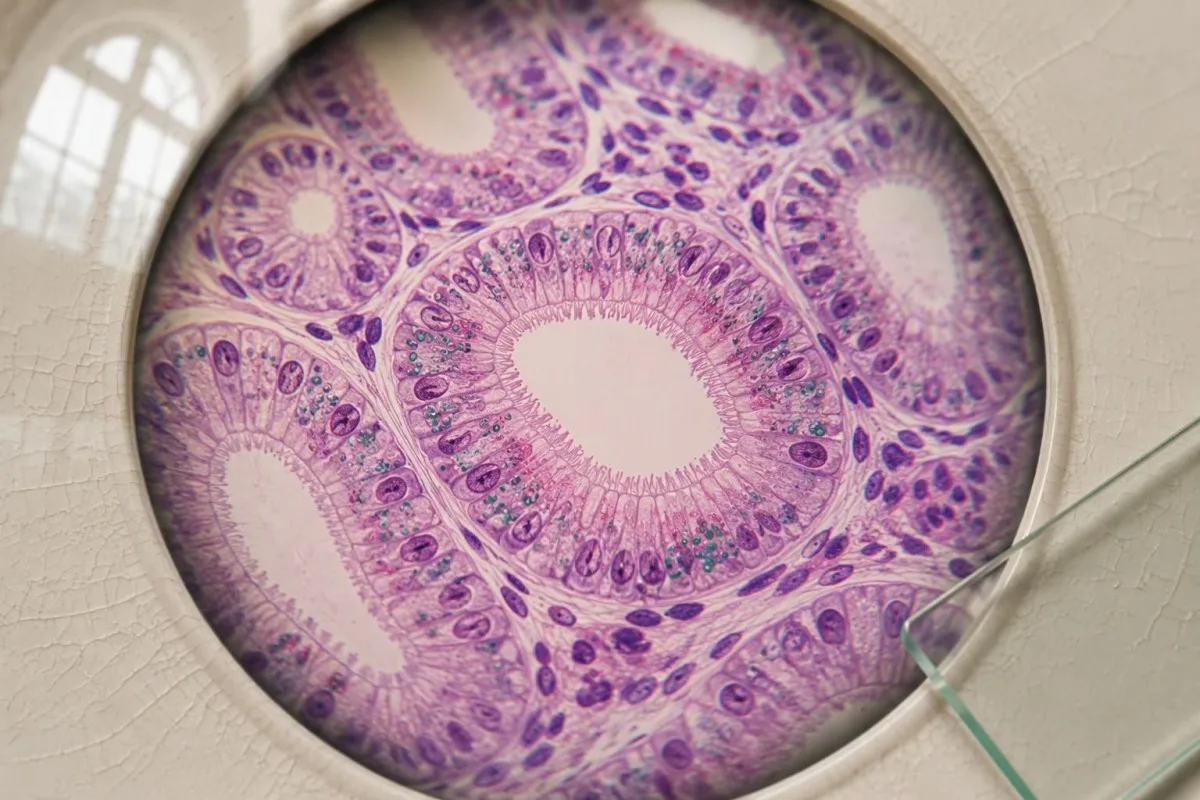
Creatinine is a delayed marker of changing filtration, and automated eGFR assumes relatively steady creatinine production and clearance. During evolving acute kidney injury, an eGFR reported as 60 mL/min/1.73 m² may not accurately describe current clearance; clinicians often rely on the trajectory and an appropriate drug-dosing renal assessment rather than the printed number alone.
Aminoglycoside-related tubular dysfunction can cause magnesium or potassium wasting, sometimes before a major creatinine increase. For example, a hypothetical magnesium of 0.55 mmol/L with new weakness deserves assessment of renal losses, gastrointestinal losses, and medicines; our electrolyte safety patterns explain why replacement must reflect the whole clinical picture.
Urinary granular casts can support tubular injury but neither prove gentamicin caused it nor reliably exclude injury when absent. Our granular cast interpretation guide separates suggestive findings from diagnosis; the broader urīna analīzes interpretācijas ceļvedis explains why 1 urine specimen cannot substitute for serial renal assessment.
Kam nepieciešama individuāli pielāgotāka gentamicīna drošības uzraudzība?
Patients with unstable kidney function, major changes in body-fluid volume, repeated exposure, or concurrent nephrotoxic medicines need particularly individualized gentamicin monitoring. Older adults, neonates, pregnancy, dialysis, obesity, and severe illness can also make standard adult dosing assumptions unreliable; a 7 mg/kg protocol should not be generalized across these groups.
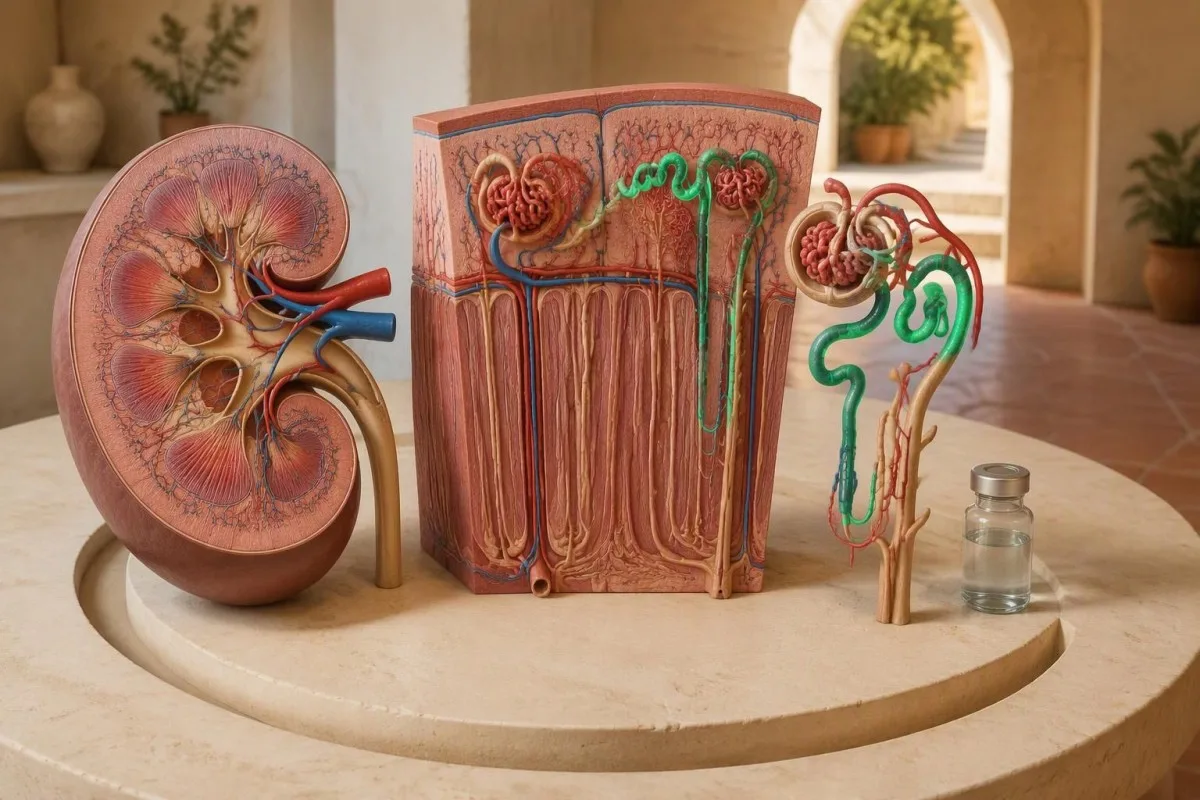
Risk generally increases with cumulative exposure and longer treatment, particularly when courses extend beyond approximately 5–7 days, although shorter courses are not risk-free. Concurrent vancomycin, amphotericin B, some chemotherapy agents, and nonsteroidal anti-inflammatory medicines can complicate renal safety; dehydration or low blood pressure may add a second stressor rather than an independent laboratory clue.
The dosing weight is not always the measured weight: obesity may require an adjusted-weight method, while ascites, edema, major burns, or critical illness can alter the distribution volume. A hypothetical 100 kg patient therefore should not calculate a dose by multiplying scale weight by 7; the hospital's weight convention and renal method are part of the prescription.
A creatinine clearance expressed in mL/min is not identical to an indexed eGFR expressed in mL/min/1.73 m², and low muscle mass can hide impaired filtration behind a modest creatinine value. Our dehydration and filtration explanation describes reversible changes, but a new decline during gentamicin treatment still needs review rather than being assumed temporary.
Vai gentamicīns var ietekmēt dzirdi vai līdzsvaru arī tad, ja tā līmenis ir pieņemams?
Gentamicin can cause hearing or vestibular toxicity even when measured concentrations fall within the prescribed targets. New tinnitus, hearing change, unsteadiness, or oscillopsia—vision that appears to bounce during walking—requires prompt contact with the treatment team; there is no serum concentration that guarantees inner-ear safety.
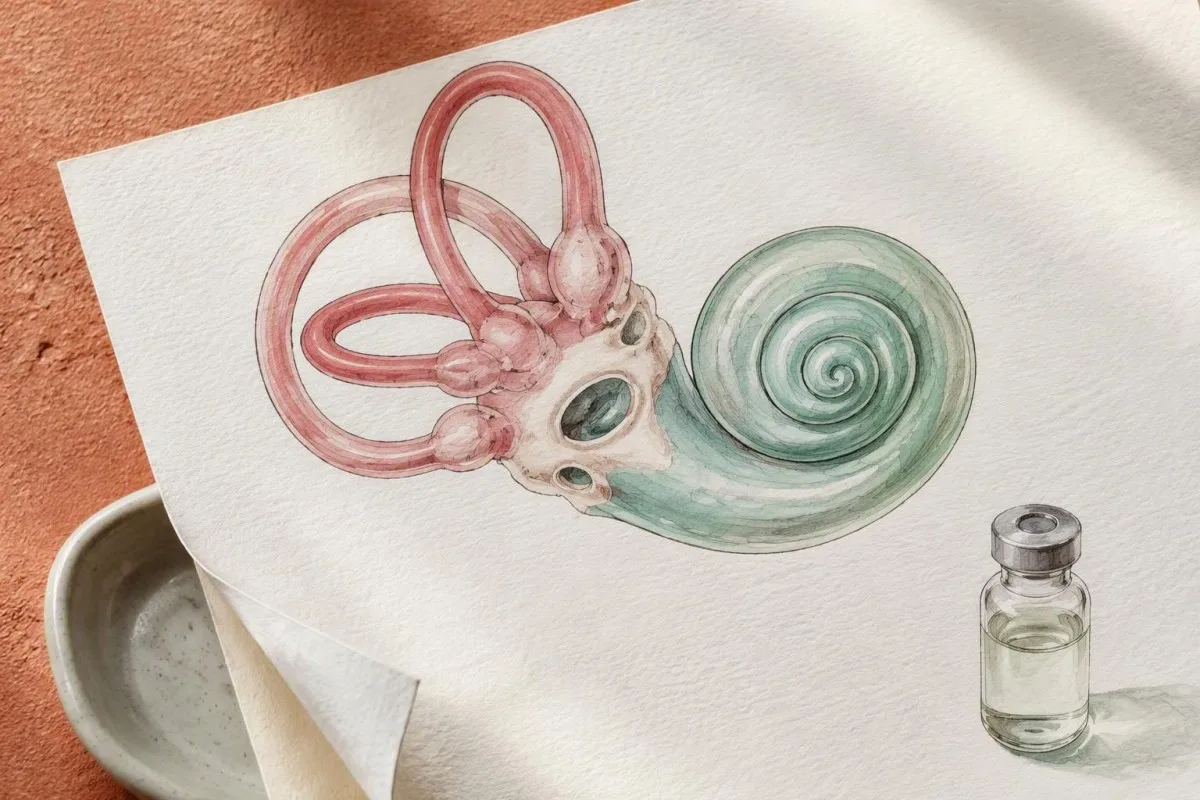
Gentamicin is particularly associated with vestibular toxicity, which affects balance and visual stability rather than hearing alone. Bilateral vestibular impairment may cause difficulty walking in darkness or bouncing vision without dramatic spinning vertigo; after even 1 new symptom, patients should report the change instead of waiting for the next routine blood test.
Baseline hearing and balance history helps interpret subsequent changes, and clinicians may arrange audiometry, including high-frequency assessment, or vestibular testing for prolonged or higher-risk treatment. A normal conventional hearing test does not exclude early high-frequency change or a vestibular problem; symptoms can emerge or progress after the final dose, and some effects are permanent.
The MT-RNR1 variants m.1555A>G and m.1494C>T are associated with increased aminoglycoside-related hearing-loss risk. The CPIC guideline recommends avoiding aminoglycosides in people with relevant high-risk variants unless the seriousness of the condition and lack of suitable alternatives justify treatment (McDermott et al., 2022); genetic testing must not delay urgent treatment without a clinician-directed plan.
Kantesti ir AI asins analīžu rezultātu platforma, but a gentamicin concentration of 0.8 mg/L cannot establish normal hearing or vestibular function. Our atbildīgas MI izmantošanas robežas explain why laboratory interpretation must remain separate from examination, audiology, emergency assessment, and decisions about the next antibiotic administration.
Kā rīkoties negaidīta gentamicīna analīžu rezultāta gadījumā?
Contact the prescribing team or clinical pharmacist about an unexpected gentamicin result, especially when the next dose is approaching or symptoms have appeared. Do not independently change the dose or interval; a concentration of 2 mg/L means different things under different protocols, and an urgent decision needs the administration record.

Provide 5 practical details: the reported concentration and units, dose, infusion start and finish, sample collection time, and the latest creatinine with its earlier baseline. Also mention missed or delayed doses, urine changes, tinnitus, hearing change, imbalance, and nonprescription medicines; symptoms deserve attention even when the laboratory has not marked the result high.
If you are in hospital, alert the nurse or treatment team immediately rather than altering the infusion equipment yourself. If you receive home infusions, use the service's urgent contact route before the next planned administration when there is a concerning result; our secure clinical result-sharing guide explains how to preserve the original report and its timestamps.
Kantesti AI can support explanation of units and trends, but it cannot confirm whether an 18:00 sample belongs on a hospital's nomogram or authorize a treatment change. When sharing results for educational interpretation, remove unnecessary identifiers and review our informāciju par privātumu un datiem; privacy precautions must never delay urgent medical contact.
Gentamicīna interpretācijas ar MI izpētes konteksts un ierobežojumi
Clinical interpretation of gentamicin levels depends on validated dosing protocols, kidney-injury definitions, and separate assessment of hearing and balance. The 3 external medical references below support those clinical discussions; the 2 additional Kantesti publications describe platform or educational work and are not gentamicin dosing or toxicity-validation studies.
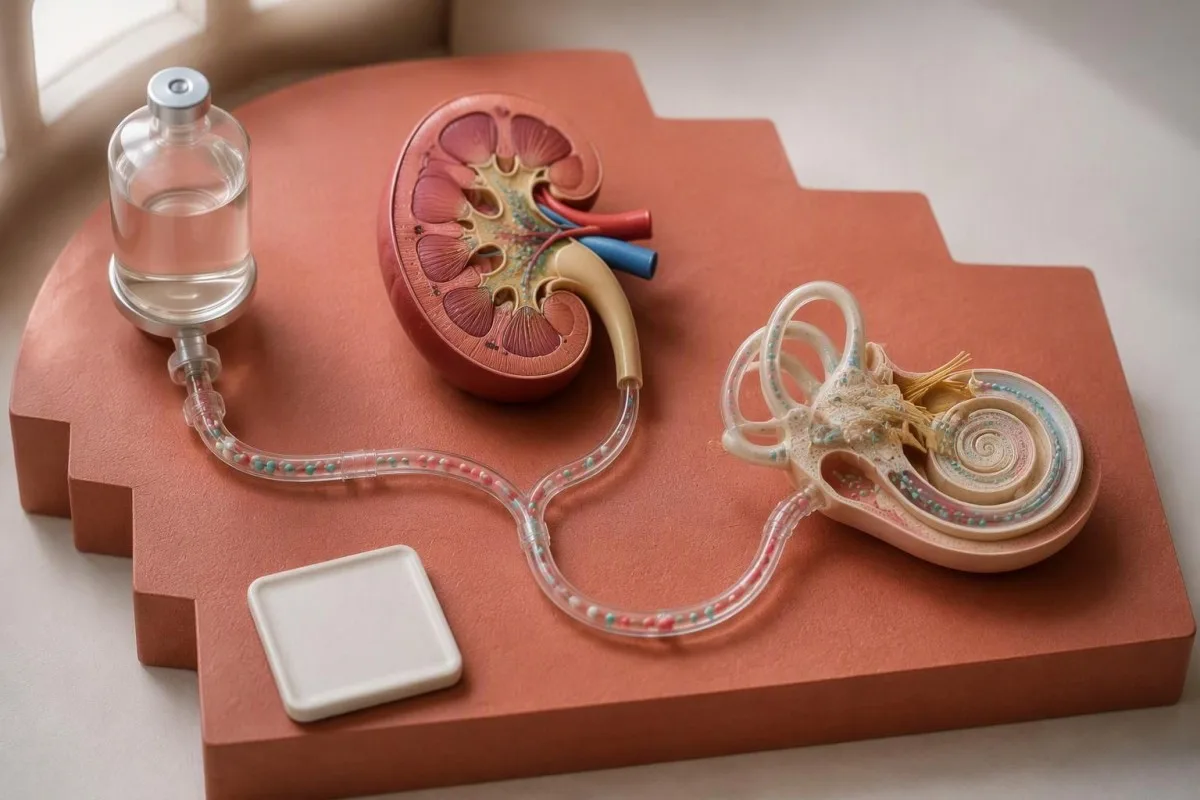
The Hartford program, KDIGO acute kidney injury criteria, and CPIC aminoglycoside pharmacogenetics guideline answer 3 different questions: how to interpret a qualifying timed level, how to recognize kidney injury, and when genetic susceptibility changes antibiotic selection. None can turn an unlabeled concentration into a complete treatment decision, and differences between hospital targets should be resolved using the patient's actual protocol.
Kantesti ir ar AI balstīts asins analīzes rīks that can help organize gentamicin results alongside creatinine and electrolyte trends when the required context is supplied. A 0.3 mg/dL creatinine rise still requires clinician assessment regardless of how a report is summarized; our tehniskās un klīniskās uzraudzības aprakstā describes evaluation boundaries rather than claiming validation for autonomous gentamicin dosing.
The Global Health Report 2026 and the RDW guide listed below are 2 separate publications, not evidence that AI can prevent aminoglycoside toxicity. Kantesti's medicīniskā satura standarti distinguish educational interpretation from prescribing; patients should use this article to ask better timing and safety questions, not to choose their next dose.
Bieži uzdotie jautājumi
Kāds ir normāls gentamicīna minimālais līmenis?
Parasti gentamicīna minimālo koncentrāciju serumā cenšas uzturēt zem 1 mg/L, lai gan dažos protokolos pieļauj koncentrāciju zem 2 mg/L. Paraugs parasti jāpaņem 30 minūšu laikā pirms nākamās faktiskās devas, nevis vienkārši pirms paredzētā devas ievadīšanas laika. Lietojot pagarināta intervāla shēmas, var izmantot citu koncentrācijas slieksni pirms devas ievadīšanas vai koncentrāciju, kas noteikta pēc nomogrammas un konkrēta parauga paņemšanas laika. Pieņemama minimālā koncentrācija neizslēdz nieru, dzirdes vai līdzsvara traucējumu toksicitāti.
Kad jānosaka gentamicīna maksimālā koncentrācija?
A conventional intravenous gentamicin peak level is commonly collected 30 minutes after the infusion ends, but the prescribing service's protocol determines the exact time. For example, an infusion ending at 08:30 may require collection at 09:00 under that protocol. A sample collected immediately after infusion or much later cannot automatically be compared with the same target. Extended-interval monitoring and intramuscular administration use different sampling conventions.
Vai gentamicīna koncentrācija 2 mg/L ir pārāk augsta?
Gentamicīna koncentrāciju 2 mg/L nevar klasificēt bez informācijas par dozēšanas režīmu un parauga ņemšanas laiku. Daudzos tradicionālos minimālās koncentrācijas noteikšanas protokolos tā pārsniegtu mērķa vērtību, taču paplašināta intervāla režīmā tā varētu būt paredzamā koncentrācija noteiktā laikā. Arī agri vai vēlu paņemts paraugs vai paraugs no kontaminētas infūzijas sistēmas var mainīt tā interpretāciju. Sazinieties ar ārstējošo komandu, nevis paši mainiet nākamo devu.
Kad tiek noteikts gentamicīna līmenis, lietojot devu reizi dienā?
Atbilstoša 7 mg/kg Hartford režīma gadījumā gentamicīna koncentrāciju nosaka 6–14 stundas pēc infūzijas sākuma. Citos pagarināta intervāla protokolos var izmantot mērījumu pirms devas ievadīšanas, 2 mērījumus pēc devas ievadīšanas vai citu devas un laika grafiku. Vārds „nejaušs” nenozīmē, ka parauga ņemšanas laiks nav svarīgs. Koncentrāciju drīkst interpretēt, tikai izmantojot protokolu, kas atbilst ievadītajai devai un pacientam.
Vai gentamicīns var bojāt nieres, ja tā līmenis ir normāls?
Ar gentamicīnu saistīts nieru bojājums var rasties arī tad, ja koncentrācija ir noteiktā mērķa diapazonā, jo nozīme ir arī kopējai iedarbībai un konkrētā pacienta riska faktoriem. Kreatinīna līmeņa paaugstināšanās par vismaz 0,3 mg/dL jeb 26,5 µmol/L 48 stundu laikā atbilst vienam no KDIGO akūta nieru bojājuma kritērijiem. Aminoglikozīdu izraisīta kanāliņu bojājuma gadījumā urīna izdale var saglabāties samērā normāla. Ārsti vērtē kreatinīna līmeni dinamikā, urīna izdali, citas zāles un alternatīvus cēloņus, nevis paļaujas uz vienu zāļu koncentrācijas mērījumu.
Vai gentamicīns pēc ārstēšanas var izraisīt dzirdes zudumu vai reiboni?
Ar gentamicīnu saistīti dzirdes vai līdzsvara traucējumu simptomi var parādīties vai pastiprināties pēc ārstēšanas beigām, un pieņemams gentamicīna līmenis serumā šo iespēju neizslēdz. Pat 1 jauns simptoms, piemēram, troksnis ausīs, dzirdes izmaiņas, pastāvīgi līdzsvara traucējumi vai lēkājošas redzes sajūta staigājot, ir pamats nekavējoties vērsties pie ārsta. Gentamicīns var ietekmēt vestibulāro funkciju, neradot acīmredzamu dzirdes zudumu vai griešanās vertigo. Izmeklēšana var ietvert dzirdes un vestibulāros testus, jo gentamicīna koncentrācija nav iekšējās auss funkcijas tests.
Uzziniet, kā lasīt asins analīžu rezultātus
Augšupielādējiet laboratorijas pārskatu, un Kantesti mākslīgais intelekts dažu sekunžu laikā vienkāršā valodā izskaidros katru biomarķieri. To izmanto vairāk nekā 2 miljoni cilvēku visā pasaulē.
Atsauces
- Klein, T., Mitchell, S., & Weber, H. (2026). AI asins analīžu analizators: analizēti 2,5M testi | Global Health Report 2026. Kantesti mākslīgā intelekta medicīniskie pētījumi. DOI
- Klein, T., Mitchell, S., & Weber, H. (2026). RDW asins analīze: pilnīgs ceļvedis par RDW-CV, MCV un MCHC. Kantesti mākslīgā intelekta medicīniskie pētījumi. DOI
- Nicolau DP et al. (1995). Experience with a once-daily aminoglycoside program administered to 2,184 adult patients. Antimicrobial Agents and Chemotherapy. DOI
- KDIGO Acute Kidney Injury Work Group (2012). KDIGO Clinical Practice Guideline for Acute Kidney Injury. Kidney International Supplements.
- McDermott JH et al. (2022). Clinical Pharmacogenetics Implementation Consortium Guideline for the Use of Aminoglycosides Based on MT-RNR1 Genotype. Clinical Pharmacology & Therapeutics. DOI
- 2M+Analizētie testi
- 127+Valstis
- 100+Valodas
Par medicīnas komandu


E-E-A-T uzticēšanās signāli
Pieredze
Ārstu vadīta klīniskā laboratorijas interpretācijas darbplūsmu pārskatīšana.
Ekspertīze
Laboratorijas medicīnas fokuss uz to, kā biomarķieri uzvedas klīniskā kontekstā.
Autoritāte
Medicīniski recenzējis Dr. Thomas Klein, piedaloties Dr. Sarah Mitchell un Prof. Dr. Hans Weber.
Uzticamība
Uz pierādījumiem balstīta interpretācija ar skaidriem turpmākās rīcības ceļiem, lai mazinātu trauksmi.

Medicīniskā atruna
Šis raksts ir paredzēts tikai izglītojošiem nolūkiem un nav medicīnisks padoms. Vienmēr konsultējieties ar kvalificētu veselības aprūpes speciālistu, lai pieņemtu lēmumus par diagnostiku un ārstēšanu.
Publicēts · Sazinieties ar redakcijas komandu
Publicējis Kantesti Ltd, reģistrēts Anglijā un Velsā, uzņēmuma reģistrācijas Nr. 17090423, Londona, Apvienotā Karaliste.
