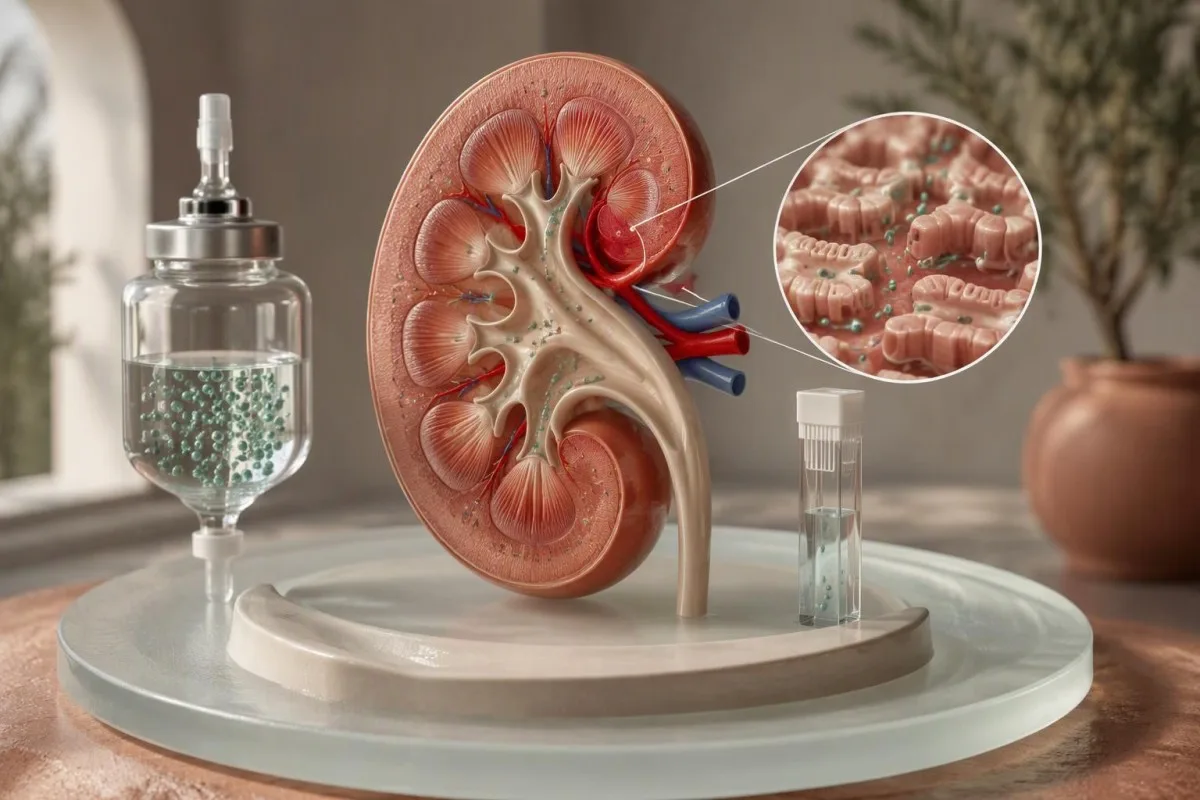
Gentamisin düzeyleri ancak doz, dozlama rejimi ve örneğin tam alınma zamanı ile birlikte anlam taşır. Geleneksel tedavide tepe ve dip düzey hedefleri kullanılır; uzatılmış aralıklı tedavide ise genellikle belirli bir zamanda ölçülen konsantrasyon ve protokole özgü bir grafik kullanılırken böbrek testleri ile işitme veya denge belirtileri ayrı güvenlik kontrolleri sağlar.

Temel çıkarımlar
- Gentamisin düzeyleri antibiyotik konsantrasyonunu, genellikle mg/L cinsinden ölçer; 1 mg/L, 1 µg/mL’ye eşittir.
- Geleneksel tepe düzeyi hedefleri yetişkinlerde genellikle 5–10 mg/L civarındadır; ancak gerçek hedefi enfeksiyon, endikasyon ve örnek alma yöntemi belirler.
- Geleneksel dip düzeyi hedefleri genellikle 1 mg/L’nin altındadır; bazı protokollerde 2 mg/L’nin altı kullanılır. Bu eşiklerin hiçbiri toksisite olmayacağını garanti etmez.
- Örnek alma zamanı kesin olarak kaydedilmelidir: geleneksel intravenöz tepe düzeyi örneği genellikle infüzyon bittikten 30 dakika sonra, dip düzeyi örneği ise bir sonraki gerçek dozdan önceki 30 dakika içinde alınır.
- Uzatılmış aralıklı takip farklıdır: Hartford protokolü, uygun bir 7 mg/kg dozunun başlangıcından 6–14 saat sonra alınan bir numunedeki konsantrasyonu kullanır.
- Böbrek hasarı kreatininin 48 saat içinde en az 0.3 mg/dL veya 26.5 µmol/L yükselmesiyle KDIGO kriterlerini karşılayabilir; sonuç laboratuvar aralığında kalsa bile.
- İşitme ve denge toksisitesi konsantrasyonlar görünüşte kabul edilebilir olsa bile ortaya çıkabilir; yeni başlayan kulak çınlaması, işitme değişikliği, denge bozukluğu veya görüntünün sıçraması acil klinik değerlendirme gerektirir.
- Doz kararları reçete yazan ekibin veya klinik eczacının sorumluluğundadır. Dozu asla kendi başınıza değiştirmeyin, infüzyonu geciktirmeyin veya çevrimiçi bir nomogram uygulamayın.
Gentamisin düzeyleri gerçekte neyi ölçer?
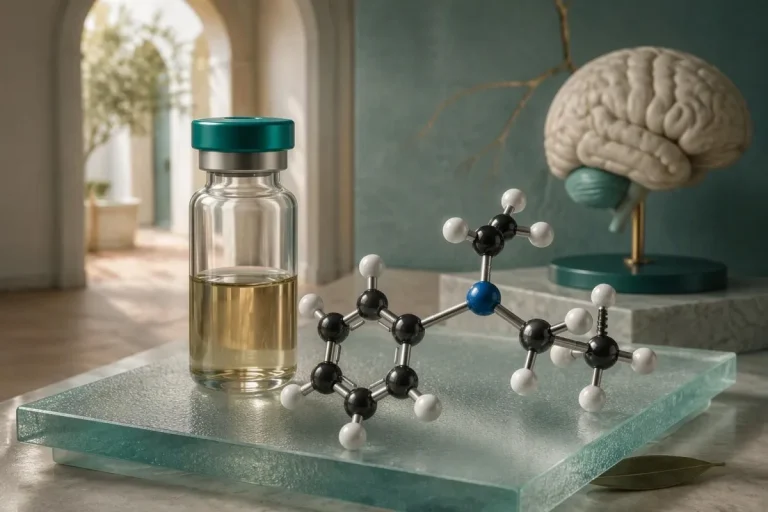
Gentamisin düzeyleri, bir laboratuvar numunesindeki gentamisin konsantrasyonunu ölçer; tek başına böbrek işlevini veya tedavi başarısını göstermez. 2 mg/L sonucu; bunun bir çukur düzey, dozdan hemen sonra alınmış erken bir numune veya zamanlaması belirlenmiş uzatılmış aralıklı bir ölçüm olmasına bağlı olarak güven verici, endişe verici ya da yorumlanamaz olabilir.
Laboratuvarlar gentamisin düzeyini genellikle mg/L veya µg/mL, cinsinden bildirir; bu birimler sayısal olarak eşdeğerdir: 1 mg/L, 1 µg/mL'ye eşittir. Sonucun yanında yazılı terapötik aralık yalnızca konvansiyonel dozlamayı tanımlıyor olabilir; günde tek doz tedaviye veya seçilmiş endokardit rejimlerindeki düşük dozlu kombinasyon tedavisine otomatik olarak uygulanmamalıdır.
Kantesti bir AI kan testi analizörü gentamisin konsantrasyonunun neden doz ve zamanlama bağlamı olmadan yorumlanmaması gerektiğini açıklamaya yardımcı olabilir. Bizim kuruluşumuz ve klinik amacımız hastanenin reçeteleme hizmetinden ayrıdır; antibiyotik dozlarını onaylamaz veya terapötik ilaç izleminin yerini almayız.
Tek başına bir laboratuvar uyarısı tanı değildir. Örneğin, yüksek olarak işaretlenmiş varsayımsal 12 mg/L sonucu, aşırı bir konvansiyonel tepe düzeyinden ziyade, uzatılmış aralıklı bir dozdan sonra uygun zamanda alınmış bir konsantrasyonu yansıtabilir; şu konudaki açıklamamız laboratuvar uyarı işaretleri ekli referans aralığının neden yanıltıcı olabileceğini açıklar.
Gentamisin takibinde zamanlama sonucu neden değiştirir?
Gentamisin izleminin zamanlaması önemlidir; çünkü konsantrasyon uygulama sırasında yükselir, vücut sıvılarına dağılır ve ardından böbrekler tarafından temizlendikçe düşer. Klinisyenlerin en az 3 zaman bilgisine ihtiyacı vardır: infüzyonun başlama zamanı, bitiş zamanı ve numunenin alınma zamanı; ayrıca çukur düzeyi yorumlanırken bir sonraki dozun gerçek zamanı da gerekir.
Böbrek işlevi normalken gentamisinin eliminasyon yarı ömrü genellikle yaklaşık 2–3 saat, olur; ancak hastalık ve dağılımdaki değişiklikler konsantrasyon eğrisini değiştirebilir. İnfüzyondan hemen sonra alınan bir numune dağılım fazını yansıtabilir; hastanenin belirttiği yöntemle daha sonra alınan bir tepe düzeyiyle aynı değildir.
Planlanan doz zamanı, uygulama kaydının yerini tutamaz. Varsayımsal olarak 08:00'de planlanan bir doz 09:10'a ertelenirse, 09:00'da alınan bir numune hâlâ doz öncesidir; uygulamanın 08:00'de yapıldığını varsayan bir çizelge ise bunu yanlışlıkla doz sonrası olarak etiketleyebilir; bu fark klinik soruyu tamamen değiştirir.
İnfüzyon hattından numune alınması, kalıntı gentamisin numuneyi kontamine ederse yanlış yüksek sonuç verebilir; bu nedenle personel yerel numune alma ve hattı yıkama prosedürlerini izler. Zamanlama sorunları başka ilaçlarda da görülür, ancak beklenmesi gereken süre farklıdır; bizim digoksin numune alma zamanı açıklamamız gentamisin uygulama planı olarak kullanılmamalıdır.
Geleneksel tepe ve dip düzeyi takibi nasıl yapılır?
Konvansiyonel gentamisin izlemi, maruziyeti değerlendirmek için doz sonrası tepe düzeyini ve bir sonraki uygulamadan önce kalan ilacı değerlendirmek için doz öncesi çukur düzeyini kullanır. For selected adults receiving divided doses, intervals may be 8 or 12 hours, but kidney function and the treatment indication determine the prescribed schedule.
After an intravenous infusion, a conventional gentamicin peak level is commonly collected 30 minutes after the infusion finishes; some protocols specify a different time. A gentamicin trough level is commonly collected within 30 minutes before the next actual dose, and intramuscular administration uses a different post-dose sampling convention.
Some services obtain the first paired measurements around the 3rd or 4th dose, when concentrations are approaching a repeatable pattern in patients with stable clearance. That is not a reason to postpone assessment in someone with worsening kidney function, unexpected dosing, or symptoms; such patients may require earlier measurements and individualized pharmacokinetic review.
A peak and trough are useful only if the preceding doses were actually administered as documented. A missed dose, a changed infusion duration, or a sample collected 2 hours early can invalidate an otherwise neat-looking pair; similar documentation principles appear in our carbamazepine trough timing guide, although the therapeutic targets are unrelated.
Klinisyenler hangi gentamisin tepe düzeyini hedefler?
A conventional gentamicin peak level commonly targets approximately 5–10 mg/L in adults, but there is no universal target for every infection. Some low-dose synergy protocols use peaks around 3–5 mg/L, while extended-interval concentrations must not be judged against the conventional peak range.
Gentamicin exhibits concentration-dependent antibacterial activity: for susceptible Gram-negative organisms, a peak-to-minimum inhibitory concentration ratio around 8–10 is a commonly used pharmacodynamic goal. The minimum inhibitory concentration, or MIC, describes the organism's susceptibility; a peak of 8 mg/L has a different meaning when the MIC is 0.5 rather than 2 mg/L.
A low measured peak does not always mean the prescribed dose was too small. A hypothetical patient with major fluid expansion might have a larger distribution volume, while a peak sample collected 90 minutes late could be lower simply because elimination has continued; the pharmacist distinguishes these possibilities before changing treatment.
Selected combination regimens use gentamicin for synergy, not the same exposure goals used for stand-alone Gram-negative treatment. High-level aminoglycoside resistance can prevent that synergy and is not solved by chasing a higher concentration; our antifungal trough target discussion illustrates why drug-specific targets cannot be borrowed across treatments.
| Düzey | Aralık | Anlamı |
|---|---|---|
| Conventional adult peak | Commonly 5–10 mg/L | Illustrative target used by some protocols; indication and the specified collection time determine interpretation. |
| Selected synergy peak | Often 3–5 mg/L | Applies only to particular low-dose combination protocols, not every endocarditis regimen. |
| Conventional adult trough | Often <1 mg/L; some protocols <2 mg/L | Lower residual exposure reduces concern about accumulation but does not exclude toxicity. |
| Extended-interval concentration | No universal peak-and-trough reference interval | Interpret using the actual elapsed time and the validated protocol for the administered dose. |
Yüksek bir gentamisin dip düzeyi neye işaret eder?
A high, correctly timed gentamicin trough level suggests that substantial drug remains before the next dose, often because clearance is reduced or the interval is too short. Many conventional protocols aim below 1 mg/L; others accept below 2 mg/L, so the prescribing service's target must be checked.
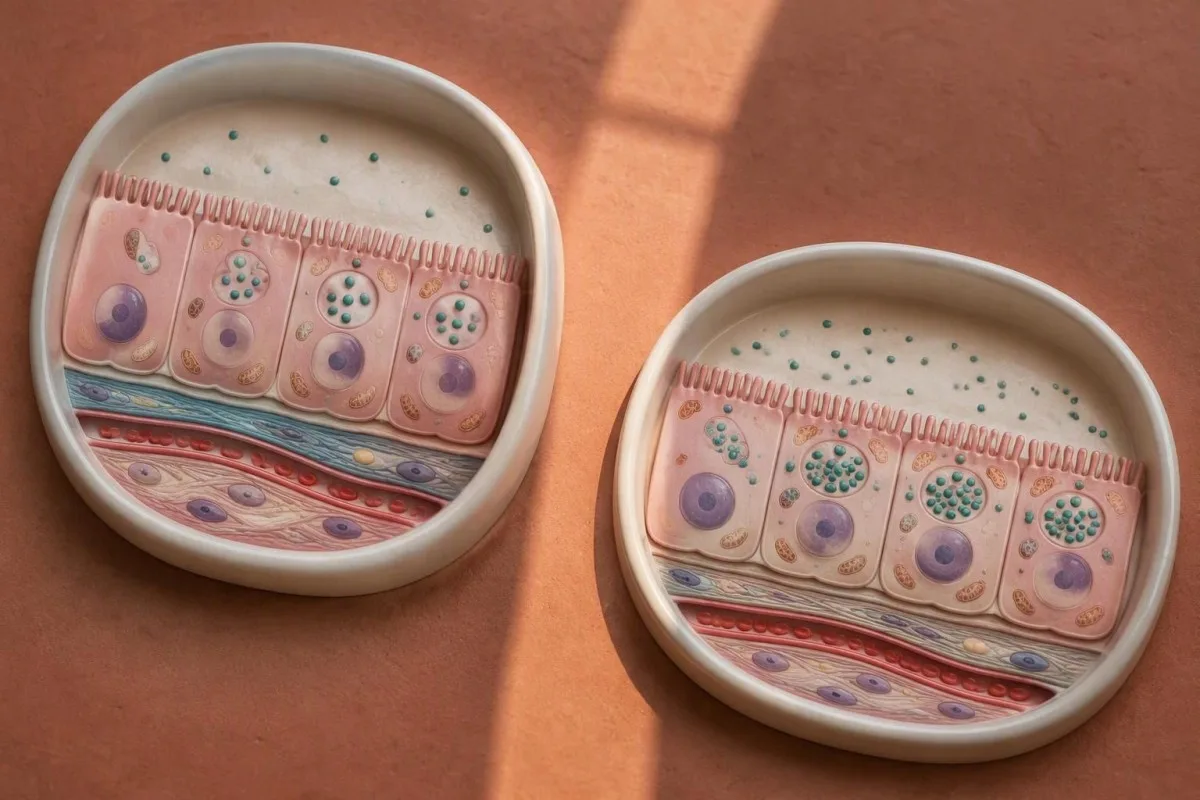
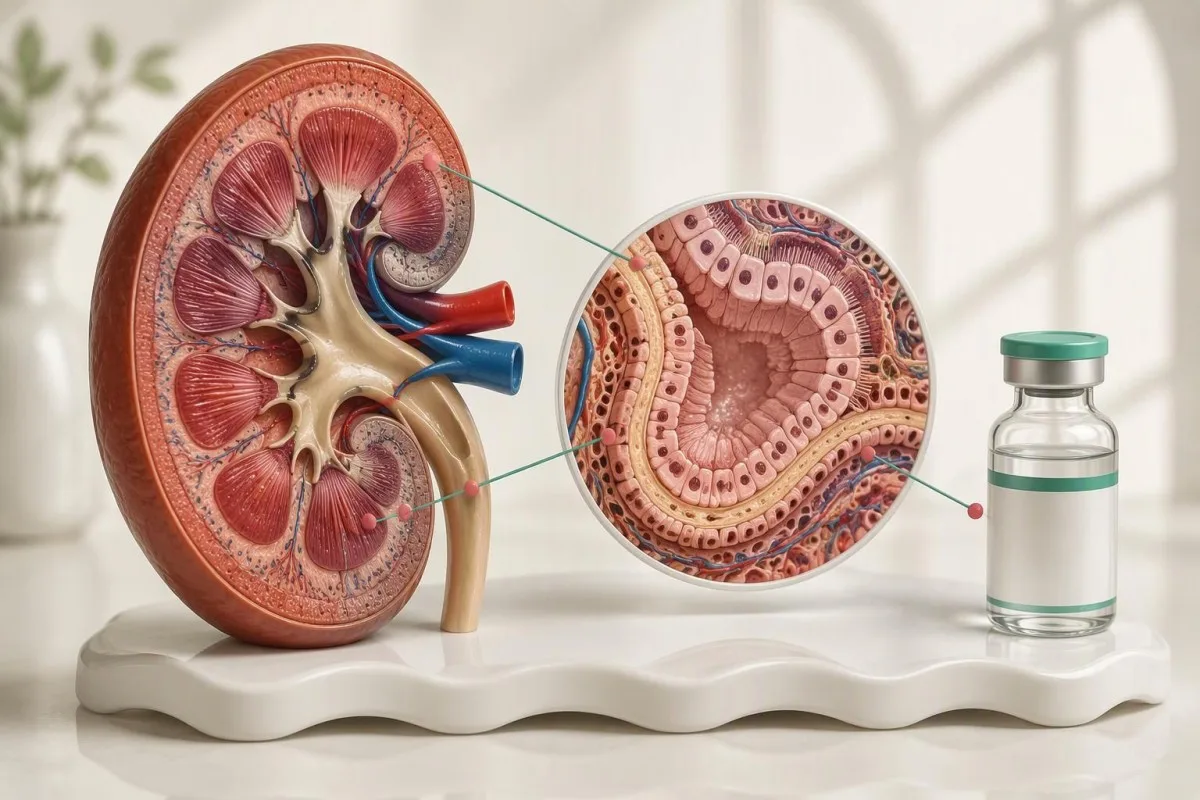
A trough is a clearance signal, not a direct measurement of kidney tissue exposure. Gentamicin can accumulate within renal proximal tubular cells over repeated treatment, so a trough below 1 mg/L does not erase the effects of cumulative exposure, concurrent nephrotoxic medicines, or a kidney problem that is only beginning.
The direction of causation can run both ways: reduced kidney function raises gentamicin concentrations, and gentamicin-associated tubular injury can further reduce clearance. For example, a hypothetical trough rising from 0.6 to 1.4 mg/L on an unchanged schedule may prompt review of creatinine trends, actual dose times, fluid status, and other medicines rather than a conclusion based on the concentration alone.
A sample collected 2 hours before the next dose will usually be higher than a true pre-dose trough and should not be casually relabeled. Conversely, a sample after an unusually long delay may look reassuring without representing the usual schedule; our tacrolimus trough interpretation guide explains the same documentation problem with a different drug.
Uzatılmış aralıklı gentamisin takibi nasıl farklıdır?
Extended-interval gentamicin uses a larger individual dose followed by a longer drug-free interval, and monitoring often relies on a timed post-dose concentration rather than conventional paired levels. Selected adult protocols use approximately 5–7 mg/kg per dose, but the exact dose, interval, and eligibility criteria are service-specific.
The rationale combines concentration-dependent killing with a post-antibiotic effect, meaning bacterial growth may remain suppressed after the circulating concentration falls. A once-daily regimen therefore does not require a conventional trough to remain detectably therapeutic; intentionally low late concentrations are part of the strategy, not proof that treatment has stopped working.
Selected extended-interval protocols use 24-, 36-, or 48-hour intervals, but once-daily is an imprecise label when impaired clearance requires longer spacing. Some hospitals use a pre-dose concentration, some a single timed nomogram sample, and others 2 concentrations or model-based exposure estimates; these approaches are not interchangeable without their accompanying dosing rules.
Extended-interval treatment is not suitable for every patient or indication, and reduced renal toxicity in selected populations does not mean zero risk. Our vancomycin exposure monitoring guide explains another antibiotic-specific approach; the vancomycin AUC target of 400–600 mg·h/L is not a gentamicin target.
Hartford nomogramı gentamisin düzeylerini ne zaman yorumlayabilir?
The Hartford nomogram applies to qualifying extended-interval aminoglycoside treatment using a 7 mg/kg dose and a concentration collected 6–14 hours after infusion start. It helps clinicians choose an interval; it is not a universal chart for any gentamicin dose, any collection time, or any patient.
The original Hartford experience described 2,184 adult patients receiving a once-daily aminoglycoside program, providing the clinical background for its dose-and-time framework (Nicolau et al., 1995). The 6–14-hour measurement is sometimes called a random level, but random here means not a conventional peak or trough—not that its timing is optional.
Hospitals restrict or modify this approach in populations such as pregnancy, dialysis, unstable renal function, major burns, cystic fibrosis, or selected endocarditis regimens. A hypothetical concentration of 2.2 mg/L collected 10 hours after a 5 mg/kg dose cannot simply be plotted on an unmodified 7 mg/kg Hartford chart to obtain a reliable interval.
If the sample falls outside the validated window, clinicians may request another level or calculate individualized pharmacokinetics rather than force a point onto the chart. Our delayed drug-clearance explanation illustrates why elapsed time is part of a drug result, although methotrexate rescue thresholds have no role in gentamicin dosing.
İki varsayımsal gentamisin raporu nasıl karşılaştırılır?
Two identical gentamicin results can mean different things when the sampling schedules differ. The following 2 hypothetical examples demonstrate conventional and extended-interval interpretation; they are not dosing instructions, and neither example supplies enough information for a patient to choose the next dose.
In hypothetical example A, a conventional infusion starts at 08:00, ends at 08:30, and the prescribed peak sample is collected at 09:00. A result of 8 mg/L fits many conventional peak targets if the indication agrees; a separate 15:40 sample before a 16:00 dose provides the trough information that the peak cannot supply.
In hypothetical example B, an eligible 70 kg adult receives a clinician-prescribed 490 mg dose, corresponding to 7 mg/kg, with infusion start at 08:00. A sample at 18:00 is 10 hours after infusion start and is interpreted under the applicable extended-interval protocol; calling that result a low peak or a high trough would ask the wrong question.
Neither timeline establishes kidney safety without baseline and follow-up renal information, and the prescribed dosing weight may differ from scale weight. Before collection, patients can confirm that staff have the actual administration record and the intended test type; our baseline sample preparation checklist helps distinguish useful preparation from unnecessary fasting or medication changes.
Klinisyenler gentamisine bağlı böbrek hasarını nasıl saptar?
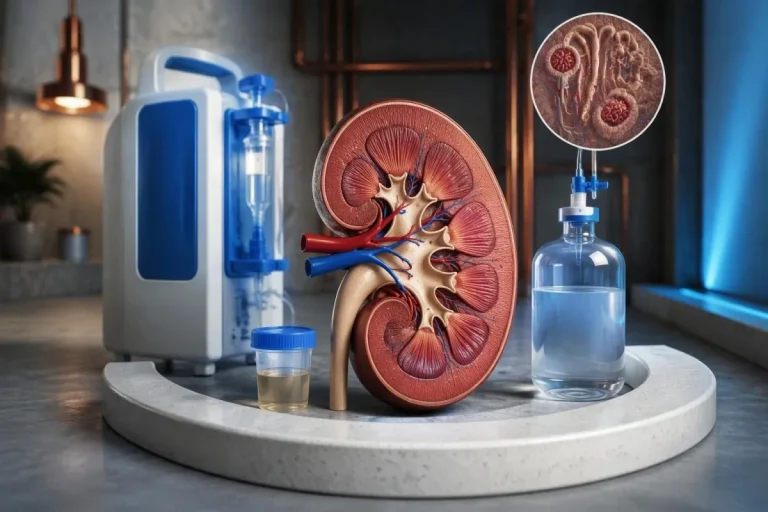
Clinicians assess possible gentamicin-associated kidney injury using creatinine changes, urine output, exposure history, and alternative causes—not the gentamicin concentration alone. KDIGO defines acute kidney injury by a creatinine rise of at least 0.3 mg/dL within 48 hours, a rise to at least 1.5 times baseline within 7 days, or qualifying low urine output.
The 0.3 mg/dL threshold equals 26.5 µmol/L, and it can identify injury even when both values sit inside the laboratory interval (KDIGO Acute Kidney Injury Work Group, 2012). For example, a hypothetical creatinine increase from 0.7 to 1.0 mg/dL within 48 hours meets that criterion; normal-looking is not the same as unchanged.
KDIGO's urine-output criterion includes less than 0.5 mL/kg/hour for 6 hours: for a 70 kg adult, that is below 35 mL/hour over the specified period. Gentamicin-associated injury can also be non-oliguric, meaning urine output remains relatively preserved, so passing urine normally does not rule out an important creatinine rise.
Sepsis, low blood pressure, dehydration, urinary obstruction, and other medicines can produce similar changes, and attribution requires clinical assessment. Our BUN ve kreatinin oranı kılavuzu explains useful context without treating the ratio as diagnostic; seek prompt advice for markedly reduced urine or the warning signs described in our low kidney function symptoms makalesinde de karşımıza çıkıyor.
Gentamisin düzeylerine hangi böbrek ve elektrolit kontrolleri eşlik eder?
Gentamicin safety monitoring usually includes baseline and repeat serum creatinine, with electrolytes and urine assessment when clinically indicated. Hospitalized adults often have daily renal checks during ongoing treatment, but outpatient schedules depend on stability, treatment duration, local protocol, and whether a change occurs within 24–48 hours.
Creatinine is a delayed marker of changing filtration, and automated eGFR assumes relatively steady creatinine production and clearance. During evolving acute kidney injury, an eGFR reported as 60 mL/min/1.73 m² may not accurately describe current clearance; clinicians often rely on the trajectory and an appropriate drug-dosing renal assessment rather than the printed number alone.
Aminoglycoside-related tubular dysfunction can cause magnesium or potassium wasting, sometimes before a major creatinine increase. For example, a hypothetical magnesium of 0.55 mmol/L with new weakness deserves assessment of renal losses, gastrointestinal losses, and medicines; our electrolyte safety patterns explain why replacement must reflect the whole clinical picture.
Urinary granular casts can support tubular injury but neither prove gentamicin caused it nor reliably exclude injury when absent. Our granular cast interpretation guide separates suggestive findings from diagnosis; the broader idrar tahlili yorumlama kılavuzu explains why 1 urine specimen cannot substitute for serial renal assessment.
Kimlerin gentamisin güvenlik takibinin daha kişiye özel yapılması gerekir?
Patients with unstable kidney function, major changes in body-fluid volume, repeated exposure, or concurrent nephrotoxic medicines need particularly individualized gentamicin monitoring. Older adults, neonates, pregnancy, dialysis, obesity, and severe illness can also make standard adult dosing assumptions unreliable; a 7 mg/kg protocol should not be generalized across these groups.
Risk generally increases with cumulative exposure and longer treatment, particularly when courses extend beyond approximately 5–7 days, although shorter courses are not risk-free. Concurrent vancomycin, amphotericin B, some chemotherapy agents, and nonsteroidal anti-inflammatory medicines can complicate renal safety; dehydration or low blood pressure may add a second stressor rather than an independent laboratory clue.
The dosing weight is not always the measured weight: obesity may require an adjusted-weight method, while ascites, edema, major burns, or critical illness can alter the distribution volume. A hypothetical 100 kg patient therefore should not calculate a dose by multiplying scale weight by 7; the hospital's weight convention and renal method are part of the prescription.
A creatinine clearance expressed in mL/dk is not identical to an indexed eGFR expressed in mL/min/1.73 m², and low muscle mass can hide impaired filtration behind a modest creatinine value. Our dehydration and filtration explanation describes reversible changes, but a new decline during gentamicin treatment still needs review rather than being assumed temporary.
Gentamisin düzeyleri kabul edilebilir olsa da işitmeyi veya dengeyi etkileyebilir mi?
Gentamicin can cause hearing or vestibular toxicity even when measured concentrations fall within the prescribed targets. New tinnitus, hearing change, unsteadiness, or oscillopsia—vision that appears to bounce during walking—requires prompt contact with the treatment team; there is no serum concentration that guarantees inner-ear safety.
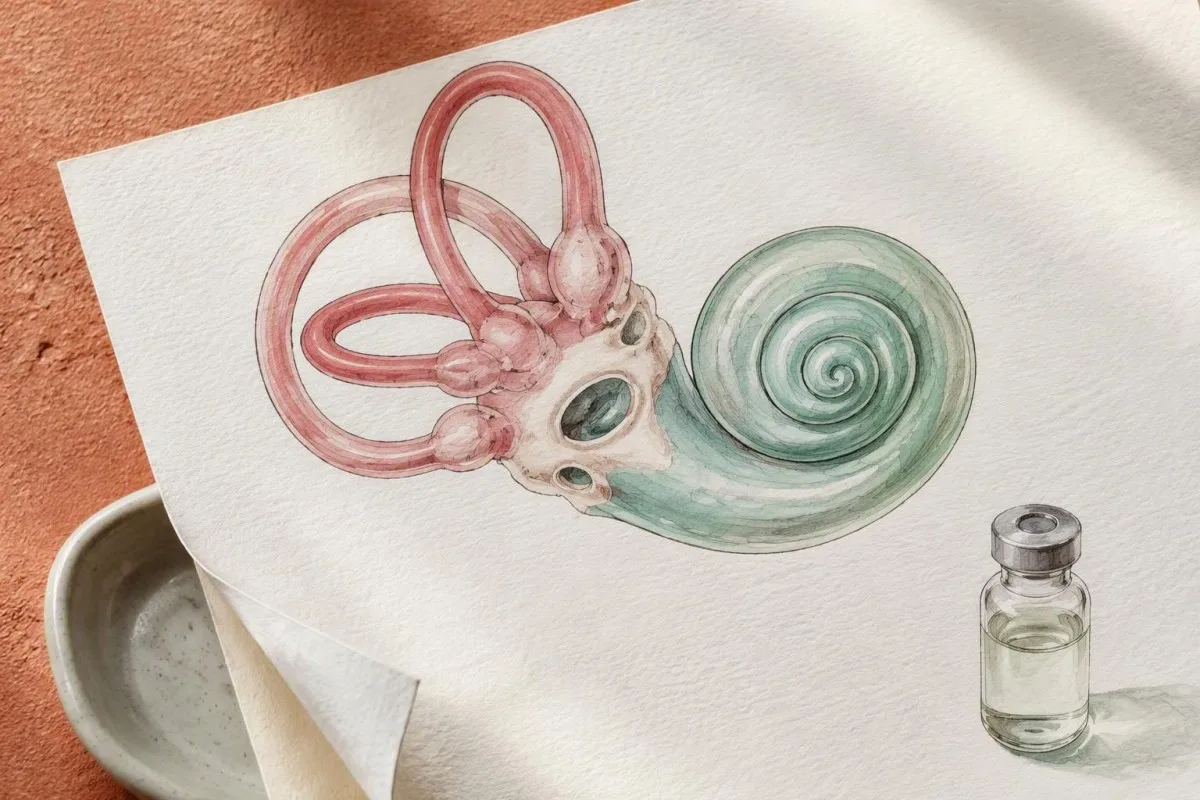
Gentamicin is particularly associated with vestibular toxicity, which affects balance and visual stability rather than hearing alone. Bilateral vestibular impairment may cause difficulty walking in darkness or bouncing vision without dramatic spinning vertigo; after even 1 new symptom, patients should report the change instead of waiting for the next routine blood test.
Baseline hearing and balance history helps interpret subsequent changes, and clinicians may arrange audiometry, including high-frequency assessment, or vestibular testing for prolonged or higher-risk treatment. A normal conventional hearing test does not exclude early high-frequency change or a vestibular problem; symptoms can emerge or progress after the final dose, and some effects are permanent.
The MT-RNR1 variants m.1555A>G and m.1494C>T are associated with increased aminoglycoside-related hearing-loss risk. The CPIC guideline recommends avoiding aminoglycosides in people with relevant high-risk variants unless the seriousness of the condition and lack of suitable alternatives justify treatment (McDermott et al., 2022); genetic testing must not delay urgent treatment without a clinician-directed plan.
Kantesti bir AI kan tahlili yorumlama platformu, but a gentamicin concentration of 0.8 mg/L cannot establish normal hearing or vestibular function. Our sorumlu yapay zekâ sınırlarımız explain why laboratory interpretation must remain separate from examination, audiology, emergency assessment, and decisions about the next antibiotic administration.
Beklenmedik bir gentamisin sonucunda ne yapmalısınız?
Contact the prescribing team or clinical pharmacist about an unexpected gentamicin result, especially when the next dose is approaching or symptoms have appeared. Do not independently change the dose or interval; a concentration of 2 mg/L means different things under different protocols, and an urgent decision needs the administration record.

Provide 5 practical details: the reported concentration and units, dose, infusion start and finish, sample collection time, and the latest creatinine with its earlier baseline. Also mention missed or delayed doses, urine changes, tinnitus, hearing change, imbalance, and nonprescription medicines; symptoms deserve attention even when the laboratory has not marked the result high.
If you are in hospital, alert the nurse or treatment team immediately rather than altering the infusion equipment yourself. If you receive home infusions, use the service's urgent contact route before the next planned administration when there is a concerning result; our secure clinical result-sharing guide explains how to preserve the original report and its timestamps.
Kantesti AI can support explanation of units and trends, but it cannot confirm whether an 18:00 sample belongs on a hospital's nomogram or authorize a treatment change. When sharing results for educational interpretation, remove unnecessary identifiers and review our gizlilik ve veri bilgilerini; privacy precautions must never delay urgent medical contact.
Gentamisin yorumlamasında yapay zekânın araştırma bağlamı ve sınırları
Clinical interpretation of gentamicin levels depends on validated dosing protocols, kidney-injury definitions, and separate assessment of hearing and balance. The 3 external medical references below support those clinical discussions; the 2 additional Kantesti publications describe platform or educational work and are not gentamicin dosing or toxicity-validation studies.
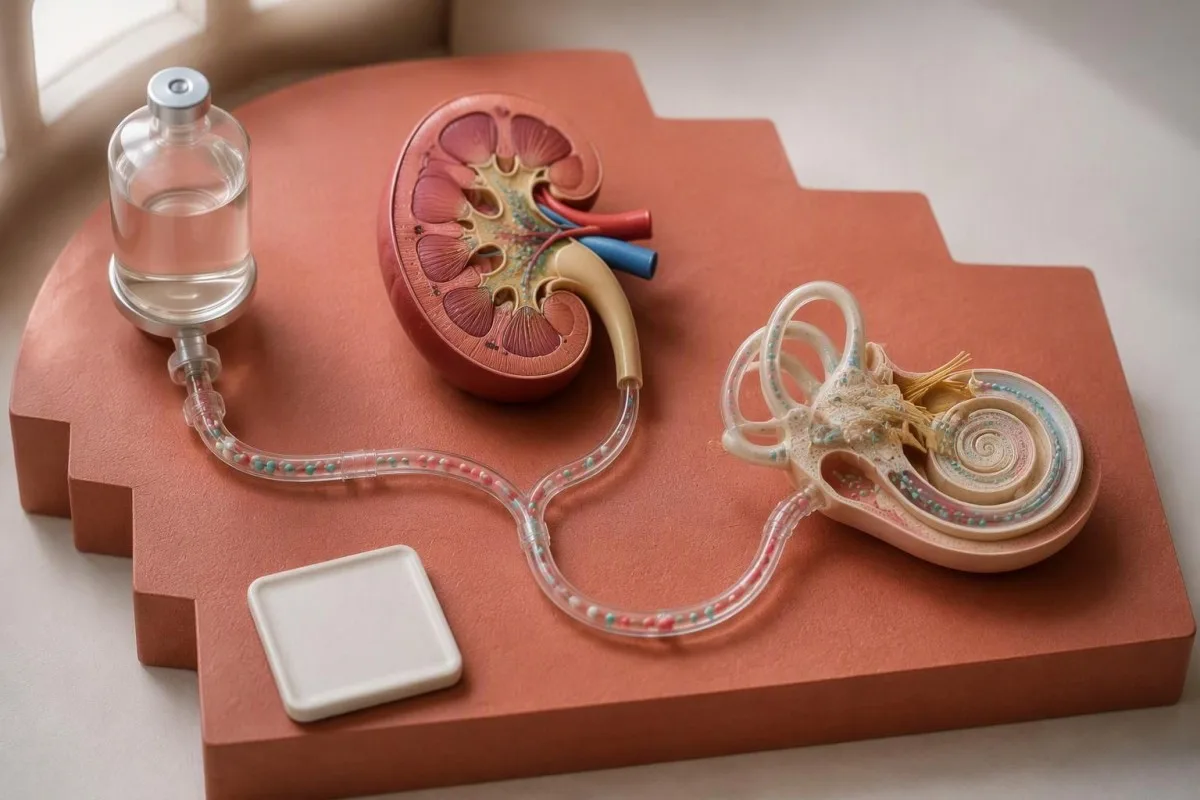
The Hartford program, KDIGO acute kidney injury criteria, and CPIC aminoglycoside pharmacogenetics guideline answer 3 different questions: how to interpret a qualifying timed level, how to recognize kidney injury, and when genetic susceptibility changes antibiotic selection. None can turn an unlabeled concentration into a complete treatment decision, and differences between hospital targets should be resolved using the patient's actual protocol.
Kantesti bir Yapay zekâ destekli kan testi analiz aracı that can help organize gentamicin results alongside creatinine and electrolyte trends when the required context is supplied. A 0.3 mg/dL creatinine rise still requires clinician assessment regardless of how a report is summarized; our teknik ve klinik gözetimimiz describes evaluation boundaries rather than claiming validation for autonomous gentamicin dosing.
The Global Health Report 2026 and the RDW guide listed below are 2 separate publications, not evidence that AI can prevent aminoglycoside toxicity. Kantesti's tıbbi içerik standartları distinguish educational interpretation from prescribing; patients should use this article to ask better timing and safety questions, not to choose their next dose.
Sıkça sorulan sorular
Normal bir gentamisin çukur düzeyi nedir?
Geleneksel bir gentamisin çukur düzeyinin genellikle 1 mg/L'nin altında olması hedeflenir, ancak bazı protokollerde 2 mg/L'nin altı kullanılır. Numunenin genellikle yalnızca planlanan doz saatinden önce değil, bir sonraki gerçek dozdan önceki 30 dakika içinde alınması gerekir. Uzatılmış aralıklı rejimlerde farklı bir doz öncesi eşik veya bunun yerine belirli bir zamanda ölçülen nomogram konsantrasyonu kullanılabilir. Kabul edilebilir bir çukur düzeyi; böbrek, işitme veya denge toksisitesini dışlamaz.
Gentamisin pik düzeyi ne zaman ölçülmelidir?
A conventional intravenous gentamicin peak level is commonly collected 30 minutes after the infusion ends, but the prescribing service's protocol determines the exact time. For example, an infusion ending at 08:30 may require collection at 09:00 under that protocol. A sample collected immediately after infusion or much later cannot automatically be compared with the same target. Extended-interval monitoring and intramuscular administration use different sampling conventions.
2 mg/L gentamisin düzeyi çok yüksek mi?
Doz rejimi ve örnek alınma zamanı bilinmeden 2 mg/L gentamisin düzeyi sınıflandırılamaz. Bu düzey, birçok geleneksel dip düzey protokolünde hedefi aşar; ancak uzatılmış aralıklı bir rejimde beklenen, zamanlanmış bir konsantrasyon olabilir. Erken veya geç alınan ya da kontamine bir infüzyon hattından alınan örnek de yorumunu değiştirebilir. Bir sonraki dozu kendiniz değiştirmek yerine reçeteleyen ekiple iletişime geçin.
Günde bir kez dozlama için gentamisin düzeyi ne zaman ölçülür?
Uygun bir 7 mg/kg Hartford rejiminde gentamisin konsantrasyonu, infüzyon başladıktan 6–14 saat sonra ölçülür. Diğer uzatılmış aralıklı protokollerde doz öncesi bir ölçüm, doz sonrası 2 ölçüm veya farklı bir doz-zaman çizelgesi kullanılabilir. Rastgele sözcüğü, örnek alma zamanının önemsiz olduğu anlamına gelmez. Bir konsantrasyon yalnızca uygulanan doza ve hastaya uygun protokol kullanılarak yorumlanmalıdır.
Gentamisin düzeyi normal olduğunda böbreklere zarar verebilir mi?
Gentamisinle ilişkili böbrek hasarı, kümülatif maruziyet ve hastaya özgü riskler de önem taşıdığından, konsantrasyonlar reçete edilen hedefler içinde olsa bile ortaya çıkabilir. 48 saat içinde kreatininin en az 0.3 mg/dL veya 26.5 µmol/L artması, KDIGO akut böbrek hasarı kriterlerinden birini karşılar. Aminoglikozidle ilişkili tübüler hasarda idrar çıkışı görece normal kalabilir. Klinisyenler tek bir ilaç düzeyine dayanmak yerine seri kreatinin ölçümlerini, idrar çıkışını, diğer ilaçları ve alternatif nedenleri değerlendirir.
Gentamisin tedaviden sonra işitme kaybına veya baş dönmesine neden olabilir mi?
Gentamisinle ilişkili işitme veya denge belirtileri tedavi bittikten sonra ortaya çıkabilir veya ilerleyebilir; serum düzeylerinin kabul edilebilir olması bu olasılığı dışlamaz. Tinnitus, işitme değişikliği, kalıcı dengesizlik veya yürürken görmenin sıçraması gibi tek bir yeni belirti bile hızla klinik değerlendirme gerektirir. Gentamisin, belirgin işitme kaybı veya dönme hissi olmadan vestibüler işlevi etkileyebilir. Gentamisin konsantrasyonu iç kulak işlevini ölçen bir test olmadığından değerlendirmede işitme ve vestibüler testler yer alabilir.
Kan tahlili sonuçları ne anlama gelir
Laboratuvar raporunuzu yükleyin; Kantesti'nin AI'ı her biyobelirteci saniyeler içinde sade bir dille açıklar. Dünya genelinde 2 milyondan fazla kişi tarafından kullanılıyor.
Referanslar
- Klein, T., Mitchell, S. & Weber, H. (2026). Yapay Zeka Kan Testi Analizörü: 2,5M Test Analiz Edildi | Global Health Report 2026. Kantesti AI Tıbbi Araştırma. DOI
- Klein, T., Mitchell, S. & Weber, H. (2026). RDW Kan Testi: RDW-CV, MCV ve MCHC için Eksiksiz Rehber. Kantesti AI Tıbbi Araştırma. DOI
- Nicolau DP et al. (1995). Experience with a once-daily aminoglycoside program administered to 2,184 adult patients. Antimicrobial Agents and Chemotherapy. DOI
- KDIGO Acute Kidney Injury Work Group (2012). KDIGO Clinical Practice Guideline for Acute Kidney Injury. Kidney International Supplements.
- McDermott JH et al. (2022). Clinical Pharmacogenetics Implementation Consortium Guideline for the Use of Aminoglycosides Based on MT-RNR1 Genotype. Clinical Pharmacology & Therapeutics. DOI
- 2 milyondan fazlaAnaliz edilen testler
- 127+Ülkeler
- 100+Diller
Sağlık ekibi hakkında


E-E-A-T Güven Sinyalleri
Deneyim
Hekim liderliğinde laboratuvar yorumlama iş akışlarının klinik incelemesi.
Uzmanlık
Klinik bağlamda biyobelirteçlerin nasıl davrandığına odaklanan laboratuvar tıbbı.
Otorite
Dr. Thomas Klein tarafından tıbbi açıdan incelenmiş; Dr. Sarah Mitchell ve Prof. Dr. Hans Weber'in katkılarıyla hazırlanmıştır.
Güvenilirlik
Alarmı azaltmaya yönelik net takip yollarıyla kanıta dayalı yorumlama.
Tıbbi sorumluluk reddi
Bu makale yalnızca eğitim amaçlıdır ve tıbbi tavsiye niteliği taşımaz. Tanı ve tedavi kararları için her zaman yetkin bir sağlık hizmeti sağlayıcısına danışın.
Yayınlanmış · Yayın ekibiyle iletişime geçin
Kantesti Ltd tarafından yayımlanmıştır; İngiltere ve Galler'de kayıtlı, şirket no. 17090423, Londra, Birleşik Krallık.
