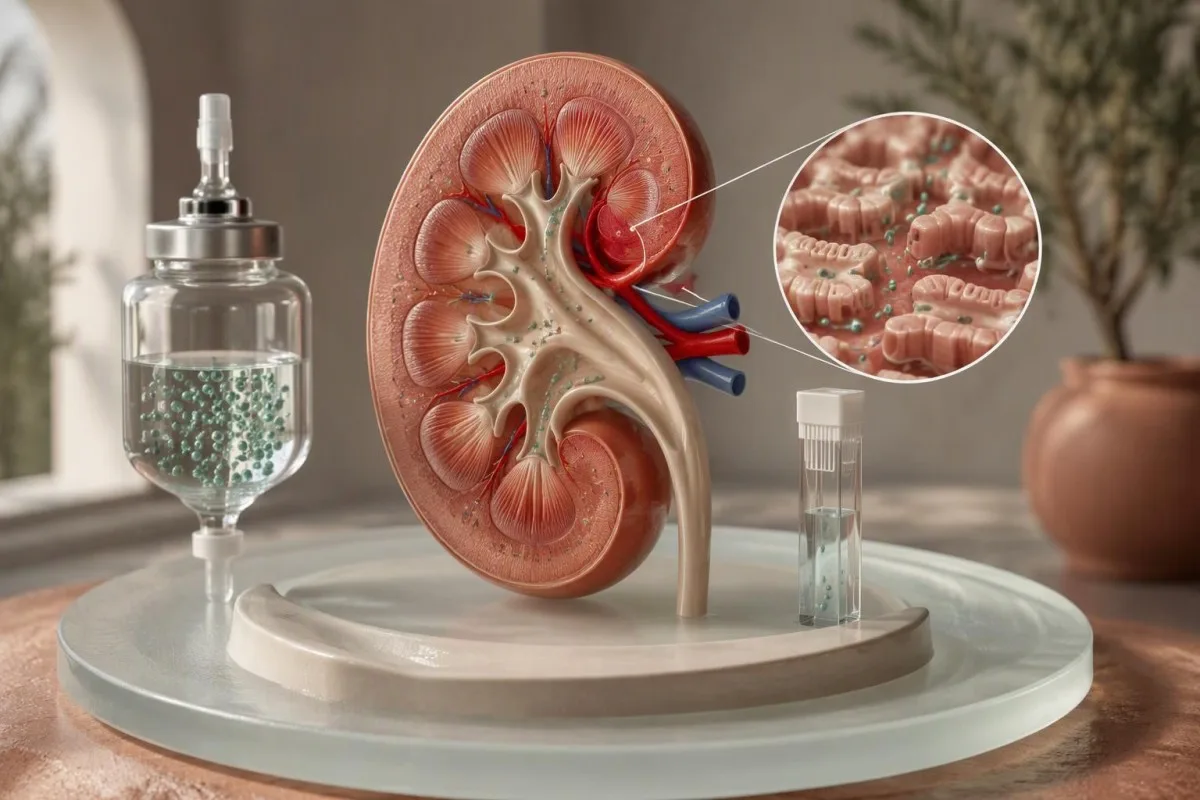
Gentamicin levels only make sense alongside the dose, dosing regimen, and exact sampling time. Conventional treatment uses peak-and-trough targets; extended-interval treatment often uses a timed concentration and a protocol-specific chart, while kidney tests and hearing or balance symptoms provide separate safety checks.

Төп нәтиҗәләр
- Gentamicin levels measure antibiotic concentration, usually in mg/L; 1 mg/L equals 1 µg/mL.
- Conventional peak targets commonly fall around 5–10 mg/L in adults, but the infection, indication, and sampling method determine the actual target.
- Conventional trough targets are often below 1 mg/L; some protocols use below 2 mg/L. Neither threshold guarantees freedom from toxicity.
- Sampling time must be recorded precisely: a conventional intravenous peak is commonly collected 30 minutes after the infusion ends, and a trough within 30 minutes before the next actual dose.
- Extended-interval monitoring is different: the Hartford protocol uses a concentration collected 6–14 hours after the start of a qualifying 7 mg/kg dose.
- Бөер зарарлануы can meet KDIGO criteria with a creatinine rise of at least 0.3 mg/dL, or 26.5 µmol/L, within 48 hours—even when the result remains inside the laboratory range.
- Hearing and balance toxicity can occur despite apparently acceptable concentrations; new tinnitus, hearing change, imbalance, or bouncing vision needs prompt clinical review.
- Доза карарлары belong to the prescribing team or clinical pharmacist. Never independently change a dose, delay an infusion, or apply an online nomogram.
What do gentamicin levels actually measure?
Gentamicin levels measure the concentration of gentamicin in a laboratory sample, not kidney function or treatment success by themselves. A result of 2 mg/L can be reassuring, concerning, or uninterpretable depending on whether it is a trough, an early post-dose sample, or a timed extended-interval measurement.
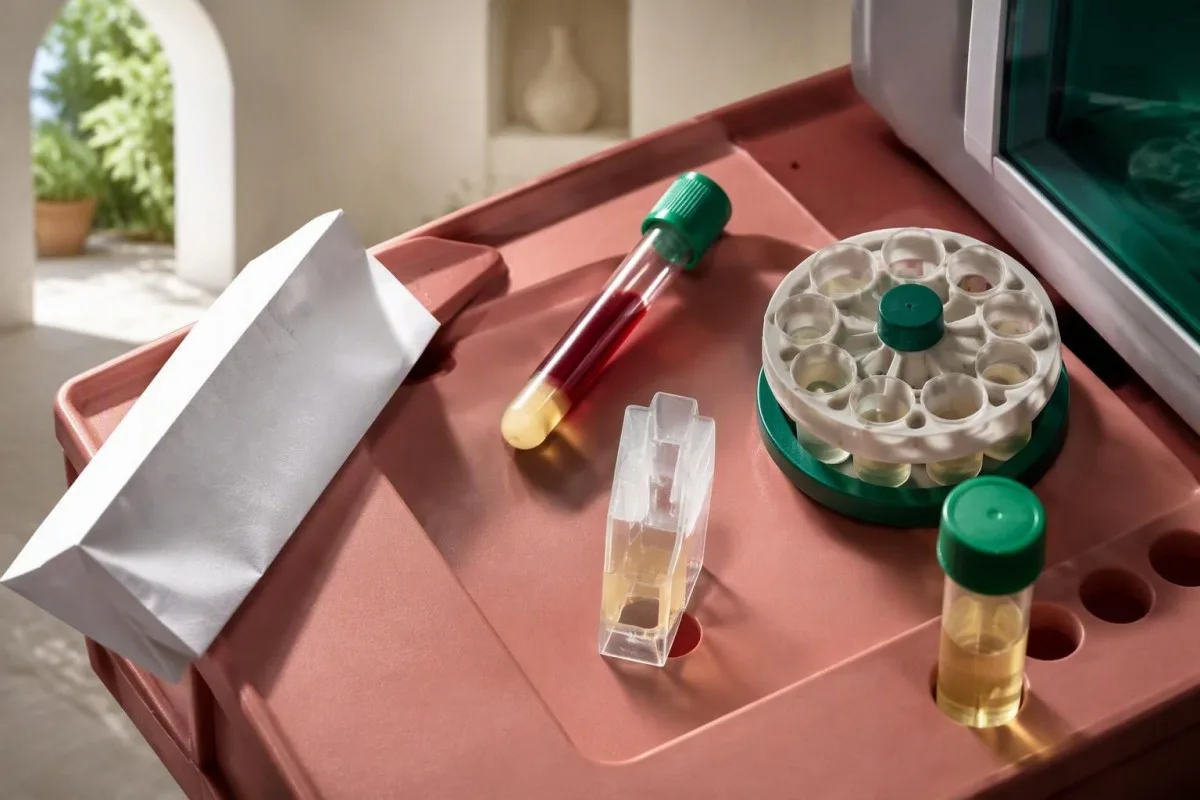
Laboratories commonly report gentamicin in mg/L or µg/mL, which are numerically equivalent: 1 mg/L equals 1 µg/mL. A therapeutic interval printed beside the result may describe conventional dosing only; it should not automatically be applied to once-daily treatment or low-dose combination treatment for selected endocarditis regimens.
Кантести - ЯИ анализы that can help explain why a gentamicin concentration of 2 mg/L needs dosing and timing context before interpretation. Our оешма һәм клиник максат are separate from the hospital prescribing service; we do not authorize antibiotic doses or replace therapeutic drug monitoring.
An isolated laboratory flag is not a diagnosis. For example, a hypothetical report marked high at 12 mg/L might reflect an appropriately timed concentration after an extended-interval dose rather than an excessive conventional peak; our explanation of диапазоннан чит лаборатор билгеләр describes why the attached reference interval can mislead.
Why does gentamicin monitoring timing change the result?
Gentamicin monitoring timing matters because the concentration rises during administration, distributes into body fluids, and then falls as the kidneys clear it. Clinicians need at least 3 timestamps: infusion start, infusion finish, and sample collection, plus the actual time of the next dose when interpreting a trough.
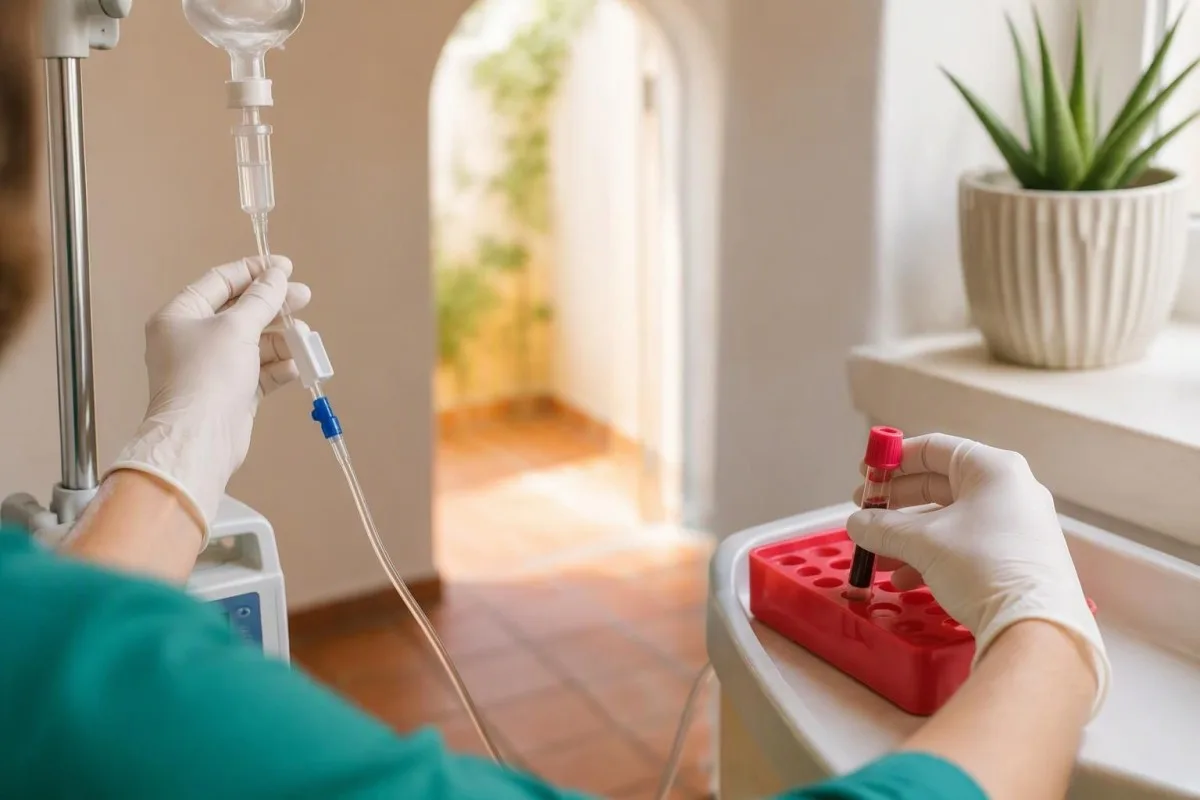
With normal kidney function, gentamicin's elimination half-life is often approximately 2–3 сәгать, although illness and distribution changes can alter the concentration curve. A sample taken immediately after an infusion can capture the distribution phase; it is not interchangeable with a later peak collected using the hospital's specified method.
A scheduled dose time cannot substitute for the administration record. In a hypothetical 08:00 dose delayed until 09:10, a sample collected at 09:00 is still pre-dose, whereas a chart that assumes administration occurred at 08:00 might incorrectly label it post-dose; the difference changes the clinical question completely.
Sample collection from an infusion line can produce a falsely high result if residual gentamicin contaminates the specimen, so staff follow local collection and flushing procedures. Timing problems also occur with other medicines, but the required waiting period differs; our digoxin sampling-time explanation should not be used as a gentamicin schedule.
How does conventional peak-and-trough monitoring work?
Conventional gentamicin monitoring uses a post-dose peak to assess exposure and a pre-dose trough to assess residual drug before the next administration. For selected adults receiving divided doses, intervals may be 8 or 12 hours, but kidney function and the treatment indication determine the prescribed schedule.
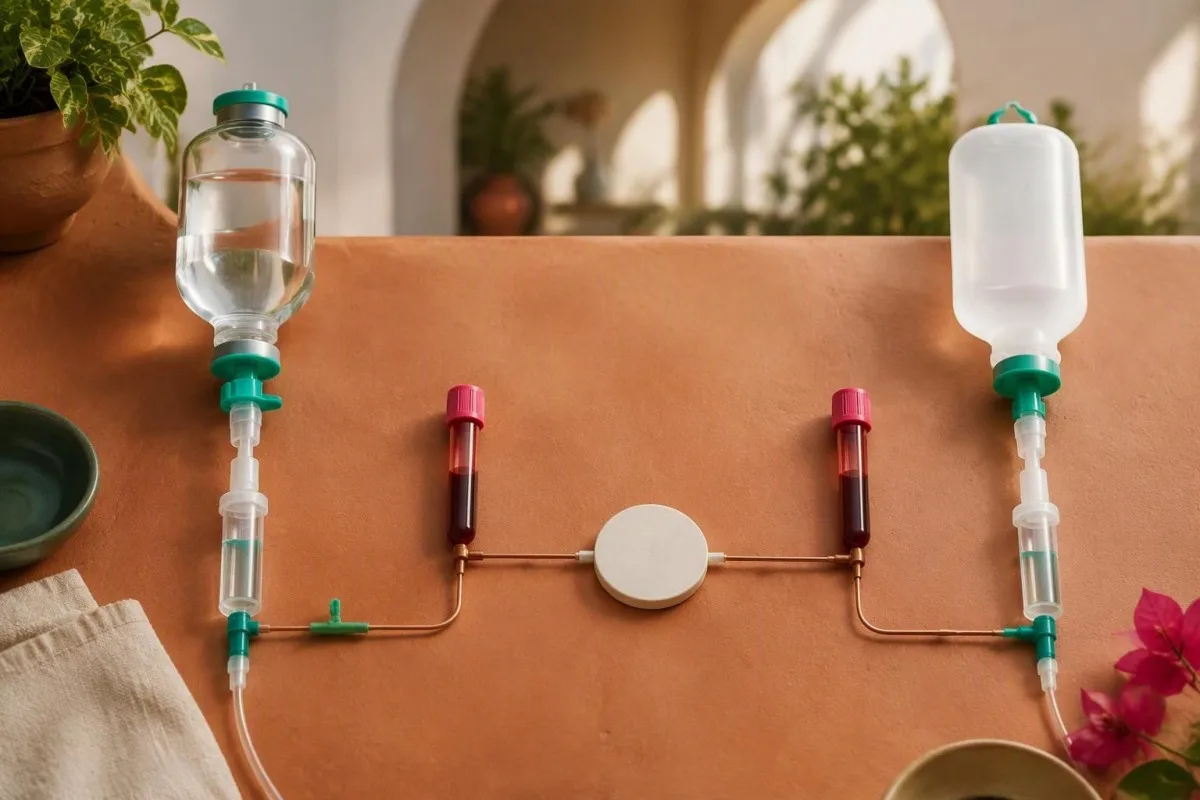
After an intravenous infusion, a conventional gentamicin peak level is commonly collected 30 minutes after the infusion finishes; some protocols specify a different time. A gentamicin trough level is commonly collected within 30 minutes before the next actual dose, and intramuscular administration uses a different post-dose sampling convention.
Some services obtain the first paired measurements around the 3rd or 4th dose, when concentrations are approaching a repeatable pattern in patients with stable clearance. That is not a reason to postpone assessment in someone with worsening kidney function, unexpected dosing, or symptoms; such patients may require earlier measurements and individualized pharmacokinetic review.
A peak and trough are useful only if the preceding doses were actually administered as documented. A missed dose, a changed infusion duration, or a sample collected 2 hours early can invalidate an otherwise neat-looking pair; similar documentation principles appear in our carbamazepine trough timing guide, although the therapeutic targets are unrelated.
What gentamicin peak level do clinicians aim for?
A conventional gentamicin peak level commonly targets approximately 5–10 mg/L in adults, but there is no universal target for every infection. Some low-dose synergy protocols use peaks around 3–5 mg/L, while extended-interval concentrations must not be judged against the conventional peak range.
Gentamicin exhibits concentration-dependent antibacterial activity: for susceptible Gram-negative organisms, a peak-to-minimum inhibitory concentration ratio around 8–10 is a commonly used pharmacodynamic goal. The minimum inhibitory concentration, or MIC, describes the organism's susceptibility; a peak of 8 mg/L has a different meaning when the MIC is 0.5 rather than 2 mg/L.
A low measured peak does not always mean the prescribed dose was too small. A hypothetical patient with major fluid expansion might have a larger distribution volume, while a peak sample collected 90 minutes late could be lower simply because elimination has continued; the pharmacist distinguishes these possibilities before changing treatment.
Selected combination regimens use gentamicin for synergy, not the same exposure goals used for stand-alone Gram-negative treatment. High-level aminoglycoside resistance can prevent that synergy and is not solved by chasing a higher concentration; our antifungal trough target discussion illustrates why drug-specific targets cannot be borrowed across treatments.
| Дәрәҗә | Диапазон | Мәгънәсе |
|---|---|---|
| Conventional adult peak | Commonly 5–10 mg/L | Illustrative target used by some protocols; indication and the specified collection time determine interpretation. |
| Selected synergy peak | Often 3–5 mg/L | Applies only to particular low-dose combination protocols, not every endocarditis regimen. |
| Conventional adult trough | Often <1 mg/L; some protocols <2 mg/L | Lower residual exposure reduces concern about accumulation but does not exclude toxicity. |
| Extended-interval concentration | No universal peak-and-trough reference interval | Interpret using the actual elapsed time and the validated protocol for the administered dose. |
What does a high gentamicin trough level suggest?
A high, correctly timed gentamicin trough level suggests that substantial drug remains before the next dose, often because clearance is reduced or the interval is too short. Many conventional protocols aim below 1 mg/L; others accept below 2 mg/L, so the prescribing service's target must be checked.
A trough is a clearance signal, not a direct measurement of kidney tissue exposure. Gentamicin can accumulate within renal proximal tubular cells over repeated treatment, so a trough below 1 mg/L does not erase the effects of cumulative exposure, concurrent nephrotoxic medicines, or a kidney problem that is only beginning.
The direction of causation can run both ways: reduced kidney function raises gentamicin concentrations, and gentamicin-associated tubular injury can further reduce clearance. For example, a hypothetical trough rising from 0.6 to 1.4 mg/L on an unchanged schedule may prompt review of creatinine trends, actual dose times, fluid status, and other medicines rather than a conclusion based on the concentration alone.
A sample collected 2 hours before the next dose will usually be higher than a true pre-dose trough and should not be casually relabeled. Conversely, a sample after an unusually long delay may look reassuring without representing the usual schedule; our tacrolimus trough interpretation guide explains the same documentation problem with a different drug.
How is extended-interval gentamicin monitoring different?
Extended-interval gentamicin uses a larger individual dose followed by a longer drug-free interval, and monitoring often relies on a timed post-dose concentration rather than conventional paired levels. Selected adult protocols use approximately 5–7 mg/kg per dose, but the exact dose, interval, and eligibility criteria are service-specific.
The rationale combines concentration-dependent killing with a post-antibiotic effect, meaning bacterial growth may remain suppressed after the circulating concentration falls. A once-daily regimen therefore does not require a conventional trough to remain detectably therapeutic; intentionally low late concentrations are part of the strategy, not proof that treatment has stopped working.
Selected extended-interval protocols use 24-, 36-, or 48-hour intervals, but once-daily is an imprecise label when impaired clearance requires longer spacing. Some hospitals use a pre-dose concentration, some a single timed nomogram sample, and others 2 concentrations or model-based exposure estimates; these approaches are not interchangeable without their accompanying dosing rules.
Extended-interval treatment is not suitable for every patient or indication, and reduced renal toxicity in selected populations does not mean zero risk. Our vancomycin exposure monitoring guide explains another antibiotic-specific approach; the vancomycin AUC target of 400–600 mg·h/L is not a gentamicin target.
When can a Hartford nomogram interpret gentamicin levels?
The Hartford nomogram applies to qualifying extended-interval aminoglycoside treatment using a 7 mg/kg dose and a concentration collected 6–14 hours after infusion start. It helps clinicians choose an interval; it is not a universal chart for any gentamicin dose, any collection time, or any patient.
The original Hartford experience described 2,184 adult patients receiving a once-daily aminoglycoside program, providing the clinical background for its dose-and-time framework (Nicolau et al., 1995). The 6–14-hour measurement is sometimes called a random level, but random here means not a conventional peak or trough—not that its timing is optional.
Hospitals restrict or modify this approach in populations such as pregnancy, dialysis, unstable renal function, major burns, cystic fibrosis, or selected endocarditis regimens. A hypothetical concentration of 2.2 mg/L collected 10 hours after a 5 mg/kg dose cannot simply be plotted on an unmodified 7 mg/kg Hartford chart to obtain a reliable interval.
If the sample falls outside the validated window, clinicians may request another level or calculate individualized pharmacokinetics rather than force a point onto the chart. Our delayed drug-clearance explanation illustrates why elapsed time is part of a drug result, although methotrexate rescue thresholds have no role in gentamicin dosing.
How do two hypothetical gentamicin reports compare?
Two identical gentamicin results can mean different things when the sampling schedules differ. The following 2 hypothetical examples demonstrate conventional and extended-interval interpretation; they are not dosing instructions, and neither example supplies enough information for a patient to choose the next dose.
In hypothetical example A, a conventional infusion starts at 08:00, ends at 08:30, and the prescribed peak sample is collected at 09:00. A result of 8 mg/L fits many conventional peak targets if the indication agrees; a separate 15:40 sample before a 16:00 dose provides the trough information that the peak cannot supply.
In hypothetical example B, an eligible 70 kg adult receives a clinician-prescribed 490 mg dose, corresponding to 7 mg/kg, with infusion start at 08:00. A sample at 18:00 is 10 hours after infusion start and is interpreted under the applicable extended-interval protocol; calling that result a low peak or a high trough would ask the wrong question.
Neither timeline establishes kidney safety without baseline and follow-up renal information, and the prescribed dosing weight may differ from scale weight. Before collection, patients can confirm that staff have the actual administration record and the intended test type; our baseline sample preparation checklist helps distinguish useful preparation from unnecessary fasting or medication changes.
How do clinicians detect gentamicin-associated kidney injury?
Clinicians assess possible gentamicin-associated kidney injury using creatinine changes, urine output, exposure history, and alternative causes—not the gentamicin concentration alone. KDIGO defines acute kidney injury by a creatinine rise of at least 0.3 mg/dL within 48 hours, a rise to at least 1.5 times baseline within 7 days, or qualifying low urine output.
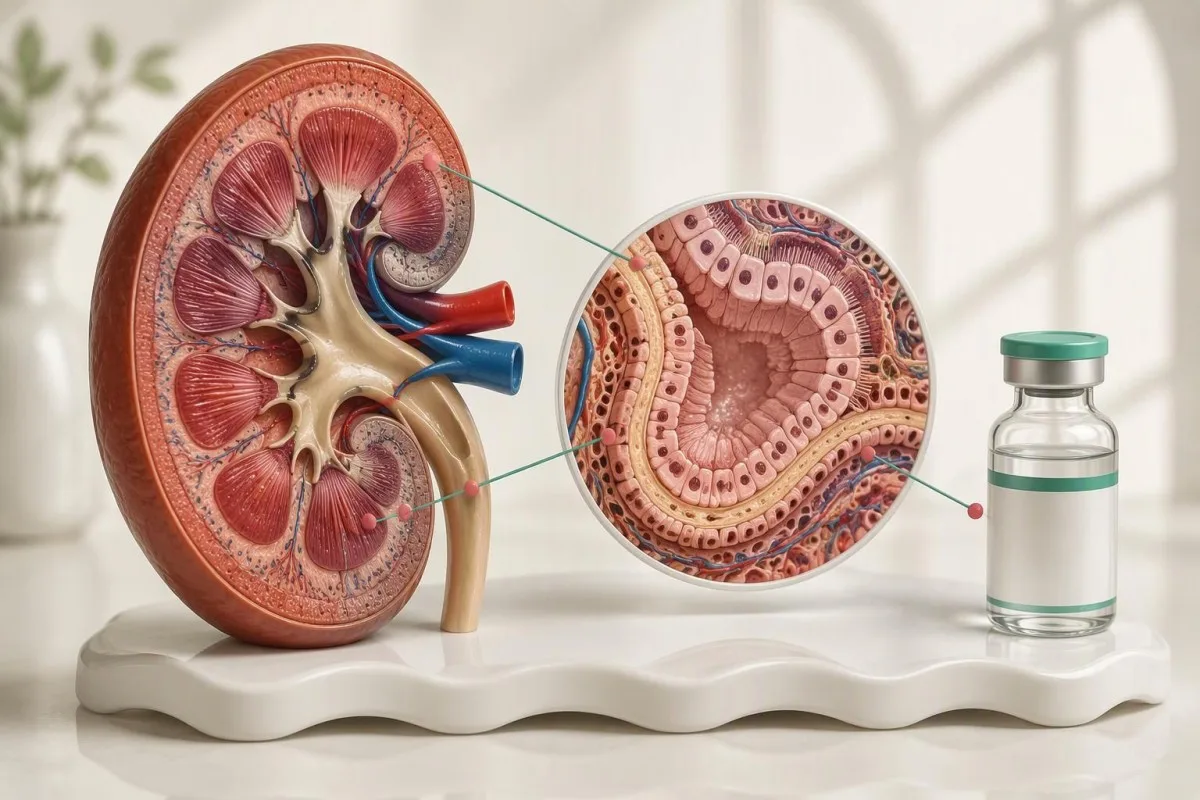
.Әр сүзнең 0.3 mg/dL threshold equals 26.5 µmol/L, and it can identify injury even when both values sit inside the laboratory interval (KDIGO Acute Kidney Injury Work Group, 2012). For example, a hypothetical creatinine increase from 0.7 to 1.0 mg/dL within 48 hours meets that criterion; normal-looking is not the same as unchanged.
KDIGO's urine-output criterion includes less than 0.5 mL/kg/hour for 6 hours: for a 70 kg adult, that is below 35 mL/hour over the specified period. Gentamicin-associated injury can also be non-oliguric, meaning urine output remains relatively preserved, so passing urine normally does not rule out an important creatinine rise.
Sepsis, low blood pressure, dehydration, urinary obstruction, and other medicines can produce similar changes, and attribution requires clinical assessment. Our BUN һәм креатинин нисбәте чикләүләрен аңлата explains useful context without treating the ratio as diagnostic; seek prompt advice for markedly reduced urine or the warning signs described in our low kidney function symptoms мәкаләсендә дә очрый.
Which kidney and electrolyte checks accompany gentamicin levels?
Gentamicin safety monitoring usually includes baseline and repeat serum creatinine, with electrolytes and urine assessment when clinically indicated. Hospitalized adults often have daily renal checks during ongoing treatment, but outpatient schedules depend on stability, treatment duration, local protocol, and whether a change occurs within 24–48 hours.
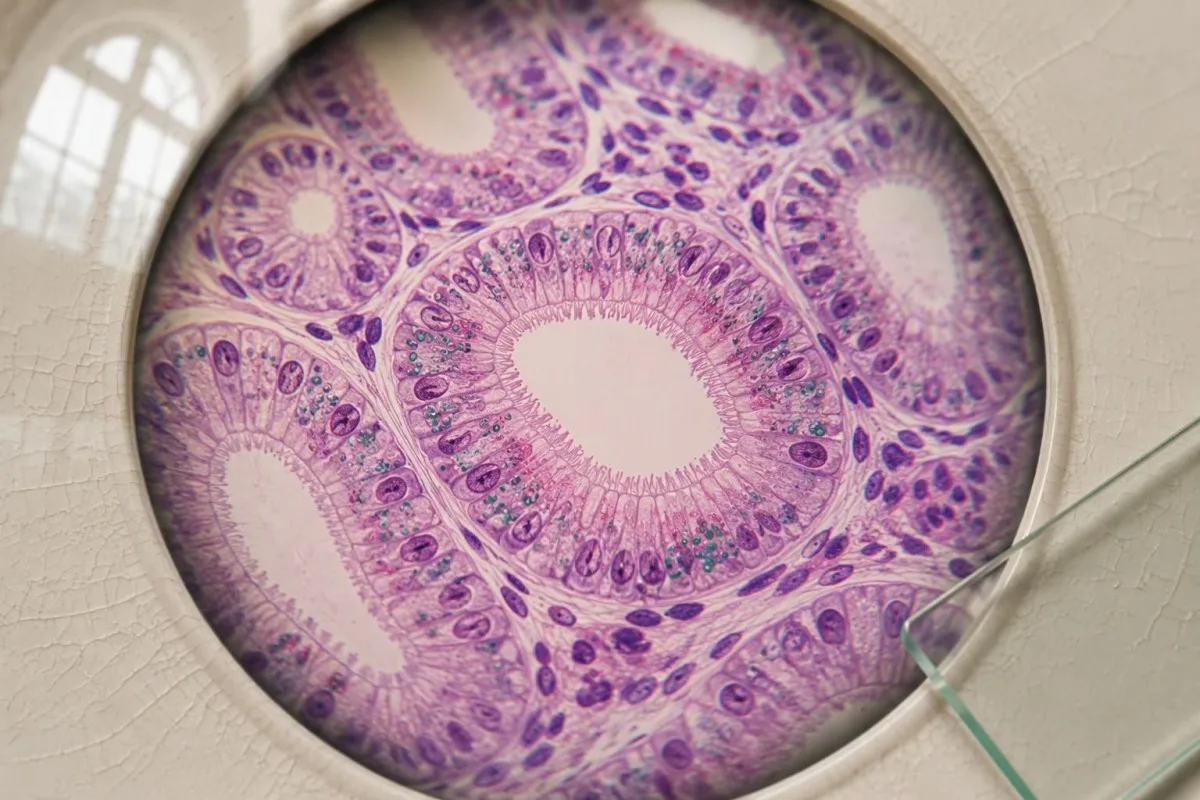
Creatinine is a delayed marker of changing filtration, and automated eGFR assumes relatively steady creatinine production and clearance. During evolving acute kidney injury, an eGFR reported as 60 mL/min/1.73 m² may not accurately describe current clearance; clinicians often rely on the trajectory and an appropriate drug-dosing renal assessment rather than the printed number alone.
Aminoglycoside-related tubular dysfunction can cause magnesium or potassium wasting, sometimes before a major creatinine increase. For example, a hypothetical magnesium of 0.55 mmol/L with new weakness deserves assessment of renal losses, gastrointestinal losses, and medicines; our electrolyte safety patterns explain why replacement must reflect the whole clinical picture.
Urinary granular casts can support tubular injury but neither prove gentamicin caused it nor reliably exclude injury when absent. Our granular cast interpretation guide separates suggestive findings from diagnosis; the broader сидек анализын аңлату буенча кулланма explains why 1 urine specimen cannot substitute for serial renal assessment.
Who needs more individualized gentamicin safety monitoring?
Patients with unstable kidney function, major changes in body-fluid volume, repeated exposure, or concurrent nephrotoxic medicines need particularly individualized gentamicin monitoring. Older adults, neonates, pregnancy, dialysis, obesity, and severe illness can also make standard adult dosing assumptions unreliable; a 7 mg/kg protocol should not be generalized across these groups.
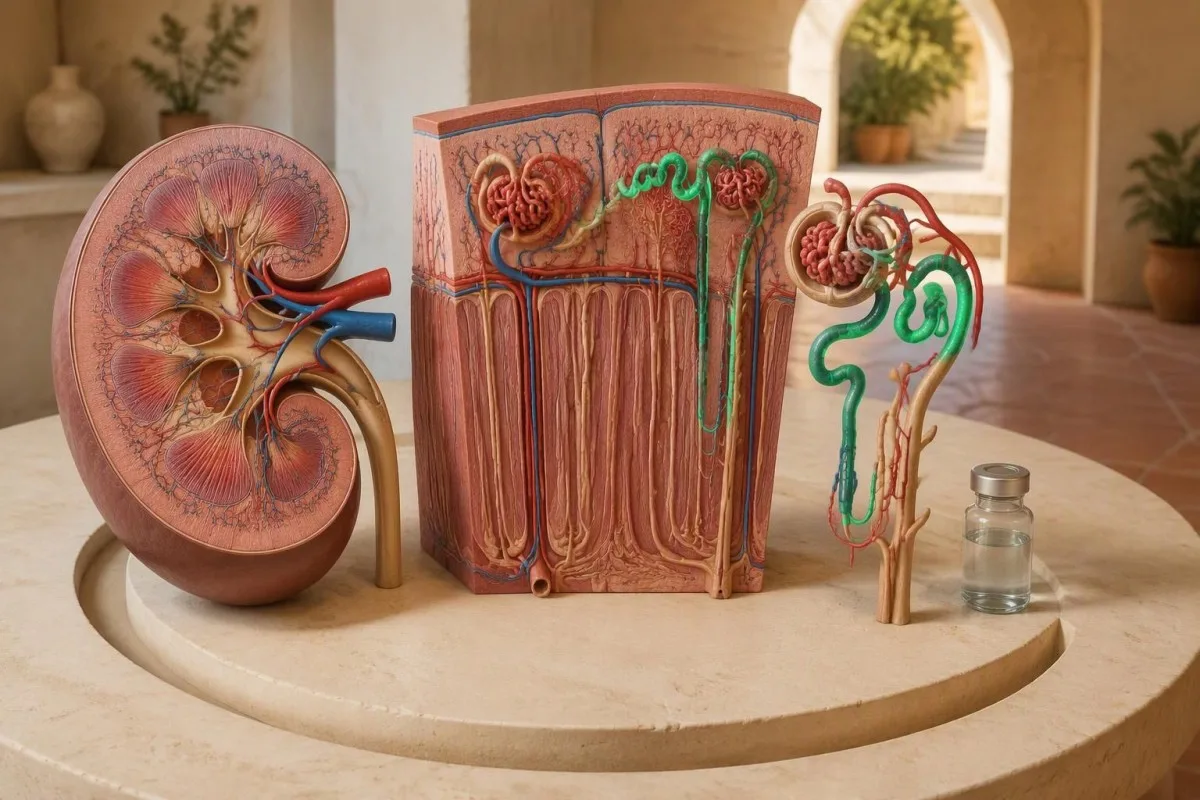
Risk generally increases with cumulative exposure and longer treatment, particularly when courses extend beyond approximately 5–7 days, although shorter courses are not risk-free. Concurrent vancomycin, amphotericin B, some chemotherapy agents, and nonsteroidal anti-inflammatory medicines can complicate renal safety; dehydration or low blood pressure may add a second stressor rather than an independent laboratory clue.
The dosing weight is not always the measured weight: obesity may require an adjusted-weight method, while ascites, edema, major burns, or critical illness can alter the distribution volume. A hypothetical 100 kg patient therefore should not calculate a dose by multiplying scale weight by 7; the hospital's weight convention and renal method are part of the prescription.
A creatinine clearance expressed in мл/мин is not identical to an indexed eGFR expressed in mL/min/1.73 m², and low muscle mass can hide impaired filtration behind a modest creatinine value. Our dehydration and filtration explanation describes reversible changes, but a new decline during gentamicin treatment still needs review rather than being assumed temporary.
Can gentamicin affect hearing or balance with acceptable levels?
Gentamicin can cause hearing or vestibular toxicity even when measured concentrations fall within the prescribed targets. New tinnitus, hearing change, unsteadiness, or oscillopsia—vision that appears to bounce during walking—requires prompt contact with the treatment team; there is no serum concentration that guarantees inner-ear safety.
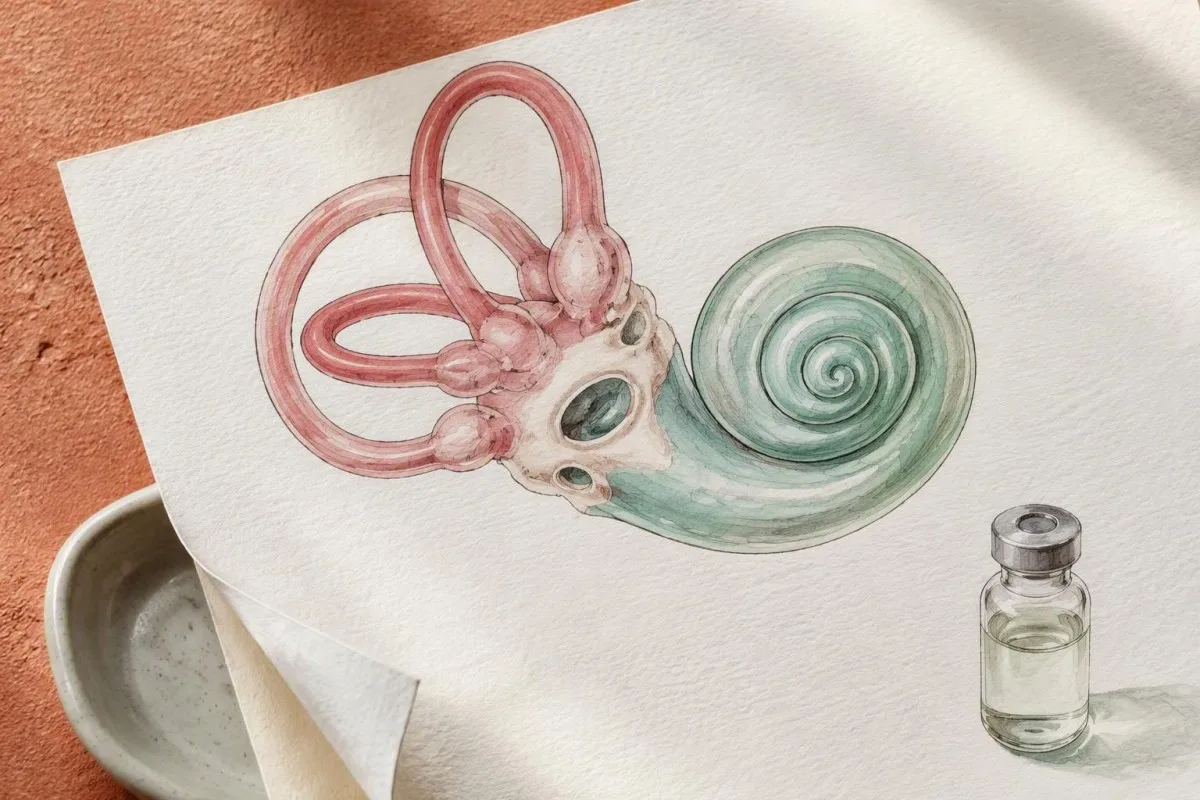
Gentamicin is particularly associated with vestibular toxicity, which affects balance and visual stability rather than hearing alone. Bilateral vestibular impairment may cause difficulty walking in darkness or bouncing vision without dramatic spinning vertigo; after even 1 new symptom, patients should report the change instead of waiting for the next routine blood test.
Baseline hearing and balance history helps interpret subsequent changes, and clinicians may arrange audiometry, including high-frequency assessment, or vestibular testing for prolonged or higher-risk treatment. A normal conventional hearing test does not exclude early high-frequency change or a vestibular problem; symptoms can emerge or progress after the final dose, and some effects are permanent.
.Әр сүзнең MT-RNR1 variants m.1555A>G and m.1494C>T are associated with increased aminoglycoside-related hearing-loss risk. The CPIC guideline recommends avoiding aminoglycosides in people with relevant high-risk variants unless the seriousness of the condition and lack of suitable alternatives justify treatment (McDermott et al., 2022); genetic testing must not delay urgent treatment without a clinician-directed plan.
Кантести - AI кан анализы нәтиҗәләрен аңлату платформасы, but a gentamicin concentration of 0.8 mg/L cannot establish normal hearing or vestibular function. Our җаваплы ЯИ чикләүләре explain why laboratory interpretation must remain separate from examination, audiology, emergency assessment, and decisions about the next antibiotic administration.
What should you do with an unexpected gentamicin result?
Contact the prescribing team or clinical pharmacist about an unexpected gentamicin result, especially when the next dose is approaching or symptoms have appeared. Do not independently change the dose or interval; a concentration of 2 mg/L means different things under different protocols, and an urgent decision needs the administration record.

Provide 5 practical details: the reported concentration and units, dose, infusion start and finish, sample collection time, and the latest creatinine with its earlier baseline. Also mention missed or delayed doses, urine changes, tinnitus, hearing change, imbalance, and nonprescription medicines; symptoms deserve attention even when the laboratory has not marked the result high.
If you are in hospital, alert the nurse or treatment team immediately rather than altering the infusion equipment yourself. If you receive home infusions, use the service's urgent contact route before the next planned administration when there is a concerning result; our secure clinical result-sharing guide explains how to preserve the original report and its timestamps.
Kantesti AI can support explanation of units and trends, but it cannot confirm whether an 18:00 sample belongs on a hospital's nomogram or authorize a treatment change. When sharing results for educational interpretation, remove unnecessary identifiers and review our хосусыйлык һәм мәгълүмат турында мәгълүмат; privacy precautions must never delay urgent medical contact.
Research context and limits of AI gentamicin interpretation
Clinical interpretation of gentamicin levels depends on validated dosing protocols, kidney-injury definitions, and separate assessment of hearing and balance. The 3 external medical references below support those clinical discussions; the 2 additional Kantesti publications describe platform or educational work and are not gentamicin dosing or toxicity-validation studies.
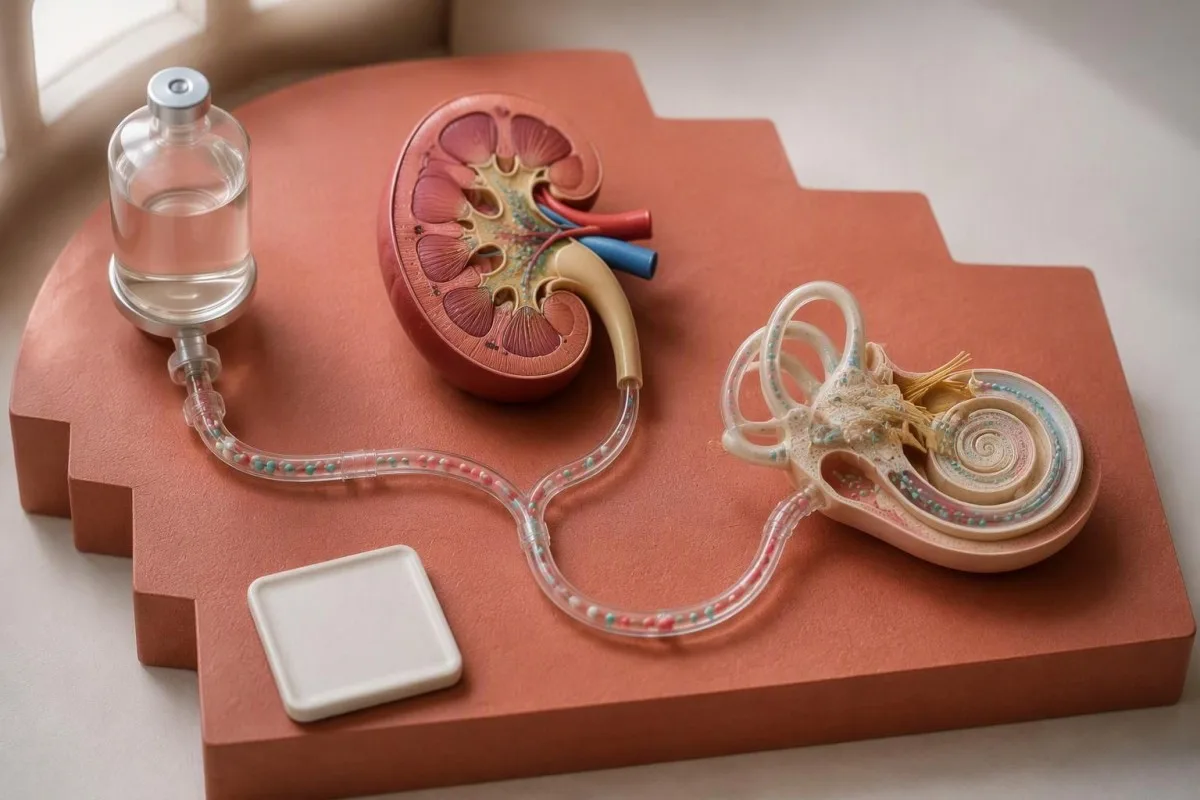
The Hartford program, KDIGO acute kidney injury criteria, and CPIC aminoglycoside pharmacogenetics guideline answer 3 different questions: how to interpret a qualifying timed level, how to recognize kidney injury, and when genetic susceptibility changes antibiotic selection. None can turn an unlabeled concentration into a complete treatment decision, and differences between hospital targets should be resolved using the patient's actual protocol.
Кантести - AI нигезендәге кан анализы тикшерү коралы that can help organize gentamicin results alongside creatinine and electrolyte trends when the required context is supplied. A 0.3 mg/dL creatinine rise still requires clinician assessment regardless of how a report is summarized; our техник һәм клиник күзәтү describes evaluation boundaries rather than claiming validation for autonomous gentamicin dosing.
The Global Health Report 2026 and the RDW guide listed below are 2 separate publications, not evidence that AI can prevent aminoglycoside toxicity. Kantesti's медицина эчтәлегенә стандартлар distinguish educational interpretation from prescribing; patients should use this article to ask better timing and safety questions, not to choose their next dose.
Еш бирелгән сораулар
Гентамицинның нормаль минималь дәрәҗәсе нинди?
0 Гадәттәге гентамицинның минималь концентрациясе еш кына 1 мг/л дан түбән булырга тиеш дип билгеләнә, әмма кайбер протоколларда 2 мг/л дан түбән дәрәҗә кулланыла. Үрнәкне гадәттә чираттагы дозаны чынлыкта кабул итүгә 30 минут кала алырга кирәк, билгеләнгән вакытка кадәр генә түгел. Озайтылган интерваллы режимнарда доза алдыннан башка чик дәрәҗәсе яки билгеле вакытта алынган концентрация буенча номограмма кулланылырга мөмкин. Кабул итәрлек минималь концентрация бөерләргә, ишетүгә яки тигезлеккә токсик тәэсир булмавын гарантияләми.
Гентамицинның иң югары концентрациясен кайчан үлчәргә кирәк?
A conventional intravenous gentamicin peak level is commonly collected 30 minutes after the infusion ends, but the prescribing service's protocol determines the exact time. For example, an infusion ending at 08:30 may require collection at 09:00 under that protocol. A sample collected immediately after infusion or much later cannot automatically be compared with the same target. Extended-interval monitoring and intramuscular administration use different sampling conventions.
Гентамицин дәрәҗәсе 2 мг/л булу артык югарымы?
Дозалау режимын һәм кан алу вакытын белмичә, гентамицинның 2 мг/л дәрәҗәсен бәяләп булмый. Күп кенә гадәти минималь концентрация протоколларында ул максатчан дәрәҗәдән югары булыр иде, әмма дозалау аралыгы озайтылган режимда билгеле бер вакытта алынган көтелгән концентрация булырга мөмкин. Канны иртә яки соң алу, яисә инфузия линиясе пычранган булу да нәтиҗәне аңлатуга йогынты ясарга мөмкин. Киләсе дозаны үзегез үзгәртмичә, препаратны билгеләгән медицина хезмәткәрләре белән элемтәгә керегез.
Көнгә бер тапкыр дозалаганда гентамицин дәрәҗәсе кайчан үлчәнә?
7 мг/кг Hartford режимына туры килгәндә, гентамицин концентрациясе инфузия башланганнан соң 6–14 сәгать үткәч алына. Башка озайтылган интерваллы протоколларда дозадан алдагы үлчәү, дозадан соң 2 үлчәү яки башка доза һәм вакыт схемасы кулланылырга мөмкин. «Очраклы» сүзе кан алу вакытының мөһим түгеллеген аңлатмый. Концентрацияне бары тик бирелгән дозага һәм пациентка туры килгән протоколны кулланып кына аңлатырга кирәк.
Гентамицинның дәрәҗәсе нормаль булганда, ул бөерләргә зыян китерә аламы?
Гентамицин белән бәйле бөер зарарлануы билгеләнгән максатчан концентрацияләр чикләрендә дә барлыкка килергә мөмкин, чөнки кумулятив тәэсир һәм пациентка хас куркыныч факторлары да әһәмияткә ия. 48 сәгать эчендә креатининның ким дигәндә 0,3 мг/длга яки 26,5 µmol/Lга күтәрелүе KDIGOның кискен бөер зарарлануы критерийына туры килә. Аминогликозидлар белән бәйле каналчыклар зарарланганда сидек күләме чагыштырмача нормаль булып калырга мөмкин. Табиблар бер препарат концентрациясенә генә таянмыйча, креатининның вакыт узу белән үзгәрешен, сидек күләмен, башка даруларны һәм альтернатив сәбәпләрне бәяли.
Гентамицин белән дәваланганнан соң ишетү сәләте югалуга яки баш әйләнүгә китерергә мөмкинме?
Gentamicin-related hearing or balance symptoms can appear or progress after treatment ends, and acceptable serum levels do not exclude this possibility. Even 1 new symptom—such as tinnitus, hearing change, persistent imbalance, or bouncing vision during walking—deserves prompt clinical review. Gentamicin can affect vestibular function without obvious hearing loss or spinning vertigo. Assessment may include hearing and vestibular tests because a gentamicin concentration is not an inner-ear function test.
Кан анализы нәтиҗәләрен аңлатып алыгыз
Лаборатория хисабыгызны йөкләгез, һәм Kantesti AI һәр биомаркерны секундлар эчендә гади тел белән аңлатыр. Дөнья буйлап 2 миллионнан артык кеше куллана.
Сылтамалар
- Klein, T., Mitchell, S., & Weber, H. (2026). AI кан анализы анализаторы: 2,5M тест анализланган | Глобаль сәламәтлек отчеты 2026. Kantesti AI медицина тикшеренүләре. DOI
- Klein, T., Mitchell, S., & Weber, H. (2026). RDW кан анализы: RDW-CV, MCV һәм MCHC буенча тулы кулланма. Kantesti AI медицина тикшеренүләре. DOI
- Nicolau DP et al. (1995). Experience with a once-daily aminoglycoside program administered to 2,184 adult patients. Antimicrobial Agents and Chemotherapy. DOI
- KDIGO Acute Kidney Injury Work Group (2012). KDIGO Clinical Practice Guideline for Acute Kidney Injury. Kidney International Supplements.
- McDermott JH et al. (2022). Clinical Pharmacogenetics Implementation Consortium Guideline for the Use of Aminoglycosides Based on MT-RNR1 Genotype. Clinical Pharmacology & Therapeutics. DOI
- 2М +Анализланган тестлар
- 127+Илләр
- 100+Телләр
Медицина командасы турында


E-E-A-T ышаныч сигналлары
Тәҗрибә
Табиб җитәкчелегендә лаборатория нәтиҗәләрен аңлату эш процессларын клиник тикшерү.
Белгечлек
Лаборатория медицинасы: биомаркерларның клиник контекстта үз-үзләрен тотышын аңлау.
Авторититет
Доктор Томас Кляйн медицина ягыннан тикшерде; доктор Сара Митчелл һәм профессор доктор Һанс Вебер үз өлешләрен кертте.
Ышанычлылык
Ачык күзәтү юллары белән куркуны киметү өчен дәлилләргә нигезләнгән аңлату.

Медицина турында кисәтү
Бу мәкалә бары тик белем бирү максатларында гына һәм медицина киңәше булып тормый. Диагноз һәм дәвалау карарлары өчен һәрвакыт квалификацияле сәламәтлек саклау белгеченә мөрәҗәгать итегез.
Басылып чыкты · Редакция командасына мөрәҗәгать итегез
Kantesti Ltd нәшер итә, Англия һәм Уэльста теркәлгән, компания №. 17090423, Лондон, Бөекбритания.
