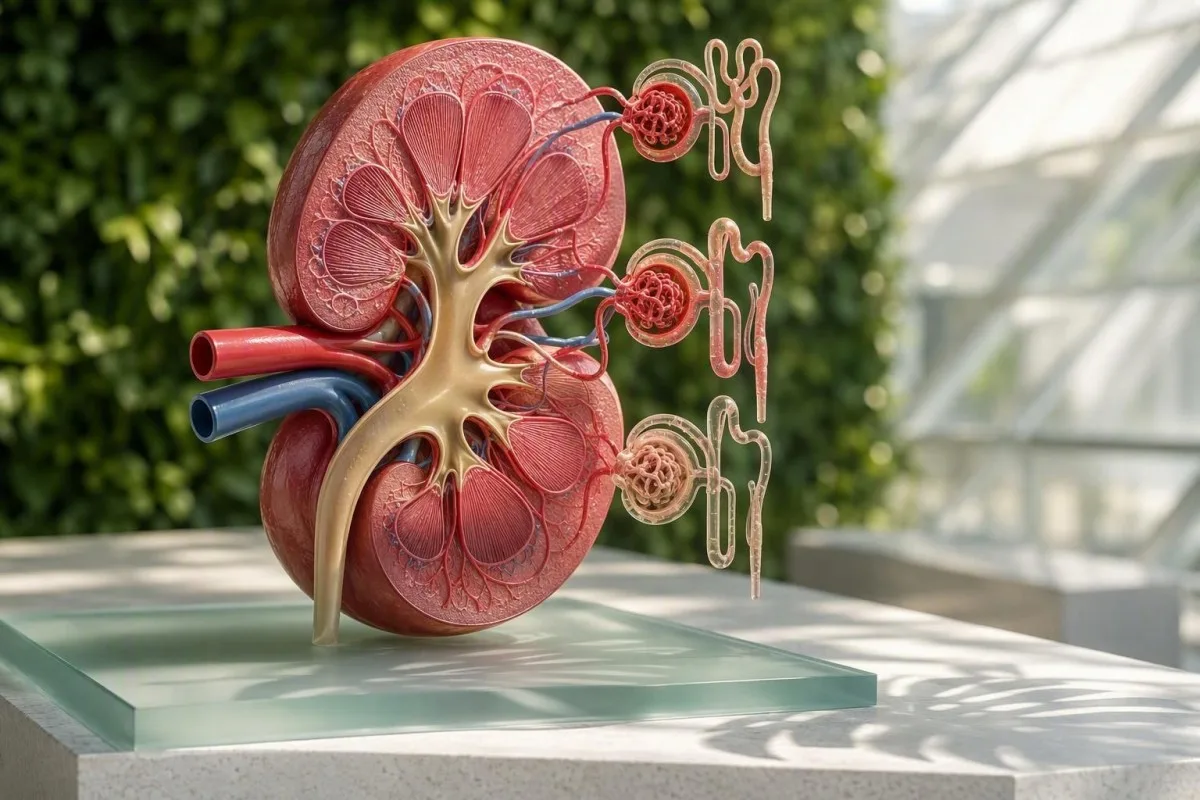
Күпмеме, эсселек, диарея яки сусаудан соң түбән eGFR кире кайтарыла ала. Нәтиҗәгә контекст кирәк: симптомнар, базаль креатинин, сидек табышлары, дарулар һәм сәламәтләнү тизлеге мөһим.


- Вакытлыча түбән GFR сусызлану бөер кан агымын киметкәндә һәм креатининны сәгатьләр яки көннәр дәвамында күтәргәндә барлыкка килә ала.
- AKI чиге - 48 сәгать эчендә кимендә 0,3 мг/дл яки 7 көн эчендә базаль күрсәткечтән 1,5 тапкыр артык креатининның күтәрелүе.
- Креатининны кабат тикшерү гади булмаган шикле сусызлану өчен, еш кына 24-72 сәгать эчендә сыеклык һәм сәламәтләнүдән соң билгеләнә.
- CKD билгеләмәсе 3 ай яки аннан күбрәк вакыт эчендә 60 мл/мин/1,73 м² астында eGFR яки бөер зарарлану маркерларын таләп итә.
- Сидек ACR 30 мг/г яки аннан да күбрәк, eGFR 60 мл/мин/1,73 м² югары булса да, бөер зарарлануын күрсәтә ала.
- ашыгыч тикшерү бик түбән сидек чыгару, буталу, сулау авырлашу, шешенү, көчсезлек яки калий аномалияләре өчен кирәк.
- Дару куркынычы сусаю белән арта, әгәр дә NSAID, АСЕ ингибиторлары, АРБ, диуретик, литий яки SGLT2 дарулары кулланылса.
- Бер генә нәтиҗәнең чикләре мөһим, чөнки бөер функциясе тиз үзгәргәндә креатининга нигезләнгән eGFR ышанычсызрак.
Сусызлану вакытлыча түбән GFR сынау нәтиҗәсен китереп чыгара аламы?
Әйе, сусау бөер фильтрациясен (GFR) тикшерү нәтиҗәсен вакытлыча киметергә мөмкин. чөнки циркуляцияләүче су күләменең кимүе бөерләр аша кан агымын киметә, бу креатининның артуына һәм исәпләнгән eGFRның кимүенә китерә. Әгәр дә сәбәп тиз арада төзәтелсә, күп кешеләр 24-72 сәгать эчендә алдагы базаль дәрәҗәсенә якынлашалар; түбән GFR беркайчан да автоматик рәвештә игътибарсыз калдырылырга тиеш түгел.
GFR анализы гадәттә күрсәтә eGFR, ул фильтрацияне турыдан-туры үлчәү урынына, сывороткадагы креатинин, яшь һәм җенес буенча исәпләнгән күрсәткеч. Акват су югалтканда, бөерләргә даими зыян килер алдыннан креатинин тупланырга мөмкин. Kantesti - ул ЯИ анализы , ул диагноз итеп бер түбән санны карамыйча, креатинин, мочевина, электролитлар һәм алдагы нәтиҗәләр белән бергә eGFRны укый.
Минем клиник эшемдә, классик сценарий - ике көнлек гастроэнтеритлы 38 яшьлек пациент, аның креатинины 0,8 дән 1,2 мг/дл га кадәр арта, һәм eGFR 98 дән 58 мл/мин/1,73 м² га кадәр кими. Бу кайтарыла торган пререналь физиология булырга мөмкин, ләкин 0,4 мг/дл арту акут бөер җәрәхәте критериена туры килә һәм гадәттәге куркынычсызлык урынына вакытында күзәтүне таләп итә.
Доктор Томас Клейнның практик кагыйдәсе гади: тарих безгә сусау мөмкинме икәнлеген әйтә, ә кабат үрнәк безгә аның тулы аңлатмасымы икәнлеген әйтә. Бер генә түбән сан хроник бөер авыруын диагностикалый алмый; безнең CKD стадияләре буенча кулланма ни өчен озынлык интерпретацияне үзгәртә икәнлеген аңлата.
Ни өчен су югалту креатининны һәм eGFR-ны үзгәртә
Су югалту бөер кан агымы басымын киметү аркасында eGFRны киметә., шулай итеп, бөерләр тоз һәм суны саклыйлар, шул ук вакытта азрак плазма фильтрациялиләр. Бу фильтрациянең пререналь кимүе дип атала; ул диарея, косу, эсселек, авыр физик активлык яки артык диурез белән булырга мөмкин.
Креатинин күбесенчә мускул метаболизмы белән барлыкка килә һәм фильтрация аша чыгарыла, шуңа күрә югары концентрация түбән чыгаруны, су югалтудан концентрацияне, мускулларның көчәюен яки берничә факторның бергә булуын чагылдырырга мөмкин. eGFR формулалары креатининның чагыштырмача тотрыклы дәрәҗәсенә нигезләнә; ул тиз үзгәргәндә, исәпләнгән eGFR реаль физиологиядән артта кала.
Мочевинаның креатининга нисбәте якынча югарырак 20:1, әгәр мг/дл белән күрсәтелсә судан биздәрүне хуплый ала, ләкин ул судан биздәрү сынавы түгел. Ашказаны-эчәк трактының кан китүе, кортикостероидлар, югары протеинлы ризык һәм катаболизм да мочевинаны күтәрергә мөмкин; безнең детальле BUN һәм креатинин нисбәте чикләүләрен аңлата клиницистлар саклый торган капкалар өчен.
KDIGO акут бөер җәрәхәтен креатининның артуы дип билгели 48 сәгать эчендә 0.3 мг/дл яки аннан да күбрәк, күтәрелү 7 көн эчендә башлангыч күрсәткечтән 1,5 тапкырга артуы, яки 6 сәгать дәвамында 0,5 мл/кг/сәгатькә кадәр сидек чыгу (KDIGO, 2012). Бу чикләр хәтта зыянлы, чөнки зур eGFR кимүен көтү дәвалана торган проблеманы сагынырга мөмкин.
Сусызланудан соң түбән eGFR саннарын ничек укырга
60-89 мл/мин/1,73 м² eGFR автоматик рәвештә бөер авыруы дигәнне аңлатмый, аеруча судан биздәрдән соң, өлкәннәрдә яки сидек аномалияләре булмаганда. 3 ай дәвам итсә яки борчылу симптомнары яки креатининның кинәт артуы булса, 60 дан азрак eGFR клиник яктан әһәмиятле була.
eGFR 90 яки югарырак мл/мин/1.73 м² гадәттә олыларда нормаль яки югары дип санала, ләкин сидек тирәсендәге альбумин бөер зарарлануын күрсәтә ала. eGFR 45-59 хрониклык яки башка бөер маркерлары булган очракта гына G3a дип классификацияләнә; яшь, мускул массасы һәм алдагы нәтиҗә контекст өчен мөһим булып кала.
105 тан 62гә кадәр кинәт төшү, берничә ел дәвамында 62гә тотрыклы күрсәткечтән еш кына күбрәк мәгълүмат бирә. Киресенчә, озын йөгергәннән соң 25 яшьлек мускуллы кешедә 78 eGFR фильтрациянең кимүенә караганда, вакытлыча креатинин җитештерүне чагылдыра ала; безнең мәкалә күнегүләрдән соң креатинин бу еш очрый торган ялган тревоганы аңлата.
KDIGO 2024 хәбәр итә, хроник бөер авыруы өчен бөер структурасы яки функциясенең бозылуы кирәк 3 ай дәвамында (KDIGO Work Group, 2024). Бу вакыт таләбе клиницистларның кыска вакытлы сусызлануны хроник авыру дип атавын тыя.
Даими бөер авыруыннан башка сусызлануны раслаучы лаборатория күрсәткечләре
Концентрацияләнгән сидек үрнәге, сыеклык югалту тарихы һәм гидратациядән соң тернәкләнү сусызлануны яклавын күрсәтә, альбуминурия, сидек тирәсендәге кан, тотрыклы бозулар яки бөернең структур табылуы хроник авыруны көчлерәк итә. Бер лаборатория күрсәткече дә бу сорауны хәл итми.
Сидекнең махсус авырлыгы югарырак 1.020 еш кына концентрацияләнгән сидекне күрсәтә, һәм күрсәткечләр югарырак 1.030 зур су саклау белән булырга мөмкин. Ул камил түгел: глюкоза, аксым, һәм радиографик контраст шулай ук махсус авырлыкны арттыра ала, шуңа күрә сидек махсус авырлыгы нәтиҗәсе тулы гемодиализ контекстын таләп итә.
Савыт-сабасыз гемодиализ сусызлануны исбатламый, ләкин аксым, кызыл күзәнәк элементлары, ак күзәнәк элементлары яки цилиндрлар дифференциалны үзгәртә. Тотрыклы альбумин-креатинин нисбәте 30 мг/г яки югарырак еGFR 60 мл/мин/1.73 м² югары булганда да бөер зарарлануының маркеры булып тора.
Мин борчылган схема - түбән eGFR плюс калий лаборатория диапазоны өстендә, бикарбонат астында 22 ммоль/лдан түбән, яки сидек тирәсендә яңа аксым. Бу бергәләп эссе көннән гади концентрациягә караганда, бөернең бозылган эшчәнлеген күрсәтә, һәм алар клиник җитәкчелек астында тикшерүгә лаек.
Кайчан креатининны кабат тикшерүне билгеләргә кирәк?
Креатининны яңадан тикшерү, гадәттә, гади булмаган сусызлану төзәтелгәннән соң 24-72 сәгать эчендә урынлы., кеше эчә, нормально сия, һәм кызыл флаглары булмаганда. Төгәл вакыт креатинин арту дәрәҗәсенә, бөернең башлангыч сәламәтлегенә, яшенә һәм даруларга бәйле.
Ачыктан-ачык тернәкләнгән авырудан соң, йомшак, аерым нәтиҗә өчен, клиницистлар еш кына креатинин, мочевина, калий, бикарбонат һәм гемодиализны перораль гидратация һәм нормаль ашау башлангач кабатлыйлар. Мәҗбүри эчерергә тиешле суның универсаль күләме юк; йөрәк җитешмәүчәнлеге, бавыр авыруы яки алдан киткән бөер авырулары булган кешеләргә индивидуаль сыеклык киңәше кирәк.
Kantesti AI — ул AI кан анализы нәтиҗәләрен аңлату платформасы агымдагы бөер панелен тарихи кыйммәтләр белән чагыштыра, бу еш кына халыкның сылтама диапазоны белән нәтиҗәләрне чагыштырудан файдалырак. 1,1 мг/дл креатинин бер кеше өчен гадәти булырга мөмкин, һәм икенчесе өчен 0,6 мг/дл дан мәгънәле сикерү булырга мөмкин.
Кабат тикшерү 1-2 атна эчендә. мөмкин, тикшерүче зурларның төзәлүен һәм мәгълүматларның нормага кайтуын ачыклаганнан соң гына карап була. Мөмкин булса, шул ук лабораторияне кулланыгыз, һәм безнең матдәләр алмашының төп панеле буенча кулланма ниндидер билгенең ялгыз булуын уйлаганчы, карагыз.
Сусызланудан соң түбән GFRгә кайчан ашыгыч ярдәм кирәк
Аз GFR, аз сидек, даими каты орышу, буталчыклык, каты баш әйләнү, сулыш кытлыгы, күкрәк авырулары, шешенү яки көчле хәлсезлек булганда, шул ук көнне медицина ярдәме алырга кирәк. Бу симптомнар клиник яктан әһәмиятле сыеклык балансы, бөернең үткен зарарлануы яки куркыныч электролит үзгәрешләре турында хәбәр итә ала.
Креатинин күтәрелгәндә, тизлек арта яки 48 сәгать эчендә креатининнең, бер атна эчендә базадан 50%, яки сидек күләме ачыктан-ачык кимегәндә. Егерме дүрт сәгать эчендә 400 млдан азрак сидек бүлеп чыгарган олы кеше өчен, мин өйдә күбрәк эчәргә киңәш итмим, тиз медицина күрсәтмәләре булмаганда.
Калий 6.0 mmol/Lдан югары, натрий 120 ммоль/л, яки бикарбонат астында 15 ммоль/л булуына күбрәк борчылам. симптомнарга һәм ЭКГ нәтиҗәләренә карап, тиз дәвалауны таләп итәргә мөмкин. Безнең электролит «кызыл байрак» күрсәтмәсе ни өчен бөер нәтиҗәләре һәм электролитлар бергә укылырга тиешлеген аңлата.
Сусызлык сепсис, сидек юлларының томалануы, рабдомиолиз, диабет кетоацидозы яки дарулар токсиклыгы белән бергә булырга мөмкин. Кешедә эч китү булган дигән факт бу мөмкинлекләрне инкяр итми — аеруча температура, ян авыртуы, коңгырт кока-кола төсле сидек яки көчле мускул авыртуы булганда.
Табиблар сусызлануны хроник бөер авыруыннан ничек аералар
Табиблар вакытлыча eGFR сусызлыкны хроник бөер авыруыннан аералар, тергезүне документлаштырып, сидек альбуминын тикшереп, иске нәтиҗәләрне карап, һәм 3 ай дәвамында давамлы аномалияләр эзләп. eGFR кыйммәте генә бөернең эшчәнлеген бозу сәбәбен яки дәвамлылыгын ачыклый алмый.
Сидек альбумин-креатинин коэффициенты астында астында A1, 30-300 мг/г A2, һәм 300 мг/г югарырак A3 дип классификацияләнә. Альбуминурия температура, көчле физик күнегүләр, сидек инфекциясе яки контрольдә тотылмаган глюкозадан соң вакытлыча булырга мөмкин, шуңа күрә аномаль үрнәк гадәттә йомгаклау диагнозы урынына раслауны таләп итә.
Табиблар шулай ук кан басымын, диабет статусын, бөер УЗИ тарихын, гаилә тарихын, даруларны куллануны һәм креатининның кайчандыр нормальләшкәнен карыйлар. альбумин-креатинин коэффициенты әзерләү буенча кулланма физик күнегүләр һәм менструация кебек практик мәсьәләләрне үз эченә ала, алар үрнәкне бозырга мөмкин.
KDIGO 2024 GFR категориясен дә, альбуминурия категориясен дә бәяләргә киңәш итә, чөнки риск, икесе дә аномаль булганда, еGFR генә бераз түбән булганнан күбрәк арта (KDIGO Work Group, 2024). Минем тәҗрибәмдә, бу парлы бәяләү, аз реакцияне дә, кирәксез паниканы да булдырмый.
Вакытлыча аңлатманы азрак мөмкин итүче сидек нәтиҗәләре
Кан, әһәмиятле аксым, күзәнәкле цилиндрлар, яки сидек агымында даими альбумин сусызлыкны азрак ышандырырлык итә һәм гадәттә тирәнрәк бөер тикшерүенә этәрә. Сусызлык сидек үрнәген концентрацияләргә мөмкин, ләкин ул гадәттә озак вакытлы актив сидек токымын тудырмый.
Гранул цилиндрлар зур төзелеш стрессыннан соң барлыкка килергә мөмкин, ә кызыл күзәнәкле цилиндрлар гломерул авыруларына шик уята. Бер лаборатория отчеты үрнәк сыйфаты һәм симптомнар белән бәйләнергә тиеш, ләкин бу табылдыклар гадәттә ялгыз концентрланган сидеккә караганда күбрәк игътибарны таләп итә; тикшерегез сидектә гранулалы цилиндрлар детальле карап чыгу өчен.
Дипстик протеины концентрирланган сидеккә югарырак күрсәткеч бирергә мөмкин, шуңа күрә альбумин-креатинин нисбәте гадәттә раслау өчен файдалырак. Даими ACR 300 мг/г яки күбрәк югары куркыныч билгесе булып тора һәм клиницист тикшерүеннән башка начар гидратациягә бәйле булырга тиеш түгел.
Күзгә күренгән кызыл яки чәй төсле сидек, бөер ягында авырту, кайнарлык яки сидек чыгара алмау ашыгычлыкны үзгәртә. Обструкция һәм сидек инфекциясе GFR-ны киметергә мөмкин, һәм икесенә дә өйдә суны алыштырудан аерым реакция кирәк.
Сусызлануны үткен бөер зарарлануына әйләндерә торган дарулар
NSAIDлар, диуретик, АСЕ ингибиторлары, ARBлар, литий һәм кайбер шикәр авырулары дарулары гидратация югалтудан килә торган GFR кимүен арттырырга мөмкин. Бу дарулар еш кына озак вакытлы дәвалау өчен яраклы, ләкин кискен авыру куркынычсызлык планын үзгәртергә мөмкин.
NSAIDлар бөернең түбән кан әйләнеше вакытында фильтрацияне саклау сәләтен киметергә мөмкин, аеруча олы яшьтәгеләрдә һәм диуретик плюс АСЕ ингибиторы яки ARB кулланучы кешеләрдә. Рефлексив рәвештә рецепт буенча бирелгән даруларны туктатмагыз; сезнең шартларыгызга туры килгән авыру көне планы өчен табиб яки фармацевттан сорагыз.
SGLT2 ингибиторлары гадәттә гломерулус эчендәге гемодинамик үзгәрешләр аркасында, бөер зарарлануы дип әйтеп булмый, башлангач кечкенә башлангыч eGFR кимүен китереп чыгаралар. Гидратация югалтуыннан аерма мөһим, һәм безнең карау SGLT2 дарулары белән eGFR үзгәрешләре глюкоза, кан басымы, симптомнар һәм вакыт бергәләп бәяләнү сәбәбен аңлата.
Метформин турыдан-туры GFR-ны киметми, ләкин кискен бөер зарарлануы аны вакытлыча дәвам итү куркынычсызмы-юкмы икәнен үзгәртергә мөмкин. Литий дәрәҗәләре күләм югалту белән күтәрелергә мөмкин, шул ук вакытта триметоприм креатининны күтәрергә мөмкин, ул үлчәнгән фильтрациянең пропорциональ кимүенә туры килми - үз-үзеңне интерпретацияләү куркынычлы булган нюансларның берсе.
Ни өчен яшь, йөклелек, мускул массасы һәм күнегүләр eGFR тәрҗемәсенә йогынты ясый
Креатининга нигезләнгән eGFR мускуллы кешеләрдә фильтрацияне аз бәяләргә мөмкин, һәм аз мускул массасы булган талгын кешеләрдә артык бәяләргә мөмкин; йөклелек бөтенләй башка ихтыяҗларны куллана. Шуңа күрә гидратация югалганнан соң түбән eGFR камиллекче, олы яшьтәге кеше һәм йөкле пациент өчен төрле йогынты ясый.
Йөклелек вакытында GFR нормаль рәвештә арта, шуңа күрә креатинин еш кына якынча кими 0,4–0,8 мг/дл; йөклелек читендә гадәти дип саналган кыйммәт контекстта борчулы булырга мөмкин. Йөкле хатын-кызларның косу, гипертония, баш авыртуы, шешенү яки бөер йогынтысы аномаль булган очракта, алар үз аналык командаларына мөрәҗәгать итәргә тиеш, һәм безнең йөклелек GFR буенча кулланма тиешле рамканы бирә.
Тәм сизүе түбән һәм диуретик кулланучы 78 яшьлек кеше, чагыштырмача аз су югалту белән бөер гипоперфузиясен үстерергә мөмкин. Киресенчә, көчле спортчы мускул массасы, креатин өстәмәләре яки соңгы тренировкалар аркасында, хәтта нормаль чын фильтрация булса да, нормаль чиктән тыш креатининга ия булырга мөмкин.
Цистатин С кайвакыт билгесез креатинин нәтиҗәсен ачыкларга мөмкин, чөнки ул мускул массасына азрак бәйле, ләкин калкансыман биз авыруы, тәмәке тарту, стероидлар һәм ялкынсыну аны йогынты ясый ала. Доктор Томас Клейн еш кына аны бәйләүче буларак куллана, тарих һәм серияле нәтиҗәләр урынына түгел.
GFRны кабат сынауны көткәндә өйдә нәрсә эшләргә
Әгәр сез уяу булсагыз, эчәргә мөмкин булсагыз, һәм сидек чыгара алсагыз, суны әкренләп алыштырыгыз, көчле физик активлыктан һәм NSAIDлардан сакланыгыз, һәм яңадан тикшерү алдыннан симптомнарны язып куегыз. Кызыл байрак яки авыр авыру булганда өй чаралары яраклы түгел.
Кечкенә еш эчемлекләр, аеруча косудан соң, зур күләмдә тиз эчкәнгә караганда, гадәттә яхшырак үзләштерелә. Авыз аша гидратация эретмәсе диарея белән файдалы булырга мөмкин, чөнки ул натрий һәм глюкозаны, шулай ук суны алыштыра; су чикләүләре булган кешеләргә урынына клиницистка туры килгән киңәш кирәк.
Ачык сары сидек уртача гидратацияне күрсәтергә мөмкин, ләкин бу чистарту сертификаты түгел. Кара сидек концентрациясен, даруларны, билирубинны яки мускул пигментын чагылдырырга мөмкин, шуңа күрә безнең кулланманы укыгыз караңгы сидек турында кисәтүче билгеләр буенча кулланма әгәр төс сакланса, сулар керткәннән соң.
Каты күнегүләрдән сакланыгыз 24–48 сәгатьтә иң югары ноктасына чыга. планлаштырылган креатининны яңадан тикшерү алдыннан, әгәр сезнең клиницистыгыз башкача әйтмәсә. Авыру, температура, диарея, дарулар дозалары, күнегүләр, өстәмәләр һәм сезнең чәчрәү күләме даталарын языгыз; бу кечкенә хронология еш кына интерпретацияне үзгәртә.
Ни өчен тенденцияләр бер түбән GFR нәтиҗәсеннән файдалырак
Креатининның үзгәреш юнәлеше һәм тизлеге, гадәттә, бер eGFR кыйммәтенә караганда клиник яктан файдалырак. Тотрыклы eGFR 55 һәм 95тән 55кә төшү бик нык аерылып торган куркыныч тудырырга мөмкин, хәтта хәбәр ителгән сан бер үк булса да.
Лабораторияләр креатининның көтелмәгәнчә үзгәргәндә дельта тикшерүләрен кулланырга мөмкин, ләкин биологик үзгәреш, анализ варианты, диета һәм гидратация дә өлеш кертә. 0.1 мг/дл үзгәреш бер контекстта "шум" булырга мөмкин, ә икенчесендә, әгәр кешенең базасы даими 0.5 мг/дл булса, мөһим булырга мөмкин.
Кантести - AI нигезендәге кан анализы тикшерү коралы ул сез саклаган клиник контекст белән бергә эзлекле бөер нәтиҗәләрен оештыра, мәсәлән, авыру һәм дарулар үзгәрешләре. Бу якынлашу безнең озын вакытлы лаборатория анализы буенча кулланматасвирланган практик методны охшата: авыру траекториясен чыгарганчы үз базаңны булдыр.
29 августка, 2026 елга, eGFR тиз кимегәндә, бер кулланучыга юнәлтелгән интерпретация клиницист карарын алыштырырга тиеш түгел. График паттернны ачыклый ала; ул кешене сусызлану, обструкция, йөрәк җитешсезлеге яки системалы авыру өчен тикшерә алмый.
Үткен авыру вакытында стандарт GFR сынавының чикләре
Стандарт креатининга нигезләнгән eGFR, бөер функциясе тиз үзгәргәндә иң ышанычсыз, чөнки креатининның тигезләнергә вакыты кирәк. Актив сусызлану яки иртә торгызу вакытында, клиницистлар бер исәпләнгән eGFRга таянып түгел, ә эзлекле креатинин һәм сидек чыгаруны күзәтәләр.
2021 CKD-EPI креатинин тигезләмәсе расаны төзәтүне бетереп, халык дәрәҗәсендәге бәяне яхшырта, ләкин ул һаман да креатинин җитештерү һәм чыгару акылга ярашлы тотрыклы дип саный. Креатин өстәмәләре, анализ алдыннан берничә сәгать эчендә пешкән ит, ампутация, кахексия һәм югары мускул массасы интерпретацияне үзгәртә ала.
Kantesti AI күзәтү өчен нәтиҗәләр комбинацияләрен күрсәтә, ләкин ул үткен бөер җәрәхәтләрен диагностикаламый яки сыеклык терапиясен билгеләми. Безнең технология кулланмасы контекстлы интерпретациянең медицина бәясен алыштырудан ничек аерылып торганын тасвирлый.
Экзоген фильтрлау маркерларын кулланып үлчәнгән GFR, донорны бәяләү яки зур шик кебек сайлап алынган ситуацияләрдә кулланыла, гадәти сусызлануны күзәтү өчен түгел. Күпчелек пациентларга җентекле клиник карау, сидек анализы, бөер панелен кабатлау һәм санның торгызылу-торгызылмавын бәяләү кирәк.
Сусызланудан соң түбән GFR өчен табибның тикшерү исемлеге
Куркынычсыз күзәтү планы катылыгын, сәбәбен, торгызылуын, сидек нәтиҗәләрен, даруларны һәм катлаулануларны тикшерә — бары тик eGFR санын гына түгел. Бу структуралы якынлашу тиздән яңадан тикшерергә мөмкин булган кешеләрне һәм тиз арада хастаханә дәрәҗәсендәге бәяләүгә мохтаҗ булганнарны ачыклый.
Мин сыеклык югалту, сидек күләме, соңгы контрастлы образлау, инфекция симптомнары, мускул җәрәхәте, сидек обструкциясе, диабет, йөрәк җитешсезлеге һәм һәр рецепт яки рецептсыз дару турында сорар идем. Аннары мин креатининны соңгы билгеле кыйммәте белән чагыштырыр идем һәм кирәк булганда калий, бикарбонат, мочевина, сидек анализы һәм сидек ACRны тикшерер идем.
Торгызудан соң базага кайтучы кабатланган нәтиҗә, вакытлыча гемодинамик сәбәпне хуплый, әмма диабет яки гипертония булган кешедә киләчәк куркынычны бетерми. Түбән калган, начарланган яки альбуминурия белән бергә барган нәтиҗә формаль бөер тикшерүенә һәм кайвакыт нефрология консультациясенә лаек.
Безнең клиник эчтәлек стандартлар белән тикшерелә, алар Kantesti медицина тикшерү командасы. тарафыннан тасвирланган. Kantesti роле сезгә яхшырак сораулар әзерләргә һәм тенденцияләрне ачыкларга ярдәм итү; киләсе клиник карар сезне тикшерә һәм нәтиҗә буенча эш итә ала торган белгечкә карый.
Еш бирелә торган сораулар
Дәватташлык eGFRны түбән күрсәтә аламы?
Әйе. Сусырау бөерләргә кан агымын киметергә, кан сарыглавын күтәрергә һәм хисапланган eGFRны вакытлыча түбәнәйтеп була. 48 сәгать эчендә ким дигәндә 0,3 мг/дл креатинин артуы, хәтта сәбәбе кире кайтарыла торган булса да, бөернең кискен зыянлануы өчен KDIGO критериена туры килә. Хәл яхшыргач, гадәттә катлаулы булмаган очракларда 24-72 сәгать эчендә яңадан бөер панелен тикшерү, үзгәрешләрнең төзәлү-төзәлмәвен ачыкларга ярдәм итә.
Дәвамсызлыктан соң eGFR яхшыру өчен күпме вакыт кирәк?
Сусыздану белән бәйле eGFR үзгәреше еш кына 24-72 сәгать эчендә яхшыра, су югалту туктагач һәм бөер перфузиясе торгызылгач, ләкин авыр авырудан яки алдан бөер авыруы булган кешеләрдә торгызу озагракка сузылырга мөмкин. Креатинин мизгелчә үзгәрми, шуңа күрә eGFR клиник яхшырудан калышырга мөмкин. Даими түбән eGFR, креатининның артуы, сидек чыгуның түбән булуы яки калийның нормадан тайпылуы өйдә су эчүне кабатлау урынына медицина каравын таләп итә. Хроник бөер авыруын, әгәр тайпылышлар кимендә 3 ай дәвам итмәсә, диагноз куеп булмый.
Креатининны яңадан тикшергәнче күп су эчәргә кирәкме?
Креатининны кабаттан тикшергәнче, артык күп су эчмәгез; клиницист сыеклык чикләү яки максат куймаган очракта, гадәти, уңайлы гидратацияне максат итегез. Тиктомалаганча тиз күп эчү натрийны киметергә мөмкин, аеруча өлкәннәрдә, чыдамлылык спортчыларында һәм кайбер даруларны кулланучыларда. Медицина ягыннан куркынычсыз булганда, алыр алдыннан 24-48 сәгать эчендә алкогольне, NSAIDларны һәм гадәти булмаган көчле күнегүләрне киметегез. Йөрәк җитешсезлеге, цирроз яки бөер авырулары булган кешеләр үз клиницистларыннан күпме сыеклык кулланырга кирәклеген сорарга тиеш.
Сусызлыктан соң нинди eGFR саны куркыныч?
бернинче куркынычлы eGFR саны юк, чөнки үзгәреш тизлеге, симптомнар, калий дәрәҗәсе, сидек чыгару күләме һәм бөернең база функциясе тизлекне билгели. 60 мл/мин/1.73 м² дан түбәнрәк яңа eGFRны бәяләргә кирәк, ә 30 мл/мин/1.73 м² дан түбәнрәк eGFR гадәттә тиз медицина каравын таләп итә. Сидек чыгару күләме бик аз булса, креатинин 48 сәгать эчендә 0.3 мг/дл кадәр артса, калий 6.0 ммоль/л дан югары булса, яисә буталу яки суларга авырлык кебек симптомнар барлыкка килсә, тиз арада бәяләү кирәк.
Түбән eGFR булганнан соң гадәти сидек анализы бөер авыруын төшереп калдыра аламы?
Юк. Нормаль сыйфатлы сидек анализы кайбер ялкынсынулы бөер авыруларына шикне киметә, ләкин бөер авыруларының яки бөкеләнүнең барысын да кире какмый. Альбуминның креатининга карата нисбәте 30 мг/г дан азрак булса, ул ышанычлы, ә 30 мг/г яки күбрәк булган өзлексез кыйммәтләр бөер зыянлануын күрсәтә, хәтта eGFR 60 мл/мин/1.73 м² дан югары булса да. Клиницистлар сидек нәтиҗәләрен креатининны кабатлау, кан басымы, дарулар тарихы, шикәр диабеты статусы һәм бөернең алдагы үлчәмнәре белән бергәләп анализлыйлар.
Күнегүләр яки креатин түбән GFR тесты нәтиҗәсенә китерергә мөмкинме?
Авыр физик йөкләнеш, мускулларның җәрәхәтләнүе, пешкән ит һәм креатин өстәмәләре кан сарысуындагы креатининны күтәрергә һәм чын фильтрация югалту булмаганда креатининга нигезләнгән eGFRны түбәнрәк күрсәтергә мөмкин. Бу эффект бигрәк тә ерак дистанцияле ярышлардан, интенсив каршылыклы күнегүләрдән яки CrossFit стилендәге күнегүләрдән соң актуаль. Күнегүләрдән соң мускулларның көчле авыртуы, хәлсезлеге, шешүе яки колага охшаш сыекча төсле сидек тиз арада бәяләүне таләп итә, чөнки рабдомиолиз чын үткен бөер җәрәхәтләнүенә китерергә мөмкин. Табиб куркынычсыз дип санаганда, 24-48 сәгать ялдан соң кабат үрнәк алу мәгълүматлы булырга мөмкин.
Бүген үк AI белән эшләнгән кан анализы тикшерүе
Дөнья буенча 2 миллионнан артык кулланучы кушылыгыз: алар Kantestiны тиз һәм төгәл лаборатория анализы өчен ышана. Кан анализы нәтиҗәләрегезне йөкләгез һәм 15,000+ биомаркерларын секундлар эчендә тулы аңлатма белән алыгыз.
📚 Сылтама бирелгән тикшеренү басмалары
Klein, T., Mitchell, S., & Weber, H. (2026). aPTT нормаль диапазоны: D-димер, С протеины кан оешуы буенча кулланма. Kantesti AI медицина тикшеренүе.
Klein, T., Mitchell, S., & Weber, H. (2026). Кан сывороткасы аксымнары буенча кулланма: Глобулиннар, альбумин һәм A/G нисбәте буенча кан анализы. Kantesti AI медицина тикшеренүе.
📖 Тышкы медицина белешмәләре
⚕️ Медицина кисәтүе
Бу мәкалә бары тик белем бирү максатларында гына һәм медицина киңәше булып тормый. Диагноз һәм дәвалау карарлары өчен һәрвакыт квалификацияле сәламәтлек саклау белгеченә мөрәҗәгать итегез.
E-E-A-T ышаныч сигналлары
Тәҗрибә
Табиб җитәкчелегендә лаборатория нәтиҗәләрен аңлату эш процессларын клиник тикшерү.
Белгечлек
Лаборатория медицинасы: биомаркерларның клиник контекстта үз-үзләрен тотышын аңлау.
Авторититет
Доктор Томас Кляйн тарафыннан язылган, доктор Сара Митчелл һәм профессор доктор Ханс Вебер тарафыннан тикшерелгән.
Ышанычлылык
Ачык күзәтү юллары белән куркуны киметү өчен дәлилләргә нигезләнгән аңлату.