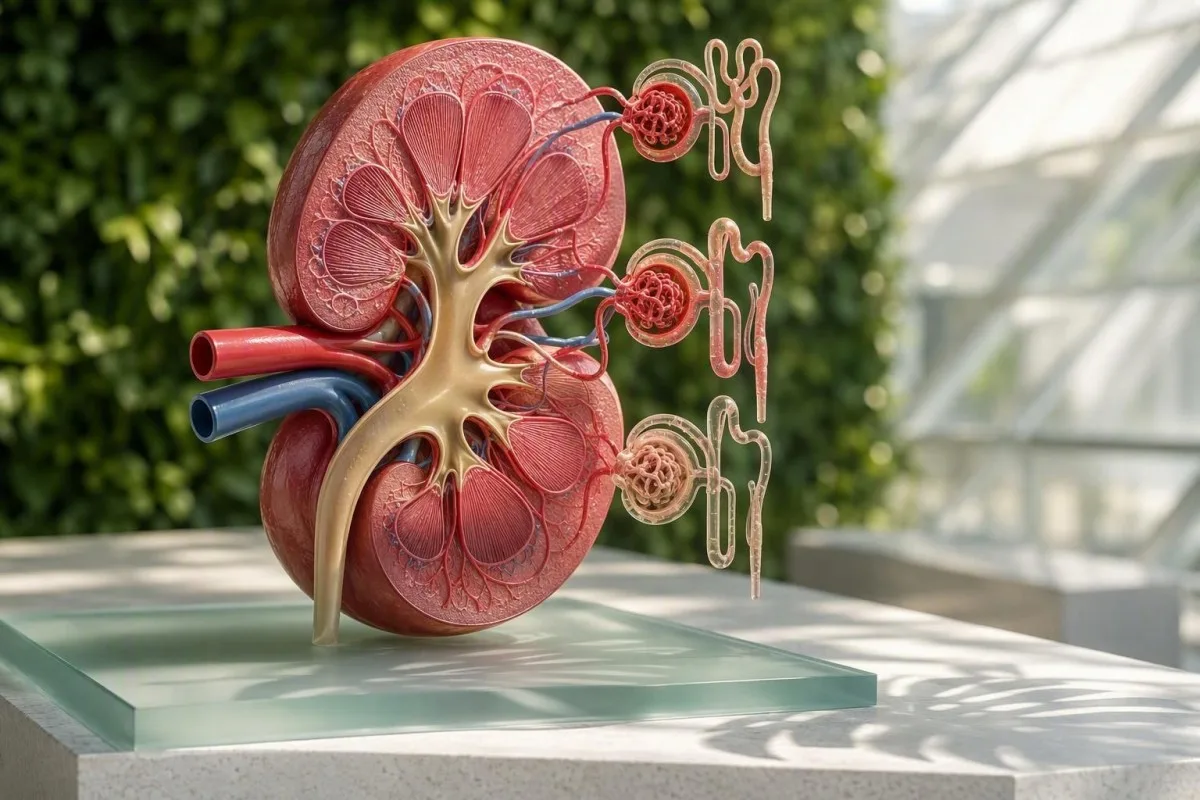
වමනය, තාපයට නිරාවරණය වීම, පාචනය හෝ ප්රමාණවත් තරම් දියර පානය නොකිරීමෙන් පසු අඩු eGFR එකක් සුව විය හැකි ය. ප්රතිඵලය තවමත් සන්දර්භය අවශ්යයි: රෝග ලක්ෂණ, ආරම්භක ක්රියේටිනින්, මුත්රා පරීක්ෂණ ප්රතිඵල, ඖෂධ සහ සුව වීමේ වේගය වැදගත් වේ.


- තාවකාලික අඩු GFR විජලනය වකුගඩු වලට රුධිර ගලනය අඩු කර ක්රියේටිනින් පැය ගණනක සිට දින කිහිපයක් දක්වා ඉහළ නැංවූ විට සිදුවිය හැක.
- AKI සීමාව යනු 48 පැය තුළ අවම වශයෙන් 0.3 mg/dL ක ක්රියේටිනින් වැඩිවීමක් හෝ 7 දින තුළ ආරම්භක මට්ටමට 1.5 ගුණයක් වීමයි.
- ක්රියේටිනින් නැවත පරීක්ෂා කිරීම බොහෝ විට සරල සැක සහිත විජලනය සඳහා දියර සහ සුවය ලැබීමෙන් පැය 24-72 ඇතුළත සංවිධානය කරනු ලැබේ.
- CKD නිර්වචනය යනු අවම වශයෙන් මාස 3 ක් සඳහා 60 mL/min/1.73 m² ට වඩා අඩු eGFR හෝ වකුගඩු-හානි සලකුණු අවශ්ය වේ.
- මුත්රා ACR 30 mg/g හෝ ඊට වැඩි ප්රමාණයක් eGFR 60 mL/min/1.73 m² ට වඩා වැඩි වුවද වකුගඩු හානියක් පෙන්නුම් කළ හැකිය.
- හදිසි පරීක්ෂාවක් ඉතා අඩු මුත්රා පිටවීම, ව්යාකූලත්වය, හුස්ම හිරවීම, ඉදිමීම, දැඩි දුර්වලතාවය හෝ පොටෑසියම් අසාමාන්යතා සඳහා අවශ්ය වේ.
- ඖෂධ අවදානම ඩිහයිඩ్రేෂනය හේතුවෙන් NSAIDs, ACE inhibitors, ARBs, ඩයුරිටික්ස්, ලිතියම්, හෝ SGLT2 ඖෂධ සම්බන්ධ වූ විට ඉහළ යයි.
- තනි ප්රතිඵල සීමාවන් අදාළ වන්නේ ක්රියේටිනින්-පාදක eGFR යනු වකුගඩු ක්රියාකාරිත්වය වේගයෙන් වෙනස් වන විට අඩු විශ්වාසදායක වන බැවිනි.
විජලනය තාවකාලික අඩු GFR පරීක්ෂණ ප්රතිඵලයකට හේතු විය හැකිද?
ඔව්—ඩිහයිඩ్రేෂනය GFR පරීක්ෂණ ප්රතිඵලය තාවකාලිකව අඩු කළ හැකිය සංසරණය වන තරල පරිමාව අඩුවීම නිසා වකුගඩු හරහා රුධිර ගමනාගමනය අඩු වන අතර, ක්රියේටිනින් ඉහළ යාමට සහ ගණනය කරන ලද eGFR පහත වැටීමට හේතු වේ. කාරණය සකස් කළහොත්, බොහෝ දෙනෙක් පැය 24-72 තුළ ඔවුන්ගේ පෙර මූලික මට්ටමට ආසන්නයට පැමිණේ; අඩු GFR එකක් කිසි විටෙක ස්වයංක්රීයව ප්රතික්ෂේප නොකළ යුතුය.
GFR පරීක්ෂණය සාමාන්යයෙන් වාර්තා කරන්නේ ඊ.ජී.එෆ්.ආර්., සේරම් ක්රියේටිනින්, වයස සහ ලිංගභේදය අනුව ගණනය කරන ලද තක්සේරුවක් මිස පෙරීමක සෘජු මිනුමක් නොවේ. තියුණු තරල අලාභයේදී, වකුගඩු ස්ථිරව හානි වීමට පෙර ක්රියේටිනින් සමුච්චය විය හැකිය. Kantesti යනු AI රුධිර පරීක්ෂණ විශ්ලේෂකය එය රෝග විනිශ්චයක් ලෙස තනි අඩු අංකයක් ලෙස සැලකීමට වඩා ක්රියේටිනින්, යූරියා, ඉලෙක්ට්රෝලයිට් සහ පෙර ප්රතිඵල සමඟ eGFR කියවයි.
මගේ සායනික කාර්යයේදී, සම්භාව්ය තත්වය නම්, දින දෙකක ආමාශ ආන්ත්රික රෝගයකින් පෙළෙන 38 හැවිරිදි අයෙකි, ඔහුගේ ක්රියේටිනින් 0.8 සිට 1.2 mg/dL දක්වා ඉහළ යන අතර eGFR 98 සිට 58 mL/min/1.73 m² දක්වා පහත වැටේ. එය ආපසු හැරවිය හැකි ප්රෙරෙනල් ෆිසියෝලොජි විය හැකි නමුත්, 0.4 mg/dL ඉහළ යාමෙන් තියුණු වකුගඩු ආබාධයක නිර්ණායකයක් සපුරාලන අතර, ඒකාන්තයෙන් අහක දැමිය යුතු නොවේ.
ආචාර්ය තෝමස් ක්ලයින්ගේ ප්රායෝගික රීතිය සරල ය: ඩිහයිඩ්රේෂනය කළ හැකිද යන්න ඉතිහාසය අපට පවසයි, අතර නැවත නැවත සාම්පලය එය සම්පූර්ණ පැහැදිලි කිරීමද යන්න අපට කියයි. තනි අඩු අගයක් නිදන්ගත වකුගඩු රෝගය හඳුනාගත නොහැකිය; අපගේ CKD අදියර මාර්ගෝපදේශය කාලසීමාව අර්ථ නිරූපණය වෙනස් කරන ආකාරය පැහැදිලි කරයි.
ඇයි දියර නැතිවීම ක්රියේටිනින් සහ eGFR වෙනස් කරන්නේ
තරල අහිමි වීම වකුගඩු රුධිර සංසරණය අඩු වීමෙන් eGFR අඩු කරයි, එබැවින් වකුගඩු ලුණු හා ජලය සංරක්ෂණය කරන අතර ප්ලාස්මා පෙරීම අඩු කරයි. මෙය පෙරෙණල් පෙරීම අඩුවීමක් ලෙස හැඳින්වේ; එය පාචනය, වමනය, උණ, තාපයට නිරාවරණය වීම, අධික ව්යායාම, හෝ අධික ඩයුරිසිස් සමඟ සිදුවිය හැකිය.
ක්රියේටිනින් බොහෝ දුරට මාංශ පේශි පරිවෘත්තීය මගින් නිපදවන අතර පෙරීම මගින් ඉවත් කරනු ලැබේ, එබැවින් ඉහළ සාන්ද්රණයක් අඩු ඉවත් කිරීම, ජල අලාභයෙන් සාන්ද්රණය, මාංශ පේශි බිඳවැටීම වැඩි වීම, හෝ සාධක කිහිපයක් එකට පිළිබිඹු කළ හැකිය. eGFR සමීකරණ සාපේක්ෂව ස්ථාවර ක්රියේටිනින් මට්ටමක් උපකල්පනය කරයි; එය වේගයෙන් වෙනස් වන විට, ගණනය කරන ලද eGFR සැබෑ ශරීර විද්යාවට වඩා පසුව සිදු වේ.
යූරියා-ට-ක්රියේටිනින් අනුපාතය දළ වශයෙන් 20:1 mg/dL වලින් වාර්තා කරන විට පරිමාව අඩුවීම සඳහා සහාය විය හැකිය, නමුත් එය ඩිහයිඩ්රේෂන පරීක්ෂණයක් නොවේ. ආමාශ ආන්ත්රික රුධිර වහනය, කෝටිකොස්ටෙරොයිඩ්, අධික ප්රෝටීන් පරිභෝජනය සහ කැටබලිස්වාදය ද යූරියා ඉහළ නැංවිය හැකිය; අපගේ විස්තීර්ණ බලන්න BUN සහ ක්රියේටිනින් අනුපාතය (ratio) මඟින් මඟ පෙන්වීම වෛද්යවරුන් වළක්වා ගන්නා උගුල් සඳහා.
KDIGO තියුණු වකුගඩු ආබාධය ලෙස අර්ථ දක්වන්නේ ක්රියේටිනින් ඉහළ යාමෙනි පැය 48ක් ඇතුළත 0.3 mg/dL හෝ ඊට වැඩි, ඉහළ යාම දින 7ක් ඇතුළත මූලික අගයට වඩා 1.5 ගුණයකින් ඉහළ යාම, හෝ පැය 6 සඳහා 0.5 mL/kg/hour ට අඩු මුත්ර පිටවීම (KDIGO, 2012). එම සීමාවන් දැනටමත් සංවේදී වන්නේ විශාල eGFR අඩුවීමක් සඳහා බලා සිටීමෙන් සුව කළ හැකි ගැටලුවක් මග හැරිය හැක.
විජලනයෙන් පසු අඩු eGFR සංඛ්යා කියවන්නේ කෙසේද
60-89 mL/min/1.73 m² හි eGFR ස්වයංක්රීයව වකුගඩු රෝගයක් නොවේ, විශේෂයෙන් ඩිහයිඩ්රේෂනයෙන් පසුව, වැඩිහිටියන් තුළ, හෝ මුත්රා අසාමාන්යතා නොමැතිව. 3 මාසයක් පැවතීම හෝ කනස්සල්ලට කරුණක් වන රෝග ලක්ෂණ හෝ හදිසි ක්රියේටිනින් ඉහළ යාම සමඟ සිදු වූ විට 60 ට අඩු eGFR සායනිකව වැදගත් වේ.
eGFR අගය 90ක් හෝ ඊට වැඩි mL/min/1.73 m² සාමාන්යයෙන් වැඩිහිටියන්ගේ සාමාන්ය හෝ ඉහළ මට්ටමක ලෙස සැලකේ, මුත්රාවල ඇති ඇල්බියුමින් තවමත් වකුගඩු හානි වල සලකුණක් විය හැකිය. eGFR එකක් 45-59 නිදන්ගත බව හෝ වෙනත් වකුගඩු සලකුණු ස්ථාපිත වූ විට පමණක් G3a ලෙස වර්ගීකරණය කෙරේ; වයස, මාංශ පේශි ස්කන්ධය සහ පෙර ප්රතිඵලය වැදගත් සන්දර්භයක් ලෙස පවතී.
105 සිට 62 දක්වා හදිසි පහත වැටීමක් බොහෝ විට වසර ගණනාවක් පුරා 62 හි ස්ථාවර කියවීමකට වඩා තොරතුරු සපයයි. ඊට වෙනස්ව, දිගු ධාවනයකින් පසු 25 හැවිරිදි මාංශ පේශි ඇති අයෙකුගේ 78ක eGFR පෙරීමේ අඩුවීමට වඩා තාවකාලික ක්රියේටිනින් උත්පාදනය පිළිබිඹු කරයි; අපගේ ලිපිය ව්යායාමයෙන් පසු ක්රියේටිනින් මෙම පොදු වැරදි අනතුරු ඇඟවීම පැහැදිලි කරයි.
KDIGO 2024 පවසන්නේ නිදන්ගත වකුගඩු රෝග සඳහා වසර ගණනාවක් පුරා පවතින වකුගඩු ව්යුහය හෝ ක්රියාකාරිත්වය පිළිබඳ අසාමාන්යතා අවශ්ය වන බවයි අවම වශයෙන් මාස 3ක් සඳහා (KDIGO Work Group, 2024). එම කාල අවශ්යතාවය කෙටිකාලීන විජලන සිදුවීමක් නිදන්ගත රෝගයක් ලෙස නම් කිරීමෙන් වෛද්යවරුන්ව වළක්වයි.
දිගුකාලීන වකුගඩු රෝගයට වඩා විජලනයට සහාය දක්වන රසායනාගාර ඉඟි
සංකේන්ද්රීය මුත්රා සාම්පලයක්, අනුකූල තරල-අහිමිවීම් ඉතිහාසයක් සහ සජලනයෙන් පසු සුවය ලැබීම විජලනයට පක්ෂපාතී වේ, ඇල්බියුමිනුරියා, මුත්රාවල රුධිරය, අඛණ්ඩ අසාමාන්යතා හෝ ව්යුහාත්මක වකුගඩු සොයාගැනීමක් නිදන්ගත රෝගය වඩාත් සම්භාවිතාවක් කරයි. එක් රසායනාගාර ඉඟියක්වත් ප්රශ්නය විසඳන්නේ නැත.
ඊට අමතරව මුත්රා වල නිශ්චිත ගුරුත්වය 1.020 බොහෝ විට සංකේන්ද්රීය මුත්රා පෙන්නුම් කරයි, සහ අගයන් 1.030 සැලකිය යුතු ජල සංරක්ෂණයකින් සිදුවිය හැකිය. එය පරිපූර්ණ නොවේ: ග්ලූකෝස්, ප්රෝටීන් සහ රේඩියෝග්රැෆික් වෙනස ද නිශ්චිත ගුරුත්වය වැඩි කළ හැකිය, ඒ නිසා මුත්රා වල නිශ්චිත ගුරුත්ව ප්රතිඵලයක් සම්පූර්ණ මුත්රා විශ්ලේෂණ සන්දර්භයක් අවශ්ය වේ.
සාමාන්ය මුත්රා විශ්ලේෂණයක් විජලනය ඔප්පු නොකරයි, නමුත් ප්රෝටීන්, රතු රුධිර සෛල, සුදු රුධිර සෛල හෝ වාත්තු වෙනස් කිරීම් වෙනස් කරයි. අඛණ්ඩ ඇල්බියුමින්-ක්රියේටිනින් අනුපාතය 30 mg/g හෝ ඊට වැඩි eGFR 60 mL/min/1.73 m² ට වඩා වැඩි වුවද, වකුගඩු හානි වල සලකුණකි.
මම කනස්සල්ලට පත්ව සිටින රටාව නම් අඩු eGFR සමග පොටෑසියම් රසායනාගාර පරාසයට වඩා වැඩි වීම, බයිකාබනේට් ඊට වඩා අඩු වීමයි 22 mmol/L, හෝ මුත්රාවල නව ප්රෝටීන්. මේවා එකට එකට සරල සංකේන්ද්රණයට වඩා අක්රිය වකුගඩු හසුරුවීමක් යෝජනා කරයි, සහ ඒවාට වෛද්යවරයාගේ නායකත්වයෙන් යුත් ඇගයීමක් ලැබිය යුතුය.
කවදාද ඔබ ක්රියේටිනින් නැවත පරීක්ෂා කිරීමක් සංවිධානය කළ යුත්තේ?
නිරෝගී විජලනයක් නිවැරදි කර ඇති බවට සැක කරන පැය 24-72 ක් ඇතුළත ක්රියේටිනින් නැවත පරීක්ෂා කිරීම සාමාන්යයෙන් සුදුසු වේ, පුද්ගලයාට පානය කළ හැකි, සාමාන්ය ලෙස මුත්රා කළ හැකි සහ රතු කොඩි නොමැති නම්. නියම කාලය ක්රියේටිනින් නැගීමේ උපාධිය, පදනම් වකුගඩු සෞඛ්යය, වයස සහ ඖෂධ මත රඳා පවතී.
පැහැදිලිව ආපසු හැරවිය හැකි අසනීපයකින් පසු, හුදකලා වූ සුළු ප්රතිඵලයක් සඳහා, වෛද්යවරුන් බොහෝ විට මුඛ නැවත සජලනය සහ සාමාන්ය ආහාර ගැනීම යථා තත්වයට පත්වීමෙන් පසු ක්රියේටිනින්, යූරියා, පොටෑසියම්, බයිකාබනේට් සහ මුත්රා විශ්ලේෂණය නැවත සිදු කරයි. බලෙන් පානය කිරීමට ජලය ප්රමාණයට විශ්වීය කිසිවක් නැත; හෘදයාබාධ, අක්මා රෝග, හෝ උසස් වකුගඩු රෝග ඇති අයට තනි තනි තරල උපදෙස් අවශ්ය වේ.
Kantesti AI යනු AI රුධිර පරීක්ෂණ ප්රතිඵල වේදිකාව වත්මන් වකුගඩු පැනලයක් ඓතිහාසික අගයන් සමඟ සසඳන විට, බොහෝ විට ජනගහන යොමු පරාසය සමඟ ප්රතිඵලය සසඳනවාට වඩා ප්රයෝජනවත් වේ. 1.1 mg/dL ක ක්රියේටිනින් කෙනෙකුට සාමාන්ය විය හැකි අතර, 0.6 mg/dL සිට තවත් කෙනෙකුට එය අර්ථවත් පිම්මක් විය හැකිය.
නැවත පරීක්ෂා කිරීම සති 1-2ක් ඇතුළත. වෛද්යවරයෙකු විසින් තියුණු සිදුවීමක් යථා තත්ත්වයට පත්වෙමින් පවතින බවත්, අගයන් පදනම් මට්ටමට ආසන්නව පවතින බවත් තහවුරු කිරීමෙන් පසුව පමණක් යෝග්ය විය හැකිය. හැකි සෑම විටෙකම එකම රසායනාගාරය භාවිතා කරන්න, සහ අපගේ කියවන්න basic metabolic panel මාර්ගෝපදේශය හඳුනාගත් අගයක් හුදකලා යැයි උපකල්පනය කිරීමට පෙර.
විජලනයෙන් පසු අඩු GFR එකක් කවදාද හදිසි සත්කාර අවශ්ය වන්නේ
අවම මුත්රා, ස්ථාවර වමනය, ව්යාකූලත්වය, දරුණු කරකැවිල්ල, හුස්ම හිරවීම, පපුවේ රෝග ලක්ෂණ, ඉදිමීම හෝ කැපී පෙනෙන දුර්වලතාවය සහිත අඩු GFR සඳහා දිවා සුරැකුම් වෛද්ය තක්සේරුවක් අපේක්ෂා කරන්න. මෙම රෝග ලක්ෂණ සායනිකව වැදගත් තරල අසමతుల്യത, තියුණු වකුගඩු තුවාල හෝ භයානක ඉලෙක්ට්රෝටෝලයිට් වෙනස්කම් දැක්විය හැකිය.
ක්රියේටිනින් ඉහළ යන විට හදිසිය වැඩි වේ 0.3 mg/dL, සතියක් ඇතුළත පදනම් මට්ටමේ සිට 50% කින්, හෝ මුත්රා ප්රතිදානය පැහැදිලිව අඩු වූ විට. පැය 24ක කාලයක් තුළ මිලි ලීටර් 400කට වඩා අඩුවෙන් මුත්රා නිපදවන වැඩිහිටියෙකු තුළ, මම නිසි වෛද්ය මාර්ගෝපදේශයකින් තොරව නිවසේදී වැඩිපුර පානය කරන ලෙස උපදෙස් නොදෙමි.
පොටෑසියම් ඉහළ 6.0 mmol/L, සෝඩියම් පහළ 120 mmol/L, හෝ බයිකාබනේට් පහළින් 15 mmol/L රෝග ලක්ෂණ සහ ECG සොයාගැනීම් මත පදනම්ව හදිසි ප්රතිකාර අවශ්ය විය හැකිය. අපගේ ඉලෙක්ට්රොලයිට් රතු- ධජ මාර්ගෝපදේශය වකුගඩු ප්රතිඵල සහ ඉලෙක්ට්රෝටෝලයිට් එකට කියවිය යුත්තේ මන්දැයි පැහැදිලි කරයි.
විජලනය සෙප්සිස්, මුත්රා මාර්ග අවහිරතා, රබ්ඩෝමියෝලිසිස්, දියවැඩියා කීටොඇසිඩෝසිස් හෝ Medicação විෂ සහිත බව සමඟ එකවර සිදුවිය හැකිය. යමෙකුට පාචනය වී ඇති බව සත්යය මෙම හැකියාවන් බැහැර නොකරයි - විශේෂයෙන් උණ, ඉළ ඇටයේ වේදනාව, තද කොල පැහැති මුත්රා හෝ දරුණු මාංශ පේශි වේදනාවක් තිබේ නම්.
වෛද්යවරු විජලනය නිදන්ගත වකුගඩු රෝගයෙන් වෙන්කර හඳුනා ගන්නේ කෙසේද
වෛද්යවරු තාවකාලික eGFR විජලනය සහ නිදන්ගත වකුඩු රෝගය අතර වෙනස හඳුනා ගන්නේ සුවය ලේඛනගත කිරීමෙන්, මුත්රා ඇල්බුමින් පරීක්ෂා කිරීමෙන්, පැරණි ප්රතිඵල සමාලෝචනය කිරීමෙන් සහ මාස 3කට වැඩි කාලයක් පුරා පවතින අසාමාන්යතා සොයනුවෙනි. තනි eGFR අගයකට වකුඩු ආබාධයේ හේතුව හෝ කාලසීමාව ස්ථාපිත කළ නොහැක.
මුත්රා ඇල්බුමින්-ක්රියේටිනින් අනුපාතය පහතින් ට අඩු A1 ලෙස වර්ගීකරණය කර ඇත, 30-300 mg/g A2 ලෙස, සහ 300 mg/g ට වඩා A3 ලෙස. උණ, දැඩි ව්යායාම, මුත්රා ආසාදන, හෝ පාලනය කළ නොහැකි ග්ලූකෝස් පසු ඇල්බුමිනුරියා තාවකාලික විය හැකි බැවින්, අසාමාන්ය නියැදියක් සාමාන්යයෙන් තදින් රෝග විනිශ්චය වෙනුවට තහවුරු කිරීම අවශ්ය වේ.
වෛද්යවරු රුධිර පීඩනය, දියවැඩියා තත්ත්වය, වකුගඩු අල්ට්රා සවුන්ඩ් ඉතිහාසය, පවුල් ඉතිහාසය, Medicação නිරාවරණය සහ ක්රියේටිනින් කවදා හෝ සාමාන්ය තත්ත්වයට පත් වූවාද යන්න ද සමාලෝචනය කරයි. ඇල්බුමින්-ක්රියේටිනින් අනුපාතය සකස් කිරීමේ මාර්ගෝපදේශය ව්යායාම සහ ඔසප් වීම වැනි නියැදියක් විකෘති කළ හැකි ප්රායෝගික ගැටළු ආවරණය කරයි.
KDIGO 2024 නිර්දේශ කරන්නේ GFR වර්ගය සහ ඇල්බුමිනුරියා වර්ගය යන දෙකම තක්සේරු කරන ලෙස මන්ද, eGFR පමණක් මෘදු ලෙස අඩු වූ විට (KDIGO Work Group, 2024) වඩා අසාමාන්යතා දෙකම ඇති විට අවදානම බෙහෙවින් ඉහළ යන බැවිනි. මගේ අත්දැකීම අනුව, එම යුගල තක්සේරුව යටතේ ප්රතිචාර දැක්වීම සහ අනවශ්ය බිය යන දෙකම වළක්වයි.
තාවකාලික පැහැදිලි කිරීමක් අඩු සම්භාවිතාවක් ඇති කරන මුත්රා ප්රතිඵල
රුධිරය, කැපී පෙනෙන ප්රෝටීන්, සෛලීය වාත්තු, හෝ මුත්රා වල පවතින ඇල්බුමින් විජලනය පමණක් අඩුවෙන් ඒත්තු ගැන්විය හැකි අතර සාමාන්යයෙන් තවදුරටත් වකුගඩු ඇගයීමක් සිදු කරයි. විජලනය මුත්රා නියැදියක් සංකෝචනය කළ හැකිය, නමුත් එය සාමාන්යයෙන් තිරසාර ක්රියාකාරී මුත්රා අවක්ෂේපයක් නිර්මාණය නොකරයි.
ධාන්ය සහිත වාත්තු සැලකිය යුතු ටියුබල් ආතතියෙන් පසුව දිස්විය හැකි අතර, රතු සෛලීය වාත්තු ග්ලෝමෙරුලර් රෝගය පිළිබඳ සැලකිල්ලක් ඇති කරයි. තනි රසායනාගාර වාර්තාවක් නියැදියෙහි ගුණාත්මකභාවය සහ රෝග ලක්ෂණ සමඟ සම්බන්ධීකරණය කළ යුතුය, නමුත් මෙම සොයාගැනීම් සාමාන්යයෙන් හුදකලා සංකෝචිත මුත්රා වලට වඩා වැඩි අවධානයක් ලැබිය යුතුය; ගවේෂණය කරන්න මුත්රාවේ ග්රැනියුලර් සිලින්ඩර් විස්තරාත්මක විශ්ලේෂණයක් සඳහා.
සාන්ද්රිත මුත්රා වලදී ඩ්රිප් ස්ටික් ප්රෝටීන් ඉහළ අගයක් පෙන්විය හැකි බැවින්, ඇල්බුමින්-ක්රියේටිනින් අනුපාතය (ACR) තහවුරු කිරීම සඳහා සාමාන්යයෙන් වඩාත් ප්රයෝජනවත් වේ. ස්ථාවර ACR 300 mg/g හෝ ඊට වැඩි යනු ඉහළ අවදානම් ලකුණක් වන අතර වෛද්යවරයෙකුගේ සමාලෝචනයකින් තොරව දුර්වල ජලවහනයට ආරෝපණය නොකළ යුතුය.
පෙනෙන රතු හෝ තේ-වර්ණ මුත්රා, щиеся වේදනාව, උණ, හෝ මුත්රා පිටකිරීමට නොහැකි වීම වෙනස් කිරීමේ හදිසි බව වෙනස් කරයි. බාධා සහ මුත්රා ආසාදන GFR අඩු කළ හැකි අතර, දෙකම නිවසේදී තරල ප්රතිස්ථාපනයට වඩා වෙනස් ප්රතිචාරයක් අවශ්ය වේ.
විජලනය තියුණු වකුගඩු ආබාධයක් බවට පත් කළ හැකි ඖෂධ
NSAIDs, ඩයුරටික්, ACE නිෂේධක, ARBs, ලිතියම් සහ සමහර දියවැඩියා ඖෂධ ජලවහනය-ආශ්රිත GFR පහත වැටීම වැඩි කළ හැකිය. මෙම drugs ෂධ බොහෝ විට සුදුසු දිගුකාලීන ප්රතිකාර වේ, නමුත් තියුණු අසනීප ආරක්ෂක සැලැස්ම වෙනස් කළ හැකිය.
NSAIDs වකුගඩු වල පෙරීම පවත්වා ගැනීමේ හැකියාව අඩු කළ හැකිය, විශේෂයෙන් වයස්ගත වැඩිහිටියන් සහ ඩයුරටික් සමග ACE නිෂේධක හෝ ARB ගන්නා පුද්ගලයින් තුළ. නියමිත drugs ෂධ අක්රීයව නතර නොකරන්න; ඔබේ තත්වයන්ට විශේෂිත අසනීප දින සැලැස්මක් සඳහා නියම කරන්නාගෙන් හෝ ඖෂධවේදියෙකුගෙන් විමසන්න.
SGLT2 නිෂේධක සාමාන්යයෙන් ආරම්භ කිරීමෙන් පසු ග්ලෝමියුලස් තුළ රක්තපාත වෙනසක් නිසා, අනිවාර්යයෙන්ම වකුගඩු තුවාලයක් නිසා කුඩා මුල් eGFR පහත වැටීමක් ඇති කරයි. ජලවහනයෙන් වෙනස වැදගත් වන අතර, අපගේ සමාලෝචනය SGLT2 drugs ෂධ සමඟ eGFR වෙනස්කම් ග්ලූකෝස්, රුධිර පීඩනය, රෝග ලක්ෂණ සහ කාලය එකට තක්සේරු කරන්නේ මන්දැයි පැහැදිලි කරයි.
Metformin සෘජුවම GFR අඩු නොකරයි, නමුත් තියුණු වකුගඩු ආබාධයක් තාවකාලිකව కొనసాగීම ආරක්ෂිතද යන්න වෙනස් කළ හැකිය. ලිතියම් මට්ටම් පරිමාව අහිමි වීමත් සමඟ ඉහළ යා හැකි අතර, ට්රයිමෙතොප්රිම් මිනුම් පෙරීමේ සමානුපාතික පහත වැටීමකින් තොරව ක්රියේටිනින් ඉහළ නැංවිය හැකිය - ස්වයං-අර්ථ නිරූපණයට හානිකර වන සියුම්කම් වලින් එකක්.
වයස, ගැබ් ගැනීම, මාංශ පේශි ස්කන්ධය සහ ව්යායාම eGFR අර්ථ නිරූපණයට බලපාන්නේ ඇයි
මාංශපේශී පුද්ගලයින් තුළ ක්රියේටිනින්-පාදක eGFR පෙරීම අවතක්සේරු කළ හැකි අතර දුර්වල මාංශපේශී ස්කන්ධයක් ඇති දුර්වල පුද්ගලයින් තුළ එය අධිතක්සේරු කළ හැකිය; ගැබ් ගැනීම සම්පූර්ණයෙන්ම වෙනස් අපේක්ෂාවන් භාවිතා කරයි. එබැවින් ජලවහනයෙන් පසු අඩු eGFR සිරුර ගොඩනඟන්නෙකු, වයස්ගත වැඩිහිටියෙකු සහ ගර්භනී රෝගියෙකු තුළ වෙනස් අර්ථයන් ඇත.
ගැබ්ගැනීමේදී, GFR සාමාන්යයෙන් ඉහළ යයි, එබැවින් ක්රියේටිනින් බොහෝ විට පමණ පහත වැටේ 0.4-0.8 mg/dL; ගැබ් ගැනීමෙන් පිටත සාමාන්ය ලෙස සලකනු ලබන අගයක් සන්දර්භය තුළ සැලකිලිමත් විය හැකිය. වමනය, අධි රුධිර පීඩනය, හිසරදය, ඉදිමීම හෝ අසාමාන්ය වකුගඩු ප්රතිඵල ඇති ඕනෑම ගර්භනී කාන්තාවක් ඔවුන්ගේ මාතෘ කණ්ඩායම සම්බන්ධ කර ගත යුතුය, සහ අපගේ ගර්භණී GFR මාර්ගෝපදේශය අදාළ රාමුව ලබා දෙයි.
අඩු පිපාසාව සහ ඩයුරටික් භාවිතය ඇති 78-හැවිරිදි පුද්ගලයෙකුට සාපේක්ෂව මධ්යස්ථ තරල අලාභයක් සමඟ වකුගඩු හයිපොපර්ෆියුෂන් වර්ධනය කළ හැකිය. ඊට වෙනස්ව, මාංශ පේශි ස්කන්ධය, ක්රියේටීන් අතිරේක හෝ මෑතකදී පුහුණු වීම නිසා, සාමාන්ය සත්ය පෙරීම සමඟ වුවද, ශක්තිමත් මලල ක්රීඩකයෙකුට විමර්ශන පරතරයට වඩා ක්රියේටිනින් තිබිය හැකිය.
මාංශ පේශි ස්කන්ධය මත අඩු යැපීම නිසා, සිස්ටැටින් සී සමහර විට සැක සහිත ක්රියේටිනින් ප්රතිඵලයක් පැහැදිලි කළ හැකිය, කෙසේ වෙතත් තයිරොයිඩ් රෝග, දුම්පානය, ස්ටෙරොයිඩ් සහ දැවිල්ල එයට බලපෑම් කළ හැකිය. ආචාර්ය තෝමස් ක්ලයින් බොහෝ විට එය ටයි-බ්රේකර් එකක් ලෙස භාවිතා කරයි, ඉතිහාසය සහ අනුක්රමික ප්රතිඵල සඳහා ආදේශකයක් ලෙස නොවේ.
නැවත GFR පරීක්ෂණයක් සඳහා යන අතර නිවසේදී කළ යුතු දේ
ඔබ අවදිව, පානය කිරීමට හැකි නම්, සහ මුත්රා පිට කරන්නේ නම්, ක්රමයෙන් තරල නැවත ලබා ගන්න, අධික ව්යායාම සහ NSAIDs වලින් වළකින්න, සහ නැවත පරීක්ෂා කිරීමට පෙර රෝග ලක්ෂණ වාර්තා කරන්න. රතු කොඩි හෝ දරුණු අසනීප පැවතියහොත් නිවෙස් පියවර සුදුසු නොවේ.
විශේෂයෙන් වමනයෙන් පසු, කුඩා නිතර පානය කිරීම් විශාල පරිමාවන් ඉක්මනින් පරිභෝජනය කිරීමට වඩා හොඳින් ඉවසා සිටියි. පාචනය සමඟ මුඛ ප්රතිජලනය ද්රාවණය ප්රයෝජනවත් විය හැකිය, මන්ද එය ජලය මෙන්ම සෝඩියම් සහ ග්ලූකෝස් ද ප්රතිස්ථාපනය කරයි; තරල සීමා ඇති පුද්ගලයින්ට ඒ වෙනුවට වෛද්ය-විශේෂිත උපදෙස් අවශ්ය වේ.
ලා කහ මුත්රා සාධාරණ ජලවහනයක් පෙන්නුම් කළ හැකිය, නමුත් එය නිෂ්කාශන සහතිකයක් නොවේ. අඳුරු මුත්රා සාන්ද්රණය, ඖෂධ, බිලිරුබින් හෝ මාංශ පේශි වර්ණකය පිළිබිඹු කළ හැකිය, එබැවින් අපගේ මාර්ගෝපදේශය කියවන්න අඳුරු මුත්රා පිළිබඳ අනතුරු ඇඟවීම් පැහැය දිගටම පැවතීම, ද්රව ලබා දුන් පසුවත්.
සඳහා දැඩි ව්යායාමයක් මඟහරින්න පැය 24-48ක් පමණ වන විට උපරිමයට ළඟා වේ ඔබගේ වෛද්යවරයා වෙනත් ආකාරයකින් පවසන තුරු, සැලසුම්ගත ක්රියේටිනයින් නැවත පරීක්ෂා කිරීමට පෙර. රෝගාබාධ, උණ, පාචන තත්ව, ඖෂධ මාත්ර, ව්යායාම, අතිරේක, සහ ඔබ මුත්රා කරන ප්රමාණය පිළිබඳ දිනයන් ලේඛනගත කරන්න; මෙම කුඩා කාලසටහන බොහෝ විට අර්ථ නිරූපණය වෙනස් කරයි.
තනි අඩු eGFR ප්රතිඵලයකට වඩා ප්රවණතා ප්රයෝජනවත් වන්නේ ඇයි
තනි eGFR අගයකට වඩා ක්රියේටිනයින් වෙනස්වීමේ දිශාව සහ වේගය සාමාන්යයෙන් සායනිකව වඩාත් ප්රයෝජනවත් වේ. 55ක ස්ථාවර eGFR එකක් සහ 95 සිට 55 දක්වා නව පහත වැටීමක්, වාර්තාගත අංකය සමාන වුවද, ඉතා වෙනස් අවදානම් රැගෙන යා හැකිය.
ක්රියේටිනයින් අනපේක්ෂිත ලෙස මාරු වන විට රසායනාගාර ඩෙල්ටා පරීක්ෂණ යෙදිය හැකිය, නමුත් ජීව විද්යාත්මක වෙනස්කම්, පරීක්ෂණ වෙනස්කම්, ආහාර, සහ සජලනය ද දායක වේ. 0.1 mg/dL හි වෙනසක් එක් සැකසුමක ශබ්දය විය හැකි අතර, පුද්ගලයාගේ මූලික මට්ටම 0.5 mg/dL නම් අනෙකක අර්ථවත් විය හැකිය.
කන්ටෙස්ටි යනු AI මගින් බලගැන්වූ රුධිර පරීක්ෂණ විශ්ලේෂණ මෙවලම ඔබ සුරකින සායනික සන්දර්භය, එනම් රෝගාබාධ සහ ඖෂධ වෙනස්කම් සමඟ අනුක්රමික වකුගඩු ප්රතිඵල සංවිධානය කරන. එම ප්රවේශය අපගේ දිගුකාලීන රසායනාගාර විශ්ලේෂණ මාර්ගෝපදේශය (longitudinal lab analysis guide)හි විස්තර කර ඇති ප්රායෝගික ක්රමයට සමාන්තර වේ: රෝගයේ ගමන් මගේ විනිශ්චයට පෙර ඔබගේම මූලික මට්ටම ස්ථාපිත කරන්න.
අගෝස්තු 29, 2026 වන විට, eGFR වේගයෙන් පහත වැටෙන විට, වෛද්යවරයෙකුගේ තීරණය වෙනුවට කිසිදු පාරිභෝගික- මුහුණ දෙන අර්ථ නිරූපණයක් නොවිය යුතුය. ග්රැෆ් එකක් රටාවක් හඳුනාගත හැකිය; එය විජලනය, අවහිරතා, හෘදයාබාධ, හෝ පද්ධතිමය රෝග සඳහා රෝගියෙකු පරීක්ෂා කළ නොහැක.
තියුණු රෝගයකදී සම්මත GFR පරීක්ෂණයේ සීමාවන්
සම්මත ක්රියේටිනයින්-පාදක eGFR, වකුගඩු ක්රියාකාරිත්වය වේගයෙන් වෙනස් වන විට අඩුම විශ්වසනීයත්වයකි, මන්ද ක්රියේටිනයින් සමතුලිත වීමට කාලය ගතවේ. ක්රියාකාරී විජලනය හෝ මුල් සුවය අතරතුර, වෛද්යවරු තනි ගණනය කළ eGFR මත විශ්වාසය තැබීමට වඩා අනුක්රමික ක්රියේටිනයින් සහ මුත්රා පිටවීම අනුගමනය කරති.
2021 CKD-EPI ක්රියේටිනයින් සමීකරණය, ජනවාර්ගික ගැලපුම ඉවත් කිරීමෙන් ජනගහන- මට්ටමේ අනුමානය වැඩි දියුණු කරයි, නමුත් එය තවමත් ක්රියේටිනයින් නිෂ්පාදනය සහ බැහැර කිරීම සාධාරණ ලෙස ස්ථායී බව උපකල්පනය කරයි. ක්රියේටීන් අතිරේක, සාම්පල ලබා ගැනීමට පැය කිහිපයකට පෙර පිසූ මස්, ආබාධය, ක්ෂය වීම, සහ ඉහළ මාංශ පේශි ස්කන්ධය සියල්ල අර්ථ නිරූපණය වෙනස් කළ හැකිය.
Kantesti AI අනුගාමික ප්රතිඵල සංයෝග උද්දීපනය කරයි, නමුත් තියුණු වකුගඩු ආබාධ හඳුනා නොගනී හෝ ද්රව ප්රතිකාර නියම නොකරයි. අපගේ තාක්ෂණික මාර්ගෝපදේශය වෛද්ය තක්සේරුව ප්රතිස්ථාපනය කිරීමෙන් සන්දර්භානුගත අර්ථ නිරූපණය කෙසේ වෙනස් වේද යන්න විස්තර කරයි.
බාහිර පෙරහන් සලකුණු භාවිතා කර මනිනු GFR, පරිත්යාගශීලියාගේ තක්සේරුව හෝ ප්රධාන අනිශ්චිතතාවය වැනි තෝරාගත් තත්වයන් සඳහා වෙන් කර ඇත, සාමාන්ය විජලනය අනුගාමික සඳහා නොවේ. බොහෝ රෝගීන්ට ප්රවේශමෙන් සායනික සමාලෝචනයක්, මුත්රා පරීක්ෂාව, නැවත වකුගඩු පැනලය, සහ අංකය යථා තත්ත්වයට පත්වේද යන්න පිළිබඳ තක්සේරුවක් අවශ්ය වේ.
විජලනයෙන් පසු අඩු GFR එකක් සඳහා වෛද්යවරයෙකුගේ චෙක්-ලැයිස්තුව
ආරක්ෂිත අනුගාමික සැලැස්මක් බරපතලකම, හේතුව, සුවය, මුත්රා සොයාගැනීම්, ඖෂධ, සහ සංකූලතා පරීක්ෂා කරයි - eGFR අංකය පමණක් නොවේ. මෙම ව්යුහගත ප්රවේශය ඉක්මනින් නැවත පරීක්ෂා කළ හැකි පුද්ගලයන් සහ හදිසි රෝහල්- මට්ටමේ තක්සේරුවක් අවශ්ය පුද්ගලයන් හඳුනා ගනී.
මම ද්රව අහිමි වීම, මුත්රා පරිමාව, මෑතකාලීන වෙනස් රූපකරණය, ආසාදන රෝග ලක්ෂණ, මාංශ පේශි තුවාල, මුත්රා අවහිරතා, දියවැඩියාව, හෘදයාබාධ, සහ සෑම බෙහෙත් වට්ටෝරුවක් හෝ කවුන්ටරයට ඉහළින් ඇති ඖෂධ ගැන අසමි. එවිට මම ක්රියේටිනයින් අවසාන වශයෙන් දන්නා අගය සමඟ සසඳා, සුදුසු පරිදි පොටෑසියම්, බයිකාබනේට්, යූරියා, මුත්රා පරීක්ෂාව, සහ මුත්රා ACR පරීක්ෂා කරමි.
සුවය ලැබීමෙන් පසු මූලික මට්ටමට නැවත පැමිණෙන නැවත නැවත ලැබෙන ප්රතිඵලය තාවකාලික හීමෝඩිනමික් හේතුවකට සහාය දක්වයි, එසේ වුවද එය දියවැඩියාව හෝ අධි රුධිර පීඩනය ඇති අයෙකුගේ අනාගත අවදානම මකා නොදමයි. අඩු ලෙස පවතින, නරක අතට හැරෙන, හෝ ඇල්බුමිනූරියාව සමඟ ඇති වන ප්රතිඵලයක් විධිමත් වකුගඩු පරීක්ෂණයක් සහ සමහර විට නෙෆ්රොලොජි සම්බන්ධයක් ලැබිය යුතුය.
අපගේ සායනික අන්තර්ගතය මගින් විස්තර කර ඇති ප්රමිතීන් සමඟ සමාලෝචනය කරනු ලැබේ Kantesti වෛද්ය වලංගුක කණ්ඩායම. Kantesti හි භූමිකාව වන්නේ ඔබව වඩා හොඳ ප්රශ්න සකස් කිරීමට සහ ප්රවණතා හඳුනා ගැනීමට උපකාර කිරීමයි; ඊළඟ සායනික තීරණය ඔබට පරීක්ෂා කර ප්රතිඵලය මත ක්රියා කළ හැකි වෘත්තිකයා සමඟ වේ.
නිතර අසන ප්රශ්න
විජලනය eGFR අඩු වන ලෙස පෙන්විය හැකිද?
ඔව්. විජලනය වකුගඩු වලට රුධිර ගමනාගමනය අඩු කළ හැකි අතර, සෙරුම් ක්රියේටිනින් ඉහළ නංවා, ගණනය කරන ලද eGFR තාවකාලිකව අඩු කළ හැකිය. 48 පැය ඇතුළත අවම වශයෙන් 0.3 mg/dL ක ක්රියේටිනින් වැඩිවීමක්, හේතුව ආපසු හැරවිය හැකි වුවද, උග්ර වකුගඩු ආබාධ සඳහා KDIGO නිර්ණායකයක් සපුරාලයි. සුව වූ පසු නැවත වකුගඩු පරීක්ෂණයක් කිරීම, සරල අවස්ථාවලදී බොහෝ විට පැය 24-72 ක් ඇතුළත, වෙනසක් සිදු වෙමින් පවතීද යන්න තීරණය කිරීමට උපකාරී වේ.
විජලනයෙන් පසු eGFR වැඩි දියුණු වීමට කොපමණ කාලයක් ගතවේද?
සජලීකරණය-ආශ්රිත eGFR වෙනස්වීම් බොහෝ විට පැය 24-72ක් ඇතුළත වැඩිදියුණු වේ, ද්රව අලාභය නැවතී වකුගඩු රුධිර වහනය යථා තත්ත්වයට පත් වූ පසු, නමුත් දැඩි අසනීපයකින් පසු හෝ පෙර වකුගඩු රෝග ඇති පුද්ගලයින්ට සුවය ලැබීමට වැඩි කාලයක් ගත විය හැකිය. ක්රියේටිනිනේ ක්ෂණිකව වෙනස් නොවේ, එබැවින් eGFR සායනික දියුණුවට වඩා පසුගාමී විය හැකිය. දිගටම පවතින අඩු eGFR, ඉහළ යන ක්රියේටිනිනේ, අඩු මුත්රා පිටවීම, හෝ අසාමාන්ය පොටෑසියම් සඳහා නැවත නැවත ගෙදර හැදූ ජල ප්රතිකාර වෙනුවට වෛද්ය පරීක්ෂණයක් අවශ්ය වේ. නිදන්ගත වෘක්කීය රෝගයක් හඳුනාගත හැක්කේ අසාමාන්යතා මාස 3 කට නොඅඩු කාලයක් පවත්වාගෙන යන්නේ නම් මිස.
ක්රියේටිනින් නැවත පරීක්ෂා කිරීමට පෙර මම ඕනෑ තරම් ජලය පානය කළ යුතුද?
ක්රියේටිනින් නැවත පරීක්ෂා කිරීමට පෙර අධික ලෙස ජලය පානය කිරීමෙන් වළකින්න; වෛද්යවරයෙකු විසින් තරල සීමාවක් හෝ ඉලක්කයක් නියම කර ඇත්නම් මිස, සාමාන්ය, සුවපහසු ලෙස ජලය පානය කිරීමේ ඉලක්කය තබා ගන්න. අධික ලෙස ජලය පානය කිරීමෙන් සෝඩියම් මට්ටම අඩුවිය හැකි අතර, විශේෂයෙන් වැඩිහිටියන්, විඳදරාගැනීමේ ක්රීඩකයන් සහ ඇතැම් ඖෂධ ගන්නා පුද්ගලයන්ට මෙය බලපෑම් ඇති කළ හැකිය. වෛද්යමය වශයෙන් සුදුසු නම්, මෙම නියැදිය ගැනීමට පෙර 24-48 පැය තුළ මධ්යසාර, NSAIDs සහ අසාමාන්ය ලෙස වෙහෙස මහන්සි වී කරන ව්යායාමවලින් වැළකී සිටින්න. හෘදයාබාධ, සිරෝසිස් හෝ දියුණු වකුගඩු රෝග ඇති පුද්ගලයින් කොපමණ තරම් තරලයක් ගත යුතුද යන්න ඔවුන්ගේ වෛද්යවරයාගෙන් විමසා සිටිය යුතුය.
විජලනයෙන් පසු අනතුරුදායක eGFR අගය කුමක්ද?
eGFR-এর জন্য কোনও নির্দিষ্ট বিপজ্জনক সংখ্যা নেই কারণ পরিবর্তনের গতি, উপসর্গ, পটাশিয়াম স্তর, প্রস্রাব আউটপুট এবং বেসলাইন কিডনির কার্যকারিতা জরুরি অবস্থা নির্ধারণ করে। ৬০ মিলিলিটার/মিনিট/১.৭৩ মি² এর নিচে একটি নতুন eGFR মূল্যায়ন করা উচিত, যখন ৩০ মিলিলিটার/মিনিট/১.৭৩ মি² এর নিচে eGFR সাধারণত অবিলম্বে চিকিৎসকের সাথে আলোচনার প্রয়োজন হয়। প্রস্রাব আউটপুট খুব কম হলে, ৪৮ ঘন্টার মধ্যে ক্রিয়েটিনিন ০.৩ মিলিগ্রাম/ডেসিলিটার বৃদ্ধি পেলে, পটাশিয়াম ৬.০ মিলিমোল/লিটার এর উপরে থাকলে, অথবা বিভ্রান্তি বা শ্বাসকষ্টের মতো উপসর্গ দেখা দিলে শীঘ্রই জরুরি মূল্যায়নের প্রয়োজন।.
අඩු eGFR එකක් ඇති රෝගියෙකුට සාමාන්ය මුත්රා පරීක්ෂණයකින් වකුගඩු රෝගයක් බැහැර කළ හැකිද?
නැත. සාමාන්ය මුත්රා විශ්ලේෂණයෙන් ගිනි අවුලුවන වකුගඩු ආබාධ පිළිබඳ කනස්සල්ල අඩු කළ හැකි නමුත් සියලුම වකුගඩු රෝග හෝ අවහිරතා බැහැර නොකෙරේ. 30 mg/g ට වඩා අඩු මුත්රා ඇල්බියුමින්-ක්රියේටිනින් අනුපාතයක් සැනසිලිදායක වන අතර, eGFR 60 mL/min/1.73 m² ට වඩා වැඩි වුවද, 30 mg/g හෝ ඊට වැඩි ස්ථාවර අගයන් වකුගඩු වලට හානි සිදුවීම පෙන්නුම් කරයි. වෛද්යවරු විසින් පුනරාවර්තන ක්රියේටිනින්, රුධිර පීඩනය, ඖෂධ ඉතිහාසය, දියවැඩියා තත්ත්වය සහ පෙර වකුගඩු මිනුම් සමඟ මුත්රා ප්රතිඵල අර්ථකථනය කරනු ලබයි.
ව්යායාමයෙන් හෝ ක්රියේටින් (creatine) මගින් GFR පරීක්ෂණයේ අඩු ප්රතිඵලයක් ඇතිවිය හැකිද?
අධික ව්යායාම, මාංශ පේශි තුවාල, පිසූ මස් සහ ක්රියේටිනින් අතිරේක මගින් සීරම් ක්රියේටිනින් ඉහළ යා හැකි අතර, සැබෑ පෙරීමේ අඩුවීමක් නොමැතිව ක්රියේටිනින්-පාදක eGFR අඩු බව පෙනෙන්නට සලස්වයි. මෙම බලපෑම විශේෂයෙන්ම දුර දිග යන සිදුවීම්, තීව්ර ප්රතිරෝධක පුහුණුව හෝ CrossFit-ශෛලියේ ව්යායාමවලින් පසුව අදාළ වේ. ව්යායාමයෙන් පසු අධික මාංශ පේශි වේදනාව, දුර්වලතාවය, ඉදිමීම හෝ කෝලා-වැනි මුත්රා හදිසි තක්සේරුවක් අවශ්ය වේ, මන්ද රැබ්ඩෝමියොලිසිස් මගින් සැබෑ තියුණු වකුගඩු හානි සිදුවිය හැකි බැවිනි. වෛද්යවරයෙකු ආරක්ෂිත යැයි සලකන විට, විවේකයේ පැය 24-48 කට පසුව නැවත ලබාගත් සාම්පලක් තොරතුරු සපයනු ඇත.
අදම AI බලයෙන් රුධිර පරීක්ෂණ විශ්ලේෂණය ලබාගන්න
තත්පර කිහිපයකින් ක්ෂණික හා නිවැරදි රසායනාගාර පරීක්ෂණ විශ්ලේෂණය සඳහා Kantesti විශ්වාස කරන ලොව පුරා මිලියන 2කට වැඩි පරිශීලකයන්ට එක්වන්න. ඔබගේ රුධිර පරීක්ෂණ ප්රතිඵල උඩුගත කර, තත්පර කිහිපයකින් 15,000+ ජෛව සලකුණු පිළිබඳ සවිස්තර අර්ථකථනය ලබාගන්න.
📚 යොමු කර ඇති පර්යේෂණ ප්රකාශන
ක්ලයින්, ටී., මිචෙල්, එස්., සහ වෙබර්, එච්. (2026). aPTT සාමාන්ය පරාසය: D-ඩයිමර්, ප්රෝටීන් C රුධිර කැටි ගැසීමේ මාර්ගෝපදේශය. Kantesti AI වෛද්ය පර්යේෂණ.
ක්ලයින්, ටී., මිචෙල්, එස්., සහ වෙබර්, එච්. (2026). සෙරුම් ප්රෝටීන් මාර්ගෝපදේශය: ග්ලෝබියුලින්, ඇල්බියුමින් සහ A/G අනුපාත රුධිර පරීක්ෂාව. Kantesti AI වෛද්ය පර්යේෂණ.
📖 බාහිර වෛද්ය යොමු
⚕️ වෛද්ය වියාචනය
මෙම ලිපිය අධ්යාපනික අරමුණු සඳහා පමණක් වන අතර වෛද්ය උපදෙස් ලෙස නොසැලකේ. රෝග නිદાન සහ ප්රතිකාර තීරණ සඳහා සෑම විටම සුදුසුකම් ලත් සෞඛ්ය සේවා සපයන්නෙකුගෙන් උපදෙස් ලබාගන්න.
E-E-A-T විශ්වාස සංඥා
අත්දැකීම්
වෛද්යවරයා විසින් මෙහෙයවන ලද රසායනාගාර අර්ථකථන ක්රියාවලි පිළිබඳ සමාලෝචනය.
ප්රවීණතාව
සායනික සන්දර්භය තුළ ජෛව සලකුණු (biomarkers) හැසිරෙන ආකාරය පිළිබඳ රසායනාගාර වෛද්ය විද්යා අවධානය.
අධිකාරීත්වය
ආචාර්ය තෝමස් ක්ලයින් විසින් ලියන ලද අතර ආචාර්ය සාරා මිචෙල් සහ මහාචාර්ය ආචාර්ය හෑන්ස් වෙබර් විසින් සමාලෝචනය කරන ලදී.
විශ්වසනීයත්වය
අනතුරු ඇඟවීම් අඩු කිරීමට පැහැදිලි පසුකැඳවීම් මාර්ග සහිත සාක්ෂි-පාදක අර්ථකථනය.