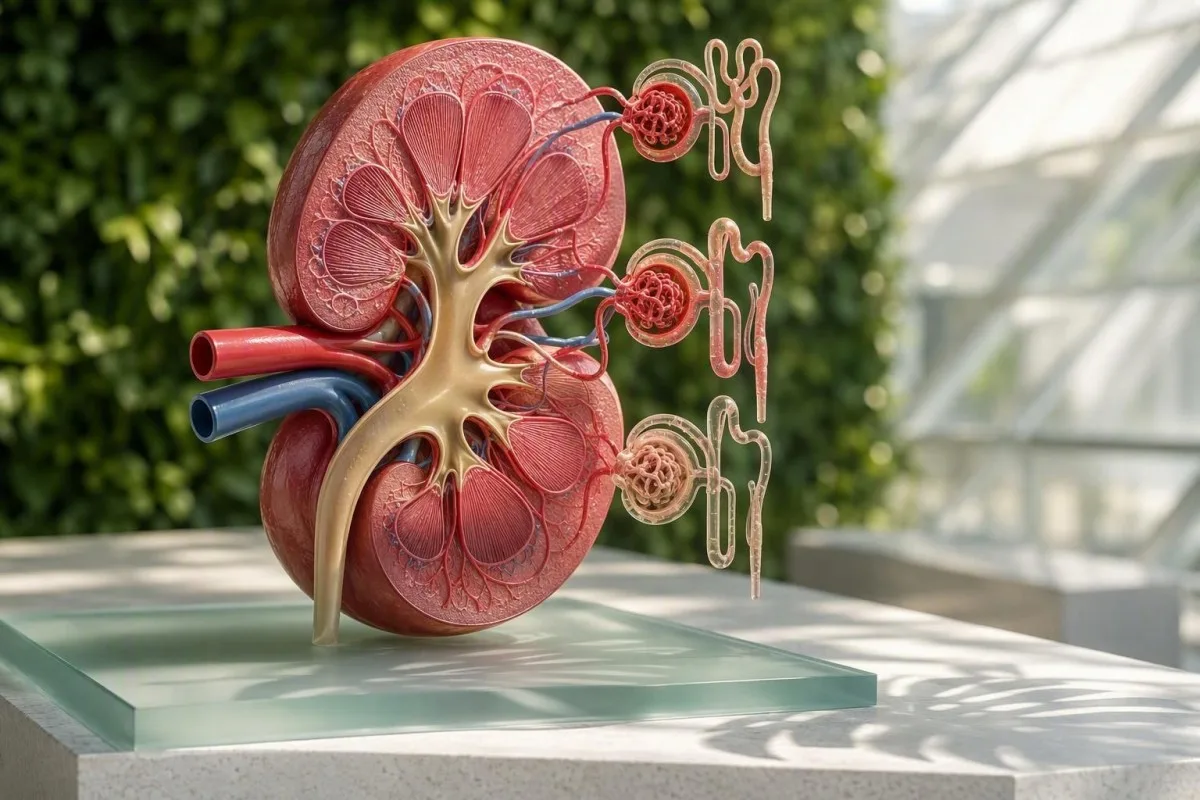
eGFR ទាប បន្ទាប់ពីក្អួត ការប៉ះពាល់នឹងកម្ដៅ រាគ ឬការទទួលទានទឹកមិនគ្រប់គ្រាន់ អាចជាសះស្បើយវិញបាន។ លទ្ធផលនៅតែត្រូវការបរិបទ៖ រោគសញ្ញា កម្រិត creatinine មូលដ្ឋាន រោគវិទ្យាទឹកនោម ថ្នាំ និងល្បឿននៃការជាសះស្បើយមានសារៈសំខាន់។.


- GFR ទាបបណ្តោះអាសន្ន អាចកើតឡើងនៅពេលដែលការខះជាតិទឹកកាត់បន្ថយលំហូរឈាមទៅកាន់តម្រងនោម និងធ្វើឱ្យកម្រិតcreatinine កើនឡើងក្នុងរយៈពេលជាច្រើនម៉ោងដល់ច្រើនថ្ងៃ។.
- AKI threshold គឺជាការកើនឡើងនៃកម្រិតcreatinine យ៉ាងហោចណាស់ 0.3 mg/dL ក្នុងរយៈពេល 48 ម៉ោង ឬ 1.5 ដងនៃកម្រិតមូលដ្ឋានក្នុងរយៈពេល 7 ថ្ងៃ។.
- Creatinine recheck ត្រូវបានរៀបចំជាញឹកញាប់ក្នុងរយៈពេល 24-72 ម៉ោង បន្ទាប់ពីការទទួលទានសារធាតុរាវ និងការជាសះស្បើយសម្រាប់ករណីខះជាតិទឹកដែលសង្ស័យដោយមិនមានផលវិបាក។.
- CKD definition តម្រូវឱ្យមាន eGFR ក្រោម 60 mL/min/1.73 m² ឬមានសញ្ញានៃការខូចខាតតម្រងនោមយ៉ាងហោចណាស់ 3 ខែ។.
- ACR ក្នុងទឹកនោម នៃ 30 mg/g ឬច្រើនជាងនេះអាចបង្ហាញពីការខូចខាតតម្រងនោម សូម្បីតែពេល eGFR ខ្ពស់ជាង 60 mL/min/1.73 m²។.
- ពិនិត្យបន្ទាន់ គឺចាំបាច់សម្រាប់ការបញ្ចេញទឹកនោមតិចតួច ការភាន់ច្រឡំ ការដកដង្ហើមខ្លី ការហើម អស់កម្លាំងខ្លាំង ឬភាពមិនប្រក្រតីនៃប៉ូតាស្យូម។.
- ហានិភ័យពីថ្នាំ កើនឡើងជាមួយនឹងការខះជាតិទឹក នៅពេលដែលថ្នាំ NSAIDs, ថ្នាំ ACE inhibitors, ARBs, ថ្នាំបញ្ចេញទឹកនោម, លីចូម, ឬថ្នាំ SGLT2 ពាក់ព័ន្ធ។.
- កម្រិតលទ្ធផលតែមួយ សារៈសំខាន់ ដោយសារតែ eGFR ដែលផ្អែកលើ creatinine មានភាពមិនគួរឱ្យទុកចិត្តក្នុងអំឡុងពេលមុខងារតម្រងនោមផ្លាស់ប្តូរយ៉ាងឆាប់រហ័ស។.
តើការខះជាតិទឹកអាចបណ្តាលឱ្យលទ្ធផលតេស្ត GFR ទាបបណ្តោះអាសន្នដែរឬទេ?
បាទ/ចាស — ការខះជាតិទឹកអាចបន្ថយលទ្ធផលតេស្ត GFR ជាបណ្ដោះអាសន្ន ដោយសារបរិមាណសារធាតុរាវដែលហូរឈាមថយចុះ ធ្វើឱ្យលំហូរឈាមទៅកាន់តម្រងនោមថយចុះ បណ្តាលឱ្យ creatinine កើនឡើង និង eGFR ដែលគណនាបានធ្លាក់ចុះ។ ប្រសិនបើកត្តាបង្កត្រូវបានកែតម្រូវយ៉ាងឆាប់រហ័ស មនុស្សជាច្រើននឹងត្រលប់ទៅរកកម្រិតមូលដ្ឋានពីមុនរបស់ពួកគេក្នុងរយៈពេល 24-72 ម៉ោង។ GFR ទាបមិនគួរត្រូវបានមើលរំលងដោយស្វ័យប្រវត្តិឡើយ។.
ការធ្វើតេស្ត GFR ជាធម្មតាបង្ហាញ eGFR, ជាការប៉ាន់ប្រមាណដែលគណនាពី creatinineក្នុងសេរ៉ូម អាយុ និងភេទ ជាជាងការវាស់ដោយផ្ទាល់នៃការច្រោះ។ ក្នុងអំឡុងពេលបាត់បង់សារធាតុរាវស្រួចស្រាវ creatinine អាចកកកុញមុនពេលតម្រងនោមរងរបួសជាអចិន្ត្រៃយ៍។ Kantesti គឺជា ឧបករណ៍វិភាគឈាម AI ដែលអាន eGFR រួមជាមួយនឹង creatinine, urea, អេឡិចត្រូលីត, និងលទ្ធផលពីមុន ជាជាងការចាត់ទុកលេខទាបតែមួយថាជាការធ្វើរោគវិនិច្ឆ័យ។.
ក្នុងកិច្ចការគ្លីនិករបស់ខ្ញុំ ស្ថានភាពដ៏ល្បីគឺបុរសអាយុ 38 ឆ្នាំម្នាក់ដែលមានជំងឺក្រពះពោះវៀនរយៈពេលពីរថ្ងៃ ដែល creatinine កើនឡើងពី 0.8 ទៅ 1.2 mg/dL និង eGFR ធ្លាក់ចុះពី 98 ទៅ 58 mL/min/1.73 m²។ នោះអាចជាសរីរវិទ្យាមុនតម្រងនោមដែលអាចបញ្ច្រាសបាន ប៉ុន្តែការកើនឡើង 0.4 mg/dL ត្រូវបានជួបតាមលក្ខណៈវិនិច្ឆ័យនៃការខូចតម្រងនោមស្រួចស្រាវ និងតម្រូវឱ្យមានការតាមដានទាន់ពេលវេលា មិនមែនការធានាតែប៉ុណ្ណោះទេ។.
ច្បាប់ប្រតិបត្តិដ៏សាមញ្ញរបស់លោកវេជ្ជបណ្ឌិត Thomas Klein គឺ៖ ប្រវត្តិប្រាប់យើងថាតើការខះជាតិទឹកអាចទៅរួចឬអត់ ខណៈពេលសំណាកដែលធ្វើម្តងទៀតប្រាប់យើងថាតើវាជាការពន្យល់ទាំងមូលឬអត់។ តម្លៃទាបតែមួយមិនអាចធ្វើរោគវិនិច្ឆ័យជំងឺតម្រងនោមរ៉ាំរ៉ៃបានទេ។ មគ្គុទេសក៍ដំណាក់កាល CKD ពន្យល់ថាហេតុអ្វីបានជារយៈពេលផ្លាស់ប្តូរការបកស្រាយ។.
ហេតុអ្វីបានជាការបាត់បង់ជាតិទឹកធ្វើឱ្យកម្រិតcreatinine និង eGFR ប្រែប្រួល
ការបាត់បង់សារធាតុរាវធ្វើឱ្យ eGFR ថយចុះដោយការកាត់បន្ថយសម្ពាធការច្រោះតម្រងនោម, ដូច្នេះ តម្រងនោមរក្សាទុកអំបិល និងទឹក ដោយច្រោះប្លាស្មាតិច។ នេះត្រូវបានគេហៅថាការថយចុះនៃការច្រោះមុនតម្រងនោម។ វាអាចកើតឡើងជាមួយនឹងជំងឺរាគ ក្អួត គ្រុនក្តៅ ការប៉ះពាល់នឹងកំដៅ ការហាត់ប្រាណខ្លាំង ការបញ្ចេញទឹកច្រើនពេក។.
Creatinine ភាគច្រើនត្រូវបានបង្កើតឡើងដោយការរំលាយអាហាររបស់សាច់ដុំ និងត្រូវបានបញ្ចេញតាមរយៈការច្រោះ ដូច្នេះកំហាប់ខ្ពស់អាចឆ្លុះបញ្ចាំងពីការបញ្ចេញទាប ការកើនឡើងដោយសារការបាត់បង់ទឹក ការបំបែកសាច់ដុំកើនឡើង ឬកត្តាជាច្រើនរួមបញ្ចូលគ្នា។ សមីការ eGFR ជឿជាក់លើកម្រិត creatinine ថេរមួយ; នៅពេលដែលវាផ្លាស់ប្តូរយ៉ាងឆាប់រហ័ស eGFR ដែលគណនាបានយឺតជាងសរីរវិទ្យាពិតប្រាកដ។.
អត្រាយូរៀទៅនឹងក្រេអាទីនីនខ្ពស់ជាងប្រហែល 20:1 នៅពេលដែលត្រូវបានរាយការណ៍ជា mg/dL អាចគាំទ្រដល់ការថយចុះនៃបរិមាណ ប៉ុន្តែវាមិនមែនជាការធ្វើតេស្តការខះជាតិទឹកទេ។ ការហូរឈាមក្នុងក្រពះពោះវៀន ស្តេរ៉អ៊ីត ការទទួលទានប្រូតេអ៊ីនខ្ពស់ និងការបំបែកក៏អាចបង្កើនយូរយ៉ាបានដែរ។ សូមមើល ការរបស់យើងលម្អអប់ សមាមាត្រ BUN និង creatinine ជួយណែនាំ សម្រាប់អន្ទាក់ដែលវេជ្ជបណ្ឌិតជៀសវាង។.
KDIGO កំណត់ការខូចតម្រងនោមស្រួចស្រាវថាជាការកើនឡើងនៃ creatinine ដោយ 0.3 mg/dL ឬច្រើនជាងនេះ ក្នុងរយៈពេល 48 ម៉ោង, ការកើនឡើងដល់ 1.5 ដងពីកម្រិតដើមក្នុងរយៈពេល 7 ថ្ងៃ, ឬបរិមាណទឹកនោមតិចជាង 0.5 mL/kg/ម៉ោងរយៈពេល 6 ម៉ោង (KDIGO, 2012)។ កម្រិតទាំងនោះត្រូវបានរចនាឡើងយ៉ាងប្រុងប្រយ័ត្នដោយចេតនាដោយសារតែការរង់ចាំការធ្លាក់ចុះ eGFR ធំអាចខកខានបញ្ហាដែលអាចព្យាបាលបាន។.
របៀបអានលេខ eGFR ទាប បន្ទាប់ពីខះជាតិទឹក
eGFR 60-89 mL/min/1.73 m² មិនមែនជាជំងឺតម្រងនោមដោយស្វ័យប្រវត្តិទេ, ជាពិសេសបន្ទាប់ពីការខះជាតិទឹក ចំពោះមនុស្សចាស់ ឬដោយគ្មានភាពប្រក្រតីនៃទឹកនោម។ eGFR ក្រោម 60 ត្រូវបានក្លាយទៅជាមានសារៈសំខាន់ខាងគ្លីនិកនៅពេលដែលវាមានរយៈពេល 3 ខែ ឬកើតឡើងជាមួយនឹងរោគសញ្ញាគួរឱ្យព្រួយបារម្ភ ឬការកើនឡើងនៃ creatinine ភ្លាមៗ។.
eGFR នៃ 90 ឬច្រើនជាង mL/min/1.73 m² ជាទូទៅត្រូវបានចាត់ទុកថាធម្មតាឬខ្ពស់ចំពោះមនុស្សពេញវ័យ ទោះបីជាមានអាល់ប៊ុយមីនក្នុងទឹកនោមនៅតែអាចបង្ហាញពីការខូចខាតតម្រងនោមក៏ដោយ។ eGFR នៃ 45-59 ត្រូវបានចាត់ថ្នាក់ជា G3a លុះត្រាតែមានភាពរ៉ាំរ៉ៃឬសញ្ញាតម្រងនោមផ្សេងទៀតត្រូវបានបង្កើតឡើង; អាយុ បរិមាណសាច់ដុំ និងលទ្ធផលមុននៅតែជាបរិបទដ៏សំខាន់។.
ការធ្លាក់ចុះភ្លាមៗពី 105 ទៅ 62 គឺជាការផ្តល់ព័ត៌មានច្រើនជាងការអានថេរ 62 ក្នុងរយៈពេលជាច្រើនឆ្នាំផ្ទុយទៅវិញ eGFR 78 ក្នុងមនុស្សវ័យ 25 ឆ្នាំដែលមានសាច់ដុំច្រើនបន្ទាប់ពីការរត់រយៈពេលយូរអាចឆ្លុះបញ្ចាំងពីការបង្កើតក្រេអាទីនីនបណ្ដោះអាសន្នជាជាងការថយចុះការច្រោះ; អត្ថបទរបស់យើងអំពី creatinine បន្ទាប់ពីការហាត់ប្រាណ ពន្យល់ពីការជូនដំណឹងខុសធម្មតាទូទៅនេះ។.
KDIGO 2024 ចែងថាជំងឺតម្រងនោមរ៉ាំរ៉ៃទាមទារភាពមិនប្រក្រតីនៃរចនាសម្ព័ន្ធតម្រងនោមឬមុខងារដែលមាននៅសម្រាប់ យ៉ាងហោចណាស់ 3 ខែ (KDIGO Work Group, 2024) ។ កាលវេលានោះរារាំងគ្រូពេទ្យពីការដាក់ឈ្មោះស្ថានភាពខះជាតិទឹករយៈពេលខ្លីថាជាជំងឺរ៉ាំរ៉ៃ។.
តម្រុយក្នុងមន្ទីរពិសោធន៍ដែលគាំទ្រការខះជាតិទឹក ជាជាងជំងឺតម្រងនោមរ៉ាំរ៉ៃ
គំរូទឹកនោមដែលប្រមូលផ្តុំប្រវត្តិការបាត់បង់សារធាតុរាវដែលត្រូវគ្នា និងការជាសះស្បើយបន្ទាប់ពីការផ្តល់ជាតិទឹកfavor dehydration, នៅពេលដែលអាល់ប៊ុយមីនuria, ឈាមក្នុងទឹកនោម, ភាពមិនប្រក្រតីដែលមានជាបន្តបន្ទាប់, ឬការរកឃើញរចនាសម្ព័ន្ធតម្រងនោមធ្វើឱ្យជំងឺរ៉ាំរ៉ៃកាន់តែទំនងជាកើតឡើង។ គ្មានសញ្ញាមន្ទីរពិសោធន៍តែមួយអាចដោះស្រាយបញ្ហាបានទេ។.
ទំន重ទឹកនោមខ្ពស់ជាង 1.020 ជាញឹកញាប់បង្ហាញពីទឹកនោមដែលប្រមូលផ្តុំនិងតម្លៃខាងលើ 1.030 អាចកើតមានឡើងជាមួយនឹងការរក្សាទឹកយ៉ាងច្រើន។ វាមិនល្អឥតខ្ចោះ: គ្លុយកូស ប្រូតេអ៊ីន និងសារធាតុកុម្ម៉ង់ថតវិទ្យុក៏អាចបង្កើនទំន重ជាក់ស្តែងដែរ ដែលជាមូលហេតុដែល លទ្ធផលទំន重ទឹកនោម ត្រូវការបរិបទការវិភាគទឹកនោមពេញលេញ។.
ការវិភាគទឹកនោមដែលគ្មានអ្វីប្លែកមិនបានបញ្ជាក់ពីការខះជាតិទឹកទេ ប៉ុន្តែប្រូតេអ៊ីន កោសិកាក្រហម កោសិកាស ឬស៊ីឡាំងផ្លាស់ប្តូរភាពខុសគ្នា។ ភាពមិនប្រក្រតីនៃសមាមាត្រអាល់ប៊ុយមីនទៅក្រេអាទីនីនដែលមានជាបន្តបន្ទាប់នៃ 30 មីលីក្រាម/ក្រាម ឬខ្ពស់ជាង ជាសញ្ញានៃការខូចខាតតម្រងនោមទោះបីជា eGFR នៅតែខ្ពស់ជាង 60 mL/min/1.73 m²។.
លំនាំដែលខ្ញុំបារម្ភគឺ eGFR ទាបបូកនឹងប៉ូតាស្យូមខ្ពស់ជាងជួរមន្ទីរពិសោធន៍, ប៊ីកាបូណាតទាបជាង 22 mmol/L, ឬប្រូតេអ៊ីនថ្មីក្នុងទឹកនោម។ រួមគ្នាទាំងនេះបង្ហាញពីការគ្រប់គ្រងតម្រងនោមដែលខូចខាតជាជាងការប្រមូលផ្តុំសាមញ្ញពីថ្ងៃក្តៅ ហើយពួកគេសមនឹងទទួលបានការវាយតម្លៃដោយគ្រូពេទ្យ។.
តើពេលណាដែលអ្នកគួររៀបចំពិនិត្យកម្រិតcreatinine ឡើងវិញ?
ការពិនិត្យឡើងវិញនូវក្រេអាទីនីនជារឿងធម្មតាក្នុងរយៈពេល 24-72 ម៉ោងបន្ទាប់ពីការខះជាតិទឹកដែលមិនស្មុគស្មាញត្រូវបានកែតម្រូវ, ដោយផ្តល់ថាមនុស្សនោះអាចផឹកនោមបានធម្មតា និងគ្មានសញ្ញាក្រហម។ ពេលវេលាពិតប្រាកដអាស្រ័យលើកម្រិតនៃការកើនឡើងក្រេអាទីនីនសុខភាពតម្រងនោមមូលដ្ឋានអាយុ និងថ្នាំពេទ្យ។.
ចំពោះលទ្ធផលដែលមានតែមួយគត់បន្ទាប់ពីជំងឺដែលអាចជាសះស្បើយបានយ៉ាងច្បាស់លាស់ គ្រូពេទ្យតែងតែធ្វើការពិនិត្យឡើងវិញនូវក្រេអាទីនីន ប៉ូតាស្យូម ប៊ីកាបូណាត និងការវិភាគទឹកនោមបន្ទាប់ពីការផ្តល់ជាតិទឹកតាមមាត់ និងការញ៉ាំធម្មតាឡើងវិញ។ គ្មានបរិមាណទឹកដែលត្រូវបង្ខំឱ្យផឹកទេ មនុស្សដែលមានជំងឺបេះដូង ជំងឺថ្លើម ឬជំងឺតម្រងនោមដំណាក់កាលខ្ពស់ត្រូវការដំបូន្មានផ្នែកសារធាតុរាវតាមបុគ្គល។.
Kantesti AI គឺជាអ្វីមួយដែល វេទិកាបកស្រាយការធ្វើតេស្តឈាម AI ដែលប្រៀបធៀបការវិភាគតម្រងនោមបច្ចុប្បន្នជាមួយនឹងតម្លៃប្រវត្តិសាស្ត្រ ដែលជួយបានច្រើនជាងការប្រៀបធៀបលទ្ធផលជាមួយនឹងជួរយោងរបស់ប្រជាជន។ ក្រេអាទីនីន 1.1 mg/dL អាចជារឿងធម្មតាសម្រាប់មនុស្សម្នាក់ និងជាការកើនឡើងយ៉ាងមានន័យពី 0.6 mg/dL សម្រាប់អ្នកផ្សេង។.
ការពិនិត្យឡើងវិញបន្ទាប់ពី 1-2 សប្តាហ៍ អាចសមហេតុផលបានលុះត្រាតែគ្រូពេទ្យបានបញ្ជាក់ថា ស្ថានភាព ជិតជាសះស្បើយ ហើយតម្លៃជិតទៅនឹងកម្រិតមូលដ្ឋាន។ ប្រើមន្ទីរពិសោធន៍ដូចគ្នាប្រសិនបើអាចធ្វើបាន ហើយសូមអាន មគ្គុទេសក៍ basic metabolic panel មុនពេលសន្មត់ថាតម្លៃដែលបានសម្គាល់គឺនៅដាច់ដោយឡែក។.
តើពេលណាដែល GFR ទាបបន្ទាប់ពីខះជាតិទឹកត្រូវការការថែទាំបន្ទាន់?
ស្វែងរកការវាយតម្លៃផ្នែកវេជ្ជសាស្រ្តក្នុងថ្ងៃតែមួយសម្រាប់ GFR ទាបជាមួយនឹងទឹកនោមតិចតួច ក្អួត persistent វិលមុខ ពិបាកដកដង្ហើម រោគសញ្ញាទ្រូង ហើម ឬខ្សោយខ្លាំង។. រោគសញ្ញាទាំងនេះអាចបង្ហាញពីភាពមិនប្រក្រតីនៃជាតិទឹកក្នុងរាងកាយដែលសំខាន់ខាងវេជ្ជសាស្ត្រ ការខូចតម្រងនោមស្រួចស្រាវ ឬការផ្លាស់ប្តូរអេឡិចត្រូលីតដ៏គ្រោះថ្នាក់។.
ភាពបន្ទាន់កើនឡើងនៅពេលដែល creatinine កើនឡើងដោយ 0.3 mg/dL ក្នុង 48 ម៉ោង, ដោយ 50% ពីកម្រិតមូលដ្ឋានក្នុងមួយសប្តាហ៍ ឬនៅពេលដែលការបញ្ចេញទឹកនោមថយចុះយ៉ាងច្បាស់។ ចំពោះមនុស្សពេញវ័យដែលផលិតទឹកនោមតិចជាងប្រហែល 400 មីលីលីត្រក្នុងរយៈពេល 24 ម៉ោង ខ្ញុំនឹងមិនណែនាំឱ្យគ្រាន់តែផឹកទឹកបន្ថែមនៅផ្ទះដោយគ្មានការណែនាំពីគ្រូពេទ្យភ្លាមៗនោះទេ។.
ប៉ូតាស្យូមលើស 6.0 mmol/L, សូដ្យូមក្រោម 120 mmol/L, ឬប៊ីកាបូណាតក្រោម 15 mmol/L អាចតម្រូវឱ្យមានការព្យាបាលបន្ទាន់អាស្រ័យលើរោគសញ្ញា និងលទ្ធផល ECG។ របស់យើង ការណែនាំអំពីការប្រុងប្រយ័ត្នចំពោះអេឡិចត្រូនីត ពន្យល់ពីមូលហេតុដែលលទ្ធផលតម្រងនោម និងអេឡិចត្រូលីតត្រូវតែអានរួមគ្នា។.
ការខះជាតិទឹកអាចកើតឡើងជាមួយជំងឺ sepsis ការស្ទះផ្លូវទឹកនោម rhabdomyolysis ជំងឺ ketoacidosis ដោយសារជំងឺទឹកនោមផ្អែម ឬការពុលថ្នាំ។ ការពិតដែលថាមាននរណាម្នាក់មានរាគមិនបានរាប់បញ្ចូលលទ្ធភាពទាំងនេះទេ ជាពិសេសប្រសិនបើរោគសញ្ញាគ្រុនក្តៅ ឈឺចំហៀង ទឹកនោមពណ៌កូឡាខ្មៅ ឬឈឺសាច់ដុំខ្លាំង។.
គ្រូពេទ្យបែងចែកការខះជាតិទឹកចេញពីជំងឺតម្រងនោមរ៉ាំរ៉ៃដោយរបៀបណា
វេជ្ជបណ្ឌិតបែងចែក eGFR បណ្តោះអាសន្នដោយសារការខះជាតិទឹកពីរោគសញ្ញាតម្រងនោមរ៉ាំរ៉ៃ ដោយការកត់ត្រានូវការជាសះស្បើយ ការពិនិត្យអាល់ប៊ុយមីនក្នុងទឹកនោម ការពិនិត្យលទ្ធផលចាស់ៗ និងការស្វែងរកភាពមិនប្រក្រតី persistent ក្នុងរយៈពេល 3 ខែ។. តម្លៃ eGFR តែមួយមិនអាចបញ្ជាក់ពីមូលហេតុ ឬរយៈពេលនៃការខូចតម្រងនោមបានទេ។.
អត្រាអាល់ប៊ុយមីនក្នុងទឹកនោមទៅ creatinine ក្រោម 30 មីលីក្រាម/ក្រាម ត្រូវបានចាត់ថ្នាក់ជា A1, 30-300 mg/g ជា A2 និងលើសពី 300 mg/g ជា A3។ អាល់ប៊ុយមីនuria អាចជាបណ្តោះអាសន្នបន្ទាប់ពីគ្រុនក្តៅ ការហាត់ប្រាណខ្លាំង ការឆ្លងមេរោគផ្លូវទឹកនោម ឬជាតិស្ករមិនគ្រប់គ្រង ដូច្នេះគំរូដែលមិនប្រក្រតីជាធម្មតាតម្រូវឱ្យមានការបញ្ជាក់ជាជាងការធ្វើរោគវិនិច្ឆ័យរហ័ស។.
វេជ្ជបណ្ឌិតក៏ពិនិត្យសម្ពាធឈាម ស្ថានភាព ជំងឺទឹកនោមផ្អែម ប្រវត្តិអ៊ុលត្រាសោនតម្រងនោម ប្រវត្តិគ្រួសារ ការប៉ះពាល់នឹងថ្នាំ និងថាតើ creatinine ធ្លាប់បានវិលទៅរកសភាពធម្មតាវិញដែរឬទេ។ មគ្គុទ្ទេសក៍រៀបចំអត្រាអាល់ប៊ុយមីន-creatinine ក្នុងទឹកនោម គ្របដណ្តប់លើបញ្ហាជាក់ស្តែងដូចជាការហាត់ប្រាណ និងរដូវ ដែលអាចធ្វើឱ្យគំរូមានការភ័ន្តច្រឡំ។.
KDIGO 2024 ណែនាំឱ្យវាយតម្លៃទាំងប្រភេទ GFR និងប្រភេទអាល់ប៊ុយមីនuria ដោយសារហានិភ័យកើនឡើងយ៉ាងខ្លាំងនៅពេលដែលទាំងពីរមិនប្រក្រតីជាងពេលដែល eGFR ទាបបន្តិច (KDIGO Work Group, 2024)។ តាមបទពិសោធន៍របស់ខ្ញុំ ការវាយតម្លៃរួមគ្នានេះការពារទាំងការប្រតិកម្មមិនគ្រប់គ្រាន់ និងការភ័យស្លន់ស្លោដែលមិនចាំបាច់។.
លទ្ធផលទឹកនោមដែលធ្វើឱ្យការពន្យល់បណ្តោះអាសន្នមិនទំនងជាកើតឡើង
ឈាម ប្រូតេអ៊ីនសំខាន់ កោសិកា cast ឬអាល់ប៊ុយមីន persistent ក្នុងទឹកនោមធ្វើឱ្យការខះជាតិទឹកតែមួយកាន់តែមិនគួរឱ្យជឿ ហើយជាធម្មតាតម្រូវឱ្យមានការពិនិត្យតម្រងនោមបន្ថែម។. ការខះជាតិទឹកអាចធ្វើឱ្យគំរូទឹកនោមមានភាពខាប់ ប៉ុន្តែវាមិនបង្កើតជា sediment ទឹកនោមសកម្ម persistent ទេ។.
Granular casts អាចលេចឡើងបន្ទាប់ពីភាពតានតឹង tubular ដ៏សំខាន់ ខណៈពេលដែល red cellular casts បង្កើនការព្រួយបារម្ភអំពីជំងឺ glomerular ។ រាយការណ៍មន្ទីរពិសោធន៍តែមួយគួរតែត្រូវបានប្រៀបធៀបជាមួយនឹងគុណភាពគំរូ និងរោគសញ្ញា ប៉ុន្តែលទ្ធផលទាំងនេះជាទូទៅសមនឹងទទួលបានការយកចិត្តទុកដាក់ច្រើនជាងទឹកនោមដែលខាប់នៅដាច់ដោយឡែក។ granular casts ក្នុងទឹកនោម សម្រាប់ការបំបែកដោយប្រុងប្រយ័ត្ន។.
ប្រូតេអ៊ីនក្នុងទឹកនោមអាចមានកម្រិតខ្ពស់នៅពេលទឹកនោមមានកំហាប់ខ្ពស់ ដូច្នេះសមាមាត្រអាល់ប៊ុយមីនទៅក្រេអាទីនីនជាធម្មតាមានប្រយោជន៍ជាងសម្រាប់ការបញ្ជាក់។ ការបន្ត ACR 300 mg/g ឬច្រើនជាង គឺជាសញ្ញាហានិភ័យខ្ពស់ ហើយមិនគួរត្រូវបានកំណត់ដោយការខ្វះជាតិទឹកដោយមិនមានការពិនិត្យពីវេជ្ជបណ្ឌិតឡើយ។.
ទឹកនោមក្រហមដែលមើលឃើញ ឬមានពណ៌តែ ឈឺចំហៀងក្តៅខ្លួន ឬមិនអាចនោមបានផ្លាស់ប្ដូរភាពបន្ទាន់។ ការស្ទះ និងការឆ្លងមេរោគផ្លូវនោមអាចកាត់បន្ថយ GFR ហើយទាំងពីរតម្រូវឱ្យមានការឆ្លើយតបខុសពីការបន្ថែមជាតិទឹកនៅផ្ទះ។.
ថ្នាំដែលអាចប្រែក្លាយការខះជាតិទឹកទៅជារបួសតម្រងនោមស្រួចស្រាវ
NSAIDs, ថ្នាំបញ្ចេញទឹកនោម, ថ្នាំទប់ស្កាត់ ACE, ARBs, លីចូម និងថ្នាំព្យាបាលជំងឺទឹកនោមផ្អែមមួយចំនួនអាចបង្កើនការធ្លាក់ចុះ GFR ដែលទាក់ទងនឹងការខ្វះជាតិទឹក។. ថ្នាំទាំងនេះជាញឹកញាប់ជាការព្យាបាលរយៈពេលវែងសមស្រប ប៉ុន្តែជំងឺស្រួចស្រាវអាចផ្លាស់ប្តូរផែនការសុវត្ថិភាព។.
NSAIDs អាចកាត់បន្ថយសមត្ថភាពតម្រងនោមក្នុងការរក្សាការច្រោះក្នុងអំឡុងពេលបរិមាណឈាមរត់ទាប ជាពិសេសចំពោះមនុស្សចាស់ និងអ្នកដែលប្រើថ្នាំបញ្ចេញទឹកនោមរួមជាមួយថ្នាំ ACE inhibitor ឬ ARB ។ កុំបញ្ឈប់ថ្នាំតាមវេជ្ជបញ្ជាដោយមិនបានគិតពិចារណា។ សូមសួរអ្នកចេញវេជ្ជបញ្ជា ឬឱសថការីសម្រាប់ផែនការថ្ងៃឈឺដែលមានលក្ខណៈពិសេសចំពោះស្ថានភាពរបស់អ្នក។.
ថ្នាំទប់ស្កាត់ SGLT2 ជាធម្មតាធ្វើឱ្យមានការធ្លាក់ចុះ eGFR ចាប់ផ្ដើមតូចមួយបន្ទាប់ពីការចាប់ផ្ដើមដោយសារតែការផ្លាស់ប្តូរលំហូរឈាមនៅក្នុង glomerulus មិនមែនជាការខូចខាតតម្រងនោមទេ។ ការបែងចែកពីការខ្វះជាតិទឹកគឺសំខាន់ ហើយការពិនិត្យរបស់យើងលើ ការផ្លាស់ប្តូរ eGFR ជាមួយថ្នាំ SGLT2 ពន្យល់ថាហេតុអ្វីបានជាគ្លុយកូស សម្ពាធឈាម រោគសញ្ញា និងពេលវេលាត្រូវបានវាយតម្លៃរួមគ្នា។.
Metformin មិនបានកាត់បន្ថយ GFR ដោយផ្ទាល់ទេ ប៉ុន្តែការខូចតម្រងនោមស្រួចស្រាវអាចផ្លាស់ប្តូរថាតើវាមានសុវត្ថិភាពក្នុងការបន្តជាបណ្ដោះអាសន្នដែរឬទេ។ កម្រិតលីចូមអាចកើនឡើងដោយការបាត់បង់បរិមាណចំណែកឯ trimethoprim អាចបង្កើន creatinine ដោយគ្មានការធ្លាក់ចុះការច្រោះដែលបានវាស់សមាមាត្រឡើយ — នេះជាភាពលំបាកមួយដែលធ្វើឱ្យការបកស្រាយដោយខ្លួនឯងមានហានិភ័យ។.
ហេតុអ្វីបានជាអាយុ ការមានផ្ទៃពោះ មวลសាច់ដុំ និងការហាត់ប្រាណប៉ះពាល់ដល់ការបកស្រាយ eGFR
eGFR ដែលផ្អែកលើក្រេអាទីនីនអាចប៉ាន់ប្រមាណការច្រោះទាបចំពោះមនុស្សដែលមានសាច់ដុំខ្លាំង និងប៉ាន់ប្រមាណលើសចំពោះមនុស្សទន់ខ្សោយដែលមានសាច់ដុំតិចតួច។ ការមានផ្ទៃពោះប្រើការរំពឹងទុកខុសគ្នាទាំងស្រុង។. ដូច្នេះ eGFR ទាបបន្ទាប់ពីការខ្វះជាតិទឹកមានផលវិបាកខុសគ្នាក្នុងខ្លួនអ្នកហាត់កាយសម្បទា មនុស្សចាស់ និងអ្នកជំងឺមានផ្ទៃពោះ។.
ចំពោះស្ត្រីមានផ្ទៃពោះ GFR ជាធម្មតាកើនឡើង ដូច្នេះក្រេអាទីនីនច្រើនតែធ្លាក់ចុះដល់ប្រហែល 0.4-0.8 mg/dL; ៖ តម្លៃដែលត្រូវបានចាត់ទុកថាធម្មតានៅក្រៅការមានផ្ទៃពោះអាចជាការព្រួយបារម្ភក្នុងបរិបទ។ អ្នកណាដែលមានផ្ទៃពោះដែលមានការក្អួត សម្ពាធឈាមខ្ពស់ ឈឺក្បាល ហើម ឬលទ្ធផលតម្រងនោមមិនប្រក្រតីគួរតែទាក់ទងក្រុមការថែទាំមាតារបស់ពួកគេ ហើយ មគ្គុទេសក៍ pregnancy GFR ផ្ដល់នូវក្របខ័ណ្ឌពាក់ព័ន្ធ។.
អ្នកមានអាយុ ៧៨ ឆ្នាំម្នាក់ដែលមានអារម្មណ៍ស្រេកទឹកទាប និងប្រើថ្នាំបញ្ចេញទឹកនោមអាចវិវត្តទៅជាការថយចុះការផ្គត់ផ្គង់ឈាមទៅតម្រងនោមដោយការបាត់បង់សារធាតុរាវតិចតួច។ ផ្ទុយទៅវិញ អ្នកកីឡាកម្លាំងអាចមានក្រេអាទីនីនលើសពីចន្លោះយោងដោយសារតែម៉ាសសាច់ដុំ អាហារបំប៉នក្រេអាទីន ឬការហ្វឹកហាត់ថ្មីៗ ទោះបីជាការច្រោះពិតប្រាកដធម្មតាក៏ដោយ។.
Cystatin C អាចធ្វើឱ្យលទ្ធផលក្រេអាទីនីនមិនច្បាស់លាស់បានជាខ្លះ ព្រោះវាពឹងផ្អែកលើម៉ាសសាច់ដុំតិចជាង ទោះបីជាជំងឺក្រពេញទីរ៉ូអ៊ីត ការជក់បារី ស្តេរ៉ូអ៊ីត និងការរលាកអាចប៉ះពាល់ដល់វាក៏ដោយ។ លោកវេជ្ជបណ្ឌិត Thomas Klein តែងតែប្រើវាជាអ្នកបំបែកភាពស្មើគ្នា មិនមែនជាការជំនួសប្រវត្តិ និងលទ្ធផលជាបន្តបន្ទាប់ទេ។.
គួរធ្វើអ្វីនៅផ្ទះពេលរង់ចាំការពិនិត្យ GFR ឡើងវិញ
ប្រសិនបើអ្នកមានស្មារតីល្អ អាចផឹកបាន និងនោមបាន សូមបន្ថែមជាតិទឹកជាបន្តបន្ទាប់ ចៀវលំហាត់ប្រាណខ្លាំង និង NSAIDs ហើយកត់ត្រារោគសញ្ញាមុនពេលពិនិត្យឡើងវិញ។. ការវាស់នៅផ្ទះមិនសមស្របទេ ប្រសិនបើមានសញ្ញាគ្រោះថ្នាក់ ឬជំងឺធ្ងន់ធ្ងរ។.
ការផឹកតិចៗញឹកញាប់ជាទូទៅត្រូវបានអត់ឱនបានល្អជាងការផឹកបរិមាណច្រើនយ៉ាងឆាប់រហ័ស ជាពិសេសក្រោយពេលក្អួត។ ដំណោះស្រាយការបន្ថែមជាតិទឹកតាមមាត់អាចមានប្រយោជន៍ក្នុងករណីរាគព្រោះវាបន្ថែមសូដ្យូម និងគ្លុយកូសក៏ដូចជាទឹកផងដែរ។ អ្នកដែលមានការកំណត់បរិមាណជាតិទឹកតម្រូវឱ្យមានដំបូន្មានពីវេជ្ជបណ្ឌិតជាលក្ខណៈបុគ្គលវិញ។.
ទឹកនោមពណ៌លឿងស្លេកអាចបង្ហាញពីការផ្តល់ជាតិទឹកសមរម្យ ប៉ុន្តែវាមិនមែនជាវិញ្ញាបនបត្របញ្ជាក់ការបោសសម្អាតទេ។ ទឹកនោមងងឹតអាចឆ្លុះបញ្ចាំងពីការកំហាប់ ថ្នាំ ប៊ីលីរុយប៊ីន ឬសារធាតុពណ៌សាច់ដុំ ដូច្នេះសូមអានការណែនាំរបស់យើងទៅ សញ្ញាព្រមានទឹកនោមខ្មៅ ប្រសិនបើពណ៌នៅតែមានបន្ទាប់ពីការបញ្ចូលសារធាតុរាវ។.
ជៀសវាងការហាត់ប្រាណខ្លាំងរយៈពេល 24-48 ម៉ោង មុនពេលពិនិត្យកម្រិត creatinine ឡើងវិញតាមការគ្រោងទុក លើកលែងតែគ្រូពេទ្យរបស់អ្នកបញ្ជាយ៉ាងอื่น។ កត់ត្រាកាលបរិច្ឆេទនៃជំងឺ ក្តៅខ្លួន ក្អួត រាគ កម្រិតថ្នាំ ការហាត់ប្រាណ អាហារបំប៉ន និងបរិមាណទឹកនោមដែលអ្នកនោមចេញ។ ពេលវេលខ្លីនេះច្រើនតែផ្លាស់ប្តូរការបកស្រាយ។.
ហេតុអ្វីបានជានិន្នាការមានប្រយោជន៍ជាងលទ្ធផល eGFR ទាបតែមួយ
ทิศทาง và tốc độ thay đổi creatinine thường có giá trị lâm sàng hơn một giá trị eGFR đơn lẻ. eGFR ដែលមានលំនឹង 55 និងការធ្លាក់ចុះថ្មីពី 95 មក 55 អាចមានហានិភ័យខុសគ្នាខ្លាំងណាស់ ទោះបីជាលេខដែលបានរាយការណ៍គឺដូចគ្នាក៏ដោយ។.
មន្ទីរពិសោធន៍អាចអនុវត្តការត្រួតពិនិត្យ delta ពេលដែល creatinine មានការផ្លាស់ប្ដូរដោយមិនបានរំពឹងទុកទេ ប៉ុន្តែការប្រែប្រួលជីវวิทยา ភាពប្រែប្រួលនៃការវិភាគ របបអាហារ និងការផ្ដល់ជាតិទឹកក៏រួមចំណែកផងដែរ។ ការផ្លាស់ប្ដូរ 0.1 mg/dL អាចជាសំឡេងរំខានក្នុងបរិបទមួយ និងមានសារៈសំខាន់ក្នុងបរិបទមួយទៀត ប្រសិនបើតម្លៃមូលដ្ឋានរបស់បុគ្គលនោះមានលំនឹង 0.5 mg/dL។.
កាន់តេស្ទី គឺជា ឧបករណ៍វិភាគតេស្តឈាមដោយ AI ដែលរៀបចំលទ្ធផលតម្រងនោមជាបន្តបន្ទាប់ជាមួយបរិបទគ្លីនិកដែលអ្នករក្សាទុក ដូចជាជំងឺ និងការផ្លាស់ប្តូរឱសថ។ វិធីសាស្ត្រនោះស្របនឹងវិធីអនុវត្តដែលបានពិពណ៌នានៅក្នុង មគ្គុទេសក៍វិភាគមន្ទីរពិសោធន៍តាមពេលវេលា (longitudinal lab analysis guide)របស់យើង ៖ បង្កើតកម្រិតមូលដ្ឋានផ្ទាល់ខ្លួនរបស់អ្នកមុននឹងសន្និដ្ឋានពីនិន្នាការជំងឺ។.
គិតត្រឹមថ្ងៃទី 29 ខែសីហា ឆ្នាំ 2026 មិនមានការបកស្រាយដែលប្រឈមមុខនឹងអ្នកប្រើប្រាស់ណាដែលអាចជំនួសការសម្រេចចិត្តរបស់គ្រូពេទ្យបានទេ នៅពេលដែល eGFR ធ្លាក់ចុះយ៉ាងលឿន។ គំនូសតាងអាចកំណត់អត្តសញ្ញាណលំនាំមួយ; វាមិនអាចពិនិត្យអ្នកជំងឺរកការខ្វះជាតិទឹក ការស្ទះ ការខ្សោយបេះដូង ឬជំងឺទូទៅបានទេ។.
កម្រិតនៃការពិនិត្យ GFR ដែលមានស្តង់ដារក្នុងអំឡុងពេលជំងឺស្រួចស្រាវ
គ។ ន. គ. ផ្អែកលើ creatinine គឺមិនគួរឱ្យទុកចិត្តបំផុតទេ នៅពេលមុខងារតម្រងនោមកំពុងផ្លាស់ប្តូរយ៉ាងលឿន ដោយសារតែ creatinine ត្រូវការពេលវេលាដើម្បីធ្វើឱ្យមានតុល្យភាព។. ក្នុងអំឡុងពេលខ្វះជាតិទឹកសកម្ម ឬការជាសះស្បើយដំបូង គ្រូពេទ្យតាមដានកម្រិត creatinine និងលទ្ធផលទឹកនោមជាបន្តបន្ទាប់ជាជាងពឹងផ្អែកលើការគណនា eGFR តែមួយទេ។.
2021 CKD-EPI creatinine equation improves population-level estimation by removing race adjustment, but it still assumes creatinine production and excretion are reasonably stable. Creatine supplements, cooked meat within hours of sampling, amputation, cachexia, and high muscle mass can all alter interpretation.
Kantesti AI បង្ហាញពីការរួមបញ្ចូលគ្នានៃលទ្ធផលសម្រាប់ការតាមដាន ប៉ុន្តែមិនធ្វើរោគវិនិច្ឆ័យជំងឺខ្សោយតម្រងនោមស្រួចស្រាវ ឬចេញវេជ្ជបញ្ជា fluid therapy ទេ។ របស់យើង មគ្គុទេសក៍បច្ចេកវិទ្យា បង្ហាញពីរបៀបដែលការបកស្រាយបរិបទខុសពីការជំនួសការវាយតម្លៃវេជ្ជសាស្រ្ត។.
GFR ដែលបានវាស់ដោយប្រើ markers filtration ពីខាងក្រៅត្រូវបានរក្សាទុកសម្រាប់ស្ថានភាពដែលបានជ្រើសរើស ដូចជាការវាយតម្លៃអ្នកបរិច្ចាគ ឬភាពមិនប្រាកដប្រជាធំៗ ជំនួសឱ្យការតាមដានការខះជាតិទឹកទូទៅ។ អ្នកជំងឺភាគច្រើនត្រូវការការពិនិត្យសុខភាពដោយយកចិត្តទុកដាក់ ការវិភាគទឹកនោម ការធ្វើតេស្តតម្រងនោមឡើងវិញ និងការវាយតម្លៃថាតើលេខនោះកំពុងវិលត្រលប់មកវិញឬទេ។.
បញ្ជីត្រួតពិនិត្យរបស់គ្រូពេទ្យសម្រាប់ GFR ទាបបន្ទាប់ពីខះជាតិទឹក
ផែនការតាមដានប្រកបដោយសុវត្ថិភាពពិនិត្យកម្រិតធ្ងន់ធ្ងរ មូលហេតុ ការជាសះស្បើយ លទ្ធផលទឹកនោម ឱសថ និងផលវិបាក — មិនមែនតែលេខ eGFR ទេ។. វិធីសាស្ត្រដែលមានរចនាសម្ព័ន្ធនេះកំណត់អត្តសញ្ញាណមនុស្សដែលអាចពិនិត្យឡើងវិញឆាប់ៗនេះ និងអ្នកដែលត្រូវការការវាយតម្លៃបន្ទាន់នៅកម្រិតមន្ទីរពេទ្យ។.
ខ្ញុំនឹងសួរអំពីការបាត់បង់សារធាតុរាវ បរិមាណទឹកនោម ការថតរូបដោយកាំរស្មី X ថ្មីៗ រោគសញ្ញាឆ្លងមេរោគ ការរងរបួសសាច់ដុំ ការស្ទះផ្លូវនោម ជំងឺទឹកនោមផ្អែម ជំងឺខ្សោយបេះដូង និងរាល់វេជ្ជបញ្ជា ឬថ្នាំដែលទិញបានដោយគ្មានវេជ្ជបញ្ជា។ បន្ទាប់មកខ្ញុំនឹងប្រៀបធៀប creatinine ជាមួយនឹងតម្លៃចុងក្រោយដែលស្គាល់ និងពិនិត្យ potassium, bicarbonate, urea, urinalysis, និង urine ACR តាមតម្រូវការ។.
លទ្ធផលឡើងវិញដែលត្រឡប់ទៅរកកម្រិតមូលដ្ឋានវិញបន្ទាប់ពីការជាសះស្បើយគាំទ្រមូលហេតុលំហូរឈាមបណ្តោះអាសន្ន ទោះបីជាវាមិនលុបហានិភ័យនាពេលអនាគតចំពោះអ្នកដែលមានជំងឺទឹកនោមផ្អែម ឬលើសសម្ពាធឈាមក៏ដោយ។ លទ្ធផលដែលនៅទាបកាន់តែអាក្រក់ឬអមដោយអាល់ប៊ុយមីនតម្រូវឱ្យមានការពិនិត្យតម្រងនោមផ្លូវការនិងពេលខ្លះការបញ្ចូលយោបល់ពីគ្រូពេទ្យជំនាញផ្នែកតម្រងនោម។.
មាតិកាគ្លីនិករបស់យើងត្រូវបានពិនិត្យឡើងវិញដោយអនុលោមតាមស្តង់ដារដែលបានពិពណ៌នាដោយ ក្រុមការងារផ្ទៀងផ្ទាត់វេជ្ជសាស្ត្ររបស់ Kantesti. តួនាទីរបស់ Kantesti គឺដើម្បីជួយអ្នករៀបចំសំណួរបានល្អជាងមុន និងកំណត់អត្តសញ្ញាណនិន្នាការ; ការសម្រេចចិត្តគ្លីនិកបន្ទាប់គឺជារបស់អ្នកជំនាញដែលអាចពិនិត្យអ្នកនិងចាត់វិធានការលើលទ្ធផលបាន។.
សំណួរដែលសួរញឹកញាប់
តើការខ្សោះជាតិទឹកអាចធ្វើឱ្យលទ្ធផល eGFR មើលទៅទាបបានទេ?
បាទ/ចាស។ ការខះជាតិទឹកអាចកាត់បន្ថយលំហូរឈាមទៅកាន់តម្រងនោម បង្កើនកម្រិត creatinine ក្នុងឈាម និងបណ្តាលឱ្យ eGFR ដែលបានគណនាទាបជាបណ្តោះអាសន្ន។ ការកើនឡើង creatinine ចាប់ពី 0.3 mg/dL ឡើងទៅក្នុងរយៈពេល 48 ម៉ោង ត្រូវតាមលក្ខណៈវិនិច្ឆ័យ KDIGO សម្រាប់ជំងឺតម្រងនោមស្រួចស្រាវ ទោះបីជាមូលហេតុអាចជាអ្វីដែលអាចត្រឡប់វិញក៏ដោយ។ ការពិនិត្យឈាមឡើងវិញបន្ទាប់ពីជាសះស្បើយ ជាញឹកញយក្នុងរយៈពេល 24-72 ម៉ោងសម្រាប់ករណីដែលមិនស្មុគស្មាញ ជួយកំណត់ថាតើការផ្លាស់ប្តូរនោះកំពុងវិលទៅរកភាពប្រក្រតីវិញដែរឬទេ។.
តើ eGFR ត្រូវចំណាយពេលប៉ុន្មានដើម្បីប្រសើរឡើងវិញបន្ទាប់ពីខ្វះជាតិទឹក?
ការផ្លាស់ប្តូរ eGFR ដែលទាក់ទងនឹងការខ្សោះជាតិទឹក ជាញឹកញាប់ប្រសើរឡើងវិញក្នុងរយៈពេល ២៤-៧២ ម៉ោង នៅពេលដែលការបាត់បង់សារធាតុរាវឈប់ និងការផ្គត់ផ្គង់ឈាមទៅតម្រងនោមត្រូវបានស្តារឡើងវិញ ប៉ុន្តែការជាសះស្បើយអាចចំណាយពេលយូរជាងនេះបន្ទាប់ពីមានជំងឺធ្ងន់ធ្ងរ ឬចំពោះអ្នកដែលមានជំងឺតម្រងនោមពីមុន។ Creatinine មិនផ្លាស់ប្តូរភ្លាមៗទេ ដូច្នេះ eGFR អាចយឺតជាងការប្រសើរឡើងវិញផ្នែកគ្លីនិក។ ការថយចុះ eGFR ជាបន្តបន្ទាប់ ការកើនឡើង creatinine ការនោមតិច ឬប៉ូតាស្យូមមិនប្រក្រតី ទាមទារឱ្យមានការពិនិត្យពីគ្រូពេទ្យ ជាជាងការបន្តការផ្តល់ជាតិទឹកនៅផ្ទះឡើងវិញ។ ជំងឺតម្រងនោមរ៉ាំរ៉ៃមិនអាចធ្វើរោគវិនិច្ឆ័យបានទេ លុះត្រាតែភាពមិនប្រក្រតីមានរយៈពេលយ៉ាងហោចណាស់ ៣ ខែ។.
តើខ្ញុំគួរផឹកទឹកច្រើនៗ មុនពេលធ្វើតេស្ត creatinine ឡើងវិញដែរឬទេ?
កុំបង្ខំឱ្យផឹកទឹកច្រើនហួសហេតុមុនពេលពិនិត្យកម្រិត creatinine ឡើងវិញ; ព្យាយាមរក្សាជាតិទឹកក្នុងខ្លួនឱ្យបានធម្មតា និងស្រួលផឹក លុះត្រាតែគ្រូពេទ្យបានកំណត់បរិមាណសារធាតុរាវ ឬគោលដៅ។ ការទទួលទានច្រើនពេកយ៉ាងឆាប់រហ័សអាចធ្វើឱ្យជាតិសូដ្យូមថយចុះ ជាពិសេសក្នុងចំណោមមនុស្សចាស់ អ្នកហាត់ប្រាណដែលមានកម្លាំងខ្លាំង និងអ្នកដែលប្រើថ្នាំមួយចំនួន។ ចូរជៀវគ្រឿងស្រវឹង, NSAIDs, និងការហាត់ប្រាណដែលមានកម្លាំងខ្លាំងមិនប្រក្រតីរយៈពេល 24-48 ម៉ោងមុនពេលយកសំណាកនៅពេលដែលមានសុវត្ថិភាពផ្នែកវេជ្ជសាស្ត្រ។ អ្នកដែលមានជំងឺបេះដូងខ្សោយ, ក្រិនថ្លើម, ឬជំងឺតម្រងនោមដំណាក់កាលចុងក្រោយគួរសួរគ្រូពេទ្យរបស់ខ្លួនថាតើសារធាតុរាវប៉ុន្មានសមស្រប។.
លេខ eGFR ប៉ុន្មានដែលបង្កគ្រោះថ្នាក់ បន្ទាប់ពីខ្សោះជាតិទឹក?
មិនមានលេខ eGFR ដែលបង្កគ្រោះថ្នាក់តែមួយទេ ព្រោះល្បឿននៃការផ្លាស់ប្តូរ រោគសញ្ញា កម្រិតប៉ូតាស្យូម ការបញ្ចេញទឹកនោម និងមុខងារតម្រងនោមមូលដ្ឋាន កំណត់ភាពបន្ទាន់។ eGFR ទាបជាង 60 mL/min/1.73 m² ដែលជាកម្រិតថ្មីគួរតែត្រូវបានវាយតម្លៃ ខណៈពេលដែល eGFR ទាបជាង 30 mL/min/1.73 m² ជាទូទៅតម្រូវឱ្យមានការពិភាក្សាផ្នែកវេជ្ជសាស្ត្រជាបន្ទាន់។ ការវាយតម្លៃបន្ទាន់ត្រូវបានទាមទារលឿនជាងនេះ ប្រសិនបើការបញ្ចេញទឹកនោមទាបខ្លាំង ក្រីអាទីនកើនឡើង 0.3 mg/dL ក្នុងរយៈពេល 48 ម៉ោង ប៉ូតាស្យូមខ្ពស់ជាង 6.0 mmol/L ឬរោគសញ្ញាដូចជាច្របូ\}$.
តេស្តទឹកនោមធម្មតាអាចច្រានចោលជំងឺតម្រងនោមបានទេបន្ទាប់ពីមាន eGFR ក្រោម?
ទេ។ ការវិភាគទឹកនោមធម្មតាជួយកាត់បន្ថយការព្រួយបារម្ភចំពោះជំងឺតម្រងនោមរលាកមួយចំនួន ប៉ុន្តែមិនអាចបដិសេធជំងឺតម្រងនោមទាំងអស់ឬការស្ទះទាំងអស់បានទេ។ សមាមាត្រអាល់ប៊ុយមីនទៅក្រេអាទីនីនក្នុងទឹកនោមក្រោម 30 mg/g គឺគួរឲ្យទុកចិត្តបាន ខណៈពេលដែលតម្លៃដែលបន្តមាន 30 mg/g ឬច្រើនជាងនេះបង្ហាញពីការខូចខាតតម្រងនោមទោះបីជា eGFR ខ្ពស់ជាង 60 mL/min/1.73 m² ក៏ដោយ។ អ្នកជំនាញផ្នែកវេជ្ជសាស្ត្របកស្រាយលទ្ធផលទឹកនោមដោយពិនិត្យក្រេអាទីនីនម្តងទៀត សម្ពាធឈាម ប្រវត្តិនៃការប្រើប្រាស់ថ្នាំ ស្ថានភាពទឹកនោមផ្អែម និងការវាស់តម្រងនោមពីមុន។.
តើការហាត់ប្រាណ ឬក្រេអាទីនអាចបណ្តាលឱ្យលទ្ធផលតេស្ត GFR ទាបបានទេ?
ការហាត់ប្រាណខ្លាំង ការឈឺសាច់ដុំ សាច់ដែលចម្អិន និងអាហារបំប៉នសារធាតុ Creatine អាចបង្កើនកម្រិតសារធាតុ Creatinine ក្នុងឈាម និងធ្វើឱ្យeGFR ដែលផ្អែកលើសារធាតុ Creatinine មើលទៅទាបដោយមិនមានការបាត់បង់តម្រងពិតប្រាកដស្មើគ្នា។ ឥទ្ធិពលនេះមានសារៈសំខាន់ជាពិសេសបន្ទាប់ពីការប្រកួតចម្ងាយឆ្ងាយ ការហ្វឹកហាត់ទប់ទល់ខ្លាំង ឬការហាត់ប្រាណបែប CrossFit។ ការឈឺសាច់ដុំខ្លាំង ខ្សោយសាច់ដុំ ហើម ឬទឹកនោមពណ៌កូកាកូឡាបន្ទាប់ពីហាត់ប្រាណទាមទារឱ្យមានការវាយតម្លៃជាបន្ទាន់ ដោយសារតែជំងឺរលាកសាច់ដុំដោយសារតែការបែកបាក់សាច់ដុំ (rhabdomyolysis) អាចបង្កឱ្យមានការខូចតម្រងនោមស្រួចស្រាវពិតប្រាកដ។ ការយកសំណាកឡើងវិញបន្ទាប់ពីសម្រាករយៈពេល 24-48 ម៉ោងអាចមានប្រយោជន៍នៅពេលដែលគ្រូពេទ្យពិចារណាថាមានសុវត្ថិភាព។.
ទទួលការវិភាគឈាមដោយ AI ដែលមានថាមពលថ្ងៃនេះ
ចូលរួមជាមួយអ្នកប្រើប្រាស់ជាង 2 លាននាក់នៅទូទាំងពិភពលោក ដែលទុកចិត្ត Kantesti សម្រាប់ការវិភាគលទ្ធផលតេស្តមន្ទីរពិសោធន៍ភ្លាមៗ និងត្រឹមត្រូវ។ ផ្ទុកឡើងលទ្ធផលពិនិត្យឈាមរបស់អ្នក ហើយទទួលការបកស្រាយយ៉ាងទូលំទូលាយនៃសញ្ញាសម្គាល់ (biomarkers) 15,000+ ក្នុងរយៈពេលប៉ុន្មានវិនាទី។.
📚 ឯកសារស្រាវជ្រាវដែលបានយោង
Klein, T., Mitchell, S., & Weber, H. (2026). ជួរធម្មតា aPTT៖ D-Dimer, ប្រូតេអ៊ីន C ការណែនាំអំពីការកកឈាម.។ ការស្រាវជ្រាវវេជ្ជសាស្ត្រដោយ AI របស់ Kantesti។.
Klein, T., Mitchell, S., & Weber, H. (2026). ការណែនាំអំពីប្រូតេអ៊ីនសេរ៉ូម៖ ការធ្វើតេស្តឈាមសម្រាប់គ្លូប៊ុយលីន អាល់ប៊ុយមីន និងសមាមាត្រ A/G.។ ការស្រាវជ្រាវវេជ្ជសាស្ត្រដោយ AI របស់ Kantesti។.
📖 ឯកសារយោងវេជ្ជសាស្ត្រខាងក្រៅ
ក្រុមការងារ KDIGO ស្តីពីការខូចខាតតម្រងនោមស្រួចស្រាវ (2012)។. គោលការណ៍ណែនាំអំពីការអនុវត្តគ្លីនិក KDIGO សម្រាប់ការខូចខាតតម្រងនោមស្រួចស្រាវ.។ Kidney International Supplements។.
KDIGO CKD Work Group (2024). ប្រការណែនាំអនុវត្តគ្លីនិក KDIGO ឆ្នាំ 2024 ស្ដីពីការវាយតម្លៃ និងការគ្រប់គ្រងជំងឺតម្រងនោមរ៉ាំរ៉ៃ.។ Kidney International.
⚕️ ការបដិសេធផ្នែកវេជ្ជសាស្ត្រ
អត្ថបទនេះមានគោលបំណងសម្រាប់ការអប់រំប៉ុណ្ណោះ ហើយមិនមែនជាការផ្តល់ដំបូន្មានផ្នែកវេជ្ជសាស្ត្រទេ។ សូមពិគ្រោះជាមួយអ្នកផ្តល់សេវាសុខភាពដែលមានសមត្ថភាពជានិច្ច សម្រាប់ការសម្រេចចិត្តអំពីការធ្វើរោគវិនិច្ឆ័យ និងការព្យាបាល។.
សញ្ញាទុកចិត្ត E-E-A-T
បទពិសោធន៍
ការពិនិត្យព្យាបាលដោយវេជ្ជបណ្ឌិតលើដំណើរការការបកស្រាយលទ្ធផលមន្ទីរពិសោធន៍។.
ជំនាញ
ផ្តោតលើវិទ្យាសាស្ត្រមន្ទីរពិសោធន៍ថា សញ្ញាសម្គាល់ (biomarkers) មានឥរិយាបថយ៉ាងដូចម្តេចក្នុងបរិបទព្យាបាល។.
ភាពមានសិទ្ធិអំណាច
សរសេរដោយវេជ្ជបណ្ឌិត Thomas Klein ជាមួយការពិនិត្យឡើងវិញដោយវេជ្ជបណ្ឌិត Sarah Mitchell និងសាស្ត្រាចារ្យវេជ្ជបណ្ឌិត Hans Weber។.
ភាពគួរឱ្យទុកចិត្ត
ការបកស្រាយដោយផ្អែកលើភស្តុតាង ជាមួយផ្លូវបន្តតាមដានច្បាស់លាស់ ដើម្បីកាត់បន្ថយការភ័យខ្លាច។.