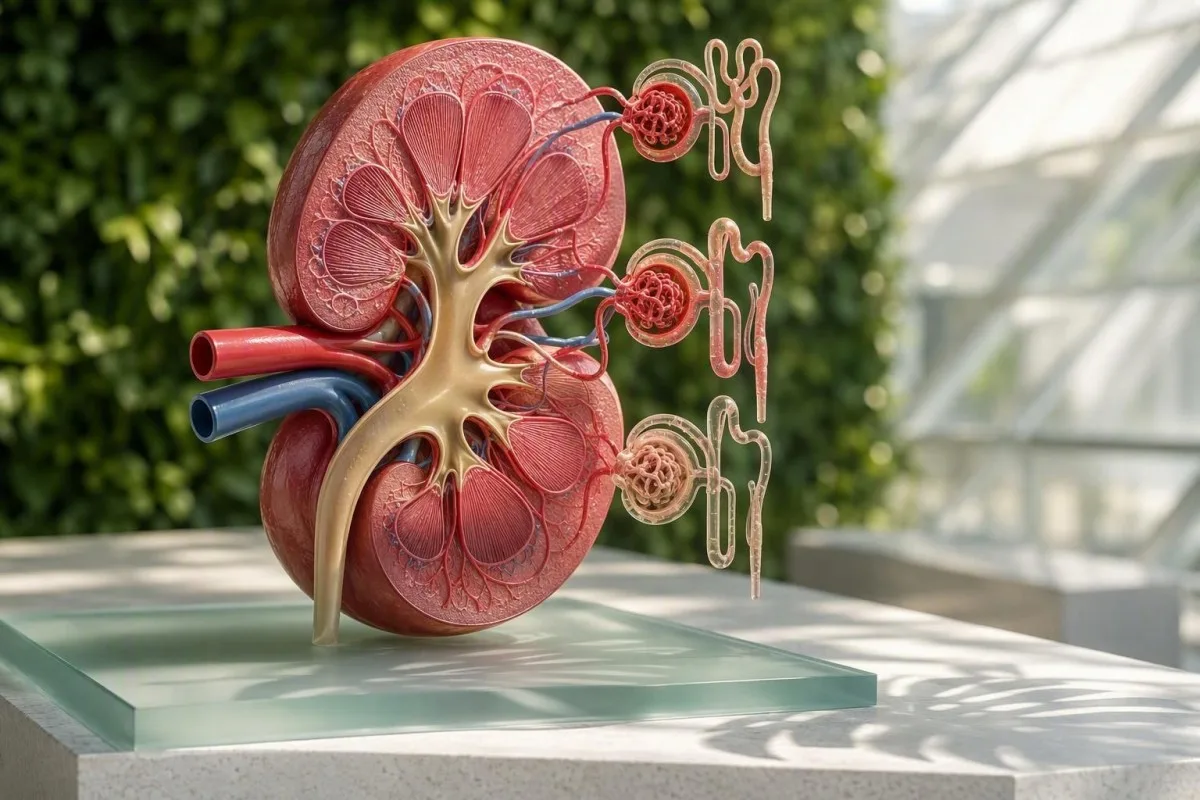
Ang ubos nga eGFR human sa pagsuka, pagkaladlad sa kainit, kalibanga, o dili maayo nga pag-inom og pluwido mahimong mabalik. Ang resulta nagkinahanglan gihapon og konteksto: ang mga sintomas, baseline nga creatinine, mga resulta sa ihi, mga tambal, ug ang katulin sa pagkaayo importante.


- Temporaryo nga ubos nga GFR mahimong mahitabo sa diha nga ang dehydration makapakunhod sa agas sa dugo sa kidney ug makapataas sa creatinine sulod sa mga oras ngadto sa mga adlaw.
- AKI threshold mao ang pagtaas sa creatinine nga labing menos 0.3 mg/dL sulod sa 48 ka oras o 1.5 ka beses sa baseline sulod sa 7 ka adlaw.
- Creatinine recheck kanunay nga gihan-ay sulod sa 24-72 ka oras human sa pluwido ug pagkaayo alang sa dili komplikado nga gidudahang dehydration.
- CKD definition nagkinahanglan og eGFR ubos sa 60 mL/min/1.73 m² o mga timailhan sa kadaot sa kidney sulod sa labing menos 3 ka bulan.
- Urine ACR nga 30 mg/g o labaw pa mahimong magpakita og kadaot sa kidney bisan kung ang eGFR labaw sa 60 mL/min/1.73 m².
- dali nga pagrepaso gikinahanglan alang sa kaayo ubos nga urine output, kalibog, kakulang sa gininhawa, paghubag, grabeng kahuyang, o potassium abnormalities.
- Kapeligro sa tambal motaas kini uban ang dehydration kung nalambigit ang NSAIDs, ACE inhibitors, ARBs, diuretics, lithium, o SGLT2 nga mga tambal.
- Mga limitasyon sa usa ka resulta hinungdan kay ang eGFR nga gibase sa creatinine dili kaayo kasaligan sa panahon sa dali nga pagbag-o sa pag-andar sa kidney.
Makapahinabok ba ang dehydration sa temporaryo nga ubos nga GFR test result?
Oo—ang dehydration mahimong temporaryo nga makapaubos sa resulta sa pagsulay sa GFR tungod kay ang pagkunhod sa gidaghanon sa fluid nga naglibot makapaubos sa agianan sa dugo pinaagi sa mga kidney, hinungdan nga motaas ang creatinine ug moubos ang kalkulado nga eGFR. Kung ang hinungdan matul-id dayon, daghang mga tawo ang mobalik sa ilang gibanabana nga baseline sa sulod sa 24-72 ka oras; ang ubos nga GFR kinahanglan dili gayud awtomatikong pasagdan.
Ang pagsulay sa GFR kasagarang magreport eGFR, usa ka banabana nga gikalkula gikan sa serum creatinine, edad, ug sekso kaysa direkta nga pagsukod sa pagsala. Sa panahon sa bug-os nga pagkawala sa fluid, ang creatinine mahimong magtigum sa dili pa ang mga kidney permanente nga masamdan. Kantesti usa ka AI blood test analyzer nga nagbasa sa eGFR kauban sa creatinine, urea, electrolytes, ug nangaging mga resulta kaysa pagtratar sa usa ka ubos nga numero ingon usa ka pagdayagnos.
Sa akong klinikal nga trabaho, ang klasiko nga senaryo mao ang usa ka 38-anyos nga adunay duha ka adlaw nga gastroenteritis kansang creatinine motaas gikan sa 0.8 ngadto sa 1.2 mg/dL ug ang eGFR moubos gikan sa 98 ngadto sa 58 mL/min/1.73 m². Kana mahimong mabag-o nga prerenal physiology, apan ang 0.4 mg/dL nga pagtaas makab-ot ang usa ka criteria sa acute kidney injury ug nagkinahanglan og tukma sa panahon nga follow-up, dili lang kasigurohan.
Ang praktikal nga lagda ni Dr. Thomas Klein yano ra: ang kaagi nagsulti kanato kung ang dehydration mahimo, samtang ang balik-balik nga sampol nagsulti kanato kung kini ba ang tibuuk nga pagpatin-aw. Ang usa ka ubos nga kantidad dili makatambal sa laygay nga sakit sa kidney; ang among Giya sa mga hugna sa CKD nagpatin-aw kung ngano nga ang gidugayon nagbag-o sa interpretasyon.
Ngano nga ang pagkawala sa pluwido nagbag-o sa creatinine ug eGFR
Ang pagkawala sa fluid nagpaubos sa eGFR pinaagi sa pagpakunhod sa pressure sa perfusion sa kidney, busa ang mga kidney magtipig ug asin ug tubig samtang nag-filter ug dyutay nga plasma. Kini gitawag nga usa ka prerenal nga pagkunhod sa pagsala; mahimo kini mahitabo sa kalibanga, pagsuka, hilanat, pagkaladlad sa kainit, bug-at nga ehersisyo, o sobra nga pag-ihi.
Ang Creatinine namugna kasagaran pinaagi sa metabolismo sa kaunuran ug giwagtang pinaagi sa pagsala, mao nga ang mas taas nga konsentrasyon mahimong magpakita sa mas ubos nga clearance, konsentrasyon gikan sa pagkawala sa tubig, dugang nga pagkasira sa kaunuran, o daghang mga hinungdan nga magkauban. Ang mga equation sa eGFR nag-asumir sa medyo makanunayon nga lebel sa creatinine; kung kini paspas nga nagbag-o, ang kalkulado nga eGFR nahimong ulahi sa aktuwal nga pisyolohiya.
Usa ka ratio sa urea ngadto sa creatinine nga labaw sa mga 20:1 kung gitaho sa mg/dL makasuporta sa pagkawala sa gidaghanon, apan dili kini usa ka pagsulay sa dehydration. Ang pagdugo sa gastrointestinal, corticosteroids, taas nga pagkaon sa protina, ug catabolism mahimo usab nga makapataas sa urea; tan-awa ang among detalyado BUN ug creatinine ratio naggiya alang sa mga lit-ag nga malikayan sa mga clinician.
Ang KDIGO naghubit sa acute kidney injury ingon nga creatinine nga motaas ug 0.3 mg/dL o labaw pa sulod sa 48 oras, motaas ngadto sa 1.5 ka beses sa baseline sulod sa 7 ka adlaw, o output sa ihi ubos sa 0.5 mL/kg/hour sulod sa 6 ka oras (KDIGO, 2012). Ang maong mga threshold tinuyo nga sensitibo tungod kay ang paghulat sa usa ka dako nga pagkahulog sa eGFR mahimong makalimtan ang usa ka matambalan nga problema.
Unsaon pagbasa ang ubos nga eGFR nga mga numero human sa dehydration
Ang eGFR nga 60-89 mL/min/1.73 m² dili awtomatiko nga sakit sa kidney, labi na pagkahuman sa dehydration, sa mga tigulang, o kung walay mga abnormalidad sa ihi. Ang eGFR ubos sa 60 nahimong klinikal nga importante kung kini magpadayon sulod sa 3 ka bulan o mahitabo uban ang makabalaka nga mga sintomas o usa ka kalit nga pagtaas sa creatinine.
Ang eGFR nga 90 o labaw pa mL/min/1.73 m² kasagaran giisip nga normal o taas sa mga hamtong, bisan kung ang albumin sa ihi mahimo pa gihapon nga magpaila sa kadaot sa kidney. Ang usa ka eGFR nga 45-59 giklasipikar ingon G3a kung ang pagkadugay o uban pang mga timailhan sa kidney natukod na; edad, masa sa kaunuran, ug ang miaging resulta nagpabilin nga hinungdanon nga konteksto.
Ang kalit nga pag-ubos gikan sa 105 hangtod sa 62 kanunay nga mas nagpahibalo kaysa sa usa ka lig-on nga pagbasa nga 62 sa daghang tuig. Sa kasukwahi, ang usa ka eGFR nga 78 sa usa ka maskulado nga 25-anyos pagkahuman sa usa ka taas nga dagan mahimong magpakita sa temporaryo nga henerasyon sa creatinine kaysa sa pagkunhod sa pagsala; ang among artikulo bahin sa creatinine human sa ehersisyo nagpatin-aw niining kasagarang sayop nga alarma.
Ang KDIGO 2024 nag-ingon nga ang laygay nga sakit sa kidney nagkinahanglan og mga abnormalidad sa istruktura o pag-andar sa kidney nga anaa sulod sa hindi bababa sa 3 buwan (KDIGO Work Group, 2024). Kana nga kinahanglanon sa oras nagpugong sa mga clinician sa pag-label sa usa ka mubo nga yugto sa dehydration ingon usa ka laygay nga sakit.
Mga timailhan sa laboratoryo nga nagsuporta sa dehydration imbes sa padayon nga sakit sa kidney
Ang usa ka concentrated nga sample sa ihi, nga nahiuyon sa kaagi sa pagkawala sa pluwido, ug pagkaayo pagkahuman sa hydration pabor sa dehydration, samtang ang albuminuria, dugo sa ihi, padayon nga mga abnormalidad, o usa ka pagpangita sa istruktura sa kidney naghimo sa laygay nga sakit nga mas lagmit. Walay usa ka laboratory clue ang makasulbad sa pangutana.
Ang piho nga kabug-at sa ihi labaw sa 1.020 kasagaran nagpaila sa concentrated nga ihi, ug ang mga kantidad labaw sa 1.030 mahimong mahitabo uban ang daghang pagkonserbar sa tubig. Dili kini perpekto: ang glucose, protina, ug radiographic contrast mahimo usab nga makadugang sa piho nga kabug-at, mao kana ang hinungdan ngano nga usa ka resulta sa piho nga kabug-at sa ihi nagkinahanglan og bug-os nga konteksto sa urinalysis.
Ang usa ka bland nga urinalysis wala magpamatuod sa dehydration, apan ang protina, mga elemento sa pula nga selula, mga elemento sa puti nga selula, o mga cast nagbag-o sa differential. Padayon nga ratio sa albumin-sa-creatinine nga 30 mg/g o mas taas usa ka timailhan sa kadaot sa kidney bisan kung ang eGFR nagpabilin nga labaw sa 60 mL/min/1.73 m².
Ang pattern nga akong gikabalak-an mao ang ubos nga eGFR ug potassium nga labaw sa sakup sa laboratoryo, bicarbonate nga ubos sa 22 mmol/L, o bag-ong protina sa ihi. Kini nga mga butang nagpaila sa nadaot nga pagdumala sa kidney kaysa sa yano nga konsentrasyon gikan sa usa ka init nga adlaw, ug sila nagkinahanglan og pagtimbang-timbang nga gipangulohan sa clinician.
Kanus-a kinahanglan magpahigayon og creatinine recheck?
Ang usa ka recheck sa creatinine kasagarang angay sulod sa 24-72 oras pagkahuman sa gidudahang walay komplikasyon nga dehydration natul-id, basta ang tawo makainom, makaihi sa normal, ug walay mga red flag. Ang eksaktong oras nagdepende sa gidak-on sa pagtaas sa creatinine, baseline nga kahimsog sa kidney, edad, ug mga tambal.
Alang sa usa ka malumo, bulag nga resulta pagkahuman sa tin-aw nga reversible nga sakit, ang mga clinician kanunay nga nag-usab sa creatinine, urea, potassium, bicarbonate, ug urinalysis pagkahuman sa oral rehydration ug normal nga pagkaon. Walay unibersal nga gidaghanon sa tubig nga ipilit sa pag-inom; ang mga tawo nga adunay pagkapakyas sa kasingkasing, sakit sa atay, o laygay nga sakit sa kidney nanginahanglan og indibidwal nga tambag sa pluwido.
Kantesti AI usa ka AI pagsabot sa resulta sa blood test platform nga nagtandi sa kasamtangan nga renal panel sa mga nangaging kantidad, nga kasagaran mas mapuslanon kaysa pagtandi sa usa ka resulta sa usa ka populasyon nga reperensiya nga sakup. Ang usa ka creatinine nga 1.1 mg/dL mahimong ordinaryo alang sa usa ka tawo ug usa ka makahuluganon nga paglukso gikan sa 0.6 mg/dL alang sa lain.
usa ka pag-usab human sa 1-2 ka semana mahimong makatarunganon lamang human ang usa ka clinician nakapagtig-a nga ang acute episode nag-ayo ug ang mga kantidad hapit na sa baseline. Gamita ang parehas nga laboratoryo kung mahimo, ug basaha ang among giya sa basic metabolic panel sa dili pa isulti nga ang usa ka gimarkahan nga kantidad usa ra.
Kanus-a ang ubos nga GFR human sa dehydration nagkinahanglan og dinalian nga pag-atiman
Pangita ug parehas nga adlaw nga medikal nga pagsusi alang sa ubos nga GFR nga adunay gamay nga ihi, padayon nga pagsuka, kalibog, grabe nga pagkalipong, kakulang sa gininhawa, mga sintomas sa dughan, paghubag, o grabe nga kahuyang. Kini nga mga sintomas mahimong magpakita sa klinikal nga mahinungdanon nga fluid imbalance, acute kidney injury, o delikado nga electrolyte changes.
Ang pagkadinalian nagkadaghan kung ang creatinine motaas ug 0.3 mg/dL sa sulod sa 48 oras, sa 50% gikan sa baseline sa usa ka semana, o kung ang produksyon sa ihi klaro nga nabawasan. Sa usa ka hamtong nga nagpatunghag wala pay mga 400 mL nga ihi sulod sa 24 ka oras, dili nako tambag nga moinom lang ug dugang tubig sa balay nga walay dinalian nga medikal nga giya.
Potassium nga labaw sa 6.0 mmol/L, ang sodium nga ubos sa 120 mmol/L, o bicarbonate ubos sa 15 mmol/L mahimong magkinahanglan ug dinalian nga pagtambal depende sa mga sintomas ug mga resulta sa ECG. Ang among Giya sa mga delikadong lebel sa electrolyte nagpatin-aw kung ngano nga ang mga resulta sa kidney ug electrolytes kinahanglan basahon nga magkauban.
Ang dehydration mahimong magkauban sa sepsis, urinary obstruction, rhabdomyolysis, diabetic ketoacidosis, o tambal nga toxicity. Ang kamatuoran nga ang usa ka tawo adunay kalibanga wala mag-ingon nga kini nga mga posibilidad—labi na kung adunay hilanat, kasakit sa likod, itom nga kulisap nga ihi, o grabe nga sakit sa kaunuran.
Unsaon pag-ila sa mga clinician ang dehydration gikan sa chronic kidney disease
Ang mga clinician nag-ila sa temporaryo nga eGFR dehydration gikan sa chronic kidney disease pinaagi sa pagdokumento sa pag-ayo, pagsusi sa urine albumin, pagrepaso sa mas daan nga mga resulta, ug pagpangita sa padayon nga mga abnormalidad sulod sa 3 ka bulan. Ang usa ka eGFR nga kantidad lamang dili makapagtukod sa hinungdan o gidugayon sa kadaot sa kidney.
Ang ratio sa urine albumin-to-creatinine ubos sa 30 mg/g giklasipikar nga A1, 30-300 mg/g isip A2, ug labaw sa 300 mg/g isip A3. Ang albuminuria mahimong temporaryo human sa hilanat, kusog nga ehersisyo, impeksyon sa urinary, o dili kontrolado nga asukar, mao nga ang usa ka abnormal nga sample kasagaran nagkinahanglan ug kumpirmasyon kaysa usa ka dali nga pagdayagnos.
Ang mga clinician usab nagrepaso sa presyon sa dugo, kahimtang sa diabetes, kasaysayan sa kidney ultrasound, kasaysayan sa pamilya, pagkaladlad sa tambal, ug kung ang creatinine normalized na sukad. Ang gabay sa pag-andam sa albumin-creatinine ratio naglangkob sa praktikal nga mga isyu sama sa ehersisyo ug regla nga mahimong makadisturbo sa usa ka sample.
Ang KDIGO 2024 nagrekomendar sa pagtimbang-timbang sa kategorya sa GFR ug kategorya sa albuminuria tungod kay ang risgo modako pag-ayo kung pareho nga abnormal kaysa kung ang eGFR lamang gamay nga ubos (KDIGO Work Group, 2024). Sa akong kasinatian, kana nga gipares nga pagsusi nagpugong sa pag-underreact ug dili kinahanglan nga panic.
Ang mga resulta sa ihi nga naghimo sa temporaryo nga katin-awan nga dili kaayo posible
Ang dugo, daghang protina, cellular casts, o padayon nga albumin sa ihi naghimo sa dehydration lamang nga dili kaayo makapakombinser ug kasagaran nag-aghat sa dugang nga pagsusi sa kidney. Ang dehydration mahimong makapalapot sa sample sa ihi, apan kini kasagaran dili makahimo ug padayon nga aktibo nga urine sediment.
Ang granular casts mahimong makita human sa dakong stress sa tubular, samtang ang red cellular casts naghatag ug kabalaka alang sa glomerular disease. Ang usa ka solong laboratory report kinahanglan nga i-correlate sa kalidad sa sample ug mga sintomas, apan kini nga mga resulta sa kinatibuk-an angay ug dugang pagtagad kaysa sa usa ka solong concentrated nga ihi; pag-explore granular casts sa ihi alang sa usa ka mabinantayon nga pagbanabana.
Ang dipstick protein mahimong magbasa og mas taas sa concentrated nga ihi, mao nga ang albumin-to-creatinine ratio kasagaran mas mapuslanon alang sa kumpirmasyon. Ang padayon nga ACR sa 300 mg/g o labaw pa usa ka high-risk marker ug dili angay i-attribute sa dili maayo nga hydration nga walay pagrepaso sa clinician.
Ang makitang pula o tea-colored nga ihi, kasakit sa kilid, hilanat, o kawalay katakus sa pag-agi sa ihi nagbag-o sa pagkadinalian. Ang pagbabag ug impeksyon sa urinaryo makapakunhod sa GFR, ug ang duha nagkinahanglan og lahi nga tubag kaysa pagpuli sa mga likido sa balay.
Mga tambal nga makapatipas sa dehydration ngadto sa acute kidney injury
Ang NSAIDs, diuretics, ACE inhibitors, ARBs, lithium, ug pipila ka mga tambal sa diabetes makapadako sa pagkahulog sa GFR nga may kalabutan sa dehydration. Kini nga mga tambal kasagaran angay nga dugay nga mga pagtambal, apan ang acute illness mahimong mag-usab sa plano sa kaluwasan.
Ang NSAIDs makapakunhod sa abilidad sa kidney sa pagpadayon sa filtration sa panahon sa ubos nga circulating volume, ilabi na sa mas tigulang nga mga hamtong ug mga tawo nga nag-inom og diuretic dugang usa ka ACE inhibitor o ARB. Ayaw paghunong sa mga gireseta nga tambal nga reflexively; pangutana sa preskriber o pharmacist alang sa usa ka sick-day plan nga piho sa imong mga kondisyon.
Ang SGLT2 inhibitors sagad naghatag og gamay nga sayo nga eGFR dip human sa pagsugod tungod sa usa ka hemodynamic nga kausaban sulod sa glomerulus, dili kinahanglan ang kadaot sa kidney. Ang kalainan gikan sa dehydration importante, ug ang among pagrepaso sa eGFR nga mga kausaban sa SGLT2 nga mga tambal nagpatin-aw nganong ang glucose, presyon sa dugo, mga sintomas, ug ang oras gisusi nga magkauban.
Ang Metformin dili direkta makapaus-os sa GFR, apan ang acute kidney injury mahimong mag-usab kung luwas ba nga ipadayon kini sa temporaryo. Ang lebel sa Lithium mahimong mosaka sa pagkawala sa volume, samtang ang trimethoprim mahimong makapataas sa creatinine nga walay katugbang nga pagkahulog sa nasukod nga filtration—usa sa mga pagka-subtle nga naghimo sa self-interpretation nga delikado.
Ngano nga ang edad, pagmabdos, muscle mass, ug ehersisyo makaapekto sa interpretasyon sa eGFR
Ang eGFR nga gibase sa creatinine mahimong makapakunhod sa filtration sa mga tawo nga muscular ug makapadako niini sa mga huyang nga tawo nga adunay ubos nga muscle mass; ang pagmabdos naggamit og lahi nga mga ekspektasyon. Ang ubos nga eGFR human sa dehydration busa adunay lainlaing mga implikasyon sa usa ka bodybuilder, usa ka tigulang nga hamtong, ug usa ka mabdos nga pasyente.
Sa pagmabdos, ang GFR kasagaran mosaka, mao nga ang creatinine kasagarang moubos sa mga 0.4-0.8 mg/dL; ang usa ka kantidad nga giisip nga ordinaryo sa gawas sa pagmabdos mahimong makapabalaka sa konteksto. Bisan kinsa nga mabdos nga adunay pagsuka, taas nga presyon sa dugo, sakit sa ulo, paghubag, o abnormal nga mga resulta sa kidney kinahanglan makontak ang ilang maternity team, ug ang among Giya sa GFR sa pagmabdos naghatag sa may kalabutan nga framework.
Ang usa ka 78-anyos nga adunay ubos nga pagbati sa kauhaw ug paggamit sa diuretic mahimong makaugmad og kidney hypoperfusion nga adunay daw kasarangan nga pagkawala sa likido. Sa kasukwahi, ang usa ka strength athlete mahimong adunay creatinine labaw sa reference interval tungod sa muscle mass, creatine supplements, o bag-o nga pagbansay, bisan pa sa normal nga tinuod nga filtration.
Ang Cystatin C usahay makaklaro sa usa ka dili sigurado nga resulta sa creatinine tungod kay kini dili kaayo nagsalig sa muscle mass, bisan pa ang sakit sa thyroid, pagpanigarilyo, mga steroid, ug pag-ila makaimpluwensya niini. Si Dr. Thomas Klein kanunay kini gamiton ingon usa ka tie-breaker, dili usa ka kapuli sa kasaysayan ug sunud-sunod nga mga resulta.
Unsa ang buhaton sa balay samtang naghulat sa usa ka balik nga GFR test
Kung ikaw alerto, makainom, ug makaihi, anam-anam nga ilisan ang mga likido, likayan ang bug-at nga ehersisyo ug NSAIDs, ug irekord ang mga sintomas sa dili pa ang imong recheck. Ang mga lakang sa balay dili angay kung adunay mga red flag o grabe nga sakit.
Ang gagmay ug kanunay nga pag-inom kasagaran mas maayo nga gitugot kaysa sa paspas nga pag-inom og daghang gidaghanon, ilabi na pagkahuman sa pagsuka. Ang oral rehydration solution mahimong mapuslanon sa kalibanga tungod kay kini mopuli sa sodium ug glucose ingon man sa tubig; ang mga tawo nga adunay fluid restriction nagkinahanglan og clinician-specific nga tambag.
Ang luspad nga dalag nga ihi mahimong magpakita sa makatarunganon nga hydration, apan kini dili usa ka clearance certificate. Ang ngitngit nga ihi mahimong magpakita sa konsentrasyon, mga tambal, bilirubin, o pigment sa kaunoran, busa basaha ang among giya sa Mga timailhan sa pasidaan sa ngitngit nga ihi kung magpadayon ang kolor human sa mga likido.
Likayi ang bug-at nga pag-ehersisyo sulod sa 24-48 oras sa dili pa ang giplano nga recheck sa creatinine gawas kon ang imong clinician mosulti kanimo. Itala ang mga petsa sa sakit, hilanat, mga yugto sa kalibanga, mga dosis sa tambal, ehersisyo, suplemento, ug ang gidaghanon sa imong pag-ihi; kini nga gamay nga timeline kanunay nga nagbag-o sa interpretasyon.
Ngano nga ang mga trend mas mapuslanon kay sa usa ka ubos nga eGFR nga resulta
Ang direksyon ug katulin sa pagbag-o sa creatinine kasagaran mas mapuslanon sa klinikal kaysa usa ka eGFR nga kantidad. Ang usa ka lig-on nga eGFR nga 55 ug usa ka bag-ong pag-ubos gikan sa 95 ngadto sa 55 mahimong adunay lahi kaayo nga mga risgo, bisan pa nga ang gitaho nga numero managsama.
Ang mga laboratoryo mahimong mogamit ug delta checks kung ang creatinine mausab nga dili damha, apan ang biolohikal nga kalainan, assay variation, pagkaon, ug hydration usab makatampo. Ang pagbag-o sa 0.1 mg/dL mahimong kasaba sa usa ka setting ug makahuluganon sa lain kung ang baseline sa tawo kanunay nga 0.5 mg/dL.
Si Kantesti usa ka AI-powered blood test analysis tool nga nag-organisar sa sunod-sunod nga mga resulta sa kidney uban sa klinikal nga konteksto nga imong gitipigan, sama sa sakit ug mga kausaban sa tambal. Kana nga pamaagi nagpadayon sa praktikal nga pamaagi nga gihulagway sa among gabay sa longitudinal lab analysis: pagtukod sa imong kaugalingong baseline sa dili pa magpasabut sa usa ka trajectory sa sakit.
Sukad sa Agosto 29, 2026, walay interpretasyon nga mahimong gamiton sa konsumidor ang kinahanglan mopuli sa desisyon sa usa ka clinician kung ang eGFR paspas nga nag-ubos. Ang usa ka graph makaila sa usa ka pattern; kini dili makasusi sa pasyente alang sa dehydration, obstruction, pagkapakyas sa kasingkasing, o systemic illness.
Mga limitasyon sa standard nga GFR test panahon sa acute nga sakit
Ang usa ka standard nga eGFR nga gibase sa creatinine dili kasaligan kung ang function sa kidney paspas nga nagbag-o, tungod kay ang creatinine nagkinahanglan og panahon aron ma-equilibrate. Sa panahon sa aktibo nga dehydration o sayo nga pagkaayo, ang mga clinician mosunod sa sunod-sunod nga creatinine ug output sa ihi kaysa mosalig sa usa ka kalkulado nga eGFR.
Ang 2021 CKD-EPI creatinine equation nagpalambo sa pagbanabana sa lebel sa populasyon pinaagi sa pagtangtang sa pag-adjust sa rasa, apan kini nag-ingon gihapon nga ang produksyon ug pag-excrete sa creatinine medyo lig-on. Ang mga suplemento sa creatine, linuto nga karne pipila ka oras sa dili pa ang sampling, amputasyon, cachexia, ug taas nga masa sa kaunuran mahimong makapausab sa interpretasyon.
Ang Kantesti AI naghatag ug mga kombinasyon sa resulta alang sa follow-up apan wala mag-diagnose sa acute kidney injury o magreseta og fluid therapy. Ang among giya sa teknolohiya naghulagway kung giunsa ang contextual interpretation lahi sa pagpuli sa medikal nga assessment.
Ang Sinukod nga GFR gamit ang exogenous filtration markers gigahin alang sa gipili nga mga sitwasyon, sama sa donor evaluation o dakong kawalay kasigurohan, imbes nga rutina nga follow-up sa dehydration. Kadaghanan sa mga pasyente nagkinahanglan ug mabinantayon nga klinikal nga review, urinalysis, balik-balik nga renal panel, ug assessment kung ang numero nag-recover.
Checklist sa usa ka clinician alang sa ubos nga GFR human sa dehydration
Ang usa ka luwas nga plano sa follow-up nagsusi sa kagrabe, hinungdan, pagkaayo, mga resulta sa ihi, mga tambal, ug mga komplikasyon—dili lang ang eGFR nga numero. Kini nga structured nga pamaagi nag-ila sa mga tawo nga mahimong mag-recheck dayon ug kadtong nanginahanglan og dinalian nga ebalwasyon sa lebel sa ospital.
Mangutana ko bahin sa pagkawala sa pluwido, gidaghanon sa ihi, bag-o nga contrast imaging, mga sintomas sa impeksyon, kadaot sa kaunuran, pagbabag sa ihi, diabetes, pagkapakyas sa kasingkasing, ug matag reseta o over-the-counter nga tambal. Dayon akong itandi ang creatinine sa katapusang nahibal-an nga kantidad ug susihon ang potassium, bicarbonate, urea, urinalysis, ug urine ACR kung angay.
Ang usa ka balik-balik nga resulta nga mibalik sa baseline human sa pagkaayo nagsuporta sa usa ka temporaryo nga hemodynamic nga hinungdan, bisan pa nga kini wala magwagtang sa umaabot nga risgo sa usa ka tawo nga adunay diabetes o hypertension. Ang usa ka resulta nga nagpabilin nga ubos, nagkagrabe, o giubanan sa albuminuria angayan sa usa ka pormal nga kidney work-up ug usahay nephrology input.
Ang among klinikal nga sulod gisusi uban sa mga sumbanan nga gihulagway sa Kantesti medical validation team. Ang papel sa Kantesti mao ang pagtabang kanimo sa pag-andam og mas maayo nga mga pangutana ug pag-ila sa mga uso; ang sunod nga klinikal nga desisyon nahisakop sa propesyonal nga makasusi kanimo ug molihok base sa resulta.
Kanunay nga Gipangutana nga mga Pangutana
Makapadima-an ba sa eGFR ang dehydration?
Oo. Ang dehydration mahimong makapamenos sa pag-agos sa dugo sa mga amim Adenas, makapataas sa serum creatinine, ug makaprodyus og temporaryong ubos nga gikalkula nga eGFR. Ang pagtaas sa creatinine nga labing menos 0.3 mg/dL sulod sa 48 ka oras makatuman sa usa ka sukdanan sa KDIGO alang sa acute kidney injury, bisan pa kon ang hinungdan mahimong mabalik. Ang balik nga renal panel human sa pagkaayo, kasagaran sulod sa 24-72 ka oras alang sa mga kaso nga walay komplikasyon, makatabang sa pagtino kon ang kausaban nag-ayo.
Unsa kadugay ang paggawas sa eGFR human sa dehydration?
Ang pagbag-o sa eGFR nga may kalabotan sa dehydration kasagarang molambo sulod sa 24-72 oras human mohunong ang pagkawala sa pluwido ug maulian ang kidney perfusion, apan ang pagkaayo mahimong magdugay human sa grabeng balatian o sa mga tawo nga adunay daan nang sakit sa amimiso. Ang creatinine dili dihadiha dayon mausab, busa ang eGFR mahimong malangan sa pag-ayo sa pasyente. Ang padayon nga ubos nga eGFR, pagtaas sa creatinine, ubos nga paggawas sa ihi, o abnormal nga potassium nagkinahanglan ug medikal nga pagsusi imbes nga balik-balik nga pag-inom ug pluwido sa balay. Ang chronic kidney disease dili maestambay ug ang mga abnormalidad magpadayon sulod sa labing menos 3 ka bulan.
Kinahanglan ba ko'g daghang tubig sa dili pa ang creatinine recheck?
Ayaw pugsa ang sobra nga pag-inom og tubig sa dili pa ang recheck sa creatinine; tumong sa ordinaryo, komportableng hydration gawas kon ang usa ka clinician nagreseta og limitasyon o target sa pluwido. Ang paspas nga sobra nga pag-inom makapaus-os sa sodium, ilabi na sa mga tigulang, endurance athletes, ug mga tawo nga nag-inom og piho nga mga tambal. Likayi ang alkohol, NSAIDs, ug dili kasagaran nga lisud nga ehersisyo sulod sa 24-48 ka oras sa dili pa ang sample kon luwas sa medikal. Ang mga tawo nga adunay heart failure, cirrhosis, o advanced kidney disease kinahanglan mangutana sa ilang clinician kung unsa kadaghan ang pluwido nga angay.
Unsa nga numero sa eGFR ang delikado human sa dehydration?
Walay usa ka peligroso nga numero sa eGFR kay ang gikusgon sa kausaban, mga sintomas, lebel sa potassium, gidaghanon sa ihi, ug sukaranan nga paglihok sa kidney ang nagtino sa pagkadinalian. Ang eGFR nga ubos sa 60 mL/min/1.73 m² nga bag-o pa kinahanglan susihon, samtang ang eGFR nga ubos sa 30 mL/min/1.73 m² kasagaran nagkinahanglan ug dinalian nga paghisgot sa doktor. Ang dinalian nga pagsusi gikinahanglan dayon kon ang gidaghanon sa ihi mubo kaayo, ang creatinine mosaka ug 0.3 mg/dL sulod sa 48 oras, ang potassium molapas sa 6.0 mmol/L, o ang mga sintomas sama sa kalibog o kakulang sa ginhawa mahitabo.
Mahimo bang isalikway sa normal nga urinalysis ang sakit sa amimiso human sa ubos nga eGFR?
Dili. Ang normal nga urinalysis makapakunhod sa kabalaka alang sa pipila ka mga sakit sa panghubag sa kidney apan dili makawagtang sa tanan nga sakit sa kidney o pagbabag. Ang usa ka ratio sa albumin-sa-creatinine sa ihi nga ubos sa 30 mg/g makapagaan sa kabalaka, samtang ang padayon nga mga kantidad nga 30 mg/g o labaw pa nagpaila sa kadaot sa kidney bisan kung ang eGFR labaw sa 60 mL/min/1.73 m². Ang mga clinician naghubad sa mga resulta sa ihi uban ang balik-balik nga creatinine, presyon sa dugo, kasaysayan sa tambal, kahimtang sa diabetes, ug nangaging mga pagsukod sa kidney.
Makapasamot ba ang ehersisyo o creatine sa ubos nga GFR test result?
Ang bug-at nga ehersisyo, pagkasamad sa kaunoran, linuto nga karne, ug mga suplemento sa creatine makapataas sa serum creatinine ug makapakunhod sa creatinine-based eGFR nga daw walay katumbas nga pagkawala sa tinuod nga pagsala. Kining epektoha ilabinang importante human sa layo nga mga panghitabo, bug-at nga resistance training, o mga ehersisyo nga sama sa CrossFit. Ang grabeng kasakit sa kaunoran, kahuyang, paghubag, o ihi nga morag kolor sa cola human sa ehersisyo nagkinahanglan ug dinalian nga pagsusi tungod kay ang rhabdomyolysis mahimong hinungdan sa tinuod nga acute kidney injury. Ang usa ka balik-balik nga sample human sa 24-48 ka oras nga pahulay mahimong makahatag ug impormasyon kung ang usa ka clinician maghunahuna nga kini luwas.
Karon na ang AI-Powered Blood Test Analysis
Apil sa kapin sa 2 milyon nga mga user sa tibuok kalibutan nga nagsalig sa Kantesti para sa dayon ug tukma nga pag-analisa sa lab test. I-upload ang imong resulta sa blood test ug makadawat og komprehensibong pagsabot sa 15,000+ nga mga biomarker sulod sa mga segundo.
📚 Mga Napangalan nga Research Publications
Klein, T., Mitchell, S., & Weber, H. (2026). Normal nga Sakop sa aPTT: D-Dimer, Giya sa Pag-ihap sa Dugo gamit ang Protina C. Kantesti AI Medical Research.
Klein, T., Mitchell, S., & Weber, H. (2026). Giya sa mga Protina sa Serum: Pagsulay sa Dugo sa mga Globulin, Albumin ug A/G Ratio. Kantesti AI Medical Research.
📖 Mga Panlabas nga Sanggunian sa Medisina
⚕️ Pagpasabot sa Medikal
Kini nga artikulo para sa katuyoan sa edukasyon ra ug dili kini mosangpot sa medikal nga tambag. Kanunay mokonsulta sa usa ka kwalipikado nga healthcare provider alang sa mga desisyon sa diagnosis ug pagtambal.
Mga E-E-A-T Trust Signals
Kasinatian
Pagsusi sa klinika nga gipangulohan sa doktor sa mga workflow sa interpretasyon sa lab.
Kahanas
Pokus sa medisina sa laboratoryo kung giunsa paglihok ang mga biomarker sa konteksto sa klinika.
Pagka-awtorisado
Gisulat ni Dr. Thomas Klein ug gisusi ni Dr. Sarah Mitchell ug Prof. Dr. Hans Weber.
Kasaligan
Interpretasyon nga base sa ebidensya, nga adunay klaro nga mga agianan sa sunod nga buhat aron makunhuran ang kabalaka.