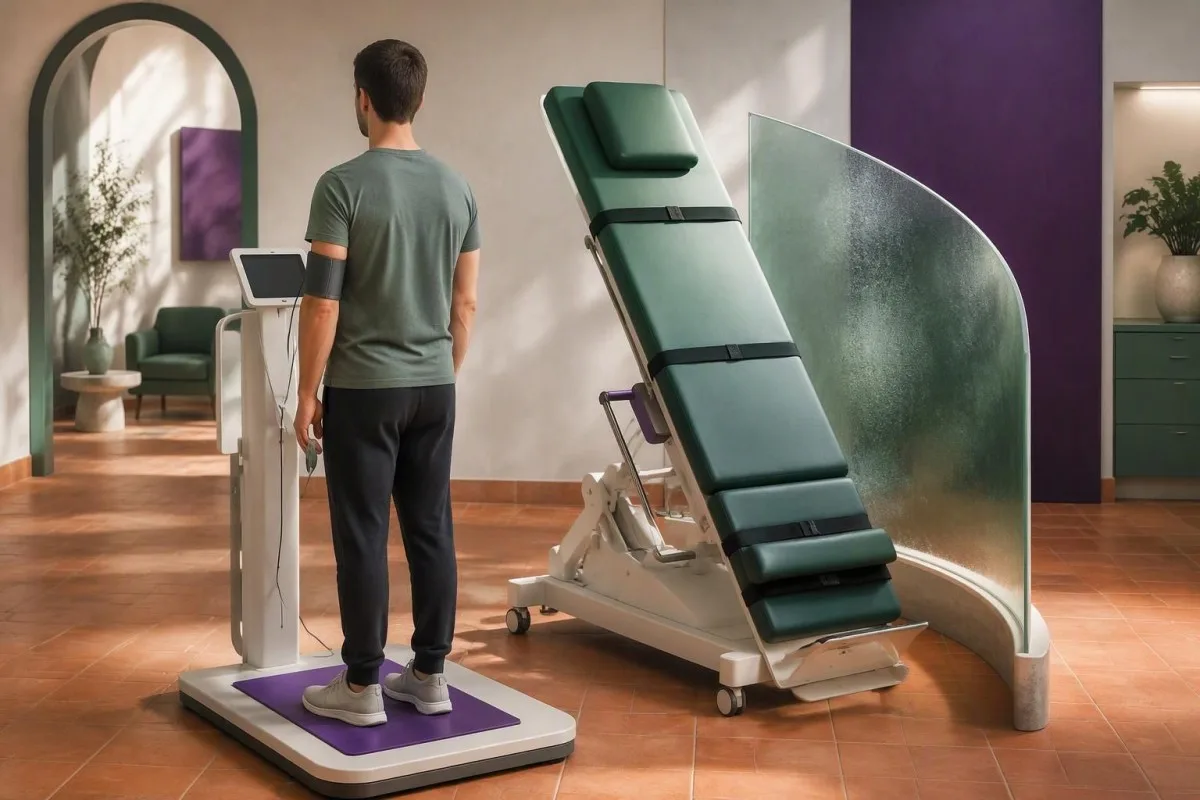
Shifokorlar tik turgan holatda o‘tkazilgan tekshiruv davomida yurak urish tezligining barqaror oshishi, holatga bog‘liq surunkali alomatlar va boshqa sabablarning istisno qilinishiga asoslanib POTS tashxisini qo‘yadilar. Qon tahlillari muqobil izohlarni aniqlashga yordam beradi; ular POTSni tasdiqlay olmaydi.

Asosiy xulosalar
- Kattalar uchun chegara: Boshqa barcha mezonlar bajarilgan taqdirda, 20 yosh va undan kattalarda tik turgan holatning 10 daqiqasi ichida yurak urish tezligining kamida 30 zarba/min ga barqaror oshishi POTS tashxisini qo‘llab-quvvatlaydi.
- O‘smirlar uchun chegara: 12–19 yoshdagilarda odatda yurak urish tezligining kamida 40 zarba/min ga barqaror oshishi talab qilinadi; kattalar uchun mezonlar kichik yoshdagi bolalarga avtomatik ravishda qo‘llanmasligi kerak.
- Alomatlarning davomiyligi: Zamonaviy Kanada mezonlari bo‘yicha ortostatik alomatlar kamida 3 oy davomida tez-tez kuzatilishi kerak; ayrim eski ta’riflarda 6 oy talab qilingan.
- Qon bosimi: Barqaror ortostatik gipotenziya — sistolik bosimning kamida 20 mmHg ga yoki diastolik bosimning 10 mmHg ga pasayishi — tik turganda yuzaga keladigan taxikardiyaning boshqa sababini ko‘rsatadi.
- Tik turgan holda o‘tkaziladigan test: Klinik shifokorlar odatda 5–10 daqiqalik dam olishdan so‘ng yotgan holatdagi boshlang‘ich ko‘rsatkichlarni qayd etadi, keyin esa tik turgan holda 10 daqiqa davomida yurak urish tezligi va qon bosimini takroran o‘lchaydi.
- Tilt-stol testi: Bosh yuqoriga qaratilgan holda kuzatuv ostida o‘tkaziladigan tilt testi tik turish natijalari noaniq bo‘lganda tashxisni qo‘llab-quvvatlashi mumkin, ammo u har bir bemor uchun shart emas.
- Qon tahlillari: Gemoglobin, ferritin, elektrolitlar, buyrak faoliyati va qalqonsimon bez tahlili o‘xshash holatlarni tekshirishga yordam beradi; hech qanday odatiy qon tahlili natijasi POTS tashxisini tasdiqlamaydi.
- Xavfsizlik: Ko‘krak og‘rig‘i, kuchli nafas qisishi, jismoniy zo‘riqish paytida hushdan ketish yoki yangi nevrologik alomatlar uyda tik turish tajribasini o‘tkazish o‘rniga zudlik bilan tibbiy ko‘rikdan o‘tishni talab qiladi.
POTS qanday tashxis qilinadi — va uni aslida nima tasdiqlaydi?
POTS tashxisi tik holatda 10 daqiqa ichida yurak urish tezligining barqaror oshishini — kattalarda kamida daqiqasiga 30 marta yoki 12–19 yoshdagilarda daqiqasiga 40 marta oshishini — hamda kamida 3 oy davomida tez-tez kuzatiladigan, tana holatiga bog‘liq alomatlarni talab qiladi; bunda ortostatik gipotenziya barqaror bo‘lmasligi va boshqa izoh mavjud bo‘lmasligi kerak. Tik turish testi yoki tilt-stol testi ushbu holatni qayd etadi; qon tahlillari o‘xshash holatlarni istisno qiladi.
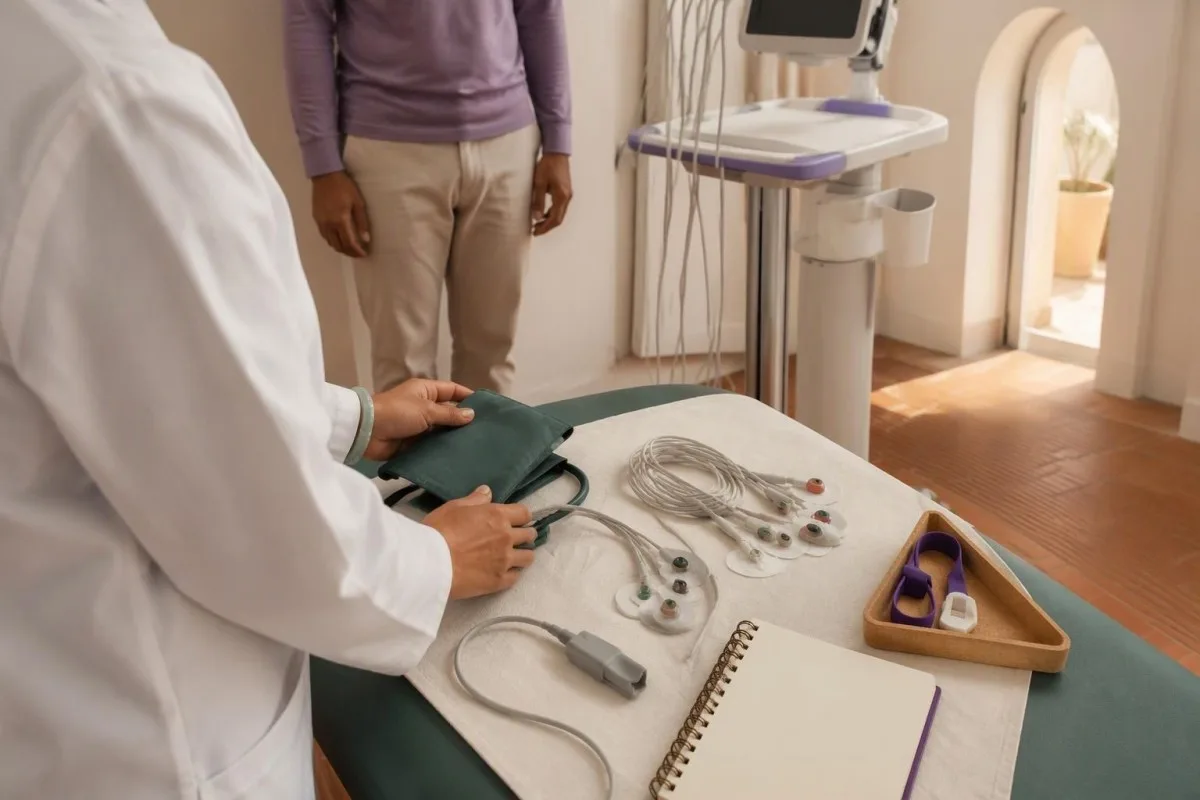
Tashxis bitta ijobiy testga emas, bir nechta omil uyg‘unligiga asoslanadi. Boshqa jihatdan sog‘lom kattalarda yurak urish tezligining daqiqasiga 35 marta oshishi POTS tashxisini tasdiqlamaydi, chunki alomatlar tik holatda kuchayib, yotganda yengillashishi kerak; suvsizlanish, kamqonlik, dorilar ta’siri va boshqa sabablarni ham hisobga olish lozim.
Eng yuqori ko‘rsatkichdan ko‘ra takroriy o‘lchovlar muhimroq. Raj va boshqalarning (2022) Kanada tavsiyalariga asoslangan CMAJ sharhida mezonga mos oshish kamida 1 daqiqa oraliqda olingan, tik holatdagi kamida 2 ta ko‘rsatkichda namoyon bo‘lishi kerakligi belgilangan; bu qisqa muddatli, harakat bilan bog‘liq keskin o‘zgarishga ortiqcha tayanishning oldini oladi.
Odatdagi ko‘rik anamnez, tekshiruv, ortostatik hayotiy ko‘rsatkichlar va 12 tarmoqli EKGni o‘z ichiga oladi. Klinik shifokorlar xurujlar tik turgandan so‘ng asta-sekin kuchayadimi yoki to‘satdan boshlanadimi, deb so‘raydi, chunki birinchi holat kompensator sinus taxikardiyasiga mos keladi, ikkinchisi esa boshqa tekshiruvni talab qiladigan aritmiyani ko‘rsatishi mumkin.
Kantesti — POTS gumon qilinganda ahamiyatli laboratoriya natijalarini izohlashga yordam beradigan sun’iy intellekt asosidagi qon tahlili analizatori, ammo u tik holatdagi yurak urish tezligining o‘zgarishini o‘lchay olmaydi yoki tashxis qo‘ya olmaydi. Ma’lumot bizning tashkilotimizda ta’limiy kontentimiz ortidagi xizmatni tushuntiradi; 10 daqiqalik fiziologik baholash esa klinik vazifa bo‘lib qoladi.
Turli yosh guruhlarida yurak urish tezligi bo‘yicha qaysi mezonlar qo‘llanadi?
20 yosh va undan katta kattalar odatda tik turish yoki bosh yuqoriga qaratilgan tilt holatidan keyin 10 daqiqa ichida yurak urish tezligining daqiqasiga kamida 30 marta barqaror oshishini talab qiladi. 12–19 yoshdagi o‘smirlar odatda daqiqasiga kamida 40 marta oshishini talab qiladi, chunki sog‘lom o‘smirlarda tik holatdagi oshish kattalardagidan yuqoriroq bo‘lishi mumkin.
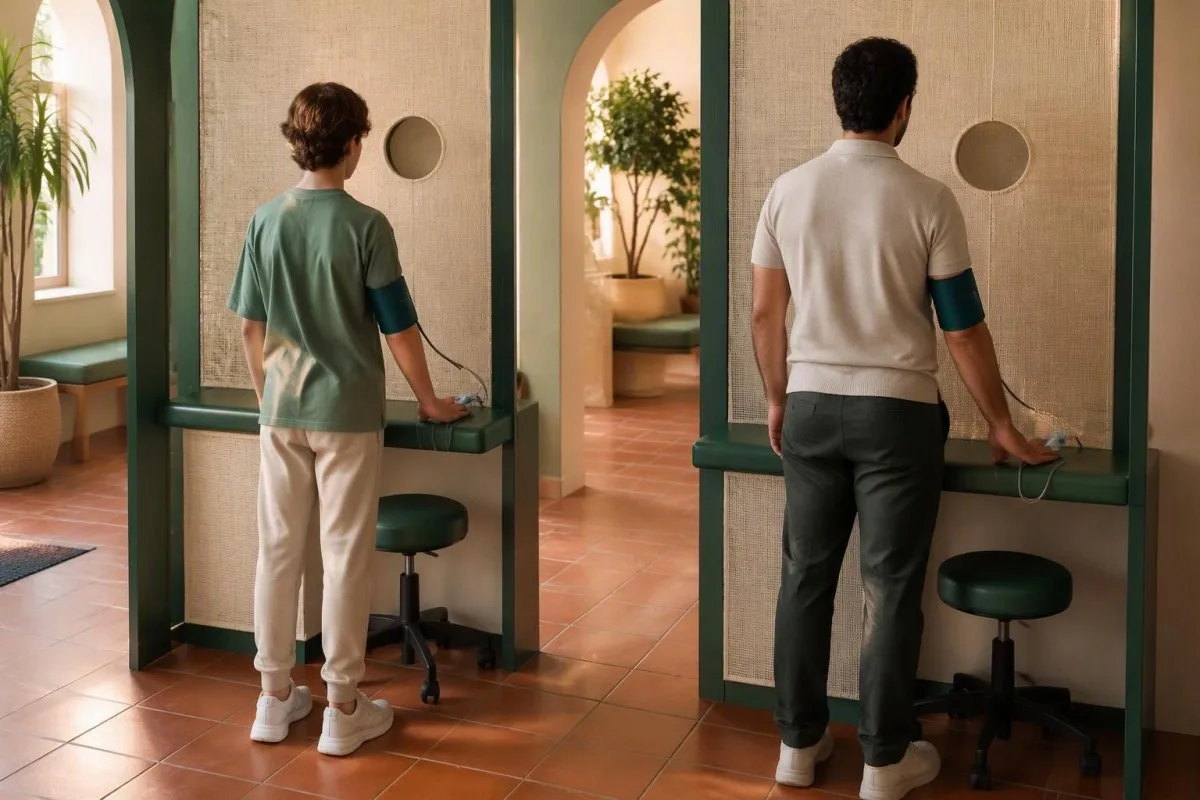
Yosh chegarasini o‘tkazib yuborish oson: 18 yoshli kishi odatda kattalar uchun mo‘ljallangan daqiqasiga 30 marta emas, daqiqasiga 40 marta oshish mezoniga kiradi. 2015-yilgi Heart Rhythm Society konsensusida 12–19 yoshdagilar uchun yuqoriroq chegara belgilangan; bu yoshlarga xos normal javoblarni sindrom deb baholamaslik zarurligini aks ettiradi (Sheldon va boshq., 2015).
Zamonaviy diagnostika mezonlariga ko‘ra, tik holatdagi yurak urish tezligining daqiqasiga 120 martadan yuqori bo‘lishi shart emas. Masalan, yurak urish tezligi 72 dan 106 martagacha oshgan katta yoshli kishi yurak urish tezligi mezoniga mos kelishi mumkin, 102 dan 125 martagacha oshgan kishida esa yakuniy puls yuqoriroq bo‘lishiga qaramay, oshish mezoni bajarilmaydi.
Tinch holatdagi pulsning pastligi talqinda yana bir muammo tug‘diradi. Kanada tavsiyalarida mezonlarni qo‘llashda chalqancha yotgan holatdagi yurak urish tezligi daqiqasiga kamida 60 marta bo‘lishi talab qilinadi; bu odatdagidan past sportchi uchun xos boshlang‘ich ko‘rsatkichdan tik turgandagi normal tezlikkacha oshishni POTS deb baholashning oldini olishga qaratilgan. Bu qoida barcha ta’riflarda bir xil emas.
12 yoshdan kichik bolalarga kattalar uchun mo‘ljallangan oddiy chegara emas, balki pediatrik talqin kerak. Yoshga bog‘liq me’yoriy ko‘rsatkichlar ularning laboratoriya hisobotlariga ham ta’sir qiladi; shu sababli qalqonsimon bez tahlili bo‘yicha qo‘llanmamizga tunngatillugu children's lab interpretation separates educational assistance from assessment by a pediatric clinician.
POTS tashxisini qo‘yishdan oldin alomatlar qancha vaqt davom etishi kerak?
Contemporary Canadian POTS criteria require symptoms for at least 3 months, alongside qualifying upright measurements. The symptoms must be frequent, worse while upright and improve after lying down; a fast pulse during a few days of fever or gastrointestinal illness does not establish a chronic autonomic syndrome.
Older publications and some clinical services use a 6-month duration requirement, so apparent disagreement between assessments may reflect different definitions rather than a measurement error. Raj et al. (2022) describes the 3-month criterion; a referral letter should identify the framework used rather than simply saying the test was positive.
Typical symptoms include lightheadedness, palpitations, blurred vision, weakness and fatigue during upright activity. A hypothetical person with 4 months of symptoms while showering or queuing, relieved by lying down, has a more characteristic history than someone with equally severe fatigue that never changes with posture.
Fainting is not necessary for POTS diagnosis, and recurrent fainting does not automatically mean POTS. Documenting whether a 2-minute episode follows standing, exertion, a painful procedure or no recognizable trigger helps distinguish orthostatic intolerance from vasovagal syncope, arrhythmias and other causes of transient loss of consciousness.
Kantesti's educational approach separates symptom overlap from diagnostic proof: 3 months of fatigue plus normal bloodwork is insufficient without the orthostatic pattern. Post-exertional symptom worsening may warrant assessment for ME/CFS diagnostic criteria, which can coexist with POTS but uses a different diagnostic framework.
Shifokor POTS uchun tik turish sinovini qanday o‘tkazadi?
A POTS standing test measures heart rate and blood pressure after 5–10 minutes lying quietly, then during up to 10 minutes of standing. A commonly described schedule records measurements at 1, 3, 5, 8 and 10 minutes, while documenting symptoms and whether the person can safely remain upright.
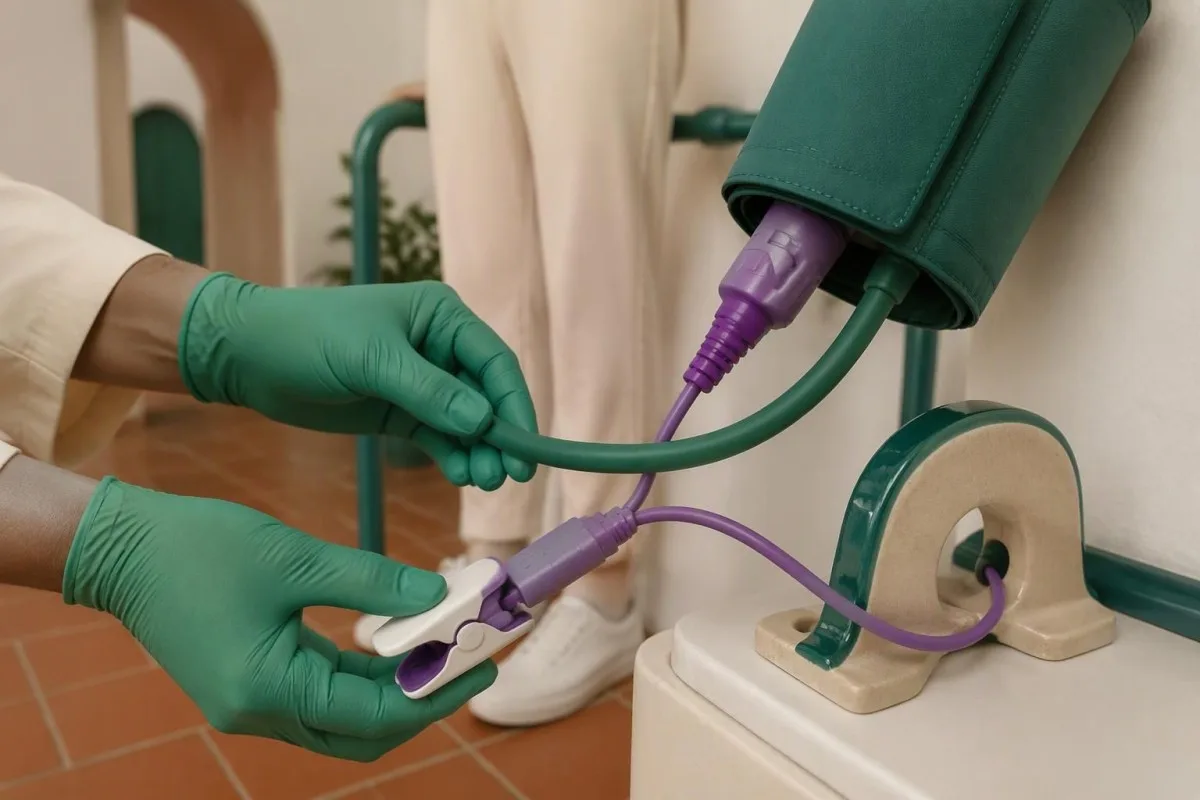
The lying baseline matters. Comparing a seated pulse with a standing pulse is not equivalent to the standard supine-to-standing assessment, because sitting already imposes some orthostatic stress; using a seated baseline can underestimate the change over the subsequent 10 minutes and obscure an otherwise qualifying pattern.
During testing, the patient usually stands quietly with supervision rather than marching, talking continuously or repeatedly contracting the calves. The leg-muscle pump returns fluid toward the heart, so movement during minutes 3–10 can alter the result; locking the knees or deliberately provoking symptoms is not a useful substitute.
Heart rate and blood pressure should be captured together, with the cuff arm supported near heart level. A cuff reading taken while the arm hangs well below the heart can distort pressure interpretation, while a wrist wearable may show movement artifacts during the first 1 minute after standing.
Preparation should be documented, not improvised. A practical record includes medication timing, recent illness, fluid intake and time of day alongside the 5–10-minute baseline; our baseline testing preparation guide explains why consistent conditions also make accompanying laboratory results more interpretable.
Ortostatik hayotiy ko‘rsatkichlar qon bosimi haqida nimalarni ko‘rsatadi?
Orthostatic vital signs assess blood pressure as well as pulse. A sustained fall of at least 20 mmHg systolic or 10 mmHg diastolic within 3 minutes upright meets conventional criteria for classical orthostatic hypotension; that finding can explain compensatory tachycardia and argues against diagnosing POTS from the pulse increase alone.
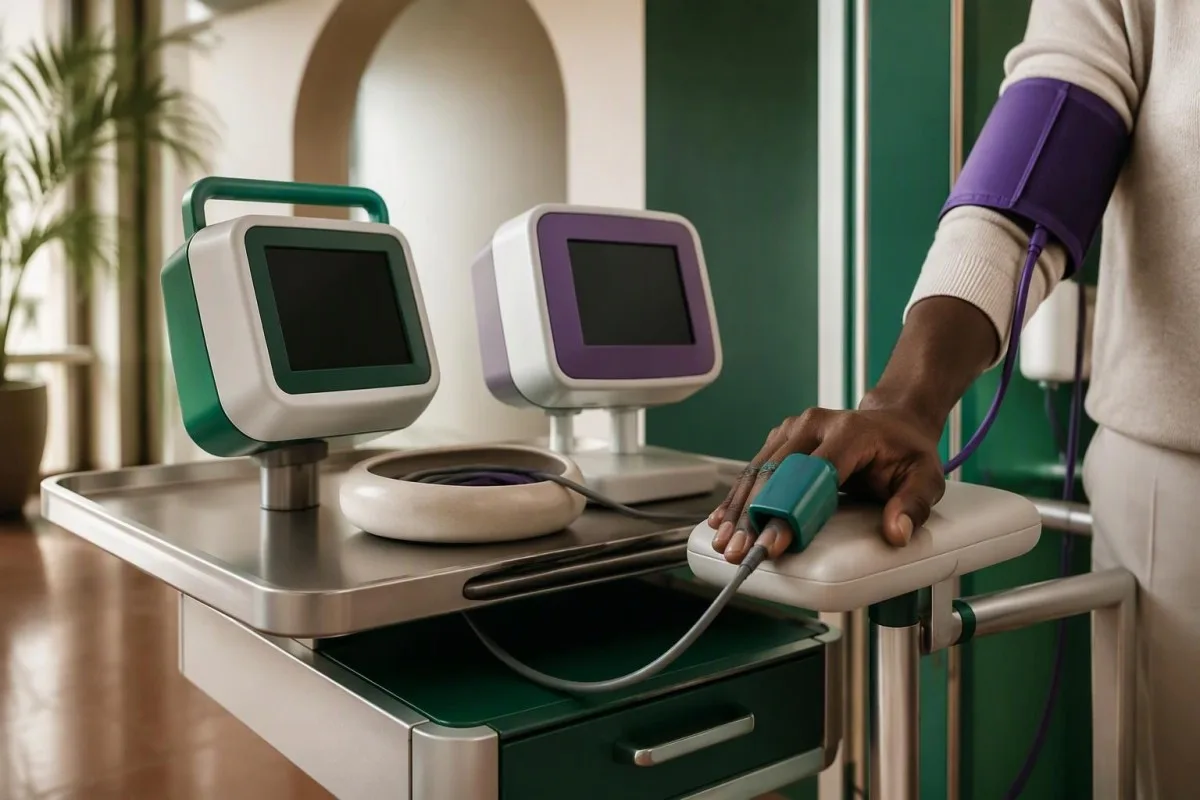
A hypothetical change from 118/76 to 94/64 mmHg is a fall of 24/12 mmHg. Even if heart rate simultaneously rises by 40 beats/min, the pressure drop changes the interpretation: clinicians should investigate volume depletion, medication effects or impaired pressure regulation instead of treating the pulse threshold as confirmation.
A brief pressure dip immediately after standing is different from sustained orthostatic hypotension. Initial orthostatic hypotension often occurs within roughly 15 seconds and can resolve before an intermittent cuff completes its first measurement; such a transient response does not necessarily exclude POTS when the later pattern meets all criteria.
Symptoms in the first 10–20 seconds can therefore be missed by a normal reading at 1 minute. Continuous beat-to-beat pressure monitoring may clarify that early pattern; clinicians may also assess later falls occurring beyond 3 minutes when the history suggests delayed orthostatic hypotension rather than isolated postural tachycardia.
Normal sodium or potassium does not prove adequate circulating volume. The usual sodium reference interval is approximately 135–145 mmol/L, but dehydration can exist within that interval; our elektrolit natijalari bo'yicha qo'llanma explains why concentration, fluid losses and kidney function need to be read together.
Yurak urish tezligining oshishini qanday hisoblash va talqin qilish kerak?
Hisoblang orthostatic heart-rate increase by subtracting the stable lying baseline from each upright reading. Clinicians then look for a sustained increase of at least 30 beats/min in adults or 40 beats/min at ages 12–19, rather than accepting the largest isolated value from a watch or monitor.
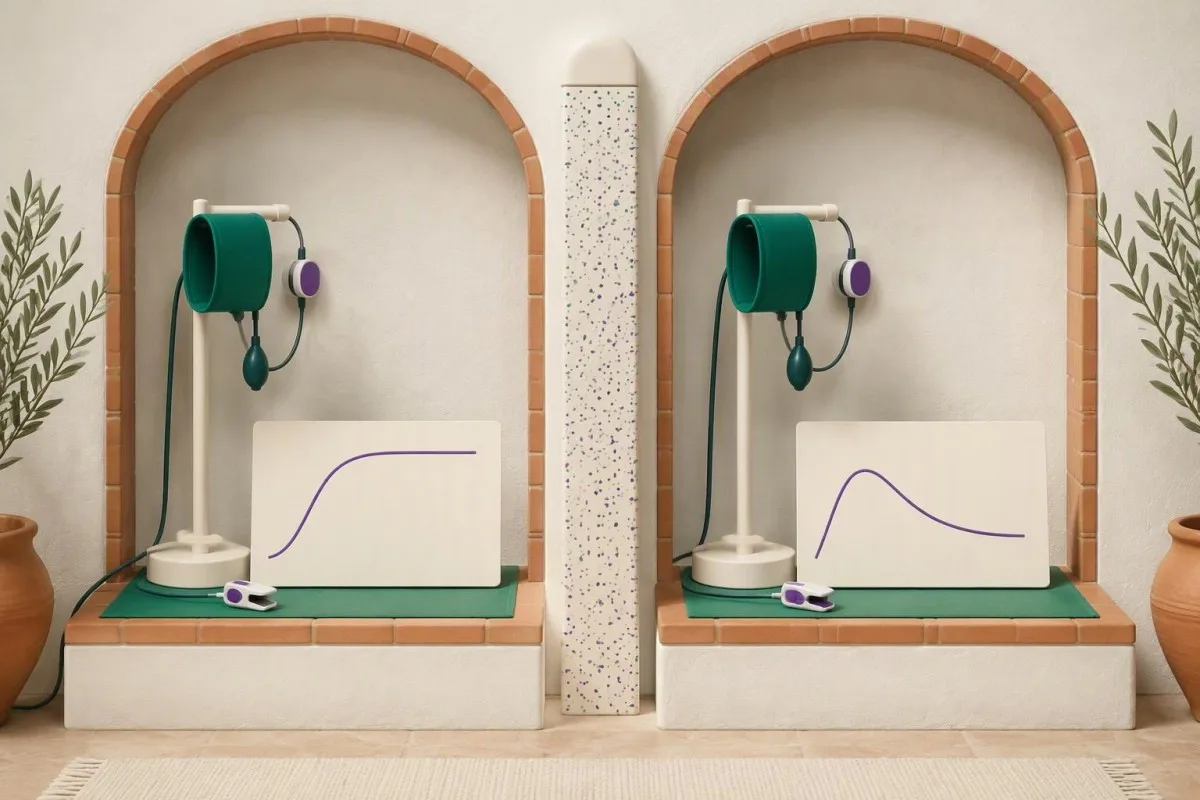
Consider a clearly hypothetical 28-year-old with a resting rate of 68 beats/min and standing readings of 92, 101, 104, 103 and 102. The increases are 24, 33, 36, 35 and 34 beats/min; this satisfies the heart-rate component, but symptoms, pressure and exclusions still determine whether POTS is diagnosed.
Now consider a hypothetical 16-year-old whose rate rises from 70 to 106 beats/min and remains there. The 36-beats/min increase exceeds the adult threshold but not the adolescent threshold of 40; the person may still have clinically significant orthostatic intolerance and deserves assessment rather than dismissal.
An isolated peak is less convincing. If an adult goes from 75 to 112 beats/min immediately after standing, then settles to 94–98 throughout minutes 3–10, the brief 37-beats/min spike does not demonstrate a sustained qualifying response; movement artifact or normal early adjustment may explain the peak.
Symptoms do not map neatly onto the size of the rise: a 45-beats/min increase is not automatically more disabling than a 32-beats/min increase. Recording the rhythm and trigger is often more useful for next steps, particularly when reviewing tests for palpitations alongside orthostatic measurements.
Natijani nimalar buzib ko‘rsatishi mumkin — va tekshiruv qachon takrorlanishi kerak?
Hydration, medication, recent illness and time of day can change upright heart-rate measurements. Orthostatic tachycardia is often greater in the morning, so a negative afternoon assessment may warrant a repeat morning test when the history strongly suggests POTS; repeating testing is not the same as changing conditions to force a positive result.
Acute fever, vomiting, diarrhea or inadequate fluid intake can produce a qualifying rise without establishing POTS. A single 10-minute assessment during such an episode should be interpreted as an acute physiological response until the temporary explanation has resolved and the chronic symptom history can be assessed properly.
Beta-blockers and ivabradine can blunt the pulse increase, while stimulants, some decongestants and norepinephrine-reuptake inhibitors can increase it. Record the exact dose and last administration time—for example, a prescribed morning dose taken 2 hours before testing—and follow the testing service's instructions rather than stopping treatment independently.
Nicotine and caffeine can influence sympathetic activity, but abstinence instructions vary between services and test types. Mention vaping, smoking and nicotine replacement used within the preceding hours; nicotine exposure testing describes exposure assessment, not a test that confirms or excludes POTS.
Poor sleep and a large meal can change symptoms and physiological responses even when the equipment is accurate. A repeat assessment after a 5–10-minute rest should record those circumstances; our poor-sleep testing guide explains why the same context can also complicate accompanying laboratory interpretation.
POTS uchun qiya stol sinovi qachon foydali?
A POTS tilt table test is useful when standing measurements are inconclusive, safe standing is difficult or the clinician needs more detailed heart-rate and pressure monitoring. A passive head-up tilt, often around 60–70 degrees, can document the response over at least 10 minutes; many straightforward cases do not require it.
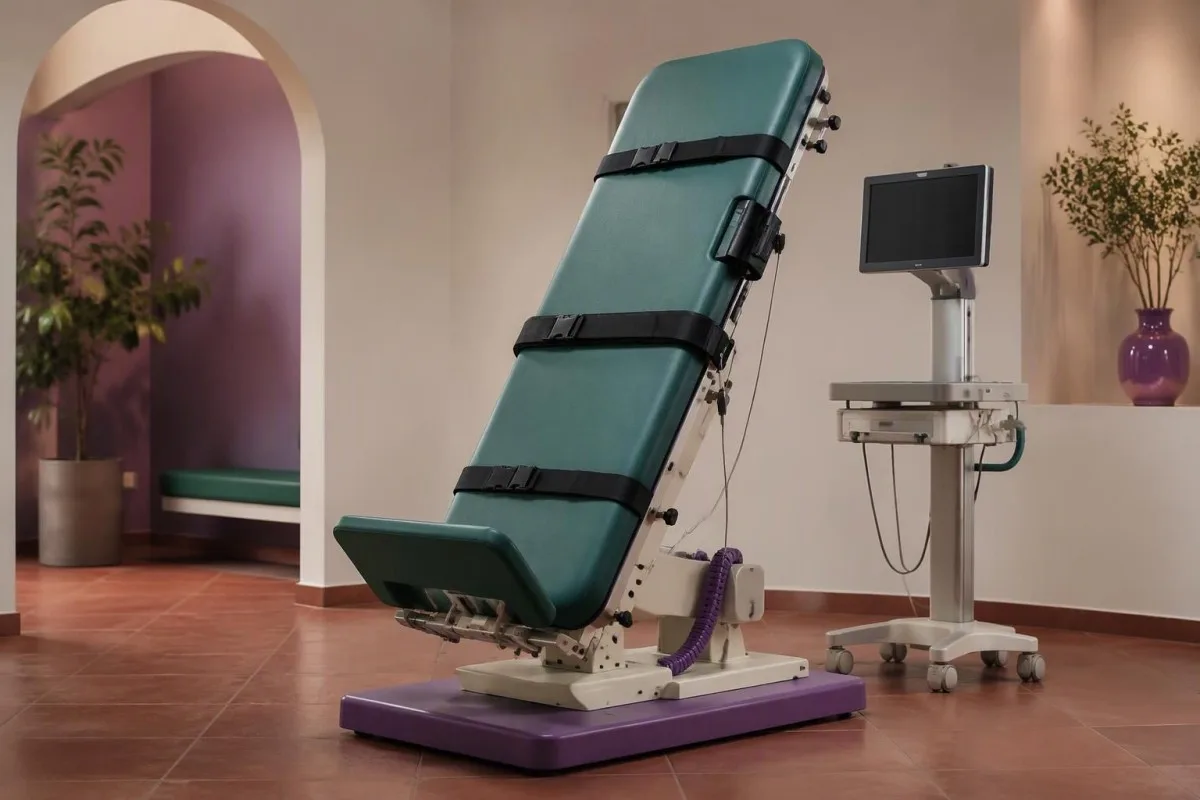
Passive tilt differs from active standing because the table supports the person and reduces use of the leg-muscle pump. Heart rate can therefore rise more on tilt than during standing, meaning the two tests are not interchangeable simply because both expose the circulation to gravity for 10 minutes.
Plash et al. (2013) compared 15 people with POTS and 15 controls. Using a 30-beats/min threshold at 10 minutes, specificity was 40% for tilt versus 67% for standing; this small study illustrates why a positive tilt threshold without the appropriate clinical history can misclassify healthy responses.
Longer syncope protocols may continue beyond the initial 10 minutes and sometimes use medication provocation. A later vasovagal fall in pressure or a medication-induced response should not be treated as identical to an unprovoked POTS-pattern response; ask which portion of the protocol supports the proposed diagnosis.
The report should state the tilt angle, baseline rest, duration, medications and monitoring method. The same transparency principle informs our validatsiya va klinik standartlarimiz: documented methods are necessary for interpretation, but an AI benchmark does not validate a patient's tilt result or replace specialist judgment.
POTSga o‘xshash holatlarni istisno qilishga qaysi qon tahlillari yordam beradi?
Bloodwork does not confirm POTS. Common investigations include hemoglobin, ferritin, electrolytes, kidney function and thyroid testing; a morning cortisol may be included in a core workup or ordered according to clinical suspicion and local practice. These tests look for alternative explanations for tachycardia, weakness and orthostatic symptoms.
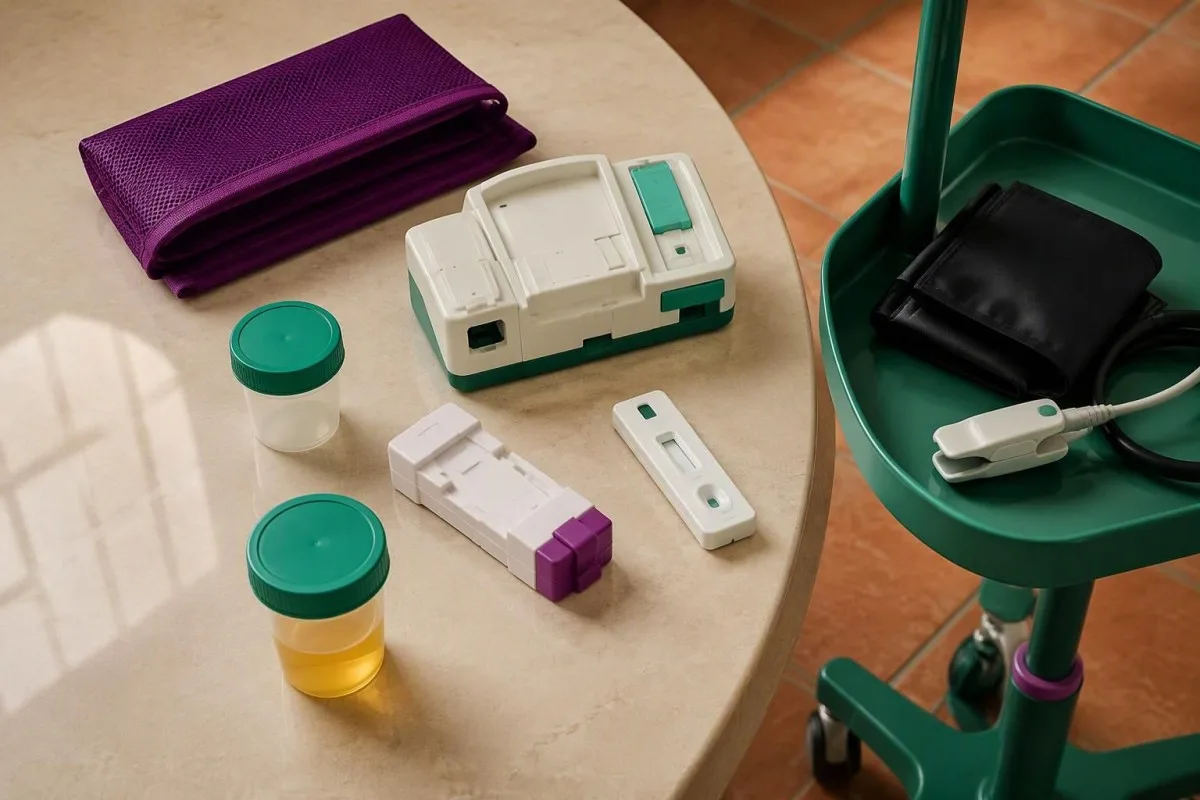
Hemoglobin assesses anemia, while ferritin helps assess iron stores; the two answer different questions. Ferritin of 10 ng/mL can indicate depleted stores even when hemoglobin remains within the local reference interval, so a normal CBC does not make low iron-store symptoms irrelevant.
A suppressed TSH with elevated free T4 suggests thyrotoxicosis, a potential explanation for tachycardia that must be addressed before attributing the pattern to POTS. Free T4 ranges are assay-dependent—often approximately 10–22 pmol/L—so the laboratory's own interval matters when reviewing thyroxine and TSH results.
Morning cortisol needs both sampling time and assay context. A markedly low result, such as below approximately 3 µg/dL or 83 nmol/L, raises concern for adrenal insufficiency but requires clinician-led interpretation; intermediate values may need stimulation testing, as explained in our kortizolni qabul qilish vaqti bo‘yicha qo‘llanmamiz.
Kantesti is an AI blood test interpretation platform that helps explain hemoglobin, ferritin and renal results in context, rather than converting normal values into a POTS label. A BUN/creatinine ratio above 20 may occur with volume depletion when both are expressed in mg/dL, but our buyrak nisbati talqini haqida hamroh maqola uning cheklovlarini tushuntiradi.
Anemiya va temir tanqisligi baholash natijalariga qanday ta’sir qiladi?
Anemia can cause compensatory tachycardia and must be evaluated before a pulse rise is attributed to POTS. Iron deficiency without anemia may contribute to fatigue and reduced exercise tolerance, but a low ferritin result neither confirms POTS nor proves that iron deficiency explains the entire orthostatic symptom pattern.
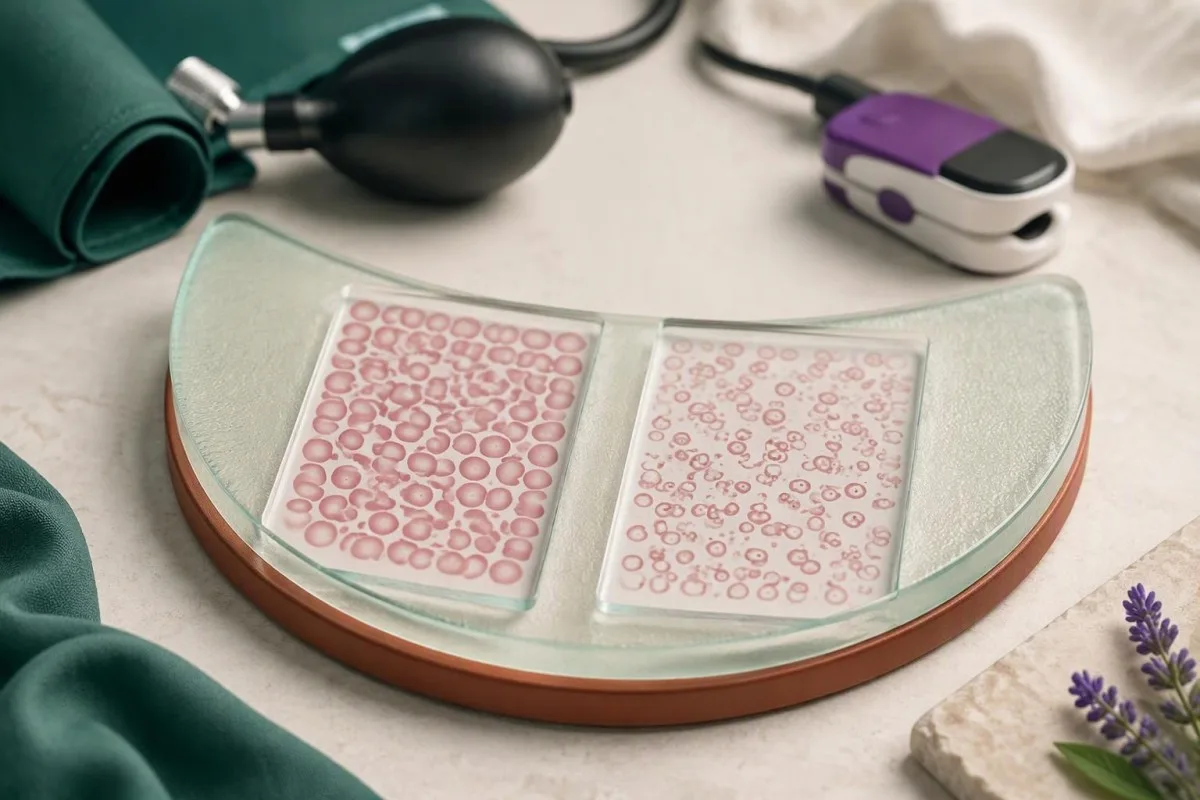
For example, a hypothetical adult with hemoglobin of 9.2 g/dL, ferritin of 6 ng/mL and a 38-beats/min upright rise needs assessment of the anemia and its cause. The qualifying pulse change cannot be interpreted in isolation; reduced oxygen-carrying capacity can drive tachycardia before any autonomic diagnosis is established.
Ferritin below approximately 15 ng/mL strongly supports depleted iron stores in otherwise healthy adults, but inflammation can raise ferritin and obscure deficiency. A value of 45 ng/mL during an inflammatory illness is therefore not equivalent to the same value when well; complete iron-study interpretation adds transferrin saturation and clinical context.
The source of deficiency matters as much as replacement. Heavy periods, dietary restriction, gastrointestinal losses and malabsorption call for different investigations; prolonged menstrual flow beyond 7 days is one reason to review hayz paytida kuchli qon ketish rather than assuming every symptom belongs to an autonomic condition.
Kantesti AI can help explain why hemoglobin of 9.2 g/dL and ferritin of 6 ng/mL warrant clinical review, but it cannot decide whether anemia fully accounts for a standing-test result. Persistent posture-related symptoms after correction may justify reassessment; an abnormal laboratory result and genuine POTS can coexist.
Nega EKG va yurak rit monitoringi tekshiruvlar majmuasiga kiradi?
A 12 ta yetakchili EKG helps check that the tachycardia is sinus rhythm and looks for cardiac clues that a pulse monitor cannot identify. A Holter or longer event monitor is selected when symptoms suggest an intermittent arrhythmia, persist independently of posture or remain unexplained after the initial orthostatic assessment.
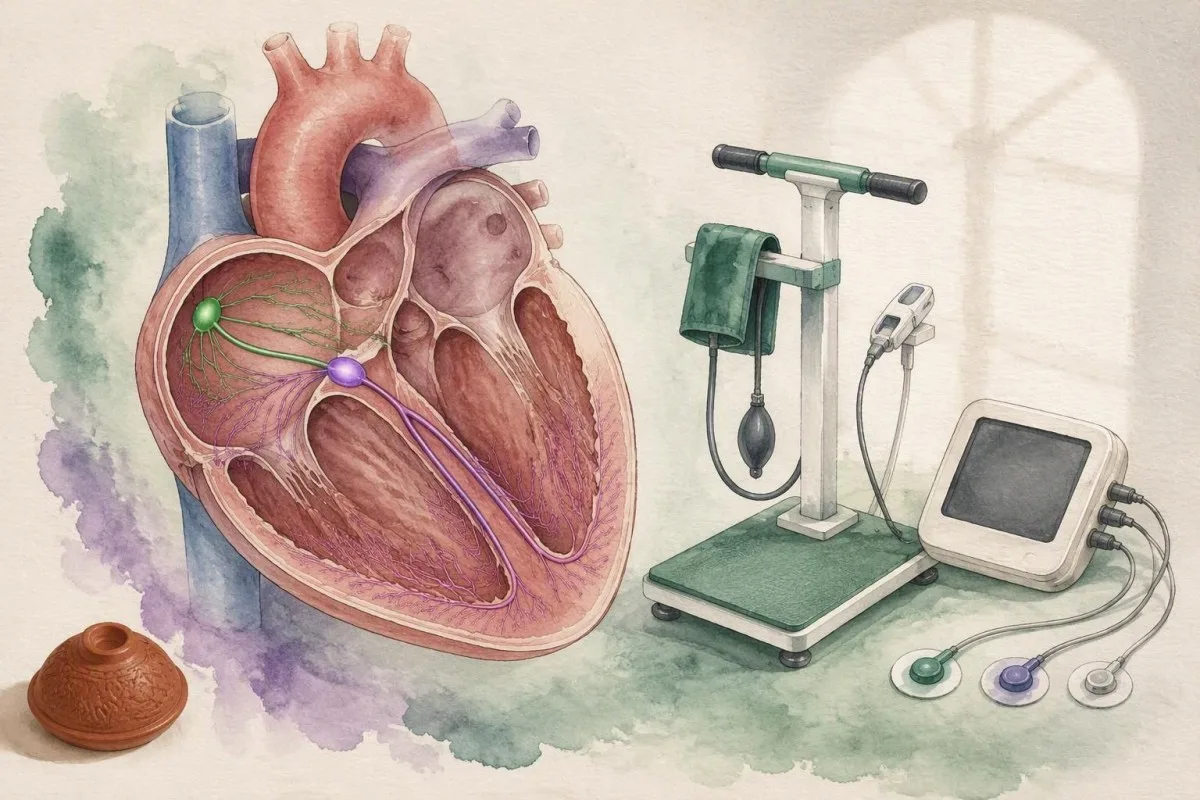
POTS-related sinus tachycardia usually builds with upright stress and decreases after lying down. An episode that abruptly switches from 80 to 180 beats/min and stops just as suddenly raises a different question, particularly if it occurs while resting; a wearable heart-rate number alone cannot identify the rhythm.
Inappropriate sinus tachycardia can overlap symptomatically with POTS but is less posture-dependent. The 2015 Heart Rhythm Society definition includes a resting sinus rate above 100 beats/min and a mean 24-hour rate above 90 beats/min, with distressing symptoms and no primary cause (Sheldon et al., 2015).
Monitor duration should match episode frequency. Daily events may be captured on a 24–48-hour Holter, whereas less frequent episodes may need a longer monitor; a normal short recording does not exclude an arrhythmia that simply did not occur during the recording period.
Echocardiography and troponin are not routine confirmation tests for uncomplicated POTS. New chest pain, exertional fainting, an abnormal ECG or concerning examination findings may justify a separate cardiac pathway; our troponin testing limits guide explains why 1 normal biomarker cannot settle every cardiac concern.
Vegetativ nerv tizimi tekshiruvlari yoki norepinefrin darajalari POTSni tasdiqlaydimi?
Additional autonomic tests and catecholamine measurements are not required for every POTS diagnosis. Specialists may use them to investigate particular mechanisms or a broader autonomic disorder; an upright norepinephrine concentration of at least 600 pg/mL is often used as a hyperadrenergic feature, not as a standalone diagnostic test.

An elevated upright norepinephrine result can reflect compensation for reduced central volume, not simply primary sympathetic overactivity. Values at or above 600 pg/mL therefore need to be interpreted alongside blood pressure, symptoms, medications and the collection protocol; proposed POTS subtypes are not always mutually exclusive.
Catecholamine collection is sensitive to posture and handling. Specialist protocols may obtain samples after at least 10 minutes in specified positions, with their own rest and transport requirements; comparing a seated sample from one laboratory with a prolonged-upright sample from another can create a misleading apparent trend.
Sweat testing, Valsalva testing and heart-rate responses to deep breathing assess different autonomic functions. These investigations may help when there are additional neurological or autonomic features, but a normal result on 1 of them does not erase a documented orthostatic tachycardia pattern or independently rule out POTS.
Kantesti does not treat a norepinephrine value of 600 pg/mL as a positive POTS screen. Episodic headache, sweating and marked hypertension may instead prompt clinician-directed metanephrine testing; our pheochromocytoma testing clues guide explains why that investigation answers a different question.
Qon tahlillari me’yorda bo‘lsa yoki tik turish sinovi manfiy chiqsa, nima qilish kerak?
Normal bloodwork does not rule out POTS, because routine laboratory tests do not measure the upright cardiovascular response. A single negative 10-minute standing test also may not settle a strongly suggestive history; clinicians should review test conditions, consider repeat assessment and investigate other explanations rather than automatically confirming or dismissing the syndrome.
Someone with frequent orthostatic symptoms may not meet the heart-rate threshold on a particular day. A hypothetical adult with an increase of 26 beats/min still deserves a symptom-focused assessment, but that result does not satisfy the 30-beats/min component and should not be rounded upward to secure a label.
A repeat morning assessment may be reasonable when the first test followed substantial fluid intake, rate-lowering medication or an abbreviated baseline rest. If repeated, well-performed 10-minute assessments remain below threshold, clinicians should broaden the differential rather than assuming an unrecorded POTS response must exist.
Persistent fatigue, tingling or cognitive symptoms can justify targeted investigations even after a basic panel is normal. A borderline vitamin B12 result around 200–300 pg/mL may need contextual follow-up rather than dismissal, as described in our chegaraviy B12 baholash; exact laboratory thresholds differ.
Clinical features should determine additional testing, not an indiscriminate autoimmune or hormone panel. At least 3 months of symptoms establishes chronicity under contemporary criteria, but it does not identify the cause; sleep disorders, vasovagal susceptibility, medication effects and overlapping post-viral conditions may require separate assessment.
Keyingi uchrashuvga nimalarni olib borish kerak — va sun’iy intellekt nimalarni tushuntirib bera oladi?
Olib keling dated symptoms, medication details, orthostatic measurements and existing laboratory reports to the clinician assessing suspected POTS. A useful record includes the lying baseline, timed readings through 10 minutes, accompanying blood pressure and symptom changes; AI can explain laboratory context, but diagnosis requires clinical assessment of the whole pattern.
A home log should support the consultation, not create a fainting risk. If a clinician recommends home measurements, have assistance, stop when presyncope develops and do not insist on completing 10 minutes; chest pain, severe breathlessness, exertional fainting or new neurological symptoms warrant prompt medical assessment.
Ask 3 practical questions: did my measurements meet the age-appropriate threshold, was sustained orthostatic hypotension absent, and were plausible alternative causes evaluated? A referral report that answers those questions is more useful than a list of pulse peaks without baseline conditions, symptom duration or rhythm information.
Kantesti is an AI lab test interpretation service that helps organize the laboratory part of this discussion while leaving the 10-minute orthostatic assessment to clinicians. Our mas’uliyatli sun’iy intellekt tamoyillarimiz describe that boundary; review maxfiylik va ma’lumotlaringizni before sharing reports that contain identifying information.
The 2 Zenodo publications listed below provide supplementary education on kidney ratios and urinalysis, not validation of POTS diagnostic criteria or an AI diagnostic claim. Neither publication establishes a POTS biomarker; the clinical recommendations in this article instead draw on the CMAJ review, Heart Rhythm Society consensus and comparative standing-versus-tilt study listed separately.
Tez-tez beriladigan savollar
POTS qanday tashxis qilinadi?
POTS surunkali holatga bog‘liq simptomlar tik holatga kelgandan keyin 10 daqiqa ichida yurak urish tezligi barqaror oshganda, barqaror ortostatik gipotenziya yoki boshqa sabab bo‘lmaganda tashxis qilinadi. Odatdagi oshish chegarasi 20 yosh va undan kattalarda daqiqasiga kamida 30 ta urish, 12–19 yoshdagilarda esa daqiqasiga 40 ta urishdir. Zamonaviy Kanada mezonlariga ko‘ra, simptomlar kamida 3 oy davom etishi kerak, biroq ayrim eski ta’riflarda 6 oy ko‘rsatilgan. Shifokor tik turgan holatda yoki qiyalatib o‘tkazilgan sinovda olingan o‘lchovlarni anamnez, ko‘rik, EKG va tanlab o‘tkaziladigan tekshiruvlar bilan birgalikda baholaydi.
Tik turgan holatda o‘tkaziladigan test tilt-stol testisiz POTSni tasdiqlay oladimi?
To‘g‘ri bajarilgan tik turish testi POTS tashxisi uchun zarur bo‘lgan ortostatik o‘lchovlarni qiyshayish stoli testisiz ham taqdim eta oladi. Shifokorlar odatda 5–10 daqiqa tinch yotgandan keyin boshlang‘ich ko‘rsatkichlarni oladi va 10 daqiqa tik turish davomida yurak urish tezligi hamda qon bosimini takroran o‘lchaydi. Talabga javob beradigan uzluksiz o‘sish surunkali ortostatik alomatlar bilan birga kuzatilishi va muqobil sabablar istisno qilinishi kerak. Natijalar noaniq bo‘lsa, tik turish xavfli bo‘lsa yoki batafsilroq monitoring zarur bo‘lsa, qiyshayish testi foydali.
POTS bo‘lishi uchun yurak urish tezligi 120 dan oshishi shartmi?
Tik holatda yurak urish tezligining 120 zarba/min dan yuqori bo‘lishi POTSning amaldagi mezonlari bo‘yicha talab qilinmaydi. Yurak urish tezligi 72 dan 106 zarba/min gacha ko‘tarilgan katta yoshli odamda o‘sish 34 zarba/min bo‘ladi va bu holat davomli bo‘lsa, yurak urish tezligiga oid mezonga javob berishi mumkin. 102 dan 125 zarba/min gacha ko‘tarilgan odamda esa o‘sish atigi 23 zarba/min bo‘ladi va u mazkur mezonga javob bermaydi. Yakuniy tashxisni baribir simptomlar, qon bosimi va muqobil izohlar belgilaydi.
POTSni tasdiqlash uchun qanday qon tahlillari o‘tkaziladi?
POTSni tasdiqlaydigan muntazam qon tahlili yo‘q. Gemoglobin, ferritin, elektrolitlar, buyrak faoliyati va qalqonsimon bez tahlillari o‘xshash belgilarni keltirib chiqaruvchi holatlarni aniqlashga yordam beradi; baholash natijalari va mahalliy protokolga ko‘ra ertalabki kortizol tahlilini ham o‘tkazish maqsadga muvofiq bo‘lishi mumkin. Masalan, ferritin miqdori 6 ng/mL bo‘lganida gemoglobinning 9.2 g/dL bo‘lishi temir zaxiralari kamaygan kamqonlikdan dalolat beradi; bu taxikardiyaga sabab bo‘lishi mumkin va tekshiruvni talab qiladi. Natijalar me’yorida bo‘lsa ham, bu POTSni istisno etmaydi, chunki ular tik turgandagi yurak-qon tomir javobini o‘lchamaydi.
Aqlli soat uyda POTS tashxisini qo‘ya oladimi?
Aqlli soat POTS tashxisini mustaqil ravishda qo‘ya olmaydi, biroq uning yozuvlari shifokor bilan maslahatlashuvda alomatlarni qayd etishga yordam berishi mumkin. Taqqiladigan qurilmalar sistolik bosimning kamida 20 mmHg yoki diastolik bosimning 10 mmHg ga barqaror pasayishini tekshirish uchun zarur bo‘lgan qon bosimini bir vaqtda o‘lchashni ishonchli tarzda ta’minlamaydi. Harakat artefaktlari ham 10 daqiqa davom etadigan barqaror o‘zgarishlardan farqli ravishda, qisqa muddatli puls cho‘qqilarini yuzaga keltirishi mumkin. Hushidan ketishga moyil bo‘lganlar nazoratsiz holda tik turib sinov o‘tkazishdan saqlanishlari va xavfsiz tekshiruvdan o‘tish masalasini shifokor bilan muhokama qilishlari kerak.
Tilt-stol sinovi normal bo‘lsa ham, POTS bo‘lishi mumkinmi?
Tilt-stol sinovining normal natijasi davomli ortostatik alomatlarni o‘z-o‘zidan izohlab bermaydi, ammo POTS borligini ham tasdiqlamaydi. Dori vositalari, suyuqlik bilan ta’minlanganlik, kunning vaqti va protokol dastlabki 10 daqiqa davomida mezonlarga mos o‘sish kuzatilishiga ta’sir qilishi mumkin. Shifokor avval o‘tkazilgan, yaxshi hujjatlashtirilgan tik turish sinovini ko‘rib chiqishi, zarur bo‘lganda baholashni takrorlashi yoki boshqa sabablarni tekshirishi mumkin. Yoshga xos chegaradan past natija beradigan takroriy sinovlar POTS albatta mavjud deb taxmin qilish o‘rniga, qayta ko‘rib chiqishga undashi kerak.
O‘smirda POTS tashxisini qo‘yish uchun yurak urish tezligining daqiqasiga 30 ta urishga oshishi yetarlimi?
0 30 zarb/min ga oshish odatda 12–19 yoshli o‘smirda POTS uchun yurak urish tezligi mezoniga javob bermaydi. O‘smirlar uchun odatiy chegara — tik turgan holatda 10 daqiqa ichida yurak urish tezligining kamida 40 zarb/min ga barqaror oshishidir. Yurak urish tezligi bundan kamroq oshgan o‘smirda ham sezilarli ortostatik intolerantlik yoki davolash mumkin bo‘lgan boshqa holat bo‘lishi mumkin. 12 yoshdan kichik bolalarda kattalar mezonlarini avtomatik qo‘llash o‘rniga pediatrik talqin talab etiladi.
Qon tahlili natijalarini qanday o‘qish kerak
Laboratoriya hisobotingizni yuklang va Kantesti sun’iy intellekti har bir biomarkerni soniyalar ichida sodda tilda tushuntiradi. Dunyo bo‘ylab 2 milliondan ortiq kishi foydalanadi.
Adabiyotlar
- Klein, T., Mitchell, S., & Weber, H. (2026). BUN/Creatinin nisbatini tushuntirish: Qonning funksiyasi testi qo‘llanmasi. Kantesti AI tibbiy tadqiqotlari. DOI
- Klein, T., Mitchell, S., & Weber, H. (2026). Urobilinogen idrar testida: To‘liq idrar tahlili qo‘llanmasi 2026. Kantesti AI tibbiy tadqiqotlari. DOI
- Raj SR et al. (2022). Diagnosis and management of postural orthostatic tachycardia syndrome. CMAJ. DOI PubMed
- Sheldon RS et al. (2015). 2015 Heart Rhythm Society Expert Consensus Statement on the Diagnosis and Treatment of Postural Tachycardia Syndrome, Inappropriate Sinus Tachycardia, and Vasovagal Syncope. Heart Rhythm. DOI PubMed
- Plash WB et al. (2013). Diagnosing postural tachycardia syndrome: comparison of tilt testing compared with standing haemodynamics. Clinical Science. DOI PubMed
- 2M+Tahlil qilingan testlar
- 127+Mamlakatlar
- 100+Tillar
Tibbiy guruh haqida


E-E-A-T ishonch signallari
Tajriba
Shifokor boshchiligidagi laboratoriya talqin qilish ish jarayonlarini klinik ko‘rib chiqish.
Tajriba
Laboratoriya tibbiyoti biomarkerlarning klinik kontekstda qanday o‘zini tutishini yoritadi.
Vakolatlilik
Doktor Thomas Klein tomonidan tibbiy jihatdan ko‘rib chiqilgan, doktor Sarah Mitchell va professor doktor Hans Weber hissalari bilan.
Ishonchlilik
Xavotirni kamaytirish uchun aniq keyingi qadamlar yo‘nalishlari bilan dalillarga asoslangan talqin.


Tibbiy ogohlantirish
Ushbu maqola faqat ta’lim maqsadlari uchun mo‘ljallangan va tibbiy maslahatni anglatmaydi. Tashxis va davolash bo‘yicha qarorlar uchun har doim malakali sog‘liqni saqlash mutaxassisiga murojaat qiling.
Nashr etilgan · Tahririyat jamoasi bilan bog‘laning
Angliya va Uelsda ro‘yxatdan o‘tgan Kantesti Ltd tomonidan nashr etilgan, kompaniya raqami. 17090423, London, Birlashgan Qirollik.
