Ниската активност на антитромбинот не значи автоматски наследен дефицит: акутен тромб, хепарин, тешка болест или губење протеини може привремено да ја намалат. Лекарите потврдуваат трајни абнормалности со тестирање на активноста во соодветно време, понекогаш и со тестирање на антигенот, како и со лабораториски план што ги зема предвид лековите — често по првите 3 месеци од третманот на тромбот.

Клучни заклучоци
- Референтна вредност: Кај возрасни, активноста на антитромбинот обично е околу 80–120%; користете го интервалот наведен на вашиот извештај.
- Еден низок резултат: Активност од 65% за време на нов тромб или терапија со хепарин не може да утврди наследен дефицит на антитромбин.
- Време на повторување: Британското здружение за хематологија препорачува тестирање за дефицит на природни антикоагуланси дури по 3 месеци антикоагулантна терапија за акутна тромбоза.
- Активност наспроти антиген: Дефицитот од тип I обично ги намалува двете мерења; дефицитот од тип II ја намалува функцијата, додека антигенот може да остане нормален.
- Интерференција од лекови: Апиксабан, ривароксабан и едоксабан може лажно да ја зголемат активноста во тестови засновани на фактор Xa; дабигатран може да го стори тоа во тестови засновани на тромбин.
- Губење протеини: Протеинуријата во нефротски опсег кај возрасни вообичаено изнесува најмалку 3.5 g за 24 часа и може да придонесе за стекнато намалување на антитромбинот.
- Испитување на семејството: Потврден хетерозиготен наследен дефицит генерално му дава на секое дете шанса од 50% да ја наследи релевантната варијанта — а не сигурност од 50% дека ќе добие тромб.
- Безбедност на лековите: Никогаш не прекинувајте со антикоагулација за да добиете почист лабораториски резултат без индивидуален план од лекарот што ја препишал терапијата.
Што всушност значи ниската активност на антитромбинот?
Ниска активност на антитромбин значи дека лабораторискиот тест открил помала антикоагулантна функција од очекуваната; само по себе, тоа не ја утврдува причината. Резултат под долната граница на лабораторијата за возрасни — често околу 80% — може да одразува наследен дефицит, привремена потрошувачка, намалено создавање, губење протеини или проблем со тестирањето.

Антитромбинот ја ограничува коагулацијата со инхибирање ензими, вклучувајќи го тромбинот, наречен и фактор IIa, и факторот Xa. Резултат од активноста од 60% ја опишува функцијата во однос на калибрацискиот стандард на тестот; тоа не значи дека циркулацијата ви е 60% заштитена или дека шансата за тромб е 40%.
Нормален рутински коагулациски панел не исклучува дефицит на антитромбин, бидејќи PT и aPTT не се скрининг-тестови за секоја наследна склоност кон тромбоза. Нашето објаснување за ограничувањата на нормалниот коагулациски панел помага да се разграничат овие прашања: дали времињата на коагулација се продолжени и дали одреден природен антикоагуланс функционира нормално се 2 различни проценки.
Kantesti е анализатор на крвни тестови со AI, кој помага процентот на активност да се разгледа заедно со историјата на лекување и сродните лабораториски резултати, наместо 1 абнормален показател да се третира како дијагноза. Нашата заднина и цел на компанијата ја објаснува таа улога; наследниот дефицит и понатаму бара потврда под водство на лекар, а итните симптоми мора да се проценат независно од секое толкување со AI.
Кој опсег на активност на антитромбинот се смета за низок?
Активност на антитромбин кај возрасни вообичаено има референтен интервал од приближно 80–120%, иако некои лаборатории користат 80–130% или друг валидиран интервал. Затоа, активност од 75% често е гранично ниска, но ниту 75% ниту која било друга единечна гранична вредност не докажува наследен дефицит или не одредува итен третман.

Кај многу лица со хетерозиготен наследен дефицит на антитромбин, активноста е некаде околу 40–70%, но стекнатите состојби можат да ги дадат истите вредности. Спротивно на тоа, некои наследни варијанти предизвикуваат поблаги намалувања или не се откриваат со одредени тестови; лекарите го толкуваат степенот на намалување заедно со повторените резултати, а не како самостоен генетски отпечаток.
Возраста значително влијае врз толкувањето: здрави новороденчиња родени во термин може да имаат активност на антитромбин од околу 40–60% од вредностите кај возрасни, при што нивоата се зголемуваат во текот на доенечкиот период. Предвременото раѓање внесува дополнителна варијабилност, а доцната бременост или раниот постпартален период исто така може да влијаат врз резултатите; неселективното применување на долна граница од 80% за возрасни може да доведе до погрешна ознака.
Во јасно хипотетички пример, инаку здрав возрасен со активност од 78% и без претходни тромбови има потреба од поинаква проценка од возрасен со 42% за време на тешка сепса. Во двата извештаи може да се прикаже истото ниско предупредување, но нашиот водич за вонредни лабораториски резултати објаснува зошто референтните граници не се заменливи со дијагностички или прагови за лекување.
| Ниво | Опсег | Што значи |
|---|---|---|
| Вообичаен интервал за возрасни | Приближно 80–120% | Обично во рамките на опсегот, но предност имаат сопствениот интервал на лабораторијата и чувствителноста на тестот. |
| Гранично намалување | 70–79% | Often warrants context review and appropriately timed confirmation; not a diagnosis. |
| Clear reduction | 50–69% | Compatible with inherited or acquired deficiency; activity alone cannot distinguish them. |
| Изразено намалување | Below 50% | Requires clinical review, especially during illness or thrombosis; the percentage alone does not establish an emergency. |
Антиген на антитромбин наспроти активност: која е разликата?
Ан antithrombin activity test measures how effectively the protein inhibits a coagulation enzyme, while antithrombin antigen measures how much protein is present. Type I inherited deficiency generally lowers both; type II generally lowers activity despite a relatively normal antigen concentration, making these 2 tests complementary rather than interchangeable.

Most routine activity methods are chromogenic assays: the laboratory adds an enzyme and measures how much remains after antithrombin has inhibited it. The ISTH laboratory recommendations favor activity testing first, followed by antigen measurement when activity is low, with exclusion of acquired causes and assay interference before classification (Van Cott et al., 2020).
Consider 2 hypothetical repeat profiles obtained under suitable conditions: activity 52% with antigen 49% supports a quantitative pattern, whereas activity 52% with antigen 101% supports a qualitative pattern. These examples are not diagnostic formulas, because acquired illness can lower both measurements and antigen assays do not explain whether a functional result was distorted by medication.
Type II deficiency includes reactive-site, heparin-binding-site and other functional abnormalities; the choice of assay can change how readily a variant is detected. Kantesti’s explanations therefore distinguish quantity from performance, a distinction also illustrated by protein level versus function in C1 esterase inhibitor testing—but those are different proteins with different clinical consequences.
Може ли акутен тромб привремено да го намали антитромбинот?
Acute thrombosis can temporarily reduce antithrombin activity through consumption, particularly when accompanied by illness, procedures or treatment effects. A value such as 58% during a newly diagnosed deep vein thrombosis therefore cannot reliably distinguish an inherited baseline deficiency from a reduction caused by the current event.

The British Society for Haematology recommends testing deficiencies of natural anticoagulants only after 3 months of anticoagulation for acute thrombosis, because early results are unreliable and rarely change immediate management (Arachchillage et al., 2022). This is a recommendation about diagnostic timing, not an instruction to delay treating a suspected clot or to stop anticoagulants at month 3.
A hypothetical patient has activity of 61% during a pulmonary embolism and 96% after recovery using an appropriate assay. That change supports a temporary reduction, but comparing 2 percentages remains incomplete unless the clinician knows whether heparin, a direct oral anticoagulant, replacement products or different laboratory methods affected either measurement.
D-dimer answers a different question: it reflects fibrin formation and breakdown, not antithrombin quantity or inherited status. Our clotting tests and D-dimer guide explains why an elevated D-dimer and low activity can occur together during 1 acute event without proving that the low antithrombin caused the clot.
Зошто терапијата со хепарин може да ја намали активноста на антитромбинот?
Heparin can lower circulating antithrombin during treatment, so a low result obtained while receiving unfractionated or low-molecular-weight heparin may reflect an acquired reduction. Heparin also depends on antithrombin for much of its anticoagulant effect; activity of 50% during treatment can therefore raise both diagnostic and medication-monitoring questions.
Reduced antithrombin can contribute to apparent heparin resistance, but an unexpectedly high dose requirement does not prove inherited deficiency. During 1 episode of severe illness, increased factor VIII or fibrinogen may shorten aPTT-based impressions of anticoagulation even when heparin exposure is adequate, so clinicians may reassess the monitoring method rather than simply escalate treatment.
Some heparin anti-Xa assays add exogenous antithrombin and others do not; this difference can affect what the result says about heparin concentration versus its activity in the patient. Ask the laboratory about 2 separate methods—the antithrombin activity assay and the heparin monitoring assay—because their handling of antithrombin and heparin is not necessarily identical.
A platelet fall of more than 50% during heparin exposure raises a separate possibility, heparin-induced thrombocytopenia, which is not diagnosed by low antithrombin. Our explanation of PF4 testing and HIT assessment describes that distinction; decisions about changing heparin, using replacement antithrombin or scheduling a repeat require the treating team, not a self-directed medication pause.
Како тешката болест и DIC го намалуваат антитромбинот?
Sepsis, disseminated intravascular coagulation and major physiological stress can reduce antithrombin through consumption, impaired production and altered distribution. A markedly low result—for example, 35%—during critical illness is often an acquired finding; it cannot be used alone to label someone with lifelong hereditary antithrombin deficiency.

DIC is assessed from a pattern, not 1 abnormal protein: falling platelets, prolonged PT, increased fibrin-related markers and sometimes reduced fibrinogen provide the relevant context. Fibrinogen may initially remain normal or elevated because it is an acute-phase protein, so a preserved fibrinogen concentration does not automatically rule out evolving consumption.
For a hypothetical example, activity of 38%, platelets of 72 × 10^9/L and worsening PT during a major systemic illness point toward an acquired coagulation disturbance rather than an isolated inherited finding. Our DIC laboratory pattern explanation shows why trends across several measurements are more informative than repeatedly checking antithrombin while the illness remains active.
Recent antithrombin concentrate or plasma treatment can raise measured activity and obscure the underlying baseline, adding a second source of uncertainty during the same hospital stay. A result of 105% after replacement does not exclude inherited deficiency, just as 35% before recovery does not prove it; document the product and timing before interpreting either percentage.
Може ли губењето протеини преку бубрезите да предизвика ниска активност на антитромбинот?
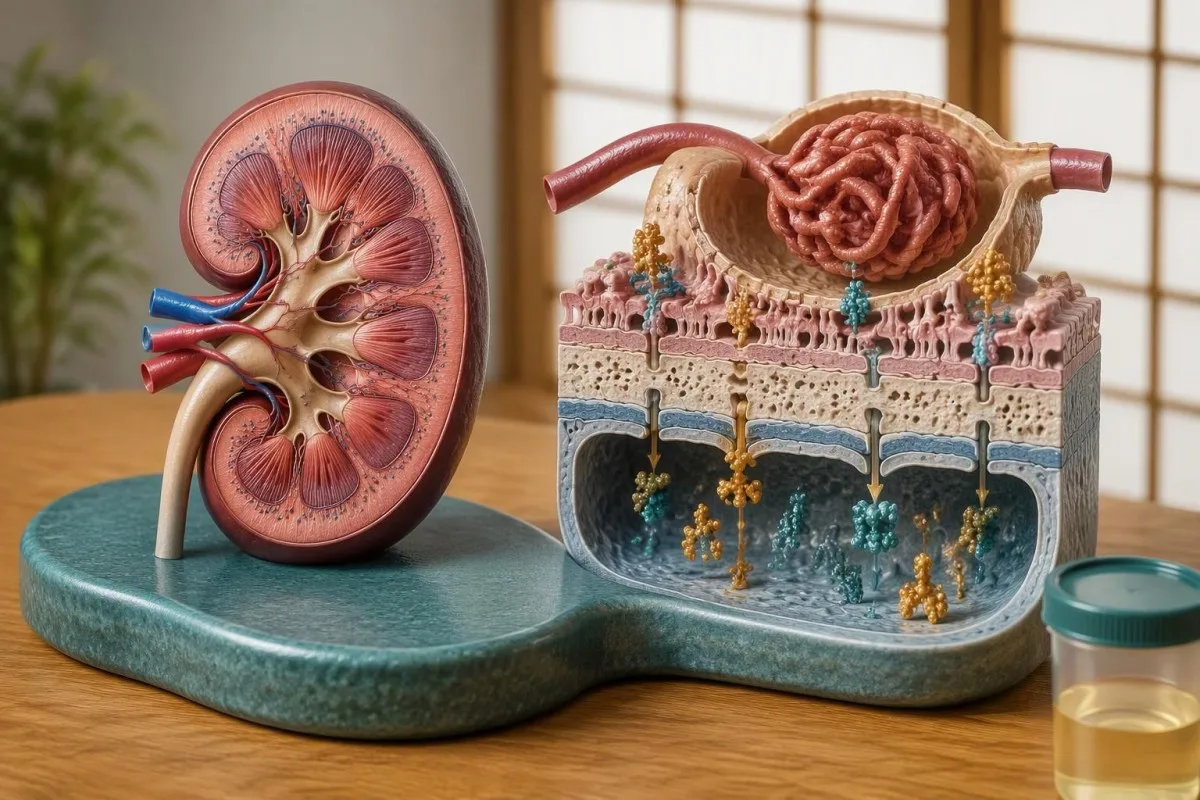
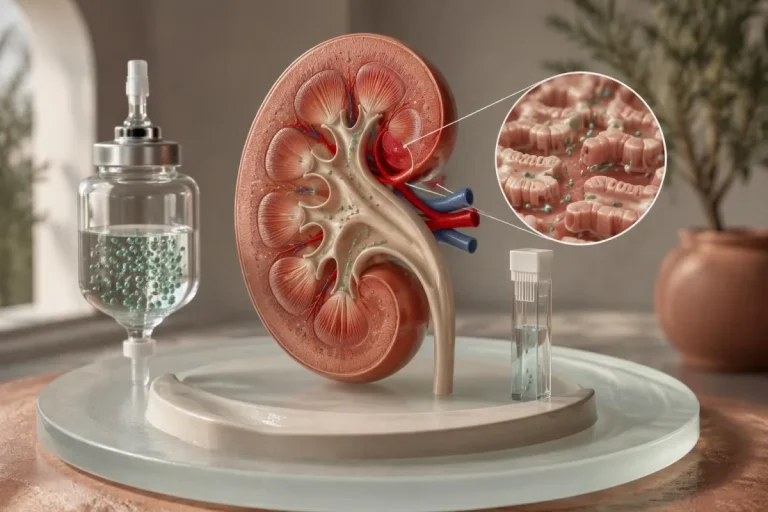
Heavy urinary protein loss can contribute to acquired antithrombin reduction, particularly in nephrotic syndrome. Adult nephrotic-range proteinuria is conventionally at least 3.5 g per 24 hours; clinicians interpret antithrombin alongside urine protein, serum albumin and the underlying kidney disorder, rather than relying on creatinine or eGFR alone.
A normal eGFR does not exclude substantial protein leakage through the glomerular filtration barrier. For example, an adult with eGFR 95 mL/min/1.73 m², albumin 22 g/L and urine protein 6 g per day may have a strong acquired explanation for low activity despite apparently reassuring filtration results; persistent пенеста урина и тестирање на протеини deserve assessment in that context.
The relationship between nephrotic syndrome, antithrombin levels and clot risk is not uniform: not every person with nephrotic syndrome has low antithrombin, and the thrombotic tendency involves more than urinary loss of 1 protein. Underlying diagnosis matters, including membranous nephropathy, where PLA2R results and kidney monitoring help explain the kidney process rather than prove an inherited clotting disorder.
Kantesti is an AI blood test interpretation platform that can organize an antithrombin percentage alongside albumin and kidney markers, but it cannot infer the amount of urinary protein from eGFR alone. If activity remains 62% while heavy protein loss continues, repeat testing may still describe the acquired condition; the cleaner inherited assessment usually follows clinical stabilization and improvement of that competing explanation.
Може ли заболување на црниот дроб или други третмани да го намалат антитромбинот?
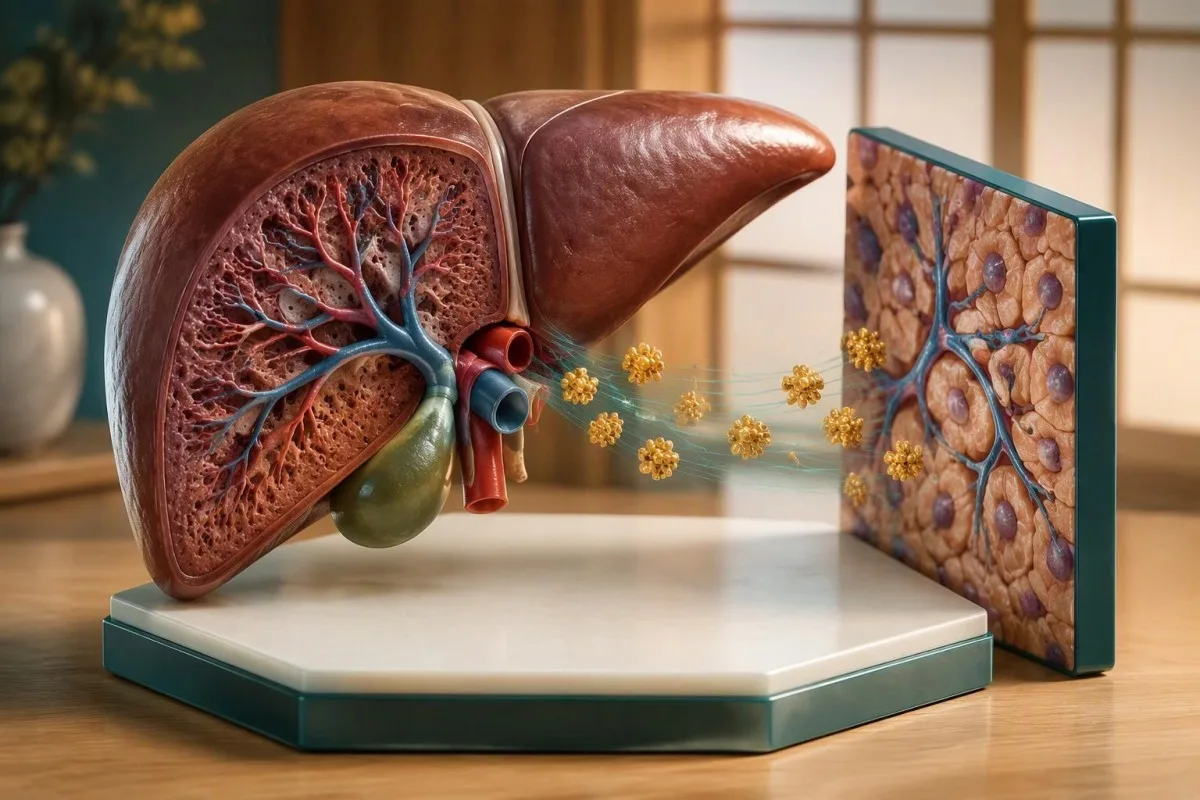
Reduced liver synthesis can lower antithrombin, especially in advanced liver disease, while certain treatments such as L-asparaginase can also cause acquired reductions. An activity of 55% alongside other abnormalities requires review of protein production, protein loss and treatment history before clinicians consider a genetic explanation.
ALT and AST reflect injury more than protein-making capacity, so normal or mildly elevated enzymes do not guarantee normal antithrombin production. If activity is 57%, albumin is 25 g/L and INR is 1.6, impaired synthesis becomes a possibility—but warfarin, nutrition and protein loss can confound that pattern, as our упатство за толкување на тестови за црниот дроб .
Albumin cannot serve as a substitute antithrombin test because the 2 proteins have different turnover and can respond differently to illness or therapy. Our albumin and serum protein guide helps interpret the surrounding panel; a normal albumin does not exclude inherited antithrombin deficiency, and a low albumin does not prove that the liver caused it.
L-asparaginase can reduce anticoagulant proteins during cancer treatment, creating an acquired thrombosis risk that may need active management rather than merely a future repeat test. Major procedures, extracorporeal support and recent replacement products can also complicate 1 measurement; eating more protein or taking a vitamin supplement does not correct a SERPINC1-related defect or replace treatment of the underlying acquired cause.
Кои антикоагуланси го попречуваат тестирањето на антитромбинот?
Direct oral anticoagulants can falsely increase antithrombin activity, potentially masking deficiency rather than causing a low flag. Apixaban, rivaroxaban and edoxaban interfere with factor Xa-based activity assays, while dabigatran can interfere with thrombin-based assays; the same patient’s 2 results may therefore differ because of assay design.
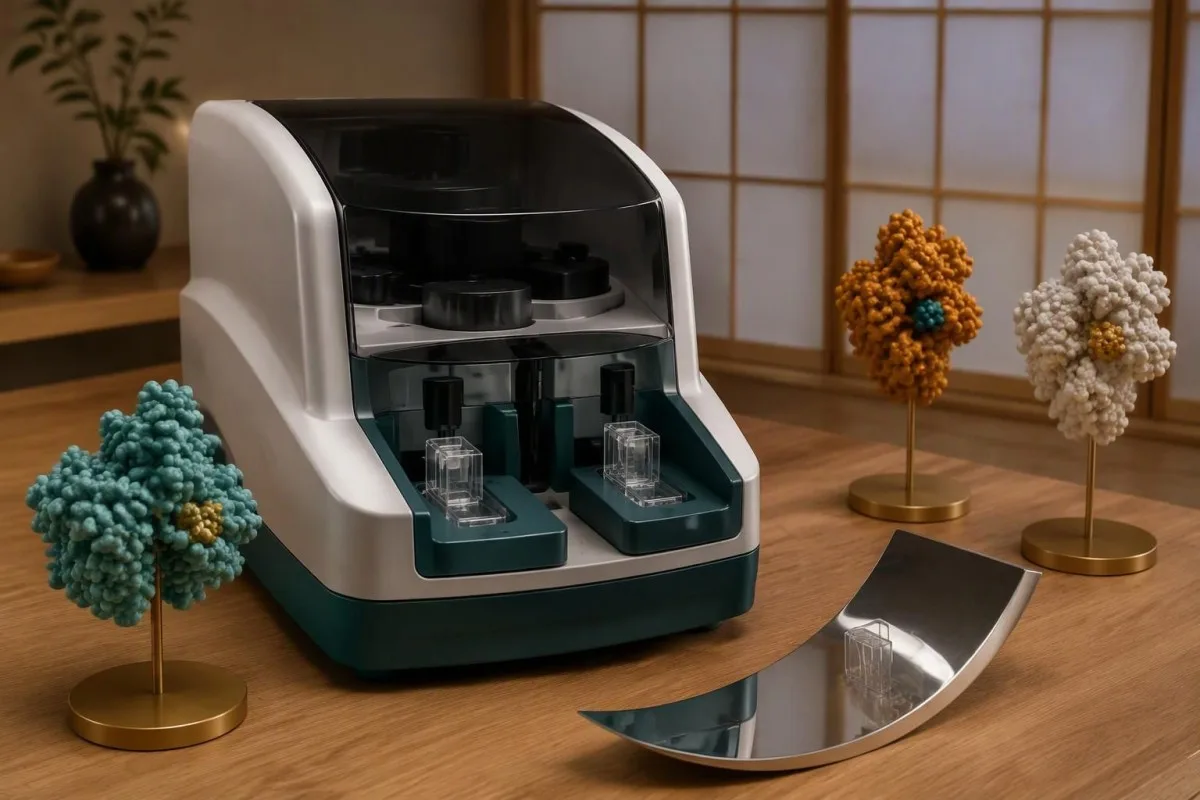
The mechanism is straightforward: the medication inhibits the assay’s added enzyme, and the instrument can misread that inhibition as stronger antithrombin function. The ISTH communication explicitly identifies these drug–assay combinations, including effects from direct thrombin inhibitors such as argatroban and bivalirudin (Van Cott et al., 2020); antigen testing usually avoids this particular functional interference, but does not replace an activity assessment.
A hypothetical activity of 108% on a factor Xa-based assay while taking rivaroxaban may conceal an underlying reduction; activity of 66% on that same drug still cannot be mathematically corrected into a true baseline. Anticoagulants also affect lupus anticoagulant test interpretation, but the direction and mechanism of interference are test-specific, not a universal rule for all thrombophilia assays.
Kantesti AI should support medication-aware interpretation rather than claim that 1 uploaded report identifies the laboratory’s reagent or removes a drug effect. Depending on the situation, the laboratory may use a less-affected assay, measure drug exposure or apply a validated removal procedure; our техничка валидација и надзор describes the broader standards behind interpretation, not a guarantee that AI can resolve missing assay information.
Може ли ракувањето со примерокот да објасни неочекуван низок резултат?
Sample quality and assay differences can make antithrombin results unreliable, especially when the laboratory flags collection or processing problems. Coagulation samples typically require a 9:1 ratio of sample to citrate anticoagulant; underfilling, inappropriate handling or an unsuitable specimen should be considered before interpreting an isolated abnormal percentage.

A hematocrit above approximately 55% may require citrate adjustment for coagulation testing because the amount of plasma relative to citrate is reduced. This is a laboratory preparation issue, not evidence of hereditary deficiency; if activity is 73% in a flagged specimen, ask whether the laboratory accepted the sample as valid and whether recollection is preferable to repeating the same material.
Hemolysis, lipemia and marked discoloration can interfere with optical methods, although the effect depends on the instrument and reagent rather than having 1 predictable direction. Our guides to hemolysis-related result distortion и lipemic specimens and redraws explain why a specimen-quality warning needs a method-specific answer instead of an automatic diagnosis.
Changing laboratories can create a second problem: an activity of 76% by one method and 84% by another may reflect analytical differences rather than biological recovery. Using the same laboratory helps trend comparison, but persistent clinical suspicion may justify a specialist laboratory using an alternative assay that is more sensitive to certain inherited variants; consistency and diagnostic sensitivity are 2 different goals.
Кога треба повторно да се тестира ниската активност на антитромбинот?
Repeat antithrombin testing should occur after temporary causes have settled and medication effects have been addressed. Following an acute clot, the BSH recommendation is to wait until after 3 months of anticoagulation before testing natural anticoagulant deficiencies; the safest collection date then depends on the drug, assay and clinical situation.

An incidental borderline result in a well adult without a recent clot does not automatically require the same 3-month wait, because that interval addresses acute thrombosis. The clinician may instead arrange a separate repeat once collection issues and acquired causes are reviewed, adding antigen testing if activity remains low; there is no universally validated waiting interval that fits every outpatient finding.
Heparin-related reductions may recover after treatment ends, but laboratory policies and ongoing illness affect when a repeat becomes meaningful. For a DOAC, a fixed 48-hour pause is not universally adequate or safe: kidney function, dose timing, drug accumulation and assay sensitivity matter, and choosing a compatible method may avoid interrupting treatment entirely.
Kantesti’s trend tools can help organize 2 measurements with their dates, but a timeline should also record clot onset, heparin exposure, the last relevant medication dose and any replacement products. Our explanation of резултати по отпуштање од болница supports that workflow; warfarin does not usually lower antithrombin as it lowers vitamin K-dependent proteins, so protein C or S stopping rules should not be copied automatically.
Кои наоди укажуваат на наследен дефицит на антитромбин?
Inherited antithrombin deficiency becomes more likely when activity remains low on separate, interpretable samples, acquired causes are excluded and the personal or family history fits. Two concordant results provide stronger evidence than 1 result during illness, but activity, antigen and sometimes SERPINC1 testing must still be considered together.

A clearly hypothetical profile of activity 54% and 56% on 2 suitable occasions, antigen 51%, no major protein loss and a first-degree relative with confirmed deficiency would support a quantitative inherited pattern. Early or recurrent venous thrombosis increases suspicion, but age alone is not diagnostic, and absence of a family history does not exclude a new variant or previously unrecognized disease.
SERPINC1 testing can help establish a molecular explanation when the laboratory phenotype is convincing and the result could affect management or family counseling. A variant of uncertain significance is not equivalent to a diagnosis, while a negative genetic test does not necessarily exclude every relevant change; the ISTH recommendations also note that molecular testing may identify defects missed by activity assays (Van Cott et al., 2020).
Antithrombin and protein S deficiency require different interpretive rules, even when they appear on the same thrombophilia panel. Our guide to low protein S activity explains several contrasting confounders; a type II antithrombin heparin-binding-site variant can also have a different risk profile from type I deficiency, so 1 generic risk estimate should not be applied to all confirmed variants.
Кога е соодветна процена на семејството?
Family evaluation is usually considered after the original patient’s inherited deficiency is convincingly confirmed, especially when the result could change prevention, hormone choices or pregnancy planning. Most inherited antithrombin deficiency is autosomal dominant, giving each child of a heterozygous carrier a 50% chance of inheriting the relevant variant—not a certainty of thrombosis.
The BSH guideline discourages routine thrombophilia testing of all first-degree relatives but supports selective evaluation for relatives of people with antithrombin, protein C or protein S deficiency when results could influence management (Arachchillage et al., 2022). Our водич за семејно тестирање заснован на ризик explains why testing 1 relevant inherited condition can be more useful than ordering a broad panel without a clinical question.
ASH’s 2023 thrombophilia guideline similarly supports selective testing in certain families with known high-risk deficiencies, including decisions about estrogen exposure and prophylaxis during particular risk situations (Middeldorp et al., 2023). Many recommendations are conditional and based on very low-certainty evidence; antithrombin deficiency should not be treated as interchangeable with factor V Leiden results, which often carry a different risk profile.
Kantesti’s Family Health Risk feature can help organize information shared with consent, but it cannot determine whether a relative inherited a SERPINC1 variant from 1 family member’s activity percentage. Testing children requires age-aware laboratory interpretation and an assessment of whether the result would change care now; predictive testing also deserves counseling about privacy, uncertainty and the difference between inherited susceptibility and an actual clot.
Што треба да опфатат вашиот план за следење и проверките на изворите?
Bring the original percentage, reference interval, medication list and sampling date to follow-up, along with details of the clot, illness or protein loss that could explain the result. Two decisions come first: whether the current finding needs clinical action and whether repeat testing would genuinely change treatment or family counseling.

A low activity percentage alone does not automatically require lifelong anticoagulation or antithrombin concentrate; treatment depends on previous thrombosis, the provoking circumstances, bleeding risk and the confirmed diagnosis. New one-sided leg swelling needs prompt assessment, while sudden shortness of breath, chest pain or fainting requires emergency care even if the last activity was 100%—do not wait for a repeat thrombophilia panel.
Kantesti is an AI lab test interpretation service that can help organize the 2-stage workflow of context review followed by clinician-directed confirmation, not replace hematology advice or authorize medication interruption. Our принципи за одговорна вештачка интелигенција describe that boundary; use AI explanations to prepare precise questions, including which enzyme the assay uses and whether activity and antigen should be collected together.
The clinical recommendations here draw on 3 directly relevant external sources: the ISTH laboratory communication, the BSH testing guideline and the ASH thrombophilia guideline. The 2 Zenodo publications below provide background on serum proteins and immune-related laboratory context—not clinical trials validating antithrombin diagnosis; our стандарди за медицинска содржина и водич за испитување на комплементот и автоимуни заболувања help readers distinguish supporting education from condition-specific evidence.
Најчесто поставувани прашања
Дали ниската активност на антитромбин секогаш значи наследен дефицит?
Ниската активност на антитромбинот не значи секогаш наследен дефицит. Активност од 60% може да се јави при акутна тромбоза, терапија со хепарин, тешка болест, напредната црнодробна болест или голема загуба на протеини преку урината. Клиничарите бараат трајно намалување во одделно земени примероци во соодветно време, откако ќе ги разгледаат овие стекнати причини. Тестирањето на антигенот, а понекогаш и тестирањето на SERPINC1, помагаат во класификацијата на потврдена абнормалност.
Кога треба да се повтори тестот за активност на антитромбин по крвен згруток?
По акутна тромбоза, Британското здружение за хематологија препорачува тестирање за дефицит на природни антикоагуланси дури по 3 месеци антикоагулантна терапија. При планирањето на земањето примерок мора да се земат предвид и закрепнувањето, антикоагулантот што се користи и лабораторискиот тест. Оваа препорака не значи дека сите треба да престанат со терапијата по 3 месеци. Никогаш не ја прекинувајте антикоагулантната терапија заради тестирање без упатства од лекарот што ја препишал.
Која е разликата помеѓу антигенот и активноста на антитромбинот?
0 Антитромбинската активност ја мери функцијата, додека антигенот на антитромбин ја мери количината на протеинот. Дефицитот од тип I генерално ги намалува двата резултата; дефицитот од тип II генерално ја намалува активноста и покрај релативно нормалниот антиген. На пример, повторената активност од 52% со антиген од 101% укажува на квалитативен образец, но не утврдува наследна причина без проверка на стекнатите состојби и ефектите на лековите. Тестирањето на антигенот не може да ја замени валидната функционална процена.
Дали апиксабан или ривароксабан може да влијаат на резултатите за антитромбин?
Апиксабан и ривароксабан може лажно да ја зголемат активноста на антитромбинот во анализите засновани на фактор Xa, потенцијално прикривајќи дефицит. Дабигатран може слично да ја зголеми привидната активност во анализите засновани на тромбин. Затоа, резултат од 100% додека земате лек што влијае на анализата може да биде помалку уверлив отколку што изгледа. Лабораторијата може да избере метод на кој лекот има помало влијание или друга валидирана стратегија; самостојното прекинување на лекот не е безбедно.
0 Дали активноста на антитромбинот од 70% е опасна?
Активноста на антитромбинот кај 70% е под многу референтни интервали за возрасни во лабораторија, но самиот процент не утврдува дека станува збор за итен случај ниту го квантифицира личниот ризик од тромбоза. Неговото значење зависи од анализата, лековите, претходните тромбози, семејната анамнеза и тековната болест. За изолиран резултат обично е потребна клиничка процена и план за соодветна потврда. Ненадејно отежнато дишење, болка во градите, несвестица или нов оток на едната нога бараат процена независно од тој процент.
Дали треба да се тестира моето семејство ако имам дефицит на антитромбин?
Селективно тестирање на членовите на семејството може да биде соодветно откако наследниот дефицит на антитромбин ќе биде убедливо потврден, особено кога резултатите би ги промениле превенцијата, изборот на хормонска терапија или планирањето на бременоста. Хетерозиготниот носител генерално има шанса од 50% да ја пренесе релевантната варијанта на секое дете, но тоа не значи со сигурност 50% дека детето ќе развие тромбоза. Насоките на BSH и ASH поддржуваат процена насочена кон одлуки, наместо неселективно тестирање на секој роднина. Толкувањето за децата треба да биде соодветно на нивната возраст и треба да се разговара дали тестирањето ја менува грижата сега.
Дознајте како да ги читате крвните резултати
Поставете го вашиот лабораториски извештај и AI на Kantesti ќе го објасни секој биомаркер на разбирлив јазик за неколку секунди. Го користат повеќе од 2 милиони луѓе ширум светот.
Референци
- Клајн, Т., Мичел, С., & Вебер, Х. (2026). Водич за серумски протеини: глобулини, албумин и крвен тест за односот A/G. Kantesti AI за медицински истражувања. ДОИ
- Клајн, Т., Мичел, С., & Вебер, Х. (2026). Водич за тест на крвта за C3 C4 комплемент и титар на ANA. Kantesti AI за медицински истражувања. ДОИ
- Van Cott EM et al. (2020). Recommendations for clinical laboratory testing for antithrombin deficiency; Communication from the SSC of the ISTH. Journal of Thrombosis and Haemostasis. ДОИ
- Arachchillage DJ и др. (2022). Тестирање за тромбофилија: упатство на Британското здружение за хематологија. Британски журнал за хематологија. ДОИ
- Middeldorp S и др. (2023). Упатства на Американското здружение за хематологија од 2023 година за третман на венски тромбоемболизам: тестирање за тромбофилија. Blood Advances. ДОИ
- 2 милиони+Анализирани тестови
- 127+Земји
- 100+Јазици
За медицинскиот тим


Сигнали за доверба E-E-A-T
Искуство
Клиничка ревизија водена од лекар за работните текови на толкување на лабораториски резултати.
Експертиза
Фокус на лабораториска медицина за тоа како биомаркерите се однесуваат во клинички контекст.
Авторитивност
Медицински рецензирано од д-р Thomas Klein, со придонес од д-р Sarah Mitchell и проф. д-р Hans Weber.
Доверливост
Толкување засновано на докази со јасни патеки за следење за да се намали алармирањето.




Медицинско одрекување од одговорност
Овој напис е само за едукативни цели и не претставува медицински совет. Секогаш консултирајте се со квалификуван здравствен работник за одлуки за дијагноза и третман.
Објавено · Контактирајте го уредничкиот тим
Објавено од Kantesti Ltd, регистрирана во Англија и Велс, регистарски број на компанијата. 17090423, Лондон, Обединето Кралство.
