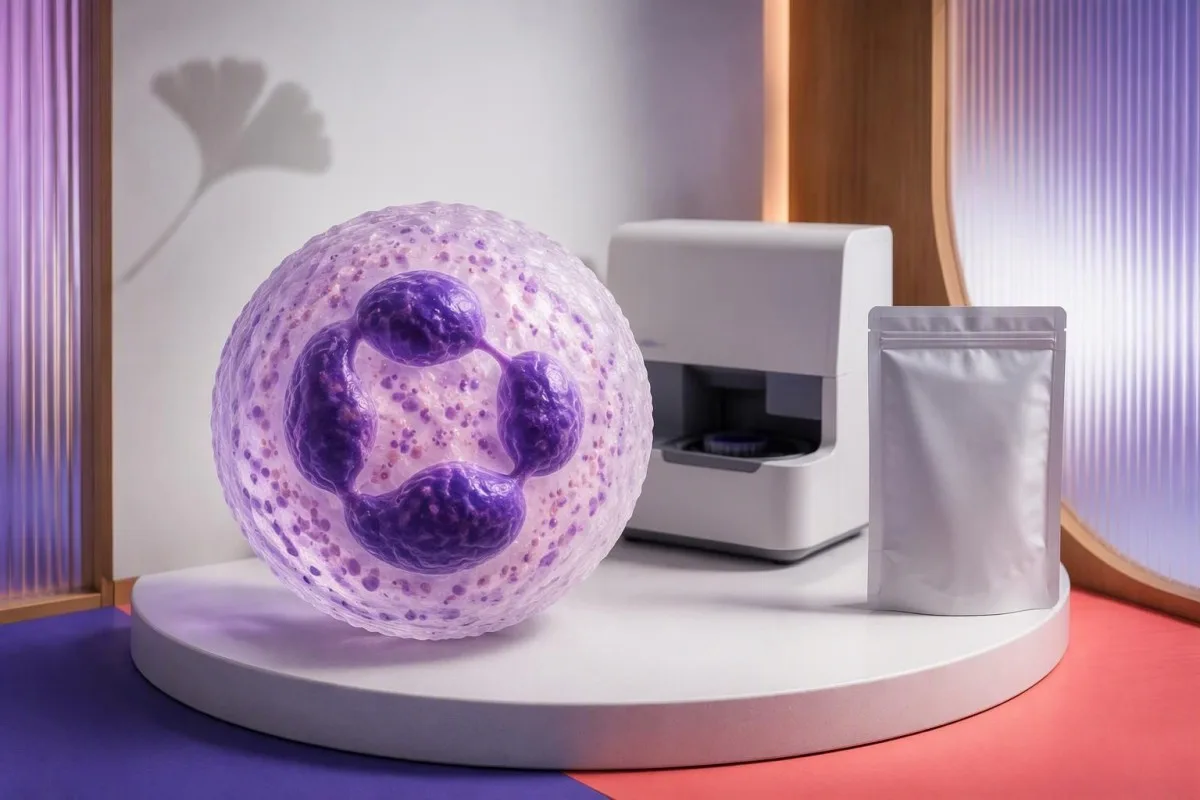
Моніторинг під час прийому клозапіну передбачає визначення абсолютної кількості нейтрофілів (ANC) для виявлення небезпечної нейтропенії; низькі результати можуть бути підставою для додаткових аналізів, консультації спеціаліста або переривання лікування за вказівкою лікаря. Графіки відрізняються залежно від країни та етапу лікування. Підвищення температури, біль у горлі або раптове погіршення стану потребують невідкладного обстеження — навіть після результату, що не викликає занепокоєння. Не змінюйте прийом клозапіну самостійно.

Ключові висновки
- Одиниці ANC: 1,0 × 10⁹/л дорівнює 1 000 клітин/мкл; перевіряйте одиниці перед порівнянням результатів із пороговими значеннями для лікування.
- Загальні порогові значення у США: За ANC 1 000–1 499 клітин/мкл лікування можна продовжувати з посиленим моніторингом; 500–999 клітин/мкл зазвичай є підставою для переривання лікування за вказівкою лікаря, якщо є підозра на нейтропенію, спричинену клозапіном.
- Тяжка нейтропенія: ANC нижче 500 клітин/мкл потребує невідкладного клінічного ведення, зазвичай із перериванням лікування та залученням гематолога.
- Показники, пов’язані з Duffy-null: Документально підтверджена кількість нейтрофілів, пов’язана з Duffy-null, може бути підставою для застосування іншого протоколу лікування; самого лише походження недостатньо для визначення права на нього.
- Графік у США: Моніторинг відповідно до інструкції з призначення зазвичай починають щотижня протягом 6 місяців, потім кожні 2 тижні протягом 6 місяців, а далі щомісяця.
- Адміністративні зміни: FDA скасувало американську програму REMS для клозапіну 13 червня 2025 року; це скасувало вимоги щодо реєстрації, але не клінічну потребу в моніторингу ANC.
- Міжнародні графіки: За традиційними британськими протоколами аналізи проводять щотижня протягом 18 тижнів, кожні два тижні до 1 року, а потім кожні 4 тижні; переглянуті європейські рекомендації можуть дозволяти довші інтервали для відповідних стабільних пацієнтів.
- Невідкладні симптоми: Гарячка 38.0°C або вище, новий біль у горлі, виразки в роті, сильний озноб або раптове значне погіршення самопочуття потребують термінового огляду того ж дня. Сплутаність свідомості, утруднене дихання або втрата свідомості потребують екстреної допомоги.
Що саме визначає моніторинг під час прийому клозапіну?
Під час моніторингу клозапіну результати ANC допомагають клініцистам вирішити, чи можна продовжувати лікування, чи потрібне ретельніше спостереження, чи лікування слід перервати. ANC нижче 500 клітин/µL є серйозним показником ризику, але рішення щодо вищих значень залежать від протоколу країни, попередніх результатів і задокументованого вихідного рівня пацієнта.
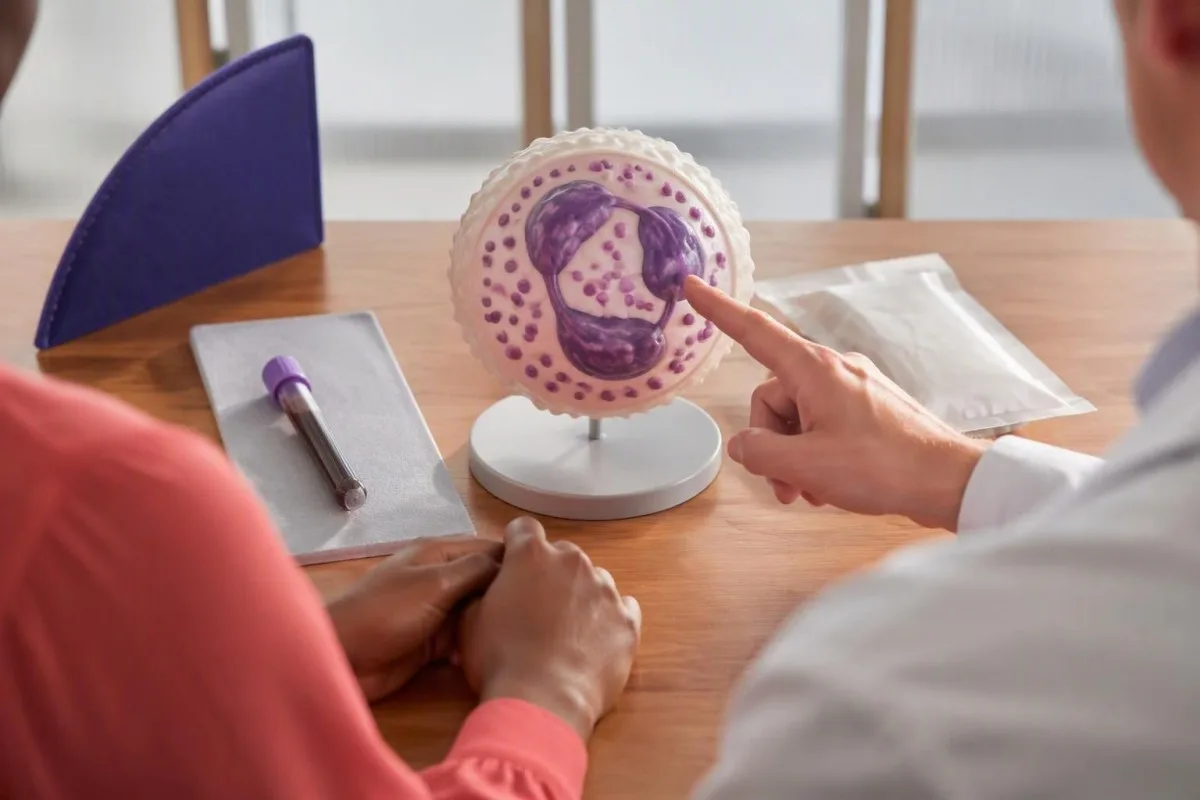
Результат ANC сам по собі не є інструкцією щодо призначення: показник 1,200 клітин/µL може дозволяти продовжити лікування за одним протоколом, але зумовлювати іншу реакцію за іншим. Перш ніж інтерпретувати результат, лікар, який призначає препарат, має визначити відповідний протокол; застосування американського порогового значення до сповіщення британської служби моніторингу може спричинити проблеми з постачанням препарату, яких можна уникнути. Kantesti — це аналізатор аналізів крові на основі ШІ, який може пояснити, що ANC 1.2 × 10⁹/L дорівнює 1,200 клітин/µL, але наше тлумачення не є дозволом на відпуск клозапіну й не замінює команду, яка призначає препарат. Наш.
Kantesti — це аналізатор аналізів крові на основі ШІ, який може пояснити, що ANC 1.2 × 10⁹/L дорівнює 1,200 клітин/µL, але наше тлумачення не є дозволом на відпуск клозапіну й не замінює команду, яка призначає препарат. Наш інформація про компанію вказує на організацію, що надає цю освітню послугу, а не на реєстр моніторингу клозапіну.
Зниження показника потребує уваги ще до того, як він досягне порогового значення для лікування: умовне зниження з 4,000 до 1,700 клітин/µL відрізняється від тривалого вихідного рівня близько 1,700. Наш посібник із граничні результати нейтрофілів пояснює звичайні коливання, але людям, які приймають клозапін, слід отримати рекомендації щодо конкретного препарату, а не дотримуватися загального графіка повторного тестування.
Як читати одиниці ANC і розраховувати кількість нейтрофілів?
ANC вимірює абсолютну кількість нейтрофілів, а не їхню частку серед лейкоцитів. Перерахунок точний: 1.0 × 10⁹/L дорівнює 1,000 клітин/µL. Референтний інтервал лабораторії та порогове значення для лікування клозапіном відповідають на різні запитання, тому позначений як відхилений результат не означає автоматично, що лікування слід припинити.
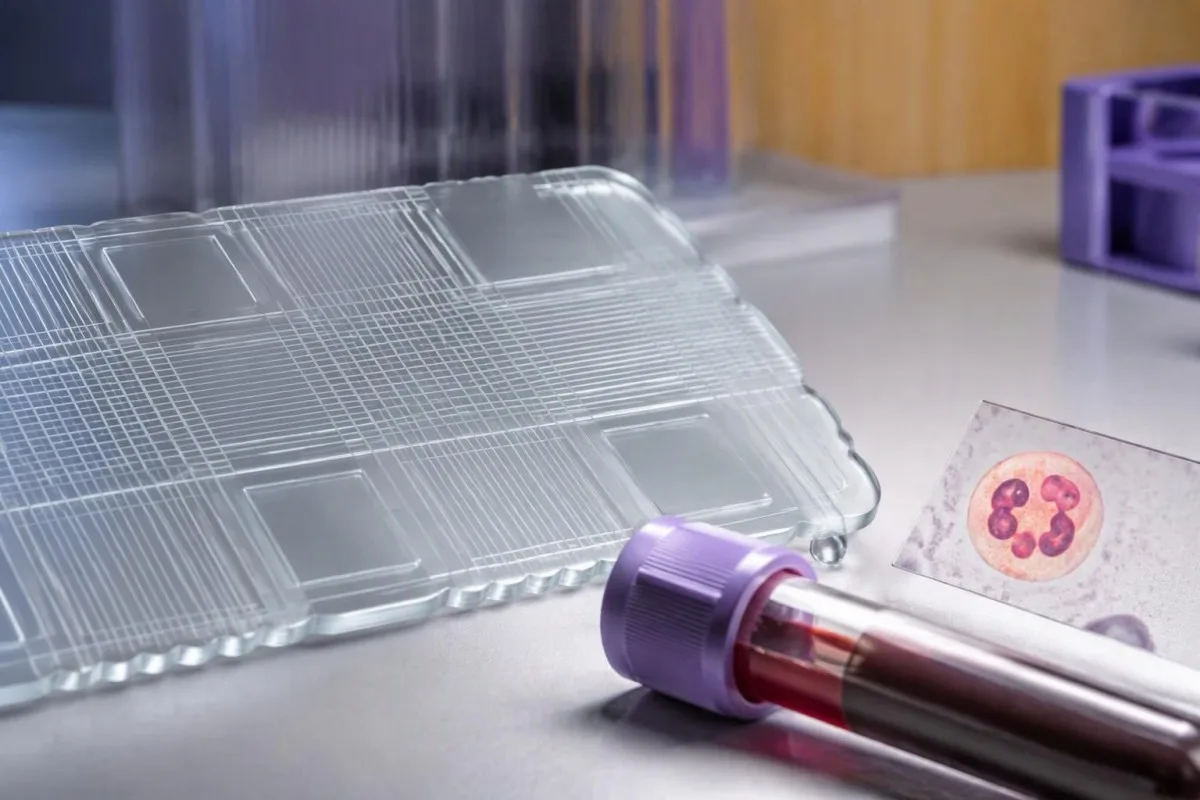
Більшість сучасних лабораторій безпосередньо вказують ANC, зазвичай як нейтрофіли, абсолютні нейтрофіли або NEUT#. Якщо потрібен розрахунок, помножте загальну кількість WBC на частку нейтрофілів, включно з паличкоядерними формами, якщо їх наведено окремо; наприклад, 4,000 клітин/µL × 0.40 дає ANC 1,600 клітин/µL, а не 40 клітин/µL.
За умовної кількості WBC 6,000 клітин/µL і нейтрофілів на рівні 15% ANC становить 900 клітин/µL, хоча загальна кількість WBC може бути в межах референтного інтервалу лабораторії. Ця розбіжність пояснює, чому посібник із референтного діапазону нейтрофілів розрізняє абсолютну кількість і відсоток у лейкоцитарній формулі.
Десятковий запис може спричинити небезпечне непорозуміння: 0.8 × 10⁹/L означає 800 клітин/µL, тоді як 8.0 × 10⁹/L означає 8,000 клітин/µL. Звірте оригінальний звіт, дату забору матеріалу та одиниці вимірювання, а не обрізаний знімок екрана чи число, введене вручну, і попросіть лабораторію або команду моніторингу усунути будь-яку неоднозначність до використання результату для призначення препарату.
| Рівень | Діапазон | Що це означає |
|---|---|---|
| Вище загальноприйнятого порогового значення нейтропенії | ≥1.5 × 10⁹/L; ≥1,500 клітин/µL | Usually outside the conventional adult neutropenia definition; this is not a universal laboratory reference interval or dispensing rule. |
| Легка нейтропенія | 1.0–1.499 × 10⁹/L; 1,000–1,499 cells/µL | Requires interpretation against baseline, symptoms and the applicable clozapine pathway. |
| Помірна нейтропенія | 0.5–0.999 × 10⁹/L; 500–999 cells/µL | Often requires urgent prescriber review; treatment actions differ for general and documented Duffy-null pathways. |
| Тяжка нейтропенія | <0.5 × 10⁹/L; <500 cells/µL | High-risk finding requiring urgent clinical management, usually hematology involvement and clinician-directed interruption. |
Які результати ANC змінюють лікування за протоколом США?
The US general-population pathway usually permits clozapine initiation at ANC ≥1,500 cells/µL. During treatment, ANC of 1,000–1,499 cells/µL can allow continuation with intensified monitoring; 500–999 cells/µL generally requires interruption when clozapine-induced neutropenia is suspected. These are clinician actions, not instructions for patients to adjust medication.
For mild neutropenia, the US prescribing-information approach commonly increases ANC checks to 3 times weekly until recovery to at least 1,500 cells/µL. Correll et al. (2022), in CNS Drugs, reproduce these management pathways and emphasize that clozapine's substantial psychiatric benefits must be considered alongside hematological risk rather than treating every low result identically.
For ANC of 500–999 cells/µL in the general pathway, clinicians usually arrange hematology input and daily testing initially, with treatment resumption considered after recovery according to the label. A repeat sample can clarify an unexpected result, but a symptomatic patient or a rapidly falling count should not wait 24 hours merely to obtain a more convenient number.
A count below 500 cells/µL enters the severe-neutropenia pathway, where any later rechallenge requires an explicit specialist risk–benefit decision. Total WBC or CRP cannot substitute for ANC; our explanation of невідповідності WBC та CRP shows why apparently reassuring results elsewhere in the panel do not cancel a low neutrophil count.
| Рівень | Діапазон | Що це означає |
|---|---|---|
| US general-pathway initiation threshold | ANC ≥1,500 cells/µL | Usually eligible for initiation from a hematological perspective, subject to the full prescribing assessment. |
| Mild neutropenia during treatment | ANC 1,000–1,499 cells/µL | Treatment can often continue under prescriber direction with ANC monitoring 3 times weekly. |
| Moderate neutropenia during treatment | ANC 500–999 cells/µL | Usually interrupt if clozapine-induced neutropenia is suspected; obtain hematology advice and intensified monitoring. |
| Severe neutropenia during treatment | ANC <500 cells/µL | Interrupt under urgent clinical management; any future rechallenge needs specialist justification. |
Як кількість нейтрофілів, пов’язана з Duffy-null, змінює рішення?
Documented Duffy-null-associated neutrophil counts can justify lower clozapine ANC thresholds because a stable lower circulating count does not necessarily indicate impaired immunity. US prescribing information has historically called this the benign ethnic neutropenia, or BEN, pathway; its usual initiation threshold is ANC ≥1,000 cells/µL with at least 2 baseline measurements.
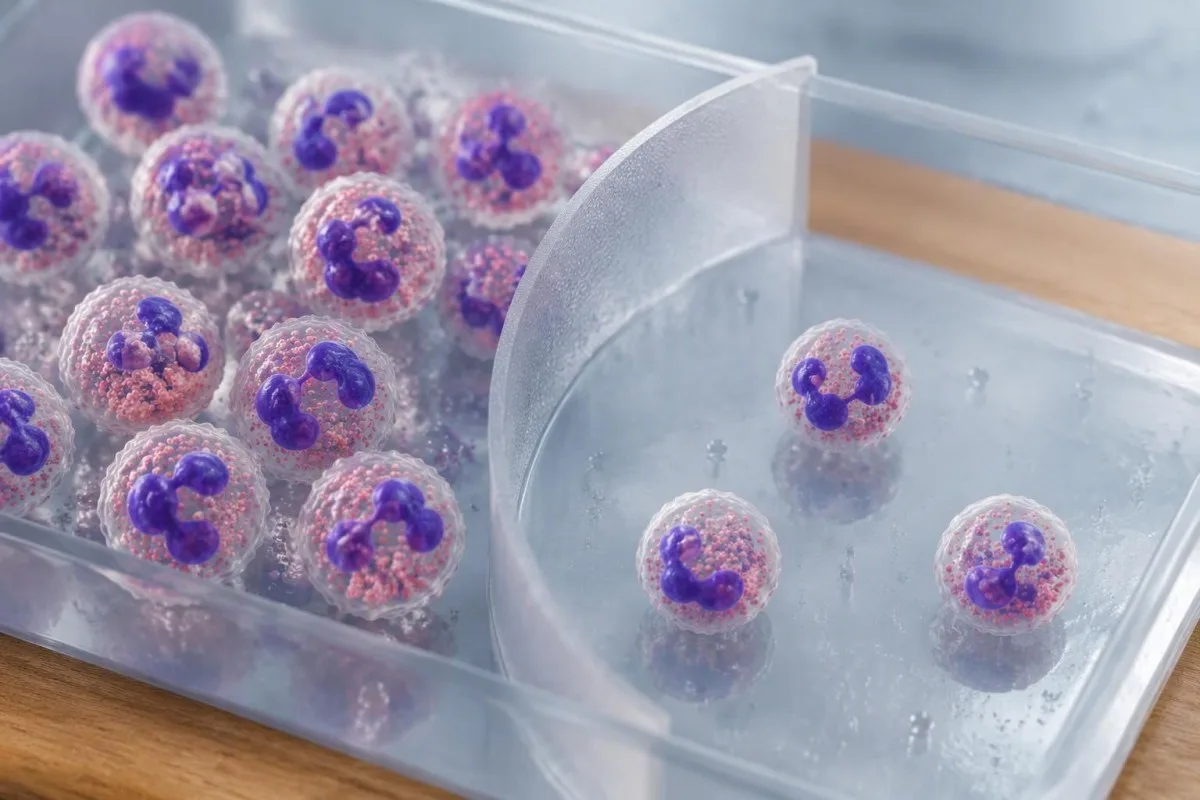
Under the US documented BEN pathway, an ANC of 500–999 cells/µL may permit continued clozapine with hematology consultation and monitoring 3 times weekly. This differs from the general pathway at the same number; the distinction must already be established clinically, not inferred after an alarming result simply to avoid an interruption.
Ancestry is not a diagnostic test for Duffy-null status, and 2 people with similar ancestry may have different baseline ANC patterns. Our Duffy-null count explanation discusses phenotype or genotype evidence, historical counts and assessment for other causes; genetic testing is not universally required, but a clinician-documented explanation is needed for an alternative treatment pathway.
A hypothetical stable baseline of 1,200 cells/µL does not make a new fall to 450 cells/µL harmless: that result meets the severe-neutropenia threshold even in the US BEN pathway. Fever, recurrent unusual infections, anemia or low platelets also weakens the assumption that a low ANC is an isolated constitutional finding and warrants a broader assessment.
Наскільки з часом зростає ризик нейтропенії, спричиненої клозапіном?
Clozapine neutropenia risk is concentrated early in treatment, especially during the first 18 weeks to 6 months, but it does not disappear later. Correll et al. (2022) describe agranulocytosis as affecting approximately 1% of treated patients; estimates vary across populations, monitoring systems and definitions, so this is not an individual prediction.

Approximately 1% means roughly 1 in 100 treated people in that broad estimate, not a 1% risk every month and not a 1% risk after every dose. Mild neutropenia is more frequent than agranulocytosis, and studies that combine the two outcomes can make the risk of life-threatening neutrophil depletion appear larger than it actually is.
Early intensive testing reflects the concentration of events during the first 6 months, rather than an assumption that each additional tablet causes predictable cumulative marrow damage. Severe clozapine-associated neutropenia is not reliably prevented by choosing a low dose alone, and a previously normal count cannot guarantee that the next count will remain normal.
After 2 years of stable treatment, the absolute risk is generally much lower than during initiation, which helps explain proposals for less frequent routine testing. Late neutropenia still needs investigation for medication effects, illness and marrow disease; our guide to тестування на часті інфекції explains why symptoms and other cell lines can reveal risks that an ANC-only schedule misses.
Який графік моніторингу під час прийому клозапіну в США після REMS?
The US prescribing-information ANC schedule generally remains weekly for 6 months, every 2 weeks for the next 6 months, then monthly. The FDA removed the clozapine REMS on June 13, 2025, ending its enrollment and ANC-reporting requirements; that administrative change did not remove the clinical recommendation to monitor neutrophils.

The FDA's 2025 clozapine REMS removal communication separates access restrictions from safe prescribing: prescribers, pharmacies and patients no longer need to participate in that federal registry. A pharmacy no longer needs the former REMS dispensing authorization, but the prescriber may still require a recent ANC and a local service may still use an electronic safety workflow.
For a hypothetical patient completing 6 months without a concerning ANC event, the usual label pathway moves from weekly to every-2-week monitoring rather than immediately to monthly testing. Neutropenia, a treatment interruption or a relevant medication change can alter that plan; ask which event starts the next monitoring period instead of counting months independently.
Kantesti can help explain a trend across 3 dated ANC reports, but our platform does not determine the next legally or clinically acceptable dispensing date. Our посібник з тенденцій безпеки препаратів explains why the original collection dates and the prescribing team's schedule must remain attached to any AI-generated summary.
Чому у Великій Британії служби моніторингу можуть застосовувати інший графік?
Traditional UK clozapine monitoring pathways use weekly testing for 18 weeks, every 2 weeks until 1 year, then every 4 weeks. UK dispensing has also depended on product-linked monitoring-service clearance; revised recommendations and local implementation can change the pathway, so the patient's own service must confirm the schedule and action thresholds.

An older UK pathway may classify ANC of 1.5–2.0 × 10⁹/L as amber and below 1.5 × 10⁹/L as red in patients without an approved lower-baseline pathway. Those thresholds are not interchangeable with the US continuation algorithm, and legacy UK systems may also consider total WBC; the relevant service must state which rules it currently applies.
Every 4 weeks means every 28 days, not simply once in each calendar month, so a missed appointment can affect a supply window even when the previous result was satisfactory. A useful baseline testing plan should include who books the sample, who receives it and who contacts the patient if the monitoring service cannot release medication.
Administrative alerts can arise from an overdue sample, an unprocessed sample or a genuinely low count—3 different problems with different solutions. Contact the prescribing team and pharmacy promptly if supply is threatened; do not stretch doses, borrow tablets or assume that a policy change in another country has automatically changed your own monitoring-service rules.
Що змінилося в переглянутих європейських рекомендаціях щодо ANC?
Revised European recommendations allow less frequent ANC testing in eligible stable patients: weekly for 18 weeks, monthly through the first year, every 12 weeks after 1 year and annually after 2 years. These longer intervals depend on the specified absence of neutropenia and the locally implemented product information; they are not a universal schedule.
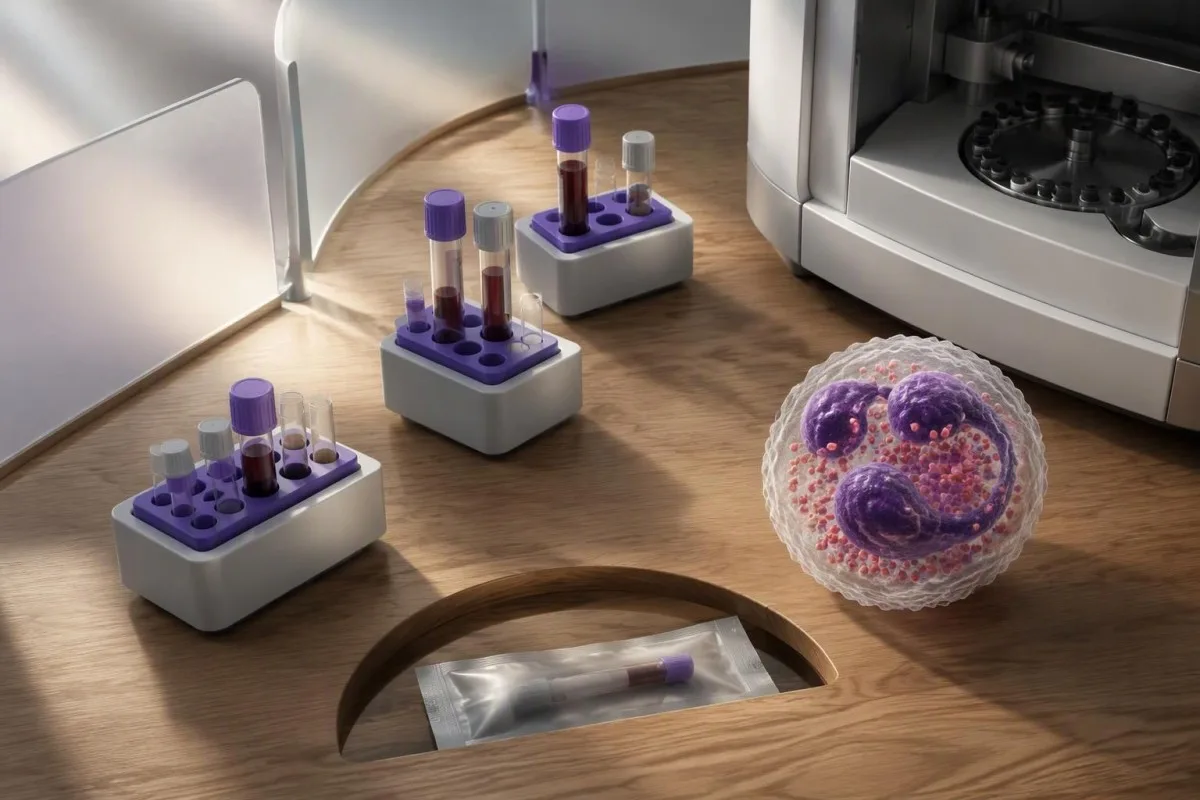
The European Medicines Agency's 2025 communication on revised routine blood count monitoring shifts the principal hematological measure toward ANC rather than combined WBC and ANC surveillance. The revised approach generally uses baseline ANC of at least 1,500 cells/µL, or at least 1,000 cells/µL in an established BEN pathway, while lowering some treatment-interruption thresholds compared with older European systems.
In the revised European approach, ANC below 1,000 cells/µL generally triggers stopping treatment in the standard pathway, whereas below 500 cells/µL is the corresponding threshold for an established BEN pathway. Results above those stopping thresholds can still require intensified surveillance; a hypothetical count of 1,100 cells/µL is not a reason to ignore a new downward trend.
Country authorization, the particular product information and service implementation can differ, even when patients have each taken clozapine for 2 years. Our guide to blood-test timing and changes explains why historical stability matters; obtain written confirmation before assuming that an annual European schedule applies to a UK, US or other national pathway.
Що слід робити після несподівано низького показника ANC?
An unexpected low ANC needs prompt prescriber review, confirmation when appropriate and assessment for causes other than clozapine. In the US label pathway, an initial ANC below 1,500 cells/µL is generally confirmed within 24 hours, but severe neutropenia or infection symptoms require immediate management rather than waiting for a routine repeat.
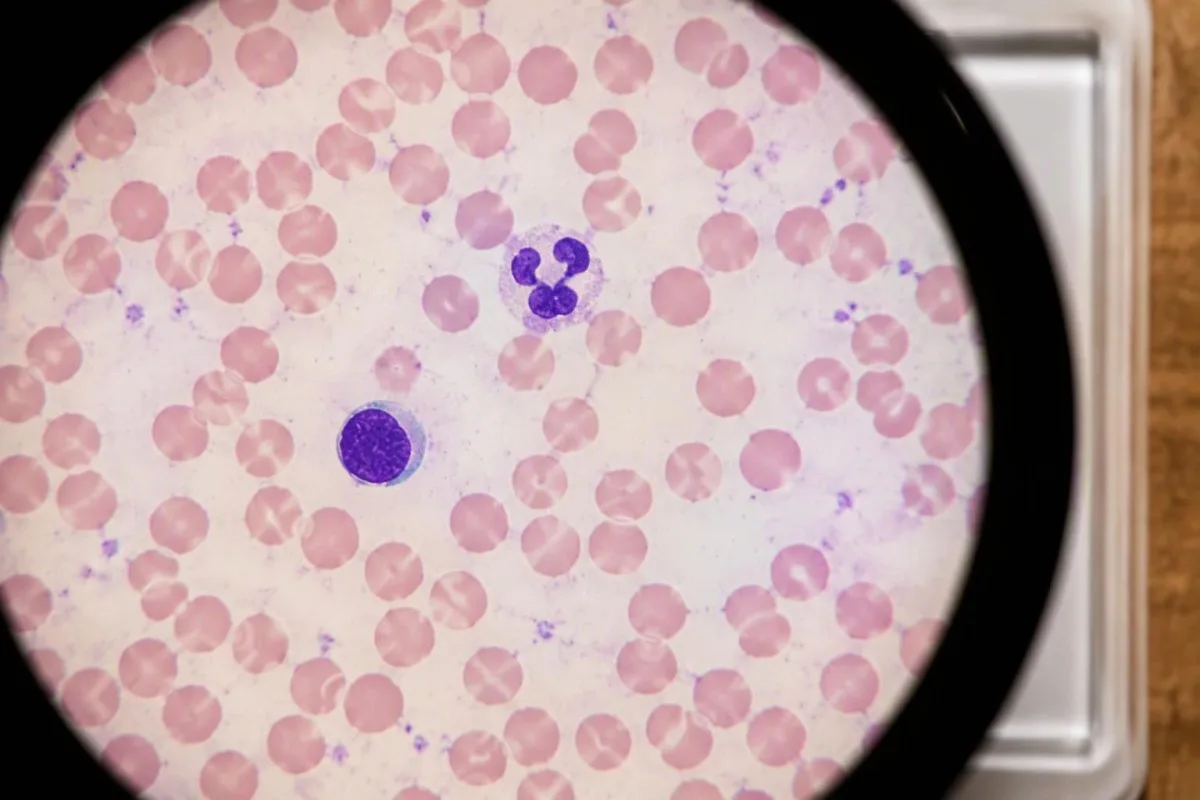
Recent viral illness, other medicines, autoimmune disease and nutritional deficiency can all lower ANC; a count of 900 cells/µL establishes neutropenia but does not establish its cause. Clinicians review the timing of drug exposure and may examine hemoglobin, platelets and a cell sample slide; concurrent abnormalities can justify evaluation for possible marrow disorders.
Kantesti is an AI blood test interpretation platform that can place an ANC of 0.9 × 10⁹/L beside platelet and hemoglobin trends, while leaving causation and medication decisions to clinicians. Our broader довідник із гематологічних маркерів explains why a normal red-cell result does not erase an isolated neutrophil problem.
Sampling time and temporary physiological variation can affect a borderline result, but there is no safe rule that an afternoon repeat will always normalize an ANC of 1,400 cells/µL. If a clinician requests a repeat at a consistent time, follow that plan without delaying necessary care; exercise, supplements or deliberate timing changes should not be used to manipulate a treatment-clearance result.
Які симптоми інфекції потребують невідкладного обстеження?
During clozapine treatment, fever of 38.0°C or higher, new sore throat, mouth sores, shaking chills or sudden marked illness warrants urgent same-day clinical assessment. A known ANC below 500 cells/µL makes possible infection especially urgent. Confusion, breathing difficulty, fainting or rapidly worsening illness requires emergency help, regardless of the last count.
Formal febrile-neutropenia definitions often use a single temperature of at least 38.3°C or at least 38.0°C sustained for 1 hour, together with severe or impending severe neutropenia. Those definitions support clinical classification—not a home instruction to wait an hour; tell the urgent-care team that you take clozapine and provide your last ANC if available.
An ANC of 2,000 cells/µL measured 7 days ago cannot exclude a new fall today, and severe neutropenia can weaken usual local signs such as redness or discharge. Assessment may include an urgent CBC with differential, cultures and examination; our procalcitonin interpretation guide explains why a low infection biomarker cannot independently rule out an early serious infection.
New fever may also signal pneumonia, myocarditis or another illness that raises clozapine concentrations, creating 2 linked safety questions: immune protection and medication toxicity. Call the prescribing team's urgent number immediately for advice about the next dose; if you cannot reach them promptly while significantly unwell, seek urgent care rather than waiting for an app interpretation or routine appointment.
Як інші ліки, куріння та хвороби впливають на моніторинг?
Other medicines can increase neutropenia risk or change clozapine concentrations, and those are different problems requiring different tests. ANC is measured in cells/µL, whereas clozapine concentration is commonly measured in ng/mL; a normal ANC does not exclude excessive drug exposure, and a therapeutic concentration does not exclude neutropenia.

Carbamazepine is generally avoided with clozapine because of marrow-suppression risk and clinically relevant interactions; concurrent valproate has also been associated with neutropenia in observational studies. A hypothetical ANC decline from 2,600 to 1,300 cells/µL after adding another medicine warrants a complete medication review, not a conclusion that clozapine is necessarily the sole cause; valproate level interpretation addresses the separate issue of drug exposure.
Stopping combustible smoking can raise clozapine concentrations because smoke components—not nicotine itself—induce CYP1A2 metabolism. A person who stops smoking during a 3-day hospital admission may therefore need prescriber-directed concentration monitoring and dose review; our nicotine test explanation clarifies why cotinine alone does not measure the smoke-related enzyme effect.
Kantesti can explain why an ANC of 2,100 cells/µL and a clozapine level of 900 ng/mL describe different risks, but we cannot select a safer dose. Fever, major caffeine changes and interacting medicines such as ciprofloxacin can alter exposure; report new excessive sedation, confusion or muscle jerks promptly, even if the neutrophil result is reassuring.
Що відбувається після пропуску аналізів або перерви в лікуванні?
A missed ANC appointment can create a supply problem, while a clozapine treatment break can create a separate restarting hazard. After more than 48 hours without clozapine, many protocols require supervised re-titration beginning at 12.5 mg once or twice daily rather than immediate return to the previous dose; exact instructions depend on the prescribing information.
Tolerance to clozapine's blood-pressure effects can be lost quickly, so restarting a previous 300 mg daily regimen after a break may cause profound hypotension or collapse. US prescribing information also specifies reduced restart doses for shorter interruptions; patients should contact the prescribing team after missed doses rather than using a remembered 48-hour rule to decide what to take.
A treatment break does not always reset ANC surveillance to the beginning, because monitoring rules depend on interruption duration and the reason treatment stopped. In the US normal-ANC pathway, interruptions of 30 days or longer generally return patients to initiation-style monitoring; national monitoring services may use different interruption rules, especially after an abnormal count.
After a hypothetical 5-day admission, confirm the last dose, current prescription, latest ANC and who will supervise the next dose before leaving hospital. Our explanation of результатів після виписки зі стаціонару helps organize altered laboratory values, but it cannot reconcile prescriptions or authorize restarting after neutropenia.
Чого моніторинг ANC не виявляє щодо безпеки клозапіну?
ANC monitoring does not detect clozapine-related myocarditis, constipation, metabolic complications or excessive drug concentrations. Some initiation protocols add weekly troponin and CRP during the first 4 weeks, while ongoing care assesses bowel function, weight, glucose and lipids. A satisfactory ANC therefore confirms only one part of medication safety.
New chest pain, breathlessness or persistent unexplained tachycardia during the first 4 weeks needs prompt clinical assessment rather than reassurance from a normal ANC. Troponin and CRP can support a myocarditis investigation, but thresholds and screening practices vary; our myocarditis testing explanation describes why laboratory results must be interpreted with symptoms and cardiac evaluation.
Clozapine-related bowel slowing can become dangerous even when stool is still passing, and severe abdominal pain, distension or vomiting requires urgent assessment. Record bowel frequency and stool consistency rather than asking only whether constipation is present; the посібник із консистенції калу provides a shared description, while a change lasting 48 hours should prompt contact according to the patient's bowel-management plan.
Correll et al. (2022) describe a clozapine plasma reference range of approximately 350–600 ng/mL for many treatment-response decisions, while emphasizing individual variation and adverse effects. That range is not an ANC target or a universal safe-dose boundary; concentration samples usually need defined timing relative to the last dose, whereas routine ANC collection generally does not require a trough sample.
Як підготуватися до наступного огляду щодо лікування клозапіном?
Bring the latest ANC, its units, earlier counts and a complete medication list to every clozapine review. Ask which national and service-specific pathway applies, what happens below its thresholds and whom to contact urgently. Keeping at least 3 dated results available helps distinguish a stable baseline from a new decline.

For a hypothetical sequence of 2,400, 1,900 and 1,400 cells/µL, useful questions concern the trend, recent illness, interacting medicines and the required next sample—not simply whether the latest value is red. Also ask who receives results outside office hours and whether the pharmacy needs monitoring-service clearance; these practical details can prevent an avoidable treatment gap.
Kantesti is an AI biomarker interpretation platform that helps translate an ANC of 1.4 × 10⁹/L into an understandable count and a list of clinician questions. Our технічний і клінічний нагляд describes the boundaries of interpretation; it does not establish that an automated answer is a validated clozapine prescribing decision or a substitute for hematology advice.
Kantesti's educational workflow should preserve 3 essentials: the source result, the applicable clinical protocol and the human decision-maker. Our принципи відповідального використання ШІ explain why urgent symptoms take priority over automated analysis, while our інформацією про конфіденційність і дані explains considerations when sharing sensitive psychiatric and laboratory records.
Наукові публікації та межі доказової бази
The 2 Kantesti publications listed in the research publication section concern digestive symptoms and women's health, not clozapine ANC thresholds or monitoring schedules. Their Figshare DOIs identify those publications but do not establish peer review or provide evidence for clozapine decisions; the directly relevant medical and regulatory sources are listed separately below.
Поширені запитання
Який рівень абсолютної кількості нейтрофілів (АКН) є надто низьким для продовження прийому клозапіну?
The ANC threshold for continuing clozapine depends on the country and the patient's documented baseline pathway. In the US general pathway, ANC of 1,000–1,499 cells/µL can allow continuation with increased monitoring, while 500–999 cells/µL usually requires interruption when clozapine-induced neutropenia is suspected. A documented BEN or Duffy-null-associated pathway can permit continuation at 500–999 cells/µL under specialist supervision. ANC below 500 cells/µL requires urgent clinical management; patients should obtain immediate prescriber instructions rather than change treatment themselves.
Чи потрібно мені й далі здавати аналізи крові на абсолютну кількість нейтрофілів (ANC) після скасування програми REMS для клозапіну?
Так, скасування програми US Clozapine REMS не скасувало клінічної рекомендації щодо моніторингу абсолютної кількості нейтрофілів (ANC). 13 червня 2025 року FDA скасувало реєстр, припинивши вимоги щодо реєстрації, звітності та отримання дозволу на відпуск препарату. Графік, як правило, залишається таким, як зазначено в інструкції для медичного застосування: щотижня протягом 6 місяців, кожні 2 тижні протягом наступних 6 місяців, а потім щомісяця. Ваш лікар, який призначає препарат, може вимагати додаткових аналізів після нейтропенії, перерви в лікуванні або іншої відповідної клінічної зміни.
Why is my clozapine blood test schedule different from someone else's?
Графіки аналізів крові для контролю клозапіну відрізняються, оскільки національні інструкції до препаратів, служби моніторингу, тривалість лікування та попередні випадки зміни абсолютної кількості нейтрофілів (ANC) неоднакові. Традиційні протоколи Великої Британії передбачають щотижневе тестування протягом 18 тижнів, раз на два тижні до 1 року, а надалі — кожні 4 тижні. Переглянуті європейські рекомендації можуть дозволяти тестування кожні 12 тижнів після 1 року та щорічне тестування після 2 років для відповідних стабільних пацієнтів за умови впровадження на місцевому рівні. Перш ніж змінювати будь-який запис на прийом, попросіть службу, яка призначає вам лікування, підтвердити застосовний графік.
Чи може клозапін спричинити нейтропенію після років нормальних результатів?
Нейтропенія, пов’язана з клозапіном, може виникнути після років нормальних результатів, хоча ризик значно вищий на початку лікування. На перші 18 тижнів — 6 місяців припадає значна частка тяжких випадків. Нове зниження показників через 2 роки все одно потребує оцінки щодо можливого зв’язку з клозапіном, іншими лікарськими засобами, інфекцією та захворюваннями кісткового мозку чи автоімунними станами. Раніше нормальний показник ANC не скасовує потреби в терміновому обстеженні, якщо з’являється гарячка або раптове погіршення стану.
Що робити, якщо під час прийому клозапіну в мене підвищилася температура?
Температура 38,0 °C або вище під час приймання клозапіну потребує термінового медичного огляду того ж дня, особливо за наявності болю в горлі, виразок у роті, сильного ознобу або вираженої слабкості. Повідомте лікаря, що приймаєте клозапін, і надайте результат останнього аналізу на абсолютну кількість нейтрофілів (ANC), якщо він доступний. Відомий показник ANC нижче 500 клітин/мкл робить можливу інфекцію особливо невідкладним станом, а сплутаність свідомості, утруднене дихання або втрата свідомості потребують екстреної допомоги. Негайно отримайте від лікаря, який призначив препарат, рекомендації щодо наступної дози, не чекаючи на наступний плановий аналіз і не змінюючи лікування самостійно.
Чи можу я відновити звичну дозу клозапіну після пропуску двох днів?
Не слід відновлювати звичну дозу клозапіну після перерви в лікуванні без вказівок команди, яка призначила препарат. Після перерви в лікуванні тривалістю понад 48 годин багато протоколів вимагають повторного титрування, починаючи з 12,5 мг один або два рази на добу, оскільки толерантність до впливу на артеріальний тиск може знизитися. У деяких інструкціях із призначення також вимагається зменшувати дозу після коротших перерв. Негайно зв’яжіться з командою, оскільки належний план відновлення прийому та графік моніторингу абсолютної кількості нейтрофілів (ANC) залежать від точної тривалості та причини перерви.
Чи означає нормальна кількість лейкоцитів, що мій абсолютний рівень нейтрофілів (ANC) під час приймання клозапіну є безпечним?
Нормальна загальна кількість лейкоцитів не гарантує, що абсолютна кількість нейтрофілів (ANC) є достатньою для лікування клозапіном. Наприклад, за кількості лейкоцитів (WBC) 6 000 клітин/µL і 15% нейтрофілів ANC становить 900 клітин/µL. Для прийняття рішень щодо лікування потрібні абсолютна кількість нейтрофілів, відповідний протокол і клінічний контекст, а не лише WBC. Нормальний ANC також не виключає міокардиту, тяжкого сповільнення перистальтики кишківника або надмірної концентрації клозапіну.
Дізнайтеся, як читати аналіз крові
Завантажте лабораторний звіт, і ШІ Kantesti за лічені секунди пояснить кожен біомаркер простою мовою. Ним користуються понад 2 мільйони людей у всьому світі.
Посилання
- Klein, T., Mitchell, S., & Weber, H. (2026). Діарея після голодування, чорні цятки у випорожненнях і посібник із ШКТ, 2026. Медичні дослідження ШІ Kantesti. DOI
- Klein, T., Mitchell, S., & Weber, H. (2026). Посібник зі здоров’я жінок: овуляція, менопауза та гормональні симптоми. Медичні дослідження ШІ Kantesti. DOI
- Correll CU et al. (2022). A Guideline and Checklist for Initiating and Managing Clozapine Treatment in Patients with Treatment-Resistant Schizophrenia. CNS Drugs. DOI
- US Food and Drug Administration (2025). FDA removes risk evaluation and mitigation strategy (REMS) program for the antipsychotic drug Clozapine. FDA Drug Safety and Availability.
- European Medicines Agency (2025). Clozapine: revised recommendations for routine blood count monitoring. Direct healthcare professional communication.
- 2 млн+Проаналізовані тести
- 127+Країни
- 100+Мови
Про медичну команду


Сигнали довіри E-E-A-T
Досвід
Лікарський клінічний огляд робочих процесів інтерпретації лабораторних показників.
Експертиза
Лабораторна медицина з акцентом на те, як біомаркери поводяться в клінічному контексті.
Авторитетність
Медичну рецензію провів доктор Томас Кляйн за участю доктора Сари Мітчелл і професора, доктора Ганса Вебера.
Довірливість
Інтерпретація на основі доказів із чіткими шляхами подальших дій, щоб зменшити тривогу.





Застереження щодо медичної інформації
Ця стаття призначена лише для освітніх цілей і не становить медичної поради. Завжди консультуйтеся з кваліфікованим медичним працівником щодо рішень про діагностику та лікування.
Опубліковано · Зв’язатися з редакційною командою
Опубліковано компанією Kantesti Ltd, зареєстрованою в Англії та Уельсі під номером компанії. 17090423, Лондон, Велика Британія.
