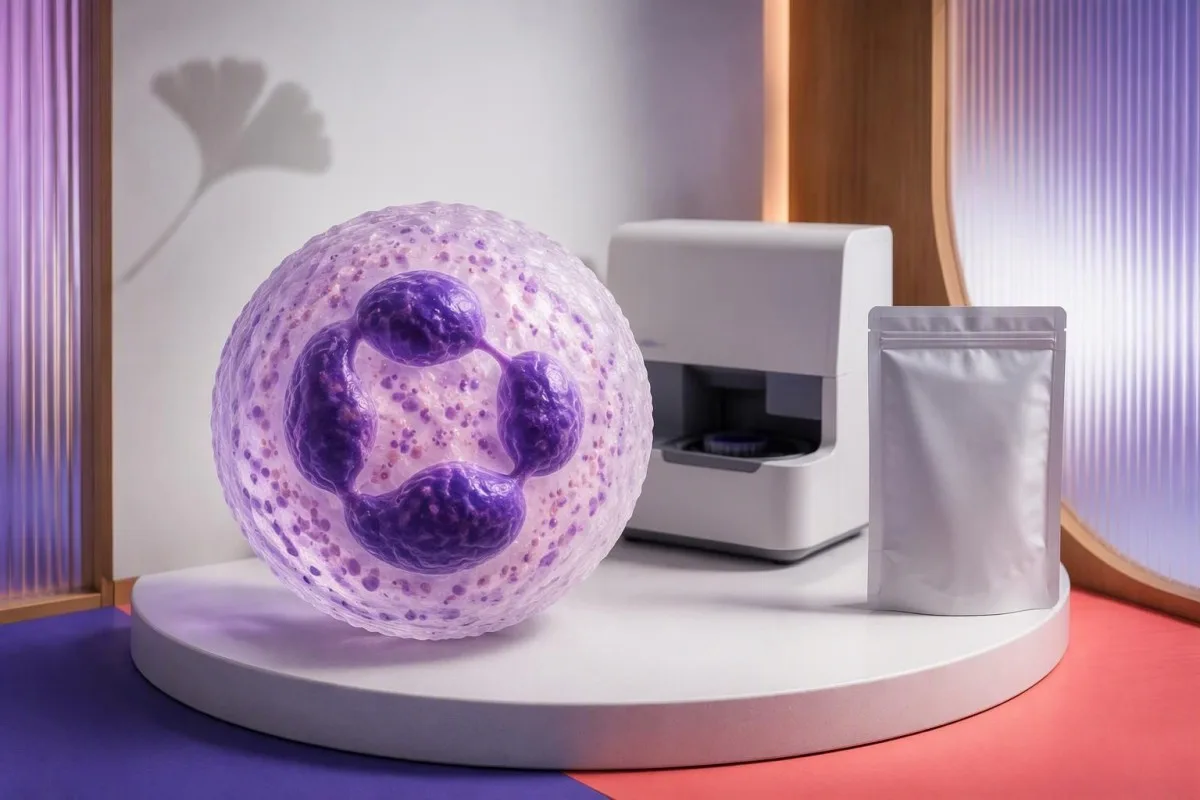
Клозапинны мониторинглау куркыныч нейтропенияне ачыклау өчен абсолют нейтрофиллар санын (ANC) куллана; түбән нәтиҗәләр өстәмә тикшерүләргә, белгеч бәяләвенә яки клиницист билгеләгән дәвалауны вакытлыча туктатуга сәбәп булырга мөмкин. Тикшерү графиклары илгә һәм дәвалау этабына карап аерыла. Кызу, тамак авыртуы яки кинәт авырып китү кичекмәстән бәяләүне таләп итә — хәтта нәтиҗә борчу тудырмаса да. Клозапин кабул итүне үзегез туктатмагыз һәм дозасын үзгәртмәгез.

Төп нәтиҗәләр
- ANC берәмлекләре: 1.0 × 10⁹/L 1,000 cells/µL га тигез; нәтиҗәләрне дәвалау чикләре белән чагыштырганчы, үлчәү берәмлекләрен тикшерегез.
- АКШта кулланыла торган гомуми чикләр: ANC 1,000–1,499 cells/µL булганда, мониторингны ешайтып дәвалауны дәвам итәргә мөмкин; клозапиннан нейтропениягә шик булганда, 500–999 cells/µL гадәттә клиницист билгеләгән дәвалауны вакытлыча туктатуга китерә.
- Авыр нейтропения: ANC 500 cells/µL дан түбән булса, кичекмәстән клиник чаралар күрү кирәк; гадәттә дәвалауны вакытлыча туктаталар һәм гематологны җәлеп итәләр.
- Duffy-null күрсәткечләре: Duffy-null белән бәйле нейтрофиллар саны документлар белән расланган булса, башка дәвалау тәртибен куллану нигезле булырга мөмкин; нәселдән килгән чыгышның үзе генә бу тәртипне куллану хокукын билгеләми.
- АКШтагы график: Рецепт буенча күзәтү, гадәттә, 6 ай дәвамында атна саен башлана, аннары 6 ай дәвамында 2 атнага бер, соңыннан ай саен үткәрелә.
- Административ үзгәрешләр: FDA 2025 елның 13 июнендә АКШтагы clozapine REMS программасын гамәлдән чыгарды; бу реестрда теркәлү таләпләрен бетерде, әмма ANC мониторингының клиник кирәклеген бетермәде.
- Халыкара графиклар: Бөек Британиянең традицион күзәтү тәртибе 18 атна дәвамында атна саен анализ тапшыруны, 1 елга кадәр 2 атнага бер тапшыруны, аннары 4 атнага бер тапшыруны күздә тота; Европаның яңартылган тәкъдимнәре тотрыклы халәттәге кайбер пациентларга анализлар арасындагы вакытны озайтырга мөмкинлек бирә.
- Ашыгыч симптомнар: 38.0°C яки аннан югары температура, тамакның яңа авыртуы, авызда җәрәхәтләр, калтыратып туңу яки кинәт сизелерлек начарлану шул ук көнне кичектергесез бәяләүне таләп итә. Аң буталу, сулыш алу авырлашу яки аңны югалту ашыгыч ярдәм чакыртуны таләп итә.
Клозапин мониторингы нәрсә турында карар кабул итә?
Clozapine мониторингы табибларга дәвалауны дәвам итәргә, күзәтүне көчәйтергә яки дәвалауны өзәргә кирәклеген хәл итәргә ярдәм итү өчен ANC нәтиҗәләрен куллана. ANC күрсәткеченең 500 күзәнәк/µL-дан түбән булуы — куркынычсызлыкка кагылышлы җитди күрсәткеч, әмма югарырак саннарда карарлар ил протоколына, алдагы нәтиҗәләргә һәм пациентның документларда теркәлгән башлангыч күрсәткеченә бәйле.
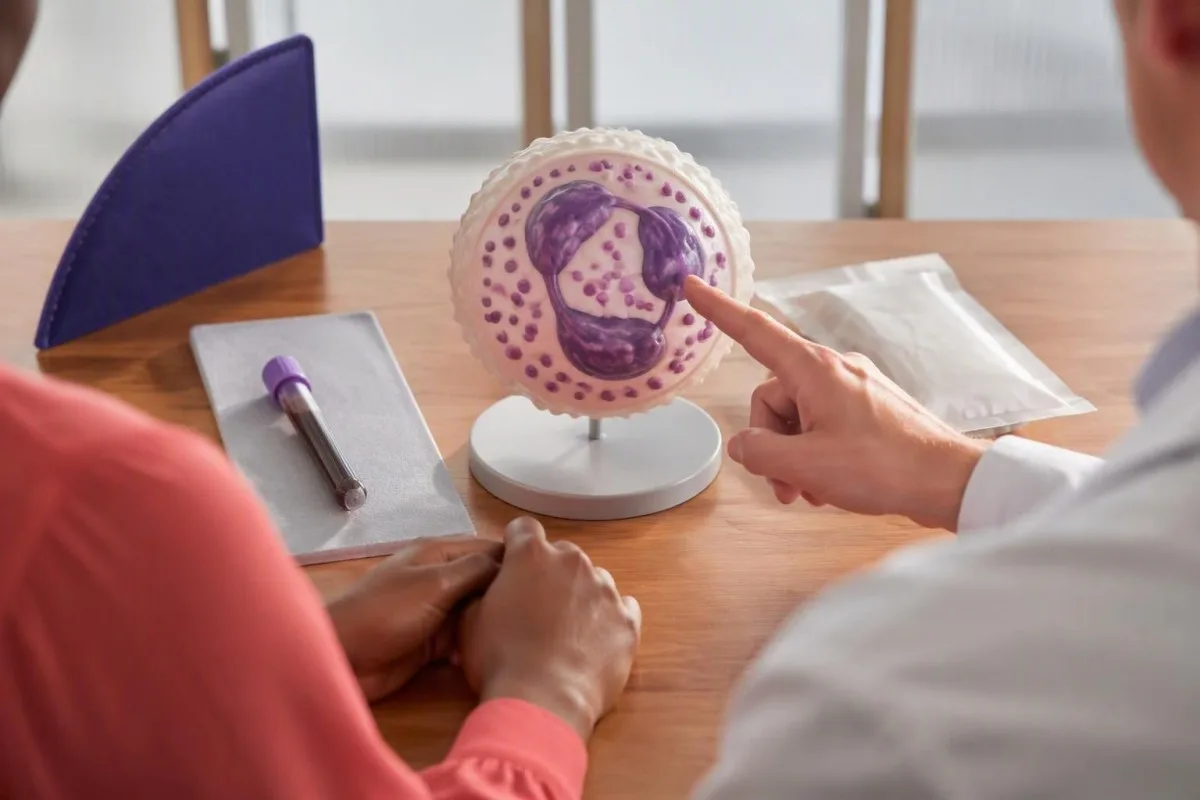
ANC нәтиҗәсе үзе генә рецепт буенча күрсәтмә түгел: 1,200 күзәнәк/µL күрсәткече бер тәртиптә дәвалауны дәвам итәргә мөмкинлек бирсә, икенче тәртиптә башка чараларга китерергә мөмкин. Санны аңлатыр алдыннан табиб дөрес протоколны билгеләргә тиеш; АКШ чиген Бөек Британия мониторинг хезмәтенең кисәтүенә куллану дару белән тәэмин итүдә булдырмый калырга мөмкин булган проблемага китерә ала.
Kantesti — ясалма интеллектка нигезләнгән кан анализаторы; ул ANC күрсәткече 1.2 × 10⁹/L булганда аның 1,200 күзәнәк/µL-га туры килүен аңлата ала, әмма безнең аңлатма clozapine бирүгә рөхсәт бирә алмый һәм препаратны билгеләгән медицина командасын алыштырмый. Безнең компания турында мәгълүмат clozapine мониторингы реестрын түгел, ә мәгърифәти хезмәт күрсәтүче оешманы билгели.
Күрсәткеч дәвалау чигенә җиткәнче үк игътибар таләп итә: шартлы мисал буларак, күрсәткечнең 4,000-дән 1,700 күзәнәк/µL-га төшүе озак вакыт якынча 1,700 булган башлангыч күрсәткечтән аерыла. Безнең чикләнгән нейтрофил нәтиҗәләре гади үзгәрешләр турындагы белешмәлек гадәти тирбәлешләрне аңлата, әмма clozapine кулланучылар гомуми кабат анализ тапшыру графигына түгел, ә препаратка кагылышлы киңәшләргә мөрәҗәгать итәргә тиеш.
ANC берәмлекләрен ничек укырга һәм күрсәткечне ничек исәпләргә?
ANC лейкоцитлар арасындагы нейтрофилларның процентын түгел, ә аларның абсолют санын үлчи. Күчеш төгәл: 1.0 × 10⁹/L — 1,000 күзәнәк/µL-га тигез. Лабораториянең белешмә интервалы һәм clozapine белән дәвалау чиге төрле сорауларга җавап бирә, шуңа күрә нәтиҗәнең билгеләнеп күрсәтелүе дәвалауны туктатырга кирәк дигәнне аңлатмый.
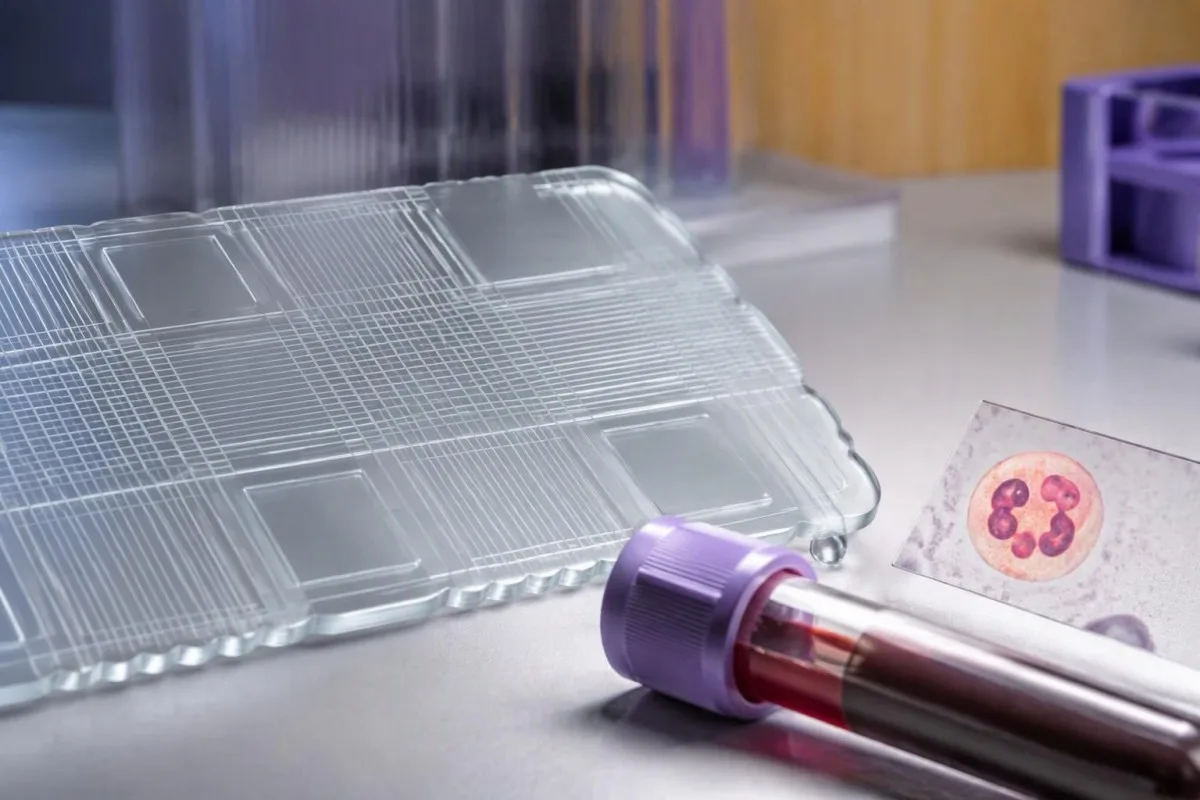
Күпчелек заманча лабораторияләр ANC-ны турыдан-туры, гадәттә нейтрофиллар, абсолют нейтрофиллар яки NEUT# дип күрсәтә. Хисаплау кирәк булса, гомуми WBC-ны нейтрофиллар өлешенә тапкырлагыз, аерым күрсәтелгән таякчалы нейтрофилларны да кертеп; мәсәлән, 4,000 күзәнәк/µL × 0.40 ANC-ның 1,600 күзәнәк/µL булуын күрсәтә, 40 күзәнәк/µL түгел.
Нейтрофиллар 15% тәшкил иткәндә, 6,000 күзәнәк/µL булган шартлы WBC ANC-ның 900 күзәнәк/µL булуына китерә, гәрчә гомуми WBC лабораториянең белешмә интервалына туры килергә мөмкин. Бу аерма ни өчен нейтрофилларның белешмә диапазоны турындагы белешмәлекнең абсолют санны дифференциаль проценттан аерып күрсәтүен аңлата.
Унарлы саннарны язу рәвеше куркыныч аңлашылмаучылык тудырырга мөмкин: 0.8 × 10⁹/L — 800 күзәнәк/µL дигән сүз, ә 8.0 × 10⁹/L — 8,000 күзәнәк/µL дигән сүз. Нәтиҗәне рецепт билгеләүдә кулланганчы, кисеп алынган скриншотны яки кулдан кертелгән санны түгел, ә төп хисапны, кан алынган датаны һәм берәмлекләрне чагыштырыгыз; аңлашылмаучылык булса, аны лаборатория яки мониторинг командасы белән ачыклагыз.
| Дәрәҗә | Диапазон | Мәгънәсе |
|---|---|---|
| Нейтропениянең шартлы чигеннән югары | ≥1.5 × 10⁹/L; ≥1,500 күзәнәк/µL | Usually outside the conventional adult neutropenia definition; this is not a universal laboratory reference interval or dispensing rule. |
| Йомшак нейтропения | 1.0–1.499 × 10⁹/L; 1,000–1,499 cells/µL | Requires interpretation against baseline, symptoms and the applicable clozapine pathway. |
| Уртача нейтропения | 0.5–0.999 × 10⁹/L; 500–999 cells/µL | Often requires urgent prescriber review; treatment actions differ for general and documented Duffy-null pathways. |
| Каты нейтропения | <0.5 × 10⁹/L; <500 cells/µL | High-risk finding requiring urgent clinical management, usually hematology involvement and clinician-directed interruption. |
АКШ тәртибендә нинди ANC нәтиҗәләре дәвалауны үзгәртә?
The US general-population pathway usually permits clozapine initiation at ANC ≥1,500 cells/µL. During treatment, ANC of 1,000–1,499 cells/µL can allow continuation with intensified monitoring; 500–999 cells/µL generally requires interruption when clozapine-induced neutropenia is suspected. These are clinician actions, not instructions for patients to adjust medication.
For mild neutropenia, the US prescribing-information approach commonly increases ANC checks to 3 times weekly until recovery to at least 1,500 cells/µL. Correll et al. (2022), in CNS Drugs, reproduce these management pathways and emphasize that clozapine's substantial psychiatric benefits must be considered alongside hematological risk rather than treating every low result identically.
For ANC of 500–999 cells/µL in the general pathway, clinicians usually arrange hematology input and daily testing initially, with treatment resumption considered after recovery according to the label. A repeat sample can clarify an unexpected result, but a symptomatic patient or a rapidly falling count should not wait 24 hours merely to obtain a more convenient number.
A count below 500 cells/µL enters the severe-neutropenia pathway, where any later rechallenge requires an explicit specialist risk–benefit decision. Total WBC or CRP cannot substitute for ANC; our explanation of WBC һәм CRP каршылыгы shows why apparently reassuring results elsewhere in the panel do not cancel a low neutrophil count.
| Дәрәҗә | Диапазон | Мәгънәсе |
|---|---|---|
| US general-pathway initiation threshold | ANC ≥1,500 cells/µL | Usually eligible for initiation from a hematological perspective, subject to the full prescribing assessment. |
| Mild neutropenia during treatment | ANC 1,000–1,499 cells/µL | Treatment can often continue under prescriber direction with ANC monitoring 3 times weekly. |
| Moderate neutropenia during treatment | ANC 500–999 cells/µL | Usually interrupt if clozapine-induced neutropenia is suspected; obtain hematology advice and intensified monitoring. |
| Severe neutropenia during treatment | ANC <500 cells/µL | Interrupt under urgent clinical management; any future rechallenge needs specialist justification. |
Duffy-null белән бәйле күрсәткеч карарларга ничек тәэсир итә?
Documented Duffy-null-associated neutrophil counts can justify lower clozapine ANC thresholds because a stable lower circulating count does not necessarily indicate impaired immunity. US prescribing information has historically called this the benign ethnic neutropenia, or BEN, pathway; its usual initiation threshold is ANC ≥1,000 cells/µL with at least 2 baseline measurements.
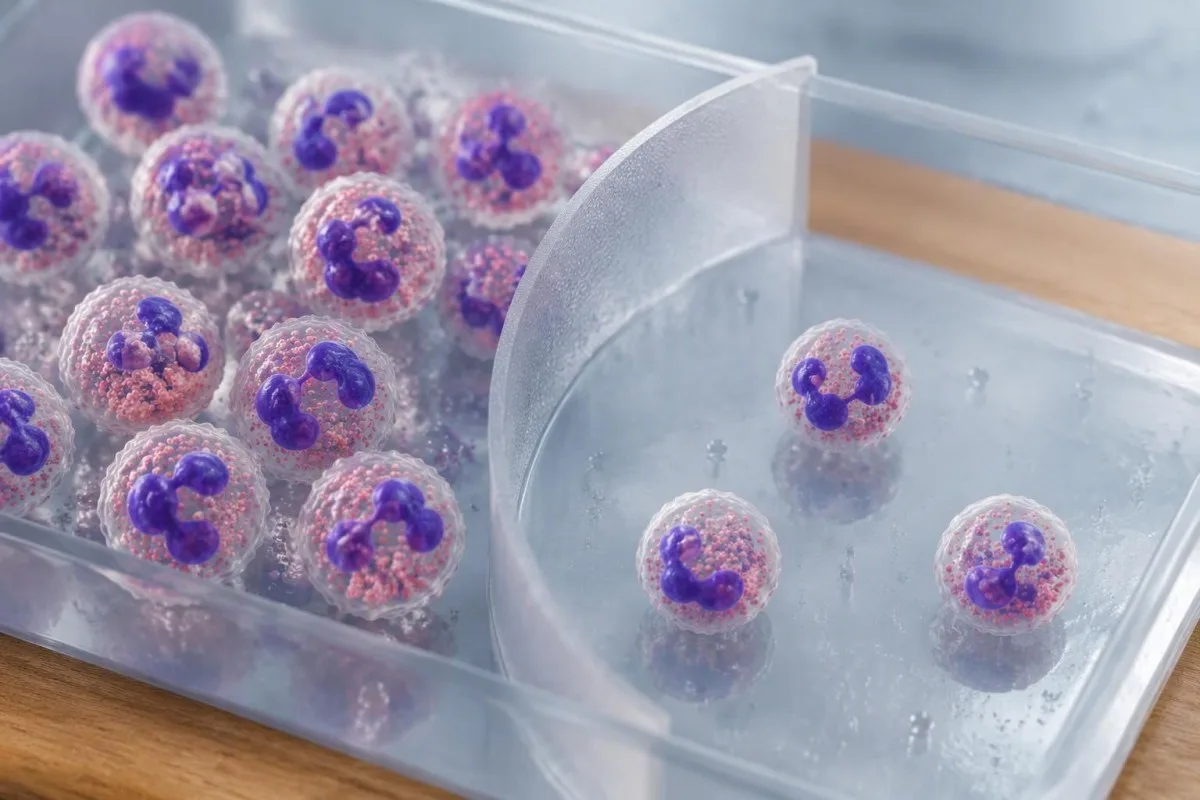
Under the US documented BEN pathway, an ANC of 500–999 cells/µL may permit continued clozapine with hematology consultation and monitoring 3 times weekly. This differs from the general pathway at the same number; the distinction must already be established clinically, not inferred after an alarming result simply to avoid an interruption.
Ancestry is not a diagnostic test for Duffy-null status, and 2 people with similar ancestry may have different baseline ANC patterns. Our Duffy-null count explanation discusses phenotype or genotype evidence, historical counts and assessment for other causes; genetic testing is not universally required, but a clinician-documented explanation is needed for an alternative treatment pathway.
A hypothetical stable baseline of 1,200 cells/µL does not make a new fall to 450 cells/µL harmless: that result meets the severe-neutropenia threshold even in the US BEN pathway. Fever, recurrent unusual infections, anemia or low platelets also weakens the assumption that a low ANC is an isolated constitutional finding and warrants a broader assessment.
Вакыт узу белән клозапиннан нейтропения куркынычы ни дәрәҗәдә?
Clozapine neutropenia risk is concentrated early in treatment, especially during the first 18 weeks to 6 months, but it does not disappear later. Correll et al. (2022) describe agranulocytosis as affecting approximately 1% of treated patients; estimates vary across populations, monitoring systems and definitions, so this is not an individual prediction.

Approximately 1% means roughly 1 in 100 treated people in that broad estimate, not a 1% risk every month and not a 1% risk after every dose. Mild neutropenia is more frequent than agranulocytosis, and studies that combine the two outcomes can make the risk of life-threatening neutrophil depletion appear larger than it actually is.
Early intensive testing reflects the concentration of events during the first 6 months, rather than an assumption that each additional tablet causes predictable cumulative marrow damage. Severe clozapine-associated neutropenia is not reliably prevented by choosing a low dose alone, and a previously normal count cannot guarantee that the next count will remain normal.
After 2 years of stable treatment, the absolute risk is generally much lower than during initiation, which helps explain proposals for less frequent routine testing. Late neutropenia still needs investigation for medication effects, illness and marrow disease; our guide to еш инфекцияләрне тикшерү explains why symptoms and other cell lines can reveal risks that an ANC-only schedule misses.
REMSтан соң АКШта клозапин мониторингының графигы нинди?
The US prescribing-information ANC schedule generally remains weekly for 6 months, every 2 weeks for the next 6 months, then monthly. The FDA removed the clozapine REMS on June 13, 2025, ending its enrollment and ANC-reporting requirements; that administrative change did not remove the clinical recommendation to monitor neutrophils.

The FDA's 2025 clozapine REMS removal communication separates access restrictions from safe prescribing: prescribers, pharmacies and patients no longer need to participate in that federal registry. A pharmacy no longer needs the former REMS dispensing authorization, but the prescriber may still require a recent ANC and a local service may still use an electronic safety workflow.
For a hypothetical patient completing 6 months without a concerning ANC event, the usual label pathway moves from weekly to every-2-week monitoring rather than immediately to monthly testing. Neutropenia, a treatment interruption or a relevant medication change can alter that plan; ask which event starts the next monitoring period instead of counting months independently.
Kantesti can help explain a trend across 3 dated ANC reports, but our platform does not determine the next legally or clinically acceptable dispensing date. Our дарулар-иминлек тенденциясе буенча кулланма explains why the original collection dates and the prescribing team's schedule must remain attached to any AI-generated summary.
Ни өчен Бөекбританиядә мониторинг хезмәтләре башка график кулланырга мөмкин?
Traditional UK clozapine monitoring pathways use weekly testing for 18 weeks, every 2 weeks until 1 year, then every 4 weeks. UK dispensing has also depended on product-linked monitoring-service clearance; revised recommendations and local implementation can change the pathway, so the patient's own service must confirm the schedule and action thresholds.

An older UK pathway may classify ANC of 1.5–2.0 × 10⁹/L as amber and below 1.5 × 10⁹/L as red in patients without an approved lower-baseline pathway. Those thresholds are not interchangeable with the US continuation algorithm, and legacy UK systems may also consider total WBC; the relevant service must state which rules it currently applies.
Every 4 weeks means every 28 days, not simply once in each calendar month, so a missed appointment can affect a supply window even when the previous result was satisfactory. A useful baseline testing plan should include who books the sample, who receives it and who contacts the patient if the monitoring service cannot release medication.
Administrative alerts can arise from an overdue sample, an unprocessed sample or a genuinely low count—3 different problems with different solutions. Contact the prescribing team and pharmacy promptly if supply is threatened; do not stretch doses, borrow tablets or assume that a policy change in another country has automatically changed your own monitoring-service rules.
Европаның яңартылган ANC тәкъдимнәрендә нәрсә үзгәрде?
Revised European recommendations allow less frequent ANC testing in eligible stable patients: weekly for 18 weeks, monthly through the first year, every 12 weeks after 1 year and annually after 2 years. These longer intervals depend on the specified absence of neutropenia and the locally implemented product information; they are not a universal schedule.
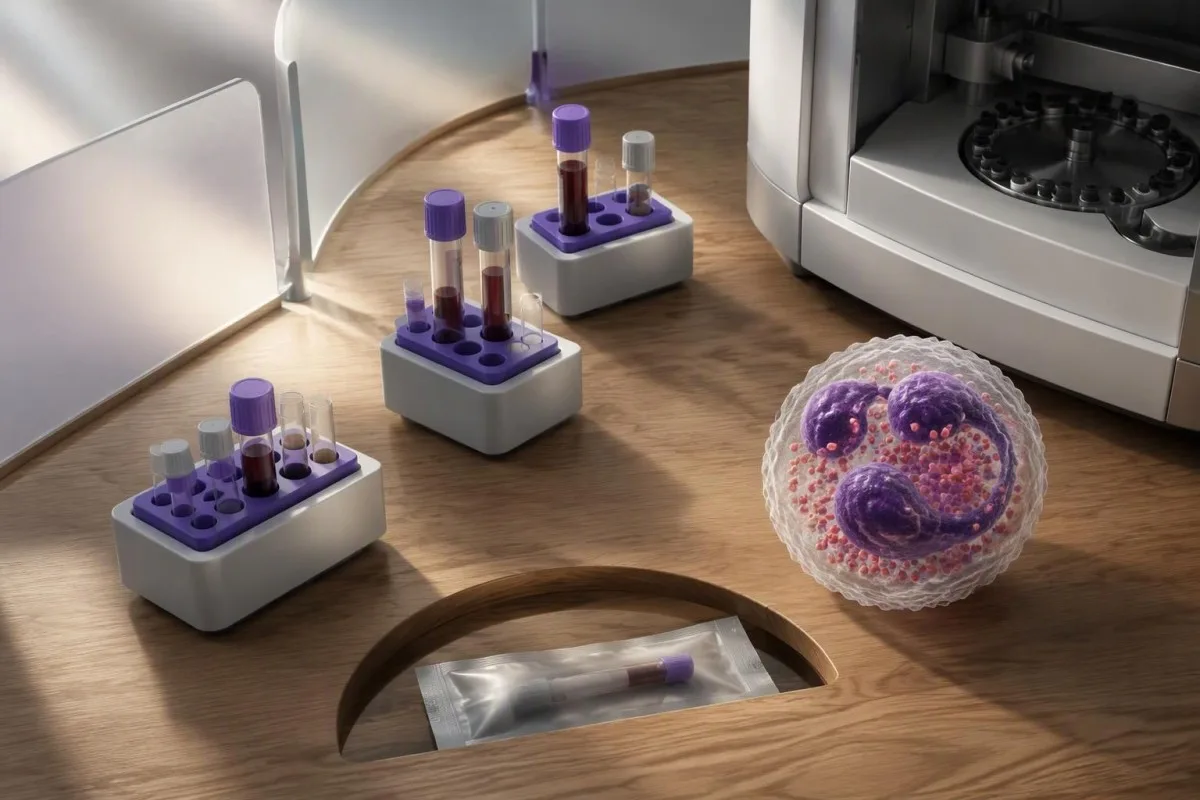
The European Medicines Agency's 2025 communication on revised routine blood count monitoring shifts the principal hematological measure toward ANC rather than combined WBC and ANC surveillance. The revised approach generally uses baseline ANC of at least 1,500 cells/µL, or at least 1,000 cells/µL in an established BEN pathway, while lowering some treatment-interruption thresholds compared with older European systems.
In the revised European approach, ANC below 1,000 cells/µL generally triggers stopping treatment in the standard pathway, whereas below 500 cells/µL is the corresponding threshold for an established BEN pathway. Results above those stopping thresholds can still require intensified surveillance; a hypothetical count of 1,100 cells/µL is not a reason to ignore a new downward trend.
Country authorization, the particular product information and service implementation can differ, even when patients have each taken clozapine for 2 years. Our guide to blood-test timing and changes explains why historical stability matters; obtain written confirmation before assuming that an annual European schedule applies to a UK, US or other national pathway.
ANC көтелмәгәнчә түбән булса, нәрсә эшләргә кирәк?
An unexpected low ANC needs prompt prescriber review, confirmation when appropriate and assessment for causes other than clozapine. In the US label pathway, an initial ANC below 1,500 cells/µL is generally confirmed within 24 hours, but severe neutropenia or infection symptoms require immediate management rather than waiting for a routine repeat.
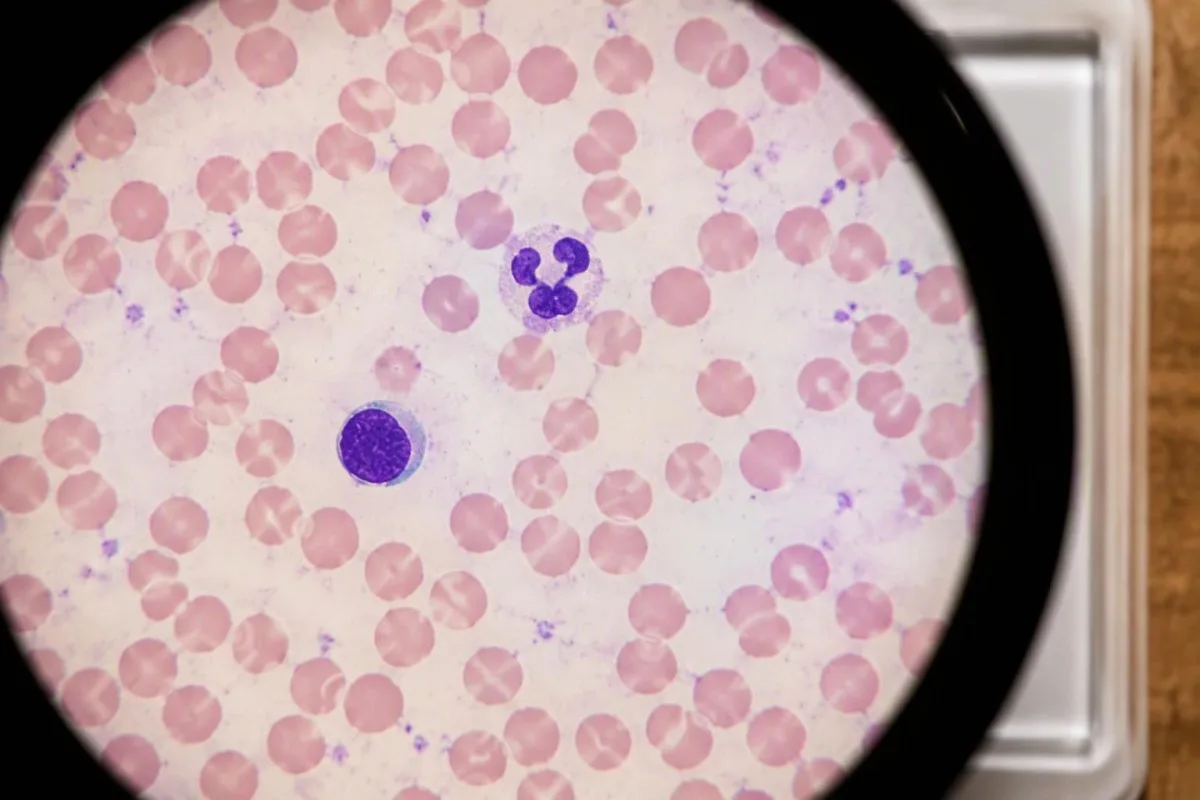
Recent viral illness, other medicines, autoimmune disease and nutritional deficiency can all lower ANC; a count of 900 cells/µL establishes neutropenia but does not establish its cause. Clinicians review the timing of drug exposure and may examine hemoglobin, platelets and a cell sample slide; concurrent abnormalities can justify evaluation for possible marrow disorders.
Kantesti is an AI blood test interpretation platform that can place an ANC of 0.9 × 10⁹/L beside platelet and hemoglobin trends, while leaving causation and medication decisions to clinicians. Our broader гематология маркерлар буенча кулланма explains why a normal red-cell result does not erase an isolated neutrophil problem.
Sampling time and temporary physiological variation can affect a borderline result, but there is no safe rule that an afternoon repeat will always normalize an ANC of 1,400 cells/µL. If a clinician requests a repeat at a consistent time, follow that plan without delaying necessary care; exercise, supplements or deliberate timing changes should not be used to manipulate a treatment-clearance result.
Инфекциянең нинди симптомнары кичекмәстән бәяләүне таләп итә?
During clozapine treatment, fever of 38.0°C or higher, new sore throat, mouth sores, shaking chills or sudden marked illness warrants urgent same-day clinical assessment. A known ANC below 500 cells/µL makes possible infection especially urgent. Confusion, breathing difficulty, fainting or rapidly worsening illness requires emergency help, regardless of the last count.
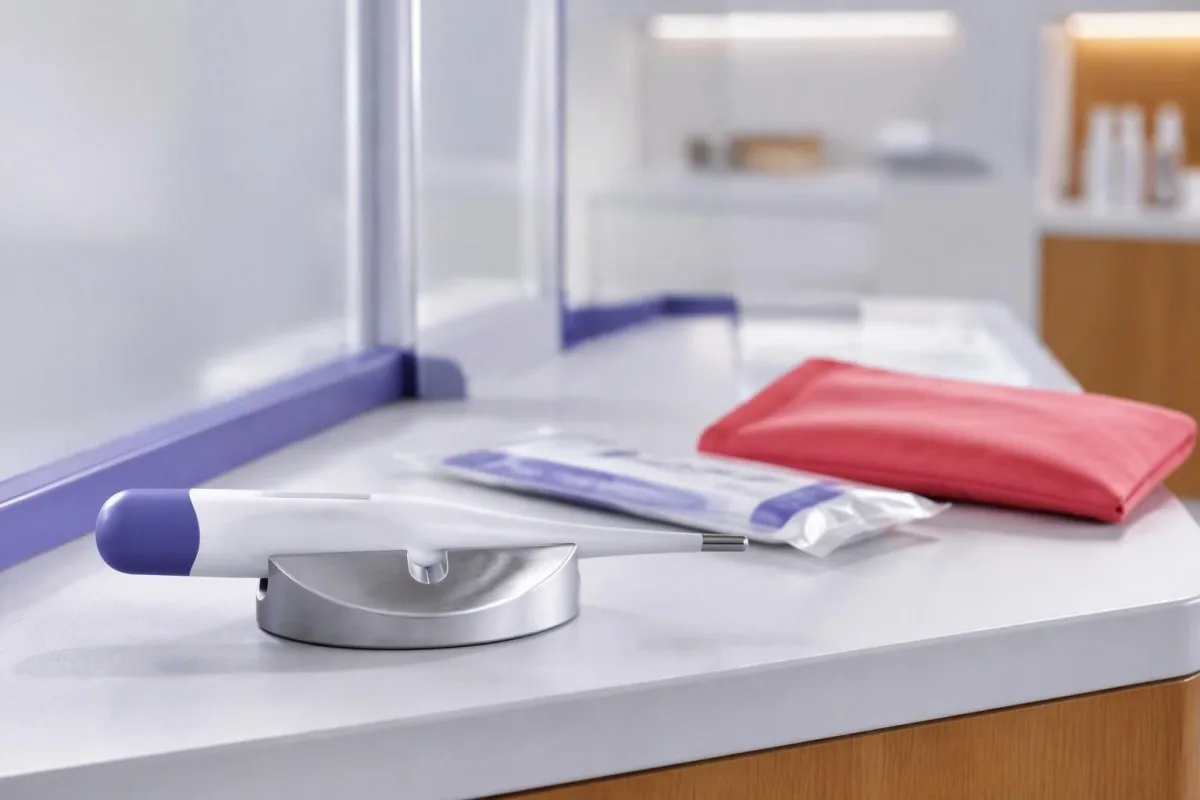
Formal febrile-neutropenia definitions often use a single temperature of at least 38.3°C or at least 38.0°C sustained for 1 hour, together with severe or impending severe neutropenia. Those definitions support clinical classification—not a home instruction to wait an hour; tell the urgent-care team that you take clozapine and provide your last ANC if available.
An ANC of 2,000 cells/µL measured 7 days ago cannot exclude a new fall today, and severe neutropenia can weaken usual local signs such as redness or discharge. Assessment may include an urgent CBC with differential, cultures and examination; our procalcitonin interpretation guide explains why a low infection biomarker cannot independently rule out an early serious infection.
New fever may also signal pneumonia, myocarditis or another illness that raises clozapine concentrations, creating 2 linked safety questions: immune protection and medication toxicity. Call the prescribing team's urgent number immediately for advice about the next dose; if you cannot reach them promptly while significantly unwell, seek urgent care rather than waiting for an app interpretation or routine appointment.
Башка дарулар, тәмәке тарту һәм авыру мониторингка ничек тәэсир итә?
Other medicines can increase neutropenia risk or change clozapine concentrations, and those are different problems requiring different tests. ANC is measured in cells/µL, whereas clozapine concentration is commonly measured in ng/mL; a normal ANC does not exclude excessive drug exposure, and a therapeutic concentration does not exclude neutropenia.

Carbamazepine is generally avoided with clozapine because of marrow-suppression risk and clinically relevant interactions; concurrent valproate has also been associated with neutropenia in observational studies. A hypothetical ANC decline from 2,600 to 1,300 cells/µL after adding another medicine warrants a complete medication review, not a conclusion that clozapine is necessarily the sole cause; valproate level interpretation addresses the separate issue of drug exposure.
Stopping combustible smoking can raise clozapine concentrations because smoke components—not nicotine itself—induce CYP1A2 metabolism. A person who stops smoking during a 3-day hospital admission may therefore need prescriber-directed concentration monitoring and dose review; our nicotine test explanation clarifies why cotinine alone does not measure the smoke-related enzyme effect.
Kantesti can explain why an ANC of 2,100 cells/µL and a clozapine level of 900 ng/mL describe different risks, but we cannot select a safer dose. Fever, major caffeine changes and interacting medicines such as ciprofloxacin can alter exposure; report new excessive sedation, confusion or muscle jerks promptly, even if the neutrophil result is reassuring.
Анализларны калдырганнан яки дәвалауда тәнәфестән соң нәрсә була?
A missed ANC appointment can create a supply problem, while a clozapine treatment break can create a separate restarting hazard. After more than 48 hours without clozapine, many protocols require supervised re-titration beginning at 12.5 mg once or twice daily rather than immediate return to the previous dose; exact instructions depend on the prescribing information.
Tolerance to clozapine's blood-pressure effects can be lost quickly, so restarting a previous 300 mg daily regimen after a break may cause profound hypotension or collapse. US prescribing information also specifies reduced restart doses for shorter interruptions; patients should contact the prescribing team after missed doses rather than using a remembered 48-hour rule to decide what to take.
A treatment break does not always reset ANC surveillance to the beginning, because monitoring rules depend on interruption duration and the reason treatment stopped. In the US normal-ANC pathway, interruptions of 30 days or longer generally return patients to initiation-style monitoring; national monitoring services may use different interruption rules, especially after an abnormal count.
After a hypothetical 5-day admission, confirm the last dose, current prescription, latest ANC and who will supervise the next dose before leaving hospital. Our explanation of хастаханәдән чыкканнан соңгы нәтиҗәләр helps organize altered laboratory values, but it cannot reconcile prescriptions or authorize restarting after neutropenia.
ANC мониторингы клозапинның куркынычсызлыгы турында нәрсәне ачыкламый?
ANC monitoring does not detect clozapine-related myocarditis, constipation, metabolic complications or excessive drug concentrations. Some initiation protocols add weekly troponin and CRP during the first 4 weeks, while ongoing care assesses bowel function, weight, glucose and lipids. A satisfactory ANC therefore confirms only one part of medication safety.
New chest pain, breathlessness or persistent unexplained tachycardia during the first 4 weeks needs prompt clinical assessment rather than reassurance from a normal ANC. Troponin and CRP can support a myocarditis investigation, but thresholds and screening practices vary; our myocarditis testing explanation describes why laboratory results must be interpreted with symptoms and cardiac evaluation.
Clozapine-related bowel slowing can become dangerous even when stool is still passing, and severe abdominal pain, distension or vomiting requires urgent assessment. Record bowel frequency and stool consistency rather than asking only whether constipation is present; the тизәк консистенциясе турындагы кулланмабыз provides a shared description, while a change lasting 48 hours should prompt contact according to the patient's bowel-management plan.
Correll et al. (2022) describe a clozapine plasma reference range of approximately 350–600 ng/mL for many treatment-response decisions, while emphasizing individual variation and adverse effects. That range is not an ANC target or a universal safe-dose boundary; concentration samples usually need defined timing relative to the last dose, whereas routine ANC collection generally does not require a trough sample.
Клозапин буенча чираттагы бәяләүгә ничек әзерләнергә?
Bring the latest ANC, its units, earlier counts and a complete medication list to every clozapine review. Ask which national and service-specific pathway applies, what happens below its thresholds and whom to contact urgently. Keeping at least 3 dated results available helps distinguish a stable baseline from a new decline.

For a hypothetical sequence of 2,400, 1,900 and 1,400 cells/µL, useful questions concern the trend, recent illness, interacting medicines and the required next sample—not simply whether the latest value is red. Also ask who receives results outside office hours and whether the pharmacy needs monitoring-service clearance; these practical details can prevent an avoidable treatment gap.
Kantesti is an AI biomarker interpretation platform that helps translate an ANC of 1.4 × 10⁹/L into an understandable count and a list of clinician questions. Our техник һәм клиник күзәтү describes the boundaries of interpretation; it does not establish that an automated answer is a validated clozapine prescribing decision or a substitute for hematology advice.
Kantesti's educational workflow should preserve 3 essentials: the source result, the applicable clinical protocol and the human decision-maker. Our җаваплы ЯИ принциплары explain why urgent symptoms take priority over automated analysis, while our хосусыйлык һәм мәгълүмат турында мәгълүмат explains considerations when sharing sensitive psychiatric and laboratory records.
Фәнни басмалар һәм дәлилләрнең чикләре
The 2 Kantesti publications listed in the research publication section concern digestive symptoms and women's health, not clozapine ANC thresholds or monitoring schedules. Their Figshare DOIs identify those publications but do not establish peer review or provide evidence for clozapine decisions; the directly relevant medical and regulatory sources are listed separately below.
Еш бирелгән сораулар
Клозапинны дәвам итү өчен ANC нинди дәрәҗәдән түбән булмаска тиеш?
The ANC threshold for continuing clozapine depends on the country and the patient's documented baseline pathway. In the US general pathway, ANC of 1,000–1,499 cells/µL can allow continuation with increased monitoring, while 500–999 cells/µL usually requires interruption when clozapine-induced neutropenia is suspected. A documented BEN or Duffy-null-associated pathway can permit continuation at 500–999 cells/µL under specialist supervision. ANC below 500 cells/µL requires urgent clinical management; patients should obtain immediate prescriber instructions rather than change treatment themselves.
0. Клозапинны REMS программасы гамәлдән чыгарылганнан соң да миңа ANC кан анализлары тапшырырга кирәкме?
Әйе, АКШта клозапин өчен REMS программасының бетерелүе ANC мониторингы буенча клиник рекомендацияне бетермәде. FDA реестрны 2025 елның 13 июнендә бетерде, шулай итеп теркәлү, хисап бирү һәм даруны бирүгә рөхсәт алу таләпләре гамәлдән чыкты. Даруны билгеләү турында мәгълүматта күрсәтелгән график, гомумән алганда, 6 ай дәвамында атна саен, аннары киләсе 6 айда 2 атнага бер тапкыр, шуннан соң ай саен булып кала. Нейтропениядән, дәвалаудагы өзеклектән яки башка әһәмиятле клиник үзгәрештән соң табибыгыз өстәмә тикшерүләр таләп итәргә мөмкин.
Why is my clozapine blood test schedule different from someone else's?
Клозапин кабына анализ ясау графиклары милли препарат мәгълүматлары, мониторинг хезмәтләре, дәвалау дәвамлылыгы һәм элек булган ANC очраклары бертөрле булмаганга аерыла. Бөек Британиянең традицион тәртипләре 18 атна дәвамында атна саен, 1 елга кадәр ике атнага бер һәм аннан соң һәр 4 атна саен анализ ясауны күздә тота. Европа тәкъдимнәренең яңартылган версияләре, җирле гамәлгә кертүгә бәйле рәвештә, 1 елдан соң һәр 12 атнага бер, ә 2 елдан соң ел саен анализ ясауга рөхсәт итә ала; бу тотрыклы халәттәге, таләпләргә туры килгән пациентларга кагыла. Теләсә кайсы кабул итү вакытын үзгәртер алдыннан, үзегезне дәвалаучы табиб хезмәтеннән сезгә карата кулланыла торган графикны раславын сорагыз.
Клозапин күп еллар буе анализ нәтиҗәләре нормаль булганнан соң нейтропения китереп чыгарырга мөмкинме?
Клозапин белән бәйле нейтропения анализ нәтиҗәләре еллар буе нормаль булганнан соң да барлыкка килергә мөмкин, әмма дәвалауның башлангыч чорында куркыныч күпкә югарырак. Авыруның авыр очраклары беренче 18 атнадан алып 6 айга кадәрге чорда аеруча еш очрый. 2 елдан соң кан күзәнәкләре саны яңадан кимесә, клозапинны, башка даруларны, инфекцияне, шулай ук сөяк җелеге яки аутоиммун авыруларны тикшерергә кирәк. Моңа кадәр ышанычлы булган ANC күрсәткече бизгәк яки кинәт авыру башланганда ашыгыч тикшерү кирәклеген бетерми.
Клозапин кабул иткәндә тән температурам күтәрелсә, нишләргә кирәк?
0 A fever of 38.0°C яки аннан югарырак булса, клозапин кабул иткәндә, шул ук көнне кичекмәстән медицина тикшерүе кирәк, бигрәк тә тамак авыртуы, авызда җәрәхәтләр, калтыратучы өшү яки көчле хәлсезлек булганда. Медицина хезмәткәренә клозапин кабул итүегезне әйтегез һәм мөмкин булса, ANC-ның иң соңгы күрсәткечен хәбәр итегез. ANC-ның 500 cells/µL-тан түбән булуы билгеле икән, инфекция ихтималы аеруча кичектергесез хәл тудыра; аң буталу, сулыш алу кыенлашу яки аңны югалтып егылу ашыгыч ярдәм таләп итә. Киләсе дозаны кабул итү турында, чираттагы планлы анализны көтмичә яки даруны үз белдегегез белән үзгәртмичә, шунда ук табибтан киңәш алыгыз.
Ике көн кабул итми калгач, гадәттәге клозапин дозасын кабат кабул итә аламмы?
Билгеләгән медицина командасы күрсәтмәләреннән башка, дәвалаудагы тәнәфестән соң клозапинның гадәти дозасын кабат кабул итә башларга ярамый. Дәваланмыйча 48 сәгатьтән артык вакыт узганнан соң, күп кенә протоколлар дозаны яңадан титрлауны тәүлеккә бер яки ике тапкыр 12.5 mg дан башлауны таләп итә, чөнки кан басымына йогынтыга толерантлык югалырга мөмкин. Кайбер билгеләү мәгълүматларында кыскарак өзеклекләрдән соң да дозаны киметү таләп ителә. Команда белән кичекмәстән элемтәгә керегез, чөнки дәвалауны яңадан башлауның дөрес планы һәм ANC тикшерүләр графигы тәнәфеснең төгәл дәвамлылыгына һәм сәбәбенә бәйле.
Ак кан күзәнәкләре саны нормаль булу клозапин кабул иткәндәге ANC күрсәткечем куркынычсыз дигәнне аңлатамы?
0 Гомуми лейкоцитлар санының нормаль булуы ANC-ның клозапин белән дәвалау өчен канәгатьләнерлек булуын гарантияләми. Мәсәлән, нейтрофиллар 15% булган 6,000 cells/µL WBC күрсәткече 900 cells/µL ANC бирә. Дәвалау турында карар кабул иткәндә WBC күрсәткечен генә түгел, ә нейтрофилларның абсолют санын, кулланыла торган протоколны һәм клиник контекстны исәпкә алырга кирәк. ANC нормаль булу шулай ук миокардитны, эчәк перистальтикасының нык акрынаюын яки клозапин концентрациясенең артык югары булуын кире какмый.
Кан анализы нәтиҗәләрен аңлатып алыгыз
Лаборатория хисабыгызны йөкләгез, һәм Kantesti AI һәр биомаркерны секундлар эчендә гади тел белән аңлатыр. Дөнья буйлап 2 миллионнан артык кеше куллана.
Сылтамалар
- Klein, T., Mitchell, S., & Weber, H. (2026). Ач торганнан соң эч китү, тизәктәге кара нокталар һәм ашказаны-эчәк системасы буенча белешмәлек, 2026. Kantesti AI медицина тикшеренүләре. DOI
- Klein, T., Mitchell, S., & Weber, H. (2026). Хатын-кызлар сәламәтлеге буенча белешмәлек: овуляция, менопауза һәм гормональ симптомнар. Kantesti AI медицина тикшеренүләре. DOI
- Correll CU et al. (2022). A Guideline and Checklist for Initiating and Managing Clozapine Treatment in Patients with Treatment-Resistant Schizophrenia. CNS Drugs. DOI
- US Food and Drug Administration (2025). FDA removes risk evaluation and mitigation strategy (REMS) program for the antipsychotic drug Clozapine. FDA Drug Safety and Availability.
- European Medicines Agency (2025). Clozapine: revised recommendations for routine blood count monitoring. Direct healthcare professional communication.
- 2М +Анализланган тестлар
- 127+Илләр
- 100+Телләр
Медицина командасы турында


E-E-A-T ышаныч сигналлары
Тәҗрибә
Табиб җитәкчелегендә лаборатория нәтиҗәләрен аңлату эш процессларын клиник тикшерү.
Белгечлек
Лаборатория медицинасы: биомаркерларның клиник контекстта үз-үзләрен тотышын аңлау.
Авторититет
Доктор Томас Кляйн медицина ягыннан тикшерде; доктор Сара Митчелл һәм профессор доктор Һанс Вебер үз өлешләрен кертте.
Ышанычлылык
Ачык күзәтү юллары белән куркуны киметү өчен дәлилләргә нигезләнгән аңлату.





Медицина турында кисәтү
Бу мәкалә бары тик белем бирү максатларында гына һәм медицина киңәше булып тормый. Диагноз һәм дәвалау карарлары өчен һәрвакыт квалификацияле сәламәтлек саклау белгеченә мөрәҗәгать итегез.
Басылып чыкты · Редакция командасына мөрәҗәгать итегез
Kantesti Ltd нәшер итә, Англия һәм Уэльста теркәлгән, компания №. 17090423, Лондон, Бөекбритания.
