El seguiment de la clozapina utilitza el recompte absolut de neutròfils (ANC) per detectar una neutropènia perillosa; els resultats baixos poden comportar proves addicionals, una valoració especialitzada o una interrupció del tractament indicada per un professional clínic. Els calendaris varien segons el país i l’etapa del tractament. La febre, el mal de coll o una malaltia sobtada requereixen una valoració urgent, fins i tot després d’un resultat tranquil·litzador. No modifiquis la clozapina pel teu compte.

Conclusions principals
- Unitats de l’ANC: 1,0 × 10⁹/L equival a 1.000 cèl·lules/µL; comprova les unitats abans de comparar els resultats amb els llindars del tractament.
- Llindars generals dels EUA: Un ANC de 1.000–1.499 cèl·lules/µL pot permetre continuar el tractament amb un seguiment més freqüent; un ANC de 500–999 cèl·lules/µL sol comportar una interrupció indicada per un professional clínic quan se sospita una neutropènia induïda per clozapina.
- Neutropènia greu: Un ANC inferior a 500 cèl·lules/µL requereix una atenció clínica urgent, que sol incloure la interrupció del tractament i la intervenció d’hematologia.
- Recomptes Duffy-null: Un recompte de neutròfils associat a Duffy-null documentat pot justificar un protocol de tractament diferent; l’ascendència, per si sola, no n’estableix l’elegibilitat.
- Calendari dels EUA: El seguiment que estableix la informació de prescripció sol començar amb controls setmanals durant 6 mesos, després cada 2 setmanes durant 6 mesos i, tot seguit, mensualment.
- Canvis administratius: La FDA va eliminar el programa REMS de la clozapina als EUA el 13 de juny de 2025; això va eliminar els requisits d’inscripció al registre, però no la necessitat clínica de controlar l’ANC.
- Pautes internacionals: Les pautes tradicionals del Regne Unit estableixen controls setmanals durant 18 setmanes, cada quinze dies fins a l’any i, després, cada 4 setmanes; les recomanacions europees revisades poden permetre intervals més llargs en pacients estables que compleixin els requisits.
- Símptomes urgents: La febre de 38,0 °C o més, un mal de coll nou, nafres a la boca, calfreds amb tremolors o un malestar sobtat i marcat requereixen una valoració urgent el mateix dia. La confusió, la dificultat per respirar o el col·lapse requereixen assistència d’emergència.
Què determina realment el seguiment de la clozapina?
El seguiment de la clozapina utilitza els resultats de l’ANC per ajudar els professionals clínics a decidir si el tractament pot continuar, requereix una vigilància més estreta o s’ha d’interrompre. Un ANC inferior a 500 cèl·lules/µL és una dada de seguretat greu, però les decisions amb recomptes més alts depenen del protocol del país, dels resultats previs i dels valors basals documentats del pacient.
Un resultat d’ANC no és una instrucció de prescripció per si sol: un recompte de 1.200 cèl·lules/µL pot permetre continuar el tractament segons una pauta, però desencadenar una resposta diferent segons una altra. El prescriptor ha d’identificar el protocol correcte abans d’interpretar el valor; aplicar un llindar dels EUA a una alerta d’un servei de seguiment del Regne Unit pot provocar un problema evitable de subministrament del medicament.
Kantesti és un analitzador d’anàlisis de sang amb IA que pot explicar que un ANC d’1,2 × 10⁹/L equival a 1.200 cèl·lules/µL, però la nostra interpretació no pot autoritzar la dispensació de clozapina ni substituir l’equip prescriptor. El nostre informació de l’empresa identifica l’organització que ofereix aquest servei educatiu, i no un registre de seguiment de la clozapina.
Una davallada del recompte mereix atenció encara que no hagi traspassat un llindar de tractament: una disminució hipotètica de 4.000 a 1.700 cèl·lules/µL és diferent d’un valor basal de llarga durada proper a 1.700. La nostra guia sobre resultats de neutròfils borderline explica les variacions habituals, però les persones que prenen clozapina haurien de demanar assessorament específic sobre el medicament en lloc de seguir un calendari general de repetició de les proves.
Com es llegeixen les unitats de l’ANC i se’n calcula el recompte?
L’ANC mesura el nombre absolut de neutròfils, no el seu percentatge entre els leucòcits. La conversió és exacta: 1,0 × 10⁹/L equival a 1.000 cèl·lules/µL. L’interval de referència d’un laboratori i el llindar de tractament amb clozapina responen a preguntes diferents, de manera que un resultat marcat no vol dir automàticament que s’hagi d’aturar el tractament.
La majoria dels laboratoris moderns informen directament de l’ANC, normalment com a neutròfils, neutròfils absoluts o NEUT#. Si cal calcular-lo, multipliqueu el WBC total per la fracció de neutròfils, incloses les formes en banda quan s’informin per separat; per exemple, 4.000 cèl·lules/µL × 0,40 dona un ANC de 1.600 cèl·lules/µL, no de 40 cèl·lules/µL.
Un WBC hipotètic de 6.000 cèl·lules/µL amb un 15% de neutròfils dona un ANC de 900 cèl·lules/µL, tot i que el WBC total pot estar dins de l’interval de referència del laboratori. Aquesta discrepància explica per què la guia sobre l’interval de referència dels neutròfils distingeix el recompte absolut del percentatge diferencial.
El format decimal pot provocar malentesos perillosos: 0,8 × 10⁹/L vol dir 800 cèl·lules/µL, mentre que 8,0 × 10⁹/L vol dir 8.000 cèl·lules/µL. Compareu l’informe original, la data de la presa de la mostra i les unitats, no pas una captura de pantalla retallada ni un valor introduït manualment, i demaneu al laboratori o a l’equip de seguiment que aclareixi qualsevol ambigüitat abans d’utilitzar el resultat per prescriure.
| Nivell | Interval | Què significa |
|---|---|---|
| Per sobre del llindar convencional de neutropènia | ≥1,5 × 10⁹/L; ≥1.500 cèl·lules/µL | Usually outside the conventional adult neutropenia definition; this is not a universal laboratory reference interval or dispensing rule. |
| Neutropènia lleu | 1.0–1.499 × 10⁹/L; 1,000–1,499 cells/µL | Requires interpretation against baseline, symptoms and the applicable clozapine pathway. |
| Neutropènia moderada | 0.5–0.999 × 10⁹/L; 500–999 cells/µL | Often requires urgent prescriber review; treatment actions differ for general and documented Duffy-null pathways. |
| Neutropènia greu | <0.5 × 10⁹/L; <500 cells/µL | High-risk finding requiring urgent clinical management, usually hematology involvement and clinician-directed interruption. |
Quins resultats de l’ANC modifiquen el tractament segons el protocol dels EUA?
The US general-population pathway usually permits clozapine initiation at ANC ≥1,500 cells/µL. During treatment, ANC of 1,000–1,499 cells/µL can allow continuation with intensified monitoring; 500–999 cells/µL generally requires interruption when clozapine-induced neutropenia is suspected. These are clinician actions, not instructions for patients to adjust medication.
For mild neutropenia, the US prescribing-information approach commonly increases ANC checks to 3 times weekly until recovery to at least 1,500 cells/µL. Correll et al. (2022), in CNS Drugs, reproduce these management pathways and emphasize that clozapine's substantial psychiatric benefits must be considered alongside hematological risk rather than treating every low result identically.
For ANC of 500–999 cells/µL in the general pathway, clinicians usually arrange hematology input and daily testing initially, with treatment resumption considered after recovery according to the label. A repeat sample can clarify an unexpected result, but a symptomatic patient or a rapidly falling count should not wait 24 hours merely to obtain a more convenient number.
A count below 500 cells/µL enters the severe-neutropenia pathway, where any later rechallenge requires an explicit specialist risk–benefit decision. Total WBC or CRP cannot substitute for ANC; our explanation of discrepància entre WBC i CRP shows why apparently reassuring results elsewhere in the panel do not cancel a low neutrophil count.
| Nivell | Interval | Què significa |
|---|---|---|
| US general-pathway initiation threshold | ANC ≥1,500 cells/µL | Usually eligible for initiation from a hematological perspective, subject to the full prescribing assessment. |
| Mild neutropenia during treatment | ANC 1,000–1,499 cells/µL | Treatment can often continue under prescriber direction with ANC monitoring 3 times weekly. |
| Moderate neutropenia during treatment | ANC 500–999 cells/µL | Usually interrupt if clozapine-induced neutropenia is suspected; obtain hematology advice and intensified monitoring. |
| Severe neutropenia during treatment | ANC <500 cells/µL | Interrupt under urgent clinical management; any future rechallenge needs specialist justification. |
Com modifica les decisions un recompte associat a Duffy-null?
Documented Duffy-null-associated neutrophil counts can justify lower clozapine ANC thresholds because a stable lower circulating count does not necessarily indicate impaired immunity. US prescribing information has historically called this the benign ethnic neutropenia, or BEN, pathway; its usual initiation threshold is ANC ≥1,000 cells/µL with at least 2 baseline measurements.
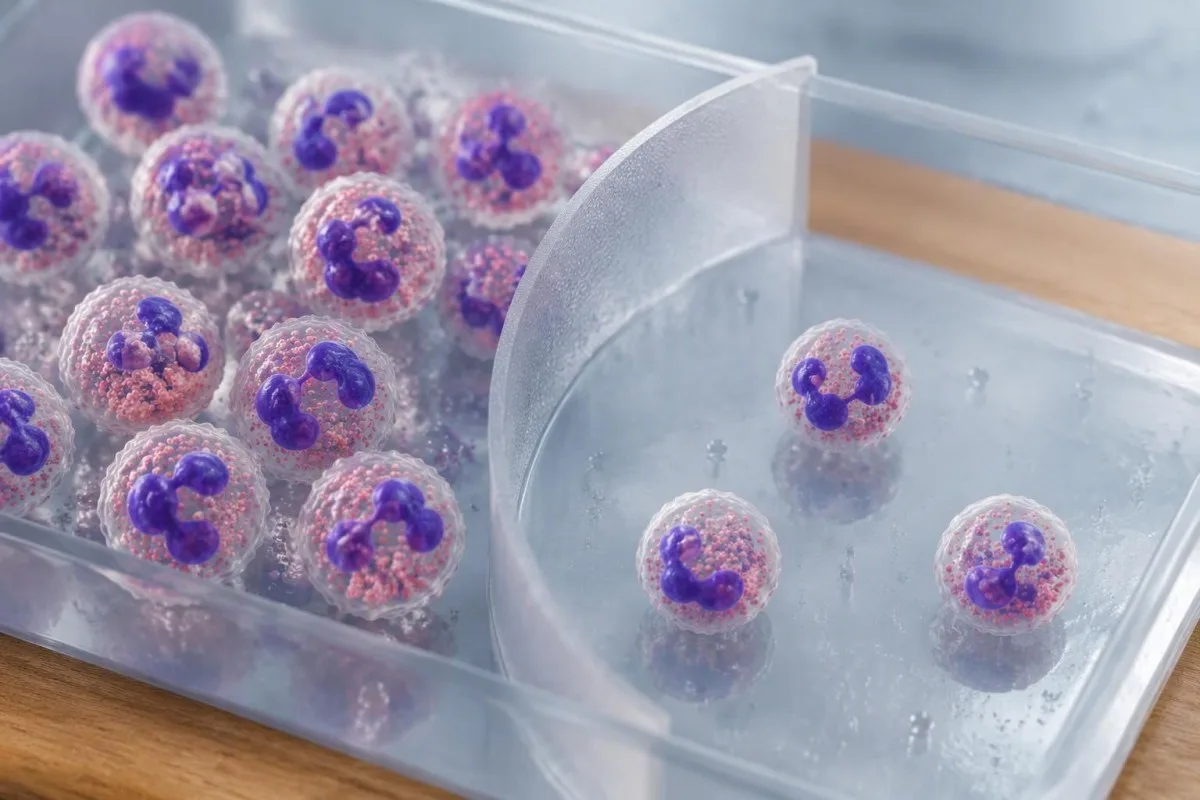
Under the US documented BEN pathway, an ANC of 500–999 cells/µL may permit continued clozapine with hematology consultation and monitoring 3 times weekly. This differs from the general pathway at the same number; the distinction must already be established clinically, not inferred after an alarming result simply to avoid an interruption.
Ancestry is not a diagnostic test for Duffy-null status, and 2 people with similar ancestry may have different baseline ANC patterns. Our Duffy-null count explanation discusses phenotype or genotype evidence, historical counts and assessment for other causes; genetic testing is not universally required, but a clinician-documented explanation is needed for an alternative treatment pathway.
A hypothetical stable baseline of 1,200 cells/µL does not make a new fall to 450 cells/µL harmless: that result meets the severe-neutropenia threshold even in the US BEN pathway. Fever, recurrent unusual infections, anemia or low platelets also weakens the assumption that a low ANC is an isolated constitutional finding and warrants a broader assessment.
Quin és el risc de neutropènia per clozapina al llarg del temps?
Clozapine neutropenia risk is concentrated early in treatment, especially during the first 18 weeks to 6 months, but it does not disappear later. Correll et al. (2022) describe agranulocytosis as affecting approximately 1% of treated patients; estimates vary across populations, monitoring systems and definitions, so this is not an individual prediction.

Approximately 1% means roughly 1 in 100 treated people in that broad estimate, not a 1% risk every month and not a 1% risk after every dose. Mild neutropenia is more frequent than agranulocytosis, and studies that combine the two outcomes can make the risk of life-threatening neutrophil depletion appear larger than it actually is.
Early intensive testing reflects the concentration of events during the first 6 months, rather than an assumption that each additional tablet causes predictable cumulative marrow damage. Severe clozapine-associated neutropenia is not reliably prevented by choosing a low dose alone, and a previously normal count cannot guarantee that the next count will remain normal.
After 2 years of stable treatment, the absolute risk is generally much lower than during initiation, which helps explain proposals for less frequent routine testing. Late neutropenia still needs investigation for medication effects, illness and marrow disease; our guide to proves d'infeccions freqüents explains why symptoms and other cell lines can reveal risks that an ANC-only schedule misses.
Quin és el calendari de seguiment de la clozapina als EUA després de la REMS?
The US prescribing-information ANC schedule generally remains weekly for 6 months, every 2 weeks for the next 6 months, then monthly. The FDA removed the clozapine REMS on June 13, 2025, ending its enrollment and ANC-reporting requirements; that administrative change did not remove the clinical recommendation to monitor neutrophils.

The FDA's 2025 clozapine REMS removal communication separates access restrictions from safe prescribing: prescribers, pharmacies and patients no longer need to participate in that federal registry. A pharmacy no longer needs the former REMS dispensing authorization, but the prescriber may still require a recent ANC and a local service may still use an electronic safety workflow.
For a hypothetical patient completing 6 months without a concerning ANC event, the usual label pathway moves from weekly to every-2-week monitoring rather than immediately to monthly testing. Neutropenia, a treatment interruption or a relevant medication change can alter that plan; ask which event starts the next monitoring period instead of counting months independently.
Kantesti can help explain a trend across 3 dated ANC reports, but our platform does not determine the next legally or clinically acceptable dispensing date. Our guia de tendències de seguretat de medicaments explains why the original collection dates and the prescribing team's schedule must remain attached to any AI-generated summary.
Per què els serveis de seguiment del Regne Unit poden utilitzar un calendari diferent?
Traditional UK clozapine monitoring pathways use weekly testing for 18 weeks, every 2 weeks until 1 year, then every 4 weeks. UK dispensing has also depended on product-linked monitoring-service clearance; revised recommendations and local implementation can change the pathway, so the patient's own service must confirm the schedule and action thresholds.

An older UK pathway may classify ANC of 1.5–2.0 × 10⁹/L as amber and below 1.5 × 10⁹/L as red in patients without an approved lower-baseline pathway. Those thresholds are not interchangeable with the US continuation algorithm, and legacy UK systems may also consider total WBC; the relevant service must state which rules it currently applies.
Every 4 weeks means every 28 days, not simply once in each calendar month, so a missed appointment can affect a supply window even when the previous result was satisfactory. A useful baseline testing plan should include who books the sample, who receives it and who contacts the patient if the monitoring service cannot release medication.
Administrative alerts can arise from an overdue sample, an unprocessed sample or a genuinely low count—3 different problems with different solutions. Contact the prescribing team and pharmacy promptly if supply is threatened; do not stretch doses, borrow tablets or assume that a policy change in another country has automatically changed your own monitoring-service rules.
Què ha canviat en les recomanacions europees revisades sobre l’ANC?
Revised European recommendations allow less frequent ANC testing in eligible stable patients: weekly for 18 weeks, monthly through the first year, every 12 weeks after 1 year and annually after 2 years. These longer intervals depend on the specified absence of neutropenia and the locally implemented product information; they are not a universal schedule.
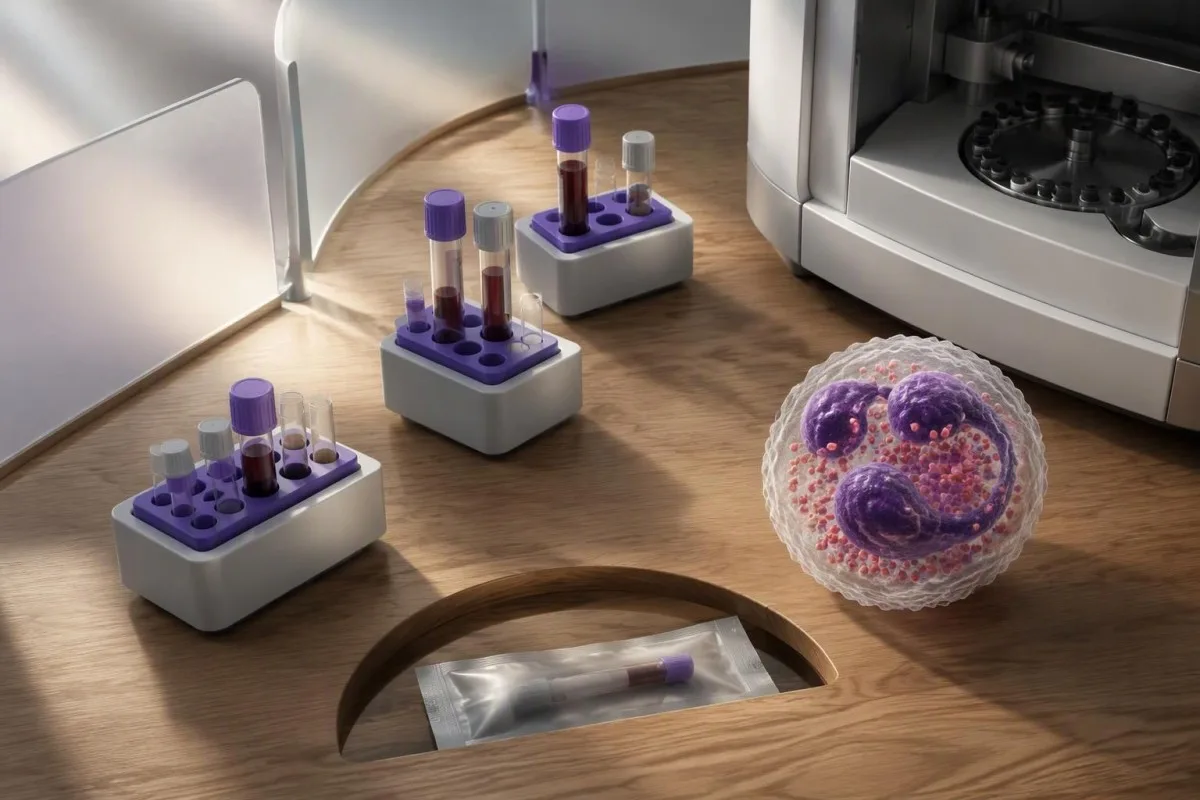
The European Medicines Agency's 2025 communication on revised routine blood count monitoring shifts the principal hematological measure toward ANC rather than combined WBC and ANC surveillance. The revised approach generally uses baseline ANC of at least 1,500 cells/µL, or at least 1,000 cells/µL in an established BEN pathway, while lowering some treatment-interruption thresholds compared with older European systems.
In the revised European approach, ANC below 1,000 cells/µL generally triggers stopping treatment in the standard pathway, whereas below 500 cells/µL is the corresponding threshold for an established BEN pathway. Results above those stopping thresholds can still require intensified surveillance; a hypothetical count of 1,100 cells/µL is not a reason to ignore a new downward trend.
Country authorization, the particular product information and service implementation can differ, even when patients have each taken clozapine for 2 years. Our guide to blood-test timing and changes explains why historical stability matters; obtain written confirmation before assuming that an annual European schedule applies to a UK, US or other national pathway.
Què s’ha de fer després d’un ANC inesperadament baix?
An unexpected low ANC needs prompt prescriber review, confirmation when appropriate and assessment for causes other than clozapine. In the US label pathway, an initial ANC below 1,500 cells/µL is generally confirmed within 24 hours, but severe neutropenia or infection symptoms require immediate management rather than waiting for a routine repeat.
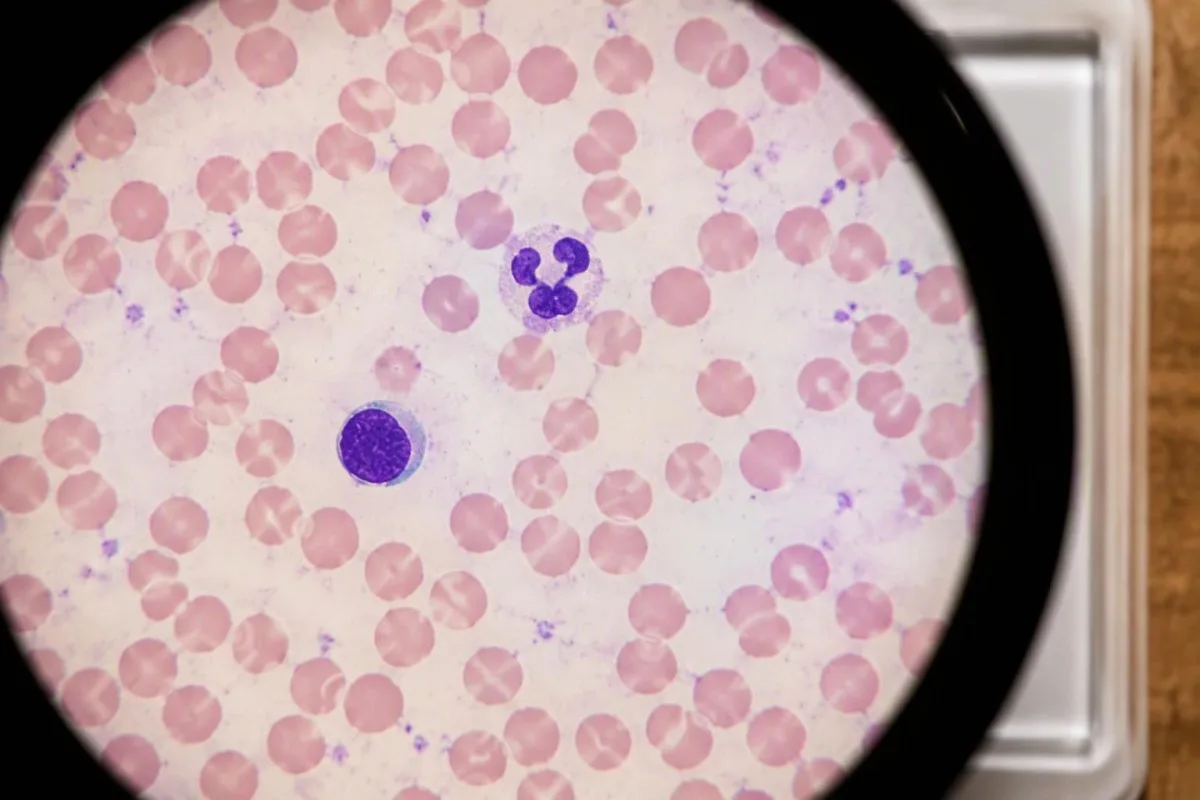
Recent viral illness, other medicines, autoimmune disease and nutritional deficiency can all lower ANC; a count of 900 cells/µL establishes neutropenia but does not establish its cause. Clinicians review the timing of drug exposure and may examine hemoglobin, platelets and a cell sample slide; concurrent abnormalities can justify evaluation for possible marrow disorders.
Kantesti is an AI blood test interpretation platform that can place an ANC of 0.9 × 10⁹/L beside platelet and hemoglobin trends, while leaving causation and medication decisions to clinicians. Our broader guia de marcadors d’hematologia explains why a normal red-cell result does not erase an isolated neutrophil problem.
Sampling time and temporary physiological variation can affect a borderline result, but there is no safe rule that an afternoon repeat will always normalize an ANC of 1,400 cells/µL. If a clinician requests a repeat at a consistent time, follow that plan without delaying necessary care; exercise, supplements or deliberate timing changes should not be used to manipulate a treatment-clearance result.
Quins símptomes d’infecció requereixen una valoració urgent?
During clozapine treatment, fever of 38.0°C or higher, new sore throat, mouth sores, shaking chills or sudden marked illness warrants urgent same-day clinical assessment. A known ANC below 500 cells/µL makes possible infection especially urgent. Confusion, breathing difficulty, fainting or rapidly worsening illness requires emergency help, regardless of the last count.
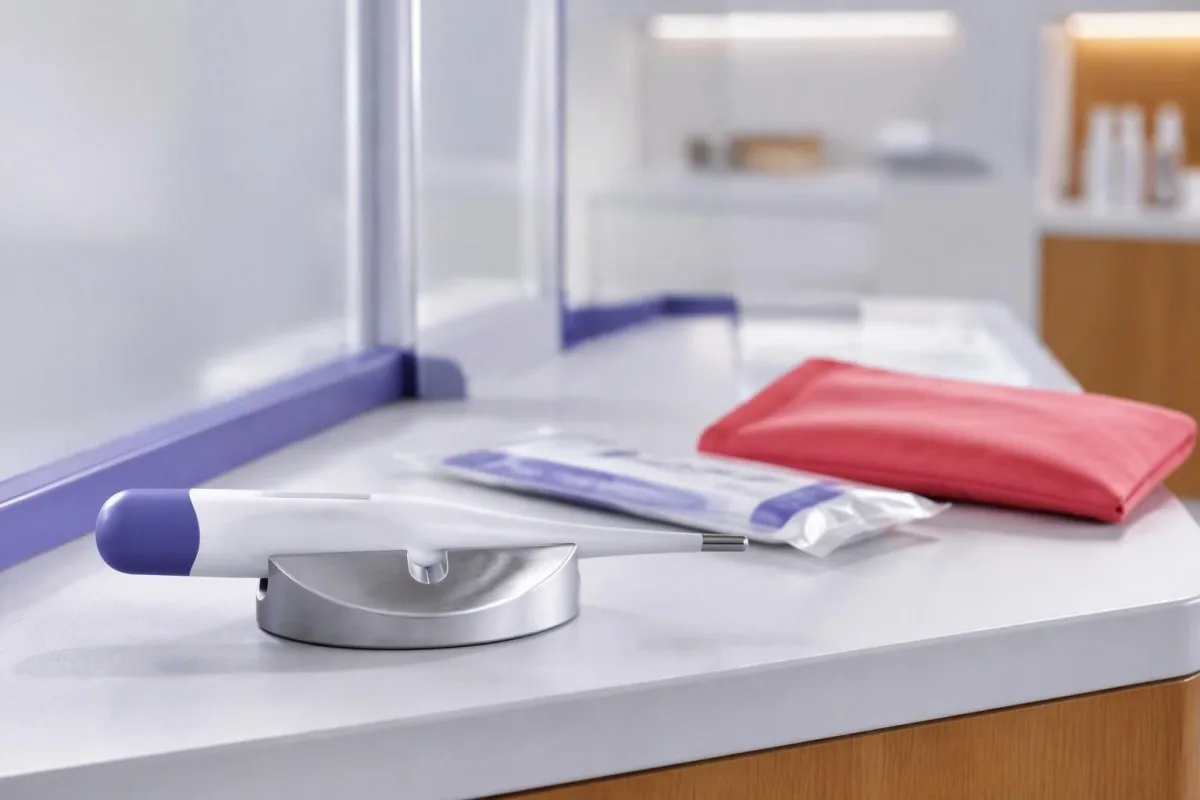
Formal febrile-neutropenia definitions often use a single temperature of at least 38.3°C or at least 38.0°C sustained for 1 hour, together with severe or impending severe neutropenia. Those definitions support clinical classification—not a home instruction to wait an hour; tell the urgent-care team that you take clozapine and provide your last ANC if available.
An ANC of 2,000 cells/µL measured 7 days ago cannot exclude a new fall today, and severe neutropenia can weaken usual local signs such as redness or discharge. Assessment may include an urgent CBC with differential, cultures and examination; our procalcitonin interpretation guide explains why a low infection biomarker cannot independently rule out an early serious infection.
New fever may also signal pneumonia, myocarditis or another illness that raises clozapine concentrations, creating 2 linked safety questions: immune protection and medication toxicity. Call the prescribing team's urgent number immediately for advice about the next dose; if you cannot reach them promptly while significantly unwell, seek urgent care rather than waiting for an app interpretation or routine appointment.
Com afecten el seguiment altres medicaments, el tabac i les malalties?
Other medicines can increase neutropenia risk or change clozapine concentrations, and those are different problems requiring different tests. ANC is measured in cells/µL, whereas clozapine concentration is commonly measured in ng/mL; a normal ANC does not exclude excessive drug exposure, and a therapeutic concentration does not exclude neutropenia.

Carbamazepine is generally avoided with clozapine because of marrow-suppression risk and clinically relevant interactions; concurrent valproate has also been associated with neutropenia in observational studies. A hypothetical ANC decline from 2,600 to 1,300 cells/µL after adding another medicine warrants a complete medication review, not a conclusion that clozapine is necessarily the sole cause; valproate level interpretation addresses the separate issue of drug exposure.
Stopping combustible smoking can raise clozapine concentrations because smoke components—not nicotine itself—induce CYP1A2 metabolism. A person who stops smoking during a 3-day hospital admission may therefore need prescriber-directed concentration monitoring and dose review; our nicotine test explanation clarifies why cotinine alone does not measure the smoke-related enzyme effect.
Kantesti can explain why an ANC of 2,100 cells/µL and a clozapine level of 900 ng/mL describe different risks, but we cannot select a safer dose. Fever, major caffeine changes and interacting medicines such as ciprofloxacin can alter exposure; report new excessive sedation, confusion or muscle jerks promptly, even if the neutrophil result is reassuring.
Què passa si no es fan les proves previstes o s’interromp el tractament?
A missed ANC appointment can create a supply problem, while a clozapine treatment break can create a separate restarting hazard. After more than 48 hours without clozapine, many protocols require supervised re-titration beginning at 12.5 mg once or twice daily rather than immediate return to the previous dose; exact instructions depend on the prescribing information.
Tolerance to clozapine's blood-pressure effects can be lost quickly, so restarting a previous 300 mg daily regimen after a break may cause profound hypotension or collapse. US prescribing information also specifies reduced restart doses for shorter interruptions; patients should contact the prescribing team after missed doses rather than using a remembered 48-hour rule to decide what to take.
A treatment break does not always reset ANC surveillance to the beginning, because monitoring rules depend on interruption duration and the reason treatment stopped. In the US normal-ANC pathway, interruptions of 30 days or longer generally return patients to initiation-style monitoring; national monitoring services may use different interruption rules, especially after an abnormal count.
After a hypothetical 5-day admission, confirm the last dose, current prescription, latest ANC and who will supervise the next dose before leaving hospital. Our explanation of resultats després de l'alta hospitalària helps organize altered laboratory values, but it cannot reconcile prescriptions or authorize restarting after neutropenia.
Què no detecta el seguiment de l’ANC sobre la seguretat de la clozapina?
ANC monitoring does not detect clozapine-related myocarditis, constipation, metabolic complications or excessive drug concentrations. Some initiation protocols add weekly troponin and CRP during the first 4 weeks, while ongoing care assesses bowel function, weight, glucose and lipids. A satisfactory ANC therefore confirms only one part of medication safety.
New chest pain, breathlessness or persistent unexplained tachycardia during the first 4 weeks needs prompt clinical assessment rather than reassurance from a normal ANC. Troponin and CRP can support a myocarditis investigation, but thresholds and screening practices vary; our myocarditis testing explanation describes why laboratory results must be interpreted with symptoms and cardiac evaluation.
Clozapine-related bowel slowing can become dangerous even when stool is still passing, and severe abdominal pain, distension or vomiting requires urgent assessment. Record bowel frequency and stool consistency rather than asking only whether constipation is present; the guia sobre la consistència de les femtes provides a shared description, while a change lasting 48 hours should prompt contact according to the patient's bowel-management plan.
Correll et al. (2022) describe a clozapine plasma reference range of approximately 350–600 ng/mL for many treatment-response decisions, while emphasizing individual variation and adverse effects. That range is not an ANC target or a universal safe-dose boundary; concentration samples usually need defined timing relative to the last dose, whereas routine ANC collection generally does not require a trough sample.
Com t’has de preparar per a la pròxima revisió de la clozapina?
Bring the latest ANC, its units, earlier counts and a complete medication list to every clozapine review. Ask which national and service-specific pathway applies, what happens below its thresholds and whom to contact urgently. Keeping at least 3 dated results available helps distinguish a stable baseline from a new decline.

For a hypothetical sequence of 2,400, 1,900 and 1,400 cells/µL, useful questions concern the trend, recent illness, interacting medicines and the required next sample—not simply whether the latest value is red. Also ask who receives results outside office hours and whether the pharmacy needs monitoring-service clearance; these practical details can prevent an avoidable treatment gap.
Kantesti is an AI biomarker interpretation platform that helps translate an ANC of 1.4 × 10⁹/L into an understandable count and a list of clinician questions. Our supervisió tècnica i clínica describes the boundaries of interpretation; it does not establish that an automated answer is a validated clozapine prescribing decision or a substitute for hematology advice.
Kantesti's educational workflow should preserve 3 essentials: the source result, the applicable clinical protocol and the human decision-maker. Our principis d'IA responsable explain why urgent symptoms take priority over automated analysis, while our la informació sobre privacitat i dades explains considerations when sharing sensitive psychiatric and laboratory records.
Publicacions de recerca i límits de l’evidència
The 2 Kantesti publications listed in the research publication section concern digestive symptoms and women's health, not clozapine ANC thresholds or monitoring schedules. Their Figshare DOIs identify those publications but do not establish peer review or provide evidence for clozapine decisions; the directly relevant medical and regulatory sources are listed separately below.
Preguntes freqüents
Quin és el recompte absolut de neutròfils massa baix per continuar el tractament amb clozapina?
The ANC threshold for continuing clozapine depends on the country and the patient's documented baseline pathway. In the US general pathway, ANC of 1,000–1,499 cells/µL can allow continuation with increased monitoring, while 500–999 cells/µL usually requires interruption when clozapine-induced neutropenia is suspected. A documented BEN or Duffy-null-associated pathway can permit continuation at 500–999 cells/µL under specialist supervision. ANC below 500 cells/µL requires urgent clinical management; patients should obtain immediate prescriber instructions rather than change treatment themselves.
Encara necessito fer-me anàlisis de sang de recompte absolut de neutròfils (RAN) després que s’eliminés el programa REMS de la clozapina?
Sí, l’eliminació del programa REMS de la clozapina als EUA no va suprimir la recomanació clínica de monitorar el recompte absolut de neutròfils (RAN). La FDA va eliminar el registre el 13 de juny de 2025, cosa que va posar fi als requisits d’inscripció, notificació i autorització de dispensació. La pauta de la informació de prescripció continua sent, en general, setmanal durant 6 mesos, cada 2 setmanes durant els 6 mesos següents i, després, mensual. El vostre prescriptor pot requerir proves addicionals després d’una neutropènia, una interrupció o un altre canvi clínic pertinent.
Why is my clozapine blood test schedule different from someone else's?
Els calendaris de les anàlisis de sang de clozapina varien perquè la informació nacional del producte, els serveis de monitoratge, la durada del tractament i els episodis previs de recompte absolut de neutròfils (RAN) no són idèntics. Els circuits tradicionals del Regne Unit preveuen controls setmanals durant 18 setmanes, quinzenals fins a l’any i cada 4 setmanes a partir d’aleshores. Les recomanacions europees revisades poden permetre controls cada 12 setmanes després d’un any i controls anuals després de 2 anys en pacients estables que compleixin els requisits, subjectes a l’aplicació local. Demaneu al vostre servei prescriptor que confirmi el calendari aplicable abans de canviar cap cita.
La clozapina pot causar neutropènia després d’anys amb resultats normals?
La neutropènia associada a la clozapina pot aparèixer després d’anys de resultats normals, tot i que el risc és molt més elevat durant les primeres fases del tractament. Les primeres 18 setmanes a 6 mesos concentren una gran proporció dels episodis greus. Una nova baixada del recompte després de 2 anys encara requereix una avaluació de la clozapina, altres medicaments, infeccions i trastorns de la medul·la òssia o autoimmunitaris. Un ANC prèviament tranquil·litzador no elimina la necessitat d’una avaluació urgent quan apareix febre o una malaltia sobtada.
Què he de fer si tinc febre mentre prenc clozapina?
Una febre de 38,0 °C o superior mentre es pren clozapina requereix una valoració clínica urgent el mateix dia, especialment si va acompanyada de mal de coll, nafres a la boca, calfreds intensos o debilitat marcada. Informeu el professional sanitari que preneu clozapina i faciliteu-li el recompte absolut de neutròfils (RAN) més recent, si el teniu. Si se sap que el RAN és inferior a 500 cèl·lules/µL, una possible infecció requereix una atenció especialment urgent; la confusió, les dificultats respiratòries o el col·lapse requereixen assistència d’emergència. Demaneu immediatament al prescriptor instruccions sobre la dosi següent, en lloc d’esperar la pròxima analítica rutinària o de modificar la medicació pel vostre compte.
Puc reprendre la meva dosi habitual de clozapina després d’haver-me saltat dos dies?
No hauríeu de reprendre la dosi habitual de clozapina després d’una interrupció del tractament sense les instruccions de l’equip prescriptor. Després de més de 48 hores sense tractament, molts protocols exigeixen tornar a titular el tractament començant amb 12,5 mg una o dues vegades al dia, perquè es pot perdre la tolerància als efectes sobre la pressió arterial. Algunes fitxes tècniques també exigeixen reduir les dosis després d’interrupcions més breus. Poseu-vos en contacte amb l’equip al més aviat possible, ja que el pla correcte per reprendre el tractament i el calendari de determinació de l’ANC depenen de la durada exacta i del motiu de la interrupció.
Un recompte normal de glòbuls blancs vol dir que el meu recompte absolut de neutròfils (RAN) amb clozapina és segur?
Un recompte total normal de leucòcits no garanteix que el recompte absolut de neutròfils (RAN) sigui satisfactori per al tractament amb clozapina. Per exemple, un recompte de leucòcits de 6.000 cèl·lules/µL amb un 15% de neutròfils dona un RAN de 900 cèl·lules/µL. Les decisions terapèutiques requereixen el recompte absolut de neutròfils, el protocol aplicable i el context clínic, i no pas únicament el recompte de leucòcits. Un RAN normal tampoc no pot excloure una miocarditis, una alentiment greu del trànsit intestinal o concentracions excessives de clozapina.
Fes que t’expliquin els resultats anàlisi de sang
Puja l’informe del laboratori i la IA de Kantesti t’explicarà cada biomarcador en llenguatge planer en qüestió de segons. Més de 2 milions de persones d’arreu del món ja l’han utilitzat.
Referències
- Klein, T., Mitchell, S., & Weber, H. (2026). Diarrea després del dejuni, punts negres a la femta i guia gastrointestinal 2026. Recerca mèdica amb IA de Kantesti. DOI
- Klein, T., Mitchell, S., & Weber, H. (2026). Guia de salut de les dones: ovulació, menopausa i símptomes hormonals. Recerca mèdica amb IA de Kantesti. DOI
- Correll CU et al. (2022). A Guideline and Checklist for Initiating and Managing Clozapine Treatment in Patients with Treatment-Resistant Schizophrenia. CNS Drugs. DOI
- US Food and Drug Administration (2025). FDA removes risk evaluation and mitigation strategy (REMS) program for the antipsychotic drug Clozapine. FDA Drug Safety and Availability.
- European Medicines Agency (2025). Clozapine: revised recommendations for routine blood count monitoring. Direct healthcare professional communication.
- Més de 2 milionsProves analitzades
- 127+Països
- 100+Idiomes
Sobre l’equip mèdic


Senyals de confiança E-E-A-T
Experiència
Revisió clínica liderada per metges dels fluxos de treball d’interpretació de laboratori.
Experiència
Enfocament en medicina de laboratori sobre com es comporten els biomarcadors en context clínic.
Autoritat
Revisat mèdicament pel Dr. Thomas Klein, amb aportacions de la Dra. Sarah Mitchell i el Prof. Dr. Hans Weber.
Fiabilitat
Interpretació basada en l’evidència amb vies de seguiment clares per reduir l’alarma.





Exempció de responsabilitat mèdica
Aquest article és només per a finalitats educatives i no constitueix assessorament mèdic. Consulteu sempre un professional sanitari qualificat per a decisions de diagnòstic i tractament.
Publicat · Contacteu amb l’equip editorial
Publicat per Kantesti Ltd, registrat a Anglaterra i Gal·les, número de societat. 17090423, Londres, Regne Unit.
