Pri monitorovaní klozapínu sa na zistenie nebezpečnej neutropénie používa absolútny počet neutrofilov (ANC); nízke výsledky môžu viesť k ďalším vyšetreniam, konzultácii so špecialistom alebo k prerušeniu liečby podľa pokynov lekára. Frekvencia kontrol sa líši podľa krajiny a fázy liečby. Horúčka, bolesť hrdla alebo náhle zhoršenie zdravotného stavu si vyžadujú urgentné vyšetrenie — aj po upokojujúcom výsledku. Klozapín si sami nevysadzujte ani nemeňte jeho dávku.

Kľúčové poznatky
- Jednotky ANC: 1,0 × 10⁹/l sa rovná 1 000 bunkám/µl; pred porovnaním výsledkov s liečebnými hranicami si skontrolujte jednotky.
- Všeobecné hranice v USA: ANC 1 000–1 499 buniek/µl môže umožniť pokračovanie v liečbe pri častejšom monitorovaní; 500–999 buniek/µl zvyčajne vedie k prerušeniu liečby podľa pokynov lekára, ak existuje podozrenie na neutropéniu vyvolanú klozapínom.
- Závažná neutropénia: ANC pod 500 buniek/µl si vyžaduje urgentnú klinickú starostlivosť, zvyčajne prerušenie liečby a zapojenie hematológa.
- Počty pri nulovom Duffyho antigéne: Zdokumentovaný počet neutrofilov spojený s nulovým Duffyho antigénom môže odôvodniť odlišný postup liečby; samotný pôvod nespĺňa podmienky oprávnenosti.
- Harmonogram v USA: Monitorovanie podľa informácií o predpisovaní sa zvyčajne začína týždenne počas 6 mesiacov, potom každé 2 týždne počas 6 mesiacov a následne mesačne.
- Administratívne zmeny: FDA 13. júna 2025 zrušil americký program REMS pre klozapín; tým sa zrušili požiadavky na registráciu, nie klinická potreba monitorovania ANC.
- Medzinárodné harmonogramy: V tradičných postupoch v Spojenom kráľovstve sa testuje týždenne počas 18 týždňov, každé dva týždne do uplynutia 1 roka a potom každé 4 týždne; revidované európske odporúčania môžu u vhodných stabilných pacientov povoľovať dlhšie intervaly.
- Naliehavé príznaky: Horúčka 38,0 °C alebo vyššia, nová bolesť hrdla, afty, triaška so zimnicou alebo náhle výrazné zhoršenie zdravotného stavu si vyžadujú urgentné vyšetrenie ešte v ten istý deň. Zmätenosť, ťažkosti s dýchaním alebo kolaps si vyžadujú privolanie záchrannej služby.
Čo sa vlastne rozhoduje na základe monitorovania klozapínu?
Pri monitorovaní klozapínu sa výsledky ANC používajú na pomoc lekárom pri rozhodovaní, či môže liečba pokračovať, či je potrebný dôkladnejší dohľad alebo či sa musí prerušiť. ANC pod 500 buniek/µl predstavuje závažný bezpečnostný nález, ale rozhodnutia pri vyšších hodnotách závisia od protokolu danej krajiny, predchádzajúcich výsledkov a zdokumentovaných východiskových hodnôt pacienta.
Výsledok ANC nie je samostatným pokynom na predpisovanie: hodnota 1 200 buniek/µl môže v jednom postupe umožniť pokračovanie liečby, zatiaľ čo v inom môže viesť k odlišnému postupu. Predpisujúci lekár musí pred interpretáciou hodnoty určiť správny protokol; uplatnenie amerického limitu na upozornenie britskej monitorovacej služby môže spôsobiť zbytočný problém s dodávkou lieku.
Kantesti je analyzátor krvných testov využívajúci AI, ktorý dokáže vysvetliť, že ANC 1,2 × 10⁹/L zodpovedá 1 200 bunkám/µl, ale naša interpretácia nemôže povoliť výdaj klozapínu ani nahradiť predpisujúci tím. Naša informácia o spoločnosti označuje organizáciu poskytujúcu túto vzdelávaciu službu, nie register na monitorovanie klozapínu.
Klesajúci počet si zaslúži pozornosť ešte pred prekročením liečebného limitu: hypotetický pokles zo 4 000 na 1 700 buniek/µl sa líši od dlhodobej východiskovej hodnoty blízkej 1 700. Náš sprievodca k hraničné výsledky neutrofilov vysvetľuje bežné odchýlky, ale ľudia užívajúci klozapín by mali vyhľadať odporúčanie týkajúce sa konkrétneho lieku, a nie sa riadiť všeobecným harmonogramom opakovaného testovania.
Ako čítať jednotky ANC a vypočítať počet?
ANC meria absolútny počet neutrofilov, nie ich percentuálny podiel medzi bielymi krvinkami. Prepočet je presný: 1,0 × 10⁹/L sa rovná 1 000 bunkám/µl. Referenčné rozmedzie laboratória a liečebný limit pre klozapín odpovedajú na odlišné otázky, takže označený výsledok automaticky neznamená, že sa liečba musí ukončiť.
Väčšina moderných laboratórií uvádza ANC priamo, zvyčajne ako neutrofily, absolútne neutrofily alebo NEUT#. Ak je potrebný výpočet, vynásobte celkový WBC podielom neutrofilov vrátane tyčiniek, ak sú uvedené samostatne; napríklad 4 000 buniek/µl × 0,40 dáva ANC 1 600 buniek/µl, nie 40 buniek/µl.
Pri hypotetickom WBC 6 000 buniek/µl a neutrofiloch na úrovni 15% je ANC 900 buniek/µl, hoci celkový WBC môže byť v rámci referenčného rozmedzia laboratória. Tento rozpor vysvetľuje, prečo sprievodca referenčným rozmedzím neutrofilov rozlišuje absolútny počet od percentuálneho podielu v diferenciálnom rozpočte.
Nesprávne čítanie desatinných miest môže viesť k nebezpečným nedorozumeniam: 0,8 × 10⁹/L znamená 800 buniek/µl, zatiaľ čo 8,0 × 10⁹/L znamená 8 000 buniek/µl. Porovnajte pôvodnú správu, dátum odberu a jednotky, nie orezanú snímku obrazovky ani ručne zadané číslo, a pred použitím výsledku pri predpisovaní požiadajte laboratórium alebo monitorovací tím o objasnenie prípadných nejasností.
| Úroveň | Rozmedzie | Čo to znamená |
|---|---|---|
| Nad konvenčnou hranicou neutropénie | ≥1,5 × 10⁹/L; ≥1 500 buniek/µl | Usually outside the conventional adult neutropenia definition; this is not a universal laboratory reference interval or dispensing rule. |
| Mierna neutropénia | 1.0–1.499 × 10⁹/L; 1,000–1,499 cells/µL | Requires interpretation against baseline, symptoms and the applicable clozapine pathway. |
| Stredne ťažká neutropénia | 0.5–0.999 × 10⁹/L; 500–999 cells/µL | Often requires urgent prescriber review; treatment actions differ for general and documented Duffy-null pathways. |
| Ťažká neutropénia | <0.5 × 10⁹/L; <500 cells/µL | High-risk finding requiring urgent clinical management, usually hematology involvement and clinician-directed interruption. |
Ktoré výsledky ANC menia liečbu podľa postupu v USA?
The US general-population pathway usually permits clozapine initiation at ANC ≥1,500 cells/µL. During treatment, ANC of 1,000–1,499 cells/µL can allow continuation with intensified monitoring; 500–999 cells/µL generally requires interruption when clozapine-induced neutropenia is suspected. These are clinician actions, not instructions for patients to adjust medication.
For mild neutropenia, the US prescribing-information approach commonly increases ANC checks to 3 times weekly until recovery to at least 1,500 cells/µL. Correll et al. (2022), in CNS Drugs, reproduce these management pathways and emphasize that clozapine's substantial psychiatric benefits must be considered alongside hematological risk rather than treating every low result identically.
For ANC of 500–999 cells/µL in the general pathway, clinicians usually arrange hematology input and daily testing initially, with treatment resumption considered after recovery according to the label. A repeat sample can clarify an unexpected result, but a symptomatic patient or a rapidly falling count should not wait 24 hours merely to obtain a more convenient number.
A count below 500 cells/µL enters the severe-neutropenia pathway, where any later rechallenge requires an explicit specialist risk–benefit decision. Total WBC or CRP cannot substitute for ANC; our explanation of rozporu medzi WBC a CRP shows why apparently reassuring results elsewhere in the panel do not cancel a low neutrophil count.
| Úroveň | Rozmedzie | Čo to znamená |
|---|---|---|
| US general-pathway initiation threshold | ANC ≥1,500 cells/µL | Usually eligible for initiation from a hematological perspective, subject to the full prescribing assessment. |
| Mild neutropenia during treatment | ANC 1,000–1,499 cells/µL | Treatment can often continue under prescriber direction with ANC monitoring 3 times weekly. |
| Moderate neutropenia during treatment | ANC 500–999 cells/µL | Usually interrupt if clozapine-induced neutropenia is suspected; obtain hematology advice and intensified monitoring. |
| Severe neutropenia during treatment | ANC <500 cells/µL | Interrupt under urgent clinical management; any future rechallenge needs specialist justification. |
Ako počet spojený s nulovým Duffyho antigénom mení rozhodovanie?
Documented Duffy-null-associated neutrophil counts can justify lower clozapine ANC thresholds because a stable lower circulating count does not necessarily indicate impaired immunity. US prescribing information has historically called this the benign ethnic neutropenia, or BEN, pathway; its usual initiation threshold is ANC ≥1,000 cells/µL with at least 2 baseline measurements.
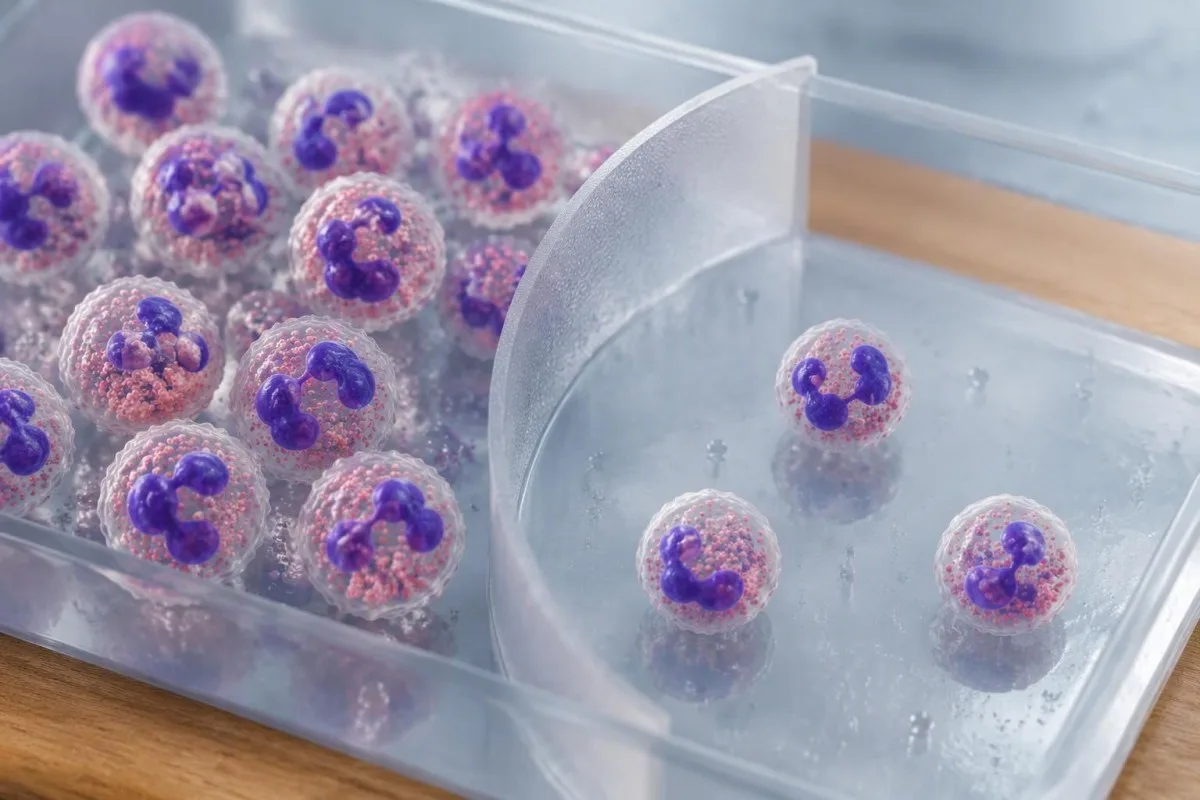
Under the US documented BEN pathway, an ANC of 500–999 cells/µL may permit continued clozapine with hematology consultation and monitoring 3 times weekly. This differs from the general pathway at the same number; the distinction must already be established clinically, not inferred after an alarming result simply to avoid an interruption.
Ancestry is not a diagnostic test for Duffy-null status, and 2 people with similar ancestry may have different baseline ANC patterns. Our Duffy-null count explanation discusses phenotype or genotype evidence, historical counts and assessment for other causes; genetic testing is not universally required, but a clinician-documented explanation is needed for an alternative treatment pathway.
A hypothetical stable baseline of 1,200 cells/µL does not make a new fall to 450 cells/µL harmless: that result meets the severe-neutropenia threshold even in the US BEN pathway. Fever, recurrent unusual infections, anemia or low platelets also weakens the assumption that a low ANC is an isolated constitutional finding and warrants a broader assessment.
Aké veľké je v priebehu času riziko neutropénie pri klozapíne?
Clozapine neutropenia risk is concentrated early in treatment, especially during the first 18 weeks to 6 months, but it does not disappear later. Correll et al. (2022) describe agranulocytosis as affecting approximately 1% of treated patients; estimates vary across populations, monitoring systems and definitions, so this is not an individual prediction.

Approximately 1% means roughly 1 in 100 treated people in that broad estimate, not a 1% risk every month and not a 1% risk after every dose. Mild neutropenia is more frequent than agranulocytosis, and studies that combine the two outcomes can make the risk of life-threatening neutrophil depletion appear larger than it actually is.
Early intensive testing reflects the concentration of events during the first 6 months, rather than an assumption that each additional tablet causes predictable cumulative marrow damage. Severe clozapine-associated neutropenia is not reliably prevented by choosing a low dose alone, and a previously normal count cannot guarantee that the next count will remain normal.
After 2 years of stable treatment, the absolute risk is generally much lower than during initiation, which helps explain proposals for less frequent routine testing. Late neutropenia still needs investigation for medication effects, illness and marrow disease; our guide to testovaniu častých infekcií explains why symptoms and other cell lines can reveal risks that an ANC-only schedule misses.
Aký je harmonogram monitorovania klozapínu v USA po REMS?
The US prescribing-information ANC schedule generally remains weekly for 6 months, every 2 weeks for the next 6 months, then monthly. The FDA removed the clozapine REMS on June 13, 2025, ending its enrollment and ANC-reporting requirements; that administrative change did not remove the clinical recommendation to monitor neutrophils.

The FDA's 2025 clozapine REMS removal communication separates access restrictions from safe prescribing: prescribers, pharmacies and patients no longer need to participate in that federal registry. A pharmacy no longer needs the former REMS dispensing authorization, but the prescriber may still require a recent ANC and a local service may still use an electronic safety workflow.
For a hypothetical patient completing 6 months without a concerning ANC event, the usual label pathway moves from weekly to every-2-week monitoring rather than immediately to monthly testing. Neutropenia, a treatment interruption or a relevant medication change can alter that plan; ask which event starts the next monitoring period instead of counting months independently.
Kantesti can help explain a trend across 3 dated ANC reports, but our platform does not determine the next legally or clinically acceptable dispensing date. Our sprievodca trendmi bezpečnosti liekov explains why the original collection dates and the prescribing team's schedule must remain attached to any AI-generated summary.
Prečo môžu monitorovacie služby v Spojenom kráľovstve používať odlišný harmonogram?
Traditional UK clozapine monitoring pathways use weekly testing for 18 weeks, every 2 weeks until 1 year, then every 4 weeks. UK dispensing has also depended on product-linked monitoring-service clearance; revised recommendations and local implementation can change the pathway, so the patient's own service must confirm the schedule and action thresholds.

An older UK pathway may classify ANC of 1.5–2.0 × 10⁹/L as amber and below 1.5 × 10⁹/L as red in patients without an approved lower-baseline pathway. Those thresholds are not interchangeable with the US continuation algorithm, and legacy UK systems may also consider total WBC; the relevant service must state which rules it currently applies.
Every 4 weeks means every 28 days, not simply once in each calendar month, so a missed appointment can affect a supply window even when the previous result was satisfactory. A useful baseline testing plan should include who books the sample, who receives it and who contacts the patient if the monitoring service cannot release medication.
Administrative alerts can arise from an overdue sample, an unprocessed sample or a genuinely low count—3 different problems with different solutions. Contact the prescribing team and pharmacy promptly if supply is threatened; do not stretch doses, borrow tablets or assume that a policy change in another country has automatically changed your own monitoring-service rules.
Čo sa zmenilo v revidovaných európskych odporúčaniach pre ANC?
Revised European recommendations allow less frequent ANC testing in eligible stable patients: weekly for 18 weeks, monthly through the first year, every 12 weeks after 1 year and annually after 2 years. These longer intervals depend on the specified absence of neutropenia and the locally implemented product information; they are not a universal schedule.
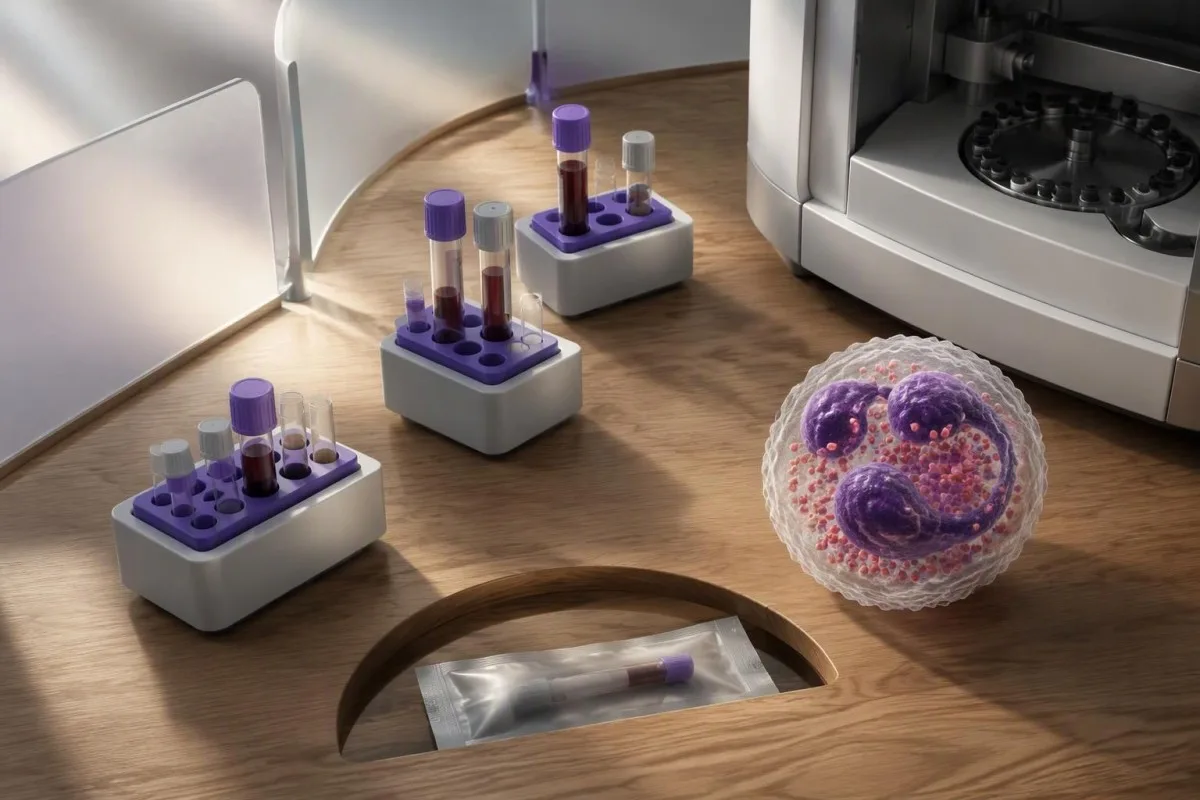
The European Medicines Agency's 2025 communication on revised routine blood count monitoring shifts the principal hematological measure toward ANC rather than combined WBC and ANC surveillance. The revised approach generally uses baseline ANC of at least 1,500 cells/µL, or at least 1,000 cells/µL in an established BEN pathway, while lowering some treatment-interruption thresholds compared with older European systems.
In the revised European approach, ANC below 1,000 cells/µL generally triggers stopping treatment in the standard pathway, whereas below 500 cells/µL is the corresponding threshold for an established BEN pathway. Results above those stopping thresholds can still require intensified surveillance; a hypothetical count of 1,100 cells/µL is not a reason to ignore a new downward trend.
Country authorization, the particular product information and service implementation can differ, even when patients have each taken clozapine for 2 years. Our guide to blood-test timing and changes explains why historical stability matters; obtain written confirmation before assuming that an annual European schedule applies to a UK, US or other national pathway.
Čo treba urobiť po neočakávane nízkom ANC?
An unexpected low ANC needs prompt prescriber review, confirmation when appropriate and assessment for causes other than clozapine. In the US label pathway, an initial ANC below 1,500 cells/µL is generally confirmed within 24 hours, but severe neutropenia or infection symptoms require immediate management rather than waiting for a routine repeat.
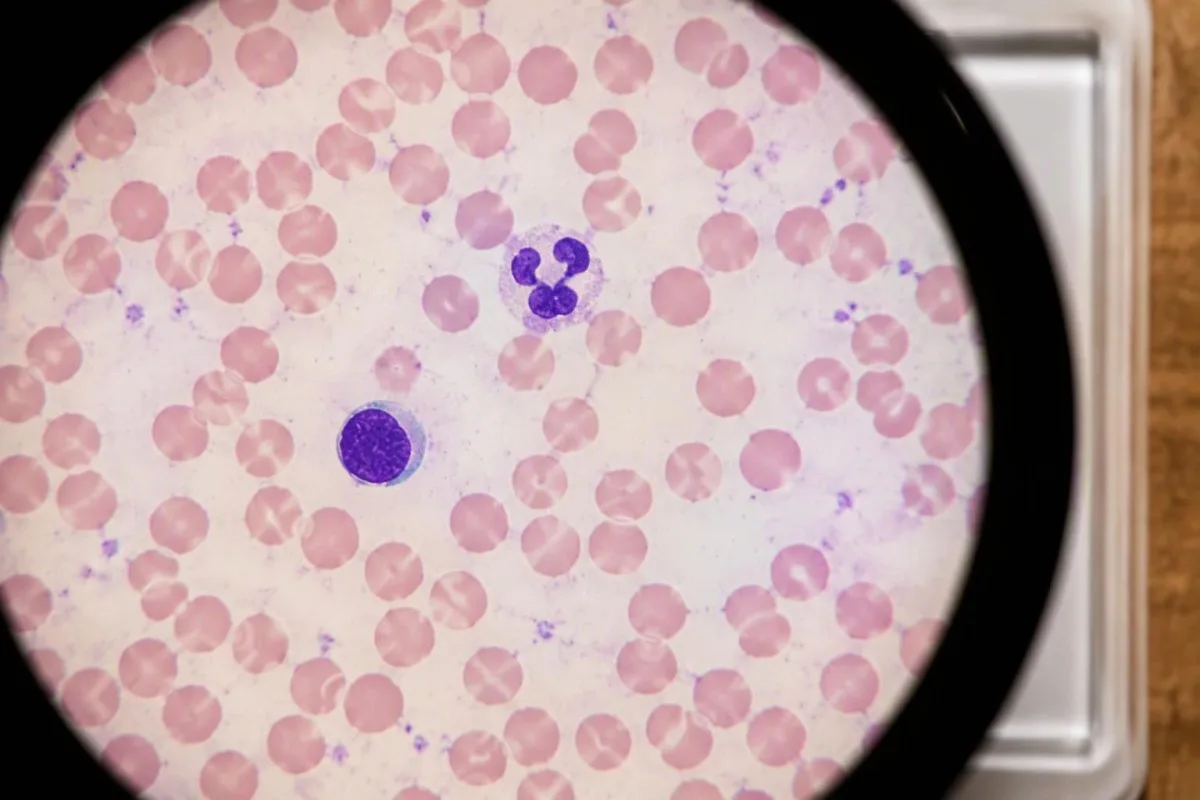
Recent viral illness, other medicines, autoimmune disease and nutritional deficiency can all lower ANC; a count of 900 cells/µL establishes neutropenia but does not establish its cause. Clinicians review the timing of drug exposure and may examine hemoglobin, platelets and a cell sample slide; concurrent abnormalities can justify evaluation for possible marrow disorders.
Kantesti is an AI blood test interpretation platform that can place an ANC of 0.9 × 10⁹/L beside platelet and hemoglobin trends, while leaving causation and medication decisions to clinicians. Our broader sprievodca hematologickými markermi explains why a normal red-cell result does not erase an isolated neutrophil problem.
Sampling time and temporary physiological variation can affect a borderline result, but there is no safe rule that an afternoon repeat will always normalize an ANC of 1,400 cells/µL. If a clinician requests a repeat at a consistent time, follow that plan without delaying necessary care; exercise, supplements or deliberate timing changes should not be used to manipulate a treatment-clearance result.
Ktoré príznaky infekcie si vyžadujú urgentné vyšetrenie?
During clozapine treatment, fever of 38.0°C or higher, new sore throat, mouth sores, shaking chills or sudden marked illness warrants urgent same-day clinical assessment. A known ANC below 500 cells/µL makes possible infection especially urgent. Confusion, breathing difficulty, fainting or rapidly worsening illness requires emergency help, regardless of the last count.
Formal febrile-neutropenia definitions often use a single temperature of at least 38.3°C or at least 38.0°C sustained for 1 hour, together with severe or impending severe neutropenia. Those definitions support clinical classification—not a home instruction to wait an hour; tell the urgent-care team that you take clozapine and provide your last ANC if available.
An ANC of 2,000 cells/µL measured 7 days ago cannot exclude a new fall today, and severe neutropenia can weaken usual local signs such as redness or discharge. Assessment may include an urgent CBC with differential, cultures and examination; our procalcitonin interpretation guide explains why a low infection biomarker cannot independently rule out an early serious infection.
New fever may also signal pneumonia, myocarditis or another illness that raises clozapine concentrations, creating 2 linked safety questions: immune protection and medication toxicity. Call the prescribing team's urgent number immediately for advice about the next dose; if you cannot reach them promptly while significantly unwell, seek urgent care rather than waiting for an app interpretation or routine appointment.
Ako ovplyvňujú monitorovanie iné lieky, fajčenie a ochorenie?
Other medicines can increase neutropenia risk or change clozapine concentrations, and those are different problems requiring different tests. ANC is measured in cells/µL, whereas clozapine concentration is commonly measured in ng/mL; a normal ANC does not exclude excessive drug exposure, and a therapeutic concentration does not exclude neutropenia.

Carbamazepine is generally avoided with clozapine because of marrow-suppression risk and clinically relevant interactions; concurrent valproate has also been associated with neutropenia in observational studies. A hypothetical ANC decline from 2,600 to 1,300 cells/µL after adding another medicine warrants a complete medication review, not a conclusion that clozapine is necessarily the sole cause; valproate level interpretation addresses the separate issue of drug exposure.
Stopping combustible smoking can raise clozapine concentrations because smoke components—not nicotine itself—induce CYP1A2 metabolism. A person who stops smoking during a 3-day hospital admission may therefore need prescriber-directed concentration monitoring and dose review; our nicotine test explanation clarifies why cotinine alone does not measure the smoke-related enzyme effect.
Kantesti can explain why an ANC of 2,100 cells/µL and a clozapine level of 900 ng/mL describe different risks, but we cannot select a safer dose. Fever, major caffeine changes and interacting medicines such as ciprofloxacin can alter exposure; report new excessive sedation, confusion or muscle jerks promptly, even if the neutrophil result is reassuring.
Čo sa stane po vynechaní testov alebo prerušení liečby?
A missed ANC appointment can create a supply problem, while a clozapine treatment break can create a separate restarting hazard. After more than 48 hours without clozapine, many protocols require supervised re-titration beginning at 12.5 mg once or twice daily rather than immediate return to the previous dose; exact instructions depend on the prescribing information.
Tolerance to clozapine's blood-pressure effects can be lost quickly, so restarting a previous 300 mg daily regimen after a break may cause profound hypotension or collapse. US prescribing information also specifies reduced restart doses for shorter interruptions; patients should contact the prescribing team after missed doses rather than using a remembered 48-hour rule to decide what to take.
A treatment break does not always reset ANC surveillance to the beginning, because monitoring rules depend on interruption duration and the reason treatment stopped. In the US normal-ANC pathway, interruptions of 30 days or longer generally return patients to initiation-style monitoring; national monitoring services may use different interruption rules, especially after an abnormal count.
After a hypothetical 5-day admission, confirm the last dose, current prescription, latest ANC and who will supervise the next dose before leaving hospital. Our explanation of výsledkom po prepustení z nemocnice helps organize altered laboratory values, but it cannot reconcile prescriptions or authorize restarting after neutropenia.
Čo monitorovanie ANC nezachytí, pokiaľ ide o bezpečnosť klozapínu?
ANC monitoring does not detect clozapine-related myocarditis, constipation, metabolic complications or excessive drug concentrations. Some initiation protocols add weekly troponin and CRP during the first 4 weeks, while ongoing care assesses bowel function, weight, glucose and lipids. A satisfactory ANC therefore confirms only one part of medication safety.

New chest pain, breathlessness or persistent unexplained tachycardia during the first 4 weeks needs prompt clinical assessment rather than reassurance from a normal ANC. Troponin and CRP can support a myocarditis investigation, but thresholds and screening practices vary; our myocarditis testing explanation describes why laboratory results must be interpreted with symptoms and cardiac evaluation.
Clozapine-related bowel slowing can become dangerous even when stool is still passing, and severe abdominal pain, distension or vomiting requires urgent assessment. Record bowel frequency and stool consistency rather than asking only whether constipation is present; the sprievodca konzistenciou stolice provides a shared description, while a change lasting 48 hours should prompt contact according to the patient's bowel-management plan.
Correll et al. (2022) describe a clozapine plasma reference range of approximately 350–600 ng/mL for many treatment-response decisions, while emphasizing individual variation and adverse effects. That range is not an ANC target or a universal safe-dose boundary; concentration samples usually need defined timing relative to the last dose, whereas routine ANC collection generally does not require a trough sample.
Ako sa pripraviť na najbližšiu kontrolu liečby klozapínom?
Bring the latest ANC, its units, earlier counts and a complete medication list to every clozapine review. Ask which national and service-specific pathway applies, what happens below its thresholds and whom to contact urgently. Keeping at least 3 dated results available helps distinguish a stable baseline from a new decline.

For a hypothetical sequence of 2,400, 1,900 and 1,400 cells/µL, useful questions concern the trend, recent illness, interacting medicines and the required next sample—not simply whether the latest value is red. Also ask who receives results outside office hours and whether the pharmacy needs monitoring-service clearance; these practical details can prevent an avoidable treatment gap.
Kantesti is an AI biomarker interpretation platform that helps translate an ANC of 1.4 × 10⁹/L into an understandable count and a list of clinician questions. Our technický a klinický dohľad describes the boundaries of interpretation; it does not establish that an automated answer is a validated clozapine prescribing decision or a substitute for hematology advice.
Kantesti's educational workflow should preserve 3 essentials: the source result, the applicable clinical protocol and the human decision-maker. Our zásady zodpovedného používania AI explain why urgent symptoms take priority over automated analysis, while our informácie o súkromí a údajoch explains considerations when sharing sensitive psychiatric and laboratory records.
Výskumné publikácie a hranice dôkazov
The 2 Kantesti publications listed in the research publication section concern digestive symptoms and women's health, not clozapine ANC thresholds or monitoring schedules. Their Figshare DOIs identify those publications but do not establish peer review or provide evidence for clozapine decisions; the directly relevant medical and regulatory sources are listed separately below.
Často kladené otázky
Aká hodnota absolútneho počtu neutrofilov (ANC) je príliš nízka na pokračovanie v liečbe klozapínom?
The ANC threshold for continuing clozapine depends on the country and the patient's documented baseline pathway. In the US general pathway, ANC of 1,000–1,499 cells/µL can allow continuation with increased monitoring, while 500–999 cells/µL usually requires interruption when clozapine-induced neutropenia is suspected. A documented BEN or Duffy-null-associated pathway can permit continuation at 500–999 cells/µL under specialist supervision. ANC below 500 cells/µL requires urgent clinical management; patients should obtain immediate prescriber instructions rather than change treatment themselves.
Potrebujem aj po zrušení programu Clozapine REMS stále absolvovať krvné testy na ANC?
Áno, zrušením amerického programu REMS pre klozapín sa nezrušilo klinické odporúčanie na monitorovanie absolútneho počtu neutrofilov (ANC). FDA zrušil register 13. júna 2025, čím sa ukončili požiadavky na registráciu, hlásenie a povolenie výdaja. Harmonogram uvedený v informáciách o predpisovaní spravidla zostáva: prvých 6 mesiacov každý týždeň, ďalších 6 mesiacov každé 2 týždne a potom každý mesiac. Predpisujúci lekár môže vyžadovať ďalšie vyšetrenia po neutropénii, prerušení liečby alebo inej relevantnej klinickej zmene.
Why is my clozapine blood test schedule different from someone else's?
Harmonogramy krvných testov pri klozapíne sa líšia, pretože vnútroštátne informácie o lieku, monitorovacie služby, dĺžka liečby a predchádzajúce udalosti súvisiace s ANC nie sú rovnaké. Tradičné postupy v Spojenom kráľovstve zahŕňajú týždenné testovanie počas 18 týždňov, testovanie každé dva týždne do uplynutia 1 roka a potom testovanie každé 4 týždne. Revidované európske odporúčania môžu u vhodných stabilizovaných pacientov po 1 roku umožniť testovanie každých 12 týždňov a po 2 rokoch každoročné testovanie, v závislosti od miestneho zavedenia. Pred zmenou ktoréhokoľvek termínu si u svojho predpisujúceho pracoviska overte, aký harmonogram sa na vás vzťahuje.
Môže klozapín spôsobiť neutropéniu po rokoch normálnych výsledkov?
0 Neutropénia spojená s klozapínom sa môže vyskytnúť aj po rokoch normálnych výsledkov, hoci riziko je oveľa vyššie na začiatku liečby. Počas prvých 18 týždňov až 6 mesiacov dochádza k veľkej koncentrácii závažných prípadov. Nový pokles počtu buniek aj po 2 rokoch si stále vyžaduje vyšetrenie so zameraním na klozapín, iné lieky, infekciu a ochorenia kostnej drene alebo autoimunitné ochorenia. Predchádzajúci upokojujúci výsledok ANC nevylučuje potrebu urgentného vyšetrenia pri vzniku horúčky alebo náhleho ochorenia.
0 Čo mám robiť, ak mám počas užívania klozapínu horúčku?
Horúčka 38,0 °C alebo vyššia počas užívania klozapínu si vyžaduje urgentné klinické vyšetrenie ešte v ten istý deň, najmä ak ju sprevádza bolesť hrdla, afty, triaška so zimnicou alebo výrazná slabosť. Povedzte zdravotníckemu pracovníkovi, že užívate klozapín, a ak máte k dispozícii svoj posledný výsledok ANC, oznámte mu ho. Známy počet ANC pod 500 buniek/µL znamená, že možná infekcia je obzvlášť naliehavá; pri zmätenosti, ťažkostiach s dýchaním alebo kolapse privolajte záchrannú službu. Bezodkladne si vyžiadajte od predpisujúceho lekára pokyny k ďalšej dávke namiesto čakania na najbližšie rutinné vyšetrenie alebo svojvoľnej zmeny liečby.
Môžem po dvojdňovom vynechaní opäť začať užívať svoju obvyklú dávku klozapínu?
Po prerušení liečby by ste nemali znovu začať užívať svoju obvyklú dávku klozapínu bez pokynov predpisujúceho tímu. Po viac ako 48 hodinách bez liečby si mnohé protokoly vyžadujú opätovnú titráciu, ktorá sa začína dávkou 12,5 mg raz alebo dvakrát denne, pretože sa môže stratiť tolerancia na účinky na krvný tlak. Niektoré informácie o predpisovaní lieku vyžadujú aj zníženie dávok po kratších prerušeniach. Čo najskôr kontaktujte tím, pretože správny plán opätovného nasadenia a harmonogram ANC závisia od presnej dĺžky a dôvodu prerušenia.
Znamená normálny počet bielych krviniek, že moja hodnota ANC pri užívaní klozapínu je v bezpečnom rozmedzí?
0 Normálny celkový počet bielych krviniek nezaručuje, že ANC je pre liečbu klozapínom dostatočný. Napríklad pri WBC 6 000 buniek/µL a 15% neutrofilov je ANC 900 buniek/µL. Pri rozhodovaní o liečbe je potrebné zohľadniť absolútny počet neutrofilov, príslušný protokol a klinický kontext, nielen samotný WBC. Ani normálny ANC nevylučuje myokarditídu, závažné spomalenie činnosti čriev alebo nadmerné koncentrácie klozapínu.
Získajte vysvetlenie výsledkov krvných testov
Nahrajte svoj laboratórny nález a AI nástroja Kantesti vám v priebehu niekoľkých sekúnd vysvetlí každý biomarker jednoduchým jazykom. Používa ho viac než 2 milióny ľudí na celom svete.
Referencie
- Klein, T., Mitchell, S., & Weber, H. (2026). Hnačka po pôste, čierne bodky v stolici a gastrointestinálny sprievodca 2026. Kantesti AI lekársky výskum. DOI
- Klein, T., Mitchell, S., & Weber, H. (2026). Sprievodca zdravím žien: ovulácia, menopauza a hormonálne príznaky. Kantesti AI lekársky výskum. DOI
- Correll CU et al. (2022). A Guideline and Checklist for Initiating and Managing Clozapine Treatment in Patients with Treatment-Resistant Schizophrenia. CNS Drugs. DOI
- US Food and Drug Administration (2025). FDA removes risk evaluation and mitigation strategy (REMS) program for the antipsychotic drug Clozapine. FDA Drug Safety and Availability.
- European Medicines Agency (2025). Clozapine: revised recommendations for routine blood count monitoring. Direct healthcare professional communication.
- 2 milióny+Analyzované testy
- 127+Krajiny
- 100+Jazyky
O zdravotníckom tíme


Signály dôvery E-E-A-T Trust Signals
Skúsenosti
Klinické hodnotenie vedené lekárom pracovných postupov interpretácie laboratórnych výsledkov.
Odbornosť
Laboratórna medicína so zameraním na to, ako sa biomarkery správajú v klinickom kontexte.
Autoritatívnosť
Lekársky recenzoval Dr. Thomas Klein, s príspevkami Dr. Sarah Mitchell a prof. Dr. Hansa Webera.
Dôveryhodnosť
Interpretácia založená na dôkazoch s jasnými následnými krokmi na zníženie poplachu.





Zdravotnícke upozornenie
Tento článok je určený len na vzdelávacie účely a nepredstavuje lekárske poradenstvo. Pri rozhodnutiach o diagnostike a liečbe sa vždy poraďte s kvalifikovaným poskytovateľom zdravotnej starostlivosti.
Publikované · Kontaktujte redakčný tím
Vydáva Kantesti Ltd, registrovaná v Anglicku a Walese, číslo spoločnosti. 17090423, Londýn, Spojené kráľovstvo.
