Klozapinaren monitorizazioak neutrofilo-kopuru absolutua (ANC) erabiltzen du neutropenia arriskutsua detektatzeko; emaitza baxuek proba gehiago egitea, espezialista baten azterketa edo klinikariak agindutako tratamendu-etena eragin dezakete. Egutegiak herrialdearen eta tratamendu-fasearen arabera aldatzen dira. Sukarrak, eztarriko minak edo bat-bateko gaixotasunak premiazko balorazioa behar dute, emaitza lasaigarria izan bada ere. Ez aldatu zuk zeuk klozapinaren tratamendua.

Ondorio nagusiak
- ANC unitateak: 1.0 × 10⁹/L 1,000 zelula/µL dira; egiaztatu unitateak emaitzak tratamendu-atalaseekin alderatu aurretik.
- AEBetako atalase orokorrak: 1,000–1,499 zelula/µL-ko ANC batekin tratamenduari jarrai dakioke, monitorizazioa areagotuta; 500–999 zelula/µL-ko ANCak, oro har, klinikariak agindutako tratamendu-etena eragiten du, klozapinak eragindako neutropenia susmatzen denean.
- Neutropenia larria: 500 zelula/µL-tik beherako ANCak premiazko kudeaketa klinikoa behar du, normalean tratamendua etetea eta hematologia-zerbitzuaren esku-hartzea.
- Duffy-null neutrofilo-kopuruak: Dokumentatutako Duffy-nullarekin lotutako neutrofilo-kopuruak beste tratamendu-bide bat justifika dezake; arbasoak bakarrik ez du hautagarritasuna egiaztatzen.
- AEBetako egutegia: Preskripzio-informazioaren arabera, monitorizazioa astero egiten da oro har 6 hilabetez, gero 2 astean behin 6 hilabetez, eta ondoren hilero.
- Administrazio-aldaketak: FDAk AEBetako clozapine REMS programa kendu zuen 2025eko ekainaren 13an; horrek erregistro-baldintzak kendu zituen, ez ANC monitorizazioaren beharrizan klinikoa.
- Nazioarteko egutegiak: Erresuma Batuko ohiko bideetan, probak astero egiten dira 18 astez, bi astean behin urtebete bete arte, eta, ondoren, 4 astean behin; Europako gomendio berrikusi batzuek tarte luzeagoak baimen ditzakete paziente egonkor hautagarrietan.
- Sintoma premiazkoak: 38,0 °C-ko edo gehiagoko sukarra, eztarriko min berria, ahoko zauriak, hotzikara bortitzak edo bat-bateko gaixotasun larria izanez gero, urgentziaz aztertu behar da egun berean. Nahasmenduak, arnasteko zailtasunak edo kolapsoak larrialdietako laguntza eskatzen dute.
Zer erabakitzen du benetan klozapinaren monitorizazioak?
Clozapine monitorizazioan, ANCren emaitzek laguntzen diete klinikariei erabakitzen tratamenduak jarrai dezakeen, zaintza estuagoa behar duen edo eten egin behar den. 500 zelula/µL-tik beherako ANC emaitza segurtasun-arazo larria da, baina zenbaki handiagoetako erabakiak herrialdeko protokoloaren, aurreko emaitzen eta pazientearen erregistratutako oinarrizko balioaren araberakoak dira.
ANC emaitza ez da berez preskripzio-agindu bat: 1.200 zelula/µL-ko zenbaketak tratamenduak bide batean jarraitzea ahalbidetu dezake, baina beste batean bestelako erantzuna eragin. Preskriptoreak protokolo egokia zehaztu behar du zenbakia interpretatu aurretik; AEBetako atalase bat Erresuma Batuko monitorizazio-zerbitzu baten alertari aplikatzeak saihestu daitekeen botika-horniduraren arazoa sor dezake.
Kantesti AI bidezko odol-analizatzaile bat da, eta 1,2 × 10⁹/L-ko ANC bat 1.200 zelula/µL dela azal dezake; baina gure interpretazioak ezin du clozapine ematea baimendu, eta ez du preskripzio-taldea ordezkatzen. Gure enpresaren informazioak zerbitzu hori hezkuntza-zerbitzua eskaintzen duen erakundea identifikatzen du, eta ez clozapine monitorizazio-erregistro bat.
Beheranzko zenbaketak arreta merezi du tratamendu-atalasea gainditu aurretik ere: 4.000tik 1.700 zelula/µL-ra jaisten den zenbaketa hipotetikoa desberdina da 1.700 inguruko oinarrizko balio iraunkor batetik. Gure gida honek neutrofilo emaitza marjinalak ohiko aldakuntza azaltzen du, baina clozapine erabiltzaileek botikari buruzko berariazko aholkua jaso behar dute, berriro probatzeko egutegi orokor bati jarraitu ordez.
Nola irakurtzen dira ANC unitateak eta nola kalkulatzen da kopurua?
ANCk neutrofiloen kopuru absolutua neurtzen du, ez globulu zurien arteko ehunekoa. Bihurketa zehatza da: 1,0 × 10⁹/L 1.000 zelula/µL-ren baliokidea da. Laborategi baten erreferentzia-tarteak eta clozapine tratamendu-atalaseak galdera desberdinei erantzuten diete; beraz, emaitza bat markatuta egoteak ez du automatikoki esan nahi tratamendua eten behar denik.
Laborategi moderno gehienek zuzenean ematen dute ANC, normalean neutrofilo, neutrofilo absolutu edo NEUT# gisa. Kalkulatu behar bada, biderkatu WBC osoa neutrofiloen zatikiarengatik, bereizita jakinarazitako bandak barne; adibidez, 4.000 zelula/µL × 0,40 eginez, 1.600 zelula/µL-ko ANC lortzen da, ez 40 zelula/µL-koa.
6.000 zelula/µL-ko WBC hipotetiko batek eta 15%-ko neutrofilo-ehunekoak 900 zelula/µL-ko ANCa ematen dute, nahiz eta WBC osoa laborategiaren erreferentzia-tartearen barruan egon daitekeen. Desadostasun horrek azaltzen du zergatik den neutrofiloen erreferentzia-tarteen gida kopuru absolutua eta ehuneko diferentziala bereizten ditu.
Zenbaki hamartarren idazkerak gaizki-ulertu arriskutsuak eragin ditzake: 0,8 × 10⁹/L 800 zelula/µL da; 8,0 × 10⁹/L, berriz, 8.000 zelula/µL. Alderatu jatorrizko txostena, lagina hartu zen data eta unitateak, ez pantaila-argazki moztu bat edo eskuz sartutako zenbaki bat, eta eskatu laborategiari edo monitorizazio-taldeari zalantzak argitzeko, emaitza preskripziorako erabili aurretik.
| Maila | Tartea | Zer esan nahi duen |
|---|---|---|
| Ohiko neutropenia-atalasearen gainetik | ≥1,5 × 10⁹/L; ≥1.500 zelula/µL | Usually outside the conventional adult neutropenia definition; this is not a universal laboratory reference interval or dispensing rule. |
| Neutropenia arina | 1.0–1.499 × 10⁹/L; 1,000–1,499 cells/µL | Requires interpretation against baseline, symptoms and the applicable clozapine pathway. |
| Neutropenia moderatua | 0.5–0.999 × 10⁹/L; 500–999 cells/µL | Often requires urgent prescriber review; treatment actions differ for general and documented Duffy-null pathways. |
| Neutropenia larria | <0.5 × 10⁹/L; <500 cells/µL | High-risk finding requiring urgent clinical management, usually hematology involvement and clinician-directed interruption. |
AEBetako bidean, zein ANC emaitzek aldatzen dute tratamendua?
The US general-population pathway usually permits clozapine initiation at ANC ≥1,500 cells/µL. During treatment, ANC of 1,000–1,499 cells/µL can allow continuation with intensified monitoring; 500–999 cells/µL generally requires interruption when clozapine-induced neutropenia is suspected. These are clinician actions, not instructions for patients to adjust medication.
For mild neutropenia, the US prescribing-information approach commonly increases ANC checks to 3 times weekly until recovery to at least 1,500 cells/µL. Correll et al. (2022), in CNS Drugs, reproduce these management pathways and emphasize that clozapine's substantial psychiatric benefits must be considered alongside hematological risk rather than treating every low result identically.
For ANC of 500–999 cells/µL in the general pathway, clinicians usually arrange hematology input and daily testing initially, with treatment resumption considered after recovery according to the label. A repeat sample can clarify an unexpected result, but a symptomatic patient or a rapidly falling count should not wait 24 hours merely to obtain a more convenient number.
A count below 500 cells/µL enters the severe-neutropenia pathway, where any later rechallenge requires an explicit specialist risk–benefit decision. Total WBC or CRP cannot substitute for ANC; our explanation of WBC eta CRP desadostasunari buruzkoa shows why apparently reassuring results elsewhere in the panel do not cancel a low neutrophil count.
| Maila | Tartea | Zer esan nahi duen |
|---|---|---|
| US general-pathway initiation threshold | ANC ≥1,500 cells/µL | Usually eligible for initiation from a hematological perspective, subject to the full prescribing assessment. |
| Mild neutropenia during treatment | ANC 1,000–1,499 cells/µL | Treatment can often continue under prescriber direction with ANC monitoring 3 times weekly. |
| Moderate neutropenia during treatment | ANC 500–999 cells/µL | Usually interrupt if clozapine-induced neutropenia is suspected; obtain hematology advice and intensified monitoring. |
| Severe neutropenia during treatment | ANC <500 cells/µL | Interrupt under urgent clinical management; any future rechallenge needs specialist justification. |
Nola aldatzen ditu erabakiak Duffy-nullarekin lotutako neutrofilo-kopuruak?
Documented Duffy-null-associated neutrophil counts can justify lower clozapine ANC thresholds because a stable lower circulating count does not necessarily indicate impaired immunity. US prescribing information has historically called this the benign ethnic neutropenia, or BEN, pathway; its usual initiation threshold is ANC ≥1,000 cells/µL with at least 2 baseline measurements.
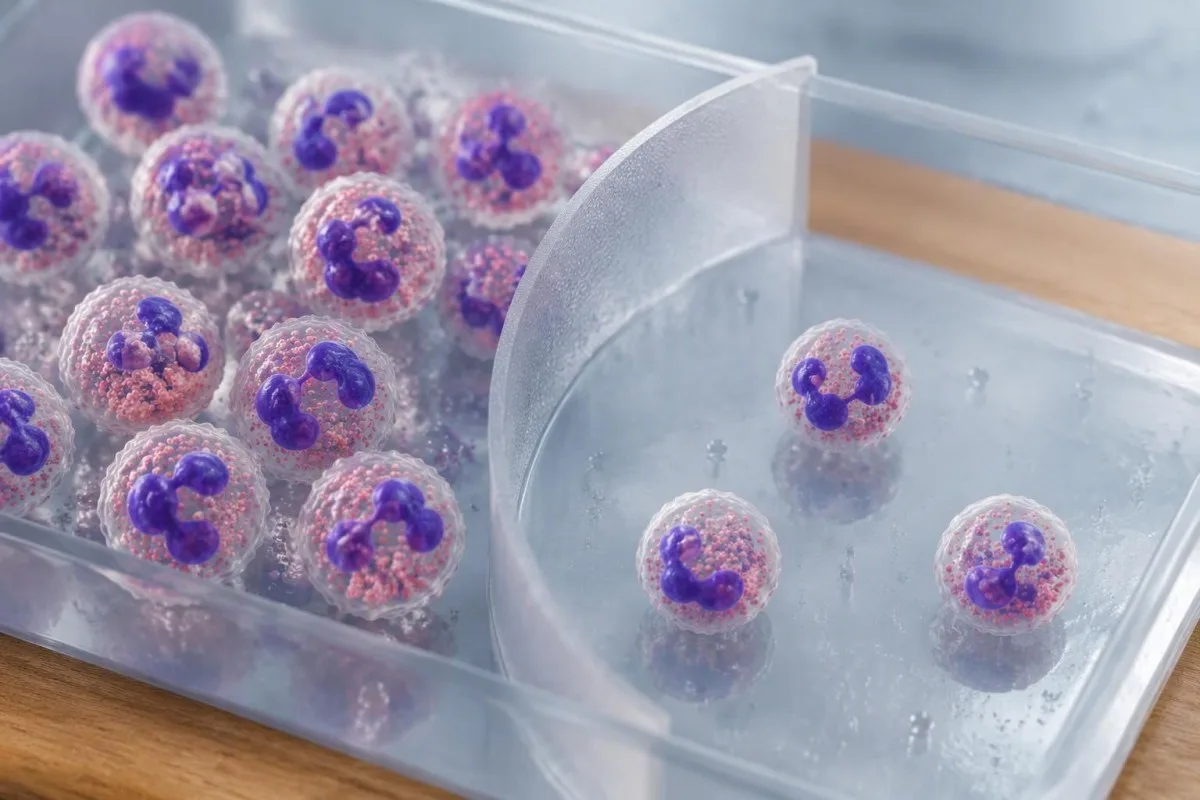
Under the US documented BEN pathway, an ANC of 500–999 cells/µL may permit continued clozapine with hematology consultation and monitoring 3 times weekly. This differs from the general pathway at the same number; the distinction must already be established clinically, not inferred after an alarming result simply to avoid an interruption.
Ancestry is not a diagnostic test for Duffy-null status, and 2 people with similar ancestry may have different baseline ANC patterns. Our Duffy-null count explanation discusses phenotype or genotype evidence, historical counts and assessment for other causes; genetic testing is not universally required, but a clinician-documented explanation is needed for an alternative treatment pathway.
A hypothetical stable baseline of 1,200 cells/µL does not make a new fall to 450 cells/µL harmless: that result meets the severe-neutropenia threshold even in the US BEN pathway. Fever, recurrent unusual infections, anemia or low platelets also weakens the assumption that a low ANC is an isolated constitutional finding and warrants a broader assessment.
Zenbatekoa da klozapinaren ondoriozko neutropenia-arriskua denborarekin?
Clozapine neutropenia risk is concentrated early in treatment, especially during the first 18 weeks to 6 months, but it does not disappear later. Correll et al. (2022) describe agranulocytosis as affecting approximately 1% of treated patients; estimates vary across populations, monitoring systems and definitions, so this is not an individual prediction.

Approximately 1% means roughly 1 in 100 treated people in that broad estimate, not a 1% risk every month and not a 1% risk after every dose. Mild neutropenia is more frequent than agranulocytosis, and studies that combine the two outcomes can make the risk of life-threatening neutrophil depletion appear larger than it actually is.
Early intensive testing reflects the concentration of events during the first 6 months, rather than an assumption that each additional tablet causes predictable cumulative marrow damage. Severe clozapine-associated neutropenia is not reliably prevented by choosing a low dose alone, and a previously normal count cannot guarantee that the next count will remain normal.
After 2 years of stable treatment, the absolute risk is generally much lower than during initiation, which helps explain proposals for less frequent routine testing. Late neutropenia still needs investigation for medication effects, illness and marrow disease; our guide to infekzio ohikoak probatzeko explains why symptoms and other cell lines can reveal risks that an ANC-only schedule misses.
Nolakoa da AEBetako klozapinaren monitorizazio-egutegia REMS ondoren?
The US prescribing-information ANC schedule generally remains weekly for 6 months, every 2 weeks for the next 6 months, then monthly. The FDA removed the clozapine REMS on June 13, 2025, ending its enrollment and ANC-reporting requirements; that administrative change did not remove the clinical recommendation to monitor neutrophils.

The FDA's 2025 clozapine REMS removal communication separates access restrictions from safe prescribing: prescribers, pharmacies and patients no longer need to participate in that federal registry. A pharmacy no longer needs the former REMS dispensing authorization, but the prescriber may still require a recent ANC and a local service may still use an electronic safety workflow.
For a hypothetical patient completing 6 months without a concerning ANC event, the usual label pathway moves from weekly to every-2-week monitoring rather than immediately to monthly testing. Neutropenia, a treatment interruption or a relevant medication change can alter that plan; ask which event starts the next monitoring period instead of counting months independently.
Kantesti can help explain a trend across 3 dated ANC reports, but our platform does not determine the next legally or clinically acceptable dispensing date. Our botiken segurtasunaren joeraren gida explains why the original collection dates and the prescribing team's schedule must remain attached to any AI-generated summary.
Zergatik erabil ditzakete Erresuma Batuko monitorizazio-zerbitzuek beste egutegi bat?
Traditional UK clozapine monitoring pathways use weekly testing for 18 weeks, every 2 weeks until 1 year, then every 4 weeks. UK dispensing has also depended on product-linked monitoring-service clearance; revised recommendations and local implementation can change the pathway, so the patient's own service must confirm the schedule and action thresholds.

An older UK pathway may classify ANC of 1.5–2.0 × 10⁹/L as amber and below 1.5 × 10⁹/L as red in patients without an approved lower-baseline pathway. Those thresholds are not interchangeable with the US continuation algorithm, and legacy UK systems may also consider total WBC; the relevant service must state which rules it currently applies.
Every 4 weeks means every 28 days, not simply once in each calendar month, so a missed appointment can affect a supply window even when the previous result was satisfactory. A useful baseline testing plan should include who books the sample, who receives it and who contacts the patient if the monitoring service cannot release medication.
Administrative alerts can arise from an overdue sample, an unprocessed sample or a genuinely low count—3 different problems with different solutions. Contact the prescribing team and pharmacy promptly if supply is threatened; do not stretch doses, borrow tablets or assume that a policy change in another country has automatically changed your own monitoring-service rules.
Zer aldatu zen ANCren inguruko Europako gomendio berrikusetan?
Revised European recommendations allow less frequent ANC testing in eligible stable patients: weekly for 18 weeks, monthly through the first year, every 12 weeks after 1 year and annually after 2 years. These longer intervals depend on the specified absence of neutropenia and the locally implemented product information; they are not a universal schedule.
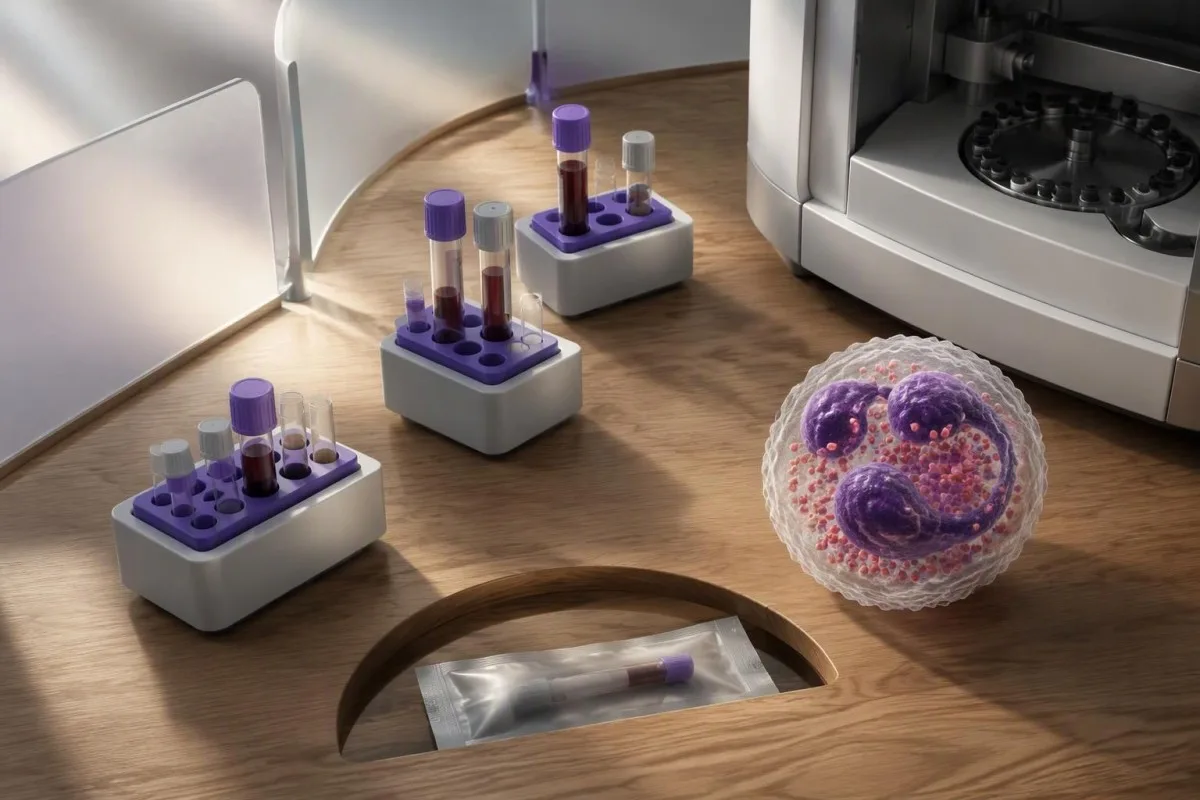
The European Medicines Agency's 2025 communication on revised routine blood count monitoring shifts the principal hematological measure toward ANC rather than combined WBC and ANC surveillance. The revised approach generally uses baseline ANC of at least 1,500 cells/µL, or at least 1,000 cells/µL in an established BEN pathway, while lowering some treatment-interruption thresholds compared with older European systems.
In the revised European approach, ANC below 1,000 cells/µL generally triggers stopping treatment in the standard pathway, whereas below 500 cells/µL is the corresponding threshold for an established BEN pathway. Results above those stopping thresholds can still require intensified surveillance; a hypothetical count of 1,100 cells/µL is not a reason to ignore a new downward trend.
Country authorization, the particular product information and service implementation can differ, even when patients have each taken clozapine for 2 years. Our guide to blood-test timing and changes explains why historical stability matters; obtain written confirmation before assuming that an annual European schedule applies to a UK, US or other national pathway.
Zer egin behar da ustekabeko ANC baxu baten ondoren?
An unexpected low ANC needs prompt prescriber review, confirmation when appropriate and assessment for causes other than clozapine. In the US label pathway, an initial ANC below 1,500 cells/µL is generally confirmed within 24 hours, but severe neutropenia or infection symptoms require immediate management rather than waiting for a routine repeat.
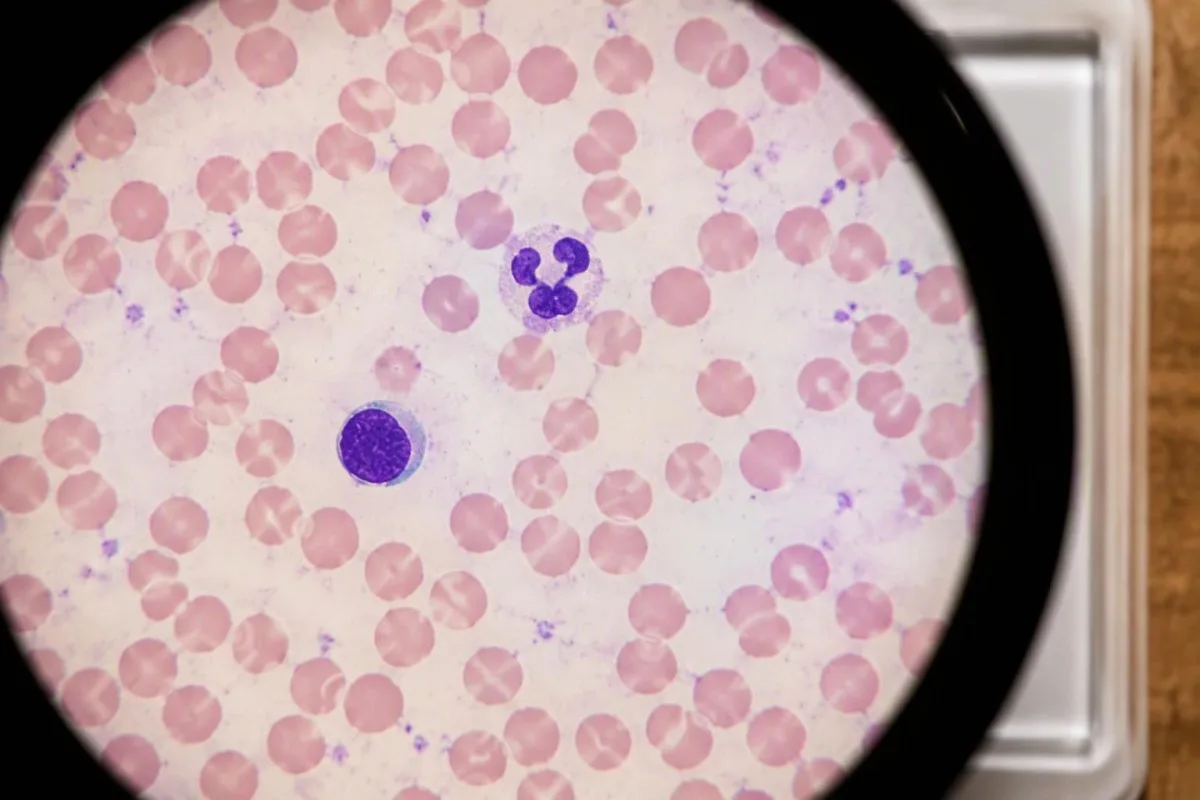
Recent viral illness, other medicines, autoimmune disease and nutritional deficiency can all lower ANC; a count of 900 cells/µL establishes neutropenia but does not establish its cause. Clinicians review the timing of drug exposure and may examine hemoglobin, platelets and a cell sample slide; concurrent abnormalities can justify evaluation for possible marrow disorders.
Kantesti is an AI blood test interpretation platform that can place an ANC of 0.9 × 10⁹/L beside platelet and hemoglobin trends, while leaving causation and medication decisions to clinicians. Our broader hematologia markatzaileen gida explains why a normal red-cell result does not erase an isolated neutrophil problem.
Sampling time and temporary physiological variation can affect a borderline result, but there is no safe rule that an afternoon repeat will always normalize an ANC of 1,400 cells/µL. If a clinician requests a repeat at a consistent time, follow that plan without delaying necessary care; exercise, supplements or deliberate timing changes should not be used to manipulate a treatment-clearance result.
Zein infekzio-sintomak behar dute premiazko balorazioa?
During clozapine treatment, fever of 38.0°C or higher, new sore throat, mouth sores, shaking chills or sudden marked illness warrants urgent same-day clinical assessment. A known ANC below 500 cells/µL makes possible infection especially urgent. Confusion, breathing difficulty, fainting or rapidly worsening illness requires emergency help, regardless of the last count.
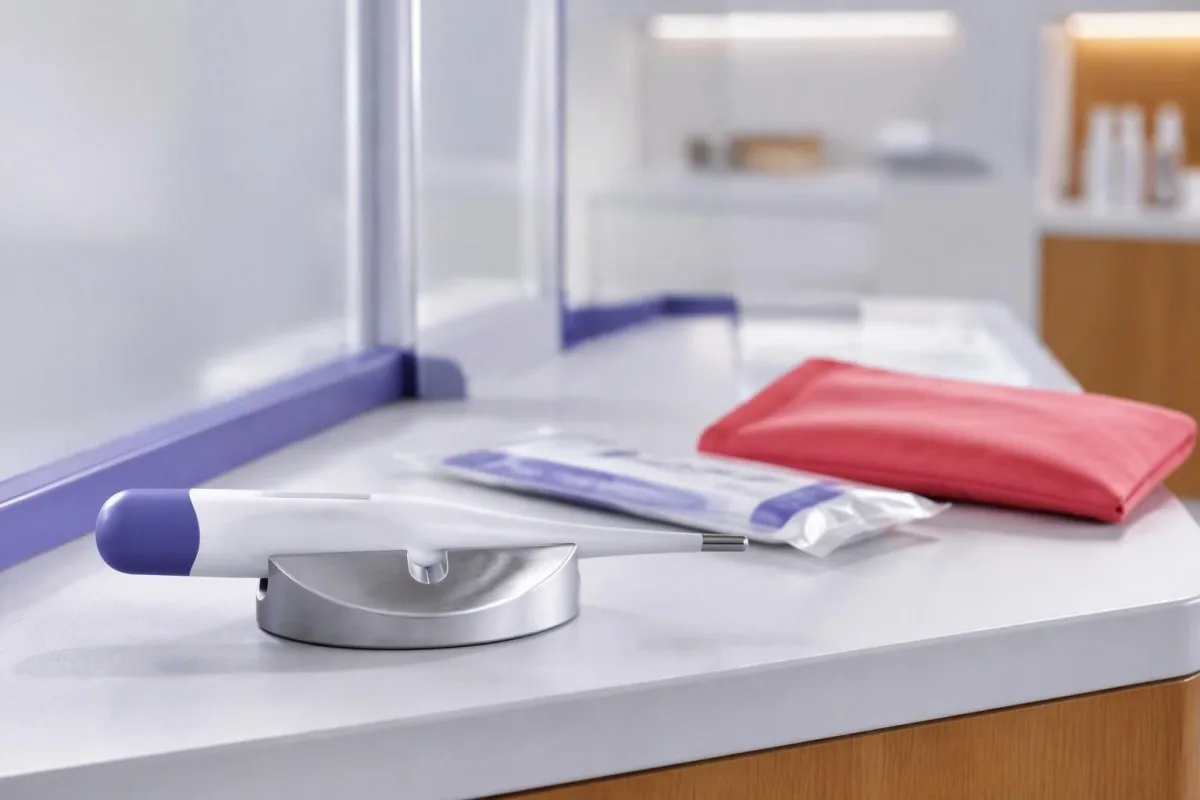
Formal febrile-neutropenia definitions often use a single temperature of at least 38.3°C or at least 38.0°C sustained for 1 hour, together with severe or impending severe neutropenia. Those definitions support clinical classification—not a home instruction to wait an hour; tell the urgent-care team that you take clozapine and provide your last ANC if available.
An ANC of 2,000 cells/µL measured 7 days ago cannot exclude a new fall today, and severe neutropenia can weaken usual local signs such as redness or discharge. Assessment may include an urgent CBC with differential, cultures and examination; our procalcitonin interpretation guide explains why a low infection biomarker cannot independently rule out an early serious infection.
New fever may also signal pneumonia, myocarditis or another illness that raises clozapine concentrations, creating 2 linked safety questions: immune protection and medication toxicity. Call the prescribing team's urgent number immediately for advice about the next dose; if you cannot reach them promptly while significantly unwell, seek urgent care rather than waiting for an app interpretation or routine appointment.
Nola eragiten diote beste sendagaiek, erretzeak eta gaixotasunak monitorizazioari?
Other medicines can increase neutropenia risk or change clozapine concentrations, and those are different problems requiring different tests. ANC is measured in cells/µL, whereas clozapine concentration is commonly measured in ng/mL; a normal ANC does not exclude excessive drug exposure, and a therapeutic concentration does not exclude neutropenia.

Carbamazepine is generally avoided with clozapine because of marrow-suppression risk and clinically relevant interactions; concurrent valproate has also been associated with neutropenia in observational studies. A hypothetical ANC decline from 2,600 to 1,300 cells/µL after adding another medicine warrants a complete medication review, not a conclusion that clozapine is necessarily the sole cause; valproate level interpretation addresses the separate issue of drug exposure.
Stopping combustible smoking can raise clozapine concentrations because smoke components—not nicotine itself—induce CYP1A2 metabolism. A person who stops smoking during a 3-day hospital admission may therefore need prescriber-directed concentration monitoring and dose review; our nicotine test explanation clarifies why cotinine alone does not measure the smoke-related enzyme effect.
Kantesti can explain why an ANC of 2,100 cells/µL and a clozapine level of 900 ng/mL describe different risks, but we cannot select a safer dose. Fever, major caffeine changes and interacting medicines such as ciprofloxacin can alter exposure; report new excessive sedation, confusion or muscle jerks promptly, even if the neutrophil result is reassuring.
Zer gertatzen da probak galdu ondoren edo tratamendua eteten bada?
A missed ANC appointment can create a supply problem, while a clozapine treatment break can create a separate restarting hazard. After more than 48 hours without clozapine, many protocols require supervised re-titration beginning at 12.5 mg once or twice daily rather than immediate return to the previous dose; exact instructions depend on the prescribing information.
Tolerance to clozapine's blood-pressure effects can be lost quickly, so restarting a previous 300 mg daily regimen after a break may cause profound hypotension or collapse. US prescribing information also specifies reduced restart doses for shorter interruptions; patients should contact the prescribing team after missed doses rather than using a remembered 48-hour rule to decide what to take.
A treatment break does not always reset ANC surveillance to the beginning, because monitoring rules depend on interruption duration and the reason treatment stopped. In the US normal-ANC pathway, interruptions of 30 days or longer generally return patients to initiation-style monitoring; national monitoring services may use different interruption rules, especially after an abnormal count.
After a hypothetical 5-day admission, confirm the last dose, current prescription, latest ANC and who will supervise the next dose before leaving hospital. Our explanation of emaitzak ospitaletik alta jaso ondoren helps organize altered laboratory values, but it cannot reconcile prescriptions or authorize restarting after neutropenia.
Zer alderdi ez du jasotzen ANCren monitorizazioak klozapinaren segurtasunari buruz?
ANC monitoring does not detect clozapine-related myocarditis, constipation, metabolic complications or excessive drug concentrations. Some initiation protocols add weekly troponin and CRP during the first 4 weeks, while ongoing care assesses bowel function, weight, glucose and lipids. A satisfactory ANC therefore confirms only one part of medication safety.
New chest pain, breathlessness or persistent unexplained tachycardia during the first 4 weeks needs prompt clinical assessment rather than reassurance from a normal ANC. Troponin and CRP can support a myocarditis investigation, but thresholds and screening practices vary; our myocarditis testing explanation describes why laboratory results must be interpreted with symptoms and cardiac evaluation.
Clozapine-related bowel slowing can become dangerous even when stool is still passing, and severe abdominal pain, distension or vomiting requires urgent assessment. Record bowel frequency and stool consistency rather than asking only whether constipation is present; the gorozkien trinkotasunari buruzko gidak provides a shared description, while a change lasting 48 hours should prompt contact according to the patient's bowel-management plan.
Correll et al. (2022) describe a clozapine plasma reference range of approximately 350–600 ng/mL for many treatment-response decisions, while emphasizing individual variation and adverse effects. That range is not an ANC target or a universal safe-dose boundary; concentration samples usually need defined timing relative to the last dose, whereas routine ANC collection generally does not require a trough sample.
Nola prestatu behar duzu hurrengo klozapina-berrikuspenerako?
Bring the latest ANC, its units, earlier counts and a complete medication list to every clozapine review. Ask which national and service-specific pathway applies, what happens below its thresholds and whom to contact urgently. Keeping at least 3 dated results available helps distinguish a stable baseline from a new decline.

For a hypothetical sequence of 2,400, 1,900 and 1,400 cells/µL, useful questions concern the trend, recent illness, interacting medicines and the required next sample—not simply whether the latest value is red. Also ask who receives results outside office hours and whether the pharmacy needs monitoring-service clearance; these practical details can prevent an avoidable treatment gap.
Kantesti is an AI biomarker interpretation platform that helps translate an ANC of 1.4 × 10⁹/L into an understandable count and a list of clinician questions. Our gainbegiratze tekniko eta klinikoak describes the boundaries of interpretation; it does not establish that an automated answer is a validated clozapine prescribing decision or a substitute for hematology advice.
Kantesti's educational workflow should preserve 3 essentials: the source result, the applicable clinical protocol and the human decision-maker. Our IA arduratsurako printzipioek explain why urgent symptoms take priority over automated analysis, while our pribatutasunari eta datuei buruzko informazioa explains considerations when sharing sensitive psychiatric and laboratory records.
Ikerketa-argitalpenak eta ebidentziaren mugak
The 2 Kantesti publications listed in the research publication section concern digestive symptoms and women's health, not clozapine ANC thresholds or monitoring schedules. Their Figshare DOIs identify those publications but do not establish peer review or provide evidence for clozapine decisions; the directly relevant medical and regulatory sources are listed separately below.
Ohiko galderak
Zein ANC maila da baxuegia klozapinarekin jarraitzeko?
The ANC threshold for continuing clozapine depends on the country and the patient's documented baseline pathway. In the US general pathway, ANC of 1,000–1,499 cells/µL can allow continuation with increased monitoring, while 500–999 cells/µL usually requires interruption when clozapine-induced neutropenia is suspected. A documented BEN or Duffy-null-associated pathway can permit continuation at 500–999 cells/µL under specialist supervision. ANC below 500 cells/µL requires urgent clinical management; patients should obtain immediate prescriber instructions rather than change treatment themselves.
Clozapinaren REMS programa kendu ondoren, ANC odol-analisiak egiten jarraitu behar al dut?
Bai, AEBetako klosapinaren REMS programa kentzeak ez zuen ezabatu neutrofilo absolutuen kopurua (ANC) monitorizatzeko gomendio klinikoa. FDAk erregistroa 2025eko ekainaren 13an kendu zuen, eta horrekin batera amaitu ziren izena emateko, jakinarazteko eta dispentsatzeko baimena lortzeko baldintzak. Preskripzio-informazioaren araberako egutegia, oro har, astero izaten da 6 hilabetez, 2 astean behin hurrengo 6 hilabeteetan, eta, ondoren, hilero. Preskriptoreak azterketa gehiago eska ditzake neutropenia, tratamendua etetea edo beste aldaketa kliniko esanguratsu bat gertatu ondoren.
Why is my clozapine blood test schedule different from someone else's?
0 Klozapinaren odol-azterketen egutegiak desberdinak dira, herrialde bakoitzeko produktu-informazioa, monitorizazio-zerbitzuak, tratamenduaren iraupena eta aurreko ANC gertakariak ez direlako berdinak. Erresuma Batuko ohiko bideek astero azterketak egitea eskatzen dute 18 astez, bi astean behin azterketak egitea urtebete bete arte, eta, ondoren, 4 astean behin. Europako gomendio berrikustuek 12 astean behin azterketak egitea baimendu dezakete urtebete igaro ondoren, eta urtero egitea 2 urte igaro ondoren, egoera egonkorrean dauden paziente hautagarriei, tokiko ezarpenaren arabera. Hitzorduren bat aldatu aurretik, galdetu zeure preskripzio-zerbitzuari dagokion egutegia zein den baieztatzeko.
Klozapinak neutropenia eragin dezake urteetako emaitza normalen ondoren?
0 Neutropenia clozapinarekin lotuta ager daiteke urteetako emaitza normalak izan ondoren, nahiz eta arriskua askoz handiagoa den tratamenduaren hasieran. Lehenengo 18 asteetan eta 6 hilabeteetara arte gertatzen dira gertaera larrien gehienak. 2 urteren ondoren agertutako zenbaketa txiki batek ere clozapinaren, beste sendagai batzuen, infekzioaren eta hezur-muineko edo gaixotasun autoimmuneen azterketa eskatzen du. Aurretik ANC lasaigarria izan izanak ez du baztertzen premiazko azterketa egiteko beharra sukarra edo bat-bateko gaixotasuna agertzen denean.
Zer egin behar dut klozapina hartzen ari naizela sukarra badut?
Clozapina hartzen ari zarela, 38.0°C-ko edo hortik gorako sukarrak egun bereko ebaluazio kliniko urgentea eskatzen du, batez ere eztarriko minarekin, ahoko zauriekin, hotzikara dardaratsuekin edo ahultasun nabarmenarekin batera. Esan klinikari clozapina hartzen duzula, eta eman zure ANC azkena, eskuragarri badago. Jakina den ANC 500 zelula/µL-tik beherakoa bada, balizko infekzioa bereziki urgentea da; nahasmenduak, arnasteko zailtasunak edo kolapsoak larrialdi-laguntza behar dute. Hurrengo dosiari buruzko preskribatzailearen berehalako aholkua eskatu, ohiko hurrengo probaren zain egon edo medikazioa zure kabuz aldatu beharrean.
Bi egunetan hartu gabe egon ondoren, ohiko klozapinaren dosia berriro har dezaket?
Ez zenuke ohiko klozapinaren dosia berriro hartzen hasi behar tratamendu-etena izan ondoren, preskripzioa egin dizun taldearen jarraibiderik gabe. Tratamendurik gabe 48 ordu baino gehiago igaro ondoren, protokolo askok berriro titratzea eskatzen dute, egunean behin edo bitan 12,5 mg hartzen hasita, odol-presioaren gaineko eraginekiko tolerantzia gal daitekeelako. Preskripzio-informazio batzuek dosi txikiagoak ere eskatzen dituzte etenaldi laburragoen ondoren. Jar zaitez harremanetan taldearekin lehenbailehen; izan ere, berriz hasteko plan egokia eta ANC egutegia etenaldiaren iraupen zehatzaren eta arrazoiaren araberakoak dira.
Globulu zuri kopuru normala izateak esan nahi al du nire klozapinaren ANC segurua dela?
0 A globulu zurien kopuru oso normal batek ez du bermatzen ANC balioa egokia denik klozapinarekin tratatzeko. Adibidez, 6.000 zelula/µL-ko WBC batek, neutrofiloen %rekin, 900 zelula/µL-ko ANC sortzen du. Tratamenduari buruzko erabakietan, neutrofilo-kopuru absolutua, dagokion protokoloa eta testuinguru klinikoa hartu behar dira kontuan, eta ez WBCa bakarrik. ANC normal batek ere ezin ditu baztertu miokarditisa, hesteetako mugimenduen moteltze larria edo klozapinaren kontzentrazio handiegiak.
Jaso odol-analisien emaitzak nola irakurri
Kargatu zure laborategiko txostena, eta Kantesti-ren AIak biomarkatzaile bakoitza hizkera arruntean azalduko du segundo gutxitan. Mundu osoan 2 milioi pertsona baino gehiagok erabiltzen dute.
Erreferentziak
- Klein, T., Mitchell, S., & Weber, H. (2026). Baraualdiaren ondorengo beherakoa, gorozkietako puntu beltzak eta digestio-hestekoen gida 2026. Kantesti AI Ikerketa Medikoa. DOI
- Klein, T., Mitchell, S., & Weber, H. (2026). Emakumeen osasunari buruzko gida: obulazioa, menopausia eta sintoma hormonalak. Kantesti AI Ikerketa Medikoa. DOI
- Correll CU et al. (2022). A Guideline and Checklist for Initiating and Managing Clozapine Treatment in Patients with Treatment-Resistant Schizophrenia. CNS Drugs. DOI
- US Food and Drug Administration (2025). FDA removes risk evaluation and mitigation strategy (REMS) program for the antipsychotic drug Clozapine. FDA Drug Safety and Availability.
- European Medicines Agency (2025). Clozapine: revised recommendations for routine blood count monitoring. Direct healthcare professional communication.
- 2M+Aztertutako probak
- 127+Herrialdeak
- 100+Hizkuntzak
Medikuntza-taldeari buruz


E-E-A-T Konfiantza-seinaleak
Esperientzia
Medikuek gidatutako berrikuspen klinikoa laborategiko interpretazioaren lan-fluxuei buruz.
Espezializazioa
Laborategiko medikuntzaren ikuspegia biomarkatzaileek testuinguru klinikoan nola jokatzen duten aztertzean.
Autoritatea
Thomas Klein doktoreak medikoki berrikusia, Sarah Mitchell doktorearen eta Hans Weber irakasle doktorearen ekarpenekin.
Fidagarritasuna
Ebidentzian oinarritutako interpretazioa, alarma murrizteko jarraipen-bide argiekin.





Ohar medikoa
Artikulu hau hezkuntza-helburuetarako da soilik eta ez du mediku-aholkurik ematen. Diagnostiko- eta tratamendu-erabakietarako, beti kontsultatu osasun-profesional kualifikatu bati.
Argitaratua · Jarri harremanetan erredakzio-taldearekin
Kantesti Ltd-k argitaratua, Ingalaterran eta Galesen erregistratua, enpresa zk. 17090423, Londres, Erresuma Batua.
