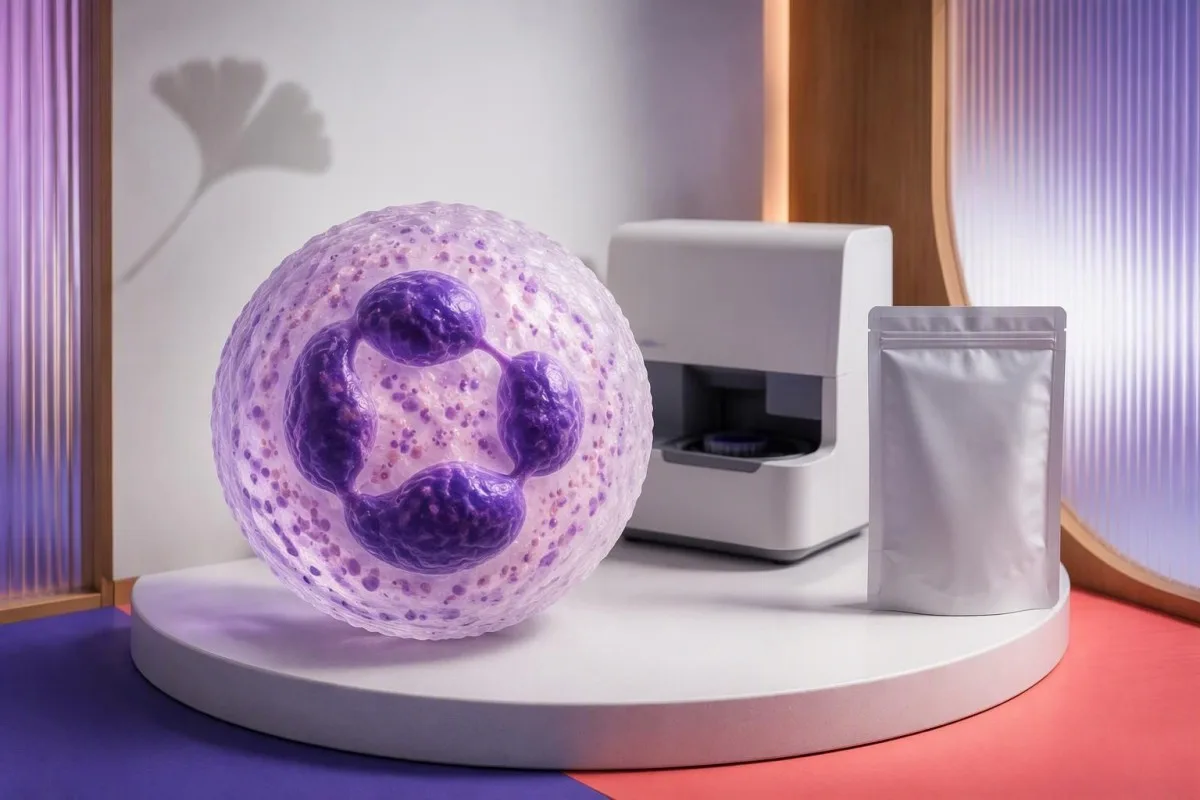
Klozapinmonitorering bruker absolutt nøytrofiltall (ANC) for å oppdage farlig nøytropeni; lave resultater kan føre til ekstra prøver, vurdering av spesialist eller behandlingsavbrudd etter klinikerens anvisning. Tidsplanene varierer mellom land og behandlingsfaser. Feber, sår hals eller plutselig sykdom krever rask vurdering – selv etter et betryggende prøveresultat. Ikke endre klosapindosen selv.

Viktige punkter
- ANC-enheter: 1.0 × 10⁹/L tilsvarer 1,000 celler/µL; kontroller enhetene før du sammenligner resultater med behandlingsterskler.
- Generelle terskler i USA: ANC på 1,000–1,499 celler/µL kan tillate fortsatt behandling med økt monitorering; 500–999 celler/µL fører vanligvis til et avbrudd etter klinikerens anvisning når det er mistanke om klosapinindusert nøytropeni.
- Alvorlig nøytropeni: ANC under 500 celler/µL krever akutt klinisk håndtering, vanligvis behandlingsavbrudd og involvering av hematolog.
- Duffy-null-tellinger: En dokumentert Duffy-null-assosiert nøytrofiltelling kan begrunne et annet behandlingsforløp; avstamning alene fastslår ikke om kriteriene er oppfylt.
- Tidsplan i USA: Overvåking i henhold til preparatomtalen starter vanligvis ukentlig i 6 måneder, deretter hver 2. uke i 6 måneder, og så månedlig.
- Administrative endringer: FDA fjernet det amerikanske clozapin-REMS den 13. juni 2025; dette fjernet kravene om registrering, ikke det kliniske behovet for ANC-overvåking.
- Internasjonale kontrollplaner: Tradisjonelle britiske behandlingsforløp bruker ukentlig testing i 18 uker, testing annenhver uke frem til 1 år og deretter hver 4. uke; reviderte europeiske anbefalinger kan tillate lengre intervaller hos kvalifiserte, stabile pasienter.
- Urgent symptoms: Feber på 38,0 °C eller høyere, ny sår hals, munnsår, skjelvinger med frysninger eller plutselig tydelig sykdomsfølelse krever øyeblikkelig vurdering samme dag. Forvirring, pustevansker eller kollaps krever akutt hjelp.
Hva avgjør klosapinmonitorering egentlig?
Ved clozapinovervåking brukes ANC-resultater for å hjelpe klinikere med å avgjøre om behandlingen kan fortsette, trenger tettere oppfølging eller må avbrytes. En ANC under 500 celler/µL er et alvorlig sikkerhetsfunn, men beslutninger ved høyere verdier avhenger av landets protokoll, tidligere resultater og pasientens dokumenterte utgangsnivå.
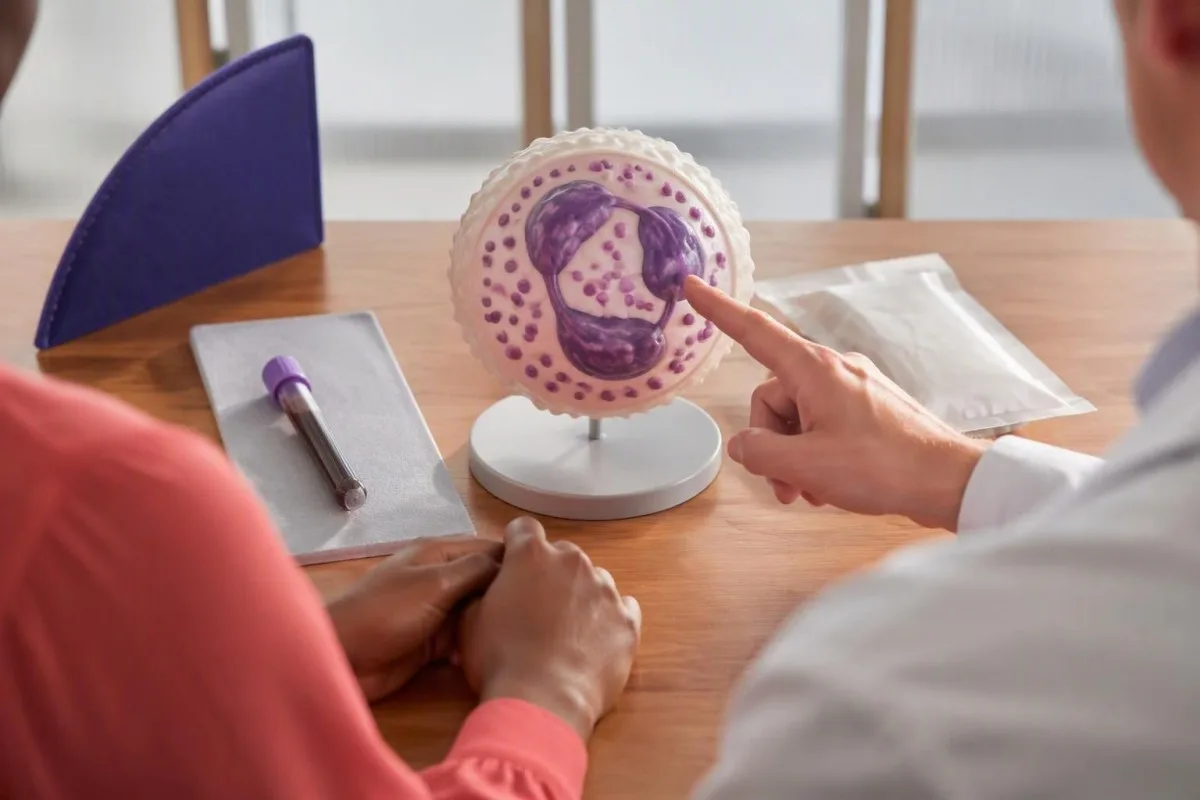
Et ANC-resultat er ikke en frittstående instruks om forskrivning: En verdi på 1 200 celler/µL kan tillate videre behandling i ett behandlingsforløp, men utløse en annen respons i et annet. Forskriveren må fastslå hvilken protokoll som gjelder før tallet tolkes; bruk av en amerikansk grenseverdi på et varsel fra en britisk overvåkingstjeneste kan skape et unngåelig problem med legemiddelforsyningen.
Kantesti er en AI-blodprøveanalysator som kan forklare en ANC på 1,2 × 10⁹/L som 1 200 celler/µL, men vår tolkning kan ikke godkjenne utlevering av clozapin eller erstatte behandlingsteamet. Vår selskapsinformasjon angir organisasjonen som tilbyr denne opplæringstjenesten, og ikke et clozapin-overvåkingsregister.
Et fallende celletall bør følges opp selv før det kommer under en behandlingsgrense: En hypotetisk nedgang fra 4 000 til 1 700 celler/µL er noe annet enn et langvarig utgangsnivå nær 1 700. Vår veiledning om grenseverdier for nøytrofiler forklarer normal variasjon, men clozapinbrukere bør få legemiddelspesifikke råd i stedet for å følge en generell plan for ny testing.
Hvordan leser du ANC-enheter og beregner tallet?
ANC måler det absolutte antallet nøytrofile granulocytter, ikke andelen deres blant de hvite blodcellene. Omregningen er eksakt: 1,0 × 10⁹/L tilsvarer 1 000 celler/µL. Referanseintervallet til et laboratorium og en behandlingsgrense for clozapin besvarer ulike spørsmål, så et flagget resultat betyr ikke automatisk at behandlingen må stoppes.
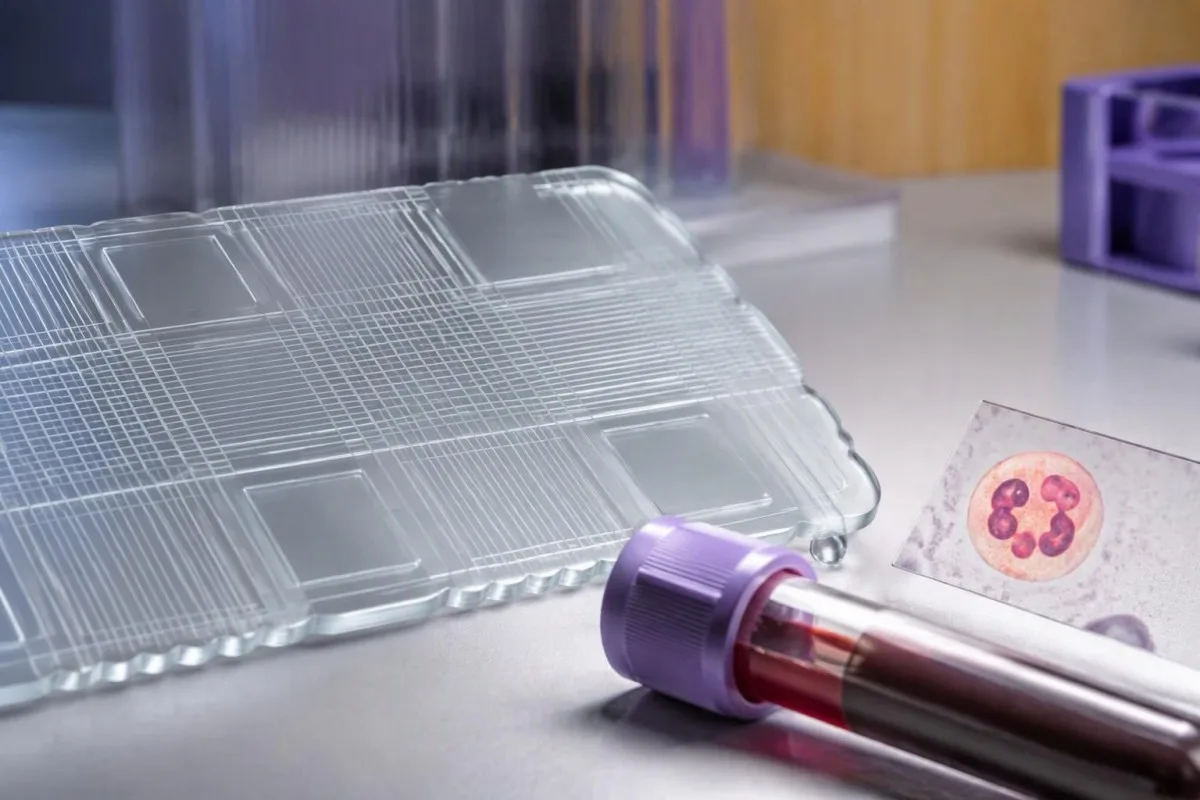
De fleste moderne laboratorier rapporterer ANC direkte, vanligvis som nøytrofile, absolutte nøytrofile eller NEUT#. Hvis beregning er nødvendig, multipliserer du total WBC med nøytrofilandelen, inkludert stavkjerner når disse rapporteres separat; for eksempel gir 4 000 celler/µL × 0,40 en ANC på 1 600 celler/µL, ikke 40 celler/µL.
En hypotetisk WBC på 6 000 celler/µL med nøytrofile på 15% gir en ANC på 900 celler/µL, selv om den totale WBC-verdien kan ligge innenfor laboratoriets referanseintervall. Dette avviket forklarer hvorfor veiledningen om referanseområder for nøytrofile skiller det absolutte celletallet fra differensialprosenten.
Desimalformatering kan føre til farlige misforståelser: 0,8 × 10⁹/L betyr 800 celler/µL, mens 8,0 × 10⁹/L betyr 8 000 celler/µL. Sammenlign originalrapporten, prøvetakingsdatoen og enhetene – ikke et beskåret skjermbilde eller et manuelt innskrevet tall – og be laboratoriet eller overvåkingsteamet avklare eventuell uklarhet før resultatet brukes ved forskrivning.
| Nivå | Referanseområde | Hva det betyr |
|---|---|---|
| Over den konvensjonelle grensen for nøytropeni | ≥1,5 × 10⁹/L; ≥1 500 celler/µL | Usually outside the conventional adult neutropenia definition; this is not a universal laboratory reference interval or dispensing rule. |
| Mild neutropenia | 1.0–1.499 × 10⁹/L; 1,000–1,499 cells/µL | Requires interpretation against baseline, symptoms and the applicable clozapine pathway. |
| Moderate neutropenia | 0.5–0.999 × 10⁹/L; 500–999 cells/µL | Often requires urgent prescriber review; treatment actions differ for general and documented Duffy-null pathways. |
| Severe neutropenia | <0.5 × 10⁹/L; <500 cells/µL | High-risk finding requiring urgent clinical management, usually hematology involvement and clinician-directed interruption. |
Hvilke ANC-resultater endrer behandlingen i det amerikanske forløpet?
The US general-population pathway usually permits clozapine initiation at ANC ≥1,500 cells/µL. During treatment, ANC of 1,000–1,499 cells/µL can allow continuation with intensified monitoring; 500–999 cells/µL generally requires interruption when clozapine-induced neutropenia is suspected. These are clinician actions, not instructions for patients to adjust medication.
For mild neutropenia, the US prescribing-information approach commonly increases ANC checks to 3 times weekly until recovery to at least 1,500 cells/µL. Correll et al. (2022), in CNS Drugs, reproduce these management pathways and emphasize that clozapine's substantial psychiatric benefits must be considered alongside hematological risk rather than treating every low result identically.
For ANC of 500–999 cells/µL in the general pathway, clinicians usually arrange hematology input and daily testing initially, with treatment resumption considered after recovery according to the label. A repeat sample can clarify an unexpected result, but a symptomatic patient or a rapidly falling count should not wait 24 hours merely to obtain a more convenient number.
A count below 500 cells/µL enters the severe-neutropenia pathway, where any later rechallenge requires an explicit specialist risk–benefit decision. Total WBC or CRP cannot substitute for ANC; our explanation of WBC og CRP uenighet shows why apparently reassuring results elsewhere in the panel do not cancel a low neutrophil count.
| Nivå | Referanseområde | Hva det betyr |
|---|---|---|
| US general-pathway initiation threshold | ANC ≥1,500 cells/µL | Usually eligible for initiation from a hematological perspective, subject to the full prescribing assessment. |
| Mild neutropenia during treatment | ANC 1,000–1,499 cells/µL | Treatment can often continue under prescriber direction with ANC monitoring 3 times weekly. |
| Moderate neutropenia during treatment | ANC 500–999 cells/µL | Usually interrupt if clozapine-induced neutropenia is suspected; obtain hematology advice and intensified monitoring. |
| Severe neutropenia during treatment | ANC <500 cells/µL | Interrupt under urgent clinical management; any future rechallenge needs specialist justification. |
Hvordan påvirker en Duffy-null-assosiert nøytrofiltelling beslutningene?
Documented Duffy-null-associated neutrophil counts can justify lower clozapine ANC thresholds because a stable lower circulating count does not necessarily indicate impaired immunity. US prescribing information has historically called this the benign ethnic neutropenia, or BEN, pathway; its usual initiation threshold is ANC ≥1,000 cells/µL with at least 2 baseline measurements.
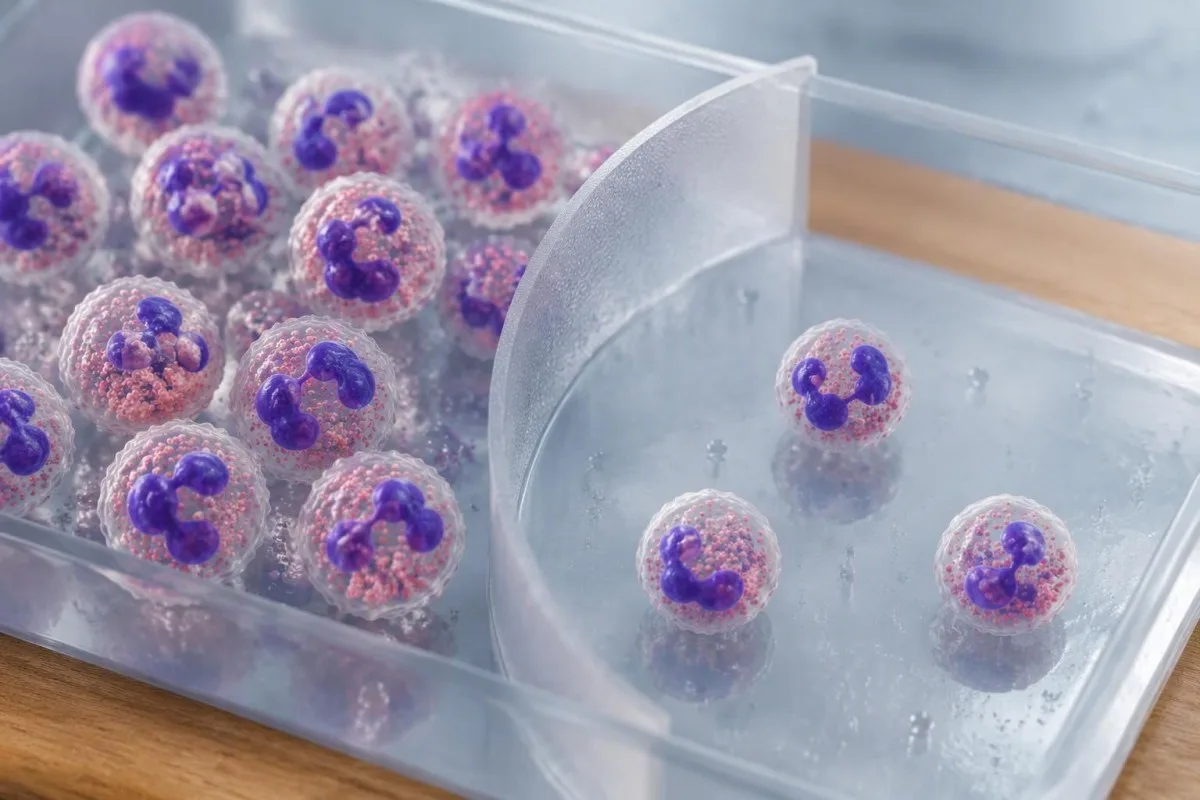
Under the US documented BEN pathway, an ANC of 500–999 cells/µL may permit continued clozapine with hematology consultation and monitoring 3 times weekly. This differs from the general pathway at the same number; the distinction must already be established clinically, not inferred after an alarming result simply to avoid an interruption.
Ancestry is not a diagnostic test for Duffy-null status, and 2 people with similar ancestry may have different baseline ANC patterns. Our Duffy-null count explanation discusses phenotype or genotype evidence, historical counts and assessment for other causes; genetic testing is not universally required, but a clinician-documented explanation is needed for an alternative treatment pathway.
A hypothetical stable baseline of 1,200 cells/µL does not make a new fall to 450 cells/µL harmless: that result meets the severe-neutropenia threshold even in the US BEN pathway. Fever, recurrent unusual infections, anemia or low platelets also weakens the assumption that a low ANC is an isolated constitutional finding and warrants a broader assessment.
Hvor stor er risikoen for klosapinindusert nøytropeni over tid?
Clozapine neutropenia risk is concentrated early in treatment, especially during the first 18 weeks to 6 months, but it does not disappear later. Correll et al. (2022) describe agranulocytosis as affecting approximately 1% of treated patients; estimates vary across populations, monitoring systems and definitions, so this is not an individual prediction.

Approximately 1% means roughly 1 in 100 treated people in that broad estimate, not a 1% risk every month and not a 1% risk after every dose. Mild neutropenia is more frequent than agranulocytosis, and studies that combine the two outcomes can make the risk of life-threatening neutrophil depletion appear larger than it actually is.
Early intensive testing reflects the concentration of events during the first 6 months, rather than an assumption that each additional tablet causes predictable cumulative marrow damage. Severe clozapine-associated neutropenia is not reliably prevented by choosing a low dose alone, and a previously normal count cannot guarantee that the next count will remain normal.
After 2 years of stable treatment, the absolute risk is generally much lower than during initiation, which helps explain proposals for less frequent routine testing. Late neutropenia still needs investigation for medication effects, illness and marrow disease; our guide to testing for hyppige infeksjoner explains why symptoms and other cell lines can reveal risks that an ANC-only schedule misses.
Hva er tidsplanen for klosapinmonitorering i USA etter REMS?
The US prescribing-information ANC schedule generally remains weekly for 6 months, every 2 weeks for the next 6 months, then monthly. The FDA removed the clozapine REMS on June 13, 2025, ending its enrollment and ANC-reporting requirements; that administrative change did not remove the clinical recommendation to monitor neutrophils.

The FDA's 2025 clozapine REMS removal communication separates access restrictions from safe prescribing: prescribers, pharmacies and patients no longer need to participate in that federal registry. A pharmacy no longer needs the former REMS dispensing authorization, but the prescriber may still require a recent ANC and a local service may still use an electronic safety workflow.
For a hypothetical patient completing 6 months without a concerning ANC event, the usual label pathway moves from weekly to every-2-week monitoring rather than immediately to monthly testing. Neutropenia, a treatment interruption or a relevant medication change can alter that plan; ask which event starts the next monitoring period instead of counting months independently.
Kantesti can help explain a trend across 3 dated ANC reports, but our platform does not determine the next legally or clinically acceptable dispensing date. Our veileder for medikamentsikkerhetstrender explains why the original collection dates and the prescribing team's schedule must remain attached to any AI-generated summary.
Hvorfor kan britiske monitoreringstjenester bruke en annen tidsplan?
Traditional UK clozapine monitoring pathways use weekly testing for 18 weeks, every 2 weeks until 1 year, then every 4 weeks. UK dispensing has also depended on product-linked monitoring-service clearance; revised recommendations and local implementation can change the pathway, so the patient's own service must confirm the schedule and action thresholds.

An older UK pathway may classify ANC of 1.5–2.0 × 10⁹/L as amber and below 1.5 × 10⁹/L as red in patients without an approved lower-baseline pathway. Those thresholds are not interchangeable with the US continuation algorithm, and legacy UK systems may also consider total WBC; the relevant service must state which rules it currently applies.
Every 4 weeks means every 28 days, not simply once in each calendar month, so a missed appointment can affect a supply window even when the previous result was satisfactory. A useful baseline testing plan should include who books the sample, who receives it and who contacts the patient if the monitoring service cannot release medication.
Administrative alerts can arise from an overdue sample, an unprocessed sample or a genuinely low count—3 different problems with different solutions. Contact the prescribing team and pharmacy promptly if supply is threatened; do not stretch doses, borrow tablets or assume that a policy change in another country has automatically changed your own monitoring-service rules.
Hva ble endret i de reviderte europeiske ANC-anbefalingene?
Revised European recommendations allow less frequent ANC testing in eligible stable patients: weekly for 18 weeks, monthly through the first year, every 12 weeks after 1 year and annually after 2 years. These longer intervals depend on the specified absence of neutropenia and the locally implemented product information; they are not a universal schedule.
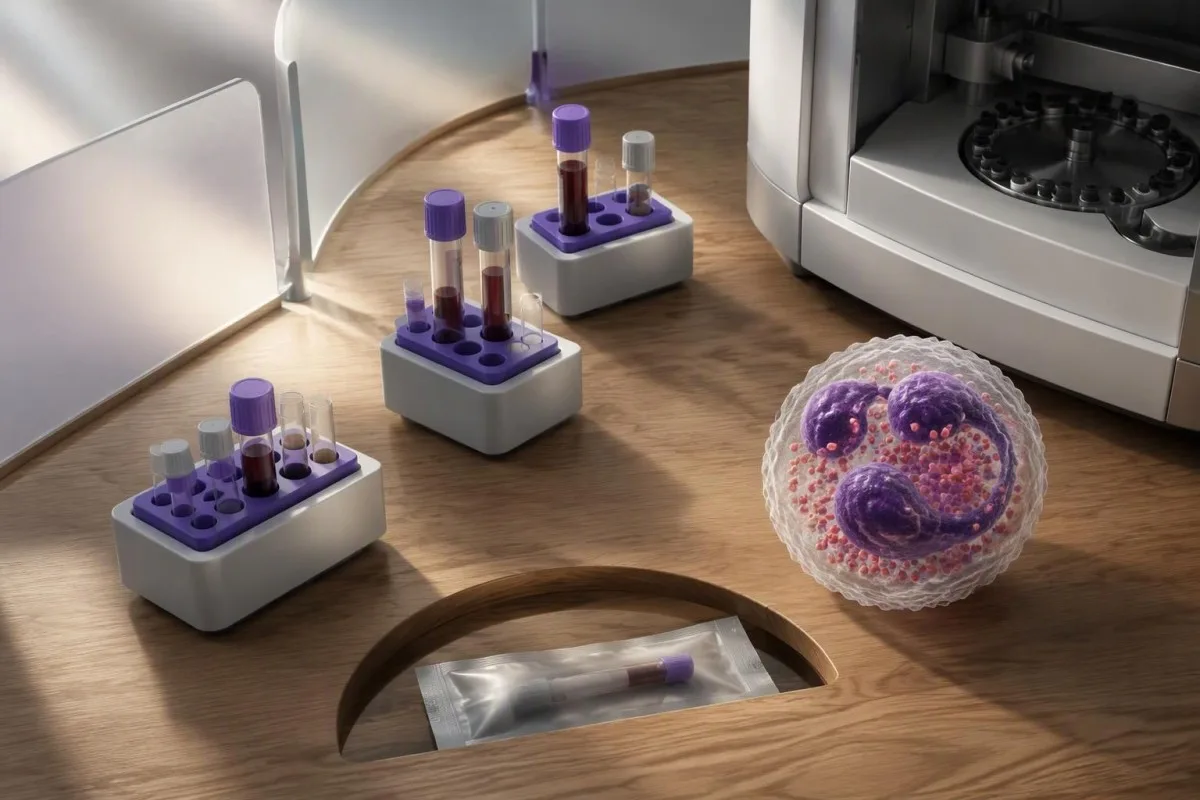
The European Medicines Agency's 2025 communication on revised routine blood count monitoring shifts the principal hematological measure toward ANC rather than combined WBC and ANC surveillance. The revised approach generally uses baseline ANC of at least 1,500 cells/µL, or at least 1,000 cells/µL in an established BEN pathway, while lowering some treatment-interruption thresholds compared with older European systems.
In the revised European approach, ANC below 1,000 cells/µL generally triggers stopping treatment in the standard pathway, whereas below 500 cells/µL is the corresponding threshold for an established BEN pathway. Results above those stopping thresholds can still require intensified surveillance; a hypothetical count of 1,100 cells/µL is not a reason to ignore a new downward trend.
Country authorization, the particular product information and service implementation can differ, even when patients have each taken clozapine for 2 years. Our guide to blood-test timing and changes explains why historical stability matters; obtain written confirmation before assuming that an annual European schedule applies to a UK, US or other national pathway.
Hva bør skje etter et uventet lavt ANC-resultat?
An unexpected low ANC needs prompt prescriber review, confirmation when appropriate and assessment for causes other than clozapine. In the US label pathway, an initial ANC below 1,500 cells/µL is generally confirmed within 24 hours, but severe neutropenia or infection symptoms require immediate management rather than waiting for a routine repeat.
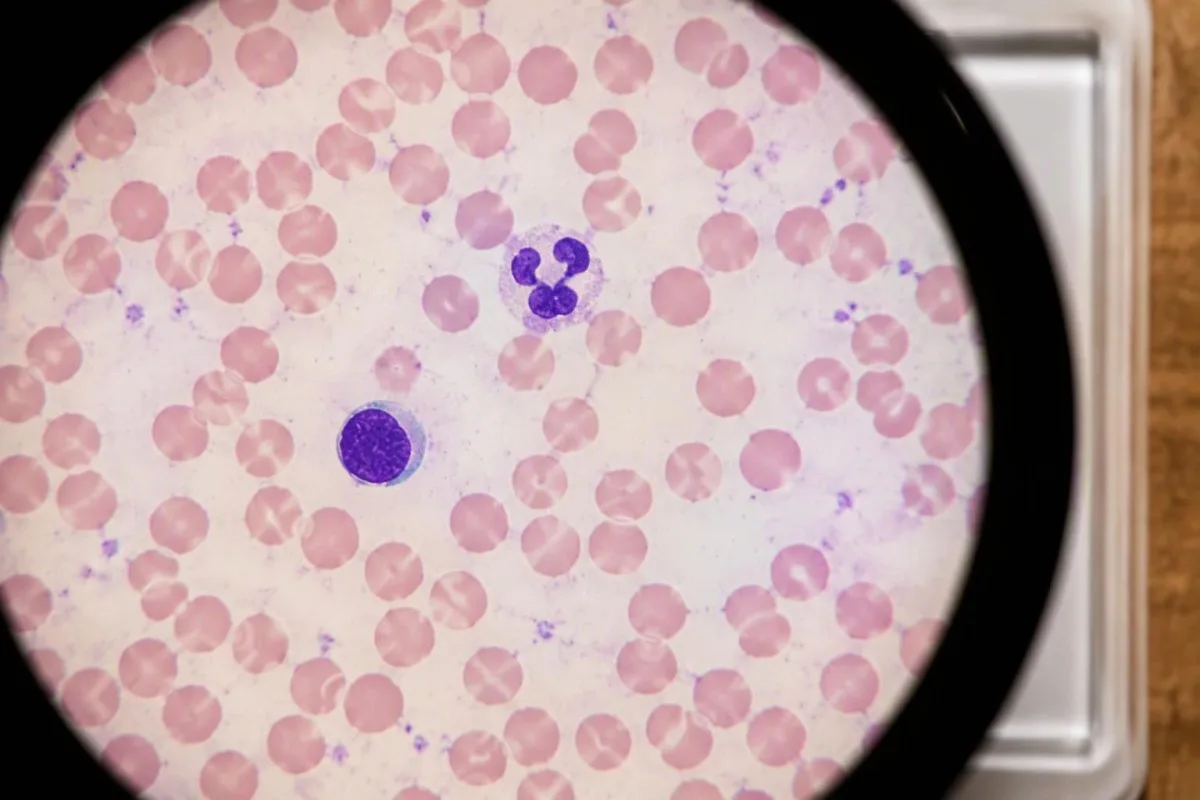
Recent viral illness, other medicines, autoimmune disease and nutritional deficiency can all lower ANC; a count of 900 cells/µL establishes neutropenia but does not establish its cause. Clinicians review the timing of drug exposure and may examine hemoglobin, platelets and a cell sample slide; concurrent abnormalities can justify evaluation for possible marrow disorders.
Kantesti is an AI blood test interpretation platform that can place an ANC of 0.9 × 10⁹/L beside platelet and hemoglobin trends, while leaving causation and medication decisions to clinicians. Our broader hematologiguide for markører explains why a normal red-cell result does not erase an isolated neutrophil problem.
Sampling time and temporary physiological variation can affect a borderline result, but there is no safe rule that an afternoon repeat will always normalize an ANC of 1,400 cells/µL. If a clinician requests a repeat at a consistent time, follow that plan without delaying necessary care; exercise, supplements or deliberate timing changes should not be used to manipulate a treatment-clearance result.
Hvilke infeksjonssymptomer krever rask vurdering?
During clozapine treatment, fever of 38.0°C or higher, new sore throat, mouth sores, shaking chills or sudden marked illness warrants urgent same-day clinical assessment. A known ANC below 500 cells/µL makes possible infection especially urgent. Confusion, breathing difficulty, fainting or rapidly worsening illness requires emergency help, regardless of the last count.
Formal febrile-neutropenia definitions often use a single temperature of at least 38.3°C or at least 38.0°C sustained for 1 hour, together with severe or impending severe neutropenia. Those definitions support clinical classification—not a home instruction to wait an hour; tell the urgent-care team that you take clozapine and provide your last ANC if available.
An ANC of 2,000 cells/µL measured 7 days ago cannot exclude a new fall today, and severe neutropenia can weaken usual local signs such as redness or discharge. Assessment may include an urgent CBC with differential, cultures and examination; our procalcitonin interpretation guide explains why a low infection biomarker cannot independently rule out an early serious infection.
New fever may also signal pneumonia, myocarditis or another illness that raises clozapine concentrations, creating 2 linked safety questions: immune protection and medication toxicity. Call the prescribing team's urgent number immediately for advice about the next dose; if you cannot reach them promptly while significantly unwell, seek urgent care rather than waiting for an app interpretation or routine appointment.
Hvordan påvirker andre legemidler, røyking og sykdom monitoreringen?
Other medicines can increase neutropenia risk or change clozapine concentrations, and those are different problems requiring different tests. ANC is measured in cells/µL, whereas clozapine concentration is commonly measured in ng/mL; a normal ANC does not exclude excessive drug exposure, and a therapeutic concentration does not exclude neutropenia.

Carbamazepine is generally avoided with clozapine because of marrow-suppression risk and clinically relevant interactions; concurrent valproate has also been associated with neutropenia in observational studies. A hypothetical ANC decline from 2,600 to 1,300 cells/µL after adding another medicine warrants a complete medication review, not a conclusion that clozapine is necessarily the sole cause; valproate level interpretation addresses the separate issue of drug exposure.
Stopping combustible smoking can raise clozapine concentrations because smoke components—not nicotine itself—induce CYP1A2 metabolism. A person who stops smoking during a 3-day hospital admission may therefore need prescriber-directed concentration monitoring and dose review; our nicotine test explanation clarifies why cotinine alone does not measure the smoke-related enzyme effect.
Kantesti can explain why an ANC of 2,100 cells/µL and a clozapine level of 900 ng/mL describe different risks, but we cannot select a safer dose. Fever, major caffeine changes and interacting medicines such as ciprofloxacin can alter exposure; report new excessive sedation, confusion or muscle jerks promptly, even if the neutrophil result is reassuring.
Hva skjer etter uteblitte prøver eller et behandlingsavbrudd?
A missed ANC appointment can create a supply problem, while a clozapine treatment break can create a separate restarting hazard. After more than 48 hours without clozapine, many protocols require supervised re-titration beginning at 12.5 mg once or twice daily rather than immediate return to the previous dose; exact instructions depend on the prescribing information.
Tolerance to clozapine's blood-pressure effects can be lost quickly, so restarting a previous 300 mg daily regimen after a break may cause profound hypotension or collapse. US prescribing information also specifies reduced restart doses for shorter interruptions; patients should contact the prescribing team after missed doses rather than using a remembered 48-hour rule to decide what to take.
A treatment break does not always reset ANC surveillance to the beginning, because monitoring rules depend on interruption duration and the reason treatment stopped. In the US normal-ANC pathway, interruptions of 30 days or longer generally return patients to initiation-style monitoring; national monitoring services may use different interruption rules, especially after an abnormal count.
After a hypothetical 5-day admission, confirm the last dose, current prescription, latest ANC and who will supervise the next dose before leaving hospital. Our explanation of resultater etter sykehusutskrivelse helps organize altered laboratory values, but it cannot reconcile prescriptions or authorize restarting after neutropenia.
Hva fanger ikke ANC-monitorering opp når det gjelder klosapinsikkerhet?
ANC monitoring does not detect clozapine-related myocarditis, constipation, metabolic complications or excessive drug concentrations. Some initiation protocols add weekly troponin and CRP during the first 4 weeks, while ongoing care assesses bowel function, weight, glucose and lipids. A satisfactory ANC therefore confirms only one part of medication safety.
New chest pain, breathlessness or persistent unexplained tachycardia during the first 4 weeks needs prompt clinical assessment rather than reassurance from a normal ANC. Troponin and CRP can support a myocarditis investigation, but thresholds and screening practices vary; our myocarditis testing explanation describes why laboratory results must be interpreted with symptoms and cardiac evaluation.
Clozapine-related bowel slowing can become dangerous even when stool is still passing, and severe abdominal pain, distension or vomiting requires urgent assessment. Record bowel frequency and stool consistency rather than asking only whether constipation is present; the avføringskonsistens provides a shared description, while a change lasting 48 hours should prompt contact according to the patient's bowel-management plan.
Correll et al. (2022) describe a clozapine plasma reference range of approximately 350–600 ng/mL for many treatment-response decisions, while emphasizing individual variation and adverse effects. That range is not an ANC target or a universal safe-dose boundary; concentration samples usually need defined timing relative to the last dose, whereas routine ANC collection generally does not require a trough sample.
Hvordan bør du forberede deg til neste klosapingjennomgang?
Bring the latest ANC, its units, earlier counts and a complete medication list to every clozapine review. Ask which national and service-specific pathway applies, what happens below its thresholds and whom to contact urgently. Keeping at least 3 dated results available helps distinguish a stable baseline from a new decline.

For a hypothetical sequence of 2,400, 1,900 and 1,400 cells/µL, useful questions concern the trend, recent illness, interacting medicines and the required next sample—not simply whether the latest value is red. Also ask who receives results outside office hours and whether the pharmacy needs monitoring-service clearance; these practical details can prevent an avoidable treatment gap.
Kantesti is an AI biomarker interpretation platform that helps translate an ANC of 1.4 × 10⁹/L into an understandable count and a list of clinician questions. Our tekniske og kliniske oppfølging describes the boundaries of interpretation; it does not establish that an automated answer is a validated clozapine prescribing decision or a substitute for hematology advice.
Kantesti's educational workflow should preserve 3 essentials: the source result, the applicable clinical protocol and the human decision-maker. Our prinsipper for ansvarlig AI explain why urgent symptoms take priority over automated analysis, while our personvern- og datainformasjon explains considerations when sharing sensitive psychiatric and laboratory records.
Forskningspublikasjoner og evidensgrenser
The 2 Kantesti publications listed in the research publication section concern digestive symptoms and women's health, not clozapine ANC thresholds or monitoring schedules. Their Figshare DOIs identify those publications but do not establish peer review or provide evidence for clozapine decisions; the directly relevant medical and regulatory sources are listed separately below.
Ofte stilte spørsmål
Hvilken ANC-verdi er for lav til at man kan fortsette med klozapin?
The ANC threshold for continuing clozapine depends on the country and the patient's documented baseline pathway. In the US general pathway, ANC of 1,000–1,499 cells/µL can allow continuation with increased monitoring, while 500–999 cells/µL usually requires interruption when clozapine-induced neutropenia is suspected. A documented BEN or Duffy-null-associated pathway can permit continuation at 500–999 cells/µL under specialist supervision. ANC below 500 cells/µL requires urgent clinical management; patients should obtain immediate prescriber instructions rather than change treatment themselves.
Trenger jeg fortsatt ANC-blodprøver etter at clozapin-REMS ble avviklet?
0 Ja, fjerningen av det amerikanske Clozapine REMS-programmet fjernet ikke den kliniske anbefalingen om ANC-overvåking. FDA fjernet registeret 13. juni 2025 og avsluttet dermed kravene til registrering, rapportering og godkjenning for utlevering. Kontrollplanen i preparatomtalen er generelt fortsatt ukentlig i 6 måneder, hver 2. uke de neste 6 månedene og deretter månedlig. Forskriveren din kan kreve ytterligere prøver etter nøytropeni, et behandlingsavbrudd eller en annen relevant klinisk endring.
Why is my clozapine blood test schedule different from someone else's?
Blodprøveplanene for klozapin varierer fordi nasjonal produktinformasjon, overvåkingstjenester, behandlingsvarighet og tidligere ANC-hendelser ikke er identiske. Tradisjonelle britiske forløp bruker ukentlig testing i 18 uker, testing annenhver uke frem til 1 år og testing hver 4. uke deretter. Reviderte europeiske anbefalinger kan tillate testing hver 12. uke etter 1 år og årlig testing etter 2 år hos kvalifiserte, stabile pasienter, avhengig av lokal implementering. Be din egen forskrivningstjeneste bekrefte hvilken plan som gjelder før du endrer noen avtaler.
Kan klozapin forårsake nøytropeni etter flere år med normale prøver?
Klozapinassosiert nøytropeni kan oppstå etter flere år med normale prøveresultater, selv om risikoen er mye høyere tidlig i behandlingen. De første 18 ukene til 6 månedene står for en stor andel av de alvorlige hendelsene. Et nytt lavt celletall etter 2 år må fortsatt vurderes med tanke på klozapin, andre legemidler, infeksjon og benmargs- eller autoimmune tilstander. En tidligere betryggende ANC gjør ikke at behovet for en akutt vurdering bortfaller når feber eller plutselig sykdom oppstår.
Hva bør jeg gjøre hvis jeg får feber mens jeg tar klozapin?
Feber på 38,0 °C eller høyere mens du tar klozapin, krever klinisk vurdering samme dag, særlig ved sår hals, munnsår, skjelvinger og frysninger eller uttalt svakhet. Fortell helsepersonellet at du tar klozapin, og oppgi den siste ANC-verdien din hvis du har den tilgjengelig. En kjent ANC-verdi under 500 celler/µL gjør mulig infeksjon særlig akutt, og forvirring, pustevansker eller kollaps krever øyeblikkelig hjelp. Be umiddelbart om råd fra forskrivende lege om neste dose i stedet for å vente på neste rutineprøve eller endre medisinen på egen hånd.
Kan jeg begynne på den vanlige klozapindosen igjen etter å ha gått glipp av to dager?
Du bør ikke starte på nytt med din vanlige klozapindose etter et behandlingsavbrudd uten instruksjoner fra behandlingsteamet. Etter mer enn 48 timer uten behandling krever mange protokoller ny opptitrering fra 12,5 mg én eller to ganger daglig, fordi toleransen for blodtrykksvirkninger kan gå tapt. Noen preparatomtaler krever også reduserte doser etter kortere avbrudd. Kontakt teamet snarest, siden riktig plan for gjenoppstart og ANC-kontrollplan avhenger av den nøyaktige varigheten og årsaken til avbruddet.
Betyr et normalt antall hvite blodceller at ANC-verdien min ved bruk av klozapin er trygg?
Et normalt totalt antall hvite blodceller garanterer ikke at ANC er tilfredsstillende for behandling med klozapin. For eksempel gir et WBC på 6 000 celler/µL med 15% nøytrofile celler en ANC på 900 celler/µL. Behandlingsbeslutninger krever absolutt nøytrofiltall, gjeldende protokoll og klinisk kontekst, ikke bare WBC. En normal ANC kan heller ikke utelukke myokarditt, alvorlig treg tarm eller for høye klozapinkonsentrasjoner.
Få forklart blodprøveresultatene dine
Last opp laboratorierapporten din, så forklarer AI-en til Kantesti hver biomarkør på et lettfattelig språk i løpet av sekunder. Brukt av mer enn 2 millioner mennesker verden over.
References
- Klein, T., Mitchell, S., & Weber, H. (2026). Diaré etter faste, svarte prikker i avføringen og mage-tarm-veiledning 2026. Kantesti AI medisinsk forskning. DOI
- Klein, T., Mitchell, S., & Weber, H. (2026). Kvinners helseguide: eggløsning, overgangsalder og hormonelle symptomer. Kantesti AI medisinsk forskning. DOI
- Correll CU et al. (2022). A Guideline and Checklist for Initiating and Managing Clozapine Treatment in Patients with Treatment-Resistant Schizophrenia. CNS Drugs. DOI
- US Food and Drug Administration (2025). FDA removes risk evaluation and mitigation strategy (REMS) program for the antipsychotic drug Clozapine. FDA Drug Safety and Availability.
- European Medicines Agency (2025). Clozapine: revised recommendations for routine blood count monitoring. Direct healthcare professional communication.
- 2M+Analyserte prøver
- 127+Countries
- 100+Språk
Om det medisinske teamet


E-E-A-T tillitssignaler
Experience
Klinisk gjennomgang ledet av lege av arbeidsflyter for laboratorietolkning.
Expertise
Fagområde laboratoriemedisin med fokus på hvordan biomarkører oppfører seg i klinisk kontekst.
Authoritativeness
Medisinsk gjennomgått av Dr. Thomas Klein, med bidrag fra Dr. Sarah Mitchell og Prof. Dr. Hans Weber.
Trustworthiness
Evidensbasert tolkning med tydelige oppfølgingsveier for å redusere uro.





Medisinsk ansvarsfraskrivelse
Denne artikkelen er kun for informasjonsformål og utgjør ikke medisinsk rådgivning. Rådfør deg alltid med en kvalifisert helsepersonell for beslutninger om diagnose og behandling.
Publisert · Kontakt redaksjonen
Publisert av Kantesti Ltd, registrert i England og Wales, selskapsnr. 17090423, London, Storbritannia.
