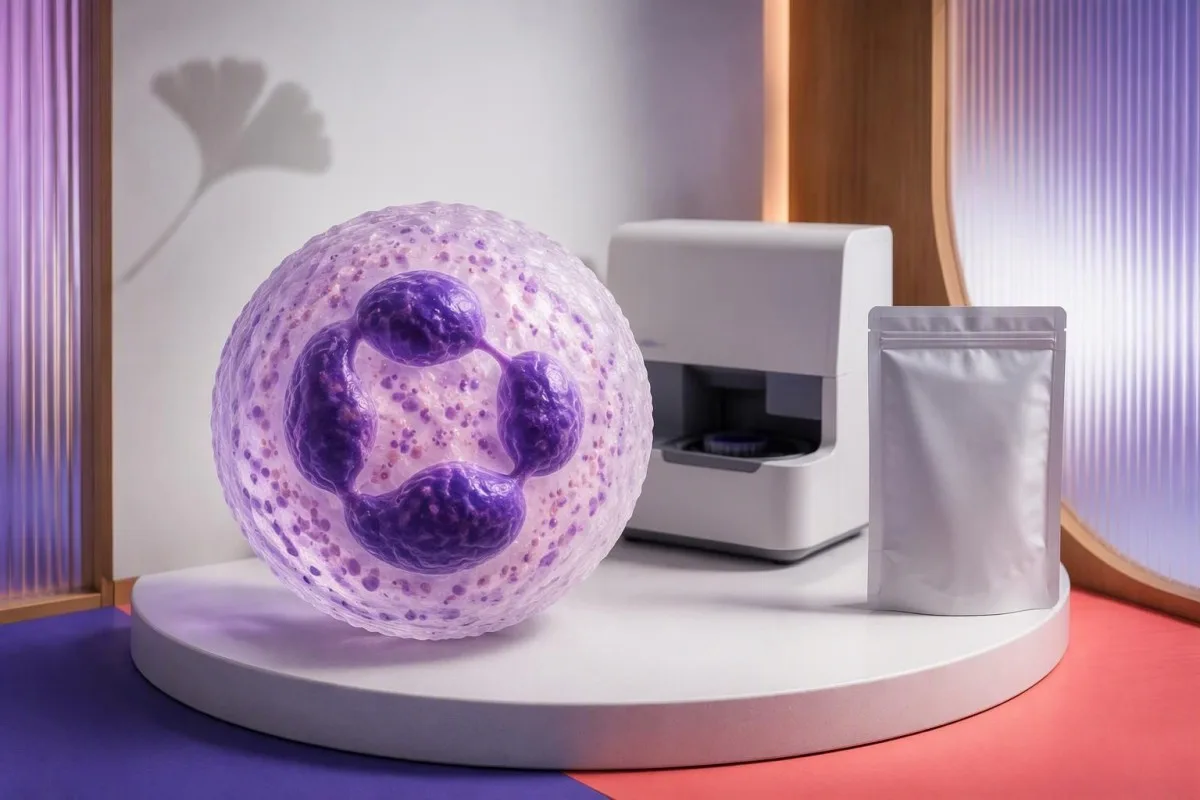
Gumagamit ang pagsubaybay sa clozapine ng absolute neutrophil count (ANC) upang matukoy ang mapanganib na neutropenia; maaaring mangailangan ng dagdag na pagsusuri, pagsusuri ng espesyalista o paghinto ng paggamot sa tagubilin ng clinician ang mabababang resulta. Nag-iiba ang mga iskedyul depende sa bansa at yugto ng paggamot. Nangangailangan ng agarang pagsusuri ang lagnat, pananakit ng lalamunan o biglaang pagkakasakit—kahit reassuring ang resulta. Huwag baguhin ang pag-inom ng clozapine nang mag-isa.

Mahahalagang punto
- Mga yunit ng ANC: Katumbas ng 1.0 × 10⁹/L ang 1,000 selula/µL; tiyakin ang mga yunit bago ihambing ang mga resulta sa mga hangganan para sa paggamot.
- Mga pangkalahatang hangganan sa US: Maaaring ipagpatuloy ang paggamot sa ANC na 1,000–1,499 selula/µL kasabay ng mas madalas na pagsubaybay; karaniwang nag-uudyok ang 500–999 selula/µL ng paghinto ng paggamot sa tagubilin ng clinician kapag pinaghihinalaang dulot ng clozapine ang neutropenia.
- Malubhang neutropenia: Nangangailangan ng agarang pangangalagang klinikal ang ANC na mas mababa sa 500 selula/µL, karaniwang paghinto ng paggamot at pakikilahok ng hematology.
- Mga bilang na Duffy-null: Maaaring maging batayan ang dokumentadong bilang ng neutrophil na nauugnay sa Duffy-null para sa ibang pathway ng paggamot; hindi sapat ang pinagmulan lamang upang matukoy kung kwalipikado.
- Iskedyul sa US: Ang pagsubaybay ayon sa impormasyon sa pagrereseta ay karaniwang nagsisimula linggu-linggo sa loob ng 6 na buwan, pagkatapos ay kada 2 linggo sa loob ng 6 na buwan, at pagkatapos ay buwan-buwan.
- Mga pagbabagong administratibo: Inalis ng FDA ang US clozapine REMS noong Hunyo 13, 2025; inalis nito ang mga kinakailangan sa pagpapatala, hindi ang klinikal na pangangailangan para sa pagsubaybay sa ANC.
- Mga iskedyul sa ibang bansa: Gumagamit ang mga tradisyonal na pathway sa UK ng pagsusuri linggu-linggo sa loob ng 18 linggo, kada dalawang linggo hanggang umabot ng 1 taon, at pagkatapos ay kada 4 na linggo; pinahihintulutan ng mga binagong rekomendasyon sa Europa ang mas mahahabang pagitan para sa mga kwalipikadong pasyenteng matatag ang kondisyon.
- Mga agarang sintomas: Ang lagnat na 38.0°C o mas mataas, bagong pananakit ng lalamunan, mga singaw sa bibig, panginginig na may panginginig ng katawan o biglang malubhang pagkakasakit ay nangangailangan ng agarang pagsusuri sa mismong araw. Nangangailangan ng emerhensiyang tulong ang pagkalito, hirap sa paghinga o pagbagsak.
Ano ba talaga ang pinagpapasyahan ng pagsubaybay sa clozapine?
Gumagamit ang pagsubaybay sa clozapine ng mga resulta ng ANC upang tulungan ang mga clinician na magpasya kung maaaring ipagpatuloy ang paggamot, kailangan ng mas masusing pagsubaybay o dapat itong ihinto. Malubhang palatandaan sa kaligtasan ang ANC na mas mababa sa 500 cells/µL, ngunit nakadepende ang mga desisyon sa mas matataas na bilang sa protocol ng bansa, mga naunang resulta at dokumentadong baseline ng pasyente.
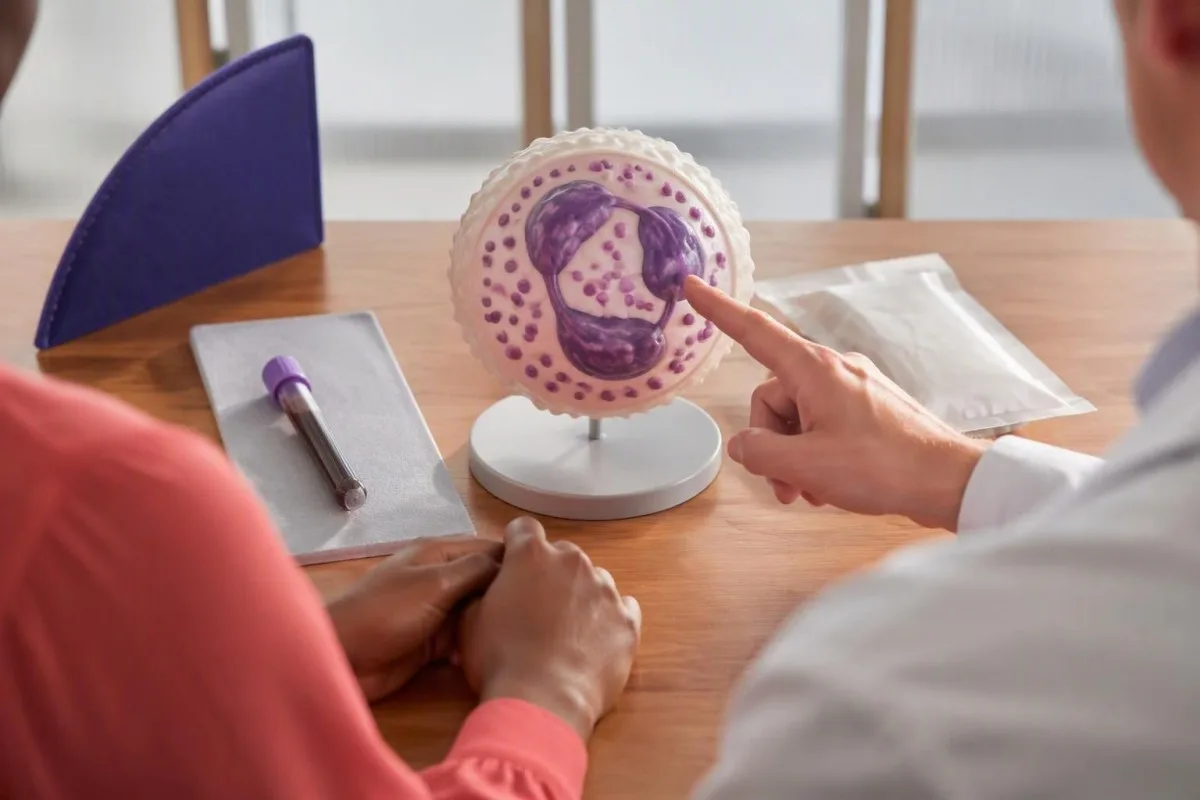
Hindi nag-iisang tagubilin sa pagrereseta ang resulta ng ANC: maaaring pahintulutan ng isang pathway ang pagpapatuloy ng paggamot sa bilang na 1,200 cells/µL, ngunit magdulot ito ng ibang tugon sa isa pa. Dapat tukuyin ng nagrereseta ang tamang protocol bago bigyang-kahulugan ang bilang; maaaring magdulot ng maiiwasang problema sa suplay ng gamot ang paggamit ng threshold sa US sa isang alerto mula sa serbisyo ng pagsubaybay sa UK.
Ang Kantesti ay isang AI blood test analyzer na makapagpapaliwanag na ang ANC na 1.2 × 10⁹/L ay katumbas ng 1,200 cells/µL, ngunit hindi maaaring magbigay-awtorisasyon ang aming interpretasyon para sa pagbibigay ng clozapine o pumalit sa pangkat na nagrereseta. Ang aming impormasyon ng kumpanya tumutukoy sa organisasyong nagbibigay ng serbisyong pang-edukasyon na iyon, sa halip na sa isang rehistro ng pagsubaybay sa clozapine.
Dapat bigyang-pansin ang pababang bilang bago pa man ito lumampas sa threshold ng paggamot: iba ang hipotetikal na pagbaba mula 4,000 tungong 1,700 cells/µL sa matagal nang baseline na malapit sa 1,700. Ang aming gabay tungkol sa resulta ng borderline neutrophil ay nagpapaliwanag ng karaniwang pagkakaiba-iba, ngunit ang mga gumagamit ng clozapine ay dapat humingi ng payong partikular sa gamot sa halip na sumunod sa pangkalahatang iskedyul ng muling pagsusuri.
Paano binabasa ang mga yunit ng ANC at kinakalkula ang bilang?
Sinusukat ng ANC ang ganap na bilang ng mga neutrophil, hindi ang porsiyento ng mga ito sa kabuuang bilang ng mga puting selula ng dugo. Eksakto ang conversion: katumbas ng 1,000 cells/µL ang 1.0 × 10⁹/L. Magkaibang tanong ang sinasagot ng reference interval ng laboratoryo at ng threshold para sa paggamot gamit ang clozapine, kaya hindi awtomatikong nangangahulugan ang resultang minarkahan na dapat ihinto ang paggamot.
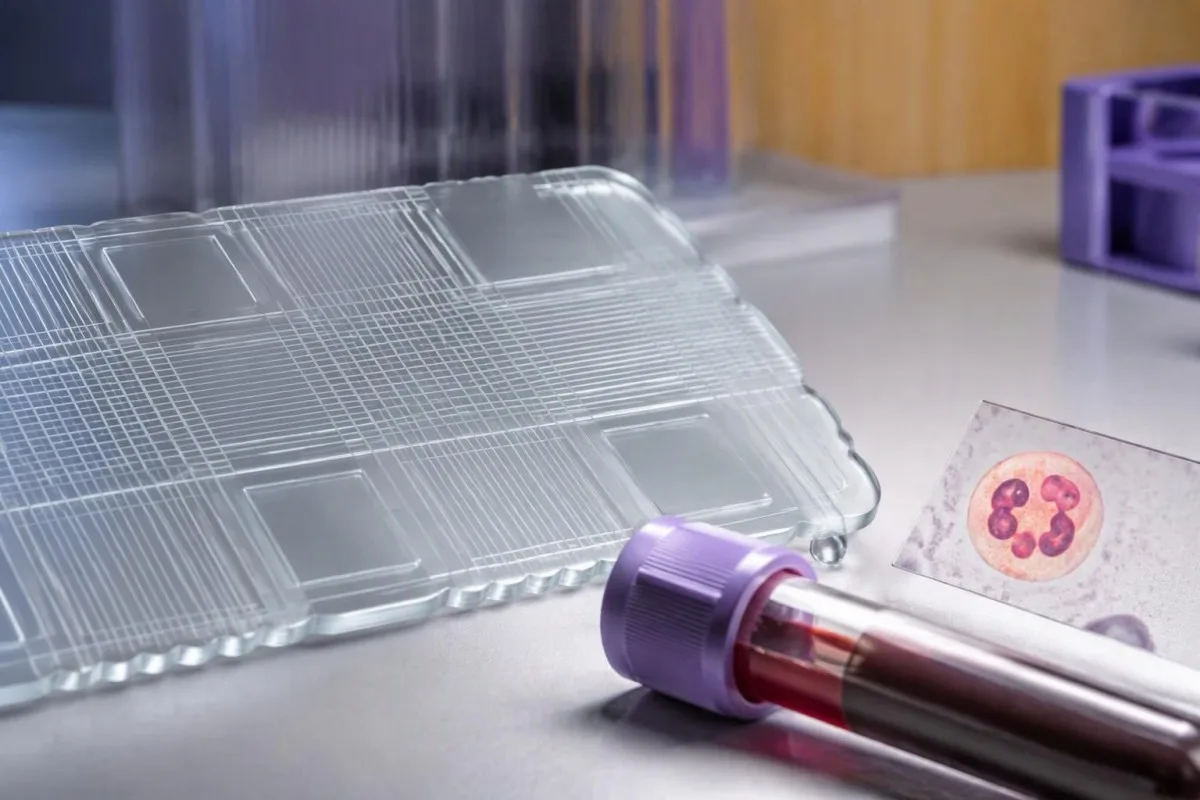
Direktang iniuulat ng karamihan sa mga modernong laboratoryo ang ANC, karaniwang bilang neutrophils, absolute neutrophils o NEUT#. Kung kailangang kalkulahin, imultiply ang kabuuang WBC sa bahagi ng mga neutrophil, kasama ang mga band kung hiwalay na iniulat; halimbawa, ang 4,000 cells/µL × 0.40 ay nagbibigay ng ANC na 1,600 cells/µL, hindi 40 cells/µL.
Ang hipotetikal na WBC na 6,000 cells/µL na may mga neutrophil na 15% ay nagbibigay ng ANC na 900 cells/µL kahit maaaring pasok sa reference interval ng laboratoryo ang kabuuang WBC. Ipinapaliwanag ng pagkakaibang ito kung bakit ang gabay sa reference range ng neutrophil ay nagtatangi sa ganap na bilang mula sa porsiyento sa differential.
Maaaring magdulot ng mapanganib na hindi pagkakaunawaan ang paglalagay ng decimal: ang 0.8 × 10⁹/L ay nangangahulugang 800 cells/µL, samantalang ang 8.0 × 10⁹/L ay nangangahulugang 8,000 cells/µL. Ihambing ang orihinal na ulat, petsa ng pagkuha ng sample at mga yunit—hindi ang putol na screenshot o numerong inilagay nang mano-mano—at hilingin sa laboratoryo o pangkat ng pagsubaybay na lutasin ang anumang kalabuan bago gamitin ang resulta sa pagrereseta.
| Antas | Saklaw | Kahulugan |
|---|---|---|
| Lampas sa karaniwang cutoff para sa neutropenia | ≥1.5 × 10⁹/L; ≥1,500 cells/µL | Usually outside the conventional adult neutropenia definition; this is not a universal laboratory reference interval or dispensing rule. |
| Banayad na neutropenia | 1.0–1.499 × 10⁹/L; 1,000–1,499 cells/µL | Requires interpretation against baseline, symptoms and the applicable clozapine pathway. |
| Katamtamang neutropenia | 0.5–0.999 × 10⁹/L; 500–999 cells/µL | Often requires urgent prescriber review; treatment actions differ for general and documented Duffy-null pathways. |
| Matinding neutropenia | <0.5 × 10⁹/L; <500 cells/µL | High-risk finding requiring urgent clinical management, usually hematology involvement and clinician-directed interruption. |
Aling mga resulta ng ANC ang nagbabago sa paggamot sa US pathway?
The US general-population pathway usually permits clozapine initiation at ANC ≥1,500 cells/µL. During treatment, ANC of 1,000–1,499 cells/µL can allow continuation with intensified monitoring; 500–999 cells/µL generally requires interruption when clozapine-induced neutropenia is suspected. These are clinician actions, not instructions for patients to adjust medication.
For mild neutropenia, the US prescribing-information approach commonly increases ANC checks to 3 times weekly until recovery to at least 1,500 cells/µL. Correll et al. (2022), in CNS Drugs, reproduce these management pathways and emphasize that clozapine's substantial psychiatric benefits must be considered alongside hematological risk rather than treating every low result identically.
For ANC of 500–999 cells/µL in the general pathway, clinicians usually arrange hematology input and daily testing initially, with treatment resumption considered after recovery according to the label. A repeat sample can clarify an unexpected result, but a symptomatic patient or a rapidly falling count should not wait 24 hours merely to obtain a more convenient number.
A count below 500 cells/µL enters the severe-neutropenia pathway, where any later rechallenge requires an explicit specialist risk–benefit decision. Total WBC or CRP cannot substitute for ANC; our explanation of hindi pagkakasundo ng WBC at CRP shows why apparently reassuring results elsewhere in the panel do not cancel a low neutrophil count.
| Antas | Saklaw | Kahulugan |
|---|---|---|
| US general-pathway initiation threshold | ANC ≥1,500 cells/µL | Usually eligible for initiation from a hematological perspective, subject to the full prescribing assessment. |
| Mild neutropenia during treatment | ANC 1,000–1,499 cells/µL | Treatment can often continue under prescriber direction with ANC monitoring 3 times weekly. |
| Moderate neutropenia during treatment | ANC 500–999 cells/µL | Usually interrupt if clozapine-induced neutropenia is suspected; obtain hematology advice and intensified monitoring. |
| Severe neutropenia during treatment | ANC <500 cells/µL | Interrupt under urgent clinical management; any future rechallenge needs specialist justification. |
Paano binabago ng bilang na nauugnay sa Duffy-null ang mga desisyon?
Documented Duffy-null-associated neutrophil counts can justify lower clozapine ANC thresholds because a stable lower circulating count does not necessarily indicate impaired immunity. US prescribing information has historically called this the benign ethnic neutropenia, or BEN, pathway; its usual initiation threshold is ANC ≥1,000 cells/µL with at least 2 baseline measurements.
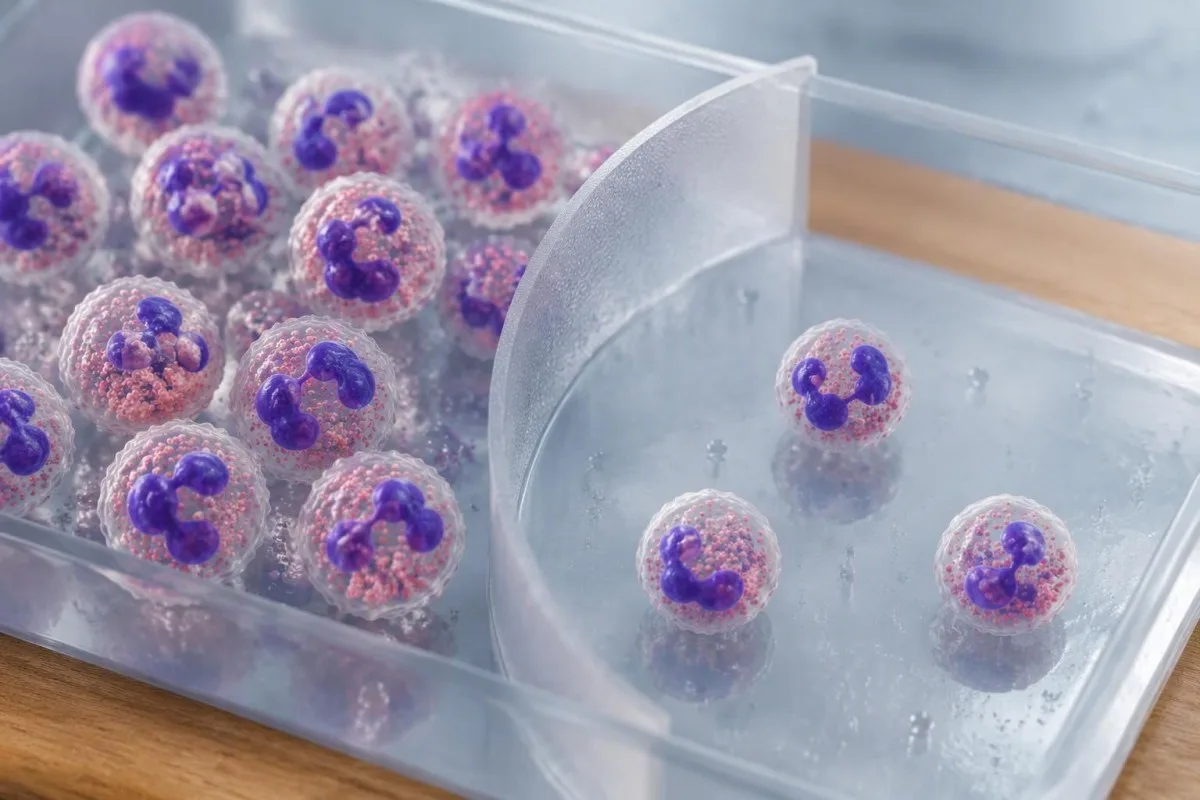
Under the US documented BEN pathway, an ANC of 500–999 cells/µL may permit continued clozapine with hematology consultation and monitoring 3 times weekly. This differs from the general pathway at the same number; the distinction must already be established clinically, not inferred after an alarming result simply to avoid an interruption.
Ancestry is not a diagnostic test for Duffy-null status, and 2 people with similar ancestry may have different baseline ANC patterns. Our Duffy-null count explanation discusses phenotype or genotype evidence, historical counts and assessment for other causes; genetic testing is not universally required, but a clinician-documented explanation is needed for an alternative treatment pathway.
A hypothetical stable baseline of 1,200 cells/µL does not make a new fall to 450 cells/µL harmless: that result meets the severe-neutropenia threshold even in the US BEN pathway. Fever, recurrent unusual infections, anemia or low platelets also weakens the assumption that a low ANC is an isolated constitutional finding and warrants a broader assessment.
Gaano kalaki ang panganib ng neutropenia dulot ng clozapine sa paglipas ng panahon?
Clozapine neutropenia risk is concentrated early in treatment, especially during the first 18 weeks to 6 months, but it does not disappear later. Correll et al. (2022) describe agranulocytosis as affecting approximately 1% of treated patients; estimates vary across populations, monitoring systems and definitions, so this is not an individual prediction.

Approximately 1% means roughly 1 in 100 treated people in that broad estimate, not a 1% risk every month and not a 1% risk after every dose. Mild neutropenia is more frequent than agranulocytosis, and studies that combine the two outcomes can make the risk of life-threatening neutrophil depletion appear larger than it actually is.
Early intensive testing reflects the concentration of events during the first 6 months, rather than an assumption that each additional tablet causes predictable cumulative marrow damage. Severe clozapine-associated neutropenia is not reliably prevented by choosing a low dose alone, and a previously normal count cannot guarantee that the next count will remain normal.
After 2 years of stable treatment, the absolute risk is generally much lower than during initiation, which helps explain proposals for less frequent routine testing. Late neutropenia still needs investigation for medication effects, illness and marrow disease; our guide to pagsubok para sa mga madalas na impeksyon explains why symptoms and other cell lines can reveal risks that an ANC-only schedule misses.
Ano ang iskedyul ng pagsubaybay sa clozapine sa US matapos ang REMS?
The US prescribing-information ANC schedule generally remains weekly for 6 months, every 2 weeks for the next 6 months, then monthly. The FDA removed the clozapine REMS on June 13, 2025, ending its enrollment and ANC-reporting requirements; that administrative change did not remove the clinical recommendation to monitor neutrophils.
The FDA's 2025 clozapine REMS removal communication separates access restrictions from safe prescribing: prescribers, pharmacies and patients no longer need to participate in that federal registry. A pharmacy no longer needs the former REMS dispensing authorization, but the prescriber may still require a recent ANC and a local service may still use an electronic safety workflow.
For a hypothetical patient completing 6 months without a concerning ANC event, the usual label pathway moves from weekly to every-2-week monitoring rather than immediately to monthly testing. Neutropenia, a treatment interruption or a relevant medication change can alter that plan; ask which event starts the next monitoring period instead of counting months independently.
Kantesti can help explain a trend across 3 dated ANC reports, but our platform does not determine the next legally or clinically acceptable dispensing date. Our gabay sa trend ng kaligtasan ng gamot explains why the original collection dates and the prescribing team's schedule must remain attached to any AI-generated summary.
Bakit maaaring gumamit ng ibang iskedyul ang mga serbisyo ng pagsubaybay sa UK?
Traditional UK clozapine monitoring pathways use weekly testing for 18 weeks, every 2 weeks until 1 year, then every 4 weeks. UK dispensing has also depended on product-linked monitoring-service clearance; revised recommendations and local implementation can change the pathway, so the patient's own service must confirm the schedule and action thresholds.

An older UK pathway may classify ANC of 1.5–2.0 × 10⁹/L as amber and below 1.5 × 10⁹/L as red in patients without an approved lower-baseline pathway. Those thresholds are not interchangeable with the US continuation algorithm, and legacy UK systems may also consider total WBC; the relevant service must state which rules it currently applies.
Every 4 weeks means every 28 days, not simply once in each calendar month, so a missed appointment can affect a supply window even when the previous result was satisfactory. A useful baseline testing plan should include who books the sample, who receives it and who contacts the patient if the monitoring service cannot release medication.
Administrative alerts can arise from an overdue sample, an unprocessed sample or a genuinely low count—3 different problems with different solutions. Contact the prescribing team and pharmacy promptly if supply is threatened; do not stretch doses, borrow tablets or assume that a policy change in another country has automatically changed your own monitoring-service rules.
Ano ang nagbago sa mga binagong rekomendasyon sa ANC sa Europe?
Revised European recommendations allow less frequent ANC testing in eligible stable patients: weekly for 18 weeks, monthly through the first year, every 12 weeks after 1 year and annually after 2 years. These longer intervals depend on the specified absence of neutropenia and the locally implemented product information; they are not a universal schedule.
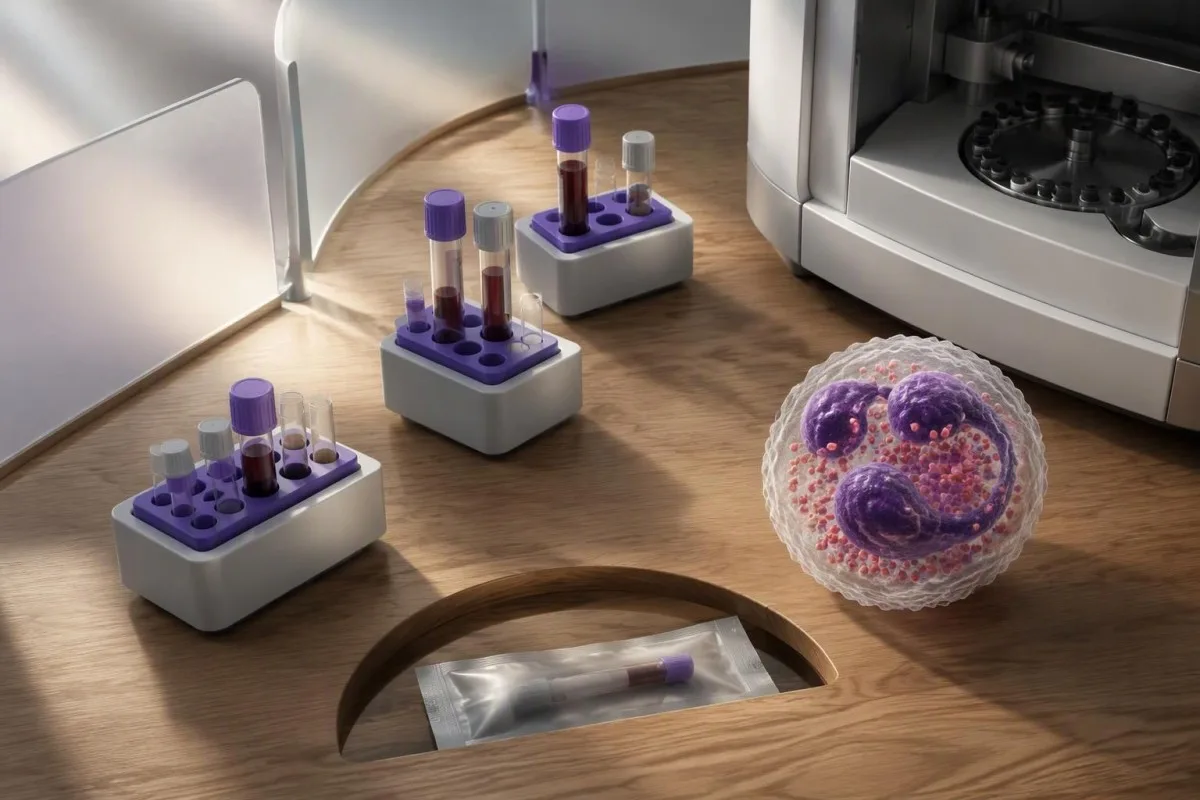
The European Medicines Agency's 2025 communication on revised routine blood count monitoring shifts the principal hematological measure toward ANC rather than combined WBC and ANC surveillance. The revised approach generally uses baseline ANC of at least 1,500 cells/µL, or at least 1,000 cells/µL in an established BEN pathway, while lowering some treatment-interruption thresholds compared with older European systems.
In the revised European approach, ANC below 1,000 cells/µL generally triggers stopping treatment in the standard pathway, whereas below 500 cells/µL is the corresponding threshold for an established BEN pathway. Results above those stopping thresholds can still require intensified surveillance; a hypothetical count of 1,100 cells/µL is not a reason to ignore a new downward trend.
Country authorization, the particular product information and service implementation can differ, even when patients have each taken clozapine for 2 years. Our guide to blood-test timing and changes explains why historical stability matters; obtain written confirmation before assuming that an annual European schedule applies to a UK, US or other national pathway.
Ano ang dapat gawin kapag hindi inaasahang mababa ang ANC?
An unexpected low ANC needs prompt prescriber review, confirmation when appropriate and assessment for causes other than clozapine. In the US label pathway, an initial ANC below 1,500 cells/µL is generally confirmed within 24 hours, but severe neutropenia or infection symptoms require immediate management rather than waiting for a routine repeat.
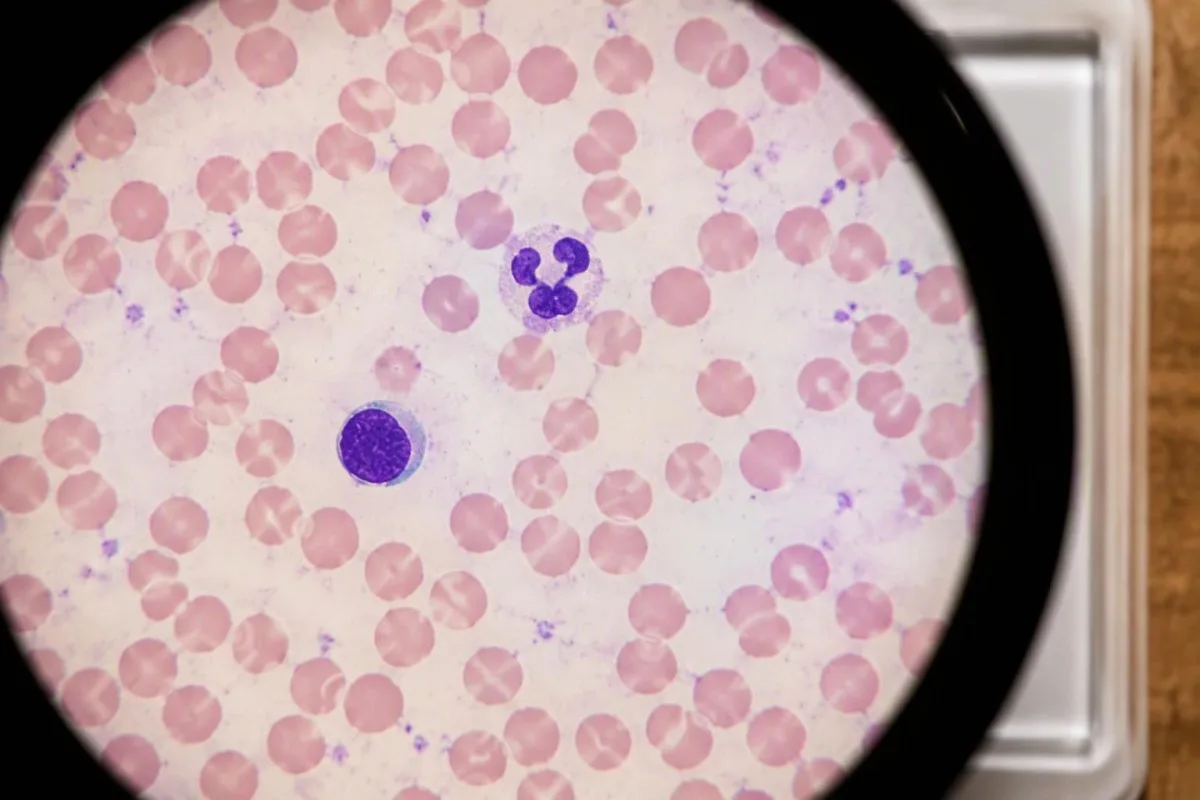
Recent viral illness, other medicines, autoimmune disease and nutritional deficiency can all lower ANC; a count of 900 cells/µL establishes neutropenia but does not establish its cause. Clinicians review the timing of drug exposure and may examine hemoglobin, platelets and a cell sample slide; concurrent abnormalities can justify evaluation for possible marrow disorders.
Kantesti is an AI blood test interpretation platform that can place an ANC of 0.9 × 10⁹/L beside platelet and hemoglobin trends, while leaving causation and medication decisions to clinicians. Our broader gabay sa hematology marker explains why a normal red-cell result does not erase an isolated neutrophil problem.
Sampling time and temporary physiological variation can affect a borderline result, but there is no safe rule that an afternoon repeat will always normalize an ANC of 1,400 cells/µL. If a clinician requests a repeat at a consistent time, follow that plan without delaying necessary care; exercise, supplements or deliberate timing changes should not be used to manipulate a treatment-clearance result.
Aling mga sintomas ng impeksiyon ang nangangailangan ng agarang pagsusuri?
During clozapine treatment, fever of 38.0°C or higher, new sore throat, mouth sores, shaking chills or sudden marked illness warrants urgent same-day clinical assessment. A known ANC below 500 cells/µL makes possible infection especially urgent. Confusion, breathing difficulty, fainting or rapidly worsening illness requires emergency help, regardless of the last count.
Formal febrile-neutropenia definitions often use a single temperature of at least 38.3°C or at least 38.0°C sustained for 1 hour, together with severe or impending severe neutropenia. Those definitions support clinical classification—not a home instruction to wait an hour; tell the urgent-care team that you take clozapine and provide your last ANC if available.
An ANC of 2,000 cells/µL measured 7 days ago cannot exclude a new fall today, and severe neutropenia can weaken usual local signs such as redness or discharge. Assessment may include an urgent CBC with differential, cultures and examination; our procalcitonin interpretation guide explains why a low infection biomarker cannot independently rule out an early serious infection.
New fever may also signal pneumonia, myocarditis or another illness that raises clozapine concentrations, creating 2 linked safety questions: immune protection and medication toxicity. Call the prescribing team's urgent number immediately for advice about the next dose; if you cannot reach them promptly while significantly unwell, seek urgent care rather than waiting for an app interpretation or routine appointment.
Paano nakaaapekto sa pagsubaybay ang ibang mga gamot, paninigarilyo at karamdaman?
Other medicines can increase neutropenia risk or change clozapine concentrations, and those are different problems requiring different tests. ANC is measured in cells/µL, whereas clozapine concentration is commonly measured in ng/mL; a normal ANC does not exclude excessive drug exposure, and a therapeutic concentration does not exclude neutropenia.

Carbamazepine is generally avoided with clozapine because of marrow-suppression risk and clinically relevant interactions; concurrent valproate has also been associated with neutropenia in observational studies. A hypothetical ANC decline from 2,600 to 1,300 cells/µL after adding another medicine warrants a complete medication review, not a conclusion that clozapine is necessarily the sole cause; valproate level interpretation addresses the separate issue of drug exposure.
Stopping combustible smoking can raise clozapine concentrations because smoke components—not nicotine itself—induce CYP1A2 metabolism. A person who stops smoking during a 3-day hospital admission may therefore need prescriber-directed concentration monitoring and dose review; our nicotine test explanation clarifies why cotinine alone does not measure the smoke-related enzyme effect.
Kantesti can explain why an ANC of 2,100 cells/µL and a clozapine level of 900 ng/mL describe different risks, but we cannot select a safer dose. Fever, major caffeine changes and interacting medicines such as ciprofloxacin can alter exposure; report new excessive sedation, confusion or muscle jerks promptly, even if the neutrophil result is reassuring.
Ano ang mangyayari kapag hindi naisagawa ang mga pagsusuri o nahinto ang paggamot?
A missed ANC appointment can create a supply problem, while a clozapine treatment break can create a separate restarting hazard. After more than 48 hours without clozapine, many protocols require supervised re-titration beginning at 12.5 mg once or twice daily rather than immediate return to the previous dose; exact instructions depend on the prescribing information.
Tolerance to clozapine's blood-pressure effects can be lost quickly, so restarting a previous 300 mg daily regimen after a break may cause profound hypotension or collapse. US prescribing information also specifies reduced restart doses for shorter interruptions; patients should contact the prescribing team after missed doses rather than using a remembered 48-hour rule to decide what to take.
A treatment break does not always reset ANC surveillance to the beginning, because monitoring rules depend on interruption duration and the reason treatment stopped. In the US normal-ANC pathway, interruptions of 30 days or longer generally return patients to initiation-style monitoring; national monitoring services may use different interruption rules, especially after an abnormal count.
After a hypothetical 5-day admission, confirm the last dose, current prescription, latest ANC and who will supervise the next dose before leaving hospital. Our explanation of mga resulta pagkatapos ng paglabas mula sa ospital helps organize altered laboratory values, but it cannot reconcile prescriptions or authorize restarting after neutropenia.
Ano ang hindi natutukoy ng pagsubaybay sa ANC tungkol sa kaligtasan ng clozapine?
ANC monitoring does not detect clozapine-related myocarditis, constipation, metabolic complications or excessive drug concentrations. Some initiation protocols add weekly troponin and CRP during the first 4 weeks, while ongoing care assesses bowel function, weight, glucose and lipids. A satisfactory ANC therefore confirms only one part of medication safety.
New chest pain, breathlessness or persistent unexplained tachycardia during the first 4 weeks needs prompt clinical assessment rather than reassurance from a normal ANC. Troponin and CRP can support a myocarditis investigation, but thresholds and screening practices vary; our myocarditis testing explanation describes why laboratory results must be interpreted with symptoms and cardiac evaluation.
Clozapine-related bowel slowing can become dangerous even when stool is still passing, and severe abdominal pain, distension or vomiting requires urgent assessment. Record bowel frequency and stool consistency rather than asking only whether constipation is present; the gabay sa pagkakapare-pareho ng dumi provides a shared description, while a change lasting 48 hours should prompt contact according to the patient's bowel-management plan.
Correll et al. (2022) describe a clozapine plasma reference range of approximately 350–600 ng/mL for many treatment-response decisions, while emphasizing individual variation and adverse effects. That range is not an ANC target or a universal safe-dose boundary; concentration samples usually need defined timing relative to the last dose, whereas routine ANC collection generally does not require a trough sample.
Paano ka dapat maghanda para sa susunod mong pagsusuri kaugnay ng clozapine?
Bring the latest ANC, its units, earlier counts and a complete medication list to every clozapine review. Ask which national and service-specific pathway applies, what happens below its thresholds and whom to contact urgently. Keeping at least 3 dated results available helps distinguish a stable baseline from a new decline.

For a hypothetical sequence of 2,400, 1,900 and 1,400 cells/µL, useful questions concern the trend, recent illness, interacting medicines and the required next sample—not simply whether the latest value is red. Also ask who receives results outside office hours and whether the pharmacy needs monitoring-service clearance; these practical details can prevent an avoidable treatment gap.
Kantesti is an AI biomarker interpretation platform that helps translate an ANC of 1.4 × 10⁹/L into an understandable count and a list of clinician questions. Our teknikal at klinikal na pangangasiwa describes the boundaries of interpretation; it does not establish that an automated answer is a validated clozapine prescribing decision or a substitute for hematology advice.
Kantesti's educational workflow should preserve 3 essentials: the source result, the applicable clinical protocol and the human decision-maker. Our mga prinsipyo ng responsableng AI explain why urgent symptoms take priority over automated analysis, while our impormasyon tungkol sa privacy at datos explains considerations when sharing sensitive psychiatric and laboratory records.
Mga publikasyon sa pananaliksik at mga hangganan ng ebidensiya
The 2 Kantesti publications listed in the research publication section concern digestive symptoms and women's health, not clozapine ANC thresholds or monitoring schedules. Their Figshare DOIs identify those publications but do not establish peer review or provide evidence for clozapine decisions; the directly relevant medical and regulatory sources are listed separately below.
Mga Madalas Itanong
Gaano kababa ang ANC para hindi na maipagpatuloy ang clozapine?
The ANC threshold for continuing clozapine depends on the country and the patient's documented baseline pathway. In the US general pathway, ANC of 1,000–1,499 cells/µL can allow continuation with increased monitoring, while 500–999 cells/µL usually requires interruption when clozapine-induced neutropenia is suspected. A documented BEN or Duffy-null-associated pathway can permit continuation at 500–999 cells/µL under specialist supervision. ANC below 500 cells/µL requires urgent clinical management; patients should obtain immediate prescriber instructions rather than change treatment themselves.
Kailangan ko pa ba ng mga pagsusuri ng dugo para sa ANC matapos alisin ang clozapine REMS?
Oo, hindi inalis ng pagtanggal sa US clozapine REMS ang klinikal na rekomendasyon para sa pagsubaybay sa ANC. Inalis ng FDA ang registry noong Hunyo 13, 2025, na nagtapos sa mga kinakailangan nito para sa pagpapatala, pag-uulat at pahintulot sa pagbibigay ng gamot. Karaniwang nananatiling lingguhan ang iskedyul sa impormasyon sa pagrereseta sa loob ng 6 na buwan, tuwing 2 linggo sa susunod na 6 na buwan, at buwanan pagkatapos nito. Maaaring mangailangan ang iyong nagrereseta ng karagdagang pagsusuri matapos magkaroon ng neutropenia, magambala ang paggamot o magkaroon ng iba pang kaugnay na klinikal na pagbabago.
Why is my clozapine blood test schedule different from someone else's?
Nagkakaiba ang mga iskedyul ng pagsusuri ng dugo para sa clozapine dahil hindi magkakatulad ang pambansang impormasyon ng produkto, mga serbisyo sa pagsubaybay, tagal ng paggamot, at mga naunang insidente ng ANC. Sa mga tradisyonal na pathway sa UK, lingguhan ang pagsusuri sa loob ng 18 linggo, kada dalawang linggo hanggang umabot ng 1 taon, at tuwing 4 na linggo pagkatapos nito. Maaaring pahintulutan ng mga binagong rekomendasyon sa Europa ang pagsusuri tuwing 12 linggo pagkalipas ng 1 taon at taunang pagsusuri pagkalipas ng 2 taon para sa mga kwalipikadong pasyenteng matatag ang kalagayan, alinsunod sa lokal na pagpapatupad. Tanungin ang sarili mong serbisyong nagrereseta upang kumpirmahin ang naaangkop na iskedyul bago baguhin ang anumang appointment.
Maaari bang magdulot ang clozapine ng neutropenia matapos ang maraming taon ng mga normal na resulta?
Maaaring magkaroon ng neutropenia na nauugnay sa clozapine pagkaraan ng mga taong normal ang mga resulta, bagaman higit na mataas ang panganib sa maagang yugto ng paggamot. Sa unang 18 linggo hanggang 6 na buwan nagaganap ang malaking bahagi ng malulubhang insidente. Kailangan pa ring suriin kung clozapine, iba pang mga gamot, impeksiyon, at mga kondisyon ng bone marrow o autoimmune ang sanhi ng bagong mababang bilang pagkalipas ng 2 taon. Hindi inaalis ng dating nakapagpapaginhawang ANC ang pangangailangan para sa agarang pagsusuri kapag nagkaroon ng lagnat o biglaang pagkakasakit.
Ano ang dapat kong gawin kung nilalagnat ako habang umiinom ng clozapine?
Ang lagnat na 38.0°C o mas mataas habang umiinom ng clozapine ay nangangailangan ng agarang klinikal na pagsusuri sa araw ding iyon, lalo na kung may pananakit ng lalamunan, mga singaw sa bibig, panginginig dahil sa ginaw o matinding panghihina. Sabihin sa clinician na umiinom ka ng clozapine at ibigay ang pinakahuli mong ANC kung mayroon. Kung alam na mas mababa sa 500 cells/µL ang ANC, lalong apurahan ang posibleng impeksiyon, at nangangailangan ng emerhensiyang tulong ang pagkalito, hirap sa paghinga o pagbagsak. Humingi agad ng payo sa nagreseta tungkol sa susunod na dosis sa halip na maghintay sa susunod na karaniwang pagsusuri o baguhin nang mag-isa ang gamot.
Maaari ko bang ipagpatuloy ang karaniwan kong dosis ng clozapine matapos makaligtaan ang dalawang araw?
Hindi mo dapat simulan muli ang karaniwan mong dosis ng clozapine pagkatapos ng pagkaantala sa paggamot nang walang tagubilin mula sa pangkat na nagreseta nito. Pagkalipas ng mahigit 48 oras na walang paggamot, maraming protocol ang nangangailangan ng muling unti-unting pagtaas ng dosis, simula sa 12.5 mg isang beses o dalawang beses araw-araw, dahil maaaring mawala ang tolerance sa mga epekto nito sa presyon ng dugo. Nangangailangan din ang ilang impormasyon sa pagrereseta ng mas mababang dosis pagkatapos ng mas maiikling pagkaantala. Makipag-ugnayan agad sa pangkat, dahil nakadepende sa eksaktong tagal at dahilan ng pagkaantala ang tamang plano sa muling pagsisimula at iskedyul ng ANC.
Nangangahulugan ba ang normal na bilang ng white blood cell na ligtas ang ANC ko habang umiinom ng clozapine?
Hindi ginagarantiyahan ng normal na kabuuang bilang ng white blood cell na sapat ang ANC para sa paggamot gamit ang clozapine. Halimbawa, ang WBC na 6,000 cells/µL na may 15% na neutrophils ay nagbubunga ng ANC na 900 cells/µL. Nangangailangan ang mga desisyon sa paggamot ng ganap na bilang ng neutrophils, ng naaangkop na protocol at ng klinikal na konteksto sa halip na WBC lamang. Hindi rin maaalis ng normal na ANC ang posibilidad ng myocarditis, matinding paghina ng paggalaw ng bituka o labis na konsentrasyon ng clozapine.
Ipaliwanag sa iyo ang resulta ng blood test
I-upload ang iyong ulat sa laboratoryo at ipapaliwanag ng AI ng Kantesti ang bawat biomarker sa payak na pananalita sa loob ng ilang segundo. Ginagamit ng mahigit 2 milyong tao sa buong mundo.
Mga Sanggunian
- Klein, T., Mitchell, S., & Weber, H. (2026). Pagtatae Pagkatapos Mag-ayuno, Maiitim na Tuldok sa Dumi at Gabay sa GI 2026. Kantesti AI Medical Research. DOI
- Klein, T., Mitchell, S., & Weber, H. (2026). Gabay sa Kalusugan ng Kababaihan: Obulasyon, Menopause at mga Sintomang Hormonal. Kantesti AI Medical Research. DOI
- Correll CU et al. (2022). A Guideline and Checklist for Initiating and Managing Clozapine Treatment in Patients with Treatment-Resistant Schizophrenia. CNS Drugs. DOI
- US Food and Drug Administration (2025). FDA removes risk evaluation and mitigation strategy (REMS) program for the antipsychotic drug Clozapine. FDA Drug Safety and Availability.
- European Medicines Agency (2025). Clozapine: revised recommendations for routine blood count monitoring. Direct healthcare professional communication.
- 2M+Mga sinuring pagsusuri
- 127+Mga bansa
- 100+Mga wika
Tungkol sa pangkat medikal


Mga Signal ng Tiwala ng E-E-A-T
Karanasan
Pinamumunuan ng manggagamot na klinikal na pagsusuri ng mga daloy ng interpretasyon ng mga pagsusuri sa laboratoryo.
Kadalubhasaan
Pokus sa laboratoryong medisina kung paano kumikilos ang mga biomarker sa kontekstong klinikal.
Pagka-awtoridad
Sinuri sa medikal na aspeto ni Dr. Thomas Klein, kasama ang mga kontribusyon nina Dr. Sarah Mitchell at Prof. Dr. Hans Weber.
Pagiging Mapagkakatiwalaan
Interpretasyong nakabatay sa ebidensya na may malinaw na mga susunod na hakbang upang mabawasan ang pag-aalarma.





Paunawang medikal
Ang artikulong ito ay para sa mga layuning pang-edukasyon lamang at hindi ito bumubuo ng medikal na payo. Palaging kumonsulta sa isang kwalipikadong tagapagbigay ng pangangalagang pangkalusugan para sa mga desisyon sa diagnosis at paggamot.
Inilathala · Makipag-ugnayan sa pangkat ng editoryal
Inilathala ng Kantesti Ltd, nakarehistro sa England at Wales, numero ng kumpanya. 17090423, London, United Kingdom.
