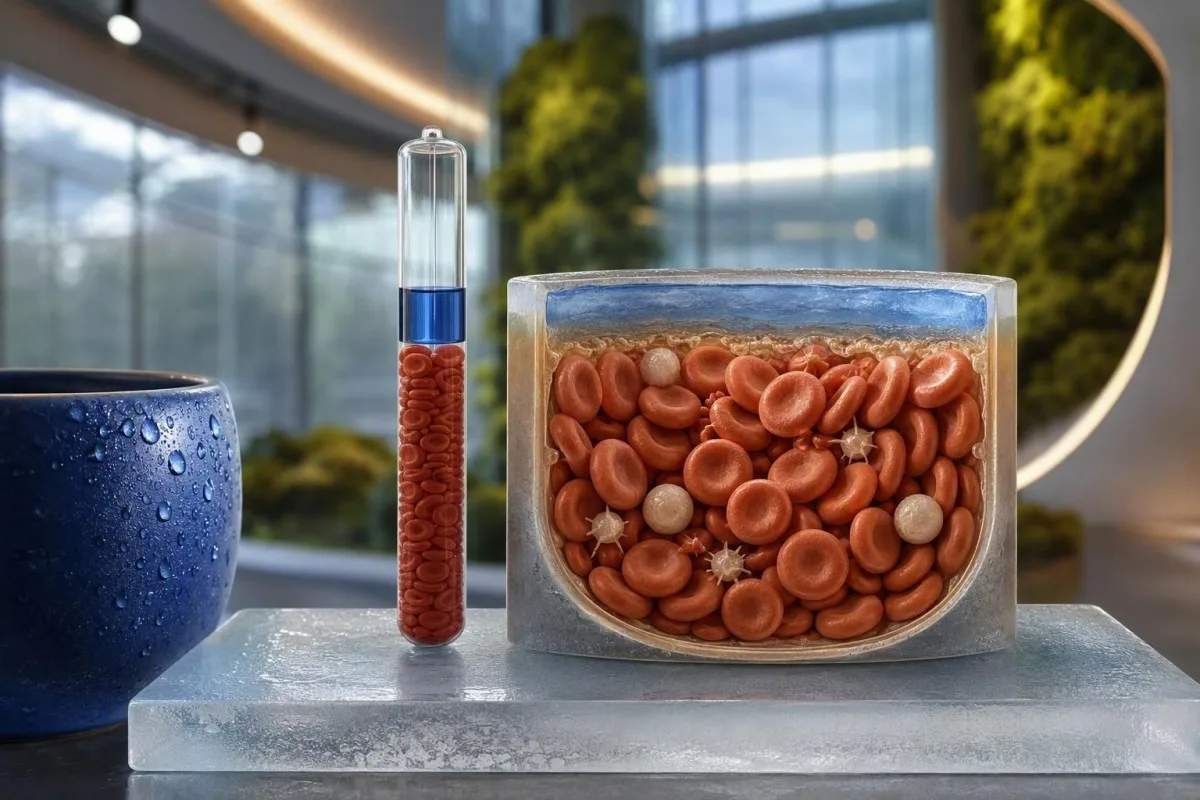
Un conteggio elevato di RBC può riflettere un sangue concentrato piuttosto che un eccesso di globuli rossi. Il primo compito è distinguere la perdita temporanea di liquidi da un innalzamento persistente che richiede un accertamento adeguato.


- Eritrocitosi relativa significa che l'acqua plasmatica è diminuita, facendo apparire alti il conteggio RBC, l'emoglobina e l'ematocrito senza creare nuove cellule.
- Soglia OMS i valori che supportano una possibile policitemia vera sono emoglobina superiore a 16,5 g/dL negli uomini o 16,0 g/dL nelle donne, o ematocrito superiore rispettivamente al 49% e al 48%.
- Ripetizione del test dopo idratazione è solitamente ragionevole per un lieve innalzamento isolato dopo vomito, diarrea, esposizione al calore, digiuno o esercizio fisico intenso, se per il resto si è in buona salute.
- Diuretici può aumentare l'ematocrito attraverso la perdita di liquidi; non interrompere i farmaci prescritti senza consultare il medico che li ha prescritti.
- conta il pattern: albumina alta, proteine totali, sodio, rapporto BUN/creatinina e peso specifico dell'urina supportano la disidratazione più che una vera sovrapproduzione di globuli rossi.
- Ripetere i tempi si effettua comunemente 1-2 settimane dopo la guarigione, il ripristino dell'apporto normale di liquidi e 24-48 ore senza esercizio fisico insolitamente intenso, a meno che non siano presenti sintomi urgenti.
- elevazione persistente dopo una buona idratazione giustifica una valutazione per esposizione al fumo, disturbi respiratori nel sonno, altitudine, testosterone, malattie polmonari o renali, eritropoietina e spesso il test JAK2.
- Sintomi urgenti includono dolore toracico, nuova mancanza di respiro, debolezza unilaterale, perdita della vista, confusione o una gamba gonfia e dolorante; queste richiedono cure immediate, non un nuovo test domiciliare.
Cosa significa solitamente un risultato RBC elevato
Un conteggio elevato di RBC può essere un falso positivo dovuto alla disidratazione, quando la perdita di liquidi concentra la componente cellulare del sangue; ciò non significa automaticamente che il midollo stia producendo troppi globuli rossi. L'indizio è se l'emoglobina e l'ematocrito si normalizzano dopo il recupero e una normale idratazione, anziché rimanere elevati in un CBC ripetuto dopo un'adeguata preparazione.
Il conteggio degli RBC riporta il numero di globuli rossi per litro, mentre ematocrito riporta la frazione di sangue intero occupata da tali cellule. Gli intervalli di riferimento per adulti variano a seconda del laboratorio, ma molti utilizzano circa 4,5–5,9 × 10¹²/L per gli uomini e 4,1–5,1 × 10¹²/L per le donne. Un valore appena sopra l'intervallo è spesso meno informativo dell'emoglobina e dell'ematocrito ad esso associati; la nostra guida su cosa include una CBC spiega perché.
La disidratazione riduce la componente liquida del sangue nel giro di poche ore, quindi la stessa massa di globuli rossi occupa un volume misurato inferiore. In clinica, lo riscontro comunemente dopo un'infezione gastrointestinale: RBC 5,8 × 10¹²/L, emoglobina 17,1 g/dL, ematocrito 51%, seguiti da valori normali dopo il recupero. Questa è eritrocitosi relativa, non un errore di laboratorio e non necessariamente una malattia.
Kantesti è un Analizzatore di analisi del sangue AI che legge insieme RBC, emoglobina, ematocrito, indici eritrocitari, marker renali e risultati precedenti. A partire dal 5 settembre 2026, il nostro flusso di lavoro di revisione clinica tratta un singolo segnale borderline nel CBC come un invito a verificare la preparazione e l'andamento, non come una diagnosi.
Il conteggio RBC non è uguale alla massa eritrocitaria
Un CBC non può misurare direttamente la massa eritrocitaria totale. Misura la concentrazione, che aumenta quando il volume plasmatico si contrae; gli studi specialistici sulla massa eritrocitaria con isotopi sono ora raramente necessari, ma illustrano perché un CBC concentrato può sembrare allarmante senza un effettivo aumento delle cellule.
Eritrocitosi relativa rispetto al vero eccesso di globuli rossi
L'eritrocitosi relativa è un RBC, emoglobina o ematocrito elevato causato da una riduzione del volume plasmatico, mentre l'eritrocitosi assoluta riflette un aumento genuino della massa eritrocitaria. L'idratazione può correggere il primo quadro, ma non correggerà il secondo.
La vera eritrocitosi può essere primaria, come nella policitemia vera, o secondaria a un aumento dell'eritropoietina dovuto a bassa ossigenazione, farmaci o, raramente, a un processo renale. I criteri WHO del 2016 utilizzano l'emoglobina superiore a 16,5 g/dL negli uomini o 16,0 g/dL nelle donne come soglie che dovrebbero sollevare il sospetto di policitemia vera, in particolare se persistente (Arber et al., 2016). Un singolo valore non è sufficiente per diagnosticarla.
La distinzione pratica risiede nel resto del pannello. Disidratazione con conteggio RBC elevato i quadri spesso includono albumina, proteine totali, urea/BUN, sodio elevati e urine concentrate; l'eritrocitosi assoluta può lasciare questi marker invariati. Consultate il nostro articolo specifico su emoglobina leggermente elevata se l'emoglobina, piuttosto che il solo RBC, è il risultato segnalato.
Un conteggio RBC normale non esclude l'eritrocitosi se l'emoglobina o l'ematocrito sono elevati, e un conteggio RBC elevato da solo può verificarsi con globuli rossi piccoli dovuti a carenza di ferro o tratto talassemico. Ecco perché MCV e ferritina sono importanti; un RBC elevato con MCV inferiore a 80 fL rappresenta un contesto clinico diverso.
In che modo la disidratazione modifica il CBC e i marker renali
La disidratazione solitamente aumenta contemporaneamente RBC, emoglobina ed ematocrito, e spesso aumenta albumina, proteine totali, urea/BUN, creatinina e la concentrazione urinaria. Un risultato discordante, ad esempio RBC elevato con emoglobina bassa, non si adatta bene a una semplice emoconcentrazione.
Un rapporto BUN/creatinina superiore a circa 20:1 nelle unità statunitensi può supportare una ridotta perfusione renale dovuta alla perdita di liquidi, sebbene il sanguinamento gastrointestinale, l’apporto proteico, i corticosteroidi e la ridotta massa muscolare possano alterare il rapporto. La creatinina può aumentare modestamente dopo l’esposizione al calore o una corsa lunga, perché cambiano sia la filtrazione sia il metabolismo muscolare. Il nostro guida sulla disidratazione e l'eGFR tratta i casi in cui un eGFR basso dovrebbe essere ripetuto.
Un peso specifico urinario pari o superiore a 1,025 è compatibile con urine concentrate, ma non è un indicatore diretto dell’idratazione. Anche il glucosio, le proteine e alcuni mezzi di contrasto per esami di diagnostica per immagini possono aumentarlo; pertanto, un medico dovrebbe interpretarlo insieme ai sintomi e agli elettroliti. Un riferimento del peso specifico urinario è utile quando il CBC e l’esame delle urine sono stati eseguiti lo stesso giorno.
Sconsiglio di cercare di normalizzare un esame bevendo diversi litri immediatamente prima del prelievo. Bere eccessivamente in modo rapido può ridurre la natremia e produce un altro campione non rappresentativo; per le persone senza restrizioni dei liquidi, consumare pasti normali e assumere liquidi secondo la sete abituale per 24–48 ore è generalmente più sicuro.
Vomito, diarrea, caldo, digiuno e diuretici
Vomito, diarrea, sudorazione intensa, digiuno prolungato e farmaci diuretici possono tutti causare temporaneamente un’elevata concentrazione di RBC riducendo l’acqua plasmatica. Il grado di aumento dipende più dalla perdita e dalla reintegrazione dei liquidi che da quanto una persona si sente indisposta.
Il vomito acuto spesso causa ipocloremia e talvolta bicarbonato elevato perché si perdono acido gastrico e liquidi. I diuretici dell’ansa, come la furosemide, e i tiazidici possono produrre un profilo simile di contrazione del volume, soprattutto negli anziani. Un basso livello di cloro rientra nello stesso quadro clinico; vedere gli indizi relativi al cloro nel vomito e nell’uso di diuretici per il pattern.
Non sospendere un diuretico prescritto per migliorare un CBC senza il parere medico. Le persone che assumono questi farmaci per insufficienza cardiaca, cirrosi, ipertensione resistente o malattia renale possono aver bisogno di un piano personalizzato per i liquidi, poiché bere indiscriminatamente può peggiorare l’edema o la dispnea. La domanda corretta è se la dose, i sintomi, il peso, la pressione arteriosa e i risultati renali siano coerenti tra loro.
La sete è utile, ma non è un indicatore perfetto negli adulti di età superiore a 65 anni e nelle persone con diabete, malattia renale o alcune patologie neurologiche. Urine giallo scuro, bocca secca, capogiri quando ci si alza, riduzione della diuresi e una perdita di peso di 1 kg nell’arco di 24 ore possono indicare una perdita di liquidi, ma i sintomi gravi richiedono una valutazione anziché l’autotrattamento.
L'esercizio fisico può concentrare temporaneamente il sangue
L’esercizio di resistenza intenso può aumentare l’ematocrito e l’emoglobina per diverse ore attraverso la perdita di sudore e gli spostamenti del volume plasmatico, sebbene l’allenamento ripetuto possa ridurre l’ematocrito basale grazie all’espansione del volume plasmatico. Pertanto, il momento della misurazione è particolarmente importante per gli atleti.
Una corsa di 90 minuti con clima caldo può comportare la perdita di 1–3 litri di liquidi, a seconda della corporatura, del clima e della velocità di sudorazione. Un prelievo effettuato immediatamente dopo una gara può inoltre mostrare valori più elevati di creatinina, CK, albumina e proteine totali; questo insieme di dati è più utile del solo risultato relativo agli RBC. Il nostro guida sui tempi degli esami del sangue per la maratona illustra i marcatori di recupero che cambiano comunemente.
Per il monitoraggio di routine, di solito suggerisco di evitare esercizio insolitamente intenso per 24–48 ore prima del prelievo, di arrivare riposati e di bere normalmente il giorno precedente. Questa non è una regola di laboratorio universale e il monitoraggio degli atleti d’élite può prevedere deliberatamente test sotto sforzo, ma la coerenza conta più della perfezione. Il dottor Thomas Klein ha visto scomparire molti invii non necessari a uno specialista quando l’atleta viene sottoposto nuovamente al test dopo una normale settimana di recupero.
Kantesti’s Guida alla ricerca su BUN e creatinina è particolarmente utile quando un atleta di resistenza presenta sia un ematocrito elevato sia un valore renale borderline. Una diminuzione del peso, un’elevata densità urinaria e un breve intervallo di recupero rendono plausibile l’emoconcentrazione; dolori muscolari, urine color cola o un CK molto elevato richiedono un livello di cautela diverso.
Un piano sicuro per ripetere un CBC leggermente alto
Un numero di RBC lievemente elevato può generalmente essere ricontrollato dopo 1–2 settimane di recupero, un’idratazione normale e un uso stabile dei farmaci, in assenza di sintomi d’allarme. Ripetere prima il test solo se lo richiede il medico o se il risultato iniziale era significativamente elevato.
Prima del controllo, annotare se nelle 72 ore precedenti si sono verificati diarrea, vomito, febbre, consumo di alcol, permanenza in sauna, lunghi viaggi, esposizione all’altitudine, digiuno o esercizio intenso. Mantenere la dieta abituale e il consueto programma dei farmaci, salvo diversa indicazione del medico. Questa guida alla preparazione per gli esami del sangue di base contiene una lista di controllo pratica per evitare variazioni accidentali.
Quando possibile, utilizzare lo stesso laboratorio, poiché i metodi degli analizzatori e gli intervalli di riferimento differiscono. Richiedere un CBC con emoglobina, ematocrito, MCV, RDW, conta dei globuli bianchi e piastrine; un aumento persistente accompagnato da piastrine o globuli bianchi elevati è più preoccupante per un processo midollare rispetto a un’eritrocitosi isolata. Un’infezione recente può influenzare queste linee cellulari in direzioni opposte, pertanto è importante considerare il pannello completo.
Kantesti è un servizio di interpretazione dei test del laboratorio di IA che confronta un nuovo CBC con i valori precedenti e segnala le variazioni che superano la normale variabilità. Il nostro approccio basato sull’andamento nel tempo non sostituisce il medico, ma può preservare il contesto fondamentale—esercizio, malattia, farmaci ed ematocrito precedente—che spesso va perso quando si considera un singolo risultato isolatamente.
Quando un risultato alto ripetuto necessita di test per l'eritrocitosi
Un’emoglobina persistentemente superiore a 16.5 g/dL negli uomini o a 16.0 g/dL nelle donne, oppure un ematocrito superiore a 49% o 48%, dovrebbe indurre il medico a valutare un’eritrocitosi dopo aver escluso la disidratazione. I primi esami abituali sono CBC ripetuto, livello di eritropoietina, valutazione dell’ossigenazione e ricerca della mutazione JAK2 quando appropriato.
La policitemia vera è una neoplasia mieloproliferativa in cui le mutazioni JAK2 sono presenti in circa 98% dei pazienti colpiti. Un livello basso di eritropoietina sierica supporta una sovrapproduzione primaria da parte del midollo, ma nessun singolo esame del sangue dovrebbe essere interpretato isolatamente. La linea guida della British Society for Haematology raccomanda un approccio strutturato che distingua l’eritrocitosi primaria da quella secondaria (McMullin et al., 2019).
I sintomi possono essere sfumati: mal di testa, vista offuscata, prurito dopo una doccia calda, insolito arrossamento del viso, stanchezza o una precedente trombosi possono essere più importanti dell’esatto valore degli RBC. Per una spiegazione più completa di ematocrito, eritropoietina e JAK2, leggere il nostro guida ai sintomi della policitemia. Molte persone con un lieve aumento nei risultati di laboratorio non presentano nessuna di queste caratteristiche.
Faccio attenzione a non far intendere che ogni aumento persistente della conta significhi un tumore. L’esposizione al monossido di carbonio correlata al fumo, l’apnea notturna non trattata, le malattie polmonari, il testosterone, l’alta quota e alcune patologie renali sono spiegazioni più comuni in molti ambulatori. Tuttavia, la persistenza è proprio il motivo per cui un CBC di controllo non dovrebbe trasformarsi in un ciclo interminabile di ripetizioni casuali degli esami.
Basso apporto di ossigeno, fumo e apnea notturna come cause di RBC alto
Una carenza cronica di ossigeno può stimolare l’eritropoietina e causare un autentico aumento del numero di globuli rossi; l’apnea notturna, l’esposizione al monossido di carbonio correlata al fumo e le malattie polmonari sono cause frequenti. Una normale saturazione di ossigeno durante il giorno non esclude completamente cali notturni dell’ossigenazione.
L’apnea ostruttiva del sonno può causare un’eritrocitosi moderata, in particolare quando si verificano desaturazioni notturne significative. Russamento forte, pause respiratorie osservate, cefalea mattutina, ipertensione resistente e sonnolenza diurna dovrebbero indurre a raccogliere un’anamnesi mirata al sonno, anziché presumere che tutto sia spiegato dalla disidratazione. Una guida ai test ematici per la dispnea delinea il contesto cardiopolmonare più ampio.
Il fumo di sigaretta aumenta la carbossiemoglobina, riducendo l’apporto di ossigeno nonostante un pulsossimetro che può sembrare rassicurante. Lo svapo non determina la stessa esposizione al monossido di carbonio del tabacco combusto, ma comporta altri rischi per la salute e dovrebbe comunque essere discusso con onestà. Il test del monossido di carbonio o la co-ossimetria sono talvolta più utili di una misurazione routinaria della saturazione di ossigeno.
Kantesti L’IA interpreta un valore elevato di RBC insieme a emoglobina, ematocrito, marker renali e fattori riferiti relativi al sonno o al fumo, invece di presentare un elenco generico di cause. Questa lettura contestualizzata è particolarmente utile quando l’ematocrito è pari al 50% dopo l’idratazione e il paziente riferisce un sonno non ristoratore.
Altitudine, testosterone e farmaci che aumentano gli RBC
Vivere o allenarsi ad alta quota e usare testosterone può aumentare la produzione di globuli rossi, quindi l’aumento può essere reale e non correlato alla disidratazione. Spesso è il momento dell’esposizione, più che il valore iniziale, a fornire la risposta.
Ad alta quota, la minore pressione dell’ossigeno stimola l’eritropoietina e aumenta l’emoglobina nell’arco di giorni o settimane; l’intervallo atteso dipende dall’altitudine, dalla durata, dall’ascendenza e dai dati di riferimento del laboratorio. Un CBC eseguito durante o poco dopo un soggiorno in montagna dovrebbe essere interpretato tenendo conto di tale esposizione. Il nostro guida al nuovo test dell’emoglobina dopo un soggiorno in quota spiega perché è importante il momento del ritorno al livello del mare.
Le iniezioni, i gel e gli impianti di testosterone, così come alcuni agenti anabolizzanti, possono causare eritrocitosi. Molti protocolli terapeutici riducono o sospendono la terapia quando l’ematocrito raggiunge 54%, sebbene le decisioni sul rischio individuale differiscano, soprattutto nelle persone con malattie cardiovascolari o apnea del sonno. Non donare mai sangue né modificare una dose prescritta come alternativa al discutere il risultato con il medico prescrittore.
Meno comunemente, i farmaci antidiabetici SGLT2 possono causare un lieve aumento dell’ematocrito, in parte attraverso effetti sul volume plasmatico e forse tramite la segnalazione dell’eritropoietina. L’elenco dei farmaci dovrebbe includere prodotti androgeni da banco, trattamenti iniettabili e modifiche recenti, non solo i farmaci riportati nella cartella clinica elettronica.
Indizi nel CBC che cambiano il livello di preoccupazione
Un valore elevato di RBC è più preoccupante quando anche l’emoglobina e l’ematocrito sono elevati, soprattutto in presenza di piastrine aumentate, globuli bianchi elevati, eritropoietina bassa o cellule anomale allo striscio. Un valore elevato di RBC con MCV basso spesso indica invece disturbi caratterizzati da cellule di piccole dimensioni.
Un MCV inferiore a 80 fL con una conta di RBC relativamente elevata può verificarsi nel tratto talassemico, in cui le cellule sono piccole ma numerose. Anche la carenza di ferro può ridurre l’MCV, sebbene nel tempo riduca più spesso l’emoglobina; ferritina e saturazione della transferrina chiariscono la distinzione. Il nostro Confronto tra MCV e MCH spiega perché il solo numero di RBC può trarre in inganno.
Un numero elevato di globuli bianchi o di piastrine insieme a un ematocrito elevato non diagnostica la policitemia vera, ma abbassa la soglia per una valutazione ematologica. Possono seguire uno striscio di sangue periferico, ferritina, eritropoietina, il test per JAK2 e talvolta una valutazione del midollo osseo. Il nostro percorso di test per tumori del sangue mostra perché questi esami vengono eseguiti in sequenza anziché prescritti indiscriminatamente.
La regola pratica del dottor Thomas Klein è semplice: cercare concordanza tra segnali indipendenti. Un ematocrito del 52%, piastrine pari a 520 × 10⁹/L ed eritropoietina bassa rappresentano un quadro fondamentalmente diverso da un ematocrito del 50% dopo un’ondata di calore, con albumina a 5,3 g/dL e urine concentrate.
Sintomi e rischio di coaguli: quando un RBC alto è urgente
Rivolgersi urgentemente a un medico in caso di valore elevato di RBC associato a dolore toracico, improvvisa difficoltà respiratoria, tosse con sangue, svenimento, nuova debolezza, difficoltà nel parlare, perdita della vista o gamba dolorante e gonfia. Questi sintomi possono indicare un coagulo o un’altra condizione acuta e non devono mai aspettare la ripetizione del CBC.
Un ematocrito più elevato può aumentare la viscosità del sangue, ma i sintomi e il rischio vascolare complessivo determinano l’urgenza in modo più affidabile rispetto a un modesto aumento isolato. La policitemia vera comporta un riconosciuto rischio trombotico, particolarmente in presenza di età avanzata, precedenti trombosi, fattori di rischio cardiovascolare e valori non controllati. La revisione del 2021 di Tefferi e Barbui descrive un trattamento adattato al rischio, anziché trattare ogni valore elevato nello stesso modo.
Il mal di testa da solo è comune e aspecifico; il mal di testa associato a nuovi disturbi visivi, debolezza o confusione non lo è. Analogamente, il prurito dopo una doccia calda può verificarsi nella policitemia vera, ma anche in caso di pelle secca e allergia, quindi è un indizio, non una prova. Esaminare segnali d’allarme negli esami del sangue in caso di dolore toracico se i sintomi sono tra i motivi per cui è stato richiesto l’esame.
Non assumere aspirina solo perché la conta degli RBC è elevata, a meno che non lo raccomandi il medico. L’aspirina comporta rischi di sanguinamento e può essere inappropriata in presenza di ulcere, anticoagulanti, piastrine basse o determinate anamnesi cliniche. Quando compaiono sintomi neurologici focali o cardiopolmonari, chiamare i servizi di emergenza è la scelta più sicura.
Perché i tuoi CBC precedenti potrebbero rispondere alla domanda
Una conta degli RBC lievemente elevata e stabile per anni ha un significato diverso rispetto a un rapido aumento nell’arco di settimane; l’andamento può distinguere il proprio valore abituale da una nuova malattia. Confrontare i risultati usando emoglobina, ematocrito, MCV e, quando possibile, lo stesso laboratorio.
La variabilità biologica e quella dell’analizzatore fanno sì che una piccola variazione non rappresenti sempre un reale cambiamento fisiologico. Una differenza di 0,3 g/dL di emoglobina tra due prelievi può riflettere l’idratazione, la postura, l’orario o la normale variabilità; un aumento persistente da 15,2 a 17,3 g/dL merita maggiore attenzione. Il nostro articolo su cambiamenti di laboratorio significativi spiega il concetto del valore di cambiamento di riferimento.
Tieni una semplice registrazione dell’altitudine, del consumo di tabacco, della dose di testosterone, delle malattie, dell’esercizio fisico intenso, delle perdite mestruali e delle perdite di liquidi a ogni prelievo. Questa registrazione è clinicamente più utile che cercare un unico valore “ideale” esatto degli RBC. Nella mia esperienza, l’assenza di questo contesto è il motivo per cui i pazienti ricevono spiegazioni contraddittorie durante visite diverse.
Kantesti, un piattaforma di interpretazione dei biomarcatori AI, può visualizzare i valori seriali del CBC accanto ai marcatori renali e proteici per identificare i pattern di concentrazione. Incoraggiamo gli utenti a considerare l’analisi dell’andamento come preparazione al colloquio con il medico, non come sostituto di una visita o di esami mirati.
Considerazioni su gravidanza, età avanzata e malattie croniche
La gravidanza generalmente riduce l’emoglobina e l’ematocrito a causa dell’espansione del volume plasmatico; pertanto, un valore elevato in gravidanza merita una valutazione medica, anziché essere attribuito superficialmente alla disidratazione. Negli anziani e nelle persone con malattie cardiache o renali, i consigli sull’assunzione di liquidi devono essere personalizzati.
Durante la gravidanza, il volume plasmatico aumenta di circa il 40–50%, determinando una diluizione fisiologica; molti servizi di ostetricia valutano un’emoglobina superiore a 16,0 g/dL perché potrebbe indicare un’espansione plasmatica insufficiente o altri problemi. Il vomito intenso all’inizio della gravidanza può comunque concentrare il CBC, ma un aumento persistente dovrebbe essere discusso con il team ostetrico. Vedi segnali d’allarme degli esami del sangue in gravidanza per le situazioni che richiedono una valutazione nello stesso giorno.
Gli anziani potrebbero non riferire la sete in modo affidabile, mentre l’insufficienza cardiaca e la malattia renale avanzata possono rendere pericoloso un eccesso di liquidi. Una variazione rapida del gonfiore alle caviglie, del peso, della difficoltà respiratoria o della produzione di urina è più importante che cercare di raggiungere un obiettivo generico di assunzione d’acqua. Gli aggiustamenti dei diuretici devono essere effettuati dal medico che gestisce la patologia sottostante.
I bambini hanno intervalli di emoglobina specifici per età, e un valore che appare elevato in un portale per adulti può essere appropriato a una determinata età o altitudine. Un pediatra dovrebbe interpretare un aumento persistente, soprattutto in presenza di cianosi, cardiopatia congenita o scarso accrescimento.
Domande da porre al proprio medico dopo un conteggio RBC alto
Chiedi se il tuo risultato rappresenta un’emoconcentrazione, se anche l’emoglobina e l’ematocrito sono elevati e quali condizioni siano appropriate per ripetere l’esame in base alla tua storia clinica. Domande mirate prevengono sia un allarmismo prematuro sia la mancata identificazione di un’eritrocitosi persistente.
Porta il referto completo, non solo il valore degli RBC segnalato, insieme ai CBC precedenti e a un elenco aggiornato dei farmaci. Chiedi: “Albumina, proteine totali, sodio, creatinina, BUN/urea e concentrazione delle urine erano compatibili con una perdita di liquidi?” Questo guida alle proteine sieriche può aiutarti a capire perché l’albumina rientra in questa valutazione.
Se l’aumento persiste, chiedi se, in base al tuo quadro, siano indicati una valutazione dell’ossigenazione, uno studio del sonno, l’eritropoietina, la ferritina, il test per JAK2 o un invio all’ematologo. La risposta sarà diversa per un atleta di endurance di 28 anni con ematocrito al 50% e un fumatore di 67 anni con ematocrito al 55% e una precedente trombosi. L’anamnesi specifica modifica l’iter diagnostico.
La metodologia clinica di Kantesti è supervisionata secondo standard di qualità pubblicati e con il contributo di medici; i lettori possono consultare il nostro approccio di validazione medica prima di utilizzare qualsiasi interpretazione automatizzata. La conclusione del dottor Thomas Klein è che l’idratazione rappresenta una ragionevole prima verifica in caso di un lieve risultato isolato, ma valori elevati persistenti meritano una spiegazione reale.
La conclusione pratica su disidratazione e RBC alto
La disidratazione può causare un risultato di RBC apparentemente elevato concentrando il sangue, ma dovrebbe essere considerata solo un’ipotesi di lavoro quando il contesto clinico e i parametri di laboratorio associati sono concordanti. Un nuovo controllo normale dopo il recupero è rassicurante; un’elevazione persistente dovrebbe essere approfondita.
In caso di elevazione isolata e lieve dopo esposizione al calore, malattia gastrointestinale, digiuno o esercizio fisico intenso, recuperare normalmente e ripetere il CBC in condizioni costanti dopo circa 1–2 settimane. Evitare di assumere quantità eccessive di acqua e non modificare diuretici, testosterone o altri farmaci prescritti senza consultare un medico. Se non si è sicuri che il risultato sia solo marginalmente elevato, il nostro guida del risultato fuori intervallo spiega i flag di laboratorio.
In caso di ematocrito ripetutamente superiore a 49% negli uomini o a 48% nelle donne, oppure di emoglobina superiore a 16,5 g/dL o 16,0 g/dL, richiedere una valutazione mirata invece di ripetere indefinitamente l’esame. Nella fase successiva vengono comunemente considerati l’esposizione al fumo, l’apnea del sonno, l’altitudine, gli effetti dei farmaci, l’eritropoietina e lo stato di JAK2. I sintomi suggestivi di trombosi o ictus richiedono assistenza urgente.
Kantesti è un Strumento di analisi degli esami del sangue basato su AI progettato per organizzare questi risultati e i loro andamenti, ai fini di un confronto informato con il medico. I nostri revisori medici e Comitato consultivo medico sottolineano lo stesso principio: prima di tutto il contesto, ripetere gli esami quando è sicuro farlo e richiedere tempestivamente una valutazione clinica quando il quadro persiste.
Domande frequenti
La disidratazione può causare un aumento del numero di RBC?
Sì. La disidratazione può causare un aumento della conta degli RBC perché la perdita di acqua plasmatica concentra i globuli rossi in un volume ematico più piccolo, un quadro chiamato eritrocitosi relativa. Di solito l’emoglobina e l’ematocrito aumentano insieme alla conta degli RBC; anche l’albumina, le proteine totali, il BUN/azoto ureico o il peso specifico delle urine possono risultare elevati. Un lieve aumento isolato spesso si normalizza dopo il recupero e una normale idratazione, ma un ematocrito persistentemente superiore a 49% negli uomini o a 48% nelle donne richiede una valutazione clinica.
Quanta acqua dovrei bere prima di ripetere un test che ha rilevato RBC elevati?
La maggior parte degli adulti dovrebbe bere la solita quantità in base alla sete per 24–48 ore prima di ripetere un CBC, piuttosto che bere deliberatamente volumi eccessivi. Un obiettivo pratico è un’urina giallo paglierino e una minzione normale, non un’urina completamente limpida o un’assunzione forzata di acqua. Le persone con insufficienza cardiaca, nefropatia avanzata, cirrosi o un limite di liquidi prescritto dovrebbero chiedere al proprio medico un piano individuale. Bere diversi litri rapidamente può abbassare il sodio e produrre un risultato non rappresentativo.
Quanto tempo dopo la disidratazione dovrei ripetere un CBC?
Un CBC di controllo viene solitamente eseguito 1–2 settimane dopo la risoluzione di vomito, diarrea, febbre, esposizione al calore o esercizio fisico intenso. Per i cambiamenti legati all'esercizio fisico, evitare allenamenti insolitamente pesanti nelle 24–48 ore precedenti il prelievo e mantenere un normale apporto di liquidi. La tempistica può essere anticipata in caso di ematocrito marcatamente elevato, presenza di sintomi o anomalie nei marcatori renali. Ove possibile, utilizzare lo stesso laboratorio in modo che gli intervalli di riferimento e i metodi dell'analizzatore siano confrontabili.
Qual è il numero di RBC considerato pericolosamente alto?
Non esiste un unico conteggio di RBC che definisca una situazione di pericolo, poiché il rischio dipende maggiormente dall'ematocrito, dall'emoglobina, dai sintomi, dalla causa e dall'anamnesi di trombosi. Un ematocrito pari o superiore al 52% richiede generalmente una valutazione clinica tempestiva in giornata, mentre valori persistenti superiori al 49% negli uomini o al 48% nelle donne giustificano un approfondimento diagnostico per eritrocitosi. Dolore toracico, dispnea improvvisa, perdita della vista, debolezza, difficoltà nel parlare o una gamba gonfia e dolente sono condizioni urgenti a prescindere dal numero esatto. Questi sintomi richiedono una valutazione di emergenza invece di attendere l'idratazione o la ripetizione del test.
I diuretici possono causare un aumento dei globuli rossi?
I diuretici possono causare un aumento della concentrazione dei globuli rossi riducendo il volume plasmatico, specialmente dopo incrementi di dosaggio, in presenza di clima caldo, scarso apporto di liquidi, vomito o diarrea. Di solito non inducono il midollo a produrre globuli rossi in eccesso, pertanto l'effetto può regredire una volta ripristinato l'equilibrio idrico. Non interrompere autonomamente l'assunzione di furosemide, idroclorotiazide o altro diuretico prescritto, poiché questi farmaci potrebbero tenere sotto controllo insufficienza cardiaca, pressione arteriosa o edema. Discutere il CBC insieme a peso, pressione arteriosa, creatinina, sodio, potassio e sintomi.
Un numero elevato di RBC indica sempre policitemia vera?
No. La maggior parte dei risultati elevati di RBC non indica automaticamente una policitemia vera; disidratazione, monossido di carbonio legato al fumo, apnea notturna, altitudine, malattie polmonari e testosterone sono alternative comuni. La policitemia vera diventa più probabile quando l'emoglobina rimane superiore a 16,5 g/dL negli uomini o 16,0 g/dL nelle donne, l'ematocrito si mantiene sopra il 49% o il 48%, l'eritropoietina è bassa e il test JAK2 è positivo. La policitemia vera presenta una mutazione JAK2 in circa il 97% dei casi. Un medico dovrebbe interpretare questi esami come un quadro clinico, non effettuare una diagnosi basandosi su una singola segnalazione nel CBC.
Ottieni oggi l’analisi degli esami del sangue con IA (AI-Powered Blood Test Analysis)
Unisciti a oltre 2 milioni di utenti in tutto il mondo che si fidano di Kantesti per un’analisi istantanea e accurata degli esami di laboratorio. Carica i tuoi risultati analisi del sangue e ricevi un’interpretazione completa dei biomarcatori di 15,000+ in pochi secondi.
📚 Pubblicazioni di ricerca di riferimento
Klein, T., Mitchell, S., & Weber, H. (2026). Spiegazione del rapporto BUN/creatinina: guida al test della funzionalità renale. Kantesti AI Medical Research.
Klein, T., Mitchell, S., & Weber, H. (2026). Urobilinogeno nelle urine: guida completa all’analisi delle urine 2026. Kantesti AI Medical Research.
📖 Riferimenti medici esterni
⚕️ Esclusione di responsabilità medica
Questo articolo ha solo scopo educativo e non costituisce consulenza medica. Consulta sempre un operatore sanitario qualificato per decisioni su diagnosi e trattamento.
Segnali di fiducia E-E-A-T
Esperienza
Revisione clinica guidata da un medico dei flussi di lavoro di interpretazione degli esami.
Competenza
Focus sulla medicina di laboratorio su come i biomarcatori si comportano nel contesto clinico.
autorevolezza
Scritto dal dott. Thomas Klein con revisione della dott.ssa Sarah Mitchell e del Prof. Dr. Hans Weber.
Affidabilità
Interpretazione basata su evidenze, con percorsi di follow-up chiari per ridurre l’allarme.