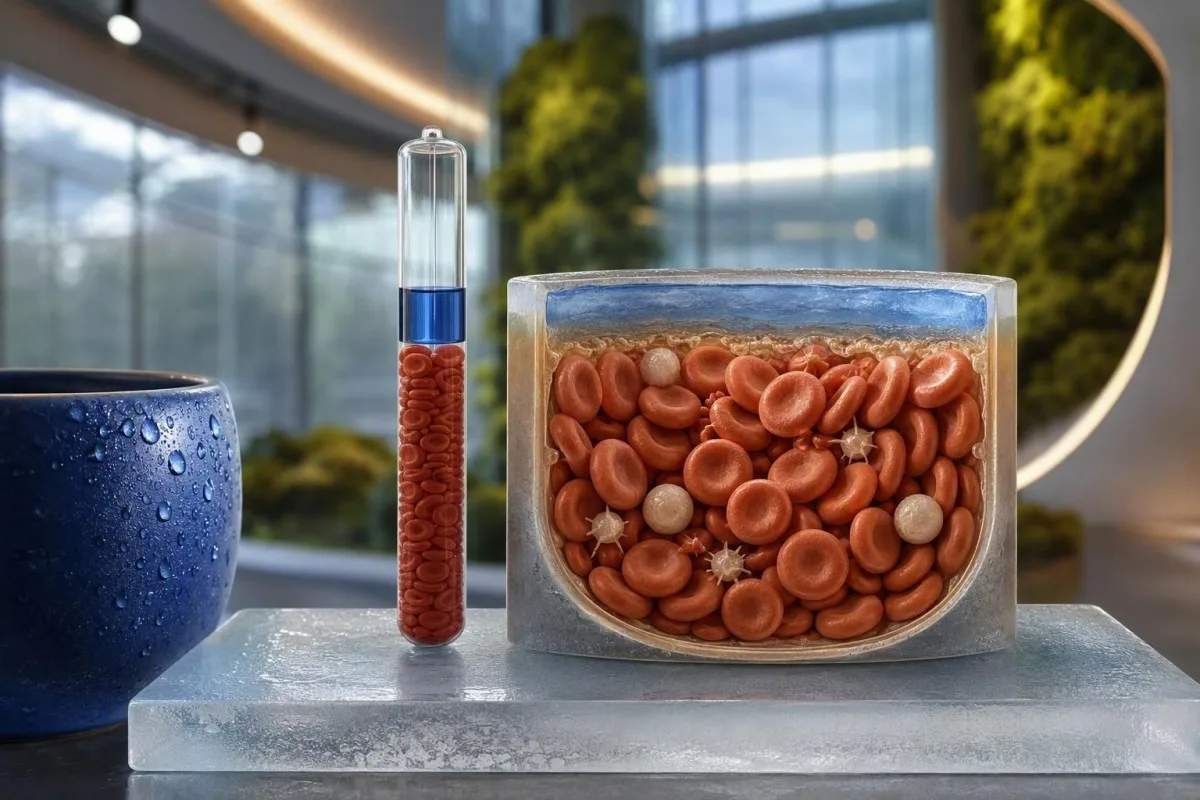
Wysoka liczba krwinek czerwonych może odzwierciedlać zagęszczenie krwi, a nie nadmiar erytrocytów. Pierwszym zadaniem jest odróżnienie przejściowej utraty płynów od trwałego podwyższenia, które wymaga właściwej diagnostyki.


- Erytrocytoza względna oznacza, że ilość osocza spadła, co sprawia, że liczba RBC, hemoglobina i hematokryt wyglądają na wysokie bez wytworzenia nowych komórek.
- Próg WHO wartości wspierające możliwą czerwienicę prawdziwą to hemoglobina powyżej 16,5 g/dL u mężczyzn lub 16,0 g/dL u kobiet, albo hematokryt powyżej 49% i 48% odpowiednio.
- Powtórne badanie po nawodnieniu jest zazwyczaj uzasadnione w przypadku łagodnego, izolowanego podwyższenia po wymiotach, biegunce, ekspozycji na ciepło, poście lub intensywnym wysiłku fizycznym – jeśli poza tym czujesz się dobrze.
- Leki moczopędne może podnieść hematokryt poprzez utratę płynów; nie należy przerywać przyjmowania przepisanych leków bez konsultacji z lekarzem, który je przepisał.
- liczy się wzorzec: wysoki poziom albumin, białka całkowitego, sodu, stosunku BUN/kreatynina oraz ciężar właściwy moczu bardziej przemawiają za odwodnieniem niż za rzeczywistą nadprodukcją krwinek czerwonych.
- Powtórzenie w odpowiednim czasie wykonuje się zazwyczaj 1–2 tygodnie po powrocie do zdrowia, przy normalnym spożyciu płynów i 24–48 godzinach bez wyjątkowo ciężkiego wysiłku fizycznego, chyba że występują pilne objawy.
- utrzymujący się wzrost po odpowiednim nawodnieniu uzasadnia ocenę w kierunku ekspozycji na dym tytoniowy, zaburzeń oddychania podczas snu, wysokości nad poziomem morza, stosowania testosteronu, chorób płuc lub nerek, poziomu erytropoetyny oraz często badań w kierunku mutacji JAK2.
- Objawy pilne obejmują ból w klatce piersiowej, nagłą duszność, jednostronne osłabienie, utratę wzroku, dezorientację lub bolesny obrzęk nogi; wymagają one natychmiastowej opieki medycznej, a nie powtórnego badania w domu.
Co zazwyczaj oznacza wysoki wynik RBC
Wysoki poziom RBC może być fałszywie zawyżony z powodu odwodnienia, gdy utrata płynów powoduje zagęszczenie składników komórkowych krwi; nie oznacza to automatycznie, że szpik produkuje zbyt wiele krwinek czerwonych. Wskazówką jest to, czy hemoglobina i hematokryt wracają do normy po wyzdrowieniu i odpowiednim nawodnieniu, zamiast pozostawać podwyższone w dobrze przeprowadzonym powtórnym CBC.
Liczba RBC określa liczbę krwinek czerwonych na litr, podczas gdy hematokryt wskazuje frakcję krwi pełnej zajmowaną przez te komórki. Zakresy referencyjne dla dorosłych różnią się w zależności od laboratorium, ale wiele z nich przyjmuje wartości około 4,5–5,9 × 10¹²/L dla mężczyzn oraz 4,1–5,1 × 10¹²/L dla kobiet. Wartość nieznacznie powyżej zakresu jest często mniej informatywna niż towarzyszące jej wyniki hemoglobiny i hematokrytu; nasz przewodnik po tym, co obejmuje CBC wyjaśnia dlaczego.
Odwodnienie obniża objętość płynnego składnika krwi w ciągu kilku godzin, więc ta sama masa krwinek czerwonych zajmuje mniejszą zmierzoną objętość. W klinice często widuję to po infekcji żołądkowej: RBC 5,8 × 10¹²/L, hemoglobina 17,1 g/dL, hematokryt 51%, a następnie prawidłowe wartości po wyzdrowieniu. Jest to erytrocytoza względna, a nie błąd laboratoryjny i niekoniecznie choroba.
Kantesti jest Analizator do badań krwi AI która łącznie interpretuje wyniki RBC, hemoglobiny, hematokrytu, wskaźników czerwonokrwinkowych, markerów nerkowych oraz wcześniejszych badań. Od 5 września 2026 r. nasz proces przeglądu klinicznego traktuje pojedynczy wynik graniczny w CBC jako sygnał do sprawdzenia przygotowania pacjenta i trendu, a nie jako diagnozę.
Liczba RBC to nie to samo co masa krwinek czerwonych
CBC nie może bezpośrednio zmierzyć całkowitej masy krwinek czerwonych. Mierzy ono stężenie, które wzrasta, gdy objętość osocza się kurczy; specjalistyczne badania izotopowe masy krwinek czerwonych są obecnie rzadko potrzebne, ale ilustrują one, dlaczego zagęszczony wynik CBC może wyglądać niepokojąco bez rzeczywistego wzrostu liczby komórek.
Erytrocytoza względna a rzeczywisty nadmiar krwinek czerwonych
Erytrocytoza względna to wysokie RBC, hemoglobina lub hematokryt spowodowane zmniejszoną objętością osocza, podczas gdy erytrocytoza bezwzględna odzwierciedla faktycznie zwiększoną masę krwinek czerwonych. Nawodnienie może skorygować pierwszy wzorzec, ale nie skoryguje drugiego.
Prawdziwa erytrocytoza może być pierwotna, jak w czerwienicy prawdziwej, lub wtórna do zwiększonego poziomu erytropoetyny z powodu niedotlenienia, stosowanych leków lub, rzadziej, procesów nerkowych. Kryteria WHO z 2016 r. przyjmują hemoglobinę powyżej 16,5 g/dL u mężczyzn lub 16,0 g/dL u kobiet jako progi, które powinny nasuwać podejrzenie czerwienicy prawdziwej, zwłaszcza gdy stan ten się utrzymuje (Arber i in., 2016). Pojedynczy wynik nie wystarcza do postawienia diagnozy.
Praktycznym rozróżnieniem jest analiza reszty panelu. Odwodnienie – wysoki poziom RBC wzorce często obejmują wysoki poziom albumin, białka całkowitego, mocznika/BUN, sodu oraz zagęszczony mocz; w przypadku erytrocytozy bezwzględnej markery te mogą pozostać w normie. Zapoznaj się z naszym dedykowanym artykułem na temat nieznacznie podwyższonej hemoglobiny jeśli to hemoglobina, a nie samo RBC, jest wynikiem przekraczającym normę.
Prawidłowa liczba RBC nie wyklucza erytrocytozy, jeśli poziom hemoglobiny lub hematokrytu jest wysoki, a podwyższona liczba RBC może występować samodzielnie przy małych krwinkach czerwonych w niedokrwistości z niedoboru żelaza lub cechach talasemii. Dlatego ważne są MCV i ferrytyna; wysokie RBC przy MCV poniżej 80 fL to inna kwestia kliniczna.
Jak odwodnienie wpływa na wyniki CBC i markery nerkowe
Odwodnienie zazwyczaj podnosi jednocześnie poziom RBC, hemoglobiny i hematokrytu, a często także poziom albumin, białka całkowitego, mocznika/BUN, kreatyniny oraz zagęszczenie moczu. Niespójny wynik – na przykład wysokie RBC przy niskiej hemoglobinie – nie pasuje dobrze do prostego zagęszczenia krwi.
Stosunek BUN do kreatyniny powyżej około 20:1 w jednostkach amerykańskich może wskazywać na zmniejszoną perfuzję nerek w wyniku utraty płynów, chociaż krwawienie z przewodu pokarmowego, spożycie białka, kortykosteroidy i mała masa mięśniowa mogą wpływać na ten wskaźnik. Kreatynina może nieznacznie wzrosnąć po ekspozycji na ciepło lub długim biegu, ponieważ zmieniają się zarówno filtracja, jak i metabolizm mięśni. Nasz przewodnik po odwodnieniu i eGFR artykuł omawia, kiedy należy powtórzyć badanie przy niskim eGFR.
Ciężar właściwy moczu wynoszący 1,025 lub więcej jest zgodny z zagęszczeniem moczu, ale nie stanowi bezpośredniego miernika nawodnienia. Glukoza, białko oraz niektóre środki kontrastowe stosowane w diagnostyce obrazowej również mogą go podwyższać, dlatego lekarz powinien interpretować go w powiązaniu z objawami i poziomem elektrolitów. Punkt odniesienia dla ciężaru właściwego moczu jest przydatny, gdy CBC i badanie ogólne moczu zostały wykonane tego samego dnia.
Odradzam próby wymuszonej normalizacji wyniku badania poprzez wypicie kilku litrów płynów bezpośrednio przed pobraniem krwi. Gwałtowne nadmierne nawodnienie może obniżyć poziom sodu i prowadzi do uzyskania kolejnej niemiarodajnej próbki; dla osób bez ograniczeń płynowych zazwyczaj bezpieczniejsze jest spożywanie normalnych posiłków i przyjmowanie płynów zgodnie z pragnieniem przez 24–48 godzin.
Wymioty, biegunka, wysoka temperatura, post i leki moczopędne
Wymioty, biegunka, obfite pocenie się, przedłużający się post oraz leki moczopędne mogą powodować przejściowe wysokie stężenie RBC poprzez zmniejszenie ilości wody w osoczu. Stopień podwyższenia zależy bardziej od utraty płynów i ich uzupełnienia niż od samopoczucia pacjenta.
Ostre wymioty często powodują niski poziom chlorków i czasami wysoki poziom wodorowęglanów z powodu utraty kwasu żołądkowego i płynów. Diuretyki pętlowe, takie jak furosemid, oraz tiazydy mogą wywoływać podobny profil wynikający ze skurczu objętości krwi, zwłaszcza u osób starszych. Niski wynik chlorków mieści się w tym samym kontekście klinicznym; zobacz wskazówki dotyczące poziomu chlorków przy wymiotach i stosowaniu diuretyków dla tego wzorca.
Nie należy odstawiać przepisanego leku moczopędnego w celu poprawy wyników CBC bez porady lekarskiej. Osoby przyjmujące te leki z powodu niewydolności serca, marskości wątroby, nadciśnienia opornego lub chorób nerek mogą potrzebować indywidualnego planu nawodnienia, ponieważ niekontrolowane picie płynów może pogorszyć obrzęki lub duszność. Właściwym pytaniem jest to, czy dawka, objawy, waga, ciśnienie krwi i wyniki nerkowe są ze sobą spójne.
Odczuwanie pragnienia jest pomocne, ale zawodne u osób powyżej 65. roku życia oraz u osób z cukrzycą, chorobami nerek lub niektórymi schorzeniami neurologicznymi. Ciemnożółty mocz, suchość w ustach, zawroty głowy przy zmianie pozycji, zmniejszone oddawanie moczu i spadek wagi o 1 kg w ciągu 24 godzin mogą wskazywać na utratę płynów, ale poważne objawy wymagają oceny lekarskiej, a nie samoleczenia.
Ćwiczenia fizyczne mogą tymczasowo zagęścić krew
Intensywny trening wytrzymałościowy może podnieść hematokryt i hemoglobinę na kilka godzin w wyniku utraty potu i przesunięć objętości osocza, mimo że powtarzane treningi mogą obniżyć wyjściowy hematokryt poprzez zwiększenie objętości osocza. Dlatego czas wykonania badania jest wyjątkowo ważny dla sportowców.
90-minutowy bieg w ciepłe dni może doprowadzić do utraty 1–3 litrów płynów, w zależności od masy ciała, klimatu i tempa pocenia się. Pobranie próbki bezpośrednio po wyścigu może również wykazać wyższy poziom kreatyniny, CK, albuminy i białka całkowitego; ta grupa wyników jest bardziej użyteczna niż sam wynik RBC. Nasz przewodnik po terminach badań krwi dla maratończyków omawia markery regeneracji, które często ulegają zmianom.
W ramach rutynowego monitorowania zazwyczaj sugeruję unikanie nietypowo intensywnych ćwiczeń 24–48 godzin przed pobraniem krwi, przybycie wypoczętym i normalne nawodnienie dzień wcześniej. Nie jest to uniwersalna zasada laboratoryjna, a w przypadku sportowców wyczynowych monitorowanie może celowo odbywać się pod obciążeniem – jednak konsekwencja jest ważniejsza niż perfekcja. Dr Thomas Klein widział wiele przypadków niepotrzebnych skierowań, które okazywały się zbędne, gdy sportowiec był badany ponownie po normalnym tygodniu regeneracji.
Kantesti’s Przewodnik badawczy BUN i kreatyniny jest szczególnie pomocne, gdy sportowiec wytrzymałościowy ma zarówno wysoki hematokryt, jak i graniczny wynik dotyczący nerek. Spadek masy ciała, wysoki ciężar właściwy moczu i krótki czas regeneracji sprawiają, że hemokoncentracja jest prawdopodobna; ból mięśni, mocz o kolorze coli lub bardzo wysoki poziom CK wymagają innego poziomu ostrożności.
Bezpieczny plan powtórzenia nieznacznie podwyższonego wyniku CBC
Lekko podwyższoną liczbę RBC można zazwyczaj sprawdzić ponownie po 1–2 tygodniach regeneracji, zwykłego nawodnienia i przyjmowania stabilnych leków, jeśli nie występują u Ciebie żadne niepokojące objawy. Powtórz badanie wcześniej tylko wtedy, gdy zażąda tego lekarz lub jeśli początkowy wynik był znacznie podwyższony.
Przed powtórnym badaniem odnotuj, czy w ciągu ostatnich 72 godzin wystąpiła biegunka, wymioty, gorączka, spożycie alkoholu, korzystanie z sauny, długa podróż, pobyt na wysokości, post lub intensywne ćwiczenia. Zachowaj swoją dotychczasową dietę i harmonogram przyjmowania leków, chyba że lekarz zaleci inaczej. Ten przewodnik przygotowania do podstawowych badań krwi zawiera praktyczną listę kontrolną, która pomoże uniknąć przypadkowych wahań.
Jeśli to możliwe, korzystaj z tego samego laboratorium, ponieważ metody analizatorów i przedziały referencyjne różnią się. Poproś o CBC z hemoglobiną, hematokrytem, MCV, RDW, liczbą białych krwinek i płytek krwi; utrzymujący się wysoki poziom przy jednoczesnej wysokiej liczbie płytek lub białych krwinek jest bardziej niepokojący w kontekście procesu szpikowego niż izolowana erytrocytoza. Niedawna choroba może wpływać na te parametry w przeciwnych kierunkach, dlatego pełny panel ma znaczenie.
Kantesti jest usłudze interpretacji testów laboratoryjnych AI porównujący nowe CBC z wcześniejszymi wartościami i wskazujący zmiany, które wykraczają poza zwykłą zmienność. Nasze podejście oparte na trendach nie zastępuje lekarza, ale pozwala zachować kluczowy kontekst – ćwiczenia, choroby, leki i wcześniejszy hematokryt – który często zostaje utracony, gdy analizuje się tylko pojedynczy wynik.
Kiedy powtórny wysoki wynik wymaga badań w kierunku erytrocytozy
Utrzymująca się wysoka hemoglobina powyżej 16,5 g/dL u mężczyzn lub 16,0 g/dL u kobiet, albo hematokryt powyżej 49% lub 48%, powinny skłonić lekarza do oceny erytrocytozy po wykluczeniu odwodnienia. Zazwyczaj pierwszymi badaniami są: powtórne CBC, poziom erytropoetyny, ocena saturacji tlenem oraz, w stosownych przypadkach, badanie w kierunku mutacji JAK2.
Czerwienica prawdziwa (polycythemia vera) to nowotwór mieloproliferacyjny, w którym mutacje JAK2 są wykrywane u około 1% dotkniętych chorobą pacjentów. Niski poziom erytropoetyny w surowicy przemawia za pierwotną nadprodukcją w szpiku, jednak żadne pojedyncze badanie krwi nie powinno być interpretowane w izolacji. Wytyczne British Society for Haematology zalecają ustrukturyzowane podejście, które odróżnia erytrocytozę pierwotną od wtórnej (McMullin i in., 2019).
Objawy mogą być subtelne: bóle głowy, niewyraźne widzenie, świąd po ciepłej kąpieli, nietypowe zaczerwienienie twarzy, zmęczenie lub przebyty zakrzep mogą mieć większe znaczenie niż dokładna wartość RBC. Aby uzyskać pełniejsze wyjaśnienie dotyczące hematokrytu, erytropoetyny i JAK2, przeczytaj nasz przewodniku po objawach policytemii. Wiele osób z łagodnie podwyższonymi wynikami laboratoryjnymi nie ma żadnej z tych cech.
Staram się nie sugerować, że każdy utrzymujący się wysoki wynik to nowotwór. Ekspozycja na tlenek węgla związana z paleniem tytoniu, nieleczony bezdech senny, choroby płuc, testosteron, duże wysokości i niektóre choroby nerek są w wielu gabinetach częstszymi przyczynami. Mimo to, utrzymywanie się wyników jest właśnie powodem, dla którego powtórne CBC nie powinno stać się niekończącym się cyklem przypadkowych badań.
Niski poziom tlenu, palenie tytoniu i bezdech senny jako przyczyny wysokiego RBC
Przewlekły niedobór tlenu może stymulować produkcję erytropoetyny i powodować rzeczywiście podwyższoną liczbę czerwonych krwinek; częstymi przyczynami są bezdech senny, ekspozycja na tlenek węgla związana z paleniem oraz choroby płuc. Prawidłowa saturacja tlenem w ciągu dnia nie wyklucza całkowicie nocnych spadków poziomu tlenu.
Obturacyjny bezdech senny może powodować umiarkowaną erytrocytozę, zwłaszcza gdy występują znaczne nocne desaturacje tlenu. Głośne chrapanie, zaobserwowane przerwy w oddychaniu, poranne bóle głowy, oporne nadciśnienie i senność w ciągu dnia powinny skłaniać do przeprowadzenia wywiadu pod kątem snu, zamiast zakładania, że za wszystko odpowiada odwodnienie. A przewodnik po badaniach krwi w przypadku duszności przedstawia szerszy kontekst krążeniowo-oddechowy.
Palenie papierosów zwiększa stężenie karboksyhemoglobiny, co zmniejsza dostarczanie tlenu, mimo że pulsoksymetr może wskazywać uspokajający wynik. Wapowanie nie powoduje takiej samej ekspozycji na tlenek węgla jak spalany tytoń, ale wiąże się z innymi zagrożeniami dla zdrowia i również należy o nim otwarcie rozmawiać. Badanie stężenia tlenku węgla lub ko-oksymetria bywają bardziej przydatne niż rutynowy pomiar saturacji tlenem.
Kantesti AI interpretuje wysoki wynik RBC w zestawieniu z hemoglobiną, hematokrytem, markerami czynności nerek oraz zgłaszanymi czynnikami związanymi ze snem lub paleniem, zamiast przedstawiać ogólną listę przyczyn. Taka interpretacja kontekstowa jest szczególnie cenna, gdy hematokryt wynosi 50% po nawodnieniu, a pacjent zgłasza sen, po którym nie czuje się wypoczęty.
Wysokość nad poziomem morza, testosteron i leki podnoszące RBC
Życie lub trening na dużej wysokości oraz stosowanie testosteronu może zwiększać produkcję krwinek czerwonych, dlatego podwyższenie może być rzeczywiste, a nie związane z odwodnieniem. Czas ekspozycji często dostarcza więcej informacji niż początkowa liczba.
Na dużej wysokości niższe ciśnienie parcjalne tlenu pobudza erytropoetynę i zwiększa stężenie hemoglobiny w ciągu dni lub tygodni; oczekiwany zakres zależy od wysokości, czasu trwania ekspozycji, pochodzenia etnicznego oraz danych referencyjnych laboratorium. Wynik CBC uzyskany podczas pobytu w górach lub krótko po nim należy interpretować z uwzględnieniem tej ekspozycji. Nasz przewodnik dotyczący powtórnego badania hemoglobiny po pobycie na dużej wysokości wyjaśnia, dlaczego ważny jest czas, jaki upłynął od powrotu na poziom morza.
Zastrzyki, żele i implanty testosteronu oraz niektóre środki anaboliczne mogą powodować erytrocytozę. W wielu protokołach leczenia dawkę zmniejsza się lub czasowo wstrzymuje terapię, gdy hematokryt osiąga 54%, chociaż indywidualne decyzje dotyczące ryzyka są różne, zwłaszcza u osób z chorobami układu sercowo-naczyniowego lub bezdechem sennym. Nigdy nie oddawaj krwi ani nie zmieniaj przepisanej dawki zamiast omówienia wyniku z lekarzem prowadzącym.
Rzadziej leki przeciwcukrzycowe z grupy SGLT2 mogą powodować niewielki wzrost hematokrytu, częściowo wskutek wpływu na objętość osocza, a być może także sygnalizację erytropoetyny. Lista leków powinna obejmować dostępne bez recepty produkty androgenne, preparaty do wstrzykiwań oraz niedawne zmiany leczenia — a nie tylko leki zapisane w elektronicznej dokumentacji.
Wskazówki w CBC, które zmieniają poziom niepokoju
Wysokie RBC budzi większe obawy, gdy hemoglobina i hematokryt również są podwyższone, zwłaszcza w przypadku zwiększonej liczby płytek krwi, leukocytów, niskiego stężenia erytropoetyny lub nieprawidłowych komórek w rozmazie. Wysokie RBC przy niskim MCV często wskazuje raczej na zaburzenia związane z małymi krwinkami.
MCV poniżej 80 fL przy względnie wysokiej liczbie RBC może występować w przypadku cechy talasemii, gdy krwinki są małe, ale liczne. Niedobór żelaza również może obniżać MCV, choć z czasem częściej obniża stężenie hemoglobiny; ferrytyna i wysycenie transferryny pomagają rozróżnić te stany. Nasz Porównanie MCV i MCH wyjaśnia, dlaczego sama liczba RBC może wprowadzać w błąd.
Wysoka liczba leukocytów lub płytek krwi w połączeniu z wysokim hematokrytem nie rozpoznaje czerwienicy prawdziwej, ale obniża próg do skierowania na konsultację hematologiczną. Następnie można wykonać rozmaz krwi obwodowej, oznaczyć ferrytynę i erytropoetynę, przeprowadzić badanie JAK2, a czasami także ocenę szpiku kostnego. Nasz ścieżka diagnostyki nowotworów krwi pokazuje, dlaczego badania te wykonuje się w określonej kolejności, zamiast zlecać je bezkrytycznie.
Praktyczna zasada doktora Thomasa Kleina jest prosta: należy szukać zgodności między niezależnymi sygnałami. Hematokryt wynoszący 52%, liczba płytek krwi 520 × 10⁹/L i niskie stężenie erytropoetyny tworzą zasadniczo inny obraz niż hematokryt 50% po fali upałów, przy stężeniu albuminy 5,3 g/dl i zagęszczonym moczu.
Objawy i ryzyko zakrzepicy: kiedy wysoki wynik RBC jest stanem pilnym
Pilnie zgłoś się po pomoc medyczną w przypadku wysokiego wyniku RBC z bólem w klatce piersiowej, nagłą dusznością, odkrztuszaniem krwi, omdleniem, nowym osłabieniem, zaburzeniami mowy, utratą widzenia lub bolesnym obrzękiem nogi. Objawy te mogą wskazywać na zakrzep lub inny ostry stan i nigdy nie powinny czekać na powtórzenie CBC.
Wyższy hematokryt może zwiększać lepkość krwi, ale to objawy i całkowite ryzyko naczyniowe bardziej wiarygodnie określają pilność niż umiarkowane, izolowane podwyższenie. Czerwienica prawdziwa wiąże się z rozpoznanym ryzykiem zakrzepowym, szczególnie w starszym wieku, po przebytym zakrzepie, przy czynnikach ryzyka sercowo-naczyniowego i niekontrolowanych wartościach morfologii. Przegląd Tefferiego i Barbuiego z 2021 roku opisuje leczenie dostosowane do ryzyka, zamiast traktowania każdego podwyższonego wyniku w ten sam sposób.
Sam ból głowy jest częsty i nieswoisty; ból głowy z nowymi zaburzeniami widzenia, osłabieniem lub splątaniem — nie. Podobnie świąd po gorącym prysznicu może występować w czerwienicy prawdziwej, ale także przy suchej skórze i alergii, dlatego jest wskazówką, a nie dowodem. Omówiony przegląd niepokojące wyniki badań krwi w przypadku bólu w klatce piersiowej jeśli objawy są jednym z powodów zlecenia badania.
Nie należy przyjmować aspiryny wyłącznie z powodu podwyższonej liczby RBC, chyba że zaleci to lekarz. Aspiryna wiąże się z ryzykiem krwawienia i może być niewłaściwa w przypadku choroby wrzodowej, stosowania leków przeciwkrzepliwych, małej liczby płytek krwi lub określonych chorób w wywiadzie. Gdy pojawią się ogniskowe objawy neurologiczne lub objawy ze strony układu krążenia i oddychania, bezpieczniejszym wyborem jest wezwanie pogotowia.
Dlaczego poprzednie wyniki CBC mogą odpowiedzieć na to pytanie
Utrzymująca się przez lata nieznacznie podwyższona liczba RBC ma inne znaczenie niż szybki wzrost w ciągu kilku tygodni, a analiza trendów pozwala odróżnić indywidualną wartość wyjściową od nowej choroby. W miarę możliwości porównuj wyniki, uwzględniając stężenie hemoglobiny, hematokryt, MCV oraz to samo laboratorium.
Zmienność biologiczna i zmienność analizatora oznaczają, że niewielka zmiana nie zawsze odzwierciedla rzeczywistą zmianę fizjologiczną. Różnica stężenia hemoglobiny wynosząca 0,3 g/dl między dwoma pobraniami może wynikać z nawodnienia, pozycji ciała, pory dnia lub zwykłej zmienności; utrzymujący się wzrost z 15,2 do 17,3 g/dl zasługuje na większą uwagę. Nasz artykuł na temat istotnych zmianach w laboratorium wyjaśnia pojęcie wartości zmiany referencyjnej.
Prowadź prostą dokumentację dotyczącą wysokości nad poziomem morza, palenia tytoniu, dawki testosteronu, choroby, intensywnego wysiłku fizycznego, krwawień miesiączkowych i utraty płynów przy każdym pobraniu. Taka dokumentacja jest klinicznie bardziej przydatna niż poszukiwanie jednej dokładnej “idealnej” liczby RBC. Z mojego doświadczenia wynika, że brak tych informacji jest przyczyną otrzymywania przez pacjentów sprzecznych wyjaśnień podczas różnych wizyt.
Kantesti, opracowane platforma do interpretacji biomarkerów przez AI, może przedstawiać kolejne wartości CBC obok markerów czynności nerek i stężeń białek, aby wykrywać wzorce zagęszczenia krwi. Zachęcamy użytkowników, aby traktowali analizę trendów jako przygotowanie do rozmowy z lekarzem, a nie zastępstwo badania lekarskiego lub ukierunkowanej diagnostyki.
Ciąża, starszy wiek i uwzględnienie chorób przewlekłych
Ciąża zwykle obniża stężenie hemoglobiny i hematokryt wskutek zwiększenia objętości osocza, dlatego podwyższona wartość w ciąży wymaga oceny lekarskiej, a nie pochopnego przypisywania jej odwodnieniu. U osób starszych oraz osób z chorobami serca lub nerek zalecenia dotyczące płynów muszą być ustalane indywidualnie.
W czasie ciąży objętość osocza zwiększa się o około 40–50%, powodując fizjologiczne rozcieńczenie krwi; wiele oddziałów położniczych prowadzi diagnostykę przy stężeniu hemoglobiny powyżej 16,0 g/dl, ponieważ może ono wskazywać na niewystarczające zwiększenie objętości osocza lub inne problemy. Nasilone wymioty we wczesnej ciąży mogą nadal powodować zagęszczenie krwi i podwyższenie parametrów CBC, ale utrzymujące się podwyższenie należy omówić z zespołem prowadzącym ciążę. Zobacz ciążowe czerwone flagi w badaniach krwi w sprawie sytuacji wymagających konsultacji tego samego dnia.
Osoby starsze mogą nie odczuwać pragnienia w sposób wiarygodny, natomiast niewydolność serca i zaawansowana choroba nerek mogą sprawiać, że nadmiar płynów będzie niebezpieczny. Szybka zmiana obrzęku kostek, masy ciała, duszności lub ilości oddawanego moczu ma większe znaczenie niż próba osiągnięcia ogólnego celu dotyczącego spożycia wody. Zmiany dawek leków moczopędnych powinny być ustalane z lekarzem prowadzącym chorobę podstawową.
U dzieci obowiązują zależne od wieku zakresy stężenia hemoglobiny, a wartość, która w portalu dla dorosłych wygląda na wysoką, może być prawidłowa dla określonego wieku lub wysokości nad poziomem morza. Utrzymujące się podwyższenie powinien ocenić pediatra, szczególnie w przypadku sinicy, wrodzonej wady serca lub zaburzeń wzrastania.
Pytania do lekarza po uzyskaniu wysokiego wyniku RBC
Zapytaj, czy Twój wynik wskazuje na hemokoncentrację, czy hemoglobina i hematokryt również są podwyższone oraz w jakich warunkach należy powtórzyć badanie, uwzględniając Twój stan zdrowia. Trafne pytania zapobiegają zarówno przedwczesnemu niepokojowi, jak i przeoczeniu utrzymującej się erytrocytozy.
Przynieś pełny raport, a nie tylko oznaczoną jako nieprawidłowa wartość RBC, a także wcześniejsze wyniki CBC i aktualną listę leków. Zapytaj: “Czy stężenia albuminy, białka całkowitego, sodu, kreatyniny, BUN/mocznika oraz zagęszczenie moczu wskazywały na utratę płynów?” To białka surowicy guide może pomóc zrozumieć, dlaczego albumina jest uwzględniana w tej ocenie.
Jeśli podwyższenie się utrzymuje, zapytaj, czy w Twoim przypadku zasadne są ocena utlenowania krwi, badanie snu, oznaczenie erytropoetyny, ferrytyny, badanie JAK2 lub skierowanie do hematologa. Odpowiedź będzie inna w przypadku 28-letniego sportowca wytrzymałościowego z hematokrytem wynoszącym 50% oraz 67-letniego palacza z hematokrytem wynoszącym 55% i przebytym zakrzepem. Szczegółowe informacje z wywiadu zmieniają zakres diagnostyki.
Metodologia kliniczna Kantesti jest nadzorowana zgodnie z opublikowanymi standardami jakości i przy udziale lekarzy; przed skorzystaniem z jakiejkolwiek automatycznej interpretacji czytelnicy mogą zapoznać się z naszym podejście do walidacji medycznej . Najważniejszy wniosek dr. Thomasa Kleina jest taki, że nawodnienie jest rozsądnym pierwszym krokiem przy łagodnym, izolowanym odchyleniu, ale utrzymujące się wysokie wartości wymagają rzeczywistego wyjaśnienia.
Praktyczne podsumowanie dotyczące odwodnienia i wysokiego RBC
Odwodnienie może powodować pozornie podwyższony wynik RBC wskutek zagęszczenia krwi, ale należy je uznawać jedynie za robocze wyjaśnienie, gdy kontekst kliniczny i towarzyszące wyniki laboratoryjne są z nim zgodne. Prawidłowy wynik powtórnego badania po powrocie do zdrowia jest uspokajający; utrzymujące się podwyższenie wymaga diagnostyki.
W przypadku izolowanego, niewielkiego podwyższenia po upale, chorobie przewodu pokarmowego, poście lub intensywnym wysiłku należy normalnie wrócić do zdrowia i powtórzyć CBC w porównywalnych warunkach po około 1–2 tygodniach. Należy unikać nadmiernego spożywania wody oraz nie zmieniać dawek leków moczopędnych, testosteronu ani innych przepisanych leków bez konsultacji. Jeśli nie masz pewności, czy wynik jest tylko nieznacznie odchylony, nasz przewodnik po wyniku poza zakresem wyjaśnia oznaczenia laboratoryjne.
W przypadku powtarzającego się hematokrytu powyżej 49% u mężczyzn lub 48% u kobiet albo stężenia hemoglobiny powyżej 16,5 g/dl lub 16,0 g/dl należy poprosić o ukierunkowaną ocenę zamiast bezterminowo powtarzać badania. W kolejnej fazie zwykle bierze się pod uwagę narażenie na dym tytoniowy, bezdech senny, przebywanie na dużych wysokościach, wpływ leków, erytropoetynę oraz status JAK2. Objawy sugerujące zakrzep lub udar wymagają pilnej pomocy medycznej.
Kantesti jest Narzędzie do analizy wyników badań krwi oparte na AI opracowane w celu uporządkowania tych wyników i ich trendów na potrzeby świadomej rozmowy medycznej. Nasi recenzenci-lekarze oraz Rada doradcza ds. medycznych podkreślają tę samą zasadę: najpierw kontekst, następnie bezpieczne powtórzenie badań, a w przypadku utrzymywania się wzorca — szybka konsultacja kliniczna.
Często zadawane pytania
Czy odwodnienie może powodować wysoki poziom RBC?
Tak. Odwodnienie może powodować wysokie stężenie RBC, ponieważ utrata wody z osocza powoduje zagęszczenie krwinek czerwonych w mniejszej objętości krwi; zjawisko to nazywane jest erytrocytozą względną. Hemoglobina i hematokryt zazwyczaj rosną wraz z liczbą RBC, a stężenie albumin, białka całkowitego, BUN/mocznika lub ciężar właściwy moczu również mogą być podwyższone. Łagodny, izolowany wzrost często normalizuje się po powrocie do zdrowia i odpowiednim nawodnieniu, jednak utrzymujący się poziom hematokrytu powyżej 49% u mężczyzn lub 48% u kobiet wymaga oceny klinicznej.
Ile wody powinienem wypić przed powtórzeniem badania wysokiego poziomu RBC?
Większość osób dorosłych powinna przez 24–48 godzin przed powtórnym badaniem CBC spożywać płyny w ilości odpowiadającej pragnieniu, zamiast celowo pić ich nadmierne ilości. Praktycznym celem jest uzyskanie bladożółtego moczu i prawidłowa częstotliwość oddawania moczu, a nie całkowicie przejrzysty mocz czy wymuszone spożycie wody. Osoby z niewydolnością serca, zaawansowaną chorobą nerek, marskością wątroby lub zaleconym ograniczeniem płynów powinny ustalić indywidualny plan ze swoim lekarzem. Szybkie wypicie kilku litrów płynów może obniżyć poziom sodu i prowadzić do uzyskania niemiarodajnego wyniku.
Jak długo po odwodnieniu należy powtórzyć CBC?
Powtórne badanie CBC wykonuje się zazwyczaj 1–2 tygodnie po ustąpieniu wymiotów, biegunki, gorączki, przegrzania organizmu lub intensywnego wysiłku fizycznego. W przypadku zmian związanych z wysiłkiem fizycznym należy unikać wyjątkowo ciężkich treningów na 24–48 godzin przed pobraniem próbki oraz utrzymywać prawidłowe nawodnienie. Badanie można wykonać wcześniej, jeśli hematokryt jest znacznie podwyższony, występują objawy kliniczne lub nieprawidłowe są markery czynności nerek. Jeśli to możliwe, należy korzystać z tego samego laboratorium, aby zapewnić porównywalność zakresów referencyjnych i metod analitycznych.
Jaka liczba RBC jest uważana za niebezpiecznie wysoką?
Nie istnieje jedna wartość RBC, która definiuje zagrożenie, ponieważ ryzyko zależy bardziej od hematokrytu, hemoglobiny, objawów, przyczyny oraz historii zakrzepicy. Wartość hematokrytu na poziomie 60% lub wyższa zazwyczaj wymaga pilnej oceny klinicznej tego samego dnia, podczas gdy utrzymujące się wartości powyżej 49% u mężczyzn lub 48% u kobiet uzasadniają diagnostykę w kierunku nadkrwistości. Ból w klatce piersiowej, nagła duszność, utrata wzroku, osłabienie, trudności z mową lub bolesny obrzęk nogi są stanami pilnymi, niezależnie od dokładnej liczby. Objawy te wymagają pilnej oceny medycznej, zamiast czekania na nawodnienie lub powtórne badanie.
Czy leki moczopędne mogą powodować podwyższoną liczbę czerwonych krwinek?
Leki moczopędne mogą powodować podwyższone stężenie czerwonych krwinek poprzez zmniejszenie objętości osocza, zwłaszcza po zwiększeniu dawki, w czasie upałów, przy niewystarczającym przyjmowaniu płynów, wymiotach lub biegunce. Zazwyczaj nie powodują one, że szpik produkuje dodatkowe czerwone krwinki, więc efekt ten może ustąpić po wyrównaniu gospodarki wodnej. Nie należy samodzielnie odstawiać furosemidu, hydrochlorotiazydu ani innego przepisanego leku moczopędnego, ponieważ leki te mogą kontrolować niewydolność serca, ciśnienie krwi lub obrzęki. Wyniki CBC należy omówić wraz z wagą, ciśnieniem krwi, poziomem kreatyniny, sodu, potasu oraz objawami.
Czy wysoki poziom RBC zawsze oznacza czerwienicę prawdziwą?
Nie. Większość podwyższonych wyników RBC nie oznacza automatycznie czerwienicy prawdziwej; częstymi alternatywnymi przyczynami są odwodnienie, tlenek węgla związany z paleniem tytoniu, bezdech senny, wysokość nad poziomem morza, choroby płuc oraz testosteron. Czerwienica prawdziwa staje się bardziej prawdopodobna, gdy stężenie hemoglobiny utrzymuje się powyżej 16,5 g/dL u mężczyzn lub 16,0 g/dL u kobiet, hematokryt utrzymuje się powyżej 49% lub 48%, stężenie erytropoetyny jest niskie, a wynik badania w kierunku mutacji JAK2 jest dodatni. W przypadku czerwienicy prawdziwej mutacja JAK2 występuje w około 97% przypadków. Lekarz powinien interpretować te wyniki jako wzorzec, a nie diagnozować na podstawie jednego sygnału ostrzegawczego w CBC.
Uzyskaj analizę wyników badań krwi zasilaną przez AI już dziś
Dołącz do ponad 2 milionów użytkowników na całym świecie, którzy ufają Kantesti w zakresie natychmiastowej, dokładnej analizy badań laboratoryjnych. Prześlij swoje wyniki badań krwi i otrzymaj kompleksową interpretację biomarkerów 15,000+ w kilka sekund.
📚 Publikacje badawcze z odniesieniami
Klein, T., Mitchell, S., & Weber, H. (2026). Wyjaśnienie stosunku BUN do kreatyniny: Przewodnik po badaniu czynności nerek.Kantesti AI Medical Research.
Klein, T., Mitchell, S., & Weber, H. (2026). Urobilinogen w badaniu moczu: przewodnik po pełnej analizie moczu 2026.Kantesti AI Medical Research.
📖 Zewnętrzne medyczne źródła odniesienia
⚕️ Zastrzeżenie medyczne
Ten artykuł ma wyłącznie charakter edukacyjny i nie stanowi porady medycznej. Zawsze konsultuj decyzje dotyczące diagnozy i leczenia z wykwalifikowanym pracownikiem ochrony zdrowia.
Sygnały zaufania E-E-A-T
Doświadczenie
Kliniczna weryfikacja procesów interpretacji przez lekarza.
Ekspertyza
Medycyna laboratoryjna skupiona na tym, jak zachowują się biomarkery w kontekście klinicznym.
Autorytatywność
Napisane przez dr. Thomasa Kleina, z recenzją dr Sarah Mitchell i prof. dr. Hansa Webera.
Solidność
Interpretacja oparta na dowodach, z jasnymi ścieżkami dalszego postępowania, aby ograniczyć alarm.