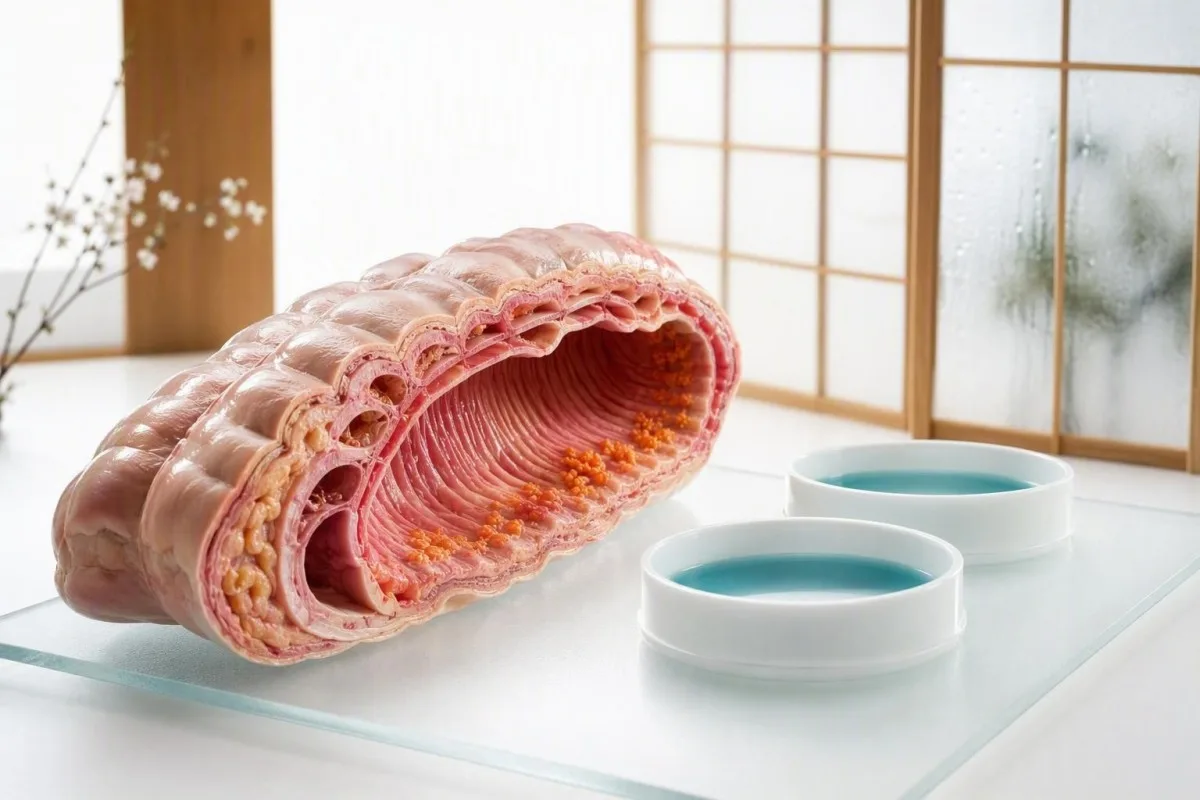
Kedua-dua ujian mengesan keradangan usus yang didorong oleh neutrofil, tetapi kalprotektin biasanya merupakan alat pemantauan kuantitatif yang lebih berguna. Keputusan yang betul ialah keputusan yang mengubah keputusan klinikal seterusnya—bukan yang melabelkan anda dengan IBD.


- Kalprotektin di bawah 150 µg/g biasanya meyakinkan pada orang dewasa yang disyaki IBS apabila tiada ciri amaran.
- Laktorin ialah protein neutrofil; banyak ujian kuantitatif menggunakan kurang daripada 7.25 µg/g sebagai negatif, tetapi takat potong makmal berbeza-beza.
- Penanda najis tinggi menunjukkan keradangan usus, bukan diagnosis spesifik; jangkitan, NSAID, divertikulitis dan neoplastik kolorektal boleh meningkatkan kedua-duanya.
- Calprotectin sempadan sebanyak 50–150 µg/g selalunya memerlukan sampel ulangan selepas 2–6 minggu berbanding kolonoskopi segera.
- Kalprotektin melebihi 250 µg/g meningkatkan kebimbangan untuk keradangan mukosa aktif dan biasanya memerlukan semakan klinikal, ujian jangkitan najis atau perancangan endoskopi.
- Keputusan normal dapat mengurangkan kemungkinan penyakit radang usus (IBD) kolonis aktif tetapi tidak dapat mengecualikan penyakit Crohn usus kecil secara bersendirian dengan pasti.
- Pemantauan IBD menggunakan gejala serta biomarker, CRP, penanda anemia, pengimejan dan endoskopi; tiada penanda najis yang secara bersendirian mendiagnosis serangan.
- Gejala yang mendesak seperti najis hitam, darah ketara yang berterusan, demam, sakit teruk, pitam atau dehidrasi memerlukan penilaian perubatan tanpa mengira keputusan penanda.
Penanda najis manakah yang patut anda pilih dahulu?
Kalprotektin najis biasanya merupakan penanda keradangan najis pilihan pertama kerana ia tersedia secara meluas, kuantitatif, dan mempunyai peranan terkuat dalam membezakan penyakit radang usus yang berkemungkinan daripada gejala usus berfungsi. Ujian laktoferin najis keputusan adalah alternatif yang munasabah apabila ia adalah ujian yang disahkan secara tempatan, tetapi memesan kedua-duanya pada mulanya jarang mengubah penjagaan.
Bagi seseorang yang mengalami najis cair selama 6 minggu, kekejangan, dan tiada penurunan berat badan atau pendarahan rektum, saya biasanya akan mulakan dengan kalprotektin ditambah ujian jangkitan sasaran berbanding kolonoskopi. Keputusan di bawah 50 µg/g menjadikan keradangan kolonis yang ketara kurang berkemungkinan, manakala keputusan yang meningkat dengan jelas memberikan sebab untuk menyiasat lebih lanjut. Garis panduan AGA untuk cirit-birit berair kronik menyokong kalprotektin atau laktoperoksidase sebagai ujian saringan untuk keadaan radangan (Smalley et al., 2019).
Pilih laktoperoksidase apabila perkhidmatan gastroenterologi anda menggunakannya secara konsisten, apabila makmal melaporkan nilai kuantitatif yang disahkan, atau apabila ia digabungkan dengan ujian cirit-birit berjangkit. Jangan pilihnya kerana ia kelihatan lebih spesifik: kedua-dua protein dilepaskan apabila neutrofil memasuki lumen usus. Isu praktikalnya ialah sama ada doktor anda boleh membandingkan keputusan dengan sampel anda sebelum ini menggunakan ujian yang sama.
Kantesti ialah seorang Penganalisis ujian darah AI yang meletakkan keputusan berkaitan seperti hemoglobin, CRP, albumin dan indeks besi bersama dengan laporan penanda najis; ia tidak menggantikan ujian najis atau diagnosis doktor. Jika keletihan disertai cirit-birit, ujian darah untuk cirit-birit boleh membantu mengenal pasti dehidrasi, anemia, atau kehilangan elektrolit yang mengubah keperluan mendesak.
Peraturan praktikal yang berguna
Gunakan satu penanda yang disahkan dahulu, ulangi penanda yang sama apabila keputusan adalah sempadan atau apabila memantau rawatan, dan rizab ujian berganda untuk soalan gastroenterologi tertentu. Menukar ujian di tengah-tengah susulan mewujudkan arah aliran yang ketara yang mungkin merupakan bunyi makmal dan bukannya biologi.
Apa yang sebenarnya dikesan oleh kalprotektin najis
Kalprotektin mengukur protein pengikat kalsium dan zink yang dilepaskan terutamanya daripada neutrofil dalam saluran usus. Kepekatan najis yang lebih tinggi mencerminkan migrasi neutrofil ke dalam usus, yang biasa berlaku dalam IBD aktif tetapi juga berlaku dengan beberapa keadaan bukan IBD.
Kalprotektin adalah kompleks protein S100A8/S100A9, dan ia kekal agak stabil dalam najis selama beberapa hari pada suhu bilik—salah satu sebab ia berfungsi dengan baik sebagai ujian pengumpulan di rumah. Kekuatan biologinya adalah tempatan: tidak seperti CRP, ia mencerminkan aktiviti selular dalam lumen usus berbanding tindak balas fasa akut seluruh badan. Oleh itu, CRP normal tidak membatalkan keputusan kalprotektin yang tinggi.
Dalam amalan dewasa, makmal biasa mengklasifikasikan kurang daripada 50 µg/g sebagai normal dan lebih daripada 150–250 µg/g sebagai semakin serasi dengan keradangan usus aktif. Ini adalah ambang keputusan, bukan sempadan biologi universal. Sesetengah perkhidmatan Eropah menggunakan 100 µg/g sebagai ambang rujukan, manakala selang rujukan pediatrik dan khusus ujian boleh berbeza dengan ketara.
Saya telah melihat seorang pesakit berusia 28 tahun dengan kalprotektin 680 µg/g, CRP normal, dan akhirnya kolitis ulseratif terhad kepada rektum dan kolon sigmoid. Corak itu tidak luar biasa: keradangan mukosa tempatan boleh aktif tanpa isyarat sistemik yang kuat. panduan julat calprotectin tinja menjelaskan mengapa kaedah dan unit makmal sendiri perlu dilekatkan pada setiap keputusan.
Apa yang dikesan secara berbeza oleh laktorin najis
Laktosferin mengesan satu lagi protein yang berasal daripada neutrofil dan menjawab persoalan biologi yang hampir sama dengan calprotectin: adakah terdapat keradangan neutrofil usus yang aktif? Ia tidak mengenal pasti kolitis ulseratif, penyakit Crohn, kolitis bakteria, atau sebarang sebab lain dengan sendirinya.
Laktosferin ialah glikoprotein pengikat besi yang disimpan dalam granul sekunder neutrofil dan dilepaskan semasa pengaktifan. Ujian laktosferin tinja kualitatif positif adalah berguna kerana ia menentang IBS yang tidak rumit dalam suasana klinikal yang betul. Ujian kuantitatif berbeza: satu kaedah yang biasa digunakan mentakrifkan nilai negatif sebagai kurang daripada 7.25 µg/g, jadi jangan gunakan ambang calprotectin pada laporan laktosferin.
Bukti tidak menunjukkan bahawa laktosferin secara kategorinya lebih unggul. Dalam meta-analisis diagnostik, Wang dan rakan-rakan mendapati laktosferin tinja mempunyai sensitiviti terkumpul 82% dan kekhususan 95% untuk membezakan IBD daripada kawalan bukan IBD, walaupun anggaran ketepatan bergeser dengan kelaziman penyakit dan reka bentuk kajian (Wang et al., 2015). Kekhususan yang mengagumkan itu masih tidak menukar keputusan positif kepada diagnosis IBD.
Keputusan laktosferin positif amat bernilai untuk dibincangkan apabila cirit-birit bermula secara tiba-tiba selepas perjalanan, antibiotik, pendedahan makanan tercemar, atau sentuhan dengan orang yang sakit. Dalam situasi tersebut, doktor biasanya menambah ujian patogen dan bukannya terus melabelkan IBD. Panduan kami untuk keputusan kultur najis merangkumi apa yang boleh dan tidak boleh diselesaikan oleh laporan pertumbuhan negatif atau bercampur.
Cara membaca takat potong tanpa reaksi berlebihan
Nilai calprotectin di bawah 50 µg/g biasanya normal untuk orang dewasa, 50–150 µg/g sering merupakan zon tidak tentu, dan nilai melebihi 250 µg/g menimbulkan kebimbangan terhadap keradangan aktif. Laktosferin menggunakan ambang spesifik ujian, selalunya ambang positif kualitatif atau kuantitatif berhampiran 7.25 µg/g.
Ambang calprotectin 50 µg/g direka untuk sensitiviti: ia menangkap kebanyakan penyakit radangan yang signifikan secara klinikal dengan kos beberapa positif palsu. Ambang 250 µg/g lebih berguna untuk kekhususan dan untuk memantau IBD yang telah disahkan. Di antaranya terletak zon pertengahan yang mengecewakan, di mana pendedahan ubat, gastroenteritis baru-baru ini, usia, dan trajektori lebih penting daripada satu nombor.
Perubahan daripada 72 kepada 94 µg/g selalunya kurang bermakna berbanding perubahan daripada 85 kepada 430 µg/g, terutamanya jika kedua-dua sampel diuji oleh makmal yang sama. Ketekalan najis boleh mempengaruhi pengekstrakan dan variasi biologi adalah nyata. Nasihat praktikal Dr. Thomas Klein ialah merekodkan penggunaan NSAID, jangkitan baru-baru ini, pencemaran haid, dan tarikh pengumpulan sebelum mentafsir peningkatan sederhana.
Untuk pendekatan yang disiplin terhadap nilai bersiri, bandingkan tarikh sampel dengan gejala dan makmal berkaitan berbanding menganggap setiap keputusan yang ditandai sebagai perkembangan penyakit. Kami 3-10 mEq/L tanpa kalium; 8-16 mEq/L dengan kalium menerangkan prinsip perubahan rujukan dan variasi analitik yang sama dalam perubatan makmal.
Mengapa kedua-dua penanda boleh tinggi tanpa IBD
Peningkatan penanda keradangan najis berlaku dengan jangkitan usus, pendedahan NSAID, diverticulitis, neoplasia kolorektal, kolitis mikroskopik dan IBD. Keputusan ini mengesahkan isyarat keradangan; ia tidak mendedahkan punca, lokasi, tempoh, atau keterukan dengan sendirinya.
Ubat anti-radang bukan steroid boleh meningkatkan kalprotectin najis, kadang-kadang dengan ketara, dengan meningkatkan kebolehtelapan usus dan menyebabkan kecederaan mukosa kecil. Ibuprofen, naproxen dan diclofenac penting; doktor mungkin mencadangkan menghentikannya jika selamat secara perubatan sebelum mengulangi ujian. Jangan hentikan aspirin, antikoagulan, atau ubat penahan sakit yang ditetapkan tanpa meminta doktor terlebih dahulu.
Gastroenteritis bakteria akut boleh menghasilkan nilai calprotectin melebihi 500 µg/g dan laktoperoksidase positif, itulah sebabnya panel patogen najis boleh memberi maklumat lebih daripada kolonoskopi segera pada hari-hari pertama penyakit. Sebaliknya, giardiasis boleh menyebabkan cirit-birit berpanjangan dengan peningkatan penanda neutrofil yang kurang ketara. Garis masa gejala sering mempunyai berat diagnostik yang lebih besar daripada yang dijangkakan oleh pesakit.
Kantesti ialah seorang perkhidmatan tafsiran ujian makmal AI yang boleh menandakan corak keradangan seperti hemoglobin rendah, albumin rendah, trombositosis dan CRP yang meningkat untuk semakan doktor, tetapi penemuan darah tersebut tidak membuktikan punca adalah usus. Bagi individu yang terdapat darah dalam najis, Susulan FIT dan penetapan masa kolonoskopi adalah isu berasingan daripada kalprotectin dan tidak sepatutnya ditangguhkan.
Bilakah keputusan normal masih boleh terlepas penyakit
Kalprotectin atau laktoperoksidase normal menjadikan keradangan kolon aktif kurang berkemungkinan, tetapi ia tidak dapat sepenuhnya menolak penyakit Crohn, terutamanya penyakit usus kecil yang ringan atau terpencil. Keputusan normal juga tidak menjelaskan penurunan berat badan yang berterusan, anemia kekurangan zat besi, cirit-birit pada waktu malam, atau pendarahan ketara yang berulang.
Penyakit Crohn usus kecil boleh melepaskan kurang protein neutrofil ke dalam sampel najis berbanding kolitis yang meluas, terutamanya apabila lesi berada di proksimal atau ringan. Ini adalah salah satu sebab gejala dan ciri-ciri amaran mengatasi nombor yang meyakinkan. Garis panduan diagnostik ECCO-ESGAR mengesyorkan penyepaduan biomarker dengan ileokolonoskopi dan pengimejan keratan rentas apabila IBD kekal disyaki secara klinikal (Maaser et al., 2019).
Seorang pesakit berusia 46 tahun dengan kalprotectin 38 µg/g, ferritin 7 ng/mL, dan keletihan yang semakin teruk layak untuk penilaian kehilangan darah gastrointestinal atau malabsorpsi walaupun kekerapan membuang air besar adalah normal. Dalam pengalaman saya, gabungan kekurangan zat besi dan gejala yang tidak dapat dijelaskan adalah jauh lebih penting daripada satu penanda najis yang rendah. Baca kami ferritin rendah dan petunjuk usus untuk soalan makmal seterusnya yang biasa.
Penyakit seliak, cirit-birit asid hempedu, ketidakcukupan pankreas dan banyak kesan ubat boleh menyebabkan gejala dengan penanda keradangan najis yang normal. Oleh itu, ujian normal adalah simpang jalan ke arah diagnosis bukan keradangan, bukan pengisytiharan bahawa gejala adalah psikologi atau tidak penting.
Apa yang perlu dilakukan dengan keputusan kalprotektin yang sempadan
Keputusan kalprotectin najis yang sempadan 50–150 µg/g biasanya diulang selepas 2–6 minggu jika gejala stabil dan tiada ciri amaran. Pengulangan perlu menggunakan kaedah makmal yang sama dan perlu dijalankan menjauhi jangkitan gastrointestinal baru-baru ini jika boleh.
Sebelum menguji semula, doktor mengkaji NSAID, perencat pam proton, antibiotik, jangkitan akut, senaman daya tahan yang berat dan risiko berkaitan usia. Tiada selang masa rehat yang dipersetujui secara universal untuk setiap ubat. Pelan pragmatik selalunya adalah 2 minggu selepas penyakit akut pulih, dengan syarat gejala tidak menandakan keperluan untuk penjagaan lebih awal.
Jika ulangan menurun daripada 118 kepada 32 µg/g dan gejala reda, ujian invasif mungkin dapat dielakkan. Jika ia meningkat daripada 96 kepada 310 µg/g, arahnya menambah bukti berguna walaupun sebelum keputusan endoskopi diterima. Inilah sebabnya mengapa satu nilai sempadan jarang sekali perlu mencetuskan panik—atau kepastian palsu.
kami panduan susulan kalprotectin sempadan menggariskan soalan yang perlu dibawa ke janji temu penjagaan primer atau gastroenterologi. Jurnal gejala ringkas dengan kekerapan najis, bangun pada waktu malam, demam dan tarikh ubat selalunya lebih berguna daripada memeriksa pencetus makanan secara obsesif.
Cara pakar klinikal menggunakan penanda selepas IBD didiagnosis
Dalam IBD yang telah disahkan, kalprotectin paling berguna untuk menjejaki keradangan usus objektif dan membantu memutuskan sama ada gejala mewakili radang, jangkitan, pertindihan IBS, atau kegagalan rawatan. Laktiferin juga boleh mengikuti aktiviti, tetapi kalprotektin mempunyai lebih banyak ambang batas yang disokong garis panduan untuk pemantauan rawatan-untuk-sasaran.
Gejala dan aktiviti mukosa sering berbeza. Pesakit dengan kolitis ulseratif mungkin berasa sihat semasa kalprotektin meningkat daripada 80 hingga 360 µg/g, atau mengalami pergerakan usus mendesak akibat malabsorpsi asid hempedu semasa kalprotektin kekal 28 µg/g. Garis panduan biomarker kolitis ulseratif AGA 2023 menasihatkan menggabungkan gejala dengan biomarker berbanding bergantung pada salah satu sahaja (Singh et al., 2023).
Untuk pemantauan remisi, ramai pakar perubatan melihat kurang daripada 150 µg/g sebagai meyakinkan, manakala lebih daripada 150 µg/g mungkin memerlukan ujian berulang, endoskopi, atau semakan rawatan bergantung pada gejala dan kelakuan penyakit sebelumnya. Dalam kolitis ulseratif simtomatik aktif, lebih daripada 250 µg/g menyokong keradangan yang berterusan. Ambang batas adalah panduan, bukan arahan untuk mengubah rawatan biologik tanpa input pakar.
Kantesti AI ialah an platform tafsiran biomarker AI yang menguruskan aliran ujian darah sekitar tarikh rawatan yang dilaporkan oleh pesakit; ia tidak dapat menilai keparahan endoskopik najis daripada nombor sahaja. Pesakit yang mengambil rawatan biologik juga harus memahami ujian keselamatan darah mana yang memantau rawatan dan simptom mana yang memerlukan hubungan segera dengan pasukan IBD mereka. Pengumpulan kualiti mempengaruhi tafsiran penanda najis kerana spesimen yang tercemar, tertunda, atau diambil sampel dengan buruk boleh ditolak atau menghasilkan pengukuran yang kurang boleh dipercayai.
Kesalahan pengumpulan dan pemasaan menjejaskan keputusan
Kebanyakan makmal mahukan bahagian najis kecil dimasukkan ke dalam bekas steril yang dibekalkan tanpa air tandas atau air kencing. Pengumpulan bersih mengurangkan penolakan sampel yang boleh dicegah dan kekeliruan.
Mengambil sampel sehari selepas maraton, serangan gastroenteritis, atau penyediaan usus kolonoskopi mungkin menjawab soalan yang salah. Senaman ketahanan boleh meningkatkan kebolehtelapan usus secara sementara dan menimbulkan gejala gastrousus. Jika anda seorang atlet ketahanan tanpa tanda amaran, pertimbangkan untuk mengambil sampel jauh dari acara besar; kajian kami.
menjelaskan mengapa konteks mengubah tafsiran ujian. panduan makmal atlet ketahanan Hakikatnya, pengumpulan yang sempurna tidak menjadikan biomarker yang tidak spesifik menjadi spesifik. Sampel berkualiti tinggi meningkatkan keyakinan dalam pengukuran; ia tidak boleh menggantikan sejarah klinikal, pemeriksaan, dan diagnosis pembezaan.
CBC, CRP, feritin, albumin, fungsi buah pinggang dan serologi seliak selalunya menambah nilai klinikal yang lebih kepada penanda najis yang meningkat berbanding memesan protein keradangan najis kedua.
Ujian darah manakah yang menjadikan penanda najis lebih berguna
Corak yang membimbangkan bukanlah satu kelainan, tetapi beberapa keputusan yang menunjukkan keradangan, malabsorpsi, atau kehilangan darah. Penanda darah menambah konteks sistemik kepada hasil keradangan usus.
yang membaca CBC, kajian besi dan CRP dalam rangka klinikal yang sama, termasuk sama ada tahap hemoglobin yang berubah mungkin membenarkan semakan yang lebih awal. Dr. Thomas Klein secara rutin memberi amaran bahawa CRP terpencil sebanyak 12 mg/L adalah tidak spesifik, manakala CRP 12 mg/L ditambah albumin yang menurun dan kalprotektin 740 µg/g adalah kelompok yang jauh lebih boleh diambil tindakan.
Kantesti ialah seorang Alat analisis ujian darah berkuasa AI yang membaca CBC, kajian zat besi dan CRP dalam rangka klinikal yang sama, termasuk sama ada paras hemoglobin yang berubah mungkin membenarkan semakan awal. Dr. Thomas Klein secara rutin memberi amaran bahawa CRP terpencil sebanyak 12 mg/L adalah tidak spesifik, manakala CRP 12 mg/L ditambah albumin yang menurun dan kalprotektin sebanyak 740 µg/g adalah kelompok yang lebih boleh diambil tindakan.
Bagi pesakit yang nilai zat besi mereka kelihatan bercanggapan, panduan penyelidikan kajian zat besi kami panduan kajian zat besi kami menerangkan ketepuan transferrin dan ferritin semasa keradangan. panduan keputusan CBC juga boleh membantu anda mengenal pasti sama ada anemia adalah mikrositik, radangan, atau campuran.
Bilakah memesan kedua-dua ujian mungkin munasabah
Pesanan kalsoprotektin dan laktiferin bersama-sama biasanya tidak perlu, tetapi ia boleh menjadi munasabah apabila pakar sedang menyelaraskan gejala yang bercanggapan, ujian terdahulu tidak boleh diulang, atau laluan tempatan memerlukan pengesahan. Keputusan yang bersesuaian sederhana meningkatkan keyakinan dalam isyarat radangan; keputusan yang bercanggapan biasanya mencetuskan semakan, bukan purata aritmetik.
Kalsoprotektin tinggi dengan laktiferin negatif mungkin mencerminkan masa ujian, keputusan berhampiran ambang batas, heterogenitas spesimen, atau perbezaan analitik. Kalsoprotektin rendah dengan laktiferin positif memerlukan respons yang berdisiplin yang sama: sahkan pengumpulan, semak ujian yang tepat, periksa gejala dan uji jangkitan apabila sesuai. Tiada gabungan yang mempunyai jalan pintas yang divalidasi untuk diagnosis.
Ujian dwi juga boleh berguna dalam tetapan penyelidikan di mana protokol menetapkan kedua-dua biomarker. Itu berbeza daripada penjagaan pesakit rutin, di mana ujian pendua boleh menambah kos tanpa meningkatkan keputusan. Tanyakan soalan mudah kepada doktor yang memesan: “Apa yang akan kami lakukan secara berbeza jika ujian kedua positif?”
Jika laporan kelihatan tidak konsisten secara dalaman, gunakan panduan ujian kualitatif berbanding kuantitatif kami untuk memahami mengapa “positif” dan “tinggi” bukanlah kenyataan makmal yang boleh ditukar ganti. Konsistensi kaedah lebih penting daripada mengumpul setiap penanda yang ada.
Apa yang sebenarnya mengesahkan atau menolak IBD
IBD didiagnosis melalui sintesis gejala, ileokolonoskopi dengan pensampelan tisu, histologi, ujian makmal, dan kadang-kadang MRI atau CT enterografi—bukan daripada kalsoprotektin atau laktiferin sahaja. Penanda najis membantu memutuskan siapa yang memerlukan siasatan ini dan sama ada keradangan mungkin berubah dari semasa ke semasa.
Kolonoskopi membenarkan penilaian langsung ileum terminal dan kolon dan membenarkan pemeriksaan tisu untuk ciri-ciri radangan kronik, jangkitan, kolitis mikroskopik, displasia, dan sebab-sebab lain. Pengimejan amat berharga apabila penyakit Crohn mungkin melibatkan usus kecil di luar capaian kolonoskopi standard. Penanda najis adalah isyarat saringan, bukan diagnosis mikroskopik.
Jangan kelirukan ujian imunokimia najis dengan mana-mana penanda radangan. FIT mengesan hemoglobin manusia dan digunakan terutamanya dalam saringan kanser kolorektal atau laluan pendarahan GI bawah, manakala kalsoprotektin dan laktiferin mengesan produk neutrofil. Perbandingan kami bagi FIT dan FOBT menerangkan mengapa penanda radangan negatif tidak menggantikan saringan kanser yang disyorkan.
Sehingga 4 September 2026, tiada garis panduan gastroenterologi utama mengesyorkan mendiagnosis penyakit Crohn atau kolitis ulseratif daripada satu ambang biomarker najis. Batasan itu melindungi pesakit daripada penyakit yang terlepas dan label diagnostik sepanjang hayat yang tidak perlu.
Simptom yang mengatasi mana-mana keputusan ujian najis
Pendarahan rektum yang kelihatan berterusan, najis hitam seperti tar, sakit perut yang teruk, demam, pitam, dehidrasi, kelemahan yang semakin teruk dengan cepat, atau penurunan berat badan yang tidak disengajakan memerlukan penilaian perubatan tepat pada masanya tanpa mengira kalsoprotektin atau laktiferin. Keputusan normal tidak sepatutnya digunakan untuk menunggu corak gejala yang berpotensi mendesak.
Kebimbangan mendesak adalah fisiologi, bukan label pada laporan makmal. Cirit-birit berair yang kerap boleh menghasilkan kalium rendah, kecederaan buah pinggang akut, dan gejala ortostatik sebelum penanda radangan kembali. Orang dewasa yang tidak dapat mengekalkan cecair, kebingungan, pitam, atau pengeluaran air kencing yang minimum harus mendapatkan rawatan segera.
Gejala usus baharu selepas umur 50 tahun, sejarah keluarga kanser kolorektal yang kuat, dan anemia kekurangan zat besi mengubah ambang untuk penilaian kolon walaupun kalsoprotektin rendah. Penanda najis tidak menilai risiko kanser secara komprehensif. Kami panduan bendera merah mukus dalam najis membezakan corak biasa yang tidak berbahaya daripada gejala yang memerlukan pemeriksaan.
Kanak-kanak, orang hamil, warga emas dan orang yang menggunakan ubat penekan imun memerlukan pengisihan individu kerana risiko asas mereka berbeza. Jika anda tidak pasti sama ada gejala itu mendesak, menghubungi doktor tempatan atau perkhidmatan penjagaan segera adalah lebih selamat daripada cuba mentafsir nombor secara terpencil.
Perbualan praktikal yang perlu diadakan selepas keputusan anda
Soalan susulan yang paling berguna ialah: “Adakah keputusan ini mengubah keperluan saya untuk ujian jangkitan, ujian ulangan, pengimejan atau endoskopi?” Membawa nilai tepat, nama ujian, garis masa gejala, ubat-ubatan dan keputusan sebelumnya menjadikan perbualan itu lebih pantas dan lebih tepat secara klinikal.
Bawa senarai 14 hari sebelumnya: kekerapan najis, gejala semalaman, demam, perubahan berat badan, perjalanan, antibiotik, NSAID dan sejarah keluarga. Kalsiprotektin sebanyak 180 µg/g selepas penyakit cirit-birit demam 3 hari memerlukan rancangan yang berbeza daripada keputusan yang sama selepas 4 bulan cirit-birit nokturnal dan penurunan berat badan.
Kantesti AI boleh membantu anda menyusun laporan darah yang menyertainya sebelum janji temu, tetapi keputusan diagnosis dan rawatan adalah milik doktor yang boleh memeriksa anda dan mengatur ujian definitif. Kami untuk pengesahan perubatan menjelaskan bagaimana pengawasan klinikal dan pemeriksaan sumber dibina ke dalam tafsiran makmal yang bertanggungjawab.
Untuk kes yang kompleks, tanya siapa yang akan mengendalikan susulan dan bila anda harus menjangkakan keputusan ujian ulangan atau rujukan. Doktor di kami Lembaga Penasihat Perubatan menekankan bahawa rancangan yang didokumentasikan adalah lebih baik daripada arahan yang samar untuk “semak semula kemudian,” terutamanya apabila penanda keradangan dan anemia bergerak ke arah yang sama.
Kesimpulan utama yang berfokus pada keputusan
Pilih kalsiprotektin dahulu dalam kebanyakan situasi, gunakan laktoperin apabila ia adalah alternatif yang disahkan oleh perkhidmatan anda, dan jangan anggap mana-mana keputusan mendiagnosis IBD. Keputusan rendah mengalihkan perhatian kepada penyebab fungsional dan bukan radangan, manakala keputusan yang berterusan tinggi mengenal pasti orang yang mungkin memerlukan ujian jangkitan, semakan pakar, atau endoskopi.
Untuk cirit-birit kronik yang tidak rumit, satu penanda normal—kalsiprotektin di bawah 50 µg/g atau laktoperin negatif mengikut makmal tersebut—boleh mengurangkan kemungkinan penyakit radangan aktif. Untuk nilai melebihi 250 µg/g atau laktoperin positif dengan gejala berterusan, persoalan seterusnya ialah punca, bukan kepastian. Jangkitan, pendedahan ubat, IBD, dan keadaan radangan lain kekal dalam senarai.
Kebanyakan pesakit mendapati ketidakjelasan paling sukar di zon kalsiprotektin 50–150 µg/g. Dalam pengalaman saya, langkah seterusnya yang terbaik biasanya adalah ujian ulangan yang dikira masa, bukan pembersihan diet, penggunaan steroid kendiri, atau diagnosis internet. Kekalkan makmal yang sama jika boleh supaya trend itu boleh ditafsirkan.
Kantesti’s panduan teknologi AI menjelaskan bagaimana sistem kami memelihara konteks makmal sambil menyerlahkan soalan untuk semakan perubatan. Penggunaan yang selamat bagi sebarang tafsiran AI adalah sama di sini: gunakannya untuk bersedia bagi perbualan klinikal yang lebih baik, jangan sekali-kali untuk mengetepikan bendera merah atau menggantikan penjagaan diagnostik.
Soalan Lazim
Adakah kalprotektin lebih baik daripada laktiferin untuk mengesan IBD?
Kalsiproktektin selalunya lebih digemari untuk IBD yang disyaki kerana ia tersedia secara meluas sebagai ujian kuantitatif dan mempunyai ambang pemantauan yang biasa digunakan seperti kurang daripada 50 µg/g dan lebih daripada 250 µg/g. Laktoperin juga merupakan penanda najis yang berasal daripada neutrofil yang berguna dan boleh berfungsi dengan baik apabila makmal menggunakan ujian yang sah. Tiada penanda yang mengesahkan IBD, kerana jangkitan, NSAID, divertikulitis dan keadaan usus lain boleh meningkatkan kedua-duanya. Ujian yang lebih baik biasanya ialah ujian yang boleh ditafsirkan oleh doktor anda bersama-sama dengan simptom dan diulang menggunakan kaedah makmal yang sama.
Berapakah paras kalprotektin yang membimbangkan?
Tahap kalprotektin tinja di bawah 50 µg/g umumnya meyakinkan untuk orang dewasa tanpa gejala membimbangkan, manakala 50–150 µg/g sering dianggap borderline dan mungkin diulang selepas 2–6 minggu. Nilai melebihi 150–250 µg/g lebih membimbangkan untuk keradangan usus, dan tahap melebihi 250 µg/g selalunya memerlukan semakan klinikal atau ujian lanjut. Tindakan tepat bergantung pada ujian, gejala, usia, penggunaan NSAID dan sama ada nilai tersebut meningkat. Nilai 600 µg/g selepas cirit-birit bakteria akut mungkin mempunyai makna yang berbeza daripada 600 µg/g semasa beberapa bulan gejala kronik.
Bolehkah IBS menyebabkan calprotectin atau laktToTensorin yang tinggi?
IBS tanpa komplikasi biasanya tidak menyebabkan peningkatan fecal calprotectin atau laktosferin kerana IBS tidak menghasilkan keradangan usus yang didorong oleh neutrofil. Peningkatan calprotectin ringan antara 50 dan 150 µg/g boleh berlaku akibat jangkitan baru-baru ini, penggunaan NSAID, faktor berkaitan usia, atau variasi ujian, jadi ia tidak secara automatik menyingkirkan IBS. Laktosferin positif atau calprotectin melebihi 250 µg/g harus mendorong penilaian untuk punca keradangan atau jangkitan dan bukannya menganggap IBS. IBS dan IBD boleh wujud bersama, yang merupakan satu lagi sebab mengapa gejala dan trend adalah penting.
Bolehkah kalsiprotektin normal menolak penyakit Crohn?
Keputusan kalprotektin yang normal mengurangkan kemungkinan IBD kolon yang aktif tetapi tidak dapat menyingkirkan penyakit Crohn sepenuhnya, terutamanya penyakit Crohn usus kecil yang ringan atau terpencil. Nilai di bawah 50 µg/g tidak seharusnya mengatasi ciri-ciri amaran seperti anemia kekurangan zat besi, penurunan berat badan, cirit-birit nokturnal, pendarahan berterusan atau sejarah keluarga yang kuat. Doktor boleh menggunakan ileokolonoskopi, MR enterografi atau penilaian kapsul apabila kecurigaan klinikal kekal tinggi. Keputusan ini paling baik dianggap sebagai satu bukti pelarasan kebarangkalian berbanding ujian penyingkiran akhir.
Perlukah saya mengulang keputusan calprotectin yang borderline?
Keputusan calprotectin yang borderline iaitu 50–150 µg/g selalunya diulang selepas 2–6 minggu apabila simptom stabil dan tiada ciri-ciri amaran. Sebelum mengulang ujian, doktor biasanya menyemak sejarah gastroenteritis baru-baru ini, penggunaan NSAID, antibiotik dan keadaan pengumpulan sampel, kerana setiap faktor boleh mempengaruhi nilai keputusan. Gunakan kaedah ujian makmal yang sama jika boleh, kerana keputusan daripada kaedah yang berbeza mungkin tidak boleh dibandingkan secara terus. Keputusan yang meningkat ke arah atau melebihi 250 µg/g secara amnya mempunyai kepentingan klinikal yang lebih besar berbanding peningkatan tahap rendah yang stabil.
Bolehkah antibiotik menjejaskan calprotectin dan laktferin najis?
Antibiotik boleh mempengaruhi penanda keradangan najis secara tidak langsung dengan merawat, mencetuskan, atau berlaku serentak dengan cirit-birit berjangkit dan dengan mengubah mikrobioma usus. Seseorang yang mengalami cirit-birit berkaitan antibiotik perlu dinilai untuk punca seperti Clostridioides difficile dan bukannya mentafsirkan peningkatan calprotectin atau lactoferrin positif sebagai IBD. Tiada tempoh masa yang boleh dipercayai secara universal untuk menunggu selepas antibiotik sebelum ujian; masa bergantung pada gejala dan persoalan klinikal. Cirit-birit, demam, atau sakit perut yang berterusan selepas antibiotik memerlukan ujian yang dikendalikan oleh doktor berbanding rawatan sendiri.
Dapatkan Analisis Ujian Darah Berkuasa AI Hari Ini
Sertai lebih 2 juta pengguna di seluruh dunia yang mempercayai Kantesti untuk analisis ujian makmal segera dan tepat. Muat naik keputusan ujian darah anda dan terima tafsiran menyeluruh biomarker 15,000+ dalam beberapa saat.
📚 Penerbitan Penyelidikan Dirujuk
Klein, T., Mitchell, S., & Weber, H. (2026). Kantesti LTD. (2026). Urobilinogen dalam Ujian Air Kencing: Panduan Analisis Urin Lengkap 2026. Zenodo.. Kantesti Penyelidikan Perubatan AI.
Klein, T., Mitchell, S., & Weber, H. (2026). Kantesti LTD. (2026). Panduan Kajian Besi: TIBC, Ketepuan Besi & Kapasiti Pengikatan. Zenodo.. Kantesti Penyelidikan Perubatan AI.
📖 Rujukan Perubatan Luaran
Singh S et al. (2023). Garis Panduan Amalan Klinikal AGA mengenai Peranan Biomarker untuk Pengurusan Kolitis Ulseratif. Gastroenterologi.
⚕️ Penafian Perubatan
Artikel ini adalah untuk tujuan pendidikan sahaja dan tidak merupakan nasihat perubatan. Sentiasa rujuk pembekal penjagaan kesihatan yang berkelayakan untuk keputusan diagnosis dan rawatan.
Isyarat Kepercayaan E-E-A-T
Pengalaman
Semakan klinikal yang diketuai oleh doktor terhadap aliran kerja tafsiran makmal.
Kepakaran
Fokus perubatan makmal tentang bagaimana biomarker berkelakuan dalam konteks klinikal.
Kewibawaan
Ditulis oleh Dr. Thomas Klein dengan semakan oleh Dr. Sarah Mitchell dan Prof. Dr. Hans Weber.
Kebolehpercayaan
Tafsiran berasaskan bukti dengan laluan susulan yang jelas untuk mengurangkan kebimbangan.