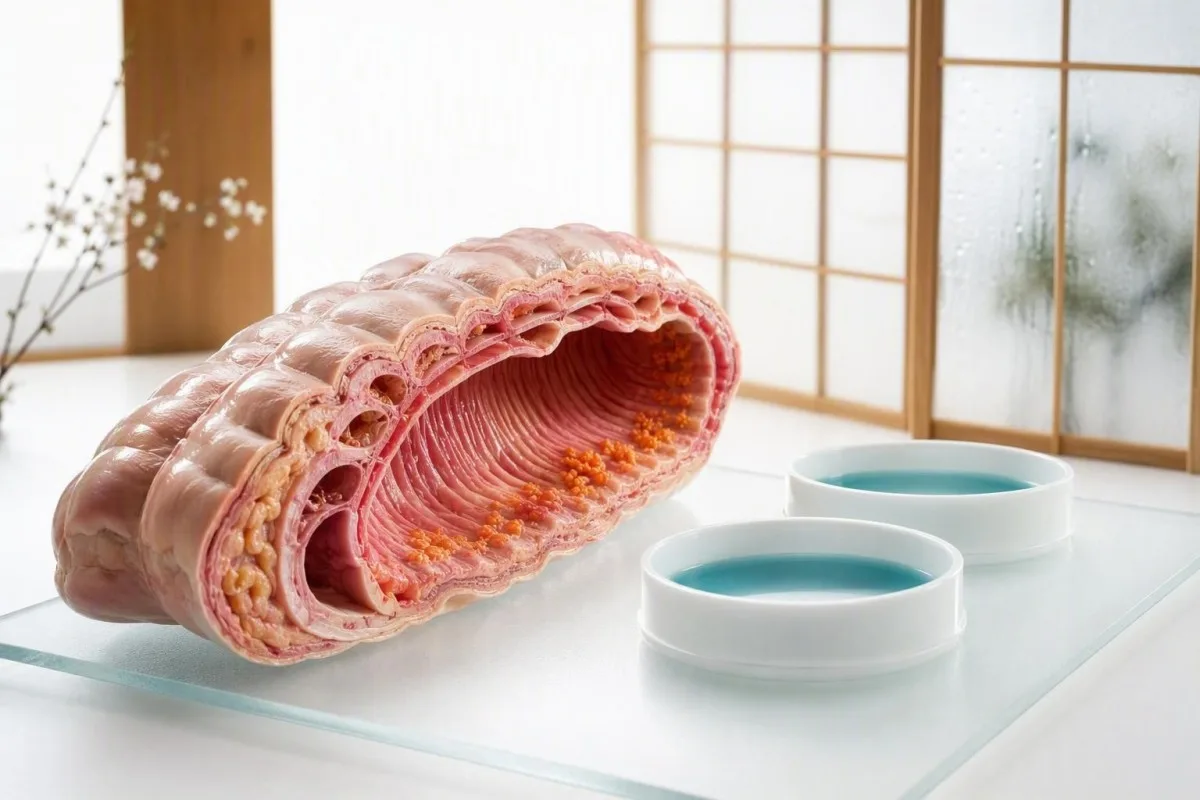
Kaloro tes kasebut ngerteni peradangan usus sing didorong dening neutrofil, nanging kalprotektin biasane dadi alat pemantauan kuantitatif sing luwih migunani. Asil sing bener yaiku sing ngganti keputusan klinis sabanjure—dudu sing menehi label IBD.


- Kalprotektin ing ngisor 50 µg/g biasane ngemong ing wong diwasa kanthi curiga IBS nalika ora ana fitur tandha-tandha.
- Laktoperin minangka protein neutrofil; akeh tes kuantitatif nggunakake kurang saka 7.25 µg/g minangka negatif, nanging wates laboratorium beda-beda.
- Tandha tinja dhuwur nuduhake peradangan usus, dudu diagnosis tartamtu; infeksi, NSAID, divertikulitis lan neoplasia kolorektal bisa mundhakake kalorone.
- Calprotectin wates saka 50–150 µg/g asring mbutuhake sampel ulang sawise 2-6 minggu tinimbang kolonoskopi langsung.
- Kalprotektin ndhuwur 250 µg/g mundhakake keprihatinan babagan peradangan mukosa aktif lan biasane njaluk tinjauan klinis, tes infeksi tinja utawa perencanaan endoskopi.
- Asil normal ndadosi penyakit radang usus gedhe (IBD) ing usus gedhe luwih cilik, nanging ora bisa ngilangi penyakit Crohn ing usus cilik kanthi andal.
- Pangawasan IBD nggunakake gejala plus biomarker, CRP, tandha anemia, pencitraan lan endoskopi; ora ana tandha tinja sing nuduhake radhang kanthi mandiri.
- gejala sing darurat kayata tinja ireng, getih katon terus-terusan, demam, nyeri abot, semaput utawa dehidrasi mbutuhake evaluasi medis sanajan ana asil tandha.
Penanda tinja endi sing kudu dipilih dhisik?
Fecal calprotectin biasane minangka tandha radhang tinja sing dipilih dhisik amarga kasedhiya akeh, kuantitatif, lan duwe peran paling kuat ing misahake penyakit radang usus sing kemungkinan saka gejala usus fungsional. Tes laktoferin feses asil minangka alternatif sing masuk akal nalika assay wis divalidasi sacara lokal, nanging pesen loro ing wiwitan arang ngganti perawatan.
Kanggo wong sing duwe tinja longgar 6 minggu, kram, lan ora ana bobot mundhut utawa pendarahan rektum, aku biasane miwiti kanthi calprotectin plus tes infeksi sing ditargetake tinimbang kolonoskopi. Asil ing ngisor 50 µg/g ndadekake inflamasi usus gedhe sing signifikan luwih cilik, dene asil sing cetha mundhak menehi alesan kanggo nelusuri luwih jero. Pedoman AGA kanggo diare banyu kronis ndhukung calprotectin utawa laktobferrin minangka tes skrining kanggo kondisi inflamasi (Smalley et al., 2019).
Pilih laktobferrin nalika layanan gastroenterologi sampeyan nggunakake kanthi konsisten, nalika laboratorium nglaporake nilai kuantitatif sing divalidasi, utawa nalika dibundel karo pemeriksaan diare infeksi. Aja milih amarga katon luwih spesifik: loro protein kasebut dilepaskan nalika neutrofil mlebu ing lumen usus. Masalah praktis yaiku apa dokter sampeyan bisa mbandhingake asil karo sampel sadurunge nggunakake assay sing padha.
Kantesti iku sawijining Analisa tes getih AI sing nempatake asil sing gegandhengan kayata hemoglobin, CRP, albumin lan indeks wesi bebarengan karo laporan tandha tinja; ora ngganti assay tinja utawa diagnosis dokter. Yen kesel ngiringi diare, a tes getih kanggo diare bisa mbantu ngidentifikasi dehidrasi, anemia, utawa ilang elektrolit sing ngganti kabutuhan mendesak.
Aturan praktis sing migunani
Gunakake siji tandha sing divalidasi dhisik, baleni tandha sing padha nalika asil bias utawa nalika ngawasi perawatan, lan gunakake tes ganda kanggo pitakonan gastroenterologi tartamtu. Ngowahi assay ing tengah-tengah tindak lanjut nggawe tren sing katon sing bisa uga gangguan laboratorium tinimbang biologi.
Apa sing dideteksi kalprotektin tinja
Calprotectin ngukur protein pengikat kalsium lan seng sing umume dilepaskan saka neutrofil ing saluran usus. Konsentrasi tinja sing luwih dhuwur nuduhake migrasi neutrofil menyang usus, sing umum ing IBD aktif nanging uga kedadeyan ing sawetara kondisi non-IBD.
Calprotectin minangka kompleks protein S100A8/S100A9, lan tetep relatif stabil ing tinja nganti pirang-pirang dina ing suhu kamar—siji alesan iku bisa digunakake kanthi apik minangka tes koleksi ing omah. Kekuwatan biologisé yaiku lokalitas: ora kaya CRP, nuduhake aktivitas seluler ing lumen usus tinimbang respon fase akut awak kabeh. CRP normal mula ora mbatalake asil calprotectin sing dhuwur.
Ing praktik diwasa, laboratorium umumé klasifikasi kurang saka 50 µg/g minangka normal lan luwih saka 150–250 µg/g minangka saya cocog karo inflamasi usus aktif. Iki minangka ambang keputusan, dudu wates biologis universal. Sawetara layanan Eropa nggunakake 100 µg/g minangka ambang rujukan, dene interval referensi pediatrik lan spesifik assay bisa beda banget.
Aku wis weruh wong umur 28 taun kanthi calprotectin 680 µg/g, CRP normal, lan pungkasane kolitis ulseratif winates ing rektum lan kolon sigmoid. Pola kasebut ora aneh: inflamasi mukosa lokal bisa aktif tanpa sinyal sistemik sing kuwat. Kita panduan rentang fecal calprotectin njelasake kenapa metode lan unit laboratorium dhewe kudu tetep ditempelake saben asil.
Apa sing dideteksi laktoperin tinja kanthi beda
Lactoferrin ndeteksi protein liyane sing asale saka neutrofil lan njawab pitakon biologis sing meh padha karo calprotectin: apa ana inflamasi neutrofil usus sing aktif? Ora bisa ngenali ulcerative colitis, penyakit Crohn, kolitis bakteri, utawa panyebab liyane kanthi dhewe.
Lactoferrin minangka glikoprotein pengikat zat besi sing disimpen ing granul sekunder neutrofil lan dilepaske nalika aktivasi. Tes laktoferrin feses kualitatif positif migunani amarga bisa mbantah IBS sing ora rumit ing latar klinis sing tepat. Tes kuantitatif beda-beda: siji metode sing umum digunakake nemtokake nilai negatif minangka kurang saka 7,25 µg/g, mula aja nate nggunakake cutoff calprotectin kanggo laporan laktoferrin.
Bukti kasebut ora nuduhake yen laktoferrin luwih unggul sacara kategoris. Ing meta-analisis diagnostik, Wang lan kanca-kanca nemokake laktoferrin feses duwe sensitivitas gabungan 82% lan spesifisitas 14% kanggo mbedakake IBD saka kontrol non-IBD, sanajan perkiraan akurasi owah gumantung saka prevalensi penyakit lan desain studi (Wang et al., 2015). Spesifisitas sing mengesankan kasebut isih durung nggawe asil positif dadi diagnosis IBD.
Asil laktoferrin positif utamane migunani nalika diare diwiwiti kanthi dumadakan sawise lelungan, antibiotik, paparan panganan sing terkontaminasi, utawa kontak karo wong sing lara. Ing kahanan kasebut, dokter biasane nambahake tes patogen tinimbang langsung menehi label IBD. Pandhuan kita babagan asil kultur feses njelasake apa sing bisa lan ora bisa ditetepake dening laporan pertumbuhan negatif utawa campuran.
Cara maca wates tanpa reaksi berlebihan
Nilai calprotectin ing ngisor 50 µg/g biasane normal kanggo wong diwasa, 50–150 µg/g asring zona sing ora mesthi, lan nilai ing ndhuwur 250 µg/g nuduhake prihatin babagan inflamasi aktif. Lactoferrin nggunakake cutoff spesifik saka tes, biasane positif kualitatif utawa ambang kuantitatif cedhak 7,25 µg/g.
Ambang calprotectin 50 µg/g dirancang kanggo sensitivitas: ngasilake penyakit inflamasi sing signifikan kanthi klinis kanthi biaya sawetara positif palsu. Ambang 250 µg/g luwih migunani kanggo spesifisitas lan kanggo ngawasi IBD sing wis mapan. Ing antarane ana wilayah tengah sing frustasi, ing ngendi paparan obat, gastroenteritis anyar, umur, lan lintasan luwih penting tinimbang angka tunggal.
Owah-owahan saka 72 nganti 94 µg/g asring kurang migunani tinimbang owah-owahan saka 85 nganti 430 µg/g, utamane yen conto loro diuji dening laboratorium sing padha. Konsistensi tinja bisa mengaruhi ekstraksi lan variasi biologis iku nyata. Nasihat praktis Dr. Thomas Klein yaiku nyathet panggunaan NSAID, infeksi anyar, kontaminasi menstruasi, lan tanggal koleksi sadurunge napsirake kenaikan sing moderat.
Kanggo pendekatan disiplin marang nilai serial, bandingake tanggal conto karo gejala lan lab sing gegandhengan tinimbang nganggep saben asil sing ditandhani minangka progresi penyakit. Kita pandhuan tren tes getih njelasake prinsip sing padha babagan referensi owah-owahan lan variasi analitik ing kedokteran laboratorium.
Yagene tandha loro-duwur tanpa IBD
Tandha inflamasi ing feses sing saya dhuwur kedadeyan ing infeksi usus, paparan NSAID, diverticulitis, neoplasia kolorektal, kolitis mikroskopis, lan IBD. Asil kasebut ngonfirmasi sinyal inflamasi; ora nuduhake sababe, lokasi, durasi, utawa tingkat keparahan dhewe.
Obat anti-inflamasi non-steroid bisa nambah calprotectin feses, kadang-kadang sacara signifikan, kanthi nambah permeabilitas usus lan nyebabake ciloko mukosa cilik. Ibuprofen, naproxen, lan diklofenak penting; dhokter bisa nyaranake mungkasi nalika aman sacara medis sadurunge mbaleni tes kasebut. Aja mungkasi aspirin sing diresepake, antikoagulan, utawa obat penghilang rasa sakit tanpa takon dhokter sing nulis resep dhisik.
Gastroenteritis bakteri akut bisa ngasilake nilai calprotectin luwih saka 500 µg/g lan lactoferrin positif, mula panel patogen feses bisa luwih informatif tinimbang kolonoskopi mendesak ing dina-dina awal penyakit. Kosok baline, giardiasis bisa nyebabake diare sing berkepanjangan kanthi peningkatane tandha neutrofil sing ora pati katon. Garis wektu gejala asring luwih bobot diagnostik tinimbang sing diarepake pasien.
Kantesti iku sawijining layanan interpretasi tes lab AI sing bisa menehi tandha pola inflamasi kayata hemoglobin sing kurang, albumin sing kurang, trombositosis, lan CRP sing saya dhuwur kanggo tinjauan dokter, nanging temuan getih kasebut ora mbuktekake sumbere usus. Kanggo wong sing duwe getih ing feses, tindak lanjut FIT lan wektu kolonoskopi minangka masalah sing kapisah saka calprotectin lan ora kena ditundha.
Kapan asil normal isih bisa ketinggalan penyakit
Calprotectin utawa lactoferrin normal ndadekake inflamasi usus gedhe sing aktif ora mungkin, nanging ora bisa ngilangi penyakit Crohn, utamane penyakit usus cilik sing entheng utawa terisolasi. Asil normal uga ora njlentrehake mundhut bobot sing terus-terusan, anemia kekurangan zat besi, diare nokturnal, utawa getihen katon sing bola-bali.
Penyakit Crohn usus cilik bisa ngilangi protein neutrofil sing luwih sithik menyang sampel feses tinimbang kolitis ekstensif, utamane nalika lesi ana ing proksimal utawa entheng. Iki minangka salah sawijining alasan gejala lan tandha bebaya ngalahake nomer sing njamin. Pedoman diagnostik ECCO-ESGAR nyaranake nggabungake biomarker karo ileokolonoscopy lan pencitraan lintas-bagian nalika IBD tetep dicurigai kanthi klinis (Maaser et al., 2019).
Wong umur 46 taun kanthi calprotectin 38 µg/g, feritin 7 ng/mL, lan rasa kesel sing progresif pantes dievaluasi kanggo ilang getih gastrointestinal utawa malabsorpsi sanajan frekuensi usus normal. Sajrone pengalaman, kombinasi kekurangan zat besi lan gejala sing ora bisa dijelasake luwih penting tinimbang siji tandha feses sing kurang. Waca feritin kurang lan petunjuk usus kanggo pitakonan laboratorium sabanjure.
Penyakit celiac, diare asam empedu,insufficiency pankreas, lan akeh efek obat bisa nyebabake gejala kanthi tandha inflamasi feses sing normal. Mula, tes normal minangka persimpangan dalan menyang diagnosis non-inflamasi, dudu deklarasi manawa gejala kasebut psikologis utawa ora penting.
Apa sing kudu dilakoni karo asil kalprotektin sing winates
Asil calprotectin feses sing wates 50–150 µg/g biasane diulang sawise 2–6 minggu yen gejala stabil lan ora ana tandha-tandha bebaya. Pengulangan kasebut kudu nggunakake metode laboratorium sing padha lan kudu dijadwalake adoh saka infeksi gastrointestinal sing bubar yen bisa.
Sadurunge ngetes ulang, dokter neliti NSAID, inhibitor pompa proton, antibiotik, infeksi akut, olahraga ketahanan sing abot, lan risiko sing ana gandhengane karo umur. Ora ana interval cuci sing disepakati sacara universal kanggo saben obat. Rencana praktis asring 2 minggu sawise penyakit akut wis mari, kanthi syarat gejala ora nuduhake kabutuhan perawatan luwih awal.
Yen pengulangan mudhun saka 118 dadi 32 µg/g lan gejala ilang, pengujian invasif bisa dihindari. Yen mundhak saka 96 nganti 310 µg/g, arah kasebut nambah bukti sing migunani sanajan sadurunge asil endoskopi teka. Iki sebabe siji nilai sing wates kudu arang-arang nyebabake kepanikan—utawa rasa aman sing salah.
kita pandhuan tindak lanjut calprotectin wates nggambarake pitakonan sing kudu digawa menyang janji temu perawatan primer utawa gastroenterologi. Jurnal gejala sing cendhak kanthi frekuensi usus, tangi wengi, demam, lan tanggal obat biasane luwih migunani tinimbang mriksa pemicu panganan kanthi obsesif.
Carane dokter nggunakake tandha sawise IBD didiagnosis
Ing IBD sing wis mapan, calprotectin paling migunani kanggo nglacak inflamasi usus sing objektif lan mbantu mutusake apa gejala kasebut minangka flare, infeksi, tumpang tindih IBS, utawa kegagalan perawatan. Lactoferrin uga bisa ngetutake aktivitas, nanging calprotectin duwe luwih akeh ambang sing didhukung pandhuan kanggo ngawasi pitumbas-kanggo-target.
Gejala lan aktivitas mukosa asring beda. Pasien kanthi kolitis ulserativa bisa rumangsa apik nalika calprotectin munggah saka 80 nganti 360 µg/g, utawa duwe gerakan usus sing cepet amarga malabsorpsi asam empedu nalika calprotectin tetep 28 µg/g. Pandhuan biomarker kolitis ulserativa AGA 2023 nyaranake nggabungake gejala karo biomarker tinimbang ngandelake salah siji dhewe (Singh et al., 2023).
Kanggo ngawasi remisi, akeh klinisi ndeleng kurang saka 150 µg/g minangka nentremake, nalika luwih saka 150 µg/g bisa nyebabake tes ulang, endoskopi, utawa mriksa perawatan gumantung saka gejala lan riwayat penyakit sadurunge. Ing kolitis ulserativa simtomatik aktif, luwih saka 250 µg/g ndhukung inflamasi sing terus-terusan. Ambang wates minangka pandhuan, dudu instruksi kanggo ngganti perawatan biologis tanpa masukan spesialis.
Kantesti AI minangka platform interpretasi biomarker AI sing ngatur tren tes getih ing sekitar tanggal perawatan sing dilaporake pasien; iku ora bisa ngira-ira tingkat keparahan endoskopik bangku saka nomer wae. Pasien sing njupuk obat biologis uga kudu ngerti tes tes keamanan getih ngawasi perawatan lan gejala apa sing mbutuhake kontak cepet karo tim IBD.
Carane kesalahan koleksi lan wektu mengaruhi asil
Kualitas koleksi mengaruhi interpretasi penanda bangku amarga spesimen sing terkontaminasi, ditundha, utawa kurang sampel bisa ditolak utawa ngasilake pangukuran sing kurang dipercaya. Umume laboratorium pengin porsi bangku cilik dilebokake ing wadhah steril sing disedhiyakake tanpa banyu jamban utawa urin.
Bangku sing longgar biasane bisa ditampa kanggo tes calprotectin lan lactoferrin; aja ngenteni sampel sing dibentuk yen diare minangka masalah klinis. Aja ngumpulake saka banyu jamban, lan laporake menyang laboratorium yen sampel ngemot getih menstruasi sing katon. Instruksi panyimpenan beda-beda miturut kit, nanging akeh sing ngidini transportasi suhu kamar sing cendhak amarga calprotectin relatif stabil.
Njupuk sampel sedina sawise marathon, serangan gastroenteritis, utawa persiapan usus kolonoskopi bisa menehi jawaban sing salah. Latihan daya tahan bisa ningkatake permeabilitas usus lan nyebabake gejala gastrointestinal. Yen sampeyan minangka atlet daya tahan tanpa tandha-tandha mbebayani, pertimbangkan wektu koleksi adoh saka acara gedhe; kita pandhuan lab kanggo atlet daya tahan nerangake kenapa konteks ngganti interpretasi tes.
Intine, koleksi sing sampurna ora nggawe biomarker non-spesifik dadi spesifik. Sampel berkualitas dhuwur nambah kapercayan ing pangukuran; iku ora bisa ngganti riwayat klinis, pemeriksaan, lan diagnosis diferensial.
Tes getih endi sing ndadekake tandha tinja luwih migunani
A CBC, CRP, ferritin, albumin, fungsi ginjel lan serologi celiac asring nambah luwih akeh nilai klinis kanggo penanda bangku sing mundhak tinimbang pesen protein inflamasi bangku kapindho. Pola sing nggegirisi dudu siji kelainan, nanging sawetara asil sing nuduhake inflamasi, malabsorption, utawa getihen.
Hemoglobin sing kurang, ferritin kurang saka 15 ng/mL, albumin ing ngisor kisaran referensi laboratorium, platelet sing mundhak, utawa CRP sing mundhak bisa nambah keprihatinan kanggo penyakit usus sing signifikan sacara klinis. Ora ana sing diagnostik IBD. Nyatane, CRP bisa tetep normal ing kolitis ulserativa entheng, lan ferritin bisa katon normal palsu nalika inflamasi mundhak minangka protein fase akut.
Kantesti iku sawijining Piranti analisis tes getih berbasis AI sing maca CBC, studi zat besi lan CRP ing pigura klinis sing padha, kalebu apa tingkat hemoglobin sing owah bisa njamin tinjauan luwih awal. Dr. Thomas Klein rutin ngelingake yen CRP tunggal 12 mg/L ora spesifik, nalika CRP 12 mg/L ditambah albumin sing mudhun lan calprotectin 740 µg/g minangka kluster sing luwih bisa ditindakake.
Kanggo pasien sing nilai zat besi katon kontradiktif, riset babagan panaliten zat besi kita nerangake saturasi transferrin lan ferritin nalika ana inflamasi. Pandhuan asil CBC uga bisa mbantu sampeyan nemtokake apa anemia iku mikrositik, inflamasi, utawa campuran.
Kapan pesen loro tes bisa masuk akal
Pesan calprotectin lan lactoferrin bebarengan biasane ora perlu, nanging bisa dadi wajar nalika spesialis nyocokake gejala sing beda, tes sadurunge ora bisa diulang, utawa jalur lokal mbutuhake konfirmasi. Asil sing cocog sacara moderat nambah kapercayan ing sinyal inflamasi; asil sing ora cocog biasane nyebabake tinjauan, ora rata-rata aritmatika.
Calprotectin dhuwur kanthi lactoferrin negatif bisa nuduhake wektu tes, asil cedhak wates, heterogenitas spesimen, utawa beda analitis. Calprotectin kurang kanthi lactoferrin positif pantes ditanggapi kanthi disiplin sing padha: verifikasi koleksi, tinjauan tes sing tepat, priksa gejala lan tes infeksi nalika cocog. Ora ana kombinasi sing wis divalidasi kanthi cepet kanggo diagnosis.
Tes ganda uga bisa migunani ing setelan riset ing ngendi protokol nemtokake loro biomarker. Iki beda karo perawatan pasien rutin, ing ngendi tes duplikat bisa nambah biaya tanpa nambah keputusan. Takon marang dokter sing nulis pesenan pitakonan prasaja: “Apa sing bakal kita lakoni beda yen tes kapindho positif?”
Yen laporan katon ora konsisten ing njero, gunakake pituduh tes kualitatif versus kuantitatif kita kanggo ngerti kenapa “positif” lan “dhuwur” dudu pernyataan laboratorium sing bisa diganti. Konsistensi metode luwih penting tinimbang ngumpulake saben tandha sing kasedhiya.
Apa sing bener-bener konfirmasi utawa ngilangi IBD
IBD didiagnosis liwat sintesis gejala, ileocolonoscopy kanthi njupuk sampel jaringan, histologi, tes laboratorium, lan kadang-kadang MRI utawa CT enterography—dudu saka calprotectin utawa lactoferrin dhewe. Tandha feses mbantu mutusake sapa sing butuh investigasi kasebut lan apa inflamasi bisa owah saka wektu.
Kolonoskopi ngidini penilaian langsung ileum terminal lan usus gedhe lan ngidini pemeriksaan jaringan kanggo fitur inflamasi kronis, infeksi, kolitis mikroskopis, displasia, lan panyebab liyane. Pencitraan utamane migunani nalika penyakit Crohn bisa nglibatake usus cilik ngluwihi jangkauan kolonoskopi standar. Tandha feses minangka sinyal triase, dudu diagnosis mikroskopis.
Aja bingung tes imunokimia feses karo tandha inflamasi apa wae. FIT ndeteksi hemoglobin manungsa lan utamane digunakake ing skrining kanker kolorektal utawa jalur pendarahan GI ngisor, dene calprotectin lan lactoferrin ndeteksi produk neutrofil. Perbandingan FIT lan FOBT kita nerangake kenapa tandha inflamasi negatif ora ngganti skrining kanker sing disaranake.
Wiwit 4 September 2026, ora ana pedoman gastroenterologi utama sing nyaranake diagnosis penyakit Crohn utawa kolitis ulserativa saka siji ambang biomarker feses. Watesan kasebut nglindhungi pasien saka penyakit sing ora kejawab lan label diagnostik seumur hidup sing ora perlu.
Gejala sing ngluwihi asil tes tinja apa wae
Pendarahan dubur sing katon terus-terusan, tinja ireng kaya tar, nyeri weteng sing parah, demam, pingsan, dehidrasi, lemes sing saya parah, utawa mundhut bobot sing ora disengaja mbutuhake penilaian medis pas wektune tanpa preduli saka calprotectin utawa lactoferrin. Asil normal ora kena digunakake kanggo ngenteni pola gejala sing bisa mbebayani.
Keprihatinan sing mbebayani yaiku fisiologi, dudu label ing laporan laboratorium. Diare banyu sing kerep bisa nyebabake kalium rendah, karusakan ginjel akut, lan gejala ortostatik sadurunge tandha inflamasi bali. Wong diwasa sing ora bisa nguntal cairan, bingung, pingsan, utawa output urin minimal kudu njaluk perawatan darurat.
Gejala usus anyar sawise umur 50 taun, riwayat kulawarga kanker kolorektal sing kuat, lan anemia defisiensi zat besi ngganti ambang evaluasi usus sanajan calprotectin kurang. Tandha feses ora bisa ngukur risiko kanker kanthi lengkap. panuntunan tandha abang kanggo leleran ing najis mbedakake pola umum sing ora mbebayani saka gejala sing mbutuhake pemeriksaan.
Bocah-bocah, wong ngandheg, wong tuwa, lan wong sing nggunakake obat-obatan sing nyuda kekebalan mbutuhake triase individu amarga risiko dhasar beda. Yen sampeyan ora yakin apa gejala kasebut penting, luwih aman hubungi dokter lokal utawa layanan darurat tinimbang nyoba napsirake nomer dhewe.
Obrolan praktis sing kudu ditindakake sawise asil sampeyan
Pitakonan tindak lanjut sing paling migunani yaiku: “Apa asil iki ngganti kabutuhan tes infeksi, tes ulang, pencitraan, utawa endoskopi?” Nggawa nilai sing tepat, jeneng assay, garis wektu gejala, obat-obatan, lan asil sadurunge nggawe obrolan kasebut luwih cepet lan luwih tepat sacara klinis.
Nggawa dhaptar 14 dina sadurunge: frekuensi najis, gejala semalam, demam, owah-owahan bobot, lelungan, antibiotik, NSAID, lan riwayat kulawarga. Calprotectin 180 µg/g sawise penyakit diare demam 3 dina mbutuhake rencana sing beda tinimbang asil sing padha sawise 4 wulan diare nokturnal lan mundhut bobot.
Kantesti AI bisa mbantu ngatur laporan getih sing ngiringi sadurunge janjian, nanging keputusan diagnosis lan perawatan ana ing tangan dhokter sing bisa mriksa sampeyan lan ngatur tes definitif. Kita pendekatan validasi medis kita nerangake kepiye pengawasan klinis lan pameriksaan sumber dibangun ing interpretasi laboratorium sing tanggung jawab.
Kanggo kasus sing rumit, takon sapa sing bakal njupuk tindak lanjut lan kapan sampeyan kudu ngarepake asil ulang utawa keputusan rujukan. Para klinisi ing kita Dewan Penasehat Medis negesake manawa rencana sing didokumentasikake luwih apik tinimbang instruksi sing ambigu kanggo “mriksa ulang mengko,” utamane nalika penanda inflamasi lan anemia pindhah ing arah sing padha.
Pesen sing fokus ing keputusan
Pilih calprotectin dhisik ing umume setelan, gunakake laktoferrin nalika iku minangka alternatif sing divalidasi dening layanan sampeyan, lan aja nganggep asil apa wae sing ngidap IBD. Asil sing sithik ngalihake perhatian menyang panyebab fungsional lan non-inflamasi, dene asil sing terus-terusan dhuwur nuduhake wong sing mbutuhake tes infeksi, tinjauan spesialis, utawa endoskopi.
Kanggo diare kronis sing ora rumit, siji penanda normal—calprotectin ing ngisor 50 µg/g utawa laktoferrin negatif miturut laboratorium kasebut—bisa nyuda kemungkinan penyakit inflamasi aktif. Kanggo nilai ing ndhuwur 250 µg/g utawa laktoferrin positif kanthi gejala sing terus-terusan, pitakonan sabanjure yaiku panyebab, dudu kepastian. Infeksi, paparan obat, IBD, lan kondisi inflamasi liyane tetep ana ing dhaptar.
Umume pasien nemoni ambiguitas paling angel ing zona calprotectin 50–150 µg/g. Miturut pengalaman, langkah sabanjure sing paling apik biasane mbaleni wektu sing tepat, dudu reresik diet, panggunaan steroid sing diarani dhewe, utawa diagnosis internet. Simpen laboratorium sing padha yen bisa supaya tren bisa ditafsirake.
Kantesti’s pituduh teknologi AI nerangake kepiye sistem kita njaga konteks laboratorium nalika nyorot pitakonan kanggo tinjauan medis. Panggunaan sing aman saka interpretasi AI apa wae padha ing kene: gunakake kanggo nyiapake obrolan klinis sing luwih apik, ora nate ngliwati tandha abang utawa ngganti perawatan diagnostik.
Pitakonan sing Sering Ditakoni
Punapa calprotectin langkung sae tinimbang lactoferrin kanggé mendeteksi IBD?
Calprotectin biasane luwih disenengi kanggo dugaan IBD amarga umum kasedhiya minangka tes kuantitatif lan nduweni ambang pemantauan sing umum digunakake kayata kurang saka 50 µg/g lan luwih saka 250 µg/g. Laktoperin uga minangka penanda bangku sing asalé saka neutrofil lan bisa lumaku kanthi apik nalika laboratorium nggunakake uji sing wis divalidasi. Ora ana penanda sing ngeselake IBD, amarga infeksi, NSAID, diverticulitis lan kondisi usus liyane bisa nambah loro-lorone. Tes sing luwih apik biasane sing bisa diinterpretasikake dening dokter sampeyan bebarengan karo gejala lan bola-bali nggunakake metode laboratorium sing padha.
Pinten tingkat calprotectin ingkang ngajrihi?
Tingkat kalprotektin feses ing ngisor 50 µg/g umume njaminake kanggo wong diwasa tanpa gejala alangan, dene 50–150 µg/g kerep dianggep wates lan bisa diulang sawise 2–6 minggu. Nilai luwih saka 150–250 µg/g luwih nguwatirake kanggo peradangan usus, lan tingkat luwih saka 250 µg/g biasane nyebabake tinjauan klinis utawa tes luwih lanjut. Tindakan sing tepat gumantung saka assay, gejala, umur, panggunaan NSAID lan apa nilai kasebut mundhak. Nilai 600 µg/g sawise diare bakteri akut bisa duwe makna sing beda tinimbang 600 µg/g sajrone pirang-pirang wulan gejala kronis.
Apa IBS bisa nyebabake calprotectin utawa laktoperin sing dhuwur?
IBS tanpa komplikasi biasane ora nyebabake calprotectin utawa laktiferin feses sing dhuwur amarga IBS ora ngasilake inflamasi usus sing didorong dening neutrofil. Kenaikan calprotectin sing entheng antarane 50 lan 150 µg/g bisa kedadeyan amarga infeksi bubar, panggunaan NSAID, faktor sing gegandhengan karo umur, utawa variasi tes, mula ora otomatis ngilangi IBS. Laktiferin positif utawa calprotectin luwih saka 250 µg/g kudu ndadekake evaluasi kanggo sabab inflamasi utawa infeksi tinimbang nganggep IBS. IBS lan IBD bisa ana bebarengan, sing dadi alesan liyane gejala lan tren iku penting.
Apa calprotectin normal bisa nyingkirake penyakit Crohn?
Asil calprotectin normal nyudaake kamungkinan IBD usus gedhe sing aktif nanging ora bisa ngilangi penyakit Crohn kanthi total, utamane penyakit Crohn usus alus sing entheng utawa terisolasi. Nilai ing ngisor 50 µg/g ora kudu ngalahake fitur peringatan kayata anemia defisiensi zat besi, mundhut bobot, diare nokturnal, getihen sing terus-terusan utawa riwayat kulawarga sing kuwat. Clinicians bisa nggunakake ileocolonoscopy, MR enterography utawa evaluasi kapsul nalika curiga klinis tetep dhuwur. Asil paling apik dianggep minangka siji bukti sing nyetel probabilitas tinimbang tes pengecualian pungkasan.
Apa aku kudu mbaleni asil kalprotektin sing ing wates?
Asil calprotectin sing winates 50–150 µg/g asring diambali sawise 2–6 minggu nalika gejala stabil lan ora ana pratandha bebaya. Sadurunge ngulang, klinisi umume mriksa gastroenteritis anyar, panggunaan NSAID, antibiotik lan kahanan koleksi, amarga saben bisa mengaruhi nilai. Gunakake laboratorium sing padha yen bisa, amarga asil saka cara sing beda bisa uga ora bisa dibandhingake langsung. Asil sing munggah menyang utawa ndhuwur 250 µg/g umume luwih bobot klinis tinimbang elevasi tingkat rendah sing stabil.
Apa antibiotik bisa mengaruhi feses calprotectin lan laktoferrin?
Antibiotik bisa mengaruhi panandha radhang usus kanthi ora langsung kanthi nambani, nyebabake, utawa kedadeyan bebarengan karo diare infeksi lan kanthi ngowahi mikrobioma usus. Wong sing ngalami diare sing ana gandhengane karo antibiotik kudu dipeksa kanggo panyebab kaya ta Clostridioides difficile tinimbang napsirake calprotectin sing mundhak utawa lactoferrin positif minangka IBD. Ora ana nomer dina sing bisa dipercaya kanggo ngenteni sawise antibiotik sadurunge dites; wektu gumantung saka gejala lan pitakonan klinis. Diare sing terus-terusan, demam, utawa nyeri weteng sawise antibiotik mbutuhake tes sing dipimpin dening klinisi tinimbang ngobati awake dhewe.
Entuk Analisis Tes Getih Berbasis AI Dina Iki
Gabung karo luwih saka 2 yuta pangguna ing saindenging jagad sing percaya Kantesti kanggo analisis tes lab sing instan lan akurat. Unggah asil tes getihmu lan tampa interpretasi lengkap saka 15,000+ biomarker sajrone sawetara detik.
📚 Publikasi Riset sing Dirujuk
Klein, T., Mitchell, S., & Weber, H. (2026). Kantesti LTD. (2026). Urobilinogen ing Tes Urin: Pandhuan Urinalisis Lengkap 2026. Zenodo.. Riset Medis AI Kantesti.
Klein, T., Mitchell, S., & Weber, H. (2026). Kantesti LTD. (2026). Pandhuan Studi Wesi: TIBC, Saturasi Wesi & Kapasitas Ikatan. Zenodo.. Riset Medis AI Kantesti.
📖 Referensi Medis Eksternal
Singh S et al. (2023). Pedoman Praktik Klinis AGA babagan Peran Biomarker kanggo Manajemen Kolitis Ulseratif. Gastroenterology.
⚕️ Penafian Medis
Artikel iki mung kanggo tujuan edukasi lan ora dadi saran medis. Tansah konsultasi karo panyedhiya layanan kesehatan sing mumpuni kanggo keputusan diagnosis lan perawatan.
Sinyal Kepercayaan E-E-A-T
Pengalaman
Tinjauan klinis sing dipimpin dokter babagan alur kerja interpretasi lab.
Keahlian
Fokus kedokteran laboratorium babagan carane biomarker tumindak ing konteks klinis.
Kewibawaan
Ditulis dening Dr. Thomas Klein kanthi ditinjau dening Dr. Sarah Mitchell lan Prof. Dr. Hans Weber.
Kapercayan
Interpretasi adhedhasar bukti kanthi tindak lanjut sing cetha kanggo nyuda rasa kaget.