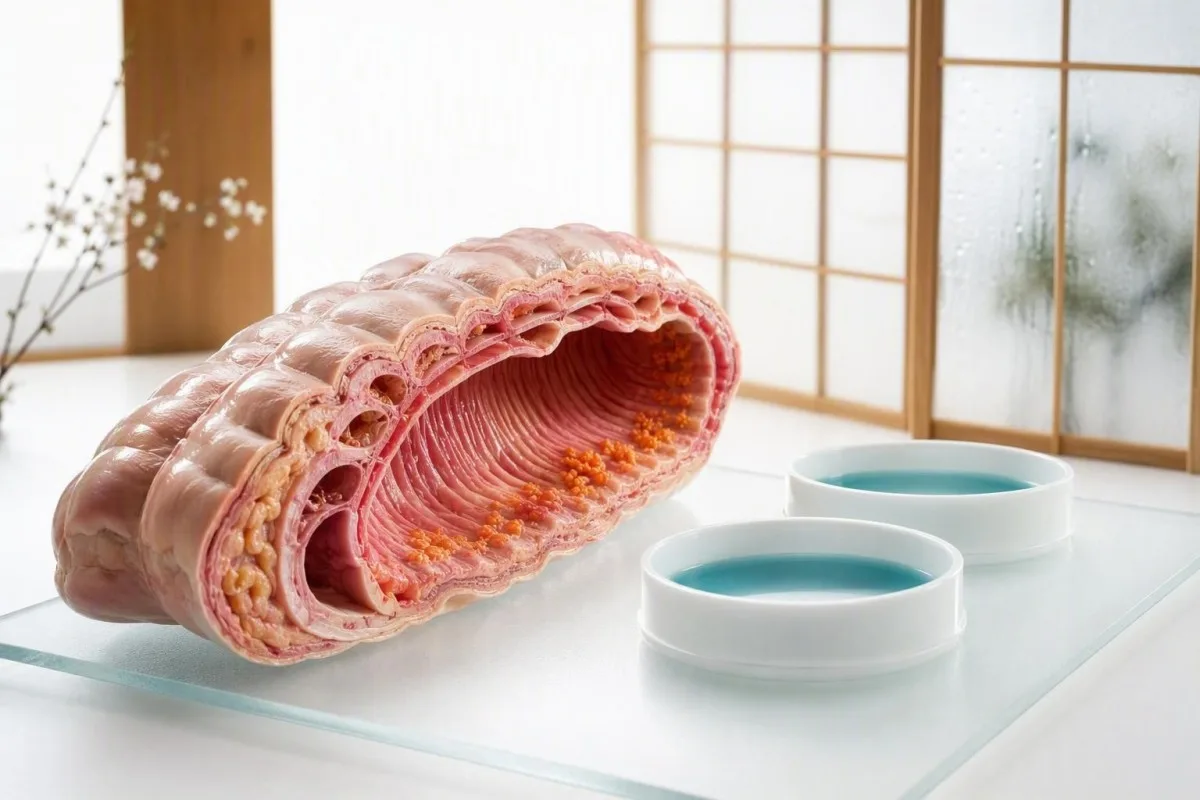
Albei toetse bespeur inflammmasie in die ingewande wat deur neutrofiele gedryf word, maar kalprotektien is gewoonlik die nuttiger kwantitatiewe monitering-instrument. Die regte resultaat is een wat die volgende kliniese besluit verander – nie een wat jou met IBD merk nie.


- Kalprotektien onder 50 µg/g is oor die algemeen gerusstellend by volwassenes met vermoedelike IBS wanneer daar geen alarmkenmerke is nie.
- Laktoferrien is 'n neutrofielproteïen; baie kwantitatiewe toetse gebruik minder as 7.25 µg/g as negatief, maar laboratoriumafsnypunte wissel.
- Hoë stoelgangmerkers dui op inflammmasie in die ingewande, nie 'n spesifieke diagnose nie; infeksie, NSAID's, divertikulitis en kolorektale neoplasie kan albei verhoog.
- Grenskalprotektien van 50–150 µg/g verdien dikwels 'n herhaalmonster na 2–6 weke eerder as onmiddellike kolonoskopie.
- Kalprotektien bo 250 µg/g verhoog kommer oor aktiewe mukosale inflammasie en lei gewoonlik tot kliniese oorsig, stoelganginfeksietoetse of endoskopiebeplanning.
- Normale resultate maak aktiewe kolonies IBD minder waarskynlik, maar kan geïsoleerde Crohn se siekte van die dunderm nie betroubaar uitsluit nie.
- IBD-monitering gebruik simptome plus biomerkers, CRP, anemie-markers, beelding en endoskopie; geen stoelgangmerker diagnoseer op sigself 'n opvlamming nie.
- Dringende simptome soos swart stoelgang, aanhoudende sigbare bloed, koors, erge pyn, floute of dehidrasie benodig mediese assessering ongeag 'n markeruitslag.
Watter stoelgangmerker moet jy eers kies?
Fekale kalsulfakolties is gewoonlik die eerste keuse stoelgang inflammasie marker omdat dit wyd beskikbaar is, kwantitatief is, en die sterkste rol speel in die skeiding van waarskynlike inflammatoriese dermsiekte van funksionele derm simptome. Fekale laktoferrientoets resultate is 'n sinvolle alternatief wanneer dit die plaaslik gevalideerde toets is, maar om albei aan die begin te bestel verander selde die sorg.
Vir 'n persoon met 6 weke van los stoelgange, krampe, en geen gewigsverlies of rektale bloeding nie, sou ek oor die algemeen begin met kalsulfakolties plus geteikende infeksie toetsing eerder as kolonoskopie. 'n Uitslag onder 50 µg/g maak beduidende koloniese inflammasie minder waarskynlik, terwyl 'n duidelik verhoogde uitslag rede gee om verder te kyk. Die AGA-riglyn vir chroniese waterige diarree ondersteun kalsulfakolties of laktoferrien as siftings-toetse vir inflammatoriese toestande (Smalley et al., 2019).
Kies laktoferrien wanneer jou gastroenterologie diens dit konsekwent gebruik, wanneer die laboratorium 'n gevalideerde kwantitatiewe waarde rapporteer, of wanneer dit saam met 'n infeksie diarree werkbestelling gebundel word. Moenie dit kies omdat dit meer spesifiek klink nie: albei proteïene word vrygestel wanneer neutrofiele die derm lumen binnekom. Die praktiese kwessie is of jou klinikus die uitslag met jou vorige monsters kan vergelyk met dieselfde toets.
Kantesti is 'n KI-bloedtoetsontleder wat verwante resultate soos hemoglobien, CRP, albumien en ysterindekse langs 'n stoelgang-marker verslag plaas; dit vervang nie die stoelgang toets of 'n klinikus se diagnose nie. Indien moegheid diarree vergesel, 'n bloedtoets vir diarree kan help om dehidrasie, anemie, of elektrolietverlies te identifiseer wat dringendheid verander.
'n Nuttige vuistreël
Gebruik een gevalideerde merker eerste, herhaal dieselfde merker wanneer 'n resultaat grensgeval is of wanneer behandeling gemonitor word, en reserveer dubbele toetsing vir 'n spesifieke gastroenterologie vraag. Om die toets halfpad deur opvolging te verander, skep skynbare neigings wat eerder laboratorium geraas as biologie mag wees.
Wat fekale kalprotektien eintlik bespeur
Kalsulfakolties meet 'n kalsium- en sink-bindende proteïen wat hoofsaaklik van neutrofiele in die ingewande vrygestel word. 'n Hoër stoelgang konsentrasie weerspieël neutrofiel migrasie in die derm, wat algemeen is in aktiewe IBD, maar ook voorkom met verskeie nie-IBD toestande.
Kalsulfakolties is die S100A8/S100A9 proteïen kompleks, en dit bly relatief stabiel in stoelgang vir etlike dae by kamertemperatuur—een rede waarom dit goed werk as 'n huisversameling toets. Sy biologiese krag is lokaliteit: anders as CRP, weerspieël dit sellulêre aktiwiteit in die derm lumen eerder as 'n hele-liggaam akute-fase reaksie. 'n Normale CRP kanselleer dus nie 'n hoë kalsulfakolties uitslag nie.
In volwasse praktyk, klassifiseer laboratoriums algemeen minder as 50 µg/g as normaal en meer as 150–250 µg/g as toenemend versoenbaar met aktiewe derm inflammasie. Dit is beslissingsdrempels, nie universele biologiese grense nie. Sommige Europese dienste gebruik 100 µg/g as die verwysingsdrempel, terwyl pediateriese en toets-spesifieke verwysingsintervalle aansienlik kan verskil.
Ek het 'n 28-jarige gesien met 'n kalsulfakolties van 680 µg/g, 'n normale CRP, en uiteindelik ulseratiewe kolitis beperk tot die rektum en sigmoid kolon. Daardie patroon is nie ongewoon nie: plaaslike mukosale inflammasie kan aktief wees sonder 'n sterk sistemiese sein. Ons gids vir faekale kalprotektienreeks verduidelik waarom die laboratorium se eie metode en eenhede by elke resultaat aangeheg moet bly.
Wat fekale laktoferrien anders bespeur
Laktoferrien bepaal nog 'n neutrofiel-afgeleide proteïen en beantwoord byna dieselfde biologiese vraag as kalprotektien: is daar aktiewe derm neutrofiel inflammasie? Dit identifiseer nie op sy eie ulseratiewe kolitis, Crohn se siekte, bakteriële kolitis, of 'n ander oorsaak nie.
Laktoferrien is 'n ysterbindende glikoproteïen wat in neutrofiel sekondêre korrels gestoor word en vrygestel word tydens aktivering. 'n Positiewe kwalitatiewe faekale laktoferrien toets is nuttig omdat dit ongunstig is vir ongekompliseerde IBS in die regte kliniese konteks. Kwantitatiewe toetse wissel: een algemeen gebruikte metode definieer 'n negatiewe waarde as minder as 7.25 µg/g, so pas nooit 'n kalprotektien afsnypunt toe op 'n laktoferrien verslag nie.
Die bewyse toon nie dat laktoferrien kategorisch beter is nie. In 'n diagnostiese meta-analise, het Wang en kollegas bevind dat faekale laktoferrien 'n gepoelde sensitiwiteit van 82% en spesifisiteit van 95% gehad het vir die onderskei van IBD van nie-IBD kontroles, hoewel akkuraatheidsberamings verskuif met siektevoorkoms en studieontwerp (Wang et al., 2015). Daardie indrukwekkende spesifisiteit verander steeds nie 'n positiewe resultaat na 'n IBD diagnose nie.
'n Positiewe laktoferrien resultaat is veral die moeite werd om te bespreek wanneer diarree skielik begin het na reis, antibiotika, blootstelling aan besmette kos, of kontak met iemand wat siek is. In daardie situasies, voeg dokters gewoonlik patogeen toetsing by eerder as om direk na 'n IBD etiket te spring. Ons gids vir stoel kultuurresultate verduidelik wat 'n negatiewe of gemengde-groei verslag kan en nie kan vasstel nie.
Hoe om afsnypunte te lees sonder om te oorreageer
'n Kalprotektien waarde onder 50 µg/g is gewoonlik normaal vir volwassenes, 50–150 µg/g is dikwels 'n onbepaalde sone, en waardes bo 250 µg/g wek kommer vir aktiewe inflammasie. Laktoferrien gebruik toets-spesifieke afsnypunte, algemeen 'n kwalitatiewe positiewe of 'n kwantitatiewe drempel naby 7.25 µg/g.
Die 50 µg/g kalprotektien drempel is ontwerp vir sensitiwiteit: dit vang die meeste klinies betekenisvolle inflammatoriese siekte teen die koste van sommige vals positiewe. Die 250 µg/g drempel is meer nuttig vir spesifisiteit en vir die monitering van gevestigde IBD. Tussen hulle lê die frustrerende middel, waar medikasie blootstelling, onlangse gastroenteritis, ouderdom, en trajek meer saak maak as 'n enkele getal.
'n Verandering van 72 na 94 µg/g is dikwels minder betekenisvol as 'n verandering van 85 na 430 µg/g, veral as albei monsters deur dieselfde laboratorium getoets is. Stoelkonsistensie kan ekstraksie beïnvloed en biologiese variasie is werklik. Dr. Thomas Klein se praktiese advies is om NSAID gebruik, onlangse infeksie, menstruele kontaminasie, en versamelingsdatum aan te teken voordat 'n beskeie styging geïnterpreteer word.
Vir 'n gedissiplineerde benadering tot reekswaardes, vergelyk die monsterdatum met simptome en verwante toetse eerder as om elke gemerkte resultaat as siekte progressie te behandel. Ons bloedtoets-trendgids verduidelik dieselfde beginsel van verwysingsverandering en analitiese variasie in laboratorium medisyne.
Waarom albei merkers hoog kan wees sonder IBD
Verhoogde stoelgang-inflammatoriese merkers kom voor met enteriese infeksie, NSAID-blootstelling, divertikulitis, kolorektale neoplasie, mikroskopiese kolitis en IBD. Die resultaat bevestig 'n inflammatoriese sein; dit openbaar nie self die oorsaak, ligging, duur of erns nie.
Nie-steroïdale anti-inflammatoriese middels kan fekale kalsiproktien verhoog, soms aansienlik, deur die intestinale deurlatendheid te verhoog en klein mukosale beserings te veroorsaak. Ibuprofen, naproxen en diklofenak is belangrik; 'n geneesheer kan voorstel om dit te staak indien medies veilig voordat die toets herhaal word. Moenie voorgeskrewe aspirien, antikoagulante, of pynmedikasie stop sonder om eers die voorskrywer te vra nie.
Akute bakteriële gastroenteritis kan kalsiproktienwaardes bo 500 µg/g en 'n positiewe laktferrien produseer, daarom kan 'n stoelgang patogeenpaneel meer insiggewend wees as 'n dringende kolonoskopie in die eerste dae van siekte. Omgekeerd, giardiasis kan langdurige diarree met minder opvallende neutrofiele merkerverhoging veroorsaak. Die simptoomtydlyn dra dikwels meer diagnostiese gewig as wat pasiënte verwag.
Kantesti is 'n KI-labtoets-interpretasiediens wat 'n inflammasiepatroon kan aandui soos lae hemoglobien, lae albumien, trombositose en verhoogde CRP vir geneesheerondersoek, maar daardie bloedbevindinge bewys nie dat die bron die dermkanaal is nie. Vir mense met bloed in die stoelgang, FIT-opvolg en kolonoskopie-tydsberekening is 'n aparte kwessie van kalsiproktien en moet nie uitgestel word nie.
Wanneer 'n normale resultaat steeds siekte kan mis
Normale kalsiproktien of laktferrien maak aktiewe koloniese inflammasie minder waarskynlik, maar dit kan Crohn se siekte nie volledig uitsluit nie, veral ligte of geïsoleerde siektes van die dun derm. 'n Normale resultaat verduidelik ook nie volgehoue gewigsverlies, ystertekort-anemie, nagtelike diarree, of herhalende sigbare bloeding nie.
Siektes van Crohn in die dun derm kan minder neutrofielproteïen in 'n stoelgangmonster afskei as uitgebreide kolitis, veral wanneer letsels proksimaal of lig is. Dit is een rede waarom simptome en alarmkenmerke 'n gerusstellende getal ignoreer. Die ECCO-ESGAR diagnostiese riglyn beveel aan om biomerkers te integreer met ileokolonoskopie en deursnee-beelding wanneer IBD steeds klinies vermoed word (Maaser et al., 2019).
'n 46-jarige met kalsiproktien van 38 µg/g, ferritien van 7 ng/mL, en progressiewe moegheid verdien evaluasie vir gastroïntestinale bloedverlies of wanabsorpsie, selfs al is die dermfrekwensie normaal. Na my ondervinding is die kombinasie van ystertekort en onverklaarbare simptome baie meer betekenisvol as 'n enkele lae stoelgangmerker. Lees ons lae ferritien en derm leidrade vir die gewone volgende laboratoriumvrae.
Coeliakie, galsuur diarree, pankreasinsuffisiëntie en baie medikasie-effekte kan simptome met normale stoelgang-inflammatoriese merkers veroorsaak. 'n Normale toets is dus 'n vurk in die pad na nie-inflammatoriese diagnoses, nie 'n verklaring dat simptome sielkundig of onbelangrik is nie.
Wat om te doen met 'n grensposisie kalprotektien resultaat
'n Grensgeval fekale kalsiproktienresultaat van 50–150 µg/g word algemeen herhaal na 2–6 weke indien simptome stabiel is en daar geen alarmkenmerke is nie. Die herhaling moet dieselfde laboratoriummetode gebruik en moet, indien moontlik, weggelaat word van 'n onlangse gastroïntestinale infeksie.
Voor herhaaltoetsing, evalueer geneeshere NSAIDs, protonpomp-remmers, antibiotika, akute infeksies, strawwe uithouvermoë oefening en ouderdomsverwante risiko. Daar is geen universeel ooreengekome uitwasinterval vir elke medisyne nie. 'n Pragmatiese plan is dikwels 2 weke na 'n akute siekte afgehandel het, mits simptome nie aandui dat vroeër sorg nodig is nie.
Indien die herhaling van 118 na 32 µg/g val en simptome afneem, kan indringende toetsing vermy word. Indien dit van 96 na 310 µg/g styg, voeg die rigting nuttige bewyse by selfs voordat 'n endoskopie-resultaat aankom. Daarom moet 'n enkele grensgeval selde paniek – of valse gerusstelling – veroorsaak.
Ons gids vir opvolg van grensgeval kalsiproktien uiteensit die vrae om na 'n primêre sorg- of gastroenterologie-afspraak te bring. 'n Kort simptoomdagboek met stoelgangfrekwensie, nagtelike wakkerwording, koors en medikasiedatums is gewoonlik meer nuttig as om obsessief kos-triggere na te gaan.
Hoe klinici merkers gebruik nadat IBD gediagnoseer is
In gevestigde IBD is kalsiproktien die nuttigste vir die opsporing van objektiewe intestinale inflammasie en help om te bepaal of simptome 'n opvlamming, infeksie, IBS-oorvleueling, of behandelingversuim verteenwoordig. Laktóferrien kan ook aktiwiteit volg, maar kalprotektien het meer riglyn-ondersteunde drempels vir monitor-om-te-behandel monitor.
Simptome en mukosale aktiwiteit wyk dikwels af. 'n Pasiënt met ulseratiewe kolitis mag goed voel terwyl kalprotektien van 80 tot 360 µg/g klim, of dringende dermbewegings van gal suur wanabsorpsie hê terwyl kalprotektien 28 µg/g bly. Die 2023 AGA ulseratiewe kolitis biomerker riglyn beveel aan om simptome met biomerkers te kombineer eerder as om slegs op een te vertrou (Singh et al., 2023).
Vir remissiemonitering beskou baie klinici minder as 150 µg/g as gerusstellend, terwyl meer as 150 µg/g herhaaltoetsing, endoskopie, of behandelingsoomblik mag regverdig, afhangende van simptome en vorige siektegedrag. In aktiewe simptomatiese ulseratiewe kolitis, meer as 250 µg/g ondersteun voortdurende inflammasie. Afsnypunte is gidse, nie instruksies om biologiese behandeling te verander sonder spesialis insette nie.
Kantesti AI is ’n KI-biomerkers-interpretasieplatform wat bloedtoetsneigings rondom 'n pasiënt se aangemelde behandelingsdatums organiseer; dit kan nie stoelendoskopiese erns beoordeel uit 'n nommer alleen nie. Pasiënte wat biologiese middels gebruik, moet ook verstaan watter bloedveiligheidstoetse behandeling monitor en watter simptome onmiddellike kontak met hul IBD-span vereis.
Hoe versamelingsfoute en tydsberekening resultate beïnvloed
Versamelingskwaliteit beïnvloed stoelmerkontolking omdat 'n besoedelde, vertraagde, of swak monster geneem specimen verwerp kan word of 'n minder betroubare meting kan produseer. Die meeste laboratoriums wil 'n klein stoel gedeelte in die voorsiende steriele houer geplaas hê sonder toiletwater of urine.
Los stoel is gewoonlik aanvaarbaar vir kalprotektien en laktóferrien toetsing; moenie wag vir 'n gevormde monster as diarree die kliniese probleem is nie. Vermy versameling uit toiletwater, en vertel die laboratorium indien die monster sigbare menstruele bloed insluit. Opbergingsinstruksies wissel per kit, maar baie laat kort kamertemperatuur vervoer toe omdat kalprotektien vergelykenderwys stabiel is.
Om 'n dag na 'n marathon, 'n aanval van gastroënteritis, of kolonoscopie dermvoorbereiding te monster, mag die verkeerde vraag beantwoord. Uithouvermoë oefening kan dermdeurlaatbaarheid tydelik verhoog en gastroïntestinale simptome veroorsaak. As jy 'n uithouvermoë atleet sonder rooi vlae is, oorweeg om versameling weg van 'n groot gebeurtenis te beplan; ons uithouvermoë-atleet laboratoriumgids verduidelik waarom konteks toetsinterpretasie verander.
Die ding is, 'n perfekte versameling maak nie 'n nie-spesifieke biomerker spesifiek nie. 'n Hoë-gehalte monster verbeter vertroue in die meting; dit kan nie die kliniese geskiedenis, ondersoek, en differensiaaldiagnose vervang nie.
Watter bloedtoetse 'n stoelgangmerker nuttiger maak
'n CBC, CRP, ferriet, albumien, nierfunksie en coeliakie serologie voeg dikwels meer kliniese waarde toe aan 'n verhoogde stoelmerker as om 'n tweede stoel inflammasieproteïen te bestel. Die kommerwekkende patroon is nie een enkele abnormaliteit nie, maar verskeie resultate wat dui op inflammasie, wanabsorpsie, of bloedverlies.
Lae hemoglobien, ferriet onder 15 ng/mL, albumien onder die laboratorium verwysingsreeks, verhoogde bloedplaatjies, of verhoogde CRP kan kommer oor klinies betekenisvolle dermsiektes versterk. Geen hiervan is diagnosties van IBD nie. Trouens, CRP mag normaal bly in ligte ulseratiewe kolitis, en ferriet kan vals normaal lyk wanneer inflammasie dit as 'n akute-fase proteïen verhoog.
Kantesti is 'n KI-aangedrewe bloedtoets-analisehulpmiddel wat 'n CBC, ysterstudies en CRP in dieselfde kliniese raamwerk lees, insluitend of 'n veranderende hemoglobienvlak vroeër ondersoek kan regverdig. Dr. Thomas Klein waarsku gereeld dat 'n geïsoleerde CRP van 12 mg/L nie-spesifiek is, terwyl CRP 12 mg/L plus dalende albumien en 'n kalprotektien van 740 µg/g 'n veel meer aksiekluster is.
Vir pasiënte wie se ystervlakke teenstrydig blyk te wees, ons gids vir ystermoniteringstudies verduidelik oortransferrinversadiging en ferritien tydens inflammasie. 'n Gids vir CBC-resultate kan jou ook help om te bepaal of anemie mikrosities, inflammatories of gemeng is.
Wanneer dit redelik kan wees om albei toetse aan te vra
Om koprokalprotectien en laktferrien saam te bestel is gewoonlik onnodig, maar dit kan redelik wees wanneer 'n spesialis teenstrydige simptome versoen, 'n vorige toets nie herhaal kan word nie, of 'n plaaslike pad vereis bevestiging. Ooreenstemmende resultate verhoog vertroue in 'n inflammatoriese sein matig; teenstrydige resultate veroorsaak gewoonlik hersiening, nie rekenkundige middeling nie.
'n Hoë koprokalprotectien met negatiewe laktferrien kan toets-tydsberekening, 'n resultaat naby die afsnypunt, monster heterogeniteit, of analitiese verskille weerspieël. 'n Lae koprokalprotectien met positiewe laktferrien verdien dieselfde gedissiplineerde reaksie: verifieer die monstername, hersien die presiese toets, ondersoek simptome en toets vir infeksie wanneer toepaslik. Geen kombinasie het 'n gevalideerde kortpad na diagnose nie.
Dubbele toetsing kan ook nuttig wees in navorsing waar “n protokol albei biomerkers voorsien. Dit verskil van roetine pasiëntesorg, waar duplikaat toetsing koste kan verhoog sonder om besluite te verbeter. Vra die versoekende klinikus ”n eenvoudige vraag: "Wat sal ons anders doen as die tweede toets positief is?"
As 'n verslag intern teenstrydig lyk, gebruik ons 'n kwalitatiewe teenoor kwantitatiewe toetsgids om te verstaan waarom “positief” en “hoog” nie uitruilbare laboratoriumverklarings is nie. Metodesinologie is belangriker as om elke beskikbare merker te versamel.
Wat IBD eintlik bevestig of uitsluit
IBD word gediagnoseer deur 'n sintese van simptome, ileokolonoscopie met weefselmonsterneming, histologie, laboratoriumtoetse, en soms MRI of CT enterografie—nie uit koprokalprotectien of laktferrien alleen nie. Stoelmerkers help om te besluit wie hierdie ondersoeke benodig en of inflammasie oor tyd mag verander.
Kolonoscopie maak voorsiening vir direkte beoordeling van die terminale ileum en kolon en maak weefselondersoek moontlik vir chroniese inflammatoriese kenmerke, infeksie, mikroskopiese kolitis, displasie, en ander oorsake. Beeldvorming is veral waardevol wanneer Crohn se siekte die dun derm mag betrek buite die bereik van 'n standaard kolonoscopie. 'n Stoelmerker is 'n siftingssein, nie 'n mikroskopiese diagnose nie.
Moenie 'n fekale immunochemiese toets verwar met enige inflammatoriese merker nie. FIT bespeur menslike hemoglobien en word hoofsaaklik gebruik in kolorektale kanker sifting of onderste-GI bloedingspaaie, terwyl koprokalprotectien en laktferrien neutrofielprodukte bespeur. Ons vergelyking van FIT en FOBT verduidelik waarom 'n negatiewe inflammatoriese merker nie aanbevole kankersifting vervang nie.
Vanaf 4 September 2026 beveel geen groot gastroënterologiese riglyn aan om Crohn se siekte of ulseratiewe kolitis uit 'n enkele stoel biomerker drempel te diagnoseer nie. Daardie beperking beskerm pasiënte teen beide gemiste siekte en onnodige lewenslange diagnostiese etikette.
Simptome wat enige stoelgangtoetsuitslag oorskadu
Aanhoudende sigbare rektale bloeding, swart teeragtige stoelgang, erge buikpyn, koors, floute, dehidrasie, vinnig verslegtende swakheid, of onbedoelde gewigsverlies benodig tydige mediese assessering ongeag koprokalprotectien of laktferrien. 'n Normale resultaat moet nooit gebruik word om 'n potensieel dringende simptoompatroon uit te wag nie.
Die dringende bekommernis is fisiologie, nie die etiket op 'n laboratoriumverslag nie. Gereelde waterige diarree kan lae kalium, akute nierbesering, en ortostatiese simptome veroorsaak voordat 'n inflammatoriese merker terugkeer. Volwassenes met die onvermoë om vloeistowwe binne te hou, verwarring, floute, of minimale urine-uitset moet dringende sorg soek.
Nuwe derm simptome na ouderdom 50, 'n sterk familiegeskiedenis van kolorektale kanker, en ystertekort-anemie verander die drempel vir kolon evaluasie selfs wanneer koprokalprotectien laag is. 'n Stoelmerker assesseer nie kankerrisiko omvattend nie. Ons slym in stoel rooi-vlag gids onderskei algemene goedaardige patrone van simptome wat ondersoek benodig.
Kinders, swanger persone, ouer volwassenes, en persone wat immuunonderdrukkende medisyne gebruik, benodig geïndividualiseerde triage omdat hul basislynrisiko's verskil. Indien u onseker is of simptome dringend is, is dit veiliger om 'n plaaslike klinikus of 'n ongevalle-diens te kontak as om te probeer om 'n nommer in isolasie te interpreteer.
'n Praktiese gesprek om te voer na jou resultaat
Die mees nuttige opvolgvraag is: “Verander hierdie resultaat my behoefte aan infeksietoetsing, herhaalde toetsing, beeldvorming, of endoskopie?” Om die presiese waarde, toetsnaam, simptoomtydlyn, medisyne, en vorige resultate saam te bring, maak daardie gesprek vinniger en klinies meer presies.
Bring 'n lys van die vorige 14 dae: stoelfrekwensie, oornagsimptome, koors, gewigsverandering, reis, antibiotika, NSAIDs, en familiegeskiedenis. 'n Kalprotektien van 180 µg/g na 'n 3-dag koorsige diarree-siekte vereis 'n ander plan as dieselfde resultaat na 4 maande van nagtelike diarree en gewigsverlies.
Kantesti KI kan u help om bykomende bloedverslae voor 'n afspraak te organiseer, maar diagnose- en behandelingsbeslissings behoort aan die klinikus wat u kan ondersoek en definitiewe toetsing kan reël. Ons mediese valideringsbenadering verduidelik hoe kliniese toesig en bronkontrole ingebou is in verantwoordelike laboratoriuminterpretasie.
Vra vir komplekse gevalle wie die opvolg sal doen en wanneer u 'n herhaalde resultaat of verwysingsbeslissing kan verwag. Die klinici op ons Mediese Adviesraad beklemtoon dat “n gedokumenteerde plan beter is as ”n vae instruksie om "later weer te toets," veral wanneer inflammasie aanwysers en anemie in dieselfde rigting beweeg.
Die besluitgerigte deurslag
Kies kalprotektien eerste in die meeste situasies, gebruik laktferrien wanneer dit u diens se gevalideerde alternatief is, en moenie aanneem dat enige resultaat IBD diagnoseer nie. 'n Lae resultaat verskuif die aandag na funksionele en nie-inflammatoriese oorsake, terwyl 'n aanhoudend hoë resultaat persone identifiseer wat moontlik infeksietoetsing, spesialistoorsig, of endoskopie benodig.
Vir ongekompliseerde chroniese diarree, kan een normale aanwyser - kalprotektien onder 50 µg/g of 'n negatiewe laktferrien volgens daardie laboratorium - die waarskynlikheid van aktiewe inflammatoriese siekte verminder. Vir 'n waarde bo 250 µg/g of 'n positiewe laktferrien met aanhoudende simptome, is die volgende vraag die oorsaak, nie sekerheid nie. Infeksie, blootstelling aan medisyne, IBD, en ander inflammatoriese toestande bly op die lys.
Die meeste pasiënte vind die dubbelsinnigheid die moeilikste in die 50–150 µg/g kalprotektien sone. Na my ervaring, is die beste volgende stap gewoonlik 'n versigtig-tydsgewyse herhaling, nie 'n dieet skoonmaak, self-gerigte steroïedgebruik, of 'n internet diagnose nie. Hou dieselfde laboratorium waar moontlik sodat die tendens interpreteerbaar is.
Kantesti se KI-tegnologiegids beskryf hoe ons stelsels laboratoriumkonteks bewaar terwyl vrae vir mediese oorsig uitlig. Die veilige gebruik van enige KI-interpretasie is dieselfde hier: gebruik dit om voor te berei vir 'n beter kliniese gesprek, nooit om rooi vlae te ignoreer of diagnostiese sorg te vervang nie.
Gereelde vrae
Is kalsiumkarbonaat beter as laktoferrien vir die opsporing van IBD?
Kalsiproktien word gewoonlik verkies vir vermoedelike IBD omdat dit wyd beskikbaar is as 'n kwantitatiewe toets en algemeen gebruikte moniteringdrempels het, soos minder as 50 µg/g en meer as 250 µg/g. Laktoferrien is ook 'n nuttige stoelgangmerker afkomstig van neutrofiele en kan goed presteer wanneer die laboratorium 'n gevalideerde toets gebruik. Geen merker bevestig IBD nie, want infeksies, NSAID's, divertikulitis en ander dermtoestande kan albei verhoog. Die beter toets is gewoonlik die een wat jou geneesheer saam met simptome kan interpreteer en met dieselfde laboratoriummetode kan herhaal.
Watter kalprotektienvlak is kommerwekkend?
'n Fekale kalprotektienvlak onder 50 µg/g is oor die algemeen gerusstellend vir volwassenes sonder alarm simptome, terwyl 50–150 µg/g dikwels as grensgeval beskou word en na 2–6 weke herhaal mag word. Waardes bo 150–250 µg/g is meer kommerwekkend vir intestinale inflammasie, en vlakke bo 250 µg/g spoor algemeen kliniese ondersoek of verdere toetsing aan. Eksakte aksie hang af van die toets, simptome, ouderdom, NSAID-gebruik en of die waarde styg. 'n Waarde van 600 µg/g na akute bakteriële diarree kan 'n ander betekenis hê as 600 µg/g gedurende verskeie maande van chroniese simptome.
Kan IBS hoë kalprotektien of laktoferrien veroorsaak?
Ongekompliseerde IBS veroorsaak gewoonlik nie verhoogde fekale kalsoproteïen of laktoferrien nie omdat IBS nie neutrofil-gedrewe derminflammasie produseer nie. Ligte kalsoproteïenverhogings tussen 50 en 150 µg/g kan voorkom van onlangse infeksie, NSAID-gebruik, ouderdomsverwante faktore, of toetsvariasie, so dit sluit nie outomaties IBS uit nie. 'n Positiewe laktoferrien of kalsoproteïen bo 250 µg/g moet 'n evaluering vir 'n inflammatoriese of infeksieuse oorsaak aanmoedig eerder as om IBS te aanvaar. IBS en IBD kan saam bestaan, wat 'n ander rede is waarom simptome en tendense saak maak.
Kan 'n normale kalprotektien Crohn se siekte uitsluit?
'n Normale kalprotektien-uitslag verminder die waarskynlikheid van aktiewe koloniese IBD, maar kan nie Crohn se siekte heeltemal uitsluit nie, veral ligte of geïsoleerde Crohn se siekte van die dun derm. 'n Waarde onder 50 µg/g moet nie alarmkenmerke soos ystertekortanemie, gewigsverlies, nagtelike diarree, aanhoudende bloeding of 'n sterk familiegeskiedenis ignoreer nie. Klinici mag ileokolonoskopie, MR enterografie of kapselondersoek gebruik wanneer kliniese vermoede hoog bly. Die uitslag word die beste behandel as een waarskynlikheidsaanpassende stukkie getuienis eerder as 'n finale uitsluitingstoets.
Moet ek 'n grenswaarde-kalprotektien-resultaat herhaal?
'n Grensgeval-kalprotektienresultaat van 50–150 µg/g word dikwels herhaal na 2–6 weke wanneer simptome stabiel is en daar geen waarskuwingstekens is nie. Voordat dit herhaal word, doen klinici algemeen oorsig van onlangse gastro-enteritis, NSAID-gebruik, antibiotika en versamelingstoestande, omdat elkeen die waarde kan beïnvloed. Gebruik dieselfde laboratoriumtoets indien moontlik, aangesien resultate van verskillende metodes nie direk vergelykbaar mag wees nie. 'n Stygende resultaat na of bo 250 µg/g dra oor die algemeen meer kliniese gewig as 'n stabiele laegraadse verhoging.
Kan antibiotika stoelgangkalproteïen en laktoferrien beïnvloed?
Antibiotika kan stoelontstekingsmerkers indirek beïnvloed deur aansteeklike diarree te behandel, te veroorsaak of saam te val, en deur die dermmikrobioom te verander. 'n Persoon met antibiotika-verwante diarree moet beoordeel word vir oorsake soos Clostridioides difficile eerder as om 'n verhoogde kalsiproktien of positiewe laktoferrien as IBD te interpreteer. Daar is geen betroubare universele aantal dae om te wag na antibiotika voordat getoets word nie; tydsberekening hang af van simptome en die kliniese vraag. Aanhoudende diarree, koors of buikpyn na antibiotika benodig toetsing onder leiding van 'n klinikus eerder as selfbehandeling.
Kry vandag KI-aangedrewe bloedtoets-analise
Sluit aan by meer as 2 miljoen gebruikers wêreldwyd wat Kantesti vertrou vir onmiddellike, akkurate laboratoriumtoetsanalise. Laai jou bloedtoetsresultate op en ontvang omvattende interpretasie van 15,000+-biomerkers binne sekondes.
📚 Verwysde navorsingspublikasies
Klein, T., Mitchell, S., & Weber, H. (2026). Kantesti LTD. (2026). Urobilinogeen in Urine Toets: Volledige Urinanalise Gids 2026. Zenodo.. Kantesti KI Mediese Navorsing.
Klein, T., Mitchell, S., & Weber, H. (2026). Kantesti BPK. (2026). Iron Studies Gids: TIBC, Ystersadigting & Bindingskapasiteit. Zenodo.. Kantesti KI Mediese Navorsing.
📖 Eksterne mediese verwysings
Singh S et al. (2023). AGA Kliniese Praktykriglyn oor die Rol van Biomarkers vir die Bestuur van Ulseratiewe Kolitis. Gastro-enterologie.
⚕️ Mediese Vrywaring
Hierdie artikel is slegs vir opvoedkundige doeleindes en vorm nie mediese advies nie. Raadpleeg altyd ’n gekwalifiseerde gesondheidsorgverskaffer vir besluite oor diagnose en behandeling.
E-E-A-T Vertrouenseine
Ervaring
Kliniese oorsig gelei deur ’n geneesheer van laboratorium-interpretasie-werksvloei.
Kundigheid
Laboratoriumgeneeskunde fokus op hoe biomerkers in ’n kliniese konteks optree.
Gesagsvermoë
Geskryf deur dr. Thomas Klein met hersiening deur dr. Sarah Mitchell en prof. dr. Hans Weber.
Betroubaarheid
Bewysgebaseerde interpretasie met duidelike opvolgpaaie om alarm te verminder.