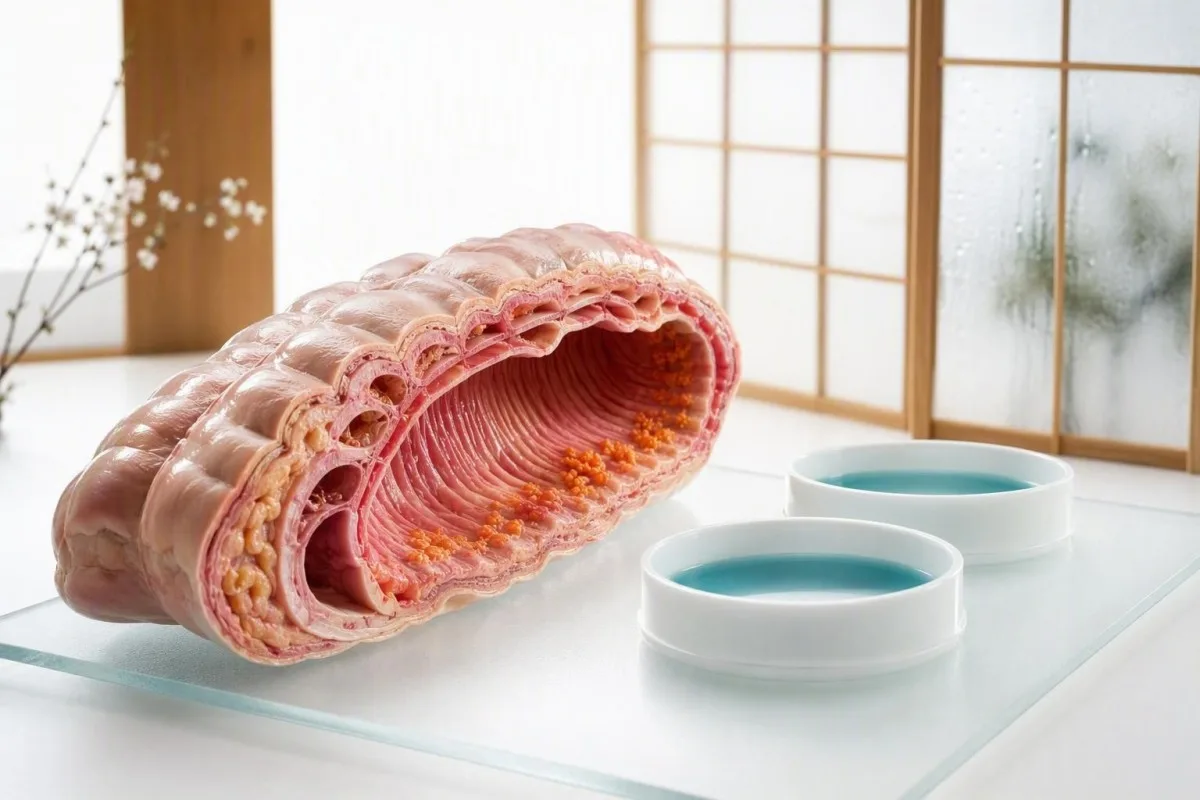
Kedua tes mendeteksi peradangan usus yang didorong oleh neutrofil, tetapi kalprotektin biasanya merupakan alat pemantauan kuantitatif yang lebih berguna. Hasil yang tepat adalah hasil yang mengubah keputusan klinis berikutnya—bukan hasil yang memberi Anda label IBD.


- Kalprotektin di bawah 50 µg/g umumnya meyakinkan pada orang dewasa dengan IBS yang dicurigai ketika tidak ada tanda bahaya.
- Laktiferin adalah protein neutrofil; banyak tes kuantitatif menggunakan kurang dari 7,25 µg/g sebagai negatif, tetapi batas laboratorium bervariasi.
- Penanda tinja tinggi menunjukkan peradangan usus, bukan diagnosis spesifik; infeksi, NSAID, divertikulitis, dan neoplasia kolorektal dapat meningkatkan keduanya.
- Calprotectin batas 50–150 µg/g sering kali memerlukan sampel ulang setelah 2–6 minggu daripada kolonoskopi segera.
- Kalprotektin di atas 250 µg/g meningkatkan kekhawatiran akan peradangan mukosa aktif dan biasanya memerlukan tinjauan klinis, pengujian infeksi tinja, atau perencanaan endoskopi.
- Hasil normal membuat IBD kolonis aktif menjadi kurang mungkin tetapi tidak dapat secara andal menyingkirkan penyakit Crohn usus halus yang terisolasi.
- pemantauan IBD menggunakan gejala ditambah biomarker, CRP, penanda anemia, pencitraan, dan endoskopi; tidak ada penanda tinja yang secara independen mendiagnosis kekambuhan.
- Gejala yang mendesak seperti tinja hitam, darah terlihat persisten, demam, nyeri hebat, pingsan, atau dehidrasi memerlukan penilaian medis terlepas dari hasil penanda.
Penanda tinja mana yang harus Anda pilih terlebih dahulu?
Fecal calprotectin biasanya merupakan penanda inflamasi tinja pilihan pertama karena tersedia secara luas, kuantitatif, dan memiliki peran terkuat dalam memisahkan penyakit radang usus yang mungkin dari gejala usus fungsional. Tes laktoferin feses hasil merupakan alternatif yang masuk akal ketika itu adalah uji yang divalidasi secara lokal, tetapi memesan keduanya di awal jarang mengubah perawatan.
Bagi seseorang dengan tinja encer selama 6 minggu, kram, dan tanpa penurunan berat badan atau perdarahan rektum, saya biasanya akan memulai dengan calprotectin ditambah pengujian infeksi yang ditargetkan daripada kolonoskopi. Hasil di bawah 50 µg/g membuat peradangan usus besar yang signifikan menjadi kurang mungkin, sementara hasil yang jelas meningkat memberikan alasan untuk melihat lebih jauh. Pedoman AGA untuk diare kronis berair mendukung calprotectin atau laktoreferin sebagai tes penyaringan untuk kondisi inflamasi (Smalley et al., 2019).
Pilih laktoreferin ketika layanan gastroenterologi Anda menggunakannya secara konsisten, ketika laboratorium melaporkan nilai kuantitatif yang tervalidasi, atau ketika digabungkan dengan pemeriksaan diare infeksi. Jangan memilihnya karena terdengar lebih spesifik: kedua protein dilepaskan ketika neutrofil memasuki lumen usus. Masalah praktisnya adalah apakah dokter Anda dapat membandingkan hasil dengan sampel Anda sebelumnya menggunakan uji yang sama.
Kantesti adalah seorang Analisa tes darah AI yang menempatkan hasil terkait seperti hemoglobin, CRP, albumin, dan indeks besi bersama dengan laporan penanda tinja; itu tidak menggantikan uji tinja atau diagnosis dokter. Jika kelelahan menyertai diare, tes darah untuk diare dapat membantu mengidentifikasi dehidrasi, anemia, atau kehilangan elektrolit yang mengubah urgensi.
Aturan praktis yang berguna
Gunakan satu penanda yang tervalidasi terlebih dahulu, ulangi penanda yang sama ketika hasil berada di ambang batas atau saat memantau pengobatan, dan sisihkan pengujian ganda untuk pertanyaan gastroenterologi tertentu. Mengubah uji di tengah-tengah tindak lanjut menciptakan tren semu yang mungkin merupakan kebisingan laboratorium daripada biologi.
Apa yang sebenarnya dideteksi oleh kalprotektin tinja
Calprotectin mengukur protein pengikat kalsium dan seng yang terutama dilepaskan dari neutrofil di saluran usus. Konsentrasi tinja yang lebih tinggi mencerminkan migrasi neutrofil ke dalam usus, yang umum terjadi pada IBD aktif tetapi juga terjadi pada beberapa kondisi non-IBD.
Calprotectin adalah kompleks protein S100A8/S100A9, dan tetap relatif stabil dalam tinja selama beberapa hari pada suhu kamar—satu alasan mengapa ia berfungsi dengan baik sebagai tes pengumpulan di rumah. Kekuatan biologisnya adalah lokalisasi: tidak seperti CRP, ia mencerminkan aktivitas seluler di lumen usus daripada respons fase akut seluruh tubuh. Oleh karena itu, CRP normal tidak membatalkan hasil calprotectin yang tinggi.
Dalam praktik dewasa, laboratorium umumnya mengklasifikasikan kurang dari 50 µg/g sebagai normal dan lebih dari 150–250 µg/g sebagai semakin sesuai dengan peradangan usus aktif. Ini adalah ambang batas keputusan, bukan batas biologis universal. Beberapa layanan Eropa menggunakan 100 µg/g sebagai ambang batas rujukan, sementara interval referensi pediatrik dan spesifik uji dapat berbeda secara substansial.
Saya pernah melihat seorang berusia 28 tahun dengan calprotectin 680 µg/g, CRP normal, dan akhirnya kolitis ulserativa terbatas pada rektum dan kolon sigmoid. Pola itu tidak biasa: peradangan mukosa lokal bisa aktif tanpa sinyal sistemik yang kuat. Kami panduan rentang kalprotektin tinja menjelaskan mengapa metode dan satuan laboratorium sendiri harus tetap terlampir pada setiap hasil.
Apa yang dideteksi oleh laktiferin tinja secara berbeda
Laktigerin mendeteksi protein lain yang berasal dari neutrofil dan menjawab pertanyaan biologis yang hampir sama dengan kalprotektin: apakah ada peradangan neutrofil usus yang aktif? Ini tidak mengidentifikasi kolitis ulserativa, penyakit Crohn, kolitis bakteri, atau penyebab lain dengan sendirinya.
Laktigerin adalah glikoprotein pengikat besi yang disimpan dalam granul sekunder neutrofil dan dilepaskan selama aktivasi. Tes laktigerin tinja kualitatif positif berguna karena menentang IBS yang tidak rumit dalam pengaturan klinis yang tepat. Uji kuantitatif bervariasi: satu metode yang umum digunakan mendefinisikan nilai negatif sebagai kurang dari 7.25 µg/g, jadi jangan pernah menerapkan batas kalprotektin pada laporan laktigerin.
Bukti tidak menunjukkan bahwa laktigerin secara kategoris lebih unggul. Dalam meta-analisis diagnostik, Wang dan rekan menemukan laktigerin tinja memiliki sensitivitas gabungan 82% dan spesifisitas 95% untuk membedakan IBD dari kontrol non-IBD, meskipun perkiraan akurasi bergeser dengan prevalensi penyakit dan desain studi (Wang et al., 2015). Spesifisitas yang mengesankan itu masih belum mengubah hasil positif menjadi diagnosis IBD.
Hasil laktigerin positif sangat berharga untuk didiskusikan ketika diare dimulai secara tiba-tiba setelah bepergian, antibiotik, paparan makanan yang terkontaminasi, atau kontak dengan orang yang sakit. Dalam situasi tersebut, dokter biasanya menambahkan pengujian patogen daripada langsung melabeli IBD. Panduan kami untuk hasil kultur tinja mencakup apa yang dapat dan tidak dapat diselesaikan oleh laporan negatif atau pertumbuhan campuran.
Cara membaca batas tanpa bereaksi berlebihan
Nilai kalprotektin di bawah 50 µg/g biasanya normal untuk orang dewasa, 50–150 µg/g seringkali merupakan zona yang tidak pasti, dan nilai di atas 250 µg/g menimbulkan kekhawatiran akan peradangan aktif. Laktigerin menggunakan batas spesifik uji, umumnya positif kualitatif atau ambang batas kuantitatif mendekati 7.25 µg/g.
Ambang batas kalprotektin 50 µg/g dirancang untuk sensitivitas: ini menangkap sebagian besar penyakit inflamasi yang signifikan secara klinis dengan mengorbankan beberapa hasil positif palsu. Ambang batas 250 µg/g lebih berguna untuk spesifisitas dan untuk memantau IBD yang sudah ada. Di antaranya terletak wilayah tengah yang membuat frustrasi, di mana paparan obat, gastroenteritis baru-baru ini, usia, dan lintasan lebih penting daripada satu angka.
Perubahan dari 72 menjadi 94 µg/g seringkali kurang bermakna daripada perubahan dari 85 menjadi 430 µg/g, terutama jika kedua sampel diuji oleh laboratorium yang sama. Konsistensi tinja dapat memengaruhi ekstraksi dan variasi biologis itu nyata. Nasihat praktis Dr. Thomas Klein adalah mencatat penggunaan NSAID, infeksi baru-baru ini, kontaminasi menstruasi, dan tanggal pengumpulan sebelum menafsirkan kenaikan sedang.
Untuk pendekatan yang disiplin terhadap nilai serial, bandingkan tanggal sampel dengan gejala dan laboratorium terkait daripada menganggap setiap hasil yang ditandai sebagai perkembangan penyakit. Kami panduan tren tes darah menjelaskan prinsip yang sama tentang perubahan referensi dan variasi analitik dalam kedokteran laboratorium.
Mengapa kedua penanda bisa tinggi tanpa IBD
Peningkatan penanda inflamasi feses terjadi pada infeksi usus, paparan NSAID, divertikulitis, neoplastik kolorektal, kolitis mikroskopis, dan IBD. Hasilnya mengonfirmasi sinyal inflamasi; hasilnya tidak mengungkapkan penyebab, lokasi, durasi, atau keparahan dengan sendirinya.
Obat antiinflamasi nonsteroid dapat meningkatkan kalprotektin feses, terkadang secara substansial, dengan meningkatkan permeabilitas usus dan menyebabkan cedera mukosa kecil. Ibuprofen, naproxen, dan diklofenak penting; dokter dapat menyarankan untuk menghentikannya jika aman secara medis sebelum mengulang tes. Jangan menghentikan aspirin yang diresepkan, antikoagulan, atau obat pereda nyeri tanpa bertanya terlebih dahulu kepada dokter yang meresepkan.
Gastroenteritis bakteri akut dapat menghasilkan nilai kalprotektin di atas 500 µg/g dan laktiferin positif, itulah sebabnya panel patogen feses dapat lebih informatif daripada kolonoskopi segera pada hari-hari awal penyakit. Sebaliknya, giardiasis dapat menyebabkan diare berkepanjangan dengan peningkatan penanda neutrofilik yang kurang mencolok. Riwayat waktu gejala seringkali memiliki bobot diagnostik lebih besar daripada yang diperkirakan pasien.
Kantesti adalah seorang layanan interpretasi tes lab AI yang dapat menandai pola inflamasi seperti hemoglobin rendah, albumin rendah, trombositosis, dan peningkatan CRP untuk tinjauan dokter, tetapi temuan darah tersebut tidak membuktikan sumbernya adalah usus. Bagi orang dengan darah dalam tinja, tindak lanjut FIT dan waktu kolonoskopi adalah masalah terpisah dari kalprotektin dan seharusnya tidak ditunda.
Kapan hasil normal masih bisa melewatkan penyakit
Kalprotektin atau laktiferin normal membuat inflamasi kolon aktif menjadi kurang mungkin, tetapi tidak dapat sepenuhnya menyingkirkan penyakit Crohn, terutama penyakit usus halus ringan atau terisolasi. Hasil normal juga tidak menjelaskan penurunan berat badan yang persisten, anemia defisiensi besi, diare nokturnal, atau perdarahan tampak berulang.
Penyakit Crohn usus halus dapat melepaskan lebih sedikit protein neutrofil ke dalam sampel feses daripada kolitis luas, terutama ketika lesi bersifat proksimal atau ringan. Ini adalah salah satu alasan gejala dan tanda bahaya mengesampingkan angka yang meyakinkan. Pedoman diagnostik ECCO-ESGAR merekomendasikan integrasi biomarker dengan ileokolonoskopi dan pencitraan lintas bagian ketika IBD tetap dicurigai secara klinis (Maaser et al., 2019).
Seorang pasien berusia 46 tahun dengan kalprotektin 38 µg/g, feritin 7 ng/mL, dan kelelahan progresif pantas dievaluasi untuk kehilangan darah gastrointestinal atau malabsorpsi meskipun frekuensi buang air besar normal. Menurut pengalaman saya, kombinasi defisiensi besi dan gejala yang tidak dapat dijelaskan jauh lebih berarti daripada satu penanda feses yang rendah. Baca kami feritin rendah dan petunjuk usus untuk pertanyaan laboratorium selanjutnya yang biasa.
Penyakit Celiac, diare asam empedu, insufisiensi pankreas, dan banyak efek obat dapat menyebabkan gejala dengan penanda inflamasi feses normal. Oleh karena itu, tes normal adalah persimpangan jalan menuju diagnosis non-inflamasi, bukan pernyataan bahwa gejala bersifat psikologis atau tidak penting.
Apa yang harus dilakukan dengan hasil kalprotektin yang borderline
Hasil kalprotektin feses yang borderline sebesar 50–150 µg/g umumnya diulang setelah 2–6 minggu jika gejala stabil dan tidak ada tanda bahaya. Pengulangan sebaiknya menggunakan metode laboratorium yang sama dan sebaiknya dilakukan setelah infeksi saluran pencernaan yang baru-baru ini terjadi jika memungkinkan.
Sebelum pengulangan tes, dokter meninjau NSAID, inhibitor pompa proton, antibiotik, infeksi akut, latihan daya tahan yang berat, dan risiko terkait usia. Tidak ada interval pencucian yang disepakati secara universal untuk setiap obat. Rencana pragmatis seringkali adalah 2 minggu setelah penyakit akut mereda, asalkan gejala tidak menandakan perlunya perawatan lebih awal.
Jika pengulangan turun dari 118 menjadi 32 µg/g dan gejala mereda, pengujian invasif mungkin dapat dihindari. Jika naik dari 96 menjadi 310 µg/g, arahnya menambah bukti yang berguna bahkan sebelum hasil endoskopi tiba. Inilah mengapa satu nilai borderline jarang memicu kepanikan—atau rasa aman yang salah.
Kita panduan tindak lanjut kalprotektin borderline menguraikan pertanyaan yang harus diajukan pada janji temu perawatan primer atau gastroenterologi. Jurnal gejala singkat dengan frekuensi buang air besar, terbangun di malam hari, demam, dan tanggal pengobatan biasanya lebih berguna daripada memeriksa pemicu makanan secara berlebihan.
Bagaimana klinisi menggunakan penanda setelah IBD didiagnosis
Pada IBD yang sudah mapan, kalprotektin paling berguna untuk melacak inflamasi usus objektif dan membantu memutuskan apakah gejala mewakili kekambuhan, infeksi, tumpang tindih IBS, atau kegagalan pengobatan. Laktosferin juga dapat mengikuti perkembangan penyakit, tetapi kalprotektin memiliki lebih banyak ambang batas yang didukung pedoman untuk pemantauan pengobatan hingga target.
Gejala dan aktivitas mukosa sering kali berbeda. Seorang pasien dengan kolitis ulserativa mungkin merasa baik sementara kalprotektin naik dari 80 menjadi 360 µg/g, atau mengalami buang air besar mendesak karena malabsorpsi asam empedu sementara kalprotektin tetap 28 µg/g. Pedoman biomarker kolitis ulserativa AGA 2023 menyarankan untuk menggabungkan gejala dengan biomarker daripada hanya mengandalkan salah satunya (Singh et al., 2023).
Untuk pemantauan remisi, banyak klinisi menganggap kurang dari 150 µg/g meyakinkan, sementara lebih dari 150 µg/g mungkin memerlukan pengujian ulang, endoskopi, atau tinjauan pengobatan tergantung pada gejala dan riwayat penyakit sebelumnya. Pada kolitis ulserativa simtomatik aktif, lebih dari 250 µg/g mendukung peradangan yang berkelanjutan. Batasan adalah panduan, bukan instruksi untuk mengubah pengobatan biologis tanpa masukan ahli.
Kantesti AI adalah sebuah platform interpretasi biomarker AI yang mengatur tren tes darah berdasarkan tanggal pengobatan yang dilaporkan pasien; alat ini tidak dapat menilai tingkat keparahan endoskopi tinja hanya dari angka. Pasien yang menjalani pengobatan biologis juga harus memahami tes darah untuk memantau pengobatan dan gejala mana yang memerlukan kontak segera dengan tim IBD mereka.
Bagaimana kesalahan pengumpulan dan waktu memengaruhi hasil
Kualitas pengumpulan memengaruhi interpretasi penanda tinja karena spesimen yang terkontaminasi, tertunda, atau diambil secara buruk dapat ditolak atau menghasilkan pengukuran yang kurang andal. Sebagian besar laboratorium menginginkan sedikit porsi tinja dimasukkan ke dalam wadah steril yang disediakan tanpa air toilet atau urin.
Tinja yang encer biasanya dapat diterima untuk pengujian kalprotektin dan laktosferin; jangan menunggu sampel yang padat jika diare adalah masalah klinisnya. Hindari mengumpulkan dari air toilet, dan beri tahu laboratorium jika sampel mengandung darah menstruasi yang terlihat. Petunjuk penyimpanan bervariasi berdasarkan kit, tetapi banyak yang mengizinkan transportasi singkat pada suhu kamar karena kalprotektin relatif stabil.
Mengambil sampel sehari setelah maraton, serangan gastroenteritis, atau persiapan usus kolonoskopi dapat menjawab pertanyaan yang salah. Latihan daya tahan dapat meningkatkan permeabilitas usus secara sementara dan memprovokasi gejala pencernaan. Jika Anda seorang atlet daya tahan tanpa tanda bahaya, pertimbangkan untuk menjadwalkan pengambilan sampel menjauh dari acara besar; panduan lab atlet daya tahan kami menjelaskan mengapa konteks mengubah interpretasi tes.
Masalahnya adalah, pengumpulan yang sempurna tidak membuat biomarker yang tidak spesifik menjadi spesifik. Sampel berkualitas tinggi meningkatkan kepercayaan pada pengukuran; sampel tersebut tidak dapat menggantikan riwayat klinis, pemeriksaan, dan diagnosis banding.
Tes darah mana yang membuat penanda tinja lebih berguna
CBC, CRP, feritin, albumin, fungsi ginjal, dan serologi celiac sering kali memberikan nilai klinis lebih pada penanda tinja yang meningkat daripada memesan protein inflamasi tinja kedua. Pola yang mengkhawatirkan bukanlah satu kelainan, tetapi beberapa hasil yang menunjukkan peradangan, malabsorpsi, atau kehilangan darah.
Hemoglobin rendah, feritin di bawah 15 ng/mL, albumin di bawah rentang referensi laboratorium, peningkatan trombosit, atau peningkatan CRP dapat memperkuat kekhawatiran akan penyakit usus yang bermakna secara klinis. Tidak ada yang diagnostik untuk IBD. Faktanya, CRP dapat tetap normal pada kolitis ulserativa ringan, dan feritin dapat terlihat normal palsu ketika peradangan meningkatkannya sebagai protein fase akut.
Kantesti adalah seorang Alat analisis pemeriksaan darah berbasis AI yang membaca CBC, studi zat besi, dan CRP dalam kerangka klinis yang sama, termasuk apakah perubahan kadar hemoglobin mungkin membenarkan peninjauan lebih awal. Dr. Thomas Klein secara rutin memperingatkan bahwa CRP terisolasi sebesar 12 mg/L bersifat nonspesifik, sedangkan CRP 12 mg/L ditambah albumin yang menurun dan kalprotektin 740 µg/g adalah kelompok yang jauh lebih dapat ditindaklanjuti.
Untuk pasien yang nilai zat besi-nya tampak kontradiktif, panduan penelitian studi zat besi kami menjelaskan saturasi transferrin dan ferritin selama inflamasi. Sebuah panduan hasil CBC juga dapat membantu Anda mengidentifikasi apakah anemia bersifat mikrositik, inflamasi, atau campuran.
Kapan memesan kedua tes mungkin masuk akal
Pemesanan kalprotektin dan laktosferin secara bersamaan biasanya tidak perlu, tetapi dapat masuk akal ketika seorang spesialis merekonsiliasi gejala yang berbeda, tes sebelumnya tidak dapat diulang, atau jalur lokal memerlukan konfirmasi. Hasil yang konsisten sedikit meningkatkan keyakinan pada sinyal inflamasi; hasil yang berbeda biasanya memicu tinjauan, bukan rata-rata aritmatika.
Kalprotektin tinggi dengan laktosferin negatif mungkin mencerminkan waktu tes, hasil mendekati batas, heterogenitas spesimen, atau perbedaan analitik. Kalprotektin rendah dengan laktosferin positif membutuhkan respons yang sama disiplinnya: verifikasi pengumpulan, tinjau tes yang tepat, periksa gejala dan tes infeksi jika perlu. Tidak ada kombinasi yang memiliki jalan pintas yang divalidasi untuk diagnosis.
Pengujian ganda juga dapat berguna dalam pengaturan penelitian di mana protokol menetapkan kedua biomarker. Itu berbeda dari perawatan pasien rutin, di mana pengujian duplikat dapat menambah biaya tanpa meningkatkan keputusan. Ajukan pertanyaan sederhana kepada dokter yang memesan tes: “Apa yang akan kita lakukan secara berbeda jika tes kedua positif?”
Jika laporan tampak secara internal tidak konsisten, gunakan panduan tes kualitatif vs kuantitatif kami untuk memahami mengapa “positif” dan “tinggi” bukanlah pernyataan laboratorium yang dapat dipertukarkan. Konsistensi metode lebih penting daripada mengumpulkan setiap penanda yang tersedia.
Apa yang sebenarnya mengkonfirmasi atau menyingkirkan IBD
IBD didiagnosis melalui sintesis gejala, ileokolonoskopi dengan pengambilan sampel jaringan, histologi, tes laboratorium, dan terkadang MRI atau CT enterografi—bukan hanya dari kalprotektin atau laktosferin saja. Penanda tinja membantu memutuskan siapa yang memerlukan investigasi ini dan apakah inflamasi mungkin berubah seiring waktu.
Kolonoskopi memungkinkan penilaian langsung ileum terminal dan kolon serta memungkinkan pemeriksaan jaringan untuk fitur inflamasi kronis, infeksi, kolitis mikroskopis, displasia, dan penyebab lainnya. Pencitraan sangat berharga ketika penyakit Crohn mungkin melibatkan usus kecil di luar jangkauan kolonoskopi standar. Penanda tinja adalah sinyal triase, bukan diagnosis mikroskopis.
Jangan mengacaukan tes imunokimia tinja dengan penanda inflamasi apa pun. FIT mendeteksi hemoglobin manusia dan terutama digunakan dalam penyaringan kanker kolorektal atau jalur perdarahan saluran cerna bawah, sedangkan kalprotektin dan laktosferin mendeteksi produk neutrofil. Perbandingan kami tentang FIT dan FOBT menjelaskan mengapa penanda inflamasi negatif tidak menggantikan penyaringan kanker yang direkomendasikan.
Per 4 September 2026, tidak ada pedoman gastroenterologi utama yang merekomendasikan diagnosis penyakit Crohn atau kolitis ulserativa dari satu ambang batas biomarker tinja. Keterbatasan itu melindungi pasien dari penyakit yang terlewat dan label diagnostik seumur hidup yang tidak perlu.
Gejala yang mengalahkan hasil tes tinja apa pun
Perdarahan rektal yang terlihat terus-menerus, tinja hitam seperti ter, nyeri perut hebat, demam, pingsan, dehidrasi, kelemahan yang memburuk dengan cepat, atau penurunan berat badan yang tidak disengaja memerlukan penilaian medis tepat waktu terlepas dari kalprotektin atau laktosferin. Hasil normal tidak boleh digunakan untuk mengabaikan pola gejala yang berpotensi mendesak.
Kekhawatiran mendesak adalah fisiologi, bukan label pada laporan laboratorium. Diare berair yang sering dapat menyebabkan kalium rendah, cedera ginjal akut, dan gejala ortostatik sebelum penanda inflamasi kembali. Orang dewasa yang tidak dapat menahan cairan, kebingungan, pingsan, atau sedikit urin harus segera mencari pertolongan.
Gejala usus baru setelah usia 50 tahun, riwayat keluarga kuat kanker kolorektal, dan anemia defisiensi besi mengubah ambang batas untuk evaluasi usus meskipun kalprotektin rendah. Penanda tinja tidak secara komprehensif menilai risiko kanker. lendir dalam tinja panduan tanda bahaya membedakan pola umum yang jinak dari gejala yang memerlukan pemeriksaan.
Anak-anak, orang hamil, orang lanjut usia, dan orang yang menggunakan obat-obatan imunosupresif memerlukan triase individual karena risiko dasar mereka berbeda. Jika Anda tidak yakin apakah gejalanya mendesak, menghubungi dokter lokal atau layanan perawatan darurat lebih aman daripada mencoba menafsirkan angka secara terpisah.
Percakapan praktis yang harus dilakukan setelah hasil Anda
Pertanyaan lanjutan yang paling berguna adalah: “Apakah hasil ini mengubah kebutuhan saya untuk tes infeksi, tes ulang, pencitraan, atau endoskopi?” Membawa nilai yang tepat, nama assay, riwayat gejala, obat-obatan, dan hasil sebelumnya membuat percakapan tersebut lebih cepat dan lebih akurat secara klinis.
Bawa daftar 14 hari terakhir: frekuensi tinja, gejala semalaman, demam, perubahan berat badan, perjalanan, antibiotik, NSAID, dan riwayat keluarga. Calprotectin 180 µg/g setelah penyakit diare demam 3 hari memerlukan rencana yang berbeda daripada hasil yang sama setelah 4 bulan diare nokturnal dan penurunan berat badan.
Kantesti AI dapat membantu Anda mengorganisir laporan darah pendamping sebelum janji temu, tetapi keputusan diagnosis dan pengobatan menjadi milik dokter yang dapat memeriksa Anda dan mengatur tes definitif. Kami validasi medis menjelaskan bagaimana pengawasan klinis dan pemeriksaan sumber dimasukkan ke dalam interpretasi laboratorium yang bertanggung jawab.
Untuk kasus yang kompleks, tanyakan siapa yang akan bertanggung jawab atas tindak lanjut dan kapan Anda harus mengharapkan hasil ulang atau keputusan rujukan. Dokter di kami Dewan Penasehat Medis menekankan bahwa rencana yang terdokumentasi lebih baik daripada instruksi yang tidak jelas untuk “periksa ulang nanti,” terutama ketika penanda peradangan dan anemia bergerak ke arah yang sama.
Inti utama yang berfokus pada keputusan
Pilih calprotectin terlebih dahulu di sebagian besar situasi, gunakan laktoferin ketika itu adalah alternatif yang divalidasi oleh layanan Anda, dan jangan berasumsi salah satu hasil mendiagnosis IBD. Hasil rendah mengalihkan perhatian ke penyebab fungsional dan non-inflamasi, sementara hasil tinggi yang persisten mengidentifikasi orang yang mungkin memerlukan tes infeksi, tinjauan spesialis, atau endoskopi.
Untuk diare kronis yang tidak rumit, satu penanda normal—calprotectin di bawah 50 µg/g atau laktoferin negatif menurut laboratorium tersebut—dapat mengurangi kemungkinan penyakit inflamasi aktif. Untuk nilai di atas 250 µg/g atau laktoferin positif dengan gejala yang persisten, pertanyaan selanjutnya adalah penyebabnya, bukan kepastiannya. Infeksi, paparan obat, IBD, dan kondisi inflamasi lainnya tetap ada dalam daftar.
Kebanyakan pasien merasa ambiguitas paling sulit di zona calprotectin 50–150 µg/g. Menurut pengalaman saya, langkah selanjutnya yang terbaik biasanya adalah pemeriksaan ulang yang waktunya tepat, bukan pembersihan diet, penggunaan steroid yang diarahkan sendiri, atau diagnosis internet. Tetap gunakan laboratorium yang sama jika memungkinkan sehingga trennya dapat ditafsirkan.
Kantesti’s panduan teknologi AI menjelaskan bagaimana sistem kami mempertahankan konteks laboratorium sambil menyoroti pertanyaan untuk tinjauan medis. Penggunaan yang aman dari interpretasi AI apa pun sama di sini: gunakan untuk mempersiapkan percakapan klinis yang lebih baik, jangan pernah untuk mengesampingkan tanda bahaya atau mengganti perawatan diagnostik.
Pertanyaan yang Sering Diajukan
Apakah kalprotektin lebih baik daripada laktiferin untuk mendeteksi IBD?
Kalprotektin biasanya lebih dipilih untuk dugaan IBD karena tersedia secara luas sebagai tes kuantitatif dan memiliki ambang batas pemantauan yang umum digunakan seperti kurang dari 50 µg/g dan lebih dari 250 µg/g. Laktiferin juga merupakan penanda tinja turunan neutrofil yang berguna dan dapat bekerja dengan baik ketika laboratorium menggunakan uji yang tervalidasi. Tidak ada penanda yang dapat mengkonfirmasi IBD, karena infeksi, NSAID, divertikulitis, dan kondisi usus lainnya dapat meningkatkan keduanya. Tes yang lebih baik biasanya adalah tes yang dapat diinterpretasikan oleh dokter Anda bersama dengan gejala dan diulang menggunakan metode laboratorium yang sama.
Berapa kadar kalprotektin yang mengkhawatirkan?
Kadar kalprotektin feses di bawah 50 µg/g umumnya meyakinkan bagi orang dewasa tanpa gejala peringatan, sedangkan 50–150 µg/g sering dianggap borderline dan dapat diulang setelah 2–6 minggu. Nilai di atas 150–250 µg/g lebih mengkhawatirkan untuk peradangan usus, dan kadar di atas 250 µg/g umumnya memerlukan tinjauan klinis atau pengujian lebih lanjut. Tindakan yang tepat bergantung pada pemeriksaan, gejala, usia, penggunaan NSAID, dan apakah nilainya meningkat. Nilai 600 µg/g setelah diare bakteri akut dapat memiliki arti yang berbeda dari 600 µg/g selama beberapa bulan gejala kronis.
Dapatkah IBS menyebabkan kalprotektin atau laktiferin yang tinggi?
IBS tanpa komplikasi biasanya tidak menyebabkan peningkatan kalprotektin atau laktiferin feses karena IBS tidak menghasilkan peradangan usus yang dimediasi neutrofil. Peningkatan kalprotektin ringan antara 50 dan 150 µg/g dapat terjadi akibat infeksi baru-baru ini, penggunaan NSAID, faktor terkait usia, atau variasi uji, sehingga tidak secara otomatis menyingkirkan IBS. Laktiferin positif atau kalprotektin di atas 250 µg/g harus mendorong evaluasi penyebab inflamasi atau infeksi daripada menganggapnya IBS. IBS dan IBD dapat terjadi bersamaan, yang merupakan alasan lain mengapa gejala dan tren itu penting.
Bisakah calprotectin normal menyingkirkan penyakit Crohn?
Hasil kalprotektin yang normal mengurangi kemungkinan IBD kolonis aktif tetapi tidak dapat sepenuhnya menyingkirkan penyakit Crohn, terutama penyakit Crohn di usus halus yang ringan atau terisolasi. Nilai di bawah 50 µg/g seharusnya tidak mengesampingkan fitur peringatan seperti anemia defisiensi besi, penurunan berat badan, diare nokturnal, perdarahan persisten, atau riwayat keluarga yang kuat. Klinisi dapat menggunakan ileokolonoskopi, MR enterografi, atau penilaian kapsul ketika kecurigaan klinis tetap tinggi. Hasilnya paling baik dianggap sebagai satu bukti penyesuaian probabilitas daripada tes eksklusi akhir.
Haruskah saya mengulang hasil calprotectin yang borderline?
Hasil calprotectin borderline 50–150 µg/g sering diulang setelah 2–6 minggu ketika gejala stabil dan tidak ada tanda bahaya. Sebelum mengulang, klinisi umumnya meninjau gastroenteritis baru-baru ini, penggunaan NSAID, antibiotik, dan kondisi pengumpulan spesimen, karena masing-masing dapat memengaruhi nilai. Gunakan metode pemeriksaan laboratorium yang sama jika memungkinkan, karena hasil dari metode yang berbeda mungkin tidak dapat dibandingkan secara langsung. Hasil yang meningkat ke arah atau di atas 250 µg/g umumnya memiliki bobot klinis lebih besar daripada peningkatan tingkat rendah yang stabil.
Dapatkah antibiotik memengaruhi kalprotektin dan laktoferin feses?
Antibiotik dapat memengaruhi penanda inflamasi tinja secara tidak langsung dengan mengobati, memicu, atau bertepatan dengan diare infeksi dan dengan mengubah mikrobioma usus. Seseorang dengan diare yang berhubungan dengan antibiotik harus dinilai penyebabnya seperti Clostridioides difficile daripada menafsirkan peningkatan kalprotektin atau laktoferin positif sebagai IBD. Tidak ada jumlah hari yang dapat diandalkan secara universal untuk menunggu setelah antibiotik sebelum pengujian; waktu tergantung pada gejala dan pertanyaan klinis. Diare, demam, atau nyeri perut yang persisten setelah antibiotik memerlukan pengujian yang dipimpin oleh dokter daripada pengobatan mandiri.
Dapatkan Analisis Tes Darah Berbasis AI Hari Ini
Bergabunglah dengan lebih dari 2 juta pengguna di seluruh dunia yang mempercayai Kantesti untuk analisis instan dan akurat terhadap tes lab. Unggah hasil tes darah Anda dan terima interpretasi komprehensif biomarker 15,000+ dalam hitungan detik.
📚 Publikasi Riset yang Dirujuk
Klein, T., Mitchell, S., & Weber, H. (2026). Kantesti LTD. (2026). Urobilinogen dalam Tes Urin: Panduan Analisis Urin Lengkap 2026. Zenodo.. Kantesti Penelitian Medis AI.
Klein, T., Mitchell, S., & Weber, H. (2026). Kantesti LTD. (2026). Panduan Studi Besi: TIBC, Saturasi Besi & Kapasitas Pengikatan. Zenodo.. Kantesti Penelitian Medis AI.
📖 Referensi Medis Eksternal
Singh S dkk. (2023). Pedoman Praktik Klinis AGA tentang Peran Biomarker untuk Manajemen Kolitis Ulserativa. Gastroenterology.
⚕️ Penafian Medis
Artikel ini hanya untuk tujuan edukasi dan tidak merupakan nasihat medis. Selalu konsultasikan dengan penyedia layanan kesehatan yang berkualifikasi untuk keputusan diagnosis dan perawatan.
Sinyal Kepercayaan E-E-A-T
Pengalaman
Tinjauan klinis yang dipimpin dokter terhadap alur kerja interpretasi hasil lab.
Keahlian
Fokus pada kedokteran laboratorium tentang bagaimana biomarker berperilaku dalam konteks klinis.
Kewenangan
Ditulis oleh Dr. Thomas Klein dengan peninjauan oleh Dr. Sarah Mitchell dan Prof. Dr. Hans Weber.
Kepercayaan
Interpretasi berbasis bukti dengan jalur tindak lanjut yang jelas untuk mengurangi kepanikan.