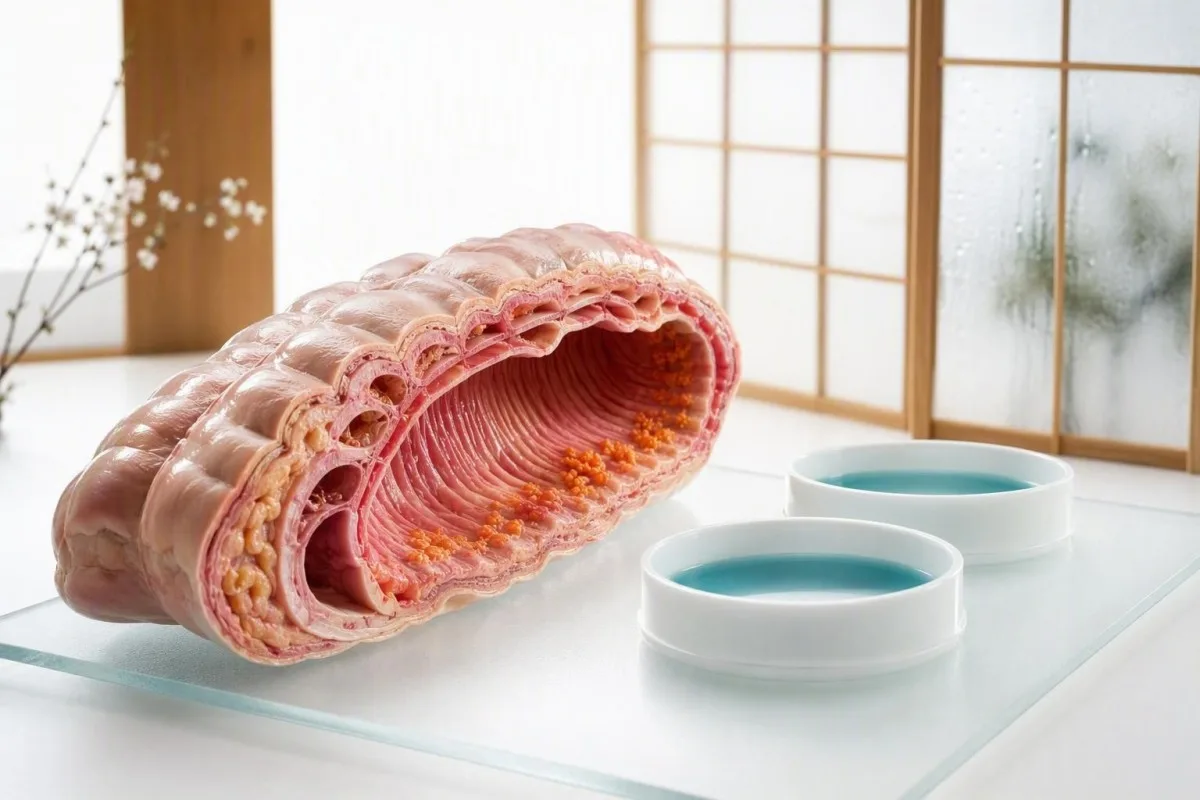
Ambos os testes detectam inflamação intestinal mediada por neutrófilos, mas a calprotectina é geralmente a ferramenta de monitoramento quantitativo mais útil. O resultado certo é aquele que muda a próxima decisão clínica – não um que rotula você com DII.


- Calprotectina abaixo de 50 µg/g é geralmente tranquilizador em adultos com suspeita de SII quando não há sinais de alarme.
- Lactoferrina é uma proteína de neutrófilos; muitos ensaios quantitativos usam menos de 7,25 µg/g como negativo, mas os valores de corte do laboratório variam.
- Marcadores fecais elevados indicam inflamação intestinal, não um diagnóstico específico; infecção, AINEs, diverticulite e neoplasia colorretal podem elevar ambos.
- Calprotectina limítrofe de 50–150 µg/g frequentemente justifica a repetição da amostra após 2–6 semanas em vez de colonoscopia imediata.
- Calprotectina acima de 250 µg/g aumenta a preocupação com inflamação ativa da mucosa e geralmente requer revisão clínica, teste de infecção fecal ou planejamento de endoscopia.
- Resultados normais torna menos provável a DII colônica ativa, mas não pode excluir de forma confiável a doença de Crohn isolada do intestino delgado.
- Monitoramento da DII usa sintomas mais biomarcadores, CRP, marcadores de anemia, exames de imagem e endoscopia; nenhum marcador fecal diagnostica isoladamente uma exacerbação.
- Sintomas urgentes como fezes escuras, sangue visível persistente, febre, dor intensa, desmaio ou desidratação necessitam de avaliação médica independentemente do resultado de um marcador.
Qual marcador fecal você deve escolher primeiro?
A calprotectina fecal é geralmente o marcador de inflamação fecal de primeira escolha pois está amplamente disponível, é quantitativa e tem o papel mais forte na separação entre provável doença inflamatória intestinal e sintomas intestinais funcionais. Teste de lactoferrina fecal os resultados são uma alternativa sensata quando esse é o ensaio localmente validado, mas solicitar ambos no início raramente muda o tratamento.
Para uma pessoa com 6 semanas de fezes soltas, cólicas e sem perda de peso ou sangramento retal, eu geralmente começaria com a calprotectina mais testes de infecção direcionados em vez de colonoscopia. Um resultado abaixo de 50 µg/g torna a inflamação colônica significativa menos provável, enquanto um resultado claramente elevado fornece um motivo para investigar mais. A diretriz da AGA para diarreia aquosa crônica apoia a calprotectina ou lactoferrina como testes de triagem para condições inflamatórias (Smalley et al., 2019).
Escolha a lactoferrina quando seu serviço de gastroenterologia a utiliza consistentemente, quando o laboratório relata um valor quantitativo validado, ou quando ela é incluída em uma investigação de diarreia infecciosa. Não a escolha porque parece mais específica: ambas as proteínas são liberadas quando os neutrófilos entram no lúmen intestinal. A questão prática é se o seu médico pode comparar o resultado com suas amostras anteriores usando o mesmo ensaio.
Kantesti é um Analisador de teste de sangue de IA que coloca resultados relacionados como hemoglobina, CRP, albumina e índices de ferro ao lado de um relatório de marcador fecal; não substitui o ensaio fecal ou o diagnóstico de um médico. Se a fadiga acompanhar a diarreia, um exame de sangue para diarreia pode ajudar a identificar desidratação, anemia ou perda de eletrólitos que alteram a urgência.
Uma regra prática útil
Use um marcador validado primeiro, repita o mesmo marcador quando um resultado for limítrofe ou ao monitorar o tratamento, e reserve o teste duplo para uma questão específica de gastroenterologia. Mudar o ensaio no meio do acompanhamento cria tendências aparentes que podem ser ruído do laboratório em vez de biologia.
O que a calprotectina fecal realmente detecta
A calprotectina mede uma proteína de ligação ao cálcio e zinco liberada predominantemente de neutrófilos no trato intestinal. Uma maior concentração fecal reflete a migração de neutrófilos para o intestino, que é comum em DII ativa, mas também ocorre com várias condições não relacionadas à DII.
A calprotectina é o complexo proteico S100A8/S100A9, e permanece relativamente estável nas fezes por vários dias à temperatura ambiente, uma razão pela qual funciona bem como teste de coleta domiciliar. Sua força biológica é a localidade: ao contrário da CRP, reflete a atividade celular no lúmen intestinal em vez de uma resposta de fase aguda sistêmica. Portanto, uma CRP normal não anula um resultado elevado de calprotectina.
Na prática adulta, os laboratórios comumente classificam menos de 50 µg/g como normal e mais de 150–250 µg/g como cada vez mais compatível com inflamação intestinal ativa. Estes são limiares de decisão, não fronteiras biológicas universais. Alguns serviços europeus usam 100 µg/g como limiar de encaminhamento, enquanto intervalos de referência pediátricos e específicos do ensaio podem diferir substancialmente.
Eu vi um paciente de 28 anos com calprotectina de 680 µg/g, CRP normal e, em última análise, colite ulcerativa limitada ao reto e cólon sigmoide. Esse padrão não é incomum: a inflamação mucosa local pode estar ativa sem um forte sinal sistêmico. Nossa Guia de níveis de calprotectina fecal explica por que o método e as unidades próprias do laboratório devem permanecer associados a cada resultado.
O que a lactoferrina fecal detecta de forma diferente
A lactoferrina detecta outra proteína derivada de neutrófilos e responde a uma questão biológica quase idêntica à da calprotectina: existe inflamação intestinal ativa com neutrófilos? Por si só, não identifica colite ulcerativa, doença de Crohn, colite bacteriana ou outra causa.
A lactoferrina é uma glicoproteína ligadora de ferro armazenada nos grânulos secundários dos neutrófilos e liberada durante a ativação. Um teste qualitativo fecal positivo de lactoferrina é útil porque argumenta contra a síndrome do intestino irritável (SII) não complicada no contexto clínico correto. Ensaios quantitativos variam: um método comumente usado define um valor negativo como inferior a 7.25 µg/g, portanto, nunca aplique um ponto de corte de calprotectina a um laudo de lactoferrina.
As evidências não mostram que a lactoferrina seja categoricamente superior. Em uma meta-análise diagnóstica, Wang e colegas encontraram que a lactoferrina fecal teve sensibilidade agrupada de 82% e especificidade de 14% para distinguir a doença inflamatória intestinal (DII) de controles sem DII, embora as estimativas de precisão mudem com a prevalência da doença e o desenho do estudo (Wang et al., 2015). Essa especificidade impressionante ainda não converte um resultado positivo em um diagnóstico de DII.
Um resultado positivo de lactoferrina é especialmente digno de discussão quando a diarreia começou abruptamente após viagens, antibióticos, exposição a alimentos contaminados ou contato com alguém doente. Nesses casos, os médicos geralmente adicionam testes de patógenos em vez de pular diretamente para um rótulo de DII. Nosso guia para resultados da cultura de fezes abrange o que um laudo negativo ou de crescimento misto pode e não pode determinar.
Como ler os valores de corte sem reagir exageradamente
Um valor de calprotectina abaixo de 50 µg/g é geralmente normal para adultos, 50–150 µg/g é frequentemente uma zona indeterminada e valores acima de 250 µg/g levantam preocupação com inflamação ativa. A lactoferrina usa pontos de corte específicos do ensaio, comumente um positivo qualitativo ou um limite quantitativo próximo a 7.25 µg/g.
O ponto de corte de 50 µg/g para calprotectina é projetado para sensibilidade: ele detecta a maioria das doenças inflamatórias clinicamente significativas ao custo de alguns falsos positivos. O ponto de corte de 250 µg/g é mais útil para especificidade e para monitoramento de DII estabelecida. Entre eles está o meio frustrante, onde a exposição a medicamentos, gastroenterite recente, idade e trajetória importam mais do que um único número.
Uma mudança de 72 para 94 µg/g é frequentemente menos significativa do que uma mudança de 85 para 430 µg/g, particularmente se ambas as amostras foram testadas pelo mesmo laboratório. A consistência das fezes pode influenciar a extração e a variação biológica é real. O conselho prático do Dr. Thomas Klein é registrar o uso de AINEs, infecção recente, contaminação menstrual e data de coleta antes de interpretar um aumento modesto.
Para uma abordagem disciplinada para valores seriados, compare a data da amostra com os sintomas e exames relacionados em vez de tratar cada resultado sinalizado como progressão da doença. Nosso guia de tendência de exame de sangue explica o mesmo princípio de mudança de referência e variação analítica em medicina laboratorial.
Por que ambos os marcadores podem estar elevados sem DII
Marcadores elevados de inflamação nas fezes ocorrem com infecção entérica, exposição a AINEs, diverticulite, neoplasia colorretal, colite microscópica e DII. O resultado confirma um sinal inflamatório; ele não revela a causa, localização, duração ou gravidade por si só.
Medicamentos anti-inflamatórios não esteróides podem elevar a calprotectina fecal, às vezes substancialmente, aumentando a permeabilidade intestinal e causando pequenas lesões na mucosa. Ibuprofeno, naproxeno e diclofenaco importam; um médico pode sugerir a suspensão deles, se medicamente seguro, antes de repetir o teste. Não suspenda aspirina prescrita, anticoagulantes ou analgésicos sem consultar o prescritor primeiro.
Gastroenterite bacteriana aguda pode produzir valores de calprotectina acima de 500 µg/g e lactoferrina positiva, motivo pelo qual um painel de patógenos fecais pode ser mais informativo do que uma colonoscopia urgente nos primeiros dias de doença. Inversamente, a giardíase pode causar diarreia prolongada com elevação menos acentuada do marcador de neutrófilos. O histórico de sintomas muitas vezes tem mais peso diagnóstico do que os pacientes esperam.
Kantesti é um serviço de interpretação de testes do laboratório de IA que pode sinalizar um padrão inflamatório como hemoglobina baixa, albumina baixa, trombocitose e CRP elevado para revisão pelo médico, mas esses achados sanguíneos não provam que a origem seja intestinal. Em pessoas com sangue nas fezes, Acompanhamento do FIT e o momento da colonoscopia é uma questão separada da calprotectina e não deve ser adiada.
Quando um resultado normal ainda pode não detectar a doença
Calprotectina ou lactoferrina normais tornam a inflamação colônica ativa menos provável, mas não podem excluir completamente a doença de Crohn, particularmente a doença leve ou isolada do intestino delgado. Um resultado normal também não explica perda de peso persistente, anemia por deficiência de ferro, diarreia noturna ou sangramento visível recorrente.
A doença de Crohn do intestino delgado pode liberar menos proteína de neutrófilos em uma amostra fecal do que a colite extensa, especialmente quando as lesões são proximais ou leves. Esta é uma razão pela qual os sintomas e as características de alarme superam um número tranquilizador. O guia diagnóstico ECCO-ESGAR recomenda a integração de biomarcadores com ileocolonoscopia e imagem seccional quando a DII permanece clinicamente suspeita (Maaser et al., 2019).
Um indivíduo de 46 anos com calprotectina de 38 µg/g, ferritina de 7 ng/mL e fadiga progressiva merece avaliação para perda de sangue gastrointestinal ou má absorção, mesmo que a frequência intestinal seja normal. Em minha experiência, a combinação de deficiência de ferro e sintomas inexplicáveis é muito mais consequente do que um único marcador fecal baixo. Leia nosso ferritina baixa e pistas intestinais para as próximas perguntas laboratoriais usuais.
Doença celíaca, diarreia por sais biliares, insuficiência pancreática e muitos efeitos de medicamentos podem causar sintomas com marcadores de inflamação fecal normais. Um teste normal é, portanto, uma bifurcação no caminho para diagnósticos não inflamatórios, não uma declaração de que os sintomas são psicológicos ou sem importância.
O que fazer com um resultado de calprotectina limítrofe
Um resultado de calprotectina fecal limítrofe de 50–150 µg/g é comumente repetido após 2–6 semanas se os sintomas estiverem estáveis e não houver características de alarme. A repetição deve usar o mesmo método laboratorial e ser programada longe de uma infecção gastrointestinal recente, se possível.
Antes de repetir o teste, os médicos revisam AINEs, inibidores da bomba de prótons, antibióticos, infecções agudas, exercício aeróbico extenuante e risco relacionado à idade. Não há um período de "washout" universalmente acordado para todos os medicamentos. Um plano pragmático é geralmente 2 semanas após a resolução de uma doença aguda, desde que os sintomas não indiquem a necessidade de cuidados mais urgentes.
Se a repetição cair de 118 para 32 µg/g e os sintomas melhorarem, testes invasivos podem ser evitados. Se subir de 96 para 310 µg/g, a direção adiciona evidências úteis mesmo antes do resultado da endoscopia chegar. É por isso que um único valor limítrofe raramente deve causar pânico ou falsa segurança.
Nosso guia de acompanhamento de calprotectina limítrofe apresenta as perguntas a serem levadas a uma consulta de atenção primária ou gastroenterologia. Um breve diário de sintomas com frequência de evacuação, despertares noturnos, febre e datas de medicação é geralmente mais útil do que verificar obsessivamente gatilhos alimentares.
Como os clínicos usam marcadores após o diagnóstico de DII
Na DII estabelecida, a calprotectina é mais útil para rastrear inflamação intestinal objetiva e ajudar a decidir se os sintomas representam uma exacerbação, infecção, sobreposição de SII ou falha no tratamento. A lactoferrina também pode acompanhar a atividade, mas a calprotectina tem mais limiares apoiados por diretrizes para monitoramento "treat-to-target".
Sintomas e atividade da mucosa frequentemente divergem. Um paciente com colite ulcerativa pode se sentir bem enquanto a calprotectina sobe de 80 para 360 µg/g, ou ter urgência para evacuar devido à má absorção de sais biliares enquanto a calprotectina permanece em 28 µg/g. A diretriz de biomarcadores para colite ulcerativa da AGA de 2023 aconselha combinar sintomas com biomarcadores em vez de depender de apenas um deles (Singh et al., 2023).
Para o monitoramento da remissão, muitos clínicos consideram menos de 150 µg/g tranquilizador, enquanto mais de 150 µg/g pode justificar testes repetidos, endoscopia ou revisão do tratamento, dependendo dos sintomas e do comportamento prévio da doença. Na colite ulcerativa sintomática ativa, mais de 250 µg/g suporta inflamação ativa. Os pontos de corte são guias, não instruções para alterar o tratamento biológico sem a avaliação de um especialista.
Kantesti AI é uma plataforma de interpretação de biomarcadores por IA que organiza as tendências dos exames de sangue em torno das datas de tratamento relatadas pelo paciente; não pode avaliar a gravidade endoscópica das fezes apenas por um número. Pacientes em uso de biológicos também devem entender quais exames de segurança sanguínea monitoram o tratamento e quais sintomas requerem contato imediato com sua equipe de DII.
Como erros de coleta e o tempo afetam os resultados
A qualidade da coleta afeta a interpretação dos marcadores fecais porque uma amostra contaminada, atrasada ou mal coletada pode ser rejeitada ou produzir uma medição menos confiável. A maioria dos laboratórios deseja uma pequena porção de fezes colocada no recipiente estéril fornecido, sem água do vaso sanitário ou urina.
Fezes soltas geralmente são aceitáveis para testes de calprotectina e lactoferrina; não espere por uma amostra formada se a diarreia for o problema clínico. Evite coletar água do vaso sanitário e informe o laboratório se a amostra incluir sangue menstrual visível. As instruções de armazenamento variam por kit, mas muitos permitem transporte curto em temperatura ambiente porque a calprotectina é comparativamente estável.
Coletar amostras um dia após uma maratona, um episódio de gastroenterite ou preparo intestinal para colonoscopia pode responder à pergunta errada. O exercício de resistência pode aumentar transitoriamente a permeabilidade intestinal e provocar sintomas gastrointestinais. Se você é um atleta de resistência sem sinais de alarme, considere agendar a coleta longe de um evento importante; nosso guia laboratorial para atletas de endurance explica por que o contexto muda a interpretação do teste.
A questão é que uma coleta perfeita não torna um biomarcador inespecífico específico. Uma amostra de alta qualidade aumenta a confiança na medição; não pode substituir o histórico clínico, o exame e o diagnóstico diferencial.
Quais exames de sangue tornam um marcador fecal mais útil
Um CBC, CRP, ferritina, albumina, função renal e sorologia celíaca geralmente agregam mais valor clínico a um marcador fecal elevado do que solicitar uma segunda proteína inflamatória fecal. O padrão preocupante não é uma única anormalidade, mas vários resultados que apontam para inflamação, má absorção ou perda de sangue.
Hemoglobina baixa, ferritina abaixo de 15 ng/mL, albumina abaixo da faixa de referência do laboratório, plaquetas elevadas ou CRP elevada podem aumentar a preocupação com doença intestinal clinicamente significativa. Nenhum é diagnóstico de DII. De fato, o CRP pode permanecer normal na colite ulcerativa leve, e a ferritina pode parecer falsamente normal quando a inflamação a eleva como uma proteína de fase aguda.
Kantesti é um Ferramenta de análise de exames de sangue com IA que lê um CBC, estudos de ferro e CRP no mesmo contexto clínico, incluindo se uma mudança no nível de hemoglobina pode justificar uma revisão mais precoce. Dr. Thomas Klein rotineiramente adverte que um CRP isolado de 12 mg/L é inespecífico, enquanto CRP 12 mg/L mais albumina em queda e uma calprotectina de 740 µg/g é um conjunto muito mais acionável.
Para pacientes cujos valores de ferro parecem contraditórios, nosso guia de pesquisa de estudos de ferro explica a saturação de transferrina e a ferritina durante a inflamação. Um guia de resultados de CBC também pode ajudá-lo a identificar se a anemia é microcítica, inflamatória ou mista.
Quando a solicitação de ambos os testes pode ser razoável
Solicitar calprotectina e lactoferrina juntas geralmente é desnecessário, mas pode ser razoável quando um especialista está reconciliando sintomas discordantes, um ensaio anterior não pode ser repetido ou um protocolo local requer confirmação. Resultados concordantes aumentam modestamente a confiança em um sinal inflamatório; resultados discordantes geralmente acionam revisão, não média aritmética.
Uma calprotectina alta com lactoferrina negativa pode refletir o momento do ensaio, um resultado próximo ao ponto de corte, heterogeneidade da amostra ou diferenças analíticas. Uma calprotectina baixa com lactoferrina positiva merece a mesma resposta disciplinada: verificar a coleta, revisar o ensaio exato, verificar os sintomas e testar a infecção quando apropriado. Nenhuma combinação tem um atalho validado para o diagnóstico.
O teste duplo também pode ser útil em cenários de pesquisa onde um protocolo pré-especifica ambos os biomarcadores. Isso é diferente do atendimento rotineiro ao paciente, onde testes duplicados podem aumentar o custo sem melhorar as decisões. Pergunte ao médico solicitante uma pergunta simples: “O que faremos de diferente se o segundo teste for positivo?”
Se um laudo parecer internamente inconsistente, use nosso guia de teste qualitativo versus quantitativo para entender por que “positivo” e “alto” não são declarações laboratoriais intercambiáveis. A consistência do método é mais importante do que a coleta de todos os marcadores disponíveis.
O que realmente confirma ou exclui a DII
A DII é diagnosticada através de uma síntese de sintomas, ileocolonoscopia com amostragem de tecido, histologia, exames laboratoriais e, às vezes, ressonância magnética ou enterografia por TC — não apenas por calprotectina ou lactoferrina. Marcadores fecais ajudam a decidir quem precisa dessas investigações e se a inflamação pode estar mudando ao longo do tempo.
A colonoscopia permite a avaliação direta do íleo terminal e do cólon e permite o exame de tecido para características inflamatórias crônicas, infecção, colite microscópica, displasia e outras causas. A imagem é particularmente valiosa quando a doença de Crohn pode envolver o intestino delgado além do alcance de uma colonoscopia padrão. Um marcador fecal é um sinal de triagem, não um diagnóstico microscópico.
Não confunda um teste imunohistoquímico fecal com nenhum dos marcadores inflamatórios. FIT detecta hemoglobina humana e é usado principalmente no rastreamento de câncer colorretal ou em vias de sangramento gastrointestinal inferior, enquanto calprotectina e lactoferrina detectam produtos de neutrófilos. Nossa comparação de FIT e FOBT explica por que um marcador inflamatório negativo não substitui o rastreamento de câncer recomendado.
Em 4 de setembro de 2026, nenhuma diretriz importante de gastroenterologia recomenda o diagnóstico de doença de Crohn ou colite ulcerativa a partir de um único limiar de biomarcador fecal. Essa restrição protege os pacientes de doença omitida e de rótulos diagnósticos desnecessários para toda a vida.
Sintomas que superam qualquer resultado de exame fecal
Sangramento retal visível persistente, fezes pretas tipo piche, dor abdominal intensa, febre, desmaio, desidratação, fraqueza em rápida piora ou perda de peso não intencional necessitam de avaliação médica oportuna, independentemente da calprotectina ou lactoferrina. Um resultado normal nunca deve ser usado para esperar um padrão de sintoma potencialmente urgente.
A preocupação urgente é a fisiologia, não o rótulo em um laudo laboratorial. Diarreia aquosa frequente pode produzir baixo potássio, lesão renal aguda e sintomas ortostáticos antes que um marcador inflamatório retorne. Adultos com incapacidade de reter líquidos, confusão, desmaio ou produção mínima de urina devem procurar atendimento urgente.
Novos sintomas intestinais após os 50 anos, forte histórico familiar de câncer colorretal e anemia por deficiência de ferro alteram o limiar para avaliação do cólon, mesmo quando a calprotectina está baixa. Um marcador fecal não avalia o risco de câncer de forma abrangente. Nosso muco nas fezes - guia de sinais de alerta distingue padrões benignos comuns de sintomas que necessitam de exame.
Crianças, grávidas, idosos e pessoas que usam medicamentos imunossupressores precisam de triagem individualizada porque seus riscos de base diferem. Se você não tiver certeza se os sintomas são urgentes, entrar em contato com um clínico local ou serviço de urgência é mais seguro do que tentar interpretar um número isoladamente.
Uma conversa prática para ter após o seu resultado
A pergunta de acompanhamento mais útil é: “Este resultado altera minha necessidade de testes de infecção, testes repetidos, exames de imagem ou endoscopia?” Trazer o valor exato, nome do ensaio, linha do tempo dos sintomas, medicamentos e resultados anteriores torna essa conversa mais rápida e clinicamente precisa.
Traga uma lista dos últimos 14 dias: frequência das fezes, sintomas noturnos, febre, alteração de peso, viagens, antibióticos, AINEs e histórico familiar. Uma calprotectina de 180 µg/g após uma doença diarreica febril de 3 dias requer um plano diferente do mesmo resultado após 4 meses de diarreia noturna e perda de peso.
O Kantesti AI pode ajudá-lo a organizar relatórios de sangue acompanhantes antes de uma consulta, mas as decisões de diagnóstico e tratamento pertencem ao médico que pode examiná-lo e providenciar testes definitivos. Nosso abordagem de validação médica explica como a supervisão clínica e a verificação da fonte são incorporadas à interpretação laboratorial responsável.
Para casos complexos, pergunte quem será responsável pelo acompanhamento e quando você deve esperar um resultado repetido ou uma decisão de encaminhamento. Os médicos em nosso Conselho Consultivo Médico enfatizam que um plano documentado é melhor do que uma instrução vaga para “reavaliar mais tarde”, especialmente quando marcadores de inflamação e anemia se movem na mesma direção.
O ponto crucial focado na decisão
Escolha a calprotectina primeiro na maioria das situações, use lactoferrina quando for a alternativa validada do seu serviço e não assuma que nenhum dos resultados diagnostica DII. Um resultado baixo direciona a atenção para causas funcionais e não inflamatórias, enquanto um resultado persistentemente alto identifica pessoas que podem precisar de testes de infecção, revisão por especialista ou endoscopia.
Para diarreia crônica não complicada, um marcador normal — calprotectina abaixo de 50 µg/g ou lactoferrina negativa de acordo com esse laboratório — pode reduzir a probabilidade de doença inflamatória ativa. Para um valor acima de 250 µg/g ou lactoferrina positiva com sintomas persistentes, a próxima pergunta é a causa, não a certeza. Infecção, exposição a medicamentos, DII e outras condições inflamatórias permanecem na lista.
A maioria dos pacientes acha a ambiguidade mais difícil na zona de calprotectina de 50–150 µg/g. Em minha experiência, o melhor próximo passo é geralmente uma repetição cuidadosamente programada, não uma limpeza dietética, uso de esteroides autodirigido ou um diagnóstico pela internet. Mantenha o mesmo laboratório sempre que possível para que a tendência seja interpretável.
Kantesti’s guia de tecnologia de IA descreve como nossos sistemas preservam o contexto laboratorial enquanto destacam perguntas para revisão médica. O uso seguro de qualquer interpretação de IA é o mesmo aqui: use-o para se preparar para uma melhor conversa clínica, nunca para ignorar sinais de alerta ou substituir o cuidado diagnóstico.
Perguntas frequentes
A calprotectina é melhor que a lactoferrina para detetar DII?
A calprotectina é geralmente preferida para suspeita de DII porque está amplamente disponível como um teste quantitativo e possui limiares de monitoramento comumente usados, como menos de 50 µg/g e mais de 250 µg/g. A lactoferrina também é um marcador fecal útil derivado de neutrófilos e pode ter bom desempenho quando o laboratório utiliza um ensaio validado. Nenhum dos marcadores confirma a DII, pois infecções, AINEs, diverticulite e outras condições intestinais podem elevar ambos. O melhor teste é geralmente aquele que seu médico pode interpretar em conjunto com os sintomas e repetir usando o mesmo método laboratorial.
Qual nível de calprotectina é preocupante?
Um nível de calprotectina fecal abaixo de 50 µg/g é geralmente tranquilizador em adultos sem sintomas de alarme, enquanto 50–150 µg/g é frequentemente considerado limítrofe e pode ser repetido após 2–6 semanas. Valores acima de 150–250 µg/g são mais preocupantes para inflamação intestinal, e níveis acima de 250 µg/g comumente levam a revisão clínica ou exames adicionais. A ação exata depende do ensaio, sintomas, idade, uso de AINEs e se o valor está aumentando. Um valor de 600 µg/g após diarreia bacteriana aguda pode ter um significado diferente de 600 µg/g durante vários meses de sintomas crônicos.
A SII pode causar calprotectina ou lactoferrina altas?
A síndrome do intestino irritável (SII) não complicada geralmente não causa elevação da calprotectina fecal ou lactoferrina, pois a SII não produz inflamação intestinal mediada por neutrófilos. Elevações leves de calprotectina entre 50 e 150 µg/g podem ocorrer devido a infecção recente, uso de AINEs, fatores relacionados à idade ou variação do ensaio, portanto, não excluem automaticamente a SII. Uma lactoferrina positiva ou calprotectina acima de 250 µg/g deve levar à investigação de uma causa inflamatória ou infecciosa, em vez de presumir SII. A SII e a DII podem coexistir, o que é outra razão pela qual os sintomas e as tendências são importantes.
Uma calprotectina normal pode descartar a doença de Crohn?
Um resultado normal de calprotectina reduz a probabilidade de Doença Inflamatória Intestinal (DII) colônica ativa, mas não pode excluir completamente a doença de Crohn, especialmente a doença de Crohn leve ou isolada do intestino delgado. Um valor abaixo de 50 µg/g não deve sobrepor características de alarme, como anemia por deficiência de ferro, perda de peso, diarreia noturna, sangramento persistente ou histórico familiar forte. Os médicos podem usar ileocolonoscopia, enterografia por ressonância magnética ou avaliação por cápsula quando a suspeita clínica permanecer alta. O resultado é melhor tratado como uma evidência que ajusta a probabilidade, em vez de um teste de exclusão final.
Devo repetir um resultado limítrofe de calprotectina?
Um resultado limítrofe de calprotectina de 50–150 µg/g é frequentemente repetido após 2–6 semanas, quando os sintomas estão estáveis e não há sinais de alarme. Antes de repetir, os clínicos geralmente revisam gastroenterite recente, uso de AINEs, antibióticos e condições de coleta, pois cada um pode influenciar o valor. Use o mesmo ensaio laboratorial, se possível, pois os resultados de diferentes métodos podem não ser diretamente comparáveis. Um resultado ascendente para ou acima de 250 µg/g geralmente tem mais peso clínico do que uma elevação estável de baixo grau.
Os antibióticos podem afetar a calprotectina fecal e a lactoferrina?
Os antibióticos podem afetar os marcadores inflamatórios das fezes indiretamente ao tratar, desencadear ou coincidir com diarreia infecciosa e ao alterar o microbioma intestinal. Uma pessoa com diarreia associada a antibióticos deve ser avaliada quanto a causas como _Clostridioides difficile_, em vez de interpretar um aumento na calprotectina ou lactoferrina positiva como DII. Não há um número confiável de dias a esperar após a administração de antibióticos antes de realizar testes; o momento depende dos sintomas e da questão clínica. Diarreia persistente, febre ou dor abdominal após o uso de antibióticos requer testes supervisionados por um médico em vez de automedicação.
Faça hoje a análise de exame de sangue com IA
Junte-se a mais de 2 milhões de usuários no mundo todo que confiam na Kantesti para análise instantânea e precisa de exames laboratoriais. Envie seus resultados de exame de sangue e receba uma interpretação abrangente de biomarcadores 15,000+ em segundos.
📚 Publicações de pesquisa referenciadas
Klein, T., Mitchell, S., & Weber, H. (2026). Kantesti LTD. (2026). Urobilinogênio no Teste de Urina: Guia Completo de Urinálise 2026. Zenodo.. Pesquisa Médica por IA da Kantesti.
Klein, T., Mitchell, S., & Weber, H. (2026). Kantesti LTD. (2026). Guia de Estudos de Ferro: TIBC, Saturação de Ferro e Capacidade de Ligação. Zenodo.. Pesquisa Médica por IA da Kantesti.
📖 Referências Médicas Externas
Singh S et al. (2023). Diretriz de Prática Clínica da AGA sobre o Papel dos Biomarcadores para o Manejo da Colite Ulcerativa. Gastroenterology.
⚕️ Aviso Médico
Este artigo é apenas para fins educacionais e não constitui aconselhamento médico. Consulte sempre um profissional de saúde qualificado para decisões de diagnóstico e tratamento.
Sinais de confiança E-E-A-T
Experiência
Revisão clínica orientada por médicos dos fluxos de interpretação de exames laboratoriais.
Especialização
Foco em medicina laboratorial sobre como os biomarcadores se comportam no contexto clínico.
Autoridade
Escrito pelo Dr. Thomas Klein, com revisão da Dra. Sarah Mitchell e do Prof. Dr. Hans Weber.
Confiabilidade
Interpretação baseada em evidências, com caminhos de acompanhamento claros para reduzir alarmes.