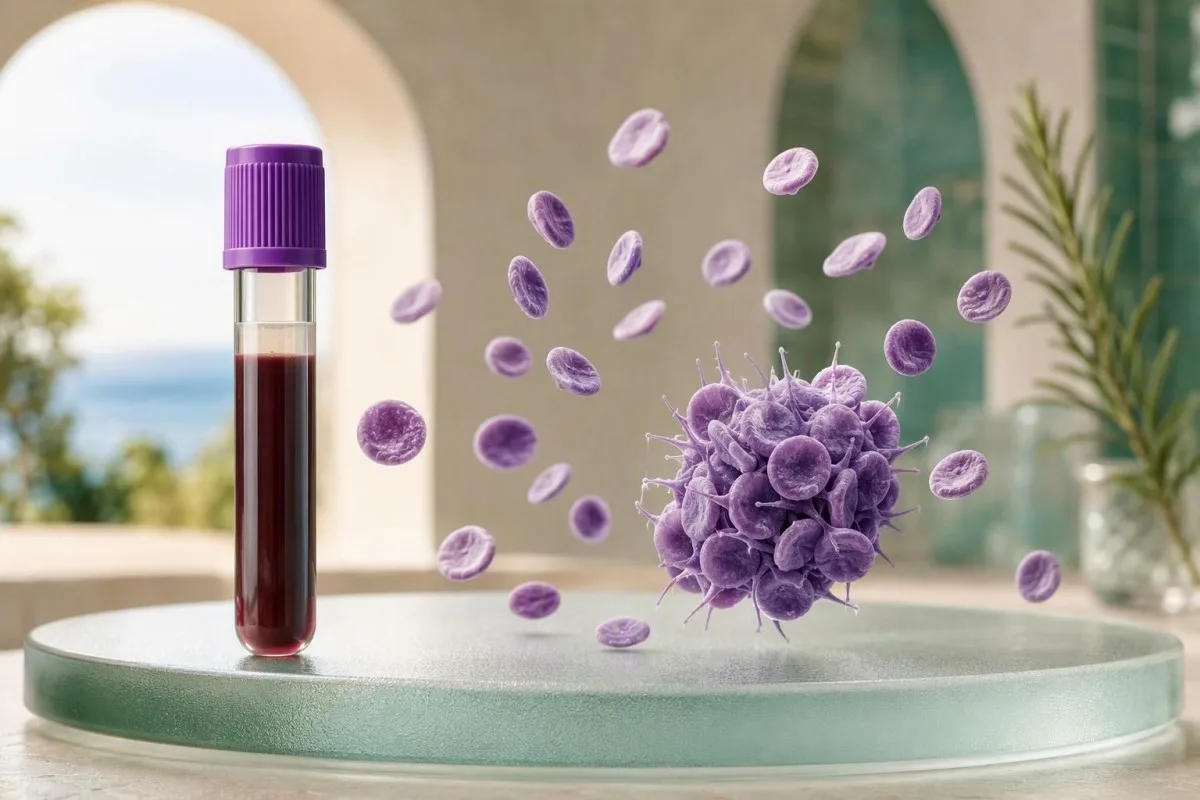
Kiraan platelet yang rendah kadang-kadang boleh menjadi kesilapan pengukuran berkaitan tiub berbanding masalah dalam badan anda. Inilah cara pseudothrombocytopenia berkaitan EDTA dikenal pasti sebelum sesiapa melabelkan anda dengan trombositopenia.


- Pseudotrombositopenia ialah kiraan platelet rendah palsu yang disebabkan oleh platelet bergumpal selepas pengumpulan, selalunya dalam tiub EDTA.
- Julat platelet tipikal bagi kebanyakan orang dewasa bukan hamil adalah kira-kira 150-450 × 10⁹/L, walaupun makmal menetapkan selang masa mereka sendiri.
- Gumpalan platelet pada sapuan boleh menyebabkan penganalisis automatik mengira platelet dengan rendah kerana satu kelompok tidak diukur sebagai sel yang berasingan.
- Pengulangan darah sitrat selalunya menyelesaikan penggumpalan platelet EDTA; makmal biasanya menggunakan pembetulan pencairan 1.1 kepada kiraan platelet sitrat.
- Tiada gejala pendarahan ditambah pula dengan kiraan platelet rendah terpencil yang tidak dijangka harus mendorong semakan sapuan sebelum keputusan rawatan atau rujukan segera.
- Trombositopenia sebenar boleh wujud bersama dengan penggumpalan platelet EDTA, jadi keputusan sitrat yang normal adalah meyakinkan tetapi mesti bersesuaian dengan gambaran klinikal.
- Penilaian segera masih diperlukan untuk pendarahan yang tidak terkawal, petekia baharu yang meluas, sakit kepala teruk, kekeliruan, atau kiraan platelet di bawah 10 × 10⁹/L.
Apa sebenarnya maksud penggumpalan platelet EDTA
Penggumpalan platelet EDTA adalah artifak makmal in-vitro di mana platelet melekat bersama dalam tiub pengumpulan, menyebabkan kiraan platelet automatik yang tersilap rendah. Ia sendiri tidak bermakna platelet sedang dimusnahkan dalam badan, dan ia biasanya tidak mewujudkan risiko pendarahan.
EDTA ialah bahan tambah tiub bertudung lavender yang digunakan untuk kebanyakan kiraan darah penuh kerana ia mengikat kalsium dan menghalang pembekuan. Dalam sebilangan kecil orang, penyingkiran kalsium mendedahkan sasaran permukaan platelet yang membenarkan antibodi yang berlaku secara semula jadi untuk merentangi platelet bersama. Penganalisis mungkin mengira gugusan platelet sebagai satu zarah besar, peristiwa bersaiz sel darah putih, atau tiada sama sekali; lihat gambaran keseluruhan kami tentang apa yang termasuk dalam CBC.
Dalam kerja klinikal saya, laporan klasik ialah kiraan platelet sebanyak 48 × 10⁹/L pada seseorang yang berasa sihat sepenuhnya, tidak mengalami lebam, dan mempunyai hemoglobin serta kiraan sel darah putih yang normal. Ketidakserasian itu bukanlah bukti, tetapi ia adalah saat untuk berhenti seketika. Kantesti ialah Penganalisis ujian darah AI yang menandakan kiraan platelet rendah yang terpencil bersama dengan komen makmal seperti agregat platelet, bukannya menganggap nombor itu sebagai diagnosis.
EDTA-dependent pseudothrombocytopenia dianggarkan berlaku pada kira-kira 0.03-0.27% sampel pesakit luar rutin, dengan kadar yang lebih tinggi dalam kalangan sampel yang telah dirujuk untuk kiraan platelet rendah. Lippi dan rakan-rakannya menggambarkannya sebagai fenomena pra-analitik yang tidak berbahaya secara klinikal tetapi berpotensi membawa akibat kerana ia boleh mencetuskan kemasukan wad yang tidak perlu, pemindahan platelet, atau rawatan steroid (Lippi et al., 2012).
Bagaimana penganalisis platelet boleh mengira sampel bergumpal dengan rendah
Kiraan platelet automatik adalah boleh dipercayai untuk platelet yang berselerak, tetapi gugusan berada di luar corak saiz dan isyarat yang dijangkakan oleh penganalisis. Oleh itu, kiraan boleh jatuh daripada 220 × 10⁹/L yang tulen kepada 40 × 10⁹/L yang ketara tanpa sebarang kehilangan platelet biologi.
Penganalisis impedans mengklasifikasikan zarah terutamanya mengikut isipadu, manakala sistem optik menambah maklumat serakan cahaya. Platelet biasanya berukuran sekitar 2-3 mikrometer, tetapi gumpalan boleh bertindih dengan serpihan sel darah merah atau kawasan leukosit. Inilah sebabnya mengapa histogram platelet mungkin tidak normal dan mengapa makmal mungkin menambah “gumpalan platelet hadir” atau “kiraan tidak boleh dipercayai.”
Bendera platelet penganalisis ialah gesaan untuk semakan manusia, bukan diagnosis akhir. Anggaran manual daripada calitan periferi yang dibuat dengan baik boleh lebih berguna daripada mengulang tiub EDTA yang sama, terutamanya jika sampel dibiarkan selama 2 jam sebelum analisis. Untuk ambang praktikal sekitar prosedur, panduan kami tentang kiraan platelet sebelum cabutan gigi menjelaskan mengapa keputusan yang disahkan adalah penting.
Platelet besar mewujudkan masalah yang berbeza, kadang-kadang bertindih. Platelet individu yang sangat besar mungkin terlepas oleh kaedah impedans walaupun tanpa gumpalan yang kelihatan, selalunya meningkatkan isipadu platelet min (MPV). MPV yang tinggi tidak boleh ditukar ganti dengan pseudothrombocytopenia; ulasan kami tentang punca platelet besar memisahkan kedua-dua penemuan ini.
Apa rupa gumpalan platelet pada sapuan
Gumpalan platelet pada calitan kelihatan sebagai kumpulan elemen granular ungu kecil yang tidak teratur seperti anggur, selalunya tertumpu pada tepi berbulu slaid. Lokasi mereka penting kerana mengira hanya medan calitan tengah boleh terlepas daripada ciri yang menjelaskan keputusan rendah.
Ahli morfologi terlatih memeriksa badan dan ekor filem di bawah kuasa tinggi, bukan sekadar satu medan yang wakil. Satelit platelet ialah corak yang berkaitan dengan EDTA yang lebih jarang berlaku di mana platelet mengelilingi neutrofil seperti roset; ia juga boleh menurunkan kiraan platelet yang dilaporkan. Kedua-dua penemuan adalah fenomena sampel, walaupun satelit dan agregat luas mungkin berlaku bersama-sama.
Satu butiran berguna ialah penggumpalan EDTA selalunya berterusan dari semasa ke semasa. Sampel yang diukur 10 minit selepas pengumpulan mungkin menunjukkan 118 × 10⁹/L, kemudian 42 × 10⁹/L pada 90 minit kerana lebih banyak agregat terbentuk. Makmal berbeza dalam aliran kerja mereka, jadi kiraan awal yang normal tidak sepenuhnya mengecualikan artifak ini jika bendera penganalisis kemudian muncul.
Apabila saya, Thomas Klein, MD, melihat kiraan rendah yang disertai dengan komen calitan tetapi tiada pendarahan klinikal, saya meminta tafsiran calitan sebenar sebelum membincangkan trombositopenia imun. Penaakulan mikroskop-dahulu yang serupa adalah berguna apabila laporan menyebut skitosit pada calitan darah, walaupun skitosit memerlukan konteks klinikal yang jauh lebih mendesak.
Mengapa EDTA menyebabkan platelet bergumpal pada sesetengah orang
EDTA boleh mencetuskan penggumpalan platelet dengan mengkelat kalsium dan mengubah bentuk glikoprotein membran platelet, membenarkan antibodi untuk terikat dan menjambatan platelet bersebelahan. Tindak balas ini berlaku selepas pengumpulan, bukan kerana EDTA telah merosakkan platelet yang beredar di dalam badan.
Mekanisme yang paling disokong melibatkan antibodi, selalunya IgG, IgM, atau IgA, mengenali tapak tersembunyi pada kompleks GPIIb/IIIa platelet selepas perubahan struktur yang bergantung kepada kalsium. Tindak balas bergantung kepada suhu dan masa pada sesetengah pesakit, yang menjelaskan mengapa sampel yang dipanaskan kadang-kadang boleh meningkatkan kiraan tetapi bukanlah penyelesaian universal. Ia adalah isu keserasian makmal, bukan alahan kepada EDTA.
Pseudotrombositopenia boleh berlaku pada orang sihat dan telah dilaporkan bersama keadaan autoimun, jangkitan, keganasan, dan kehamilan, tetapi persatuan tersebut tidak membuktikan sebab akibat pada individu. ANA positif atau penyakit virus baru-baru ini tidak boleh digunakan untuk menjelaskan kiraan sehingga artifak dikecualikan. platform tafsiran ujian darah AI yang membaca keputusan platelet dengan jenis tiubnya, bendera penganalisis, dan bakinya CBC dan bukannya secara terasing.
Fenomena ini boleh berterusan selama bertahun-tahun namun berbeza antara sampel. Seorang pesakit boleh mempunyai kiraan platelet 35 × 10⁹/L dalam EDTA pada hari Isnin dan 230 × 10⁹/L dalam sitrat pada pagi yang sama, kemudian menunjukkan penggumpalan separa semula beberapa bulan kemudian. Merekodkan tiub pilihan dalam rekod makmal boleh mengelakkan penggera berulang.
Bagaimana pengulangan darah sitrat mengesahkan pseudothrombocytopenia
Kiraan platelet yang menjadi normal dalam tiub sitrat natrium manakala tiub EDTA mengandungi agregat sangat menyokong pseudotrombositopenia yang bergantung kepada EDTA. Kiraan sitrat memerlukan pelarasan pencairan kerana tiub mengandungi antikoagulan cecair.
Tiub sitrat natrium bertopi biru biasanya diisi pada nisbah darah-kepada-antikoagulan 9:1. Banyak makmal mendarabkan kiraan platelet sitrat yang diukur sebanyak 1.1 untuk membetulkan pencairan, walaupun kaedah yang disahkan oleh makmal tempatan diberi keutamaan. Contohnya, keputusan mentah sitrat sebanyak 182 × 10⁹/L menjadi kira-kira 200 × 10⁹/L selepas pembetulan.
Pengambilan semula mestilah diisi dengan betul dan digoncang perlahan-lahan. Tiub sitrat yang tidak diisi secukupnya mengubah nisbah antikoagulan dan boleh mewujudkan hasil yang mengelirukan yang berbeza, yang merupakan salah satu sebab saintis makmal mungkin menolak ulangan yang nampaknya mudah. Penjelasan kami tentang warna tiub ujian darah membantu pesakit mengenali mengapa pilihan tiub adalah sebahagian daripada kaedah ujian.
Tiub magnesium sulfat atau asid-sitrat-dekstrosa boleh berguna apabila penggumpalan berterusan dalam sitrat, tetapi ini biasanya merupakan keputusan yang diarahkan oleh makmal. Nagler dan rakan sekerja mendokumentasikan satu kes di mana pengiktirafan pseudotrombositopenia yang bergantung kepada EDTA mengelakkan siasatan diagnostik yang tidak perlu selepas ujian sitrat menunjukkan kiraan yang mencukupi (Nagler et al., 2014).
Bilakah kiraan platelet sitrat tidak menyelesaikan persoalan
Pengambilan semula sitrat tidak menolak trombositopenia sebenar apabila kiraan yang dibetulkan kekal rendah, penggumpalan berlaku dalam lebih daripada satu antikoagulan, atau gejala menunjukkan pendarahan. Sesetengah pesakit mempunyai agregasi platelet pelbagai antikoagulan, dan sesetengah mempunyai kiraan rendah sebenar bersama artifak.
Jika kiraan platelet sitrat yang dibetulkan ialah 82 × 10⁹/L dan calitan bebas daripada gumpalan, itu adalah trombositopenia sebenar sehingga terbukti sebaliknya. Jika EDTA ialah 25 × 10⁹/L dan sitrat ialah 86 × 10⁹/L dengan agregat yang tinggal, kedua-dua artifak dan pengurangan sebenar mungkin hadir. Pasukan klinikal harus menggunakan anggaran terbaik yang disahkan, bukan sekadar memilih nombor yang lebih meyakinkan.
Pembekuan dalam spesimen juga boleh membatalkan CBC kerana platelet digunakan dalam mikrogumpalan. Berbeza dengan pseudotrombositopenia EDTA, spesimen yang sebahagiannya membeku boleh menjejaskan sel darah putih dan indeks sel darah merah juga. Baca panduan pengambilan semula selepas masalah sampel kami untuk perbezaan praktikal antara artifak pengumpulan.
Sampel tusukan jari tidak secara automatik lebih selamat. Pengumpulan yang perlahan, memicit, atau pencampuran yang tertunda boleh menggalakkan agregasi tempatan dan menjejaskan kiraan platelet, terutamanya apabila nilai yang dilaporkan adalah di bawah 100 × 10⁹/L. Pengumpulan semula vena dengan pemprosesan segera biasanya merupakan laluan pengesahan yang lebih bersih.
Julat kiraan platelet, risiko pendarahan, dan perangkap artifak
Kebanyakan makmal dewasa menggunakan julat rujukan kiraan platelet berdekatan 150-450 × 10⁹/L, tetapi risiko pendarahan bergantung pada kiraan yang disahkan, puncanya, fungsi platelet, dan ubat-ubatan. Keputusan EDTA yang rendah secara palsu tidak boleh digunakan sahaja untuk menolak prosedur atau menetapkan rawatan.
Pendarahan utama spontan menjadi lebih berkemungkinan apabila kiraan platelet sebenar jatuh di bawah kira-kira 10 × 10⁹/L, manakala ramai orang dengan kiraan yang stabil di atas 50 × 10⁹/L mempunyai sedikit pendarahan spontan. Ini adalah panduan klinikal umum, bukan kebenaran untuk mengabaikan gejala. Antikoagulan, aspirin, penyakit hati, kegagalan buah pinggang, dan disfungsi platelet boleh mengubah risiko pada sebarang nombor.
Kiraan platelet 90 × 10⁹/L memerlukan pengendalian yang berbeza pada orang yang sihat dengan keputusan sitrat normal berbanding seseorang dengan melena baharu dan INR yang meningkat. Itulah sebabnya tafsiran kiraan platelet berada di samping ujian pembekuan; kami aPTT dan panduan ujian pembekuan menjelaskan apa yang boleh dan tidak boleh dikecualikan oleh skrin pembekuan normal.
Makmal mungkin menggunakan 140 × 10⁹/L berbanding 150 × 10⁹/L sebagai had rujukan bawah, terutamanya dengan julat yang berasal dari tempatan. Julat rujukan menerangkan sebahagian daripada populasi pembanding; ia tidak menentukan ambang rawatan universal. Perbezaan ini menjimatkan sejumlah besar kebimbangan yang tidak perlu.
Corak CBC yang menjadikan artifak lebih berkemungkinan
Kiraan platelet rendah yang tidak dijangka terpencil dengan hemoglobin normal, sel darah putih, dan komen penggumpalan adalah corak CBC yang paling menunjukkan pseudothrombocytopenia. Corak ini bersifat sugestif dan bukannya diagnostik kerana trombositopenia awal yang berkaitan dengan imun atau dadah juga boleh terpencil.
Gangguan sumsum sebenar selalunya mengubah lebih daripada satu barisan sel darah, walaupun terdapat pengecualian. Platelet rendah digabungkan dengan hemoglobin yang menurun, sel darah putih yang tidak normal, sel muda, atau gejala sistemik yang berterusan memerlukan kajian pakar perubatan segera dan selalunya pemeriksaan filem rasmi. Artikel kami tentang laluan CBC untuk gangguan darah menggariskan mengapa kelompok ini mengubah urgensi.
Nisbah platelet kepada limfosit boleh menjadi tidak bermakna apabila penyebut adalah sah tetapi pengangka platelet ditekan secara artifisial. PLR 60 yang dikira daripada kiraan EDTA yang bergumpal tidak seharusnya ditafsirkan sebagai isyarat keradangan atau kardiovaskular. Ini adalah kesilapan sekunder yang senyap tetapi biasa dalam laporan kesihatan automatik; lihat penjelasan kami tentang keputusan PLR tinggi.
AI Kantesti mengenal pasti ketidaksesuaian antara kiraan platelet rendah dan ukuran CBC jiran yang normal, kemudian mengarahkan pembaca untuk mengesahkan ulasan sampel. Sebuah Alat analisis ujian darah berkuasa AI tidak sepatutnya menukar satu nilai platelet yang tidak disahkan menjadi label penyakit. Keterbatasan klinikal itu lebih penting daripada kelajuan.
Kehamilan, penjagaan hospital, dan tetapan berisiko tinggi yang lain
Penggumpalan platelet EDTA boleh berlaku semasa kehamilan dan penjagaan hospital, tetapi ia tidak boleh dianggap apabila trombositopenia sebenar boleh mengubah pengurusan segera. Punca khusus kehamilan seperti trombositopenia gestasi, pre-eklampsia, sindrom HELLP, dan trombositopenia imun memerlukan kiraan yang disahkan.
Kiraan platelet biasa turun dalam kehamilan tanpa komplikasi, dan sesetengah makmal menerima had rujukan trimester-spesifik yang lebih rendah. Kiraan di bawah 100 × 10⁹/L kurang biasa untuk trombositopenia gestasi tanpa komplikasi dan memerlukan penilaian klinikal yang teliti, walaupun agregat EDTA dilihat. Panduan rujukan platelet trimester-spesifik kami dalam kehamilan memberikan konteks tanpa menggantikan semakan obstetrik.
Di hospital, penurunan mendadak lebih daripada 50% daripada garis dasar boleh menimbulkan persoalan tentang sepsis, pendedahan dadah, trombositopenia akibat heparin, pencairan, atau penggunaan berkaitan peranti. Artifak EDTA boleh meniru penurunan dramatik, terutamanya apabila keputusan sebelumnya datang daripada kaedah makmal yang berbeza. Membandingkan keputusan sitrat yang disahkan dengan garis dasar pesakit selalunya lebih berguna daripada mengulangi CBC EDTA rutin.
Sebelum epidural, pembedahan, kitaran kemoterapi, atau transfusi platelet, tanya sama ada makmal telah mengesahkan nilai pada smear atau antikoagulan alternatif. Saya telah melihat kelewatan dalam penjagaan dielakkan oleh satu panggilan telefon itu. Sebaliknya, gejala aktif atau pesakit yang tidak stabil harus dinilai sementara pengesahan sedang dijalankan.
Ubat-ubatan dan diagnosis yang tidak seharusnya dipersalahkan terlalu cepat
Penggumpalan platelet EDTA harus dikecualikan sebelum mengaitkan kiraan platelet rendah yang terpencil kepada ubat, penyakit autoimun, atau trombositopenia imun. Menghentikan ubat berharga berdasarkan kiraan yang tidak disahkan boleh menyebabkan kemudaratan yang boleh dielakkan.
Heparin, produk yang mengandungi kuinin, trimetoprim-sulfametoksazol, valproat, linezolid, kemoterapi, dan beberapa terapi imun boleh menyebabkan trombositopenia sebenar. Hubungan masa adalah penting: penurunan berkaitan ubat yang tulen biasanya berterusan dalam sampel sitrat yang dikumpul dengan betul dan tidak hilang apabila EDTA diganti. Sejarah ubat harus termasuk suntikan, produk over-the-counter, dan persediaan herba.
Trombositopenia imun adalah diagnosis pengecualian, bukan bendera makmal. Ia boleh berlaku dengan platelet terpencil di bawah 100 × 10⁹/L, tetapi smear EDTA yang bergumpal menjadikan kiraan awal tidak dapat ditafsirkan. Lippi et al. (2012) secara khusus memberi amaran bahawa mengenali pseudotrombositopenia mencegah terapi yang tidak sesuai seperti kortikosteroid dan splenektomi.
Jika laporan kelihatan bercanggang dengan keputusan anda sebelum ini, simpan PDF asal dan catat tarikh pengumpulan, ulasan tiub, penyakit akut, dan ubat baharu. Panduan kami kepada perubahan yang bermakna antara ujian darah menjelaskan mengapa delta numerik tidak secara automatik menjadi perubahan biologi.
Apa yang perlu ditanya kepada makmal atau doktor anda seterusnya
Untuk kiraan platelet rendah yang tidak dijangka, tanya sama ada ketulan platelet dilihat, sama ada smear periferi telah disemak, dan sama ada kiraan antikoagulan alternatif boleh dilakukan. Tiga soalan ini biasanya menjelaskan langkah seterusnya lebih pantas daripada mencari gejala dalam talian.
Permintaan praktikal ialah: “Bolehkah makmal menyemak filem darah untuk agregat platelet dan, jika perlu, mengulang kiraan platelet dalam sitrat?” Ini bukan menuntut diagnosis tertentu; ia adalah meminta pengukuran disahkan. Jika sampel dikumpul di tempat lain, doktor mungkin perlu memesan pengumpulan baharu daripada menambah ujian pada tiub lama.
Minta dibetulkan keputusan sitrat dan sama ada ketulan kekal dalam tiub itu. Keputusan mentah 145 × 10⁹/L mungkin kelihatan sempadan sehingga pembetulan pencairan memberikan kira-kira 160 × 10⁹/L. Tanya juga sama ada makmal menggunakan kiraan platelet optik atau fluoresensi, kerana kaedah ini kadang-kadang meningkatkan pengiraan dalam sampel yang kompleks.
Aliran kerja tafsiran Kantesti's 2026 menggalakkan pengguna untuk membandingkan keputusan numerik dengan naratif makmal dan medan bendera sebelum mengambil tindakan ke atas makluman. Untuk rangka kerja keselamatan yang lebih luas, senarai semak ketepatan laporan AI kami merangkumi transkripsi, unit, julat rujukan, dan pengesahan hasil.
Apa yang tidak boleh dilakukan semasa menunggu pengesahan
Jangan mulakan suplemen, hentikan ubat yang dipreskripsi, atau andaikan anda mempunyai gangguan pendarahan semata-mata kerana satu kiraan platelet EDTA adalah rendah. Pada masa yang sama, jangan abaikan pendarahan aktif hanya kerana penggumpalan disyaki.
Tiada diet, vitamin, atau ubat rumah yang membetulkan pseudotrombositopenia bergantung EDTA kerana platelet menggumpal dalam tiub, bukan gagal di dalam badan. Kekurangan folat, vitamin B12, dan zat besi boleh menjejaskan pembentukan darah dalam tetapan lain, tetapi suplemen tidak dapat mengesahkan kiraan yang dipersoalkan. Merawat artifak adalah tentang pengumpulan dan analisis.
Elakkan pengambilan aspirin, ibuprofen, naproxen, dan alkohol yang tidak penting sehingga doktor menjelaskan kiraan yang dilaporkan sangat rendah, terutamanya jika anda mudah lebam. Jangan hentikan antikoagulan, ubat antiplatelet, ubat anti-sawan, atau rawatan kanser tanpa nasihat doktor; tujuan ubat-ubatan tersebut mungkin membawa risiko segera yang lebih besar daripada keputusan yang belum disahkan.
Menyimpan garis masa keputusan yang ringkas boleh mengubah janji temu. panduan penjejakan keputusan makmal mencadangkan untuk merekodkan masa pengambilan darah, penyakit terbaru, ubat-ubatan, komen sampel, dan sama ada keputusan datang dari EDTA atau sitrat.
Tanda amaran yang memerlukan penilaian perubatan segera
Dapatkan penilaian perubatan segera untuk pendarahan yang tidak terkawal, najis hitam, muntah darah, sakit kepala baru yang teruk, kekeliruan, pitam, atau ruam bintik-bintik yang meluas, walaupun penggumpalan EDTA disyaki. Artefak makmal dan kecemasan sebenar boleh wujud bersama.
Kiraan platelet sebenar di bawah 10 × 10⁹/L biasanya dianggap sebagai keputusan segera kerana risiko pendarahan mukosa dan dalaman secara spontan meningkat dengan ketara. Kiraan di bawah 20 × 10⁹/L dengan pendarahan baru, demam, hipertensi teruk, komplikasi kehamilan, atau pendedahan heparin baru-baru ini juga memerlukan input doktor pada hari yang sama. Nasihat kecemasan tempatan harus diutamakan daripada sebarang tafsiran dalam talian.
Gejala neurologi baru amat penting kerana pendarahan intrakranium jarang berlaku tetapi serius. Jangan memandu sendiri jika anda mengalami sakit kepala teruk dengan kelemahan, perubahan pertuturan, pitam, atau kekeliruan. Pada kanak-kanak, ruam yang tidak pudar dengan demam memerlukan penilaian segera tanpa mengira keputusan platelet.
Thomas Klein, MD, menasihati pesakit untuk memisahkan persoalan “Adakah kiraan ini sebenar?” daripada “Adakah orang ini selamat hari ini?” Yang pertama biasanya memerlukan calitan dan pengambilan semula darah sitrat; yang kedua bergantung pada gejala, penemuan pemeriksaan, dan gambaran klinikal keseluruhan. panduan pendapat kedua ujian darah boleh membantu menyediakan perbincangan terfokus selepas isu segera ditangani.
Bagaimana Kantesti mentafsir kiraan platelet yang ditandakan dengan selamat
Kantesti AI menganggap kiraan platelet rendah dengan komen penggumpalan EDTA sebagai isyarat pengesahan, bukan sebagai bukti trombositopenia. Tafsiran kami meletakkan bendera penganalisis, garisan CBC lain, nilai sebelumnya, dan gejala yang dilaporkan mendahului label merah atau hijau yang simplistik.
Kantesti ialah seorang perkhidmatan tafsiran ujian makmal AI direka untuk menjelaskan data makmal dalam bahasa mudah sambil mengekalkan had laporan sumber. Jika PDF yang dimuat naik menyatakan “penggumpalan platelet,” sistem kami harus memberitahu pengguna bahawa nombor itu mungkin palsu rendah dan makmal atau doktor boleh mengesahkannya dengan kajian filem atau sampel sitrat.
Pengecaman watak digital boleh tersalah baca titik perpuluhan, unit, atau nota kaki makmal. Itulah sebabnya pesakit harus memeriksa pratonton imej sebelum bergantung pada sebarang tafsiran digital, terutamanya di sekitar nilai seperti 18 berbanding 180 × 10⁹/L. senarai semak kualiti muat naik PDF menjelaskan beberapa semakan yang menghalang kebanyakan kesilapan yang boleh dielakkan.
Pengawasan klinikal kekal sebagai kerja manusia. Metodologi Kantesti disemak terhadap aliran kerja yang berfokus pada keselamatan; pembaca yang ingin memahami pendekatan kami boleh menyemak pengesahan teknikal dan penyeliaan klinikal. AI boleh mengatur soalan dengan cekap, tetapi ia tidak boleh memeriksa calitan sebenar atau menilai pendarahan aktif.
Pelan susulan praktikal selepas penggumpalan platelet EDTA
Pelan susulan biasa adalah untuk mendokumentasikan artefak EDTA, mendapatkan kiraan platelet tiub alternatif yang disahkan, dan menggunakan keputusan itu untuk keputusan klinikal masa depan. Kebanyakan orang tidak memerlukan rawatan untuk artefak itu sendiri setelah makmal telah menetapkan coraknya.
Minta rekod makmal untuk menyatakan “penggumpalan platelet bergantung EDTA” atau perkataan yang setara jika pengesahan jelas. Pada pengambilan darah masa depan, pasukan phlebotomy boleh mengumpul tiub sitrat bersama CBC EDTA rutin, menjimatkan janji temu kedua. Ini amat berguna sebelum pembedahan, semasa kehamilan, atau apabila protokol rawatan mempunyai ambang platelet.
Garis dasar yang disahkan lebih berharga daripada nilai rendah yang berulang kali tidak disahkan. Jika kiraan sitrat anda yang diperbetulkan stabil pada 205 × 10⁹/L selama 12 bulan, nilai EDTA masa depan 55 × 10⁹/L dengan agregat jauh kurang membimbangkan daripada nombor yang sama pada seseorang tanpa dokumentasi sebelumnya. Trend hanya berguna apabila kaedah ujian adalah setanding.
Kantesti telah menyokong lebih daripada 2 juta pengguna di 127+ negara dengan penjelasan makmal multibahasa, tetapi keputusan masih menjadi sebahagian daripada hubungan penjagaan dengan doktor anda. Pengulas perubatan kami dan Lembaga Penasihat Perubatan menekankan peraturan akhir yang sama: sahkan kiraan platelet terlebih dahulu, kemudian tentukan apa—jika ada—yang memerlukan rawatan.
Penerbitan penyelidikan
Mulai 29 Ogos 2026, dua penerbitan penyelidikan Kantesti yang disenaraikan di bawah adalah sumber pendidikan tambahan. Ia tidak menetapkan diagnosis pseudotrombositopenia bergantung EDTA; calitan makmal dan kiraan platelet antikoagulan alternatif kekal sebagai alat pengesahan yang relevan.
Soalan Lazim
Bolehkah pengumpalan platelet EDTA menyebabkan kiraan platelet yang sangat rendah?
Ya. Penggumpalan platelet EDTA boleh menghasilkan kiraan platelet palsu yang sangat rendah, kadang-kadang di bawah 50 × 10⁹/L, apabila bilangan platelet sebenar yang beredar dalam seseorang adalah normal. Penganalisis mengira agregat platelet secara tidak tepat kerana ia tidak dapat mengenali setiap platelet dalam kluster dengan andal. Smear periferi yang menunjukkan agregat dan kiraan sitrat yang diperbetulkan normal sangat menyokong pseudothrombocytopenia. Keputusan masih perlu disemak segera jika terdapat pendarahan aktif atau kiraan sitrat kekal rendah.
Bagaimanakah pseudotrombositopenia disahkan?
Pseudotrombositopenia biasanya disahkan dengan meneliti apusan perifer untuk mengesan gumpalan platelet dan mengulangi kiraan platelet dalam tiub natrium sitrat. Tiub sitrat mengandungi antikoagulan cecair, jadi banyak makmal mendarabkan kiraan platelet yang diukur dengan 1.1 untuk menampung pencairan. Sebagai contoh, kiraan sitrat mentah sebanyak 180 × 10⁹/L lazimnya dilaporkan sebagai kira-kira 198 × 10⁹/L selepas pembetulan. Pembetulan yang disahkan dan tafsiran apusan makmal tempatan harus membimbing keputusan akhir.
Adakah pengumpalan platlet EDTA bermaksud saya mempunyai gangguan pendarahan?
Tiada. Penggumpalan platelet EDTA sahaja adalah artifak sampel in-vitro dan tidak bermakna anda mempunyai gangguan pendarahan atau platelet anda menggumpal dalam peredaran darah anda. Kebanyakan individu yang terjejas tidak mempunyai simptom pendarahan dan mempunyai kiraan platelet yang disahkan dalam julat dewasa biasa kira-kira 150-450 × 10⁹/L. Seorang doktor patut masih menyiasat simptom pendarahan, ujian pembekuan darah yang tidak normal, atau kiraan platelet sitrat yang sentiasa rendah. Artifak ini tidak melindungi seseorang daripada risiko pendarahan yang tidak berkaitan disebabkan oleh ubat-ubatan atau keadaan perubatan.
Bolehkah penggumpalan platelet berlaku dalam sitrat juga?
Ya, walaupun natrium sitrat selalunya menghalang penggumpalan berkaitan EDTA, agregasi platelet secara berkala boleh berterusan dalam sitrat atau berlaku dengan pelbagai antikoagulan. Dalam situasi itu, makmal mungkin menggunakan kiraan platelet optik atau pendarfluor, pemprosesan pemanasan pantas, magnesium sulfat, atau asid-sitrat-dekstrosa bergantung pada protokol yang disahkan. Kiraan sitrat yang dikoreksi di bawah 150 × 10⁹/L tanpa agregat harus dianggap sebagai trombositopenia sebenar yang mungkin. Penggumpalan pelbagai antikoagulan adalah jarang berlaku dan memerlukan pengesahan berpandukan makmal.
Perlukah saya mengulang kiraan platlet saya jika laporan mengatakan platlet bergumpal?
Ya. Laporan yang menyatakan terdapatnya ketulan platelet, agregat platelet, atau kiraan platelet yang tidak boleh dipercayai secara amnya memerlukan pengesahan berbanding penerimaan keputusan berangka. Ulang biasa ialah sampel natrium sitrat yang baru dikumpulkan dengan semakan apusan, yang diproses segera. Jika kiraan asal di bawah 10 × 10⁹/L atau anda mengalami pendarahan yang tidak terkawal, najis hitam, sakit kepala teruk, atau kekeliruan, dapatkan rawatan perubatan segera sementara pengesahan diaturkan. Jangan menukar ubat yang dipreskripsikan tanpa nasihat daripada doktor yang tahu sebab ia dipreskripsikan.
Bolehkah pseudotrombositopenia EDTA datang dan pergi?
Ya. Pseudotrombositopenia EDTA boleh berterusan selama bertahun-tahun atau kelihatan berubah-ubah kerana tahap penggumpalan bergantung pada masa selepas pengumpulan, suhu sampel, dan kaedah penganalisis. Satu sampel EDTA mungkin melaporkan 70 × 10⁹/L manakala sampel lain yang dikumpulkan pada hari yang berbeza melaporkan 145 × 10⁹/L, walaupun terdapat kiraan platelet sebenar yang stabil. Kiraan sitrat normal yang didokumentasikan memberikan garis dasar yang berguna untuk perbandingan masa hadapan. Meminta makmal untuk merekodkan antikoagulan pilihan boleh mengelakkan penggera palsu berulang.
Dapatkan Analisis Ujian Darah Berkuasa AI Hari Ini
Sertai lebih 2 juta pengguna di seluruh dunia yang mempercayai Kantesti untuk analisis ujian makmal segera dan tepat. Muat naik keputusan ujian darah anda dan terima tafsiran menyeluruh biomarker 15,000+ dalam beberapa saat.
📚 Penerbitan Penyelidikan Dirujuk
Klein, T., Mitchell, S., & Weber, H. (2026). Kantesti AI. (2026). Panduan Ujian Darah Komplemen C3 C4 & Ujian ANA. Zenodo. https://doi.org/10.5281/zenodo.18353989. Kantesti Penyelidikan Perubatan AI.
Klein, T., Mitchell, S., & Weber, H. (2026). Kantesti AI. (2026). Ujian Darah Virus Nipah: Panduan Pengesanan Awal & Diagnosis 2026. Zenodo. https://doi.org/10.5281/zenodo.18487418. Kantesti Penyelidikan Perubatan AI.
📖 Rujukan Perubatan Luaran
⚕️ Penafian Perubatan
Artikel ini adalah untuk tujuan pendidikan sahaja dan tidak merupakan nasihat perubatan. Sentiasa rujuk pembekal penjagaan kesihatan yang berkelayakan untuk keputusan diagnosis dan rawatan.
Isyarat Kepercayaan E-E-A-T
Pengalaman
Semakan klinikal yang diketuai oleh doktor terhadap aliran kerja tafsiran makmal.
Kepakaran
Fokus perubatan makmal tentang bagaimana biomarker berkelakuan dalam konteks klinikal.
Kewibawaan
Ditulis oleh Dr. Thomas Klein dengan semakan oleh Dr. Sarah Mitchell dan Prof. Dr. Hans Weber.
Kebolehpercayaan
Tafsiran berasaskan bukti dengan laluan susulan yang jelas untuk mengurangkan kebimbangan.