
Reaktívny pásik preukazuje väzbu protilátok, nie diagnózu. O tom, či tento nález svedčí v prospech lymskej boreliózy, rozhoduje kompletný testovací algoritmus, anamnéza expozície a časový priebeh príznakov.

Kľúčové poznatky
- Jednotlivé pásiky nepotvrdzujú lymskú boreliózu; aj pomerne špecifický pásik treba interpretovať v rámci validovaného dvojstupňového testovacieho algoritmu.
- Tradičné kritériá IgM vyžadujú aspoň 2 z 3 určených pásikov: približne 23–25, 39 a 41 kDa.
- Tradičné kritériá IgG vyžadujú aspoň 5 z 10 určených pásikov: 18, 23, 28, 30, 39, 41, 45, 58, 66 a 93 kDa.
- Pravidlo 30 dní znamená, že samotné IgM by nemalo podporovať diagnózu lymskej boreliózy, ak príznaky trvajú dlhšie ako 30 dní.
- Celkovo negatívny výsledok môže koexistovať s reaktívnymi pásmi, pretože laboratórium vyhodnocuje validovaný vzorec, nie to, či sa objaví ktorýkoľvek pás.
- Modifikované dvojstupňové testovanie používa 2 po sebe nasledujúce enzýmové imunoanalýzy namiesto imunoblotu; nemusí uvádzať zoznam pásov.
- Včasné testovanie môže byť negatívne skôr, než sa vytvoria protilátky; typický erythema migrans vo vhodných podmienkach expozície sa diagnostikuje klinicky.
- Pretrvávajúce protilátky môže zostať detegovateľný roky po liečbe a nedokáže potvrdiť pretrvávajúcu infekciu ani zmerať vyliečenie.
Čo v skutočnosti znamená pozitívny pásik na Western blote pri lymskej borelióze?
A pozitívny pás Lyme Western blotu znamená, že sa protilátky naviazali na testovací antigén; sám osebe nepotvrdzuje lymskú boreliózu. Pri tradičnom dvojstupňovom testovaní v USA sa vyžadujú 2 z 3 určených pásov IgM počas prvých 30 dní príznakov, zatiaľ čo pri IgG sa vyžaduje 5 z 10; pri modifikovanom testovaní sa namiesto toho používajú 2 imunoanalýzy.

Ten/Tá/To celkový výsledok spája skríningový test prvého stupňa s príslušným výsledkom druhého stupňa, namiesto toho, aby sa s každým viditeľným prúžkom zaobchádzalo ako so samostatnou diagnózou. Správa s 1 reaktívnym pásom preto môže správne uvádzať negatívny výsledok a aj úplný pozitívny výsledok testu na protilátky sa musí posudzovať vzhľadom na expozíciu, zodpovedajúce nálezy a prekonanú lymskú boreliózu.
Identita pásu odpovedá na úzko vymedzenú otázku: ktorý antigén priťahoval väzbu protilátok za podmienok tohto testu? Neodpovedá na 3 otázky, ktoré pacientov zvyčajne zaujímajú — či je infekcia prítomná teraz, či vysvetľuje ich príznaky alebo či sú potrebné antibiotiká; náš sprievodca pozitívnych výsledkov protilátok tieto otázky oddeľuje.
Kantesti je Analyzátor krvných testov s umelou inteligenciou ktoré môžu pomôcť vysvetliť, prečo správa o lymskej borelióze obsahuje reaktívne pásy, ale negatívny výsledok dvojstupňovej interpretácie. Konečnú interpretáciu laboratória, metódu testovania a trvanie príznakov považujeme za zásadný kontext — nie za podrobnosti, ktoré možno nahradiť spočítaním zvýraznených riadkov v nahratej správe.
Ako tradičné dvojstupňové testovanie na lymskú boreliózu určuje výsledok
Štandardné dvojstupňové testovanie sa začína enzýmovou imunoanalýzou, prípadne imunofluorescenčným testom, a pri pozitívnom alebo nejednoznačnom výsledku prvého testu pokračuje imunoblotom. Tieto 2 stupne sa vzájomne dopĺňajú; samotný pozitívny skríningový výsledok nepotvrdzuje pozitívny výsledok sérologického testovania na lymskú boreliózu.

A pozitívny alebo nejednoznačný test prvého stupňa, po ktorom nasledujú negatívne príslušné imunobloty sa podľa štandardného algoritmu interpretuje ako negatívny. Počiatočný skríning zámerne zachytáva širšie spektrum možných reakcií, zatiaľ čo druhý stupeň odfiltruje nešpecifickú reaktivitu; Moore et al. opísali túto rovnováhu a časté chyby pri interpretácii v časopise Emerging Infectious Diseases v roku 2016.
Index 1,4 pri jednom skríningovom teste nie je zameniteľný s hodnotou 1,4 pri inom teste, pretože zloženie antigénov a medzné hodnoty výrobcu sa líšia. Rovnako nejednoznačný výsledok skríningu znamená pokyn dokončiť algoritmus — nie diagnózu na polceste medzi infekciou a jej neprítomnosťou; kvalitatívne vs. kvantitatívne výsledky vysvetľuje, prečo záleží na formáte správy.
Objednať imunoblot po negatívnom skríningovom teste bez klinického dôvodu na prehodnotenie načasovania alebo vhodnosti testu znamená obísť postupnosť, ktorej výkonnosť bola vyhodnotená. Požiadajte o 3 informácie: výsledok skríningu, interpretáciu druhého stupňa a informáciu, či oba testy patria do tej istej validovanej testovacej schémy; neúplná správa by sa nemala rekonštruovať iba na základe pásov.
Vysvetlenie pásikov na Western blote pri lymskej borelióze: kritériá IgM a IgG
Podľa konvenčných kritérií v USA pozitívny IgM imunoblot vyžaduje aspoň 2 z pásov 23–25, 39 a 41 kDa. A pozitívny IgG imunoblot requires at least 5 of the 18, 23, 28, 30, 39, 41, 45, 58, 66 and 93 kDa bands.

Kilodaltons, abbreviated kDa, describe approximate protein molecular mass, not antibody concentration or disease severity. The approximately 23–25 kDa band commonly represents outer surface protein C, 39 kDa represents BmpA and 41 kDa represents flagellin; the numbers identify antigen regions, so a higher-numbered band does not mean a more advanced infection.
The IgG list's 58 kDa criterion excludes GroEL, and reports may use assay-specific names or approximate mass conventions rather than identical labels. Because not every commercial strip uses the same antigen preparation, our sprievodca markermi v krvi should complement—not replace—the actual laboratory legend and the assay manufacturer's interpretation instructions.
Bands at 31 and 34 kDa are not part of the conventional CDC IgG counting criteria, even though they may appear on some reports. Their absence from that list does not make them meaningless biologically, but adding them to manufacture a 5-band positive result changes the validated rule; neither band darkness nor extra bands quantify bacterial burden.
Prečo pásik 41 a ďalšie reaktívne pásiky môžu byť falošnými signálmi
Ten/Tá/To 41 kDa band reacts with flagellin, a protein associated with bacterial movement, and can cross-react with antibodies unrelated to Lyme disease. A single reactive 41 kDa band is therefore insufficient to diagnose Lyme disease, even when a patient has fatigue, aching or a remembered tick bite.
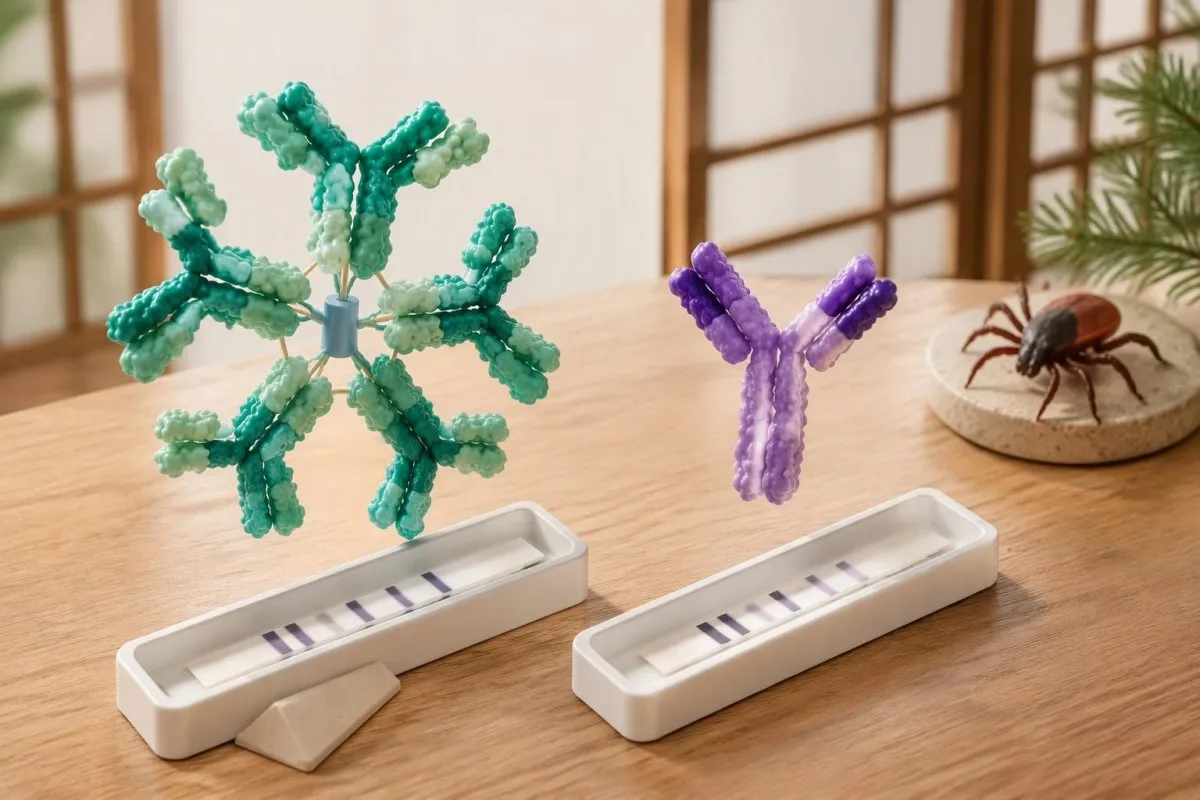
Moore et al. (2016) cited a study in which 41 kDa reactivity occurred in 43% of healthy controls, illustrating why this band cannot stand alone. That percentage is not a universal false-positive rate for every modern assay; it is evidence that recognizable antigen binding can occur in people without the clinical condition being investigated.
Epstein–Barr virus, syphilis, relapsing-fever Borrelia and some autoimmune conditions can contribute to false-positive Lyme serology, although the mechanism and affected assay vary. A recent mononucleosis-like illness should prompt attention to the complete EBV antibody pattern, not the assumption that 1 Lyme band proves a simultaneous tick-borne infection.
Cross-reactivity is not a reason to order every alternative antibody panel: 1 unexplained band usually does not justify broad autoimmune screening. When examination findings genuinely suggest an immune disorder, interpretácii komplementu a ANA belongs to a separate clinical question; repeated low-probability testing can generate additional misleading positives rather than a clearer answer.
Lyme IgM verzus IgG: prečo je dôležité pravidlo 30 dní trvania príznakov
Lyme IgM should not be used to support a diagnosis when symptoms have lasted more than 30 days. IgM is most useful early, whereas an appropriate IgG response carries greater diagnostic weight later; the clock starts with symptoms of the suspected illness, not the testing date or remembered tick removal.
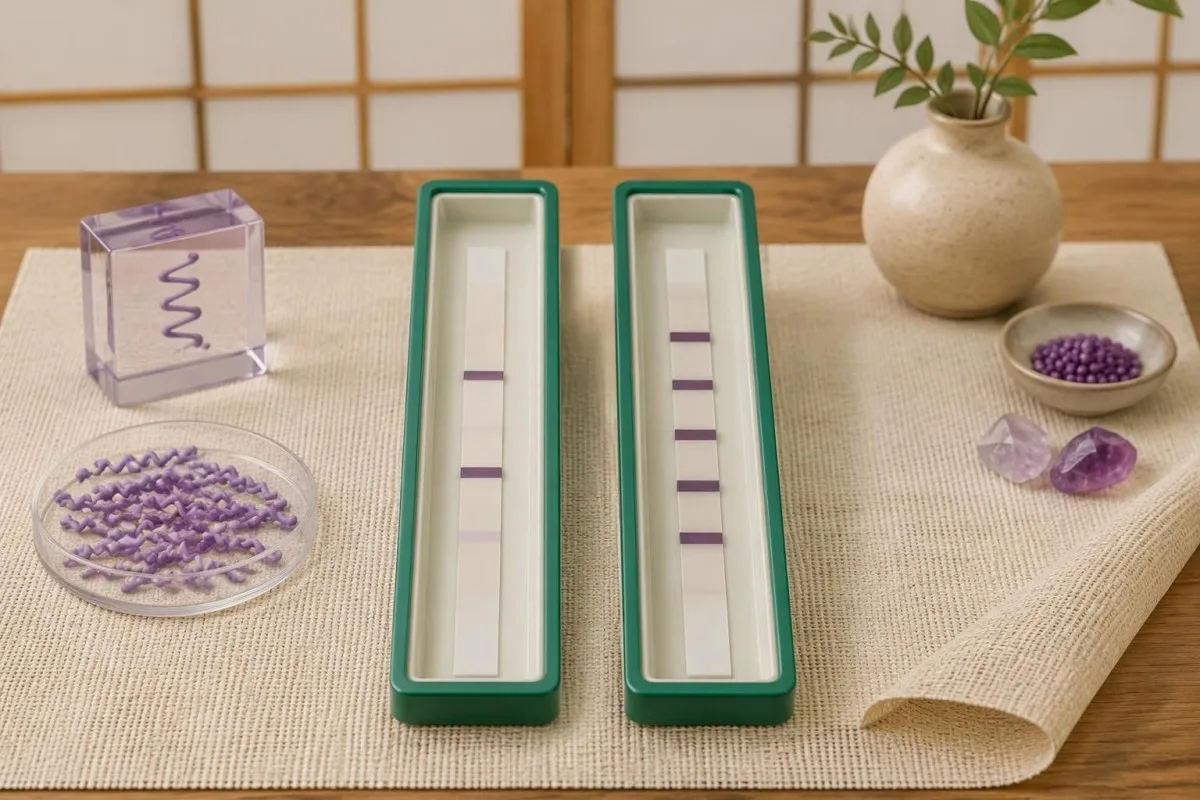
Ten/Tá/To 30-day restriction reduces misclassification from persistent or nonspecific IgM responses when later disease should usually have an established IgG response. It is an interpretation rule, not a biological switch that flips overnight: antibody maturation varies, and early treatment may alter seroconversion, but those exceptions do not make isolated late IgM reliable evidence.
For a hypothetical patient tested on day 75 of continuous symptoms, IgM bands 23 and 41 with negative IgG should not be used as proof of Lyme disease. By contrast, the same IgM pattern on day 12, following a reactive first-tier assay and compatible exposure, can support an early diagnosis; the numerical band count is identical, but its evidential value changes.
A positive IgM result does not automatically mean a new infection, a misconception also addressed in our Mycoplasma IgM interpretation guide. If symptoms began 8 weeks ago but one symptom appeared yesterday, clinicians need to decide whether this is a genuinely new illness or another feature of the original episode—not simply restart the IgM clock.
Pozitívne pásiky pri lymskej borelióze, ale celkovo negatívny výsledok: príklady
Positive Lyme bands but negative overall usually means the report did not meet the required pattern within the testing algorithm. For example, 3 designated IgG bands are below the conventional 5-of-10 threshold; that result is negative, not a smaller positive, and it does not measure how much infection is present.
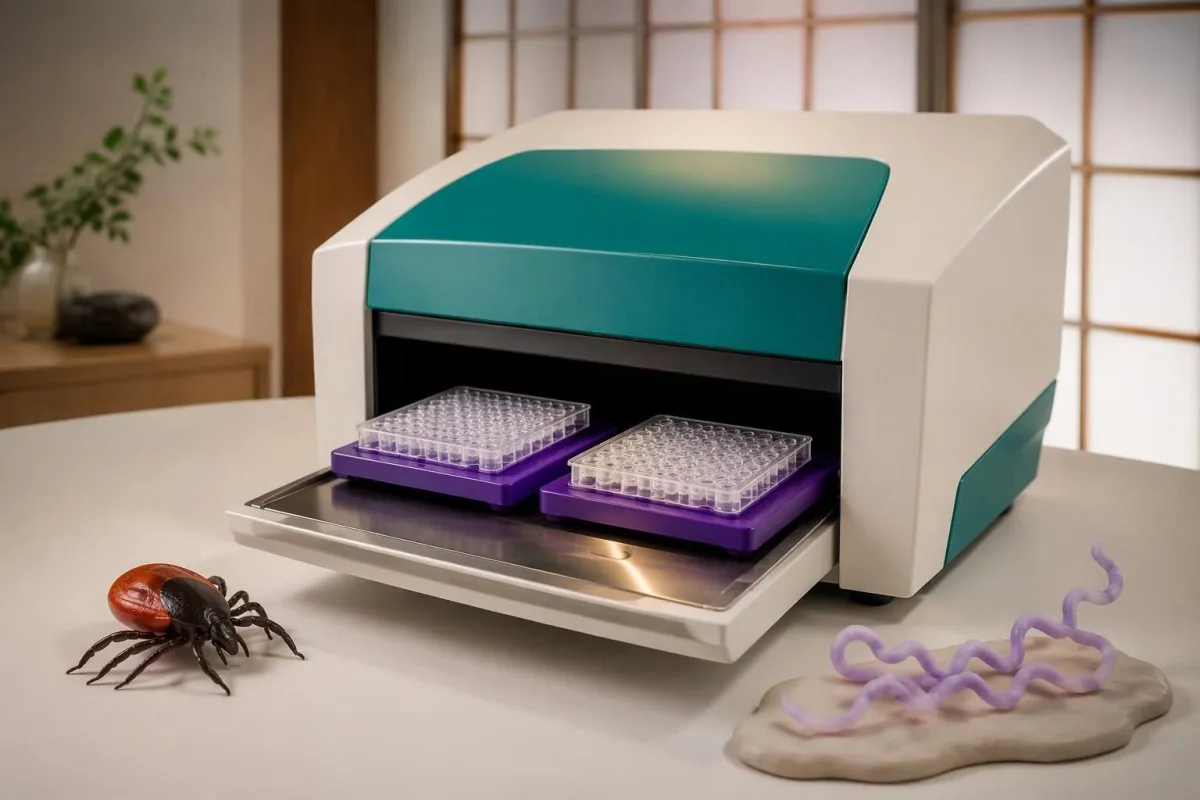
Consider a clearly hypothetical 42-year-old with 10 weeks of fatigue, a reactive screening assay and IgG bands 18, 41 and 58. The IgG immunoblot is negative because only 3 qualifying bands are present; if the examination lacks objective Lyme findings, the next step is a symptom-focused assessment rather than antibiotics prescribed to treat the band's molecular masses.
A second hypothetical patient has a reactive screen, IgM bands 23 and 39, and compatible symptoms beginning 14 days earlier. This can meet the traditional early serologic criteria, but an atypical exposure history or a stronger alternative diagnosis still affects the clinical conclusion; Kantesti AI can explain the 2-of-3 rule without converting it into an independent diagnosis.
A third report lists 5 IgG bands but provides no first-tier result; the missing screening stage prevents straightforward confirmation of a standard 2-tier outcome. Confirmation requirements are assay-specific, as our HSV IgG confirmation guide also illustrates, so request the complete laboratory report rather than borrowing a cutoff or confirmation rule from another infection.
Ako sa modifikované dvojstupňové testovanie líši od Western blotu
Modified two-tier testing, or MTTT, uses 2 sequential enzyme immunoassays instead of an enzyme immunoassay followed by an immunoblot. A report from this pathway may have no bands at all; its overall interpretation depends on the particular assay combination and its cleared instructions, not the conventional immunoblot band-count criteria.
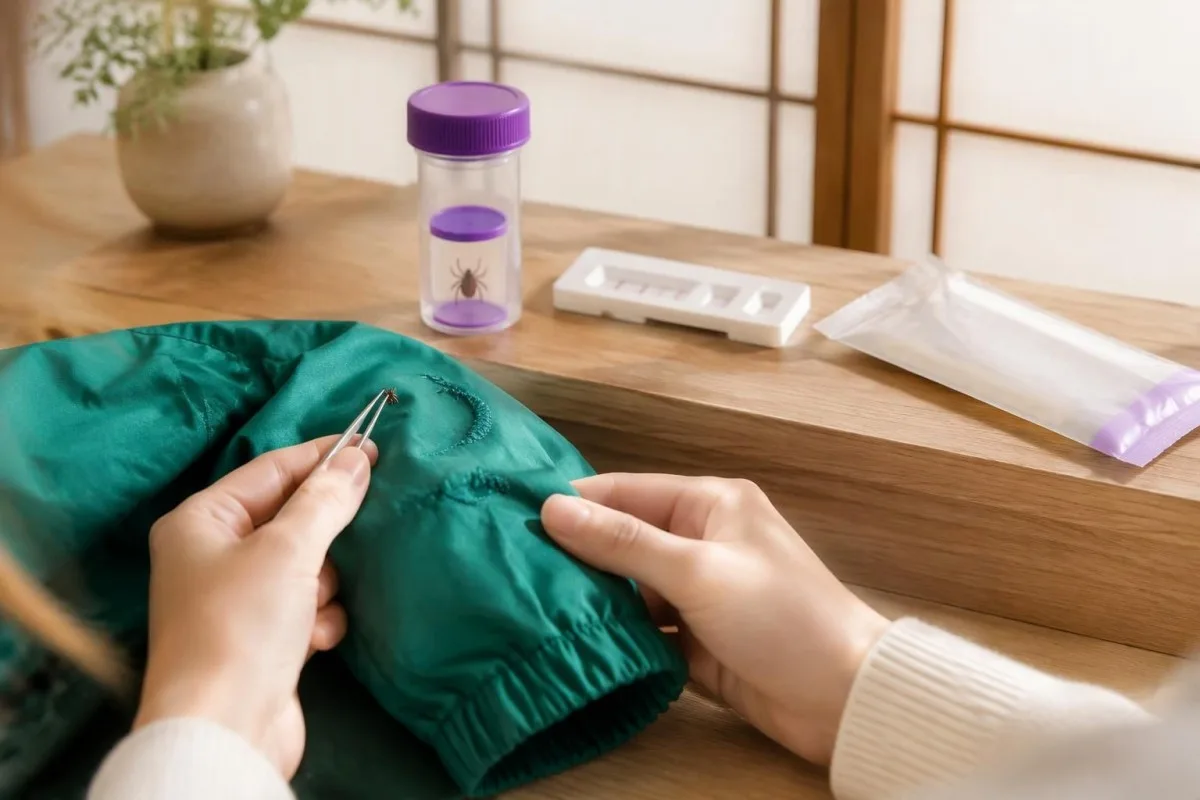
Ten/Tá/To 2019 CDC recommendation accepted modified algorithms using FDA-cleared assays for that purpose, following clearance of relevant test combinations (Mead et al., 2019). The change was not permission to combine any 2 tests: the evaluated pairing matters, and some combinations improve early sensitivity while preserving high specificity compared with standard two-tier testing.
Some modified algorithms measure total antibodies, while others report separate IgM and IgG components; consequently, the familiar 30-day IgM restriction cannot be mechanically applied to a total-antibody result. Kantesti is an platforma na interpretáciu krvného testu AI that can help distinguish a 2-immunoassay report from an immunoblot report before discussing what its positive or negative designation means.
A second immunoassay is not simply a repeat of the same screening test, and an immunoblot is not routinely needed after a completed validated MTTT result. Our sprievodca konfirmačným testovaním na Chagasovu chorobu illustrates the broader principle of complementary assays, but its 2-test rules are different; ask your laboratory which Lyme algorithm produced the final interpretation.
Môže byť testovanie na lymskú boreliózu včas negatívne aj napriek infekcii?
Lyme antibody testing can be negative early because antibodies have not yet reached detectable levels. A typical erythema migrans rash with an appropriate exposure history is diagnosed clinically rather than by waiting for a positive immunoblot; a negative result during the first 1–2 weeks does not safely exclude that presentation.

Across early-infection settings, conventional 2-tier sensitivity has been reported at approximately 30–40%, while specificity remains high when testing and interpretation are appropriate (Moore et al., 2016). These are population estimates, not a personal probability: sensitivity changes with the clinical manifestation, time since onset and whether the patient has already received antibiotics.
For a rash suggestive of but not typical for erythema migrans, the 2020 IDSA/AAN/ACR guideline supports acute serology and, if initially negative, a convalescent sample at least 2–3 weeks later (Lantos et al., 2021). The same guideline recommends clinical diagnosis for a typical lesion; a rash need not have textbook concentric rings to warrant assessment.
Repeating a test 24 hours later usually offers little advantage when the limitation is antibody development rather than a processing error. Our spotted fever testing guide explains a related timing problem, but suspected spotted fever has its own urgent treatment rules; do not delay care for an expanding rash or significant illness while waiting for more bands.
Znamená pozitívne Lyme IgG aktívnu infekciu alebo neúspešnú liečbu?
Positive Lyme IgG cannot distinguish active infection from a previous infection that has resolved. Lyme antibodies can remain detectable for years or decades, and repeat immunoblot testing is not a test of cure; neither a persistent 5-band pattern nor changes in band intensity establish that treatment failed.
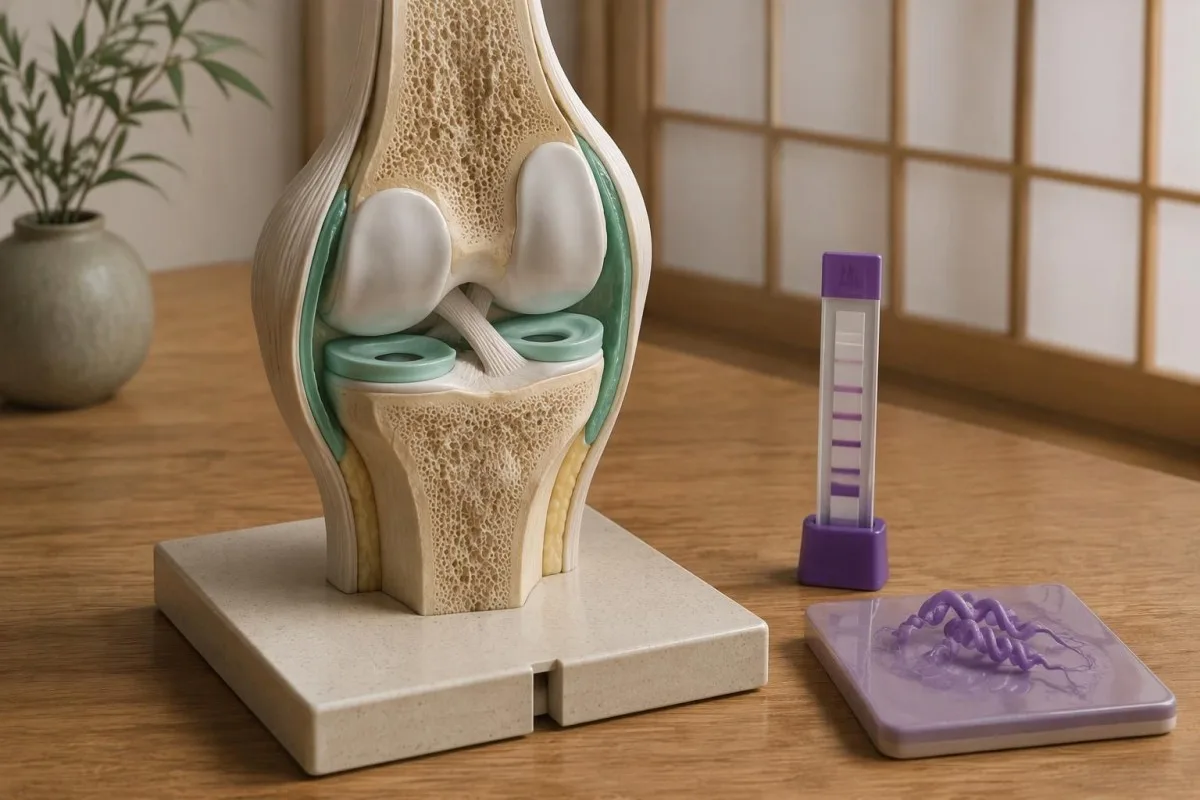
Ten/Tá/To 2020 IDSA/AAN/ACR guideline describes persistence of both IgM and IgG responses after infection, which complicates interpretation in previously affected patients (Lantos et al., 2021). A positive result obtained 4 years after treatment must therefore be compared with the clinical history, not interpreted as a laboratory photograph of living bacteria in the body.
Reinfection can occur because previous Lyme disease does not provide reliable lifelong protection, but an old positive antibody result cannot prove a new episode. For a hypothetical person with positive IgG from 2019 and a new expanding rash after recent tick exposure, the new clinical findings matter more than whether a sixth band appears; vzorcov protilátok CMV illustrate why exposure history and current illness are separate questions.
Persistent fatigue, pain or cognitive symptoms deserve evaluation even when no new laboratory evidence appears. The guideline recommends against additional antibiotics for persistent nonspecific symptoms after recommended treatment when there is no objective evidence of reinfection or treatment failure; 1 positive antibody panel cannot identify the cause of those symptoms or justify an open-ended antibiotic course.
Čo znamená IgG pri podozrení na lymskú artritídu alebo neurologické ochorenie
Lyme arthritis usually produces a strong IgG response, so isolated IgM is poor evidence for that diagnosis. Conventional two-tier serology has approximately 95–100% sensitivity in Lyme arthritis, according to the 2020 IDSA/AAN/ACR guideline; a negative appropriate IgG result should prompt serious consideration of other causes of joint swelling.

A hypothetical patient with a markedly swollen knee and only 2 IgM bands after 3 months of symptoms does not have the expected serologic pattern for Lyme arthritis. The clinician should reassess alternative causes and assay reliability rather than call this late Lyme based on IgM alone; when indicated, joint fluid examination answers additional questions that the antibody test cannot.
Suspected central nervous system Lyme disease requires clinical assessment and, when cerebrospinal fluid testing is undertaken, simultaneous CSF and serum for a validated antibody index. Testing CSF antibody alone or running a standalone CSF immunoblot is not the preferred approach; 1 elevated index may also persist after treatment, so it must be interpreted alongside the neurological findings and CSF cell response.
Numb feet or tingling do not become Lyme-specific because 41 kDa is reactive; neuropathy has metabolic, mechanical and immune causes. Our anti-MAG neuropathy guide explains one targeted alternative, while immunoglobulin panel interpretation clarifies that total serum IgG is different from the 5-of-10 Lyme-specific IgG immunoblot criterion.
Prečo môžu laboratóriá a krajiny používať odlišné kritériá pre lymskú boreliózu
Lyme immunoblot criteria are assay- and region-dependent, so conventional US 5-of-10 IgG counting rules should not automatically be imposed on every European report. European assays may use different Borrelia antigens and recombinant line blots because the species causing human Lyme borreliosis differ across regions.
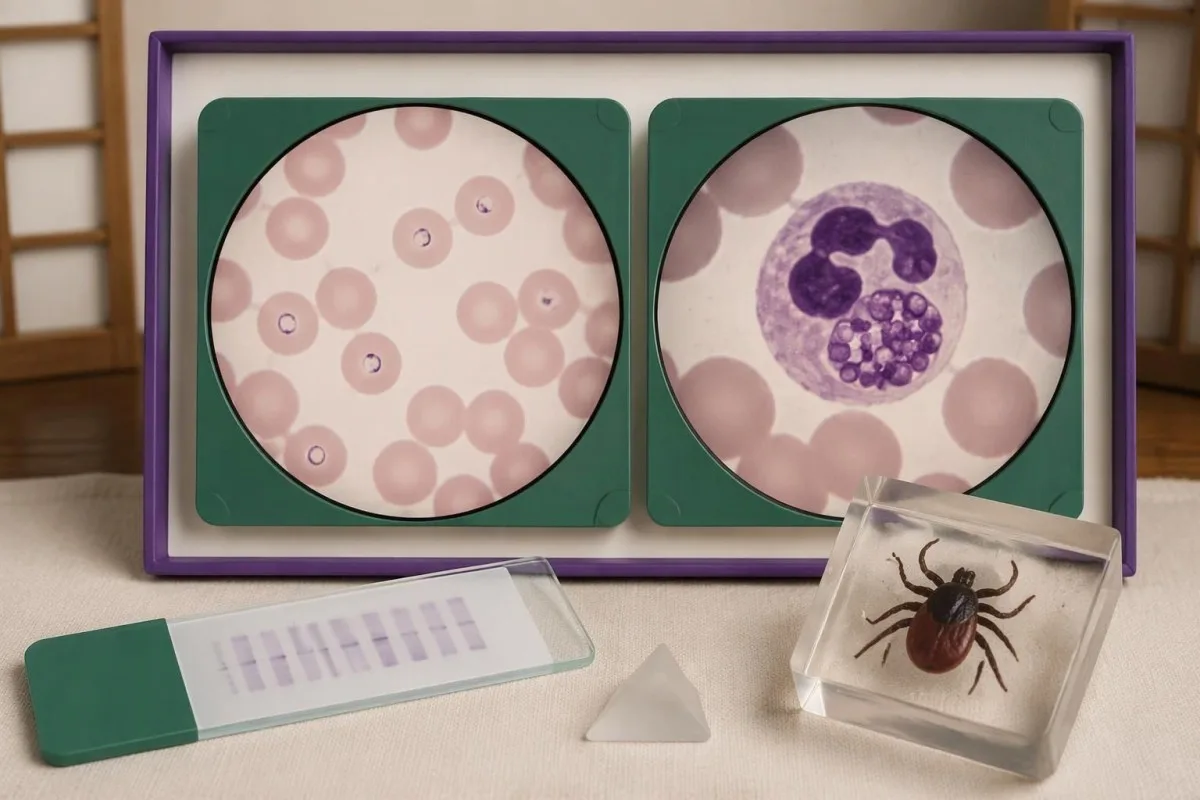
B. burgdorferi sensu stricto predominates in North America, while European disease also commonly involves B. afzelii and B. garinii. A report using VlsE, OspC or other recombinant antigen labels may therefore not resemble a 10-position conventional US blot; the clinically useful question is whether the assay was validated for the exposure setting and interpreted according to its instructions.
Different laboratory criteria are not automatically inferior, but claims that 1 or 2 bands prove disease require evidence for that assay's complete diagnostic performance. When reading a report described by Kantesti, consult the laboratory's interpretation and our rámec lekárskej validácie separately; general AI assessment or a software benchmark is not proof that a particular Lyme assay has validated sensitivity and specificity.
Record 3 details before comparing reports from different laboratories: assay manufacturer, algorithm type and the country where exposure occurred. Our sprievodca kontrolou zdrojov správ pomocou AI explains why preserving source wording matters; apparent conversion from negative to positive may reflect a changed method or cutoff rather than a newly acquired infection or worsening illness.
Identifikujú pásiky pri lymskej borelióze Babesia, Anaplasma alebo iné koinfekcie?
Lyme Western blot bands do not diagnose tick-borne coinfections. Babesia, Anaplasma and Ehrlichia require their own clinical assessment and tests; 1 positive Lyme antibody result neither confirms nor excludes these infections, even when an exposure setting allows more than one tick-borne organism to be transmitted.

Babezióza deserves consideration when relevant exposure accompanies fever and evidence such as anemia, low platelets or hemolysis, especially if fever persists during Lyme-directed treatment. A Babesia antibody titer of 1:256 alone does not establish current infection; our Babesia test interpretation guide explains why a cellular sample examination or PCR may be needed to demonstrate active infection.
Anaplazmóza can produce fever, leukopenia, thrombocytopenia and elevated liver enzymes, findings that should not be explained away as extra Lyme bands. PCR is most useful during the first week of illness and becomes less sensitive after appropriate antibiotics; our Anaplasma sample timing guide separates this early direct-detection window from later antibody interpretation.
Ehrlichiosis follows a different organism-specific testing pathway, and a negative early antibody result is not a safe reason to dismiss significant febrile illness. Our Ehrlichia PCR and titer guide explains why 2 samples collected at different times may help establish seroconversion; targeted testing should follow symptoms, geography and laboratory abnormalities rather than an indiscriminate panel ordered for isolated fatigue.
Čo robiť pri nejednoznačnej správe o výsledkoch testu na lymskú boreliózu?
For an unclear Lyme report, obtain the complete 2-tier interpretation, write down symptom onset and discuss exposure plus objective findings with a clinician. Faint or isolated bands do not determine urgency; fainting, chest pain, breathlessness, a markedly slow pulse or new neurological deficits require prompt assessment regardless of the antibody result.

Lyme carditis can cause heart conduction block, so fainting or palpitations after compatible exposure should not wait for an immunoblot to become positive. The 2020 IDSA/AAN/ACR guideline identifies a PR interval greater than 300 milliseconds, other arrhythmias or features of myopericarditis as reasons for hospital admission with monitoring; that interval is measured on an ECG, not inferred from band intensity.
New facial weakness warrants urgent assessment, and sudden facial droop with arm weakness or speech difficulty needs emergency evaluation for stroke rather than attribution to Lyme. Our sprievodcovi varovnými príznakmi cievnej mozgovej príhody explains that distinction; for a routine appointment, bring 4 dates—possible exposure, first symptom, sample collection and antibiotic initiation—because each changes a different part of the reasoning.
Kantesti je Nástroj na analýzu krvných testov poháňaný AI that can help organize the 2-tier result, reported bands and missing clinical context into questions for your appointment. Our Sprievodca AI technológiou describes the explanation workflow, but our AI cannot examine a rash, measure an ECG interval, confirm Lyme disease independently or decide whether you should start, stop or extend antibiotics.
Publikácie z výskumu, hranice dôkazov a bezpečná interpretácia
The clinical interpretation in this article rests on 3 directly relevant sources: a laboratory-diagnosis review, the CDC's modified two-tier recommendation and the IDSA/AAN/ACR Lyme guideline. The 2 additional Figshare publications listed below concern other health topics and must not be treated as validation of Lyme band interpretation or Lyme diagnosis.
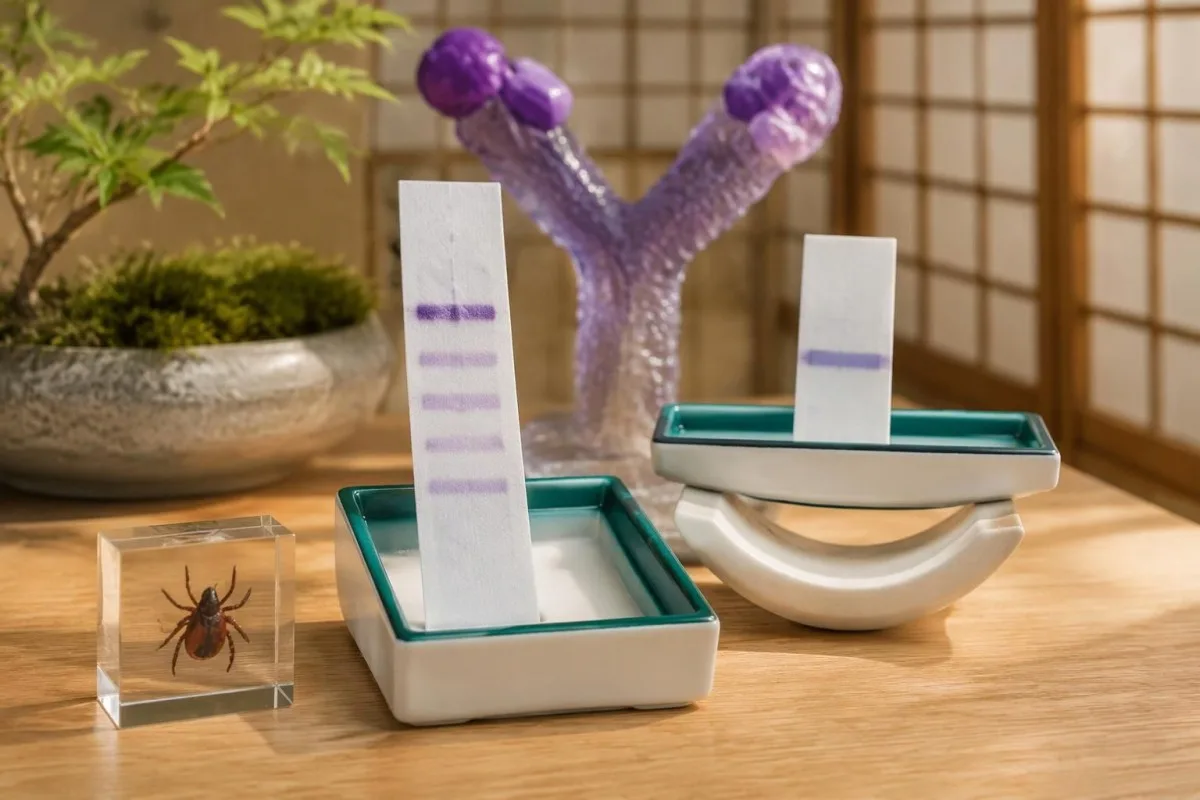
Moore et al. (2016) explains why individual bands and incomplete testing sequences create diagnostic errors; Mead et al. (2019) establishes the CDC recommendation for appropriately cleared modified algorithms. Lantos et al. (2021), publishing the 2020 guideline, connects testing to clinical manifestations, including early rash, arthritis and neurological disease; these sources support different parts of the reasoning rather than one universal band shortcut.
The 2 Figshare records address women's hormonal health and multilingual AI-assisted hantavirus triage, respectively, not Lyme immunoblot performance. A deployment involving 50,000 interpreted reports, as described in the hantavirus publication's title, cannot establish sensitivity, specificity or patient benefit for Lyme diagnosis; those claims would require Lyme-specific methods, reference standards and evaluation populations.
materiály Kantesti zásady zodpovedného používania AI place report explanation alongside—not above—the laboratory and clinician, including when IgM appears after 30 days of symptoms. For symptoms linked to cycle changes or menopausal transition, our hormonal symptom guide addresses a separate assessment pathway; symptom overlap is a reason to investigate carefully, not evidence that a reactive Lyme band explains everything.
Často kladené otázky
Môže jeden pozitívny prúžok na western blot teste na lymskú boreliózu znamenať, že mám boreliózu?
Jeden reaktívny prúžok na imunoblote proti lymskej borelióze nepotvrdzuje toto ochorenie. Podľa konvenčných kritérií používaných v USA sú počas prvých 30 dní od začiatku príznakov v rámci príslušného dvojstupňového testovacieho postupu potrebné aspoň 2 z 3 stanovených prúžkov IgM alebo 5 z 10 stanovených prúžkov IgG. Jediný prúžok môže podľa okolností odrážať krížovú reaktivitu alebo neúplnú skorú protilátkovú odpoveď. Typická vyrážka erythema migrans po príslušnej expozícii môže podporiť klinickú diagnózu aj napriek negatívnej skorej sérológii.
Prečo sú niektoré testovacie prúžky na lymskú boreliózu pozitívne, ale celkový výsledok testu je negatívny?
Test na lymskú boreliózu môže obsahovať reaktívne pásy, no napriek tomu byť negatívny, pretože imunoblot nespĺňal validovaný vzorec požadovaný testovacím algoritmom. Napríklad 3 vyhovujúce pásy IgG nedosahujú konvenčný prah 5 z 10 pásov IgG. Pozitívny alebo hraničný skríningový test prvej úrovne, po ktorom nasledujú negatívne príslušné imunobloty, sa pri štandardnom dvojstupňovom testovaní interpretuje ako negatívny výsledok. Ak sú príznaky veľmi čerstvé, lekár môže zvážiť opakovanie testovania vo vhodnom časovom odstupe namiesto toho, aby neúplný vzorec označil za pozitívny.
Čo znamená pozitívny lymský pás s hmotnosťou 41 kDa?
41 kDa pás Lymskej boreliózy zvyčajne odráža väzbu protilátok na flagelín, bielkovinu súvisiacu s pohybom baktérií, ktorá môže skrížene reagovať s protilátkami nesúvisiacimi s Lymskou boreliózou. Je iba jedným z určených pásov používaných v konvenčných kritériách imunoblotu a sám osebe nedokáže diagnostikovať Lymskú boreliózu. Moore a kol. (2016) citovali štúdiu, v ktorej sa tento pás zistil u 43% zdravých kontrol, hoci toto percento nie je univerzálnou mierou platnou pre všetky testy. To, či výsledok svedčí v prospech Lymskej boreliózy, závisí od celého testovacieho postupu a klinického obrazu.
Je pozitívny IgM a negatívny IgG pri lymskej borelióze dôkazom nedávnej infekcie?
Pozitivita IgM pri lymskej borelióze s negatívnym IgG môže svedčiť o skorej infekcii len vtedy, keď zodpovedá príslušnému algoritmu testovania, klinickému obrazu a časovému priebehu. Izolované IgM by sa nemalo používať ako dôkaz lymskej boreliózy, ak príznaky trvajú dlhšie než 30 dní, pretože pretrvávajúce alebo nešpecifické IgM môže viesť k nesprávnej interpretácii. Napríklad 2 pozitívne prúžky IgM na 14. deň majú iný význam než rovnaký vzorec po 3 mesiacoch nepretržitých príznakov. Pravidlo týkajúce sa časového priebehu sa vzťahuje na začiatok príznakov, nie na deň odberu laboratórnej vzorky.
Môžem mať pozitívny test na lymskú boreliózu bez akýchkoľvek pásov na Western blote?
Áno: validovaný modifikovaný dvojstupňový algoritmus na diagnostiku lymskej boreliózy využíva 2 po sebe nasledujúce enzýmové imunoanalýzy a Western blot sa pri ňom nemusí vykonať vôbec. CDC v roku 2019 odporučilo vhodné modifikované algoritmy schválené FDA. Niektoré kombinácie testov merajú celkové protilátky, zatiaľ čo iné poskytujú samostatné výsledky pre IgM a IgG, takže konvenčné pravidlá počítania prúžkov sa nevzťahujú na všetky výsledky. Opýtajte sa laboratória, ktorý algoritmus a kombinácia testov viedli ku konečnej interpretácii.
Mali by pásy pri lymskom Western blote po antibiotikách zmiznúť?
Pásy na Western blote pri lymskej borelióze nemusia po úspešnej liečbe vymiznúť, pretože protilátky môžu pretrvávať celé roky alebo desaťročia. Pretrvávajúci vzorec piatich pásov IgG nedokazuje prebiehajúcu infekciu a opakované testovanie pásov nie je validovaným testom vyliečenia. Odpoveď na liečbu sa hodnotí podľa klinického priebehu a relevantných objektívnych nálezov, nie podľa toho, či sa protilátkový panel stane negatívnym. Nové príznaky alebo ďalšie prisatie kliešťa si vyžadujú nové klinické posúdenie, pretože staré protilátky nedokážu potvrdiť reinfekciu.
Získajte vysvetlenie výsledkov krvných testov
Nahrajte svoj laboratórny nález a AI nástroja Kantesti vám v priebehu niekoľkých sekúnd vysvetlí každý biomarker jednoduchým jazykom. Používa ho viac než 2 milióny ľudí na celom svete.
Referencie
- Klein, T., Mitchell, S., & Weber, H. (2026). Sprievodca zdravím žien: ovulácia, menopauza a hormonálne príznaky. Kantesti AI lekársky výskum. DOI
- Klein, T., Mitchell, S., & Weber, H. (2026). Viacjazyčná klinická podpora rozhodovania s pomocou AI pri včasnej triáži hantavírusu: návrh, technické overenie a nasadenie v reálnom svete naprieč 50 000 interpretovanými správami o výsledkoch krvného testu. Kantesti AI lekársky výskum. DOI
- Moore A et al. (2016). Current Guidelines, Common Clinical Pitfalls, and Future Directions for Laboratory Diagnosis of Lyme Disease, United States. Emerging Infectious Diseases. DOI PubMed
- Mead P et al. (2019). Updated CDC Recommendation for Serologic Diagnosis of Lyme Disease. Týždenná správa MMWR o chorobnosti a úmrtnosti. DOI
- Lantos PM et al. (2021). Clinical Practice Guidelines by the Infectious Diseases Society of America (IDSA), American Academy of Neurology (AAN), and American College of Rheumatology (ACR): 2020 Guidelines for the Prevention, Diagnosis and Treatment of Lyme Disease. Clinical Infectious Diseases. DOI
- 2 milióny+Analyzované testy
- 127+Krajiny
- 100+Jazyky
O zdravotníckom tíme


Signály dôvery E-E-A-T Trust Signals
Skúsenosti
Klinické hodnotenie vedené lekárom pracovných postupov interpretácie laboratórnych výsledkov.
Odbornosť
Laboratórna medicína so zameraním na to, ako sa biomarkery správajú v klinickom kontexte.
Autoritatívnosť
Lekársky recenzoval Dr. Thomas Klein, s príspevkami Dr. Sarah Mitchell a prof. Dr. Hansa Webera.
Dôveryhodnosť
Interpretácia založená na dôkazoch s jasnými následnými krokmi na zníženie poplachu.






Zdravotnícke upozornenie
Tento článok je určený len na vzdelávacie účely a nepredstavuje lekárske poradenstvo. Pri rozhodnutiach o diagnostike a liečbe sa vždy poraďte s kvalifikovaným poskytovateľom zdravotnej starostlivosti.
Publikované · Kontaktujte redakčný tím
Vydáva Kantesti Ltd, registrovaná v Anglicku a Walese, číslo spoločnosti. 17090423, Londýn, Spojené kráľovstvo.
