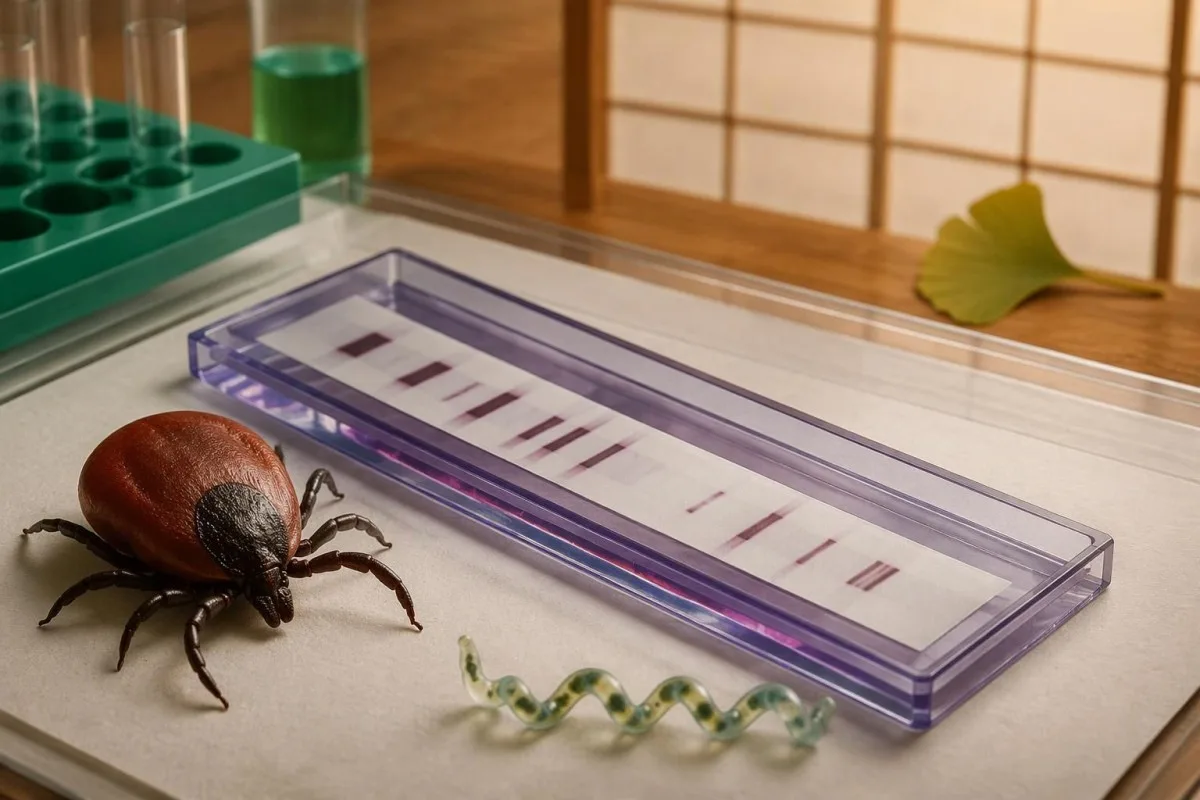
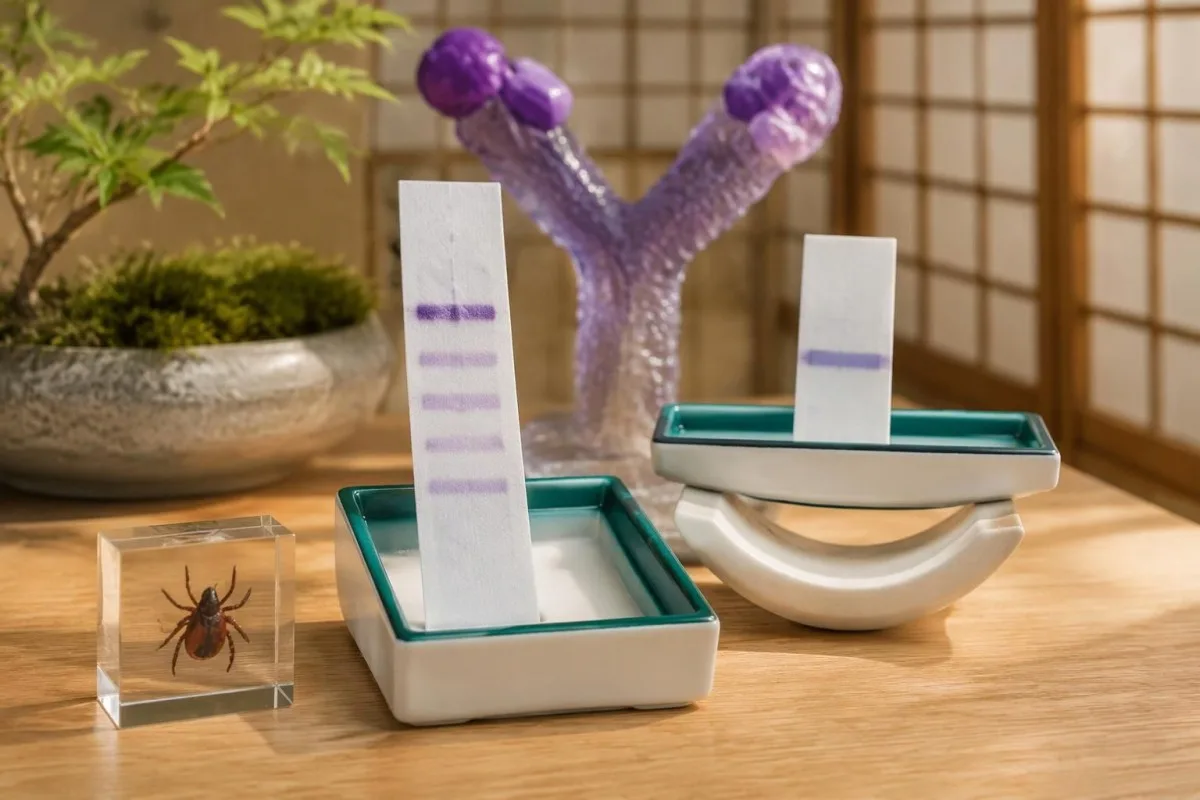
Una banda reactiva mostra la unió d’anticossos, no pas un diagnòstic. L’algoritme complet de proves, l’historial d’exposició i la cronologia dels símptomes determinen si aquesta troballa dona suport a un diagnòstic de malaltia de Lyme.

Conclusions principals
- Les bandes individuals no estableixen el diagnòstic de malaltia de Lyme; fins i tot una banda relativament específica s’ha d’interpretar dins d’un algoritme validat de proves en dos nivells.
- Criteris tradicionals d’IgM requereixen almenys 2 de les 3 bandes designades: aproximadament 23–25, 39 i 41 kDa.
- Criteris tradicionals d’IgG requereixen almenys 5 de les 10 bandes designades: 18, 23, 28, 30, 39, 41, 45, 58, 66 i 93 kDa.
- La regla dels 30 dies vol dir que la IgM aïllada no ha de servir de suport a un diagnòstic de malaltia de Lyme quan els símptomes han durat més de 30 dies.
- Un resultat global negatiu pot coexistir amb bandes reactives perquè el laboratori avalua un patró validat, no si apareix alguna banda.
- Proves modificades en dos nivells utilitzen 2 immunoassaigs seqüencials en lloc d’un immunoblot; pot ser que no proporcionin una llista de bandes.
- Proves inicials pot ser negativa abans que es desenvolupin anticossos; una erupció típica d’eritema migratori en un context d’exposició adequat es diagnostica clínicament.
- Anticossos persistents poden continuar sent detectables durant anys després del tractament i no poden establir si la infecció continua activa ni mesurar-ne la curació.
Què vol dir realment una banda positiva a la prova Western blot de Lyme?
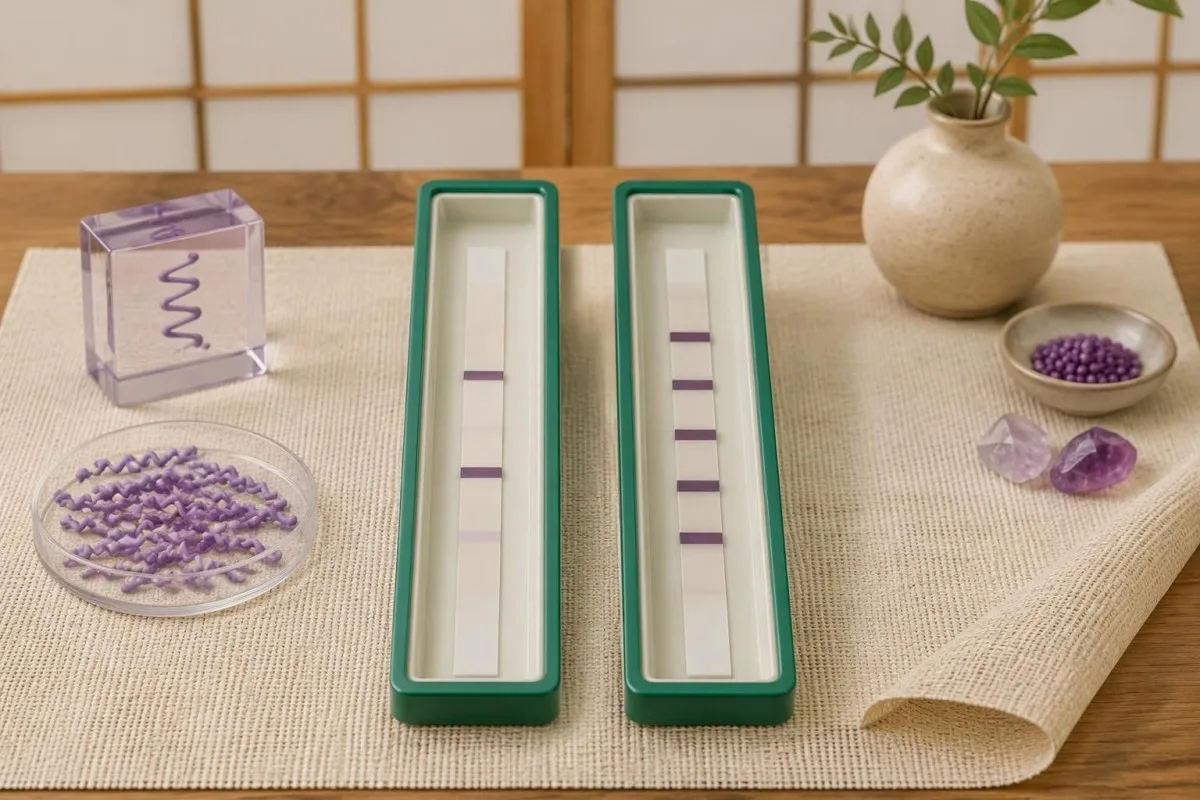
A banda positiva de Western blot per a la malaltia de Lyme vol dir que els anticossos s’han unit a un antigen de la prova; això no estableix per si sol la malaltia de Lyme. En les proves tradicionals nord-americanes en dos nivells, la IgM requereix 2 de les 3 bandes designades durant els primers 30 dies de símptomes, mentre que la IgG en requereix 5 de 10; les proves modificades utilitzen 2 immunoassaigs.
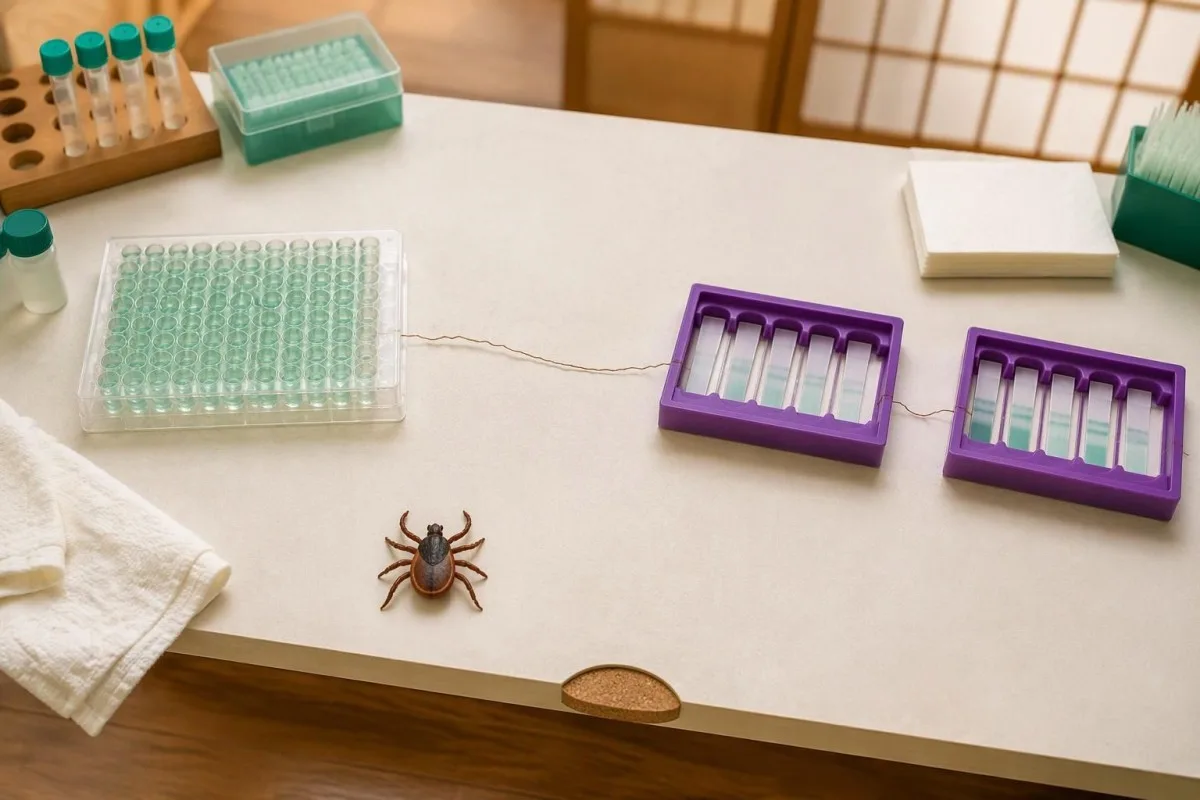
El resultat global combina l’assaig de cribratge de primer nivell amb el resultat adequat de segon nivell, en lloc de tractar cada franja visible com un diagnòstic independent. Per tant, un informe que mostri 1 banda reactiva pot indicar correctament un resultat negatiu, i fins i tot un resultat positiu complet d’anticossos s’ha de valorar tenint en compte l’exposició, els signes compatibles i la malaltia de Lyme prèvia.
La identitat de la banda respon a una pregunta concreta: quin antigen ha atret la unió d’anticossos en les condicions d’aquest assaig? No respon les 3 preguntes que solen preocupar els pacients: si la infecció és present ara, si explica els seus símptomes o si calen antibiòtics; la nostra guia sobre resultats positius d'anticossos separa aquestes qüestions.
Kantesti és una Analitzador de sang amb IA que pot ajudar a explicar per què un informe de Lyme conté bandes reactives però una interpretació negativa de les proves en 2 nivells. Considerem que la interpretació final del laboratori, el mètode de l’assaig i la durada dels símptomes són context essencial, no detalls que es puguin ignorar comptant les línies ressaltades en un informe carregat.
Com determina el resultat la prova tradicional de Lyme en dos nivells
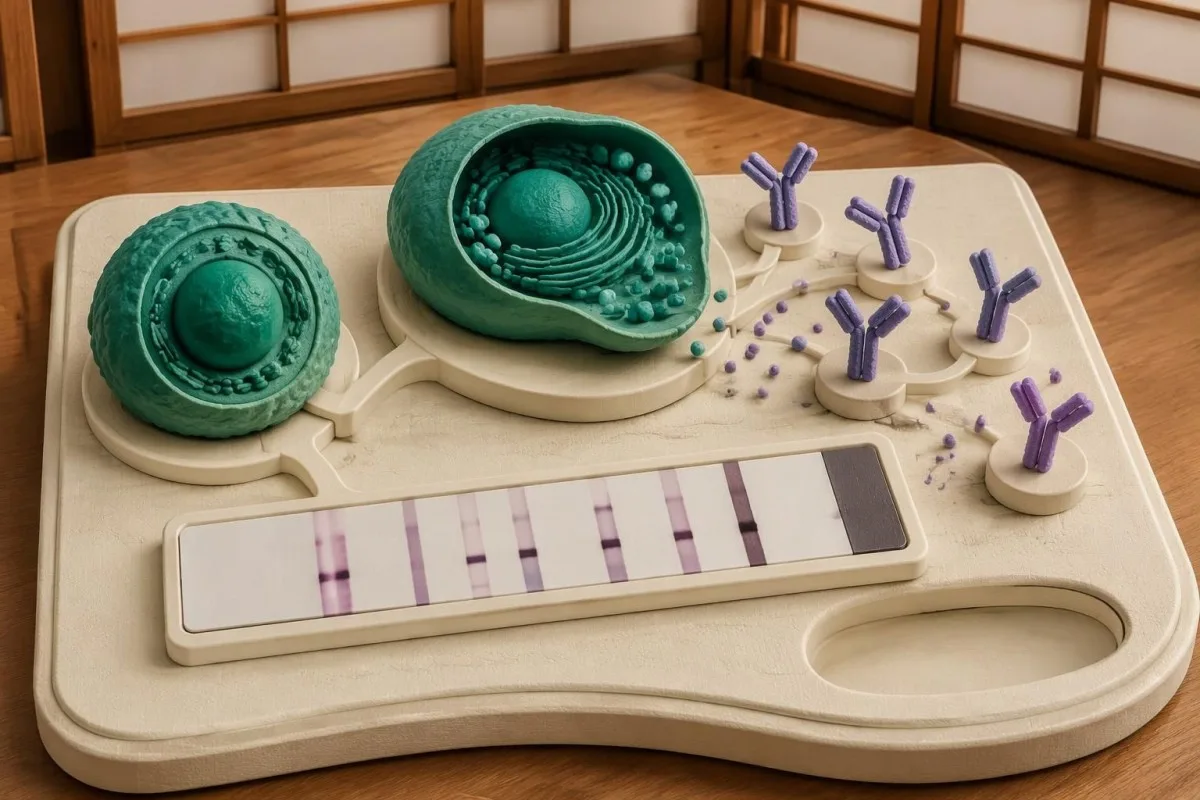
Proves estàndard en dos nivells comencen amb un immunoassaig enzimàtic o, de vegades, amb un assaig d’immunofluorescència, i continuen amb un immunoblot quan la primera prova és positiva o equívoca. Les 2 etapes funcionen conjuntament; un resultat positiu del cribratge per si sol no és un resultat confirmat positiu de serologia de Lyme.

A prova de primer nivell positiva o equívoca seguida d’immunoblots adequats negatius s’interpreta com a negativa segons l’algorisme estàndard. El cribratge inicial està dissenyat deliberadament per detectar més possibles respostes, mentre que el segon nivell filtra la reactivitat inespecífica; Moore et al. van descriure aquest equilibri i els errors d’interpretació habituals a Emerging Infectious Diseases el 2016.
Un índex d’1,4 en un assaig de cribratge no és intercanviable amb un índex d’1,4 en un altre, perquè la composició d’antígens i els llindars del fabricant són diferents. De la mateixa manera, un resultat equívoc del cribratge és una indicació per completar l’algorisme, no un diagnòstic a mig camí entre tenir una infecció i no tenir-ne cap; resultats qualitatius versus quantitatius explica per què són importants els formats dels informes.
Demanar un immunoblot després d’un cribratge negatiu, sense motius clínics per reconsiderar el moment de la prova o la idoneïtat de l’assaig, obvia la seqüència de la qual se n’ha avaluat el rendiment. Demaneu 3 dades: el resultat del cribratge, la interpretació del segon nivell i si tots dos formen part del mateix procediment de proves validat; no s’hauria de reconstruir un informe incomplet basant-se només en les bandes.
Explicació de les bandes de la prova Western blot de Lyme: criteris d’IgM i IgG
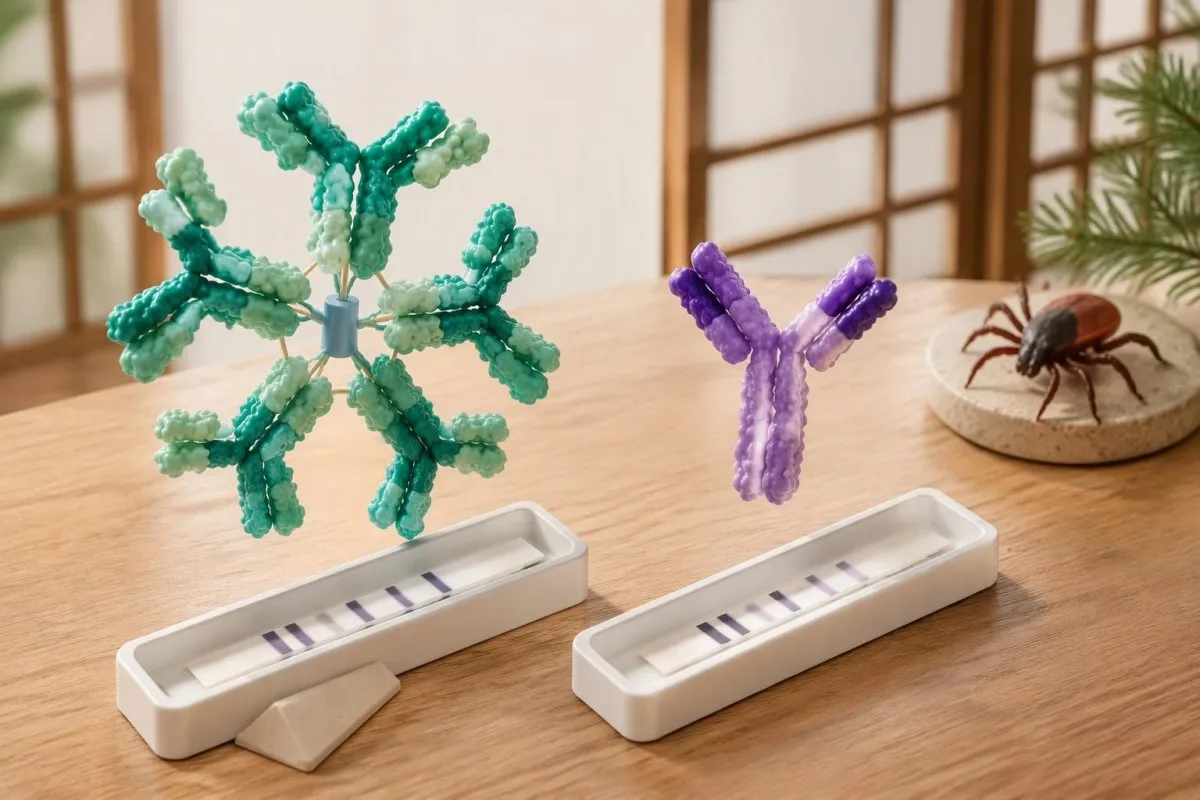
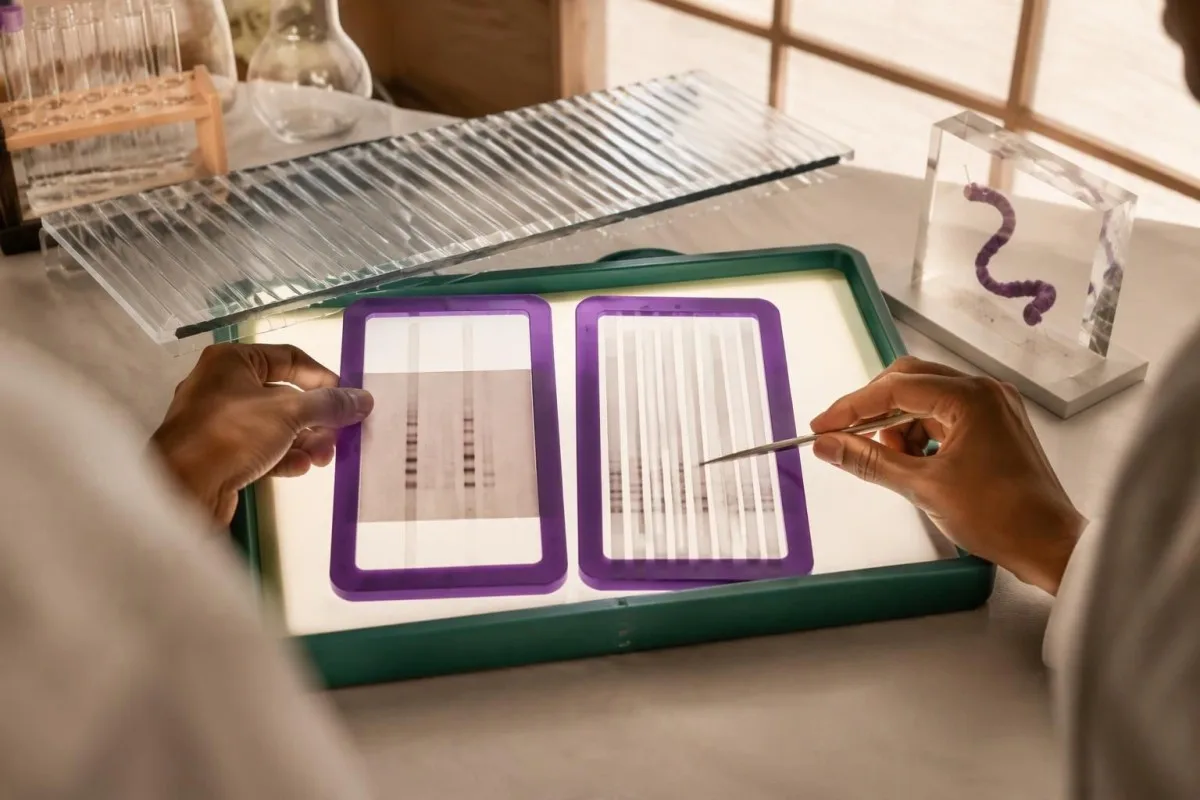
Segons els criteris convencionals nord-americans, un immunoblot IgM positiu requereix almenys 2 de les bandes de 23–25, 39 i 41 kDa. Un immunoblot IgG positiu requires at least 5 of the 18, 23, 28, 30, 39, 41, 45, 58, 66 and 93 kDa bands.
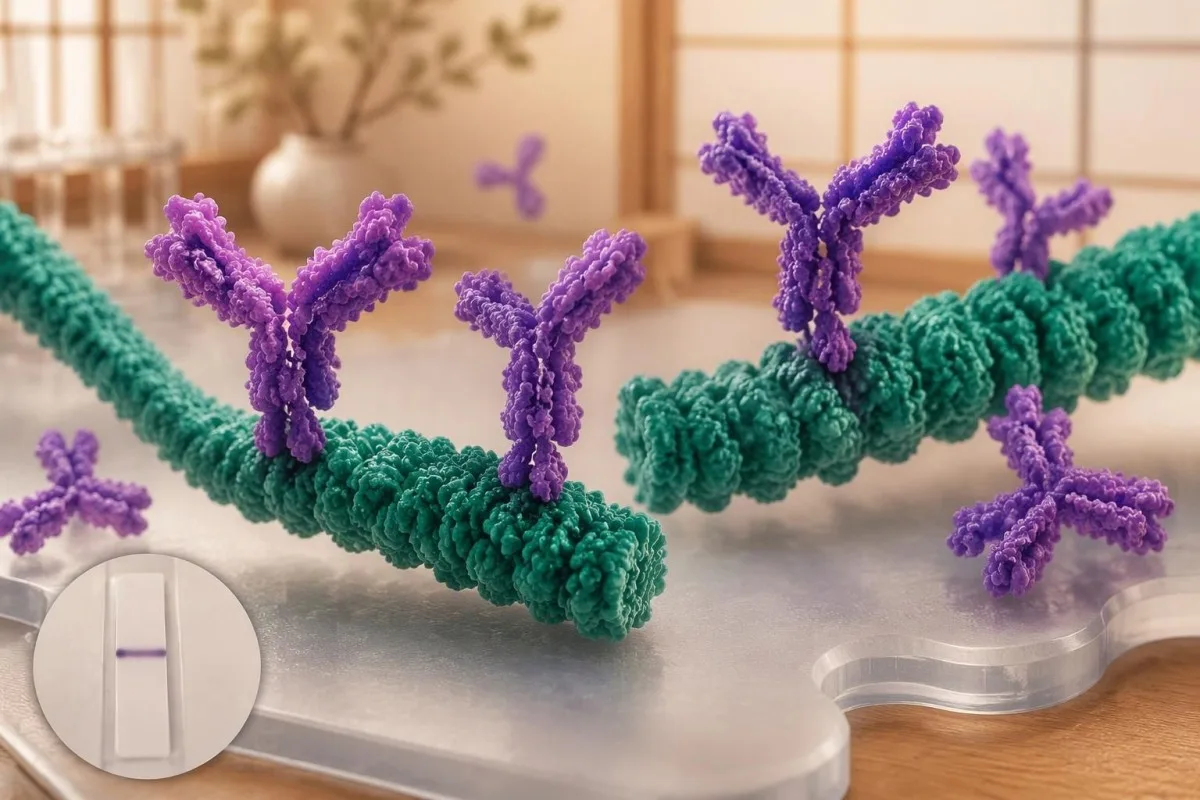
Kilodaltons, abbreviated kDa, describe approximate protein molecular mass, not antibody concentration or disease severity. The approximately 23–25 kDa band commonly represents outer surface protein C, 39 kDa represents BmpA and 41 kDa represents flagellin; the numbers identify antigen regions, so a higher-numbered band does not mean a more advanced infection.
The IgG list's 58 kDa criterion excludes GroEL, and reports may use assay-specific names or approximate mass conventions rather than identical labels. Because not every commercial strip uses the same antigen preparation, our guia de marcadors sanguinis should complement—not replace—the actual laboratory legend and the assay manufacturer's interpretation instructions.
Bands at 31 and 34 kDa are not part of the conventional CDC IgG counting criteria, even though they may appear on some reports. Their absence from that list does not make them meaningless biologically, but adding them to manufacture a 5-band positive result changes the validated rule; neither band darkness nor extra bands quantify bacterial burden.
Per què la banda 41 i altres bandes reactives poden ser senyals falsos
El 41 kDa band reacts with flagellin, a protein associated with bacterial movement, and can cross-react with antibodies unrelated to Lyme disease. A single reactive 41 kDa band is therefore insufficient to diagnose Lyme disease, even when a patient has fatigue, aching or a remembered tick bite.
Moore et al. (2016) cited a study in which 41 kDa reactivity occurred in 43% of healthy controls, illustrating why this band cannot stand alone. That percentage is not a universal false-positive rate for every modern assay; it is evidence that recognizable antigen binding can occur in people without the clinical condition being investigated.
Epstein–Barr virus, syphilis, relapsing-fever Borrelia and some autoimmune conditions can contribute to false-positive Lyme serology, although the mechanism and affected assay vary. A recent mononucleosis-like illness should prompt attention to the complete EBV antibody pattern, not the assumption that 1 Lyme band proves a simultaneous tick-borne infection.
Cross-reactivity is not a reason to order every alternative antibody panel: 1 unexplained band usually does not justify broad autoimmune screening. When examination findings genuinely suggest an immune disorder, la interpretació del complement i dels ANA belongs to a separate clinical question; repeated low-probability testing can generate additional misleading positives rather than a clearer answer.
IgM enfront d’IgG per a la malaltia de Lyme: per què és important la regla dels 30 dies de símptomes
Lyme IgM should not be used to support a diagnosis when symptoms have lasted more than 30 days. IgM is most useful early, whereas an appropriate IgG response carries greater diagnostic weight later; the clock starts with symptoms of the suspected illness, not the testing date or remembered tick removal.
El 30-day restriction reduces misclassification from persistent or nonspecific IgM responses when later disease should usually have an established IgG response. It is an interpretation rule, not a biological switch that flips overnight: antibody maturation varies, and early treatment may alter seroconversion, but those exceptions do not make isolated late IgM reliable evidence.
For a hypothetical patient tested on day 75 of continuous symptoms, IgM bands 23 and 41 with negative IgG should not be used as proof of Lyme disease. By contrast, the same IgM pattern on day 12, following a reactive first-tier assay and compatible exposure, can support an early diagnosis; the numerical band count is identical, but its evidential value changes.
A positive IgM result does not automatically mean a new infection, a misconception also addressed in our Mycoplasma IgM interpretation guide. If symptoms began 8 weeks ago but one symptom appeared yesterday, clinicians need to decide whether this is a genuinely new illness or another feature of the original episode—not simply restart the IgM clock.
Bandes de Lyme positives però resultat global negatiu: exemples pràctics
Positive Lyme bands but negative overall usually means the report did not meet the required pattern within the testing algorithm. For example, 3 designated IgG bands are below the conventional 5-of-10 threshold; that result is negative, not a smaller positive, and it does not measure how much infection is present.
Consider a clearly hypothetical 42-year-old with 10 weeks of fatigue, a reactive screening assay and IgG bands 18, 41 and 58. The IgG immunoblot is negative because only 3 qualifying bands are present; if the examination lacks objective Lyme findings, the next step is a symptom-focused assessment rather than antibiotics prescribed to treat the band's molecular masses.
A second hypothetical patient has a reactive screen, IgM bands 23 and 39, and compatible symptoms beginning 14 days earlier. This can meet the traditional early serologic criteria, but an atypical exposure history or a stronger alternative diagnosis still affects the clinical conclusion; Kantesti AI can explain the 2-of-3 rule without converting it into an independent diagnosis.
A third report lists 5 IgG bands but provides no first-tier result; the missing screening stage prevents straightforward confirmation of a standard 2-tier outcome. Confirmation requirements are assay-specific, as our HSV IgG confirmation guide also illustrates, so request the complete laboratory report rather than borrowing a cutoff or confirmation rule from another infection.
En què es diferencia la prova modificada de Lyme en dos nivells d’una prova Western blot
Modified two-tier testing, or MTTT, uses 2 sequential enzyme immunoassays instead of an enzyme immunoassay followed by an immunoblot. A report from this pathway may have no bands at all; its overall interpretation depends on the particular assay combination and its cleared instructions, not the conventional immunoblot band-count criteria.
El 2019 CDC recommendation accepted modified algorithms using FDA-cleared assays for that purpose, following clearance of relevant test combinations (Mead et al., 2019). The change was not permission to combine any 2 tests: the evaluated pairing matters, and some combinations improve early sensitivity while preserving high specificity compared with standard two-tier testing.
Some modified algorithms measure total antibodies, while others report separate IgM and IgG components; consequently, the familiar 30-day IgM restriction cannot be mechanically applied to a total-antibody result. Kantesti is an plataforma d’interpretació d’anàlisi de sang AI that can help distinguish a 2-immunoassay report from an immunoblot report before discussing what its positive or negative designation means.
A second immunoassay is not simply a repeat of the same screening test, and an immunoblot is not routinely needed after a completed validated MTTT result. Our guia de confirmació de la malaltia de Chagas illustrates the broader principle of complementary assays, but its 2-test rules are different; ask your laboratory which Lyme algorithm produced the final interpretation.
Pot donar negatiu la prova de Lyme al principi, tot i haver-hi infecció?
Lyme antibody testing can be negative early because antibodies have not yet reached detectable levels. A typical erythema migrans rash with an appropriate exposure history is diagnosed clinically rather than by waiting for a positive immunoblot; a negative result during the first 1–2 weeks does not safely exclude that presentation.
Across early-infection settings, conventional 2-tier sensitivity has been reported at approximately 30–40%, while specificity remains high when testing and interpretation are appropriate (Moore et al., 2016). These are population estimates, not a personal probability: sensitivity changes with the clinical manifestation, time since onset and whether the patient has already received antibiotics.
For a rash suggestive of but not typical for erythema migrans, the 2020 IDSA/AAN/ACR guideline supports acute serology and, if initially negative, a convalescent sample at least 2–3 weeks later (Lantos et al., 2021). The same guideline recommends clinical diagnosis for a typical lesion; a rash need not have textbook concentric rings to warrant assessment.
Repeating a test 24 hours later usually offers little advantage when the limitation is antibody development rather than a processing error. Our spotted fever testing guide explains a related timing problem, but suspected spotted fever has its own urgent treatment rules; do not delay care for an expanding rash or significant illness while waiting for more bands.
Una IgG positiva per a la malaltia de Lyme vol dir que hi ha una infecció activa o que el tractament ha fracassat?
Positive Lyme IgG cannot distinguish active infection from a previous infection that has resolved. Lyme antibodies can remain detectable for years or decades, and repeat immunoblot testing is not a test of cure; neither a persistent 5-band pattern nor changes in band intensity establish that treatment failed.
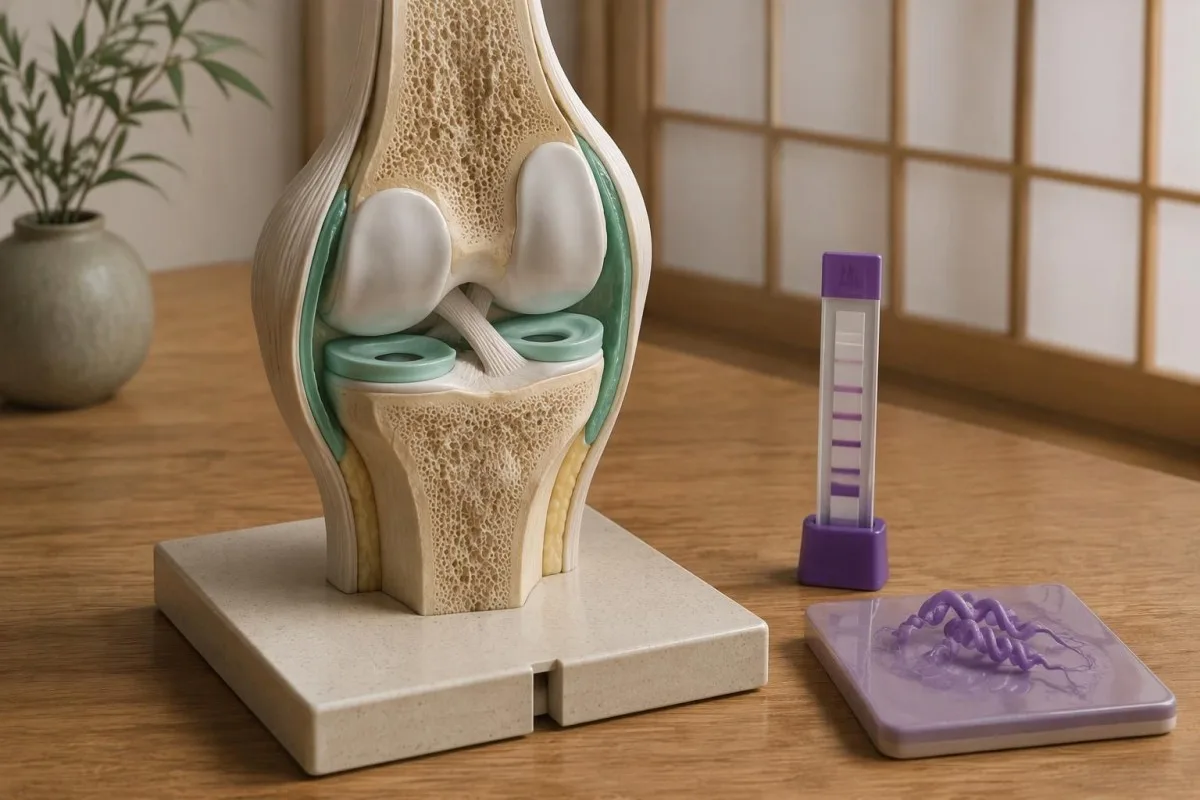
El 2020 IDSA/AAN/ACR guideline describes persistence of both IgM and IgG responses after infection, which complicates interpretation in previously affected patients (Lantos et al., 2021). A positive result obtained 4 years after treatment must therefore be compared with the clinical history, not interpreted as a laboratory photograph of living bacteria in the body.
Reinfection can occur because previous Lyme disease does not provide reliable lifelong protection, but an old positive antibody result cannot prove a new episode. For a hypothetical person with positive IgG from 2019 and a new expanding rash after recent tick exposure, the new clinical findings matter more than whether a sixth band appears; patrons d'anticossos de CMV familiars illustrate why exposure history and current illness are separate questions.
Persistent fatigue, pain or cognitive symptoms deserve evaluation even when no new laboratory evidence appears. The guideline recommends against additional antibiotics for persistent nonspecific symptoms after recommended treatment when there is no objective evidence of reinfection or treatment failure; 1 positive antibody panel cannot identify the cause of those symptoms or justify an open-ended antibiotic course.
Què significa la IgG en casos sospitosos d’artritis de Lyme o de malaltia neurològica
Lyme arthritis usually produces a strong IgG response, so isolated IgM is poor evidence for that diagnosis. Conventional two-tier serology has approximately 95–100% sensitivity in Lyme arthritis, according to the 2020 IDSA/AAN/ACR guideline; a negative appropriate IgG result should prompt serious consideration of other causes of joint swelling.
A hypothetical patient with a markedly swollen knee and only 2 IgM bands after 3 months of symptoms does not have the expected serologic pattern for Lyme arthritis. The clinician should reassess alternative causes and assay reliability rather than call this late Lyme based on IgM alone; when indicated, joint fluid examination answers additional questions that the antibody test cannot.
Suspected central nervous system Lyme disease requires clinical assessment and, when cerebrospinal fluid testing is undertaken, simultaneous CSF and serum for a validated antibody index. Testing CSF antibody alone or running a standalone CSF immunoblot is not the preferred approach; 1 elevated index may also persist after treatment, so it must be interpreted alongside the neurological findings and CSF cell response.
Numb feet or tingling do not become Lyme-specific because 41 kDa is reactive; neuropathy has metabolic, mechanical and immune causes. Our anti-MAG neuropathy guide explains one targeted alternative, while immunoglobulin panel interpretation clarifies that total serum IgG is different from the 5-of-10 Lyme-specific IgG immunoblot criterion.
Per què els laboratoris i els països poden fer servir criteris diferents per a la malaltia de Lyme
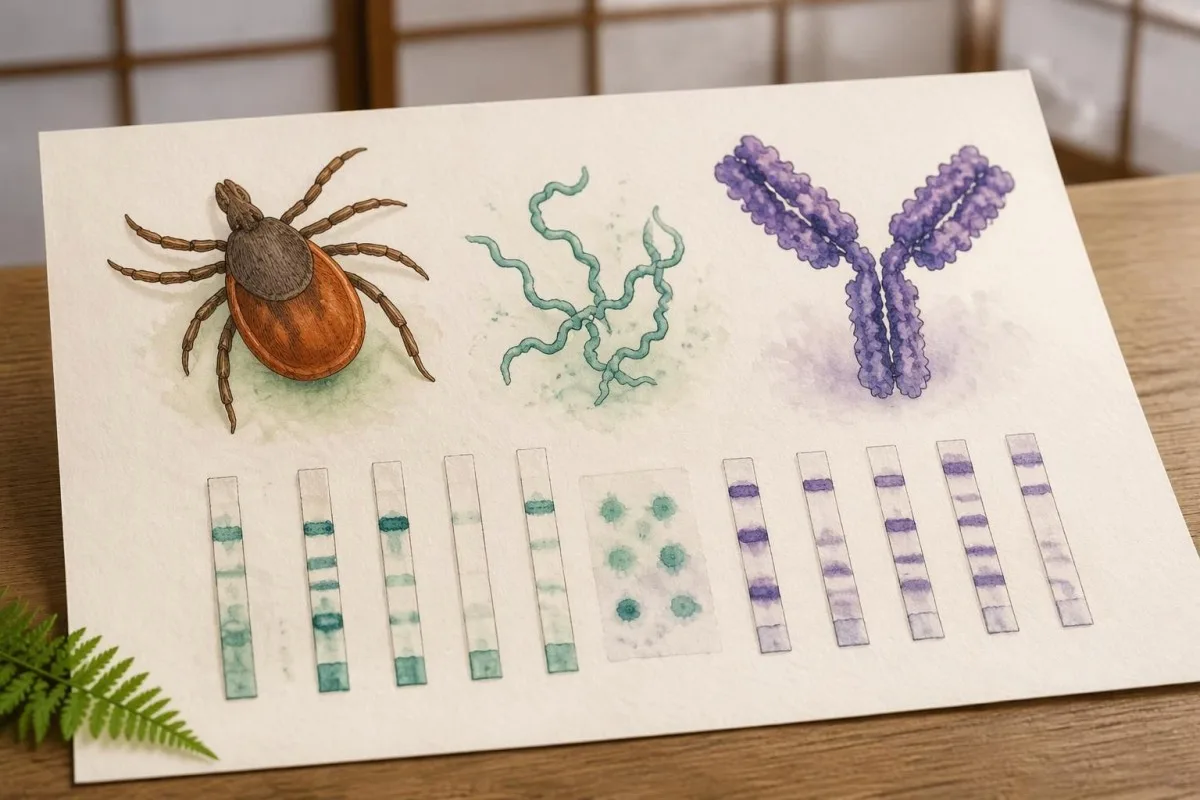
Lyme immunoblot criteria are assay- and region-dependent, so conventional US 5-of-10 IgG counting rules should not automatically be imposed on every European report. European assays may use different Borrelia antigens and recombinant line blots because the species causing human Lyme borreliosis differ across regions.
B. burgdorferi sensu stricto predominates in North America, while European disease also commonly involves B. afzelii and B. garinii. A report using VlsE, OspC or other recombinant antigen labels may therefore not resemble a 10-position conventional US blot; the clinically useful question is whether the assay was validated for the exposure setting and interpreted according to its instructions.
Different laboratory criteria are not automatically inferior, but claims that 1 or 2 bands prove disease require evidence for that assay's complete diagnostic performance. When reading a report described by Kantesti, consult the laboratory's interpretation and our marc de validació mèdica separately; general AI assessment or a software benchmark is not proof that a particular Lyme assay has validated sensitivity and specificity.
Record 3 details before comparing reports from different laboratories: assay manufacturer, algorithm type and the country where exposure occurred. Our guia de verificació de fonts d'informes d'IA explains why preserving source wording matters; apparent conversion from negative to positive may reflect a changed method or cutoff rather than a newly acquired infection or worsening illness.
Les bandes de Lyme permeten identificar Babesia, Anaplasma o altres coinfeccions?
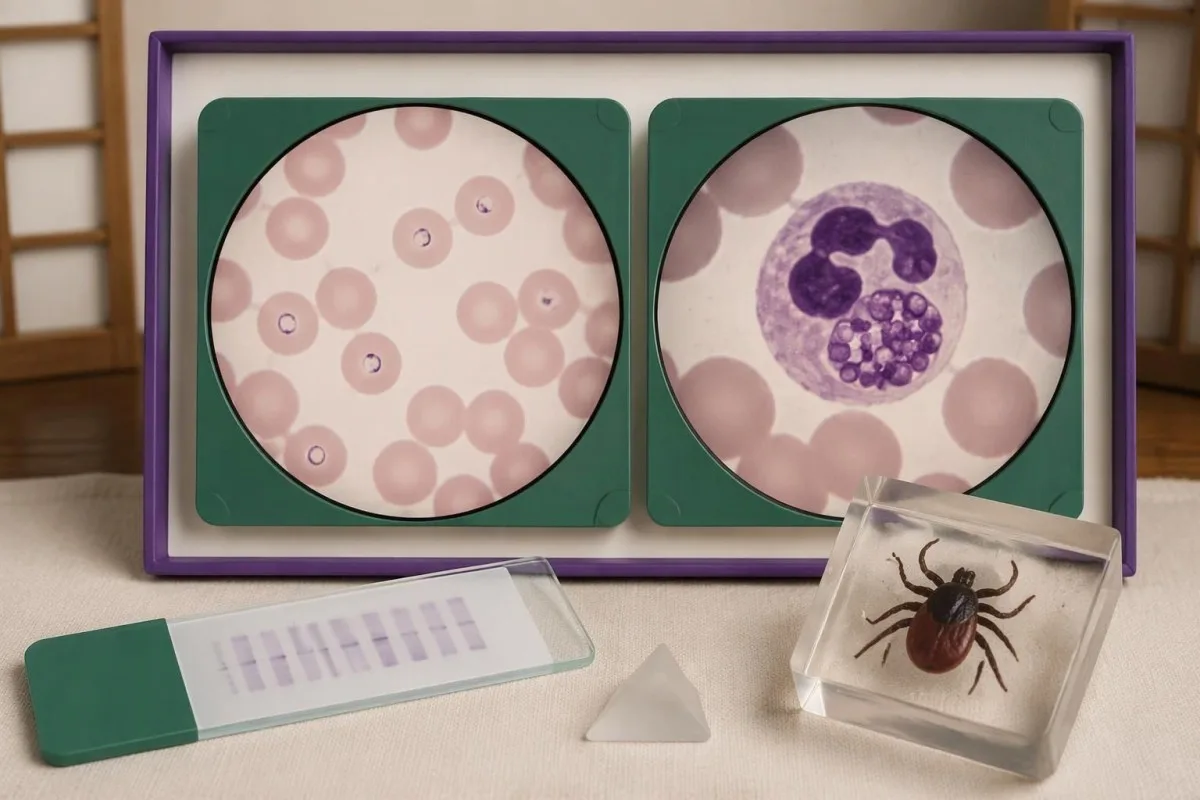
Lyme Western blot bands do not diagnose tick-borne coinfections. Babesia, Anaplasma and Ehrlichia require their own clinical assessment and tests; 1 positive Lyme antibody result neither confirms nor excludes these infections, even when an exposure setting allows more than one tick-borne organism to be transmitted.

Babesiosi deserves consideration when relevant exposure accompanies fever and evidence such as anemia, low platelets or hemolysis, especially if fever persists during Lyme-directed treatment. A Babesia antibody titer of 1:256 alone does not establish current infection; our Babesia test interpretation guide explains why a cellular sample examination or PCR may be needed to demonstrate active infection.
Anaplasmosi can produce fever, leukopenia, thrombocytopenia and elevated liver enzymes, findings that should not be explained away as extra Lyme bands. PCR is most useful during the first week of illness and becomes less sensitive after appropriate antibiotics; our Anaplasma sample timing guide separates this early direct-detection window from later antibody interpretation.
Ehrlichiosis follows a different organism-specific testing pathway, and a negative early antibody result is not a safe reason to dismiss significant febrile illness. Our Ehrlichia PCR and titer guide explains why 2 samples collected at different times may help establish seroconversion; targeted testing should follow symptoms, geography and laboratory abnormalities rather than an indiscriminate panel ordered for isolated fatigue.
Què heu de fer si l’informe de la prova de Lyme no és clar?
For an unclear Lyme report, obtain the complete 2-tier interpretation, write down symptom onset and discuss exposure plus objective findings with a clinician. Faint or isolated bands do not determine urgency; fainting, chest pain, breathlessness, a markedly slow pulse or new neurological deficits require prompt assessment regardless of the antibody result.
Lyme carditis can cause heart conduction block, so fainting or palpitations after compatible exposure should not wait for an immunoblot to become positive. The 2020 IDSA/AAN/ACR guideline identifies a PR interval greater than 300 milliseconds, other arrhythmias or features of myopericarditis as reasons for hospital admission with monitoring; that interval is measured on an ECG, not inferred from band intensity.
New facial weakness warrants urgent assessment, and sudden facial droop with arm weakness or speech difficulty needs emergency evaluation for stroke rather than attribution to Lyme. Our guia sobre els signes d’alarma de l’ictus explains that distinction; for a routine appointment, bring 4 dates—possible exposure, first symptom, sample collection and antibiotic initiation—because each changes a different part of the reasoning.
Kantesti és una Eina d’anàlisi d’analítica de sang impulsada per IA that can help organize the 2-tier result, reported bands and missing clinical context into questions for your appointment. Our guia de tecnologia d’IA describes the explanation workflow, but our AI cannot examine a rash, measure an ECG interval, confirm Lyme disease independently or decide whether you should start, stop or extend antibiotics.
Publicacions de recerca, límits de l’evidència i interpretació segura
The clinical interpretation in this article rests on 3 directly relevant sources: a laboratory-diagnosis review, the CDC's modified two-tier recommendation and the IDSA/AAN/ACR Lyme guideline. The 2 additional Figshare publications listed below concern other health topics and must not be treated as validation of Lyme band interpretation or Lyme diagnosis.
Moore et al. (2016) explains why individual bands and incomplete testing sequences create diagnostic errors; Mead et al. (2019) establishes the CDC recommendation for appropriately cleared modified algorithms. Lantos et al. (2021), publishing the 2020 guideline, connects testing to clinical manifestations, including early rash, arthritis and neurological disease; these sources support different parts of the reasoning rather than one universal band shortcut.
The 2 Figshare records address women's hormonal health and multilingual AI-assisted hantavirus triage, respectively, not Lyme immunoblot performance. A deployment involving 50,000 interpreted reports, as described in the hantavirus publication's title, cannot establish sensitivity, specificity or patient benefit for Lyme diagnosis; those claims would require Lyme-specific methods, reference standards and evaluation populations.
Els materials de Kantesti principis d'IA responsable place report explanation alongside—not above—the laboratory and clinician, including when IgM appears after 30 days of symptoms. For symptoms linked to cycle changes or menopausal transition, our hormonal symptom guide addresses a separate assessment pathway; symptom overlap is a reason to investigate carefully, not evidence that a reactive Lyme band explains everything.
Preguntes freqüents
Una sola banda positiva a la prova de Western blot per a la malaltia de Lyme pot significar que tinc la malaltia de Lyme?
Una sola banda reactiva en la immunotransferència Western per a la malaltia de Lyme no n’estableix el diagnòstic. Els criteris convencionals dels Estats Units exigeixen almenys 2 de les 3 bandes IgM designades durant els primers 30 dies de símptomes, o 5 de les 10 bandes IgG designades, dins del protocol adequat de proves en dos nivells. Una sola banda pot reflectir una reactivitat creuada o una resposta d’anticossos inicial incompleta, segons la situació. Una erupció típica d’eritema migratori després d’una exposició adequada encara pot donar suport a un diagnòstic clínic, malgrat una serologia inicial negativa.
Per què algunes bandes de Lyme són positives però la prova global és negativa?
Una prova de Lyme pot contenir bandes reactives i, tot i així, ser negativa perquè l’immunoblot no compleix el patró validat que exigeix el seu algorisme de proves. Per exemple, 3 bandes IgG que compleixen els criteris no arriben al llindar convencional de 5 de 10 bandes IgG. En les proves estàndard de dues etapes, un cribratge inicial positiu o indeterminat seguit d’immunoblots adequats negatius s’interpreta com a negatiu. Si els símptomes són molt recents, un professional clínic pot considerar repetir les proves al cap d’un interval adequat, en lloc de reclassificar com a positiu el patró incomplet.
Què significa una banda de Lyme positiva de 41 kDa?
La banda de 41 kDa de la malaltia de Lyme sol reflectir la unió d’anticossos a la flagel·lina, una proteïna bacteriana relacionada amb la mobilitat que pot reaccionar de manera creuada amb anticossos no relacionats amb la malaltia de Lyme. És només 1 de les bandes designades que s’utilitzen en els criteris convencionals d’immunotransferència i, per si sola, no permet diagnosticar la malaltia de Lyme. Moore et al. (2016) van citar un estudi que va detectar aquesta banda en 43% dels controls sans, tot i que aquest percentatge no és una taxa universal per a totes les proves. La seqüència completa de proves i la presentació clínica determinen si el resultat dona suport al diagnòstic de la malaltia de Lyme.
Un resultat positiu d'IgM i negatiu d'IgG per a la malaltia de Lyme és una prova d'una infecció recent?
La positivitat d’IgM per a la malaltia de Lyme amb IgG negativa pot donar suport a una infecció precoç només quan s’ajusta a l’algoritme de proves, la presentació clínica i el moment adequats. No s’ha d’utilitzar una IgM aïllada per donar suport al diagnòstic de la malaltia de Lyme quan els símptomes duren més de 30 dies, perquè una IgM persistent o inespecífica pot induir a error en la interpretació. Per exemple, 2 bandes d’IgM que compleixen els criteris el dia 14 tenen un significat diferent del mateix patró després de 3 mesos de símptomes continus. La regla temporal es refereix a l’inici dels símptomes, no al dia en què es va recollir la mostra de laboratori.
Puc donar positiu en la prova de la malaltia de Lyme sense cap banda a la immunotransferència Western?
Sí: un algorisme de Lyme modificat i validat de dos nivells utilitza 2 immunoassaigs enzimàtics seqüencials i pot no incloure cap immunotransferència Western. El CDC va recomanar el 2019 algorismes modificats autoritzats adequadament per la FDA. Algunes combinacions d’assajos mesuren els anticossos totals, mentre que d’altres proporcionen resultats separats d’IgM i IgG, de manera que les regles convencionals de recompte de bandes no s’apliquen a tots els informes. Pregunteu al laboratori quin algorisme i quina combinació d’assajos han produït la interpretació final.
Les bandes de la immunotransferència de Lyme haurien de desaparèixer després dels antibiòtics?
Les bandes del Western blot de Lyme no han de desaparèixer després d’un tractament reeixit, perquè els anticossos poden persistir durant anys o dècades. Un patró persistent d’IgG amb 5 bandes no demostra que la infecció continuï activa, i repetir les proves de les bandes no és un mètode validat per confirmar la curació. La resposta al tractament s’avalua tenint en compte l’evolució clínica i les troballes objectives pertinents, no exigint que un panell d’anticossos es torni negatiu. Els símptomes nous o una altra exposició a paparres requereixen una nova avaluació clínica, perquè els anticossos antics no permeten establir que hi hagi una reinfecció.
Fes que t’expliquin els resultats anàlisi de sang
Puja l’informe del laboratori i la IA de Kantesti t’explicarà cada biomarcador en llenguatge planer en qüestió de segons. Més de 2 milions de persones d’arreu del món ja l’han utilitzat.
Referències
- Klein, T., Mitchell, S., & Weber, H. (2026). Guia de salut de les dones: ovulació, menopausa i símptomes hormonals. Recerca mèdica amb IA de Kantesti. DOI
- Klein, T., Mitchell, S., & Weber, H. (2026). Suport multilingüe a la presa de decisions clíniques amb IA per al triatge precoç de l’hantavirus: disseny, validació tècnica i desplegament en condicions reals a partir de 50.000 informes d’anàlisis de sang interpretats. Recerca mèdica amb IA de Kantesti. DOI
- Moore A et al. (2016). Current Guidelines, Common Clinical Pitfalls, and Future Directions for Laboratory Diagnosis of Lyme Disease, United States. Emerging Infectious Diseases. DOI PubMed
- Mead P et al. (2019). Updated CDC Recommendation for Serologic Diagnosis of Lyme Disease. Informe setmanal de morbiditat i mortalitat del MMWR. DOI
- Lantos PM et al. (2021). Clinical Practice Guidelines by the Infectious Diseases Society of America (IDSA), American Academy of Neurology (AAN), and American College of Rheumatology (ACR): 2020 Guidelines for the Prevention, Diagnosis and Treatment of Lyme Disease. Clinical Infectious Diseases. DOI
- Més de 2 milionsProves analitzades
- 127+Països
- 100+Idiomes
Sobre l’equip mèdic


Senyals de confiança E-E-A-T
Experiència
Revisió clínica liderada per metges dels fluxos de treball d’interpretació de laboratori.
Experiència
Enfocament en medicina de laboratori sobre com es comporten els biomarcadors en context clínic.
Autoritat
Revisat mèdicament pel Dr. Thomas Klein, amb aportacions de la Dra. Sarah Mitchell i el Prof. Dr. Hans Weber.
Fiabilitat
Interpretació basada en l’evidència amb vies de seguiment clares per reduir l’alarma.






Exempció de responsabilitat mèdica
Aquest article és només per a finalitats educatives i no constitueix assessorament mèdic. Consulteu sempre un professional sanitari qualificat per a decisions de diagnòstic i tractament.
Publicat · Contacteu amb l’equip editorial
Publicat per Kantesti Ltd, registrat a Anglaterra i Gal·les, número de societat. 17090423, Londres, Regne Unit.
