
فعاله بډ د انټيباډي تړل ښيي—نه تشخیص. د معاینې بشپړ الګوریتم، د تماس مخینه او د نښو مهالوېش ټاکي چې ایا دا موندنه د لایم ناروغۍ ملاتړ کوي.

مهم ټکي
- انفرادي بډونه د لایم ناروغي نه ثابتوي؛ ان یوه نسبتاً ځانګړې بډ هم د تایید شوي دوهپړاویز معاینې الګوریتم په چوکاټ کې تفسیر ته اړتیا لري.
- د IgM دودیز معیارونه لږ تر لږه له ۳ ټاکل شویو بډونو څخه ۲ ته اړتیا لري: نږدې 23–25، 39 او 41 kDa.
- د IgG دودیز معیارونه لږ تر لږه له ۱۰ ټاکل شویو بډونو څخه ۵ ته اړتیا لري: 18، 23، 28، 30، 39، 41، 45، 58، 66 او 93 kDa.
- د ۳۰ ورځو قاعده معنا یې دا ده چې که نښې له ۳۰ ورځو ډېرې دوام کړې وي، یوازې IgM باید د لایم د تشخیص ملاتړ ونه کړي.
- په ټوله کې منفي پایله کېدای شي له غبرګوني بانډونو سره یوځای شتون ولري، ځکه لابراتوار یوه تایید شوې بڼه ارزوي، نه دا چې وګوري کوم بانډ څرګندېږي که نه.
- تعدیل شوې دوهپوړیزه ازموینه د معافیتي بلټ پر ځای ۲ پرلهپسې انزایمي معافیتي ارزونې کاروي؛ ښايي د بانډونو لړلیک ونه لري.
- Early testing ښايي د انټيباډیو تر جوړېدو مخکې منفي وي؛ د مناسب تماس په شرایطو کې د اریتما مهاجرانز عادي دانې په کلینیکي توګه تشخیصېږي.
- دوامداره انټيباډۍ تر درملنې وروسته کلونه د موندلو وړ پاتې کېدای شي او نه روان عفونت ثابتولای شي او نه د رغېدو کچه معلومولای شي.
د لایم په Western blot کې مثبته بډ په رښتیا څه معنا لري؟
A د لایم د ناروغۍ د وېسټرن بلټ مثبت بانډ معنا یې دا ده چې انټيباډیو د ازموینې له یوه انټيجن سره تړلې دي؛ دا په یوازې ځان د لایم ناروغي نه ثابتوي. د امریکا په دودیزو دوهپوړیزو ازموینو کې، د نښو په لومړیو ۳۰ ورځو کې IgM د ۳ ټاکل شویو بانډونو له ډلې د ۲ شتون غواړي، حال دا چې IgG د ۱۰ له ډلې ۵ غواړي؛ تعدیل شوې ازموینه پر ځای یې ۲ معافیتي ارزونې کاروي.

د عمومي پایله د لومړۍپوړیزې سکریننګ ارزونې پایله له مناسبې دویمېپوړیزې پایلې سره یوځای کوي، نه دا چې هره ښکاره کرښه جلا تشخیص وګڼي. له همدې امله، په راپور کې د ۱ غبرګوني بانډ ښودل په سمه توګه منفي پایله بلل کېدای شي؛ او ان د انټيباډیو مثبته بشپړه پایله هم باید د تماس، مناسبو موندنو او د لایم د پخوانۍ ناروغۍ په پام کې نیولو سره وارزول شي.
د بانډ پېژندنه یوې محدودې پوښتنې ته ځواب ورکوي: د دې ازموینې په شرایطو کې کوم انټيجن د انټيباډیو تړل ځانته راجلب کړي؟ دا هغو ۳ پوښتنو ته ځواب نه وايي چې ناروغان یې عموماً په اړه اندېښمن وي—ایا عفونت همدا اوس شته، ایا د دوی نښې همدا عفونت تشریح کوي، او ایا انټيبیوټیکونو ته اړتیا ده؛ زموږ لارښود مثبت انټي باډي پایلې دا موضوعات سره بېلوي.
کانټیسټي یو دی د AI د وینې معاینې شنونکی دا ښايي په دې پوهېدو کې مرسته وکړي چې ولې د لایم راپور غبرګوني بانډونه ښيي، خو د دوهپوړیزې ازموینې تفسیر یې منفي وي. موږ د لابراتوار وروستی تفسیر، د ازموینې طریقه او د نښو موده اړین شالید ګڼو—نه داسې جزئیات چې د پورته شوی راپور د روښانه شویو کرښو په شمېرلو سره تر پښو لاندې شي.
دودیزه دوهپړاویزه د لایم معاینه پایله څنګه ټاکي
معیاري دوهپوړیزه ازموینه په انزایمي معافیتي ارزونه، یا کله ناکله په فلوروسېنس معافیتي ارزونه پیلېږي، او که لومړۍ ازموینه مثبته یا نامعلومه وي، معافیتي بلټ ته دوام مومي. دا ۲ پړاوونه په ګډه کار کوي؛ یوازې د سکریننګ مثبته پایله د لایم د ناروغۍ د سیرولوژۍ تایید شوې مثبته پایله نه ده.

A د لومړۍپوړیزې ازموینې مثبته یا نامعلومه پایله چې ورپسې مناسب معافیتي بلټونه منفي وي د معیاري الگوریتم له مخې منفي ګڼل کېږي. لومړنۍ سکریننګ ازموینه په قصدي توګه ډېر احتمالي ځوابونه نیسي، په داسې حال کې چې دویم پوړ غیرځانګړی غبرګون فلټر کوي؛ مور او نورو په ۲۰۱۶ کال کې په Emerging Infectious Diseases کې دا توازن او د تفسیر عامې تېروتنې تشریح کړې.
په یوه سکریننګ ازموینه کې د ۱.۴ شاخص له بلې ازموینې سره د ۱.۴ شاخص د بدیل په توګه نه شي کارېدلی، ځکه د انټيجنونو جوړښت او د جوړوونکي ټاکلي حدونه توپیر لري. همدارنګه، د سکریننګ نامعلومه پایله دا لارښوونه ده چې الگوریتم بشپړ کړئ—نه دا چې تشخیص د عفونت او نهعفونت ترمنځ نیمګړی وي؛ کیفی په پرتله کمي پایلې تشریح کوي چې د راپور بڼې ولې مهمې دي.
د منفي سکریننګ له پایلې وروسته، د بیا ارزونې لپاره د وخت یا د ازموینې د مناسبوالي په اړه د کلینیکي دلیل له نشتوالي سره معافیتي بلټ غوښتل، هغه لړۍ له پامه غورځوي چې د هغې د فعالیت ارزونه پرې شوې وه. د ۳ معلوماتو غوښتنه وکړئ: د سکریننګ پایله، د دویمپوړیزې ازموینې تفسیر، او دا چې ایا دواړه د یوې تایید شوې ازموینې لارې پورې اړه لري؛ نیمګړی راپور باید یوازې د بانډونو له مخې بیا جوړ نه شي.
د لایم Western blot بډونه تشریح شوي: د IgM او IgG معیارونه
د امریکا د دودیزو معیارونو له مخې، یو د IgM مثبت معافیتي بلټ لږ تر لږه د 23–25، 39 او 41 kDa بانډونو له ډلې ۲ ته اړتیا لري. یو د IgG مثبت معافیتي بلټ requires at least 5 of the 18, 23, 28, 30, 39, 41, 45, 58, 66 and 93 kDa bands.
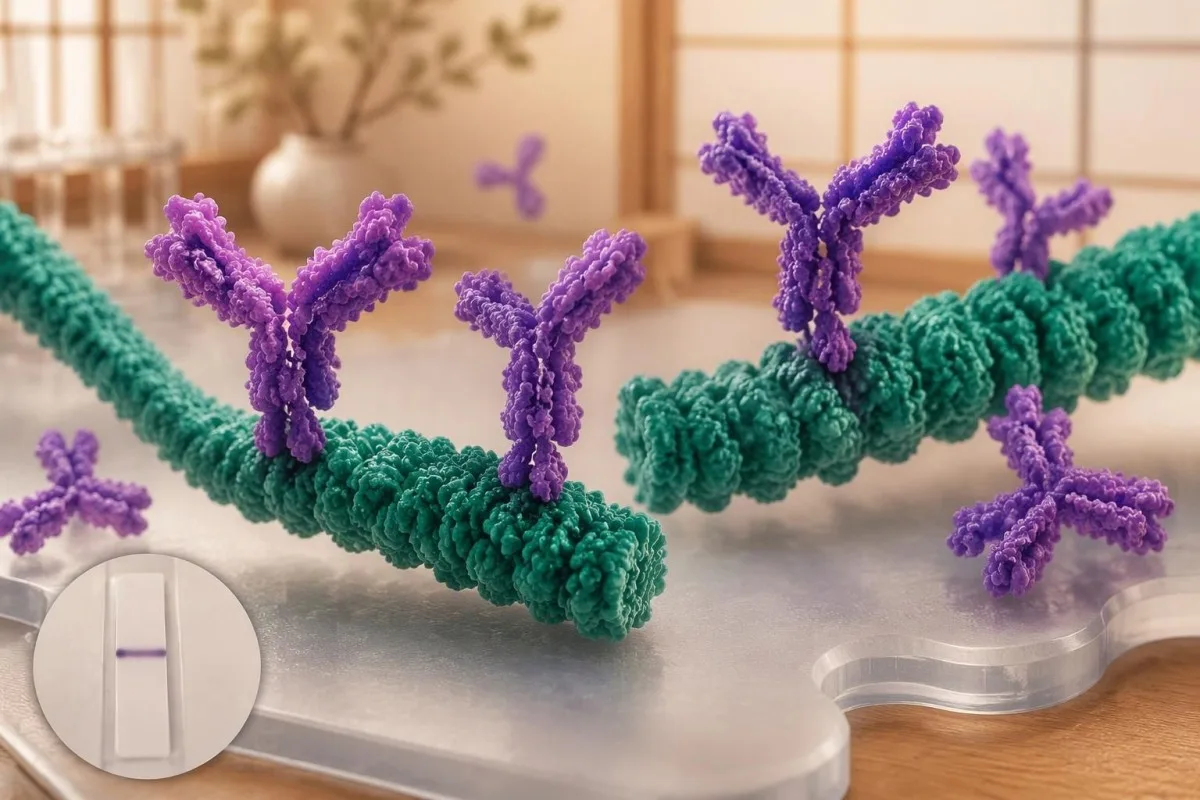
Kilodaltons, abbreviated kDa, describe approximate protein molecular mass, not antibody concentration or disease severity. The approximately 23–25 kDa band commonly represents outer surface protein C, 39 kDa represents BmpA and 41 kDa represents flagellin; the numbers identify antigen regions, so a higher-numbered band does not mean a more advanced infection.
The IgG list's 58 kDa criterion excludes GroEL, and reports may use assay-specific names or approximate mass conventions rather than identical labels. Because not every commercial strip uses the same antigen preparation, our د وینې ازموینې نښه لارښود should complement—not replace—the actual laboratory legend and the assay manufacturer's interpretation instructions.
Bands at 31 and 34 kDa are not part of the conventional CDC IgG counting criteria, even though they may appear on some reports. Their absence from that list does not make them meaningless biologically, but adding them to manufacture a 5-band positive result changes the validated rule; neither band darkness nor extra bands quantify bacterial burden.
ولې بډ 41 او نورې فعالې بډونه ناسمې نښې کېدای شي
د 41 kDa band reacts with flagellin, a protein associated with bacterial movement, and can cross-react with antibodies unrelated to Lyme disease. A single reactive 41 kDa band is therefore insufficient to diagnose Lyme disease, even when a patient has fatigue, aching or a remembered tick bite.
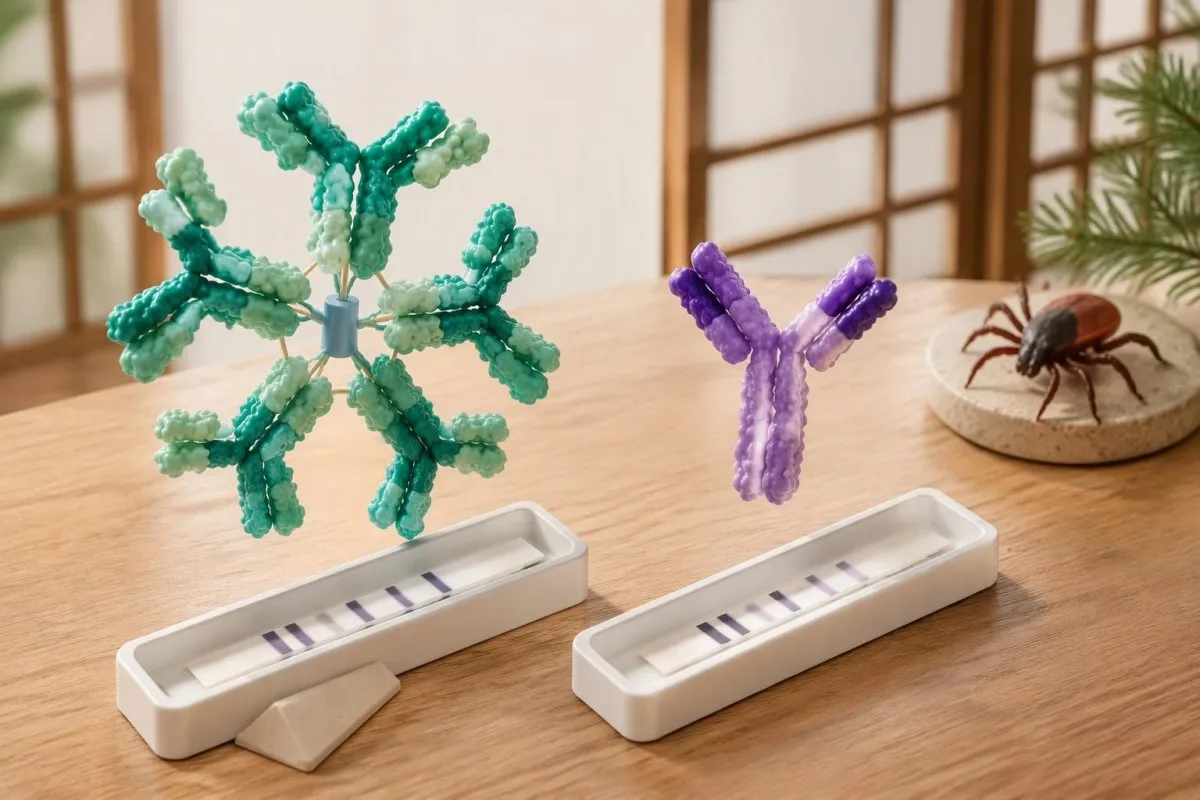
Moore et al. (2016) cited a study in which 41 kDa reactivity occurred in 43% of healthy controls, illustrating why this band cannot stand alone. That percentage is not a universal false-positive rate for every modern assay; it is evidence that recognizable antigen binding can occur in people without the clinical condition being investigated.
Epstein–Barr virus, syphilis, relapsing-fever Borrelia and some autoimmune conditions can contribute to false-positive Lyme serology, although the mechanism and affected assay vary. A recent mononucleosis-like illness should prompt attention to the complete EBV antibody pattern, not the assumption that 1 Lyme band proves a simultaneous tick-borne infection.
Cross-reactivity is not a reason to order every alternative antibody panel: 1 unexplained band usually does not justify broad autoimmune screening. When examination findings genuinely suggest an immune disorder, د معافیتي ازموینو یوه بله کټګوري څېړي. د تکمیلي سیستم غلظتونه او د ANA ټایټرونه د belongs to a separate clinical question; repeated low-probability testing can generate additional misleading positives rather than a clearer answer.
د لایم IgM د IgG پر وړاندې: ولې د ۳۰ ورځو د نښو قاعده مهمه ده
Lyme IgM should not be used to support a diagnosis when symptoms have lasted more than 30 days. IgM is most useful early, whereas an appropriate IgG response carries greater diagnostic weight later; the clock starts with symptoms of the suspected illness, not the testing date or remembered tick removal.
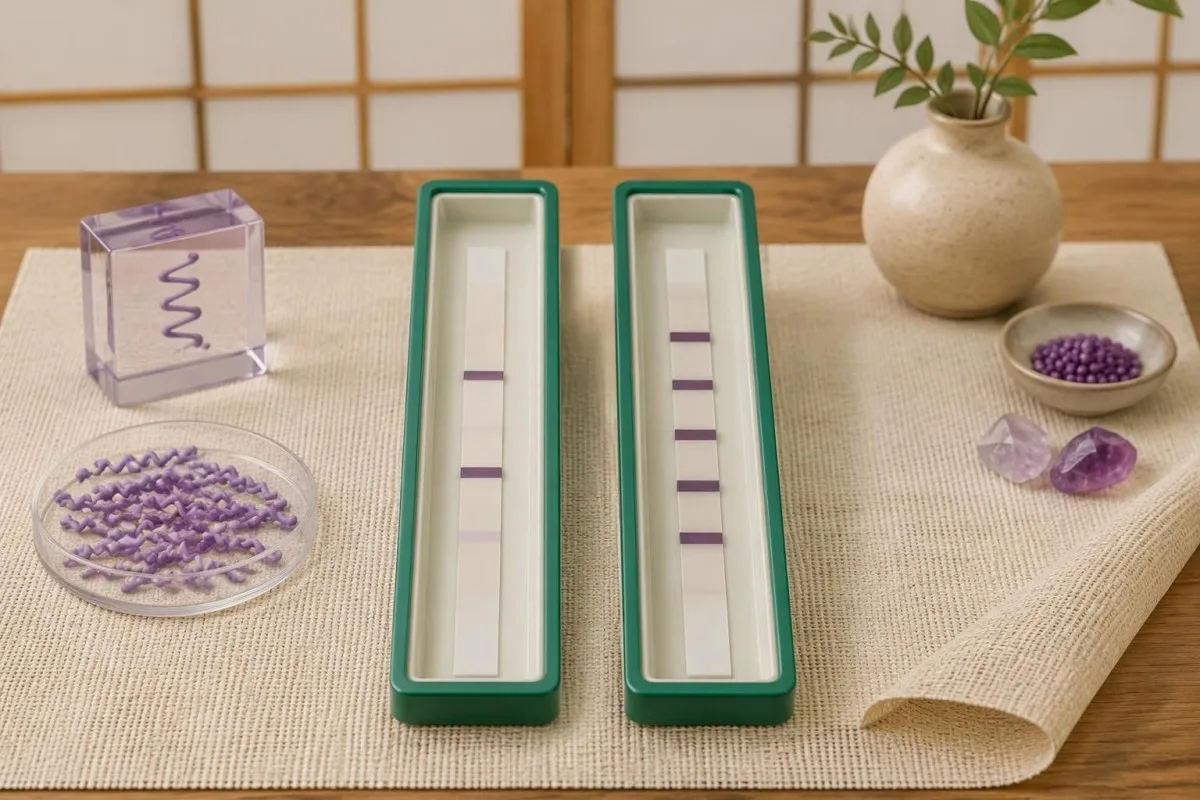
د 30-day restriction reduces misclassification from persistent or nonspecific IgM responses when later disease should usually have an established IgG response. It is an interpretation rule, not a biological switch that flips overnight: antibody maturation varies, and early treatment may alter seroconversion, but those exceptions do not make isolated late IgM reliable evidence.
For a hypothetical patient tested on day 75 of continuous symptoms, IgM bands 23 and 41 with negative IgG should not be used as proof of Lyme disease. By contrast, the same IgM pattern on day 12, following a reactive first-tier assay and compatible exposure, can support an early diagnosis; the numerical band count is identical, but its evidential value changes.
A positive IgM result does not automatically mean a new infection, a misconception also addressed in our Mycoplasma IgM interpretation guide. If symptoms began 8 weeks ago but one symptom appeared yesterday, clinicians need to decide whether this is a genuinely new illness or another feature of the original episode—not simply restart the IgM clock.
د لایم مثبتې بډونه خو په ټوله کې منفي: عملي بېلګې
Positive Lyme bands but negative overall usually means the report did not meet the required pattern within the testing algorithm. For example, 3 designated IgG bands are below the conventional 5-of-10 threshold; that result is negative, not a smaller positive, and it does not measure how much infection is present.
Consider a clearly hypothetical 42-year-old with 10 weeks of fatigue, a reactive screening assay and IgG bands 18, 41 and 58. The IgG immunoblot is negative because only 3 qualifying bands are present; if the examination lacks objective Lyme findings, the next step is a symptom-focused assessment rather than antibiotics prescribed to treat the band's molecular masses.
A second hypothetical patient has a reactive screen, IgM bands 23 and 39, and compatible symptoms beginning 14 days earlier. This can meet the traditional early serologic criteria, but an atypical exposure history or a stronger alternative diagnosis still affects the clinical conclusion; Kantesti AI can explain the 2-of-3 rule without converting it into an independent diagnosis.
A third report lists 5 IgG bands but provides no first-tier result; the missing screening stage prevents straightforward confirmation of a standard 2-tier outcome. Confirmation requirements are assay-specific, as our HSV IgG confirmation guide also illustrates, so request the complete laboratory report rather than borrowing a cutoff or confirmation rule from another infection.
بدله شوې دوهپړاویزه معاینه له Western blot سره څه توپیر لري
Modified two-tier testing, or MTTT, uses 2 sequential enzyme immunoassays instead of an enzyme immunoassay followed by an immunoblot. A report from this pathway may have no bands at all; its overall interpretation depends on the particular assay combination and its cleared instructions, not the conventional immunoblot band-count criteria.

د 2019 CDC recommendation accepted modified algorithms using FDA-cleared assays for that purpose, following clearance of relevant test combinations (Mead et al., 2019). The change was not permission to combine any 2 tests: the evaluated pairing matters, and some combinations improve early sensitivity while preserving high specificity compared with standard two-tier testing.
Some modified algorithms measure total antibodies, while others report separate IgM and IgG components; consequently, the familiar 30-day IgM restriction cannot be mechanically applied to a total-antibody result. Kantesti is an AI د وینې ازموینې تشریح پلیټفارم that can help distinguish a 2-immunoassay report from an immunoblot report before discussing what its positive or negative designation means.
A second immunoassay is not simply a repeat of the same screening test, and an immunoblot is not routinely needed after a completed validated MTTT result. Our د چاګاس د تایید لارښود illustrates the broader principle of complementary assays, but its 2-test rules are different; ask your laboratory which Lyme algorithm produced the final interpretation.
ایا د لایم معاینه د انتان له شتون سره سره په لومړیو کې منفي کېدای شي؟
Lyme antibody testing can be negative early because antibodies have not yet reached detectable levels. A typical erythema migrans rash with an appropriate exposure history is diagnosed clinically rather than by waiting for a positive immunoblot; a negative result during the first 1–2 weeks does not safely exclude that presentation.
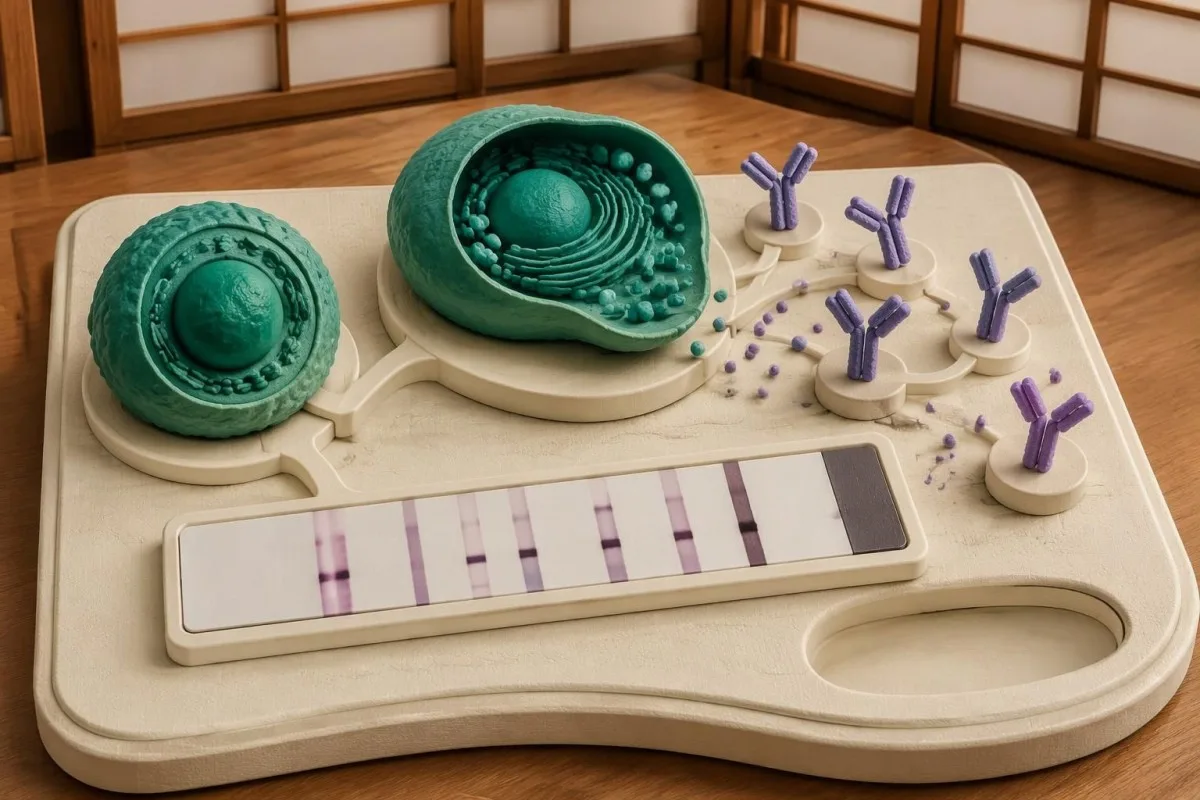
Across early-infection settings, conventional 2-tier sensitivity has been reported at approximately 30–40%, while specificity remains high when testing and interpretation are appropriate (Moore et al., 2016). These are population estimates, not a personal probability: sensitivity changes with the clinical manifestation, time since onset and whether the patient has already received antibiotics.
For a rash suggestive of but not typical for erythema migrans, the 2020 IDSA/AAN/ACR guideline supports acute serology and, if initially negative, a convalescent sample at least 2–3 weeks later (Lantos et al., 2021). The same guideline recommends clinical diagnosis for a typical lesion; a rash need not have textbook concentric rings to warrant assessment.
Repeating a test 24 hours later usually offers little advantage when the limitation is antibody development rather than a processing error. Our spotted fever testing guide explains a related timing problem, but suspected spotted fever has its own urgent treatment rules; do not delay care for an expanding rash or significant illness while waiting for more bands.
ایا د لایم مثبت IgG د فعال انتان یا د درملنې د ناکامۍ معنا لري؟
Positive Lyme IgG cannot distinguish active infection from a previous infection that has resolved. Lyme antibodies can remain detectable for years or decades, and repeat immunoblot testing is not a test of cure; neither a persistent 5-band pattern nor changes in band intensity establish that treatment failed.
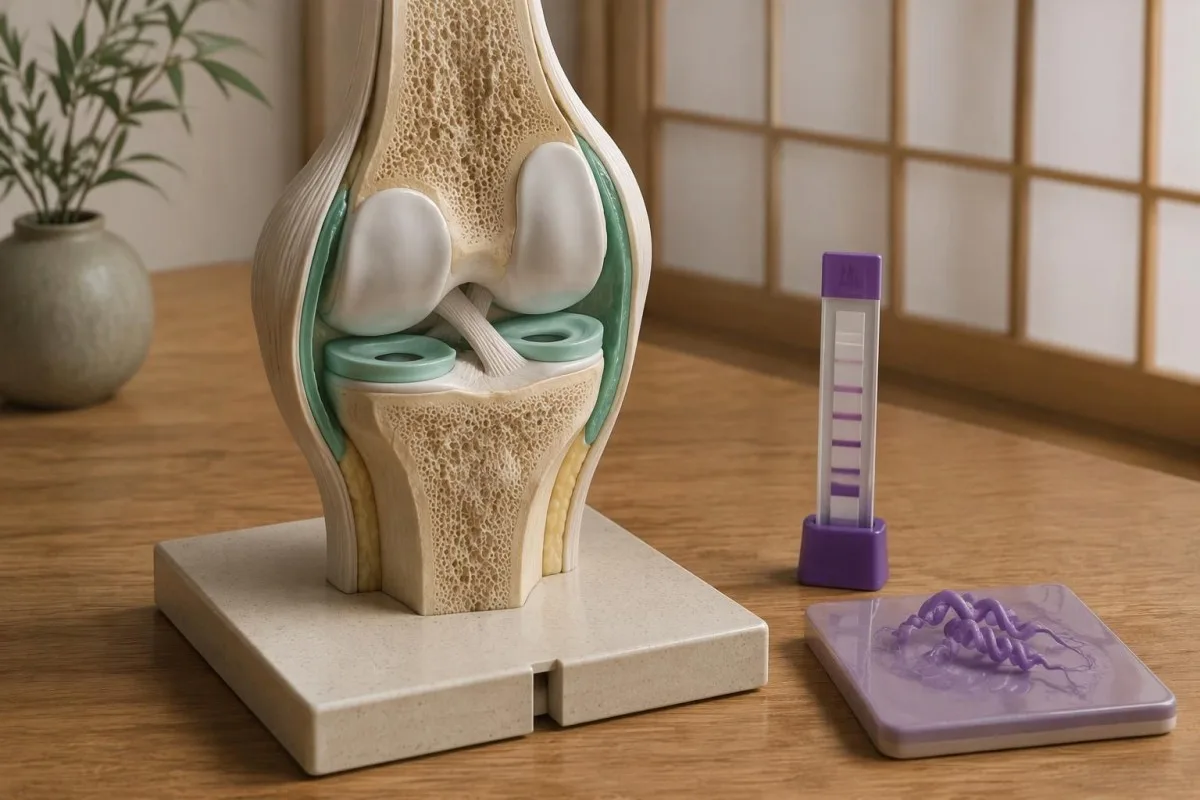
د 2020 IDSA/AAN/ACR guideline describes persistence of both IgM and IgG responses after infection, which complicates interpretation in previously affected patients (Lantos et al., 2021). A positive result obtained 4 years after treatment must therefore be compared with the clinical history, not interpreted as a laboratory photograph of living bacteria in the body.
Reinfection can occur because previous Lyme disease does not provide reliable lifelong protection, but an old positive antibody result cannot prove a new episode. For a hypothetical person with positive IgG from 2019 and a new expanding rash after recent tick exposure, the new clinical findings matter more than whether a sixth band appears; CMV انټي باډي نمونو برخلاف illustrate why exposure history and current illness are separate questions.
Persistent fatigue, pain or cognitive symptoms deserve evaluation even when no new laboratory evidence appears. The guideline recommends against additional antibiotics for persistent nonspecific symptoms after recommended treatment when there is no objective evidence of reinfection or treatment failure; 1 positive antibody panel cannot identify the cause of those symptoms or justify an open-ended antibiotic course.
د لایم د مشکوکې مفصلي ناروغۍ یا عصبي ناروغۍ پر مهال IgG څه معنا لري
Lyme arthritis usually produces a strong IgG response, so isolated IgM is poor evidence for that diagnosis. Conventional two-tier serology has approximately 95–100% sensitivity in Lyme arthritis, according to the 2020 IDSA/AAN/ACR guideline; a negative appropriate IgG result should prompt serious consideration of other causes of joint swelling.
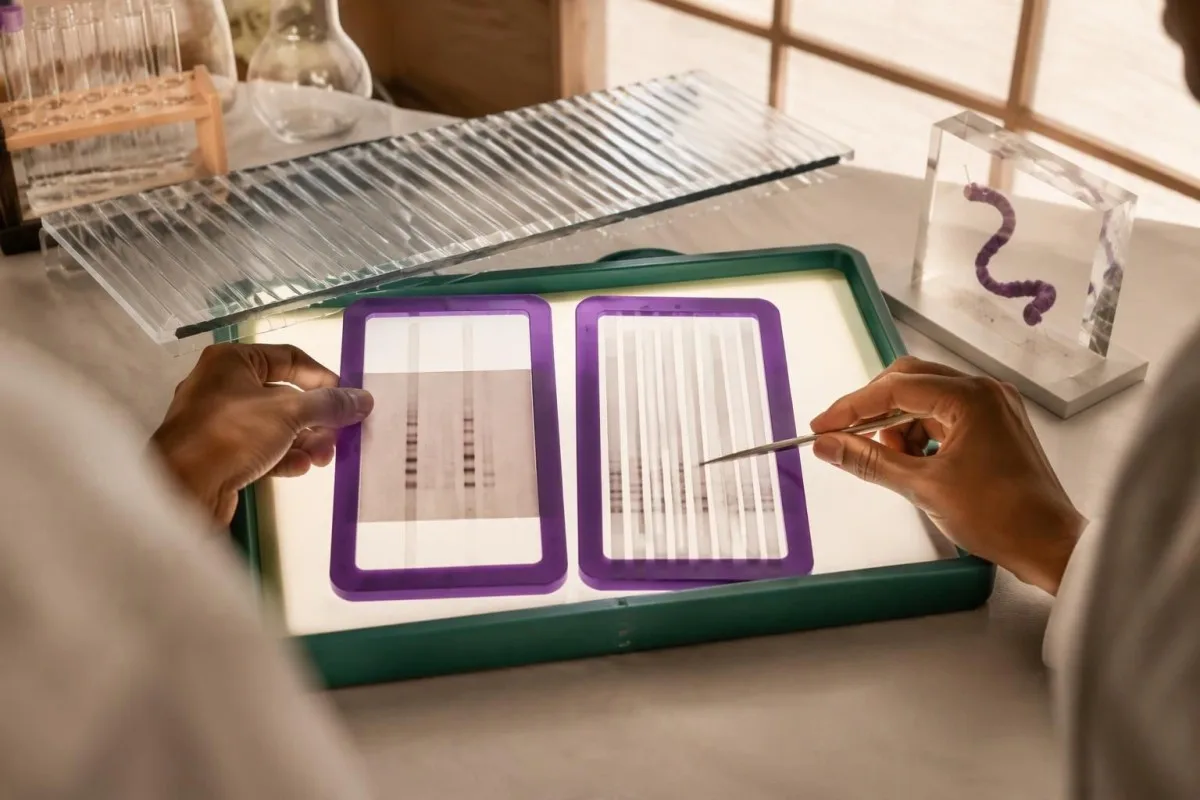
A hypothetical patient with a markedly swollen knee and only 2 IgM bands after 3 months of symptoms does not have the expected serologic pattern for Lyme arthritis. The clinician should reassess alternative causes and assay reliability rather than call this late Lyme based on IgM alone; when indicated, joint fluid examination answers additional questions that the antibody test cannot.
Suspected central nervous system Lyme disease requires clinical assessment and, when cerebrospinal fluid testing is undertaken, simultaneous CSF and serum for a validated antibody index. Testing CSF antibody alone or running a standalone CSF immunoblot is not the preferred approach; 1 elevated index may also persist after treatment, so it must be interpreted alongside the neurological findings and CSF cell response.
Numb feet or tingling do not become Lyme-specific because 41 kDa is reactive; neuropathy has metabolic, mechanical and immune causes. Our anti-MAG neuropathy guide explains one targeted alternative, while immunoglobulin panel interpretation clarifies that total serum IgG is different from the 5-of-10 Lyme-specific IgG immunoblot criterion.
ولې لابراتوارونه او هېوادونه د لایم بېلابېل معیارونه کاروي
Lyme immunoblot criteria are assay- and region-dependent, so conventional US 5-of-10 IgG counting rules should not automatically be imposed on every European report. European assays may use different Borrelia antigens and recombinant line blots because the species causing human Lyme borreliosis differ across regions.
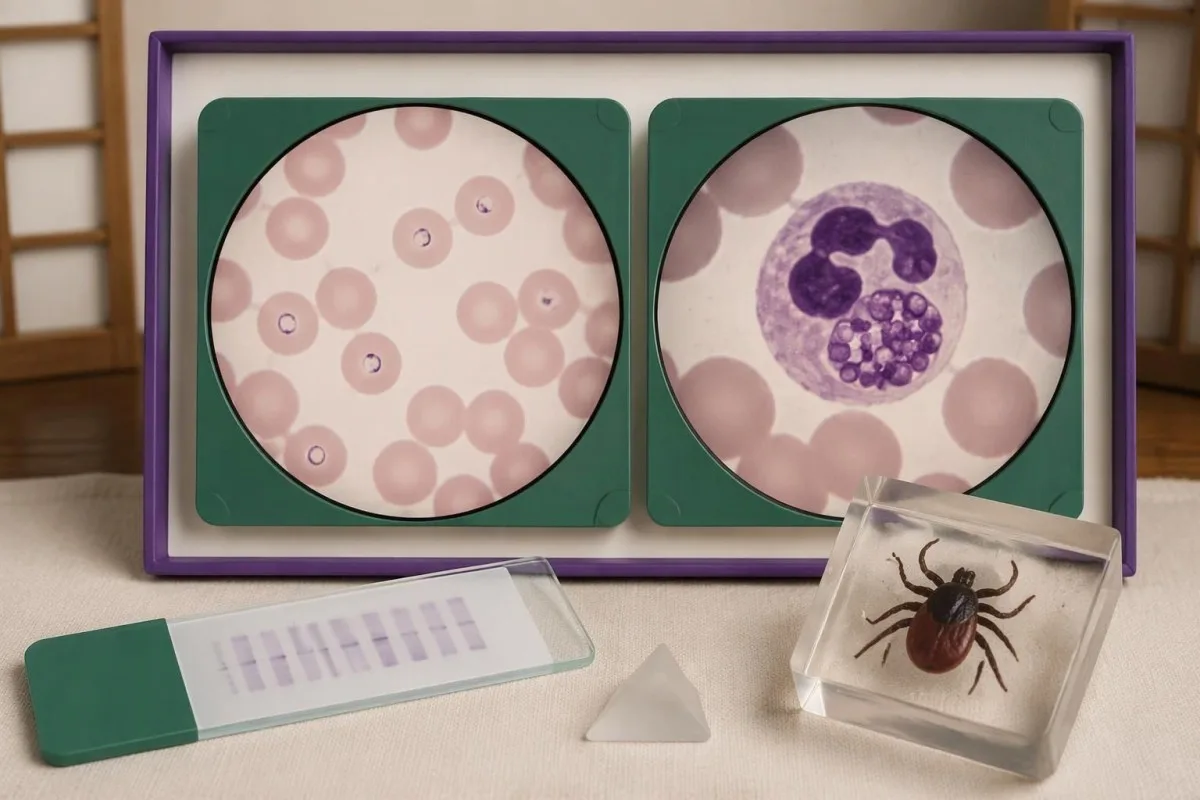
B. burgdorferi sensu stricto predominates in North America, while European disease also commonly involves B. afzelii and B. garinii. A report using VlsE, OspC or other recombinant antigen labels may therefore not resemble a 10-position conventional US blot; the clinically useful question is whether the assay was validated for the exposure setting and interpreted according to its instructions.
Different laboratory criteria are not automatically inferior, but claims that 1 or 2 bands prove disease require evidence for that assay's complete diagnostic performance. When reading a report described by Kantesti, consult the laboratory's interpretation and our د طبي اعتبار ورکولو چوکاټ separately; general AI assessment or a software benchmark is not proof that a particular Lyme assay has validated sensitivity and specificity.
Record 3 details before comparing reports from different laboratories: assay manufacturer, algorithm type and the country where exposure occurred. Our د AI راپور سرچینه-چک لارښود explains why preserving source wording matters; apparent conversion from negative to positive may reflect a changed method or cutoff rather than a newly acquired infection or worsening illness.
ایا د لایم بډونه Babesia، Anaplasma یا نور ګډ انتانات پېژني؟
Lyme Western blot bands do not diagnose tick-borne coinfections. Babesia, Anaplasma and Ehrlichia require their own clinical assessment and tests; 1 positive Lyme antibody result neither confirms nor excludes these infections, even when an exposure setting allows more than one tick-borne organism to be transmitted.

بابېزیوزیس deserves consideration when relevant exposure accompanies fever and evidence such as anemia, low platelets or hemolysis, especially if fever persists during Lyme-directed treatment. A Babesia antibody titer of 1:256 alone does not establish current infection; our Babesia test interpretation guide explains why a cellular sample examination or PCR may be needed to demonstrate active infection.
اناپلازموسس can produce fever, leukopenia, thrombocytopenia and elevated liver enzymes, findings that should not be explained away as extra Lyme bands. PCR is most useful during the first week of illness and becomes less sensitive after appropriate antibiotics; our Anaplasma sample timing guide separates this early direct-detection window from later antibody interpretation.
Ehrlichiosis follows a different organism-specific testing pathway, and a negative early antibody result is not a safe reason to dismiss significant febrile illness. Our Ehrlichia PCR and titer guide explains why 2 samples collected at different times may help establish seroconversion; targeted testing should follow symptoms, geography and laboratory abnormalities rather than an indiscriminate panel ordered for isolated fatigue.
د لایم د ازموینې له ناڅرګند راپور سره باید څه وکړئ؟
For an unclear Lyme report, obtain the complete 2-tier interpretation, write down symptom onset and discuss exposure plus objective findings with a clinician. Faint or isolated bands do not determine urgency; fainting, chest pain, breathlessness, a markedly slow pulse or new neurological deficits require prompt assessment regardless of the antibody result.

Lyme carditis can cause heart conduction block, so fainting or palpitations after compatible exposure should not wait for an immunoblot to become positive. The 2020 IDSA/AAN/ACR guideline identifies a PR interval greater than 300 milliseconds, other arrhythmias or features of myopericarditis as reasons for hospital admission with monitoring; that interval is measured on an ECG, not inferred from band intensity.
New facial weakness warrants urgent assessment, and sudden facial droop with arm weakness or speech difficulty needs emergency evaluation for stroke rather than attribution to Lyme. Our د سټروک د خبرداري نښو لارښود explains that distinction; for a routine appointment, bring 4 dates—possible exposure, first symptom, sample collection and antibiotic initiation—because each changes a different part of the reasoning.
کانټیسټي یو دی د AI پر بنسټ د وینې ازموینې تحلیل وسیله that can help organize the 2-tier result, reported bands and missing clinical context into questions for your appointment. Our د AI ټکنالوژۍ لارښود describes the explanation workflow, but our AI cannot examine a rash, measure an ECG interval, confirm Lyme disease independently or decide whether you should start, stop or extend antibiotics.
څېړنیزې خپرونې، د شواهدو حدود او خوندي تفسیر
The clinical interpretation in this article rests on 3 directly relevant sources: a laboratory-diagnosis review, the CDC's modified two-tier recommendation and the IDSA/AAN/ACR Lyme guideline. The 2 additional Figshare publications listed below concern other health topics and must not be treated as validation of Lyme band interpretation or Lyme diagnosis.
Moore et al. (2016) explains why individual bands and incomplete testing sequences create diagnostic errors; Mead et al. (2019) establishes the CDC recommendation for appropriately cleared modified algorithms. Lantos et al. (2021), publishing the 2020 guideline, connects testing to clinical manifestations, including early rash, arthritis and neurological disease; these sources support different parts of the reasoning rather than one universal band shortcut.
The 2 Figshare records address women's hormonal health and multilingual AI-assisted hantavirus triage, respectively, not Lyme immunoblot performance. A deployment involving 50,000 interpreted reports, as described in the hantavirus publication's title, cannot establish sensitivity, specificity or patient benefit for Lyme diagnosis; those claims would require Lyme-specific methods, reference standards and evaluation populations.
د Kantesti د مصنوعي ځیرکتیا مسؤلانه اصول place report explanation alongside—not above—the laboratory and clinician, including when IgM appears after 30 days of symptoms. For symptoms linked to cycle changes or menopausal transition, our hormonal symptom guide addresses a separate assessment pathway; symptom overlap is a reason to investigate carefully, not evidence that a reactive Lyme band explains everything.
پرله پسې پوښتل شوي پوښتنې
ایا د لایم ویسټرن بلاټ یوه مثبته نښه دا معنا لري چې زه د لایم ناروغي لرم؟
د لایم په ویسټرن بلاټ کې یوه غبرګوني نښه د لایم ناروغي نه ثابتوي. د امریکا دودیز معیارونه د نښو د لومړیو ۳۰ ورځو په ترڅ کې لږ تر لږه د ټاکل شویو ۳ IgM نښو له ډلې ۲، یا د ټاکل شویو ۱۰ IgG نښو له ډلې ۵ نښې غواړي، او دا هم د دوهپړاوه مناسبې ازموینې په بهیر کې. یوه نښه، د وضعیت له مخې، د متقابل غبرګون یا د انټيباډۍ د لومړني او نیمګړي غبرګون ښکارندوی کېدای شي. د مناسب تماس وروسته د اریتیما مېګرنس ځانګړی دانېډول سوروالی، د لومړنیو سیرولوژیکو ازموینو د منفي پایلو باوجود، لا هم د کلینیکي تشخیص ملاتړ کولای شي.
ولې د لایم ناروغۍ ځینې بانډونه مثبت وي، خو عمومي ازموینه منفي وي؟
د لایم ازموینه کې کېدای شي غبرګون ښودونکې بانډونه موجود وي، خو پایله یې بیا هم منفي وي، ځکه چې ایمیونوبلاټ د ازموینې د الګوریتم له مخې اړین تایید شوی الګو نه وي پوره کړی. د بېلګې په توګه، د IgG درې وړ بانډونه د IgG د دودیز ۵ له ۱۰ حد څخه کم وي. په معیاري دوهپړاویزه ازموینه کې، که د لومړي پړاو سکرین مثبت یا نامعلومه پایله ولري او ورپسې مناسب ایمیونوبلاټونه منفي وي، پایله منفي ګڼل کېږي. که نښې ډېرې تازه وي، ډاکټر ښايي د نیمګړې الګو د مثبتې په نوم له بدلولو پر ځای، په مناسبه موده کې د ازموینې د بیا تکرار په اړه غور وکړي.
د لایم ۴۱ kDa مثبت بانډ څه معنا لري؟
د لایم ناروغۍ د 41 kDa باند معمولاً د فلجیلین، یعنې د باکتریا د خوځښت اړوند پروټین، سره د انټيباډیو تړل کېدل ښيي؛ دا پروټین له هغو انټيباډیو سره هم متقاطع غبرګون ښودلای شي چې له لایم ناروغۍ سره تړاو نه لري. دا یوازې له هغو ټاکل شویو باندونو څخه 1 دی چې د دودیزو ایمونوبلاټ معیارونو کې کارېږي او په یوازې ځان د لایم ناروغۍ تشخیص نه شي کولای. Moore او همکارانو (2016) یوې داسې څېړنې ته اشاره کړې چې دا باند یې په 43% روغو کنټرول ګډونوالو کې موندلی و، خو دا سلنه د ټولو ازموینو لپاره یو نړیوال نرخ نه دی. د ازموینو بشپړه لړۍ او کلینیکي نښې ټاکي چې ایا دا پایله د لایم ناروغۍ ملاتړ کوي که نه.
ایا د لایم IgM مثبت او IgG منفي پایله د وروستي انتان ثبوت دی؟
د Lyme IgM مثبتوالی او د IgG منفي پایله یوازې هغه وخت د لومړني انتان ملاتړ کولی شي چې د ازموینې له مناسبې کړنلارې، کلینیکي بڼې او وخت سره سمون ولري. که نښې تر 30 ورځو ډېرې دوام کړې وي، یوازې IgM باید د لایم ناروغۍ د ملاتړ لپاره ونه کارول شي، ځکه دوامداره یا غیرځانګړی IgM د پایلې په تفسیر کې ګمراه کوونکی کېدای شي. د بېلګې په توګه، په 14مه ورځ د IgM دوه د منلو وړ بانډونه له همدې بڼې سره چې د 3 میاشتو پرلهپسې نښو وروسته لیدل کېږي، توپیر لري. د وخت قاعده د نښو د پیل وخت ته اشاره کوي، نه هغې ورځې ته چې د لابراتوار لپاره نمونه راټوله شوې وه.
ایا زه د لایم مثبته ازموینه لرلی شم، خو د ویسټرن بلاټ هېڅ باند ونه لرم؟
هو: د لایم لپاره یو تایید شوی تعدیل شوی دوهپړاوی الګوریتم له دوو پرلهپسې انزایمي معافیتي ازموینو څخه کار اخلي او ښايي هېڅکله ویسټرن بلاټ ترسره نه کړي. CDC په ۲۰۱۹ کال کې د FDA لهخوا په مناسبه توګه تصفیه شوي تعدیل شوي الګوریتمونه سپارښتنه کړل. د ازموینو ځینې ترکیبونه ټول انټيباډي اندازه کوي، په داسې حال کې چې نور د IgM او IgG پایلې جلا وړاندې کوي؛ نو د بانډونو د شمېر دودیز اصول پر هر راپور نه تطبیقېږي. له لابراتوار څخه وپوښتئ چې وروستۍ پایله د کوم الګوریتم او د ازموینو د کوم ترکیب له مخې ټاکل شوې ده.
ایا د انټيبیوټیکونو له درملنې وروسته د لایم ویسټرن بلاټ بډونه باید له منځه ولاړ شي؟
د لایم ویسټرن بلاټ بانډونه اړتیا نه لري چې له بریالۍ درملنې وروسته له منځه ولاړ شي، ځکه چې انټيباډۍ کلونه یا لسیزې پاتې کېدای شي. د IgG د ۵ بانډونو دوامداره بڼه د روان عفونت ثبوت نه دی، او د بانډونو تکراري ازموینه د درملنې د بریا د تایید لپاره منل شوې ازموینه نه ده. د درملنې ځواب د ناروغۍ د کلینیکي بهیر او اړوندو عیني موندنو له مخې ارزول کېږي، نه د دې له مخې چې د انټيباډۍ پینل باید منفي شي. نوې نښې یا له کنې سره بله مخامختیا نوې کلینیکي ارزونې ته اړتیا لري، ځکه پخوانۍ انټيباډۍ بیا عفونت نه شي ثابتولای.
د وینې ازموینې پایلې څنګه ولولئ
خپل لابراتواري راپور پورته کړئ، او د Kantesti AI به په څو ثانیو کې هر بایومارکر په ساده ژبه تشریح کړي. په ټوله نړۍ کې له 2 میلیونو څخه زیاتو کسانو ترې کار اخیستی.
ماخذونه
- کلاین، ټي.، میچل، ایس.، او وېبر، ایچ. (۲۰۲۶). د ښځو د روغتیا لارښود: تخماېښودنه، مینوپاز او هورموني نښې. د Kantesti AI طبي څېړنه. د دفاع وزارت
- کلاین، ټي.، میچل، ایس.، او وېبر، ایچ. (۲۰۲۶). د هانتاویروس د لومړنۍ درجهبندۍ لپاره په څو ژبو کې د AI په مرسته کلینیکي پرېکړهملاتړ: طرحه، د انجینرۍ اعتبارسنجونه، او د وینې د 50,000 تفسیر شوو راپورونو په کچه په واقعي نړۍ کې پلي کول. د Kantesti AI طبي څېړنه. د دفاع وزارت
- Moore A et al. (2016). Current Guidelines, Common Clinical Pitfalls, and Future Directions for Laboratory Diagnosis of Lyme Disease, United States. Emerging Infectious Diseases. د دفاع وزارت پب میډ
- Mead P et al. (2019). Updated CDC Recommendation for Serologic Diagnosis of Lyme Disease. د MMWR ناروغتیا او مړینې اوونیز راپور. د دفاع وزارت
- Lantos PM et al. (2021). Clinical Practice Guidelines by the Infectious Diseases Society of America (IDSA), American Academy of Neurology (AAN), and American College of Rheumatology (ACR): 2020 Guidelines for the Prevention, Diagnosis and Treatment of Lyme Disease. Clinical Infectious Diseases. د دفاع وزارت
- ۲ میلیونه+تحلیل شوې ازموینې
- 127+هېوادونه
- 100+ژبې
د طبي ټیم په اړه


د E-E-A-T باور نښې
تجربه
د ډاکټر تر مشرۍ لاندې کلینیکي بیاکتنه د لابراتواري تفسیر د کاري بهیرونو لپاره.
تخصص
د لابراتواري طب تمرکز پر دې چې بایومارکرونه په کلینیکي شرایطو کې څنګه چلند کوي.
واک ورکول
د ډاکټر توماس کلاین له خوا طبي بیاکتنه شوې، د ډاکټر سارا میچل او پروفیسور ډاکټر هانس وېبر په مرسته.
اعتبار
د شواهدو پر بنسټ تفسیر د روښانه تعقیبي لارو چارو سره، تر څو اندیښنه کمه شي.






طبي سلبِ مسئولیت
دا مقاله یوازې د زده کړې لپاره ده او طبي مشوره نه جوړوي. د تشخیص او درملنې د پرېکړو لپاره تل د وړ روغتیايي خدمت وړاندې کوونکي سره سلا وکړئ.
خپور شوی · له تحریري ټیم سره اړیکه ونیسئ
خپروونکی یې Kantesti Ltd دی، چې په انګلستان او وېلز کې ثبت شوی، د شرکت شمېره. 17090423, ، لندن، بریتانیا.
