
A reactive band shows antibody binding—not a diagnosis. The complete testing algorithm, exposure history and symptom timeline determine whether that finding supports Lyme disease.

Idei principale
- Individual bands do not establish Lyme disease; even a relatively specific band needs interpretation within a validated 2-tier testing algorithm.
- Traditional IgM criteria require at least 2 of 3 designated bands: approximately 23–25, 39 and 41 kDa.
- Traditional IgG criteria require at least 5 of 10 designated bands: 18, 23, 28, 30, 39, 41, 45, 58, 66 and 93 kDa.
- The 30-day rule means isolated IgM should not support a Lyme diagnosis when symptoms have lasted more than 30 days.
- A negative overall result poate coexista cu benzi reactive, deoarece laboratorul evaluează un tipar validat, nu dacă apare vreo bandă.
- Testarea modificată în doi pași utilizează 2 teste imunoenzimatice secvențiale în locul unui imunoblot; este posibil să nu furnizeze o listă de benzi.
- Testarea timpurie poate fi negativă înainte ca anticorpii să se dezvolte; o erupție tipică de eritem migrator, în contextul unei expuneri adecvate, se diagnostichează clinic.
- Anticorpi persistenți poate rămâne detectabilă ani de zile după tratament și nu poate confirma o infecție activă sau măsura vindecarea.
What does a positive Lyme Western blot band actually mean?
A bandă pozitivă la testul Western blot pentru Lyme înseamnă că anticorpii s-au legat de un antigen de testare; acest lucru nu confirmă de sine stătător boala Lyme. În testarea tradițională din SUA în doi pași, IgM necesită 2 din cele 3 benzi desemnate în primele 30 de zile de la debutul simptomelor, în timp ce IgG necesită 5 din 10; testarea modificată utilizează în schimb 2 teste imunoenzimatice.

The rezultatul global combină testul de screening din prima etapă cu rezultatul corespunzător din etapa a doua, în loc să trateze fiecare linie vizibilă ca pe un diagnostic separat. Prin urmare, un rezultat care indică o bandă reactivă poate fi corect raportat ca negativ, iar chiar și un rezultat pozitiv complet al testării anticorpilor trebuie evaluat ținând cont de expunere, manifestările compatibile și boala Lyme anterioară.
Identitatea benzii răspunde la o întrebare restrânsă: ce antigen a atras legarea anticorpilor în condițiile acestui test? Nu răspunde la cele 3 întrebări care îi preocupă de obicei pe pacienți — dacă infecția este prezentă acum, dacă explică simptomele sau dacă sunt necesare antibiotice; ghidul nostru despre rezultatele pozitive ale anticorpilor separă aceste aspecte.
Kantesti este o Analizor de teste de sânge AI care pot ajuta la explicarea motivului pentru care un raport privind Lyme conține benzi reactive, dar o interpretare negativă a testării în doi pași. Considerăm interpretarea finală a laboratorului, metoda de testare și durata simptomelor drept context esențial — nu detalii care pot fi anulate prin numărarea liniilor evidențiate într-un raport încărcat.
How traditional two-tier Lyme testing determines the result
Testarea standard în doi pași începe cu un test imunoenzimatic sau, uneori, cu un test de imunofluorescență și continuă cu un imunoblot dacă primul test este pozitiv sau echivoc. Cele 2 etape funcționează împreună; un rezultat pozitiv la testul de screening, de unul singur, nu reprezintă un rezultat serologic pozitiv confirmat pentru Lyme.

A test pozitiv sau echivoc în prima etapă, urmat de imunoblota adecvate negative este interpretat ca negativ conform algoritmului standard. Testul inițial de screening captează în mod intenționat mai multe răspunsuri posibile, în timp ce etapa a doua filtrează reactivitatea nespecifică; Moore și colab. au descris acest echilibru și erorile frecvente de interpretare în Emerging Infectious Diseases în 2016.
Un indice de 1,4 la un test de screening nu este echivalent cu 1,4 la altul, deoarece compoziția antigenică și valorile-prag stabilite de producători diferă. De asemenea, un rezultat echivoc la testul de screening indică necesitatea finalizării algoritmului — nu reprezintă un diagnostic situat la jumătatea distanței dintre infecție și absența infecției; rezultate calitative versus cantitative explică de ce contează formatul rapoartelor.
Solicitarea unui imunoblot după un rezultat negativ la testul de screening, fără un motiv clinic pentru a reconsidera momentul testării sau adecvarea metodei, ocolește secvența a cărei performanță a fost evaluată. Solicitați 3 informații: rezultatul testului de screening, interpretarea testului din etapa a doua și dacă ambele fac parte din aceeași secvență de testare validată; un raport incomplet nu ar trebui reconstituit doar pe baza benzilor.
Lyme Western blot bands explained: IgM and IgG criteria
Conform criteriilor convenționale din SUA, un imunoblot IgM pozitiv necesită cel puțin 2 dintre benzile de 23–25, 39 și 41 kDa. Un imunoblot IgG pozitiv requires at least 5 of the 18, 23, 28, 30, 39, 41, 45, 58, 66 and 93 kDa bands.
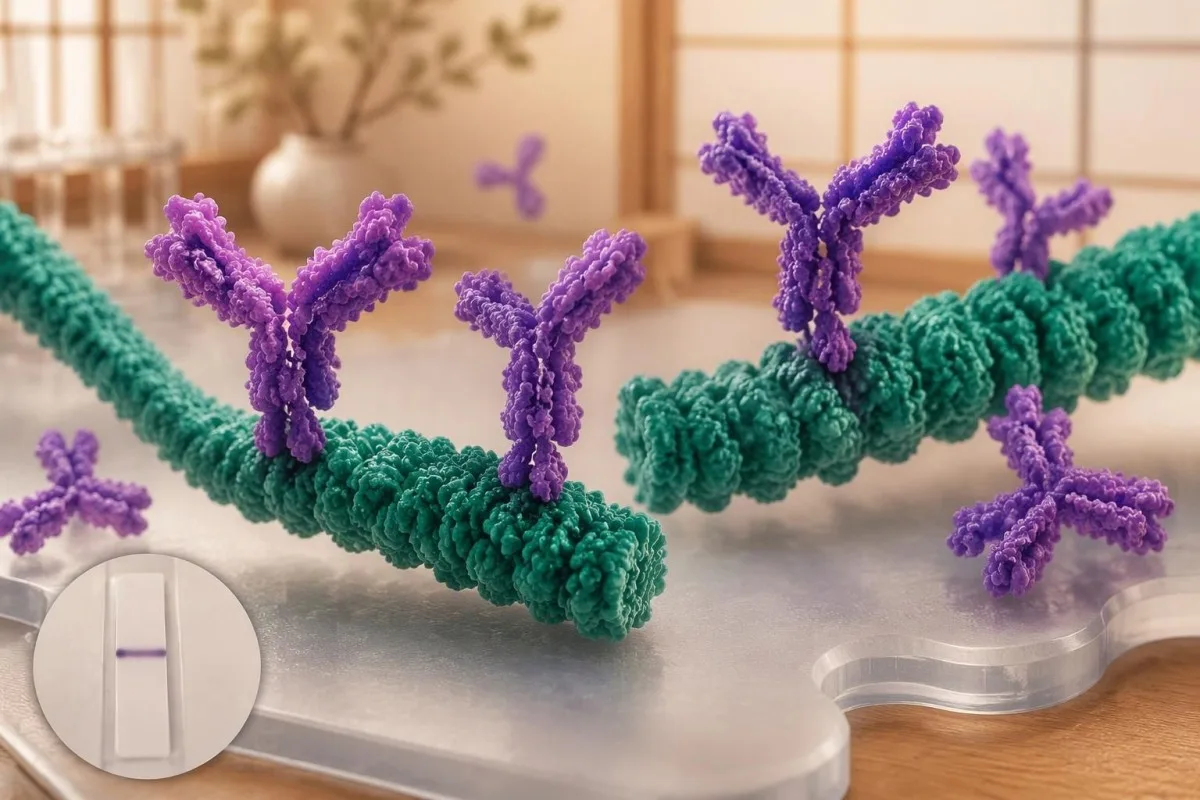
Kilodaltons, abbreviated kDa, describe approximate protein molecular mass, not antibody concentration or disease severity. The approximately 23–25 kDa band commonly represents outer surface protein C, 39 kDa represents BmpA and 41 kDa represents flagellin; the numbers identify antigen regions, so a higher-numbered band does not mean a more advanced infection.
The IgG list's 58 kDa criterion excludes GroEL, and reports may use assay-specific names or approximate mass conventions rather than identical labels. Because not every commercial strip uses the same antigen preparation, our markeri de teste sanguine should complement—not replace—the actual laboratory legend and the assay manufacturer's interpretation instructions.
Bands at 31 and 34 kDa are not part of the conventional CDC IgG counting criteria, even though they may appear on some reports. Their absence from that list does not make them meaningless biologically, but adding them to manufacture a 5-band positive result changes the validated rule; neither band darkness nor extra bands quantify bacterial burden.
Why band 41 and other reactive bands can be false signals
The 41 kDa band reacts with flagellin, a protein associated with bacterial movement, and can cross-react with antibodies unrelated to Lyme disease. A single reactive 41 kDa band is therefore insufficient to diagnose Lyme disease, even when a patient has fatigue, aching or a remembered tick bite.
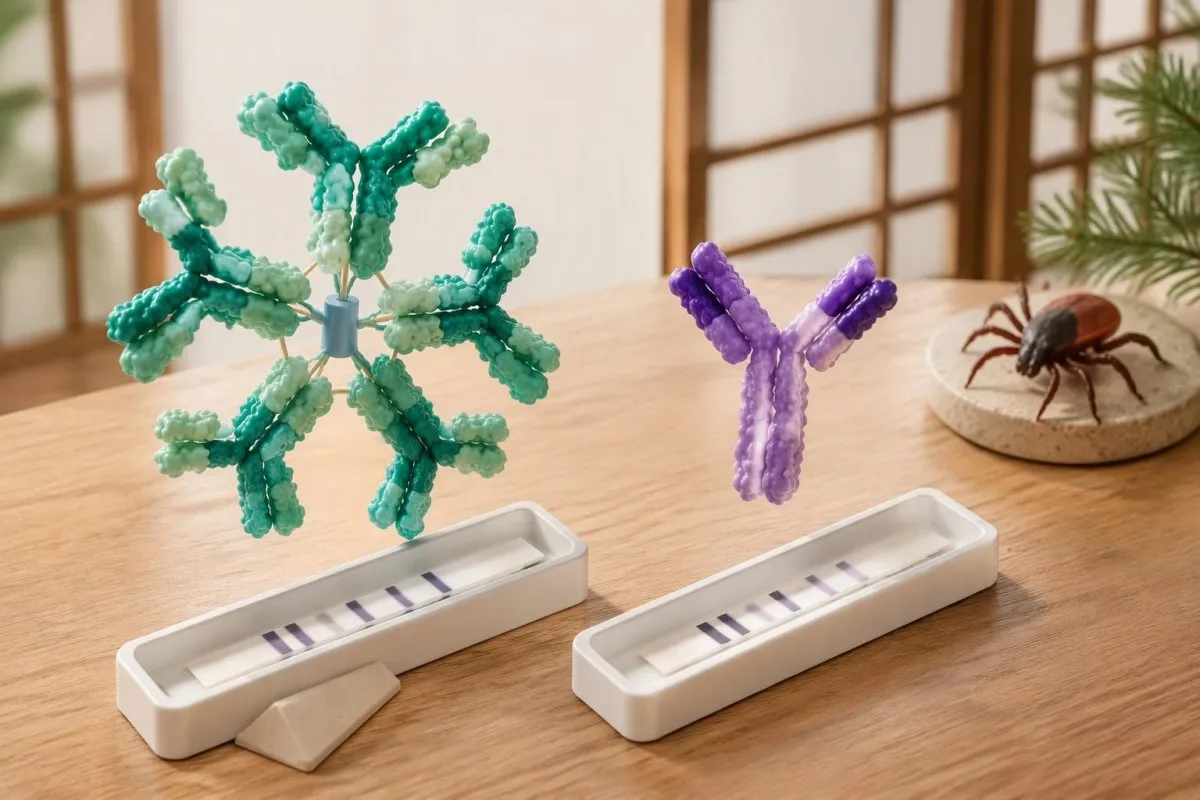
Moore et al. (2016) cited a study in which 41 kDa reactivity occurred in 43% of healthy controls, illustrating why this band cannot stand alone. That percentage is not a universal false-positive rate for every modern assay; it is evidence that recognizable antigen binding can occur in people without the clinical condition being investigated.
Epstein–Barr virus, syphilis, relapsing-fever Borrelia and some autoimmune conditions can contribute to false-positive Lyme serology, although the mechanism and affected assay vary. A recent mononucleosis-like illness should prompt attention to the complete EBV antibody pattern, not the assumption that 1 Lyme band proves a simultaneous tick-borne infection.
Cross-reactivity is not a reason to order every alternative antibody panel: 1 unexplained band usually does not justify broad autoimmune screening. When examination findings genuinely suggest an immune disorder, complementului și a ANA belongs to a separate clinical question; repeated low-probability testing can generate additional misleading positives rather than a clearer answer.
Lyme IgM vs IgG: why the 30-day symptom rule matters
Lyme IgM should not be used to support a diagnosis when symptoms have lasted more than 30 days. IgM is most useful early, whereas an appropriate IgG response carries greater diagnostic weight later; the clock starts with symptoms of the suspected illness, not the testing date or remembered tick removal.
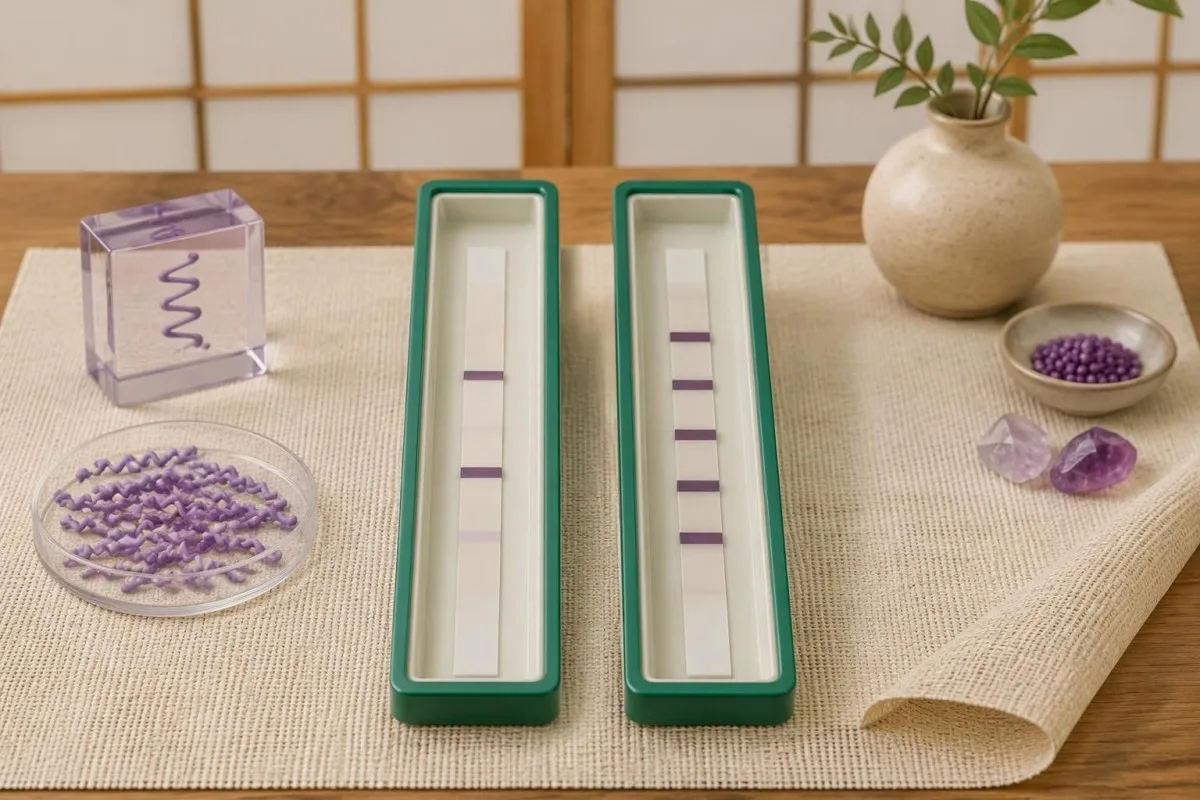
The 30-day restriction reduces misclassification from persistent or nonspecific IgM responses when later disease should usually have an established IgG response. It is an interpretation rule, not a biological switch that flips overnight: antibody maturation varies, and early treatment may alter seroconversion, but those exceptions do not make isolated late IgM reliable evidence.
For a hypothetical patient tested on day 75 of continuous symptoms, IgM bands 23 and 41 with negative IgG should not be used as proof of Lyme disease. By contrast, the same IgM pattern on day 12, following a reactive first-tier assay and compatible exposure, can support an early diagnosis; the numerical band count is identical, but its evidential value changes.
A positive IgM result does not automatically mean a new infection, a misconception also addressed in our Mycoplasma IgM interpretation guide. If symptoms began 8 weeks ago but one symptom appeared yesterday, clinicians need to decide whether this is a genuinely new illness or another feature of the original episode—not simply restart the IgM clock.
Positive Lyme bands but negative overall: worked examples
Positive Lyme bands but negative overall usually means the report did not meet the required pattern within the testing algorithm. For example, 3 designated IgG bands are below the conventional 5-of-10 threshold; that result is negative, not a smaller positive, and it does not measure how much infection is present.
Consider a clearly hypothetical 42-year-old with 10 weeks of fatigue, a reactive screening assay and IgG bands 18, 41 and 58. The IgG immunoblot is negative because only 3 qualifying bands are present; if the examination lacks objective Lyme findings, the next step is a symptom-focused assessment rather than antibiotics prescribed to treat the band's molecular masses.
A second hypothetical patient has a reactive screen, IgM bands 23 and 39, and compatible symptoms beginning 14 days earlier. This can meet the traditional early serologic criteria, but an atypical exposure history or a stronger alternative diagnosis still affects the clinical conclusion; Kantesti AI can explain the 2-of-3 rule without converting it into an independent diagnosis.
A third report lists 5 IgG bands but provides no first-tier result; the missing screening stage prevents straightforward confirmation of a standard 2-tier outcome. Confirmation requirements are assay-specific, as our HSV IgG confirmation guide also illustrates, so request the complete laboratory report rather than borrowing a cutoff or confirmation rule from another infection.
How modified two-tier testing differs from a Western blot
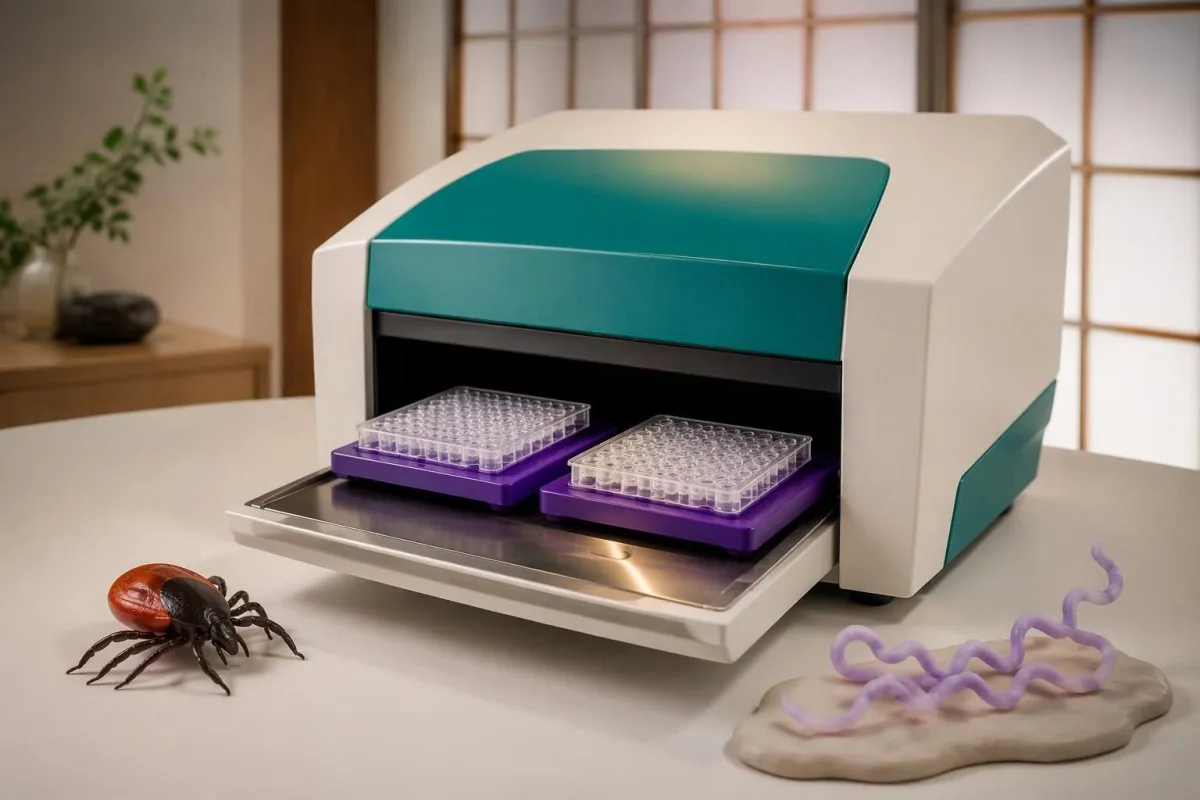
Modified two-tier testing, or MTTT, uses 2 sequential enzyme immunoassays instead of an enzyme immunoassay followed by an immunoblot. A report from this pathway may have no bands at all; its overall interpretation depends on the particular assay combination and its cleared instructions, not the conventional immunoblot band-count criteria.
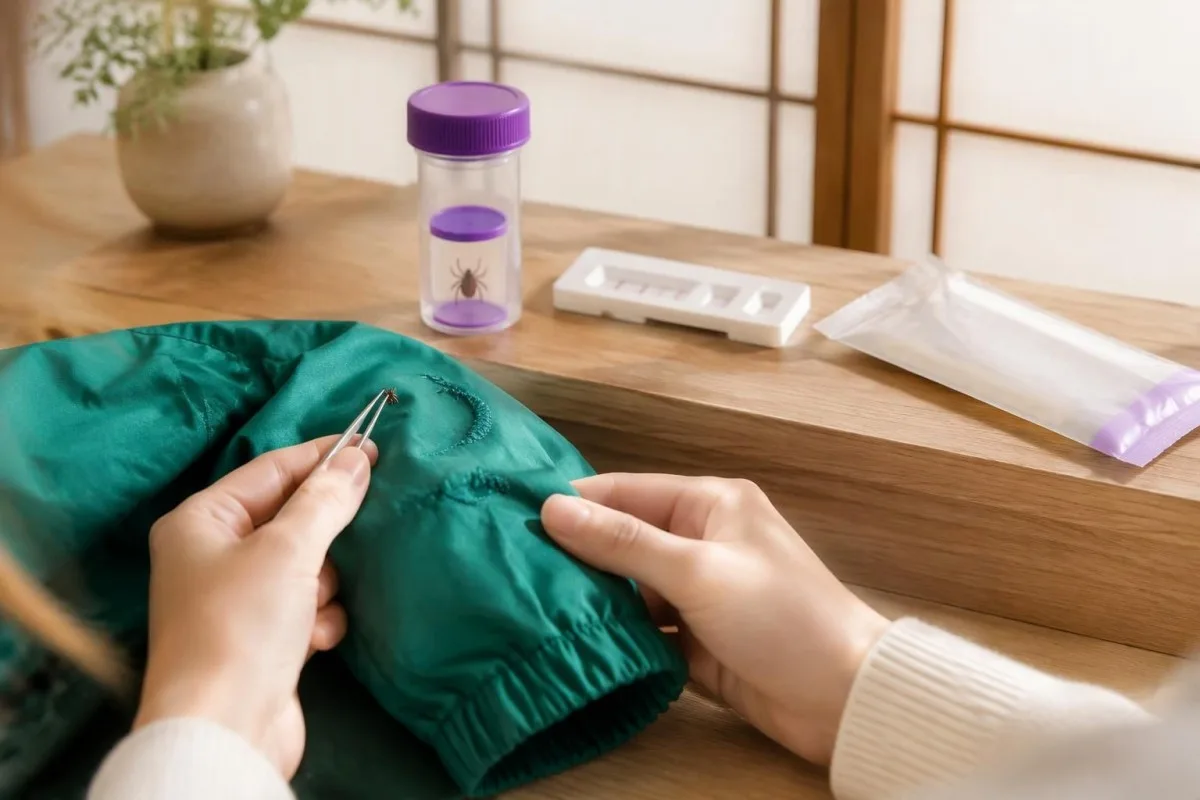
The 2019 CDC recommendation accepted modified algorithms using FDA-cleared assays for that purpose, following clearance of relevant test combinations (Mead et al., 2019). The change was not permission to combine any 2 tests: the evaluated pairing matters, and some combinations improve early sensitivity while preserving high specificity compared with standard two-tier testing.
Some modified algorithms measure total antibodies, while others report separate IgM and IgG components; consequently, the familiar 30-day IgM restriction cannot be mechanically applied to a total-antibody result. Kantesti is an platforma de interpretare analize sange AI that can help distinguish a 2-immunoassay report from an immunoblot report before discussing what its positive or negative designation means.
A second immunoassay is not simply a repeat of the same screening test, and an immunoblot is not routinely needed after a completed validated MTTT result. Our de confirmare a bolii Chagas illustrates the broader principle of complementary assays, but its 2-test rules are different; ask your laboratory which Lyme algorithm produced the final interpretation.
Can Lyme testing be negative early despite infection?
Lyme antibody testing can be negative early because antibodies have not yet reached detectable levels. A typical erythema migrans rash with an appropriate exposure history is diagnosed clinically rather than by waiting for a positive immunoblot; a negative result during the first 1–2 weeks does not safely exclude that presentation.
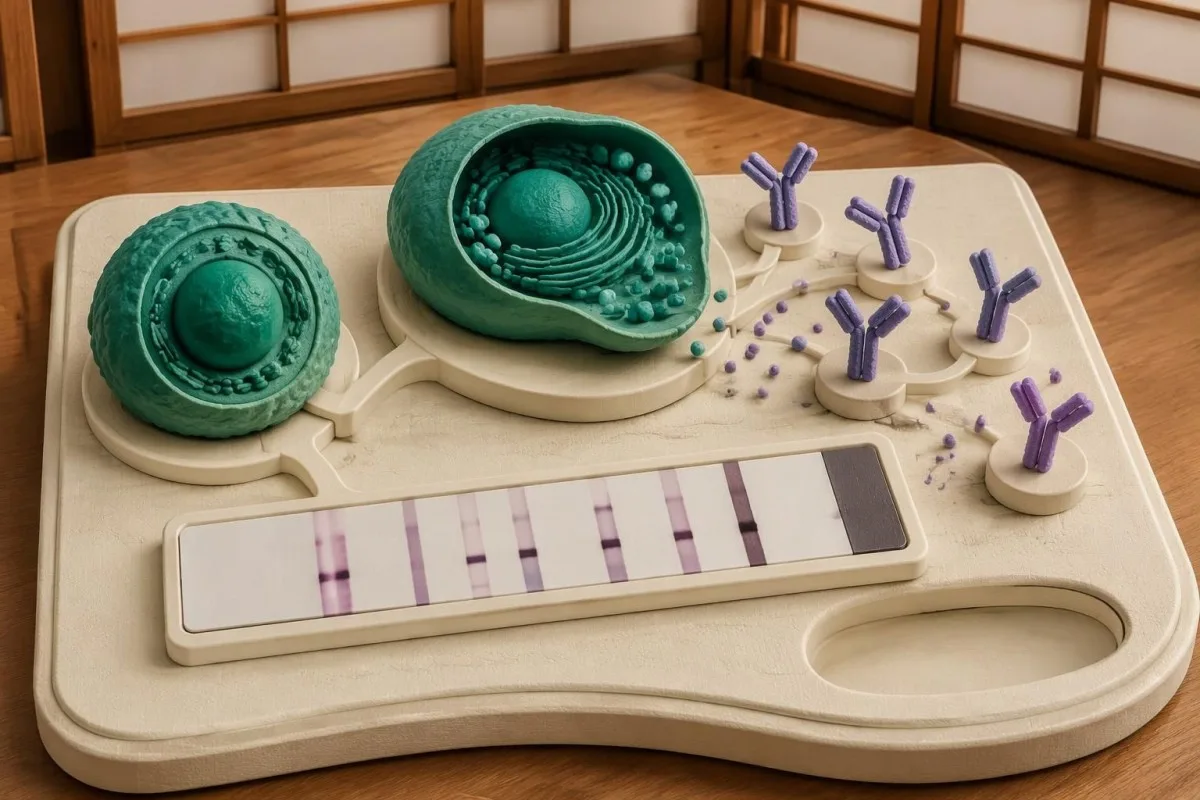
Across early-infection settings, conventional 2-tier sensitivity has been reported at approximately 30–40%, while specificity remains high when testing and interpretation are appropriate (Moore et al., 2016). These are population estimates, not a personal probability: sensitivity changes with the clinical manifestation, time since onset and whether the patient has already received antibiotics.
For a rash suggestive of but not typical for erythema migrans, the 2020 IDSA/AAN/ACR guideline supports acute serology and, if initially negative, a convalescent sample at least 2–3 weeks later (Lantos et al., 2021). The same guideline recommends clinical diagnosis for a typical lesion; a rash need not have textbook concentric rings to warrant assessment.
Repeating a test 24 hours later usually offers little advantage when the limitation is antibody development rather than a processing error. Our spotted fever testing guide explains a related timing problem, but suspected spotted fever has its own urgent treatment rules; do not delay care for an expanding rash or significant illness while waiting for more bands.
Does positive Lyme IgG mean active infection or failed treatment?
Positive Lyme IgG cannot distinguish active infection from a previous infection that has resolved. Lyme antibodies can remain detectable for years or decades, and repeat immunoblot testing is not a test of cure; neither a persistent 5-band pattern nor changes in band intensity establish that treatment failed.
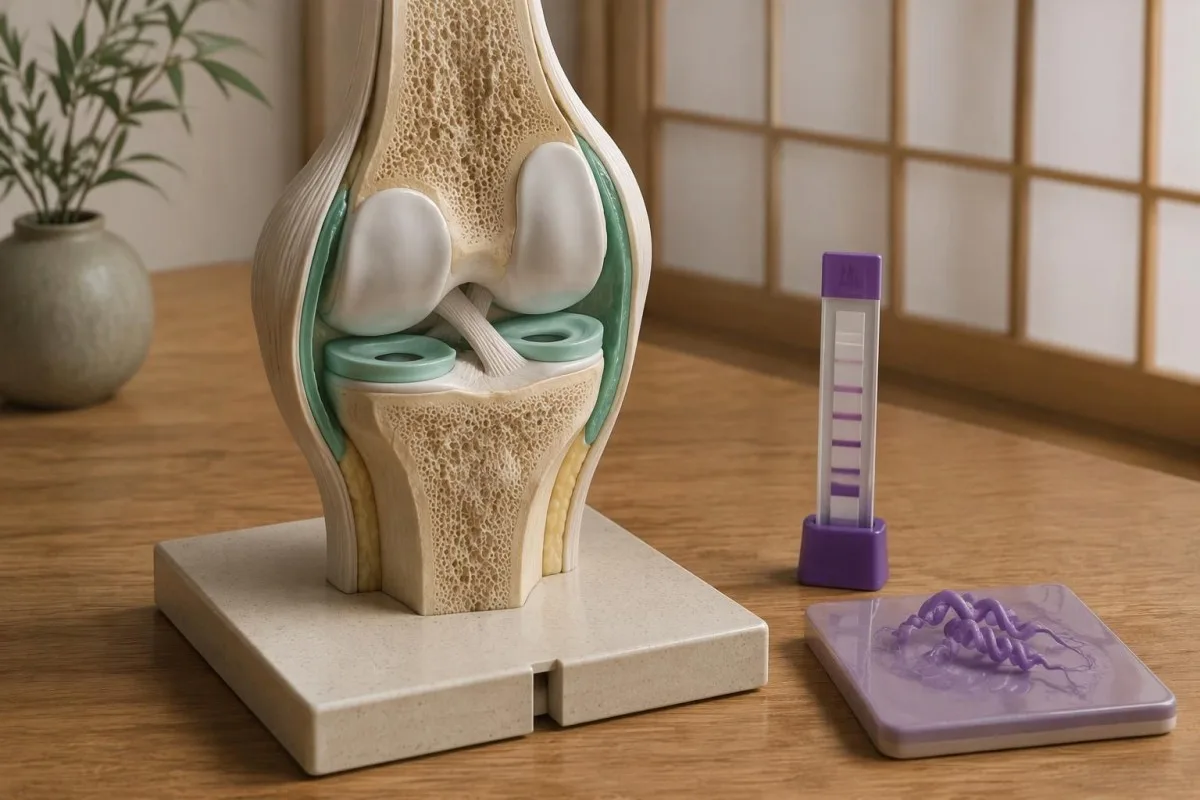
The 2020 IDSA/AAN/ACR guideline describes persistence of both IgM and IgG responses after infection, which complicates interpretation in previously affected patients (Lantos et al., 2021). A positive result obtained 4 years after treatment must therefore be compared with the clinical history, not interpreted as a laboratory photograph of living bacteria in the body.
Reinfection can occur because previous Lyme disease does not provide reliable lifelong protection, but an old positive antibody result cannot prove a new episode. For a hypothetical person with positive IgG from 2019 and a new expanding rash after recent tick exposure, the new clinical findings matter more than whether a sixth band appears; modele de anticorpi CMV familiare illustrate why exposure history and current illness are separate questions.
Persistent fatigue, pain or cognitive symptoms deserve evaluation even when no new laboratory evidence appears. The guideline recommends against additional antibiotics for persistent nonspecific symptoms after recommended treatment when there is no objective evidence of reinfection or treatment failure; 1 positive antibody panel cannot identify the cause of those symptoms or justify an open-ended antibiotic course.
What IgG means in suspected Lyme arthritis or neurologic disease
Lyme arthritis usually produces a strong IgG response, so isolated IgM is poor evidence for that diagnosis. Conventional two-tier serology has approximately 95–100% sensitivity in Lyme arthritis, according to the 2020 IDSA/AAN/ACR guideline; a negative appropriate IgG result should prompt serious consideration of other causes of joint swelling.
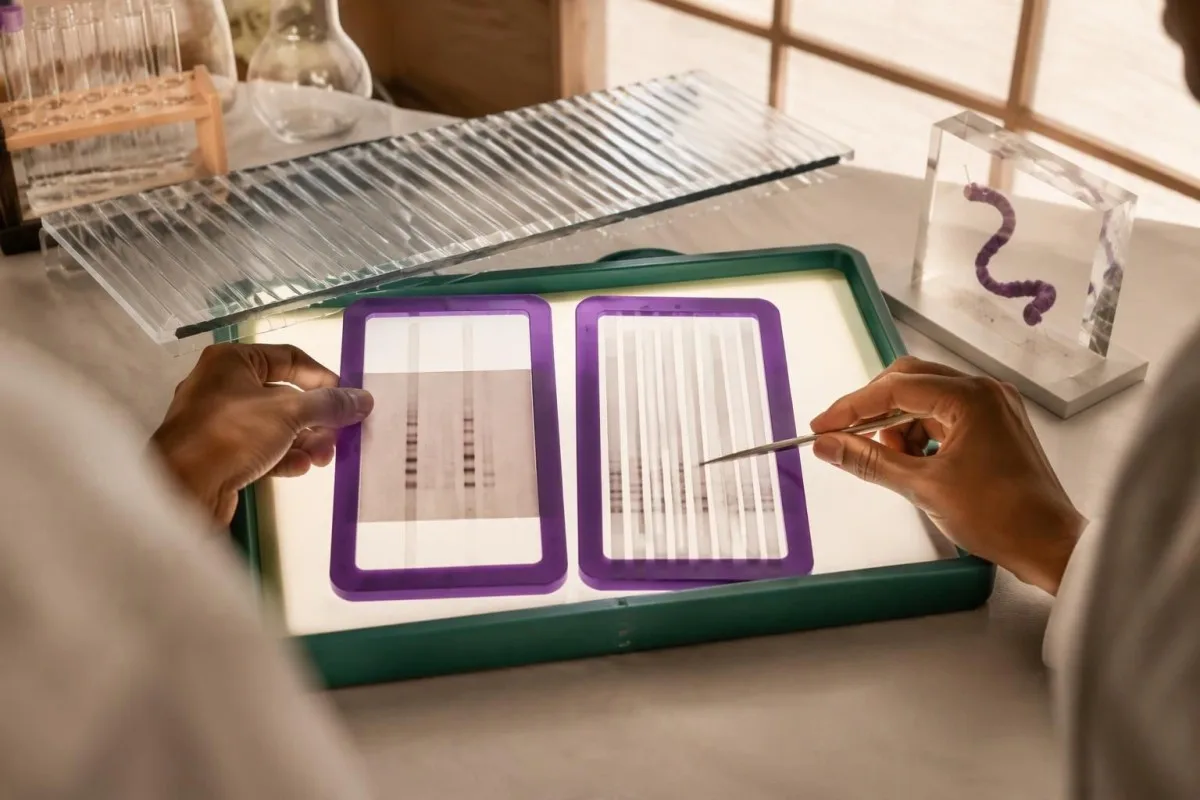
A hypothetical patient with a markedly swollen knee and only 2 IgM bands after 3 months of symptoms does not have the expected serologic pattern for Lyme arthritis. The clinician should reassess alternative causes and assay reliability rather than call this late Lyme based on IgM alone; when indicated, joint fluid examination answers additional questions that the antibody test cannot.
Suspected central nervous system Lyme disease requires clinical assessment and, when cerebrospinal fluid testing is undertaken, simultaneous CSF and serum for a validated antibody index. Testing CSF antibody alone or running a standalone CSF immunoblot is not the preferred approach; 1 elevated index may also persist after treatment, so it must be interpreted alongside the neurological findings and CSF cell response.
Numb feet or tingling do not become Lyme-specific because 41 kDa is reactive; neuropathy has metabolic, mechanical and immune causes. Our anti-MAG neuropathy guide explains one targeted alternative, while immunoglobulin panel interpretation clarifies that total serum IgG is different from the 5-of-10 Lyme-specific IgG immunoblot criterion.
Why laboratories and countries may use different Lyme criteria
Lyme immunoblot criteria are assay- and region-dependent, so conventional US 5-of-10 IgG counting rules should not automatically be imposed on every European report. European assays may use different Borrelia antigens and recombinant line blots because the species causing human Lyme borreliosis differ across regions.
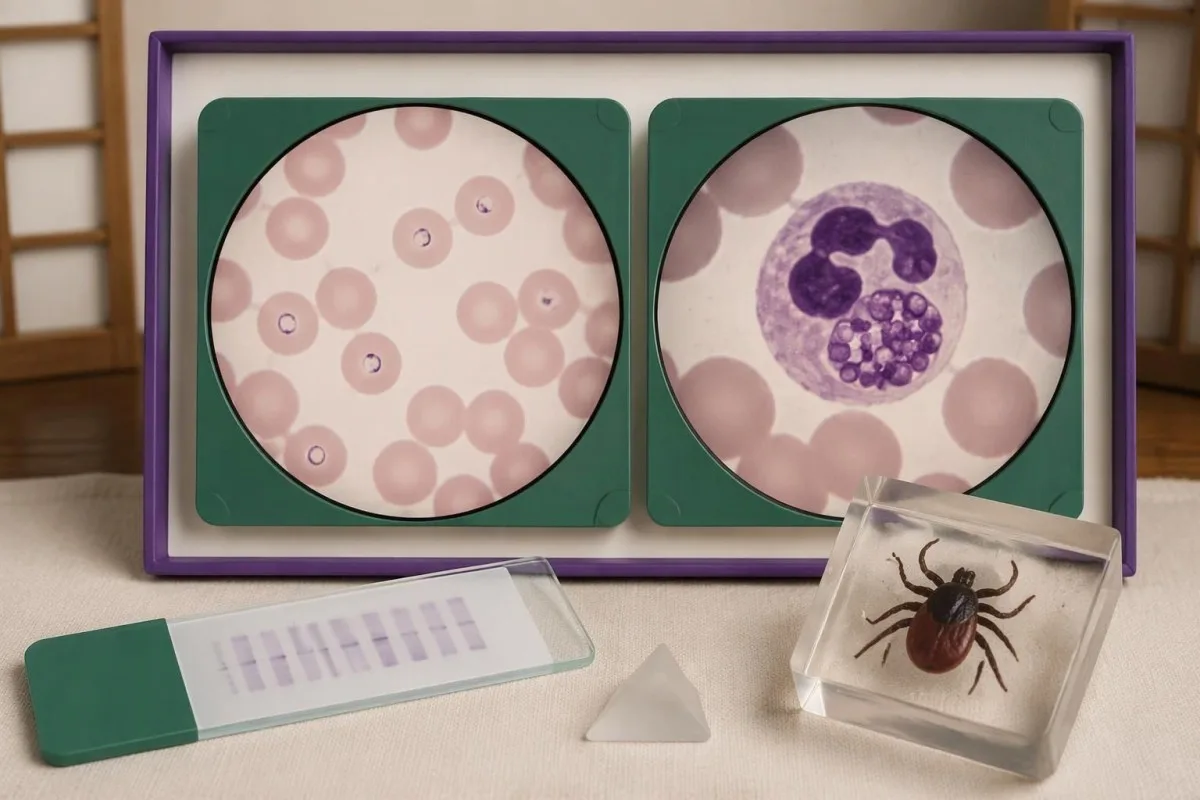
B. burgdorferi sensu stricto predominates in North America, while European disease also commonly involves B. afzelii and B. garinii. A report using VlsE, OspC or other recombinant antigen labels may therefore not resemble a 10-position conventional US blot; the clinically useful question is whether the assay was validated for the exposure setting and interpreted according to its instructions.
Different laboratory criteria are not automatically inferior, but claims that 1 or 2 bands prove disease require evidence for that assay's complete diagnostic performance. When reading a report described by Kantesti, consult the laboratory's interpretation and our de validare medicală separately; general AI assessment or a software benchmark is not proof that a particular Lyme assay has validated sensitivity and specificity.
Record 3 details before comparing reports from different laboratories: assay manufacturer, algorithm type and the country where exposure occurred. Our AI report source-check guide explains why preserving source wording matters; apparent conversion from negative to positive may reflect a changed method or cutoff rather than a newly acquired infection or worsening illness.
Do Lyme bands identify Babesia, Anaplasma or other coinfections?
Lyme Western blot bands do not diagnose tick-borne coinfections. Babesia, Anaplasma and Ehrlichia require their own clinical assessment and tests; 1 positive Lyme antibody result neither confirms nor excludes these infections, even when an exposure setting allows more than one tick-borne organism to be transmitted.

Babesioză deserves consideration when relevant exposure accompanies fever and evidence such as anemia, low platelets or hemolysis, especially if fever persists during Lyme-directed treatment. A Babesia antibody titer of 1:256 alone does not establish current infection; our Babesia test interpretation guide explains why a cellular sample examination or PCR may be needed to demonstrate active infection.
Anaplasmoză can produce fever, leukopenia, thrombocytopenia and elevated liver enzymes, findings that should not be explained away as extra Lyme bands. PCR is most useful during the first week of illness and becomes less sensitive after appropriate antibiotics; our Anaplasma sample timing guide separates this early direct-detection window from later antibody interpretation.
Ehrlichiosis follows a different organism-specific testing pathway, and a negative early antibody result is not a safe reason to dismiss significant febrile illness. Our Ehrlichia PCR and titer guide explains why 2 samples collected at different times may help establish seroconversion; targeted testing should follow symptoms, geography and laboratory abnormalities rather than an indiscriminate panel ordered for isolated fatigue.
What should you do with an unclear Lyme test report?
For an unclear Lyme report, obtain the complete 2-tier interpretation, write down symptom onset and discuss exposure plus objective findings with a clinician. Faint or isolated bands do not determine urgency; fainting, chest pain, breathlessness, a markedly slow pulse or new neurological deficits require prompt assessment regardless of the antibody result.

Lyme carditis can cause heart conduction block, so fainting or palpitations after compatible exposure should not wait for an immunoblot to become positive. The 2020 IDSA/AAN/ACR guideline identifies a PR interval greater than 300 milliseconds, other arrhythmias or features of myopericarditis as reasons for hospital admission with monitoring; that interval is measured on an ECG, not inferred from band intensity.
New facial weakness warrants urgent assessment, and sudden facial droop with arm weakness or speech difficulty needs emergency evaluation for stroke rather than attribution to Lyme. Our ghidul nostru privind semnele de avertizare ale accidentului vascular cerebral explains that distinction; for a routine appointment, bring 4 dates—possible exposure, first symptom, sample collection and antibiotic initiation—because each changes a different part of the reasoning.
Kantesti este o Instrument de analiză a analizelor de sânge bazat pe AI that can help organize the 2-tier result, reported bands and missing clinical context into questions for your appointment. Our Ghid pentru tehnologia AI describes the explanation workflow, but our AI cannot examine a rash, measure an ECG interval, confirm Lyme disease independently or decide whether you should start, stop or extend antibiotics.
Research publications, evidence boundaries and safe interpretation
The clinical interpretation in this article rests on 3 directly relevant sources: a laboratory-diagnosis review, the CDC's modified two-tier recommendation and the IDSA/AAN/ACR Lyme guideline. The 2 additional Figshare publications listed below concern other health topics and must not be treated as validation of Lyme band interpretation or Lyme diagnosis.
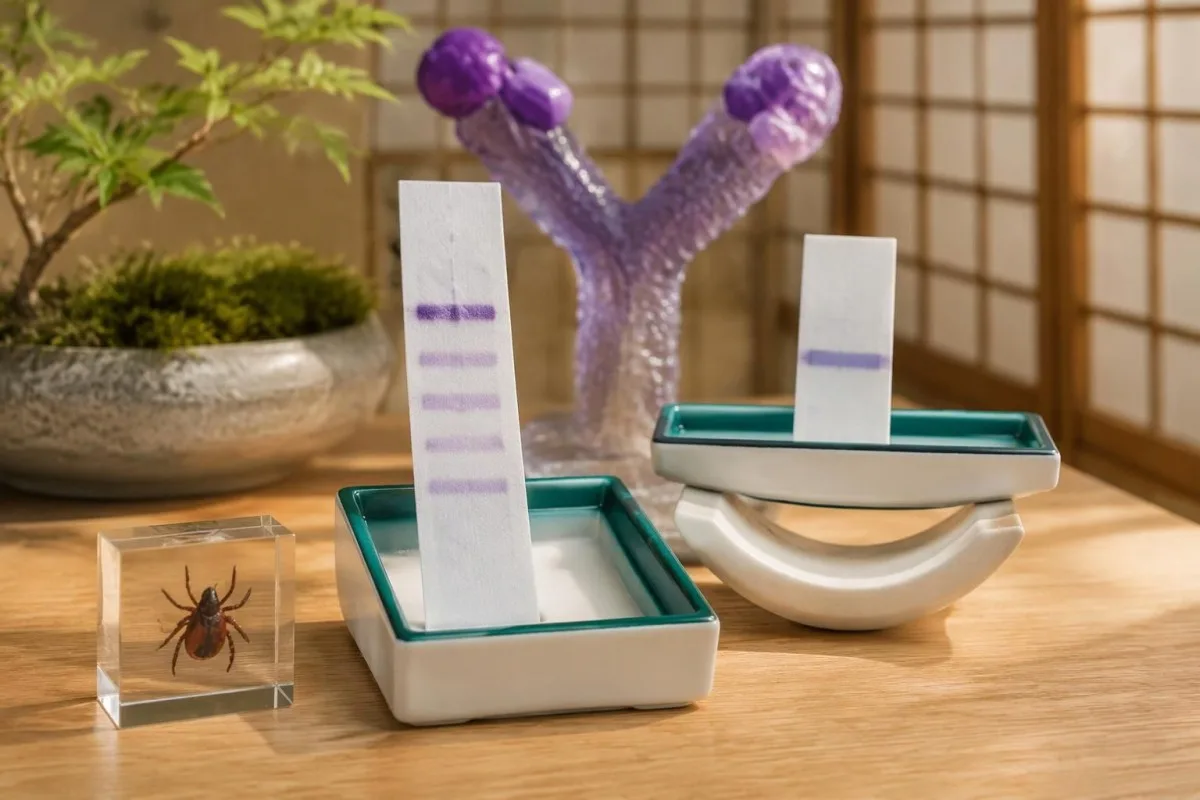
Moore et al. (2016) explains why individual bands and incomplete testing sequences create diagnostic errors; Mead et al. (2019) establishes the CDC recommendation for appropriately cleared modified algorithms. Lantos et al. (2021), publishing the 2020 guideline, connects testing to clinical manifestations, including early rash, arthritis and neurological disease; these sources support different parts of the reasoning rather than one universal band shortcut.
The 2 Figshare records address women's hormonal health and multilingual AI-assisted hantavirus triage, respectively, not Lyme immunoblot performance. A deployment involving 50,000 interpreted reports, as described in the hantavirus publication's title, cannot establish sensitivity, specificity or patient benefit for Lyme diagnosis; those claims would require Lyme-specific methods, reference standards and evaluation populations.
materialele Kantesti inteligența artificială responsabilă place report explanation alongside—not above—the laboratory and clinician, including when IgM appears after 30 days of symptoms. For symptoms linked to cycle changes or menopausal transition, our hormonal symptom guide addresses a separate assessment pathway; symptom overlap is a reason to investigate carefully, not evidence that a reactive Lyme band explains everything.
Întrebări frecvente
Poate însemna o singură bandă pozitivă la testul Western blot pentru boala Lyme că am boala Lyme?
O singură bandă reactivă la testul Western blot pentru boala Lyme nu stabilește diagnosticul de boală Lyme. Criteriile convenționale din SUA impun cel puțin 2 dintre cele 3 benzi IgM desemnate în primele 30 de zile de la debutul simptomelor sau 5 dintre cele 10 benzi IgG desemnate, în cadrul algoritmului adecvat de testare în doi pași. O singură bandă poate reflecta reactivitate încrucișată sau un răspuns anticorpic precoce incomplet, în funcție de situație. O erupție tipică de eritem migrator după o expunere adecvată poate susține totuși diagnosticul clinic, chiar dacă serologia efectuată precoce este negativă.
De ce sunt pozitive unele benzi pentru boala Lyme, dar testul în ansamblu este negativ?
Un test pentru boala Lyme poate conține benzi reactive, dar să rămână negativ, deoarece imunoblotul nu a îndeplinit tiparul validat impus de algoritmul de testare. De exemplu, 3 benzi IgG eligibile nu ating pragul convențional de 5 din 10 benzi IgG. Un test de screening de primă etapă pozitiv sau echivoc, urmat de imunobloturi adecvate negative, este interpretat ca negativ în cadrul testării standard în două etape. Dacă simptomele sunt foarte recente, medicul poate lua în considerare repetarea testării la un interval adecvat, în loc să reclasifice tiparul incomplet drept pozitiv.
Ce înseamnă o bandă Lyme pozitivă de 41 kDa?
Banda Lyme de 41 kDa reflectă de obicei legarea anticorpilor de flagelină, o proteină bacteriană implicată în motilitate, care poate reacționa încrucișat cu anticorpi fără legătură cu boala Lyme. Este doar 1 dintre benzile desemnate utilizate în criteriile convenționale de imunoblotare și nu poate diagnostica singură boala Lyme. Moore et al. (2016) au citat un studiu care a identificat această bandă la 43% dintre persoanele sănătoase din grupul de control, deși acest procent nu reprezintă o rată universală pentru toate testele. Secvența completă de testare și tabloul clinic determină dacă rezultatul susține diagnosticul de boală Lyme.
Un rezultat pozitiv pentru IgM anti-Borrelia și negativ pentru IgG este o dovadă a unei infecții recente?
Pozitivitatea IgM pentru boala Lyme, în absența IgG, poate susține diagnosticul unei infecții precoce numai dacă se încadrează în algoritmul de testare corespunzător, în tabloul clinic și în momentul evoluției bolii. IgM izolat nu trebuie folosit pentru a susține diagnosticul de boală Lyme dacă simptomele durează de peste 30 de zile, deoarece persistența IgM sau rezultatele IgM nespecifice pot induce în eroare interpretarea. De exemplu, 2 benzi IgM care îndeplinesc criteriile în ziua 14 au o semnificație diferită de același tipar după 3 luni de simptome continue. Regula de temporizare se referă la debutul simptomelor, nu la ziua în care a fost recoltată proba de laborator.
Pot avea un test pozitiv pentru boala Lyme fără nicio bandă la Western blot?
Da: un algoritm modificat validat, în două etape, pentru boala Lyme folosește două teste imunoenzimatice efectuate secvențial și este posibil să nu includă deloc un test Western blot. În 2019, CDC a recomandat algoritmi modificați autorizați corespunzător de FDA. Unele combinații de teste măsoară anticorpii totali, în timp ce altele furnizează rezultate separate pentru IgM și IgG, astfel că regulile convenționale de numărare a benzilor nu se aplică tuturor rapoartelor. Întrebați laboratorul ce algoritm și ce combinație de teste au stat la baza interpretării finale.
Ar trebui să dispară benzile de pe imunoblotul Western pentru boala Lyme după tratamentul cu antibiotice?
Benzile de pe testul Western blot pentru boala Lyme nu trebuie să dispară după un tratament reușit, deoarece anticorpii pot persista ani sau chiar decenii. Un tipar IgG persistent cu 5 benzi nu dovedește existența unei infecții active, iar repetarea testării benzilor nu este o metodă validată pentru confirmarea vindecării. Răspunsul la tratament se evaluează în funcție de evoluția clinică și de constatările obiective relevante, nu prin obligativitatea ca panelul de anticorpi să devină negativ. Simptomele noi sau o nouă expunere la căpușe necesită o evaluare clinică nouă, deoarece anticorpii vechi nu pot confirma o reinfectare.
Aflați cum se citesc analizele de sânge
Încărcați buletinul de analize, iar AI-ul Kantesti explică fiecare biomarker în limbaj simplu, în câteva secunde. Folosit de peste 2 milioane de persoane din întreaga lume.
Referințe
- Klein, T., Mitchell, S., & Weber, H. (2026). Ghidul sănătății femeilor: ovulație, menopauză și simptome hormonale. Kantesti AI Medical Research. DOI
- Klein, T., Mitchell, S., & Weber, H. (2026). Suport multilingv pentru deciziile clinice asistat de AI în triajul precoce al hantavirozei: proiectare, validare inginerească și implementare în lumea reală în cadrul a 50.000 de rapoarte de interpretare a analizelor de sânge. Kantesti AI Medical Research. DOI
- Moore A et al. (2016). Current Guidelines, Common Clinical Pitfalls, and Future Directions for Laboratory Diagnosis of Lyme Disease, United States. Emerging Infectious Diseases. DOI PubMed
- Mead P et al. (2019). Updated CDC Recommendation for Serologic Diagnosis of Lyme Disease. Raport săptămânal MMWR privind morbiditatea și mortalitatea. DOI
- Lantos PM et al. (2021). Clinical Practice Guidelines by the Infectious Diseases Society of America (IDSA), American Academy of Neurology (AAN), and American College of Rheumatology (ACR): 2020 Guidelines for the Prevention, Diagnosis and Treatment of Lyme Disease. Boli infecțioase clinice. DOI
- 2M+Teste analizate
- 127+Țări
- 100+Limbi
Despre echipa medicală


Semnale de încredere E-E-A-T
Experienţă
Revizuire clinică condusă de medici a fluxurilor de lucru pentru interpretarea analizelor.
Expertiză
Focalizare pe medicina de laborator asupra modului în care biomarkerii se comportă în context clinic.
Autoritate
Revizuit medical de Dr. Thomas Klein, cu contribuții din partea Dr. Sarah Mitchell și Prof. Dr. Hans Weber.
Încredere
Interpretare bazată pe dovezi, cu căi clare de urmărire pentru a reduce alarmele.






Declinare a răspunderii medicale
Acest articol are doar scop educațional și nu constituie sfat medical. Consultă întotdeauna un furnizor calificat de servicii medicale pentru decizii privind diagnosticarea și tratamentul.
Publicat · Contactați echipa editorială
Publicat de Kantesti Ltd, înregistrată în Anglia și Țara Galilor, numărul companiei. 17090423, Londra, Regatul Unit.
