
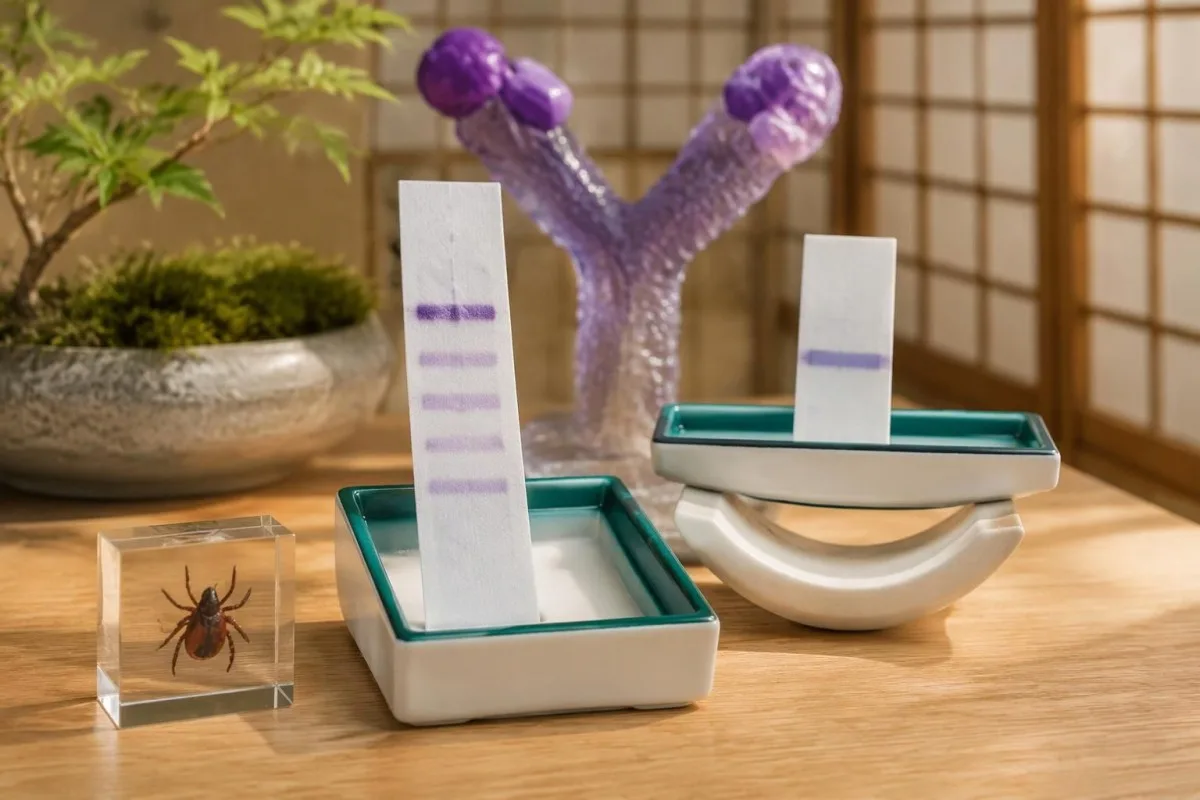
Reaktif bir bant, antikor bağlanmasını gösterir; tanı koydurmaz. Bu bulgunun Lyme hastalığını destekleyip desteklemediğini test algoritmasının tamamı, maruziyet öyküsü ve belirtilerin zaman çizelgesi belirler.

Temel çıkarımlar
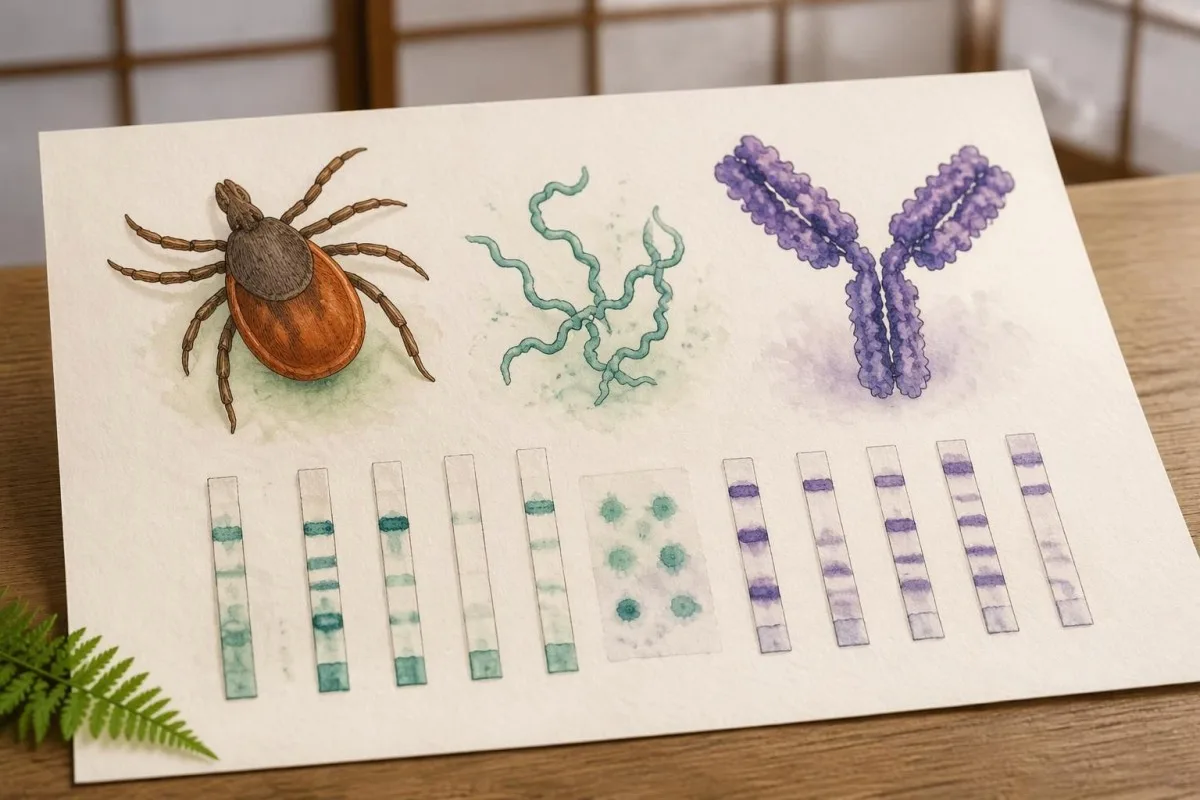
- Tek tek bantlar Lyme hastalığını kanıtlamaz; nispeten özgül bir bant bile doğrulanmış 2 aşamalı test algoritması kapsamında yorumlanmalıdır.
- Geleneksel IgM kriterleri belirlenmiş 3 banttan en az 2'sini gerektirir: yaklaşık 23–25, 39 ve 41 kDa.
- Geleneksel IgG kriterleri belirlenmiş 10 banttan en az 5'ini gerektirir: 18, 23, 28, 30, 39, 41, 45, 58, 66 ve 93 kDa.
- 30 gün kuralı belirtiler 30 günden uzun süredir devam ediyorsa izole IgM'nin Lyme tanısını desteklememesi gerektiği anlamına gelir.
- Genel sonuç negatif reaktif bantlarla bir arada bulunabilir; çünkü laboratuvar herhangi bir bandın görülüp görülmediğini değil, doğrulanmış bir örüntüyü değerlendirir.
- Modifiye iki aşamalı test immünoblot yerine art arda 2 enzim immünoassayı kullanır; bant listesi sunmayabilir.
- Erken test antikorlar gelişmeden önce negatif olabilir; uygun maruziyet koşullarında görülen tipik eritema migrans döküntüsü klinik olarak tanı alır.
- Kalıcı antikorlar tedaviden sonra yıllarca saptanabilir kalabilir ve devam eden enfeksiyonu ortaya koyamaz ya da iyileşmeyi ölçemez.
Pozitif bir Lyme Western blot bandı gerçekte ne anlama gelir?
A pozitif Lyme Western blot bandı antikorların bir test antijenine bağlandığı anlamına gelir; tek başına Lyme hastalığını ortaya koymaz. Geleneksel ABD iki aşamalı testinde IgM için belirtilerin ilk 30 günü içinde belirlenmiş 3 bandın 2'si, IgG içinse 10 bandın 5'i gerekir; modifiye testte bunun yerine 2 immünoassay kullanılır.

The genel sonuç görünen her çizgiyi ayrı bir tanı olarak ele almak yerine, ilk aşama tarama testini uygun ikinci aşama sonucuyla birleştirir. Bu nedenle 1 reaktif bant gösteren bir raporda doğru biçimde negatif yazabilir; tam antikor sonucu pozitif olsa bile maruziyet, uyumlu bulgular ve geçirilmiş Lyme hastalığı dikkate alınmalıdır.
Bant kimliği dar kapsamlı bir soruyu yanıtlar: Bu testin koşullarında antikor bağlanmasını hangi antijen çekmiştir? Hastaların genellikle önem verdiği şu 3 soruyu yanıtlamaz: enfeksiyon şu anda mevcut mu, belirtilerini açıklıyor mu veya antibiyotik gerekiyor mu; bu konulara ilişkin rehberimiz pozitif antikor sonuçları bu konuları birbirinden ayırır.
Kantesti bir AI kan testi analizörü Lyme raporunda neden reaktif bantlar bulunurken iki aşamalı yorumun negatif olduğunu açıklamaya yardımcı olabilir. Laboratuvarın nihai yorumunu, test yöntemini ve belirtilerin süresini temel bağlam olarak kabul ederiz; yüklenen bir rapordaki vurgulanmış çizgileri sayarak geçersiz kılınamayacak ayrıntılar olarak değil.
Geleneksel iki aşamalı Lyme testi sonucu nasıl belirler
Standart iki aşamalı test bir enzim immünoassayıyla, bazen de immünofloresan testiyle başlar ve ilk test pozitif ya da şüpheli olduğunda immünoblota geçer. İki aşama birlikte işler; yalnızca pozitif bir tarama sonucu, doğrulanmış pozitif Lyme serolojisi sonucu değildir.

A pozitif veya şüpheli ilk aşama testinin ardından uygun immünoblotların negatif olması standart algoritmaya göre negatif olarak yorumlanır. İlk tarama testi, olası yanıtların daha fazlasını yakalamak üzere tasarlanmıştır; ikinci aşama ise özgül olmayan reaktiviteyi eler. Moore ve arkadaşları, bu dengeyi ve yaygın yorumlama hatalarını 2016'da Emerging Infectious Diseases dergisinde açıklamıştır.
Bir tarama testindeki 1,4 indeks değeri başka bir testteki 1,4 değeriyle eşdeğer değildir; çünkü antijen bileşimi ve üretici eşik değerleri farklıdır. Benzer şekilde, şüpheli bir tarama sonucu, algoritmanın tamamlanması gerektiğini belirtir; enfeksiyon ile enfeksiyon olmaması arasında bir tanı değildir; kalitatif sonuçlar ve kantitatif sonuçlar rapor biçimlerinin neden önemli olduğunu açıklar.
Zamanlamayı veya testin uygunluğunu yeniden değerlendirmek için klinik bir neden olmadan, negatif tarama testinin ardından immünoblot istemek, performansı değerlendirilmiş olan sırayı atlar. Şu 3 bilgiyi isteyin: tarama sonucu, ikinci aşama yorumu ve her ikisinin de aynı doğrulanmış test yoluna ait olup olmadığı; eksik bir rapor yalnızca bantlara bakılarak yeniden oluşturulmamalıdır.
Lyme Western blot bantları açıklandı: IgM ve IgG kriterleri
Geleneksel ABD ölçütlerine göre pozitif IgM immünoblot 23–25, 39 ve 41 kDa bantlarının en az 2'sinin bulunmasını gerektirir. pozitif IgG immünoblot requires at least 5 of the 18, 23, 28, 30, 39, 41, 45, 58, 66 and 93 kDa bands.
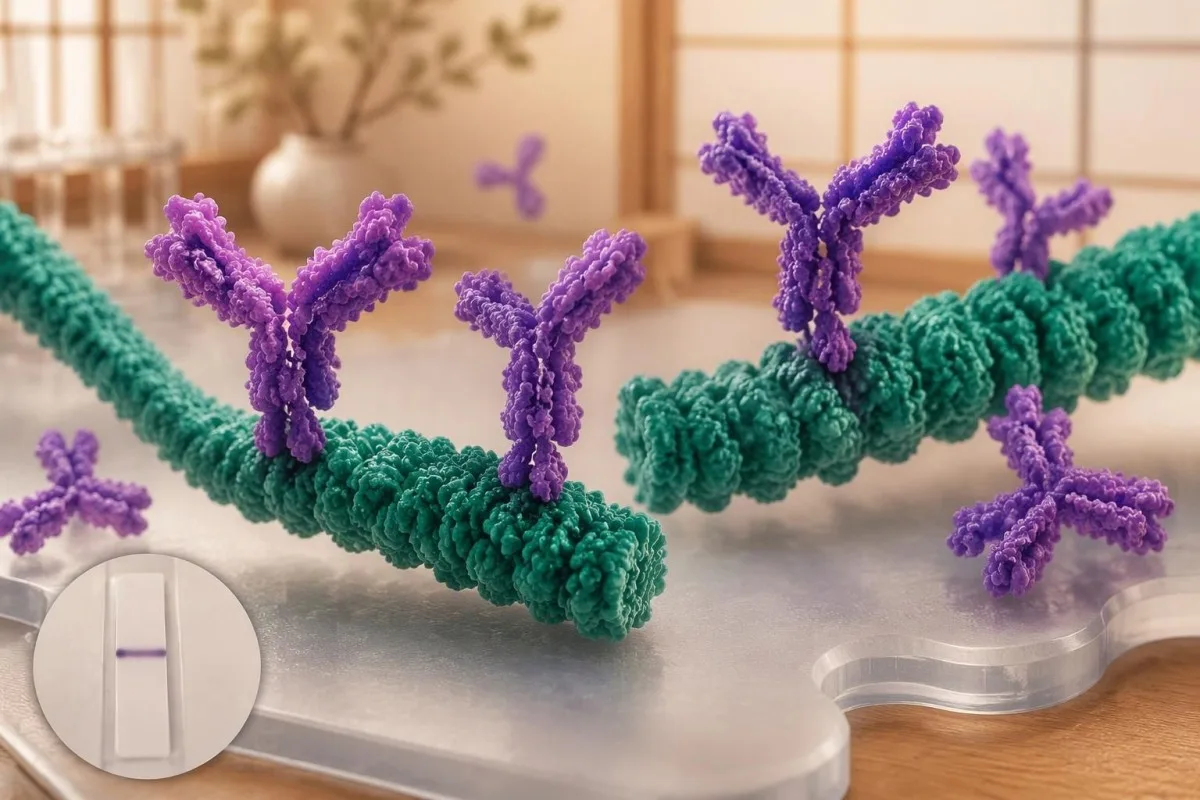
Kilodaltons, abbreviated kDa, describe approximate protein molecular mass, not antibody concentration or disease severity. The approximately 23–25 kDa band commonly represents outer surface protein C, 39 kDa represents BmpA and 41 kDa represents flagellin; the numbers identify antigen regions, so a higher-numbered band does not mean a more advanced infection.
The IgG list's 58 kDa criterion excludes GroEL, and reports may use assay-specific names or approximate mass conventions rather than identical labels. Because not every commercial strip uses the same antigen preparation, our kan testi belirteci kılavuzumuz should complement—not replace—the actual laboratory legend and the assay manufacturer's interpretation instructions.
Bands at 31 and 34 kDa are not part of the conventional CDC IgG counting criteria, even though they may appear on some reports. Their absence from that list does not make them meaningless biologically, but adding them to manufacture a 5-band positive result changes the validated rule; neither band darkness nor extra bands quantify bacterial burden.
Bant 41 ve diğer reaktif bantlar neden yanlış sinyaller olabilir?
The 41 kDa band reacts with flagellin, a protein associated with bacterial movement, and can cross-react with antibodies unrelated to Lyme disease. A single reactive 41 kDa band is therefore insufficient to diagnose Lyme disease, even when a patient has fatigue, aching or a remembered tick bite.
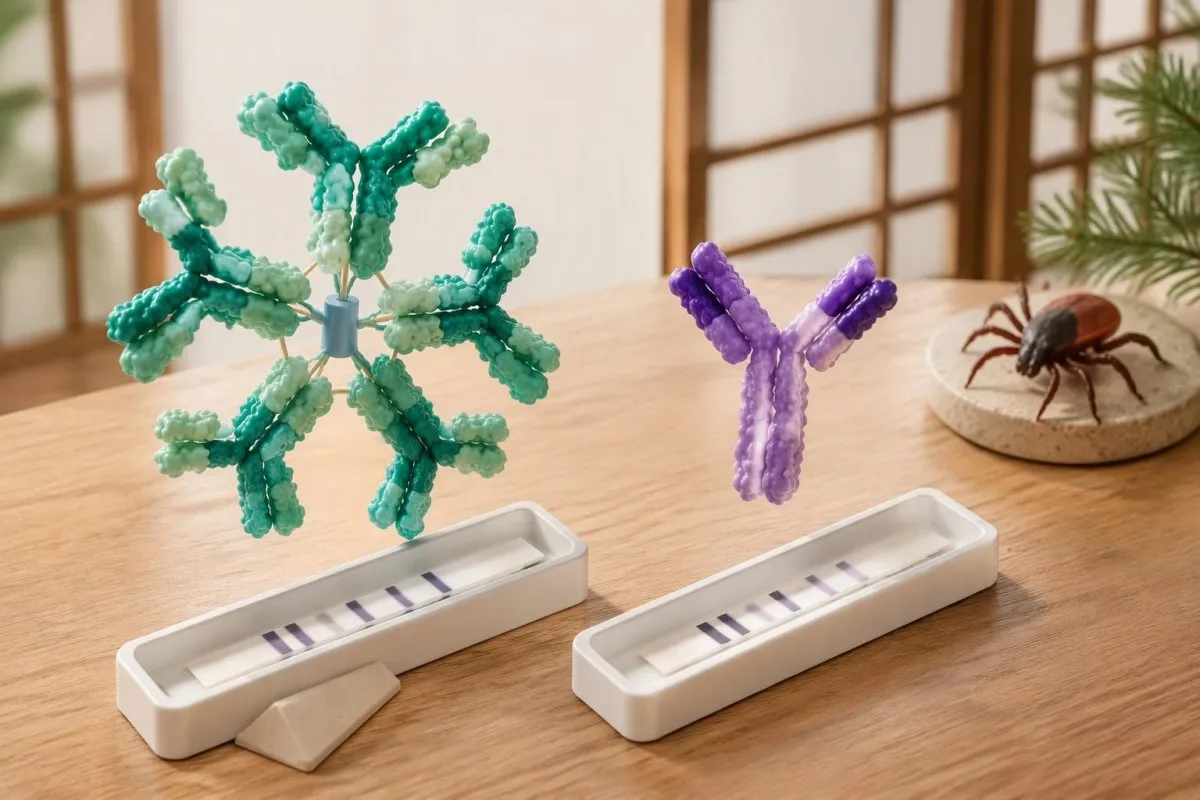
Moore et al. (2016) cited a study in which 41 kDa reactivity occurred in 43% of healthy controls, illustrating why this band cannot stand alone. That percentage is not a universal false-positive rate for every modern assay; it is evidence that recognizable antigen binding can occur in people without the clinical condition being investigated.
Epstein–Barr virus, syphilis, relapsing-fever Borrelia and some autoimmune conditions can contribute to false-positive Lyme serology, although the mechanism and affected assay vary. A recent mononucleosis-like illness should prompt attention to the complete EBV antibody pattern, not the assumption that 1 Lyme band proves a simultaneous tick-borne infection.
Cross-reactivity is not a reason to order every alternative antibody panel: 1 unexplained band usually does not justify broad autoimmune screening. When examination findings genuinely suggest an immune disorder, kompleman ve ANA yorumlaması belongs to a separate clinical question; repeated low-probability testing can generate additional misleading positives rather than a clearer answer.
Lyme IgM ve IgG: belirtilerdeki 30 gün kuralı neden önemlidir?
Lyme IgM should not be used to support a diagnosis when symptoms have lasted more than 30 days. IgM is most useful early, whereas an appropriate IgG response carries greater diagnostic weight later; the clock starts with symptoms of the suspected illness, not the testing date or remembered tick removal.
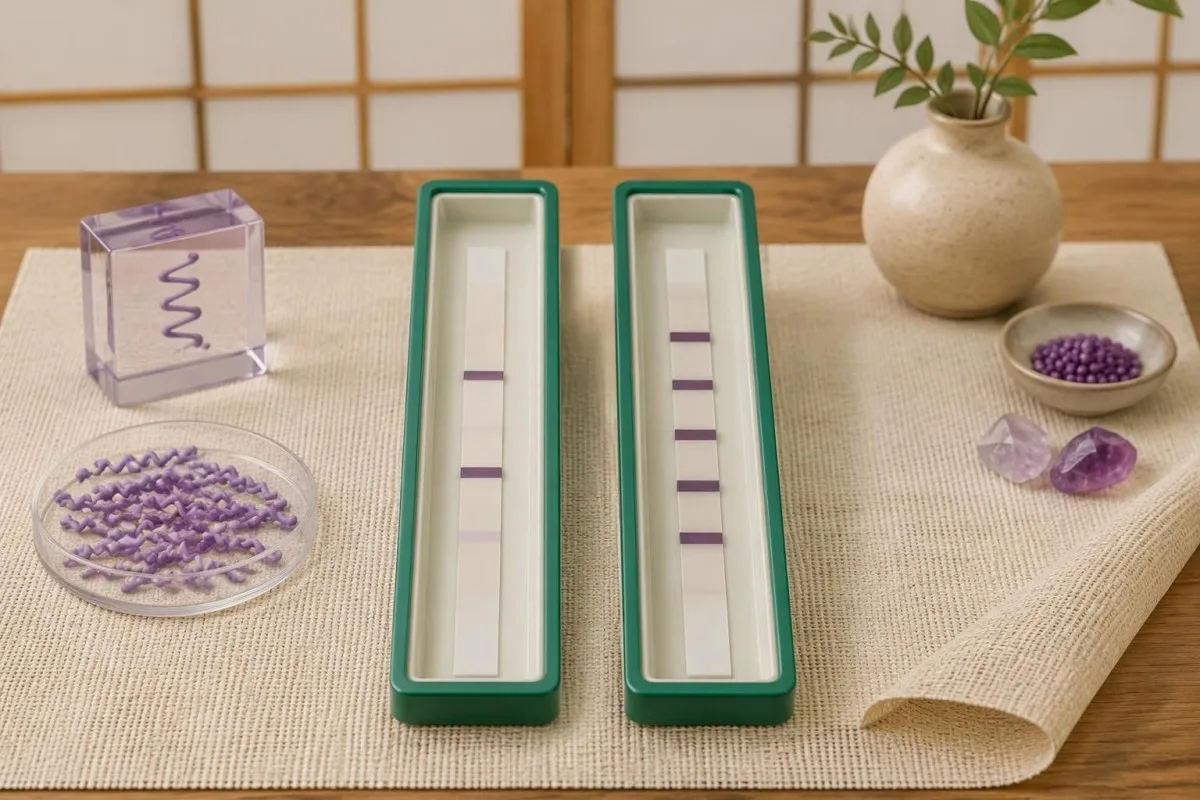
The 30-day restriction reduces misclassification from persistent or nonspecific IgM responses when later disease should usually have an established IgG response. It is an interpretation rule, not a biological switch that flips overnight: antibody maturation varies, and early treatment may alter seroconversion, but those exceptions do not make isolated late IgM reliable evidence.
For a hypothetical patient tested on day 75 of continuous symptoms, IgM bands 23 and 41 with negative IgG should not be used as proof of Lyme disease. By contrast, the same IgM pattern on day 12, following a reactive first-tier assay and compatible exposure, can support an early diagnosis; the numerical band count is identical, but its evidential value changes.
A positive IgM result does not automatically mean a new infection, a misconception also addressed in our Mycoplasma IgM interpretation guide. If symptoms began 8 weeks ago but one symptom appeared yesterday, clinicians need to decide whether this is a genuinely new illness or another feature of the original episode—not simply restart the IgM clock.
Lyme bantları pozitif ama genel sonuç negatif: örnekler
Positive Lyme bands but negative overall usually means the report did not meet the required pattern within the testing algorithm. For example, 3 designated IgG bands are below the conventional 5-of-10 threshold; that result is negative, not a smaller positive, and it does not measure how much infection is present.
Consider a clearly hypothetical 42-year-old with 10 weeks of fatigue, a reactive screening assay and IgG bands 18, 41 and 58. The IgG immunoblot is negative because only 3 qualifying bands are present; if the examination lacks objective Lyme findings, the next step is a symptom-focused assessment rather than antibiotics prescribed to treat the band's molecular masses.
A second hypothetical patient has a reactive screen, IgM bands 23 and 39, and compatible symptoms beginning 14 days earlier. This can meet the traditional early serologic criteria, but an atypical exposure history or a stronger alternative diagnosis still affects the clinical conclusion; Kantesti AI can explain the 2-of-3 rule without converting it into an independent diagnosis.
A third report lists 5 IgG bands but provides no first-tier result; the missing screening stage prevents straightforward confirmation of a standard 2-tier outcome. Confirmation requirements are assay-specific, as our HSV IgG confirmation guide also illustrates, so request the complete laboratory report rather than borrowing a cutoff or confirmation rule from another infection.
Modifiye iki aşamalı test, Western blot'tan nasıl farklıdır?
Modified two-tier testing, or MTTT, uses 2 sequential enzyme immunoassays instead of an enzyme immunoassay followed by an immunoblot. A report from this pathway may have no bands at all; its overall interpretation depends on the particular assay combination and its cleared instructions, not the conventional immunoblot band-count criteria.
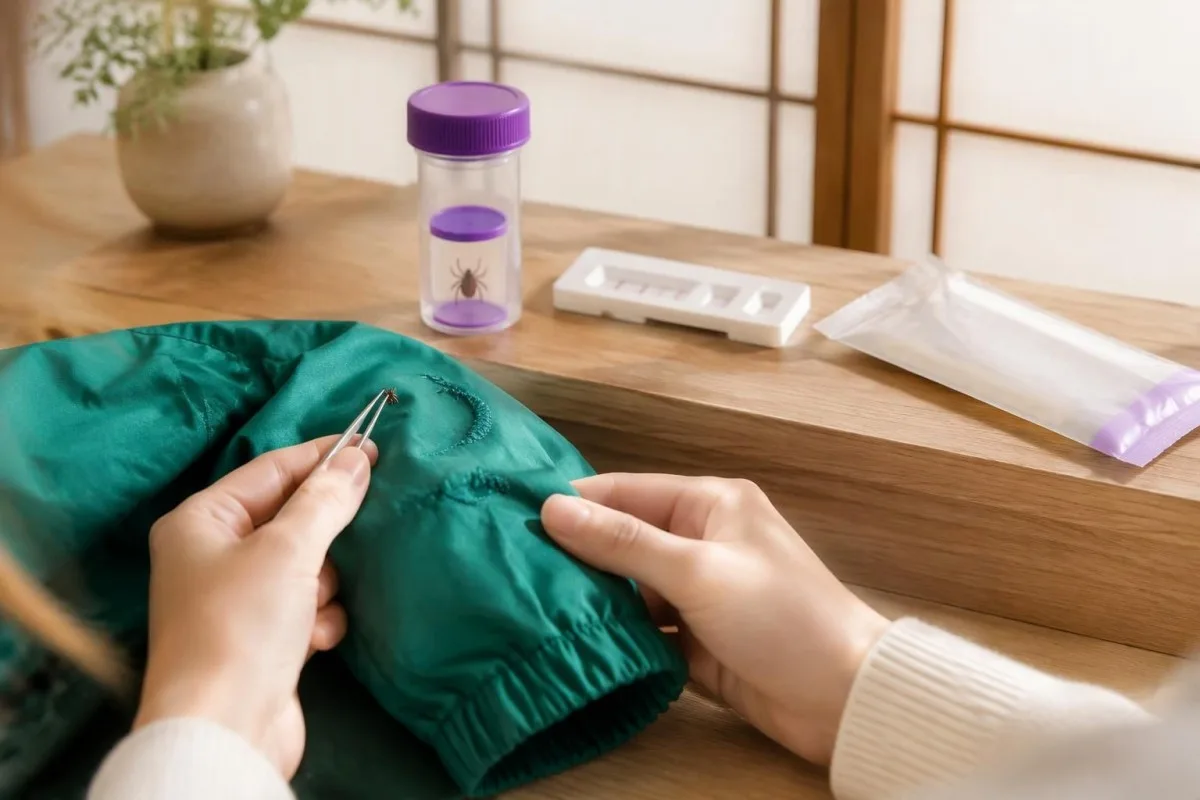
The 2019 CDC recommendation accepted modified algorithms using FDA-cleared assays for that purpose, following clearance of relevant test combinations (Mead et al., 2019). The change was not permission to combine any 2 tests: the evaluated pairing matters, and some combinations improve early sensitivity while preserving high specificity compared with standard two-tier testing.
Some modified algorithms measure total antibodies, while others report separate IgM and IgG components; consequently, the familiar 30-day IgM restriction cannot be mechanically applied to a total-antibody result. Kantesti is an AI kan tahlili yorumlama platformu that can help distinguish a 2-immunoassay report from an immunoblot report before discussing what its positive or negative designation means.
A second immunoassay is not simply a repeat of the same screening test, and an immunoblot is not routinely needed after a completed validated MTTT result. Our Chagas doğrulama kılavuzumuz illustrates the broader principle of complementary assays, but its 2-test rules are different; ask your laboratory which Lyme algorithm produced the final interpretation.
Enfeksiyona rağmen Lyme testi erken dönemde negatif çıkabilir mi?
Lyme antibody testing can be negative early because antibodies have not yet reached detectable levels. A typical erythema migrans rash with an appropriate exposure history is diagnosed clinically rather than by waiting for a positive immunoblot; a negative result during the first 1–2 weeks does not safely exclude that presentation.
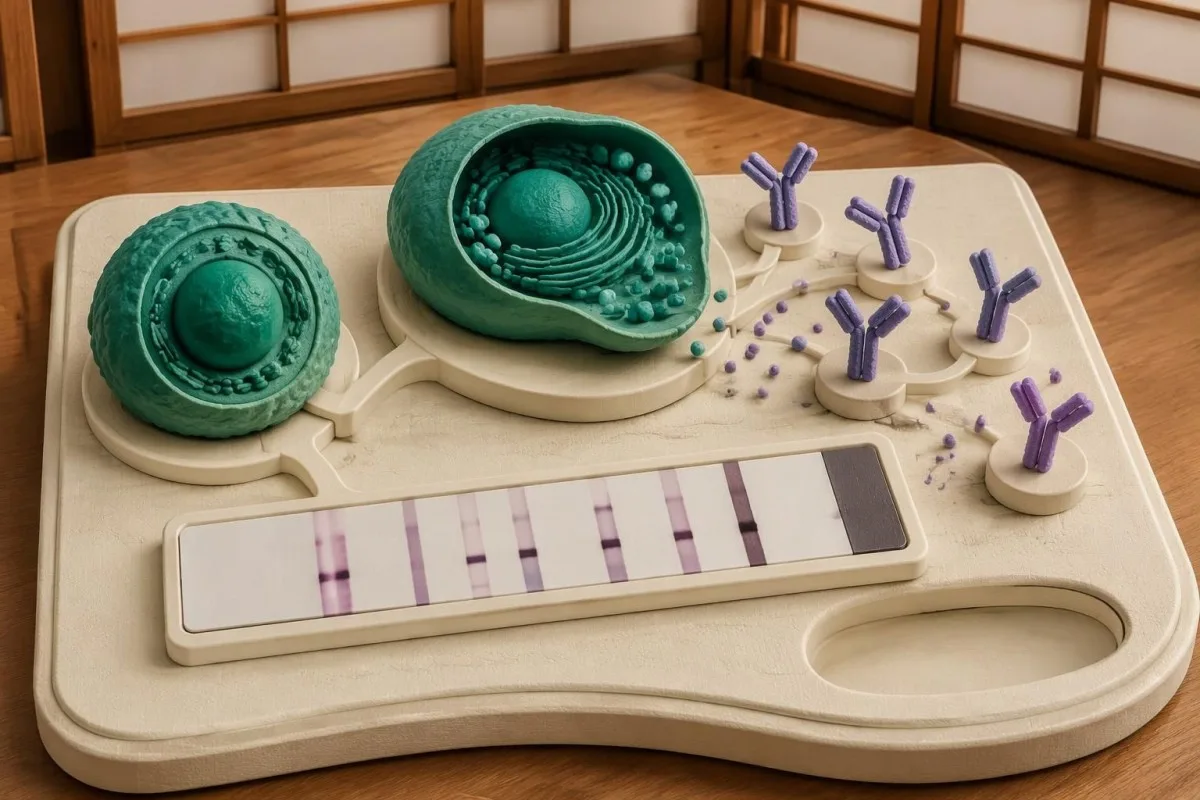
Across early-infection settings, conventional 2-tier sensitivity has been reported at approximately 30–40%, while specificity remains high when testing and interpretation are appropriate (Moore et al., 2016). These are population estimates, not a personal probability: sensitivity changes with the clinical manifestation, time since onset and whether the patient has already received antibiotics.
For a rash suggestive of but not typical for erythema migrans, the 2020 IDSA/AAN/ACR guideline supports acute serology and, if initially negative, a convalescent sample at least 2–3 weeks later (Lantos et al., 2021). The same guideline recommends clinical diagnosis for a typical lesion; a rash need not have textbook concentric rings to warrant assessment.
Repeating a test 24 hours later usually offers little advantage when the limitation is antibody development rather than a processing error. Our spotted fever testing guide explains a related timing problem, but suspected spotted fever has its own urgent treatment rules; do not delay care for an expanding rash or significant illness while waiting for more bands.
Pozitif Lyme IgG, aktif enfeksiyon veya başarısız tedavi anlamına mı gelir?
Positive Lyme IgG cannot distinguish active infection from a previous infection that has resolved. Lyme antibodies can remain detectable for years or decades, and repeat immunoblot testing is not a test of cure; neither a persistent 5-band pattern nor changes in band intensity establish that treatment failed.
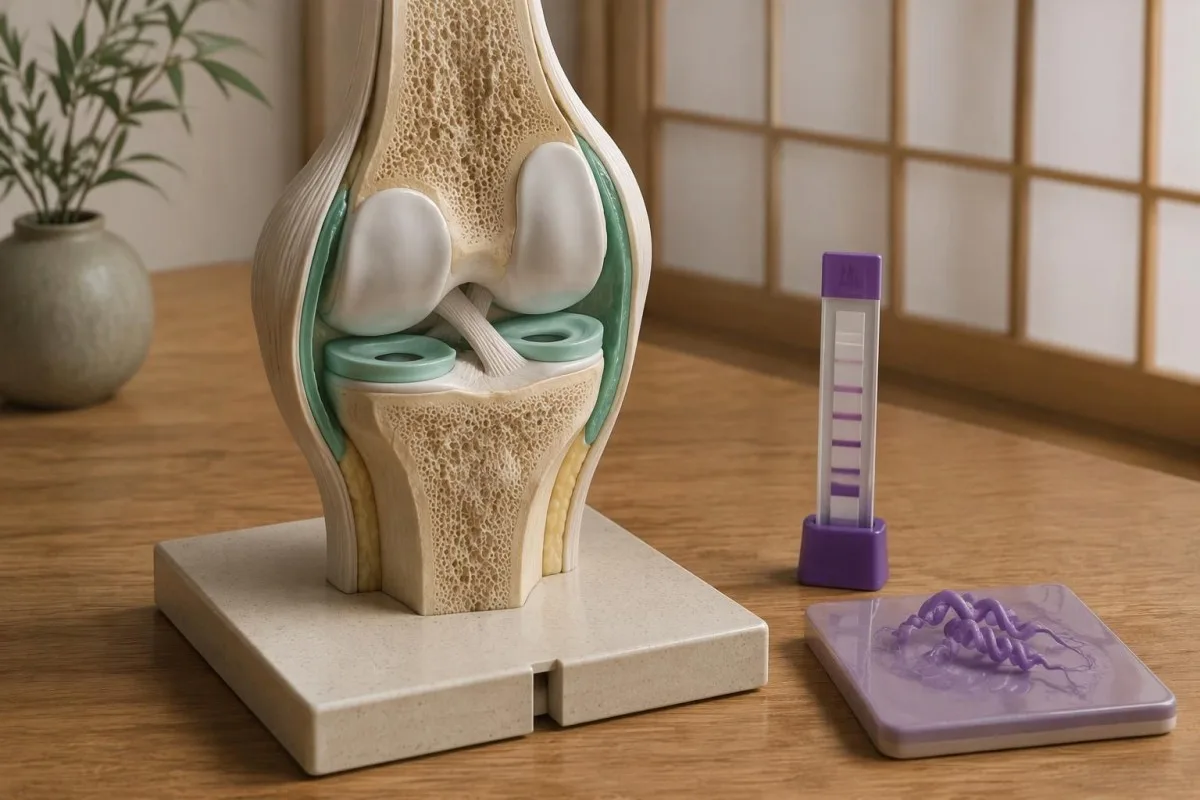
The 2020 IDSA/AAN/ACR guideline describes persistence of both IgM and IgG responses after infection, which complicates interpretation in previously affected patients (Lantos et al., 2021). A positive result obtained 4 years after treatment must therefore be compared with the clinical history, not interpreted as a laboratory photograph of living bacteria in the body.
Reinfection can occur because previous Lyme disease does not provide reliable lifelong protection, but an old positive antibody result cannot prove a new episode. For a hypothetical person with positive IgG from 2019 and a new expanding rash after recent tick exposure, the new clinical findings matter more than whether a sixth band appears; CMV antikor desenlerinin aksine illustrate why exposure history and current illness are separate questions.
Persistent fatigue, pain or cognitive symptoms deserve evaluation even when no new laboratory evidence appears. The guideline recommends against additional antibiotics for persistent nonspecific symptoms after recommended treatment when there is no objective evidence of reinfection or treatment failure; 1 positive antibody panel cannot identify the cause of those symptoms or justify an open-ended antibiotic course.
Şüpheli Lyme artriti veya nörolojik hastalıkta IgG ne anlama gelir?
Lyme arthritis usually produces a strong IgG response, so isolated IgM is poor evidence for that diagnosis. Conventional two-tier serology has approximately 95–100% sensitivity in Lyme arthritis, according to the 2020 IDSA/AAN/ACR guideline; a negative appropriate IgG result should prompt serious consideration of other causes of joint swelling.
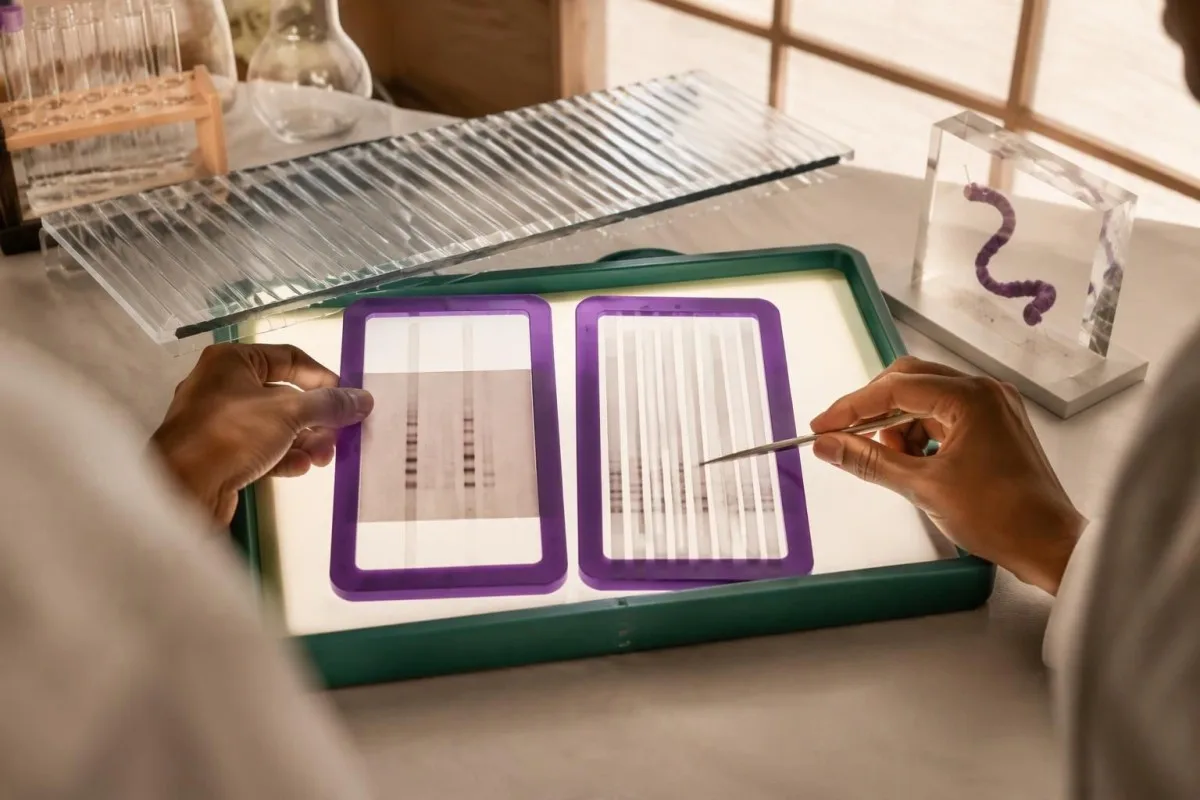
A hypothetical patient with a markedly swollen knee and only 2 IgM bands after 3 months of symptoms does not have the expected serologic pattern for Lyme arthritis. The clinician should reassess alternative causes and assay reliability rather than call this late Lyme based on IgM alone; when indicated, joint fluid examination answers additional questions that the antibody test cannot.
Suspected central nervous system Lyme disease requires clinical assessment and, when cerebrospinal fluid testing is undertaken, simultaneous CSF and serum for a validated antibody index. Testing CSF antibody alone or running a standalone CSF immunoblot is not the preferred approach; 1 elevated index may also persist after treatment, so it must be interpreted alongside the neurological findings and CSF cell response.
Numb feet or tingling do not become Lyme-specific because 41 kDa is reactive; neuropathy has metabolic, mechanical and immune causes. Our anti-MAG neuropathy guide explains one targeted alternative, while immunoglobulin panel interpretation clarifies that total serum IgG is different from the 5-of-10 Lyme-specific IgG immunoblot criterion.
Laboratuvarlar ve ülkeler neden farklı Lyme kriterleri kullanabilir?
Lyme immunoblot criteria are assay- and region-dependent, so conventional US 5-of-10 IgG counting rules should not automatically be imposed on every European report. European assays may use different Borrelia antigens and recombinant line blots because the species causing human Lyme borreliosis differ across regions.
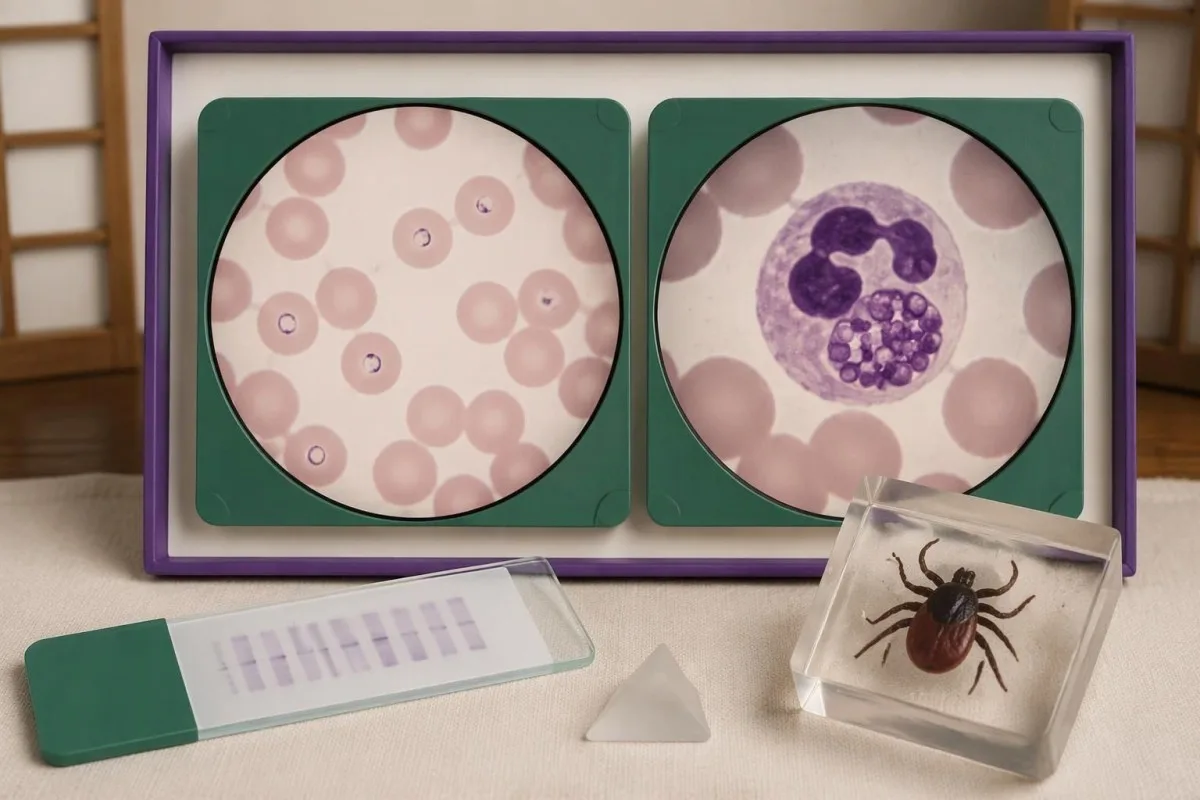
B. burgdorferi sensu stricto predominates in North America, while European disease also commonly involves B. afzelii and B. garinii. A report using VlsE, OspC or other recombinant antigen labels may therefore not resemble a 10-position conventional US blot; the clinically useful question is whether the assay was validated for the exposure setting and interpreted according to its instructions.
Different laboratory criteria are not automatically inferior, but claims that 1 or 2 bands prove disease require evidence for that assay's complete diagnostic performance. When reading a report described by Kantesti, consult the laboratory's interpretation and our tıbbi doğrulama çerçevesi separately; general AI assessment or a software benchmark is not proof that a particular Lyme assay has validated sensitivity and specificity.
Record 3 details before comparing reports from different laboratories: assay manufacturer, algorithm type and the country where exposure occurred. Our yapay zeka raporu kaynak kontrol kılavuzumuz explains why preserving source wording matters; apparent conversion from negative to positive may reflect a changed method or cutoff rather than a newly acquired infection or worsening illness.
Lyme bantları Babesia, Anaplasma veya diğer eş enfeksiyonları belirler mi?
Lyme Western blot bands do not diagnose tick-borne coinfections. Babesia, Anaplasma and Ehrlichia require their own clinical assessment and tests; 1 positive Lyme antibody result neither confirms nor excludes these infections, even when an exposure setting allows more than one tick-borne organism to be transmitted.

Babesiosis deserves consideration when relevant exposure accompanies fever and evidence such as anemia, low platelets or hemolysis, especially if fever persists during Lyme-directed treatment. A Babesia antibody titer of 1:256 alone does not establish current infection; our Babesia test interpretation guide explains why a cellular sample examination or PCR may be needed to demonstrate active infection.
Anaplazmoz can produce fever, leukopenia, thrombocytopenia and elevated liver enzymes, findings that should not be explained away as extra Lyme bands. PCR is most useful during the first week of illness and becomes less sensitive after appropriate antibiotics; our Anaplasma sample timing guide separates this early direct-detection window from later antibody interpretation.
Ehrlichiosis follows a different organism-specific testing pathway, and a negative early antibody result is not a safe reason to dismiss significant febrile illness. Our Ehrlichia PCR and titer guide explains why 2 samples collected at different times may help establish seroconversion; targeted testing should follow symptoms, geography and laboratory abnormalities rather than an indiscriminate panel ordered for isolated fatigue.
Lyme test raporu net değilse ne yapmalısınız?
For an unclear Lyme report, obtain the complete 2-tier interpretation, write down symptom onset and discuss exposure plus objective findings with a clinician. Faint or isolated bands do not determine urgency; fainting, chest pain, breathlessness, a markedly slow pulse or new neurological deficits require prompt assessment regardless of the antibody result.
Lyme carditis can cause heart conduction block, so fainting or palpitations after compatible exposure should not wait for an immunoblot to become positive. The 2020 IDSA/AAN/ACR guideline identifies a PR interval greater than 300 milliseconds, other arrhythmias or features of myopericarditis as reasons for hospital admission with monitoring; that interval is measured on an ECG, not inferred from band intensity.
New facial weakness warrants urgent assessment, and sudden facial droop with arm weakness or speech difficulty needs emergency evaluation for stroke rather than attribution to Lyme. Our inme uyarı işaretleri rehberimizdeki explains that distinction; for a routine appointment, bring 4 dates—possible exposure, first symptom, sample collection and antibiotic initiation—because each changes a different part of the reasoning.
Kantesti bir Yapay zekâ destekli kan testi analiz aracı that can help organize the 2-tier result, reported bands and missing clinical context into questions for your appointment. Our Yapay zeka teknolojisi rehberi describes the explanation workflow, but our AI cannot examine a rash, measure an ECG interval, confirm Lyme disease independently or decide whether you should start, stop or extend antibiotics.
Araştırma yayınları, kanıtların sınırları ve güvenli yorumlama
The clinical interpretation in this article rests on 3 directly relevant sources: a laboratory-diagnosis review, the CDC's modified two-tier recommendation and the IDSA/AAN/ACR Lyme guideline. The 2 additional Figshare publications listed below concern other health topics and must not be treated as validation of Lyme band interpretation or Lyme diagnosis.
Moore et al. (2016) explains why individual bands and incomplete testing sequences create diagnostic errors; Mead et al. (2019) establishes the CDC recommendation for appropriately cleared modified algorithms. Lantos et al. (2021), publishing the 2020 guideline, connects testing to clinical manifestations, including early rash, arthritis and neurological disease; these sources support different parts of the reasoning rather than one universal band shortcut.
The 2 Figshare records address women's hormonal health and multilingual AI-assisted hantavirus triage, respectively, not Lyme immunoblot performance. A deployment involving 50,000 interpreted reports, as described in the hantavirus publication's title, cannot establish sensitivity, specificity or patient benefit for Lyme diagnosis; those claims would require Lyme-specific methods, reference standards and evaluation populations.
Kantesti'nin Sorumlu yapay zekâ ilkelerimiz place report explanation alongside—not above—the laboratory and clinician, including when IgM appears after 30 days of symptoms. For symptoms linked to cycle changes or menopausal transition, our hormonal symptom guide addresses a separate assessment pathway; symptom overlap is a reason to investigate carefully, not evidence that a reactive Lyme band explains everything.
Sıkça sorulan sorular
Lyme Western blotunda tek bir pozitif bant, Lyme hastası olduğum anlamına gelebilir mi?
Lyme Western blot testinde tek bir reaktif bant, Lyme hastalığını kanıtlamaz. ABD’de kullanılan standart kriterlere göre, uygun iki aşamalı test algoritması kapsamında, belirtilerin ilk 30 gününde belirlenmiş 3 IgM bandından en az 2’sinin veya belirlenmiş 10 IgG bandından 5’inin pozitif olması gerekir. Tek bir bant, duruma bağlı olarak çapraz reaksiyonu veya erken dönemde antikor yanıtının henüz tamamlanmamış olmasını yansıtabilir. Uygun maruziyetin ardından ortaya çıkan tipik eritema migrans döküntüsü, erken seroloji negatif olsa bile klinik tanıyı destekleyebilir.
Bazı Lyme bantları pozitifken genel test sonucu neden negatif?
Bir Lyme testi, immünoblot test algoritmasının gerektirdiği doğrulanmış örüntüyü karşılamadığı için negatif kalırken reaktif bantlar içerebilir. Örneğin, 3 uygun IgG bandı, geleneksel 10 banttan 5’inin pozitif olması eşiğinin altında kalır. Pozitif veya şüpheli bir ilk basamak tarama testinin ardından uygun immünoblot testlerinin negatif çıkması, standart iki basamaklı testte negatif olarak yorumlanır. Belirtiler çok yakın zamanda başladıysa, klinisyen eksik örüntüyü pozitif olarak yeniden sınıflandırmak yerine uygun bir aralıkla testin tekrarlanmasını değerlendirebilir.
Pozitif 41 kDa Lyme bandı ne anlama gelir?
41 kDa’lık Lyme bandı genellikle, Lyme hastalığıyla ilgisi olmayan antikorlarla çapraz reaksiyon gösterebilen ve bakterinin hareketiyle ilişkili bir protein olan flagelline antikor bağlanmasını yansıtır. Bu, geleneksel immünoblot kriterlerinde kullanılan belirlenmiş bantlardan yalnızca biridir ve tek başına Lyme hastalığını teşhis edemez. Moore ve arkadaşları (2016), sağlıklı kontrollerin 43%’ünde bu bandın saptandığını bildiren bir çalışmaya atıfta bulunmuştur; ancak bu oran tüm testler için geçerli, evrensel bir oran değildir. Sonucun Lyme hastalığını destekleyip desteklemediğini, test sürecinin tamamı ve klinik bulgular belirler.
Lyme IgM pozitif ve IgG negatif olması yakın zamanda geçirilmiş bir enfeksiyonun kanıtı mıdır?
IgG negatifken Lyme IgM pozitifliği, yalnızca uygun test algoritması, klinik tablo ve zamanlamayla uyumlu olduğunda erken enfeksiyonu destekleyebilir. Belirtiler 30 günden uzun sürmüşse, kalıcı veya özgül olmayan IgM sonuçları yanlış yorumlamaya yol açabileceğinden, Lyme hastalığını desteklemek için tek başına IgM kullanılmamalıdır. Örneğin 14. günde saptanan 2 uygun IgM bandının anlamı, 3 ay boyunca kesintisiz belirtiler görüldükten sonra saptanan aynı örüntüden farklıdır. Zamanlama kuralı, laboratuvar örneğinin alındığı günü değil, belirtilerin başlangıcını esas alır.
Western blot bantlarının hiçbiri pozitif değilken Lyme testim pozitif çıkabilir mi?
Evet: doğrulanmış, modifiye edilmiş iki aşamalı Lyme algoritması ardışık 2 enzim immünoassayı kullanır ve hiç Western blot yapmayabilir. CDC, 2019’da FDA tarafından uygun şekilde onaylanmış modifiye algoritmaları önerdi. Bazı test kombinasyonları toplam antikorları ölçerken diğerleri ayrı IgM ve IgG sonuçları verir; bu nedenle geleneksel bant sayısı kuralları her rapor için geçerli değildir. Nihai yorumu hangi algoritmanın ve test kombinasyonunun oluşturduğunu laboratuvara sorun.
Lyme Western blot bantları antibiyotiklerden sonra kaybolmalı mı?
Lyme Western blot bantlarının başarılı tedaviden sonra kaybolması gerekmez; çünkü antikorlar yıllarca, hatta onlarca yıl kalıcı olabilir. Kalıcı 5 bantlı bir IgG paterni devam eden enfeksiyonu kanıtlamaz ve bant testlerinin tekrarlanması, tedavi başarısını ölçmek için doğrulanmış bir yöntem değildir. Tedavi yanıtı, antikor panelinin negatifleşmesinin beklenmesiyle değil, klinik seyir ve ilgili nesnel bulgularla değerlendirilir. Yeni belirtiler veya kene maruziyetinin tekrarlanması, eski antikorlar yeniden enfeksiyonu kanıtlayamayacağından, yeni bir klinik değerlendirme gerektirir.
Kan tahlili sonuçları ne anlama gelir
Laboratuvar raporunuzu yükleyin; Kantesti'nin AI'ı her biyobelirteci saniyeler içinde sade bir dille açıklar. Dünya genelinde 2 milyondan fazla kişi tarafından kullanılıyor.
Referanslar
- Klein, T., Mitchell, S. & Weber, H. (2026). Kadın Sağlığı Rehberi: Ovülasyon, Menopoz ve Hormonal Belirtiler. Kantesti AI Tıbbi Araştırma. DOI
- Klein, T., Mitchell, S. & Weber, H. (2026). Hantavirüsün Erken Triajı için Çok Dilli Yapay Zekâ Destekli Klinik Karar Desteği: Tasarım, Mühendislik Doğrulaması ve Yorumlanmış 50.000 Kan Tahlili Raporu Üzerinde Gerçek Dünya Uygulaması. Kantesti AI Tıbbi Araştırma. DOI
- Moore A et al. (2016). Current Guidelines, Common Clinical Pitfalls, and Future Directions for Laboratory Diagnosis of Lyme Disease, United States. Emerging Infectious Diseases. DOI PubMed
- Mead P et al. (2019). Updated CDC Recommendation for Serologic Diagnosis of Lyme Disease. MMWR Morbidite ve Mortalite Haftalık Raporu. DOI
- Lantos PM et al. (2021). Clinical Practice Guidelines by the Infectious Diseases Society of America (IDSA), American Academy of Neurology (AAN), and American College of Rheumatology (ACR): 2020 Guidelines for the Prevention, Diagnosis and Treatment of Lyme Disease. Clinical Infectious Diseases. DOI
- 2 milyondan fazlaAnaliz edilen testler
- 127+Ülkeler
- 100+Diller
Sağlık ekibi hakkında


E-E-A-T Güven Sinyalleri
Deneyim
Hekim liderliğinde laboratuvar yorumlama iş akışlarının klinik incelemesi.
Uzmanlık
Klinik bağlamda biyobelirteçlerin nasıl davrandığına odaklanan laboratuvar tıbbı.
Otorite
Dr. Thomas Klein tarafından tıbbi açıdan incelenmiş; Dr. Sarah Mitchell ve Prof. Dr. Hans Weber'in katkılarıyla hazırlanmıştır.
Güvenilirlik
Alarmı azaltmaya yönelik net takip yollarıyla kanıta dayalı yorumlama.






Tıbbi sorumluluk reddi
Bu makale yalnızca eğitim amaçlıdır ve tıbbi tavsiye niteliği taşımaz. Tanı ve tedavi kararları için her zaman yetkin bir sağlık hizmeti sağlayıcısına danışın.
Yayınlanmış · Yayın ekibiyle iletişime geçin
Kantesti Ltd tarafından yayımlanmıştır; İngiltere ve Galler'de kayıtlı, şirket no. 17090423, Londra, Birleşik Krallık.
