
Una banda reactiva muestra unión de anticuerpos, no un diagnóstico. El algoritmo completo de pruebas, los antecedentes de exposición y la cronología de los síntomas determinan si ese hallazgo respalda la enfermedad de Lyme.

Conclusiones clave
- Las bandas individuales no establecen la enfermedad de Lyme; incluso una banda relativamente específica necesita interpretarse dentro de un algoritmo validado de pruebas de dos niveles.
- Los criterios tradicionales de IgM requieren al menos 2 de 3 bandas designadas: aproximadamente 23–25, 39 y 41 kDa.
- Los criterios tradicionales de IgG requieren al menos 5 de 10 bandas designadas: 18, 23, 28, 30, 39, 41, 45, 58, 66 y 93 kDa.
- La regla de los 30 días significa que la IgM aislada no debe respaldar un diagnóstico de Lyme cuando los síntomas han durado más de 30 días.
- Un resultado general negativo puede coexistir con bandas reactivas porque el laboratorio evalúa un patrón validado, no si aparece alguna banda.
- Pruebas modificadas de dos niveles usan 2 inmunoensayos secuenciales en lugar de un inmunoblot; es posible que no proporcionen una lista de bandas.
- Pruebas tempranas puede ser negativo antes de que se desarrollen anticuerpos; un sarpullido típico de eritema migratorio en un contexto de exposición apropiado se diagnostica clínicamente.
- Anticuerpos persistentes puede seguir siendo detectable durante años después del tratamiento y no puede establecer una infección persistente ni medir la curación.
¿Qué significa realmente una banda positiva en la prueba de Western blot para Lyme?
A banda positiva en el Western blot para Lyme significa que los anticuerpos se unieron a un antígeno de prueba; por sí sola, no confirma la enfermedad de Lyme. En las pruebas tradicionales de dos niveles de EE. UU., la IgM requiere 2 de 3 bandas designadas durante los primeros 30 días de síntomas, mientras que la IgG requiere 5 de 10; las pruebas modificadas utilizan 2 inmunoensayos en su lugar.

El resultado general combina el ensayo de cribado de primer nivel con el resultado apropiado de segundo nivel, en vez de tratar cada franja visible como un diagnóstico distinto. Por tanto, un informe que muestre 1 banda reactiva puede indicar correctamente un resultado negativo, e incluso un resultado positivo completo de anticuerpos debe evaluarse teniendo en cuenta la exposición, los hallazgos compatibles y la enfermedad de Lyme previa.
La identidad de la banda responde a una pregunta específica: ¿a qué antígeno se unieron los anticuerpos en las condiciones de este ensayo? No responde a las 3 preguntas que suelen interesar a los pacientes: si la infección está presente ahora, si explica sus síntomas o si necesitan antibióticos; nuestra guía sobre resultados de anticuerpos positivos distingue estas cuestiones.
Kantesti es un Analizador de sangre con inteligencia artificial que puede ayudar a explicar por qué un informe de Lyme contiene bandas reactivas, pero una interpretación negativa en la prueba de 2 niveles. Consideramos que la interpretación final del laboratorio, el método del ensayo y la duración de los síntomas son un contexto esencial, no detalles que puedan obviarse contando las líneas resaltadas en un informe subido.
Cómo las pruebas tradicionales de Lyme de dos niveles determinan el resultado
Las pruebas estándar de dos niveles comienzan con un inmunoensayo enzimático o, a veces, un ensayo de inmunofluorescencia, y continúan con un inmunoblot cuando la primera prueba es positiva o indeterminada. Las 2 etapas funcionan conjuntamente; un resultado positivo de cribado por sí solo no es un resultado confirmado positivo de serología para Lyme.

A prueba inicial de primer nivel positiva o indeterminada, seguida de inmunoblots adecuados negativos se interpreta como negativa según el algoritmo estándar. El cribado inicial está diseñado deliberadamente para captar más respuestas posibles, mientras que el segundo nivel filtra la reactividad inespecífica; Moore et al. describieron este equilibrio y los errores de interpretación más frecuentes en Emerging Infectious Diseases en 2016.
Un índice de 1,4 en un ensayo de cribado no equivale a 1,4 en otro, porque la composición de antígenos y los umbrales del fabricante son distintos. Asimismo, un resultado de cribado indeterminado indica que se debe completar el algoritmo, no que el diagnóstico esté a medio camino entre infección y ausencia de infección; resultados cualitativos versus cuantitativos explica por qué importan los formatos de los informes.
Solicitar un inmunoblot después de un cribado negativo, sin una razón clínica para reconsiderar el momento o la idoneidad del ensayo, omite la secuencia cuyo rendimiento se evaluó. Solicite 3 datos: el resultado del cribado, la interpretación del segundo nivel y si ambos pertenecen a la misma vía de pruebas validada; no se debe reconstruir un informe incompleto basándose únicamente en las bandas.
Explicación de las bandas del Western blot para Lyme: criterios de IgM e IgG
Según los criterios convencionales de EE. UU., un inmunoblot de IgM positivo requiere al menos 2 de las bandas de 23–25, 39 y 41 kDa. Un inmunoblot de IgG positivo requires at least 5 of the 18, 23, 28, 30, 39, 41, 45, 58, 66 and 93 kDa bands.
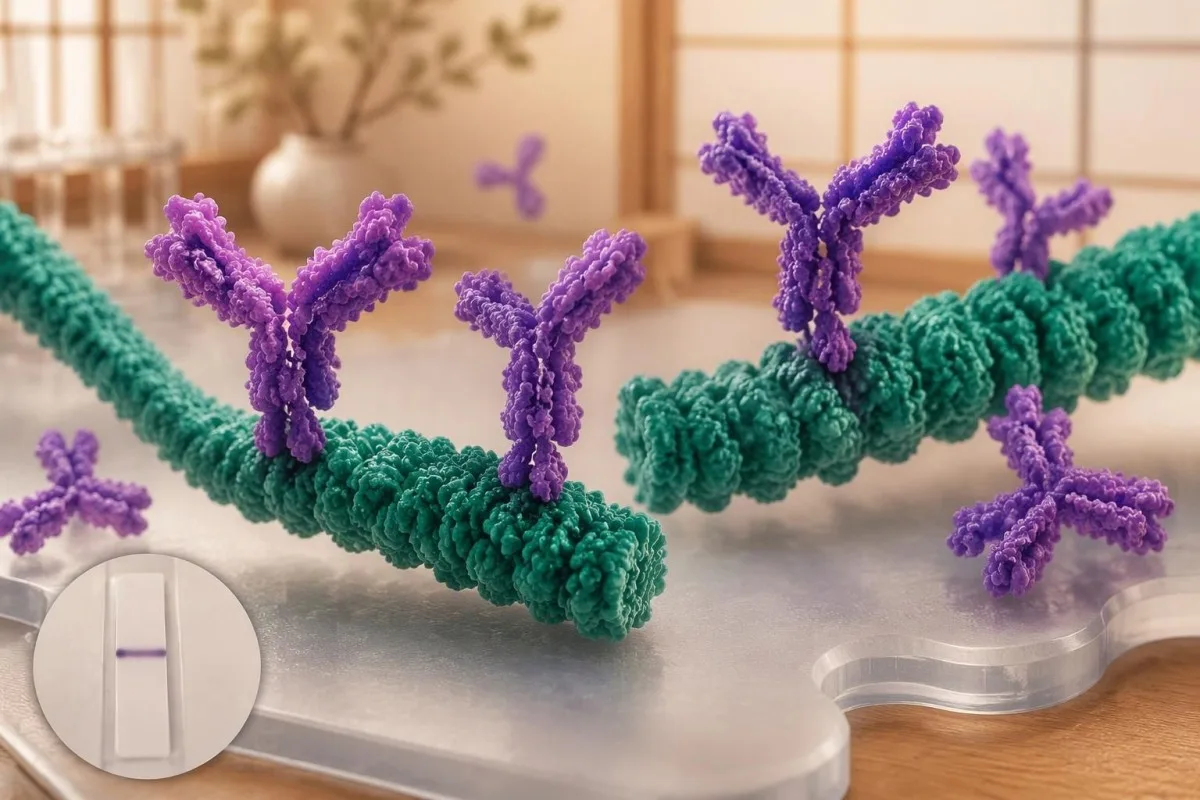
Kilodaltons, abbreviated kDa, describe approximate protein molecular mass, not antibody concentration or disease severity. The approximately 23–25 kDa band commonly represents outer surface protein C, 39 kDa represents BmpA and 41 kDa represents flagellin; the numbers identify antigen regions, so a higher-numbered band does not mean a more advanced infection.
The IgG list's 58 kDa criterion excludes GroEL, and reports may use assay-specific names or approximate mass conventions rather than identical labels. Because not every commercial strip uses the same antigen preparation, our guía de marcadores de análisis de sangre should complement—not replace—the actual laboratory legend and the assay manufacturer's interpretation instructions.
Bands at 31 and 34 kDa are not part of the conventional CDC IgG counting criteria, even though they may appear on some reports. Their absence from that list does not make them meaningless biologically, but adding them to manufacture a 5-band positive result changes the validated rule; neither band darkness nor extra bands quantify bacterial burden.
Por qué la banda 41 y otras bandas reactivas pueden ser señales falsas
El 41 kDa band reacts with flagellin, a protein associated with bacterial movement, and can cross-react with antibodies unrelated to Lyme disease. A single reactive 41 kDa band is therefore insufficient to diagnose Lyme disease, even when a patient has fatigue, aching or a remembered tick bite.
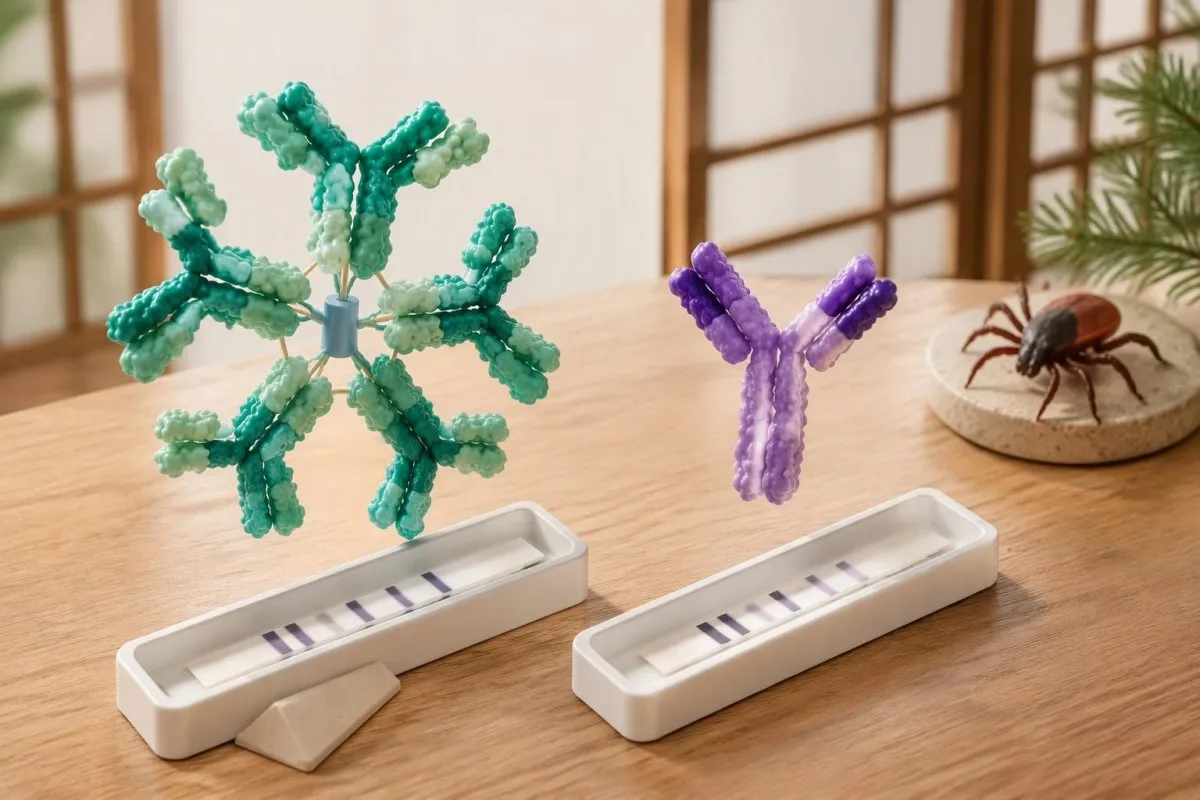
Moore et al. (2016) cited a study in which 41 kDa reactivity occurred in 43% of healthy controls, illustrating why this band cannot stand alone. That percentage is not a universal false-positive rate for every modern assay; it is evidence that recognizable antigen binding can occur in people without the clinical condition being investigated.
Epstein–Barr virus, syphilis, relapsing-fever Borrelia and some autoimmune conditions can contribute to false-positive Lyme serology, although the mechanism and affected assay vary. A recent mononucleosis-like illness should prompt attention to the complete EBV antibody pattern, not the assumption that 1 Lyme band proves a simultaneous tick-borne infection.
Cross-reactivity is not a reason to order every alternative antibody panel: 1 unexplained band usually does not justify broad autoimmune screening. When examination findings genuinely suggest an immune disorder, la interpretación del complemento y de los ANA belongs to a separate clinical question; repeated low-probability testing can generate additional misleading positives rather than a clearer answer.
IgM frente a IgG para Lyme: por qué importa la regla de los 30 días de síntomas
Lyme IgM should not be used to support a diagnosis when symptoms have lasted more than 30 days. IgM is most useful early, whereas an appropriate IgG response carries greater diagnostic weight later; the clock starts with symptoms of the suspected illness, not the testing date or remembered tick removal.
El 30-day restriction reduces misclassification from persistent or nonspecific IgM responses when later disease should usually have an established IgG response. It is an interpretation rule, not a biological switch that flips overnight: antibody maturation varies, and early treatment may alter seroconversion, but those exceptions do not make isolated late IgM reliable evidence.
For a hypothetical patient tested on day 75 of continuous symptoms, IgM bands 23 and 41 with negative IgG should not be used as proof of Lyme disease. By contrast, the same IgM pattern on day 12, following a reactive first-tier assay and compatible exposure, can support an early diagnosis; the numerical band count is identical, but its evidential value changes.
A positive IgM result does not automatically mean a new infection, a misconception also addressed in our Mycoplasma IgM interpretation guide. If symptoms began 8 weeks ago but one symptom appeared yesterday, clinicians need to decide whether this is a genuinely new illness or another feature of the original episode—not simply restart the IgM clock.
Bandas positivas para Lyme, pero resultado general negativo: ejemplos prácticos
Positive Lyme bands but negative overall usually means the report did not meet the required pattern within the testing algorithm. For example, 3 designated IgG bands are below the conventional 5-of-10 threshold; that result is negative, not a smaller positive, and it does not measure how much infection is present.
Consider a clearly hypothetical 42-year-old with 10 weeks of fatigue, a reactive screening assay and IgG bands 18, 41 and 58. The IgG immunoblot is negative because only 3 qualifying bands are present; if the examination lacks objective Lyme findings, the next step is a symptom-focused assessment rather than antibiotics prescribed to treat the band's molecular masses.
A second hypothetical patient has a reactive screen, IgM bands 23 and 39, and compatible symptoms beginning 14 days earlier. This can meet the traditional early serologic criteria, but an atypical exposure history or a stronger alternative diagnosis still affects the clinical conclusion; Kantesti AI can explain the 2-of-3 rule without converting it into an independent diagnosis.
A third report lists 5 IgG bands but provides no first-tier result; the missing screening stage prevents straightforward confirmation of a standard 2-tier outcome. Confirmation requirements are assay-specific, as our HSV IgG confirmation guide also illustrates, so request the complete laboratory report rather than borrowing a cutoff or confirmation rule from another infection.
En qué se diferencian las pruebas modificadas de dos niveles de un Western blot
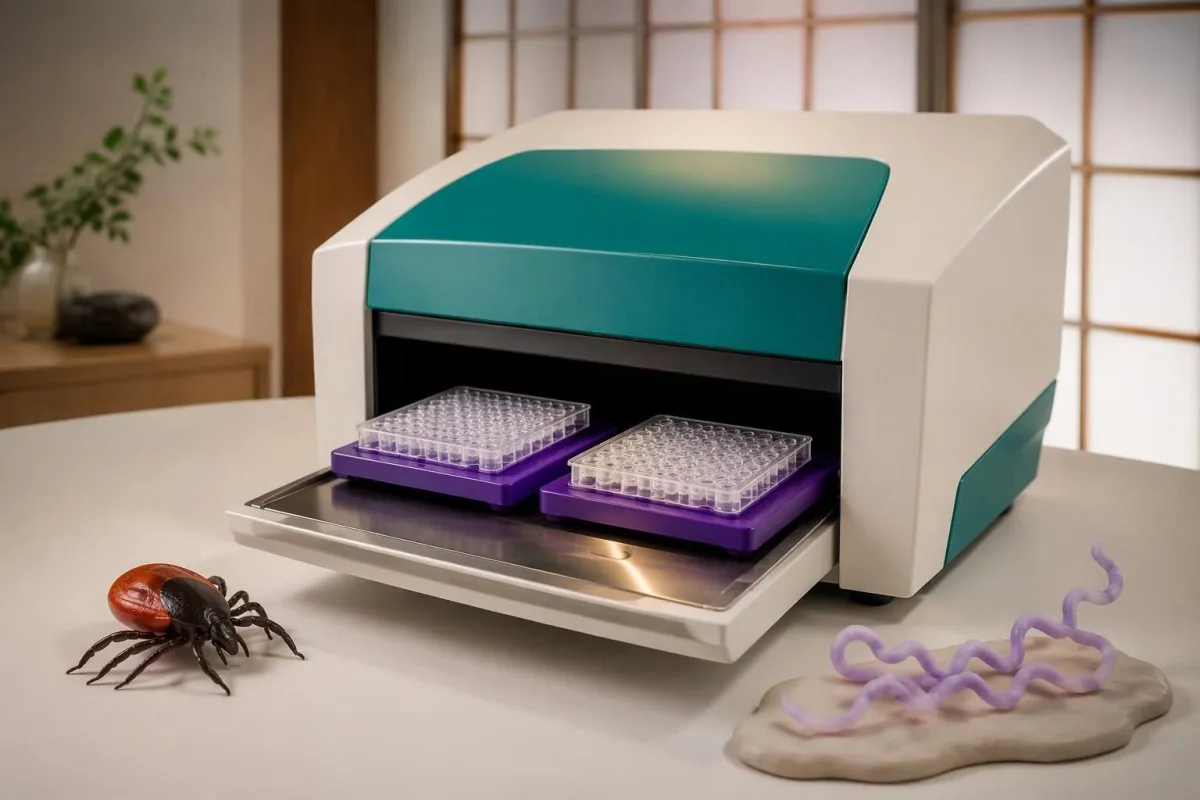
Modified two-tier testing, or MTTT, uses 2 sequential enzyme immunoassays instead of an enzyme immunoassay followed by an immunoblot. A report from this pathway may have no bands at all; its overall interpretation depends on the particular assay combination and its cleared instructions, not the conventional immunoblot band-count criteria.
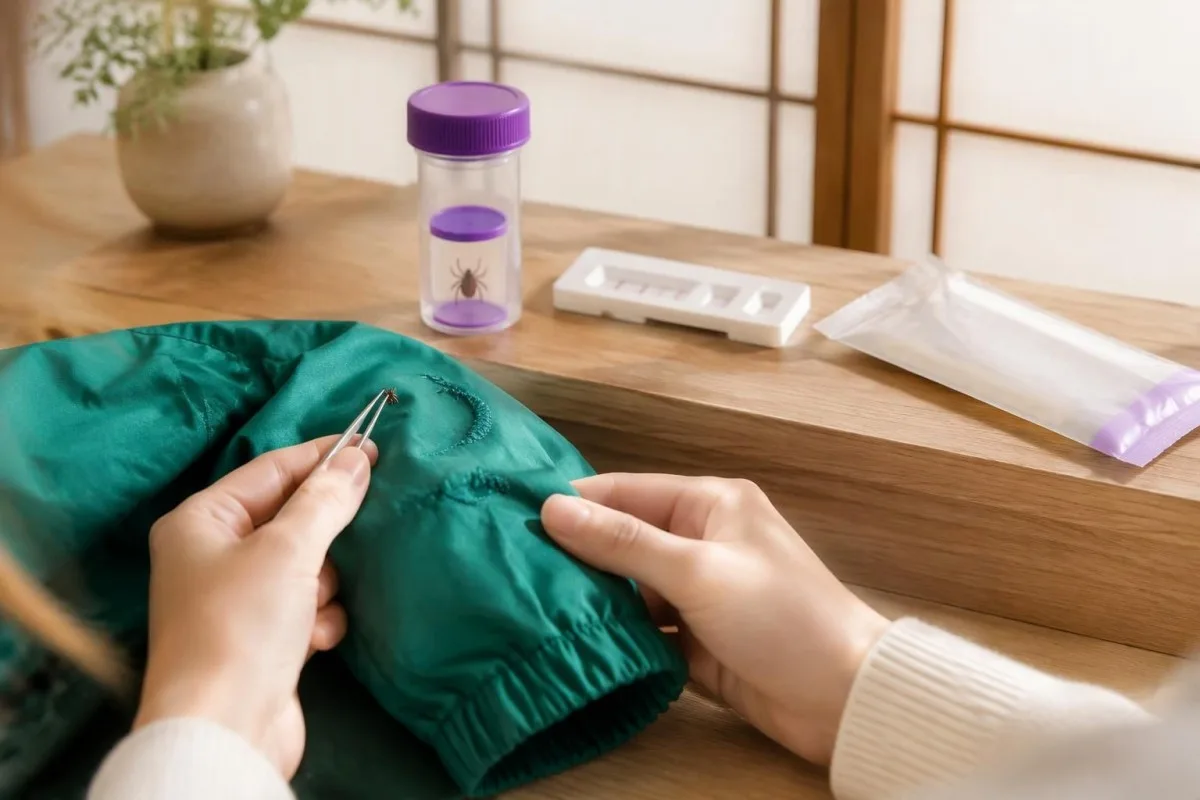
El 2019 CDC recommendation accepted modified algorithms using FDA-cleared assays for that purpose, following clearance of relevant test combinations (Mead et al., 2019). The change was not permission to combine any 2 tests: the evaluated pairing matters, and some combinations improve early sensitivity while preserving high specificity compared with standard two-tier testing.
Some modified algorithms measure total antibodies, while others report separate IgM and IgG components; consequently, the familiar 30-day IgM restriction cannot be mechanically applied to a total-antibody result. Kantesti is an plataforma de interpretación análisis de sangre de AI that can help distinguish a 2-immunoassay report from an immunoblot report before discussing what its positive or negative designation means.
A second immunoassay is not simply a repeat of the same screening test, and an immunoblot is not routinely needed after a completed validated MTTT result. Our guía de confirmación de Chagas illustrates the broader principle of complementary assays, but its 2-test rules are different; ask your laboratory which Lyme algorithm produced the final interpretation.
¿Puede la prueba de Lyme dar negativo en etapas tempranas pese a la infección?
Lyme antibody testing can be negative early because antibodies have not yet reached detectable levels. A typical erythema migrans rash with an appropriate exposure history is diagnosed clinically rather than by waiting for a positive immunoblot; a negative result during the first 1–2 weeks does not safely exclude that presentation.
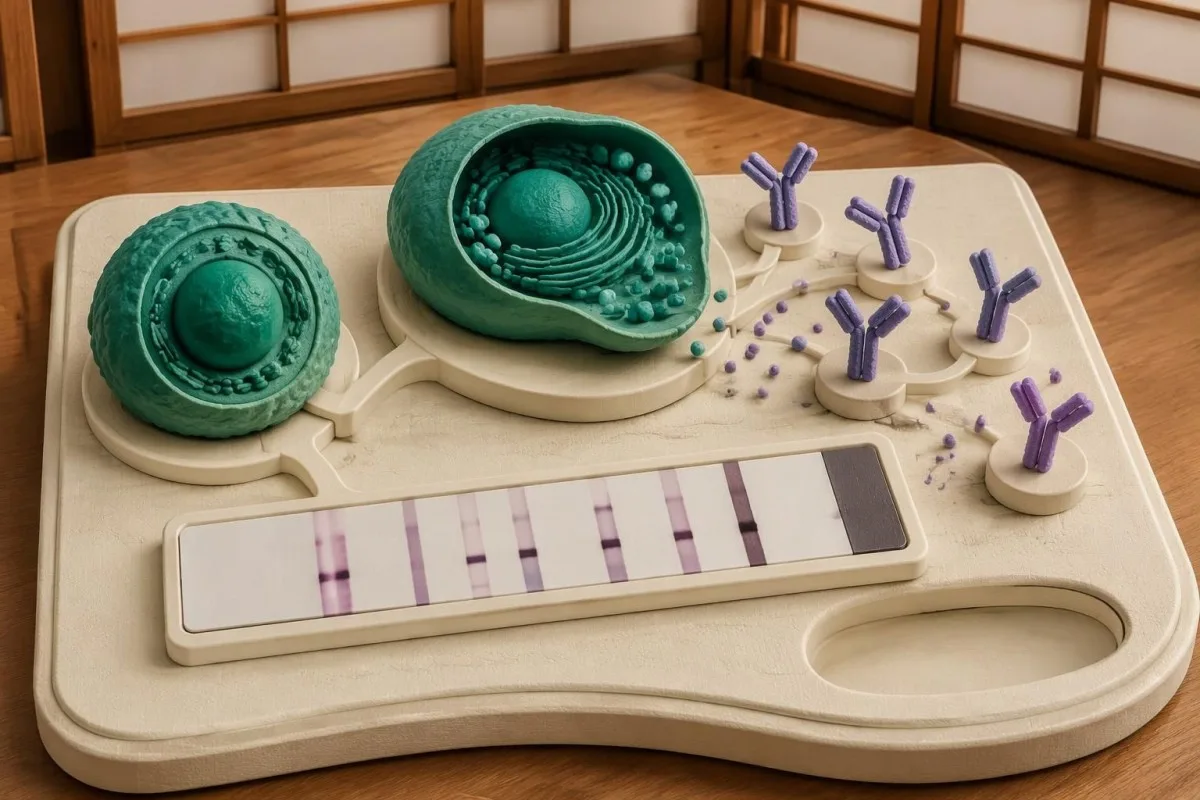
Across early-infection settings, conventional 2-tier sensitivity has been reported at approximately 30–40%, while specificity remains high when testing and interpretation are appropriate (Moore et al., 2016). These are population estimates, not a personal probability: sensitivity changes with the clinical manifestation, time since onset and whether the patient has already received antibiotics.
For a rash suggestive of but not typical for erythema migrans, the 2020 IDSA/AAN/ACR guideline supports acute serology and, if initially negative, a convalescent sample at least 2–3 weeks later (Lantos et al., 2021). The same guideline recommends clinical diagnosis for a typical lesion; a rash need not have textbook concentric rings to warrant assessment.
Repeating a test 24 hours later usually offers little advantage when the limitation is antibody development rather than a processing error. Our spotted fever testing guide explains a related timing problem, but suspected spotted fever has its own urgent treatment rules; do not delay care for an expanding rash or significant illness while waiting for more bands.
¿La IgG positiva para Lyme significa infección activa o fracaso del tratamiento?
Positive Lyme IgG cannot distinguish active infection from a previous infection that has resolved. Lyme antibodies can remain detectable for years or decades, and repeat immunoblot testing is not a test of cure; neither a persistent 5-band pattern nor changes in band intensity establish that treatment failed.
El 2020 IDSA/AAN/ACR guideline describes persistence of both IgM and IgG responses after infection, which complicates interpretation in previously affected patients (Lantos et al., 2021). A positive result obtained 4 years after treatment must therefore be compared with the clinical history, not interpreted as a laboratory photograph of living bacteria in the body.
Reinfection can occur because previous Lyme disease does not provide reliable lifelong protection, but an old positive antibody result cannot prove a new episode. For a hypothetical person with positive IgG from 2019 and a new expanding rash after recent tick exposure, the new clinical findings matter more than whether a sixth band appears; CMV illustrate why exposure history and current illness are separate questions.
Persistent fatigue, pain or cognitive symptoms deserve evaluation even when no new laboratory evidence appears. The guideline recommends against additional antibiotics for persistent nonspecific symptoms after recommended treatment when there is no objective evidence of reinfection or treatment failure; 1 positive antibody panel cannot identify the cause of those symptoms or justify an open-ended antibiotic course.
Qué significa la IgG ante la sospecha de artritis de Lyme o enfermedad neurológica
Lyme arthritis usually produces a strong IgG response, so isolated IgM is poor evidence for that diagnosis. Conventional two-tier serology has approximately 95–100% sensitivity in Lyme arthritis, according to the 2020 IDSA/AAN/ACR guideline; a negative appropriate IgG result should prompt serious consideration of other causes of joint swelling.
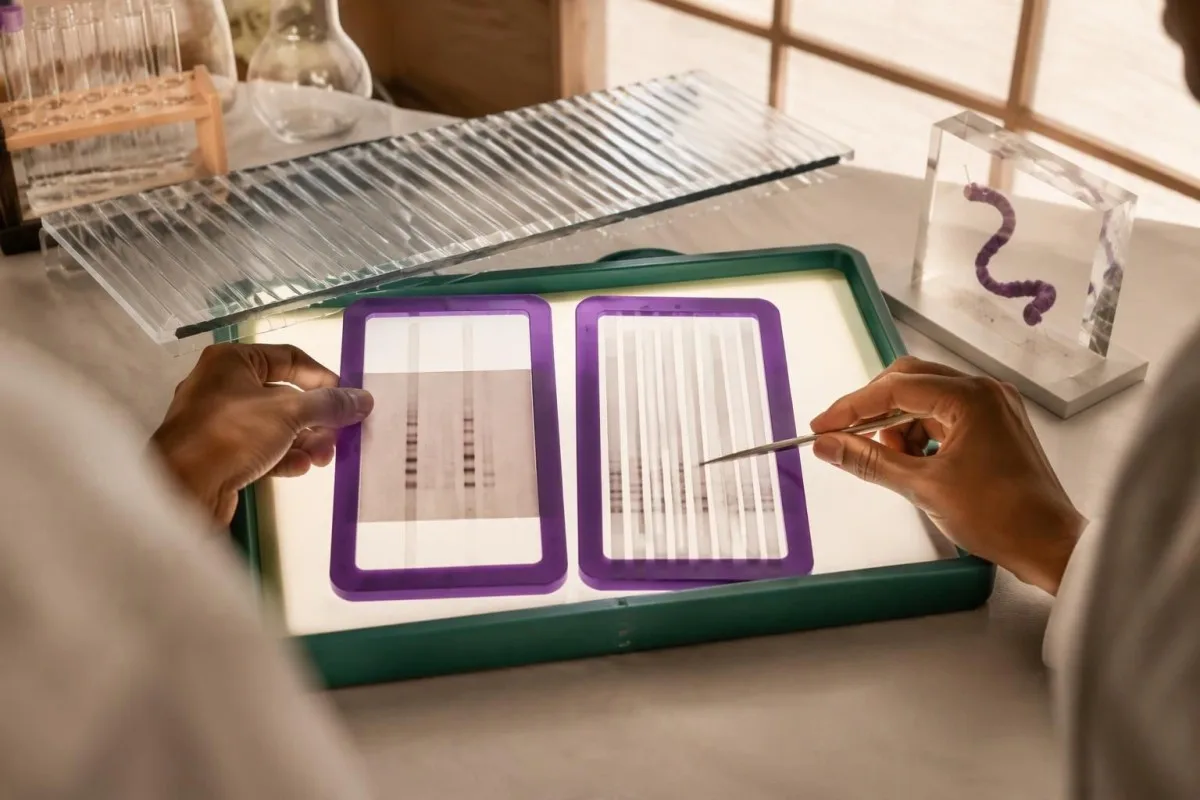
A hypothetical patient with a markedly swollen knee and only 2 IgM bands after 3 months of symptoms does not have the expected serologic pattern for Lyme arthritis. The clinician should reassess alternative causes and assay reliability rather than call this late Lyme based on IgM alone; when indicated, joint fluid examination answers additional questions that the antibody test cannot.
Suspected central nervous system Lyme disease requires clinical assessment and, when cerebrospinal fluid testing is undertaken, simultaneous CSF and serum for a validated antibody index. Testing CSF antibody alone or running a standalone CSF immunoblot is not the preferred approach; 1 elevated index may also persist after treatment, so it must be interpreted alongside the neurological findings and CSF cell response.
Numb feet or tingling do not become Lyme-specific because 41 kDa is reactive; neuropathy has metabolic, mechanical and immune causes. Our anti-MAG neuropathy guide explains one targeted alternative, while immunoglobulin panel interpretation clarifies that total serum IgG is different from the 5-of-10 Lyme-specific IgG immunoblot criterion.
Por qué los laboratorios y los países pueden usar distintos criterios para Lyme
Lyme immunoblot criteria are assay- and region-dependent, so conventional US 5-of-10 IgG counting rules should not automatically be imposed on every European report. European assays may use different Borrelia antigens and recombinant line blots because the species causing human Lyme borreliosis differ across regions.
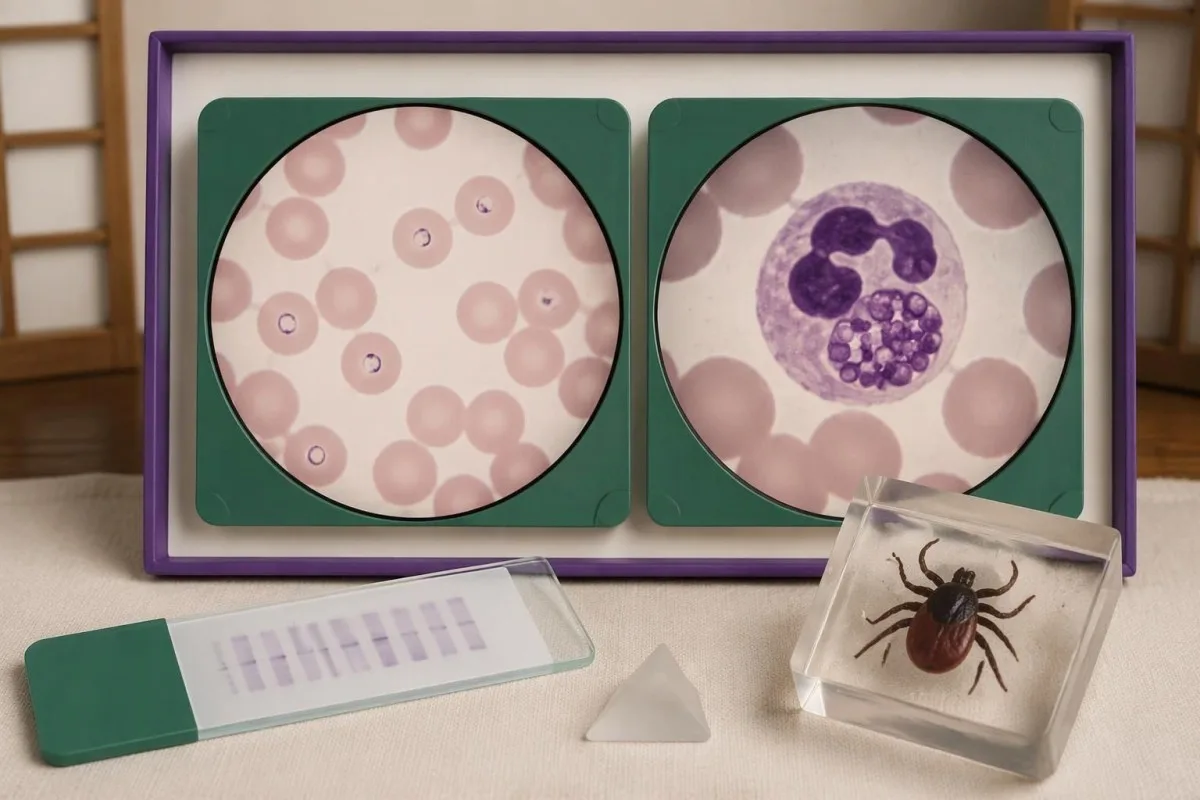
B. burgdorferi sensu stricto predominates in North America, while European disease also commonly involves B. afzelii and B. garinii. A report using VlsE, OspC or other recombinant antigen labels may therefore not resemble a 10-position conventional US blot; the clinically useful question is whether the assay was validated for the exposure setting and interpreted according to its instructions.
Different laboratory criteria are not automatically inferior, but claims that 1 or 2 bands prove disease require evidence for that assay's complete diagnostic performance. When reading a report described by Kantesti, consult the laboratory's interpretation and our marco de validación médica separately; general AI assessment or a software benchmark is not proof that a particular Lyme assay has validated sensitivity and specificity.
Record 3 details before comparing reports from different laboratories: assay manufacturer, algorithm type and the country where exposure occurred. Our guía de verificación de fuentes de informes de IA explains why preserving source wording matters; apparent conversion from negative to positive may reflect a changed method or cutoff rather than a newly acquired infection or worsening illness.
¿Las bandas de Lyme identifican Babesia, Anaplasma u otras coinfecciones?
Lyme Western blot bands do not diagnose tick-borne coinfections. Babesia, Anaplasma and Ehrlichia require their own clinical assessment and tests; 1 positive Lyme antibody result neither confirms nor excludes these infections, even when an exposure setting allows more than one tick-borne organism to be transmitted.

Babesiosis deserves consideration when relevant exposure accompanies fever and evidence such as anemia, low platelets or hemolysis, especially if fever persists during Lyme-directed treatment. A Babesia antibody titer of 1:256 alone does not establish current infection; our Babesia test interpretation guide explains why a cellular sample examination or PCR may be needed to demonstrate active infection.
Anaplasmosis can produce fever, leukopenia, thrombocytopenia and elevated liver enzymes, findings that should not be explained away as extra Lyme bands. PCR is most useful during the first week of illness and becomes less sensitive after appropriate antibiotics; our Anaplasma sample timing guide separates this early direct-detection window from later antibody interpretation.
Ehrlichiosis follows a different organism-specific testing pathway, and a negative early antibody result is not a safe reason to dismiss significant febrile illness. Our Ehrlichia PCR and titer guide explains why 2 samples collected at different times may help establish seroconversion; targeted testing should follow symptoms, geography and laboratory abnormalities rather than an indiscriminate panel ordered for isolated fatigue.
¿Qué debe hacer ante un informe de prueba de Lyme poco claro?
For an unclear Lyme report, obtain the complete 2-tier interpretation, write down symptom onset and discuss exposure plus objective findings with a clinician. Faint or isolated bands do not determine urgency; fainting, chest pain, breathlessness, a markedly slow pulse or new neurological deficits require prompt assessment regardless of the antibody result.

Lyme carditis can cause heart conduction block, so fainting or palpitations after compatible exposure should not wait for an immunoblot to become positive. The 2020 IDSA/AAN/ACR guideline identifies a PR interval greater than 300 milliseconds, other arrhythmias or features of myopericarditis as reasons for hospital admission with monitoring; that interval is measured on an ECG, not inferred from band intensity.
New facial weakness warrants urgent assessment, and sudden facial droop with arm weakness or speech difficulty needs emergency evaluation for stroke rather than attribution to Lyme. Our guía sobre las señales de advertencia de un accidente cerebrovascular explains that distinction; for a routine appointment, bring 4 dates—possible exposure, first symptom, sample collection and antibiotic initiation—because each changes a different part of the reasoning.
Kantesti es un Herramienta de análisis de pruebas de sangre con IA that can help organize the 2-tier result, reported bands and missing clinical context into questions for your appointment. Our Guía de tecnología de IA describes the explanation workflow, but our AI cannot examine a rash, measure an ECG interval, confirm Lyme disease independently or decide whether you should start, stop or extend antibiotics.
Publicaciones de investigación, límites de la evidencia e interpretación segura
The clinical interpretation in this article rests on 3 directly relevant sources: a laboratory-diagnosis review, the CDC's modified two-tier recommendation and the IDSA/AAN/ACR Lyme guideline. The 2 additional Figshare publications listed below concern other health topics and must not be treated as validation of Lyme band interpretation or Lyme diagnosis.
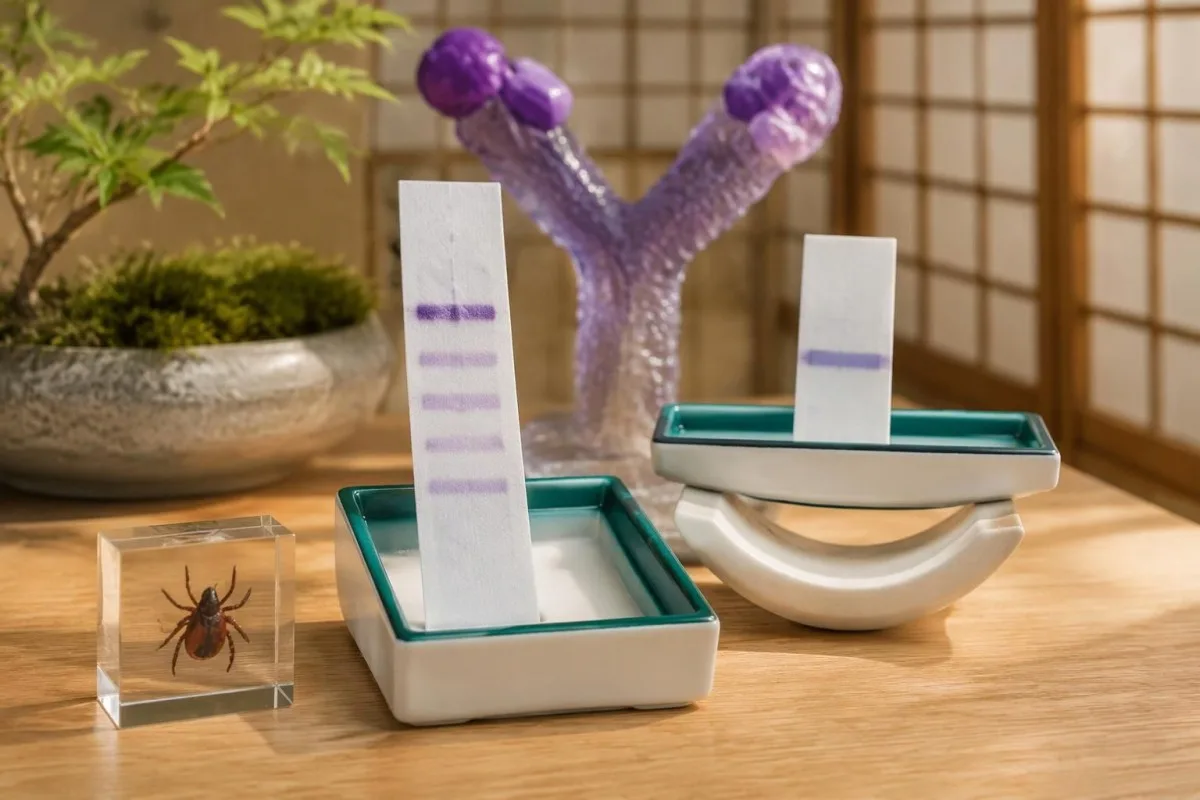
Moore et al. (2016) explains why individual bands and incomplete testing sequences create diagnostic errors; Mead et al. (2019) establishes the CDC recommendation for appropriately cleared modified algorithms. Lantos et al. (2021), publishing the 2020 guideline, connects testing to clinical manifestations, including early rash, arthritis and neurological disease; these sources support different parts of the reasoning rather than one universal band shortcut.
The 2 Figshare records address women's hormonal health and multilingual AI-assisted hantavirus triage, respectively, not Lyme immunoblot performance. A deployment involving 50,000 interpreted reports, as described in the hantavirus publication's title, cannot establish sensitivity, specificity or patient benefit for Lyme diagnosis; those claims would require Lyme-specific methods, reference standards and evaluation populations.
Los principios de IA responsable place report explanation alongside—not above—the laboratory and clinician, including when IgM appears after 30 days of symptoms. For symptoms linked to cycle changes or menopausal transition, our hormonal symptom guide addresses a separate assessment pathway; symptom overlap is a reason to investigate carefully, not evidence that a reactive Lyme band explains everything.
Preguntas frecuentes
¿Puede una sola banda positiva en la prueba de Western blot para la enfermedad de Lyme significar que tengo la enfermedad?
Una sola banda reactiva en la prueba de Western blot para Lyme no establece un diagnóstico de enfermedad de Lyme. Los criterios convencionales de EE. UU. requieren al menos 2 de las 3 bandas IgM designadas durante los primeros 30 días de síntomas, o 5 de las 10 bandas IgG designadas, dentro del algoritmo de pruebas de dos niveles adecuado. Una sola banda puede reflejar reactividad cruzada o una respuesta de anticuerpos temprana incompleta, según la situación. Una erupción típica de eritema migratorio tras una exposición adecuada aún puede respaldar un diagnóstico clínico, a pesar de una serología temprana negativa.
¿Por qué algunas bandas de Lyme son positivas, pero el resultado general de la prueba es negativo?
Una prueba de Lyme puede presentar bandas reactivas y aun así ser negativa porque el inmunoblot no cumplió el patrón validado que exige su algoritmo de análisis. Por ejemplo, 3 bandas de IgG que cumplen los criterios no alcanzan el umbral convencional de 5 de 10 bandas de IgG. En las pruebas estándar de dos niveles, un cribado de primer nivel positivo o indeterminado seguido de inmunoblots adecuados negativos se interpreta como negativo. Si los síntomas son muy recientes, un profesional clínico puede considerar repetir la prueba en un intervalo adecuado, en lugar de reclasificar como positivo el patrón incompleto.
¿Qué significa una banda positiva de Lyme de 41 kDa?
La banda de Lyme de 41 kDa suele reflejar la unión de anticuerpos a la flagelina, una proteína bacteriana relacionada con el movimiento que puede presentar reactividad cruzada con anticuerpos no relacionados con la enfermedad de Lyme. Es solo 1 de las bandas designadas que se utilizan en los criterios convencionales de inmunoblot y no puede diagnosticar por sí sola la enfermedad de Lyme. Moore et al. (2016) citaron un estudio que detectó esta banda en 43% de los controles sanos, aunque ese porcentaje no es una tasa universal para todos los ensayos. La secuencia completa de pruebas y la presentación clínica determinan si el resultado respalda un diagnóstico de enfermedad de Lyme.
¿Un resultado positivo de IgM y negativo de IgG para la enfermedad de Lyme demuestra que la infección es reciente?
La positividad de IgM para Lyme con IgG negativa puede respaldar una infección temprana solo cuando concuerda con el algoritmo de pruebas adecuado, el cuadro clínico y el tiempo de evolución. La IgM aislada no debe usarse para respaldar el diagnóstico de enfermedad de Lyme cuando los síntomas han durado más de 30 días, porque una IgM persistente o inespecífica puede llevar a una interpretación errónea. Por ejemplo, 2 bandas IgM que cumplen los criterios el día 14 tienen un significado distinto al mismo patrón después de 3 meses de síntomas continuos. La regla temporal se refiere al inicio de los síntomas, no al día en que se tomó la muestra de laboratorio.
¿Puedo dar positivo en la prueba de Lyme sin tener ninguna banda en el Western blot?
Sí: un algoritmo validado de dos niveles modificado para la enfermedad de Lyme utiliza dos inmunoensayos enzimáticos secuenciales y puede no incluir un Western blot. En 2019, los CDC recomendaron algoritmos modificados debidamente autorizados por la FDA. Algunas combinaciones de ensayos miden los anticuerpos totales, mientras que otras ofrecen resultados separados de IgM e IgG, por lo que las reglas convencionales para contar bandas no se aplican a todos los informes. Pregunte al laboratorio qué algoritmo y combinación de ensayos dieron lugar a la interpretación final.
¿Deberían desaparecer las bandas del Western blot para Lyme después de los antibióticos?
Las bandas del Western blot para la enfermedad de Lyme no tienen que desaparecer después de un tratamiento exitoso, porque los anticuerpos pueden persistir durante años o décadas. Un patrón persistente de IgG de 5 bandas no demuestra que la infección siga activa, y repetir las pruebas de bandas no es una prueba de curación validada. La respuesta al tratamiento se evalúa según la evolución clínica y los hallazgos objetivos pertinentes, no exigiendo que un panel de anticuerpos dé negativo. Los síntomas nuevos o una nueva exposición a garrapatas requieren una evaluación clínica actualizada, porque los anticuerpos antiguos no pueden establecer una reinfección.
Obtenga una explicación de los resultados análisis de sangre
Cargue su informe de laboratorio y la IA de Kantesti explica cada biomarcador en lenguaje sencillo en cuestión de segundos. Más de 2 millones de personas en todo el mundo la han utilizado.
Referencias
- Klein, T., Mitchell, S., & Weber, H. (2026). Guía de salud femenina: ovulación, menopausia y síntomas hormonales. Investigación médica de Kantesti AI. DOI
- Klein, T., Mitchell, S., & Weber, H. (2026). Apoyo multilingüe para la toma de decisiones clínicas asistido por IA para el triaje temprano del hantavirus: diseño, validación de ingeniería y despliegue en el mundo real en 50,000 informes interpretados de análisis de sangre. Investigación médica de Kantesti AI. DOI
- Moore A et al. (2016). Current Guidelines, Common Clinical Pitfalls, and Future Directions for Laboratory Diagnosis of Lyme Disease, United States. Emerging Infectious Diseases. DOI PubMed
- Mead P et al. (2019). Updated CDC Recommendation for Serologic Diagnosis of Lyme Disease. Informe semanal sobre morbilidad y mortalidad del MMWR. DOI
- Lantos PM et al. (2021). Clinical Practice Guidelines by the Infectious Diseases Society of America (IDSA), American Academy of Neurology (AAN), and American College of Rheumatology (ACR): 2020 Guidelines for the Prevention, Diagnosis and Treatment of Lyme Disease. Clinical Infectious Diseases. DOI
- Más de 2 millonesPruebas analizadas
- 127+Países
- 100+Idiomas
Acerca del equipo médico


Señales de confianza E-E-A-T
Experiencia
Revisión clínica dirigida por un médico de los flujos de interpretación de análisis.
Pericia
Enfoque en medicina de laboratorio sobre cómo se comportan los biomarcadores en el contexto clínico.
Autoridad
Revisado médicamente por el Dr. Thomas Klein, con contribuciones de la Dra. Sarah Mitchell y el Prof. Dr. Hans Weber.
Integridad
Interpretación basada en la evidencia con vías de seguimiento claras para reducir la alarma.






Aviso médico
Este artículo es solo con fines educativos y no constituye asesoramiento médico. Consulta siempre a un profesional sanitario cualificado para decisiones de diagnóstico y tratamiento.
Publicado · Contacta con el equipo editorial
Publicado por Kantesti Ltd, registrado en Inglaterra y Gales, número de empresa. 17090423, Londres, Reino Unido.
