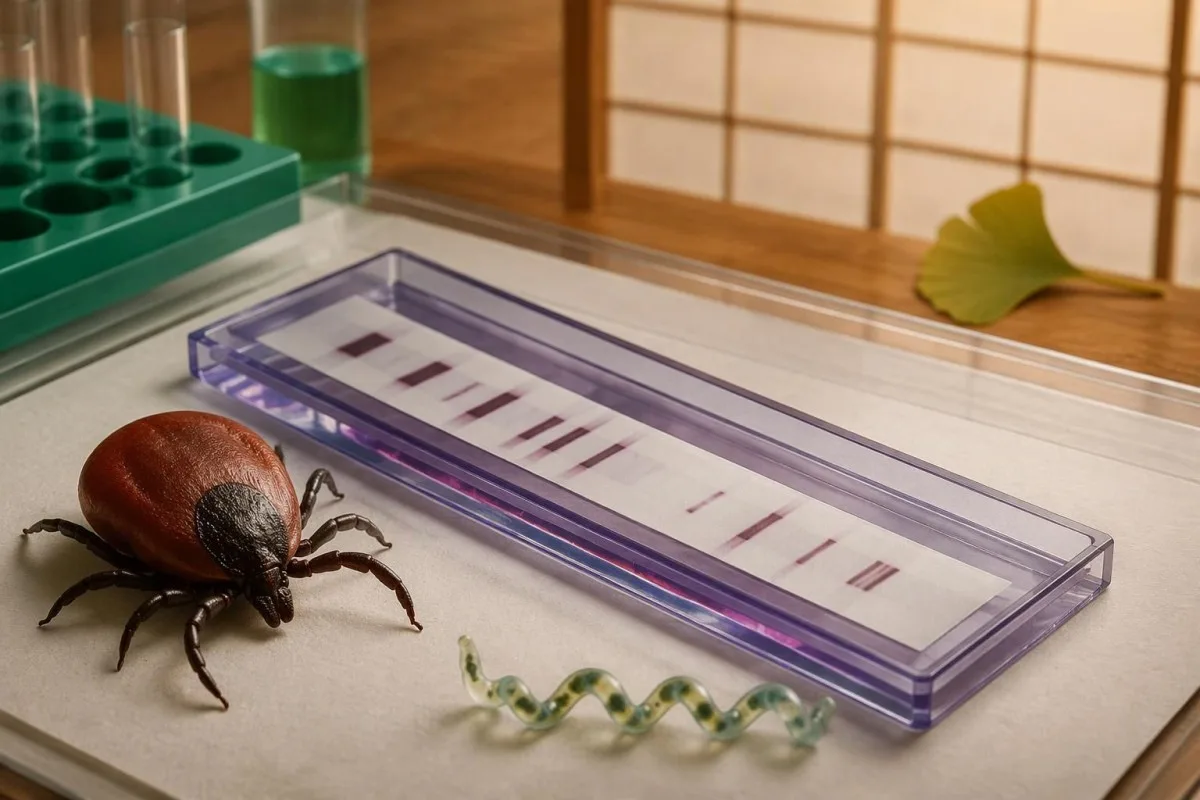
In reaktive bân lit antistoffen bine — gjin diagnoaze. It folsleine testalgoritme, de bleatstellingsskiednis en de tiidline fan symptomen bepale oft dy fynst Lyme-sykte stipet.

Wichtichste punten
- Yndividuele bannen bewize gjin Lyme-sykte; sels in relatyf spesifike bân moat ynterpretearre wurde binnen in falidearre twa-tier-testalgoritme.
- Tradisjonele IgM-kritearia fereaskje op syn minst 2 fan de 3 oanwiisde bannen: likernôch 23–25, 39 en 41 kDa.
- Tradisjonele IgG-kritearia fereaskje op syn minst 5 fan de 10 oanwiisde bannen: 18, 23, 28, 30, 39, 41, 45, 58, 66 en 93 kDa.
- De 30-dagenregel betsjut dat isolearre IgM gjin Lyme-diagnoaze stypje moat as de symptomen langer as 30 dagen duorje.
- In negative algemiene útslach kin gearfalle mei reaktive bânen, om't it laboratoarium in validearre patroan beoardielet, net oft der überhaupt in bân ferskynt.
- Oanpaste twa-tier-test brûkt 2 opienfolgjende enzyme-immunoassays ynstee fan in immunoblot; der wurdt mooglik gjin list mei bânen jûn.
- Iere testen kin negatyf wêze foardat antistoffen ûntwikkelje; in typyske erythema migrans-útslach yn in passende eksposysjesituaasje wurdt klinysk diagnostisearre.
- Oanhâldende antistoffen kin jierren nei behanneling noch oantoonber bliuwe en kin net oantoane dat der noch in ynfeksje is of genêzing mjitte.
Wat betsjut in positive bân op in Lyme-Western blot eins?
A positive Lyme-Western-blotbân betsjut dat antistoffen oan in testantigen bûn binne; op himsels stelt dit gjin Lyme-sykte fêst. By tradisjonele Amerikaanske twa-tier-testen binne foar IgM 2 fan 3 oanwiisde bânen nedich yn 'e earste 30 dagen fan symptomen, wylst foar IgG 5 fan 10 nedich binne; by oanpaste testen wurde ynstee 2 immunoassays brûkt.
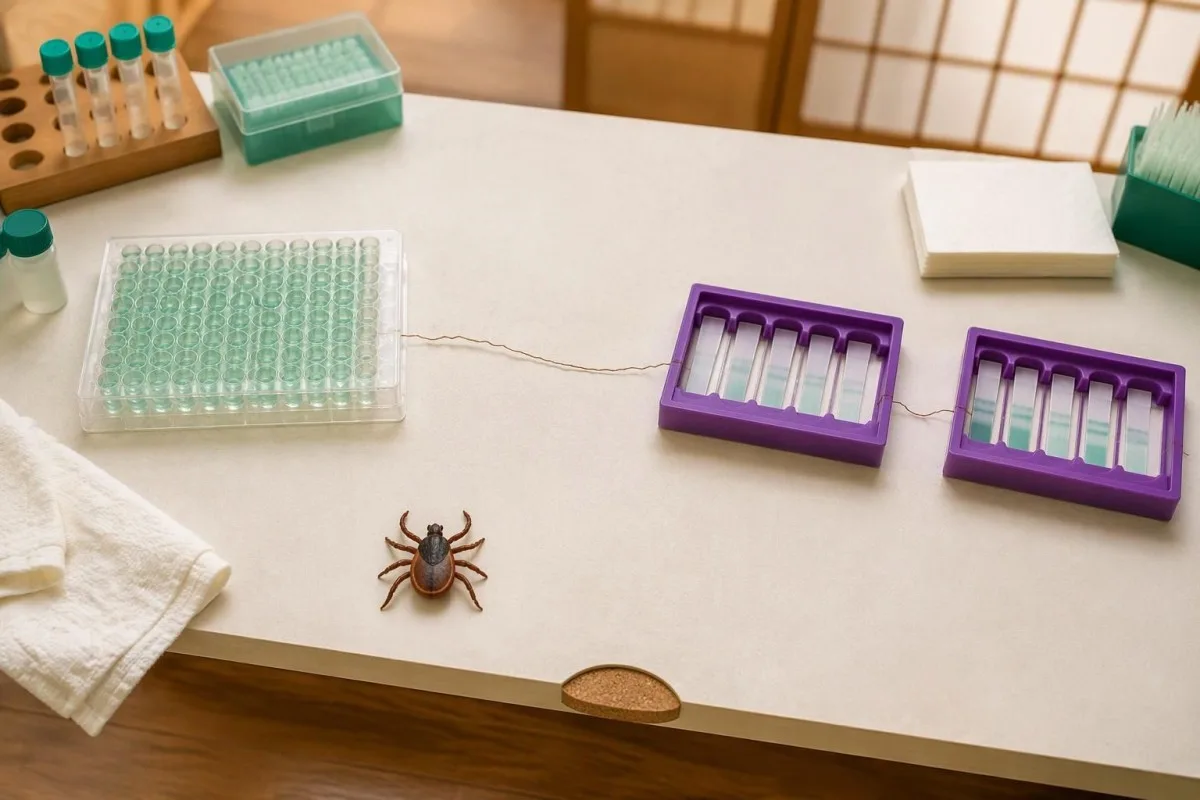
De algemien resultaat kombinearret de earste screeningstest mei it passende resultaat fan 'e twadde test, ynstee fan elke sichtbere streek as in aparte diagnoaze te behanneljen. In rapport mei 1 reaktive bân kin dus mei rjocht negatyf sizze, en sels in posityf folslein antistofresultaat moat ôfwage wurde tsjin bleatstelling, passende befiningen en eardere Lyme-sykte.
De identiteit fan in bân jout antwurd op in beheinde fraach: hokker antigen hat ûnder de omstannichheden fan dizze test antistofbinding oanlutsen? It jout gjin antwurd op de 3 fragen dy't pasjinten meastal wichtich fine—oft der no in ynfeksje is, oft dy de symptomen ferklearret, of oft antibiotika nedich binne; ús hantlieding oer posityf antistofresultaten makket ûnderskied tusken dizze saken.
Kantesti is in AI bloedtestanalysator dat kin helpe te ferklearjen wêrom't in Lyme-rapport reaktive bânen mar in negative ynterpretaasje fan 'e 2-tier-test befettet. Wy beskôgje de definitive ynterpretaasje fan it laboratoarium, de testmetoade en de doer fan 'e symptomen as essinsjele kontekst—gjin details dy't opwekke kinne wurde troch de markearre rigels yn in upload rapport te tellen.
Hoe't tradisjoneel twa-tier Lyme-testen de útslach bepale
Standert twa-tier-testen begjinne mei in enzyme-immunoassay, of soms in immunofluoresinsje-assay, en geane oer op in immunoblot as de earste test posityf of twifelich is. De 2 stadia wurkje gear; in posityf screeningresultaat allinnich is gjin befêstige posityf Lyme-serologyresultaat.
A positive of twifelige earste-tier-test folge troch negative passende immunoblots wurdt neffens it standertalgoritme as negatyf ynterpretearre. De earste screening fangt mei opsetsin mear mooglike reaksjes op, wylst de twadde tier net-spesifike reaktiviteit derút filteret; Moore et al. beskreaune dit lykwicht en faak foarkommende ynterpretaasjeflaters yn Emerging Infectious Diseases yn 2016.
In yndeks fan 1.4 op de iene screeningstest is net te ferlykjen mei 1.4 op in oare, om't de gearstalling fan antigenen en de ôfsnijwearden fan fabrikanten ferskille. Likegoed is in twifelich screeningresultaat in oanwizing om it algoritme ôf te meitsjen—net in diagnoaze healwei ynfeksje en gjin ynfeksje; kwalitative versus kwantitative resultaten ferklearret wêrom't rapportformaten wichtich binne.
In immunoblot oanfreegje nei in negative screening, sûnder klinyske reden om de timing of geskiktheid fan 'e test opnij te besjen, slacht de folchoarder oer wêrfan de prestaasjes evaluearre binne. Freegje om 3 gegevens: it screeningresultaat, de ynterpretaasje fan 'e twadde tier en oft beide ta itselde validearre testtrajekt hearre; in ûnfolslein rapport moat net allinnich op basis fan bânen opnij gearstald wurde.
Bannen op in Lyme-Western blot útlein: IgM- en IgG-kritearia
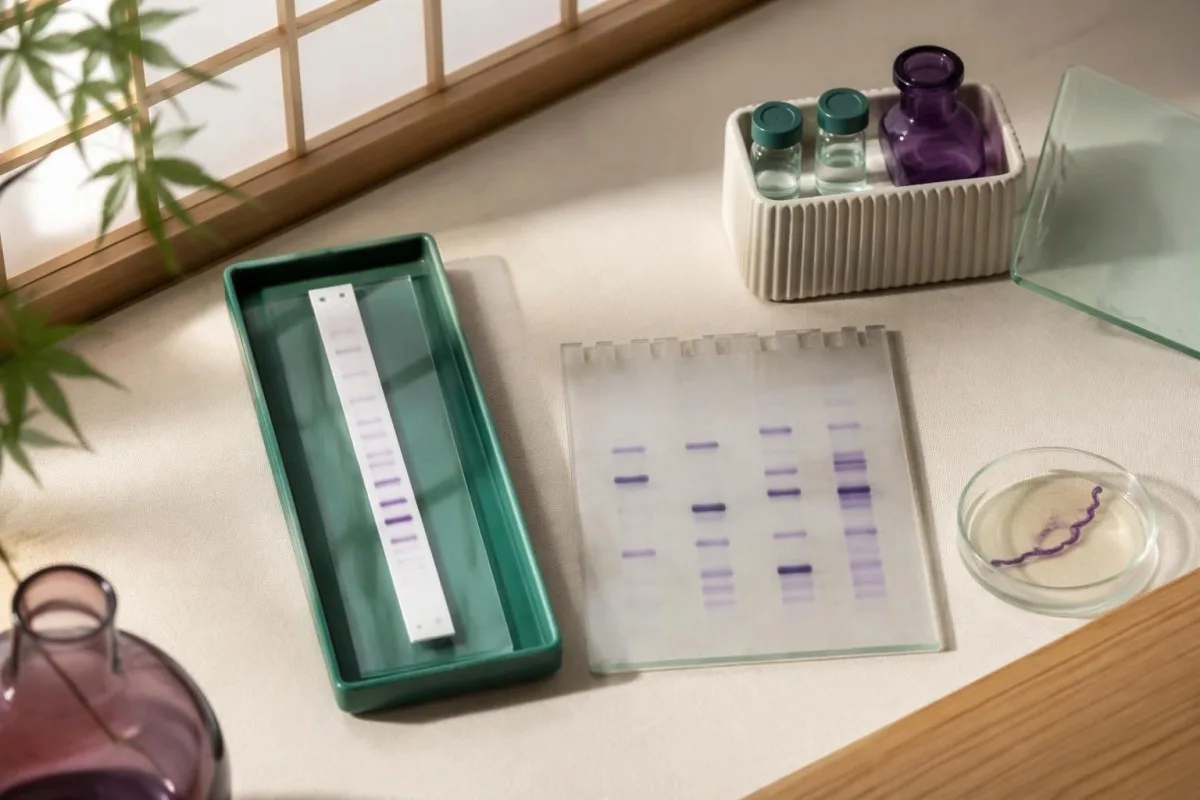
Neffens konvinsjonele Amerikaanske kritearia fereasket in positive IgM-immunoblot op syn minst 2 fan 'e 23–25-, 39- en 41-kDa-bânen. In positive IgG-immunoblot requires at least 5 of the 18, 23, 28, 30, 39, 41, 45, 58, 66 and 93 kDa bands.
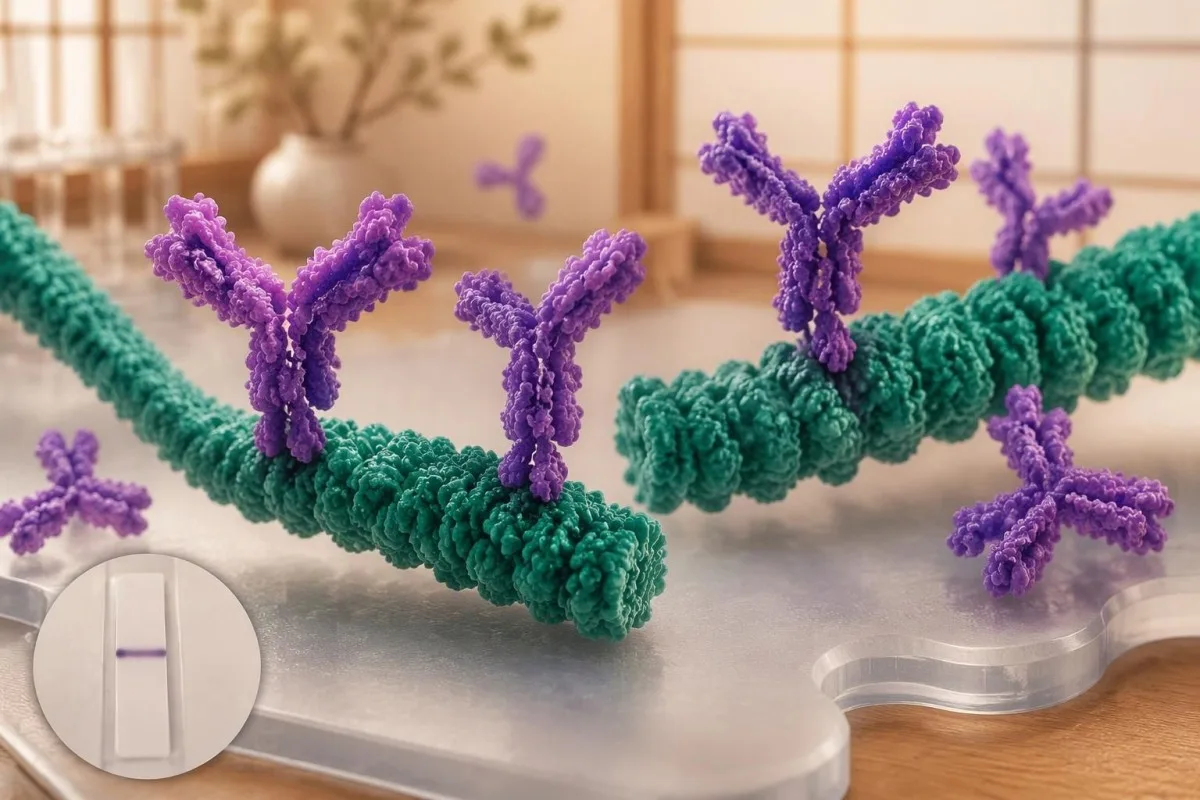
Kilodaltons, abbreviated kDa, describe approximate protein molecular mass, not antibody concentration or disease severity. The approximately 23–25 kDa band commonly represents outer surface protein C, 39 kDa represents BmpA and 41 kDa represents flagellin; the numbers identify antigen regions, so a higher-numbered band does not mean a more advanced infection.
The IgG list's 58 kDa criterion excludes GroEL, and reports may use assay-specific names or approximate mass conventions rather than identical labels. Because not every commercial strip uses the same antigen preparation, our bloedtestmarker gids should complement—not replace—the actual laboratory legend and the assay manufacturer's interpretation instructions.
Bands at 31 and 34 kDa are not part of the conventional CDC IgG counting criteria, even though they may appear on some reports. Their absence from that list does not make them meaningless biologically, but adding them to manufacture a 5-band positive result changes the validated rule; neither band darkness nor extra bands quantify bacterial burden.
Wêrom't bân 41 en oare reaktive bannen falske sinjalen wêze kinne
De 41 kDa band reacts with flagellin, a protein associated with bacterial movement, and can cross-react with antibodies unrelated to Lyme disease. A single reactive 41 kDa band is therefore insufficient to diagnose Lyme disease, even when a patient has fatigue, aching or a remembered tick bite.
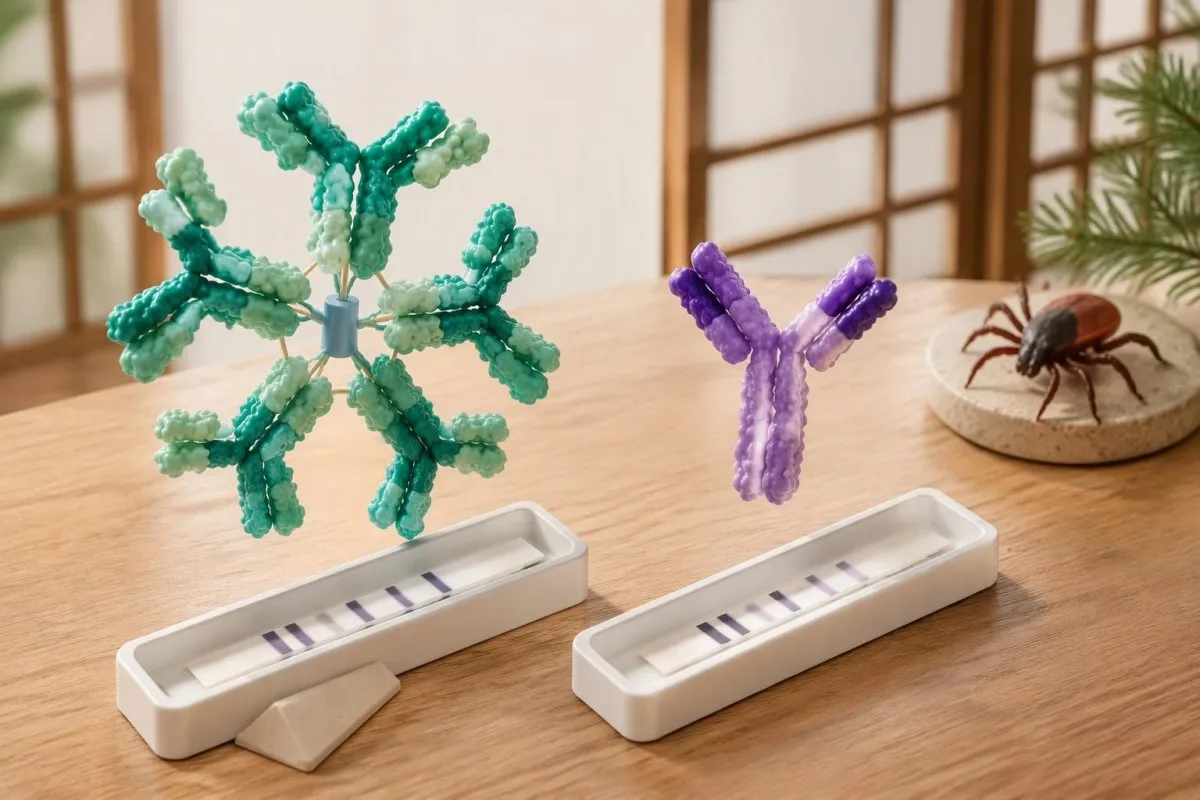
Moore et al. (2016) cited a study in which 41 kDa reactivity occurred in 43% of healthy controls, illustrating why this band cannot stand alone. That percentage is not a universal false-positive rate for every modern assay; it is evidence that recognizable antigen binding can occur in people without the clinical condition being investigated.
Epstein–Barr virus, syphilis, relapsing-fever Borrelia and some autoimmune conditions can contribute to false-positive Lyme serology, although the mechanism and affected assay vary. A recent mononucleosis-like illness should prompt attention to the complete EBV antibody pattern, not the assumption that 1 Lyme band proves a simultaneous tick-borne infection.
Cross-reactivity is not a reason to order every alternative antibody panel: 1 unexplained band usually does not justify broad autoimmune screening. When examination findings genuinely suggest an immune disorder, de ynterpretaasje fan komplement en ANA belongs to a separate clinical question; repeated low-probability testing can generate additional misleading positives rather than a clearer answer.
Lyme IgM tsjin IgG: wêrom't de regel fan 30 dagen foar symptomen wichtich is
Lyme IgM should not be used to support a diagnosis when symptoms have lasted more than 30 days. IgM is most useful early, whereas an appropriate IgG response carries greater diagnostic weight later; the clock starts with symptoms of the suspected illness, not the testing date or remembered tick removal.
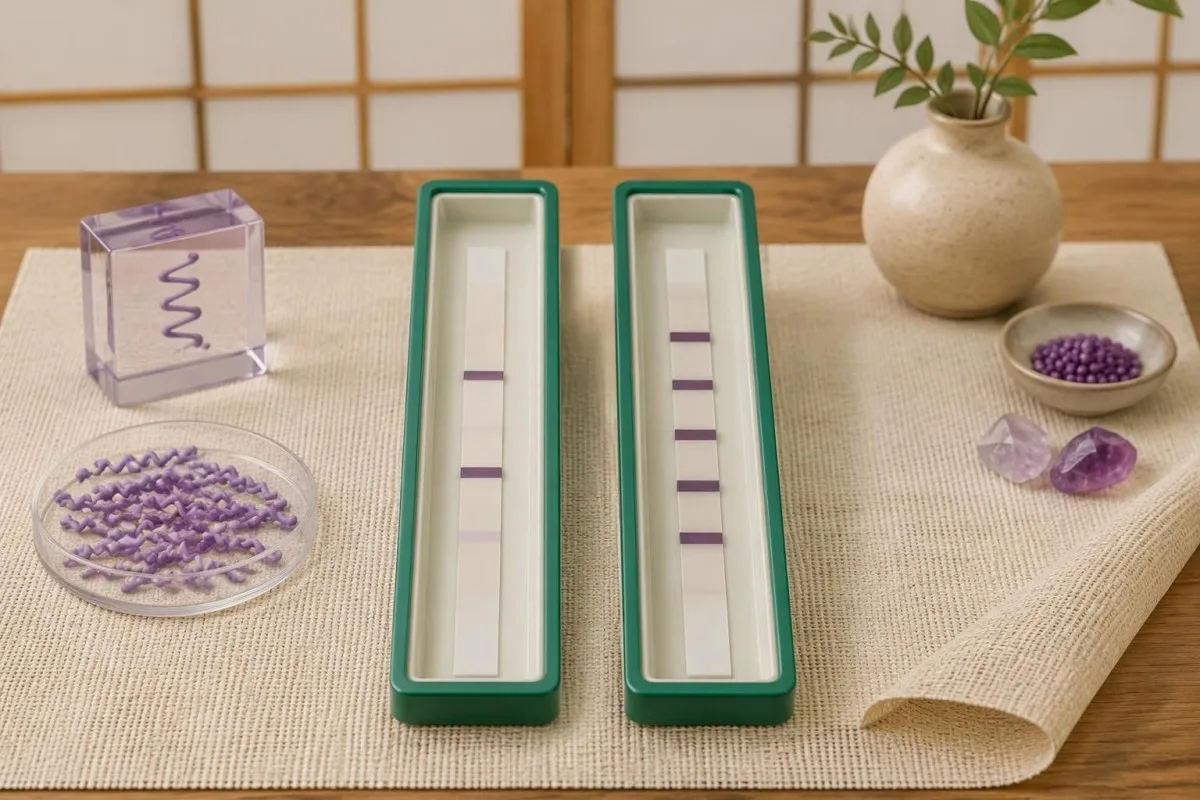
De 30-day restriction reduces misclassification from persistent or nonspecific IgM responses when later disease should usually have an established IgG response. It is an interpretation rule, not a biological switch that flips overnight: antibody maturation varies, and early treatment may alter seroconversion, but those exceptions do not make isolated late IgM reliable evidence.
For a hypothetical patient tested on day 75 of continuous symptoms, IgM bands 23 and 41 with negative IgG should not be used as proof of Lyme disease. By contrast, the same IgM pattern on day 12, following a reactive first-tier assay and compatible exposure, can support an early diagnosis; the numerical band count is identical, but its evidential value changes.
A positive IgM result does not automatically mean a new infection, a misconception also addressed in our Mycoplasma IgM interpretation guide. If symptoms began 8 weeks ago but one symptom appeared yesterday, clinicians need to decide whether this is a genuinely new illness or another feature of the original episode—not simply restart the IgM clock.
Positive Lyme-bannen mar in negative algemiene útslach: útwurke foarbylden
Positive Lyme bands but negative overall usually means the report did not meet the required pattern within the testing algorithm. For example, 3 designated IgG bands are below the conventional 5-of-10 threshold; that result is negative, not a smaller positive, and it does not measure how much infection is present.
Consider a clearly hypothetical 42-year-old with 10 weeks of fatigue, a reactive screening assay and IgG bands 18, 41 and 58. The IgG immunoblot is negative because only 3 qualifying bands are present; if the examination lacks objective Lyme findings, the next step is a symptom-focused assessment rather than antibiotics prescribed to treat the band's molecular masses.
A second hypothetical patient has a reactive screen, IgM bands 23 and 39, and compatible symptoms beginning 14 days earlier. This can meet the traditional early serologic criteria, but an atypical exposure history or a stronger alternative diagnosis still affects the clinical conclusion; Kantesti AI can explain the 2-of-3 rule without converting it into an independent diagnosis.
A third report lists 5 IgG bands but provides no first-tier result; the missing screening stage prevents straightforward confirmation of a standard 2-tier outcome. Confirmation requirements are assay-specific, as our HSV IgG confirmation guide also illustrates, so request the complete laboratory report rather than borrowing a cutoff or confirmation rule from another infection.
Hoe't oanpaste twa-tier-testen ferskille fan in Western blot
Modified two-tier testing, or MTTT, uses 2 sequential enzyme immunoassays instead of an enzyme immunoassay followed by an immunoblot. A report from this pathway may have no bands at all; its overall interpretation depends on the particular assay combination and its cleared instructions, not the conventional immunoblot band-count criteria.
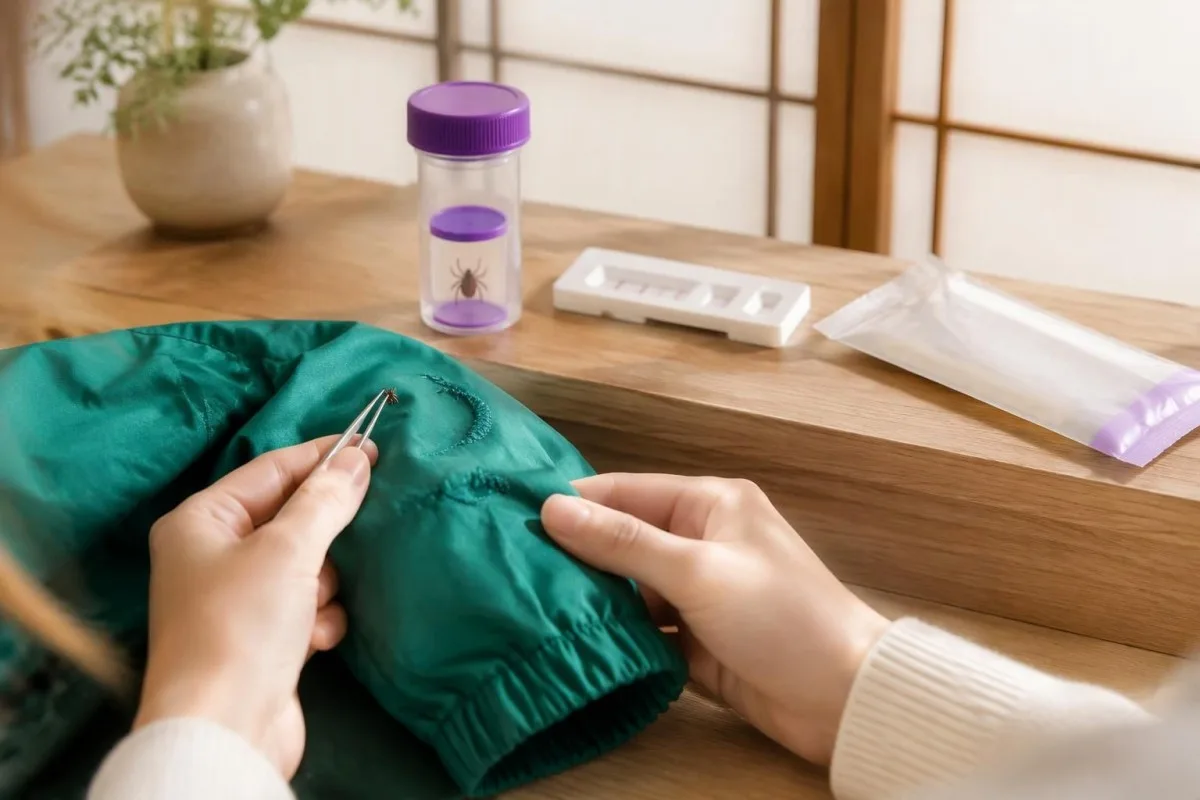
De 2019 CDC recommendation accepted modified algorithms using FDA-cleared assays for that purpose, following clearance of relevant test combinations (Mead et al., 2019). The change was not permission to combine any 2 tests: the evaluated pairing matters, and some combinations improve early sensitivity while preserving high specificity compared with standard two-tier testing.
Some modified algorithms measure total antibodies, while others report separate IgM and IgG components; consequently, the familiar 30-day IgM restriction cannot be mechanically applied to a total-antibody result. Kantesti is an AI bloedtest-útslachplatfoarm that can help distinguish a 2-immunoassay report from an immunoblot report before discussing what its positive or negative designation means.
A second immunoassay is not simply a repeat of the same screening test, and an immunoblot is not routinely needed after a completed validated MTTT result. Our hantlieding foar befêstiging fan Chagas illustrates the broader principle of complementary assays, but its 2-test rules are different; ask your laboratory which Lyme algorithm produced the final interpretation.
Kin Lyme-testen betiid negatyf wêze, nettsjinsteande in ynfeksje?
Lyme antibody testing can be negative early because antibodies have not yet reached detectable levels. A typical erythema migrans rash with an appropriate exposure history is diagnosed clinically rather than by waiting for a positive immunoblot; a negative result during the first 1–2 weeks does not safely exclude that presentation.
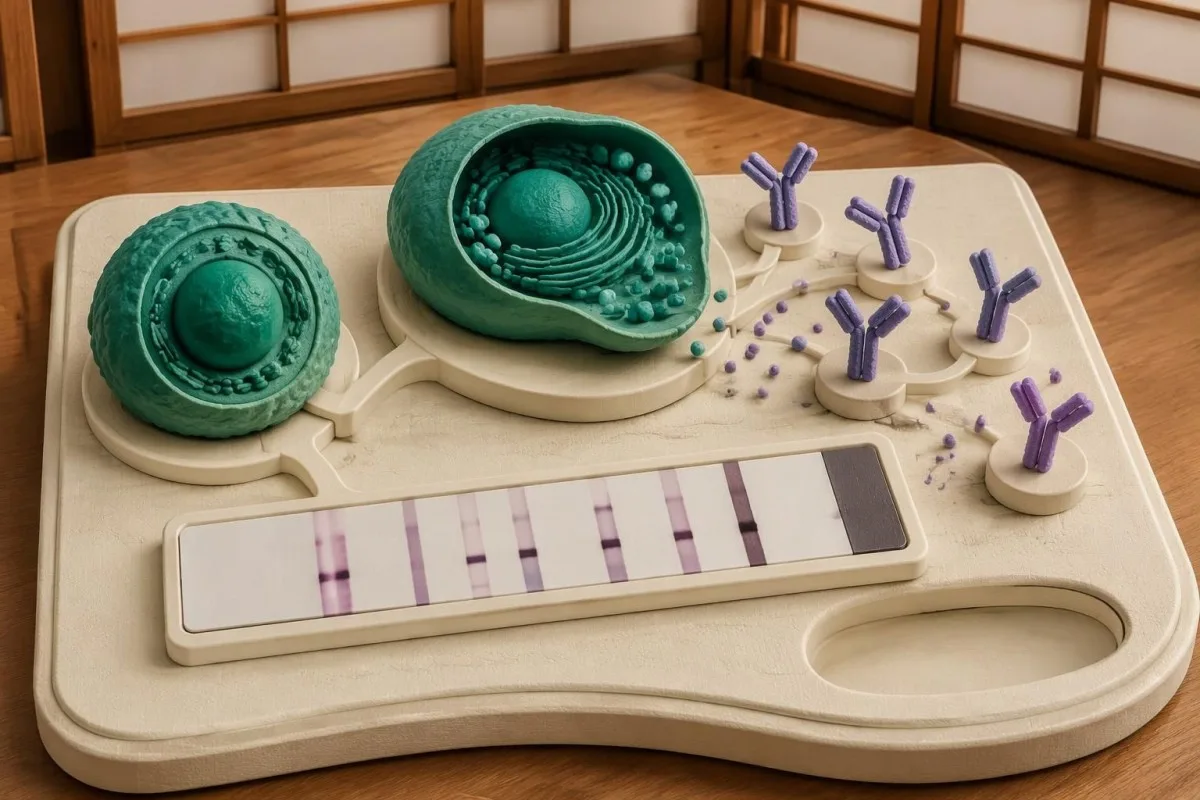
Across early-infection settings, conventional 2-tier sensitivity has been reported at approximately 30–40%, while specificity remains high when testing and interpretation are appropriate (Moore et al., 2016). These are population estimates, not a personal probability: sensitivity changes with the clinical manifestation, time since onset and whether the patient has already received antibiotics.
For a rash suggestive of but not typical for erythema migrans, the 2020 IDSA/AAN/ACR guideline supports acute serology and, if initially negative, a convalescent sample at least 2–3 weeks later (Lantos et al., 2021). The same guideline recommends clinical diagnosis for a typical lesion; a rash need not have textbook concentric rings to warrant assessment.
Repeating a test 24 hours later usually offers little advantage when the limitation is antibody development rather than a processing error. Our spotted fever testing guide explains a related timing problem, but suspected spotted fever has its own urgent treatment rules; do not delay care for an expanding rash or significant illness while waiting for more bands.
Betsjut positive Lyme IgG in aktive ynfeksje of mislearre behanneling?
Positive Lyme IgG cannot distinguish active infection from a previous infection that has resolved. Lyme antibodies can remain detectable for years or decades, and repeat immunoblot testing is not a test of cure; neither a persistent 5-band pattern nor changes in band intensity establish that treatment failed.
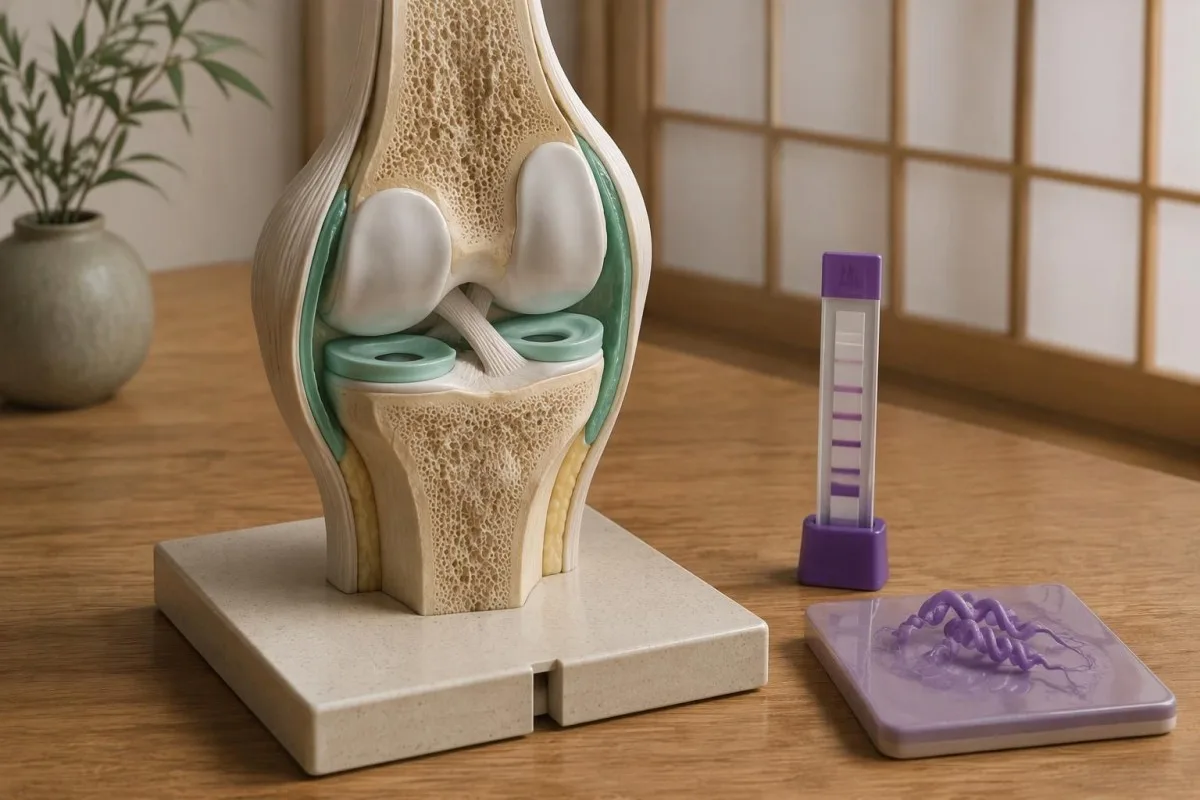
De 2020 IDSA/AAN/ACR guideline describes persistence of both IgM and IgG responses after infection, which complicates interpretation in previously affected patients (Lantos et al., 2021). A positive result obtained 4 years after treatment must therefore be compared with the clinical history, not interpreted as a laboratory photograph of living bacteria in the body.
Reinfection can occur because previous Lyme disease does not provide reliable lifelong protection, but an old positive antibody result cannot prove a new episode. For a hypothetical person with positive IgG from 2019 and a new expanding rash after recent tick exposure, the new clinical findings matter more than whether a sixth band appears; CMV-antykleurpatroanen illustrate why exposure history and current illness are separate questions.
Persistent fatigue, pain or cognitive symptoms deserve evaluation even when no new laboratory evidence appears. The guideline recommends against additional antibiotics for persistent nonspecific symptoms after recommended treatment when there is no objective evidence of reinfection or treatment failure; 1 positive antibody panel cannot identify the cause of those symptoms or justify an open-ended antibiotic course.
Wat IgG betsjut by fertinking op Lyme-artritis of neurologyske sykte
Lyme arthritis usually produces a strong IgG response, so isolated IgM is poor evidence for that diagnosis. Conventional two-tier serology has approximately 95–100% sensitivity in Lyme arthritis, according to the 2020 IDSA/AAN/ACR guideline; a negative appropriate IgG result should prompt serious consideration of other causes of joint swelling.
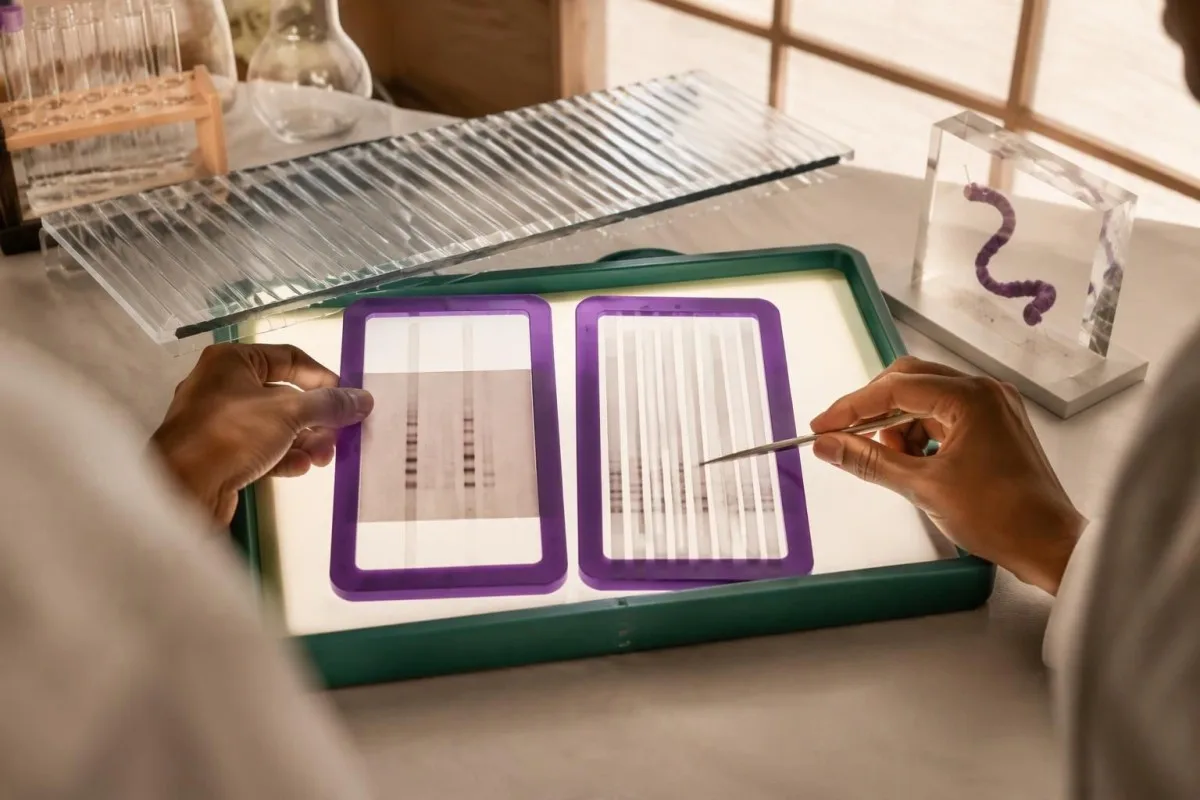
A hypothetical patient with a markedly swollen knee and only 2 IgM bands after 3 months of symptoms does not have the expected serologic pattern for Lyme arthritis. The clinician should reassess alternative causes and assay reliability rather than call this late Lyme based on IgM alone; when indicated, joint fluid examination answers additional questions that the antibody test cannot.
Suspected central nervous system Lyme disease requires clinical assessment and, when cerebrospinal fluid testing is undertaken, simultaneous CSF and serum for a validated antibody index. Testing CSF antibody alone or running a standalone CSF immunoblot is not the preferred approach; 1 elevated index may also persist after treatment, so it must be interpreted alongside the neurological findings and CSF cell response.
Numb feet or tingling do not become Lyme-specific because 41 kDa is reactive; neuropathy has metabolic, mechanical and immune causes. Our anti-MAG neuropathy guide explains one targeted alternative, while immunoglobulin panel interpretation clarifies that total serum IgG is different from the 5-of-10 Lyme-specific IgG immunoblot criterion.
Wêrom't laboratoaria en lannen ferskillende Lyme-kritearia brûke kinne
Lyme immunoblot criteria are assay- and region-dependent, so conventional US 5-of-10 IgG counting rules should not automatically be imposed on every European report. European assays may use different Borrelia antigens and recombinant line blots because the species causing human Lyme borreliosis differ across regions.
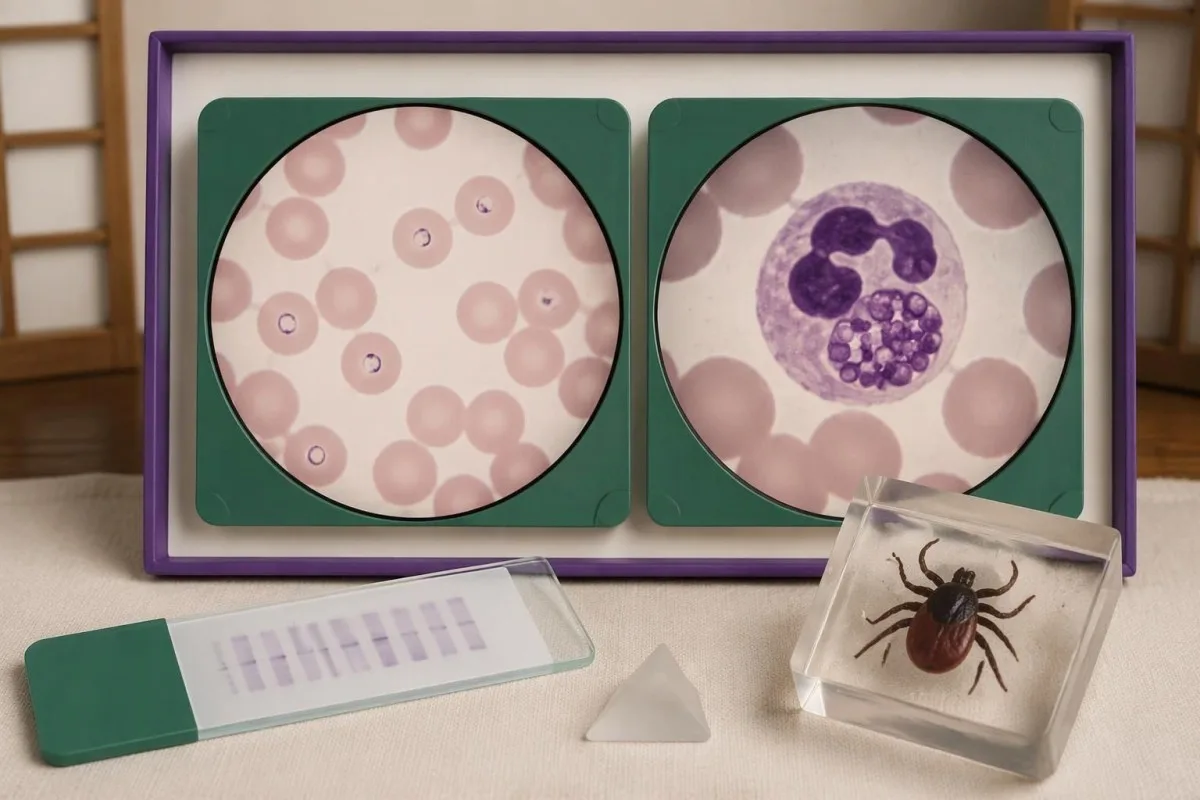
B. burgdorferi sensu stricto predominates in North America, while European disease also commonly involves B. afzelii and B. garinii. A report using VlsE, OspC or other recombinant antigen labels may therefore not resemble a 10-position conventional US blot; the clinically useful question is whether the assay was validated for the exposure setting and interpreted according to its instructions.
Different laboratory criteria are not automatically inferior, but claims that 1 or 2 bands prove disease require evidence for that assay's complete diagnostic performance. When reading a report described by Kantesti, consult the laboratory's interpretation and our medysk validaasjeramtwurk separately; general AI assessment or a software benchmark is not proof that a particular Lyme assay has validated sensitivity and specificity.
Record 3 details before comparing reports from different laboratories: assay manufacturer, algorithm type and the country where exposure occurred. Our AI rapport boarne-guide explains why preserving source wording matters; apparent conversion from negative to positive may reflect a changed method or cutoff rather than a newly acquired infection or worsening illness.
Identifisearje Lyme-bannen Babesia, Anaplasma of oare ko-ynfeksjes?
Lyme Western blot bands do not diagnose tick-borne coinfections. Babesia, Anaplasma and Ehrlichia require their own clinical assessment and tests; 1 positive Lyme antibody result neither confirms nor excludes these infections, even when an exposure setting allows more than one tick-borne organism to be transmitted.
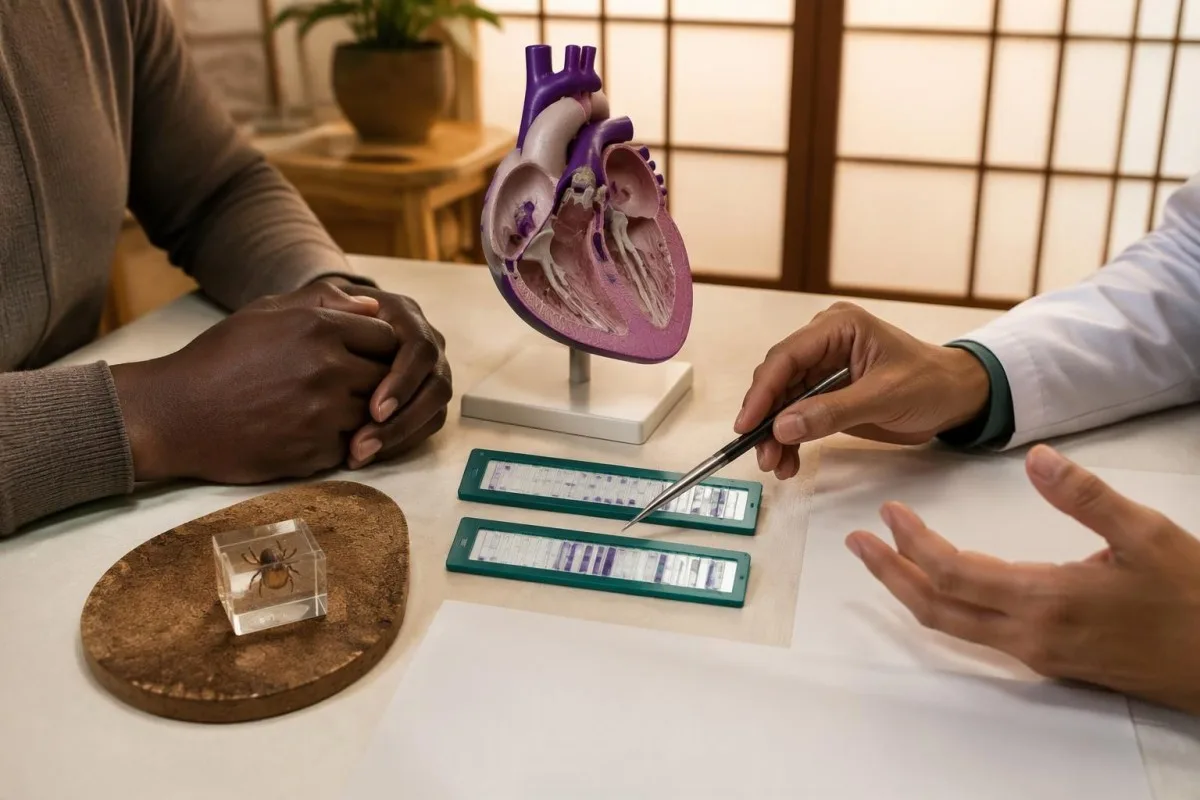
Babesiosis deserves consideration when relevant exposure accompanies fever and evidence such as anemia, low platelets or hemolysis, especially if fever persists during Lyme-directed treatment. A Babesia antibody titer of 1:256 alone does not establish current infection; our Babesia test interpretation guide explains why a cellular sample examination or PCR may be needed to demonstrate active infection.
Anaplasmose can produce fever, leukopenia, thrombocytopenia and elevated liver enzymes, findings that should not be explained away as extra Lyme bands. PCR is most useful during the first week of illness and becomes less sensitive after appropriate antibiotics; our Anaplasma sample timing guide separates this early direct-detection window from later antibody interpretation.
Ehrlichiosis follows a different organism-specific testing pathway, and a negative early antibody result is not a safe reason to dismiss significant febrile illness. Our Ehrlichia PCR and titer guide explains why 2 samples collected at different times may help establish seroconversion; targeted testing should follow symptoms, geography and laboratory abnormalities rather than an indiscriminate panel ordered for isolated fatigue.
Wat moatte jo dwaan mei in ûndúdlik Lyme-testrapport?
For an unclear Lyme report, obtain the complete 2-tier interpretation, write down symptom onset and discuss exposure plus objective findings with a clinician. Faint or isolated bands do not determine urgency; fainting, chest pain, breathlessness, a markedly slow pulse or new neurological deficits require prompt assessment regardless of the antibody result.
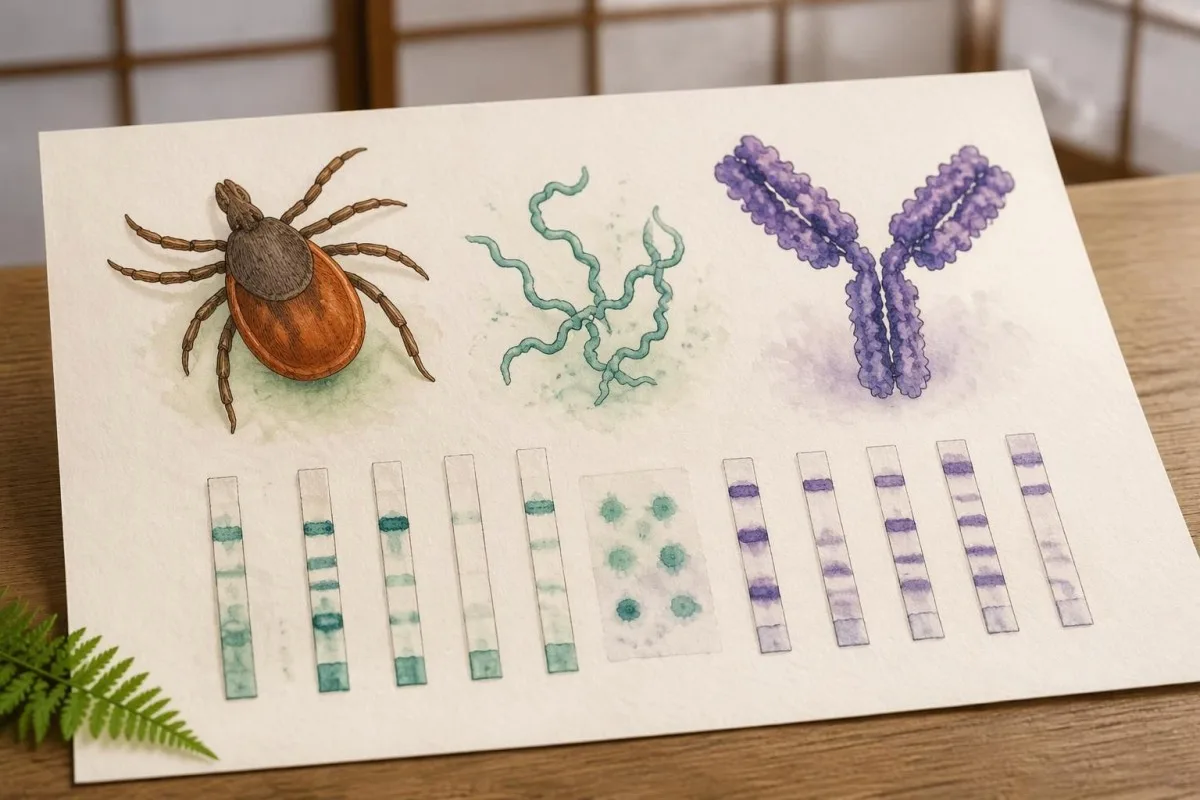
Lyme carditis can cause heart conduction block, so fainting or palpitations after compatible exposure should not wait for an immunoblot to become positive. The 2020 IDSA/AAN/ACR guideline identifies a PR interval greater than 300 milliseconds, other arrhythmias or features of myopericarditis as reasons for hospital admission with monitoring; that interval is measured on an ECG, not inferred from band intensity.
New facial weakness warrants urgent assessment, and sudden facial droop with arm weakness or speech difficulty needs emergency evaluation for stroke rather than attribution to Lyme. Our gids mei warskôgingstekens foar in beroerte explains that distinction; for a routine appointment, bring 4 dates—possible exposure, first symptom, sample collection and antibiotic initiation—because each changes a different part of the reasoning.
Kantesti is in AI-oandreaune ark foar analyse fan bloedtests that can help organize the 2-tier result, reported bands and missing clinical context into questions for your appointment. Our AI-technologygids describes the explanation workflow, but our AI cannot examine a rash, measure an ECG interval, confirm Lyme disease independently or decide whether you should start, stop or extend antibiotics.
Undersykspublikaasjes, grinzen fan it bewiis en feilige ynterpretaasje
The clinical interpretation in this article rests on 3 directly relevant sources: a laboratory-diagnosis review, the CDC's modified two-tier recommendation and the IDSA/AAN/ACR Lyme guideline. The 2 additional Figshare publications listed below concern other health topics and must not be treated as validation of Lyme band interpretation or Lyme diagnosis.
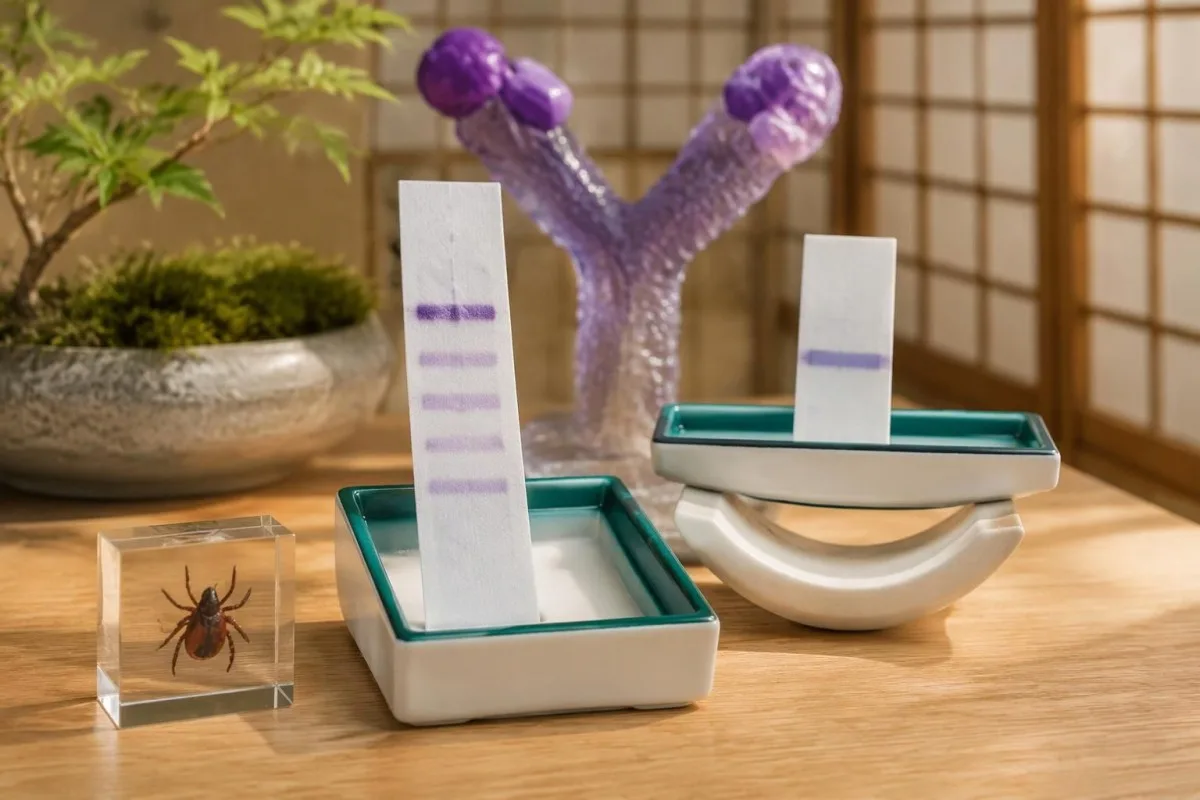
Moore et al. (2016) explains why individual bands and incomplete testing sequences create diagnostic errors; Mead et al. (2019) establishes the CDC recommendation for appropriately cleared modified algorithms. Lantos et al. (2021), publishing the 2020 guideline, connects testing to clinical manifestations, including early rash, arthritis and neurological disease; these sources support different parts of the reasoning rather than one universal band shortcut.
The 2 Figshare records address women's hormonal health and multilingual AI-assisted hantavirus triage, respectively, not Lyme immunoblot performance. A deployment involving 50,000 interpreted reports, as described in the hantavirus publication's title, cannot establish sensitivity, specificity or patient benefit for Lyme diagnosis; those claims would require Lyme-specific methods, reference standards and evaluation populations.
De prinsipes foar ferantwurde AI place report explanation alongside—not above—the laboratory and clinician, including when IgM appears after 30 days of symptoms. For symptoms linked to cycle changes or menopausal transition, our hormonal symptom guide addresses a separate assessment pathway; symptom overlap is a reason to investigate carefully, not evidence that a reactive Lyme band explains everything.
Faak stelde fragen
Kin ien positive bân op in Western blot foar Lyme betsjutte dat ik Lyme-sykte haw?
Ien reaktive Lyme-Western-blotbân stelt de sykte fan Lyme net fêst. Neffens de konvinsjonele Amerikaanske kritearia binne, yn de earste 30 dagen fan de symptomen, op syn minst 2 fan de 3 oanwiisde IgM-bannen nedich, of 5 fan de 10 oanwiisde IgG-bannen, binnen it passende testtrajekt yn twa stappen. In inkele bân kin, ôfhinklik fan de situaasje, wize op krúsreaktiviteit of in ûnfolsleine iere antykoadyreaksje. In typyske erythema migrans-útslach nei passende bleatstelling kin in klinyske diagnoaze noch altyd stypje, ek al is de iere serology negatyf.
Wêrom binne guon Lyme-bannen posityf, mar is de test as gehiel negatyf?
In Lyme-test kin reaktive bannen befetsje, mar dochs negatyf bliuwe, omdat de immunoblot net foldie oan it validearre patroan dat it testalgoritme fereasket. Bygelyks, 3 kwalifisearjende IgG-bannen lizze ûnder de konvinsjonele IgG-drompel fan 5 fan de 10. In positive of twifeleftige earste-screeningtest, folge troch negative passende immunoblots, wurdt by standert twa-tier-testen as negatyf ynterpretearre. As de symptomen hiel resint binne, kin in klinikus oerweagje om nei in passend ynterfal opnij te testen, ynstee fan it ûnfolsleine patroan as posityf te bestimpeljen.
Wat betsjut in positive Lyme-band fan 41 kDa?
De Lyme-bân fan 41 kDa wjerspegelet ornaris de bining fan antistoffen oan flagelline, in proteïne dat mei de beweging fan baktearjes te krijen hat en krúsreaksjes jaan kin mei antistoffen dy't net mei de sykte fan Lyme te krijen hawwe. It is mar 1 fan de oanwiisde bannen dy't brûkt wurde yn konvinsjonele immunoblotkritearia en kin op himsels gjin sykte fan Lyme fêststelle. Moore et al. (2016) ferwiisden nei in stúdzje wêryn dizze bân fûn waard by 43% fan de sûne kontrôlegroep, hoewol't dat persintaazje net in algemien jildend taryf foar alle assays is. De folsleine testsekwinsje en de klinyske presintaasje bepale oft it resultaat de sykte fan Lyme stipet.
Is Lyme-IgM posityf en IgG negatyf bewiis fan in resinte ynfeksje?
Lyme-IgM-posityfiteit mei in negative IgG kin in iere ynfeksje stypje, mar allinnich as dy past by it passende testalgoritme, it klinyske byld en it ferrin yn ’e tiid. Isolearre IgM moat net brûkt wurde om de diagnoaze Lyme-sykte te stypjen as de symptomen mear as 30 dagen duorje, om’t oanhâldende of net-spesifike IgM de ynterpretaasje misliedend meitsje kin. Twa IgM-bannen dy’t oan de kritearia foldogge op dei 14 hawwe bygelyks in oare betsjutting as itselde patroan nei 3 moannen mei oanhâldende symptomen. De tiidregel ferwiist nei it begjin fan de symptomen, net nei de dei dat it laboratoarium de stekproef sammele.
Kin ik in positive Lyme-test hawwe sûnder bands op de Western blot?
Ja: in falidearre oanpaste Lyme-algoritme mei twa nivo's brûkt 2 opienfolgjende enzymimmunoassays en hoecht hielendal gjin Western blot út te fieren. De CDC ried yn 2019 passend troch de FDA goedkarde oanpaste algoritmen oan. Guon assaykombinaasjes mjitte totale antistoffen, wylst oare aparte IgM- en IgG-resultaten jouwe, sadat konvinsjonele regels foar it tellen fan banden net op elk rapport fan tapassing binne. Freegje it laboratoarium hokker algoritme en assaykombinaasje de definitive ynterpretaasje oplevere.
Moatte Lyme-Westernblotbannen nei antibiotika ferdwine?
Lyme-Western-blotbannen hoege nei in suksesfolle behanneling net te ferdwinen, om't antistoffen jierren- of sels desennia lang oanwêzich bliuwe kinne. In oanhâldend IgG-patroan mei 5 bannen bewiist gjin oanhâldende ynfeksje, en it werheljen fan bântests is gjin falidearre genêzingstest. It antwurd op de behanneling wurdt beoardiele op basis fan it ferrin fan de sykte en relevante objektive befiningen, net troch te easkjen dat in antistoffepaniel negatyf wurdt. Nije symptomen of in nije bleatstelling oan teken fereaskje in nije klinyske beoardieling, om't âlde antistoffen gjin opnij besmetting fêststelle kinne.
Lit jo bloedtest resultaten útlizze
Laad jo laboratoariumrapport op en de AI fan Kantesti leit elke biomarker binnen sekonden út yn gewoane taal. Brûkt troch mear as 2 miljoen minsken wrâldwiid.
Referinsjes
- Klein, T., Mitchell, S., & Weber, H. (2026). Gids foar de sûnens fan froulju: ovulaasje, menopoaze en hormonale symptomen. Kantesti AI Medysk Undersyk. DOI
- Klein, T., Mitchell, S., & Weber, H. (2026). Meartalige AI-bystiene klinyske beslútstipe foar iere hantavirus-triage: ûntwerp, technyske falidaasje en ynset yn 'e praktyk oer 50.000 ynterpretearre rapporten fan bloedtests. Kantesti AI Medysk Undersyk. DOI
- Moore A et al. (2016). Current Guidelines, Common Clinical Pitfalls, and Future Directions for Laboratory Diagnosis of Lyme Disease, United States. Emerging Infectious Diseases. DOI PubMed
- Mead P et al. (2019). Updated CDC Recommendation for Serologic Diagnosis of Lyme Disease. MMWR Wykliks rapport oer folkssûnens en mortaliteit. DOI
- Lantos PM et al. (2021). Clinical Practice Guidelines by the Infectious Diseases Society of America (IDSA), American Academy of Neurology (AAN), and American College of Rheumatology (ACR): 2020 Guidelines for the Prevention, Diagnosis and Treatment of Lyme Disease. Clinical Infectious Diseases. DOI
- 2M+Analysearre tests
- 127+Lannen
- 100+Talen
Oer it medyske team


E-E-A-T fertrouwensignalen
Ûnderfining
Dokter-oandreaune klinyske resinsje fan lab-ynterpretaasje-wurkprosessen.
Ekspertize
Fokus fan laboratoariummedisyne op hoe’t biomarkers har gedrage yn in klinyske kontekst.
Autoriteit
Medysk beoardiele troch Dr. Thomas Klein, mei bydragen fan Dr. Sarah Mitchell en prof. dr. Hans Weber.
Betrouberens
Bewiis-basearre ynterpretaasje mei dúdlike ferfolchpaadkes om alarm te ferminderjen.






Medyske disclaimer
Dit artikel is allinnich foar ûnderwiisdoelen en foarmet gjin medysk advys. Rieplachtsje altyd in kwalifisearre soarchferliener foar besluten oer diagnoaze en behanneling.
Publisearre · Nim kontakt op mei it redaksjeteam
Publisearre troch Kantesti Ltd, registrearre yn Ingelân en Wales, bedriuwsnûmer. 17090423, Londen, Feriene Keninkryk.
