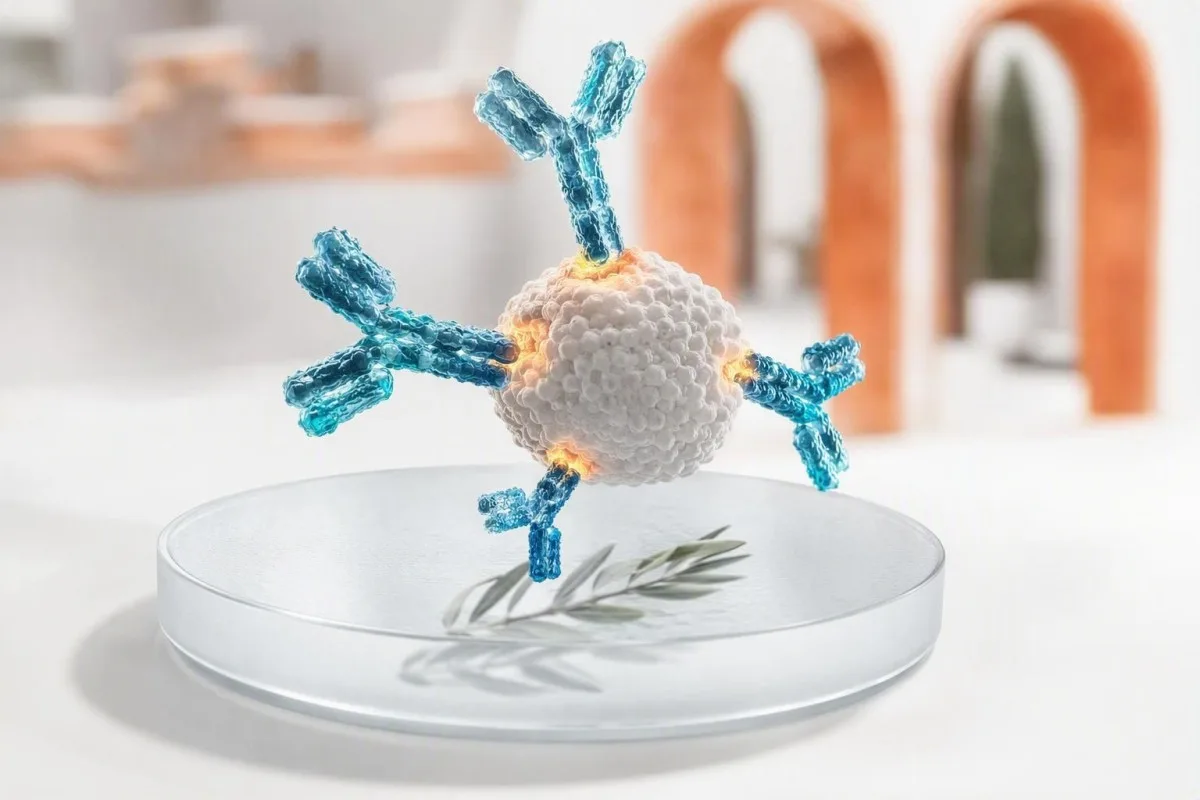
In posityf antystofresultaat betsjut dat jo ymmúnsysteem in bepaald doelwyt hat erkend; it bewiist op himsels gjin aktive ynfeksje of sykte. De antystofklasse, testmetoade, timing, symptomen en begeliedende tests bepale oft jo gerêststelling, in werhellingstest, befêstiging of prompt klinysk soarch nedich hawwe.


- Posityf antystofresultaat lit meastentiids ymmúnerkenning sjen, net needsaaklik hjoeddeiske sykte of besmetlikens.
- IgM tsjin IgG is in timing-wizer, gjin klok: IgM kin moannen bliuwe en IgG kin betiid ferskine.
- Faksinaasje-antistoffen kinne ymmuniteitstests posityf meitsje sûnder natuerlike ynfeksje oan te jaan.
- Allergen-spesifike IgE boppe 0.35 kUA/L jout sensibilisaasje oan, mar symptomen nei bleatstelling fêstigje klinyske allergy.
- ANA posityfens komt foar by oant 20% fan sûne folwoeksenen by lege titers, benammen mei de leeftiid; symptomen en spesifike antistoffen binne wichtiger.
- HIV-screening reaktiviteit fereasket altyd it laboratoariumbefêstigingsalgoritme foardat in diagnoaze steld wurdt.
- Anti-tTG IgA is allinich betrouber foar koelak-beoardieling as de persoan gluten yt en genôch totale IgA hat.
- Dringende symptomen lykas sykheljen swierrichheden, betizing, gielsucht, boarstpine of in wiidfersprate blierrige útslach binne wichtiger as in routine antistofresultaat.
Wat in posityf antystofresultaat jo eins fertelt
A posityf antistof test betsjut dat it assay ymmúunproteïnen hat ûntdutsen dy't binde oan in spesifyk doel; it betsjut net net automatysk dat jo in aktive ynfeksje, in auto-immune sykte, of in allergy hawwe dy't behanneling nedich is. De folgjende stap hinget ôf fan it antistof-type, de krêft fan it resultaat, symptomen, blootstellings-tiid en eventuele parearre antigen, PCR of organfunksje-tests.
Antistoffen binne B-sellenproteïnen dy't makke wurde nei faksinaasje, ynfeksje, allergy-blootstelling, auto-ymmuniteit, of soms om gjin klinysk skealike reden. In posityf resultaat beantwurdet ien nauwe analytyske fraach – waard bining ûntdutsen boppe dizze laboratoarium-ôfslach? – ynstee fan de bredere klinyske fraach fan wat der hjoed yn jo lichem bart.
Yn myn 15 jier fan klinyske praktyk hat de meast foarkommende flater west om “posityf” te lêzen as in diagnoaze. Dr. Thomas Klein syn praktyske regel is om earst it doelte identifisearjen – in firus, faksine-antigeen, fiedselproteïne, skyldklier-enzyme, nukleêre antigeen of medisyn – en dan te freegjen oft de test eardere blootstelling, in oanwêzich organisme, sensibilisaasje of ymmúne misrjochting detektearret.
Kantesti AI is in AI bloedtestanalysator dy't antistof-flags neist datums, ymmúnoglobuline-klasse en relatearre resultaten lêst ynstee fan ien posityf resultaat as in útsprutsen oardiel te behanneljen. Dat kontekst is benammen nuttich as pasjinten rapporten fan ferskillende laboratoaren fergelykje; kwalitative en kwantitative resultaten binne net útwikselber, sels as beide posityf sizze.
IgG versus IgM posityf: wêrom timing minder ienfâldich is as it klinkt
IgM posityf kin wize op in resinte ymmúne reaksje, wylst IgG posityf faak wize op eardere blootstelling of faksinaasje-reaksje; gjin fan beide patroanen datearret betrouber in sykte op himsels. Guon ynfeksjes produsearje IgG binnen 7–14 dagen, en IgM kin detektearber bliuwe foar 3–12 moannen of langer.
IgM is in grutte fiif-ienheid antistof dy't faak betiid detektearber is, mar syn grutte en brede binding makket it mear gefoelich foar krúsreaksjes. Epstein-Barr firus, parvovirus B19, reuma-faktor en guon auto-immune antistoffen kinne misliedende IgM-reaksjes feroarsaakje; in isolearre leech-nivo IgM-resultaat fertsjinnet mear skepsis as panik.
IgG bliuwt meastentiids nei't ymmúne ûnthâld ûntwikkelet, soms foar desennia. In posityf IgG-resultaat kin berneryk ynfeksje, in resinte faksinaasje, passive antistoffen fan yntraveneuze ymmúnoglobuline, of memmetaal oerdrachten oan in poppe reflektearje; it kin gjin beskerming bewiisje, útsein as dat spesifike assay in falidearre beskermjende drompel hat.
Parearre stekproeven kinne nuttiger wêze as ien kear; in fjouwerfold stiging fan antistof-titer tusken stekproeven dy't sawat 2–4 wiken útinoar nommen binne, stipet resinte ynfeksje by selektearre sykten. As it rapport totale IgG, IgA en IgM listet, besjoch dan it patroan ynstee fan ien nûmer mei ús immunoglobulin ynterpretaasjegids.
Wannear't ynfeksje-antistoffen aktive sykte betsjutte en net betsjutte
Ynfeksjeantistoffen jouwe meastentiids eksposysje oan, wylst PCR, antigeentests, kweek, of in tanimmende titel bettere ark binne foar it detektearjen fan in protte aktive ynfeksjes. In posityf antistofresultaat sûnder symptomen is faak histoarysk, mar de útsûndering hinget ôf fan it organisme en jo ymmúnstatus.
Foar hepatitis C betsjut in reaktive antistof eksposysje op in stuit, mar allinnich detektearbere HCV RNA bewiist hjoeddeistige firaemia. Foar hepatitis B is de kombinaasje fan belang: oerflakantigeen, oerflakantistof en kearn-antistof skiede aktive ynfeksje, genêzen ynfeksje en faksinaasje-ymmuniteit folle better as ien posityf marker.
HIV is in oar gefal wêryn't de formulering enoarm wichtich is. In reaktive fjirde-generaasje screening is gjin diagnoaze; it laboratoarium folget mei in HIV-1/HIV-2 differinsjaasje-ymmunotest en, as it nedich is, nukleïnezuurtesten. In persoan dy't post-eksposysje profylakse nimt, hat tiidsôfhinklike testen nedich, lykas útlein yn ús HIV-testen nei PEP-gids.
Ik haw in sûn pasjint sjoen dy't bang wie foar in posityf treponemaal syfilis-antistof nei behanneling 18 jier earder. Treponemaaltesten bliuwe faak libbenslang posityf, wylst in RPR- of VDRL-titel helpt om de hjoeddeistige aktiviteit en reaksje te beoardieljen; syfilistestpatroanen meitsje dit ûnderskie dúdliker.
Hoe't faksinaasje-antistoffen ferskille fan antistoffen nei ynfeksje
Faksinaasje-relatearre antistoffen jouwe oan dat it ymmúnsysteem reagearre hat op in faksinaasje-antigeen; se betsjutte net dat de faksinaasje in aktive ynfeksje feroarsake hat. In posityf resultaat kin noch altyd ûnder in bekende beskermjende korreleaat falle, om't bining-antistoffen en funksjonele neutralisearjende antistoffen net itselde binne.
Hepatitis B oerflakantistofkonsintraasjes fan 10 mIU/mL of heger mjitten 1-2 moannen nei in dokumintearre faksinaasjesearje wurde algemien beskôge as beskermjend by ymmúnkompetinte minsken. Anti-HBc, de hepatitis B kearn-antistof, wurdt net produsearre troch standert hepatitis B faksinaasje; de oanwêzigens dêrfan wiist op natuerlike eksposysje en moat oanlieding jaan ta folsleine panelyntepretaasje.
Rubella IgG wurdt faak kontrolearre foar swangerskip, om't it foarôfgeande immuniteit oanjout, net in aktive rubella-sykte. Laboratoria stelle assay-spesifike drempels yn, en grinsresultaten wurde meastentiids behannele as net-immun foar previnsjeplannen foar swangerskip ynstee fan ynterpretearre as resinte ynfeksje; tiidstip is yn detail yn ús rubellatestgids.
Kantesti AI is in AI bloedtest-útslachplatfoarm dy't faksinaasje-patroan-antistoffen skiedt fan ynfeksje-patroan-antistoffen as it ferslach de relevante begeliedende markers omfettet. De praktyske fraach is faak net “bin ik posityf?”, mar “hokker antigeen waard mjitten, wannear waard ik faksinearre, en feroaret dit resultaat hjoeddeistich beskermingsplan?”
Wêrom in posityf allergy-antystofresultaat net needsaaklik in allergy betsjut
In posityf allergeen-spesifyk IgE test jout sensibilaasje oan, wat betsjut dat IgE in allergeen herkent; it diagnostisearret gjin klinyske allergy sûnder in kompatibele reaksjeskiednis. In wearde boppe 0.35 kUA/L is in mienskiplike analytyske posityf drempel, net in universele drempel foar it foarkommen fan in fiedsel of medisyn.
It ferhaal foar de test is wichtiger as in protte minsken beseffe. As in persoan wykliks pinda's yt sûnder hûdkloppingen, piepende azem, braken of ynstoarting, moat in lege posityf pinda-IgE allinnich net liede ta foarkommen; ûnnedige fiedselbeheining kin fiedingskundige en sosjale skea feroarsaakje.
De troch de NIAID sponsore rjochtline foar fiedselallergy seit dat hûd-prick- en spesifike-IgE-testen mooglike triggerfiedsels identifisearje, mar fiedselallergy net selsstannich kinne diagnostisearje (Sampson et al., 2010). Yn selektearre gefallen brûkt in allergolooch komponent-resolúsje-testing of in medysk begelate mûnling iten útdaging, dy't de referinsjestandert bliuwt foar it oplossen fan ûnwissichheid.
Totaal IgE wurdt mjitten yn IU/mL en kin heech wêze by ekszeem, parasityske eksposysje, smoken en ferskate ymmúnbetingsten; it kin gjin skuldige allergeen identifisearje. Komponenttesting kin in stabile opslachproteïne ûnderskiede fan in krúsreaktyf pollen-relatearre proteïne, in ferskil dat ûndersocht wurdt yn ús artikel molekulêre allergytesten.
Wêrom auto-ymmúne antistoffen symptomen en organenklues fereaskje
Autoimmune antistoffen kinne de sykte foarôfgien, de sykte begeliede, of yn sûne minsken foarkomme; in posityf resultaat allinich stelt selden in autoimmune diagnoaze fêst. Klinisy hannelje as it antistofpatroan oerienkomt mei symptomen, ûndersykresultaten, ûntstekkingmarkers of objektive organferoarings.
In antinukleêre antistof, of ANA, is posityf by lege titers yn rûchwei 13% fan minsken by 1:80 en sawat 20% by 1:40 yn befolkingstúdzjes, mei hegere tariven by froulju en âldere folwoeksenen. In homogeen of spikkelich patroan diagnostisearret gjin lupus; ANA wurdt bêste brûkt as in tagongstest as it klinyske byld ferbânweefsel sykte plausibel makket.
It 2019 EULAR/ACR lupus klassifikaasjeraamwurk brûkt ANA by in titel fan op syn minst 1:80 as in yngongskriterium, en fereasket dan ekstra weage klinyske en immunologyske funksjes (Aringer et al., 2019). Nij proteïne yn urine, lege C3/C4, cytopenias, ûntstekking gewrichtsûntlading of in oertsjûgjende fotosensitive útslach feroaret de urginsje folle mear dan in swakke ANA allinich.
Anti-dsDNA wurdt mear betsjuttingsfol as it kombinearre wurdt mei leech komplement en nierresultaten, hoewol't assaymetoaden substansjeel ferskille. Us anti-dsDNA opfolggids en oersjoch fan komplementtests ferklearje wêrom't in spesjalist it testen op in oar platfoarm werhelje kin.
Orgaan-spesifike antistoffen: skildklier, coeliakie en mage foarbylden
Orgaan-spesifike antistoffen identifisearje ymmúnske tsjinstelling fan in tissue, mar se litte net altyd sjen oft it orgaan op it stuit skansearre is of behanneling nedich hat. Skildklierperoxidase antistoffen, weefsel transglutaminase antistoffen en intrinsic-faktor antistoffen fereaskje elk ferskillende begeliedende tests.
TPO antistoffen komme faak foar yn Hashimoto thyroiditis en kinne jierrenlang oanwêzich wêze, wylst TSH en frije T4 normaal bliuwe. By in folwoeksene sûnder swangerskip mei normale skildklierfunksje stipet it resultaat meast periodyk TSH-monitoring ynstee fan skildklierhormoanbehanneling; swangerskip, fruchtberensplannen en symptomen kinne dy oanpak feroarje.
In posityf tTG-IgA suggerearret coeliac sykte allinich as de persoan noch gluten konsumearret en de totale IgA adekwaat is. Selektive IgA-defizit kin tTG-IgA falsk negatyf meitsje, dus klinisy brûke IgG-basearre deamidearre gliadinpeptid of tTG-tests as de totale IgA leech is; sjoch ús útlis fan lege IgA-piten.
Intrinsic-faktor antistof is relatyf spesifyk, mar net tige gefoelich foar pernicious anemia. As it posityf is neist lege B12, ferhege methylmalonyske acid en macrocytosis, is it patroan oertsjûgjend; sûnder dat patroan, mije ik it behanneljen fan in laboratoariumlabel ynstee fan de pasjint. testen fan Pernicious anemia lit de gewoane befêstigingssearje sjen.
Wat feroarsaket in falsk-posityf antystofresultaat
Falsk-posityf antistofresultaten ûntsteane as de assay ûnbedoelde bining detektearret, net as it laboratoarium it gewoan “ferkeard hat”. Krúsreaktive antistoffen, reumatoid faktor, resinte ymmúnstimulaasje, passive immunoglobuline en lege pre-test-wierskynlikens binne mienskiplike redenen.
Spesifisiteit is gjin perfeksje. In test mei 99% spesifisiteit produsearret sawat 10 falsk-posityf resultaten foar elke 1.000 wirklik negative minsken dy't test binne; as de tastân seldsum is, kinne dy resultaten de wiere posityven oertreffe. Dêrom skept brede screening by immen sûnder symptomen faak mear betizing dan gerêststelling.
Biotine is ferneamd om it interferinsje mei guon hormoan- en hertassays, wylst heterophile antistoffen en reumatoid faktor kinne interferinsje mei bepaalde immunoassays. It laboratoarium kin soms it monster ferwiderje, blokkearjende reagenzjes brûke, it resultaat werhelje op in oare assayarsjitektuer, of in mear spesifike befêstigingsmetoade útfiere.
In posityf resultaat dat yn striid is mei in folslein unremarkable klinysk byld is net iets om te negearjen; it is in reden om te ferifiearjen. Kantesti AI fergeliket diskordante markers en testdatums, en ús lab-resultaat-akkuraatenschecklist kin jo helpe om oanfollingen, resinte infusjes en sykten op te nimmen foardat jo mei de bestellende klinikus prate.
Antystoftest posityf mar gjin symptomen: in praktysk triageplan
As in antistof test posityf is, mar jo fiele jo goed, de measte minsken hawwe ferdúdliking nedich ynstee fan needhelp. De feilichste earste stappen binne om de krekte assay te ferifiearjen, eksponinsje- en faksinaasjedatums te kontrolearjen, en te sykjen nei de begeliedende test dy't hjoeddeistige sykte of orgaanbelutsenens befêstiget.
Begjin mei it ferslach sels: registrearje de namme fan it analyte, de antystofklasse, de numerike yndeks of titre, it referinsje-interval, de laboratoariummetoade en de sammeldatum. “Reaktyf” kin betsjutte dat in sinjaal-oan-ôfsnien-ferhâlding krekt boppe 1,0 is of in folle sterker resultaat; laboratoaria brûke gjin identike drompels, en de grutte folget mar soms de klinyske wierskynlikheid.
Folgjende, freegje oft der in test foar aktive sykte is. Foarbylden binne PCR foar hepatitis C, serieuze RPR foar syfilis, kruk- of syktesten foar aktive Helicobacter pylori, TSH/frij T4 foar skildklierantistoffen, en urineanalyse plus kreatinine foar lupus-relatearre niersoarch.
Fanôf 8 septimber 2026 soe ik gjin antibiotika, antivirale medisinen, glutenfrije diëten, skildklier medisinen of fiedselferwidering sels begjinne, allinnich basearre op in isolearre antistofresultaat. Bewarje de orizjinele PDF, noteare jo baseline mei longitudinale labfolchting, en regelje routine resinsje, útsein as der reade flagge symptomen oanwêzich binne.
Befêstigjende tests dy't de folgjende stap feroarje
De bêste befêstigjende test hinget ôf fan wat de antistof doelwit: molekulêre deteksje befêstiget in protte ynfeksjes, funksjonele assays ferdúdlikje allergyen, en organfunksje testen beoardielje autoimmune ynfloed. It werheljen fan deselde antistoftest is allinich nuttich as de ferwachte feroaring oer tiid klinyske betsjutting hat.
Foar in reaktyf HIV-skerm is it reflexbefêstigingspaad in differinsjaasjeassay, folge troch HIV-nukleïne-soer testen as de resultaten ûnbepaald binne. Foar in hepatitis C-antistof is HCV RNA it beslissende opfolging; foar in posityf hepatitis B-kearn antistof befetsje it oerflakantigen, oerflakantistof en soms HBV DNA it patroan.
Foar fertochte coeliakie moatte biopsyjbesluten nommen wurde, wylst gluteneksposysje genôch is foar testen. Foar mooglike fiedselallergy beskôget in allergolooch de eksposysjeskiednis, it spesifike IgE-nivo, it komponintprofyl en it risiko fan útdaagjen - net in paniel fan ûnrelatearre lege posityfen besteld sûnder in klinyske fraach.
Kantesti AI is in AI-oandreaune ark foar analyse fan bloedtests dat dizze keppele markers organisearje kin yn in foar de kliïnisthus kleare fraachlist, mar it ferfangt gjin befêstigjende testen of diagnoaze. As jo net wis binne hoe grut oft jo op in útslaand resultaat fertrouwe kinne, ús medyske validaasjenormen beskriuwe wêrom't ferifikaasje en klinyske tafersjoch wichtich binne.
Symptomen dy't in posityf antystofresultaat urginter meitsje
In posityf antystofresultaat rjochtfeardiget urgente beoardieling as it begelaat wurdt troch ademhalingsproblemen, gesichts- of kielswelling, flauwvallen, betizing, boarstpine, gielsucht, rap ferspriedende útslach, slimme útdroeging of nije neurologyske swakte. Symptomen - net it antistofnûmer allinich - bepale de urgency.
Mooglike anafylakse is in needgefallen: hommelse wiidfersprate hiven mei piepende sykheljen, keelstrakens, oanhâldend braken, flauwvallen of lege bloeddruk nei eksposysje fereasket needtsjinsten en foarskreaune adrenaline as beskikber. In posityf fiedsel- of gif IgE fan moannen lyn noch foarseit noch slút dat direkte risiko út.
Nije gielsucht mei donkere urine, opfallende abdominale pine, koarts of betizing moat deselde dei evaluaasje oproppe, oft virale hepatitis antistoffen posityf binne of net. Leverenzymen, bilirubine, INR en direkte sykteferwekker testen helpe om immunologyske skiednis te ûnderskieden fan aktive hepatobiliair sykte; lever-paniel-ûnderdielen binne nuttige kontekst.
Autoimmune soarch wurdt tiid-sensityf mei hoastjen fan bloed, koartheid fan sykheljen, rap tanimmende kreatinine, bloedige diarree, fisuele feroaring, oanfal of in nije iensidige swakte. Ik haw leard om immen net te treasten op basis fan in grinsposysje antistoftiter as har symptoomtrajekt dúdlik efterútgiet.
betsjut in heger antystofnûmer in slimmer sykte?
In hegere antystof-yndeks of titre fergruttet soms de kâns dat in resultaat earlik is, mar it mjit meastentiids net de sykte-yntegriteit. Assaywearden binne metoadespesifyk, en in resultaat fan 80 AU/mL kin net direkt fergelike wurde mei 80 U/mL fan in oar laboratoarium.
By autoimmune sykte kinne anti-dsDNA-trends soms lupus-aktiviteit folgje, benammen as se konsekwint mjitten wurde mei deselde metoade en ynterpretearre mei komplement en urine-proteïne. ANA-titer is lykwols in minne mjitting fan lupus-yntegriteit en moat net werhelle wurde efterfolge by in stabile persoan.
Foar ynfeksjes kin in sterk antystofsinjaal foar eardere eksposysje stypje, mar jout selden ynfeksje oan. Neutralisearjende antistoftesten binne spesjaliseare en har beskermjende drompels kinne ferskille per sykteferwekker, leeftiid, faksins produsearre en ymmúnûnderdrukking; in ienfâldige kommersjele IgG-assay is gjin persoanlik ymmuniteitspaspoart.
By it fergelykjen fan ferslaggen, hâld it laboratoarium, assay en ienheden sichtber. In echte biologyske feroaring moat de gewoane analistyske en dei-oant-dei fariaasje oertreffe, dêrom ús bloedtest ferlykjingsgids rjochtet him op datums en metoaden ynstee fan allinich kleur-koade flaggen.
Swangerskip, bern en ymmúnsupresje feroarje ynterpretaasje
Swangerskip, bernejierren en ymmúnûnderdrukkende behanneling kinne sawol de antystofproduksje as de feiligens fan it wachtsjen op befêstiging feroarje. By dizze groepen kin in posityf resultaat memme-antistoffen, fermindere faksynreaksje, reaktivaasjerisiko of de needsaak foar eardere spesjalistysk advys reflektearje.
Maternaal IgG giet troch de placenta en kin ferskate moannen detektearber bliuwe by in poppe, wylst maternaal IgM meastentiids net trochgiet. Dêrom wjerspegelet in isolearre IgG-posityf by in poppe faaks maternale immuniteit, wylst organism-spesifike IgM as direkte deteksje mear rjochte evaluaasje fertsjinnet ôfhinklik fan de ynfeksje en leeftiid.
By swangerskip wurde rubella- as parvovirus-antystofresultaten ynterpretearre mei eksposysjedatums, avidity-tests en herhelingssamples ynstee fan allinnich in inkele IgM. Falsk-positive IgM is in erkend probleem, en foarkommen alarm kin liede ta ûnnedige invasive ûndersiken; Obstetryske of ynfeksjesykte-ynput is sinfol as eksposysje te leauwen is.
Minsken dy't rituximab, heechdosis corticosteroids, gemoterapy of transplantamedisinen krije, kinne swakke of ôfwêzige antystofresponsen hawwe nettsjinsteande ynfeksje of faksinaasje. Foar famyljebesluten, berne-AI-ynterpretaasjelimiten en de Kantesti medysk advysried fersterkje de needsaak foar resinsje troch de klinikus.
Hoe tariede op in nuttige klinikus-besprek fan in posityf resultaat
Nim it folsleine laboratoariumrapport, de reden dat de test besteld waard, datums fan symptomen of eksposysje, faksinhistoarje, medisinen en eardere resultaten. Dizze ynformaasje kin in blykber ûndúdlik posityf antystofresultaat omsette yn in dúdlike folgjende aksje binnen ien ôfspraak.
Skriuw fiif feiten op foar it besyk: de earste dei fan symptomen, de lêste plausibele eksposysje, faksinatums, ymmún-ûnderdrukkende medisinen of immunoglobulininfúzjes, en oft symptomen ferbetterje of slimmer wurde. Koarts dy't 3 dagen foar it nimmen fan samples begûn, wurdt hiel oars ynterpretearre as wurgens dy't 6 moannen lyn begon.
Stel trije rjochte fragen: “Wat detektearret dizze test?”, “Hokker test fêstiget aktive sykte of oargel-effekt?”, en “Hokker resultaat soe de behanneling feroarje?” Dr Thomas Klein fynt dat dizze fragen ûnnedige werhellingspanielen ferminderje en pasjinten helpe om fuort te gean mei in definieare perioade - hjoed, 1-2 wiken, of routine kontrôle.
Kantesti AI stipet feilige rapportresinsje yn mear dan 75 talen en kin ûntbrekkende begeliedende tests ophelje út in fotografearre of opladen PDF yn sawat 60 sekonden. Us AI-technologygids ferklearret de kontekst-matching oanpak, wylst ús klinysk team leveret it medyske tafersjoch efter pasjintgerjochte ynterpretaasje.
Faak stelde fragen
Wat betsjut in posityf antykodyresultaat as ik gjin symptomen haw?
In posityf antistofresultaat sûnder symptomen jout meastentiids oan dat der earder bleatstelling, faksinaasje, sensibilisaasje wie of in resultaat dat befêstiging nedich hat ynstee fan aktive sykte. De folgjende stap hinget ôf fan it doelwyt: hepatitis C-antistof hat HCV RNA nedich, in reaktyf HIV-skerm hat it laboratoariumbefêstigingsalgoritme nedich, en skyldrênantistoffen hawwe TSH en frije T4 nedich. In isolearre leech-posityf resultaat is minder oertsjûgjend as der gjin ferienige bleatstelling of symptoomskiednis is. Sykje fuortendaliks soarch as nije geelsucht, sykheljen, betizing, boarstpine of in rappe fersmoarjende útslach ûntstiet.
betskeurt IgM posityf en IgG negatyf altyd in nije ynfeksje?
IgM posityf mei IgG negatyf kin betiid yn in ynfeksje foarkomme, mar it bewiist net altyd in nije ynfeksje. IgM kin krúsreagearje mei ûnrelatearre ymmúne-proteïnen, en guon assays produsearje falsk-posityf IgM-resultaten faker as IgG-resultaten. Klinisy kinne serology werhelje nei 1-2 wiken, PCR of antygeentesten oanfreegje, of in mear spesifike befêstigjende assay brûke. De juste ynterpretaasje hinget ek ôf fan de sykte-tiidline en it spesifike organisme dat test wurdt.
Kin in faksinaasje in antistof-test posityf meitsje?
Ja, faksinen meitsje antwurdtesten faak posityf foar it antigeen yn it faksin. Foar hepatitis B jout in anti-HBs-konsintraasje fan teminsten 10 mIU/mL, mjitten 1–2 moannen nei in foltôge rige, yn 't algemien in beskermjende faksinerespons oan by ymmunokompetinte minsken. Standaard hepatitis B-faksinaasje produsearret gjin anti-HBc, dus kearn-antwurdposityf jout natuerlike bleatstelling oan ynstee fan allinnich faksinaasje. Faksin-relatearre posityf betsjut net dat jo in aktyf ynfeksje hawwe.
Kinne jo in positive auto-ymmun antyktoets hawwe en sûn wêze?
Ja, sûne minsken kinne positive autoimmune antistoffen hawwe, benammen ANA-resultaten mei in lege titel. ANA is te detektearjen yn sawat 13% fan minsken mei in titel fan 1:80 en om 20% mei in titel fan 1:40, dus it is gjin op himsels steande lupustest. Symptomen lykas ûntstekking fan 'e gewrichten, mûlslachjes, fotosensitive útslach, leech komplement, proteïne yn urine of abnormal bloedtellingen bepale oft spesjalistyske beoardieling nedich is. In posityf resultaat moat yn 'e kontekst ynterpretearre wurde fan 'e reden dat de test oanfrege is.
betsjut in positive IgE bloedtest dat ik dat iten foarkomme moat?
Nee, in posityf fiedsel-spesifyk IgE-resultaat betsjut sensibilisaasje en bewiist net dat it iten fan it fiedsel in allergyske reaksje feroarsaket. In protte laboratoaria neame resultaten boppe 0,35 kUA/L posityf, mar dy grins is ûntwurpen foar deteksje ynstee fan in universele foarkommenbeslút. In persoan dy't it fiedsel regelmjittich yt sûnder hûdútslach, piepjen, weromkommend braken of ferdizenje, moat it net automatysk fan it dieet fuortsmite. In allergolooch kin de reaksjeskiednis, komponinttesten en soms in begelate orale fiedselútdaging brûke om it risiko te ferdúdlikjen.
Hoe lang bliuwe antistoffen posityf nei in ynfeksje?
De doer fan antistoffen ferskilt sterk per ynfeksje en antistofklasse. IgM kin yn wiken ferdwine, mar kin 3-12 moannen of langer oanwêzich bliuwe, wylst IgG jierren of libbenslang mjitber bliuwe kin. Treponema syfilis antistoffen bliuwe faak libbenlang posityf nei suksesfol behanneling, wylst RPR of VDRL titers brûkt wurde om aktiviteit te folgjen. In posityf antistofresultaat kin jo dêrom net betrouber fertelle wannear't in ynfeksje bard is sûnder oare klinyske en laboratoariumynformaasje.
Krij hjoed noch AI-oandreaune bloedtest-analyse
Doch mei oan mear as 2 miljoen brûkers wrâldwiid dy’t Kantesti fertrouwe foar direkte, krekte analyse fan laboratoariumtests. Upload jo bloedtest resultaten en ûntfange wiidweidige ynterpretaasje fan 15,000+-biomarkers yn sekonden.
📚 Ferwiisde ûndersykspublikaasjes
Klein, T., Mitchell, S., & Weber, H. (2026). Meartalige AI-Assisted Klinyske Beslútstipe foar Iere Hantavirus Triage: Untwerp, Yngenieursvalidaasje, en Real-World Ynset yn mear as 50.000 Ynterpretearre Bloedtest Rapporten. Figshare. https://www.researchgate.net/. Kantesti AI Medysk Undersyk.
Klein, T., Mitchell, S., & Weber, H. (2026). In Pre-Registearre, Rubric-Basearre Automatisearre Technyske Benchmark fan de Kantesti Bloedtest Ynterpretaasje Engine op 100.000 Syntetyske Testgefallen. Figshare. https://www.academia.edu/. Kantesti AI Medysk Undersyk.
📖 Eksterne medyske referinsjes
⚕️ Medyske disclaimer
Dit artikel is allinnich foar ûnderwiisdoelen en foarmet gjin medysk advys. Rieplachtsje altyd in kwalifisearre soarchferliener foar besluten oer diagnoaze en behanneling.
E-E-A-T fertrouwensignalen
Ûnderfining
Dokter-oandreaune klinyske resinsje fan lab-ynterpretaasje-wurkprosessen.
Ekspertize
Fokus fan laboratoariummedisyne op hoe’t biomarkers har gedrage yn in klinyske kontekst.
Autoriteit
Skreaun troch dr. Thomas Klein mei resinsje troch dr. Sarah Mitchell en prof. dr. Hans Weber.
Betrouberens
Bewiis-basearre ynterpretaasje mei dúdlike ferfolchpaadkes om alarm te ferminderjen.