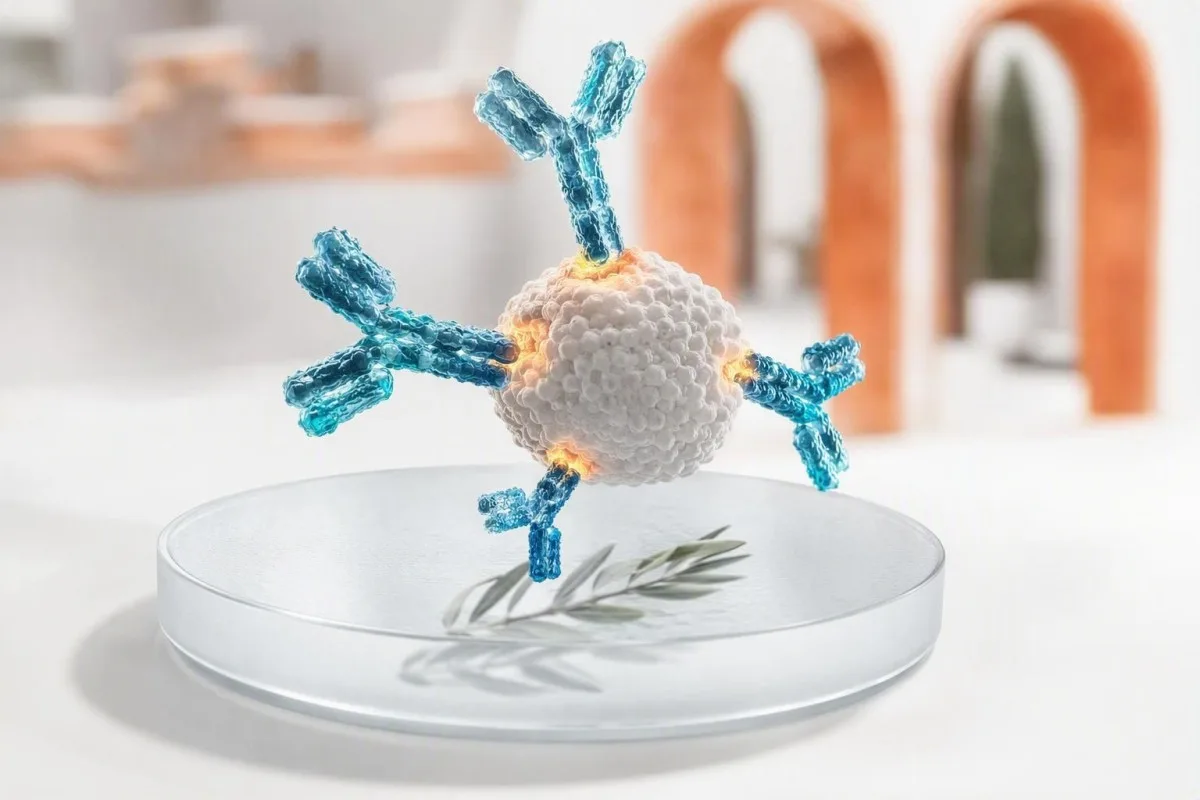
Müsbət bir antikor nəticəsi, immun sisteminizin müəyyən bir hədəfi tanıdığı deməkdir; bu, özlüyündə aktiv infeksiya və ya xəstəlik sübut etmir. Antikor sinifi, test metodu, vaxtı, simptomlar və müşayiət edən testlər təsdiq, təkrar test, təsdiqləmə və ya təcili klinik qayğıya ehtiyacınız olub-olmadığını müəyyən edir.


- Müsbət antikor nəticəsi adətən immun tanınmasını göstərir, mütləq cari xəstəlik və ya yoluxuculuq deyil.
- IgM vs IgG bir vaxt işarəsidir, saat deyil: IgM aylar boyunca qala bilər və IgG erkən görünə bilər.
- Vaksin antikorları təbii infeksiyanı göstərmədən immunitet testlərini müsbət edə bilər.
- Allergenə xüsusi IgE 0.35 kUA/L-dən yuxarı hissəsinə duyarlılıq göstərir, lakin məruz qaldıqdan sonra simptomlar klinik allergiyanı müəyyən edir.
- ANA pozitivliyi xəstə olmayan yetkinlərin 20% qədərində, xüsusilə yaşla birlikdə aşağı titrlərdə müşahidə olunur; simptomlar və spesifik antikorlar daha vacibdir.
- QİÇS skrininq reaktivliyi hər hansı bir diaqnoz qoyulmazdan əvvəl həmişə laboratoriya təsdiqləmə algoritmini tələb edir.
- Anti-tTG IgA yalnız şəxs gluten yedikdə və adekvat ümumi IgA olduqda seliyak qiymətləndirilməsi üçün etibarlıdır.
- Təcili simptomlar nəfəs darlığı, çaşqınlıq, sarılıq, döş qəfəsində ağrı və ya yayılmış bülletəşmə səpgisi kimi hallar adi antikor nəticəsindən daha üstündür.
Müsbət antikor nəticəsinin sizə əslində nə dediyi
A pozitiv antikor testi o deməkdir ki, analiz müəyyən bir hədəfə bağlanan immun zülmları aşkar edib; bu yox avtomatik olaraq aktiv infeksiyanızın, otoimmün xəstəliyinizin və ya müalicə tələb edən allergiyanızın olduğu mənasına gəlmir. Növbəti addım antikor növündən, nəticənin gücündən, simptomlardan, məruz qalma vaxtından və hər hansı cütləşdirilmiş antigen, PCR və ya orqan funksiyası testlərindən asılıdır.
Antikorlar peyvənd, infeksiya, allergiya məruz qalması, otoimmunitetdən sonra istehsal olunan B-hüceyrəli zülmlardır və ya bəzən heç bir kliniki zərərsiz səbəbə görə yaranır. Pozitiv nəticə bir dar analitik suala cavab verir - “bu laboratoriya kəsimindən yuxarı bağlama aşkar edildi?” - bu gün bədəninizdə nə baş verdiyinə dair daha geniş klinik sualdan daha çox.
15 illik klinik təcrübəmdə ən çox edilən səhv “pozitiv”i diaqnoz kimi oxumaq olub. Dr. Thomas Klein-in praktik qaydası ilk növbədə hədəfi—virus, peyvənd antigeni, qida zülalı, tiroid fermenti, nüvə antigeni və ya dərman—sonra testin keçmiş məruz qalmanı, mövcud orqanizmi, həssaslığı və ya immun yönləndirilməsini aşkar edib-etmədiyini soruşmaqdır.
Kantesti AI, AI qan testi analizatoru bir cüt pozitiv xətti hökm kimi qəbul etmək əvəzinə tarixçələr, immün qlobulin sinfi və əlaqəli nəticələr yanındakı antikor bayraqlarını oxuyan. Bu kontekst, xüsusilə xəstələr fərqli laboratoriyalardan hesabatları müqayisə etdikdə faydalıdır; keyfiyyət və kəmiyyət nəticələri hər ikisi pozitiv desə də dəyişilə bilməz.
IgG vs IgM müsbət: vaxtlama niyə göründüyündən daha az sadədir
IgM pozitiv son immunitet reaksiyasını göstərə bilər, halbuki IgG müsbət keçmiş məruz qalma və ya peyvənd reaksiyasını adətən göstərir; heç bir nümunə təkbaşına xəstəliyi etibarlı şəkildə tarixə salmır. Bəzi infeksiyalar 7-14 gün ərzində IgG istehsal edir və IgM 3-12 ay və ya daha uzun müddət aşkar oluna bilər.
IgM erkən aşkar olunan böyük beş vahidli bir antikordur, lakin onun ölçüsü və geniş bağlanması onu çarpaz reaksiyalara daha həssas edir. Epstein-Barr virusu, parvovirus B19, revmatoid faktor və bəzi otoimmün antikorlar yanıltıcı IgM reaksiyalarına səbəb ola bilər; təcrid olunmuş aşağı səviyyəli IgM nəticəsi panikadan çox şübhəyə layiqdir.
IgG, immunitet yaddaşı inkişaf etdikdən sonra, bəzən onilliklər boyu qalır. Pozitiv IgG nəticəsi uşaqlıq infeksiyasını, son peyvəndi, intravenöz immün qlobulindən pasif antikoru və ya anadan körpəyə keçən ananı əks etdirə bilər; o, xüsusi analizatorun etibarlı qoruyucu həddi yoxdursa, qorunmanı sübut edə bilməz.
Cüt nümunələr tək bir çəkdirmədən daha faydalı ola bilər: təxminən 2-4 həftə aralıqla alınan nümunələr arasında antikor titrdə dörd dəfə artım müəyyən xəstəliklərdə son infeksiyanı dəstəkləyir. Hesabatda ümumi IgG, IgA və IgM siyahıya alınmışsa, bir rəqəmi bizim ilə müqayisə etmək əvəzinə nümunəni nəzərdən keçirin immunitetin yoxlanması üzrə bələdçi.
İnfeksiya antikorları nə vaxt aktiv xəstəlik deməkdir və nə vaxt demir
Infeksiya antikorları adətən məruziyyəti göstərir, halbuki PCR, antigen testi, kultura və ya artan titr bir çox aktiv infeksiyaların aşkarlanması üçün daha yaxşı vasitələrdir. Simptomlar olmadan pozitiv antikor nəticəsi çox vaxt keçmişə aiddir, lakin istisna orqanizmdən və sizin immunitet statusunuzdan asılıdır.
Hepatit C üçün reaktiv antikor o deməkdir ki, müəyyən bir vaxtda məruz qalma olub, lakin yalnız aşkar olunan HCV RNA mövcud viremiani təsdiq edir. Hepatit B üçün kombinasiya vacibdir: səthi antigen, səthi antikor və nüvə antikor ümumi infeksiyanı, keçirilmiş infeksiyanı və peyvənd immunitetini tək bir pozitiv markerdən daha yaxşı ayırır.
QİÇS, sözlərin böyük əhəmiyyət kəsb etdiyi başqa bir vəziyyətdir. Dördüncü nəsil skrinin reaktivliyi diaqnoz deyil; laboratoriya HIV-1/HIV-2 diferensial immunoassay və lazım gələrsə, nuklein turşu testini həyata keçirir. Post-ekspozisiya profilaktikası alan bir şəxs vaxta həssas test aparmağı tələb edir, bizim PEP sonrası QİÇS testləri bələdçisində izah edildiyi kimi.
18 il əvvəl müalicə olunduqdan sonra pozitiv treponemal sifilis antikorundan qorxmuş sağlam bir xəstə görmüşəm. Treponemal testlər tez-tez ömürlük pozitiv qalır, RPR və ya VDRL titri isə cari fəaliyyəti və cavabı qiymətləndirməyə kömək edir; sifilis test nümunələri bu fərqi daha aydın edir.
Vaksin antikorları infeksiyadan sonrakı antikorlardan necə fərqlənir
Peyvəndlə əlaqəli antikorlar göstərir ki, immunitet sistemi peyvənd antigeninə cavab verib; bu o demək deyil ki, peyvənd aktiv infeksiyaya səbəb olub. Bağlayıcı antikorlar və funksional neytrallaşdırıcı antikorlar eyni olmadığından, pozitiv nəticə hələ də məlum qoruyucu uyğunluğun aşağısında qala bilər.
Hepatit B səthi antikor konsentrasiyaları 10 mIU/mL və ya daha yüksək təsdiqlənmiş peyvənd seriyasından 1-2 ay sonra ölçülən, ümumiyyətlə immunokompetent insanlarda qoruyucu hesab olunur. Hepatit B nüvə antikoru olan Anti-HBc, standart hepatit B peyvəndindən istehsal olunmur; onun mövcudluğu təbii məruz qalmaya işarə edir və tam panel təfsirinə səbəb olmalıdır.
Qızılca IgG hamiləlikdən əvvəl tez-tez yoxlanılır, çünki bu, aktiv qızılca xəstəliyini deyil, əvvəlki immuniteti göstərir. Laboratoriyalar testə xas hədlər təyin edir və sərhəd nəticələri adətən sonrakı planlama üçün qeyri-immunitet kimi qəbul edilir, təzə infeksiya kimi deyil; vaxtı bizim qızılca testləri bələdçisində ətraflı izah olunur.
Kantesti AI, AI qan analizi nəticələrinin şərhi platforması bu, hesabatda müvafiq yoldaş markerlər daxil edildikdə peyvənd nümunəli antikorları infeksiya nümunəli antikorlardan ayırır. Praktik sual çox vaxt “mən pozitivəmmi?” deyil, “hansı antigen ölçüldü, mən nə vaxt peyvənd olundum və bu nəticə bugünkü müdafiə planını dəyişirmi?”
Niyə müsbət allergiya antikor testi allergiya demək deyil
Pozitiv allergenə xas IgE test, IgE-nin bir allergeni tanıdığı mənasına gələn sensibilizasiyanı göstərir; uyğun reaksiyası olmayan klinik allergiyanı diaqnoz etmir. Yuxarıdakı bir dəyər 0.35 kUA/L ümumi analitik pozitivlik həddidir, qida və ya dərmandan imtinanın universal həddi deyil.
Testdən əvvəlki hekayə bir çox insanların düşündüyündən daha vacibdir. Əgər bir şəxs həftəlik balıq yeyərsə və dəri səpgiləri, xırıltı, qusma və ya çöküş olmazsa, tək bir aşağı balıq IgE nəticəsi qaçınmaya səbəb olmamalıdır; lazımsız qida məhdudiyyəti qidalanma və sosial zərərə səbəb ola bilər.
NIAID tərəfindən dəstəklənən qida allergiyası təlimatı, dəri üzərində aparılan testlərin və spesifik IgE testlərinin mümkün tetikleyici qidaları müəyyən etdiyini, lakin müstəqil olaraq qida allergiyasını diaqnoz edə bilmədiyini qeyd edir (Sampson et al., 2010). Seçilmiş hallarda, allergoloq komponentlə müalicə edilmiş testi və ya qeyri-müəyyənliyi aradan qaldırmaq üçün standart olan tibbi nəzarət altında aparılan oral qida yükünü istifadə edir.
Ümumi IgE, IU/mL olaraq ölçülür və ekzemada, parazitar məruziyyətdə, siqaret çəkmədə və bir çox immunitet pozğunluqlarında yüksək ola bilər; bu, təqsirli allergeni müəyyən edə bilməz. Komponent testi, bizim tədqiq etdiyimiz fərq, sabit bir saxlanma proteinini çarpaz reaktiv polenlə əlaqəli proteindən ayırd edə bilər molekulyar allergiya testləri məqaləsi.
Niyə otoimmün antikorlar simptomlar və orqan əlamətləri tələb edir
Autoimmün antikorlar xəstəlikdən əvvəl, xəstəliklə birlikdə və ya sağlam insanlarda da mövcud ola bilər; tək müsbət nəticə nadir hallarda autoimmün diaqnoz təsdiqləyir. Həkimlər antikor nümunəsi simptomlar, müayinə nəticələri, iltihab markerləri və ya obyektiv orqan dəyişiklikləri ilə uyğunlaşdıqda hərəkətə keçirlər.
Antinüvər antikor, və ya ANA, 1:80-də təxminən 13% və əhalinin tədqiqatlarında 1:40-də ətrafında 20% nisbətində müsbətdir, qadınlarda və yaşlılarda daha yüksək nisbətlərlə. Homojen və ya ləkəli nümunə lupus diaqnozu qoymur; ANA, birləşdirici toxuma xəstəliyi ehtimal olunan klinik təsvir olduqda, ən yaxşı bir keçid testi kimi istifadə olunur.
2019 EULAR/ACR lupus təsnifat çərçivəsi, giriş meyarı kimi 1:80-dən az olmayan titrdə ANA istifadə edir, sonra əlavə çəkili klinik və immunoloji xüsusiyyətlər tələb edir (Aringer və başqaları, 2019). Sidikdə yeni zülal, aşağı C3/C4, sitopeniyalar, oynaqların iltihabi şişməsi və ya inandırıcı fotosensitiv səpgi dəyişikliyi, yalnız zəif ANA-dan daha çox təciliyyəti dəyişdirir.
Anti-dsDNA, assay üsulları əhəmiyyətli dərəcədə fərqlənsə də, aşağı komplement və böyrək tapıntıları ilə birləşdirildikdə daha mənalı olur. Bizim anti-dsDNA təqib təlimatı və komplement testinə baxış izah edir ki, niyə mütəxəssis fərqli platformada testi təkrarlaya bilər.
Orqana xas antikorlar: tiroid, seliyak və mədə nümunələri
Orqan-spesifik antikorlar toxumaların immun hədəflənməsini müəyyən edir, lakin həmişə orqanın hazırda zədələndiyini və ya müalicəyə ehtiyac duyduğunu göstərmir. Tərkibində TPO antikorları, toxuma transglutaminazı antikorları və daxili faktor antikorları olan hər birinin fərqli yoldaş testləri tələb olunur.
TPO antikorları Hashimoto tireoiditində yaygındır və TSH və sərbəst T4 normal qaldığı illər boyu mövcud ola bilər. Normal tiroid funksiyası olan hamilə olmayan bir yetkinlik yaşında, nəticə adətən tiroid hormonu müalicəsindən çox, dövri TSH monitorinqini dəstəkləyir; hamiləlik, doğuş planları və simptomlar bu yanaşmanı dəyişə bilər.
Müsbət tTG-IgA yalnız insan hələ də gluten istehlak edirsə və ümumi IgA adekvatdırsa, çölyak xəstəliyini göstərir. Selektiv IgA çatışmazlığı tTG-IgA-nı yanlış mənfi edə bilər, buna görə həkimlər ümumi IgA aşağı olduqda IgG əsaslı deamidə edilmiş gliadin peptidi və ya tTG testlərindən istifadə edirlər; baxın bizim izahımız aşağı IgA tələləri.
Daxili-faktor antikoru pernisiyöz anemiya üçün nisbətən spesifikdir, lakin yüksək həssas deyildir. Müsbət olduqda, aşağı B12, yüksəlmiş metilmalonik turşu və makrositozla yanaşı, nümunə cəlbedicidir; bu nümunə olmadan, mən laboratoriya etiketini deyil, xəstəni müalicə etməkdən çəkinirəm. Pernisiyöz anemiya testi adi təsdiqləmə ardıcıllığını göstərir.
Niyə səhv-müsbət antikor nəticəsinə səbəb olur
Assayın qeyri-nəzərdə tutulan bağlanmanı aşkar etdiyi hallarda, laboratoriyanın sadəcə “səhv etdiyi” deyil, yanlış müsbət antikor nəticələri yaranır. Çapraz reaktiv antikorlar, revmatoid faktor, sonuncu immun stimulyasiya, passiv immünoglobulin və aşağı test əvvəlki ehtimalı ümumi səbəblərdir.
Spesifiklik mükəmməllik deyil. 99% spesifikliyə malik bir test, test edilən hər 1000 həqiqətən mənfi insana təxminən 10 yanlış müsbət nəticə verir; xəstəlik nadir hallarda olduqda, bu nəticələr həqiqi müsbətlərdən daha çox ola bilər. Məhz buna görə də heç bir simptomu olmayan bir insanda geniş skrininq təsəlli verməkdən çox qeyri-müəyyənlik yaradır.
Biotin bəzi hormon və kardiologiya analizlərini pozması ilə məşhurdur, halbuki heterofil antikorlar və revmatoid faktor müəyyən immün analizlərini poza bilər. Laboratoriya bəzən nümunəni seyreltə bilər, bloklayıcı reaktivlərdən istifadə edə bilər, nəticəni başqa bir analiz arxitekturasında təkrarlaya bilər və ya daha spesifik təsdiqləyici bir üsul həyata keçirə bilər.
Tamamilə qeyri-adi bir klinik mənzərə ilə ziddiyyət təşkil edən müsbət nəticə, laqeyd ediləcək bir şey deyil; bu, yoxlamaq üçün bir səbəbdir. Kantesti AI müxtəlif markerləri və test tarixlərini müqayisə edir və bizim laborator nəticə dəqiqliyi yoxlama siyahısı sifariş verən həkimlə danışmazdan əvvəl əlavələr, sonuncu infuziyalar və xəstəlikləri qeyd etməyə kömək edə bilər.
Müsbət antikor testi, lakin heç bir simptom yoxdur: praktik bir triaj planı
Antikor testi müsbət olduqda, lakin siz özünüzü yaxşı hiss edirsinizsə, əksər insanlar təcili yardım müalicəsindən çox aydınlaşdırmaya ehtiyac duyurlar. Ən təhlükəsiz ilk addımlar, dəqiq assayı yoxlamaq, məruz qalma və peyvənd tarixlərini yoxlamaq və mövcud xəstəlik və ya orqan iştirakını təsdiqləyən yoldaş testi axtarmaqdır.
Hesabatın özündən başlayın: analitin adı, antikor sinifi, rəqəmsal indeks və ya titr, istinad intervalı, laboratoriya metodu və toplama tarixini qeyd edin. “Reaktiv” 1.0-dan bir qədər yuxarı siqnal-kəsmə nisbətini və ya daha güclü nəticəni ifadə edə bilər; laboratoriyalar eyni həddən istifadə etmirlər və böyüklük yalnız bəzən kliniki ehtimalı izləyir.
Sonra, aktiv xəstəlik testi olub olmadığını soruşun. Nümunələrə hepatit C üçün PCR, sifilis üçün ardıcıl RPR, aktiv Helicobacter pylori üçün nəcis və ya nəfəs testi, tiroid antikorları üçün TSH/sərbəst T4, eləcə də lupusla əlaqəli böyrək narahatlığı üçün sidik analizi və kreatinin daxildir.
Sentyabr 8, 2026 tarixinə qədər mən yalnız təcrid olunmuş antikor nəticəsinə əsasən antibiotik, antiviral, qlutensiz pəhriz, tiroid dərmanı və ya qida qəbulundan imtina etməyi tövsiyə etməzdim. Orijinal PDF-ni saxlayın, sizin bazanızla qeyd edin uzununa laboratoriya izlənməsində, və qırmızı bayraq simptomları olmadıqda, adi baxış təyin edin.
Növbəti addımı dəyişdirən təsdiqləyici testlər
Ən yaxşı təsdiqləyici test antikorun nəyi hədəflədiyindən asılıdır: molekulyar aşkarlama bir çox infeksiyanı təsdiqləyir, funksional analizlər allergiyanı aydınlaşdırır və orqan funksiyası testləri otoimmün təsiri qiymətləndirir. Eyni antikor testini təkrarlamaq yalnız gözlənilən dəyişiklik kliniki məna kəsb etdikdə faydalıdır.
Reaktiv HİV skrininqi üçün, refleks təsdiqləmə yolu fərqləndirmə analizi, sonra isə nəticələr qeyri-müəyyən olarsa HİV nuklein turşusu testi ilə aparılır. Hepatit C antikoru üçün, HCV RNA həlledici izləmədir; müsbət hepatit B nüvə antikoru üçün, səth antigeni, səth antikoru və bəzən HBV DNA nümunəni aydınlaşdırır.
Şübhəli çölyak xəstəliyi üçün, qlutensiz qəbul test üçün kifayət olduğu müddətdə biopsiya qərarları qəbul edilməlidir. Ehtimal olunan qida allergiyası üçün, allergoloq məruzə tarixini, spesifik IgE səviyyəsini, komponent profilini və müayinə riskini nəzərdən keçirir - kliniki sual olmadan sifariş edilən əlaqəli olmayan aşağı müsbət nəticələrin paneli deyil.
Kantesti AI, Süni intellektlə işləyən qan testi analizi aləti bu əlaqəli markerləri həkimə hazır sual siyahısına təşkil edə bilər, lakin təsdiqləyici test və ya diaqnozu əvəz etmir. Kənar bir nəticəyə nə qədər etibar edəcəyinizdən əmin deyilsinizsə, bizim tibbi təsdiqləmə standartlarımıza baxın təsdiqləmə və klinik nəzarətin niyə əhəmiyyət kəsb etdiyini izah edir.
Müsbət antikor nəticəsini daha təcili edən simptomlar
Müsbət antikor nəticəsi, tənəffüs çətinliyi, üz və ya boğaz şişməsi, huşunu itirmə, çaşqınlıq, sinə ağrısı, sarılıq, sürətlə yayılan səpgi, şiddətli dehidrasiya və ya yeni nevroloji zəifliklə müşayiət olunduqda təcili qiymətləndirməyə layiqdir. Antikor rəqəmi deyil, simptomlar təciliyyəti müəyyən edir.
Ehtimal olunan anafilaksiya fövqəladə haldır: məruzə sonrası birdən-birə yayılmış qaşınma, boğulma, davamlı qusma, huşunu itirmə və ya aşağı qan təzyiqi təcili xidmətləri və mövcud olduqda təyin edilmiş adrenalin tələb edir. Aylar əvvəlki müsbət qida və ya zəhər IgE, bu ani riski nə proqnozlaşdırır, nə də istisna edir.
Tünd sidiklə yeni sarılıq, kəskin qarın ağrısı, hərarət və ya çaşqınlıq, viral hepatit antikorlarının müsbət olub-olmamasından asılı olmayaraq, eyni gün qiymətləndirməni tələb etməlidir. Qaraciyər fermentləri, bilirubin, INR və birbaşa patogen testi immun tarixini aktiv hepatobiliyer xəstəlikdən ayırmağa kömək edir; liver-panel komponentləri faydalı kontekstdir.
Qarşılıqlı avtoimmün narahatlıq, qan öskürəmə, nəfəs darlığı, sürətlə artan kreatinin, qanlı ishal, görmə dəyişikliyi, tutma və ya yeni bir tərəfli zəiflik ilə vaxta həssas olur. Simptom trayektoriyası açıq şəkildə pisləşən zaman həmsərhəd antikor titrinə əsaslanaraq birini təsəlli etməməyi öyrənmişəm.
Daha yüksək antikor sayı daha ciddi xəstəlik deməkdirmi?
Daha yüksək antikor indeksi və ya titr bəzən nəticənin həqiqi olmaq ehtimalını artırır, lakin bu, adətən xəstəlik şiddətini ölçmür. Analiz dəyərləri metod-xüsusi olduğundan, 80 AU/mL nəticəsini başqa bir laboratariyadan 80 U/mL ilə birbaşa müqayisə etmək mümkün deyil.
Avtoimmün xəstəlikdə, anti-dsDNA trendləri bəzən lupus aktivliyini izləyə bilər, xüsusən də eyni metodla ardıcıl olaraq ölçülən və komplement və sidik zülmü ilə şərh olunduqda. ANA titri isə, lupus şiddətinin zəif ölçüsüdür və stabil şəxsdə təkrarlanmamalıdır.
İnfeksiyalar üçün, güclü antikor siqnalı əvvəlki məruzəni dəstəkləyə bilər, lakin nadir hallarda yoluxuculuğu göstərir. Nötralizasiyaedici antikor testləri ixtisaslaşmışdır və onların qoruyucu kəsmələri patogenə, yaşa, peyvənd məhsuluna və immun supresiyasına görə dəyişə bilər; sadə bir kommersial IgG analizi fərdi immunitet pasportu deyil.
Hesabatları müqayisə edərkən, laboratoriya, analiz və vahidləri görünən yerdə saxlayın. Gerçək bioloji dəyişiklik adi analitik və gündəlik dəyişikliyi aşmalıdır, buna görə də bizim qan testi müqayisə bələdçisi yalnız rəng kodlu bayraqlar deyil, tarixlərə və metodlara diqqət yetirir.
Hamiləlik, uşaqlar və immunitet təzyiqi şərhini dəyişir
Hamiləlik, körpəlik və immun-supressiv müalicə həm antikor istehsalını, həm də təsdiqləmə üçün gözləmənin təhlükəsizliyini dəyişə bilər. Bu qruplarda müsbət nəticə anadan gəlmə antikorları, azaldılmış peyvənd cavabı, yenidən aktivləşmə riski və ya daha əvvəl mütəxəssis məsləhətinə ehtiyacı əks etdirə bilər.
Ana IgG-si plasentadan keçir və körpədə bir neçə ay aşkar olaraq qala bilər, ana IgM isə ümumiyyətlə keçmir. Buna görə, körpədə yalnız IgG pozitivliyi tez-tez ana immunitetini əks etdirir, halbuki orqanizmə xas IgM və ya birbaşa aşkarlanma, yoluxma və yaşdan asılı olaraq daha diqqətli qiymətləndirməyə layiq ola bilər.
Hamiləlik zamanı qızılca və ya parvovirus antikor nəticələri, birdəfəlik IgM deyil, məruz qalma tarixləri, avidity testi və təkrarlanan nümunələrlə şərh olunur. Yalançı-pozitiv IgM tanınmış bir problemdir və lazımsız həyəcanlandırma lazımsız invaziv araşdırmalara səbəb ola bilər; məruz qalma güman edildikdə mama-ginekologiya və ya yoluxucu xəstəliklər üzrə məsləhət məqsədəuyğundur.
Rituksimab, yüksək dozalı kortikosteroidlər, kimyaterapiya və ya transplantasiya dərmanı qəbul edən şəxslərdə yoluxma və ya peyvəndlənməyə baxmayaraq zəif və ya olmayan antikor cavabları ola bilər. Ailə qərarları üçün, uşaqların AI təfsiri limitləri və Kantesti tibbi məsləhət şurası həkim rəhbərliyində nəzərdən keçirmə ehtiyacını gücləndirir.
Müsbət nəticənin faydalı klinist tərəfindən nəzərdən keçirilməsinə necə hazırlaşmaq olar
Laboratoriya hesabatının tamını, testin təyin olunma səbəbini, simptom və ya məruz qalma tarixlərini, peyvənd tarixini, dərmanları və əvvəlki nəticələri gətirin. Bu məlumat, bir görüşdə aydın olmayan pozitiv antikor nəticəsini aydın gələcək fəaliyyətinə çevirə bilər.
Ziyarətdən əvvəl beş fakt yazın: simptomların ilk günü, son güman edilən məruz qalma, peyvənd tarixləri, immunitetə təsir edən dərmanlar və ya immunoglobulin infuziyaları və simptomların yaxşılaşması və ya pisləşməsi. Nümunə götürməzdən 3 gün əvvəl başlayan qızdırma, 6 ay əvvəl başlayan yorğunluqdan tamamilə fərqli şəkildə şərh olunur.
Üç diqqətli sual verin: “Bu test nə aşkarlayır?”, “Hansı test aktiv xəstəlik və ya orqan təsirini təsdiqləyir?” və “Hansı nəticə müalicəni dəyişəcək?” Dr. Thomas Klein bu sualların lazımsız təkrarlanan panelləri azaltdığını və xəstələrin müəyyən edilmiş bir vaxt çərçivəsi ilə ayrılmalarına kömək etdiyini tapır — bu gün, 1–2 həftə və ya adi monitorinq.
Kantesti AI 75-dən çox dildə təhlükəsiz hesabat nəzərdən keçirilməsini dəstəkləyir və təxminən 60 saniyə ərzində fotoşəkillə çəkilmiş və ya yüklənmiş PDF-dən əskik tamamlayıcı testləri aşkar edə bilər. Bizim AI texnologiyası üzrə bələdçi kontekstə uyğunlaşdırma yanaşmasını izah edir, halbuki klinik komandanızın işindən başlayın xəstəyə yönəlmiş təfsirin arxasındakı tibbi nəzarəti təmin edir.
Tez-tez verilən suallar
Əgər heç bir simptomum yoxdursa, pozitiv antikor nəticəsi nə deməkdir?
Simtomlar olmadan müsbət antikor nəticəsi, aktiv xəstəlikdən çox, əvvəlki məruziyyəti, peyvəndi, həssaslığı və ya təsdiq tələb edən nəticəni göstərir. Növbəti addım hədəfdən asılıdır: hepatit C antikoruna HCV RNA lazımdır, reaktiv HİV skrininə laboratoriya təsdiqləmə alqoritmi lazımdır və tireoid antikorlarına TSH və sərbəst T4 lazımdır. Uyğun məruziyyət və ya simptom tarixi olmadıqda, tək, aşağı pozitiv nəticə daha az inandırıcıdır. Yeni sarılıq, nəfəs alma çətinliyi, çaşqınlıq, sinə ağrısı və ya sürətlə pisləşən səpgi inkişaf edərsə, dərhal tibbi yardım alın.
IgM pozitiv və IgG neqativ həmişə yeni infeksiya deməkdir?
IgM müsbət, IgG mənfi yeni infeksiyanın erkən mərhələsində baş verə bilər, lakin bu həmişə yeni infeksiyanı təsdiq etmir. IgM, əlaqəli olmayan immunitet zülalları ilə xaç-reaksiya verə bilər və bəzi analizlər IgG nəticələrindən daha tez-tez yanlış-müsbət IgM nəticələri verə bilər. Həkimlər 1-2 həftədən sonra serologiyanı təkrarlaya, PCR və ya antigen testlərini istəyə, yaxud daha spesifik təsdiqedici analizdən istifadə edə bilərlər. Düzgün yozum həm də xəstəlik zaman qrafikindən və test edilən spesifik orqanizmdən asılıdır.
Bir peyvənd anticisim testini pozitiv edə bilərmi?
Bəli, peyvəndlər adətən peyvənddə olan antigen üçün antikor testlərini pozitiv edir. Hepatit B üçün, tamamlanmış seriyadan 1-2 ay sonra ölçülən ən azı 10 mIU/mL anti-HBs konsentrasiyası ümumiyyətlə immunokompetent insanlarda qoruyucu peyvənd cavabını göstərir. Standart hepatit B peyvəndi anti-HBc istehsal etmir, buna görə də "core"-antikor pozitivliyi yalnız peyvəndlənmədən deyil, təbii məruz qalmağı göstərir. Peyvəndlə əlaqəli pozitivlik aktiv infeksiya keçirdiyiniz demək deyil.
Sağlam ola-ola autoimmün antikor testində pozitiv nəticə ala bilərsinizmi?
Bəli, sağlam insanlarda da, xüsusilə aşağı titrlü ANA nəticələri olmaqla, autoimmün antikorlar ola bilər. ANA 1:80 titrdə təxminən 13%-də və 1:40 titrdə isə təxminən 1%-də aşkar edilə bilər, buna görə də bu, təcrid olunmuş lyupus testi deyil. İltihabi oynaq şişkinliyi, ağızda yaralar, işığa həssas səpgi, aşağı komplekt, sidikdə zülal və ya qan sayının pozulması kimi simptomlar mütəxəssis qiymətləndirməsinin lazım olub-olmadığını müəyyən edir. Pozitiv nəticə, testin verilmə səbəbi kontekstində yozulmalıdır.
Müsbət IgE qan testi o deməkdir ki, mən o qidadan imtina etməliyəm?
Xeyr, qida-xüsusi IgE-nin pozitiv nəticəsi həssaslıq deməkdir və qidanı yeməyin allergik reaksiya verdiyini sübut etmir. Bir çox laboratoriyalar 0,35 kUA/L-dən yuxarı nəticələri pozitiv adlandırır, lakin bu hədd ümumi imtina qərarı deyil, aşkarlanma üçün nəzərdə tutulmuşdur. Səpgi, xırıltı, təkrarlanan qusma və ya huşunu itirmədən qidanı müntəzəm olaraq yeyən bir şəxs avtomatik olaraq onu pəhrizdən çıxarmamalıdır. Allerqoloq riski aydınlaşdırmaq üçün reaksiyanın tarixçəsindən, komponent testindən və bəzən də nəzarət altında olan ağızdan qida testindən istifadə edə bilər.
Yoluxmadan sonra anticisimlər nə qədər müsbət qalır?
IgM antikorları bir neçə həftə ərzində yox ola bilər, lakin 3–12 ay və ya daha uzun müddətə qala bilər, halbuki IgG illərlə və ya ömür boyu ölçülə bilər. Treponemal sifilis antikorları uğurlu müalicədən sonra həyat boyu müsbət qala bilər, halbuki RPR və ya VDRL titrləri fəaliyyəti izləmək üçün istifadə olunur. Buna görə də, pozitiv antikor nəticəsi, digər kliniki və laborator məlumatlar olmadan, yoluxmanın nə vaxt baş verdiyini etibarlı şəkildə söyləyə bilməz.
Bu gün AI ilə gücləndirilmiş qan analizi nəticələrinin şərhini əldə edin
Ani və dəqiq laborator analiz şərhinə güvənən dünya üzrə 2 milyondan çox istifadəçiyə qoşulun. Qan analizinin nəticələrini yükləyin və bir neçə saniyəyə 15,000+ biomarkerlərinin hərtərəfli şərhini alın.
📚 İstinad edilən tədqiqat nəşrləri
Klein, T., Mitchell, S., & Weber, H. (2026). Hantavirus erkən triajı üçün çoxdilli AI ilə dəstəklənən klinik qərar dəstəyi: Dizayn, mühəndislik validasiyası və 50,000 təfsir edilmiş qan testi hesabatı üzrə real dünya tətbiqi. Figshare. https://www.researchgate.net/. Kantesti AI Tibbi Tədqiqatlar.
Klein, T., Mitchell, S., & Weber, H. (2026). 100,000 sintetik test halı üzərində Kantesti Qan Testi Təfsir Mühərrikinin əvvəlcədən qeydiyyatdan keçmiş, rubrika əsaslı avtomatik texniki benchmarkı. Figshare. https://www.academia.edu/. Kantesti AI Tibbi Tədqiqatlar.
📖 Xarici Tibbi İstinadlar
⚕️ Tibbi Məsuliyyətdən İmtina
Bu məqalə yalnız təhsil məqsədlidir və tibbi məsləhət təşkil etmir. Diaqnoz və müalicə qərarları üçün həmişə ixtisaslı səhiyyə işçisi ilə məsləhətləşin.
E-E-A-T Etibar Siqnalları
Təcrübə
Həkim rəhbərliyi ilə laborator şərh iş axınlarının klinik icmalı.
Ekspertiza
Biomarkerlərin klinik kontekstdə necə davrandığına dair laboratoriya təbabəti diqqəti.
Səlahiyyətlilik
Dr. Thomas Klein tərəfindən yazılıb; Dr. Sarah Mitchell və Prof. Dr. Hans Weber tərəfindən nəzərdən keçirilib.
Etibarlılıq
Aydın izləmə yolları ilə həyəcanı azaltmağa yönəlmiş sübuta əsaslanan şərh.