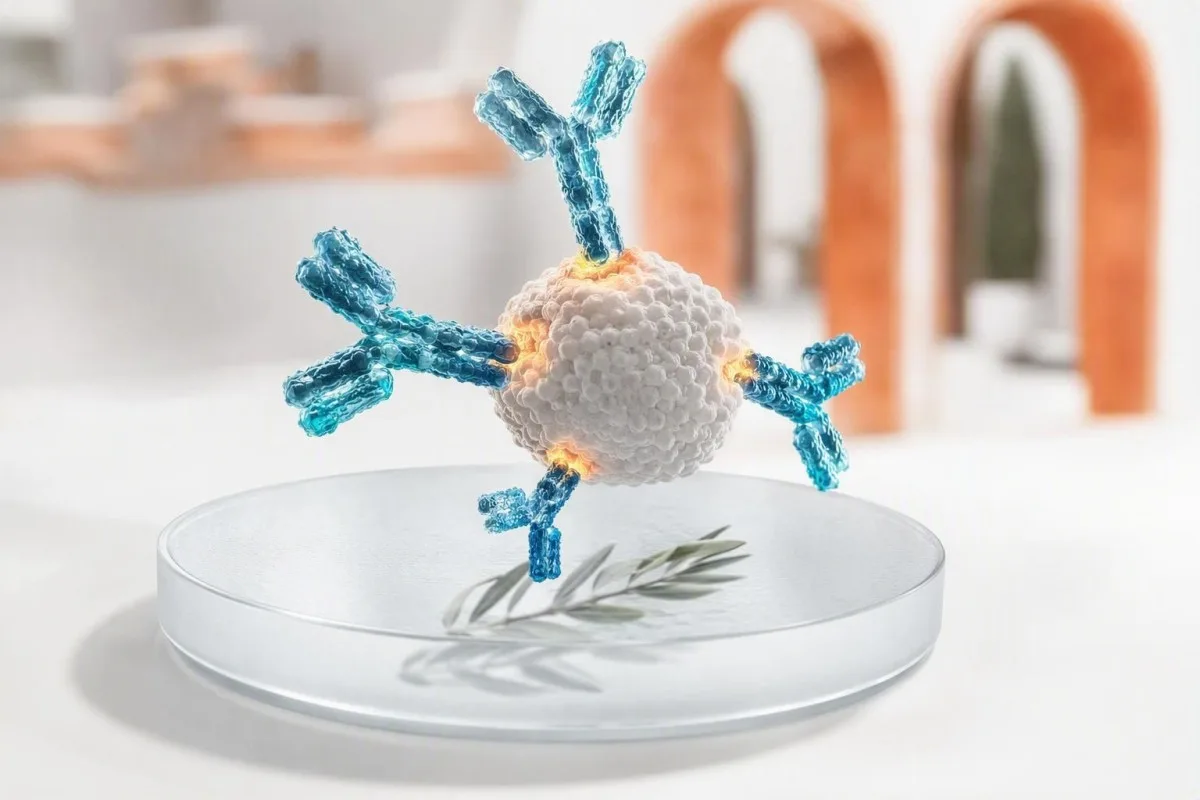
Pozitivan rezultat antitijela znači da je vaš imunološki sistem prepoznao određenu metu; sam po sebi ne dokazuje aktivnu infekciju ili bolest. Klasa antitijela, metoda ispitivanja, tajming, simptomi i prateći testovi utvrđuju da li vam je potrebna potvrda, ponovljeni test, potvrda ili hitna klinička njega.


- Pozitivan rezultat antitijela obično pokazuje imunu prepoznatljivost, ne nužno trenutnu bolest ili zaraznost.
- IgM u odnosu na IgG je pokazatelj tajminga, a ne sat: IgM može potrajati mjesecima, a IgG se može pojaviti rano.
- Antitijela iz vakcine mogu učiniti testove imuniteta pozitivnim bez naznačavanja prirodne infekcije.
- Alergen-specifični IgE iznad 0.35 kUA/L ukazuje na senzibilizaciju, ali simptomi nakon izlaganja potvrđuju kliničku alergiju.
- ANA pozitivnost javlja se kod do 20% zdravih odraslih osoba u niskim titrima, posebno s godinama; simptomi i specifična antitijela su važniji.
- HIV screening reaktivnost uvijek zahtijeva algoritam laboratorijske potvrde prije postavljanja bilo koje dijagnoze.
- Anti-tTG IgA pouzdan je za procjenu celijakije samo kada osoba konzumira gluten i ima adekvatan ukupni IgA.
- Hitni simptomi kao što su poteškoće s disanjem, konfuzija, žutica, bol u grudima ili rašireni mjehurasti osip nadmašuju rutinski rezultat antitijela.
Šta vam zapravo govori pozitivan rezultat antitijela
A pozitivan test antitijela znači da je test otkrio imunske proteine koji se vežu za određenu metu; to ne ne automatski znači da imate aktivnu infekciju, autoimunu bolest ili alergiju koja zahtijeva liječenje. Sljedeći korak ovisi o vrsti antitijela, jačini rezultata, simptomima, vremenu izloženosti i svim uparenim antigenima, PCR ili testovima funkcije organa.
Antitijela su B-ćelijski proteini napravljeni nakon vakcinacije, infekcije, izloženosti alergenima, autoimunosti ili povremeno bez klinički štetnog razloga. Pozitivan rezultat odgovara na jedno usko analitičko pitanje — “je li detektovano vezivanje iznad ovog laboratorijskog reza?” — umjesto na šire kliničko pitanje o tome šta se danas dešava u vašem tijelu.
U mojih 15 godina kliničke prakse, najčešća greška je bila čitanje “pozitivno” kao dijagnoze. Praktično pravilo Dr Thomas Kleina je prvo identificirati metu—virus, antigensku vakcinu, proteinsku hranu, štitnu žlijezdu enzim, nuklearni antigen ili lijek — a zatim pitati da li test detektuje prošlu izloženost, trenutni organizam, senzibilizaciju ili imunu pogrešnu orijentaciju.
Kantesti AI je AI analizator krvi koji čita zastavice antitijela pored datuma, klase imunoglobulina i srodnih rezultata umjesto da jednu pozitivnu liniju tretira kao presudu. Taj kontekst je posebno koristan kada pacijenti upoređuju izvještaje iz različitih laboratorija; kvalitativni i kvantitativni rezultati nisu zamjenjivi čak i kada oba kažu pozitivno.
IgG u odnosu na IgM pozitivan: zašto tajming nije jednostavan kao što zvuči
IgM pozitivan može sugerirati nedavnu imunološku reakciju, dok IgG pozitivan često sugerira prošlu izloženost ili reakciju na vakcinu; nijedan obrazac sam po sebi ne datira pouzdano bolest. Neke infekcije proizvode IgG u roku od 7-14 dana, a IgM može ostati detektibilan 3-12 mjeseci ili duže.
IgM je veliko petoelementno antitijelo koje je često rano detektibilno, ali njegova veličina i široko vezivanje čine ga sklonijim unakrsnim reakcijama. Epstein-Barrov virus, parvovirus B19, reumatoidni faktor i neka autoimuna antitijela mogu izazvati lažno pozitivne IgM reakcije; izolirani niski IgM rezultat zaslužuje više skepticizma nego panike.
IgG se obično zadržava nakon razvoja imunološke memorije, ponekad decenijama. Pozitivan IgG rezultat može odražavati djetinju infekciju, nedavnu vakcinu, pasivno antitijelo iz intravenskog imunoglobulina ili majčin prijenos na dojenče; ne može dokazati zaštitu osim ako taj određeni test nema validiranu zaštitnu granicu.
Upareni uzorci mogu biti korisniji od jednog uzorka: četverostruko povećanje titra antitijela između uzoraka uzetih otprilike 2-4 sedmice kasnije podržava nedavnu infekciju kod odabranih bolesti. Ako izvještaj navodi ukupni IgG, IgA i IgM, pregledajte obrazac umjesto jednog broja sa našim Vodič za tumačenje imunoglobulina.
Kada antitijela na infekciju znače aktivnu bolest, a kada ne
Antitijela na infekciju obično pokazuju izloženost, dok PCR, antigensko testiranje, kultura ili porast titra bolji su alati za otkrivanje mnogih aktivnih infekcija. Pozitivan rezultat antitijela bez simptoma često je istorijski, ali izuzetak zavisi od organizma i vašeg imunološkog statusa.
Za hepatitis C, reaktivna antitijela znače izloženost u nekom trenutku, ali samo detektibilna HCV RNA utvrđuje trenutnu viremiju. Za hepatitis B, kombinacija je bitna: površinski antigen, površinsko antitijelo i kor antitijelo bolje odvajaju aktivnu infekciju, izliječenu infekciju i imunitet stečen cijepljenjem nego jedan pozitivan marker.
HIV je još jedan slučaj gdje značenje riječi izuzetno vrijedi. Pozitivan rezultat skrining testa četvrte generacije nije dijagnoza; laboratorij nastavlja s imunoesejem za diferencijaciju HIV-1/HIV-2 i, kada je potrebno, testiranjem nukleinske kiseline. Osoba koja uzima postekspozicionu profilaksu treba testiranje specifično za vrijeme, kao što je objašnjeno u našem vodiču za HIV testiranje nakon PEP-a.
Vidio sam zdravog pacijenta uplašenog pozitivnim treponemskim antitijelom na sifilis nakon liječenja 18 godina ranije. Treponemski testovi često ostaju pozitivni doživotno, dok titar RPR-a ili VDRL-a pomaže u procjeni trenutne aktivnosti i odgovora; obrasci testiranja na sifilis jasnije prave ovu razliku.
Kako se antitijela iz vakcine razlikuju od antitijela nakon infekcije
Antitijela povezana s cjepivom pokazuju da je imunološki sustav reagirao na antigen cjepiva; oni ne znače da je cjepivo uzrokovalo aktivnu infekciju. Pozitivan rezultat još uvijek može pasti ispod poznatog zaštitnog korellata, jer antitijela za vezivanje i funkcionalna neutralizirajuća antitijela nisu identična.
Koncentracije površinskih antitijela na hepatitis B 10 mIU/mL ili više mjerene 1-2 mjeseca nakon dokumentirane serije cijepljenja općenito se smatraju zaštitnim kod imunokompetentnih osoba. Anti-HBc, kor antitijelo hepatitisa B, ne proizvodi se standardnim cijepljenjem protiv hepatitisa B; njegova prisutnost ukazuje na prirodnu izloženost i treba potaknuti interpretaciju punog panela.
Rubella IgG se obično provjerava prije trudnoće jer ukazuje na prethodni imunitet, a ne na aktivnu bolest rubelle. Laboratoriji postavljaju pragove specifične za test i granični rezultati se obično tretiraju kao nenimuni za planiranje prije začeća, umjesto da se tumače kao nedavna infekcija; vrijeme je detaljno opisano u našem vodiču za testiranje na rubellu.
Kantesti AI je AI platforma za tumačenje krvne slike koji odvaja obrasce antitijela cjepiva od obrazaca antitijela infekcije kada izvještaj uključuje relevantne prateće markere. Praktično pitanje često nije “jesam li pozitivan?”, već “koji je antigen mjeren, kada sam cijepljen, i mijenja li ovaj rezultat današnji plan zaštite?”
Zašto pozitivan test antitijela na alergiju možda ne znači alergiju
Pozitivan specifični test na alergene IgE ukazuje na senzibilizaciju, što znači da IgE prepoznaje alergen; ne dijagnosticira kliničku alergiju bez kompatibilne povijesti reakcije. Vrijednost iznad 0.35 kUA/L je uobičajeni prag analitičke pozitivnosti, a ne univerzalni prag za izbjegavanje hrane ili lijekova.
Priča prije testa je važnija nego što mnogi ljudi shvaćaju. Ako osoba tjedno jede kikiriki bez osipa, zviždanja, povraćanja ili kolapsa, sam niski pozitivni IgE na kikiriki ne bi trebao dovesti do izbjegavanja; nepotrebna prehrambena ograničenja mogu prouzročiti nutritivne i socijalne štete.
Smjernice NIAID-a sponzorirane za alergije na hranu navode da testovi ubodom kože i specifični IgE testovi identificiraju moguće okidače hrane, ali sami ne mogu dijagnosticirati alergiju na hranu (Sampson et al., 2010). U odabranim slučajevima, alergolog koristi testiranje po komponentama ili medicinski nadgledani oralni izazov s hranom, što ostaje referentni standard za rješavanje neizvjesnosti.
Ukupni IgE mjeri se u IU/mL i može biti visok kod ekcema, parazitske izloženosti, pušenja i nekoliko imunoloških stanja; ne može identificirati uzročnika alergena. Testiranje po komponentama može razlikovat stabilan protein za skladištenje od unakrsno reaktivnog proteina povezanog s peludom, razlika istražena u našem članak o molekularnom alergenskom testiranju.
Zašto autoimuna antitijela zahtijevaju simptome i tragove organa
Autoimunska antitijela mogu prethoditi bolesti, pratiti bolest ili se javljati kod zdravih ljudi; pozitivan rezultat sam rijetko postavlja autoimunu dijagnozu. Kliničari djeluju kada se obrazac antitijela podudara sa simptomima, nalazima pregleda, markerima upale ili objektivnim promjenama organa.
Antinuklearno antitijelo, ili ANA, je pozitivno u niskim titrima kod otprilike 13% ljudi na 1:80 i oko 20% na 1:40 u populacijskim studijama, sa višim stopama kod žena i starijih osoba. Homogeni ili pjegavi uzorak ne dijagnosticira lupus; ANA se najbolje koristi kao ulazni test kada klinička slika čini bolest vezivnog tkiva vjerovatnom.
Okvir za klasifikaciju lupusa EULAR/ACR iz 2019. godine koristi ANA u titru od najmanje 1:80 kao kriterij za ulazak, a zatim zahtijeva dodatne ponderisane kliničke i imunološke karakteristike (Aringer et al., 2019). Novi protein u urinu, nizak C3/C4, citopenije, upalni otok zglobova ili uvjerljiv osip osjetljiv na svjetlost mijenjaju hitnost mnogo više nego slaba ANA sama.
Anti-dsDNA postaje značajniji kada se upari sa niskim komplementom i bubrežnim nalazima, iako se metode ispitivanja značajno razlikuju. Naš vodič za praćenje anti-dsDNA i pregled testiranja komplementa objašnjavaju zašto specijalista može ponoviti testiranje na drugoj platformi.
Specifična antitijela za organe: primjeri štitnjače, celijakije i želuca
Antitijela specifična za organe identificiraju imunološko ciljanje tkiva, ali ne pokazuju uvijek da li je organ trenutno oštećen ili treba liječenje. Antitijela na tireoidnu peroksidazu, antitijela na tkivnu transglutaminazu i antitijela na unutrašnji faktor zahtijevaju različite prateće testove.
TPO antitijela su česta kod Hashimotovog tireoiditisa i mogu biti prisutna godinama dok TSH i slobodni T4 ostaju normalni. Kod odraslih osoba koje nisu trudne sa normalnom funkcijom štitaste žlijezde, rezultat obično podržava periodično praćenje TSH-a umjesto liječenja hormona štitaste žlijezde; trudnoća, planovi za plodnost i simptomi mogu promijeniti taj pristup.
Pozitivan tTG-IgA sugerira celijakiju samo ako osoba još uvijek konzumira gluten i ako je ukupni IgA adekvatan. Selektivni IgA nedostatak može učiniti tTG-IgA lažno negativnim, stoga kliničari koriste IgG-bazirani deamidirani glijadinski peptid ili tTG testove kada je ukupni IgA nizak; pogledajte naše objašnjenje zamke niskog IgA.
Antitijelo na unutrašnji faktor je relativno specifično, ali ne i visoko osjetljivo za pernicioznu anemiju. Kada je pozitivno uz nizak B12, povišenu metilmalonsku kiselinu i makrocitozu, obrazac je uvjerljiv; bez tog obrasca, izbjegavam liječiti laboratorijsku etiketu umjesto pacijenta. testiranje na pernicioznu anemiju pokazuje uobičajeni slijed potvrde.
Šta uzrokuje lažno pozitivan rezultat antitijela
Lažno pozitivni rezultati antitijela nastaju kada test otkrije nenamjerno vezivanje, a ne kada laboratorija jednostavno “pogriješi”. Unakrsno reaktivna antitijela, reumatoidni faktor, nedavna imunološka stimulacija, pasivni imunoglobulin i niska predtestna vjerovatnoća su česti razlozi.
Specifičnost nije savršenstvo. Test sa 99% specifičnošću daje oko 10 lažno pozitivnih rezultata na svakih 1.000 zaista negativnih testiranih osoba; kada je stanje rijetko, ti rezultati mogu nadmašiti stvarne pozitivne. Zato široko skrining kod nekoga bez simptoma često stvara dvosmislenost umjesto uvjeravanja.
Biotin je poznat po tome što ometa neke testove hormona i srca, dok heterofilna antitijela i reumatoidni faktor mogu ometati određena imunološka ispitivanja. Laboratorija ponekad može razrijediti uzorak, koristiti blokirajuće reagense, ponoviti rezultat na drugom arhitekturi testa ili izvršiti specifičniju potvrđujuću metodu.
Pozitivan rezultat koji je u suprotnosti sa potpuno neupadljivom kliničkom slikom nije nešto što treba zanemariti; to je razlog za provjeru. Kantesti AI upoređuje neskladne markere i datume testova, a naš kontrolna lista točnosti laboratorijskog rezultata vam može pomoći da zabilježite suplemente, nedavne infuzije i bolesti prije razgovora sa ljekarom koji je naručio test.
Pozitivan test antitijela, ali bez simptoma: plan trijaže u praksi
Kada je test antitijela pozitivan, a vi se osjećate dobro, većina ljudi treba pojašnjenje, a ne hitnu pomoć. Najsigurniji prvi koraci su provjeriti tačan test, provjeriti datume izloženosti i vakcinacije i potražiti upareni test koji potvrđuje trenutnu bolest ili uključenost organa.
Započnite sa samim izvještajem: zabilježite naziv analita, klasu antitijela, numerički indeks ili titar, referentni interval, laboratorijsku metodu i datum prikupljanja. “Reaktivan” može značiti omjer signal-na-prekid jedva iznad 1,0 ili mnogo jači rezultat; laboratorije ne koriste identične pragove, a veličina samo ponekad prati kliničku vjerovatnoću.
Zatim, pitajte da li postoji test aktivne bolesti. Primjeri uključuju PCR za hepatitis C, serijske RPR testove za sifilis, testove stolice ili daha za aktivni Helicobacter pylori, TSH/slobodni T4 za antitijela štitne žlijezde, te analizu urina plus kreatinin za zabrinutost bubrega povezanu s lupusom.
Od 8. septembra 2026. godine, ne bih preporučio samostalno započinjanje antibiotika, antivirusnih lijekova, dijeta bez glutena, lijekova za štitnu žlijezdu ili izbjegavanja hrane samo na osnovu izolovanog rezultata antitijela. Sačuvajte originalni PDF, zabilježite svoju osnovnu liniju sa longitudinalnom praćenju laboratorijskih nalaza, i dogovorite rutinsku kontrolu osim ako postoje simptomi upozorenja.
Konfirmacijski testovi koji mijenjaju sljedeći korak
Najbolji potvrđujući test zavisi od toga šta cilja antitijelo: molekularno otkrivanje potvrđuje mnoge infekcije, funkcionalne analize pojašnjavaju alergije, a testiranje funkcije organa procjenjuje autoimuni uticaj. Ponavljanje istog testa antitijela korisno je samo kada očekivana promjena tokom vremena ima klinički značaj.
Za reaktivni HIV skrining, putanja potvrde je diferencijacijski test praćen testiranjem HIV nukleinskih kiselina ako su rezultati nejasni. Za antitijelo na hepatitis C, HCV RNA je odlučujuće praćenje; za pozitivno antitijelo na hepatitis B jezgro, površinski antigen, površinsko antitijelo i ponekad HBV DNA pojašnjavaju obrazac.
Za sumnju na celijakiju, odluke o biopsiji treba donijeti dok je izloženost glutenu dovoljna za testiranje. Za moguću alergiju na hranu, alergolog razmatra istoriju izloženosti, nivo specifičnog IgE, profil komponenti i rizik od izazivanja—ne panel nepovezanih niskih pozitivnih rezultata naručenih bez kliničkog pitanja.
Kantesti AI je Alat za analizu krvnih nalaza uz pomoć AI-a koji mogu organizirati ove povezane markere u listu pitanja spremnu za kliničara, ali to ne zamjenjuje potvrdno testiranje ili dijagnozu. Ako niste sigurni koliko možete vjerovati odstupajućem rezultatu, naši standarde medicinske validacije opisuju zašto su provjera i klinički nadzor važni.
Simptomi koji čine pozitivan rezultat antitijela hitnijim
Pozitivan rezultat antitijela opravdava hitnu procjenu kada ga prati otežano disanje, oticanje lica ili grla, nesvjestica, konfuzija, bol u grudima, žutica, brzo šireći osip, jaka dehidracija ili nova neurološka slabost. Simptomi—ne sam broj antitijela—određuju hitnost.
Moguća anafilaksija je hitan slučaj: iznenadna raširena urtikarija sa zviždanjem, stezanjem u grlu, upornim povraćanjem, slabošću ili niskim krvnim pritiskom nakon izloženosti zahtijeva hitnu pomoć i propisani adrenalin ako je dostupan. Pozitivan IgE na hranu ili otrov od prije nekoliko mjeseci ne predviđa niti isključuje taj neposredni rizik.
Nova žutica sa tamnim urinom, izražen bol u trbuhu, groznica ili konfuzija trebaju potaknuti procjenu istog dana, bez obzira da li su antitijela na virusni hepatitis pozitivna ili ne. Jetreni enzimi, bilirubin, INR i direktno testiranje patogena pomažu u razlikovanju imune istorije od aktivne hepatobilijarne bolesti; komponente jetrenog panela su korisni kontekst.
Autoimuna zabrinutost postaje vremenski osjetljiva sa kašljanjem krvi, kratkim dahom, naglim porastom kreatinina, krvavim proljevom, promjenama vida, konvulzijama ili novom jednostranom slabošću. Naučio sam da ne tješim nekoga na osnovu graničnog titra antitijela kada se njihova simptomatska putanja jasno pogoršava.
Da li veći broj antitijela znači težu bolest?
Viši indeks antitijela ili titar ponekad povećava vjerovatnoću da je rezultat istinit, ali obično ne mjeri težinu bolesti. Vrijednosti analize su specifične za metodu, a rezultat od 80 AU/mL ne može se direktno uporediti sa 80 U/mL iz druge laboratorije.
Kod autoimunih bolesti, trendovi anti-dsDNA ponekad mogu pratiti aktivnost lupusa, posebno kada se mjere dosljedno istom metodom i tumače uz komplement i proteinuriju. Međutim, titar ANA je loša mjera težine lupusa i ne treba ga često ponavljati kod stabilne osobe.
Kod infekcija, jak signal antitijela može podržati prethodnu izloženost, ali rijetko ukazuje na zaraznost. Testovi neutralizirajućih antitijela su specijalizovani i njihovi zaštitni pragovi mogu varirati ovisno o patogenu, starosti, vakcini i imunosupresiji; jednostavan komercijalni IgG test nije lični pasoš imuniteta.
Prilikom poređenja izvještaja, neka laboratorija, analiza i jedinice budu vidljive. Stvarna biološka promjena treba da premaši uobičajenu analitičku i dnevnu varijaciju, zbog čega naši vodič za poređenje krvnih pretraga fokusiraju na datume i metode umjesto samo na kolor-kodirane zastavice.
Trudnoća, djeca i imunosupresija mijenjaju interpretaciju
Trudnoća, dojenčad i imunosupresivno liječenje mogu promijeniti proizvodnju antitijela i sigurnost čekanja na potvrdu. U ovim grupama, pozitivan rezultat može odražavati majčina antitijela, smanjen odgovor na cjepivo, rizik od reaktivacije ili potrebu za ranijim savjetom specijaliste.
Majčina IgG prelazi posteljicu i može ostati detektabilna kod dojenčeta nekoliko mjeseci, dok majčin IgM uglavnom ne prelazi. Stoga, izolirano pozivitivan IgG kod dojenčeta često odražava majčin imunitet, dok organizam-specifičan IgM ili direktna detekcija mogu zaslužiti fokusiraniju evaluaciju zavisno o infekciji i starosti.
Tokom trudnoće, rezultati antitijela na rubeolu ili parvovirus tumače se u odnosu na datume izloženosti, testiranje aviditeta i ponovljene uzorke, a ne samo na osnovu pojedinačnog IgM. Lažno-pozitivan IgM je prepoznat problem, a izbjegnuti alarm može dovesti do nepotrebnih invazivnih pretraga; ginekološki ili infektološki unos je razuman kada je izloženost vjerodostojna.
Osobe koje primaju rituksimab, visoke doze kortikosteroida, kemoterapiju ili lijekove za transplantaciju mogu imati slab ili odsutan odgovor antitijela uprkos infekciji ili vakcinaciji. Za porodične odluke, ograničenja interpretacije AI za djecu i Medicinski savjetodavni odbor Kantesti jačaju potrebu za kliničkim pregledom.
Kako se pripremiti za korisnu kliničku reviziju pozitivnog rezultata
Ponesite kompletan laboratorijski izvještaj, razlog naručivanja testa, datume simptoma ili izloženosti, historiju vakcinacije, lijekove i prethodne rezultate. Ove informacije mogu pretvoriti naizgled nejasno pozitivan rezultat antitijela u jasnu sljedeću akciju u jednom terminu.
Zapišite pet činjenica prije posjete: prvi dan simptoma, posljednja moguća izloženost, datumi vakcinacije, lijekovi koji potiskuju imunitet ili infuzije imunoglobulina, te da li se simptomi poboljšavaju ili pogoršavaju. Groznica koja je počela 3 dana prije uzorkovanja tumači se vrlo drugačije od umora koji je počeo prije 6 mjeseci.
Postavite tri fokusirana pitanja: “Šta ovaj test otkriva?”, “Koji test utvrđuje aktivnu bolest ili organski efekat?” i “Koji rezultat bi promijenio liječenje?” Dr Thomas Klein smatra da ova pitanja smanjuju nepotrebna ponovljena panel testiranja i pomažu pacijentima da odu sa definisanim vremenskim okvirom – danas, 1–2 sedmice, ili redovno praćenje.
Kantesti AI podržava siguran pregled izvještaja na više od 75 jezika i može otkriti nedostajuće prateće testove iz fotografisanog ili učitanog PDF-a za oko 60 sekundi. Naš Vodič kroz AI tehnologiju objašnjava pristup podudaranja konteksta, dok naše kliničke ekipe pruža medicinski nadzor iza interpretacije za pacijente.
Često postavljana pitanja
Šta znači pozitivan nalaz na antitijela ako nemam simptome?
Pozitivan rezultat antitijela bez simptoma najčešće ukazuje na prethodnu izloženost, vakcinaciju, senzibilizaciju ili rezultat koji zahtijeva potvrdu, a ne aktivnu bolest. Sljedeći korak zavisi od mete: antitijelo na hepatitis C zahtijeva HCV RNA, reaktivni skrining na HIV zahtijeva algoritam laboratorijske potvrde, a antitijela štitne žlijezde zahtijevaju TSH i slobodni T4. Izolovani blago pozitivan rezultat je manje uvjerljiv kada nema kompatibilne istorije izloženosti ili simptoma. Potražite hitnu njegu ako se pojavi nova žutica, otežano disanje, konfuzija, bol u grudima ili brzo pogoršanje osipa.
Da li IgM pozitivan i IgG negativan uvijek znači novu infekciju?
IgM pozitivan uz IgG negativan može se pojaviti rano u infekciji, ali to ne dokazuje uvijek novu infekciju. IgM može unakrsno reagirati s nepovezanim imunološkim proteinima, a neki testovi daju lažno pozitivne rezultate IgM češće nego IgG rezultate. Kliničari mogu ponoviti serologiju nakon 1-2 sedmice, zatražiti PCR ili antigensko testiranje, ili koristiti specifičniju potvrđujuću analizu. Ispravna interpretacija također ovisi o vremenskoj liniji bolesti i specifičnom testiranom organizmu.
Može li vakcina učiniti test na antitijela pozitivnim?
Da, vakcine često čine testove na antitijela pozitivnim na antigen sadržan u vakcini. Za hepatitis B, koncentracija anti-HBs od najmanje 10 mIU/mL izmjerena 1–2 mjeseca nakon završene serije uglavnom ukazuje na zaštitni odgovor vakcine kod imunokompetentnih osoba. Standardna vakcinacija protiv hepatitisa B ne proizvodi anti-HBc, tako da pozitivnost na antitijela na jezgru ukazuje na prirodnu izloženost, a ne samo na vakcinaciju. Pozitivnost povezana s vakcinom ne znači da imate aktivnu infekciju.
Možete li imati pozitivan test na autoimuna antitijela i biti zdravi?
Da, zdrave osobe mogu imati pozitivna autoimuna antitijela, posebno nisko titrirane ANA rezultate. ANA je detektabilna kod otprilike 13% osoba pri titru 1:80 i oko 20% pri 1:40, tako da to nije samostalan test za lupus. Simptomi kao što su upalni otok zglobova, čirevi u ustima, osip osjetljiv na svjetlost, niska razina komplementa, proteini u urinu ili abnormalni krvni nalazi određuju je li potreban specijalistički pregled. Pozitivan rezultat treba tumačiti u kontekstu razloga zbog kojeg je test naručen.
Znači li pozitivan IgE test krvi da moram izbjegavati tu hranu?
Ne, pozitivan rezultat specifičnog IgE na hranu znači senzibilizaciju i ne dokazuje da konzumacija hrane uzrokuje alergijsku reakciju. Mnoge laboratorije nazivaju rezultate iznad 0,35 kUA/L pozitivnim, ali taj prag je dizajniran za detekciju, a ne za univerzalnu odluku o izbjegavanju. Osoba koja redovno konzumira hranu bez urtikarije, piskanja, ponavljajućeg povraćanja ili nesvjestice ne bi je trebala automatski uklanjati iz ishrane. Alergolog može koristiti istoriju reakcija, testiranje komponenti i ponekad nadgledani oralni prehrambeni izazov za pojašnjavanje rizika.
Koliko dugo antitijela ostaju pozitivna nakon infekcije?
Trajanje antitijela uveliko varira ovisno o infekciji i klasi antitijela. IgM može nestati u roku od nekoliko sedmica, ali može potrajati 3–12 mjeseci ili duže, dok IgG može ostati mjerljiv godinama ili doživotno. Treponemska antitijela na sifilis često ostaju pozitivna doživotno nakon uspješnog liječenja, dok se titri RPR-a ili VDRL-a koriste za praćenje aktivnosti. Pozitivan rezultat antitijela stoga ne može pouzdano reći kada je došlo do infekcije bez drugih kliničkih i laboratorijskih informacija.
Nabavite analizu krvne slike uz AI već danas
Pridružite se više od 2 miliona korisnika širom svijeta koji vjeruju Kantesti-u za trenutnu i tačnu analizu laboratorijskih testova. Otpremite svoje rezultate krvne slike i dobijte sveobuhvatno tumačenje 15,000+ biomarkera za nekoliko sekundi.
📚 Referisane naučne publikacije
Klein, T., Mitchell, S., & Weber, H. (2026). Višejezička AI podrška kliničkom odlučivanju za rano trijažiranje hantavirusa: dizajn, inženjerska validacija i primjena u stvarnom svijetu na 50.000 interpretiranih izvještaja o krvnim testovima. Figshare. https://www.researchgate.net/. Kantesti AI Medical Research.
Klein, T., Mitchell, S., & Weber, H. (2026). Pre-registrovano, automatsko tehničko benchmarkiranje zasnovano na rubrikama za AI-pokretani motor za interpretaciju krvnih testova na 100.000 sintetičkih test slučajeva. Figshare. https://www.academia.edu/. Kantesti AI Medical Research.
📖 Eksterne medicinske reference
⚕️ Medicinska izjava o odricanju odgovornosti
Ovaj članak je samo u edukativne svrhe i ne predstavlja medicinski savjet. Za odluke o dijagnozi i liječenju uvijek se posavjetujte s kvalifikovanim zdravstvenim radnikom.
E-E-A-T signal(i) povjerenja
Iskustvo
Klinička revizija radnih tokova tumačenja laboratorijskih nalaza koju vodi ljekar.
Stručnost
Fokus laboratorijske medicine na to kako se biomarkeri ponašaju u kliničkom kontekstu.
Autoritativnost
Napisao dr. Thomas Klein, uz recenziju dr. Sarah Mitchell i prof. dr. Hans Weber.
Pouzdanost
Tumačenje zasnovano na dokazima, s jasnim sljedećim koracima kako bi se smanjila uzbuna.