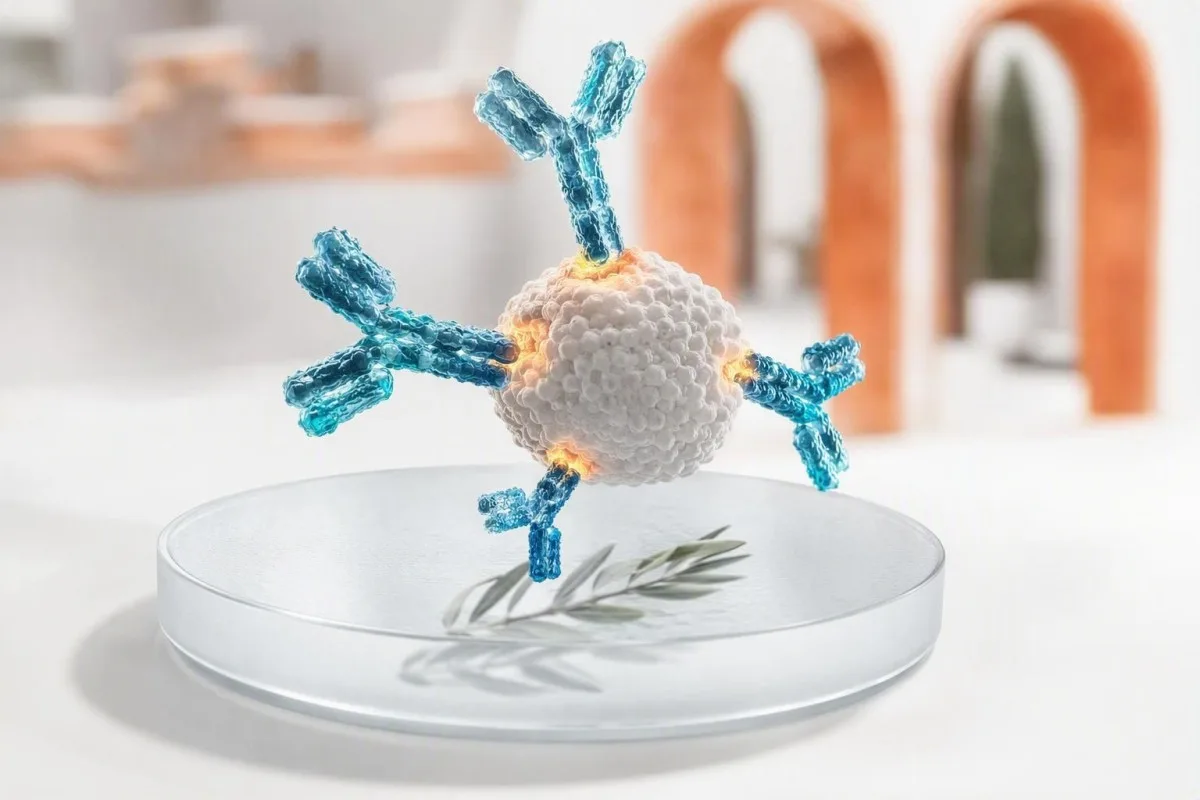
Ang positibo nga resulta sa antibody nagpasabut nga ang imong immune system nakaila sa usa ka partikular nga target; kini dili, sa iyang kaugalingon, nagpamatuod sa usa ka aktibo nga impeksyon o sakit. Ang klase sa antibody, pamaagi sa pagsulay, pagtiming, mga sintomas ug mga kauban nga pagsulay ang nagtino kung kinahanglan nimo ang kasigurohan, usa ka balik nga pagsulay, kumpirmasyon o dali nga pag-atiman sa klinika.


- Positibo nga resulta sa antibody kasagaran nagpakita sa pag-ila sa immune, dili kinahanglan ang karon nga sakit o pagka-makatakod.
- IgM kumpara sa IgG usa ka timailhan sa pagtiming, dili usa ka orasan: ang IgM mahimong magpadayon sa mga bulan ug ang IgG mahimong mo-agaw sayo.
- Mga antibody sa bakuna mahimong makapahimo sa mga pagsulay sa resistensya nga positibo nga dili nagpaila sa natural nga impeksyon.
- Allergen-specific IgE labaw sa 0.35 kUA/L nagpaila sa sensitisation, apan ang mga sintomas pagkahuman sa pagkaladlad nagtukod ug klinikal nga alerdyi.
- ANA positivity makita hangtod sa 20% sa himsog nga mga hamtong sa ubos nga mga titulo, labi na sa pagtigulang; ang mga sintomas ug piho nga mga antibodies mas hinungdanon.
- HIV screening reactivity kanunay nanginahanglan sa laboratoryo confirmation algorithm sa dili pa mahimo ang bisan unsang diagnosis.
- Anti-tTG IgA kasaligan alang sa pagsusi sa coeliac lamang kung ang tawo nagkaon og gluten ug adunay igo nga total IgA.
- Mga sintomas nga kinahanglan ug dayon nga pagtagad sama sa kalisud sa pagginhawa, kalibog, jaundice, sakit sa dughan o usa ka kaylap nga nangaagas nga pantal mas labaw pa sa usa ka routine antibody result.
Unsa ang aktuwal nga giingon kanimo sa usa ka positibo nga resulta sa antibody
A positibo nga antibody test nagpasabut nga ang assay nakadetect ug mga immune protein nga nagbugkos sa usa ka partikular nga target; kini dili dili awtomatiko nga nagpasabut nga ikaw adunay aktibo nga impeksyon, usa ka autoimmune disease, o usa ka alerdyi nga nagkinahanglan og pagtambal. Ang sunod nga lakang nagdepende sa matang sa antibody, kalig-on sa resulta, mga sintomas, oras sa pagkaladlad ug bisan unsang gipares nga antigen, PCR o organ-function tests.
Ang mga antibody mga B-cell protein nga gihimo human sa pagbakuna, impeksyon, pagkaladlad sa alerdyi, autoimmunity, o usahay walay klaro nga hinungdan nga makadaot sa panglawas. Ang usa ka positibo nga resulta nagtubag sa usa ka pig-ot nga analytical nga pangutana—“na-detect ba ang pagbugkos labaw sa laboratory cutoff?”—imbes sa mas lapad nga klinikal nga pangutana kung unsa ang nahitabo sa imong lawas karon.
Sa akong 15 ka tuig nga klinikal nga praktis, ang labing kasagaran nga sayop mao ang pagbasa sa “positibo” isip usa ka diagnosis. Ang praktikal nga lagda ni Dr Thomas Klein mao ang unang pag-ila sa target—usa ka virus, vaccine antigen, protina sa pagkaon, thyroid enzyme, nuclear antigen o tambal—unya pangutan-a kung ang pagsulay nag-detect ba sa nangaging pagkaladlad, karon nga organismo, sensitization, o sayop nga direksyon sa immune system.
Kantesti AI usa ka AI blood test analyzer nga nagbasa sa mga antibody flag tupad sa mga petsa, klase sa immunoglobulin ug may kalabutan nga mga resulta imbes nga pagtratar sa usa ka positibo nga linya isip usa ka hukom. Kana nga konteksto labi ka mapuslanon kung ang mga pasyente magtandi sa mga taho gikan sa lainlaing mga laboratoryo; qualitative ug quantitative results dili mahimong mausab bisan kung pareho silang positibo.
IgG kumpara sa IgM positibo: nganong ang pagtiming dili ingon ka yano sa pagkadungog niini
IgM positive mahimong magpaila sa usa ka bag-o nga immune response, samtang IgG positibo kasagaran nagpaila sa nangaging pagkaladlad o tubag sa bakuna; walay usa ka pattern ang kasaligan nga makatala sa usa ka sakit sa iyang kaugalingon. Ang ubang mga impeksyon naghimo og IgG sulod sa 7–14 ka adlaw, ug ang IgM mahimong magpabilin nga madetect sulod sa 3–12 ka bulan o labaw pa.
Ang IgM usa ka dako nga lima ka yunit nga antibody nga sagad madetect sa sayo pa, apan ang gidak-on ug lapad nga pagbugkos niini naghimo niini nga mas daling ma-cross-react. Ang Epstein–Barr virus, parvovirus B19, rheumatoid factor ug pipila ka mga autoimmune antibodies mahimong hinungdan sa makapahisalaag nga IgM reactions; ang usa ka isolated low-level IgM nga resulta nagkinahanglan og dugang pagduhaduha kaysa kabalaka.
Ang IgG kasagaran magpadayon human maugmad ang immune memory, usahay sulod sa mga dekada. Ang positibo nga resulta sa IgG mahimong magpakita sa impeksyon sa pagkabata, usa ka bag-o nga bakuna, passive antibody gikan sa intravenous immunoglobulin, o maternal transfer ngadto sa usa ka masuso; dili kini makapamatuod ug proteksyon gawas kung kana nga partikular nga assay adunay balido nga proteksiyon nga threshold.
Ang mga gipares nga espisimen mahimong mas mapuslanon kaysa usa ka pagdrowing: ang upat ka pilo nga pagtaas sa antibody titre tali sa mga sample nga gikuha mga 2–4 ka semana ang gilay-on nagsuporta sa bag-o nga impeksyon sa gipili nga mga sakit. Kung ang report naglista sa total IgG, IgA ug IgM, susiha ang pattern imbes usa ka numero uban sa among giya sa interpretasyon sa immunoglobulin.
Kanus-a ang mga antibody sa impeksyon nagpasabut ug wala nagpasabut ug aktibo nga sakit
Kasagaran, ang mga antibodies sa impeksyon nagpakita og pagkaladlad, samtang ang PCR, pagsulay sa antigen, kultura, o nagkadaghan nga titre mas maayo nga mga himan sa pag-ila sa daghang aktibo nga impeksyon. Ang positibo nga resulta sa antibody nga walay sintomas kasagaran sa kasaysayan, apan ang eksepsiyon nagdepende sa organismo ug sa imong kahimtang sa immune.
Alang sa hepatitis C, ang usa ka reaktibo nga antibody nagkahulugan sa pagkaladlad sa usa ka punto, apan ang HCV RNA lamang ang makapamatuod sa kasamtangang viraemia. Alang sa hepatitis B, ang kombinasyon importante: ang surface antigen, surface antibody ug core antibody nagpalain sa aktibo nga impeksyon, nahuman nga impeksyon ug resistensya sa bakuna labi pa kay sa usa ka positibo nga marka.
Ang HIV usa pa ka sitwasyon diin ang mga pulong dako kaayo og kalainan. Ang usa ka reaktibo nga ikaupat-nga-henerasyon nga screen dili usa ka pagdayagnos; ang laboratoryo nagpadayon sa HIV-1/HIV-2 differentiation immunoassay ug, kung gikinahanglan, nucleic-acid testing. Ang usa ka tawo nga nag-inom og post-exposure prophylaxis nagkinahanglan og pagsulay nga espesipiko sa oras, sama sa gipatin-aw sa among giya sa pagsulay sa HIV human sa PEP.
Nakakita ko og usa ka himsog nga pasyente nga nahadlok sa usa ka positibo nga treponemal syphilis antibody human sa pagtambal 18 ka tuig ang milabay. Ang mga treponemal test kasagarang magpabilin nga positibo sa tibuok kinabuhi, samtang ang RPR o VDRL titre makatabang sa pagtimbang-timbang sa kasamtangang kalihokan ug tubag; mga pattern sa pagsulay sa syphilis naghimo niini nga kalainan nga mas klaro.
Giunsa ang mga antibody sa bakuna lahi sa mga antibody pagkahuman sa impeksyon
Ang mga antibody nga may kalabotan sa bakuna nagpakita nga ang immune system mitubag sa usa ka antigen sa bakuna; kini wala magpasabot nga ang bakuna maoy hinungdan sa aktibo nga impeksyon. Ang positibo nga resulta mahimong mahulog pa ubos sa nailhan nga protective correlate, tungod kay ang binding antibodies ug functional neutralising antibodies dili parehas.
Ang konsentrasyon sa hepatitis B surface antibody nga 10 mIU/mL o mas taas gisukod 1–2 ka bulan human sa usa ka dokumentado nga serye sa bakuna kasagaran giisip nga protective sa mga immunocompetent nga tawo. Ang Anti-HBc, ang hepatitis B core antibody, dili gihimo sa standard hepatitis B vaccination; ang presensya niini nagtudlo sa natural nga pagkaladlad ug kinahanglan mag-aghat sa bug-os nga paghubad sa panel.
Kasagaran nga gisusi ang Rubella IgG sa wala pa ang pagmabdos tungod kay kini nagpakita sa naunang resistensya, dili sa aktibo nga sakit nga rubella. Ang mga laboratoryo nagtakda og mga threshold nga espesipiko sa assay, ug ang mga borderline nga resulta kasagarang gihimo ingon nga dili immune alang sa pagplano sa preconception kaysa paghubad ingon nga bag-o nga impeksyon; ang oras detalyado sa among giya sa pagsulay sa rubella.
Kantesti AI usa ka AI pagsabot sa resulta sa blood test platform nga nagpalain sa mga antibody nga pattern sa bakuna gikan sa mga antibody nga pattern sa impeksyon kung ang report naglakip sa may kalabutan nga mga kaubang marka. Ang praktikal nga pangutana kanunay dili “ako ba positibo?” apan “unsa nga antigen ang gisukod, kanus-a ko nabakunahan, ug kini nga resulta nagbag-o ba sa plano sa proteksyon karon?”
Ngano nga ang usa ka positibo nga pagsulay sa antibody sa alerdyi mahimong dili magpasabut ug alerdyi
Ang positibo nga allergen-specific IgE nga pagsulay nagpakita sa sensitisation, nagkahulugan nga ang IgE nakaila sa usa ka allergen; kini dili magdayagnos sa clinical allergy kung walay katugma nga kasaysayan sa reaksyon. Ang usa ka kantidad nga labaw sa 0.35 kUA/L usa ka kasagaran nga analytical positivity threshold, dili usa ka unibersal nga threshold alang sa paglikay sa pagkaon o tambal.
Ang pre-test nga istorya mas importante kaysa sa gihunahuna sa daghang tawo. Kung ang usa ka tawo mokaon og mani kada semana nga walay pantal, pag-wheeze, pagsuka o pagkahugno, ang usa ka gamay nga positibo nga peanut IgE lamang dili angay magresulta sa paglikay; ang dili kinahanglan nga pagdili sa pagkaon mahimong makamugna og kadaot sa nutrisyon ug sosyal.
Ang NIAID-sponsored food allergy guideline nag-ingon nga ang skin-prick ug specific-IgE tests nag-ila sa posibleng mga pagkaon nga hinungdan apan dili independente nga makadugang sa food allergy (Sampson et al., 2010). Sa gipili nga mga kaso, ang usa ka allergist naggamit sa component-resolved testing o usa ka medically supervised oral food challenge, nga nagpabilin nga reference standard alang sa paghusay sa kawalay kasigurohan.
Ang Total IgE gisukod sa IU/mL ug mahimong taas sa eczema, parasitic exposure, pagpanigarilyo ug daghang immune conditions; dili kini makaila sa usa ka culprit allergen. Ang component testing makapalahi sa usa ka stable storage protein gikan sa usa ka cross-reactive pollen-related protein, usa ka kalainan nga gisusi sa among artikulo sa molecular allergy testing.
Ngano nga ang mga autoimmune antibody nanginahanglan ug mga sintomas ug mga timailhan sa organo
Ang mga autoimmune antibody mahimong mouna sa sakit, manguban sa sakit, o makita sa himsog nga mga tawo; ang positibo nga resulta sa walay kaayban panagsa ra makapamatuod sa usa ka autoimmune diagnosis. Ang mga clinician molihok kung ang pattern sa antibody motugma sa mga sintomas, mga nahibal-an sa eksaminasyon, mga marka sa panghubag, o mga obhetibo nga pagbag-o sa organo.
Usa ka antinuclear antibody, o ANA, positibo sa ubos nga mga titre sa gibana-bana nga 13% sa mga tawo sa 1:80 ug mga 20% sa 1:40 sa mga pagtuon sa populasyon, nga adunay mas taas nga mga rate sa mga babaye ug mas tigulang nga mga hamtong. Ang usa ka homogeneous o speckled nga pattern dili makakilala sa lupus; ang ANA labing maayo nga gamiton ingon usa ka gateway test kung ang klinikal nga hulagway naghimo sa connective-tissue disease nga posible.
Ang 2019 EULAR/ACR lupus classification framework naggamit ug ANA sa titre nga labing menos 1:80 isip usa ka entry criterion, dayon nagkinahanglan ug dugang nga gibug-aton nga klinikal ug immunological features (Aringer et al., 2019). Ang bag-ong protina sa ihi, ubos nga C3/C4, cytopenias, inflammatory joint swelling o usa ka makapakombinsir nga photosensitive rash mausab ang pagkadinalian labaw pa kay sa usa ka huyang nga ANA lamang.
Ang Anti-dsDNA mahimong mas makahuluganon kung ipares sa ubos nga complement ug mga nahibal-an sa kidney, bisan kung ang mga pamaagi sa pagsulay managlahi pag-ayo. Ang among giya sa pagsunod sa anti-dsDNA ug overview sa pagsulay sa complement ipasabut ngano nga ang usa ka espesyalista mahimong magsubli sa pagsulay sa lain nga plataporma.
Mga antibody nga piho sa organo: mga panig-ingon sa thyroid, CE, ug tiyan
Ang mga organ-specific antibody nagpaila sa immune targeting sa usa ka tissue, apan dili kini kanunay magpakita kung ang organ ba karon nadaot o nanginahanglan og pagtambal. Ang mga thyroid peroxidase antibody, tissue transglutaminase antibody, ug intrinsic-factor antibody matag usa nagkinahanglan ug lainlain nga kauban nga mga pagsulay.
Ang mga TPO antibody kasagaran sa Hashimoto thyroiditis ug mahimong anaa sulod sa daghang tuig samtang ang TSH ug free T4 nagpabilin nga normal. Sa usa ka dili mabdos nga hamtong nga adunay normal nga thyroid function, ang resulta kasagaran nagsuporta sa pana-panahon nga TSH monitoring kaysa pagtambal sa thyroid hormone; pagmabdos, mga plano sa pagkamabdos ug mga sintomas mahimong mausab kana nga pamaagi.
Ang positibo nga tTG-IgA nagsugyot sa coeliac disease kung ang tawo nagkaon pa ug gluten ug ang total IgA igo na. Ang selective IgA deficiency mahimong makahimo sa tTG-IgA nga sayop nga negatibo, mao nga ang mga clinician naggamit ug IgG-based deamidated gliadin peptide o tTG tests kung ubos ang total IgA; tan-awa ang among paliwanag sa mga sayop nga negatibo sa ubos nga IgA.
Ang intrinsic-factor antibody medyo espesipiko apan dili kaayo sensitibo alang sa pernicious anaemia. Kung kini positibo kauban ang ubos nga B12, taas nga methylmalonic acid, ug macrocytosis, ang pattern makapakombinsir; kung wala ang kana nga pattern, naglikay ako sa pagtambal sa usa ka laboratoryo nga label kaysa sa pasyente. pagsulay sa Pernicious anaemia nagpakita sa kasagaran nga pagkumpirma sa sunod-sunod.
Unsa ang hinungdan sa usa ka sayop nga positibo nga resulta sa antibody
Ang mga sayop nga positibo nga resulta sa antibody motungha kung ang assay makadetekta sa dili tinuyo nga pagbugkos, dili kung ang laboratoryo yano nga “sayop.” Ang mga cross-reactive antibody, rheumatoid factor, bag-o nga immune stimulation, passive immunoglobulin, ug ubos nga pre-test probability mao ang kasagaran nga mga rason.
Ang pagkaspesipiko dili pagkahingpit. Ang usa ka pagsulay nga adunay 99% nga pagkaspesipiko naghimo og mga 10 ka sayop nga positibo nga resulta alang sa matag 1,000 ka tinuod nga negatibo nga mga tawo nga gisulayan; kung ang kondisyon talagsaon, ang mga resulta mahimong molabaw sa tinuod nga positibo. Mao kini ang hinungdan ngano nga ang lapad nga screening sa usa ka tawo nga walay mga sintomas sagad makamugna og kalibog kaysa kasigurohan.
Ang Biotin bantog sa pagpanghilabot sa pipila ka hormone ug cardiac assays, samtang ang heterophile antibodies ug rheumatoid factor mahimong makapanghilabot sa pipila ka immunoassays. Ang laboratoryo usahay makahimo sa pag-dilute sa sample, paggamit ug blocking reagents, pagsubli sa resulta sa lain nga assay architecture, o paghimo ug mas espesipikong confirmatory method.
Ang positibo nga resulta nga dili motakdo sa usa ka hingpit nga dili kasagaran nga klinikal nga hulagway dili usa ka butang nga ibaliwala; kini usa ka rason sa pag-verify. Kantesti AI nagtandi sa discordant markers ug mga petsa sa pagsulay, ug ang among checklist sa katukma sa resulta sa lab makatabang kanimo sa pagrekord sa mga suplemento, bag-o nga mga infusion, ug mga sakit sa wala pa makigsulti sa nag-order nga clinician.
Positibo ang pagsulay sa antibody apan walay sintomas: usa ka praktikal nga plano sa triage
Kung ang usa ka antibody test positibo apan ikaw maayo ang pamati, kadaghanan sa mga tawo nanginahanglan ug klaripikasyon kaysa emerhensya nga pag-atiman. Ang labing luwas nga unang mga lakang mao ang pag-verify sa eksaktong assay, pagsusi sa mga petsa sa pagkaladlad ug pagbakuna, ug pagpangita sa pares nga pagsulay nga nagpamatuod sa kasamtangang sakit o pagkalambigit sa organo.
Sugdi sa mismong report: isulat ang ngalan sa analyte, klase sa antibody, numerong index o titre, saklaw sa reperensya, pamaagi sa laboratoryo ug petsa sa pagkolekta. Ang “Reactive” mahimong magpasabut sa signal-to-cutoff ratio nga gamay ra sa 1.0 o mas kusog nga resulta; ang mga laboratoryo dili naggamit og managsama nga mga sukaranan, ug ang gidak-on usahay ra mosubay sa probabilidad sa klinikal.
Sunod, pangutan-a kung adunay pagsulay sa aktibo nga sakit. Ang mga pananglitan naglakip sa PCR alang sa hepatitis C, sunod-sunod nga RPR alang sa syphilis, hugaw o pagginhawa nga pagsulay alang sa aktibo nga Helicobacter pylori, TSH/free T4 alang sa mga thyroid antibody, ug urinalysis dugang nga creatinine alang sa kabalaka sa kidney nga may kalabutan sa lupus.
Sukad sa Septembre 8, 2026, dili nako irekomendar ang kaugalingon nga pagsugod sa mga antibiotic, antiviral, pagkaon nga walay gluten, tambal sa thyroid o paglikay sa pagkaon base lang sa usa ka resulta sa antibody. Luwasa ang orihinal nga PDF, timan-i ang imong baseline uban sa longitudinal nga pag-monitor sa laboratoryo, ug pag-iskedyul og regular nga pagrepaso gawas kon adunay mga simtomas nga pula-bandila.
Mga kumpirmasyon nga pagsulay nga nagbag-o sa sunod nga lakang
Ang labing maayo nga confirmatory test nagdepende sa gipuntirya sa antibody: ang molecular detection nagpamatuod sa daghang impeksyon, ang functional assays nagklaro sa alerdyi, ug ang organ-function testing nagtimbang-timbang sa epekto sa autoimmune. Ang pagbalik-balik sa parehas nga pagsulay sa antibody makatabang lamang kung ang gipaabot nga pagbag-o sa paglabay sa panahon adunay kahulugan sa klinikal.
Alang sa usa ka reactive HIV screen, ang reflex confirmation pathway usa ka differentiation assay nga gisundan sa HIV nucleic-acid testing kung ang mga resulta indeterminate. Alang sa hepatitis C antibody, ang HCV RNA mao ang desidido nga follow-up; alang sa positibo nga hepatitis B core antibody, surface antigen, surface antibody ug usahay ang HBV DNA maklaro ang pattern.
Alang sa gidudahang coeliac disease, ang mga desisyon sa biopsy kinahanglan himoon samtang ang pagkaladlad sa gluten igo na alang sa testing. Alang sa posibleng food allergy, ang usa ka allergist nagkonsiderar sa kasaysayan sa pagkaladlad, partikular nga lebel sa IgE, component profile ug risgo sa hagit—dili usa ka panel sa dili managsama nga ubos nga positibo nga gi-order nga walay klinikal nga pangutana.
Kantesti AI usa ka AI-powered blood test analysis tool nga makahikay niining mga nalambigit nga marka ngadto sa listahan sa mga pangutana nga andam alang sa clinician, apan kini dili makapuli sa confirmatory testing o diagnosis. Kung dili ka sigurado kung unsa ka dako ang pagsalig sa usa ka outlier nga resulta, ang among mga sumbanan sa medikal nga pag-validate naghulagway ngano nga ang pag-verify ug klinikal nga pagdumala hinungdanon.
Mga sintomas nga naghimo sa usa ka positibo nga resulta sa antibody nga mas dinalian
Ang positibo nga resulta sa antibody naghatag ug dinalian nga pagtimbang-timbang kung kini nag-uban sa kalisud sa pagginhawa, paghubag sa nawong o tutunlan, pagkaluya, kalibog, sakit sa dughan, jaundice, dali nga mokaylap nga pantal, grabe nga dehydration o bag-ong pagkaluya sa neurological. Ang mga sintomas—dili lang ang gidaghanon sa antibody—nagbutang sa pagkadinalian.
Ang posibleng anaphylaxis usa ka emerhensya: ang kalit nga kaylap nga mga pantal nga adunay paghagok, paghugot sa tutunlan, padayon nga pagsuka, pagkaluya o ubos nga presyon sa dugo human sa pagkaladlad nanginahanglan og emergency services ug gireseta nga adrenaline kung anaa. Ang positibo nga food o venom IgE gikan sa mga bulan na ang milabay dili makatagna o makawagtang niini nga diha-diha nga risgo.
Ang bag-ong jaundice nga adunay ngitngit nga ihi, dakong sakit sa tiyan, hilanat o kalibog kinahanglan magpahinabog dayon nga pagtimbang-timbang bisan kung ang mga antibody sa viral hepatitis positibo o dili. Ang mga liver enzyme, bilirubin, INR ug direktang pagsulay sa pathogen makatabang sa pag-ila sa kasaysayan sa immune gikan sa aktibo nga sakit sa hepatobiliary; mga sangkap sa liver-panel mga mapuslanon nga konteksto.
Ang kabalaka sa autoimmune nahimong sensitibo sa panahon sa pag-ubo og dugo, kakulang sa gininhawa, dali nga pagtaas sa creatinine, dugo sa pagkalibang, pagbag-o sa panan-aw, kombulsasyon o usa ka bag-ong unilateral nga kahuyang. Nakat-on ko nga dili magpasalig sa usa ka tawo base sa usa ka borderline antibody titre kung ang ilang trajectory sa sintomas klaro nga nagkagrabe.
Ang mas taas ba nga numero sa antibody nagpasabut ug mas grabe nga sakit?
Ang mas taas nga antibody index o titre usahay makadugang sa posibilidad nga ang usa ka resulta tinuod, apan kini kasagaran dili makasukod sa kagrabe sa sakit. Ang mga kantidad sa pagsulay mga piho sa pamaagi, ug ang resulta nga 80 AU/mL dili mahimong itandi direkta sa 80 U/mL gikan sa laing laboratoryo.
Sa autoimmune disease, ang anti-dsDNA trends usahay makasunod sa kalihokan sa lupus, ilabi na kung gisukod kanunay sa parehas nga pamaagi ug gihubad uban sa complement ug urine protein. Ang ANA titre, hinoon, usa ka dili maayo nga sukod sa kagrabe sa lupus ug dili kinahanglan nga sundan pag-usab sa usa ka stable nga tawo.
Alang sa mga impeksyon, ang usa ka kusog nga signal sa antibody mahimong mosuporta sa miaging pagkaladlad apan panagsa ra nagpaila sa pagka-impeksyon. Ang mga neutralizing antibody test kay espesyal ug ang ilang protective cutoffs mahimong magkalainlain sa pathogen, edad, produkto sa bakuna ug immune suppression; ang usa ka yano nga komersyal nga IgG assay dili usa ka personal nga pasaporte sa resistensya.
Kung magtandi og mga report, ibutang nga makita ang laboratoryo, pagsulay ug mga yunit. Ang usa ka tinuod nga biological nga kausaban kinahanglan molapas sa ordinaryo nga analytical ug adlaw-adlaw nga baryasyon, mao nga ang among giya sa pagtandi sa mga blood-test nagtutok sa mga petsa ug mga pamaagi kay sa mga bandera nga gihulagway sa kolor lamang.
Ang pagmabdos, mga bata ug immune suppression nagbag-o sa interpretasyon
Ang pagmabdos, pagkabata ug pagtambal sa pagsumpo sa immune mahimong mag-usab sa paghimo sa antibody ug sa kaluwasan sa paghulat alang sa kumpirmasyon. Sa kini nga mga grupo, ang usa ka positibo nga resulta mahimong magpakita sa maternal antibodies, giminusan nga tubag sa bakuna, peligro sa pag-reactivation o panginahanglan alang sa sayo nga tambag sa espesyalista.
Ang IgG sa inahan motabok sa placenta ug mahimong magpabilin nga mamatikdan sa masuso sulod sa pipila ka bulan, samtang ang IgM sa inahan kasagaran dili motabok. Busa, ang isolated IgG positivity sa masuso sagad nagpakita sa maternal immunity, samtang ang organism-specific IgM o direktang pag-ila mahimong angay sa mas tutok nga pagsusi depende sa impeksyon ug edad.
Sa panahon sa pagmabdos, ang mga resulta sa antibody sa rubella o parvovirus gi-interpret uban sa mga petsa sa pagkaladlad, pagsulay sa avidity, ug balik-balik nga mga sample kaysa usa lang ka IgM. Ang bakak nga positibo nga IgM usa ka giila nga problema, ug ang malikayan nga alarma mahimong mosangpot sa dili kinahanglan nga invasive nga mga imbestigasyon; ang input sa obstetric o infectious-disease makatarunganon kung ang pagkaladlad makatuo.
Ang mga tawo nga makadawat og rituximab, high-dose corticosteroids, chemotherapy, o transplant medication mahimong adunay huyang o walay antibody nga mga tubag bisan pa sa impeksyon o pagbakuna. Alang sa mga desisyon sa pamilya, ang mga limitasyon sa AI interpretation sa mga bata ug ang Kantesti medical advisory board nagpalig-on sa panginahanglan alang sa klinikal nga pagrepaso.
Giunsa ang pag-andam alang sa usa ka mapuslanon nga klinikal nga pagrepaso sa usa ka positibo nga resulta
Ibutang ang kumpleto nga laboratory report, ang rason sa pag-order sa test, mga petsa sa mga sintomas o pagkaladlad, kasaysayan sa bakuna, mga tambal, ug una nga mga resulta. Kining impormasyon makapausab sa daw dili klaro nga positibo nga resulta sa antibody ngadto sa usa ka tin-aw nga sunod nga aksyon sulod sa usa ka appointment.
Isulat ang lima ka kamatuoran sa dili pa ang bisita: ang unang adlaw sa mga sintomas, ang kataposang posibleng pagkaladlad, mga petsa sa bakuna, mga tambal nga makapaluya sa immune system o immunoglobulin infusions, ug kung ang mga sintomas nag-ayo o nagkagrabe. Ang hilanat nga nagsugod 3 ka adlaw sa wala pa ang sampling gi-interpret sa lahi kaayo gikan sa kakapoy nga nagsugod 6 ka bulan na ang milabay.
Pangutan-a ang tulo ka gitumong nga mga pangutana: “Unsay namatikdan niini nga pagsulay?”, “Unsay pagsulay nga nagtukod ug aktibo nga sakit o epekto sa organ?”, ug “Unsang resulta ang makapausab sa pagtambal?” Si Dr Thomas Klein nakakaplag nga kini nga mga pangutana makapakunhod sa dili kinahanglan nga balik-balik nga mga panel ug makatabang sa mga pasyente nga makabiya nga adunay usa ka gldefinit nga time frame—karon, 1–2 ka semana, o rutina nga pagmonitor.
Ang AI nagsuporta sa luwas nga pagrepaso sa report sa kapin sa 75 ka mga lengguwahe ug makapangita ug nawala nga mga kauban nga pagsulay gikan sa usa ka gikuhaan og litrato o gi-upload nga PDF sa mga 60 segundos. Ang among giya sa teknolohiya sa AI nagpatin-aw sa pamaagi sa pagpares sa konteksto, samtang among among sa among klinikal nga team naghatag sa medikal nga pagdumala sa luyo sa pag-interpret nga nag-atubang sa pasyente.
Kanunay nga Gipangutana nga mga Pangutana
Unsay buot ipasabot sa positibo nga resulta sa antibody kung wala koy sintomas?
Ang positibo nga resulta sa antibody nga walay mga sintomas kasagaran nagpaila sa kanhi nga pagkaladlad, pagbakuna, pagkasensitibo o usa ka resulta nga nagkinahanglan og kumpirmasyon kaysa aktibo nga sakit. Ang sunod nga lakang nagdepende sa target: ang antibody sa hepatitis C nagkinahanglan og HCV RNA, ang reaktibo nga HIV screen nagkinahanglan og algorithm sa pagkumpirma sa laboratoryo, ug ang mga antibody sa thyroid nagkinahanglan og TSH ug free T4. Ang usa ka isolated low-positive nga resulta dili kaayo makapakombinsir kung walay nahiangay nga pagkaladlad o kasaysayan sa sintomas. Pangayo dayon og pag-atiman kung adunay bag-ong jaundice, kalisud sa pagginhawa, kalibog, kasakit sa dughan o usa ka paspas nga pagkadaot sa rash.
Ang IgM positive ug IgG negative ba kanunay nagpasabot ug bag-ong impeksyon?
Ang IgM positive nga adunay negative nga IgG mahimong mahitabo sa sayo nga bahin sa impeksyon, apan dili kini kanunay nagpamatuod sa usa ka bag-ong impeksyon. Ang IgM mahimong mag-cross-react sa dili kaugnay nga immune proteins, ug ang ubang mga pagsulay makahimo og false-positive nga mga resulta sa IgM kaysa sa mga resulta sa IgG. Mahimong sublion sa mga doktor ang serology pagkahuman sa 1–2 ka semana, mangayo og PCR o antigen testing, o mogamit og mas piho nga kumpirmasyon nga pagsulay. Ang husto nga interpretasyon nagdepende usab sa timeline sa sakit ug sa piho nga organismo nga gisulayan.
Makapositibo ba ang usa ka vaccine sa antibody test?
Oo, kasagaran makapositibo ang mga bakuna sa mga pagsulay sa antibody alang sa antigen nga anaa sa bakuna. Alang sa hepatitis B, ang konsentrasyon sa anti-HBs nga labing menos 10 mIU/mL nga gisukod 1–2 ka bulan pagkahuman sa usa ka nahuman nga serye sa kasagaran nagpaila sa proteksyon nga tubag sa bakuna sa mga tawo nga immunocompetent. Ang standard nga pagbakuna sa hepatitis B dili makahimo og anti-HBc, mao nga ang pagka-positibo sa core-antibody nagpaila sa natural nga pagkaladlad kaysa pagbakuna lamang. Ang positibo nga may kalabotan sa bakuna wala magpasabut nga ikaw adunay aktibo nga impeksyon.
Posible ba nga adunay positibo nga autoimmune antibody test ug himsog?
Oo, ang himsog nga mga tawo mahimong adunay positibo nga autoimmune antibodies, labi na ang ubos-titre nga mga resulta sa ANA. Ang ANA makita sa gibana-bana nga 13% sa mga tawo sa usa ka 1:80 titre ug mga 20% sa 1:40, busa dili kini usa ka stand-alone nga lupus test. Ang mga sintomas sama sa inflammatory joint swelling, mouth ulcers, photosensitive rash, ubos nga complement, protina sa ihi o dili normal nga mga ihap sa dugo magtino kung gikinahanglan ba ang espesyalista nga pagsusi. Ang positibo nga resulta kinahanglan ipasabut sa konteksto sa rason nga gipahigayon ang pagsulay.
Ang positibo bang IgE blood test nagpasabot nga kinahanglan kong likayan kana nga pagkaon?
Dili, ang positibo nga resulta sa food-specific IgE nagpasabot ug sensitisation ug dili kini pamatuod nga ang pagkaon sa pagkaon hinungdan sa usa ka allergic reaction. Daghang mga laboratoryo ang nagtawag sa mga resulta nga labaw sa 0.35 kUA/L nga positibo, apan ang maong cutoff gidesinyo alang sa detection kaysa sa usa ka unibersal nga desisyon sa paglikay. Ang usa ka tawo nga kanunay mokaon sa pagkaon nga walay mga pantal, pagbahing, balik-balik nga pagsuka, o pagkalipong dili kinahanglan nga awtomatiko nga tangtangon kini gikan sa pagkaon. Ang usa ka allergist mahimong mogamit sa kasaysayan sa reaksyon, component testing ug usahay usa ka supervised oral food challenge aron klarohon ang risgo.
Unsa kadugay magpabilin nga positibo ang mga antibodies pagkahuman sa impeksyon?
Ang gidugayon sa antibody magkalahiat kaayo sa impeksyon ug klase sa antibody. Ang IgM mahimong mawala sulod sa mga semana apan mahimong molungtad sulod sa 3–12 ka bulan o mas dugay pa, samtang ang IgG mahimong magpabilin nga masukod sulod sa mga tuig o sa tibuok kinabuhi. Ang mga antibody sa treponemal syphilis sagad magpabilin nga positibo sa tibuok kinabuhi human sa malampuson nga pagtambal, samtang ang RPR o VDRL titres gigamit sa pagsunod sa kalihokan. Ang positibo nga resulta sa antibody busa dili kasaligan nga makasulti kanimo kung kanus-a nahitabo ang usa ka impeksyon kung walay uban pang impormasyon sa klinikal ug laboratoryo.
Karon na ang AI-Powered Blood Test Analysis
Apil sa kapin sa 2 milyon nga mga user sa tibuok kalibutan nga nagsalig sa Kantesti para sa dayon ug tukma nga pag-analisa sa lab test. I-upload ang imong resulta sa blood test ug makadawat og komprehensibong pagsabot sa 15,000+ nga mga biomarker sulod sa mga segundo.
📚 Mga Napangalan nga Research Publications
Klein, T., Mitchell, S., & Weber, H. (2026). Multilingual AI Assisted Clinical Decision Support para sa Sayong Hantavirus Triage: Disenyo, Engineering Validation, ug Real-World Deployment sa Kapin sa 50,000 nga Gi-interpret nga Blood Test Reports. Figshare. https://www.researchgate.net/. Kantesti AI Medical Research.
Klein, T., Mitchell, S., & Weber, H. (2026). Usa ka Pre-Registered, Rubric-Based Automated Technical Benchmark sa Kantesti Blood-Test Interpretation Engine sa 100,000 Synthetic Test Cases. Figshare. https://www.academia.edu/. Kantesti AI Medical Research.
📖 Mga Panlabas nga Sanggunian sa Medisina
⚕️ Pagpasabot sa Medikal
Kini nga artikulo para sa katuyoan sa edukasyon ra ug dili kini mosangpot sa medikal nga tambag. Kanunay mokonsulta sa usa ka kwalipikado nga healthcare provider alang sa mga desisyon sa diagnosis ug pagtambal.
Mga E-E-A-T Trust Signals
Kasinatian
Pagsusi sa klinika nga gipangulohan sa doktor sa mga workflow sa interpretasyon sa lab.
Kahanas
Pokus sa medisina sa laboratoryo kung giunsa paglihok ang mga biomarker sa konteksto sa klinika.
Pagka-awtorisado
Gisulat ni Dr. Thomas Klein ug gisusi ni Dr. Sarah Mitchell ug Prof. Dr. Hans Weber.
Kasaligan
Interpretasyon nga base sa ebidensya, nga adunay klaro nga mga agianan sa sunod nga buhat aron makunhuran ang kabalaka.