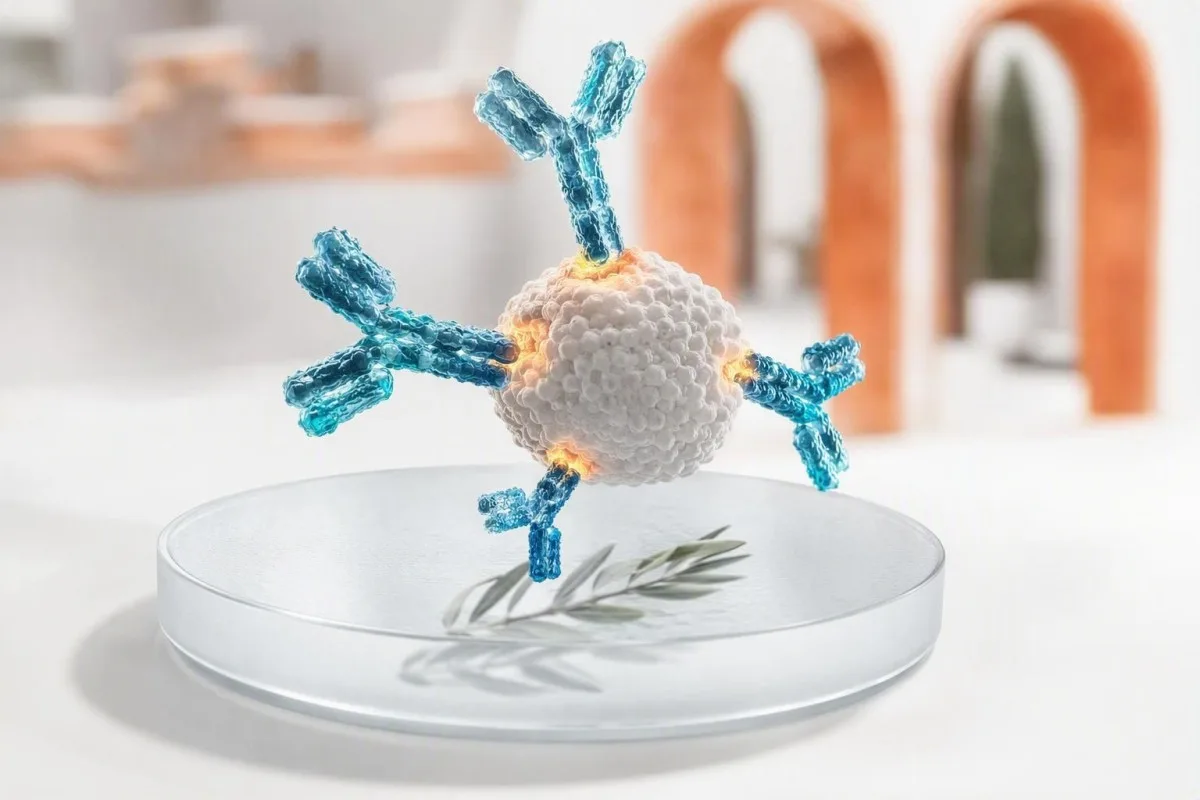
Pozitivní výsledek protilátek znamená, že váš imunitní systém rozpoznal konkrétní cíl; samo o sobě to nedokazuje aktivní infekci ani onemocnění. Třída protilátek, metoda testování, načasování, příznaky a doplňkové testy určují, zda potřebujete ujištění, opakovaný test, potvrzení nebo rychlou klinickou péči.


- Pozitivní výsledek protilátek obvykle ukazuje imunitní rozpoznání, nikoli nutně současnou nemoc nebo nakažlivost.
- IgM versus IgG je vodítkem pro načasování, nikoli hodinami: IgM může přetrvávat měsíce a IgG se může objevit brzy.
- Vakcinační protilátky mohou způsobit pozitivní výsledky testů imunity bez indikace přirozené infekce.
- Alergen-specifické IgE nad 0,35 kUA/l indikuje senzibilizaci, ale příznaky po expozici potvrzují klinickou alergii.
- ANA pozitivita se vyskytuje až u 20% zdravých dospělých v nízkých titrech, zejména s věkem; důležitější jsou příznaky a specifické protilátky.
- Reaktivita HIV screeningu vždy vyžaduje algoritmus laboratorního potvrzení před stanovením jakékoli diagnózy.
- Anti-tTG IgA je spolehlivý pro hodnocení celiakie pouze tehdy, když osoba konzumuje lepek a má adekvátní celkové IgA.
- Naléhavé příznaky jako je dušnost, zmatenost, žloutenka, bolest na hrudi nebo rozsáhlá puchýřnatá vyrážka, převažují nad výsledkem rutinního sérologického vyšetření.
Co pozitivní výsledek protilátek skutečně znamená
A pozitivní test na protilátky znamená, že test detekoval imunitní proteiny, které se vážou na konkrétní cíl; neznamená ne automaticky aktivní infekci, autoimunitní onemocnění nebo alergii, která vyžaduje léčbu. Další krok závisí na typu protilátky, síle výsledku, příznacích, časování expozice a jakýchkoli spárovaných antigenech, PCR nebo testech funkce orgánů.
Protilátky jsou proteiny B-buněk vytvořené po očkování, infekci, expozici alergenu, autoimunitě nebo příležitostně bez klinicky škodlivého důvodu. Pozitivní výsledek odpovídá na jednu úzkou analytickou otázku – “byla detekována vazba nad tímto laboratorním prahem?” – spíše než na širší klinickou otázku, co se dnes ve vašem těle děje.
Během své 15leté klinické praxe byla nejčastější chybou číst “pozitivní” jako diagnózu. Praktické pravidlo Dr. Thomase Kleina je nejprve identifikovat cíl– virus, vakcinační antigen, potravinový protein, enzym štítné žlázy, jaderný antigen nebo lék – a poté se zeptat, zda test detekuje minulou expozici, přítomný organismus, senzibilizaci nebo imunitní přesměrování.
Kantesti AI je an Analyzátor krevních testů AI který čte příznaky protilátek vedle dat, třídu imunoglobulinů a související výsledky namísto toho, aby považoval jednu pozitivní linii za definitivní verdikt. Tento kontext je zvláště užitečný, když pacienti porovnávají zprávy z různých laboratoří; kvalitativní a kvantitativní výsledky nejsou zaměnitelné, i když oba uvádějí pozitivní výsledek.
Pozitivní IgG versus IgM: proč je načasování méně jednoduché, než se zdá
Pozitivní IgM může naznačovat nedávnou imunitní odpověď, zatímco IgG pozitivní často naznačuje minulou expozici nebo odpověď na vakcínu; žádný z těchto vzorců sám o sobě nespolehlivě neurčuje datum onemocnění. Některé infekce produkují IgG během 7–14 dnů a IgM může zůstat detekovatelný po dobu 3–12 měsíců nebo déle.
IgM je velká pětijednotková protilátka, která je často detekovatelná v rané fázi, ale její velikost a široká vazba ji činí náchylnější k zkříženým reakcím. Virus Epstein–Barr, parvovirus B19, revmatoidní faktor a některé autoimunitní protilátky mohou způsobit zavádějící reakce IgM; izolovaný výsledek nízké hladiny IgM si zaslouží více skepse než paniky.
IgG obvykle přetrvává po rozvoji imunitní paměti, někdy po desetiletí. Pozitivní výsledek IgG může odrážet dětskou infekci, nedávnou vakcinaci, pasivní protilátky z intravenózního imunoglobulinu nebo mateřský přenos na kojence; nemůže prokázat ochranu, pokud daný test nemá validovaný ochranný práh.
Párové vzorky mohou být užitečnější než jednorázový odběr: čtyřnásobné zvýšení titru protilátek mezi vzorky odebranými přibližně s odstupem 2–4 týdnů podporuje nedávnou infekci u vybraných onemocnění. Pokud zpráva uvádí celkové IgG, IgA a IgM, zkontrolujte vzorec spíše než jedno číslo s našimi průvodce interpretací imunoglobulinů.
Kdy protilátky při infekci znamenají aktivní onemocnění a kdy ne
Antilátky proti infekci obvykle ukazují na expozici, zatímco PCR, antigenní testování, kultivace nebo stoupající titr jsou lepšími nástroji pro detekci mnoha aktivních infekcí. Pozitivní výsledek protilátek bez příznaků je často historický, ale výjimka závisí na organismu a vašem imunitním stavu.
U hepatitidy C reaktivní protilátka znamená expozici v určitém okamžiku, ale pouze detekovatelná HCV RNA potvrzuje současnou virémii. U hepatitidy B záleží na kombinaci: povrchový antigen, povrchová protilátka a jádrová protilátka oddělují aktivní infekci, prodělanou infekci a imunitu po očkování mnohem lépe než jeden pozitivní marker.
HIV je další situace, kde záleží na formulaci nesmírně. Reaktivní screening čtvrté generace není diagnóza; laboratoř následuje imunoanalýzu rozlišující HIV-1/HIV-2 a v případě potřeby testování nukleových kyselin. Osoba užívající postexpoziční profylaxi potřebuje testování specifické pro dané časové období, jak je vysvětleno v našem průvodci testováním HIV po PEP.
Viděl jsem zdravého pacienta vyděšeného pozitivní treponemální protilátkou na syfilis po léčbě o 18 let dříve. Treponemální testy často zůstávají pozitivní po celý život, zatímco titr RPR nebo VDRL pomáhá posoudit současnou aktivitu a odpověď; vzorce testů na syfilis tuto skutečnost jasněji objasňují.
Jak se protilátky z očkování liší od protilátek po infekci
Protilátky související s očkováním ukazují, že imunitní systém reagoval na očkovací antigen; neznamená to, že očkování způsobilo aktivní infekci. Pozitivní výsledek může stále spadat pod známý ochranný korelát, protože vazebné protilátky a funkční neutralizační protilátky nejsou totožné.
Koncentrace povrchových protilátek proti hepatitidě B 10 mIU/ml nebo vyšší měřené 1–2 měsíce po zdokumentované očkovací sérii jsou obecně považovány za ochranné u imunokompetentních osob. Anti-HBc, jádrová protilátka proti hepatitidě B, není produkována standardním očkováním proti hepatitidě B; její přítomnost ukazuje na přirozenou expozici a měla by podnítit interpretaci plného panelu.
IgG proti zarděnkám se běžně kontroluje před těhotenstvím, protože naznačuje předchozí imunitu, nikoli aktivní onemocnění zarděnkami. Laboratoře stanovují prahové hodnoty specifické pro daný test a hraniční výsledky jsou obvykle považovány za neimunitní pro plánování před početím, nikoli interpretovány jako nedávná infekce; načasování je podrobně popsáno v našem průvodci testováním na zarděnky.
Kantesti AI je an platforma pro rozbor krevních výsledků AI který odděluje protilátky vzoru očkování od protilátek vzoru infekce, pokud zpráva obsahuje relevantní doprovodné markery. Praktická otázka často není “jsem pozitivní?”, ale “který antigen byl měřen, kdy jsem byl očkován a mění tento výsledek dnešní plán ochrany?”
Proč pozitivní test protilátek na alergii nemusí znamenat alergii
Pozitivní alergenově specifický IgE test indikuje senzibilizaci, což znamená, že IgE rozpoznává alergen; nediagnostikuje klinickou alergii bez anamnézy kompatibilní reakce. Hodnota nad 0,35 kUA/L je běžná analytická prahová hodnota pozitivity, nikoli univerzální prahová hodnota pro vyhýbání se potravinám nebo lékům.
Předtestová anamnéza je důležitější, než si mnozí lidé uvědomují. Pokud osoba týdně konzumuje arašídy bez kopřivky, sípání, zvracení nebo kolapsu, samotné nízké pozitivní arašídové IgE by nemělo vést k vyhýbání se; zbytečné omezení stravy může způsobit nutriční a sociální škody.
Směrnice NIAID pro potravinové alergie uvádí, že testy kožními vpichy a specifické IgE identifikují možné spouštěče potravy, ale nemohou samostatně diagnostikovat potravinovou alergii (Sampson et al., 2010). Ve vybraných případech alergolog používá testování rozlišené podle komponent nebo lékařem kontrolovanou perorální potravinovou zátěž, která zůstává referenčním standardem pro řešení nejistoty.
Celkové IgE se měří v IU/mL a může být vysoké při ekzémech, parazitární expozici, kouření a několika imunitních stavech; nemůže identifikovat původce alergenu. Testování podle komponent může rozlišit stabilní zásobní protein od zkříženě reaktivního proteinu souvisejícího s pylem, což je rozdíl prozkoumaný v našem článek o molekulárním alergologickém testování.
Proč autoprotilátky vyžadují příznaky a orgánové ukazatele
Autoimunitní protilátky mohou nemoci předcházet, doprovázet ji nebo se vyskytovat u zdravých lidí; pozitivní výsledek sám o sobě zřídka stanoví autoimunitní diagnózu. Klinici zasahují, když vzorec protilátek odpovídá symptomům, nálezům z vyšetření, markerům zánětu nebo objektivním změnám orgánů.
Antinukleární protilátka neboli ANA, je pozitivní při nízkých titrem přibližně u 13% lidí při 1:80 a kolem 20% při 1:40 v populačních studiích, s vyšším výskytem u žen a starších dospělých. Homogenní nebo skvrnitý vzorec neloupe lupus; ANA je nejlépe používána jako vstupní test, když klinický obraz činí onemocnění pojivové tkáně pravděpodobným.
Rámec pro klasifikaci lupusu EULAR/ACR z roku 2019 používá ANA v titru nejméně 1:80 jako vstupní kritérium, poté vyžaduje další vážené klinické a imunologické rysy (Aringer et al., 2019). Nová bílkovina v moči, nízké C3/C4, cytopenie, zánětlivý otok kloubů nebo přesvědčivý světlopalný vyrážka mění naléhavost mnohem více než slabá ANA sama o sobě.
Anti-dsDNA získává větší smysl, když je spárován s nízkým komplementem a renálními nálezy, ačkoli metody testování se podstatně liší. Náš průvodce sledováním anti-dsDNA a přehled testování komplementu vysvětlují, proč specialista může opakovat testování na jiné platformě.
Orgánově specifické protilátky: příklady štítné žlázy, celiakie a žaludku
Orgánově specifické protilátky identifikují imunitní cílení tkáně, ale vždy neukazují, zda je orgán aktuálně poškozen nebo potřebuje léčbu. Protilátky proti thyroidální peroxidáze, protilátky proti tkáňové transglutamináze a protilátky proti vnitřnímu faktoru vyžadují odlišné doprovodné testy.
Protilátky TPO jsou běžné u Hashimotovy tyreoiditidy a mohou být přítomny roky, zatímco TSH a volný T4 zůstávají normální. U netěhotné dospělé osoby s normální funkcí štítné žlázy obvykle výsledek podporuje pravidelné sledování TSH spíše než léčbu hormonem štítné žlázy; těhotenství, plány na plodnost a příznaky mohou tento přístup změnit.
Pozitivní tTG-IgA naznačuje celiakii pouze v případě, že osoba stále konzumuje lepek a celková IgA je adekvátní. Selektivní deficit IgA může způsobit falešně negativní výsledek tTG-IgA, takže kliničtí lékaři používají testy na bázi IgG deamidovaných gliadinových peptidů nebo tTG, když je celková IgA nízká; viz naše vysvětlení problémů s nízkou IgA.
Protilátka proti vnitřnímu faktoru je relativně specifická, ale ne vysoce citlivá pro perniciózní anémii. Když je pozitivní spolu s nízkým B12, zvýšenou methylmalonovou kyselinou a makrocytózou, vzorec je přesvědčivý; bez tohoto vzorce se vyhýbám léčbě laboratorní nálepky spíše než pacienta. Testování na perniciózní anémii ukazuje obvyklé potvrzovací pořadí.
Co způsobuje falešně pozitivní výsledek protilátek
Falešně pozitivní výsledky protilátek vznikají, když test detekuje nechtěné vazbu, nikoli když laboratoř jednoduše “udělá chybu.” Běžnými důvody jsou zkříženě reaktivní protilátky, revmatoidní faktor, nedávná imunitní stimulace, pasivní imunoglobulin a nízká pravděpodobnost před testem.
Specifičnost není dokonalost. Test s 99% specifičnosti produkuje asi 10 falešně pozitivních výsledků na každých 1 000 skutečně negativních testovaných lidí; když je stav vzácný, tyto výsledky mohou převýšit skutečné pozitivní výsledky. Proto široké screeningové vyšetření u někoho bez příznaků často vytváří nejednoznačnost spíše než ujištění.
Biotin je známý tím, že interferuje s některými hormonálními a kardiologickými testy, zatímco heterofilní protilátky a revmatoidní faktor mohou interferovat s některými imunoanalýzami. Laboratoř může někdy zředit vzorek, použít blokující činidla, opakovat výsledek na jiné architektuře testu nebo provést specifičtější potvrzovací metodu.
Pozitivní výsledek, který je v rozporu s naprosto nevýznamným klinickým obrazem, není něco, co by se mělo ignorovat; je to důvod k ověření. Kantesti AI porovnává nesouladné markery a data testů a naše kontrolní seznam přesnosti laboratorních výsledků vám mohou pomoci zaznamenat doplňky stravy, nedávné infuze a nemoci před rozhovorem s předepisujícím lékařem.
Pozitivní test protilátek, ale žádné příznaky: praktický plán třídění
Pokud je test protilátek pozitivní, ale cítíte se dobře, většina lidí potřebuje spíše vysvětlení než nouzovou péči. Nejbezpečnějšími prvními kroky je ověřit přesnou analýzu, zkontrolovat data expozice a očkování a hledat spárovaný test, který potvrzuje současné onemocnění nebo zapojení orgánů.
Začněte samotnou zprávou: zaznamenejte název analytu, třídu protilátky, číselný index nebo titr, referenční interval, laboratorní metodu a datum odběru. “Reaktivní” může znamenat poměr signálu k mezní hodnotě těsně nad 1,0 nebo mnohem silnější výsledek; laboratoře nepoužívají identické prahové hodnoty a velikost pouze někdy sleduje klinickou pravděpodobnost.
Dále se zeptejte, zda existuje test na aktivní onemocnění. Příklady zahrnují PCR na hepatitidu C, sériové RPR na syfilis, test stolice nebo dechu na aktivní Helicobacter pylori, TSH/volný T4 na protilátky štítné žlázy a analýzu moči plus kreatinin pro obavy o ledviny související s lupus erythematodes.
K datu 8. září 2026 bych nedoporučoval samoléčbu antibiotiky, antivirotiky, bezlepkovou dietou, léky na štítnou žlázu nebo vyhýbání se potravinám pouze na základě izolovaného výsledku protilátek. Uložte si původní PDF, poznamenejte si svou výchozí hodnotu s longitudinálním sledování laboratorních hodnot, a domluvte si rutinní kontrolu, pokud nejsou přítomny varovné příznaky.
Konfirmační testy, které mění další krok
Nejlepší potvrzovací test závisí na tom, co protilátka cílí: molekulární detekce potvrzuje mnoho infekcí, funkční testy objasňují alergii a testování funkce orgánů posuzuje autoimunitní dopad. Opakování stejného testu protilátek je užitečné pouze tehdy, když má očekávaná změna v průběhu času klinický význam.
Pro reaktivní screening HIV je reflexní konfirmační cesta diferenciační testování následované testováním nukleových kyselin HIV, pokud jsou výsledky nejasné. Pro protilátku hepatitidy C je rozhodující zjištění HCV RNA; pro pozitivní protilátku proti jádru hepatitidy B, povrchový antigen, povrchovou protilátku a někdy HBV DNA objasňuje vzorec.
V případě podezření na celiakii by se rozhodnutí o biopsii mělo učinit, dokud je expozice lepku dostatečná pro testování. V případě možné potravinové alergie alergolog zváží anamnézu expozice, hladinu specifických IgE, profil komponent a riziko zátěžového testu – nikoli panel nesouvisejících slabých pozitivních výsledků objednaných bez klinické otázky.
Kantesti AI je an Nástroj pro analýzu krevních testů poháněný AI které mohou tyto propojené markery uspořádat do seznamu otázek připraveného pro lékaře, ale nenahrazuje konfirmační testování ani diagnózu. Pokud si nejste jisti, jak moc důvěřovat odlehlému výsledku, naše standardy lékařské validace popisují, proč jsou ověření a klinický dohled důležité.
Příznaky, které činí pozitivní výsledek protilátek naléhavějším
Pozitivní výsledek protilátky vyžaduje naléhavé posouzení, když doprovází potíže s dýcháním, otok obličeje nebo krku, mdloby, zmatenost, bolest na hrudi, žloutenku, rychle se šířící vyrážku, těžkou dehydrataci nebo novou neurologickou slabost. Urgentnost určují příznaky – nikoli samotné číslo protilátky.
Možná anafylaxe je nouzová situace: náhlé rozsáhlé kopřivky se sípáním, sevřením krku, přetrvávajícím zvracením, mdlobami nebo nízkým krevním tlakem po expozici vyžadují pohotovostní služby a předepsaný adrenalin, je-li k dispozici. Pozitivní výsledek IgE na potraviny nebo jed před několika měsíci nepředpovídá ani nevylučuje toto okamžité riziko.
Nová žloutenka s tmavou močí, výrazná bolest břicha, horečka nebo zmatenost by měly vést k vyšetření ve stejný den, ať už jsou protilátky proti virové hepatitidě pozitivní či nikoli. Jaterní enzymy, bilirubin, INR a přímé testování patogenů pomáhají rozlišit imunitní anamnézu od aktivního hepatobiliárního onemocnění; složkami jaterního panelu jsou užitečným kontextem.
Autoimunitní obavy se stávají časově citlivými při kašli s krví, dušnosti, rychle stoupajícím kreatininu, krvavém průjmu, změnách zraku, záchvatech nebo nové jednostranné slabosti. Naučil jsem se nedávat ujištění někomu na základě hraničního titru protilátek, když se jeho symptomová trajektorie jasně zhoršuje.
Znamená vyšší počet protilátek závažnější onemocnění?
Vyšší index nebo titr protilátky někdy zvyšuje pravděpodobnost, že je výsledek skutečný, ale obvykle neměří závažnost onemocnění. Hodnoty testu jsou specifické pro metodu a výsledek 80 AU/mL nelze přímo srovnávat s 80 U/mL z jiné laboratoře.
U autoimunitních onemocnění mohou hladiny anti-dsDNA někdy sledovat aktivitu lupusu, zejména pokud jsou měřeny konzistentně stejnou metodou a interpretovány s komplementem a proteinem v moči. Titr ANA je však špatným ukazatelem závažnosti lupusu a neměl by být u stabilní osoby opakovaně sledován.
V případě infekcí silný signál protilátek může podporovat předchozí expozici, ale zřídka indikuje nakažlivost. Testy neutralizačních protilátek jsou specializované a jejich ochranné prahové hodnoty se mohou lišit podle patogenu, věku, vakcinačního přípravku a imunosuprese; jednoduchý komerční test IgG není pasem osobní imunity.
Při porovnávání zpráv mějte viditelnou laboratoř, test a jednotky. Skutečná biologická změna by měla překročit běžnou analytickou a denní variabilitu, a proto se naše průvodce porovnáváním krevních testů zaměřuje spíše na data a metody než pouze na barevně označené příznaky.
Těhotenství, děti a imunosuprese mění interpretaci
Těhotenství, kojenecký věk a imunosupresivní léčba mohou ovlivnit jak produkci protilátek, tak bezpečnost čekání na potvrzení. U těchto skupin může pozitivní výsledek odrážet mateřské protilátky, sníženou odpověď na vakcínu, riziko reaktivace nebo potřebu dřívějšího odborného poradenství.
Mateřské IgG prochází placentou a může zůstat detekovatelné v kojenci několik měsíců, zatímco mateřské IgM obecně neprochází. Proto izolovaná pozitivita IgG u kojence často odráží mateřskou imunitu, zatímco specifické IgM organismu nebo přímá detekce si mohou zasloužit podrobnější hodnocení v závislosti na infekci a věku.
Během těhotenství jsou výsledky protilátek proti zarděnkám nebo parvoviru interpretovány s daty expozice, testováním avidity a opakovanými vzorky spíše než jednorázovým IgM. Falešně pozitivní IgM je uznávaný problém a předejití poplachu může vést k zbytečným invazivním vyšetřením; obstetrický nebo infekčně-chorobný vstup je rozumný, pokud je expozice věrohodná.
Lidé, kteří dostávají rituximab, vysokodávkové kortikosteroidy, chemoterapii nebo léky po transplantaci, mohou mít slabou nebo žádnou imunitní odpověď navzdory infekci nebo očkování. Pro rodinná rozhodnutí, limity interpretace AI u dětí a Kantesti lékařskou redakční radou posilují potřebu přezkumu vedeného lékařem.
Jak se připravit na užitečné posouzení pozitivního výsledku lékařem
Přineste kompletní laboratorní zprávu, důvod objednání testu, data příznaků nebo expozice, historii očkování, léky a předchozí výsledky. Tyto informace mohou proměnit zdánlivě nejasný pozitivní výsledek protilátek v jasný další krok během jednoho vyšetření.
Zapište si pět faktů před návštěvou: první den příznaků, poslední pravděpodobná expozice, data očkování, imunosupresivní léky nebo infuze imunoglobulinu a zda se příznaky zlepšují nebo zhoršují. Horečka, která začala 3 dny před odběrem, je interpretována velmi odlišně než únava, která začala před 6 měsíci.
Položte tři cílené otázky: “Co tento test detekuje?”, “Jaký test stanovuje aktivní onemocnění nebo orgánový efekt?” a “Jaký výsledek by změnil léčbu?” Dr. Thomas Klein zjistil, že tyto otázky snižují zbytečné opakování panelů a pomáhají pacientům odejít s definovaným časovým rámcem – dnes, 1–2 týdny nebo běžné monitorování.
Kantesti AI podporuje bezpečné prohlížení zpráv ve více než 75 jazycích a dokáže do zhruba 60 sekund dohledat chybějící doprovodné testy z vyfoceného nebo nahraného PDF. Naše Průvodce pomocí AI technologie vysvětluje přístup k přizpůsobení kontextu, zatímco náš klinický tým poskytuje lékařský dohled za interpretací pro pacienta.
Často kladené otázky
Co znamená pozitivní výsledek protilátek, pokud nemám příznaky?
Pozitivní výsledek protilátek bez příznaků nejčastěji svědčí o předchozí expozici, očkování, senzibilizaci nebo o výsledku, který vyžaduje potvrzení, spíše než o aktivním onemocnění. Další postup závisí na cíli: protilátka proti hepatitidě C vyžaduje HCV RNA, reaktivní screening HIV vyžaduje laboratorní potvrzovací algoritmus a tyreoidální protilátky vyžadují TSH a volný T4. Izolovaný nízko pozitivní výsledek je méně přesvědčivý, pokud neexistuje anamnéza kompatibilní expozice nebo symptomů. Vyhledejte rychlou péči, pokud se objeví nová žloutenka, dušnost, zmatenost, bolest na hrudi nebo rychle se zhoršující vyrážka.
Znamená IgM pozitivní a IgG negativní vždy novou infekci?
IgM pozitivní s IgG negativním se může objevit časně během infekce, ale nemusí vždy dokazovat novou infekci. IgM může zkříženě reagovat s nesouvisejícími imunitními proteiny a některé testy produkují častěji falešně pozitivní výsledky IgM než výsledky IgG. Lékaři mohou zopakovat sérologii po 1–2 týdnech, vyžádat si PCR nebo antigenní testování, nebo použít specifičtější potvrzující test. Správná interpretace také závisí na časové ose onemocnění a testovaném specifickém organismu.
Může očkování způsobit, že bude test na protilátky pozitivní?
Ano, vakcíny běžně způsobují pozitivitu testů na protilátky proti antigenu obsaženému ve vakcíně. U hepatitidy B obecně naznačuje koncentrace anti-HBs alespoň 10 mIU/mL, naměřená 1–2 měsíce po dokončení očkovacího schématu, ochrannou odpověď na očkování u imunokompetentních osob. Standardní očkování proti hepatitidě B neprodukuje anti-HBc, takže pozitivita protilátek proti jádru naznačuje spíše přirozenou expozici než samotné očkování. Pozitivita související s očkováním neznamená aktivní infekci.
Můžete mít pozitivní test na autoprotilátky a být zdravý?
Ano, zdraví lidé mohou mít pozitivní autoprotilátky, zejména nízkotitrační výsledky ANA. ANA jsou detekovatelné přibližně u 13% lidí v titru 1:80 a kolem 20% v titru 1:40, takže to není samostatný test na lupus. Příznaky, jako je zánětlivý otok kloubů, vředy v ústech, vyrážka citlivá na světlo, nízký komplement, bílkoviny v moči nebo abnormální krevní obraz, určují, zda je nutné odborné vyšetření. Pozitivní výsledek by měl být interpretován v kontextu důvodu, proč byl test objednán.
Znamená pozitivní krevní test na IgE, že se musím tomuto jídlu vyhnout?
Ne, pozitivní výsledek specifického IgE na potravinu znamená senzibilizaci a nedokazuje, že konzumace potraviny způsobuje alergickou reakci. Mnoho laboratoří označuje výsledky nad 0,35 kUA/L jako pozitivní, ale tento limit je určen pro detekci, nikoli pro univerzální rozhodnutí o vyhýbání se potravině. Osoba, která potravinu pravidelně konzumuje bez kopřivky, sípání, opakovaného zvracení nebo mdlob, by ji neměla automaticky vyřazovat ze stravy. Alergolog může použít historii reakcí, testování složek a někdy i kontrolovanou orální potravinovou výzvu k objasnění rizika.
Jak dlouho zůstávají protilátky po infekci pozitivní?
Trvání protilátek se značně liší podle infekce a třídy protilátek. IgM může zmizet během několika týdnů, ale může přetrvávat 3–12 měsíců nebo déle, zatímco IgG může zůstat měřitelný po celá léta nebo po celý život. Protilátky proti syfilis na bázi treponemů často zůstávají pozitivní po celý život i po úspěšné léčbě, zatímco titry RPR nebo VDRL se používají ke sledování aktivity. Pozitivní výsledek protilátek vám proto nemůže spolehlivě říci, kdy k infekci došlo, bez dalších klinických a laboratorních informací.
Získejte analýzu krevních testů poháněnou AI ještě dnes
Přidejte se k více než 2 milionům uživatelů po celém světě, kteří důvěřují Kantesti pro okamžitou a přesnou analýzu laboratorních testů. Nahrajte své výsledky krevních testů a během několika sekund získejte komplexní interpretaci biomarkerů 15,000+.
📚 Odkazované publikace výzkumu
Klein, T., Mitchell, S., & Weber, H. (2026). Vícejazyčný AI asistovaný podpora rozhodování v klinické praxi pro včasné třídění hantavirů: Design, ověření inženýrství a nasazení v reálném světě napříč 50 000 interpretovanými výsledky krevních testů. Figshare. https://www.researchgate.net/. Kantesti AI Medical Research.
Klein, T., Mitchell, S., & Weber, H. (2026). Předregistrovaný automatizovaný technický benchmark založený na rubrice pro engine pro interpretaci krevních testů Kantesti na 100 000 syntetických testovacích případech. Figshare. https://www.academia.edu/. Kantesti AI Medical Research.
📖 Externí lékařské reference
⚕️ Lékařské prohlášení
Tento článek je pouze pro vzdělávací účely a nepředstavuje lékařské poradenství. Pro rozhodnutí o diagnóze a léčbě se vždy poraďte s kvalifikovaným poskytovatelem zdravotních služeb.
Signály důvěry E-E-A-T
Zažít
Lékařem vedená klinická revize pracovních postupů pro interpretaci laboratorních výsledků.
Odbornost
Zaměření laboratorní medicíny na to, jak se biomarkery chovají v klinickém kontextu.
Autoritativnost
Napsal Dr. Thomas Klein, recenze: Dr. Sarah Mitchell a Prof. Dr. Hans Weber.
Důvěryhodnost
Interpretace založená na důkazech s jasnými následnými kroky pro snížení poplachu.