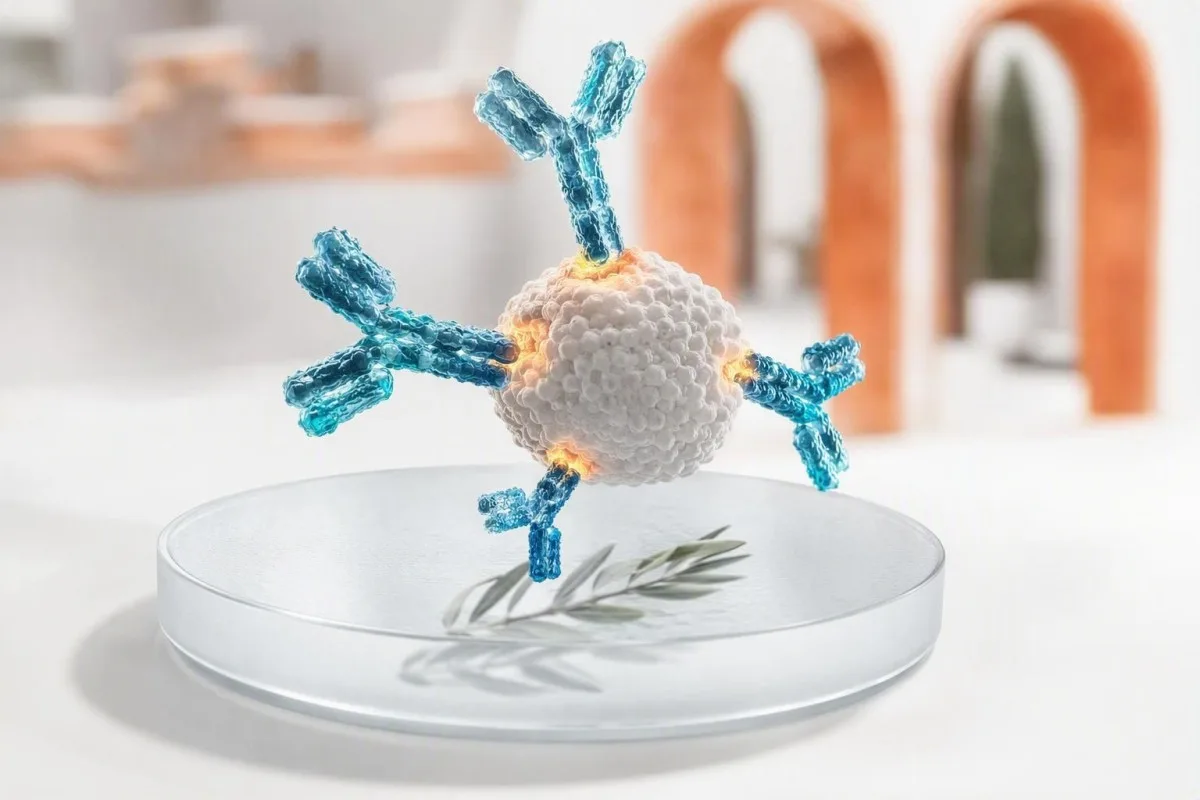
Pozitif bir antikor sonucu, bağışıklık sisteminizin belirli bir hedefi tanıdığı anlamına gelir; bu tek başına aktif bir enfeksiyonu veya hastalığı kanıtlamaz. Antikor sınıfı, test yöntemi, zamanlama, semptomlar ve eşlik eden testler, güvenceye, tekrarlanan teste, doğrulamaya veya acil klinik bakıma ihtiyacınız olup olmadığını belirler.


- Pozitif antikor sonucu genellikle bağışıklık tanınmasını, mutlaka mevcut hastalığı veya bulaşıcılığı göstermez.
- IgM'ye karşı IgG bir zamanlama ipucudur, saat değildir: IgM aylarca sürebilir ve IgG erken ortaya çıkabilir.
- Aşı antikorları doğal enfeksiyonu belirtmeden bağışıklık testlerini pozitif yapabilir.
- Alerjene özgü IgE 0.35 kUA/L üzerindeki değer duyarlılığı gösterir, ancak maruziyet sonrası belirtiler klinik alerjiyi belirler.
- ANA pozitifliği özellikle yaşla birlikte sağlıklı yetişkinlerin 'üne kadarında düşük titrelerde görülür; belirtiler ve spesifik antikorlar daha önemlidir.
- HIV tarama reaktivitesi herhangi bir teşhis konulmadan önce daima laboratuvar onay algoritmasını gerektirir.
- Anti-tTG IgA yalnızca kişi glüten yiyorsa ve yeterli toplam IgA'ya sahipse çölyak değerlendirmesi için güvenilirdir.
- Acil belirtiler nefes darlığı, kafa karışıklığı, sarılık, göğüs ağrısı veya yaygın kabarcıklı döküntü gibi durumlar rutin antikor sonucundan daha önemlidir.
Pozitif bir antikor sonucunun size aslında ne söylediği
A pozitif antikor testi testin belirli bir hedefi bağlayan bağışıklık proteinleri tespit ettiği anlamına gelir; Olumsuz otomatik olarak tedavi gerektiren aktif bir enfeksiyon, otoimmün bir hastalık veya alerjiniz olduğu anlamına gelmez. Sonraki adım antikor türüne, sonuç gücüne, belirtilere, maruz kalma zamanlamasına ve eşlik eden herhangi bir antijen, PCR veya organ fonksiyon testlerine bağlıdır.
Antikorlar, aşılamadan, enfeksiyondan, alerji maruziyetinden, otoimmüniteden veya bazen klinik olarak zararlı olmayan bir nedenden dolayı üretilen B hücresi proteinleridir. Pozitif bir sonuç, vücudunuzda bugün neler olup bittiği sorusuna değil, yalnızca dar bir analitik soruyu yanıtlar - bu laboratuvar kesme değerinin üzerinde bir bağlama tespit edildi mi?.
15 yıllık klinik pratiğimde en sık yapılan hata “pozitif”i tanı olarak okumak olmuştur. Dr Thomas Klein'ın pratik kuralı önce hedefi—bir virüs, aşı antijeni, gıda proteini, tiroid enzimi, nükleer antijen veya ilaç— belirlemek ve ardından testin geçmiş maruziyeti, mevcut organizmayı, duyarlılığı veya bağışıklık yanlış yönlendirmesini tespit edip etmediğini sormaktır.
Kantesti AI, AI kan testi analizörü tek bir pozitif çizgiyi bir hüküm olarak ele almak yerine, tarihlerin, immünoglobulin sınıfının ve ilgili sonuçların yanındaki antikor bayraklarını okur. Hastalar farklı laboratuvarlardan raporları karşılaştırdığında bu bağlam özellikle kullanışlıdır; nitel ve nicel sonuçlar her ikisi de pozitif dese bile birbirinin yerine geçmez.
IgG'ye karşı IgM pozitifliği: zamanlama göründüğünden neden daha karmaşık
IgM pozitifliği yakın zamanda bir bağışıklık tepkisini düşündürebilirken, IgG pozitif sıklıkla geçmiş maruziyeti veya aşı yanıtını düşündürür; hiçbir örüntü tek başına bir hastalığın tarihini güvenilir bir şekilde belirleyemez. Bazı enfeksiyonlar 7-14 gün içinde IgG üretir ve IgM 3-12 ay veya daha uzun süre tespit edilebilir kalabilir.
IgM, erken tespit edilebilen büyük bir beşli antikor olup, boyutu ve geniş bağlanması nedeniyle çapraz reaksiyonlara daha yatkındır. Epstein-Barr virüsü, parvovirüs B19, romatoid faktör ve bazı otoimmün antikorlar yanıltıcı IgM reaksiyonlarına neden olabilir; izole edilmiş düşük seviyeli bir IgM sonucu paniğe kapılmaktan çok şüphe uyandırmalıdır.
IgG genellikle bağışıklık hafızası geliştikçe, bazen on yıllarca kalır. Pozitif bir IgG sonucu çocukluk enfeksiyonunu, yakın zamanda aşılanmayı, intravenöz immünoglobulinden pasif antikorları veya bir bebeğe anneden transferi yansıtabilir; bu antikorun doğrulanmış bir koruyucu eşiği olmadıkça korumayı kanıtlayamaz.
Eşleştirilmiş örnekler tek bir çekimden daha faydalı olabilir: kabaca 2-4 hafta arayla alınan numuneler arasındaki antikor titrelerinde dört kat artış, seçilmiş hastalıklarda yakın enfeksiyonu destekler. Rapor toplam IgG, IgA ve IgM listeliyorsa, tek bir sayıyı bizimle incelemek yerine örüntüyü gözden geçirin. İmmünoglobulin yorumlama rehberi.
Enfeksiyon antikorları ne zaman aktif hastalığı ifade eder ve ne zaman etmez
Enfeksiyon antikorları genellikle maruziyeti gösterir, oysa PCR, antijen testi, kültür veya artan bir titre birçok aktif enfeksiyonu tespit etmek için daha iyi araçlardır. Belirtiler olmadan pozitif bir antikor sonucu genellikle geçmişe dönüktür, ancak istisnası organizmaya ve bağışıklık durumunuza bağlıdır.
Hepatit C için, reaktif bir antikor, herhangi bir zamanda maruz kalındığı anlamına gelir, ancak yalnızca saptanabilir HCV RNA mevcut viremiyi oluşturur. Hepatit B için, kombinasyon önemlidir: yüzey antijeni, yüzey antikoru ve çekirdek antikor, tek bir pozitif belirteçten çok daha iyi bir şekilde aktif enfeksiyon, iyileşmiş enfeksiyon ve aşı bağışıklığını ayırır.
HIV, kelimelerin büyük önem taşıdığı başka bir durumdur. Reaktif dördüncü nesil tarama bir tanı değildir; laboratuvar, bir HIV-1/HIV-2 ayrım immünoassay'i ve gerektiğinde nükleik asit testi ile devam eder. Post-pozlama profilaksisi alan bir kişiye, bizim rehberimizde açıklandığı gibi zamana özgü testler gerekir. PEP sonrası HIV testi rehberi.
18 yıl önce tedavi sonrası pozitif bir treponemal sifiliz antikorundan korkmuş iyi bir hastayı gördüm. Treponemal testler yaygın olarak ömür boyu pozitif kalırken, bir RPR veya VDRL titre mevcut aktiviteyi ve yanıtı değerlendirmeye yardımcı olur; sifiliz testi desenleri bu ayrımı daha net hale getirir.
Aşı antikorları enfeksiyon sonrası antikorlardan nasıl farklıdır
Aşı ile ilgili antikorlar, bağışıklık sisteminin bir aşı antijenine yanıt verdiğini gösterir; aşının aktif bir enfeksiyona neden olduğu anlamına gelmez. Bağlanma antikorları ve fonksiyonel nötralize edici antikorlar özdeş olmadığından, pozitif bir sonuç hala bilinen koruyucu bir korelatın altında kalabilir.
Hepatit B yüzey antikor konsantrasyonları 10 mIU/mL veya daha yüksek belgelenmiş bir aşı serisinden 1-2 ay sonra ölçüldüğünde, immünkompetan kişilerde genellikle koruyucu kabul edilir. Hepatit B çekirdek antikoru olan Anti-HBc, standart hepatit B aşısı ile üretilmez; varlığı doğal maruziyete işaret eder ve tam panelli yorumlama yapılmasını gerektirir.
Kızamıkçık IgG, hamilelikten önce yaygın olarak kontrol edilir çünkü aktif bir kızamıkçık hastalığını değil, önceki bağışıklığı gösterir. Laboratuvarlar teste özgü eşikleri belirler ve sınırda sonuçlar genellikle yakın enfeksiyon olarak yorumlanmak yerine gebe kalma planlaması için bağışıklık dışı olarak ele alınır; zamanlama bizim rehberimizde ayrıntılı olarak belirtilmiştir. kızamıkçık testi rehberi.
Kantesti AI, AI kan tahlili yorumlama platformu rapor ilgili eşlik eden belirteçleri içerdiğinde aşı deseni antikorlarını enfeksiyon deseni antikorlarından ayırır. Pratik soru genellikle “pozitif miyim?” değil, “hangi antijen ölçüldü, ne zaman aşılandım ve bu sonuç bugünün koruma planını değiştiriyor mu?” şeklindedir.”
Pozitif bir alerji antikor testinin neden alerji anlamına gelmeyebileceği
Pozitif bir alerjen spesifik IgE test duyarlılık anlamına gelir, IgE bir alerjeni tanır; uyumlu bir reaksiyon öyküsü olmadan klinik alerjiyi teşhis etmez. Değerin üzerinde 0.35 kUA/L yaygın bir analitik pozitiflik eşiğidir, gıdadan veya ilaçtan kaçınma için evrensel bir eşik değildir.
Test öncesi hikaye, birçok insanın fark ettiğinden daha önemlidir. Bir kişi kurdeşen, hırıltı, kusma veya çökme olmadan haftalık fıstık yerse, tek başına düşük pozitif fıstık IgE'si kaçınmaya yol açmamalıdır; gereksiz gıda kısıtlaması beslenme ve sosyal zarara neden olabilir.
NIAID destekli gıda alerjisi kılavuzu, cilt delme ve spesifik IgE testlerinin olası tetikleyici gıdaları belirlediğini, ancak bağımsız olarak gıda alerjisini teşhis edemediğini belirtmektedir (Sampson ve ark., 2010). Seçilmiş vakalarda, bir alerji uzmanı, belirsizliği gidermede referans standardı olmaya devam eden bileşenle çözümlenmiş test veya tıbbi gözetimli oral gıda provokasyonu kullanır.
Toplam IgE IU/mL olarak ölçülür ve egzama, paraziter maruziyet, sigara içme ve çeşitli bağışıklık durumlarında yüksek olabilir; tetikleyici bir alerjeni tanımlayamaz. Bileşen testi, kararlı bir depolama proteinini, çapraz reaktif bir polenle ilgili proteinden ayırt edebilir, bu fark rehberimizde incelenmiştir. moleküler alerji testi makalesi.
Otoimmün antikorların neden belirtiler ve organ ipuçları gerektirdiği
Otoimmün antikorlar hastalığı önceden gösterebilir, hastalığa eşlik edebilir veya sağlıklı kişilerde bulunabilir; tek başına pozitif bir sonuç nadiren otoimmün bir teşhis koyar. Klinisyenler, antikor paterni semptomlar, fizik muayene bulguları, inflamasyon belirteçleri veya objektif organ değişiklikleriyle eşleştiğinde harekete geçer.
Antinükleer antikor veya ANA, popülasyon çalışmalarında 1:80'de yaklaşık 13% ve 1:40'da yüzde 20% oranında düşük titrelarda pozitiftir, kadınlarda ve yaşlılarda daha yüksek oranlar görülür. Homojen veya benekli bir patern lupus teşhisi koymaz; ANA, klinik tablo bağ dokusu hastalığını makul kıldığında bir geçiş testi olarak en iyi şekilde kullanılır.
2019 EULAR/ACR lupus sınıflandırma çerçevesi, giriş kriteri olarak en az 1:80 titrede ANA kullanır, ardından ek ağırlıklı klinik ve immünolojik özellikler gerektirir (Aringer ve ark., 2019). İdrarda yeni protein, düşük C3/C4, sitopeniler, inflamatuar eklem şişliği veya ikna edici fotosensitif döküntü, zayıf bir ANA'dan çok daha fazla aciliyeti değiştirir.
Anti-dsDNA, test yöntemleri önemli ölçüde farklılık gösterse de, düşük kompleman ve böbrek bulgularıyla eşleştirildiğinde daha anlamlı hale gelir. Bizim anti-dsDNA takip rehberi Ve kompleman testi genel bakışı bir uzmanın farklı bir platformda testleri neden tekrarlayabileceğini açıklayın.
Organa özgü antikorlar: tiroid, çölyak ve mide örnekleri
Organa özgü antikorlar, bir dokunun immün hedefini belirler, ancak her zaman organın şu anda hasarlı olup olmadığını veya tedavi gerektirip gerektirmediğini göstermez. Tiroid peroksidaz antikorları, doku transglutaminaz antikorları ve intrinsik faktör antikorları, her biri farklı tamamlayıcı testler gerektirir.
TPO antikorları Hashimoto tiroiditinde yaygındır ve TSH ve serbest T4 normal kalırken yıllarca mevcut olabilir. Normal tiroid fonksiyonuna sahip gebe olmayan bir yetişkinde, sonuç genellikle tiroid hormonu tedavisinden ziyade periyodik TSH izlemesini destekler; gebelik, doğurganlık planları ve semptomlar bu yaklaşımı değiştirebilir.
Pozitif tTG-IgA yalnızca kişi hala gluten tüketiyorsa ve toplam IgA yeterliyse çölyak hastalığını düşündürür. Seçici IgA eksikliği, tTG-IgA'yı yanlışlıkla negatif yapabilir, bu nedenle klinisyenler toplam IgA düşük olduğunda IgG bazlı deamide gliadin peptidi veya tTG testlerini kullanır; açıklamamıza bakın düşük IgA tuzakları.
İntrinsik faktör antikoru, pernisiyöz anemi için nispeten spesifik ancak yüksek duyarlı değildir. Düşük B12, yüksek metilmalonik asit ve makrositoz ile birlikte pozitif olduğunda, patern ikna edicidir; bu patern olmadan, hastadan ziyade bir laboratuvar etiketini tedavi etmekten kaçınırım. Pernisiyöz anemi testi normal onay dizisini gösterir.
Yalancı pozitif antikor sonucuna ne sebep olur
Yanlış pozitif antikor sonuçları, laboratuvarın basitçe “yanlış” yapmasıyla değil, testin istenmeyen bağlanmayı tespit etmesiyle ortaya çıkar. Çapraz reaktif antikorlar, romatoid faktör, yakın zamanda immün stimülasyon, pasif immünoglobulin ve düşük test öncesi olasılık yaygın nedenlerdir.
Özgüllük mükemmel değildir. % özgüllüğe sahip bir test, test edilen her 1.000 gerçekten negatif kişi için yaklaşık 10 yanlış pozitif sonuç üretir; durum nadir olduğunda, bu sonuçlar gerçek pozitiflerden daha fazla olabilir. Bu nedenle, hiç semptomu olmayan birinde geniş tarama, güvence sağlamaktan çok belirsizlik yaratır.
Biyotin, bazı hormon ve kardiyak testlerle etkileşime girmesiyle ünlüdür, heterofil antikorlar ve romatoid faktör ise belirli immün testlerle etkileşime girebilir. Laboratuvar bazen örneği seyreltebilir, bloke edici reaktifler kullanabilir, başka bir test mimarisinde sonucu tekrarlayabilir veya daha spesifik bir doğrulama yöntemi gerçekleştirebilir.
Tamamen dikkat çekici olmayan bir klinik tabloyla çelişen pozitif bir sonuç göz ardı edilmemelidir; bu, doğrulamak için bir nedendir. Kantesti AI, uyumsuz belirteçleri ve test tarihlerini karşılaştırır ve bizim laboratuvar sonucu doğruluk kontrol listesi takviyeleri, son infüzyonları ve hastalıkları sipariş veren klinisyenle konuşmadan önce kaydetmenize yardımcı olabilir.
Antikor testi pozitif ama belirti yok: pratik bir triyaj planı
Antikor testi pozitif çıktığında ancak iyi hissettiğinizde, çoğu insan acil bakımdan çok açıklama gerektirir. En güvenli ilk adımlar, kesin testi doğrulamak, maruz kalma ve aşılama tarihlerini kontrol etmek ve mevcut hastalığı veya organ tutulumunu doğrulayan eşleştirilmiş testi aramaktır.
Raporun kendisiyle başlayın: analit adı, antikor sınıfı, sayısal indeks veya titre, referans aralığı, laboratuvar yöntemi ve toplama tarihini kaydedin. “Reaktif” terimi, 1.0'ın biraz üzerindeki bir sinyal-kesme oranı veya çok daha güçlü bir sonucu ifade edebilir; laboratuvarlar aynı eşikleri kullanmaz ve büyüklük yalnızca bazen klinik olasılığı takip eder.
Ardından, aktif hastalık testi olup olmadığını sorun. Örnekler arasında hepatit C için PCR, sifiliz için seri RPR, aktif Helicobacter pylori için dışkı veya nefes testi, tiroid antikorları için TSH/serbest T4 ve lupusla ilişkili böbrek endişesi için idrar tahlili artı kreatinin yer alır.
8 Eylül 2026 itibarıyla, yalnızca izole bir antikor sonucundan antibiyotik, antiviral, glutensiz diyet, tiroid ilacı veya gıda kaçınma tedavisine kendi başınıza başlamanızı önermezdim. Orijinal PDF'yi kaydedin, temel durumunuzu not alın boylamsal laboratuvar takibinde de faydalıdır, ve kırmızı bayrak belirtileri yoksa rutin kontrol ayarlayın.
Bir sonraki adımı değiştiren doğrulama testleri
En iyi doğrulama testi, antikorun neyi hedeflediğine bağlıdır: moleküler saptama birçok enfeksiyonu doğrular, fonksiyonel testler alerjiyi netleştirir ve organ fonksiyon testi otoimmün etkiyi değerlendirir. Aynı antikor testini tekrarlamak yalnızca beklenen zaman içindeki değişiklik klinik anlam taşıyorsa yararlıdır.
Reaktif bir HIV taraması için, refleks doğrulama yolu bir ayrım testidir ve sonuçlar belirsizse HIV nükleik asit testi ile devam eder. Hepatit C antikorunda, HCV RNA belirleyici takiptir; pozitif hepatit B çekirdek antikorunda, yüzey antijeni, yüzey antikorları ve bazen HBV DNA deseni netleştirir.
Şüpheli çölyak hastalığı için, test için yeterli gluten maruziyeti varken biyopsi kararları verilmelidir. Olası gıda alerjisi için bir alerji uzmanı, maruz kalma öyküsünü, spesifik IgE seviyesini, bileşen profilini ve tetkik riskini dikkate alır - klinik bir soru sorulmadan rastgele düşük pozitif sonuçlar içeren bir panel değil.
Kantesti AI, Yapay zekâ destekli kan testi analiz aracı bu bağlantılı belirteçleri hekime hazır bir soru listesine organize edebilir, ancak doğrulama testinin veya teşhisin yerini almaz. Uzak bir sonucun ne kadar güvenilir olduğu konusunda emin değilseniz, bizim tıbbi doğrulama standartlarımıza doğrulama ve klinik gözetimin neden önemli olduğunu açıklar.
Pozitif antikor sonucunu daha acil hale getiren belirtiler
Nefes darlığı, yüz veya boğaz şişmesi, bayılma, kafa karışıklığı, göğüs ağrısı, sarılık, hızla yayılan döküntü, şiddetli dehidrasyon veya yeni nörolojik zayıflık eşlik ettiğinde pozitif bir antikor sonucu acil değerlendirme gerektirir. Aciliyeti belirleyen antikor sayısı değil, belirtilerdir.
Olası anafilaksi bir acil durumdur: maruziyet sonrası ani yaygın kurdeşen, hırıltı, boğazda sıkışma hissi, sürekli kusma, baygınlık veya düşük tansiyon acil servis gerektirir ve mevcutsa reçeteli adrenalin verilmelidir. Aylar öncesine ait pozitif bir gıda veya zehir IgE, bu ani riski ne tahmin eder ne de dışlar.
Koyu idrarla birlikte yeni sarılık, belirgin karın ağrısı, ateş veya kafa karışıklığı, viral hepatit antikorlarının pozitif olup olmadığına bakılmaksızın aynı gün içinde değerlendirmeyi gerektirmelidir. Karaciğer enzimleri, bilirubin, INR ve doğrudan patojen testi, bağışıklık geçmişi ile aktif hepatobiliyer hastalığı ayırt etmeye yardımcı olur; karaciğer-panel bileşenleri faydalı bir bağlam oluşturur.
Kan öksürme, nefes darlığı, hızla yükselen kreatinin, kanlı ishal, görme değişikliği, nöbet veya yeni tek taraflı zayıflık ile otoimmün endişe zaman duyarlı hale gelir. Belirti gidişatı açıkça kötüleşirken, sınırdaki bir antikor titresi temelinde birini rahatlatmamayı öğrendim.
Daha yüksek antikor sayısı daha şiddetli hastalığı mı gösterir?
Daha yüksek bir antikor indeksi veya titresi bazen sonucun gerçek olma olasılığını artırır, ancak genellikle hastalık şiddetini ölçmez. Analiz değerleri yönteme özgüdür ve 80 AU/mL'lik bir sonuç, başka bir laboratuvardan 80 U/mL ile doğrudan karşılaştırılamaz.
Otoimmün hastalıkta, özellikle aynı yöntemle tutarlı bir şekilde ölçüldüğünde ve kompleman ve idrar proteini ile yorumlandığında, anti-dsDNA eğilimleri bazen lupus aktivitesini takip edebilir. Ancak ANA titresi, lupus şiddetinin yetersiz bir ölçüsüdür ve stabil bir kişide tekrar tekrar takip edilmemelidir.
Enfeksiyonlarda, güçlü bir antikor sinyali önceki maruziyeti destekleyebilir ancak nadiren bulaşıcılığı gösterir. Nötralizan antikor testleri özeldir ve koruyucu kesme değerleri patojen, yaş, aşı ürünü ve bağışıklık baskılanmasına göre değişebilir; basit bir ticari IgG testi kişisel bir bağışıklık pasaportu değildir.
Raporları karşılaştırırken, laboratuvarı, analizi ve birimleri görünür tutun. Gerçek bir biyolojik değişiklik, sıradan analitik ve günlük değişkenliği aşmalıdır, bu yüzden bizim kan testi karşılaştırma rehberimiz yalnızca renkle kodlanmış bayraklardan ziyade tarihlere ve yöntemlere odaklanır.
Gebelik, çocuklar ve immün süpresyon yorumlamayı değiştirir
Gebelik, bebeklik ve bağışıklık baskılayıcı tedavi, hem antikor üretimini hem de onay için beklemenin güvenliğini değiştirebilir. Bu gruplarda pozitif bir sonuç, maternal antikorları, azalmış aşı yanıtını, reaktivasyon riskini veya erken uzman tavsiyesi ihtiyacını yansıtabilir.
Maternal IgG plasentayı geçer ve enfeksiyonun türüne ve yaşa bağlı olarak birkaç ay boyunca bebekte tespit edilebilirken, maternal IgM genellikle geçmez. Bu nedenle, bir bebeğin izole IgG pozitifliği genellikle maternal bağışıklığı yansıtırken, organizmaya özgü IgM veya doğrudan saptama, enfeksiyona ve yaşa bağlı olarak daha odaklanmış bir değerlendirmeyi hak edebilir.
Gebelik sırasında, kızamıkçık veya parvovirüs antikor sonuçları, tek bir IgM yerine maruz kalma tarihleri, avidity testi ve tekrarlanan örneklerle yorumlanır. Yalancı pozitif IgM bilinen bir sorundur ve kaçınılabilir alarm, gereksiz invaziv araştırmalara yol açabilir; maruz kalma makul olduğunda obstetrik veya enfeksiyon hastalıkları uzmanlığı mantıklıdır.
Rituximab, yüksek doz kortikosteroidler, kemoterapi veya transplant ilacı alan kişiler, enfeksiyona veya aşılamaya rağmen zayıf veya hiç antikor yanıtı göstermeyebilirler. Aile kararları için, çocukların YZ yorumlama sınırları ve Kantesti Tıbbi Danışma Kurulu ile tanışın klinisyen liderliğindeki gözden geçirme ihtiyacını güçlendirir.
Pozitif bir sonucun yararlı bir klinisyen tarafından değerlendirilmesi için nasıl hazırlanılır
Tam laboratuvar raporunu, testin neden istendiğini, belirti veya maruz kalma tarihlerini, aşı geçmişini, ilaçları ve önceki sonuçları getirin. Bu bilgi, görünüşte belirsiz pozitif bir antikor sonucunu tek bir randevuda net bir sonraki adıma dönüştürebilir.
Ziyaretten önce beş gerçeği not edin: belirtilerin başlangıç tarihi, en son makul maruz kalma, aşı tarihleri, immünosupresif ilaçlar veya immünoglobulin infüzyonları ve belirtilerin iyileşip iyileşmediği. Numune almadan 3 gün önce başlayan ateş, 6 ay önce başlayan yorgunluktan çok farklı yorumlanır.
Üç odaklanmış soru sorun: “Bu test neyi tespit ediyor?”, “Hangi test aktif hastalığı veya organ etkisini belirler?” ve “Hangi sonuç tedaviyi değiştirir?” Dr. Thomas Klein, bu soruların gereksiz tekrarlanan panelleri azalttığını ve hastaların belirli bir zaman çerçevesiyle ayrılmalarına yardımcı olduğunu buluyor - bugün, 1-2 hafta veya rutin izleme.
Kantesti YZ, 75'ten fazla dilde güvenli rapor incelemesini destekler ve yaklaşık 60 saniyede fotoğraflanmış veya yüklenmiş bir PDF'den eksik tamamlayıcı testleri yüzeye çıkarabilir. Bizim Yapay zeka teknolojisi rehberi bağlam eşleştirme yaklaşımını açıklarken, ekibimizdeki klinik kadro hasta odaklı yorumlamanın arkasındaki tıbbi gözetimi sağlar.
Sıkça Sorulan Sorular
Belirtim yoksa pozitif bir antikor testi sonucu ne anlama gelir?
Belirtiler olmaksızın pozitif bir antikor sonucu, aktif bir hastalıktan ziyade çoğu zaman önceki maruziyeti, aşılanmayı, duyarlılığı veya doğrulanması gereken bir sonucu gösterir. Bir sonraki adım hedefe bağlıdır: hepatit C antikorunun HCV RNA'ya ihtiyacı vardır, reaktif bir HIV taraması laboratuvar onay algoritmasına ihtiyaç duyar ve tiroid antikorlarının TSH ve serbest T4'e ihtiyacı vardır. Uygun bir maruziyet veya belirti öyküsü olmadığında izole bir düşük pozitif sonuç daha az ikna edicidir. Yeni sarılık, nefes darlığı, kafa karışıklığı, göğüs ağrısı veya hızla kötüleşen bir döküntü gelişirse derhal tıbbi yardım alın.
IgM pozitif ve IgG negatif her zaman yeni bir enfeksiyon anlamına mı gelir?
Enfeksiyonun erken evrelerinde IgM pozitif ve IgG negatif görülebilir, ancak bu her zaman yeni bir enfeksiyonu kanıtlamaz. IgM, ilgisiz immün proteinlerle çapraz reaksiyon gösterebilir ve bazı testler, IgG sonuçlarından daha sık yanlış pozitif IgM sonuçları üretebilir. Klinisyenler 1-2 hafta sonra serolojiyi tekrarlayabilir, PCR veya antijen testi isteyebilir veya daha spesifik bir doğrulayıcı test kullanabilir. Doğru yorum, aynı zamanda hastalık zaman çizelgesine ve test edilen spesifik organizmaya da bağlıdır.
Bir aşı antikor testini pozitif yapabilir mi?
Evet, aşılar yaygın olarak, aşıda bulunan antijene yönelik antikor testlerini pozitif hale getirir. Hepatit B için, tamamlanmış bir serinin 1–2 ay sonrasında ölçülen en az 10 mIU/mL'lik bir anti-HBs konsantrasyonu, immünokompetan kişilerde genellikle koruyucu aşı yanıtını gösterir. Standart hepatit B aşısı anti-HBc üretmez, bu nedenle çekirdek antikor pozitifliği yalnızca aşılama yerine doğal maruziyeti düşündürür. Aşıyla ilişkili pozitiflik, aktif bir enfeksiyonunuz olduğu anlamına gelmez.
Otoimmün antikor testi pozitif çıkıp sağlıklı olabilir misiniz?
Evet, sağlıklı kişilerde, özellikle düşük titreli ANA sonuçlarında pozitif otoimmün antikorlar olabilir. ANA, 1:80 titrede kişilerin yaklaşık 'ünde ve 1:40'ta %1'inde tespit edilebilir, bu nedenle tek başına bir lupus testi değildir. İnflamatuar eklem şişliği, ağız ülserleri, fotosensitif döküntü, düşük kompleman, idrarda protein veya anormal kan sayımları gibi belirtiler, uzman değerlendirmesi gerekip gerekmediğini belirler. Pozitif bir sonuç, testin istenme nedeni bağlamında yorumlanmalıdır.
Pozitif bir IgE kan testi, o yiyecekten kaçınmam gerektiği anlamına mı geliyor?
Hayır, gıdaya özgü pozitif bir IgE sonucu duyarlılık anlamına gelir ve yiyeceği yemenin alerjik bir reaksiyona neden olduğunu kanıtlamaz. Birçok laboratuvar 0.35 kUA/L üzerindeki sonuçları pozitif olarak adlandırır, ancak bu eşik evrensel bir kaçınma kararından ziyade tespit için tasarlanmıştır. Ürtiker, hırıltı, tekrarlayan kusma veya baygınlık olmadan yiyeceği düzenli olarak yiyen bir kişi, diyette yiyeceği otomatik olarak çıkarmamalıdır. Bir alerji uzmanı, riski netleştirmek için reaksiyon geçmişini, bileşen testlerini ve bazen denetimli bir oral gıda provokasyonunu kullanabilir.
Enfeksiyondan sonra antikorlar ne kadar süre pozitif kalır?
Antikor süresi enfeksiyona ve antikor sınıfına göre büyük ölçüde değişir. IgM haftalar içinde kaybolabilir ancak 3–12 ay veya daha uzun süre kalabilir, oysa IgG yıllarca veya ömür boyu ölçülebilir kalabilir. Freponemal sifiliz antikorları başarılı tedaviden sonra sıklıkla ömür boyu pozitif kalırken, RPR veya VDRL titreleri aktiviteyi takip etmek için kullanılır. Bu nedenle, pozitif bir antikor sonucu, başka klinik ve laboratuvar bilgisi olmadan bir enfeksiyonun ne zaman oluştuğunu güvenilir bir şekilde söyleyemez.
Bugün Yapay Zekâ Destekli Kan Tahlili Analizini Alın
Anlık ve doğru laboratuvar testi analizi için Kantesti’ye güvenen dünya genelindeki 2 milyondan fazla kullanıcıya katılın. Kan testi sonuçlarınızı yükleyin ve saniyeler içinde 15,000+ biyobelirteçlerinin kapsamlı yorumunu alın.
📚 Kaynak Gösterilen Araştırma Yayınları
Klein, T., Mitchell, S., & Weber, H. (2026). Hantavirüs Erken Triyajı için Çok Dilli YZ Destekli Klinik Karar Desteği: 50.000 Yorumlanmış Kan Testi Raporunda Tasarım, Mühendislik Doğrulaması ve Gerçek Dünya Dağıtımı. Figshare. https://www.researchgate.net/. Kantesti Yapay Zeka Tıbbi Araştırma.
Klein, T., Mitchell, S., & Weber, H. (2026). 100.000 Sentetik Test Durumunda Kantesti Kan Testi Yorumlama Motorunun Ön Kayıtlı, Rubrik Tabanlı Otomatik Teknik Kıyaslaması. Figshare. https://www.academia.edu/. Kantesti Yapay Zeka Tıbbi Araştırma.
📖 Harici Tıbbi Kaynaklar
⚕️ Tıbbi Uyarı
Bu makale yalnızca eğitim amaçlıdır ve tıbbi tavsiye niteliği taşımaz. Tanı ve tedavi kararları için her zaman yetkin bir sağlık hizmeti sağlayıcısına danışın.
E-E-A-T Güven Sinyalleri
Deneyim
Hekim liderliğinde laboratuvar yorumlama iş akışlarının klinik incelemesi.
Uzmanlık
Klinik bağlamda biyobelirteçlerin nasıl davrandığına odaklanan laboratuvar tıbbı.
Otorite
Dr. Thomas Klein tarafından yazılmış; Dr. Sarah Mitchell ve Prof. Dr. Hans Weber tarafından gözden geçirilmiştir.
Güvenilirlik
Alarmı azaltmaya yönelik net takip yollarıyla kanıta dayalı yorumlama.