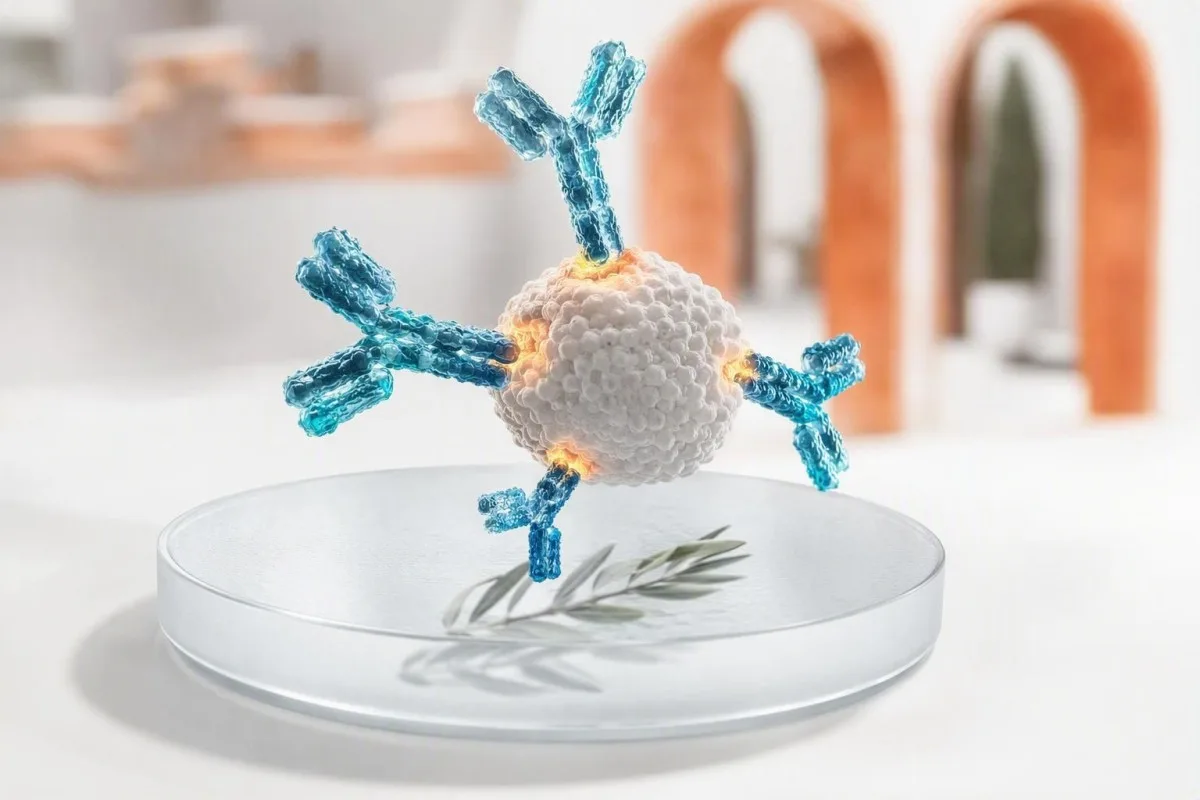
Antibody Testing.


- Positive antibody result normalean ezagutza immunologikoa erakusten du, ez nahitaez egungo gaixotasuna edo kutsakortasuna.
- IgM versus IgG denboraren pistila da, ez erlojua: IgM hilabetez iraun dezake eta IgG goiz ager daiteke.
- Vaccine antibodies infekzio naturala adierazi gabe immunitate probak positibo bihur ditzake.
- Allergen-specific IgE 0,35 kUA/L baino gehiago sentsibilizazioa adierazten du, baina esposizioaren ondorengo sintomek alergia klinikoa ezartzen dute.
- ANA positibotasuna heldu diren heldu osasuntsuen %-an agertzen da titulu baxuetan, batez ere adinarekin; sintomek eta antigorputz espezifikoek axola gehiago dute.
- GIB probaren erreaktibotasuna beti behar du laborategiko baieztapen algoritmoa edozein diagnostiko egin aurretik.
- Anti-tTG IgA coeliac-en ebaluazioan fidagarria da pertsona batek glutenik jaten ez badu eta IgA total nahikoa ez badu.
- Sintoma larrigarriak hala nola arnasteko zailtasuna, nahasmena, icterizia, bularreko mina edo larruazaleko babak zabaltzea, ohiko antigorputz baten emaitzari baino gehiago axola zaio.
What a positive antibody result actually tells you
A antigorputz proba positiboa esan nahi du saiakuntzakimmuno-proteina batzuk detektatu dituela, helburu jakin bati lotzen zaiona; horrek ez du ez automatikoki esan nahi infekzio aktibo bat, gaixotasun autoimmune bat edo tratamendua behar duen alergia bat duzunik. Hurrengo urratsa antigorputz motaren, emaitzaren indarraren, sintomen, esposizioaren denboraren eta edozein antigeno, PCR edo organo-funtzio proba parekaturen araberakoa da.
Antigorputzak B-zelulen proteinak dira, txertaketa, infekzioa, alergi-esposizioa, autoimmunitatea edo, batzuetan, arrazoi kliniko kaltegarririk gabe sortzen direnak. Emaitza positibo batek galdera analitiko estu bati erantzuten dio—detektatu al da loturarik laborategiko ebaki-puntu horretatik gora?—zure gorputzean gaur zer gertatzen ari den galdera kliniko zabalagoari baino.
Nire 15 urteko praktika klinikoan, ohikoena izan da akatsa “positiboa” diagnostiko gisa irakurtzea. Thomas Klein doktorearen arau praktikoa da lehenik eta behin helburua—birus bat, txertoaren antigenoa, elikagaien proteina, tiroidearen entzima, nuklearra edo droga— identifikatu eta gero galdetzea ea probak iraganeko esposizioa, egungo organismoa, sentsibilizazioa edo desbideratze immunologikoa detektatzen dituen.
Kantesti AI giltzurruneko panel bat irakurtzen duen AI odol-analisi analizatzailea data aldameneko antigorputz-banderak irakurtzen dituena, immunoglobulina-klasea eta emaitza erlazionatuak, emaitza positibo bakar bat epai gisa tratatu beharrean. Testuinguru hori bereziki erabilgarria da pazienteek laborategi desberdinetako txostenak alderatzen dituztenean; emaitza kualitatiboak eta kuantitatiboak ez dira trukagarriak, biek positibo esaten dutenean ere.
IgG versus IgM positive: why timing is less simple than it sounds
IgM positiboa azken erantzun immunologiko bat iradoki dezake, berriz IgG positiboa iraganeko esposizioa edo txerto-erantzuna iradoki ohi du; bi eredu horietako batek ere ez du gaixotasun bat modu fidagarrian datatzen bere kabuz. Zenbait infekziok IgG sortzen dute 7–14 eguneko epean, eta IgM hilabetez edo gehiagoz detekta daiteke 3–12 hilabetez.
IgM antigorputz handi bat da, bost unitatekoa, eta sarritan goiz detekta daiteke, baina bere tamainak eta lotura zabalak gurutz-erreaktibitate handiagoa eragiten dute. Epstein-Barr birusak, parvovirus B19-ak, faktore erreumatikoak eta zenbait antigorputz autoimmuneek IgM erreakzio engainagarriak sor ditzakete; IgM-ren emaitza isolatu eta baxu batek izu-izarri baino eszeptizismo handiagoa merezi du.
IgG-k oro har irauten du memoria immunologikoa garatu ondoren, batzuetan hamarkadetan. IgG positibo batek haurtzaroko infekzio bat, txerto berri bat, immunoglobulin intravenosotik datorren antigorputz pasibo bat edo amarengandik haurtxoarengana igarotakoa islatu dezake; ezin du babesik frogatu saiakuntza horrek babes-atal balidatu bat izan ezean.
Ale espeziek balio handiagoa izan dezakete ale bakar batek baino: gutxi gorabehera 2–4 aste geroago hartutako aleen arteko titulu-igoera laukoitzak gaixotasun hautatuetan azken infekzioa onartzen du. Txostenak IgG, IgA eta IgM totalak zerrendatzen baditu, berrikusi eredu hori, zenbaki bakarra baino gurekin immunoglobulinaren interpretazio gida.
When infection antibodies do and do not mean active disease
Infekzio-antigorputzek normalean esposizioa erakusten dute, aldiz PCR, antigenoen probak, kultura edo goranzko titulu bat infekzio aktibo asko detektatzeko tresna hobeak dira. Sintomarik gabeko emaitza serologiko positiboa historikoa izaten da sarri, baina salbuespena organismoaren eta zure egoera immunologikoaren araberakoa da.
Hepatitis C kasuan, antigorputz erreaktibo batek une jakin batean izandako esposizioa esan nahi du, baina detekta daitekeen HCV RNA bakarrak egungo bamia zehazten du. Hepatitis B kasuan, konbinazioak axola du: gainazaleko antigorputzak, gainazaleko antigorputzak eta nukleoko antigorputzak infekzio aktiboa, infekzio sendatua eta txertoaren immunitatea bereizten dituzte, marka positibo bakar bat baino askoz hobeto.
Hiesa beste egoera bat da non hitzordunak izugarrizko garrantzia duen. Laugarren belaunaldiko pantaila erreaktibo bat ez da diagnostiko bat; laborategiak HIV-1/HIV-2 bereizketa immunoassay bat eta, beharrezkoa denean, azido nukleikoen probak egiten ditu. Post-esposizio profilaxia hartzen ari den pertsona batek denborari lotutako probak behar ditu, gure PEP ondoreko Hiesa probak gidan azaltzen den bezala.
Paziente ondo bat ikusi dut, duela 18 urte tratamenduaren ondoren positibo ateratako treponema-sifilisaren antigorputzak izateak beldurtuta. Treponema-probek bizitza osoan positibo iraun dezakete, aldiz RPR edo VDRL titulu batek egungo jarduera eta erantzuna epaitzen laguntzen du; sifilisaren proben ereduak desberdintasun hori argiago uzten dute.
How vaccine antibodies differ from antibodies after infection
Txertoarekin lotutako antigorputzek erakusten dute sistema immunologikoak txertoaren antigeno bati erantzun ziola; ez dute esan nahi txertoak infekzio aktibo bat eragin zuenik. Emaitza positibo bat ezaguna den babes-korrelazio baten azpitik egon daiteke oraindik, lotura-antigorputzak eta funtzionalitate neutralizatzaileak ez baitira berdinak.
Hepatitis B-ren gainazaleko antigorputzen kontzentrazioak 10 mIU/mL edo gehiago gutxienez 1-2 hilabete geroago neurtuta, txerto-serie dokumentatu baten ondoren, oro har, babesgarritzat hartzen dira pertsona immunocompetenteetan. Anti-HBc, hepatitis B-ren nukleoko antigorputza, ez da hepatitis B-ren txerto estandarrak sortzen; bere presentziak eragin natural baterantz seinalatzen du eta panel osoaren interpretazioa sustatu beharko luke.
Rubella IgG maiz egiaztatzen da haurdunaldiaren aurretik, immunitatea adierazten duelako, ez rubella gaixotasun aktiboa. Laborategiek saiakuntza-atalase espezifikoak ezartzen dituzte, eta emaitza marjinalak normalean ez-immune gisa tratatzen dira haurdun aurreko plangintzarako, ez infekzio berri gisa interpretatzen direnak; denbora gure rubella proben gidan zehazten da.
Kantesti AI giltzurruneko panel bat irakurtzen duen AI odol-analisien interpretazio-plataforma txerto-ereduko antigorputzak infekzio-ereduko antigorputzetatik bereizten dituena, txostenak dagokion osagai-markatzaileak barne hartzen dituenean. Galdera praktikoa askotan ez da “positiboa naiz?”, baizik eta “zein antigeno neurtu zen, noiz txertatu nintzen, eta emaitza honek gaurko babes-planari eragiten dio?”
Why a positive allergy antibody test may not mean an allergy
Alegia espezifikoaren IgE proba positiboak sentsibilizazioa adierazten du, hots, IgE-k alergenoa ezagutzen duela; ez du alergia klinikoa diagnostikatzen, bateragarria den erreakzio-historiarik gabe. Balio bat 0.35 kUA/L gainetik dagoen balio bat ohiko atalase analitiko positiboa da, ez janari edo botika bat saihesteko atalase unibertsala.
Prou-testaren istorioak jende askok uste baino garrantzi handiagoa du. Norbait astean behin kakarrak jaten baditu erlauntza, txingoka, oka edo konortea galtzea izan gabe, kakarren aurkako IgE maila baxu positibo batek bakarrik ez luke saihespena ekarri behar; alferrikako elikagaien murrizketak elikadura eta gizarte-kalteak sor ditzake.
NIAID-ek babestutako elikagaien alergiari buruzko jarraibideak dio larruazaleko probek eta IgE espezifikoen probek elikagai-kaltzaileak identifikatzen dituztela, baina ezin dutela elikagaien alergiarik diagnostikatu modu independentean (Sampson et al., 2010). Kasu hautatuetan, allergologoak osagai bidezko probak edo medikuki gainbegiratutako ahozko elikagaien erronka erabiltzen ditu, zalantzak argitzeko erreferentzia-estandarra izaten jarraitzen duena.
IgE totala IU/mL-tan neurtzen da eta handia izan daiteke ekzeman, parasitoen esposizioan, erretzean eta zenbait egoera immuneetan; ezin du alergeno erruduna identifikatu. Osagaien probak polenarekin lotutako proteina gurutzatu erreaktiboa den biltegiratze proteina egonkor bat bereiz ditzake, gure molekular alergi probak egiteko artikuluan aztertzen den aldea.
Why autoimmune antibodies require symptoms and organ clues
Autoimmunearen aurkako antigorputzak gaixotasunaren aurretik ager daitezke, gaixotasunarekin batera egon daitezke, edo pertsona osasuntsuetan ager daitezke; emaitza positibo bakar batek arraro egiten du autoimmunearen diagnostiko bat. Klinikoek antigorputz ereduak sintomekin, azterketa aurkikuntzekin, hantura markatzaileekin edo organo aldaketa objektiboekin bat datozenean jarduten dute.
Antinuklear antigorputz bat, edo ANA, positiboa da 1:80ko titulu baxuetan populazio azterketetan pertsonen % ingurutan eta 1:40ko titulu baxuetan % ingurutan, emakumezkoetan eta helduetan tasa handiagoekin. Eredu homogeneo edo pikart batek ez du lupusa diagnostikatzen; ANA giltzarri proba gisa erabiltzen da onena, ehun konektiboaren gaixotasuna posible egiten duen irudi klinikoa dagoenean.
2019ko EULAR/ACR lupusa sailkatzeko markoak 1:80ko titulu bateko ANA erabiltzen du sarrera irizpide gisa, eta gero ezaugarri kliniko eta immunologiko gehigarri pisatu batzuk eskatzen ditu (Aringer et al., 2019). Giltzurrunetako proteina berria, C3/C4 baxua, zitositopeniak, artikulazioen hantura edo argiarekiko sentsibilitateagatik sortutako erupzio ahule batek lehentasuna askoz gehiago aldatzen du ANA ahul ahul batek baino.
Anti-dsDNA esanguratsuagoa bihurtzen da osagarri baxuarekin eta giltzurrunetako aurkikuntzekin parekatzen denean, nahiz eta saiakera metodoak nabarmen aldatzen diren. Gure anti-dsDNA jarraipen gida eta osagarrien proben ikuspegi orokorra azaldu zergatik espezialista batek probak errepikatu ditzakeen plataforma ezberdin batean.
Organ-specific antibodies: thyroid, coeliac and stomach examples
Organo espezifikoen aurkako antigorputzek ehun baten aurkako erasoimmunoa adierazten dute, baina ez dute beti erakusten organoa oraintxe kaltetuta dagoen ala tratamendua behar duen. Tiroidearen peroxidasa antigorputzek, transglutaminasa ehunaren aurkako antigorputzek eta faktore intrintsekoaren aurkako antigorputzek lagun-proba desberdinak behar dituzte bakoitzak.
TPO antigorputzak ohikoak dira tiroiditis Hashimoton, eta urteak eman ditzakete TSH eta T4 librea normal mantenduz. Tiroideo funtzio normala duen jaio gabeko heldu batean, emaitzak normalean TSHaren jarraipen periodikoa onartzen du tiroideo hormonen tratamendua baino gehiago; haurdunaldia, ugalkortasun planen asmoak eta sintomak ikuspegi hori alda dezakete.
Proba bat positiboa bada tTG-IgA coeliac gaixotasuna iradokitzen du pertsona oraindik glutenik kontsumitzen ari bada eta IgA totala nahikoa bada. IgA defizientzia selektiboak tTG-IgA faltsuki negatiboa izan daiteke, beraz, klinikoek IgG-n oinarritutako deamidatutako gliadin peptidoa edo tTG probak erabiltzen dituzte IgA totala baxua denean; ikusi gure IgA baxuen tranpen azalpena.
Faktore intrintsekoaren aurkako antigorputza nahiko espezifikoa da baina ez da oso sentikorra anemia perniziosorako. B12 baxuarekin, azido metilmaloniko altuarekin eta makrozitosiarekin batera positiboa denean, eredua sinesgarria da; eredu hori gabe, laborategiko etiketa bat tratatzea saihesten dut, pazientea baino gehiago. Anemia perniziosorako probak ohiko berrespen-segida erakusten du.
What causes a false-positive antibody result
Faltsu-positiboen aurkako antigorputz emaitzak agertzen dira saiakerak nahi gabeko lotura hautematen duenean, ez laborategiak “gaizki” lortzen duenean. Gurutzatuta erreaktibo diren antigorputzak, faktore erreumatikoak, azken estimulu immunologikoak, immunoglobulin pasiboak eta proba-aurreko probabilitate baxua dira arrazoi ohikoak.
Espezifitasuna ez da perfekzioa. % espezifitasuna duen proba batek 1.000 pertsona benetan negatiboren artean 10 faltsu-positibo inguru sortzen ditu probatuta; baldintza arraroa denean, emaitza horiek benetako positiboak baino gehiago izan daitezke. Horregatik, sintomarik ez duen norbaiten baheketa zabalak anbiguotasuna sortzen du erreasegurutasuna baino gehiago.
Biotina hormona eta kardiako saiakera batzuetan interferentzia egiteagatik da famatua, bitartean antigorputz heterofiloek eta faktore erreumatikoak immunoassaia jakin batzuetan interferentzia egin dezakete. Laborategiak batzuetan lagina diluitu dezake, blokeatze erreaktiboak erabili, emaitza beste saiakera-arkitektura batean errepikatu, edo berrespen metodo zehatzago bat egin.
Emaitza positibo batek, irudi kliniko guztiz nabarmen batekin talka egitean, ez da alde batera utzi behar; balidazio arrazoi bat da. Kantesti AIk marka eta proben datak desberdinak alderatzen ditu, eta gurea laborategi-emaitzaren zehaztasunaren egiaztapen-zerrenda osagarriak, azken infusioak eta gaixotasunak erregistratzen lagunduko dizu medikuarekin hitz egin aurretik.
Antibody test positive but no symptoms: a practical triage plan
Anti-gorputz proba positiboa denean baina ondo sentitzen zarenean, jende gehienak argipena behar du larrialdiko arreta baino gehiago. Lehen urrats seguruenak proba zehatza balidatzea, esposizioa eta txertaketa datak egiaztatzea eta gaixotasun edo organoen parte-hartze aktuala baieztatzen duen parekako proba bilatzea dira.
Hasi txostenarekin berarekin: erregistratu analitoaren izena, anti-gorputz klasea, indize numerikoa edo titulua, erreferentzia tartea, laborategiko metodoa eta bilketa data. “Erreaktiboa” esan dezake seinale-ebakidura erlazio bat 1,0tik gora edo emaitza askoz ere indartsuagoa dela; laborategiek ez dute atalase berdinak erabiltzen, eta magnitudeak bakarrik jarraitzen du batzuetan probabilitate klinikoa.
Ondoren, galdetu ea gaixotasun aktiborako proba dagoen. Adibideak dira hepatitis C-rako PCR, sifilis-rako RPR sorta, Helicobacter pylori aktiborako aulki edo hats probak, tiroidearen anti-gorputzetarako TSH/doako T4, eta giltzurruneko kezka lupus-ari lotutakoa aztertzeko gernu analisia eta kreatinina.
2026ko irailaren 8tik aurrera, ez nuke gomendatuko antibiotikoak, birusaren aurkakoak, glutenik gabeko dietak, tiroidearen medikazioa edo elikagaiak saihesteko autohoritzea anti-gorputz emaitza isolatu batengatik bakarrik. Gorde jatorrizko PDFa, idatzi zure oinarria laborategiko jarraipen luzetarako, eta antolatu ohiko berrikuspena gorabehera-ikurren sintomak badaude izan ezik.
Confirmatory tests that change the next step
Konfirmazio-proba onena anti-gorputzak zer jomuga duen araberakoa da: detekzio molekularrak infekzio asko baieztatzen ditu, saiakuntza funtzionalek alergia argitzen dute eta organoen funtzioaren probak eragiten duen inpaktu autoimmuneak ebaluatzen ditu. Anti-gorputz proba bera errepikatzea erabilgarria da soilik aldaketa espero den denborak esanahi klinikoa duenean.
GIBaren proba erreaktibo bat egiteko, erreakzio-konfirmazio-bide bat bereizketa-saiakuntza da, eta ondoren GIB azido nukleikoaren proba emaitzak zehaztugabeak badira. Hepatitis C-ren anti-gorputz batentzat, HCV RNA da jarraipen erabakigarria; hepatitis B-ren anti-gorputz positibo batentzat, gainazaleko antigenoak, gainazaleko anti-gorputzak eta batzuetan HBV DNA-k eredua argitzen dute.
Zeliako gaixotasuna susmatzeko, biopsia erabakiak gluten esposizioa probak egiteko nahikoa denean hartu behar dira. Janari-alergi posible batentzat, alergologo batek esposizio-historia, IgE espezifikoaren maila, osagaien profila eta erronka-arriskua aztertzen ditu, ez galdera kliniko gabe eskatutako positibo txiki zeharkako panel bat.
Kantesti AI giltzurruneko panel bat irakurtzen duen AI bidezko odol-analisien analisi-tresna marka lotu hauek medikuarentzat prest dagoen galdera-zerrenda batean antolatu ditzakeena, baina ez du konfirmazio-probatze edo diagnostikoa ordezkatzen. Emaitza desberdin bat zenbat fidatu ez badakizu, gure baliozkotze medikoko estandarrak azaltzen dute zergatik diren garrantzitsuak balidazioa eta gainbegiratze klinikoa.
Symptoms that make a positive antibody result more urgent
Anti-gorputz emaitza positibo batek azterketa azkarra merezi du arnasestua, aurpegi edo eztarriko hantura, zorabioak, nahasmena, bularreko mina, jaundice, azkar hedatzen ari den erupzioa, deshidratazio larria edo ahultasun neurologiko berria laguntzen duenean. Sintomek, ez anti-gorputz kopuruak bakarrik, ezartzen dute premia.
Anafilaxia posible bat larrialdi bat da: bat-bateko erlauntza zabalak txistuz, eztarriko estutasuna, oka iraunkorra, zorabioak edo tentsio baxua esposizioaren ondoren larrialdi zerbitzuak eta eman nahi den adrenalina behar ditu. Duela hilabete batzuk egindako janari edo pozoi IgE positibo batek ez du berehalako arrisku hori aurreikusten ezta baztertzen ere.
Jaundiz berria gernu ilunarekin, sabeleko mina nabarmena, sukarra edo nahasmena egun bereko ebaluazioa sustatu beharko lukete hepatitis birikoaren anti-gorputzak positibo egon ala ez. Gibeleko entzimek, bilirrubinak, INRk eta patogenoen zuzeneko probakimmunitate-historia gaixotasun hepatobiliar aktibotik bereizten laguntzen dute; gibeleko panelaren osagaiak testuinguru erabilgarriak dira.
Kezka autoimmune bat denboraz sentikor bihurtzen da odola eztulitzearekin, arnasestuarekin, kreatinina azkar igotzearekin, beherako odoltsuekin, ikusmen aldaketarekin, krisialdiarekin edo alde bakarreko ahultasun berriarekin. Ez dut jada lasaituko anti-gorputz tituluaren mugan dagoen norbait bere sintomen ibilbidea argi eta garbi okerragotzen ari denean oinarrituta.
Does a higher antibody number mean more severe disease?
Anti-gorputz indize edo titulu altuago batek batzuetan emaitza benetakoa izateko aukera handitzen du, baina normalean ez du gaixotasunaren larritasuna neurtzen. Saiakuntza balioak metodo espezifikoak dira, eta 80 AU/mL-ko emaitza ezin da zuzenean alderatu beste laborategi bateko 80 U/mL-rekin.
Gaixotasun autoimmuneetan, anti-dsDNAren joerek lupusaren jarduera jarrai dezakete batzuetan, batez ere metodo berarekin koherentziaz neurtzen denean eta osagarriarekin eta gernuko proteinarekin interpretatuta. ANA tituluak, ordea, neurtzeko modu eskasa da lupusaren larritasuna neurtzeko eta ez da errepikatu behar pertsona egonkor batean.
Infekzioetarako, anti-gorputzen seinale indartsu batek aurreko esposizioa onar dezake baina nekez adierazten du kutsakortasuna. Neutralizatzaile anti-gorputz probak espezializatuak dira eta haien babes-ebakidurak patogenoaren, adinaren, txerto produktuaren eta immunitate-ezaren arabera alda daitezke; IgG saiakuntza komertzial sinple bat ez da immunitate-pasaporte pertsonal bat.
Txostenak alderatzean, mantendu ikusgai laborategia, azterketa eta unitateak. Benetako aldaketa biologiko batek ohiko aldaketa analitikoak eta egunerokoak gainditu beharko lituzke, horregatik gure odol-proba konparatzeko gida bandera koloreztatuen ordez, datetan eta metodoetan zentratzen da.
Pregnancy, children and immune suppression change interpretation
Haurdunaldia, haurtzaroa eta tratamendu immunojaleak bai antigorputzen ekoizpena bai berrespena itxaroteko segurtasuna alda ditzakete. Talde hauetan, emaitza positibo batek ama-antigorputzak, txertoaren erantzun murriztua, berragertze arriskua edo espezialistaren aholku goiztiarraren beharra islatu dezake.
Ama-IgGak plazenta zeharkatzen du eta hilabete batzuetan hauteman daiteke haurrarengan, amaren IgM orokorrean ez bezala. Hori dela eta, haurraren IgG positibo isolatuek sarritan amaren immunitatea islatzen dute, organismo espezifikoaren IgM edo detekzio zuzenak ebaluazio zehatzagoa merezi izan dezake infekzioaren eta adinaren arabera.
Haurdunaldian, errubeola edo parvobirusaren antigorputzen emaitzak esposizio-datak, avidity probak eta lagin errepikatuak erabiliz interpretatzen dira, IgM bakar bat baino gehiago. IgM faltsu positiboa arazo ezaguna da, eta saihestu daitekeen alarma alferrikako azterketa inbaditzaileak ekar ditzake; obstetrizia edo gaixotasun infekziosoen laguntza sentsiblea da esposizioa sinesgarria denean.
Rituximab, kortikosteroide dosi altuak, kimioterapia edo transplante-medikazioa jasotzen dutenek erantzun ahulak edo gabekoak izan ditzakete infekzioa edo txertoa izan arren. Familia-erabakietarako, haurren AI interpretazioaren mugak eta Kantesti mediese adviesraad berresten dute medikuaren berrikuspenaren beharra.
How to prepare for a useful clinician review of a positive result
Ekarri laborategiko txosten osoa, proba agindu zeneko arrazoia, sintoma edo esposizio-datak, txertoen historia, sendagaiak eta aurreko emaitzak. Informazio honek, dirudien antigorputz-emaitza positibo lauso bat, hitzordu bakarrean ekintza argi batean bihur dezake.
Idatzi bost datu bisita baino lehen: sintomen lehenengo eguna, azken esposizio sinesgarria, txertoen datak, botika immunojaleak edo immunoglobulina infusiak, eta sintomak hobetzen ari diren edo okertzen ari diren. Lagina hartu baino 3 egun lehenago hasitako sukarra duela 6 hilabete hasitako nekea baino modu oso ezberdinean interpretatzen da.
Egin hiru galdera zehatz: “Zer hautematen du proba honek?”, “Zer probak zehazten du gaixotasun aktiboa edo organo-efektua?”, eta “Zein emaitzak aldatuko luke tratamendua?” Thomas Klein doktoreak galdera hauek panel errepikatu beharrik ez izatea eragiten dutela eta pazienteek denbora-tarte zehatz batekin irteten laguntzen dietela aurkitu du—gaur, 1–2 aste, edo ohiko jarraipena.
Kantesti AIk 75 hizkuntza baino gehiagotan txostenen berrikuspen segurua onartzen du eta 60 segundo inguruetan argazki edo PDF igo batetik falta diren osagarri-probak ager ditzake. Gure AI teknologiaren gida testuinguru-batzearen ikuspegia azaltzen du, eta gure talde klinikoa pazienteentzako interpretazioaren atzean dagoen mediku-zaintza ematen du.
Maiz egiten diren galderak
Zer esan nahi du emaitza positibo batek antisorbatuekin, sintomarik ez badut?
Sintomarik gabeko emaitza seropositibo batek, kasu gehienetan, aurreko esposizioa, txertaketa, sentsibilizazioa edo gaixotasun aktiboa baino egiaztatu beharreko emaitza bat adierazten du. Hurrengo urratsa xedearen araberakoa da: hepatitis C antigorputzek HCV RNA behar dute, GIB proba erreaktibo batek laborategiko berrespen algoritmoa behar du, eta tiroidearen aurkako antigorputzek TSH eta T4 librea behar dituzte. Emaitza positibo baxu isolatua ez da hain sinesgarria, ez badago bateragarria den esposizio edo sintoma-anamnesirik. Bilatu berehala arreta, baita horia, arnasestua, nahasmendua, bularreko mina edo larruazaleko erupzio azkar bat garatzen bada.
IgM positiboak eta IgG negatiboak beti esan nahi du infekzio berria?
IgM positiboa IgG negatiboa denean infekzio goiztiar batean gerta daiteke, baina ez du beti frogatzen infekzio berri bat. IgM-ak ez diren beste immunitate-proteinekin erreakzio gurutzatua izan dezake, eta zenbait saiakerek IgG emaitzek baino maizago sortzen dituzte IgM emaitza faltsu positiboak. Klinikoek serologia errepikatu dezakete 1-2 aste igaro ondoren, PCR edo antigenoen testa eskatu, edo berrespen-saiakera espezifikoago bat erabili. Interpretazio zuzenak gaixotasunaren kronologiaren eta aztertzen den organismo espezifikoaren araberakoa ere bada.
Txerto batek positiroa eman al diezaioke antibiotesto bati?
Bai, txertoek ohiko izaeraz, txertoan dagoen antigenoaren aurkako antigorputz-testak positibo bihurtzen dituzte. Hepatitis B-rako, 1–2 hilabete igaro ondoren neurtutako gutxienez 10 mIU/mL-ko anti-HBs kontzentrazioak, normalean, txertoaren erantzun babesgarria adierazten du pertsona immunokonpetenteetan. Hepatitis B-ren txertaketa estandarrak ez du anti-HBc sortzen, beraz, "core"-antigorputzen positibotasunak naturan izandako esposizioa iradokitzen du txertaketa bakarrik baino gehiago. Txertoarekin lotutako positibotasunak ez du esan nahi infekzio aktiboa duzunik.
Autoimmunearen aurkako Antibody testa positiboa izan dezakezu eta osasuntsu egon?
Bai, pertsona osasuntsuek autoantibodien test positiboak izan ditzakete, batez ere ANAren emaitza baxuak. ANA antzeman daiteke pertsonen 1TP54Gutxi gorabehera 1:80ko tituluan eta %1TP44Gutxi gorabehera 1:40an, beraz, ez da lupuserako test independente bat. Sintoma hauek, hala nola, artikulazioen hantura, aho-zizareak, argazkirako erupzio sentikorra, osagarri gutxi, gernuan proteina edo odol-konteinu anormalak, espezialista-ebaluazioa behar den zehazten dute. Emaitza positiboa testaren arrazoiaren testuinguruan interpretatu behar da.
Bai al du esan nahi positibo IgE odol-analisi batek janari hori saihestu behar dudala?
Ez, elikagai espezifikoaren IgE emaitza positibo batek sentsibilizazioa esan nahi du eta ez du frogatzen elikagaia jateak erreakzio alergikoa eragiten duenik. Laborategi askok 0,35 kUA/L-tik gorako emaitzei "positibo" deitzen diete, baina mozketa hori detekziorako diseinatuta dago, ez saihesteko erabaki unibertsalerako. Azkura, txistua, behazun errepikatuak edo zorabioak izan gabe elikagaia aldizka jaten duen pertsona batek ez du automatikoki dietatik kendu behar. Alergologo batek erreakzioaren historia, osagaien probak eta batzuetan gainbegiratutako ahozko elikagaien erronka erabil ditzake arriskua argitzeko.
Zenbat denbora irauten dute antikarmeek positibo infekzio baten ondoren?
Antibideen iraupenak asko aldatzen da infekzioaren eta antigorputz klasearen arabera. IgM aste gutxiren buruan desagertu daiteke, baina 3–12 hilabete edo gehiago iraun dezake, eta IgG urte edo bizitza osorako neurri daiteke. Treponema sifilisaren antigorputzak positibo egoten dira askotan bizitza osoan zehar tratamendu arrakastatsua izan ondoren, RPR edo VDRL tituluak jarduera jarraitzeko erabiltzen diren bitartean. Beraz, antigorputz emaitza positibo batek ezin dizu fidagarritasunez esan noiz gertatu zen infekzio bat, beste informazio kliniko eta laborategiko informaziorik gabe.
Lortu gaur AI bidezko odol-analisien analisia
Batu mundu osoko 2 milioi erabiltzaile baino gehiagok Kantesti-n konfiantza dutenak, laborategiko analisiak berehala eta zehaztasunez aztertzeko. Igo zure odol-analisien emaitzak eta jaso 15,000+ biomarkatzaileen interpretazio integrala segundo gutxitan.
📚 Erreferentziatutako ikerketa-argitalpenak
Klein, T., Mitchell, S., & Weber, H. (2026). AI Eleaniztun Lagundua Giza Laguntzeko euskarria Goiz Hantavirusen Triajean: Diseinua, Balidazio Teknikoa eta Errealitatean Ezartzea 50.000 Odol Azterketa Txosten Interpretatuetan. Figshare. https://www.researchgate.net/. Kantesti AI Medical Research.
Klein, T., Mitchell, S., & Weber, H. (2026). Aldez aurretik Erregistratutako, Errubrika-Oinarritutako Errendimendu Tekniko Automatikoaren Benchmark bat Kantesti Odol-Azterketa Interpretazio Motorean 100.000 Kasu Sintetikoetan. Figshare. https://www.academia.edu/. Kantesti AI Medical Research.
📖 Kanpoko erreferentzia medikoak
⚕️ Ohar medikoa
Artikulu hau hezkuntza-helburuetarako da soilik eta ez du mediku-aholkurik ematen. Diagnostiko- eta tratamendu-erabakietarako, beti kontsultatu osasun-profesional kualifikatu bati.
E-E-A-T Konfiantza-seinaleak
Esperientzia
Medikuek gidatutako berrikuspen klinikoa laborategiko interpretazioaren lan-fluxuei buruz.
Espezializazioa
Laborategiko medikuntzaren ikuspegia biomarkatzaileek testuinguru klinikoan nola jokatzen duten aztertzean.
Autoritatea
Dr. Thomas Klein-ek idatzia, eta Dr. Sarah Mitchell eta Prof. Dr. Hans Weber-ek berrikusia.
Fidagarritasuna
Ebidentzian oinarritutako interpretazioa, alarma murrizteko jarraipen-bide argiekin.