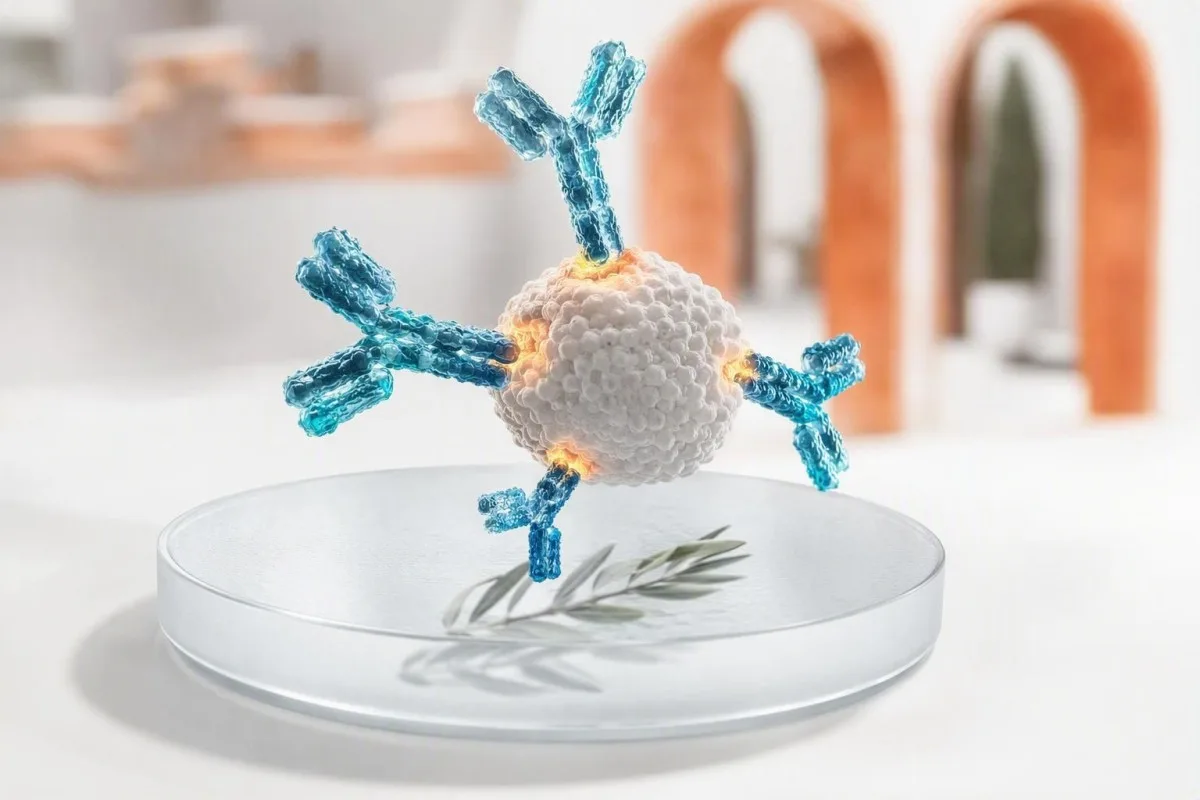
Положителният резултат от тест за антитела означава, че имунната ви система е разпознала конкретна мишена; сам по себе си той не доказва активна инфекция или заболяване. Класът на антителата, методът на тестване, времето, симптомите и съпътстващите тестове определят дали се нуждаете от уверение, повторен тест, потвърждение или незабавна клинична грижа.


- Положителен резултат от тест за антитела обикновено показва имунно разпознаване, а не непременно текущо заболяване или заразност.
- IgM спрямо IgG е подсказка за времето, а не часовник: IgM може да персистира месеци, а IgG може да се появи рано.
- Антитела от ваксина могат да направят тестовете за имунитет положителни, без да показват естествена инфекция.
- Алерген-специфични IgE над 0.35 kUA/L показват сенсибилизация, но симптомите след експозиция установяват клинична алергия.
- ANA позитивност се среща при до 20% здрави възрастни при ниски титри, особено с напредване на възрастта; симптомите и специфичните антитела имат по-голямо значение.
- реактивност при скрининг за ХИВ винаги изисква алгоритъм за лабораторно потвърждение, преди да бъде поставена диагноза.
- Анти-tTG IgA е надежден за оценка на цьолиакия само когато лицето консумира глутен и има адекватна обща IgA.
- Спешни симптоми като затруднено дишане, объркване, жълтеница, болка в гърдите или широко разпространен мехурен обрив надделяват над рузултата от антителата.
Какво всъщност означава положителен резултат от тест за антитела
A положителен тест за антитела означава, че анализът е открил имунни протеини, които се свързват с определена цел; това не не автоматично означава, че имате активна инфекция, автоимунно заболяване или алергия, която се нуждае от лечение. Следващата стъпка зависи от типа на антитялото, силата на резултата, симптомите, времето на експозиция и всички свързани антигенни, PCR или тестове за функция на органи.
Антителата са B-клетъчни протеини, произведени след ваксинация, инфекция, експозиция на алерген, автоимунитет или понякога без клинично вредна причина. Положителният резултат отговаря на един тесен аналитичен въпрос – “дали свързването е било открито над този лабораторен праг?” – а не на по-широкия клиничен въпрос какво се случва в тялото ви днес.
През моите 15 години клинична практика най-честата грешка беше да се чете “позитивен” като диагноза. Практическото правило на д-р Томас Клайн е първо да се идентифицира целта– вирус, антиген от ваксина, хранителен протеин, тиреоиден ензим, ядрен антиген или лекарство – след което да се попита дали тестът открива минала експозиция, настоящ организъм, сенсибилизация или имунна мисдирекция.
Kantesti AI е an AI кръвен анализатор който чете антителни флагове до дати, имуноглобулинов клас и свързани резултати, вместо да третира една положителна линия като присъда. Този контекст е особено полезен, когато пациентите сравняват доклади от различни лаборатории; качествени и количествени резултати не са взаимозаменяеми, дори когато и двете показват положително.
Положителни IgG спрямо IgM: защо времето е по-сложно, отколкото звучи
IgM положителен може да предполага скорошен имунен отговор, докато IgG положителен често предполага минала експозиция или отговор на ваксина; нито един модел не може надеждно да датира заболяване сам по себе си. Някои инфекции произвеждат IgG в рамките на 7–14 дни, а IgM може да остане откриваем в продължение на 3–12 месеца или по-дълго.
IgM е голямо пет-единично антитяло, което често се открива рано, но размерът му и широкото свързване го правят по-податливо на кръстосани реакции. Вирусът на Epstein-Barr, parvovirus B19, ревматоиден фактор и някои автоимунни антитела могат да причинят подвеждащи IgM реакции; изолиран резултат от IgM при ниско ниво заслужава повече скептицизъм, отколкото паника.
IgG обикновено персистира след развитието на имунен памет, понякога в продължение на десетилетия. Положителният резултат от IgG може да отразява детска инфекция, скорошна ваксина, пасивно антитяло от интравенозен имуноглобулин или майчин пренос на кърмаче; той не може да докаже защита, освен ако съответният анализ няма валидиран защитен праг.
Сдвоени проби могат да бъдат по-полезни от единично вземане: четирикратна повишение на титъра на антителата между проби, взети приблизително на 2–4 седмици разстояние, подкрепя скорошна инфекция при избрани заболявания. Ако докладът изброява общо IgG, IgA и IgM, прегледайте модела, а не едно число с нашите ръководство за интерпретация на имуноглобулини.
Кога антителата при инфекция означават и кога не означават активно заболяване
Антителата към инфекции обикновено показват експозиция, докато PCR, антигенен тест, култура или нарастващ титър са по-добри средства за откриване на много активни инфекции. Положителен резултат от антитела без симптоми често е исторически, но изключението зависи от организма и вашия имунен статус.
За хепатит С, реактивни антитела означават експозиция в даден момент, но само откриваем HCV РНК установява текуща виремия. За хепатит В, комбинацията е от значение: повърхностен антиген, повърхностни антитела и антитела към ядрото разделят активна инфекция, преминала инфекция и ваксинационен имунитет много по-добре, отколкото един положителен маркер.
ХИВ е друга област, където формулировката има огромно значение. Реактивен скрининг от четвърто поколение не е диагноза; лабораторията продължава с имуноанализ за диференциация на HIV-1/HIV-2 и, когато е необходимо, с тест за нуклеинови киселини. Лице, приемащо пост-експозиционна профилактика, се нуждае от тестване, специфично за времето, както е обяснено в нашия ръководство за тестване за ХИВ след PEP.
Видях здрав пациент, уплашен от положителни трепонемни антитела към сифилис след лечение 18 години по-рано. Трепонемните тестове обикновено остават положителни доживот, докато титърът на RPR или VDRL помага да се прецени текущата активност и реакция; схеми на тестване за сифилис изясняват това разграничение.
Как антителата от ваксина се различават от антителата след инфекция
Антителата, свързани с ваксини, показват, че имунната система е реагирала на ваксинален антиген; те не означават, че ваксината е причинила активна инфекция. Положителният резултат може все още да е под известен защитен корелат, тъй като свързващите антитела и функционалните неутрализиращи антитела не са идентични.
Концентрациите на антитела срещу повърхностния антиген на хепатит В 10 mIU/mL или повече измерени 1-2 месеца след документирана ваксинационна схема обикновено се считат за защитни при имунокомпетентни хора. Anti-HBc, антитялото към ядрото на хепатит В, не се произвежда от стандартна ваксинация срещу хепатит В; неговото наличие сочи към естествена експозиция и трябва да предизвика интерпретация по пълен панел.
IgG към рубеола често се проверява преди бременност, тъй като показва предишен имунитет, а не активна болест от рубеола. Лабораториите определят прагове, специфични за анализа, и граничните резултати обикновено се третират като неимунизирани за планиране преди зачеване, а не като скорошна инфекция; времето е подробно описано в нашия ръководство за тестване за рубеола.
Kantesti AI е an Платформа за кръвни изследвания тълкуване с AI което разделя антитела от ваксинален модел от антитела от инфекциозен модел, когато докладът включва съответните придружаващи маркери. Практическият въпрос често не е “позитивен ли съм?”, а “кой антиген е измерен, кога съм бил ваксиниран и променя ли този резултат днешния план за защита?”
Защо положителен тест за алергични антитела може да не означава алергия
Положителен алерген-специфичен IgE тест показва сенсибилизация, което означава, че IgE разпознава алерген; той не диагностицира клинична алергия без съвместима история на реакция. Стойност над 0.35 kUA/L е често срещан аналитичен праг на положителност, а не универсален праг за избягване на храна или лекарство.
Претестовата история е по-важна, отколкото повечето хора осъзнават. Ако лице яде фъстъци седмично без уртикария, свиркане, повръщане или колапс, само ниско позитивно IgE към фъстъци не трябва да води до избягване; ненужните хранителни ограничения могат да причинят хранителни и социални вреди.
Насоките за хранителни алергии, спонсорирани от NIAID, заявяват, че кожните прик тестове и специфичните IgE тестове идентифицират възможни алергени, но не могат самостоятелно да диагностицират хранителна алергия (Sampson et al., 2010). В избрани случаи алерголог използва тестване, съобразено с компонентите, или медицински контролирано орално предизвикателство с храна, което остава референтният стандарт за разрешаване на несигурността.
Общото IgE се измерва в IU/mL и може да бъде високо при екзема, паразитна експозиция, пушене и няколко имунни състояния; то не може да идентифицира причинителя на алергена. Компонентното тестване може да разграничи стабилен резервен протеин от кръстосано реактивен растителен протеин, разлика, изследвана в нашия статия за молекулярна алергична диагностика.
Защо автоимунните антитела изискват симптоми и органни подсказки
Автоимунните антитела могат да предшестват заболяване, да съпътстват заболяване или да присъстват при здрави хора; положителен резултат сам по себе си рядко установява автоимунна диагноза. Клиницистите действат, когато моделът на антителата съответства на симптоми, находки от преглед, маркери за възпаление или обективни органни промени.
Антинуклеарно антитяло, или АНА, е положително при ниски титри при приблизително 13% от хората при 1:80 и около 20% при 1:40 в популационни проучвания, с по-високи нива при жени и възрастни хора. Хомогенен или петнист модел не диагностицира лупус; ANA е най-добре да се използва като начален тест, когато клиничната картина прави заболяването на съединителната тъкан правдоподобно.
Рамката за класификация на лупус EULAR/ACR от 2019 г. използва ANA при титър от поне 1:80 като критерий за включване, след което изисква допълнителни претеглени клинични и имунологични характеристики (Aringer et al., 2019). Новият протеин в урината, нисък C3/C4, цитопении, възпалителен ставeн оток или убедителен фоточувствителен обрив променят спешността много повече от слаб ANA сам по себе си.
Anti-dsDNA става по-значим, когато е свързан с нисък комплемент и бъбречни находки, въпреки че методите на анализ се различават значително. Нашето ръководство за проследяване на anti-dsDNA и преглед на изследването на комплемента обясняват защо специалист може да повтори тестването на различна платформа.
Органно-специфични антитела: примери за щитовидна жлеза, цьолиакия и стомах
Органно-специфичните антитела идентифицират имунното насочване към тъкан, но те не винаги показват дали органът е увреден в момента или се нуждае от лечение. Антителата към тиреоид пероксидаза, антителата към тъканна трансглутаминаза и антителата към вътрешен фактор изискват различни придружаващи тестове.
Антителата към TPO са често срещани при Хашимото тиреоидит и могат да присъстват години наред, докато TSH и свободният Т4 остават нормални. При небременна жена в детеродна възраст с нормална функция на щитовидната жлеза, резултатът обикновено подкрепя периодичното проследяване на TSH, а не лечение с тиреоидни хормони; бременността, плановете за фертилност и симптомите могат да променят този подход.
Положителен tTG-IgA предполага цьолиакия само ако лицето продължава да консумира глутен и общият IgA е адекватен. Селективният IgA дефицит може да направи tTG-IgA фалшиво отрицателен, така че клиницистите използват деамидирани глиадин пептидни или tTG тестове на базата на IgG, когато общият IgA е нисък; вижте нашето обяснение за недостатъци на нисък IgA.
Антитялото към вътрешен фактор е сравнително специфично, но не високо чувствително за пернициозна анемия. Когато е положително заедно с нисък B12, повишен метилмалонова киселина и макроцитоза, моделът е убедителен; без този модел избягвам да лекувам лабораторeн етикет, вместо пациента. Тестване за пернициозна анемия показва обичайната последователност на потвърждение.
Какво причинява фалшиво положителен резултат от тест за антитела
Фалшиво положителни резултати от антитела възникват, когато анализът открие нежелано свързване, а не когато лабораторията просто “греши”. Кръстосано реагиращи антитела, ревматоиден фактор, скорошна имунна стимулация, пасивни имуноглобулини и ниска предтестова вероятност са чести причини.
Специфичността не е съвършенство. Тест с 99% специфичност дава около 10 фалшиво положителни резултата за всеки 1000 наистина отрицателни тествани хора; когато състоянието е рядко, тези резултати могат да надвишават истинските положителни. Ето защо широкото скрининг при човек без симптоми често създава двусмислие, а не успокоение.
Биотинът е известен с това, че пречи на някои хормонални и сърдечни анализи, докато хетерофилните антитела и ревматоидният фактор могат да пречат на определени имуноанализи. Лабораторията понякога може да разреди пробата, да използва блокиращи реагенти, да повтори резултата на друг анализ, или да извърши по-специфичен потвърждаващ метод.
Положителен резултат, който противоречи на напълно незабележителна клинична картина, не е нещо, което да се пренебрегне; това е причина за проверка. Kantesti AI сравнява несъответстващи маркери и дати на тестване, а нашият контролен списък за точност на лабораторния резултат може да ви помогне да запишете добавки, скорошни инфузии и заболявания, преди да говорите с лекаря, който е назначил теста.
Положителен тест за антитела, но без симптоми: практически план за триаж
Когато тестът за антитела е положителен, но се чувствате добре, повечето хора се нуждаят от изясняване, а не от спешна помощ. Най-безопасните първи стъпки са да се провери точният анализ, да се проверят датите на експозиция и ваксинация и да се потърси придружаващият тест, който потвърждава текущо заболяване или органна ангажираност.
Започнете със самия доклад: запишете името на аналита, класа на антителата, цифров индекс или титър, референтен интервал, лабораторния метод и датата на вземане. “Реактивен” може да означава съотношение сигнал/отрязване едва над 1,0 или много по-силен резултат; лабораториите не използват идентични прагове, а величината само понякога проследява клиничната вероятност.
След това попитайте дали съществува тест за активно заболяване. Примерите включват PCR за хепатит C, серийни RPR за сифилис, изследване на изпражнения или дъх за активен Helicobacter pylori, TSH/свободен T4 за тиреоидни антитела и уринарен анализ плюс креатинин за бъбречна загриженост, свързана с лупус.
Към 8 септември 2026 г. не бих препоръчал самолечение с антибиотици, антивирусни средства, безглутенови диети, тиреоидни медикаменти или избягване на храни единствено въз основа на изолиран резултат от антитела. Запазете оригиналния PDF, отбележете базовата си линия с проследяване на лабораторни показатели във времето, и организирайте рутинен преглед, освен ако не са налице симптоми от червен флаг.
Потвърждаващи тестове, които променят следващата стъпка
Най-добрият потвърждаващ тест зависи от това какво таргетират антителата: молекулярното откриване потвърждава много инфекции, функционалните анализи изясняват алергии, а изследването на органната функция оценява автоимунното въздействие. Повтарянето на същия тест за антитела е полезно само когато очакваната промяна във времето има клинично значение.
За реактивен HIV скрининг, рефлексният път за потвърждение е диференциален анализ, последван от тестване на HIV нуклеинови киселини, ако резултатите са неопределени. За антитяло срещу хепатит C, HCV РНК е решаващото проследяване; за положително антитяло срещу хепатит B, повърхностен антиген, повърхностно антитяло и понякога HBV ДНК изясняват картината.
При съмнение за цьолиакия, решенията за биопсия трябва да се вземат, докато експозицията на глутен е достатъчна за тестване. При възможна хранителна алергия, алергологът разглежда историята на експозицията, нивото на специфични IgE, профила на компонентите и риска от предизвикване – а не панел от несвързани ниски положителни резултати, поръчани без клиничен въпрос.
Kantesti AI е an Инструмент за анализ на кръвни изследвания с AI което може да организира тези свързани маркери в списък с въпроси, готов за клинициста, но не замества потвърждаващото тестване или диагнозата. Ако не сте сигурни колко да се доверите на отдалечен резултат, нашите стандарти за медицинска валидация описват защо проверката и клиничният надзор са важни.
Симптоми, които правят положителния резултат от тест за антитела по-спешен
Положителният резултат от антитела изисква спешна оценка, когато е придружен от затруднено дишане, подуване на лицето или гърлото, припадък, объркване, болка в гърдите, жълтеница, бързо разпространяващ се обрив, тежка дехидратация или нова неврологична слабост. Симптомите – а не само броят на антителата – определят спешността.
Възможната анафилаксия е спешен случай: внезапна генерализирана уртикария с хрипове, стягане в гърлото, упорито повръщане, прималяване или ниско кръвно налягане след експозиция изисква спешна помощ и предписан адреналин, ако е наличен. Положителен резултат от IgE към храна или отрова отпреди месеци нито предсказва, нито изключва този непосредствен риск.
Нова жълтеница с тъмна урина, силна коремна болка, треска или объркване трябва да предизвика оценка в същия ден, независимо дали антителата към вирусен хепатит са положителни или не. Чернодробните ензими, билирубинът, INR и директното тестване за патогени помагат да се разграничи имунната история от активно хепатобилиарно заболяване; компонентите на чернодробния панел са полезен контекст.
Автоимунната загриженост става времево чувствителна при кашляне на кръв, недостиг на въздух, бързо покачващ се креатинин, кървава диария, промяна в зрението, гърч или нова едностранна слабост. Научих се да не успокоявам някого въз основа на граничен титър на антитела, когато траекторията на симптомите му ясно се влошава.
По-високият брой на антителата означава ли по-тежко заболяване?
По-висок индекс или титър на антитела понякога увеличава вероятността резултатът да е истински, но обикновено не измерва тежестта на заболяването. Стойностите на анализа са специфични за метода и резултат от 80 AU/mL не може да бъде сравнен директно с 80 U/mL от друга лаборатория.
При автоимунни заболявания, тенденциите на анти-dsDNA понякога могат да проследяват активността на лупуса, особено когато се измерват последователно по един и същ метод и се интерпретират с комплемент и уринен протеин. Титърът на ANA обаче е лош показател за тежестта на лупуса и не трябва да бъде преследван многократно при стабилен човек.
При инфекции, силен сигнал от антитела може да подкрепи предишна експозиция, но рядко показва инфекциозност. Тестовете за неутрализиращи антитела са специализирани и техните протективни прагове могат да варират в зависимост от патогена, възрастта, ваксинния продукт и имунната супресия; обикновен търговски IgG анализ не е личен паспорт за имунитет.
При сравняване на доклади, дръжте лабораторията, анализа и единиците видими. Реалната биологична промяна трябва да надхвърля обичайната аналитична и ежедневна вариация, поради което нашият ръководство за сравняване на кръвни тестове се фокусира върху дати и методи, а не само върху цветно кодирани знамена.
Бременност, деца и имуносупресия променят интерпретацията
Бременността, кърмаческата възраст и имуносупресивното лечение могат да променят както производството на антитела, така и безопасността на изчакване за потвърждение. В тези групи положителен резултат може да отразява майчини антитела, намален отговор на ваксината, риск от реактивация или нужда от по-ранен специалист.
Майчините IgG антитела преминават през плацентата и могат да останат откриваеми в кърмачето в продължение на няколко месеца, докато майчините IgM обикновено не преминават. Следователно, изолираната IgG положителност на кърмачето често отразява майчиния имунитет, докато специфичният за организма IgM или директното откриване може да заслужават по-фокусирана оценка в зависимост от инфекцията и възрастта.
По време на бременност резултатите от антитела срещу рубеола или парвовирус се интерпретират с дати на експозиция, тест за авидност и повторни проби, а не само с еднократен IgM. Фалшиво положителният IgM е признат проблем и избягването на ненужна тревога може да доведе до ненужни инвазивни изследвания; акушерски или инфекциозен съвет е разумен, когато експозицията е правдоподобна.
Хората, получаващи ритуксимаб, високи дози кортикостероиди, химиотерапия или трансплантационни лекарства, могат да имат слаб или липсващ имунен отговор към антитела, въпреки инфекция или ваксинация. За семейни решения, интерпретацията на AI за деца ограничава и на медицинския консултативен съвет на Kantesti подсилва необходимостта от преглед, ръководен от клиницист.
Как да се подготвим за полезна лекарска консултация при положителен резултат
Донесете пълния лабораторен доклад, причината за назначаване на теста, дати на симптоми или експозиция, история на ваксинация, лекарства и предишни резултати. Тази информация може да превърне привидно неясен положителен резултат от антитела в ясна следваща стъпка в рамките на една консултация.
Запишете пет факта преди посещението: първият ден на симптомите, последната правдоподобна експозиция, дати на ваксинация, имуносупресивни лекарства или инфузии на имуноглобулини и дали симптомите се подобряват или влошават. Треска, започнала 3 дни преди вземането на проба, се интерпретира много различно от умора, започнала преди 6 месеца.
Задайте три фокусирани въпроса: “Какво открива този тест?”, “Кой тест установява активно заболяване или ефект върху орган?” и “Какъв резултат би променил лечението?” Д-р Томас Клайн смята, че тези въпроси намаляват ненужните повторни панели и помагат на пациентите да си тръгнат с ясно определен времеви период — днес, 1–2 седмици или рутинно наблюдение.
Kantesti AI поддържа сигурен преглед на доклади на повече от 75 езика и може да извлече липсващи придружаващи тестове от снимка или качено PDF за около 60 секунди. Нашата Ръководство за AI технология обяснява подхода за съвпадение на контекста, докато нашият клиничен екип предоставя медицинския надзор зад интерпретацията, насочена към пациента.
Често задавани въпроси
Какво означава положителен резултат от антитела, ако нямам симптоми?
Положителният резултат от антитяло без симптоми най-често показва предишна експозиция, ваксинация, сенсибилизация или резултат, който се нуждае от потвърждение, а не активно заболяване. Следващата стъпка зависи от целта: антитяло срещу хепатит C се нуждае от HCV RNA, реактивен скрининг за HIV се нуждае от лабораторния алгоритъм за потвърждение, а тиреоидните антитела се нуждаят от TSH и свободен T4. Изолираният ниско-положителен резултат е по-малко убедителен, когато няма съвместима история на експозиция или симптоми. Потърсете незабавна помощ, ако се появят нова жълтеница, затруднено дишане, объркване, болка в гърдите или бързо влошаващ се обрив.
Позитивен IgM и негативен IgG винаги ли означава ново заразяване?
IgM положителен с IgG отрицателен може да се появи рано в инфекция, но това не винаги доказва нова инфекция. IgM може да кръстосано реагира с несвързани имунни протеини, а някои анализи дават фалшиво положителни IgM резултати по-често от IgG резултатите. Клиницистите могат да повторят серологията след 1–2 седмици, да поискат PCR или антигенно тестване или да използват по-специфичен потвърждаващ анализ. Правилната интерпретация също зависи от времевата линия на заболяването и специфичния тестван организъм.
Може ли ваксината да направи тест за антитела положителен?
Да, ваксините често правят тестовете за антитела положителни за антигена, съдържащ се във ваксината. За хепатит В, концентрация на anti-HBs от поне 10 mIU/mL, измерена 1–2 месеца след завършен курс, обикновено показва защитен ваксинален отговор при имунокомпетентни хора. Стандартната ваксинация срещу хепатит В не произвежда anti-HBc, така че положителният резултат за антитела срещу сърцевината предполага естествено заразяване, а не само ваксинация. Положителният резултат, свързан с ваксина, не означава, че имате активна инфекция.
Възможно ли е да имате положителен тест за автоимунни антитела и да сте здрави?
Да, здрави хора могат да имат положителни автоимунни антитела, особено ниски титри на ANA. ANA се открива при приблизително 13% от хората при титър 1:80 и около 20% при 1:40, така че това не е самостоятелен тест за лупус. Симптоми като възпалителен оток на ставите, язви в устата, фоточувклен обрив, нисък комплемент, протеин в урината или абнормални кръвни показатели определят дали е необходима специализирана оценка. Положителният резултат трябва да се тълкува в контекста на причината, поради която е извършен тестът.
Положителният IgE тест означава ли, че трябва да избягвам тази храна?
Не, положителен резултат за специфично IgE към храни означава сенсибилизация и не доказва, че консумацията на храната причинява алергична реакция. Много лаборатории наричат резултатите над 0,35 kUA/L положителни, но този праг е предназначен за откриване, а не за универсално решение за избягване. Човек, който редовно консумира храната без уртикария, хрипове, повтарящо се повръщане или прималяване, не трябва автоматично да я изключва от диетата си. Алерголог може да използва историята на реакциите, тестване на компоненти и понякога контролирано перорално хранително предизвикателство, за да изясни риска.
Колко време остават антителата положителни след инфекция?
Продължителността на антителата варира значително в зависимост от инфекцията и класа на антителата. IgM може да изчезне в рамките на седмици, но може да продължи 3–12 месеца или по-дълго, докато IgG може да остане измеримо в продължение на години или доживот. Трепонемните сифилистични антитела често остават положителни за цял живот след успешно лечение, докато титрите на RPR или VDRL се използват за проследяване на активността. Следователно, положителен резултат от антитела не може надеждно да ви каже кога е възникнала инфекция без друга клинична и лабораторна информация.
Вземете анализ на кръвен тест с ИИ още днес
Присъединете се към над 2M+ потребители по целия свят, които се доверяват на Kantesti за моментален и точен анализ на лабораторни тестове. Качете резултатите от вашия кръвен тест и получете цялостно тълкуване на биомаркерите 15,000+ за секунди.
📚 Публикации от изследвания с препратки
Klein, T., Mitchell, S., & Weber, H. (2026). Многоезична AI асистирана клинична подкрепа за ранно триажиране на хантавирус: дизайн, инженерна валидация и реално внедряване върху 50 000 интерпретирани доклада от кръвни тестове. Figshare. https://www.researchgate.net/. Kantesti AI Medical Research.
Klein, T., Mitchell, S., & Weber, H. (2026). Предварително регистриран, базиран на рубрика автоматизиран технически бенчмарк на Kantesti Engine за интерпретация на кръвни тестове върху 100 000 синтетични тестови случая. Figshare. https://www.academia.edu/. Kantesti AI Medical Research.
📖 Външни медицински източници
⚕️ Медицинска декларация
Тази статия е само с образователна цел и не представлява медицински съвет. Винаги се консултирайте с квалифициран медицински специалист за решения относно диагностика и лечение.
Сигнали за доверие E-E-A-T
Опит
Медицински преглед, воден от лекар, на работните процеси за интерпретация на лабораторни резултати.
Експертиза
Фокус в лабораторната медицина върху това как се държат биомаркерите в клиничен контекст.
Авторитетност
Написано от д-р Томас Клайн, с преглед от д-р Сара Мичъл и проф. д-р Ханс Вебер.
Надеждност
Интерпретация, основана на доказателства, с ясни последващи стъпки за намаляване на тревогата.