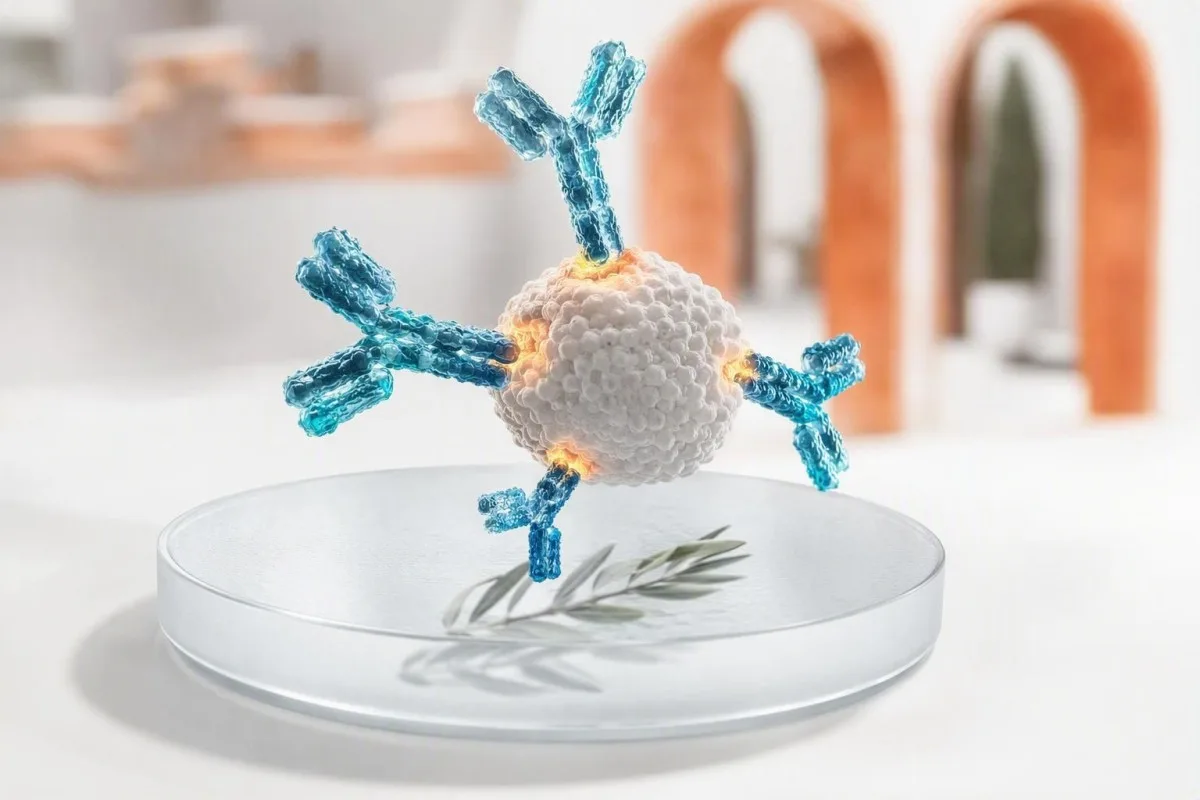
Teigiamas antikūnų rezultatas reiškia, kad jūsų imuninė sistema atpažino tam tikrą taikinį; pats savaime tai neįrodo aktyvios infekcijos ar ligos. Klasė, tyrimo metodas, laikas, simptomai ir papildomi tyrimai lemia, ar jums reikia patikinimo, pakartotinio tyrimo, patvirtinimo ar greitos klinikinės priežiūros.


- Teigiamas antikūnų rezultatas paprastai rodo imuninės sistemos atpažinimą, o nebūtinai dabartinę ligą ar užkrečiamumą.
- IgM prieš IgG yra laiko užuomina, o ne laikrodis: IgM gali išlikti mėnesius, o IgG gali pasirodyti anksti.
- Vakcinos antikūnai gali lemti imuniteto tyrimų teigiamus rezultatus nenurodant natūralios infekcijos.
- Alergenui specifinis IgE didesnis nei 0,35 kUA/L rodo sensibilizaciją, tačiau simptomai po poveikio patvirtina klinikinę alergiją.
- ANA teigiamumas nustatomas iki 20% sveikiems suaugusiems, ypač senstant, esant mažam titrui; svarbesni yra simptomai ir specifiniai antikūnai.
- ŽIV atrankos tyrimo reaktyvumas visada reikalauja laboratorinio patvirtinimo algoritmo, prieš nustatant bet kokią diagnozę.
- Anti-tTG IgA yra patikimas vertinant celiakiją tik tada, kai asmuo vartoja glitimą ir turi pakankamą bendrą IgA kiekį.
- Skubūs simptomai tokius kaip kvėpavimo sutrikimai, sumišimas, gelta, krūtinės skausmas ar plačiai išplitęs pūslinis bėrimas, yra svarbesni nei įprastas antikūnų rezultatas.
Ką iš tikrųjų reiškia teigiamas antikūnų rezultatas
A teigiamas antikūnų tyrimas reiškia, kad tyrimas aptiko imuninius baltymus, kurie jungiasi su konkrečiu tikslu; tai nereiškia ne automatiškai, kad turite aktyvią infekciją, autoimuninius susirgimus ar alergiją, kurią reikia gydyti. Kitas žingsnis priklauso nuo antikūno tipo, rezultato stiprumo, simptomų, poveikio laiko ir bet kokių susijusių antigeno, PCR ar organų funkcijos tyrimų.
Antikūnai yra B ląstelių baltymai, susidarę po skiepijimo, infekcijos, alerginio poveikio, autoimuninių sutrikimų arba kartais be jokios kliniškai žalingos priežasties. Teigiamas rezultatas atsako į vieną siaurą analitinį klausimą – “ar buvo nustatytas jungimasis virš šios laboratorinės ribos?” – o ne į platesnį klinikinį klausimą, kas vyksta jūsų organizme šiandien.
Per savo 15 metų klinikinės praktikos dažniausia klaida buvo “teigiamą” rezultatą skaityti kaip diagnozę. Dr Thomaso Kleino praktinė taisyklė yra pirmiausia nustatyti tikslą– virusą, skiepų antigeną, maisto baltymą, skydliaukės fermentą, branduolinį antigeną ar vaistą – tada paklausti, ar tyrimas aptinka ankstesnį poveikį, esamą organizmą, jautrumą ar imuninės sistemos disbalansą.
Kantesti AI yra AI kraujo tyrimo analizatorius kurie atvaizduoja antikūnų žymas šalia datų, imunoglobulino klasės ir susijusių rezultatų, o ne vertina vieną teigiamą liniją kaip nuosprendį. Tas kontekstas ypač naudingas, kai pacientai lygina skirtingų laboratorijų ataskaitas; kokybiniai ir kiekybiniai rezultatai nėra keičiami net tada, kai abu rodo teigiamą rezultatą.
IgG prieš IgM teigiamas: kodėl laikas yra mažiau paprastas, nei atrodo
IgM teigiamas gali rodyti neseniai įvykusią imuninę reakciją, o IgG teigiamas dažnai rodo ankstesnį poveikį ar vakcinacijos atsaką; nei vienas modelis savaime patikimai nenusako ligos trukmės. Kai kurios infekcijos sukelia IgG per 7–14 dienų, o IgM gali išlikti aptinkamas 3–12 mėnesius ar ilgiau.
IgM yra didelis penkių vienetų antikūnas, dažnai aptinkamas anksti, tačiau dėl savo dydžio ir plataus prisijungimo jis labiau linkęs į kryžmines reakcijas. Epstein–Barr virusas, parvovirusas B19, reumatoidinis faktorius ir kai kurie autoimuniniai antikūnai gali sukelti klaidinančias IgM reakcijas; atskiras mažo lygio IgM rezultatas nusipelno daugiau skeptiškumo nei panikos.
IgG paprastai išlieka po imuninės atminties išsivystymo, kartais dešimtmečius. Teigiamas IgG rezultatas gali atspindėti vaikystės infekciją, neseniai atliktą skiepijimą, pasyvius antikūnus iš intraveninio imunoglobulino ar motinos pernešimą kūdikiui; jis negali įrodyti apsaugos, nebent tas konkretus tyrimas turi patvirtintą apsauginį slenkstį.
Poriniai mėginiai gali būti naudingesni nei vienas paėmimas: keturgubas antikūnų titro padidėjimas tarp mėginių, paimtų maždaug 2–4 savaičių intervalais, patvirtina neseną infekciją tam tikrose ligose. Jei ataskaitoje nurodomas bendras IgG, IgA ir IgM kiekis, peržiūrėkite modelį, o ne vieną skaičių su mūsų vadovas imunoglobulino interpretacijai.
Kada infekcijos antikūnai reiškia aktyvią ligą, o kada ne
Infekcijos antikūnai paprastai rodo poveikį, o PGR, antigenų tyrimas, pasėlis arba didėjantis titras yra geresnės priemonės aptikti daugelį aktyvių infekcijų. Teigiamas antikūnų rezultatas be simptomų dažnai yra istorinis, tačiau išimtis priklauso nuo organizmo ir jūsų imuninės būklės.
Hepatito C atveju, reaktyvus antikūnas reiškia poveikį tam tikru metu, tačiau tik nustatomas HCV RNR nustato dabartinę viremiją. Hepatito B atveju svarbi kombinacija: paviršinis antigenas, paviršinis antikūnas ir branduolio antikūnas atskiria aktyvią infekciją, pasveikusią infekciją ir vakcinos imunitetą daug geriau nei vienas teigiamas žymuo.
ŽIV yra kita sritis, kurioje žodžių pasirinkimas nepaprastai svarbus. Teigiamas ketvirtos kartos atrankos tyrimas nėra diagnozė; laboratorija atlieka ŽIV-1/ŽIV-2 diferenciacijos imunologinį tyrimą ir, kai reikia, nukleorūgščių tyrimą. Asmuo, vartojantis poekspozicinę profilaktiką, reikia laiko specifiškų tyrimų, kaip paaiškinta mūsų ŽIV tyrimų po PEP vadove.
Aš mačiau gerai besijaučiantį pacientą, išsigandusį teigiamo treponeminio sifilio antikūno po gydymo prieš 18 metų. Treponeminiai tyrimai dažnai lieka teigiami visą gyvenimą, o RPR arba VDRL titras padeda įvertinti dabartinę aktyvumą ir atsaką; sifilio tyrimų modeliai padaro šį skirtumą aiškesnį.
Kuo vakcinos antikūnai skiriasi nuo antikūnų po infekcijos
Vakcinos sukelti antikūnai rodo, kad imuninė sistema reagavo į vakcinos antigeną; tai nereiškia, kad vakcina sukėlė aktyvią infekciją. Teigiamas rezultatas vis tiek gali būti žemiau žinomo apsauginio rodiklio, nes rišančiųjų antikūnų ir funkcinių neutralizuojančių antikūnų nėra identiški.
Hepatito B paviršiaus antikūnų koncentracijos 10 mIU/ml ar daugiau matuojamos 1–2 mėnesius po dokumentuotos vakcinacijos serijos paprastai laikomos apsauginėmis imunokompetentingiems žmonėms. Anti-HBc, hepatito B branduolio antikūnas, standartinės hepatito B vakcinacijos metu nesusidaro; jo buvimas rodo natūralų poveikį ir turėtų paskatinti visos panelės interpretaciją.
Rubelos IgG dažnai tikrinama prieš nėštumą, nes tai rodo ankstesnį imunitetą, o ne aktyvią raudonukės ligą. Laboratorijos nustato tyrimui specifinius kriterijus, o ribiniai rezultatai paprastai laikomi neimuniniais priešplanavimo laikotarpiui, o ne interpretuojami kaip neseniai įvykusi infekcija; laikas yra išsamiai aprašytas mūsų raudonukės tyrimų vadove.
Kantesti AI yra AI kraujo tyrimo rezultatų interpretavimo platforma kuriame vakcinos modelio antikūnai atskiriami nuo infekcijos modelio antikūnų, kai ataskaitoje yra atitinkami lydintys žymenys. Praktinis klausimas dažnai yra ne “ar aš teigiamas?”, o “kokio antigeno buvo matuojama, kada aš buvau paskiepytas ir ar šis rezultatas keičia šiandienos apsaugos planą?”
Kodėl teigiamas alergijos antikūnų tyrimas gali reikšti ne alergiją
Teigiamas alergenui specifinis IgE tyrimas rodo jautrumą, reiškiantį, kad IgE atpažįsta alergeną; jis nediagnozuoja klinikinės alergijos be suderinamos reakcijos istorijos. Vertė virš 0,35 kUA/L yra dažnas analitinis teigiamumo ribinis rodiklis, o ne visuotinis ribinis rodiklis, skirtas vengti maisto ar vaistų.
Prieš tyrimą pateikta istorija yra svarbesnė nei daugelis žmonių supranta. Jei asmuo savaitę valgo žemės riešutus be dilgėlinės, švokštelėjimo, vėmimo ar kolapso, vien tik mažas teigiamas žemės riešutų IgE neturėtų lemti vengimo; nereikalingas maisto apribojimas gali sukelti mitybos ir socialinę žalą.
NIAID remiamose maisto alergijos gairėse teigiama, kad odos dūrio ir specifiniai IgE tyrimai nustato galimus maisto sukėlėjus, bet negali savarankiškai diagnozuoti maisto alergijos (Sampson ir kt., 2010). Pasirinktais atvejais alergologas naudoja komponentais atskirtą tyrimą arba mediciniškai prižiūrimą peroralinį maisto provokacinį tyrimą, kuris išlieka etaloniniu standartu neapibrėžtumui išspręsti.
Bendrasis IgE matuojamas IU/mL ir gali būti aukštas sergant egzemą, parazitų poveikį, rūkant ir sergant keliomis imuninėmis ligomis; jis negali nustatyti kaltininko alergeno. Komponentinis tyrimas gali atskirti stabilią sandėliavimo baltymą nuo kryžmiškai reaguojančio su polenu susijusio baltymo, skirtumas, nagrinėjamas mūsų straipsnis apie molekulinę alergijos diagnostiką.
Kodėl autoimuniniams antikūnams reikia simptomų ir organų užuominų
Autoimuniniai antikūnai gali pasireikšti prieš ligą, kartu su liga arba atsirasti sveikiems žmonėms; teigiamas rezultatas pats savaime retai patvirtina autoimuninės ligos diagnozę. Gydytojai veikia, kai antikūnų modelis atitinka simptomus, fizinės apžiūros duomenis, uždegimo žymenis arba objektyvius organų pakitimus.
Antinuklearinis antikūnas, arba ANA, yra teigiamas mažais titrais maždaug 13% žmonių, kai titras yra 1:80, ir maždaug 20% žmonių, kai titras yra 1:40, populiacijos tyrimuose, didesnis procentas moterų ir vyresnio amžiaus žmonių. Homogeninis ar dėmėtas raštas nenustato vilkligės; ANA geriausiai tinka kaip pradinis testas, kai klinikinė nuotrauka daro jungiamojo audinio ligą tikėtina.
2019 m. EULAR/ACR vilkligės klasifikavimo sistema naudoja ANA, kai titras yra ne mažesnis kaip 1:80, kaip įtraukimo kriterijų, tada reikalauja papildomų įvertintų klinikinių ir imunologinių ypatybių (Aringer ir kt., 2019). Naujas baltymas šlapime, mažas C3/C4, citopenijos, uždegiminis sąnarių patinimas arba įtikinamas jautrumas šviesai išbėrimas labiau keičia skubumą nei silpnas ANA vienas.
Anti-dsDNA tampa reikšmingesnis, kai jį papildo mažas komplementas ir inkstų radiniai, nors tyrimo metodai žymiai skiriasi. Mūsų anti-dsDNA sekimo vadovas ir komplemento tyrimų apžvalga paaiškina, kodėl specialistas gali pakartoti tyrimą kitoje platformoje.
Organų specifiniai antikūnai: skydliaukės, celiakijos ir skrandžio pavyzdžiai
Organų specifiniai antikūnai identifikuoja imuninę audinio ataka, bet ne visada parodo, ar organas yra pažeistas šiuo metu, ar jam reikia gydymo. Skydliaukės peroksidazės antikūnai, audinių transglutaminazės antikūnai ir vidinio veiksnio antikūnai reikalauja skirtingų papildomų tyrimų.
TPO antikūnai yra dažni Hašimoto tiroidito atveju ir gali būti nustatomi daugelį metų, kol TSH ir laisvas T4 lieka normalūs. Nesilaukiančiam suaugusiam asmeniui, turinčiam normalią skydliaukės funkciją, rezultatas paprastai palaiko periodinį TSH stebėjimą, o ne skydliaukės hormonų gydymą; nėštumas, vaisingumo planai ir simptomai gali pakeisti šį požiūrį.
Teigiamas tTG-IgA rodo celiakijos ligą tik tuo atveju, jei asmuo vis dar vartoja glitimą ir bendras IgA yra pakankamas. Selektinis IgA trūkumas gali sukelti tTG-IgA klaidingai neigiamą rezultatą, todėl gydytojai naudoja IgG pagrindu pagamintus deamidinto gliadino peptido arba tTG tyrimus, kai bendras IgA yra mažas; žr. mūsų paaiškinimą apie mažo IgA spąstai.
Vidinis veiksnio antikūnas yra gana specifinis, bet ne labai jautrus piktybinei anemijai. Kai jis teigiamas kartu su mažu B12, padidėjusiu metilmaloninės rūgšties kiekiu ir makrocitoze, modelis yra įtikinamas; be tokio modelio, aš vengiu gydyti laboratorinį ženklą, o ne pacientą. Piktybinės anemijos tyrimas parodo įprastą patvirtinimo seką.
Kas sukelia klaidingai teigiamą antikūnų rezultatą
Klaidingai teigiami antikūnų rezultatai atsiranda, kai tyrimas aptinka nepageidaujamą surišimą, o ne tada, kai laboratorija tiesiog “paprastai suklysta”. Kryžminės reakcijos antikūnai, reumatoidinis faktorius, neseniai buvusi imuninė stimuliacija, pasyvusis imunoglobulinas ir mažas prieš tyrimą tikimybė yra dažnos priežastys.
Specifiškumas nėra tobulumas. 99% specifiškumo testas sukuria apie 10 klaidingai teigiamų rezultatų 1000 tikrai neigiamų ištirtų žmonių; kai liga yra reta, tie rezultatai gali viršyti tikrus teigiamus. Štai kodėl platus atrankinis tyrimas asmeniui be simptomų dažnai sukuria dviprasmybę, o ne patikinimą.
Biologinis aktyvumas yra žinomas dėl trikdymo kai kuriuose hormonų ir širdies tyrimuose, o heterofiliniai antikūnai ir reumatoidinis faktorius gali trikdyti tam tikrus imuninius tyrimus. Laboratorija kartais gali praskiesti mėginį, naudoti blokavimo reagentus, pakartoti rezultatą kitoje tyrimo architektūroje arba atlikti specifiškesnį patvirtinamąjį metodą.
Teigiamas rezultatas, prieštaraujantis visiškai nepastebimoje klinikinėje nuotraukoje, nėra tas, kurį reikėtų ignoruoti; tai yra priežastis patikrinti. Kantesti AI palygina nesuderinamus žymenis ir tyrimų datas, o mūsų laboratorinio rezultato tikslumo kontrolinis sąrašas gali padėti jums įrašyti papildus, neseniai atliktus infuzijas ir ligas prieš kalbantis su paskyrusiu gydytoju.
Antikūnų tyrimas teigiamas, bet simptomų nėra: praktinis triažo planas
Kai antikūnų tyrimas yra teigiamas, bet jūs jaučiatės gerai, daugumai žmonių reikia patikslinimo, o ne skubios pagalbos. Saugiausi pirmieji žingsniai yra patikrinti tikslų tyrimą, patikrinti poveikio ir skiepijimo datas bei ieškoti susijusio tyrimo, kuris patvirtintų dabartinę ligą ar organų pažeidimą.
Pradėkite nuo paties ataskaitos: užrašykite analito pavadinimą, antikūno klasę, skaitmeninį indeksą ar titrą, referencinį intervalą, laboratorinį metodą ir surinkimo datą. “Reaktyvus” gali reikšti signalo ir ribos santykį, vos didesnį nei 1,0, arba daug stipresnį rezultatą; laboratorijos naudoja skirtingus ribinius nustatymus, o stiprumas tik kartais atspindi klinikinę tikimybę.
Toliau paklauskite, ar yra aktyvios ligos tyrimas. Pavyzdžiai: ŽIV PGR hepatitui C, serijiniai RPR sifiliui, išmatų ar kvėpavimo tyrimai aktyviam Helicobacter pylori, TSH/laisvasis T4 skydliaukės antikūniams, šlapimo tyrimai ir kreatininas, susiję su vilkligės inkstų pažeidimu.
Nuo 2026 m. rugsėjo 8 d. nerekomenduočiau savarankiškai pradėti vartoti antibiotikų, antivirusinių vaistų, be glitimo dietų, skydliaukės vaistų ar vengti maisto vien tik dėl atskiro antikūno rezultato. Išsaugokite originalų PDF, užsirašykite savo bazinę liniją su ilgalaikiam laboratorinių rodiklių stebėjimui, ir susitarkite dėl rutininės peržiūros, nebent yra raudonos vėliavos simptomai.
Patvirtinimo tyrimai, keičiantys kitą žingsnį
Geriausias patvirtinamasis tyrimas priklauso nuo to, ką antikūnas taiko: molekulinė aptikimas patvirtina daugelį infekcijų, funkciniai tyrimai aiškina alergiją, o organų funkcijos tyrimas vertina autoimuninį poveikį. Tas pats antikūno tyrimas yra naudingas tik tada, kai tikėtinas pokytis laikui bėgant turi klinikinę reikšmę.
Reaktyviam ŽIV patikrinimui, refleksinio patvirtinimo kelias yra diferencijavimo tyrimas, po kurio atliekamas ŽIV nukleorūgščių tyrimas, jei rezultatai yra neapibrėžti. Hepatito C antikūno atveju HCV RNR yra lemiamas tolesnis tyrimas; teigiamo hepatito B branduolio antikūno atveju paviršiaus antigenas, paviršiaus antikūnas ir kartais HBV DNR paaiškina modelį.
Įtariamo celiakijos atveju biopsijos sprendimai turėtų būti priimami, kol pakanka glitimo poveikio tyrimui. Galimos maisto alergijos atveju alergologas atsižvelgia į poveikio istoriją, specifinį IgE lygį, komponentų profilį ir iššūkio riziką — ne į nesusijusių, neaiškių teigiamų rezultatų grupę, užsakytą be klinikinio klausimo.
Kantesti AI yra AI pagrindu veikiantis kraujo tyrimų analizės įrankis kuri gali organizuoti šiuos susijusius žymenis į gydytojui paruoštą klausimų sąrašą, tačiau tai nepakeičia patvirtinamųjų tyrimų ar diagnozės. Jei abejojate, kiek pasitikėti atskiru rezultatu, mūsų medicininio patvirtinimo standartus apibūdina, kodėl patikrinimas ir klinikinė priežiūra yra svarbūs.
Simptomai, dėl kurių teigiamas antikūnų rezultatas tampa skubesnis
Teigiamas antikūno rezultatas reikalauja skubaus įvertinimo, kai jis lydimas kvėpavimo sunkumo, veido ar gerklės tinimo, alpimo, sumišimo, krūtinės skausmo, gelta, greitai plintančio bėrimo, sunkios dehidratacijos ar naujo neurologinio silpnumo. Simptomai — ne vien tik antikūno skaičius — nustato skubumą.
Galima anafilaksija yra avarija: staigūs apimantys dilgėlinė su švokštimu, gerklės stangrumas, nuolatinis vėmimas, alpimas ar žemas kraujospūdis po poveikio reikalauja greitosios pagalbos ir paskirto adrenalino, jei yra. Teigiamas maisto ar nuodų IgE iš mėnesių anksčiau nei numato, nei paneigia tą momentinę riziką.
Nauja gelta su tamsiu šlapimu, ryškus pilvo skausmas, karščiavimas ar sumišimas turėtų paskatinti tą pačią dieną įvertinimą, nepriklausomai nuo to, ar virusinio hepatito antikūnai yra teigiami, ar ne. Kelių fermentų, bilirubino, INR ir tiesioginio patogeno tyrimai padeda atskirti imuninę istoriją nuo aktyvios kepenų ir tulžies takų ligos; kepenų panelės komponentai yra naudingas kontekstas.
Autoimuninis susirūpinimas tampa laiko atžvilgiu svarbus, kai atsiskiriamas kraujas, dusulys, greitai didėjantis kreatininas, kraujingas viduriavimas, regos pokyčiai, traukuliai ar naujas vienpusis silpnumas. Aš išmokau nejaudinti kažko remiantis ribiniu antikūno titru, kai jo simptomų trajektorija akivaizdžiai blogėja.
Ar didesnis antikūnų skaičius reiškia sunkesnę ligą?
Didesnis antikūno indeksas ar titras kartais padidina tikimybę, kad rezultatas yra tikras, bet paprastai nematuoja ligos sunkumo. Tyrimo vertės yra specifinės metodui, ir rezultatas 80 AU/mL negali būti tiesiogiai lyginamas su 80 U/mL iš kitos laboratorijos.
Autoimuninėmis ligomis anti-dsDNA tendencijos kartais gali sekti vilkligės aktyvumą, ypač kai jos matuojamos nuolat tuo pačiu metodu ir interpretuojamos kartu su komplementu ir šlapimo baltymais. ANA titras, tačiau, yra prastas vilkligės sunkumo matas ir neturėtų būti kartojamas stabiliam asmeniui.
Infekcijų atveju stiprus antikūno signalas gali patvirtinti ankstesnį poveikį, bet retai rodo užkrečiamumą. Neutralizuojančių antikūnų tyrimai yra specializuoti, o jų apsauginiai ribiniai rodikliai gali skirtis priklausomai nuo patogeno, amžiaus, vakcinos produkto ir imuninės sistemos slopinimo; paprastas komercinis IgG tyrimas nėra asmeninio imuniteto pasas.
Lyginant ataskaitas, laikykite matomą laboratoriją, tyrimą ir vienetus. Tikras biologinis pokytis turėtų viršyti įprastą analitinį ir kasdienį svyravimą, todėl mūsų kraujo tyrimų palyginimo vadovas sutelkia dėmesį į datas ir metodus, o ne tik į spalvotus ženklus.
Nėštumas, vaikai ir imunosupresija keičia interpretaciją
Nėštumas, kūdikystė ir imunosupresinis gydymas gali pakeisti tiek antikūnų gamybą, tiek patvirtinimo laukimo saugumą. Šiose grupėse teigiamas rezultatas gali atspindėti motinos antikūnus, sumažėjusią vakcinos reakciją, persireiškimo riziką arba poreikį ankstesniam specialistų patarimui.
Motinos IgG pereina per placentą ir gali būti aptinkama kūdikiui kelis mėnesius, o motinos IgM paprastai neperėjo. Todėl izoliuotas IgG teigiamumas kūdikiui dažnai atspindi motinos imunitetą, o specifinis organizmo IgM arba tiesioginis aptikimas gali nusipelnyti daugiau dėmesio, priklausomai nuo infekcijos ir amžiaus.
Nėštumo metu raudonukės ar parvoviruso antikūnių rezultatai vertinami kartu su poveikio datomis, avidiškumo tyrimais ir pakartotiniais mėginiais, o ne vien tik IgM. Klaidingai teigiamas IgM yra pripažinta problema, o nereikalinga panika gali sukelti nereikalingus invazinius tyrimus; akušerinės ar infekcinių ligų tarnybos pagalba yra protinga, kai poveikis yra tikėtinas.
Žmonės, vartojantys rituksimabą, dideles kortikosteroidų dozes, chemoterapiją ar transplantacijos medikamentus, gali turėti silpną ar nebuvusį antikūnių atsaką, nepaisant infekcijos ar skiepijimo. Šeimos sprendimams, vaikų AI interpretavimo ribos ir Kantesti medicinos patariamąja taryba sustiprina poreikį gydytojo vadovaujamai apžvalgai.
Kaip pasiruošti naudingam klinikinio teigiamo rezultato peržiūrėjimui
Atsineškite visą laboratorinį tyrimų ataskaitą, tyrimo paskirties priežastį, simptomų ar poveikio datas, skiepijimų istoriją, vaistus ir ankstesnius rezultatus. Ši informacija gali paversti akivaizdžiai neaiškų teigiamą antikūnių rezultatą aiškiu tolesniu veiksmu per vieną vizitą.
Prieš vizitą užsirašykite penkis faktus: pirmoji simptomų diena, paskutinis tikėtinas poveikis, skiepijimų datos, imunitetą slopinantys vaistai ar imunoglobulino infuzijos, ir ar simptomai gerėja, ar blogėja. Karščiavimas, prasidėjęs 3 dienas prieš mėginių ėmimą, interpretuojamas labai skirtingai nei nuovargis, prasidėjęs 6 mėnesius atgal.
Užduokite tris tikslinius klausimus: “Ką aptinka šis tyrimas?”, “Koks tyrimas nustato aktyvią ligą ar organų pažeidimą?” ir “Koks rezultatas pakeistų gydymą?” Daktaras Thomas Klein teigia, kad šie klausimai sumažina nereikalingus pakartotinius bandymus ir padeda pacientams išeiti su nustatytu laikotarpiu – šiandien, 1–2 savaitės arba įprastinis stebėjimas.
Kantesti AI palaiko saugią ataskaitų peržiūrą daugiau nei 75 kalbomis ir maždaug per 60 sekundžių gali nustatyti trūkstamus papildomus tyrimus iš nufotografuoto ar įkeltos PDF. Mūsų AI technologijų gidas paaiškina kontekstą atitinkantį metodą, o mūsų klinikinė komanda suteikia medicininę priežiūrą, kurią naudoja pacientams skirta interpretacija.
Dažnai užduodami klausimai
Ką reiškia teigiamas antikūnų tyrimas, jei neturiu simptomų?
Teigiamas antikūnų rezultatas be simptomų dažniausiai rodo ankstesnę ekspoziciją, skiepijimą, jautrumą arba rezultatą, kurį reikia patvirtinti, o ne aktyvią ligą. Kitas žingsnis priklauso nuo tikslo: hepatito C antikūnas reikalauja HCV RNA, reaktyvus ŽIV tyrimas reikalauja laboratorinio patvirtinimo algoritmo, o skydliaukės antikūnai reikalauja TSH ir laisvo T4. Izoliuotas silpnai teigiamas rezultatas yra mažiau įtikinamas, kai nėra atitinkamos ekspozicijos ar simptomų istorijos. Kreipkitės skubios pagalbos, jei atsiranda nauja gelta, kvėpavimo sutrikimai, sumišimas, krūtinės skausmas ar greitai blogėjančios bėrimas.
Ar IgM teigiamas ir IgG neigiamas visada reiškia naują infekciją?
IgM teigiamas, IgG neigiamas gali pasireikšti ankstyvame infekcijos etape, tačiau tai ne visada įrodo naują infekciją. IgM gali kryžmiškai reaguoti su nesusijusiais imuniniais baltymais, o kai kurie tyrimai duoda klaidingai teigiamų IgM rezultatų dažniau nei IgG rezultatų. Klinikai gali pakartoti serologiją po 1–2 savaičių, paprašyti PGR arba antigenų tyrimo arba naudoti specifiškesnį patvirtinantį tyrimą. Teisinga interpretacija taip pat priklauso nuo ligos laiko ir tiriamo specifinio organizmo.
Ar vakcina gali priversti antikūnų testą būti teigiamu?
Taip, skiepai dažnai lemia teigiamus antikūnų tyrimus antigenui, esančiam skiepe. Hepatito B atveju, anti-HBs koncentracija mažiausiai 10 mIU/mL, matuojama praėjus 1–2 mėnesiams po baigtos vakcinacijos, paprastai rodo apsauginę reakciją į skiepą imuniteto kompromituotiems žmonėms. Standartinė hepatito B vakcinacija nesukelia anti-HBc, todėl teigiamas jį rodantis tyrimas rodo natūralų užsikrėtimą, o ne tik skiepijimą. Vakcinos sukeltas teigiamas rezultatas nereiškia, kad sergate aktyvia infekcija.
Ar gali būti teigiamas autoimuninių antikūnų tyrimas ir būti sveikas?
Taip, sveiki žmonės gali turėti teigiamų autoimuninių antikūnų, ypač mažo titro ANA rezultatus. Apie 13% žmonių 1:80 titru ir apie 20% žmonių 1:40 titru gali aptikti ANA, todėl tai nėra vienintelis vilkligės tyrimas. Simptomai, tokie kaip uždegiminis sąnarių patinimas, burnos opos, fotosensibilinis bėrimas, mažas komplementas, baltymai šlapime ar nenormalūs kraujo rodikliai, lemia, ar reikia specialisto konsultacijos. Teigiamas rezultatas turėtų būti vertinamas atsižvelgiant į priežastį, dėl kurios buvo paskirtas tyrimas.
Ar teigiamas IgE kraujo tyrimas reiškia, kad turėčiau vengti to maisto?
Ne, teigiamas maistui specifinio IgE rezultatas reiškia sensibilizaciją ir neįrodo, kad maisto valgymas sukelia alerginę reakciją. Daugelis laboratorijų rezultatus, viršijančius 0,35 kUA/L, vadina teigiamais, tačiau šis ribinis dydis skirtas aptikimui, o ne visuotiniam vengimo sprendimui. Asmuo, kuris reguliariai valgo maistą be dilgėlinės, švokštimo, pasikartojančio vėmimo ar alpulio, neturėtų automatiškai jo pašalinti iš dietos. Alergologas gali pasinaudoti reakcijos istorija, komponentų tyrimais ir kartais prižiūrimu peroraliniu maisto provokacijos testu, kad patikslintų riziką.
Kiek laiko antikūnai išlieka teigiami po infekcijos?
Imunoglobulino trukmė labai skiriasi priklausomai nuo infekcijos ir imunoglobulino klasės. IgM gali išnykti per kelias savaites, bet gali išsilaikyti 3–12 mėnesių ar ilgiau, o IgG gali likti matomas metais ar visą gyvenimą. Treponeminių sifilio antikūnai po sėkmingo gydymo dažnai išlieka teigiami visą gyvenimą, o RPR arba VDRL titrai naudojami aktyvumui stebėti. Todėl teigiamas antikūnų rezultatas negali patikimai pasakyti, kada įvyko infekcija, be kitos klinikinės ir laboratorinės informacijos.
Gaukite AI pagrįstą kraujo tyrimo analizę jau šiandien
Prisijunkite prie daugiau nei 2 milijonų naudotojų visame pasaulyje, kurie pasitiki Kantesti dėl momentinės, tikslios laboratorinių tyrimų analizės. Įkelkite savo kraujo tyrimo rezultatus ir per kelias sekundes gaukite išsamią 15,000+ biomarkerių interpretaciją.
📚 Nuorodomis pagrįsti moksliniai leidiniai
Klein, T., Mitchell, S., & Weber, H. (2026). Daugiakalbis AI pagrįstas ankstyvo hantaviruso triažo sprendimų palaikymas: projektavimas, inžinerinis patvirtinimas ir realus pritaikymas daugiau nei 50 000 interpretuotų kraujo tyrimų ataskaitų. Figshare. https://www.researchgate.net/. Kantesti AI Medical Research.
Klein, T., Mitchell, S., & Weber, H. (2026). Iš anksto užregistruotas, su kriterijais pagrįstas automatizuotas Kantesti kraujo tyrimų interpretavimo variklio techninis palyginimas su 100 000 sintetinių bandymų atvejų. Figshare. https://www.academia.edu/. Kantesti AI Medical Research.
📖 Išorinės medicininės nuorodos
⚕️ Medicininis atsakomybės apribojimas
Šis straipsnis skirtas tik mokymo tikslais ir nesudaro medicininės konsultacijos. Visada kreipkitės į kvalifikuotą sveikatos priežiūros specialistą dėl diagnozės ir gydymo sprendimų.
E-E-A-T patikimumo signalai
Patirtis
Gydytojo vadovaujama klinikinė laboratorinių tyrimų interpretavimo darbo eigų peržiūra.
Ekspertizė
Laboratorinės medicinos dėmesys tam, kaip biomarkeriai elgiasi klinikiniame kontekste.
Autoritetas
Parašyta dr. Thomas Klein, peržiūrėjo dr. Sarah Mitchell ir prof. dr. Hans Weber.
Patikimumas
Įrodymais pagrįsta interpretacija su aiškiais tolesnių veiksmų keliais, siekiant sumažinti nerimą.