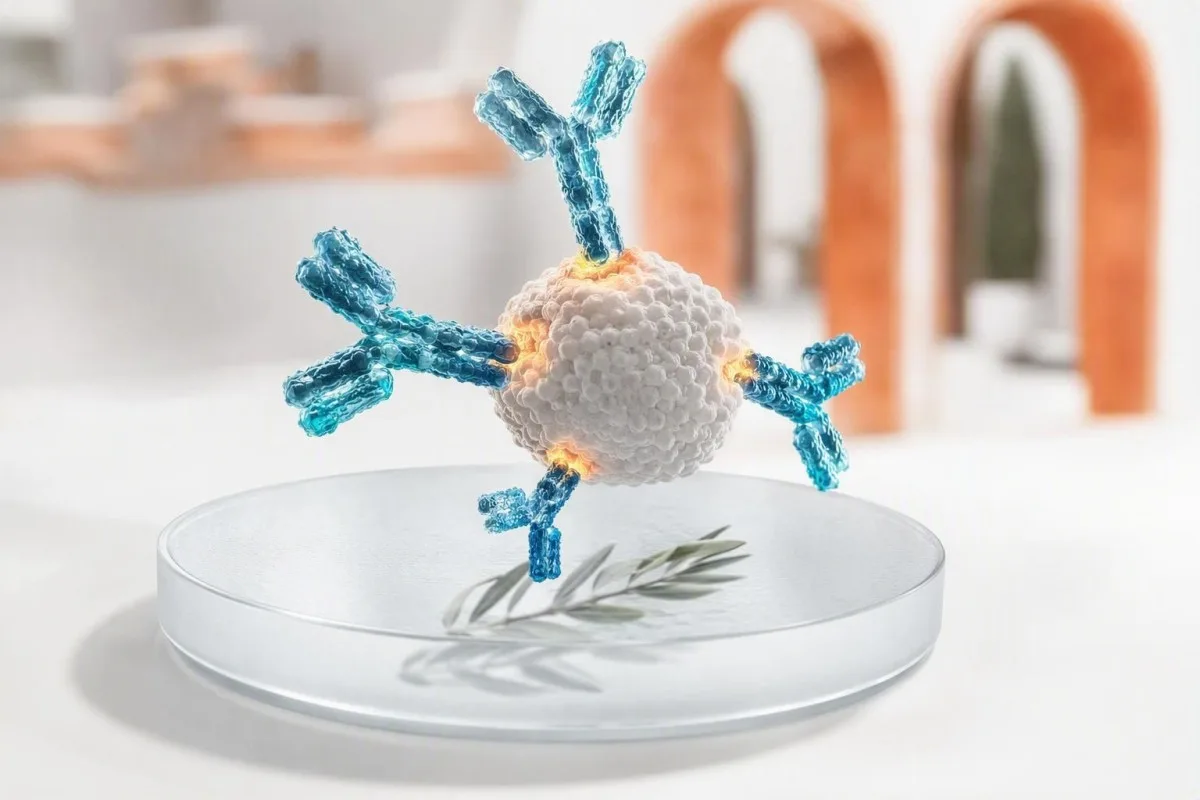
Matokeo chanya ya kingamwili humaanisha mfumo wako wa kinga umetambua lengo fulani; haithibitishi, yenyewe, maambukizi hai au ugonjwa. Aina ya kingamwili, njia ya upimaji, muda, dalili na vipimo vinavyoambatana huamua ikiwa unahitaji uhakikisho, upimaji tena, uthibitisho au huduma ya haraka ya kimatibabu.


- Matokeo chanya ya kingamwili kwa kawaida huonyesha utambuzi wa kinga, si lazima ugonjwa wa sasa au maambukizi.
- IgM dhidi ya IgG ni ishara ya muda, si saa: IgM inaweza kuendelea kwa miezi na IgG inaweza kuonekana mapema.
- Kingamwili za chanjo zinaweza kufanya vipimo vya kinga kuwa chanya bila kuonyesha maambukizi ya asili.
- IgE maalum kwa allergen zaidi ya 0.35 kUA/L huonyesha hisia, lakini dalili baada ya kukabiliwa huimarisha mzio wa kimatibabu.
- Matokeo chanya ya ANA hutokea kwa hadi 20% ya watu wazima wenye afya njema kwa viwango vya chini, hasa kwa umri; dalili na kingamwili maalum huathiri zaidi.
- Matokeo chanya ya uchunguzi wa VVU daima huhitaji utaratibu wa uthibitisho wa maabara kabla ya uchunguzi wowote kufanywa.
- Anti-tTG IgA ni ya kuaminika kwa tathmini ya coeliac tu wakati mtu anakula gluten na ana kiwango cha kutosha cha IgA.
- Dalili za dharura kama vile ugumu wa kupumua, kuchanganyikiwa, homa ya manjano, maumivu ya kifua au upele mkubwa wa malengelenge huzidi matokeo ya kawaida ya kingamwili.
Matokeo chanya ya kingamwili hukufahamisha nini hasa
A kipimo chanya cha kingamwili inamaanisha kwamba kipimo kiligundua protini za kinga zinazofunga lengo maalum; haimaanishi si moja kwa moja una maambukizi yanayoendelea, ugonjwa wa autoimmune, au mzio unaohitaji matibabu. Hatua inayofuata inategemea aina ya kingamwili, nguvu ya matokeo, dalili, muda wa kukabiliwa na kingamwili yoyote inayohusiana, vipimo vya PCR au vipimo vya utendaji wa viungo.
Kingamwili ni protini za seli za B zinazotengenezwa baada ya chanjo, maambukizi, kukabiliwa na mzio, autoimmunity, au mara kwa mara bila sababu yoyote ya madhara kiafya. Matokeo chanya hujibu swali moja finyu la uchambuzi—“je, kifungo kiligunduliwa zaidi ya kikomo hiki cha maabara?”—badala ya swali pana la kimatibabu kuhusu kinachotokea mwilini mwako leo.
Katika miaka 15 ya mazoezi yangu ya kimatibabu, kosa la kawaida limekuwa kusoma “chanya” kama utambuzi. Sheria ya vitendo ya Dk Thomas Klein ni kwanza kutambua lengo—virusi, antijeni ya chanjo, protini ya chakula, ensayimu ya tezi, antijeni ya nyuklia au dawa—kisha kuuliza ikiwa kipimo kinagundua kuathirika kwa zamani, kiumbe cha sasa, hisia, au mkanganyiko wa kinga.
Kantesti AI ni Mchambuzi wa mtihani wa damu wa AI ambayo husoma bendera za kingamwili kando na tarehe, darasa la immunoglobulin na matokeo yanayohusiana badala ya kutibu mstari mmoja chanya kama uamuzi. Hiyo muktadha ni muhimu sana wakati wagonjwa wanalinganisha ripoti kutoka kwa maabara tofauti; matokeo ya ubora na wingi hayawezi kubadilishana hata yanaposema chanya.
Chanya cha IgG dhidi ya IgM: kwa nini muda si rahisi kama unavyodhania
IgM chanya inaweza kuonyesha mwitikio wa hivi karibuni wa kinga, wakati IgG chanya mara nyingi huonyesha kuathirika kwa zamani au mwitikio wa chanjo; hakuna ruwaza inayoweza kuweka tarehe ya ugonjwa kwa yenyewe. Baadhi ya maambukizi hutengeneza IgG ndani ya siku 7–14, na IgM inaweza kubaki kutambulika kwa miezi 3–12 au zaidi.
IgM ni kingamwili kikubwa chenye vitengo vitano ambacho mara nyingi hugundulika mapema, lakini ukubwa wake na kufungamana kwake kwa upana huifanya iwe rahisi zaidi kwa mwingiliano. Virusi vya Epstein–Barr, parvovirus B19, kigezo cha kimatibabu (rheumatoid factor) na baadhi ya kingamwili za autoimmune zinaweza kusababisha mwingiliano usio sahihi wa IgM; matokeo ya pekee ya IgM ya kiwango cha chini yanastahili kutiliwa shaka zaidi kuliko hofu.
IgG kwa kawaida hudumu baada ya kumbukumbu ya kinga kuendelezwa, wakati mwingine kwa miongo kadhaa. Matokeo chanya ya IgG yanaweza kuonyesha maambukizi ya utotoni, chanjo ya hivi karibuni, kingamwili za passiv kutoka kwa immunoglobulin ya mishipani, au uhamisho wa mama kwa mtoto mchanga; haiwezi kuthibitisha ulinzi isipokuwa kipimo hicho maalum kina kiwango cha ulinzi kilichothibitishwa.
Sampuli zilizounganishwa zinaweza kuwa na manufaa zaidi kuliko kupata kimoja: ongezeko la mara nne la kiwango cha kingamwili kati ya sampuli zilizochukuliwa takriban wiki 2–4 baadaye huunga mkono maambukizi ya hivi karibuni katika magonjwa yaliyochaguliwa. Ikiwa ripoti inaorodhesha IgG, IgA na IgM jumla, kagua ruwaza badala ya nambari moja na yetu mwongozo wa tafsiri ya kingamwili.
Kina kingamwili cha maambukizi hufanya au haifanyi kumaanisha ugonjwa hai
Kingamwili za maambukizi kwa kawaida huonyesha kuathirika, wakati vipimo vya PCR, antijeni, utamaduni, au ongezeko la kiwango cha juu ni zana bora za kugundua maambukizi mengi yanayoendelea. Matokeo chanya ya kingamwili bila dalili mara nyingi ni ya kihistoria, lakini isipokuwa inategemea kiumbe na hali yako ya kinga.
Kwa hepatitis C, kingamwili tendaji huashiria kuathirika kwa wakati fulani, lakini RNA ya HCV inayogundulika pekee ndiyo huthibitisha kuwepo kwa virusi kwa sasa. Kwa hepatitis B, mchanganyiko huleta maana: antijeni ya juu, kingamwili ya juu na kingamwili ya msingi hutofautisha maambukizi yanayoendelea, maambukizi yaliyopona na kinga ya chanjo vizuri zaidi kuliko alama moja chanya.
HIV ni mazingira mengine ambapo istilahi huleta maana kubwa sana. Kichujio cha kizazi cha nne tendaji si utambuzi; maabara huendelea na kipimo cha kingamwili cha kutofautisha HIV-1/HIV-2 na, inapohitajika, kipimo cha asidi ya nucleic. Mtu anayechukua kinga baada ya kuathirika huhitaji kipimo maalum cha muda, kama ilivyoelezwa katika mwongozo wa upimaji wa HIV baada ya PEP.
Nimeona mgonjwa mzima akiogopa na kingamwili tendaji ya syphilis ya treponemal baada ya matibabu miaka 18 iliyopita. Vipimo vya treponemal mara nyingi hubaki chanya kwa maisha, wakati kiwango cha RPR au VDRL husaidia kuhukumu shughuli ya sasa na majibu; ruwaza za vipimo vya syphilis hufanya tofauti hii kuwa wazi zaidi.
Kingamwili za chanjo hutofautianaje na kingamwili baada ya maambukizi
Kingamwili zinazohusiana na chanjo huonyesha kuwa mfumo wa kinga uliitikia antijeni ya chanjo; hazimaanishi kuwa chanjo ilisababisha maambukizi yanayoendelea. Matokeo chanya bado yanaweza kuangukia chini ya kiwango kinachojulikana cha ulinzi, kwa sababu kingamwili zinazofunga na kingamwili za kuzuia kazi hazifanani.
Viwango vya kingamwili ya juu ya hepatitis B 10 mIU/mL au zaidi vilivyopimwa miezi 1-2 baada ya mfululizo wa chanjo ulioandikwa kwa ujumla huchukuliwa kuwa vya kinga kwa watu wenye kinga kamili. Anti-HBc, kingamwili ya msingi ya hepatitis B, haitengenezwi na chanjo ya kawaida ya hepatitis B; uwepo wake huashiria kuathirika kwa asili na unapaswa kusababisha tafsiri kamili ya vipimo vyote.
Rubella IgG huangaliwa mara kwa mara kabla ya ujauzito kwa sababu huonyesha kinga ya awali, si ugonjwa wa rubella unaoendelea. Maabara huweka viwango maalum vya kipimo, na matokeo ya mpakani kwa kawaida hutendewa kama yasiyo na kinga kwa upangaji wa kabla ya ujauzito badala ya kutafsiriwa kama maambukizi ya hivi karibuni; muda umeelezwa kwa undani katika mwongozo wa upimaji wa rubella.
Kantesti AI ni jukwaa la tafsiri ya vipimo vya damu la AI unaotenganisha ruwaza za kingamwili za chanjo na ruwaza za kingamwili za maambukizi wakati ripoti inajumuisha alama za msaidizi husika. Swali la vitendo mara nyingi si “nina kingamwili chanya?” bali “ni antijeni gani ilipimwa, nilipata chanjo lini, na je, matokeo haya hubadilisha mpango wa ulinzi wa leo?”
Kwa nini matokeo chanya ya kingamwili ya mzio huenda hayamaanishi mzio
Kipimo maalum cha IgE mzio kinachoonyesha uwezekano wa kuathirika, maana yake ni kwamba IgE hutambua mzio; haitambui mzio wa kimatibabu bila historia ya mmenyuko unaolingana. Thamani iliyo juu ya 0.35 kUA/L ni kiwango cha kawaida cha kuthibitisha kinachogundulika, si kiwango cha jumla cha kuepuka chakula au dawa.
Hadithi ya kabla ya kipimo huleta maana zaidi kuliko watu wengi wanavyotambua. Ikiwa mtu anakula karanga kila wiki bila vipele, kupumua kwa shida, kutapika au kuzimia, IgE ya karanga yenye kiwango cha chini chanya pekee haipaswi kusababisha kuepuka; vikwazo vya chakula visivyo vya lazima vinaweza kusababisha madhara ya lishe na kijamii.
Mwongozo wa mzio wa chakula uliofadhiliwa na NIAID unasema kwamba vipimo vya ngozi na IgE maalum hutambua vyakula vinavyoweza kusababisha tatizo lakini haviwezi kutambua mzio wa chakula peke yake (Sampson et al., 2010). Katika visa vilivyochaguliwa, daktari wa mzio hutumia upimaji wa sehemu uliorekebishwa au changamoto ya chakula ya mdomo iliyosimamiwa kimatibabu, ambayo bado ni kiwango cha marejeleo cha kutatua kutokuwa na uhakika.
Jumla ya IgE hupimwa katika IU/mL na inaweza kuwa juu katika eczema, kuathirika na vimelea, kuvuta sigara na hali kadhaa za kinga; haiwezi kutambua mzio unaosababisha tatizo. Upimaji wa sehemu unaweza kutofautisha protini ya kuhifadhi imara kutoka kwa protini inayohusiana na poleni inayoweza kusababisha mzio mwingine, tofauti iliyoangaziwa katika makala ya upimaji wa mzio wa molekuli.
Kwa nini kingamwili za magonjwa ya mfumo wa kinga zinahitaji dalili na dalili za viungo
Vitu vya kinga mwilini vinavyopinga mwili vinaweza kutangulia ugonjwa, kuambatana na ugonjwa, au kutokea kwa watu wenye afya; matokeo chanya pekee mara chache huweka utambuzi wa kupinga mwili. Waganga hufanya kazi wakati muundo wa vitu vya kinga unalingana na dalili, matokeo ya uchunguzi, dalili za kuvimba au mabadiliko dhahiri ya viungo.
Kingamwili ya antinuclear, au ANA, ni chanya kwa viwango vya chini kwa takriban 13% ya watu katika 1:80 na karibu 20% katika 1:40 katika tafiti za idadi ya watu, na viwango vya juu kwa wanawake na wazee. Muundo sare au uliochuruzwa hautambui lupus; ANA hutumiwa vyema kama kipimo cha lango wakati picha ya kimatibabu inafanya ugonjwa wa tishu zinazojumuisha kuwa unawezekana.
mfumo wa uainishaji wa lupus wa EULAR/ACR wa 2019 hutumia ANA kwa kiwango cha angalau 1:80 kama kigezo cha kuingia, kisha huhitaji vipengele vya ziada vya kimatibabu na kinga (Aringer et al., 2019). Protini mpya katika mkojo, C3/C4 ya chini, cytopenias, uvimbe wa viungo unaosababisha kuvimba au upele unaovutia unaotokana na jua hubadilisha uharaka zaidi kuliko ANA dhaifu pekee.
Anti-dsDNA huwa na maana zaidi inapounganishwa na kinga ya chini na matokeo ya figo, ingawa mbinu za uchanganuzi hutofautiana sana. mwongozo wa ufuatiliaji wa anti-dsDNA na muhtasari wa upimaji wa kinga elezea kwa nini daktari bingwa anaweza kurudia upimaji kwenye jukwaa tofauti.
Kingamwili maalum kwa viungo: mifano ya tezi, coeliac na tumbo
Kingamwili mahususi kwa viungo hutambua ulengaji wa kinga wa tishu, lakini hazionyeshi kila wakati ikiwa kiungo kinaharibiwa kwa sasa au kinahitaji matibabu. Kingamwili za peroksidi ya tezi, kingamwili za transglutaminase za tishu na kingamwili za kipengele cha ndani kila moja huhitaji vipimo msaidizi tofauti.
Kingamwili za TPO huenea katika tezi ya Hashimoto na zinaweza kuwepo kwa miaka huku TSH na T4 huru zikiwa kawaida. Kwa mtu mzima asiye mjamzito aliye na utendaji kazi wa kawaida wa tezi, matokeo kwa kawaida huunga mkono ufuatiliaji wa TSH mara kwa mara badala ya matibabu ya homoni ya tezi; ujauzito, mipango ya uzazi na dalili zinaweza kubadilisha mbinu hiyo.
Kipimo chanya tTG-IgA inapendekeza ugonjwa wa coeliac ikiwa tu mtu bado anakula gluten na IgA jumla ni ya kutosha. Upungufu wa IgA teule unaweza kufanya tTG-IgA kuwa hasi kimakosa, kwa hivyo waganga hutumia kinga ya gliadin peptide au vipimo vya tTG vinavyotokana na IgG wakati IgA jumla ni ya chini; angalia maelezo yetu ya mapungufu ya IgA ya chini.
Kingamwili ya kipengele cha ndani ni maalum lakini si nyeti sana kwa upungufu wa damu wa pernicious. Inapokuwa chanya pamoja na B12 ya chini, asidi ya methylmalonic iliyoinuliwa na macrocytosis, ruwaza hiyo ni ya kuvutia; bila ruwaza hiyo, ninaepuka kutibu lebo ya maabara badala ya mgonjwa. upimaji wa upungufu wa damu wa pernicious inaonyesha mfuatano wa kawaida wa uthibitisho.
Nini husababisha matokeo bandia chanya ya kingamwili
Matokeo ya kingamwili za chanya kimakosa hutokea wakati uchanganuzi hugundua kufungamana bila kukusudiwa, si wakati maabara “inapokosea.” Kingamwili za msalaba, kizuizi cha kimeng'enya, kichocheo cha hivi karibuni cha kinga, kinga ya pasipoti na uwezekano mdogo wa kabla ya kipimo ni sababu za kawaida.
Upekee si ukamilifu. Kipimo kilicho na upambanuzi wa 99% hutoa matokeo takriban 10 ya chanya kimakosa kwa kila watu 1,000 wenye afya walio na matokeo hasi; wakati hali ni adimu, matokeo hayo yanaweza kuzidi walio na matokeo chanya halisi. Hii ndiyo sababu uchunguzi mpana kwa mtu bila dalili mara nyingi huleta kutoelewana badala ya uhakikisho.
Biotin inajulikana kwa kuingilia kati baadhi ya vipimo vya homoni na moyo, wakati kingamwili za heterophile na kizuizi cha kimeng'enya zinaweza kuingilia kati vipimo fulani vya kinga. Maabara wakati mwingine inaweza kupunguza kipimo, kutumia vinazuia, kurudia matokeo kwenye usanifu mwingine wa uchanganuzi, au kufanya njia ya uthibitisho iliyo maalum zaidi.
Matokeo chanya yanayokinzana na picha ya kimatibabu isiyo na maana kabisa si kitu cha kupuuzwa; ni sababu ya kuthibitisha. Kantesti AI inalinganisha alama zinazokinzana na tarehe za kipimo, na yetu orodha ya kukagua usahihi wa matokeo ya maabara inaweza kukusaidia kurekodi virutubisho, infusions za hivi karibuni na magonjwa kabla ya kuzungumza na daktari aliyeagiza.
Matokeo chanya ya upimaji wa kingamwili lakini hakuna dalili: mpango wa vitendo wa kupanga
Wakati kipimo cha kingamwili kinapokuwa chanya lakini unajisikia vizuri, watu wengi wanahitaji ufafanuzi badala ya huduma ya dharura. Hatua salama za kwanza ni kuthibitisha uchanganuzi kamili, kuangalia tarehe za kuathiriwa na chanjo, na kutafuta kipimo kilichounganishwa ambacho kinathibitisha ugonjwa wa sasa au ushiriki wa kiungo.
Anza na ripoti yenyewe: rekodi jina la analyte, darasa la kingamwili, fahirisi ya nambari au titre, muda wa marejeleo, njia ya maabara na tarehe ya ukusanyaji. “Ina nguvu” inaweza kumaanisha uwiano wa mawimbi kwa kikomo cha juu kidogo juu ya 1.0 au matokeo yenye nguvu zaidi; maabara hazitumii vizingiti vinavyofanana, na ukubwa mara kwa mara hufuatilia uwezekano wa kimatibabu.
Ifuatayo, uliza ikiwa kuna kipimo cha ugonjwa unaoendelea. Mifano ni pamoja na PCR kwa hepatitis C, RPR mfululizo kwa kaswende, kinyesi au upumuaji kwa Helicobacter pylori hai, TSH/free T4 kwa kingamwili za tezi, na uchambuzi wa mkojo pamoja na kreatini kwa wasiwasi wa figo unaohusiana na lupus.
Kufikia Septemba 8, 2026, sengenunuru kuanzisha dawa za kuua viuavijidudu, dawa za kuua virusi, vyakula visivyo na gluteni, dawa za tezi au kuepuka vyakula kwa msingi wa matokeo ya kingamwili pekee. Hifadhi PDF asili, andika hali yako ya msingi na ufuatiliaji wa maabara kwa muda mrefu, na panga uhakiki wa kawaida isipokuwa dalili nyekundu zipo.
Vipimo vya uthibitisho vinavyobadilisha hatua inayofuata
Kipimo bora cha uthibitisho hutegemea kile kingamwili hulenga: utambuzi wa molekuli unathibitisha maambukizi mengi, vipimo vya utendaji vinafafanua mzio, na upimaji wa utendaji wa viungo hutathmini athari za kinga. Kurudia kipimo sawa cha kingamwili ni muhimu tu wakati mabadiliko yanayotarajiwa kwa muda yana maana ya kimatibabu.
Kwa uchunguzi chanya wa HIV, njia ya uthibitisho wa reflex ni kipimo cha utofautishaji ikifuatwa na upimaji wa asidi-nucleic ya HIV ikiwa matokeo hayako wazi. Kwa kingamwili ya hepatitis C, RNA ya HCV ndiyo ufuatiliaji wa mwisho; kwa kingamwili chanya ya ini B, antijeni ya uso, kingamwili ya uso na wakati mwingine DNA ya HBV hufafanua muundo.
Kwa utambuzi unaoshukiwa wa ugonjwa wa coeliac, maamuzi ya biopsy yanapaswa kufanywa wakati mfiduo wa gluteni unatosha kwa upimaji. Kwa mzio unaowezekana wa chakula, daktari wa mzio huchunguza historia ya mfiduo, kiwango maalum cha IgE, wasifu wa kiungo na hatari ya changamoto—sio paneli ya matokeo chanya madogo yasiyohusiana yaliyoagizwa bila swali la kimatibabu.
Kantesti AI ni Zana ya uchambuzi wa vipimo vya damu inayotumia AI ambayo inaweza kupanga alama hizi zilizounganishwa katika orodha ya maswali tayari kwa daktari, lakini haichukui nafasi ya upimaji wa uthibitisho au utambuzi. Ikiwa haujui ni kiasi gani cha kuamini matokeo ya nje, yetu viwango vyetu vya uthibitisho wa kitabibu inaelezea kwa nini uthibitisho na usimamizi wa kimatibabu ni muhimu.
Dalili zinazofanya matokeo chanya ya kingamwili kuwa ya dharura zaidi
Matokeo chanya ya kingamwili yanastahili tathmini ya haraka yanapoambatana na ugumu wa kupumua, uvimbe wa uso au koo, kuzirai, kuchanganyikiwa, maumivu ya kifua, manjano, upele unaoenea haraka, upungufu mkali wa maji mwilini au udhaifu mpya wa neva. Dalili—sio nambari ya kingamwili pekee—huamua uharaka.
Anaphylaxis inayowezekana ni dharura: urticaria ya ghafla iliyoenea na kuweweseka, kukaza koo, kutapika kwa kudumu, kizunguzungu au shinikizo la damu la chini baada ya mfiduo huhitaji huduma za dharura na adrenaline iliyowekwa ikiwa inapatikana. IgE chanya ya chakula au sumu kutoka miezi iliyopita haitabiri wala kutoondoa hatari hiyo ya haraka.
Manjano mpya yenye mkojo mweusi, maumivu makali ya tumbo, homa au kuchanganyikiwa inapaswa kusababisha tathmini ya siku hiyo hiyo ikiwa kingamwili za hepatitis virusi ni chanya au la. Enzimu za ini, bilirubini, INR na upimaji wa moja kwa moja wa pathojeni husaidia kutofautisha historia ya kinga kutoka kwa ugonjwa unaoendelea wa ini/nyongo; vipengele vya liver-panel ni muktadha muhimu.
Wasiwasi wa kinga huwa muhimu kwa muda na kukohoa damu, upungufu wa pumzi, ongezeko la haraka la kreatini, kuhara damu, mabadiliko ya kuona, kifafa au udhaifu mpya wa upande mmoja. Nimejifunza kutomhakikishia mtu kwa misingi ya kichocheo cha kingamwili kisicho dhahiri wakati trajectory yake ya dalili inazidi kuwa mbaya.
Je, nambari ya juu zaidi ya kingamwili humaanisha ugonjwa mbaya zaidi?
Kiashirio cha juu zaidi cha kingamwili au titre wakati mwingine huongeza uwezekano kwamba matokeo ni halisi, lakini kwa kawaida haipimi ukali wa ugonjwa. Maadili ya kipimo hutegemea njia maalum, na matokeo ya 80 AU/mL hayawezi kulinganishwa moja kwa moja na 80 U/mL kutoka kwa maabara nyingine.
Katika ugonjwa wa kinga, mienendo ya anti-dsDNA wakati mwingine inaweza kufuata shughuli ya lupus, hasa inapopimwa mara kwa mara na njia sawa na kutafsiriwa na kinga na protini ya mkojo. Hata hivyo, kichocheo cha ANA ni kipimo duni cha ukali wa lupus na haipaswi kufuatiliwa mara kwa mara kwa mtu aliye thabiti.
Kwa maambukizi, ishara kali ya kingamwili inaweza kuunga mkono mfiduo wa awali lakini mara chache huonyesha maambukizi. Vipimo vya kingamwili vinavyozuia vina utaalamu na vizingiti vyao vya kinga vinaweza kutofautiana kulingana na pathojeni, umri, bidhaa ya chanjo na mfumo wa kinga uliofadhaika; kipimo rahisi cha kibiashara cha IgG si pasipoti ya kinga ya kibinafsi.
Wakati wa kulinganisha ripoti, weka maabara, kipimo na vitengo vionekane. Mabadiliko halisi ya kibaolojia yanapaswa kuzidi mabadiliko ya kawaida ya uchambuzi na ya kila siku, ndiyo sababu yetu mwongozo wa kulinganisha vipimo vya damu inalenga kwenye tarehe na njia badala ya bendera zilizo na rangi pekee.
Mimba, watoto na mfumo dhaifu wa kinga hubadilisha tafsiri
Mimba, utotoni na matibabu ya kufadhaisha kinga yanaweza kubadilisha uzalishaji wa kingamwili na usalama wa kusubiri uthibitisho. Katika vikundi hivi, matokeo chanya yanaweza kuonyesha kingamwili za mama, mwitikio wa chanjo uliopunguzwa, hatari ya kuamsha upya au hitaji la ushauri wa mtaalamu wa mapema.
IgG ya mama huvuka placenta na inaweza kubaki hugundulika kwa mtoto kwa miezi kadhaa, wakati IgM ya mama kwa ujumla haivuki. Kwa hivyo, IgG chanya pekee ya mtoto mara nyingi huonyesha kinga ya mama, wakati IgM maalum ya kiumbe au ugunduzi wa moja kwa moja unaweza kuhitaji tathmini iliyolenga zaidi kulingana na maambukizi na umri.
Wakati wa ujauzito, matokeo ya kingamwili za rubella au parvovirus hufasiriwa na tarehe za kukabiliwa, uchunguzi wa avidity na sampuli za kurudia badala ya IgM moja tu. IgM chanya bandia ni tatizo linalotambulika, na kengele isiyo na maana inaweza kusababisha uchunguzi usio na maana; pembejeo ya uzazi au magonjwa ya kuambukiza ni busara wakati kukabiliwa kunathibitika.
Watu wanaopokea rituximab, corticosteroids ya kiwango cha juu, chemotherapy au dawa za kupandikiza wanaweza kuwa na majibu dhaifu au yasiyo ya kingamwili licha ya maambukizi au chanjo. Kwa maamuzi ya familia, mipaka ya tafsiri ya AI ya watoto na bodi ya ushauri ya matibabu ya Kantesti huimarisha hitaji la ukaguzi unaoongozwa na daktari.
Jinsi ya kujiandaa kwa uchunguzi muhimu wa daktari kuhusu matokeo chanya
Leta ripoti kamili ya maabara, sababu ya kuamriwa kwa kipimo, tarehe za dalili au kukabiliwa, historia ya chanjo, dawa na matokeo ya awali. Taarifa hii inaweza kubadilisha matokeo ya kingamwili yanayoonekana kuwa chanya kuwa hatua wazi inayofuata ndani ya miadi moja.
Andika ukweli tano kabla ya ziara: siku ya kwanza ya dalili, kukabiliwa kwa mwisho kunawezekana, tarehe za chanjo, dawa za kukandamiza kinga au infusions za kingamwili, na ikiwa dalili zinaboreka au zinazidi kuwa mbaya. Homa iliyoanza siku 3 kabla ya kuchukua sampuli hufasiriwa tofauti sana na uchovu ulioanza miezi 6 iliyopita.
Uliza maswali matatu yaliyolenga: “Kipimo hiki hugundua nini?”, “Kipimo gani huweka ugonjwa unaoendelea au athari ya kiungo?”, na “Matokeo gani yangebadilisha matibabu?” Dk Thomas Klein anapata maswali haya hupunguza paneli za kurudia zisizo za lazima na husaidia wagonjwa kuondoka na muda uliowekwa—leo, wiki 1–2, au ufuatiliaji wa kawaida.
Kantesti AI inasaidia ukaguzi salama wa ripoti katika lugha zaidi ya 75 na inaweza kutokeza vipimo rasmi vilivyokosekana kutoka kwa picha au PDF iliyopakiwa kwa takriban sekunde 60. Yetu mwongozo wa teknolojia ya AI inaelezea mbinu ya kulinganisha muktadha, wakati timu yetu ya kimatibabu inatoa usimamizi wa matibabu nyuma ya tafsiri zinazoelekezwa kwa mgonjwa.
Maswali Yanayoulizwa Mara Kwa Mara
Matokeo chanya ya kingamwili yana maana gani ikiwa sina dalili?
Matokeo ya kingamwili chanya bila dalili mara nyingi huashiria kuathirika hapo awali, chanjo, hisia kali, au matokeo yanayohitaji kuthibitishwa badala ya ugonjwa unaoendelea. Hatua inayofuata inategemea lengo: kingamwili cha hepatitis C kinahitaji HCV RNA, skrini ya VVU inayoitikia inahitaji algorithm ya uthibitisho wa maabara, na kingamwili za tezi huhitaji TSH na T4 huru. Matokeo ya pekee yenye nguvu ya chini hayana ushawishi mkubwa wakati hakuna historia ya kuathirika inayolingana au dalili. Tafuta huduma ya haraka ikiwa kutokea kwa manjano mpya, ugumu wa kupumua, kuchanganyikiwa, maumivu ya kifua, au kuongezeka kwa kasi kwa upele.
Je, IgM chanya na IgG hasi huashiria maambukizi mapya kila wakati?
IgM chanya na IgG hasi inaweza kutokea mapema katika maambukizi, lakini haithibitishi mara nyingi maambukizi mapya. IgM inaweza kukumbatiana na protini zisizohusiana za kinga, na vipimo vingine hutoa matokeo bandia ya IgM mara nyingi zaidi kuliko matokeo ya IgG. Waganga wanaweza kurudia serolojia baada ya wiki 1-2, kuomba vipimo vya PCR au antigen, au kutumia kipimo zaidi cha uthibitisho. Tafsiri sahihi pia inategemea ratiba ya ugonjwa na kiumbe maalum kilichopimwa.
Je, chanjo inaweza kufanya kipimo cha kingamwili kuwa chanya?
Ndiyo, chanjo mara nyingi huleta vipimo vya kingamwili kuwa vyema kwa antijeni iliyo kwenye chanjo. Kwa homa ya ini B, mkusanyiko wa anti-HBs wa angalau 10 mIU/mL uliopimwa miezi 1–2 baada ya kukamilika kwa mfululizo kwa ujumla huashiria mwitikio wa kinga ya chanjo kwa watu wenye mfumo wa kinga dhabiti. Chanjo ya kawaida ya homa ya ini B haitoi anti-HBc, kwa hivyo uwepo wa kingamwili za msingi huonyesha kuathirika kwa asili badala ya chanjo pekee. Uwepo wa chanjo haimaanishi una maambukizi yanayoendelea.
Unaweza kupata kipimo chanya cha kingamwili cha autoimmune na kuwa na afya njema?
Ndiyo, watu wenye afya njema wanaweza kuwa na antibodies chanya za kingamwili, hasa matokeo ya chini ya ANA. ANA huonekana kwa takriban 13% ya watu wenye titre ya 1:80 na karibu 20% kwa 1:40, kwa hivyo sio kipimo cha lupus pekee. Dalili kama uvimbe wa viungo unaosababishwa na uvimbe, vidonda mdomoni, kuwashwa na jua, kiwango cha chini cha kingamwili, protini kwenye mkojo au hesabu zisizo za kawaida za damu huamua ikiwa tathmini ya mtaalamu inahitajika. Matokeo chanya yanapaswa kutafsiriwa kulingana na sababu iliyoamuru kipimo.
Je, vipimo vya damu vya IgE vinapokuwa sahihi vina maana ni lazima niondoke kwenye chakula hicho?
Hapana, matokeo chanya ya chakula-maalum IgE huashiria kuhisi na haithibitishi kwamba kula chakula husababisha mmenyuko wa mzio. Maabara nyingi huita matokeo zaidi ya 0.35 kUA/L chanya, lakini kikomo hicho kimeundwa kwa ajili ya kutambua badala ya uamuzi wa jumla wa kukwepa. Mtu ambaye hula chakula hicho mara kwa mara bila vipele, kupumua kwa shida, kutapika mara kwa mara au kizunguzungu haipaswi kukiiondoa kutoka kwenye lishe moja kwa moja. Daktari wa mzio anaweza kutumia historia ya mmenyuko, upimaji wa vipengele na wakati mwingine changamoto ya chakula mdomoni iliyosimamiwa ili kufafanua hatari.
Antibodi hukaa chanya kwa muda gani baada ya kuambukizwa?
Uthabiti wa kingamwili hutofautiana sana kulingana na maambukizi na aina ya kingamwili. IgM inaweza kutoweka ndani ya wiki lakini inaweza kudumu kwa miezi 3–12 au zaidi, wakati IgG inaweza kubaki inayoweza kupimwa kwa miaka au maisha yote. Kingamwili za kaswende za Treponemal mara nyingi hubaki chanya maishani baada ya matibabu yenye mafanikio, wakati vipimo vya RPR au VDRL hutumiwa kufuatilia shughuli. Kwa hivyo, matokeo chanya ya kingamwili haiwezi kukuambia kwa uhakika ni lini maambukizi yalitokea bila taarifa nyingine za kimatibabu na za maabara.
Pata Uchambuzi wa Vipimo vya Damu kwa AI Leo
Jiunge na zaidi ya watumiaji 2 milioni duniani kote wanaoamini Kantesti kwa uchambuzi wa papo hapo na sahihi wa vipimo vya maabara. Pakia matokeo yako ya vipimo vya damu na upate tafsiri ya kina ya viashiria vya 15,000+ ndani ya sekunde.
📚 Machapisho ya Utafiti Yanayorejelewa
Klein, T., Mitchell, S., & Weber, H. (2026). Msaada wa Maamuzi ya Kliniki kwa Msaada wa Akili Bandia Mbalimbali za Lugha kwa Triage ya Mapema ya Hantavirus: Ubunifu, Uhakiki wa Uhandisi, na Utekelezaji wa Ulimwengu Halisi katika Ripoti za Vipimo vya Damu 50,000 Vilivyotafsiriwa. Figshare. https://www.researchgate.net/. Kantesti uchambuzi wa damu kwa AI ya utafiti wa matibabu.
Klein, T., Mitchell, S., & Weber, H. (2026). Kipimo cha Utendaji wa Kiufundi Kiotomatiki Kilichojisajili Mapema, Kulingana na Rubric cha Injini ya Tafsiri ya Vipimo vya Damu ya Kantesti kwenye Kesi 100,000 za Jaribio la Synthatic. Figshare. https://www.academia.edu/. Kantesti uchambuzi wa damu kwa AI ya utafiti wa matibabu.
📖 Marejeo ya Nje ya Tiba
⚕️ Kanusho la Kimatibabu
Makala haya ni kwa madhumuni ya elimu tu na si ushauri wa kimatibabu. Wasiliana na mtoa huduma aliyehitimu kila wakati kwa maamuzi ya utambuzi na matibabu.
E-E-A-T Trust Signals
Uzoefu
Mapitio ya kimatibabu inayoongozwa na daktari ya mifumo ya tafsiri ya maabara.
Utaalamu
Kuzingatia dawa za maabara kuhusu jinsi viashiria (biomarkers) vinavyobadilika katika muktadha wa kliniki.
Mamlaka
Imeandikwa na Dk. Thomas Klein kwa mapitio ya Dk. Sarah Mitchell na Prof. Dk. Hans Weber.
Uaminifu
Tafsiri inayotegemea ushahidi yenye njia zilizo wazi za ufuatiliaji ili kupunguza tahadhari za hofu.